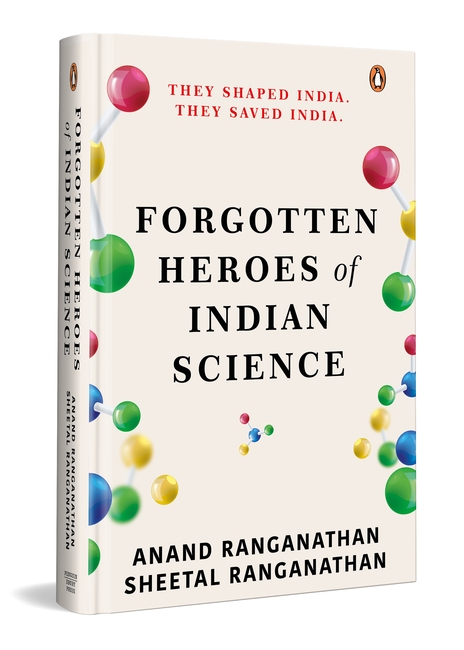
Upendranath Brahmachari conjured a potent drug to vanquish the spectre of kala-azar, saving millions from the deadly disease. Ram Nath Chopra explored ancient ayurvedic knowledge, extracting a natural compound from sarpagandha to treat seizures and high blood pressure. Azizul Haque and Hem Chandra Bose etched a novel cipher for fingerprints, birthing the science of forensics with their elegant method. Though pilfered by Scotland Yard, it found mention in the intricate plot of Arthur Conan Doyle’s The Sign of the Four. Yellapragada Subbarow sculpted five monumental discoveries that reshaped modern medicine, saving countless lives—yet, in a poignant twist of fate, could not save his own.
These stories are not mere chronicles of inventions, but sagas of lives devoted to the pursuit of brilliance. They bring alive the history and sociocultural milieu of the times these men lived in, how they changed the landscape of Indian science and how they proved that the only difference between the ordinary and the great is this: the ordinary think they are great and the great think they are ordinary.
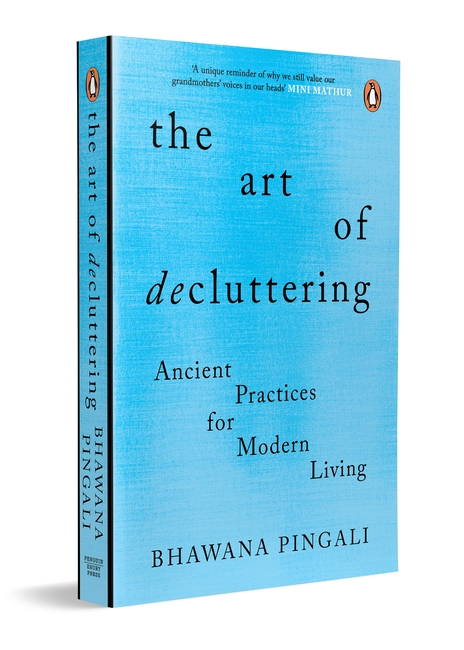
Bagging seeds to relax our eyes, making a cloth pad as self-care, draping a saree like trousers to go upside down, drawing to feed ants: can ancient rituals, practices and their objects work as modern ‘tools’ to ‘declutter’ our almost overloaded senses?
Clutter—real and virtual—is a part of our life now. These cleansing rituals and healing practices are believed
to have old-world history, rooted essence, purgative properties, health benefits, and zero or minimal waste.
If tweaked, it can even help us declutter to stay on top of our body–mind game.
Laced with nostalgia and punctuated with delightful memories, explorations and failures, The Art of Decluttering takes you through nine retellings of clothing, home and body, which make aspects of ancient Indian ritualistic life relatable to the modern reader.
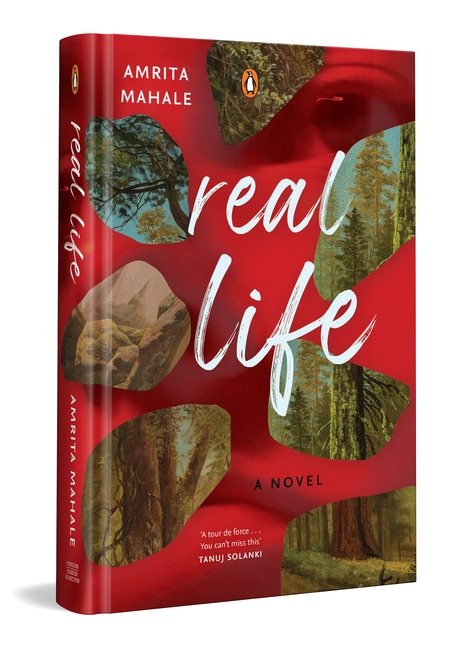
In the remote Mahamaya Valley in the Himalayas, wildlife biologist Tara has vanished. Hunting for answers, Tara’s best friend Mansi sets out to retrace her whereabouts in the days before her disappearance. The prime suspect Bhaskar sits in police custody, his obsession with Tara laid bare, his testimony a labyrinth of contradictions and half-truths. As the investigation deepens, the valley reveals its own mysteries—a backpacker paradise where the timeless and the ephemeral collide, where technology and nature clash, and where a woman’s voice can be silenced in countless ways.
Rendered in exquisite prose, Real Life is a gripping mystery that transforms into a masterful exploration of love and loss, visibility and erasure, AI and surveillance and the never-ending tussle between individual desires and societal demands.
In an age of surveillance and enforced conformity, what does it mean for a woman to seek a more authentic, real existence?
Suleikha, Leo and Kai call themselves the Freezies because they’ve been frozen out of the popular groups of their village school.
One day, a battered van with a trailer attached is found parked in the Mead, the open village green. In it is Mr Christaki, who is unkempt in appearance but gentle in speech. His appearance creates fissure lines in the village, which divides into camps that cannot agree over what is to happen with Mr Christaki. Meanwhile, Mr Christaki makes his own place in the community and becomes music tutor to the Freezies.
And then events spiral and grow until it becomes something much bigger than the Freezies could have ever imagined, and they have to plan a daring and dangerous public ruse to save their friend from the devastating fate he faces . . .

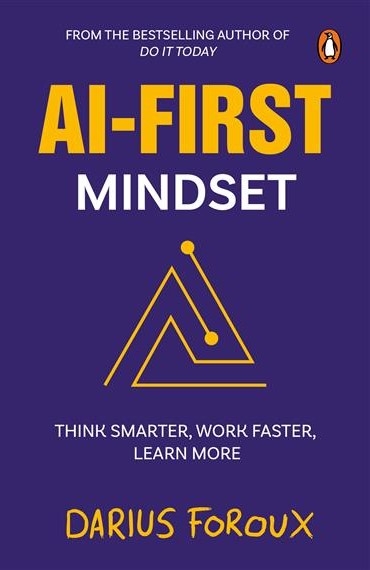
Unlock your potential and stay ahead of the curve with The AI-First Mindset – your ultimate guide to leveraging AI for personal and professional success.
In this game-changing book, bestselling author Darius Foroux shows you how to stop fearing artificial intelligence and start using it to your advantage — at work, in life, and in everything in between. Packed with real-world examples, sharp insights, and personal stories, AI-First Mindset is your roadmap to working smarter, thinking deeper, and thriving in a world increasingly driven by intelligent machines.
From using AI to write, invest, and negotiate, to learning how to balance speed with critical thinking, Foroux gives you actionable strategies to take control of the future — instead of letting it control you.
Key Takeways from the Book:
- Learn how to use AI as a personal productivity coach, creative partner, and decision-making tool.
- Discover real-life examples of AI in action — from writing and investing to everyday problem-solving.
- Gain a competitive edge by combining AI efficiency with deep, intentional work.
- Future-proof your skills by adopting a mindset of curiosity, adaptability, and innovation.
- Understand not just how AI works — but how you can work better with it.

Three historians. Three generations. Spanning nearly a century of work, Romila Thapar, Kumkum Roy and Preeti Gulati, reflect on their lives and their engagement with one of the most demanding, and most crucial, disciplines of our times. Personal narratives of growing up—learning about history, charting new and distinct paths as researchers, the challenges of teaching—meld effortlessly into a larger and complex changing context: the emergence of an independent nation, of movements that have helped shape the process, and of resistance. To what extent, the authors ask, have feminisms made a difference? Can these interventions lead to redefining or rejuvenating the discipline, transforming it into a more inclusive space where diverse voices can be acknowledged and heard with respect and understanding? These and other questions inform this accessible and lucid text.
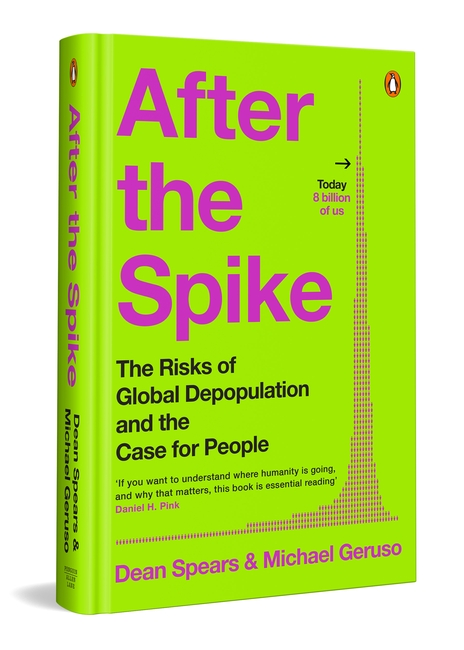
Most people on Earth today live in a country where birth rates already are too low to stabilize the population: fewer than two children for every two adults. In After the Spike, economists Dean Spears and Michael Geruso sound a wakeup call, explaining why global depopulation is coming, why it matters, and what to do now.
It would be easy to think that fewer people would be better—better for the planet, better for the people who remain. This book invites us all to think again. Despite what we may have been told, depopulation is not the solution we urgently need for environmental challenges like climate change. Nor will it raise living standards by dividing what the world can offer across fewer of us. Spears and Geruso investigate what depopulation would mean for the climate, for living standards, for equity, for progress, for freedom, for humanity’s general welfare. And what it would mean if, instead, people came together to share the work of caregiving and of building societies where parenting fits better with everything else that people aspire to.
With new evidence and sharp insights, Spears and Geruso make a lively and compelling case for stabilizing the population—without sacrificing our dreams of a greener future or reverting to past gender inequities. They challenge us to see how depopulation threatens social equity and material progress, and how welcoming it denies the inherent value of every human life. More than an assembly of the most important facts, After the Spike asks what future we should want for our planet, for our children, and for one another.
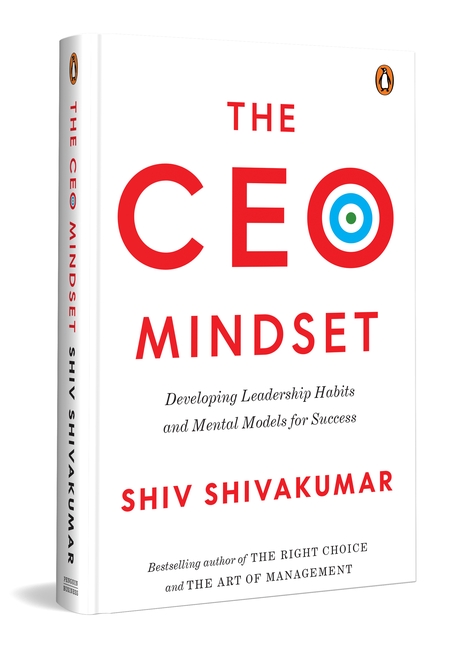
Being a CEO is high up on the list of most people’s career goals. Successful CEOs have a winning attitude, powerful habits and know how to ask the right questions to deliver the best results. But what does it really take to make it as a CEO? This book, penned by corporate leader and management guru Shiv Shivakumar, offers deep insights into the importance of prioritization, reflection, time management, relationships and the evolving landscape of leadership.
Through compelling stories and thorough analysis, Shiv shares invaluable lessons from his own career journey for the first time and brings in perspectives from thirteen leaders across industries like executive search, business, journalism, entrepreneurship, FMCG and education. The book also emphasizes collaboration and the importance of cultivating trust, shedding light on what employees seek from their leaders.
One does not become a CEO overnight—this book will set you on a journey of reflection, inculcating the right leadership values, and develop habits which will pave the way for a more meaningful and rewarding career.
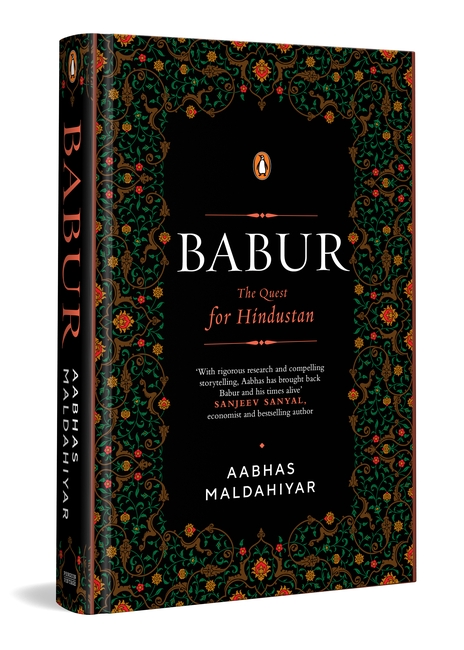
Embark on a captivating journey with Babur: The Quest for Hindustan, where the narrative resumes with Babur’s daring campaign in Bajaur. This meticulously researched biography continues to challenge the conventional portrayal of Babur, offering a nuanced view of his ambitions and complexities. Drawing from the rich Persian manuscript of the Baburnama and other primary sources, this book is a pivotal addition to Babur’s biographical genre, essential for anyone seeking to understand the enigmatic ruler’s legacy. Discover the multifaceted world of Babur, where history and intrigue intertwine.
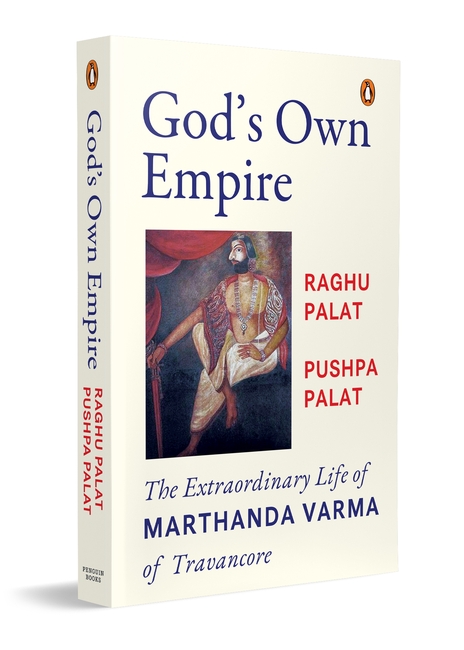
In 1750, at the height of his power, Marthanda Varma made a momentous decision. He decided to hand over the kingdom to Lord Ananthapadmanabha, the reigning deity of the kingdom of Travancore. In future, he decreed that he and his heirs would rule over the kingdom as the ‘dasas’ of the deity. It was the culmination of Varma’s illustrious career as a military leader and statesman.
When Marthanda Varma ascended the throne of Travancore in 1729 as a twenty-three-year-old, it was a kingdom embattled on every front—be it feudatories within the kingdom, rival kings outside or European powers beginning their pursuit of colonies in India.
Varma played a pivotal role in consolidating the royal family’s hold on the kingdom, expanding the kingdom’s boundaries by fighting off external rivals and even fending off the Europeans. He defeated the Dutch in the Battle of Colachel in 1750 and ended Dutch colonial aspirations in India.
God’s Own Empire by Raghu and Pushpa Palat, presents the extraordinary story of Marthanda Varma. Well-researched and accessible, it is the remarkable story of a remarkable man.