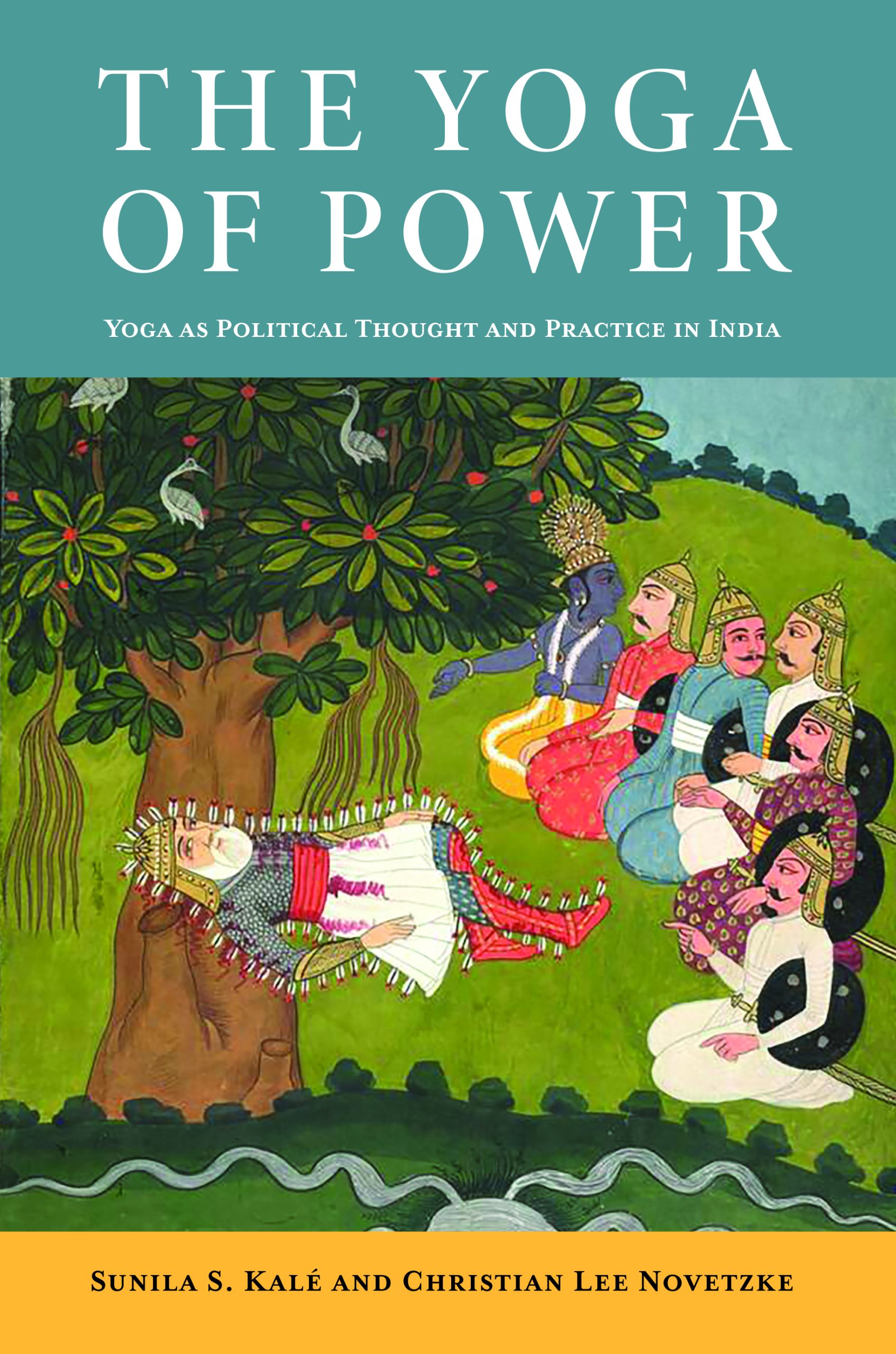
In Indian languages from Sanskrit to Marathi, yoga has an enormous range of meanings, though most often it refers to philosophy or methods to control the mind and body. This book argues for a wider understanding, demonstrating that yoga has long expressed political thought and practice. The political idea of yoga names the tools of kings, poets, warriors, and revolutionaries. It encodes stratagems for going into battle and for the demands of governance. This idea suggests routes to self-rule even when faced with implacable obstacles, and it defines righteous action amid the grime and grief of politics and war.
Sunila S. Kalé and Christian Lee Novetzke chart a new genealogy of yoga, beginning with uses of the term in the Ṛg Veda, the Mahābhārata, the Bhagavad Gītā, and the Arthaśāstra. In the world of these texts, yoga names everything from war and battle strategy to good governance, espionage, taxation, and welfare. Kalé and Novetzke follow this trail into the modern period, examining the writings and speeches of thinkers such as Gandhi, Tilak, Aurobindo, and Ambedkar as well as the extraordinary story of the Princely State of Aundh, whose ruler saw the Surya Namaskar (Sun Salutation) as a tool for sovereignty. Offering a novel interpretation of yoga that embraces its long-standing political conceptualization, this book sheds light on South Asian political thought and history from its earliest texts to the present day.

Now in paperback, Soul Healer Susan Grau shares her near-death experience, deeply personal struggles, and stories of the thousands she’s helped as an evidential medium to offer profound insights into your soul’s journey, healing from grief, and the afterlife.
In this compassionate, insightful guide into the often-misunderstood realm of the spirit world, you will gain a deeper understanding of the afterlife and tools for connecting with angels, spirit guides, and souls on the other side.
Susan Grau shares her spiritual journey—including her decades of experiences as a Soul Healer and certified counselor, struggles with loss, and personal trauma—as an inspirational roadmap for those seeking enlightenment and healing. You will be captivated by the stories of some of the thousands of clients she has helped over the years as an evidential medium, each one containing a lesson for your soul.
Whether you’re grappling with the loss of a loved one, seeking answers to life’s mysteries, interested in near-death experiences, or looking to deepen your spiritual awareness, Infinite Life, Infinite Lessons provides the clarity, wisdom, and solace needed for your journey.

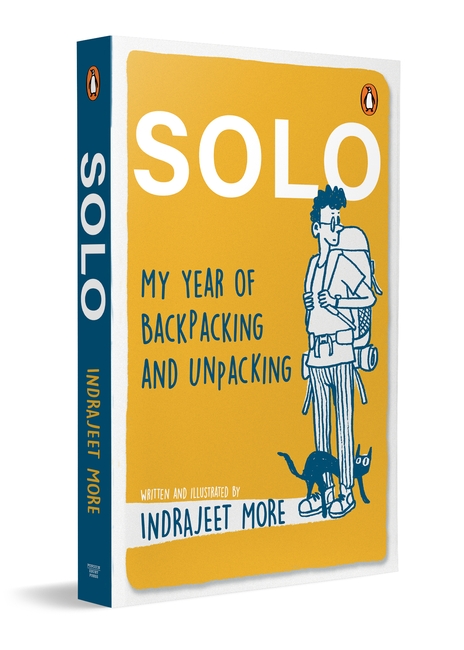
Barely a year into college, Indrajeet More is offered to host a travel show on budget backpacking across India.
As he undertakes a year-long journey across thirteen cities, what unfolds is a string of surreal life experiences—from getting lost in the forests of coastal Karnataka to camping amid the snowy peaks of the Himalayas, from hunting for the best toddy shop in rural Kerala to dancing to the beats of Naga folk songs.
Through this journey, Indrajeet discovers novelty and relatability in diverse cultures by reflecting on his upbringing in a Maharashtrian household. He navigates the inevitable boredom of solo travel and the anxiety of uncertainty, ultimately seeking belongingness in the most unfamiliar of places.
Solo is a raw, unfiltered backpacker’s gaze at contemporary India, about learning to read people beyond language, understanding food beyond ingredients, hearing stories beyond regions and, most importantly, finding a sense of home away from home.
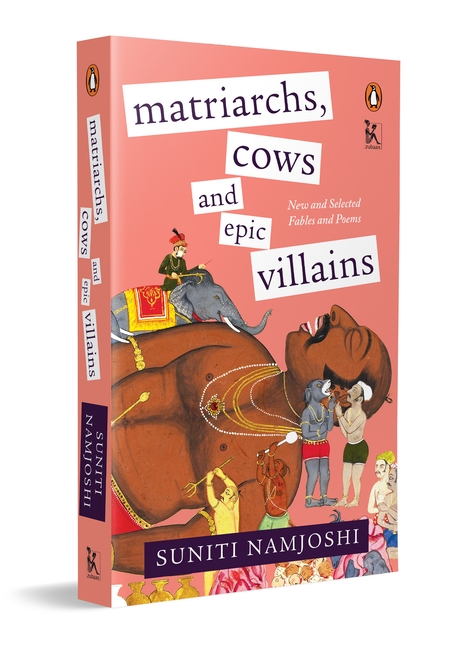
Suniti Namjoshi’s compelling tales range from metamorphosed cows to ruling mothers, from talking donkeys to epic villains. In this substantial collection are fables old and new, lyric poems and epigrams, novella narratives and ironic commentary. We also complete the Ravana trilogy with Shupi’s Choices and Kumbh, with villainous siblings who are sometimes ridiculous, but ready to show up for own shortcomings.
Matriarchs, Cows and Epic Villains is a curation of Suniti’s work where she continues to raise questions about how we deal with our destiny as human beings while at the same time trying to understand and confront our inadequacies.

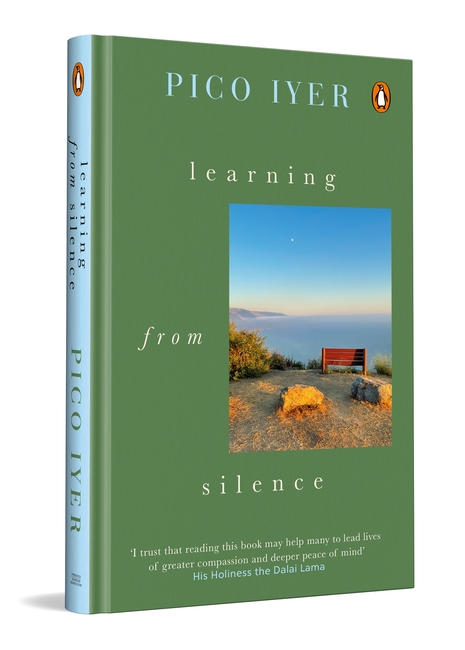
Pico Iyer has made more than one hundred retreats over the past three decades to a small Benedictine hermitage high above the sea in Big Sur, California. He’s not a Christian—or a member of any religious group—but his life has been transformed by these periods of time spent in silence. That silence reminds him of what is essential and awakens a joy that nothing can efface. It’s not just freedom from distraction and noise and rush: it’s a reminder of some deeper truths he misplaced along the way.
In Learning From Silence, Iyer travels deep into inner stillness and joy in his many seasons at the monastery, even as his life is going through constant change: houses burn, a parent dies, a daughter is diagnosed with cancer. He shares the revelations he experiences, alongside wisdom from other nonmonastics who have learned from adversity and inwardness. Most profoundly, he shows how solitude can be a training in community and companionship. In so doing, he offers a unique outsider’s view of monastic life—and of a group of selfless souls who have dedicated their days to ensuring there’s a space for quiet and recollection that’s open to us all.
Radiant, intimate, and gripping, Learning From Silence offers ageless counsel about the power of silence and what it can teach us about how to live, how to love, and, ultimately, how to die.
Two officers fresh out of the National Defence Academy (NDA) get posted at a laid-back military garrison on the banks of the Ganga River in Western UP. Lieutenant Rohit Verma comes from an army background, knows the ropes and generally has it easy. Lieutenant Renuka Khatri, on the other hand, is from a civilian background, and from the first batch of girl cadets admitted to the NDA. They both have to prove that they are worthy of being army officers. During a welcome party at the officers’ mess, one of the ladies is assaulted and the needle of suspicion falls on Rohit. A court of inquiry is ordered, with Renuka unearthing crucial evidence that points to more sinister connections.
When one of the witnesses due to depose before the court is murdered, it not only absolves Rohit but also starts the hunt for the real killer. Initially sceptical, the commandant throws his weight behind the investigation, which as it unfolds, reveals similarities to events rooted in the past. In their hunt for the suspect, Rohit and Renuka are assisted by Rehmat, a local village girl. The trio of Rohit-Renuka-Rehmat (RRR) must race against time to catch the killer before he can strike again.

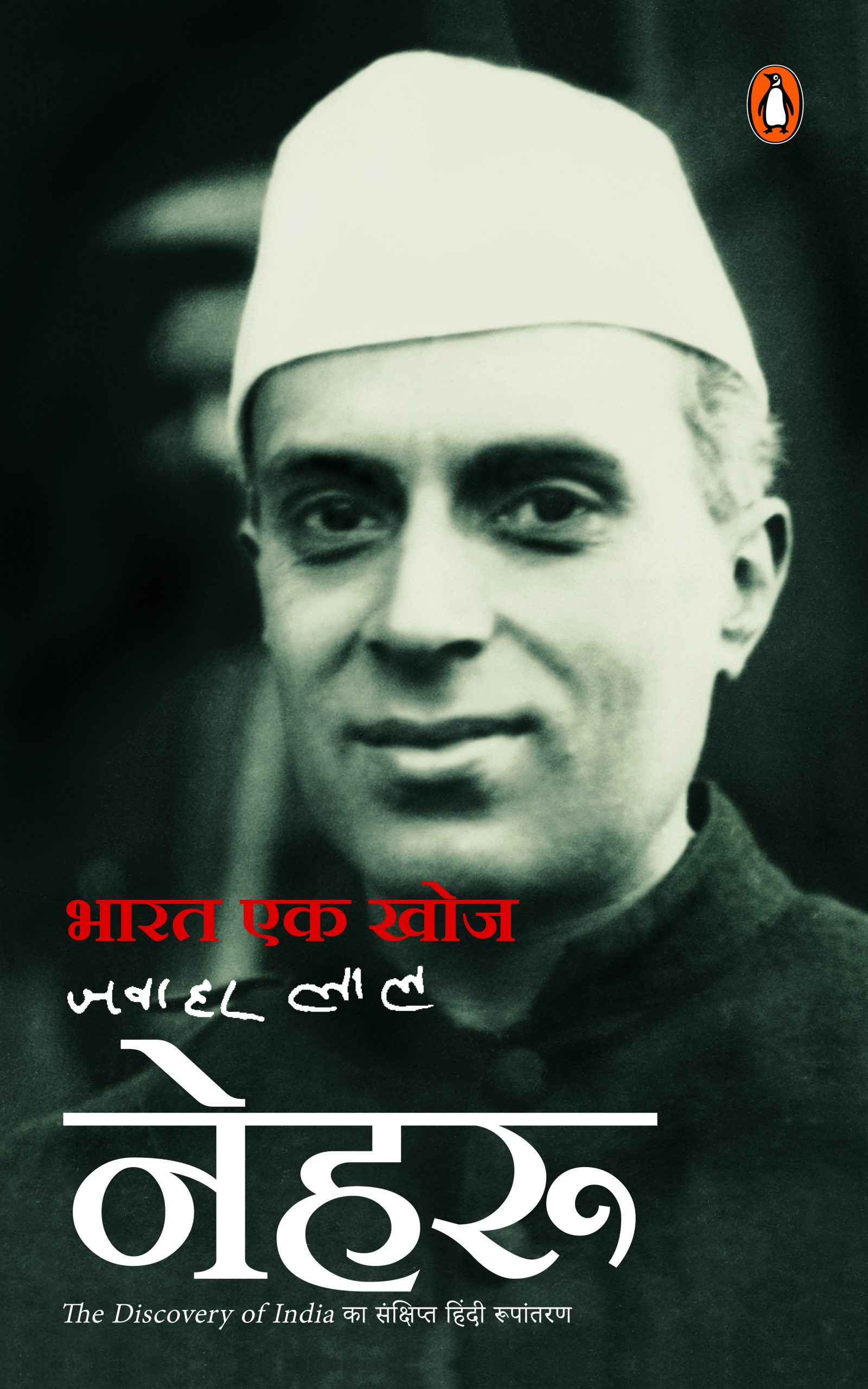
इस पुस्तक को पंडित जवाहरलाल नेहरू ने भारत की स्वतंत्रता से पहले 1942-1945 के दौरान अहमदनगर किले में कैद होने के दौरान लिखा था।
इसमें नेहरू जी ने सिंधु घाटी सभ्यता से लेकर भारत की आज़ादी तक विकसित हुई भारत की बहुविध समृद्ध संस्कृति, धर्म और अतीत का वैज्ञानिक दृष्टि से विश्लेषण किया है।
उन्होंने भारत के इतिहास के प्रति विभिन्न दृष्टिकोणों में सामंजस्य स्थापित करने का प्रयास किया और खुद को सामंजस्य का एक आदर्श प्रस्तुत किया।
जवाहरलाल नेहरू जी इस पुस्तक के बारे में स्वयं लिखते हैं कि इतिहास मनुष्य के संघर्ष की कहानी है; जंगली जानवरों और जंगल के विरुद्ध और अपने ही कुछ लोगों के विरुद्ध, जिन्होंने उसे दबाए रखने और अपने लाभ के लिए उसका शोषण करने की कोशिश की।
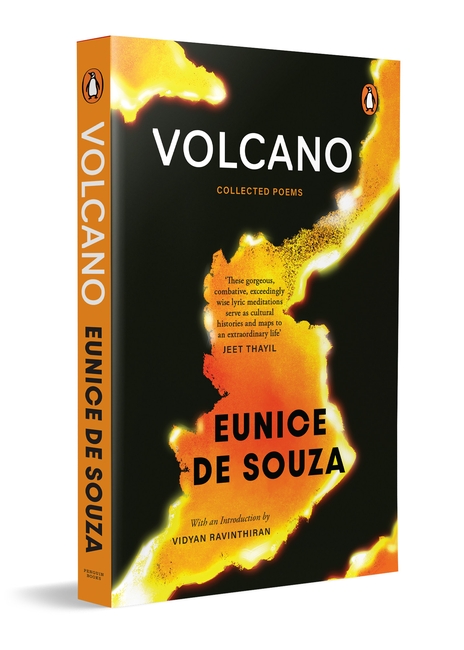
A literary critic, a novelist and a poet for over four decades, Eunice De Souza’s compelling work made her one of the most renowned Indian poets writing in the English language. Her work has been critically acclaimed, and reflects her enduring concerns with the self and women in society as they navigate through relationships, love, loss and family. Through her poetry, Eunice explores the dependency of lovers and the fraught relationships between parents and their children.
Volcano, a curated collector’s edition, features some of her best-known work so far: A Necklace of Skulls, Learn from the Almond Leaf as well as never-before published work. With a critical introduction that presents Eunice to readers old and new, this profoundly intimate and exquisite collection presents Eunice’s poetry genius, making it a collectors must-have.
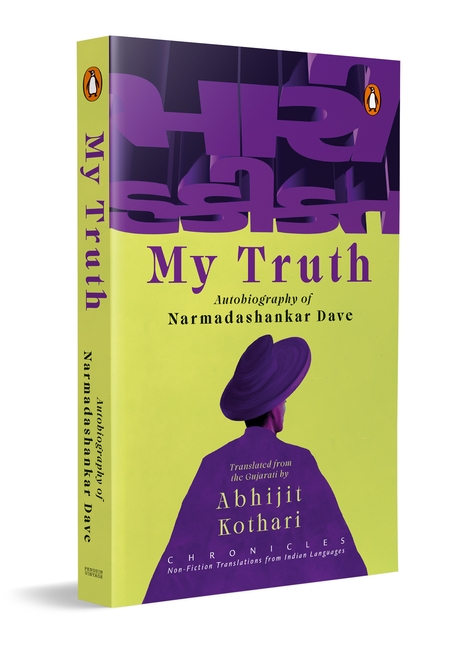
Originally titled Mari Hakikat, this is the autobiography of one of the foremost figures in Gujarati literature: Narmadashankar Dave (1833–1886), popularly known as Narmad. The book, part of the Chronicles series of non-fiction translations from Indian languages, is a fascinating assemblage of different forms of writing—diary, reflection, poetry—that document the early period of Narmad’s life. It is an example of a new awakening and new genres that enabled the self to be expressed within the framework of traditional thought. Abhijit Kothari’s English translation, My Truth, brings to readers beyond Gujarat and India this landmark book for the first time. Scholars of India’s intellectual history, as well as literary scholars and students, will find this significant text made available in an elegant translation valuable.

A practical and hopeful guide that teaches you how to ask yourself the right questions in order to create a new vision for your future.
What outcome do you want from reading this book?
What difference would it make if you could attain it?
How would you notice the change it made in your life?
The questions we ask ourselves are powerful tools that can change the trajectory of our lives. In this practical and hopeful guide, psychotherapist Elliot Connie and Adam Froerer, teach that getting honest and asking yourself the right questions enables you to create a new vision for your future that is hopeful and full of previously unimagined possibility. Your actions and beliefs will then align with your new vision as you employ the tips, strategies, and practices that can be turned to time and time again in a variety of situations.
Using case studies, success stories, and the latest research in the field of SFBT, readers are given the tools, knowledge, and confidence to apply SFBT principles that will shift their perspective, retrain their brain, and change their relationship to their future.