Publish with Us

Follow Penguin

Follow Penguinsters

Follow Penguin Swadesh

In Her Defence

Few arenas in the annals of legal history have witnessed as profound a transformation as the realm of gender equality within the armed forces.

In Her Defence: Ten Landmark Judgments on Women in the Armed Forces is an anthology of essays and commentaries, in layperson terms, contributed by jurists, judges and academics on landmark constitutional court decisions of India that made a difference or brought about a positive change for women in the uniformed forces.

It is envisaged as not just a book, but a testament to the resilience, determination and legal triumphs of women who have paved the way for greater gender inclusivity and parity within India’s armed forces.

Meticulously curated to illuminate the pivotal judgments that have shaped the trajectory of women’s participation in the armed forces of India, this book stands as a cornerstone and embodiment of the judiciary’s unwavering dedication to upholding the principles of equality and justice.

Vishwa Shastra

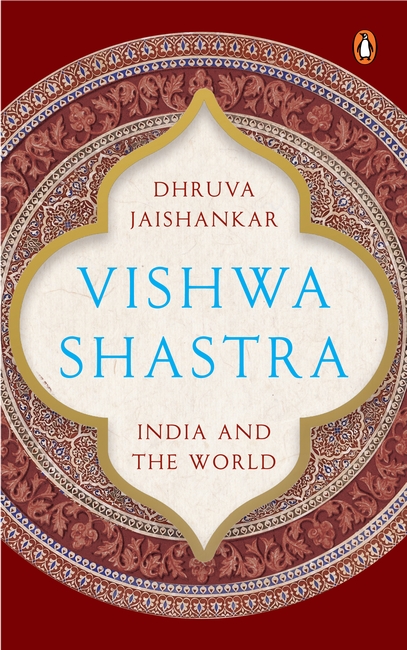
In Vishwa Shastra, Dhruva Jaishankar provides a comprehensive overview of India’s interactions with the world—from ancient times to the present day. He describes a long tradition of Indian statecraft and strategic thinking on international affairs, charts early India’s relations with a vast geography from the Mediterranean and Africa to Southeast and Northeast Asia, and captures the costs and consequences of European colonialism. Jaishankar also describes India’s territorial, economic and governance challenges upon Independence and the origins of India’s rivalries with Pakistan and China.

Speaking to a wide audience that includes policymakers, scholars and especially students, Vishwa Shastra offers both rich historical context and forward-looking strategies for India. Highlighting India’s transition from Cold War non-alignment to post-Cold War realignment, Jaishankar outlines India’s strategic objectives: bolstering national power, securing the neighbourhood, maintaining a balance of power in the Indo-Pacific, and leading at international institutions.

Balanced, comprehensive and rigorous, Vishwa Shastra goes beyond shedding light on how India can maneuver in a challenging geopolitical landscape and advance its interests in an interconnected world: it gives us a clear-eyed perspective on how India might actually define the emerging world order.

Masalamandi

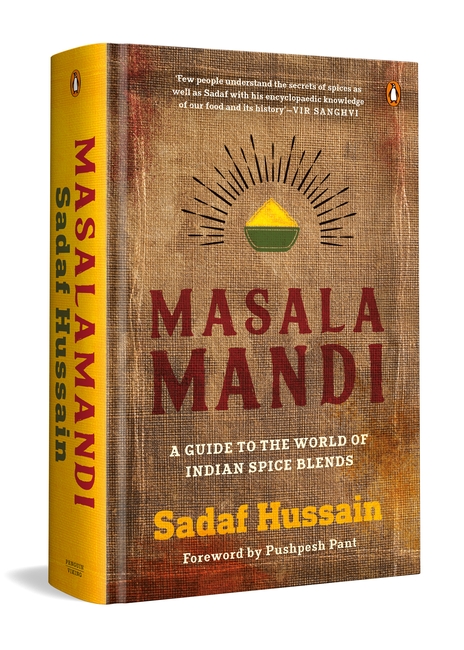
The book you are holding is a unique cookbook about Indian spices, specifically focusing on the intricate
world of spice blends. What is fascinating about spice blends, you ask? Well, a garam masala may
contain anywhere between four and fifteen varied spices; a pickle masala may have a different recipe
in Andhra Pradesh than it does in Delhi; a chai masala may have a distinctive recipe in the winter
than it does in the summer.

In Masalamandi, the author sets out on a quest to unravel how a single dish can be prepared with
multiple spice blends, all created from the same whole spices yet resulting in distinct flavours! While
sharing his own experiences and interactions with these spice blends, he also offers a comprehensive
exploration of the history, mythology and cultural significance that surrounds each of them.

This is a spice trail like no other.

The School for Bad Girls

Something strange is happening in the heart of the British Empire.

Nineteenth-century Calcutta is abuzz with social reforms, especially with regard to womens’ rights and education. And in this time, Kadambini Ganguly dreams of going to university—and in the ultimate audacious hope—wants to become a doctor.

But for many people, the idea of girls studying is anathema. And a school full of unmarried girls and widows getting an education, in an environment where caste is disregarded and every student treated as an equal, leads to charges of immorality. And the battle to get the right to a college education is against overwhelming odds.

The fictionalised story of Kadambini, one of the first women graduates of the British Empire and the first woman to get a degree from an Indian medical college, is rivetingly told by Madhurima Vidyarthi, in a fascinating portrait of nineteenth century life, society and its arbitrary mores.

How to Suffer Well

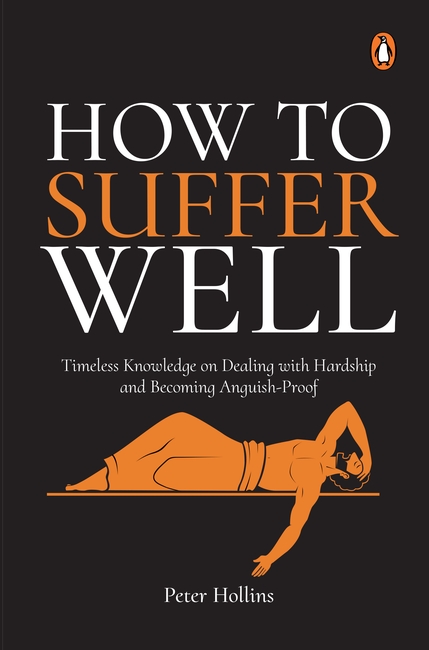
How to Suffer Well: Timeless Knowledge on Dealing with Hardship and Becoming Anguish-Proof.

Life is tough, so you better get a helmet. You’ll run into pain, anguish, and obstacles. But who says that they need to affect you?

If you’re able to build immunity to emotional, mental, and physical discomfort and suffering, then your mind can be trained to flourish despite life’s challenges.

How to Suffer Well is a literal guidebook to learn how to defeat the voices in your head that tell you to give up. Instead, they’ll be replaced with voices that tell you it’ll be okay, this will pass, and life can be happy despite the suffering; only if you know how to suffer well.

In this book, you’ll learn to –

  • Face your sufferings with a zen-like rationality and objective perspective
  • Experience the positive side of emotions
  • Discover how to tolerate life’s rigors without collapsing
  • Increase your mental pain tolerance to superhuman levels
  • Greatly expand your comfort zone and build layers of mental armor to ensure your happiness.

Caged …

This is my Abbu…my father. I never used to call him Abbu … I love to call him by this name in my memories of him…always.

There’s so much ‘mamta’ in the word ma. More than in a mother herself. Just saying the word starts off a churning in the navel.

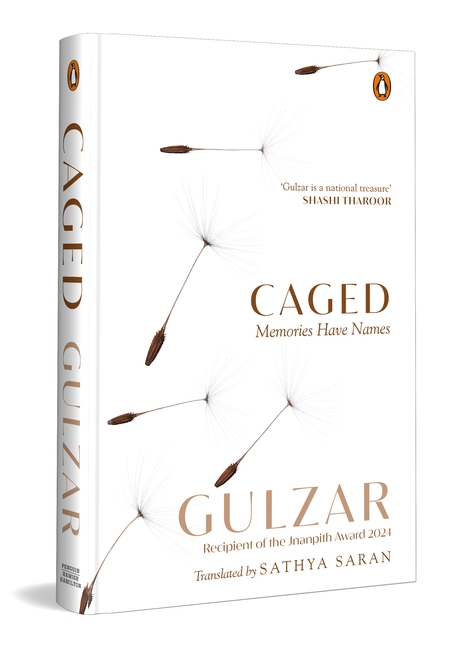
Intimate, subtle and deeply personal, Caged … Memories Have Names is probably Gulzar Saab’s first autobiography in verse.

Gulzar Saab ruminates and writes in rainbow colours. From Rumi to Pablo Neruda and Jibananda Das, among others, have coloured him in myriad of hues. With this he has painted the portraits of Birju Maharaj, Mehdi Hasan, Pancham, Asha Bhosle in words. Their palpable presence, thoughts and words are etched in Gulzar Saab’s existence. Then there are people, who have showered his life with love, affection with multitude of emotions: Meghna, Raakhee ji, Vishal Bhardwaj, and Javed Akhtar Saab, to name a few. And, words that remained unsaid to Abbu, search for his Ma within his own existence, they are the silken bonds of life. Gulzar Saab has ‘caged’ them deep inside his heart.

They are for now … and … forever.

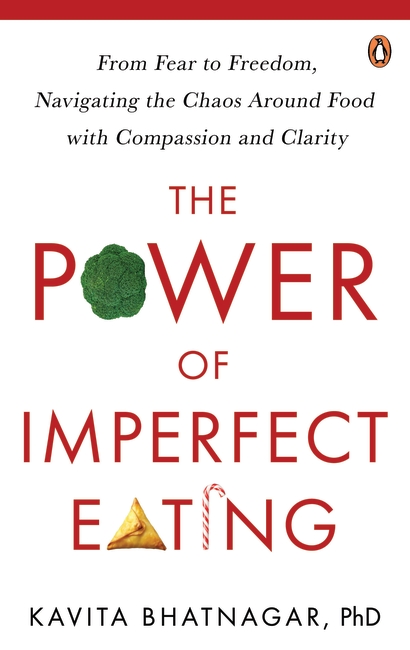
The Power Of Imperfect Eating

Dr. Bhatnagar’s book offers us timely and effective guidance on how to change our eating habits if we want to move away from a lifestyle of ”living to eat” to a lifestyle of ”eating to live well”. Professor Das Narayandas, Edsel Bryant Ford Professor of Business Administration, Harvard Business School

In Power of Imperfect Eating, Dr. Kavita Bhatnagar introduces readers to a unique journey through the lens of a food technologist, nutritionist, and psychologist who is deeply passionate about food choices and consumer behaviour.

Rather than dictating which foods are good or bad, this book offers a different perspective. It’s not about laying down dietary rules or giving nutrition advice. Instead, it weaves together stories—stories that mirror the intricate, emotional, and often imperfect connection we all share with food. Through these narratives, it invites you to reflect, not just on what you eat, but on how food fits into the broader journey of your life.

Through these stories, you’ll explore how food shapes our lives, our behaviours, and our choices in ways that go far beyond the plate. You’ll meet characters navigating real dilemmas around food, health, and lifestyle—whether it’s reading food labels, balancing health goals, or simply understanding why they eat the way they do.

The book encourages readers to embrace imperfection in their relationship with food, finding peace in progress rather than perfection. Challenging the conventional habit of categorizing food as either “good” or “bad,” she guides readers to re-evaluate how they engage with food in their everyday life without guilt, without judgment—just curiosity and understanding.

And just when you think you’ve learned it all, the author unveils something truly transformative at the end—a powerful tool that will become the reader’s greatest asset in creating lasting, positive change in their relationship with food and health. This revelation makes Power of Imperfect Eating an essential guide for anyone ready to take control of their well-being.

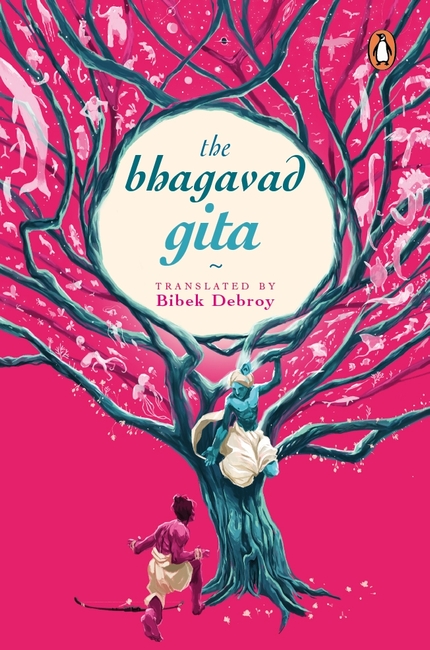
Premium, Luxury, Special Edition of The Bhagavad Gita by Bibek Debroy

The foundational text on dharma and Hindu philosophy, exquisitely rendered by one of our most eminent Sanskrit translators

As a spiritual guide, the Bhagavadgita is a mesmerizing account of the debate between right and wrong, and the bond between action and consequence. One of the core Hindu scriptures, it is part of the great Indian epic, the Mahabharata, and unfolds in the form of a dialogue between Krishna and the Pandava prince, Arjuna.

This beautifully produced bilingual edition is a masterful verse-for-verse translation, providing the original Sanskrit verses alongside the English rendition. Bibek Debroy’s deep familiarity with the text yields a treasure trove of insights that will delight the scholar and the lay reader alike, making this essential reading for anyone with an abiding interest in Indian scriptures.

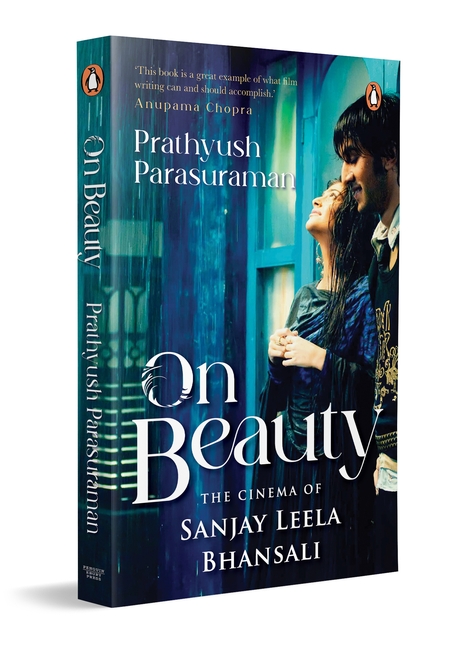
On Beauty

What does it mean to be in the presence of beauty? And how can one explore and understand this through the filmography of writer, director, editor, music composer and choreographer Sanjay Leela Bhansali?

In this sweeping text, Prathyush Parasuraman walks the reader through the auteur’s films—those hailed, those hauled—like Gangubai Kathiawadi, Padmaavat, Devdas, Ram-Leela, and Saawariya. With sensitivity and finesse, On Beauty examines beauty as an idea, and aesthetics as a philosophy, while simultaneously shedding light on the making of Bhansali’s painstaking frames through conversations with his cinematographers, composers, choreographers and production and costume designers. In these pages, Bhansali’s cinema comes alive.

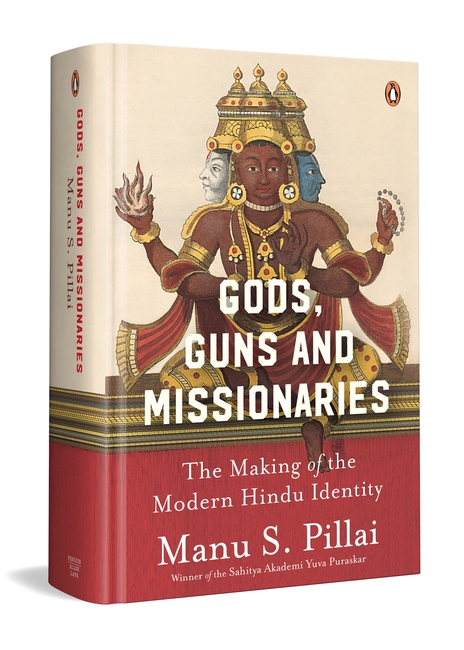
Gods, Guns and Missionaries

When European missionaries first arrived in India in the sixteenth century, they entered a world both fascinating and bewildering. Hinduism, as they saw it, was a pagan mess: the worship of devils and monsters by a people who burned women alive, performed outlandish rites and fed children to crocodiles. But soon it became clear that Hindu ‘idolatry’ was far more complex than white men’s stereotypes allowed, and Hindus had little desire to convert.

But then, European power began to grow in India, and under colonial rule, missionaries assumed a forbidding appearance. During the British Raj, Western frames of thinking gained ascendancy and Hindus felt pressed to reimagine their religion. This was both to fortify it against Christian attacks and to resist foreign rule. It is this encounter which has, in good measure, inspired modern Hinduism’s present shape. Indeed, Hindus subverted some of the missionaries’ own tools and strategies in the process, triggering the birth of Hindu nationalism, now so dominant in the country.

In Gods, Guns and Missionaries, Manu S. Pillai takes us through these remarkable dynamics. With an arresting cast of characters—maharajahs, poets, gun-wielding revolutionaries, politicians, polemicists, philosophers and clergymen—this book is ambitious in its scope and provocative in its position. Lucid and exhaustive, it is, at once, a political history, a review of Hindu culture and a study of the social forces that prepared the ground for Hindu nationalism. Turning away from simplistic ideas on religious evolution and European imperialism, the past as it appears here is more complicated—and infinitely richer—than popular narratives allow.

error: Content is protected !!