It has long been contended that the Indian Constitution of 1950, a document in English created by elite consensus, has had little influence on India’s greater population. Drawing upon the previously unexplored records of the Supreme Court of India, A People’s Constitution upends this narrative and shows how the Constitution actually transformed the daily lives of citizens in profound and lasting ways. This remarkable legal process was led by individuals on the margins of society, and Rohit De looks at how drinkers, smugglers, petty vendors, butchers, and prostitutes—all despised minorities—shaped the constitutional culture.
The Constitution came alive in the popular imagination so much that ordinary people attributed meaning to its existence, took recourse to it, and argued with it. Focusing on the use of constitutional remedies by citizens against new state regulations seeking to reshape the society and economy, De illustrates how laws and policies were frequently undone or renegotiated from below using the state’s own procedures. De examines four important cases that set legal precedents: a Parsi journalist’s contestation of new alcohol prohibition laws, Marwari petty traders’ challenge to the system of commodity control, Muslim butchers’ petition against cow protection laws, and sex workers’ battle to protect their right to practice prostitution.
Exploring how the Indian Constitution of 1950 enfranchised the largest population in the world, A People’s Constitution considers the ways that ordinary citizens produced, through litigation, alternative ethical models of citizenship.

An expert therapist and teacher leads you on a transformative journey of self-discovery and healing from collective and intergenerational trauma, based in the powerful practice of Internal Family Systems therapy.
The Internal Family Systems (IFS) model of psychotherapy is acclaimed for its power to help us recognize and integrate disparate parts of ourselves—a revolutionary course of treatment that can yield extraordinary results. But not all the work of IFS takes place in the confines of traditional therapy sessions. In this thoughtful and compassionate guide, Tamala Floyd, LCSW, gives readers the resources to expand their “parts work” beyond the therapist’s office and into daily life—where the real healing happens.
To write Listening When Parts Speak, Floyd draws on 20-plus years of experience as a psychotherapist, teacher, consultant, and coach specializing in healing trauma, and in particular, intergenerational trauma. Each chapter offers lucid explanations of key concepts, illustrative stories from patients (as well as Floyd’s own experience), and a guided meditation that can be used either in between therapy appointments to support and reinforce the work or as a way to begin an IFS therapy journey. In these pages, readers will:
• Explore the healing principles of IFS therapy
• Get to know their own parts—including wounded “exiles” and dedicated “protectors”
• Foster a trusting connection between the parts and the secure Self that connects them all
• Start to free themselves from beliefs that no longer serve them
• Connect with the wisdom and guidance of ancestors for deeper understanding and healing
Practitioners, too, will find Listening When Parts Speak an invaluable resource for supporting their patients and enhancing their own practice.

‘हे बुद्ध, मैं तुमको, धम्म को और संघ को शरणागत हूँ . . . बस, यही त्रिरत्न मेरी कुल संपदा है अन्यथा और कुछ भी नहीं है मेरे पास . . . बौद्ध धर्म के पालन के लिए किसी भी व्यक्ति को तीन बातों पर अमल करना होगा : पहली उसे सभी सिद्धांतों की जानकारी हो। दूसरी सिद्धांतों को व्यवहार में लाने के लिए रूपरेखा सामने हो। तीसरी रूपरेखा को व्यवहार में उतारने के लिए साहस, संकल्प व अनुशासन हो। यह पुस्तक पहली दो आवश्यकताओं की पूर्ति करती है, जबकि तीसरी आवश्यकता को पूरा करना आप पर निर्भर है यह धम्म की पुकार थी कि धम्मचारी सुभूति के शृंखलाबद्ध प्रवचनों का अनुवाद करने का विचार मन में उठा। इसी का प्रतिफल यह पुस्तक है, जो हर किसी को धम्म पर चलने और बुद्धत्व प्राप्त करने का मार्ग दिखाएगी।

All incredible entrepreneurs have some fundamental traits in common!
Founders: A unique species of humans engaged in the most productive action that ego can drive. Who put in every ounce of energy to survive and succeed big. Whose journey is so transformative that many lifetimes worth of evolution can get packed into it. Tightrope to the Moon takes readers into the mind of the ‘mega founder’ and decodes how they think, operate and successfully navigate the ultra-competitive startup racetrack. The book unpeels how the founder’s need to prove is first born in a tangible form, grows bigger, survives blow after blow, and yet comes out in front to lead the pack. Based on the author’s over two decades of experience as a venture capitalist, the book uses incisive insights and compelling case studies to unravel the secrets of successful founders. A must-read for founders, their families and their co-workers, this seminal work is a much-needed account of how founders walk the long, treacherous road to success.
Reeni has to save her city’s birds!
Reeni is wild about birds! So when she and her best friend, Yasmin, have to do a survey for a school project, asking their neighbours what they know about birds is an obvious choice. They are shocked to learn that no one?not one single person!?has heard about Bird Count India, when thousands of birdwatchers will be out counting birds as part of a global movement.
Why do people not seem to care about the threats to city birds? And is the mayor really trying to stop their city’s bird count event?
Reeni and Yasmin enlist help from their families and diverse friends?Anil, Book Uncle, the istri lady and even their school bus driver. They must get people interested in the bird count! After all, what’s good for the birds is good for all of us!
A book in the award-winning Book Uncle and Me universe.

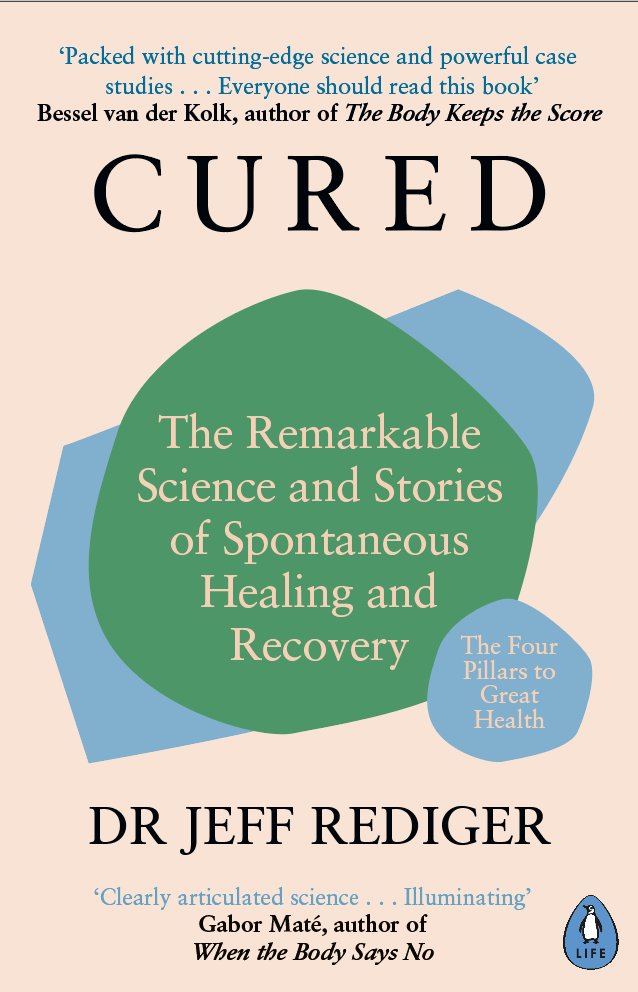
‘Ground-breaking. Everyone should read this book’ Bessel van der Kolk, author of The Body Keeps the Score
When it comes to understanding the connection between our mental and physical health, we should be looking at the exceptions, not the rules.
Dr Jeff Rediger, a world-leading Harvard psychiatrist, has spent the last fifteen years studying thousands of individuals from around the world, examining the stories behind extraordinary cases of recovery from terminal illness.
Observing the common denominators of people who have beaten the odds, Dr Rediger reveals the immense power of our immune system and unlocks the secrets of the mind-body connection. In Cured, he explains the vital role that nutrition plays in boosting our immunity and fighting off disease, and he also outlines how stress, trauma and identity affect our physical health.
In analysing the remarkable science of recovery, Dr Rediger reveals the power of our mind to heal our body and shows us the keys to good health.
‘In an era of incurable chronic diseases causing 60% of all deaths worldwide, this book provides one potential way out’ Dr Mark Hyman, author of The Blood Sugar Solution
‘Seasoned with the author’s penetrating insights about healing, clearly articulated science and illuminating case histories, Cured opens genuine vistas of transforming illness into health’ Gabor Maté, author of When the Body Says No
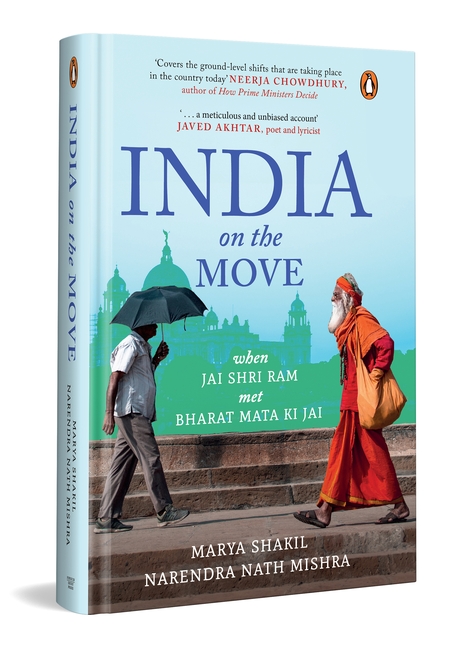
Things start to heat up in the national capital when protests erupt in the campus of JNU against the protestors of the judicial hanging of Afsal Guru and Maqbool Bhat. Very soon the students would go from being research scholars to ‘jihadis’, ‘violent communists’ and ‘anti-nationals’ resulting in the larger questions of a true nationalist.
Slogans like Bharat mata ki jai and Jai Shri Ram, which were traditionally used to express reverence to the nation and a salutation to Lord Rama respectively, have been appropriated as political slogans. Whilst until now, Bharat Mata ki Jai and Jai Shree Ram ran parallel in the country’s political discourse, today they lead the same way. On one hand, there are those who view patriotism and nationalism as synonymous with blind obedience and conformity. On the other, those who believe in a more inclusive and diverse India, where dissent and criticism are essential components of a thriving and functioning democracy. This book attempts to view events following the JNU event, the farmers’ protest, Balakot strikes and the subsequent unravelling of deep fissures within us.
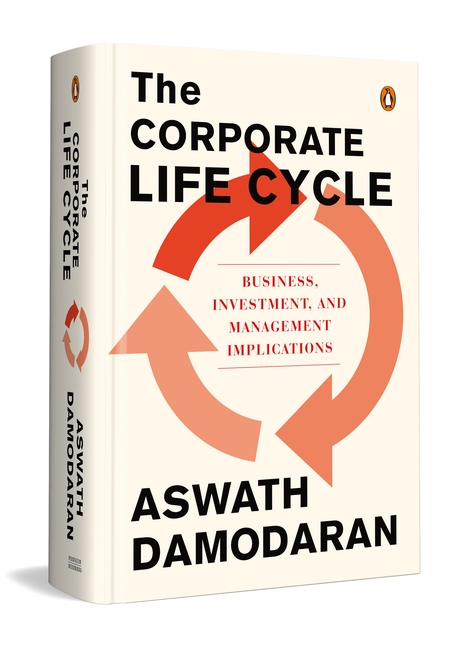
Throughout his storied career, Aswath Damodaran has searched for the universal key to demystifying corporate finance and valuation. Now, at last, he offers the groundbreaking answer to readers everywhere. It turns out there is a corporate lifecycle very much like our own, with unique stages of growth and decline. And just as we must learn to act our age, so too must companies. By better understanding how corporations age and the characteristics of each stage of their lifecycle, we can unlock the secrets behind any businesses’ behavior and optimize our management and investment decisions accordingly. As the corporate lifecycle touches virtually every aspect of business, this book is for anyone with skin in the corporate finance game—from managers to investors, from novices to seasoned pros.
It may be the twenty-first century but religious tensions and conflicts continue all across the world. Even today, religion continues to play an unparalleled role in the lives of individuals and nations with people and leaders pitting one religious identity against another. But the question that needs to be asked is this: are all religions fundamentally different from each other?
What if we go back to the source texts of all great religions of the world? What will we find?
Will we find a mountain of differences or a sea of harmony? This book addresses this question and is sure to surprise you with its findings.
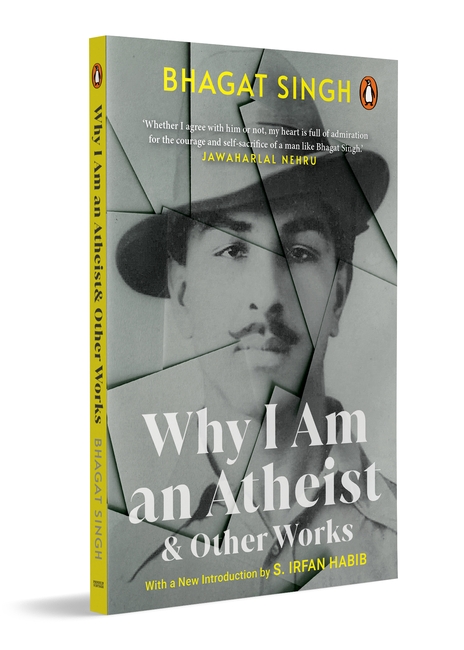
Bhagat Singh, a name that echoes through the annals of India’s struggle for independence, was not only a revolutionary freedom fighter, but also a profound thinker. ‘Why I Am An Atheist and Other Works’ encapsulates his fearless spirit and reveals his intellectual depth through a collection of essays, letters, and speeches. Singh’s writings include his statements regarding his involvement in the Central Legislative Assembly bombing to his introspective essays penned in prison, such as his renowned ‘Why I Am An Atheist’. This compilation immortalizes Singh’s unwavering dedication to the cause, showcasing his courage, defiance, and vision that continue to inspire generations. With an introduction by esteemed historian and expert on Bhagat Singh, Dr. S. Irfan Habib, this is a chance to experience the mind of a martyr whose legacy transcends time and ignites the flame of patriotism and revolution.