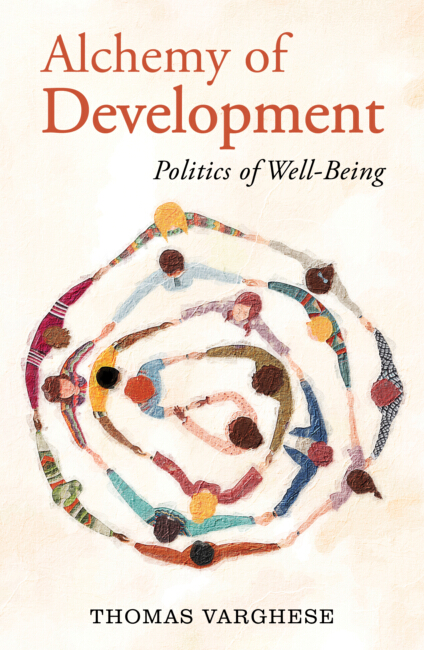
What if happiness is not a private pursuit, but a collective, political project?
Alchemy of Development centres transformation through new ways of seeing, being, and doing. Bridging development studies with diverse religio-philosophical worldviews, it reimagines well-being as interconnected and public. The result is a shift: from addressing the visible manifestations of a faulty growth paradigm – inequality, conflicts, and ecological collapse – to understanding the deeper causes that sustain these crises.
Exposing the deep-seated logic of separation and othering that normalizes exploitation of people and the planet, the book highlights interdependent, relational worldviews in which well-being is realized in the collective. Building on Bhutan’s development trajectory and drawing insights from across cultures, it advances a new politics of well-being.
Ultimately, Alchemy of Development is a call to rethink how we live, govern, and relate to one another and to the world.

Pt. Ved Lal Kaul Raz (1912–2010) lived for ninety-eight years—a life quietly marked by dignity, grace, and the brilliance of poetry. A universe of words, his verses glided with lyrical ease while bearing metaphors that touched the soul. This selection of his Urdu poetry navigates the delicate terrain of human emotion, blending subtlety with philosophical depth—exploring longing, regret, impermanence, and the transformative power of fleeting moments. Drawn from Kulyat-e-Raz, Gulgusht, and other compilations, the anthology reflects the unity and vision that define his enduring place in Urdu and Kashmiri literary tradition.

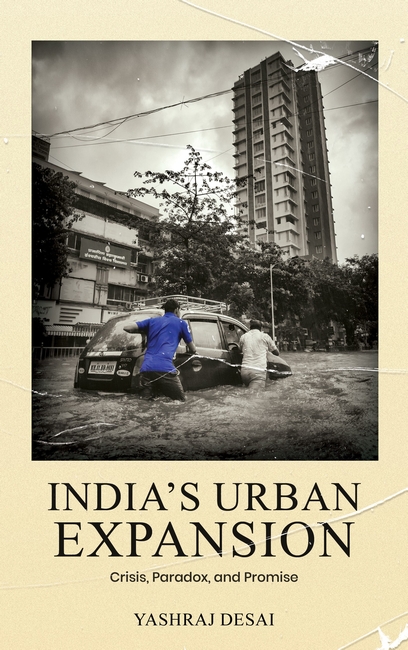
The city is breathing, but it is not alive.
India’s metropolitan dream is turning into a suffocating reality—choked skies, endless traffic, mounting waste, and infrastructure that promises relief but delivers more chaos. What looks like growth from afar feels like collapse from within. At the heart of this crisis lies the unending urban expansion paradox: every new flyover brings more cars, every expansion multiplies the density it was meant to ease. Our cities are not expanding to serve us—they are expanding to consume us.
But this is not a story of despair. It is a bold roadmap for change.
India’s Urban Expansion introduces the concept of the global readiness perimeter, offering a new framework to understand how Indian cities can move beyond reactive expansion toward deliberate, future-ready planning.

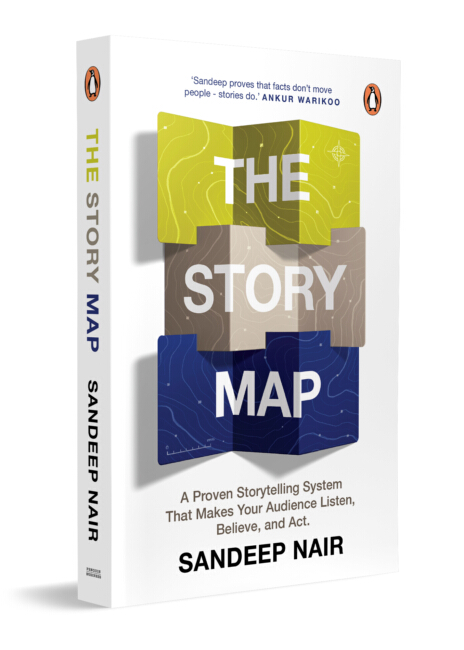
How well you tell a story decides how far your ideas travel and how well they are received. But most good ideas stay stuck inside the people who have them, because most of us believe that storytelling is a gift you’re born with—a natural talent you either have or you don’t.
The Story Map dispels that myth. Sandeep Nair spent fifteen years building brands worth hundreds of millions of dollars across India, the UK and Southeast Asia, where he learnt that storytelling is a system.
In this book, he distils that system into a simple framework: Soul, Body and Spirit. Soul tells you what to say. Body shows you how to organize it. Spirit tunes it to your audience and the moment.
For the professional who has something to say and needs to say it well, this book turns storytelling from talent into technique.

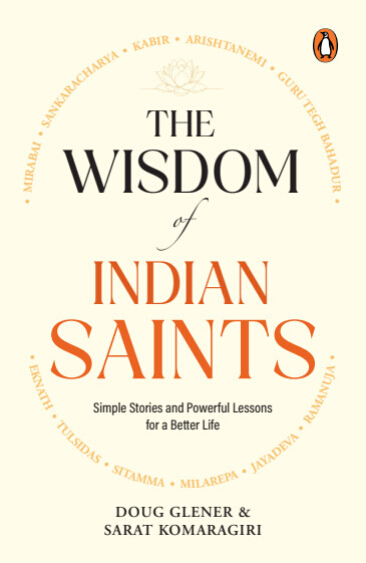
Through beautifully told tales, the book traces the personal journeys and selfless acts of saints from diverse traditions—Buddhism, Hinduism, Jainism, Sikhism, and Sufism.
Spanning centuries and regions, these stories feature saints whose lives were shaped by devotion, humility, and a deep commitment to serving others. Though rooted in different paths and practices, their experiences echo a shared truth—at the heart of every spiritual tradition lies the same call to love, kindness, and inner transformation.
Thoughtfully retold for modern readers, The Wisdom of Indian Saints invites us to look beyond differences and discover the universal principles that connect us all.

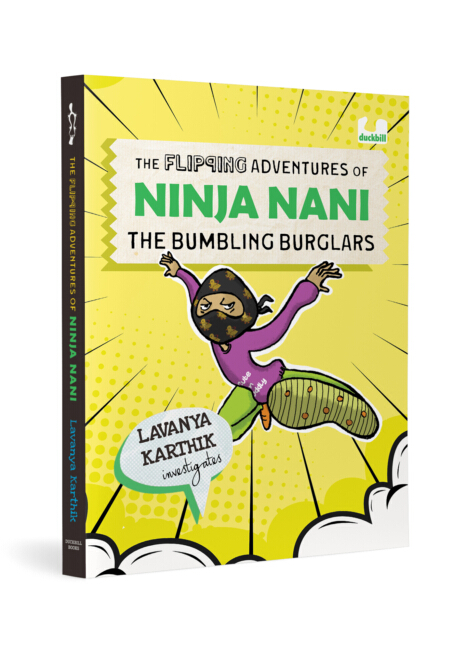
WHO’S YO’ GRANNY?
What if your grumpy granny got zapped with superpowers and turned into . . . Ninja Nani?
Deepu is about to find out!
From chasing burglars in the dead of night to figuring out why his friends are turning into zombies, Deepu has one outrageous adventure after another—thanks to his unstoppable Ninja Nani.
Will they save the day? Will they catch some baddies? Will they make it home again?
Packed with action, mischief and madcap humour, this flipbook brings together two Ninja Nani adventures in one double dose of ninja madness!
HIYAAA!
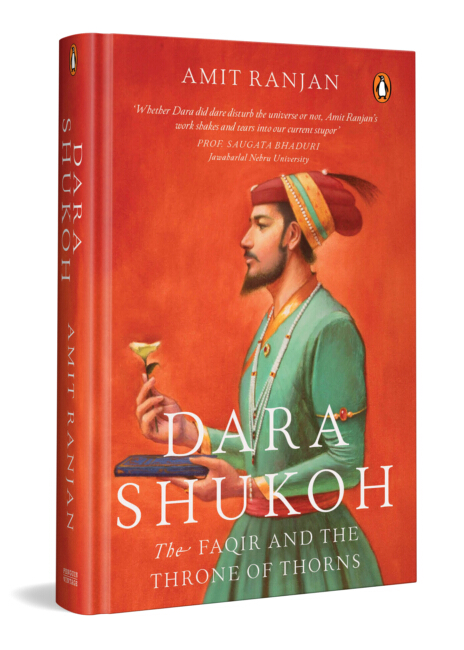
This expansive text on Dara Shukoh (1615-1659), crown prince and eldest son of Shah Jahan, addresses a vacuum in our history. While the great Mughals from Babur to Aurangzeb, have received constant attention, the poet-prince has largely been excised out of public memory and discourse.
A scholar, philosopher, and a patron of the arts, Dara Shukoh was known for his deep interest in mysticism and his efforts to bridge the gap between Hinduism and Islam. However, despite his intellectual prowess and progressive vision, Dara’s life was marked by political turmoil, culminating in his tragic defeat and execution by his brother Aurangzeb.
In this compelling re-examination, Amit Ranjan resurrects Dara’s enduring legacy of syncretism and cosmopolitanism, offering a nuanced portrait of the prince. By exploring the depths of his philosophy and the drama of his downfall, the book ponders a tantalizing counterfactual: What might have been—had Dara, not Aurangzeb, steered the course of history?
In Women-O-Pause, Lenaa Kumar invites you into a year of profound transformation. In 2024, she received a sudden wave of social media attention just as her life shifted dramatically through marriage, relocation and an unexpected initiation: perimenopause. Rather than viewing it as a decline, she reframed this transition as ‘Womenescence’—a powerful awakening into the next phase of womanhood.
Amid the whirlwind of public visibility and private change, she refused to accept confusion, discomfort and pharmaceutical dependence. Instead, she turned to extensive research, lifestyle changes and natural healing practices rooted in holistic wellness and ancient traditions.
The result is both a memoir and a guide—a practical yet deeply reflective blueprint for women to help them navigate perimenopause and menopause with greater awareness, agency and vitality. Through personal insight and actionable tools, Women-O-Pause challenges conventional narratives while encouraging women to reconnect with the cyclical intelligence of their bodies.
Featuring insights from professional doctors who offer medical insight and clinical perspectives, this book bridges lived experience with modern science. It ultimately reframes menopause not as a problem to be solved but as a powerful rite of passage.
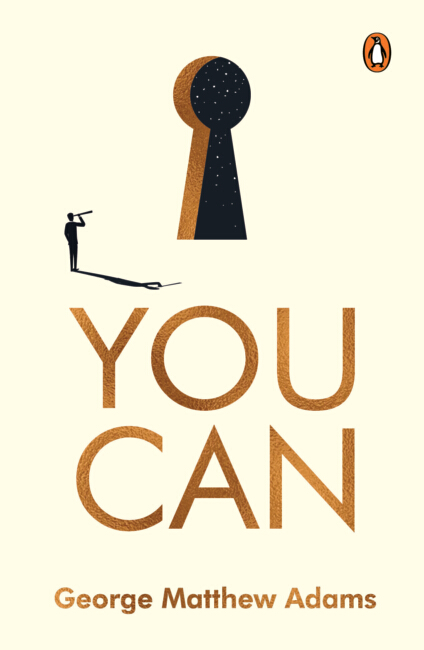
“You yourself determine the height to which you shall climb. Have you the summit in view? All right—then start for it.”
George Matthew Adams believed, as a proven lesson through his own experiences, that the difference between a life fully lived and one just endured came down to something stubbornly simple: the will to try.
First published in the early twentieth century, You Can collects the most influential columns that made Adams one of the most widely read voices in America. He writes with empathy and wisdom of an uplifting friend, discussing matters of courage, habit, enthusiasm, and purpose—the ordinary materials from which, he insists, an extraordinary life is built.
What makes Adams’ writing unique is its tone: relaxed, kind, and free of unrealistic promises. He does not flatter or fluster his readers; he encourages them to believe in themselves first, beyond all judgments.
You Can is classic of American moral writing, now revived to guide us through challenging times.