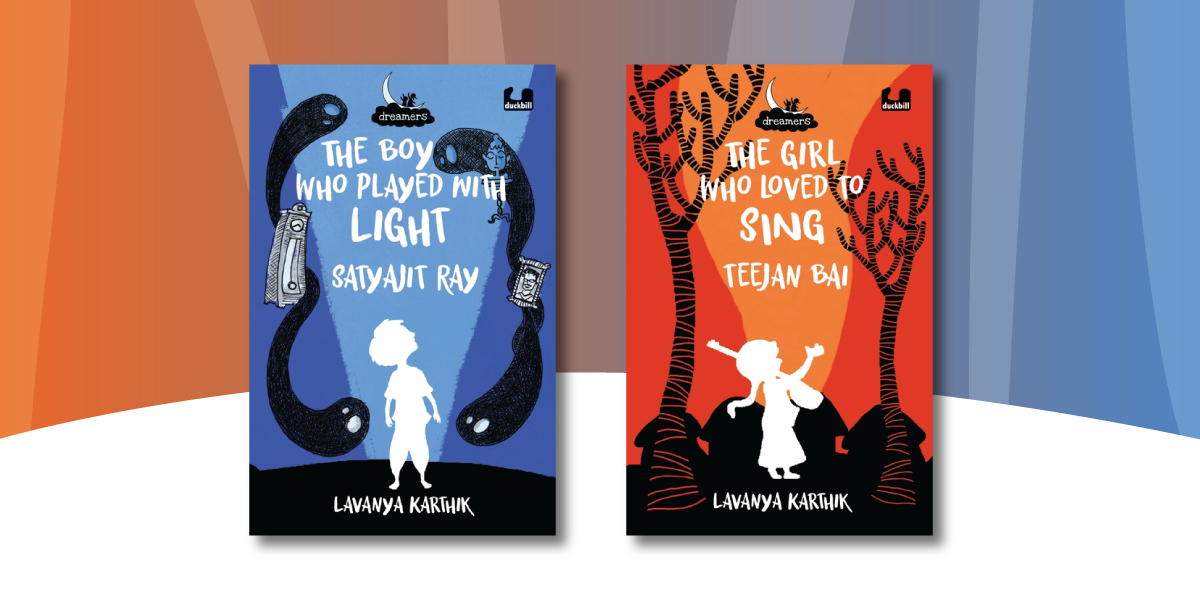
The vividly illustrated stories of Teejan Bai and Satyajit Ray in Lavanya Karthik’s Dreamers Series are inspiring for young kids. Karthik’s stories and artworks are perfectly synced with the high and low notes of Teejan Bai’s life and have captured the most significant shots of Satyajit Ray’s life. Both of them are acknowledged and appreciated for their unique talents.
Get your children hooked to the pages of Dreamers Series and let them get inspired to hone their skills. Here’s a glimpse of the younger selves of Teejan Bai and Satyajit Ray.
*
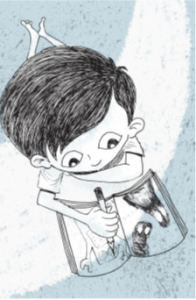
The Girl Who Loved To Sing: Teejan Bai
The Girl Who Loved To Sing: Teejan Bai || Lavanya Karthik
Once again, Teejan sneaks out after her chores for lessons with her grandfather.
Brijlal gives her her first tanpura.
‘Become your characters! Become your story!’
‘Feel the music!
‘Feel the story!
‘Feel it come alive!’
Teejan sings!
‘Don’t just sing—become the song!
‘Become the characters in it!’
Teejan cannot eat, she cannot sleep! All she can think of is song.
She forgets her chores; she ignores her siblings, until one day,
Ma catches her singing . . .
Teejan runs away.
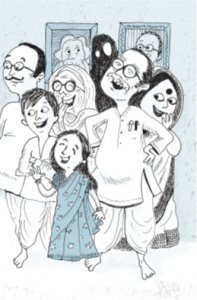
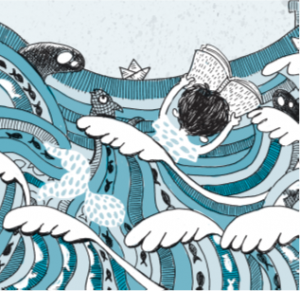
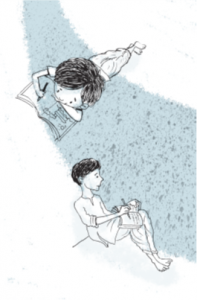
The Boy Who Played with Light: Satyajit Ray
The Boy Who Played with Light: Satyajit Ray || Lavanya Karthik
There was light in the new home we made.
In the eyes of the family that welcomed us.
In the stories that Ma told me every night.
In the notebooks I filled with drawings, just like Baba once did.
But . . .
The shadows were always there.
They loomed in corners, watching me.
They crouched under tables, muttering and hissing.
I tried to describe them to my family.
My cousins chuckled. ‘Manik will be a writer like his baba!’
The shadows lurked in doorways.
They followed me through the house.
I thought my drawings might help.
‘What an imagination!’ Ma smiled. ‘Manik will be an artist like his baba!’
I raced through the house, up the stairs, down the corridors. The shadows followed!
‘Manik!’ my aunt called out, through the haze of the afternoon heat. ‘Play quietly! We’re trying to sleep!’
I dodged!
I dived!
I ducked!
The shadows kept pace!
Until . . . An open door!
. . .
They were stories, waiting for me to notice them.
**
Read The Girl Who Loved To Sing: Teejan Bai and The Boy Who Played with Light: Satyajit Ray from Lavanya Karthik’s ‘Dreamers Series’ to know what happens in the lives of these two great personalities and how did they become as the world knows them today.
In this book about the launch of a rocket from Thumba, Menaka Raman’s story and characters are sure to tap on the creative nerves of young kids. The first time when Mary heard that a rocket will be a launched from Thumba, her excitement knew no bounds. She was bitten by an inquisitive bug and had a list of questions to find the answers of. She waited and hoped to see the rocket go up in Space every day.
Here’s an extract for those who, like Mary, are eager to know about India’s first ever rocket launch.
*
Topi Rockets from Thumba || Menaka Raman
January 1963
Every morning, a rickety old bus would arrive in Thumba from Trivandrum and drop off a group of men.
Everyone would come out of their homes and shops, wondering what was inside the many boxes the men carried into the church, watching them as they cycled from here to there or walked together in pairs.
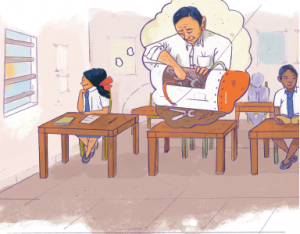
Mary watched too, but her friends at school did not care.
‘So what?’ said George Thomas.
‘Big deal!’ dismissed Thomas George.
‘Who cares?’ shrugged Shoshakutty.
‘I can launch a rocket all by myself!’ boasted Chacko.
‘Why does Dr Sarabhai need so many people to launch just one rocket then?’ Mary wondered.
One day, Mary and her amma were on their way to the market when she saw a car pulling up outside the church. She caught sight of a tall man unfolding himself from the back seat, and knew immediately who it was.
Mary ran right up to him once again.
‘Dr Sarabhai! When is the rocket going to be ready? Why is it taking so long? My friend Chacko can launch a rocket all by himself. Why do you need so many people?’
Dr Sarabhai’s eyes lit up.
‘Mary, you remind me of myself when I was your age. Always asking questions! Let me try and answer yours.’
It’s taking time because India’s friends from around the world are sending us things we need for the rocket launch. We have to wait for them to arrive and only then can we start to put things together. And I need the help of hundreds and hundreds of hands and minds to do it.
The National Aeronautics and Space Administration (NASA) of the United States is sending us a NIKE APACHE ROCKET. They are also training our scientists at their centres in America.
March 1963
Days, weeks and months came and went. Mary turned ten. Ouso made her ayala fry, Amma stitched her a new dress and her brother gifted her his old bicycle.
Some days, Mary would cycle by the church to see if she could catch sight of the rocket.
But there was no rocket.
Mary studied hard for her exams, praying they would not launch the rocket while she was writing her maths paper.
They didn’t.
She spent the summer holidays learning swimming in the lazy blue sea.
Nothing.
Mary celebrated Palm Sunday, Easter Friday and Onam.
Mary was disappointed.
But her friends at school were not.
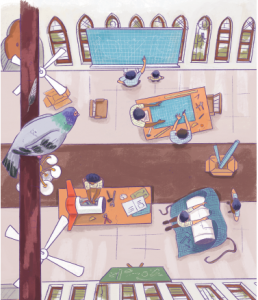
Sometimes, Mary wished she was one of the pigeons that sat on the rafters high up on the ceiling of the church so that she could see what was happening inside.
September 1963
By now, Mary knew some of the serious men who worked in the church. She knew where they were from and what they ate for breakfast. She discovered they were not so serious after all. And since Dr Sarabhai wasn’t always there to answer her questions, she had started asking them instead.
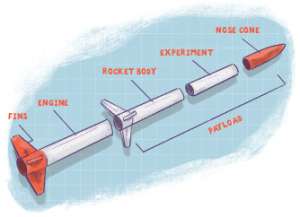
Mary: What are the parts of a rocket?
Scientist 1: A rocket has four main parts: the nose cone, fins, rocket body and engine. The nose cone carries the main cargo or payload of the rocket.
Mary: How do you launch a rocket?
Scientist 2: Rockets burn fuel in the engine and this creates exhaust. The hot exhaust comes out very fast in one direction pushing the rocket in the opposite direction! WHOOSH!
**
To know the answers to Mary’s numerous questions about Space and rockets, read Topi Rockets from Thumba.
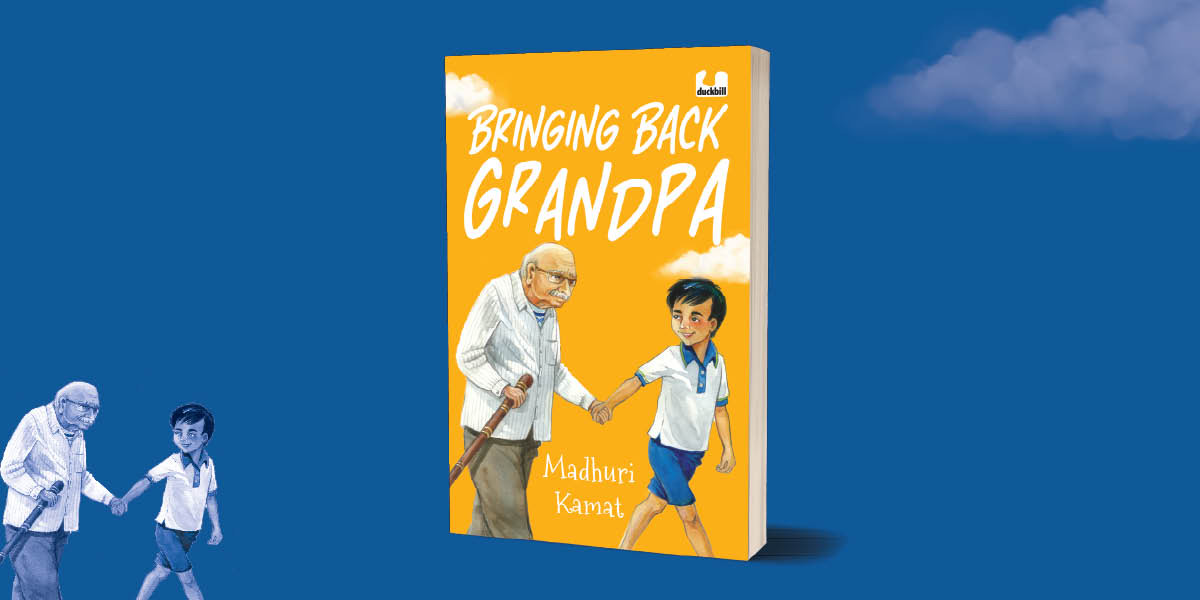
Grandparents play an important part in a child’s worldview. But our favourite childhood allies grow old and sick and may at times get confused and stop to recognize us! Xerxes is facing the same challenge where his main ally Grandpa is not himself and he is having to solve the complex problems in his life, right from bullies at school to the growing tension at home, all alone.
*
‘So, did it work?’
‘It worked, Grandpa, I not only found my essay; I found my badge, too!’
He tried to go in to hug him but Grandpa put out his walking stick and barred his way.
‘You have to pay me! Now give me something sweet.’
Xerxes stopped short.
‘It’s the rule. If Ratan Bhagat worked, you’ve to give me something sweet.’
‘I don’t have anything. Later.’
‘No. Now. That’s what it means, Ratan Bhagat ni khan. Khan as in something sweet.’
Xerxes dashed out again and tried to get in through the side door into the kitchen. But Grandpa raced there and banged it shut.
‘Grandpa, if you let me into the kitchen, I can give you a sweet.’
When Sonji came in she found Grandpa holding the door fast against Xerxes.
‘Papa, what’re you doing? Let him inside.’
Grandpa suddenly started yelling.
‘Help! Help me! There’s a thief!’
Sonji calmed him down and took him to his room. Then she confronted Xerxes.
‘Don’t ever do that again, Xeroo! You know that Mamavaji’s old and gets confused. Why in the world were you coming in through the kitchen?’
Xerxes was about to blurt out all that had happened, but then held his tongue as he realized he’d have to admit he’d been very forgetful.
*
Bringing Back Grandpa is a touching and funny story of the confusions of growing up and tackling challenges and of how children are affected when there is illness and tension at home.
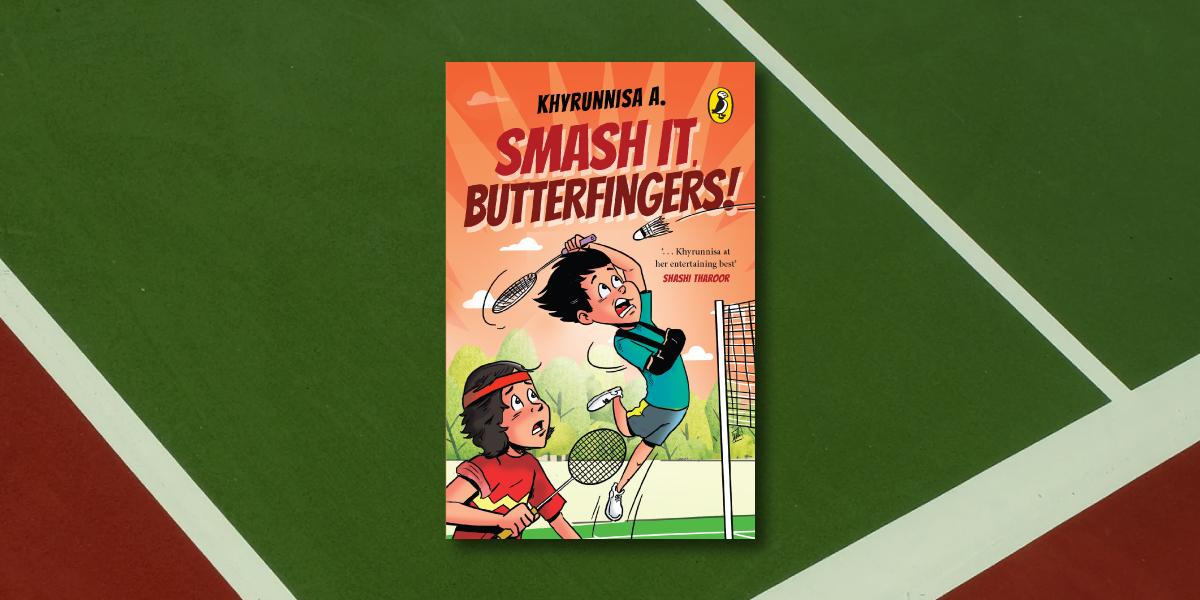
Look out! It’s Butterfingers again, and in smashing form!
There’s a lot going on in Green Park School. Ozymandias, a black cat, walks into classrooms and there’s a buzz about a badminton tournament that is to be played on Friday the thirteenth.
Sponsored by Brijesh K. Singh, an eccentric multimillionaire who loves badminton and hates superstitions, this tournament is good news for sports-crazy Amar Kishen, aka Butterfingers, and his friends.
Badminton practice begins, but can it be smooth sailing with talk of scams, superstitions and suspicions? Butterfingers sure has a lot on his hands!
Here’s an excerpt from Smash It, Butterfingers that will take you into the wild, whimsical world of Amar.
**
Amar was superstitious when it came to sports, for he believed one should leave nothing to chance. Cricks in the neck were normal after he had watched important matches, because his heroes, with great timing, unerringly went for match-turning shots just when he was in an awkward position. There was an occasion when he had just looked over his shoulder to locate the potato chips, when Nadal, his tennis idol, hit his first winner at a French Open final. Amar had watched the rest of the match frozen in the same pose, head held at an uncomfortable 45-degree angle, afraid to move lest it triggered off a series of unforced errors. He couldn’t turn his neck properly for a week, but so what? All in a good cause.
But now here were Sindhu and Saina before him. Was he dreaming? He rubbed his eyes again. Sindhu turned to him and offered him a plate on which medals glinted, dazzling his eyes. Saina held out another plate.
‘Do you want to wear my world champion gold medal?’ Sindhu asked, dangling it and flashing her trademark broad smile.
Amar couldn’t believe he had heard her right. Elbowing Kiran aside, he said, ‘Yes, please,’ in an awed tone, stretching out his right hand to accept the plate on which she had dropped the medal.
‘No, no, take my Olympic bronze medal first,’ Saina said, holding out her plate. Confused, he looked from one plate to the other, accepted both and promptly dropped them.
‘Butter!’ yelled Kiran, dismayed. ‘You’ve done it again!’ Amar’s uncanny ability to drop things had given him the nickname Butterfingers, and he never allowed anyone to forget his formidable reputation with regular demonstrations of his slip-grip methods.
‘Oops, sorry!’ His most used phrase escaped his lips as the plates rolled merrily in two different directions, scattering the medals about. Bzzzzzzzz!!! The medals turned into a thick cluster of bees and mosquitoes that made a beeline for him. He took to his heels in horror with Kiran panting behind him. Sindhu and Saina, meanwhile, had jumped up in rage and, brandishing their racquets that had been resting against the stone like battle axes, gave chase.
‘Help! Help!’ Amar thrashed his arms about to protect himself and dodge the dangerously swinging racquets, only to find the fast-multiplying insects coming closer and forming a dense hood about his face, from which he struggled to escape . . .
‘Ummph! Mmph!’ Amar woke up breathless as he tried to break free from the sheet that he had managed to wrap tightly about his neck and over his head in his sleep. He flailed his hands about like the tentacles of an octopus until a lucky tug finally secured his release. Gasping, he surfaced and began to breathe in large gulps of air. ‘Whew!!’ he muttered. ‘What a nightmare. But I actually saw Sindhu! And Saina! And I thought I glimpsed Lin Dan in the background. Get lost, you!’
He brushed away a mosquito that sang around his head. Parched, he croaked, ‘Water! Help, I’m dying of thirst!’
**
Join Amar on his hilarious adventures as he defies luck with his madcap schemes. Let the game begin!
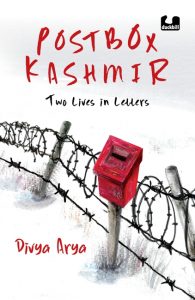
Two teenagers—Saumya in Delhi and Duaa in Kashmir—ask through letters they exchanged over almost three years some pertinent questions about Kashmir.
Like Anne Frank’s letters, Post Box Kashmir:Two Lives in Letters provides an insight into the minds and hearts of teenage girls undergoing momentous points in history.
*
Finding my letter writer in Delhi was a pleasant accident. I hadn’t really started looking at that time. On a completely different mission, one winter afternoon in February 2017, I found myself at Saumya’s house. It was books that led my husband and me there. Both of us, he way more than me, are guilty of hoarding books. And now, a carefully built selection of over fifteen years needed a new purpose. Our search for a library, where we could part with our much-loved treasures knowing they will be equally valued, was what led us there. It was a cosy unassuming two-bedroom flat in a colony in outer Delhi. Saumya’s parents ran a small library-cum-reading room from an even smaller space on the floor above.
Postbox Kashmir || Divya Arya
They could have rented it out to supplement their income, but decided to use it to work with schoolgoing children by providing them a place to come read. As the name suggested, Umang Library was to spread the simple ‘joy’ of immersing in the written word, to give wings to young imaginations. We were inspired with what we saw and went back down three floors to make multiple rounds, heaving cartons full of books up a narrow, broken staircase.
Saumya didn’t speak much at that time. She quietly helped with the unpacking and laying out of books, stopping only to peer at some titles from behind her thick spectacles. She was fifteen years old and preparing for her Class X board exams. We didn’t talk about Kashmir.
A few weeks later, when I started the search for my letter writers, I recalled the shy young girl from that winter afternoon. The more I thought about it, the more she seemed to be the perfect fit. A couple of phone calls later, it was done. Saumya Sagrika was waiting to get her first letter.
In Kashmir, the situation was very different. I had never been there, I had no family there and very few friends. As I started making calls, finding connections and building bridges to reach out to parents, it became very clear that the biggest hurdle was going to be trust. It was the casualty of decades of conflict. Entering into anyone’s circle of trust is always difficult, but on some days, it seemed unsurmountable. The physical distance, lack of confidence that a personal meeting could build, all added to the challenge.
In 2017, there were visible strains of pain and anger. The violent autumn after Wani’s encounter had quietened as snow covered the streets in the Valley. But the cold seeped in through the telephone line from the other side when I tried to explain our project. The memories were very raw.
There was a strong belief that the momentous upheaval led by young people was going to change something. The rage was still simmering. At that time, when opinions, borders and beliefs had a razor-sharp edge to them, my offer of a quiet conversation over letters seemed suspiciously innocuous to the parents on the other end of the phone call.
But I persisted, not losing hope. Days turned into weeks, which turned into months. And finally, a door opened just a crack. My request had landed at fifteen-year-old Duaa’s doorstep, with just a recommendation from an acquaintance trusted by her family, holding this together.
Duaa’s father had a gentle demeanour. We discussed the project a little and then some more. But we spent a lot of time trying to know more about each other. Me and my family and Duaa and hers. The conversations with her parents were never rushed and always began with courtesies that extended to my parents, my husband and his family. This was my lovely introduction to Kashmiri tehzeeb (etiquette). As trust grew, the anxieties became more honest too. And some stemmed from what had happened to another Kashmiri teenager.
*
Divya Arya has been telling people’s stories on social issues for almost two decades now. In Post Box Kashmir she deals with another non-fiction story on the backdrop of political history and turbulent present of Kashmir and India.
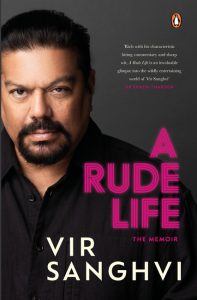
Vir Sanghvi’s has been an interesting life – one that took him to Oxford, movie and political journalism, television and magazines – and he depicts it with the silky polish his readers expect of him. In A Rude Life, he turns his dispassionate observer’s gaze on himself, and in taut prose tells us about all that he’s experienced, and nothing more for he’s still a private man.
He unhurriedly recounts memories from his childhood and college years, moving on to give us an understanding of how he wrote his biggest stories, while giving us an insider’s view into the politics, glamour and journalism of that time
Here’s a glimpse into his book.
~
A Rude Life || Vir Sanghvi
As Advani had predicted, the BJP did well but not as well as Janata. It got 85 seats while Janata got 143. (The Congress got 197, far more than any other party but around a hundred seats short of a majority.)
The BJP said it would support Janata but even together, the two parties did not have a majority. They needed another fifty seats and they got them when the Left parties agreed to support them from outside.
This three-cornered alliance was full of contradictions. The 1977–79 Janata government had fallen, at least partly, because Janata members objected to the Jan Sangh’s communal roots. The BJP was even more of a Hindu party now than the Jan Sangh had been in 1977. Would this not be a problem? And what about the Left? Was it comfortable being part of a three-cornered arrangement with the BJP?
The only person for whom the alliance made sense was L.K. Advani. He would be remembered, he believed, as the man who had taken the BJP from a mere two seats in parliament to being the kingmaker at the next election.
There was yet another complication. Janata was not the old Janata Party any longer. It was now the Janata Dal, composed of some of the old Janata veterans but supplemented by a new party of Congress defectors led by V.P. Singh and Arun Nehru. The two sides did not get along. Chandra Shekhar, from the old Janata, for instance, had total contempt for V.P. Singh whom he viewed as a characterless opportunist.
How was this all going to work?
I was deeply skeptical about the prospects of any arrangement lasting. Till that point, India had mostly been run by governments with majorities in the Lok Sabha. Mrs Gandhi had briefly lost her majority after the Congress split in 1969 but even though she knew that she could count on the communists to back her, she had called a mid-term election (where she won a majority) as soon as she could.
Our sole experience with coalitions was the disastrous 1977 to 1979 period when politicians frittered away the goodwill that had got them elected and forced the electorate to recall Indira Gandhi, her transgressions during the Emergency forgiven.
I did not believe that this government would last even for a year. Apart from the contradictions between the BJP and the Left, there were too many differences within the Janata Dal itself.
I went to meet Chandra Shekhar at his ‘ashram’ (a large estate; ‘ashram’ sounded nicer than ‘pleasure palace’) in Bhondsi on the outskirts of Delhi. I had known Chandra Shekhar during my Imprint days because a friend of mine, Kamal Morarka, was a dedicated Chandra Shekhar supporter who boosted his prospects even when the Rajiv wave was at its height.
Chandra Shekhar believed he should be prime minister. He had opposed the Emergency and later had been the centre of all opposition to Indira Gandhi. He believed that with the Congress out of power his time had finally come.
I told him I didn’t think he had the votes. Besides, V.P. Singh had led the campaign against Rajiv (Chandra Shekhar had refrained from personal attacks) so the media expected Singh to be the next prime minister. Chandra Shekhar did not agree with me but looked grim.
I have no idea what happened next but TV footage showed Chandra Shekar, Devi Lal (a Haryana leader) and others laughing delightedly before they went into the meeting of the Janata Dal parliamentary party. After the meeting was called to order, Chandra Shekhar was called on to speak. He said he proposed Devi Lal for prime minister.
Devi Lal was then asked to accept the nomination. He said that he was honoured to be nominated but felt that the position belonged to V.P. Singh.
V.P. Singh then got up. He did not nominate anyone else. He grabbed the job and ran with it.
Obviously some deal that excluded Chandra Shekhar had been struck. Devi Lal had agreed not only to accept V.P. Singh as prime minister, he had agreed to deceive Chandra Shekhar as well. They had made a fool of Chandra Shekhar in front of the parliamentary party and the TV cameras.
Afterwards, Chandra Shekhar told the press that he had been betrayed which may have been the understatement of the year. But even he did not realize how completely he had lost out. When the ministry was sworn in, Chandra Shekhar’s supporters were sidelined or kept out. Yashwant Sinha, who was told he was only a minister of state, walked out of the swearing in and drove straight to Bhondsi to confer with Chandra Shekhar.
I met Chandra Shekhar a few days later at his MP’s bungalow in Delhi. He was livid with V.P. Singh and with Arun Nehru who, he said, had plotted the deception. Oddly enough, he felt no rancour towards Devi Lal without whom none of this could have happened. The way Chandra Shekhar told it, V.P. Singh had publicly declared that he wanted no position. But his followers had made it clear that they would not accept Chandra Shekhar. So Devi Lal had been chosen as a compromise candidate.
Either, Arun Nehru took Devi Lal aside after the consensus was arranged and told him to give the job to V.P. Singh or the whole exercise was a con job from the very beginning, intended only to make a fool out of Chandra Shekhar. He preferred the first explanation. I thought the second was more likely.
The problem with V.P. Singh was that he was a little like Arvind Kejriwal is today. Financially upright, soft-spoken, competent and capable of evoking strong emotions among his supporters. But he was also a man without any core beliefs, without any long-term loyalty (except to one or two political friends) and without any transparency. Even Advani who was vilified by the secular media was a relatively straight person.
If he said he was going to do something, he usually did it. V.P. Singh, on the other hand, was capable of such duplicity that if you asked him what day of the week it was and he said Tuesday, the chances were that it was really Friday. But he was charming, intelligent and entirely plausible at first. I had admired him in my Imprint days and I could see why he was now such a hero to the media. But how long, I wondered, before the media discovered how hollow he was? How long before the early popularity faded?
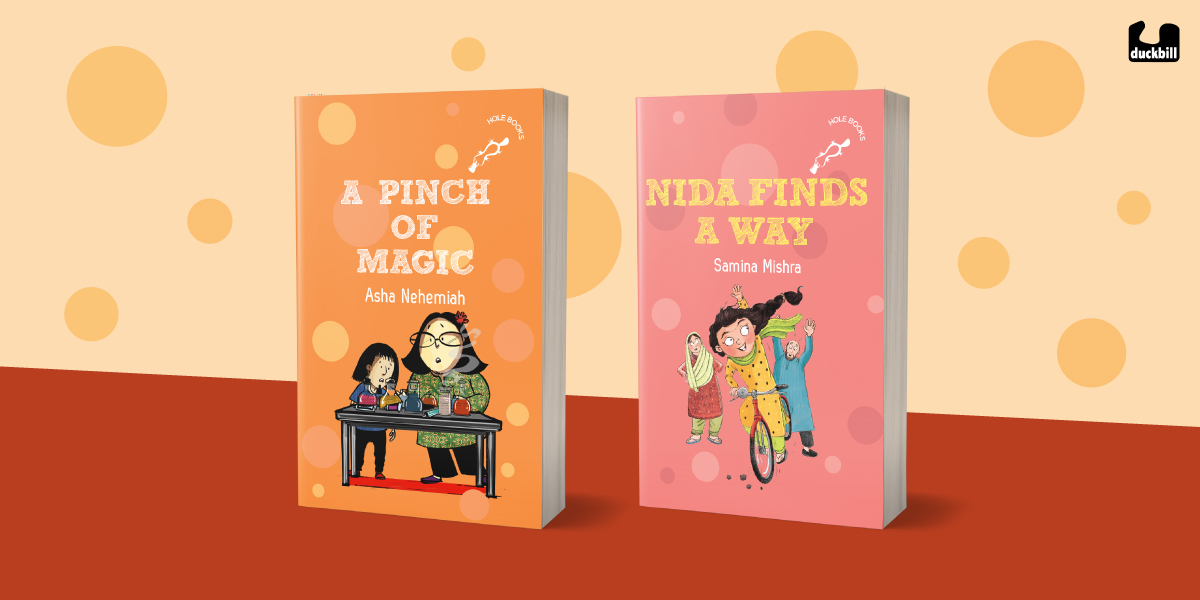
Hole books are early chapter books for children transitioning from picture books to longer books. The stories are contemporary, Indian and with protagonists who are the age of the potential readers, facing dilemmas and challenges which the readers would be familiar with.
The two new Hole Books added to the collection, A Pinch of Magic by Asha Nehemiah and Nida Finds a Way by Samina Mishra, carry this task out to perfection. Here is a sneak peek into both books. There is no way your child won’t want to read these after being thrown into the middle of some thrilling action from both the stories.
~
A Pinch of Magic
A Pinch of Magic||Asha Nehemiah
Appa should have known better than to ask Veena for help. Because whenever Veena was asked to help, many strange and unexpected things happened.
Take the time Veena’s mother had asked for help with oiling her bicycle.
‘Just one single drop of oil right here,’ Amma had pointed to the spot on the bicycle pedals. Shailaja Seshadri was getting ready for the Blue Mountain Bicycle Rally. ‘One. Single. Drop,’ she repeated firmly.
Veena, of course, wanted to be of as much help as possible. So she oiled every single point she could find. And to be safe, she used a few drops of oil each time. Then she tied a lucky charm on to the handlebars. She really wanted her mother to win the race.
The next day, a few minutes after starting the race, Amma found her fingers slipping off the handlebars and sliding off the brakes. Even worse, the lucky charm flew off when she started cycling fast, and got stuck in her nostril. Amma had to stop without even finishing the race.
So though he knew that he could be asking for big trouble, Veena’s appa didn’t know what else to do. Or who else to ask. His wife was out cycling with a group of friends. His sister, Malu, had left the house at dawn, muttering something about a spoon. Only he and Veena were at home, eating breakfast.
Nida Finds a Way
Nida Finds a Way||Samina Mishra
‘I want to ride a bicycle!’ Nida sang out. Her small hand—quite big for a seven-year-old, she thought—was folded into Abba’s large one as they walked together through the streets of Abul Fazal Enclave.
The large hand quivered and tried a strange move, as if it wanted to hold not just the small hand but also the wrist, maybe the entire arm.
‘NONONO!’
Abba stopped walking. Nida looked up. His eyes were round like pooris, his beard twitched nervously in all directions, like the traffic on the street.
‘Do you see this road?’
Nida looked down at the road. It was black, like most roads. Many kinds of wheels rolled past—scooter tyres, car tyres, rickshaw wheels, bicycle wheels.
‘Do you see this traffic?’
Nida looked up. A red Maruti was overtaking a faded white tempo. A motorcycle was swaying to the right, a rickshaw swerving to the left.
‘No cycling for you!’
Imran went past on a cycle much too big for him, riding scissor-style. He was in Nida’s class.
‘Nidaaaa! Look, no hands!’
Show-off, thought Nida and turned to Abba. ‘No, not like that,’ she began.
‘I don’t want to ride like that.’
But Abba’s eyes had become rounder, his face had become red.
Nida sighed. She knew that face. Abba the Worrier, they called him at home. When Nida climbed up the ladder that led to the water tank, Abba flapped his arms in panic.
When Nida came home from school with a scraped knee, Abba lurched about the house looking for Betadine.
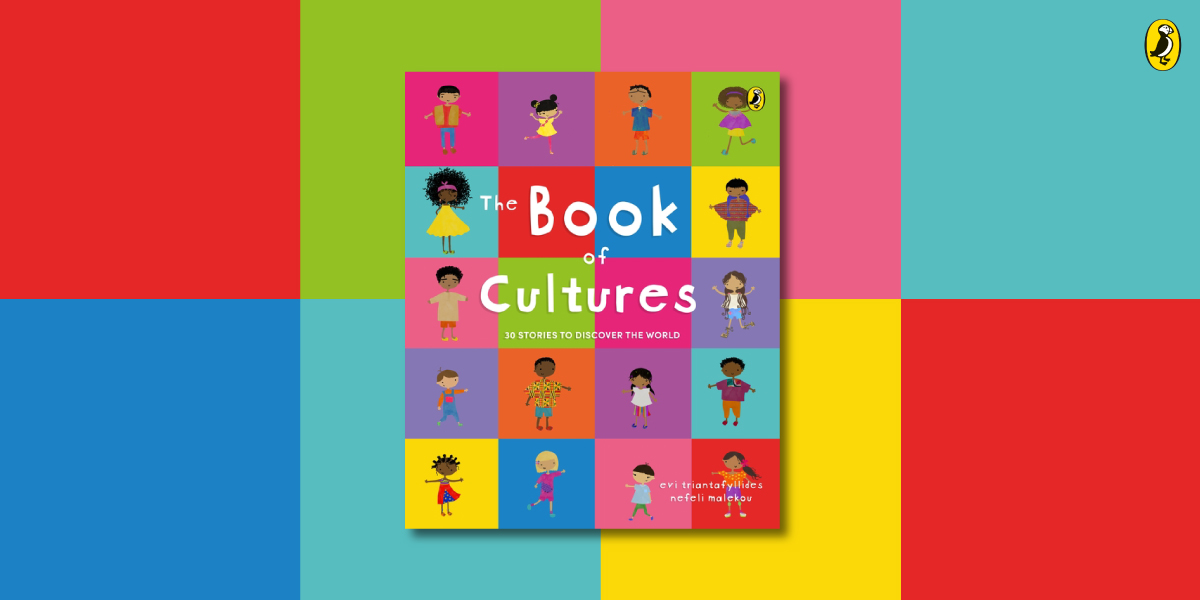
It’s time to make new friends from different parts of our planet and go on adventures near and far with 30 stories bursting with intrigue, curiosity and wonder! Sift through the beautifully illustrated pages of The Book of Cultures and become a globetrotter as you travel from Japan to Peru and South Africa to Denmark, and learn about diverse cultures, customs, traditions and more.
Here’s an excerpt from this book about the Maldives Island in which Akilah, along with her sea creature friends, try to save the island.
*
The Book of Cultures || Evi Triantafyllides, Nefeli Malekou
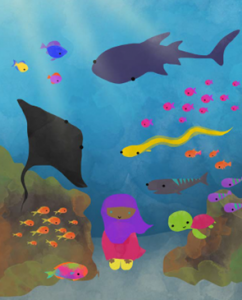
Akilah loved water. So much, that everyone called her a sea creature. She had an entire life under water. She went for long swims with her best friends, Stingray, Parrotfish, Turtle and Barracuda. In the sandcastles she built, she hid treasures she collected on their adventures. Sometimes, she even prayed under the sea.
When she found out that her island was slowly sinking, she wasn’t that worried. “Breaking news: Global warming means that icebergs are melting and sea levels are rising. The Maldives Islands, only a few feet above the sea, are in danger of disappearing under water forever,” the news anchor warned. There’s so much splendor under water, life there would be a delight, Akilah thought. But only she felt this way. “Some islands have already gone under water!” her parents confirmed. Even the neighbor, Ms. Sing Song, whose laughter penetrated through their walls, had become awfully quiet lately.
Akilah came up with a spectacular idea. Stingray, Parrotfish, Turtle and Barracuda joined to help, too. Soon, Akilah and the fish had built a wonderful underwater island. “Everyone can move here. We can call it the Island of Hope,” she said. She even made two houses next to each other, so that they could hear Ms. Sing Song laugh again.
But the more time she spent at the Island of Hope, the more she realized it simply wasn’t home. When she tried to sketch, the paper melted, and her crayons lost their color. And eating was particularly hard—water made the food all soggy. “Yuck!”
“I don’t want to leave my house,” she admitted. “We need a new idea. And this time, we need all the fish force we can get.” Stingray, Parrotfish, Turtle and Barracuda called their friends from across the Indian ocean. Within hours, so many fish squeezed and squished next to each other, you could barely see the ocean’s blue. If only these many people could help, she thought. Wait a minute, I know. “I have a message. It needs to be delivered to all corners of the planet. Please pass it along,” she asked the fish. I really love my home. I don’t want to lose it. But rising seas might make it sink under water. If every single one of you made even the smallest changes, then my house, the Maldives and the environment could be saved! What do you say? Will you help?
That night, the fish swam and swam. They passed on her message to thousands of other fish, who passed it onto millions of other fish, hoping that soon, it would reach buddies all across the world, just like you.
**
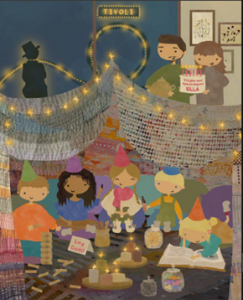
Now here’s a glimpse of Ella’s birthday in Denmark.
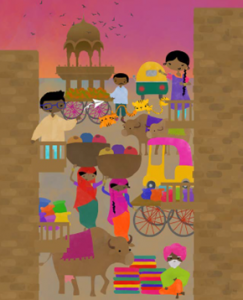
Before you go, peep into Suhail’s and Neha’s surroundings in India.
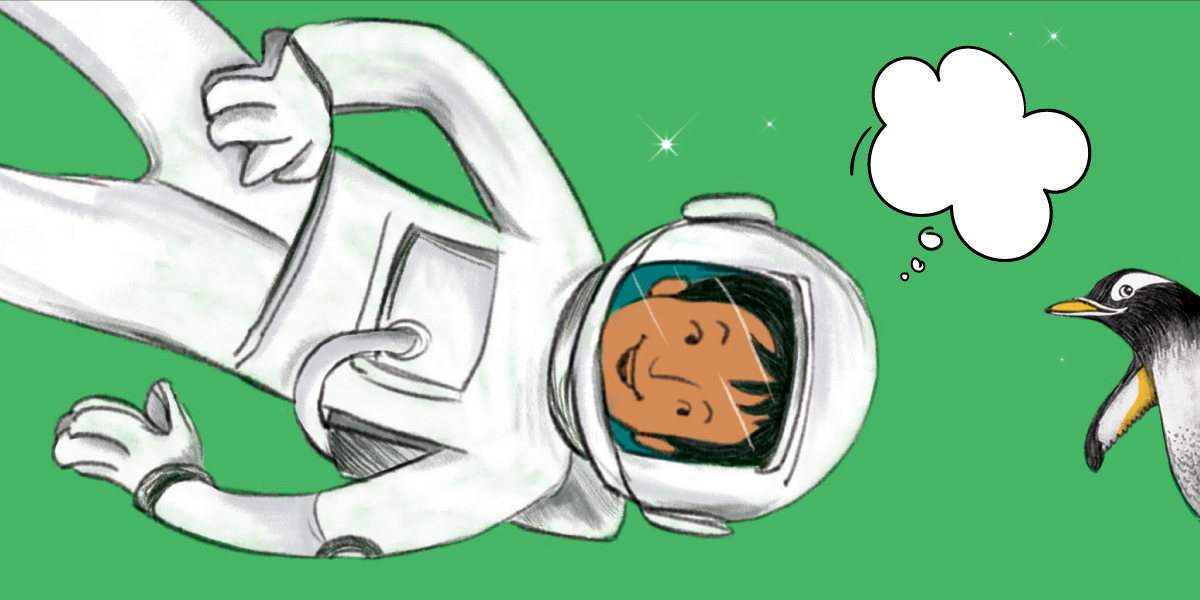
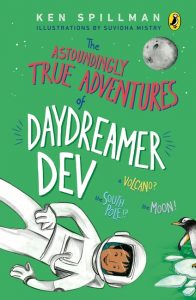
Daydreamer Dev loves volcanoes…and daydreams of course!
Forever daydreaming-that’s Dev. Sitting in class or watching the clouds from the roof of Kwality Carpets, he floats off to places all over the world and has wonderful, bizarre adventures.
Mild-mannered schoolboy Dev is no stranger to survival in extreme environments. Classroom trances and home-made flights of fancy take him all over the place-what other kid could have visited Amazon rainforests, summited Mount Everest and crossed the Sahara? Along with the challenges of all this, he also needs to avoid the wrath of teachers and make Amma and Baba proud . . . Not so easy when your brain lives elsewhere!
**
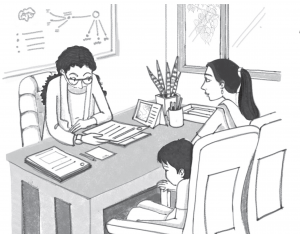
Dr Ira wore dark-rimmed glasses and had a soft, round face and a gentle voice. Dev could imagine her speaking calmly as the Titanic went down. She listened carefully to Amma and adjusted her glasses to read the two pages supplied by Dev’s headmaster. Dev imagined himself shrinking very steadily so that by the time she looked up, he would be gone.
‘Dev, what do you think about all this?’ Dev realized that he must still be visible. ‘Ma’am, I think it’s very bad that Mrs Kaur needs to write so many notes,’ Dev said. ‘Amma doesn’t like them, and Baba must spend his time lecturing me about concentration and teaching me the meaning of words like “lamentable” and “deplorable”.’
‘Would you be able to tell me about one of your daydreams, Dev?’
Dev told her about the time he hit a six off the final ball at Wankhede Stadium to win the match against Australia, and about riding on a dolphin.
The Astoundingly True Adventures of Daydreamer Dev || Ken Spillman (Author), Suvidha Mistry (Illustrator)
He was launching into another story when she interrupted.
‘Do you have some good friends, Dev?’
Surprised that she wanted to talk about his friends, he told her about Vihaan, Adil and the best of friends ever, OP—Omprakash, as only Mrs Kaur preferred to call him.
Dr Ira asked more questions and looked over his school reports. Eventually, she sat back and looked as squarely at Amma as a round-faced woman could manage.
‘It would be valuable if I could spend some time with Dev alone on another occasion. Would that be all right, Dev?’ Dr Ira paused and when Dev did not say no, she went on. ‘Let’s be clear—daydreams are normal. But recently, there has been some good research on what is called “maladaptive daydreaming”. This is when fantasy tends to takeover. And when fantasy takes over, it can get in the way of everyday things, such as education, or the jobs people do.’
Amma was like a sculpture. She was sitting bolt upright with her head tilted and her lips squeezed together.
‘Dev seems well adjusted socially,’ Dr Ira said.
‘And he’s managing at school. But Mr Bannerji and the school counsellor believe he is gifted and might do very much better.’
The sculpture beside Dev became Amma again.
She nodded vigorously. Dr Ira leant forward.
‘I’d like to explore this a little. Maladaptive daydreamers tend to imagine worlds and stories as relief in times of stress or boredom. In Dev’s case, I suspect it is boredom. But the ability to daydream so vividly that you experience a sense of presence in an imagined environment can be addictive. I can work with Dev to help him develop some strategies to manage it.’
The word ‘maladaptive’ came as a relief.
Evolution was all about adaptation. Dr Ira probably thought Dev needed to adapt, to evolve.
At least he wasn’t going to have an operation or an electric shock.
‘It will be quite painless, young man,’
Dr Ira assured, as if reading his thoughts. ‘Think about it like this. Active volcanoes don’t erupt every day. In fact, most of them very rarely erupt. Your daydreams can rumble away in the background and that’s healthy. We can try to limit unwanted eruptions that affect your education. Does that make sense?’
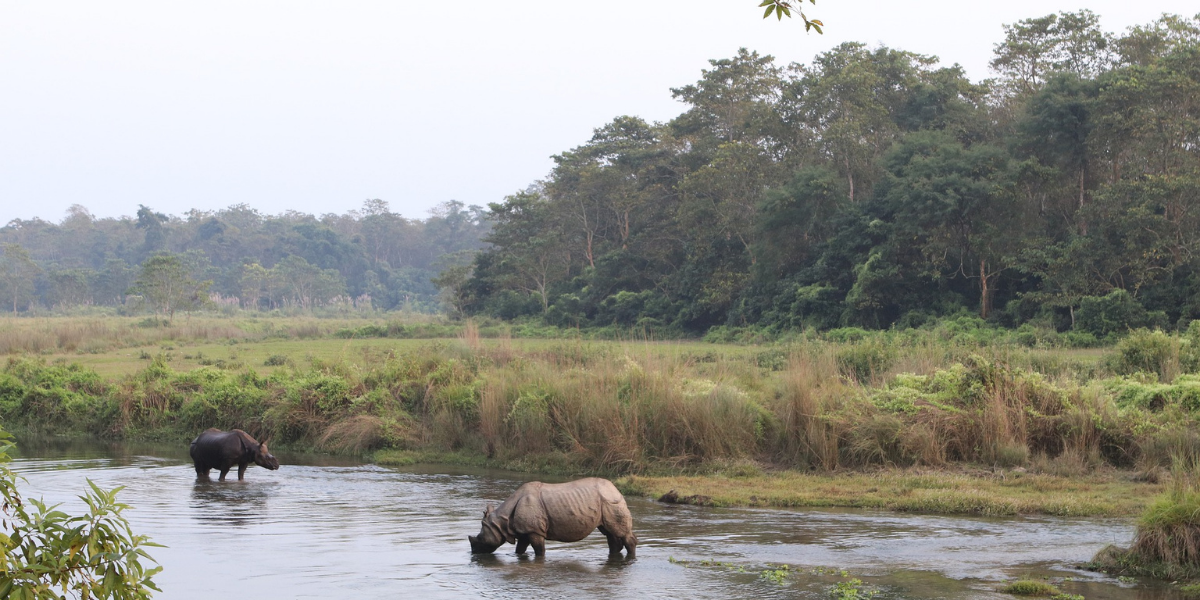
As big as 1,78,000 football fields, Nepal’s first protected national park is home to over 550 species of birds; awe-inspiring animals, such as greater one-horned rhinoceroses, Bengal tigers, clouded leopards; and a confident, brave girl called Sita.
Sita dreams of being a nature guide like her baba. With a spring in her step and a group of eager tourists, she unravels the secrets of the forest. But when she wanders astray and comes face to face with a mamma rhino, will this eight-year-old be able to listen to the stillness of the jungle?
Join Sita in Chitwan National Park, a magnificent UNESCO World Heritage Site!
**
There were no female nature guides in Nepal until one woman challenged herself to do something that no woman had.
Meet Doma Paudel, the first female nature guide in Chitwan.
Sita: Hi Doma! I am sure everyone is excited to learn that there is a real-life me! Tell me more about yourself, Doma.
Doma: I was twenty-three years old when I became the first female nature guide in Chitwan, Nepal in 2007. In 2012, I founded Nepal Dynamic Eco Tours to promote sustainable ecotourism. I support wildlife victims and conduct awareness programs on forest conservation. There is always something that keeps me busy.
Siuta’s Chitwan || Vaishali Shroff (Author), Kalp Sanghvi (Illustrator)
Sita: Wow! You wear many hats, Doma! My baba inspired me to become a nature guide. Who inspired you?
Doma: My family’s house in Sauraha is along the border of CNP. Elephants destroyed our bamboo and grass house a few times. Rhinos, deer and wild boars ate our crops. Once, a sloth bear attacked my father. Coming from a poor family, it was hard to recover from these losses. In 2004, we lost our beloved mother to an unexpected rhino attack; she had gone to the forest to collect firewood for the house. But I still love animals and forests.
My mother treated me no different than my brothers. She always encouraged me to follow my heart and step out to do something for society. In school, I was part of the Green Club and participated in plantation and garbage collection events. That’s where my journey to be a nature guide began and I never looked back.
Sita: Did you have to undergo special training to become a nature guide?
Doma: I received training from lots of places including the National Trust of Nature Conservation. I learnt the history of Nepal and Chitwan National Park, the protected areas, all about animal behaviour, safety rules, hospitality, culture, responsible tourism and a lot more!
I was the only female among twenty-five male guides. No one wanted to go with me into the forest because they thought I was not strong enough to protect tourists and other guides from wild animals. But I did not give up. On the first three-day walk I was assigned, a rhino charged at us. I used all my knowledge and training to protect my guests from the rhino. Since that day, everyone knows me as ‘the one who is not afraid’!
Sita: That’s incredible! I once saved a tourist from a rhino attack too! What does a day in the life of Doma Paudel look like?
Doma: A nature guide’s life is full of excitement, adventure, challenges and risks. In peak season, I am at my office by 6 a.m., planning safaris and tours for our tourists over cups of tea. My guides and I show Chitwan’s beauty and wildlife to our tourists and the last safari ends by 5.30 p.m. At 6 p.m., all of us get together to share our day’s encounters and stories. No two days in the forest are the same and that’s the most exciting part of my job. When there are no tourists, I organize events to raise awareness on conservation efforts and the participation of women in conservation among our communities and schools. We also visit other national parks to constantly update ourselves.
Sita: What do you love about your job?
Doma: I love that I get to be in the midst of nature and wildlife all the time. I learn something new about the forest every day. Just like you, I love meeting new people from different parts of the world, Sita. It’s a very special feeling to know that you have taken more and more people closer to nature and made them feel more empathetic towards nature and its biodiversity. I am an ambassador of nature and proud to have inspired many women to become nature guides and make families believe that it’s not just a man’s job. And I don’t miss a chance to meditate in the forest—it’s the best place to do so!
Sita: Thank you, Doma. You inspire me to not give up on my dream!