Publish with Us

Follow Penguin

Follow Penguinsters

Follow Penguin Swadesh

Easter 2020: The World is a ‘Cave’

How to Survive These Times Through the Niti Teachings

What is it about caves? If you sit down to think, you’ll find that history is specked with stories (across regions) that feature this hollow space made by nature—right from our ancestors, the early man. The cave dwellings, then cave drawings (or perhaps first art galleries), and then we move to more sophisticated stories.

Moses and St. Elijah spent time in a cave. Maimonides, the foremost Judaic polymath wrote his seminal book while exiled in a cave. When Empress Helena visited Palestine in 327 A. D., she stated that the blessed Mother Mary conceived in a cave, gave birth in one, and eventually settled down to raise a family in one, too. In fact, Helena found many Christian mystics living as hermits in hillside caves. Then we have Catherine of Siena who went to a cave. And Prophet Mohammed heard the Koran for the first time in the Cave of Hira.

Moving closer home, we too have many stories about this hollow space. Tibet has the cave where the famous killer-turned-yogi Milarepa meditated. In Kashmir, the ancient Rishis would take abode in the many caves there. The luminous Abhinavagupta’s Bhairava Cave in Beerwah, J&K, is celebrated for transcendence. The Amarnath Cave is, of course, where the supreme secret was revealed. And moving down in southern India, we have the Virupaksha Cave of Ramana Maharishi, which is visited by hundreds of thousands.

So, what is the power of a ‘cave’? Is there a power of the cave? And how does a cave offer solution in a time like this—the pandemic?

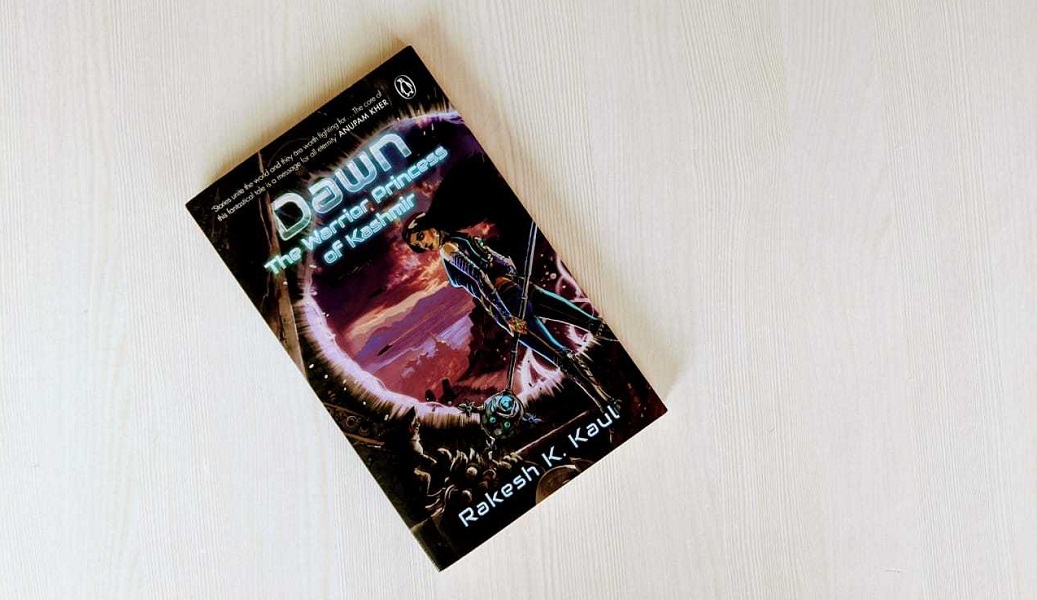
Plato’s insightful Allegory of the Cave gives a hint that the outside is a shadow and truth lies elsewhere. In the book, Dawn The Warrior Princess of Kashmir, the final answer is given in the cave of Mount Kailash where Shiva meditates. It is there that Dawn, the sixteen-year-old protagonist who is also the last living woman in the world, lives, to be precise, in a cave called Trisarsha in the year 3000 AD. So, the cave becomes a “pod” where the senses die but it becomes a womb where something magical is born—the power of the last woman standing is manifested here.

On Sunday April 12th the Catholics will celebrate Easter Sunday while the Orthodox Easter falls on April 19th. The connection between Dawn and Easter is deep. Dawn or “Usha” in Sanskrit is the most important Goddess in the Rig Veda. She is the harbinger of the rebirth of life each morn. She is the only Indian Goddess who has spread around the world. Her cognates are Eos in Greek, Aurora in Roman, and Eostre in English, which is the root of the word Easter—the festival of resurrection. Interestingly, Usha is also the name of the sanctuary city where the Sanhedrin or Rabbinical Court fled to in the 2nd century.  It is important to remember that in addition to the celebrated Gayatri Mantra honoring her, she is also the Goddess of Order; the driver away of chaos and darkness. She is dawn, she is hope, she is resurrection.

Dawn is the key-holder to the ultimate life-hack—Niti—which is, simply put, the most powerful technology invented by humanity. Niti means “the wise conduct of life”. The Kashmirians maintained that one is born with only one birth right, namely the freedom to achieve what is one’s life quest. And what is the ‘way of life’ so that one can maximize one’s human potential? The Kashmirians defined life’s end goal in heroic terms as “unbounded fulfillment while alive” whether physical or meta-physical.

Niti’s promise is that it enables one to face any threat, any challenge to reaching one’s goal as one travels through Time and Space. These threats are the daily near-death forces in that they snip off one’s fulfillment in some way or the other culminating in the final death of an unfulfilled life. To become a ‘Niti Warrior’ is one’s birthright: the mark of a swatantra, free human. But what happens to Niti and the Niti Warrior during unprecedented times as the one where we are living now—during the Covid 19 pandemic which is an existential threat for all of humanity? What is the wise conduct here? How does Niti enable one to cause the Death of Death?

In the novel, Dawn states, ‘‘Health is the unrestricted movement of the body, mind and heart. This movement is powered by the bio-plasmic Life Breath.’

The Niti formula is quite explicit. It requires one to do deep learning; act bravely with compassion; and be with close friends. It was first articulated by Pandit Vishnu Sharma in the Panchatantra. The deep learning about the deadly virus is that the virus has understood humans better than even humans understand themselves. It has made our unrestricted movement its vector, used our strongest social instincts of physical bonding against us. The virus,  learnt this through mutation; so we must take that Darwinian learning and mutate ourselves. Mutate to a behavior of no movement and the virus dies. Remember that it is not the strong that survive but the ones who adapt. Change we must at the individual level, at the community level and at the level of humanity to survive.

And if the call comes then we must act bravely and with compassion. Not just the front-line essential services fighters—the doctors, nurses, first responders, grocery sellers, vegetable vendors etc.—but each and every one of us can contribute to this war. In this regard a very special Easter blessing awaits the Corona virus survivors—the ones who had the blessing to live through this. They can be the carrier of the born-again healing touch through contributing their anti-bodies which is verily the gift of Jesus Christ. What is essential, says the Niti way of life, is that we stay connected to our loved ones. That is what keeps our Shakti consciousness alive. If we follow this Niti formula, then Covid 19 will fail to take our life-breath away. We will then experience the next thing that Dawn realizes and states in the novel: ‘The property of our Life Breath is freedom. It is this freedom that leads to creativity.’

If we look at our current condition as an opportunity and just give ourselves the chance inside our cave, then we will discover that we are slowly but inexorably drawn towards creative activities whether it is something as fundamental as cooking or artistic such as  writing or painting or even spiritual expansion. Niti’s manifestation that is creativity is the ‘Life of Life’ which in turn is the cause of the ‘Death of Death’. And in the laboratories around the world it is the scientists who are detonating creativity. They will come up with not just one answer but multiple answers which will finish this scourge forever. That is the promise of Niti. And the Life Force will triumph again. So it has been so it will be.

Are you Smarter than Havaldar Hook?

Are you stuck at home and want to do something entertaining with the young ones? Havaldar Hook is here for you!

He wants you and your child to give him some answers!

Did you think Hawaldar Hook was done? He has some more questions for you!


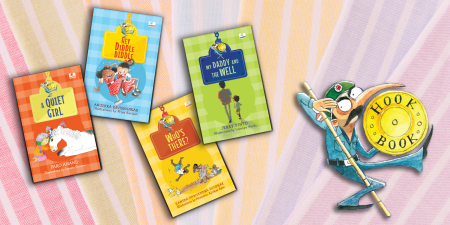
Want to have more fun with Havaldar Hook? Check out our Hook Books: Hey Diddle DiddleA Quiet Girl ,Who’s There? and My Daddy and the Well


Psst… Here are answers for Worksheet 1:
Horse – Foal or Colt (male) or Filly (female)
Goat – Kid
Hen – Chicken


Answers for Worksheet 2:
You’ll just have to ask for help from people around you!

7 Asian Women who Fearlessly Pursued their Dreams

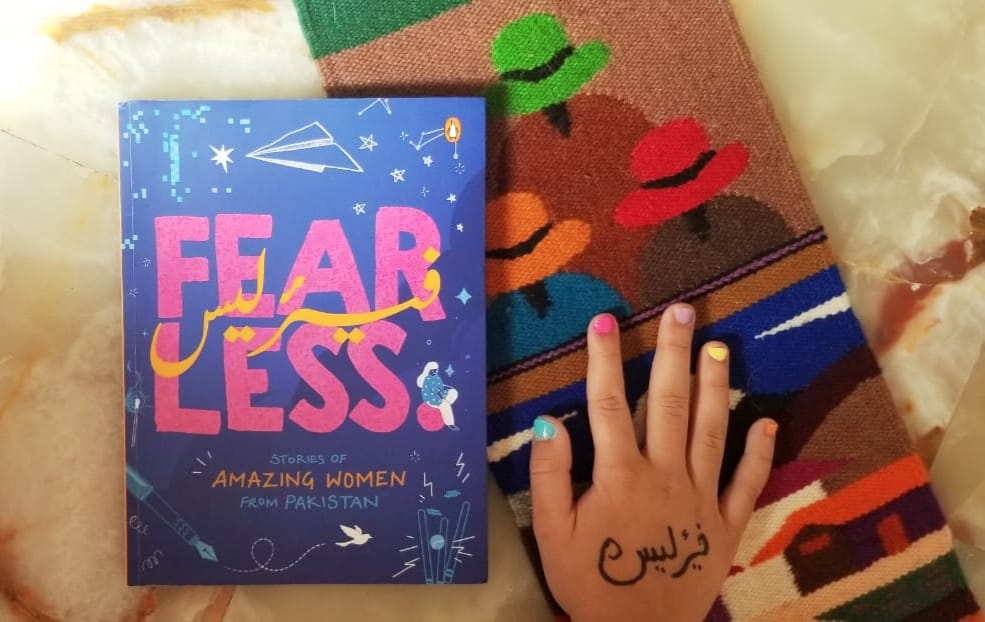
Through the ages strong, inspirational women and girls have risen in response to uncertainty and injustice. Fearless chronicles the journeys and stories of such amazing and strong women – demonstrating that one girl can change everything.

If you were looking to be inspired today, read about these 7 asian women who fearlessly pursued their dreams:

Shukria Khanum

Shukria Khanum was a female aviator – one of the first of her kind in Pakistan. She obtained a commercial pilot’s license despite women not being allowed to fly commercial planes at the time. She subsequently became a flight instructor  because she never gave up on her dream!.

Majida Rizvi

She was the first ever female judge of a Pakistani High Court and had a reputation for integrity and impartiality. Even after retirement Majida has continued to fight for gender equality and human rights in Pakistan.

Shamim Ara

Shamim began her career as an actress and subsequently became one of Pakistan’s leading ladies. But her true talent was producing and directing. She mastered what was at the time the male dominated area of cinema and she changed how women were portrayed in Pakistani cinema.

Zubeida Mustafa

Zubeida was an influential journalist at a time where there were very few women involved in the profession. She worked for Pakistan’s most influential and circulated daily, Dawn. Her stellar writing quality and persistence led her to a long and successful career in journalism.

Ameena Saiyid Obe

Ameena pursued her love of books by starting her own publishing company, Saiyid Books as well as working as Managing Director of Oxford University Press in Pakistan where she grew the company exponentially. She also cofounded the Karachi Literature Festival and is lauded for promoting the love of reading in Pakistan.

Shahida Malik

Shahida was the first high-ranking two-star female general in the Pakistani Army. Although she faced challenges and opposition from her male colleagues, she did not let it stop her and she went on to serve as the Deputy Commander and Inspector General of the Pakistan Army Medical Corps.

Quratulain Bakhtiari

Quratulain is a community activist, educationist and Nobel Peace Prize Nominee. She has worked extensively with refugees and her efforts have led to the establishment of thousands of schools.


These are but a few examples of the tenacity and strength displayed by women in overcoming challenges and pursuing their dreams. You can read further about these women and many more in Fearless

From picture books to Hook Books: Why your child needs Hook Books!

The Hook Books are early chapter books for very young readers, aged five and above (for being read to) and six and above (for reading independently). Written by award-winning and most-loved writers for children, and illustrated in exuberant colour by some of India’s best illustrators, these stories are set largely in non-urban settings.

Why Hook Books? Sayoni Basu, editor of the Hook Books explains why you and your child should be reading these.

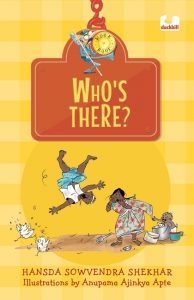
Who’s There? || Hansda Sowvendra Shekhar, Anupama Ajinkya Apte

It is an accepted fact that every child reads at a different pace. Reading levels and grade targets and lexile levels work up to a point, but children’s actual reading abilities vary widely within these levels and frequently fall outside them on either side. This is especially true in India in the case of books in English—English might be the first, second or third language, and is introduced at different ages.

The challenge for authors and publishers is to therefore create books which can work for wide age groups. Books which are both simple and complex: with a vocabulary that works for kids of five and six, who are graduating from picture books to books with more words, yet with a story that would interest a reader who may be a lot older.

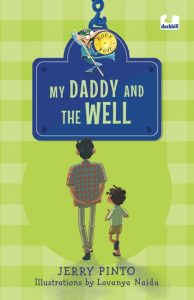
My Daddy and the Well || Jerry Pinto, Lavanya Naidu (Illustrator)

This was one of our goals in the Hook Book series.

The longer we work in children’s publishing, the more clearly we realise the impossibility of linking age group to reading ability. So we wanted to create books that satisfy the metro parents’ desire to fast-forward their child’s reading achievements, and yet allow children the pleasure of reading well-written stories that appeal to them.

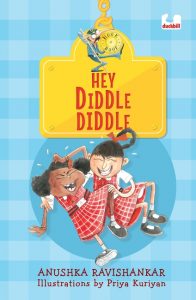
Hey Diddle Diddle || Anushka Ravishankar, Priya Kuriyan (Illustrator)

The second goal we set ourselves is to have a diversity of experiences in these books. Many of our readers live in cities and are in many ways deracinated. Living within an urban bubble and interacting only with other children like themselves, it is easy for them to lose touch with the the fact that despite belonging to the same country, we are diverse in the way we look, the way we live, the religious practices we follow, and social habits. So one of our goals in this series was also to try to bring together stories of small towns from different parts of the country. This is done subtly, through the names of the characters and the lives that are depicted and through visuals. There is no explicit mention or discussion, but it brings the lives of people who are ‘different’ into the world of the reader.

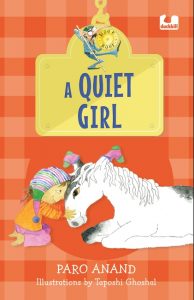
A Quiet Girl || Paro Anand, Toposhi Ghoshal (Illustrator)

The third goal is an educational value addition. We strongly believe that reading should be for pleasure and pleasure only, but we are sadly aware that a lot of the world does not share this view. And because we want our books to sell, we have given in to market pressure and created one exercise for each book. These exercises are carefully chosen to fit in with what children learn at school, so parents and teachers will be happy. But we also wanted to make these as enjoyable as possible for the child. And instead of quizzing kids about what is in the book, we use the story as a starting point for the child to explore the nuances of language and its usage.

So the Hook Books tick many boxes: they are attractive, well-written, fun to read, and are also educational, diverse and carefully crafted. We hope they will be an exciting and groundbreaking new series in the Indian children’s market.


It’s not a book, it’s a hook!

The Curious Case of Havaldar Hook – An Interview


Havaldar Hook is the endearing mascot of the Hook Books, a new series for early readers for ages 5 and up. To get to know him better, we posed some questions and he very merrily indulged, with honesty and humour.


Q: You are a humble havaldar, but you now have a series named after you. How do you feel?


A: I’m not ‘a’ havaldar, my name is Havaldar, because my father thought that I would grow up and become a policeman. But I wanted to become a teacher. So I’m very happy that there is a such a fun series in my name. I love books.


Q: But, HH, you wear a police uniform. 


A: I wear the uniform because it makes my father happy. I believe that it’s all about one’s parents.


Q: You have asked a lot of questions at the end of the book. Do you believe all books should be educational? Can’t children just read for fun?


A: I’ll tell you a secret. The questions are not for the children. They are for the adults. Heh heh heh.  The children will be happy with the marvellous stories and illustrations. So I thought, let’s give the parents and teachers something to be happy about. Still, I made sure that the questions are not like textbook questions, so children can have fun with them too.


Q: If you could give our readers one piece of advice what would it be?


A: Never let your parents decide what you should do in life. Also, if your parents give you a silly name, you can change it officially. Sadly, no one told me this, so I’m stuck with the name Havaldar. It makes me very sad, because most children run away when they hear the words: ‘Havaldar is coming!’


Q: One slightly personal question:  how did your nose come to match your surname: Hook?


A: (preens in pride.) The Raja of Naakpur bestowed the surname Hook on my great-great grandfather in honour of this nose! All the Hooks in history since then have proudly sported this nose. The Raja had just come back from London, otherwise we’d probably have been called the Aakadas.


Q: Finally, Havaldarji, what would you like to change your first name to?


*Havaldar Hook went silent and thoughtful at this point and we are still waiting for an answer to this question.


Here are the Hook Books


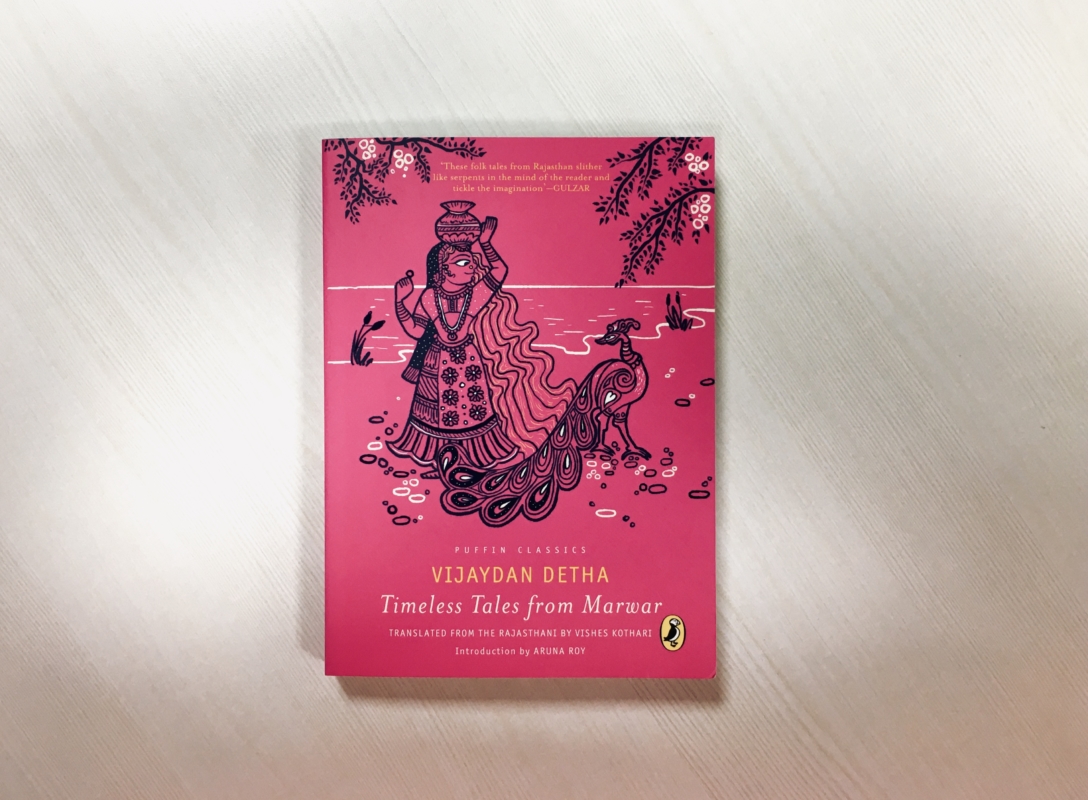
Reasons to Add ‘Timeless Tales from Marwar’ to your Reading List!

Rajasthan’s history is brimming with stories and folklore that span centuries. These are tales that bind Rajasthani folk culture and its history and are passed down generation to generation.

At the forefront of Rajasthani storytelling is Vijaydan Dehta who has also been called the ‘Shakespeare of Rajasthan’. In Timeless Tales from Marwar, Vishes Kothari translates his works from Rajasthani and offers some of the oldest and most popular fables from the Thar Desert region.

Not convinced? Here are reasons you and your child should add this book to your TBR:

Introduce Indian folklore to your child

Timeless Tales from Marwar compiles some of the most popular folklore and stories from the much- celebrated Batan ri Phulwari- ‘Garden of Tales’- a fourteen-volume collection written over a span of nearly fifty years!

The book has a magical narrative style

‘The tale of a tale.
The mischief of mischief.
There were three villages.
Two abandoned, and one,never settled only.
In which lived three potters.
Two fools, and one knew not about making pots only.’

These stories will warm your heart

Detha wrote ‘Because I was so completely unsuccessful with love, I became very talented at writing love stories.’ His stories, like ‘The Leaf and the Pebble’ explore the connections of friendship and love that is familiar to everyone. These stories will leave you feeling hopeful and are sure to warm your heart!

  Gain invaluable life lessons

Vijaydan Detha’s stories bind together human relationships, Indian wildlife, ghosts and the universe at large in an attempt to harness valuable life lessons.

Disguised within interesting and adventurous writings about the stars in ‘Aahedi, the Hunter’ or snakes in ‘Naagan, May Your Line Prosper’, there are lessons and advice about life which any reader can benefit from!


Read well written stories,explore heartwarming and adventurous tales and learn a few life lessons with the Timeless Tales from Marwar!


On hope and healing

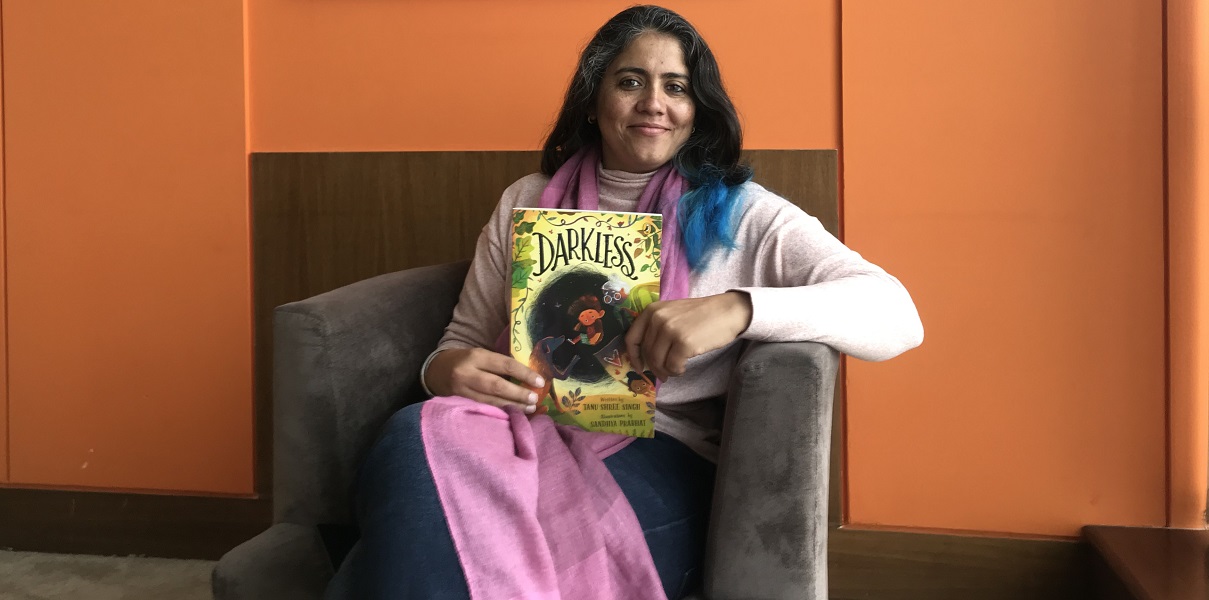
by Tanu Shree Singh

‘Last three years have been a struggle after Mom passed away. Darkless brought a sense of calm to me. That I am okay. That I will be okay,’ a woman my age wrote in a few days back.

‘I read this to my boy. After we turned the last page, he gave me the tightest hug though he had been at loggerheads with me the entire day!’ said another.

And then there have been the responses at various sessions with kids:

‘Dying scares me.’

‘I am scared that my pet dog won’t come back from hospital.’

‘My Dadi is too sick.’

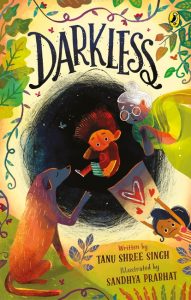
Darkless || Tanu Shree Singh, Sandhya Prabhat (Illustrator)

The conversations amaze me, stump me, but mostly worry me since most of the children also confess that they have never talked to anyone about it.

It has been more than four months since the book came out and never had I anticipated that it would reach people across age groups, across fears and across life situations. It is surreal and humbling at the same time. And when someone somewhere reaches out to let me know that the book helped them reach out or find inner peace, it makes all the phases of uncertainty before it came out totally worth it.

People often ask if any personal tragedy or fear prompted me to write Darkless. Although, all of us have our own bags full of fears and worries, this book didn’t come from that bag. It came out of a telephone conversation with a friend, Vaani Arora, who was working on some story based on the concept of light and dark as part of a STEM series. I saw light as something that seemed bright and colorful when the heart felt light. And when clouds of uncertainty, fear or worries visited, everything got dark. The story continued long after she hung up. I wrote it and sent it to a number of places only to be handed one rejection after another. Most thought that it was too dark or made no financial sense and so on.

I forgot all about it too for a couple of years. And then out of the blue I sent it to Pickle Yolk Books. Rest as they is a mad slice of history. We all put our hearts into the books – Sandhya with her sensitive illustrations, Richa with her impeccable editing and ideas and finally Sohini for putting her faith in the book. And then the hunt for the right title began! We brainstormed different options and out of the blue, Parag from Penguin said ‘Darkless’! We literally pounced at it. I have always maintained that books are a product of good teamwork and this one is a perfect example of that.

Darker emotions are often brushed under the carpet, more so when it comes to children, since we assume that they do not feel the depth of it or that they need to be protected from them. We hide them from uncomfortable situations and questions. We do that thinking that we are keeping them safe from whatever life throws at them. The truth is that somewhere, we are in denial. We don’t want to face the realities ourselves, mostly out of uncertainties and fears, and so rather than befriending and eventually accepting our own demons, we choose to ignore. The children, meanwhile, deal with their own solitary clouds in whatever way they can. Sometimes they accept the cloud as a part of themselves.

What we – the grown-ups – forget is that kids are just regular people. They experience all emotions as adults do, with similar intensities. The sessions that I have done so far around the book have been an eye-opener. From first graders to teenagers, all start the conversation about anxiety, stress and fear with innocuous things like worms, lightning, and bad dreams, and soon quiet conversations around deeper, bigger fears follow; things that they normally do not talk to anyone about. From fear of dying, being left alone, to anxiety around a sick family member and even the mortal fear of losing them – everything tumbles out. When asked what they do when they are gripped by these worries, most had little to say. They mostly kept quiet, mostly buried it.

Through this book, I hope to give the quiet ones a way forward, some tools to deal with the grief, a small step out of their own worry clouds. We need these conversations on fears, on worries, on friends like Ani’s who don’t give up, on the importance of being in the present, and being gratefully aware of the good things in life, no matter how small they are; just like the dust fairies that Ani loved to spot.

‘Ma’am,’ a little girl approached me after a recent session and asked, ‘can I please hug you?’ I received one of the warmest hugs in a long time. ‘I get scared of having no friends too,’ she whispered. ‘But I will be okay, thank you.’ Moments like these make all the drafts that I wrote, all the words I let go of, and the ones I stood by while we made the book, totally worth it.

My hope for this book is not multiple editions or a position in bestsellers’ list. My hope for it is that it helps a child rekindle hope and allows some grown-up somewhere to shed some happy tears and heal.

7 Essentials of Writing a Letter

The art of letter writing emerged long before phone calls or long text messages. Past generations will know well the anticipation that came with sending and receiving letter – a process that could sometimes take months. Perhaps it is this anticipation that made letters so special – it meant communication from a loved one or old friend that were miles away.

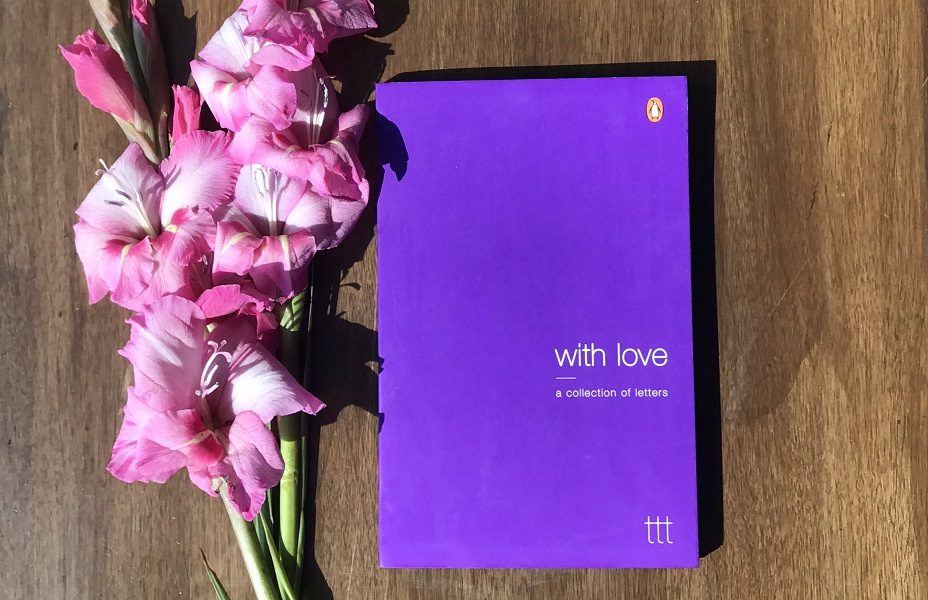
Letters have since been known to change lives, bring together lover or reconnect old friends. With Love explores the art of letter writing and encourages us to take it up ourselves.

So, whether you are writing to a friend, a long lost love or even family, here are 7 things essential for writing a letter, to keep in mind:

A warm greeting

The way you begin your letter is a great segue into what you are writing. Thinking about how to start your letter is the equivalent of saying ‘hello’ in person – make it familiar and personal. You could start with a fond nickname or word that you and the receiver use to call each other. It helps remind the person of the fondness they share with you and makes it feel like you’re right there greeting them!

Write about fond memories

No matter the content and purpose of the letter, context is always important and appreciated. Whether it’s reminding the receiver of where you met, or reminiscing over a fond memory that you share, mention a memory before proceeding to the main body of your letter.

Be concise

Although letters are great for free flowing thought and expression it is important not to drag them out too much or else the point of your letter will come across jumbled and confusing. Think about what you want to say and the best way in which to say it without dragging it out.

Work on your penmanship

It doesn’t matter how a letter looks – embellishments and decoration is at the discretion of the writer. It is however, to have clear and legible handwriting in order for the reader to understand what is written – if not, they will just be lost words!

Remember to mark the date of writing

Although it may not seem important at the time, noting the day, date and month (sometimes even the time!) is a handy element of a letter that helps place when the letter was intended to be read and how much time has passed since it was written!

Ask questions

Letters are a good place to express your thoughts, but they are ultimately about communication. Remember to address your reader and ask questions about them or their thoughts – this shows that you are interested in what they think and also prompts a response to your letter! Whether it is asking for an opinion, advice or simply asking how they are doing, be sure to include a question or two toward the end of your letter.

End on a positive, personal note

Ending your letter is the last thing you can write to your reader until your next one. Try and make it personal to them, ending with a note of love or friendship!


These are some essential tips on writing a letter if you are inspired by the letters in With Love. Give letter writing a go today and send some to old friends or family!

From Vidya Balan to Sachin Tendulkar: Leaping Across Borders and Beliefs

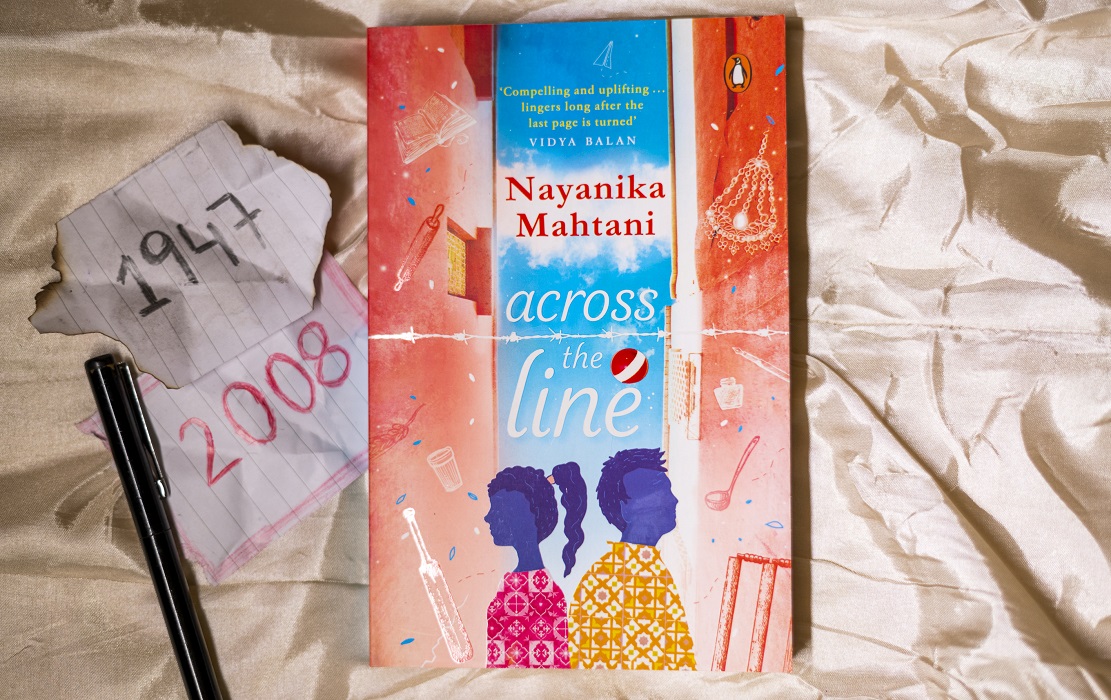
Jai is fourteen and dreams of owning a café in Delhi. Inaya is fifteen and dreams of playing cricket for Pakistan.

In Across the Line, Jai and Inaya’s unlikely worlds collide, and an equally unlikely story unfolds. A story that started with the drawing of a line. And a story that transcends borders, beliefs, and timelines.

We are having a look at some of our favourite people, who have taken this journey penned down by Nayanika Mahtani:

Vidya Balan: “A compelling and uplifting story…”

One of India’s favourite actresses, Vidya Balan has lauded the story for its earnestness and emotive power.

*

Sachin Tendulkar: “…what unites us bigger than what divides us.”

We were delighted to hear that our favourite cricketer lauded the story too!

*

Asif Farrukhi: “…this book lights a candle of hope and peace.”

We are also extremely happy to see some love coming across the border!

*

Asma Said Khan: “A much needed book at a time when hatred of the ‘other’ has become endemic…”

Some more love from even farther beyond!

*

Sharmeen Obaid-Chinoy: “…a tribute to all the unsung heroes who have fought silent battles even after the Partition.”


Across the Line is about the Partition and the human impact of borders that still lingers amongst us today. It makes for a must-read story in today’s times with its message of unity and love across borders and beliefs.


“Happy, Happy You Make Me!” – Meet Alicia’s Dearest George!

There’s a reason they say February is the month of love. Thanks to Alicia Souza, and her (PDA-aversive) husband, George, we have had the corniest and loveliest and mushiest February so far (who could have thought we had it in us?).

Our favourite illustrator is admitting her love in artistic style! Amidst all the cuddles and kisses and the banter of married life, our biggest takeaway from her latest book Dearest George is how much these two lovebirds mean to each other.

Call it a post-valentine’s hangover, but we decided to revisit what George means to Alicia!

He is family. Period.

We have said this before and we will say it again – this is our favourite family portrait!

*

Admit it, Alicia – You Love the (Closeted) Romantic!

We know the whole point of penning down this book was to prove to the world that George is, after all, as mushy as all of us.

*

Heart of Gold AND a Nice Beard – What’s not to Love?

We totally feel the shared love for food, to be honest.

*

The Momo Cuddles.

Isn’t companionship about those special lazy mornings, after all?

*

He is Versatile.

George is a complete package, we have to say. #HusbandGoals, much?

*

The Perfect Cure for Bad Days.

Nothing compares to the person that can make you smile on bad days – we know how difficult that is!

*
He Makes her HAPPY. 

Do we need to say more?


George makes Alicia happy – and us too, because this book wouldn’t exist without him!

February is incomplete without celebrating love, and with this post, we are also thanking George for bringing so much love into Alicia’s life and ours!

error: Content is protected !!