Publish with Us

Follow Penguin

Follow Penguinsters

Follow Penguin Swadesh

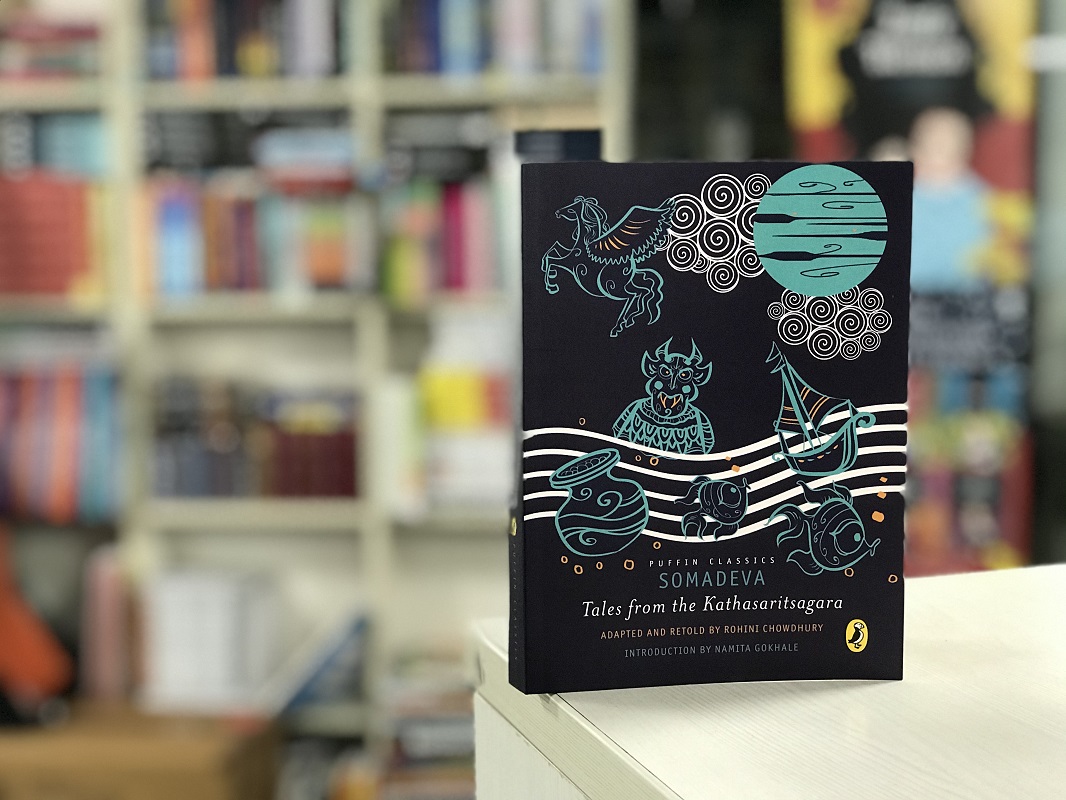
Why You Should Read ‘Tales from the Kathasaritsagara’

Do you know the story of Phalabhuti, who narrowly escaped a grisly fate?

Or of the kind-hearted Jimutavahana, who was willing to give his life to save a snake from death?

These are just some of the many tales that make up Somadeva’s Tales from the Kathasaritsagara, a classic work of Sanskrit literature that is full of memorable characters. Adapted and wonderfully retold by Rohini Chowdhury, this is a timeless classic that will entertain and enchant readers everywhere.

Not convinced yet? Rohini Chowdhury pens down why this book is special to her below:


For as long as I can remember, the Kathasaritsagara has been a source of joy and wonder for me. Full of clever women and brave men, its stories have never failed to delight and divert. Its title, which means ‘the ocean of the rivers of story’, immediately brings to mind the image of innumerable rivers of story and their tributary tales flowing into a vast ocean, which at last becomes filled with stories of every kind imaginable. Its title is no exaggeration, for this great work contains within it more than 350 tales told across eighteen books in some twenty thousand stanzas.  It is, for its size, the oldest extant collection of stories in the world and is almost twice as long as Homer’s Iliad and Odyssey combined.

It was composed around 1070 CE by a Kashmiri Shaivite Brahmin called Somadeva. In a short poem at the end of his work, Somadeva states that he was the court poet of King Anantadeva of Kashmir, and that he composed his Kathasaritsagara for the amusement of Queen Suryavati, wife of King Anantadeva, to distract her mind from its usual occupation of ‘worshipping Shiva and acquiring learning from the great books.’ The Rajatarangini, a chronicle of the kings of Kashmir written by the historian Kalhana in 1149 CE, tells us that the reign of King Anantadeva was one of political unrest, court intrigues, and bloodshed. In 1063, King Anantadeva surrendered his throne to his eldest son Kalasha, but recovered it a few years later. In 1077, the king once again gave up his throne, but this time Kalasha openly attacked his father and took all his wealth. In 1081, the king killed himself in despair, and Suryavati threw herself onto his funeral pyre and perished. It is likely that it was sometime between Anantadeva’s first and second giving up of his throne that Somadeva composed his Kathasaritsagara, possibly around 1070.  The Rajatarangini, by independently corroborating the reign of Anantadeva, supports the existence of Somadeva as a real, historical person, and helps us determine with some certainty the time when he composed his great work.

Indian texts were rarely the product of a single individual’s imagination, but were usually put together using stories from various sources and told by different storytellers. Somadeva, too, did not invent the stories that make up the Kathasaritsagara – many of its tales are also contained in much older works, such as the Buddhist Jatakas, the Panchatantra, the Ramayana, the Mahabharata, and the Puranas and had probably been in existence for centuries, preserved and transmitted orally long before they were ever written down or became a part of Somadeva’s text. Somadeva himself tells us that the Kathasaritsagara is drawn from a much older, and greater, collection of tales called the Brihatkatha, or Great Tale. This greater collection of tales, says Somadeva, is now lost.

Somadeva’s genius lies in the manner in which he has threaded the separate, often unrelated, stories together within the main story, to create a work that engrosses and enchants from the very beginning. Some of the stories take us by surprise, such as that of the clever man who made himself a fortune from a dead mouse. Others, such as the story of the talking bear who refused to betray a friend, make us stop and reflect – on deceit, trickery, and honour. But mainly, the stories entertain and divert. The world of Somadeva’s Kathasaritsagara is rich and vibrant, full of kings, thieves, conmen, merchants, and courtesans. There is war and romance, intrigue and heroism, wit and, sometimes, even wisdom. Like Vishnusharma’s Panchatantra, the Kathasaritsagara is concerned with life and living, but unlike the fables of the Panchatantra, the stories of the Kathasaritsagara teach no moral lessons. Nor are the tales bound by any dominant theme, religion or point of view, but ramble without plan or any purpose except entertainment through their magical world. This makes the work unique in Sanskrit literature.

The Kathasaritsagara has been translated and retold several times since it was written. One of its earliest translations was commissioned by the Mughal emperor Akbar, who came to know of the Kathasaritsagara on a visit to Srinagar after his conquest of Kashmir in 1589 and shortly afterwards ordered it to be translated into Persian. This translation was also lavishly illustrated. Unfortunately, most of the original manuscript was lost and today only nineteen illustrations survive from this translation, scattered in museums and private collections around the world.

The Kathasaritsagar remains unparalleled in its appeal and the undiminished popularity of its tales over the centuries. Its stories are found all over the world – in the more or less contemporary Arabian Nights, in Celtic folklore, and in collections such as the fairy tales of the Brothers Grimm. Its influence can be seen in later works such as Chaucer’s The Canterbury Tales (1387 CE) and Boccaccio’s Decameron (1353 CE).  In continuing to inspire modern writers such as Salman Rushdie with his novel, Haroun and the Sea of Stories, it remains one of the most influential and best-known non-religious works of Sanskrit literature.

When Puffin’s Sohini Mitra asked me whether I would be interested in retelling, in abridged form, Somadeva’s great work for the Puffin Classics series, I was overjoyed, for I could not imagine a more delightful task. I have based my retelling of the Kathasaritsagara mainly on C.H. Tawney’s English translation published in 1880 by the Asiatic Society of Bengal. For the purposes of this abridged retelling, I have chosen the stories so that they represent, as far as possible, the extent, scope and structure of the whole of the original.  Perhaps my favourite story in this selection is that of the carpenter-king, Rajyadhara, and his robot subjects. Though written almost a thousand years ago, it can hold its own against any modern sci-fi tale. Another favourite of mine is the action-packed story of Shringabhuja and Rupashikha, variations of which are found in Norwegian, Sicilian, and Scottish folklore. And there is of course the Vetalapanchaviṃshatik, the twenty-five tales of the Vetala and King Trivikramasena familiar to almost every child in India. Of these riddles, I have included only a few of the most interesting.

By the time Somadeva wrote his Kathasaritsagara, Buddhism had all but disappeared from the Indian subcontinent. In Kashmir, Shaivism was becoming increasingly important, but unlike most of the rest of India, Buddhism still had a significant presence there. Somadeva thus lived and wrote in a climate where multiple religions and philosophies co-existed peacefully. Somadeva dedicates his work to Shiva, but also includes within it, stories about Buddhism and the Buddha, indicating the place that Buddhism occupied in the social and cultural landscape of Kashmir at the time. The story of Ratnadatta and how he learns the meaning of the Buddha’s teachings is a particularly powerful little story, and which I felt deserved a place in this selection.

Given its importance and the universal appeal of its stories,  Tales from the Kathasaritsagara is, in my opinion, the perfect introduction to the wonders of Sanskrit literature for young readers.

Feeling the Exam Blues? Crack The Boards with the Help of this Guide

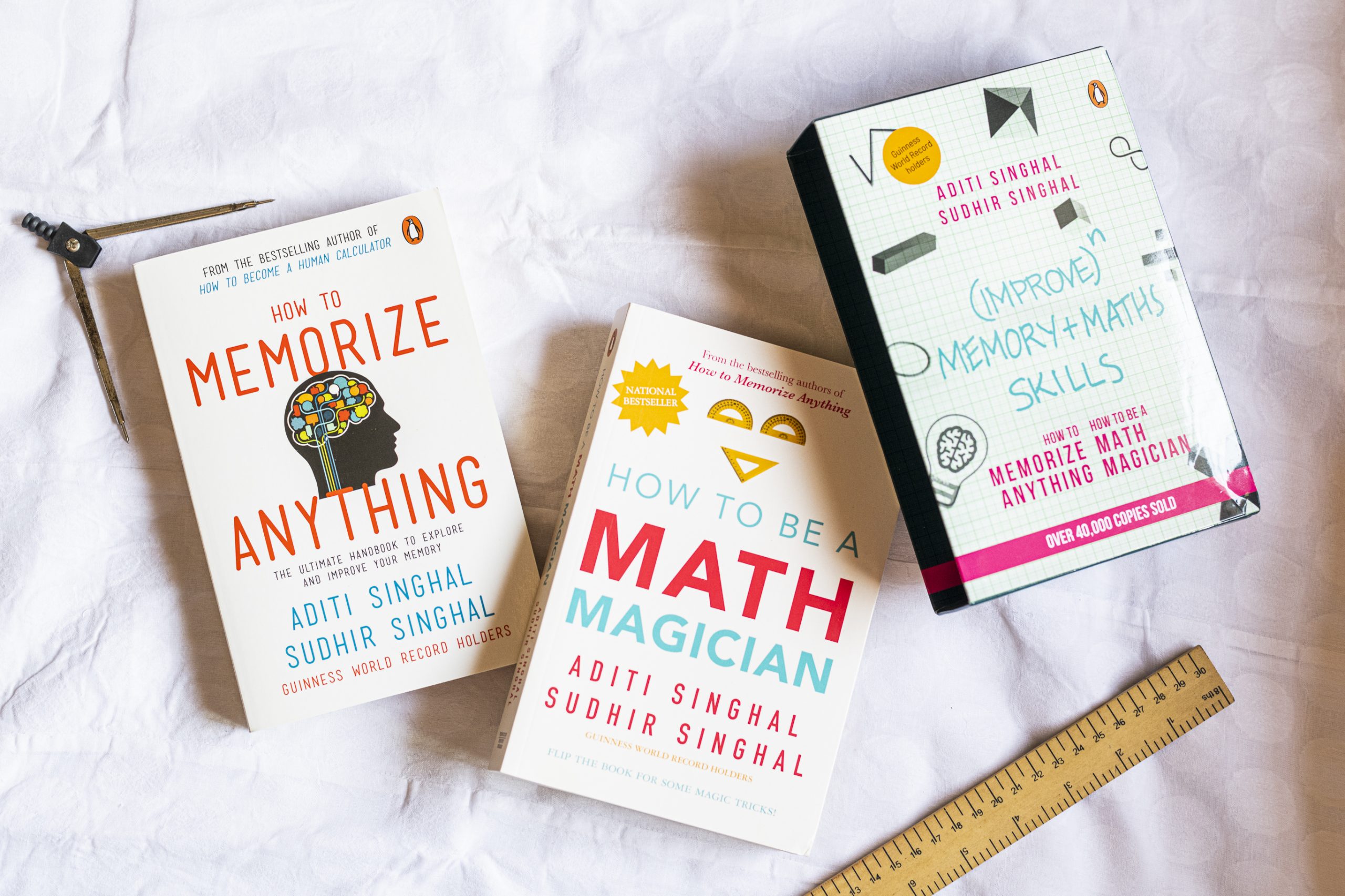
Mathematics is an integral part of our life but many think of it as a boring subject that has to be studied in school or college. In their latest boxset Improve Memory and Maths Skills, Aditi and Sudhir Singhal not only make mathematical principles fun and easy-to-learn but also show a different a side to this subject – a side that can help us improve our concentration skills and increase our attention span. The boxset also includes a manual that will help you memorize anything and explore the immense power of your memory.

Read to know more about how you can tackle the math monster:
Many teachers wonder what magic they can perform to make their kids like the subject. But the fact is it all depends on what you think about the subject and how you present it to students, both children and adults. If a teacher introduces a concept by saying ‘today we are going to start a new topic and it is very difficult. You need to pay attention, otherwise they won’t understand’, those students who find maths difficult automatically switch off, thinking they won’t be able to understand today’s topic. And the students who like the subject also tend to get a little stressed, which is not an ideal mindset for establishing a solid foundation. Instead, if a topic is introduced by saying, ‘Today we are going to learn something very interesting, which I feel you all will enjoy doing,’ and some activity or storytelling accompanies it, then everyone can get involved.

During interaction with students and teachers over the years, we[Aditi and Sudhir Singhal] have realized that whether one fears maths or loves it depends on how well a person understands it. If someone scores well in maths, they start liking it. But if they give wrong answers, they develop a fear of the subject, believing that maths is difficult.

The main factors that contribute to this fear are:

  • Clarity of concepts –When a concept is not clear, the child or adult makes mistakes repeatedly, losing confidence and eventually giving up.
  • Lack of practice – If someone understands the concept but doesn’t practice it enough, then he/she is not going to retain it for a longer time. Through practice, one is able to understand the patterns involved in the procedure and develops strong pathways in brain which are required to accomplish a particular task.
  • Wrong beliefs and messages – Every time a child hears a parent, older sibling, grandparent saying ‘Maths is very difficult’, it makes them think if their elders feared the subject, then it must indeed be very difficult to master, feeding their fear of the subject.
  • Not able to relate it with daily life situations – Most students are unclear about the significance of the topics covered during their maths class. Often, they do not see a connection between the topics taught and real-world problems.

To remove the fear of maths, we need to shift our focus from remembering procedures or formulae to understanding them with proper reasoning. First of all, maths should not be treated as just a subject you need to study to get marks in exams. Rather, the emphasis should be on knowing the beauty and importance of maths in daily life. In the present education system, upto eight standard, maths curriculum is focused on calculation skills involving mainly long procedures and formulae. That’s why, with time, students start losing interest in it as they think calculations can easily be done using calculators and mobiles. The remedy for this is for school-level maths to be more related to day-to-day situations. The emphasis should be more on developing mathematical thinking and problem solving skills of a child rather than just working on calculations. Apart from teaching the procedures to solve a particular problem, understanding of why we are using that procedure should also be taught. In short, we need to add the why along with the how to solve a given task or problem.


Students can improve their maths skills by practicing the following strategies:

  • Solve challenging puzzles, playing Sudoku, or playing chess. This will help exercise the brain and develop thinking skills.
  • Practice maths regularly, doing at least 3 questions daily.
  • Instead of using calculators, try to do calculations mentally.
  • Don’t hesitate to ask questions.
  • Use Vedic math to make your calculations fast and easy.
  • Try to relate maths problem with day-to-day situations.


Aditi Singhal is an international memory trainer, author, motivational speaker, counsellor and Vedic Math expert. Sudhir Singhal is a dynamic trainer, author, motivational speaker and counsellor. Both of them hold the Guinness World Record for conducting the largest mathematics class. Their latest boxset Improve Memory and Maths Skills contains the best tips and tricks and is meant for all age-groups students, teachers, and parents. Guaranteed to improve your mathematics and memory skills, these books are must-reads for competitive exams, maths enthusiasts and puzzle aficionados.

Get cracking the boards season by getting your hands on this boxset.

Memorable quotes from India’s favourite storyteller, Sudha Murty!

Sudha Murty has won the hearts of the young and adults alike with her inspiring stories and life-lessons.

The Sudha Murty Children’s Treasury brings together some of her most adored short stories in the form of a dazzling hardback edition. Here are some words of wisdom from the book, that would give you your daily dose of motivation!


‘As a teacher, I have seen that sometimes even a bright student may not do well because of the pressures of the final test. There are other ways to examine the depth of knowledge of the student, like surprise exams, open book exams, oral exams etc. The examination should not scare the students, instead it should measure knowledge fairly and give marks accordingly.’

~

Front cover of The Sudha Murty Children's Treasury
The Sudha Murty Children’s Treasury || Sudha Murty

‘When climbing the ladder it is very easy to kick those below, but one must not forget that you cannot stay at the top forever. The higher you go, the longer is the fall.’

~

‘It is not fear that binds you to your boss. Affection, openness and the appreciation of your qualities builds a long-lasting relationship. We spend most of our time at our work places. This time should be spent in happiness, not in blaming each other.’

~

‘What had I learnt from the hard journey that was my life? Did I work for money, fame or glamour? No, I did not work for those; they came accidentally to me. Initially I worked for myself, excelling in studies. After that I was devoted to Infosys and my family. Should not the remaining part of my life be used to help those people who were suffering for no fault of theirs?’

~

‘How long can you keep birds in cages when their wings are strong and they are ready to fly? We can give our children only two things in life which are essential. Strong roots and powerful wings. Then they may fly anywhere and live independently. Of all the luxuries in life, the greatest luxury is getting freedom of the right kind.’


From inspiring real-life encounters as a teacher to timeless stories woven from the memories of her own grandparents’ bedtime tales, The Sudha Murty Children’s Treasury is a must-read collection of all stories that have delighted generations of readers. Gift this to your friends today for their daily dose of inspiration!

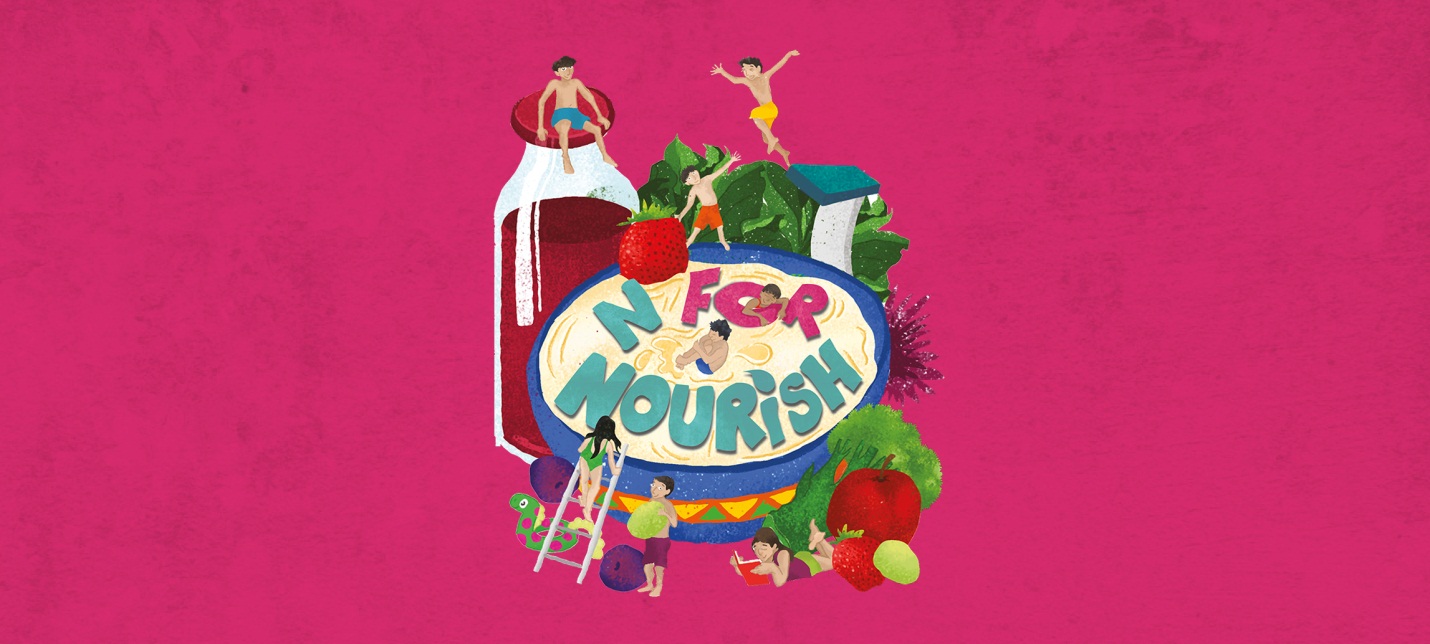
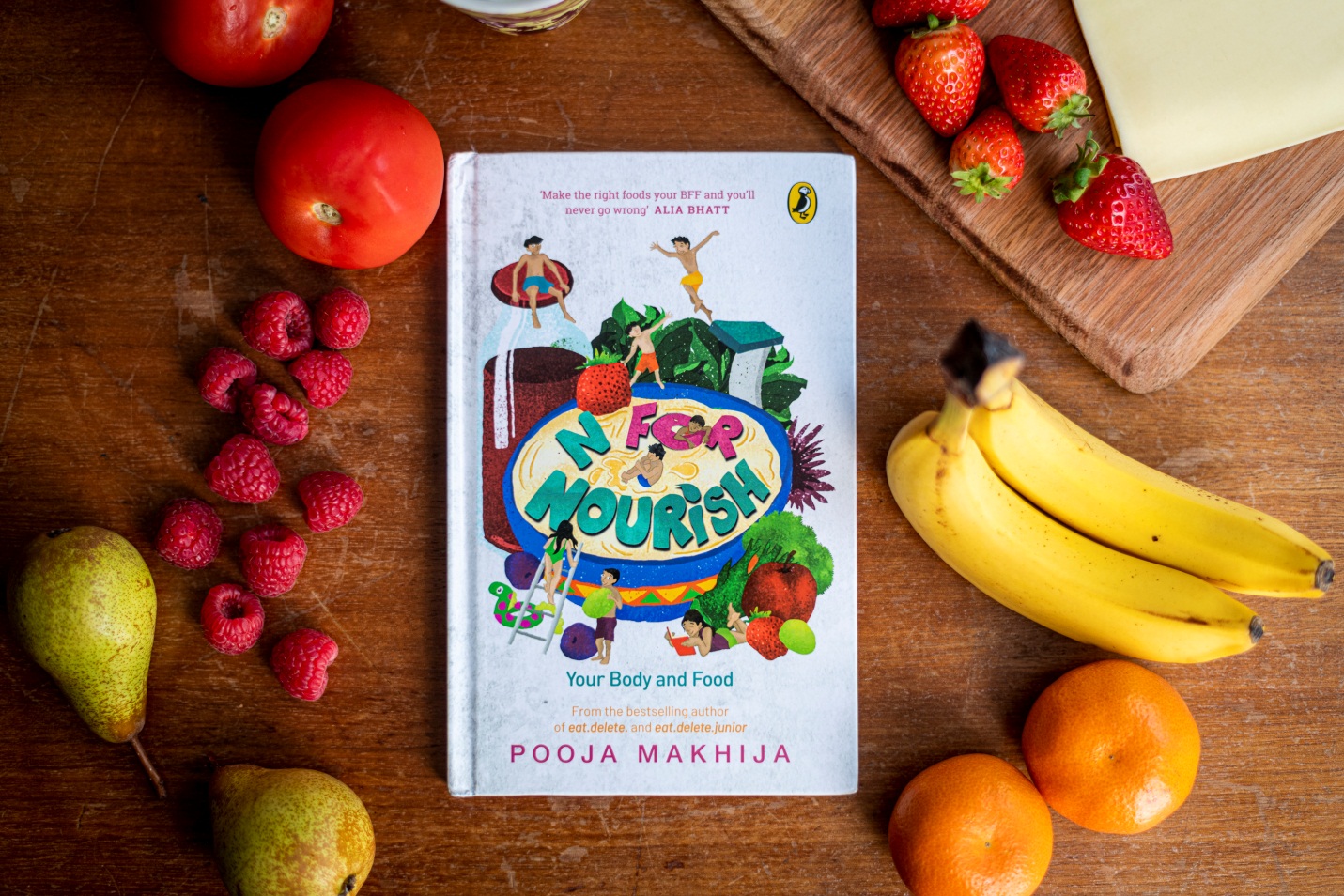
Fun, Food and Fitness- 6 Reasons Why you Should Read ‘N for Nourish’

Do you know why eating right is so important? Because it’s food that makes your kids zip through classes, tear across the football field or win that game of chess. The right diet influences your mood, your thoughts and even your child’s ability to have fun.

With the aid of innovative models and striking visuals, N For Nourish will help you and your child understand the components of a healthy diet, what makes the five fingers of nutrition (and how they turn into a power-packed punch) and the importance of sleep, water and exercise in your day-to-day life. Not only does this contain the ABCs of nutrition but also a series of amazing facts about how food can change your life.

Here are 6 ways this book will help children take charge of their health and wellbeing.


A – Aim to achieve

Food is instrumental in achieving success in all aspects of life- whether it is excelling at academics, building stamina for sport or accomplishing any other goal your child aspires to.

‘Food is the foundation of your future. If you eat right, you are more likely to score better, run faster, jump higher and be happier.’

B- Bring out the best in you

The 5 components we need for a balanced diet are carbohydrates, proteins, fats, vitamins and minerals. These, when consumed in the right proportion, give us the fuel we need for our bodies to grow and function at an optimal rate.

‘To be the best you can be, you need both macronutrients and micronutrients every single day. But how do you know how much you need of each nutrient? Well, to solve that problem, [Pooja Makhija] has come up with a concept she likes to call the Five Fingers of Nutrition, because it is an easy way for you to remember all the five nutrients in food.’

C- Combine fitness with fun

Pooja Makhija employs an engaging technique to ensure that her young readers not only understand nutrition but also practice healthy eating in their daily lives. N for Nourish is dotted with activities where readers need to identify nutritious foods and discuss concepts with their parents. These activities are labelled with icons that run throughout the book.

N for Nourish is packed with games, worksheets, quizzes and more, which you can spot with the help of icons. Every activity has been designed to deepen your understanding of what you’ve read or to just help you have fun with the serious topic of nutrition.’

D- Develop a relationship between your body and mind.

In our increasingly digitalised environment, both adults and children are continually glued to gadgets. In this comprehensive guide to good health, Pooja draws attention to the importance of physical activity and its effect on mental health.

‘Did you know that exercise changes your brain? And here’s how: When you exercise, the brain switches its attention from the part that is always worrying about your problems to the part that is involved in things like co-ordination and focus. This means that exercising changes the way you think and makes you more focused. This is better for your concentration levels and therefore, performance in school.’

E- Embrace how food and body work together

A balanced diet empowers the human body by building a defence mechanism against diseases. Pooja labels protein as the ‘silent warrior’ that helps build immunity, repair damages and enables the body to heal itself.

‘The right foods influence your brain, your body and your ability to take part in your own life. They affect your moods, your outlook, your thoughts. And your ability to have fun.’

F – Focus on mindful eating

Food isn’t just fuel for the body. Eating can be one of the most gratifying sensory experiences for human beings as the various tastes and textures can delight our palate. To experience the joy of eating, Pooja recommends taking a break from technology to focus on food and conversation.

‘By junking your tablet or TV, you learn to eat with thought, chew what you are eating, taste the flavours, eat according to your stomach size and not merely sync your meal with the length of the show.’


N for Nourish will make you and your little champions look at yourselves and what you eat in an absolutely new light!

Eight Things you Will Relate to if you Loved Books as a Child

Do you ever feel nostalgic about the books that were a part of your childhood? Do you remember the first book you read all by yourself?

This Children’s Day, get inspired to grow ‘young’ with this list of the best things that came with being fond of reading as a child!


Book Fairs, anyone?

Remember the joy you felt when there used to be any book related activity in school, especially book fairs? You could browse books around you for HOURS in your free time from the comfort of your school (so nobody had to drive you to the bookstore!)

Nostalgia around childhood classics

We all have amazing memories that are linked to certain books. Go down memory lane and introduce these childhood classics to your younger ones. That way you can form new memories with and for your child!

Read what you want to read

You didn’t need to read what others were reading or anything that didn’t interest you. If you loved romance, you read romance! If you loved literary fiction, you read it. Take a lesson from your younger self and don’t let anything stop you from reading what you love now, just like nothing used to stop you from reading what you wanted when you were a child!


Finding excuses to read anywhere and everywhere!

All of us got caught reading when we weren’t meant to – and we’ve got to admit – we’re a little proud of it! Nothing could stop us from reading! It’s time to be shameless and inculcate that reading habit again.

Packing was a nightmare

Between clothes and books, did you always choose books when going on a vacation?

 The smell of books…

Ebooks were not easily available so we were all addicted to the smell of books. (Some of us haven’t been cured of this addiction even now!)

Library period was the best period of ALL!

If you were one of the lucky ones to have a library period in school, you had a school sanctioned quiet time just to read, WHAT FUN!

You were proud of your book collection

Begging and borrowing to buy your books used to take up so much effort, but you were super proud of the end result!


If you can relate to all of these, you definitely read as a child!

Down the Memory Vine with Author Jane De Suza

Children’s Day is a part of every Indian kid’s childhood. Do you have any fond memories of it, from back in school?

As any child, I lived from one holiday to the next. For Children’s Day, the school put up a skit about Chacha Nehru, while we waited for our box of sweets with a particularly sticky pink barfi that I adored. Ever since, when I see a picture of Pundit Nehru, I think fondly of the pink barfi, which I’d convinced myself for years, he’d sent specially for us.


What kind of stories did you enjoy as a kid?

My favourite stories were those around animals. The Call of the Wild, The Black Stallion, Jago, Lassie, Black Beauty. Somewhere in those pages, a lifelong compassion was born. And this is what I wish adults today would understand. You don’t have to stuff a non-fiction book or a science manual into your child’s hands. All stories leave behind a footprint, they leave behind values that waft over a lifetime.


Did these stories influence the kind of stories you write? Or, do you draw from your own childhood adventures when writing?

I was a daydreaming tomboyish kid, who loved animals, books, outdoor sports like gilli-danda…I found myself in The William series by Richmal Crompton, in the antics of a rough, diplomatically incorrect school boy. I’ve always had a special place in my heart for the outsiders, the untamed children. These characters unerringly find their way to star in my books. From my first books for kids, the SuperZero series with its funny, brave, bumbling hero to the latest Flyaway Boy, a strong testimony to the imperfect among us. And I’m happy to see so many readers find their own echoes in this book.


Since Children’s Day is around the corner, what message would you like to give to your young readers?

Read the fun, wild books you want to. Books are like people. You hang out with those you love to spend time with. And when you get that buzz for reading – congratulations! You’d be making sure you have friends for life, for whenever you’re sad or exhausted or alone. In fact, if you love books, you’ll never be alone again.


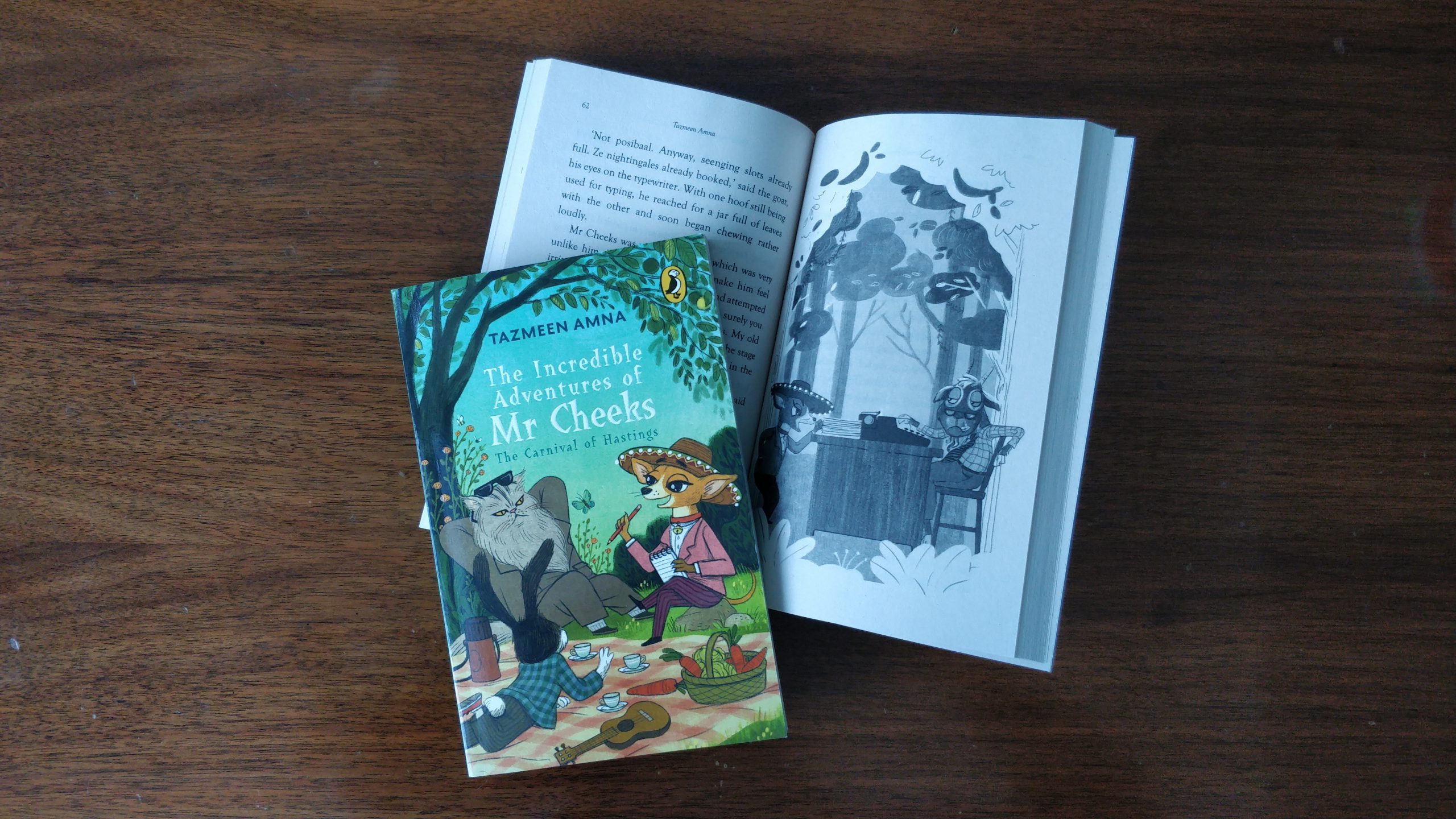
Lessons on Friendship and Courage from ‘The Incredible Adventures of Mr. Cheeks’

The Incredible Adventures of Mr. Cheeks by Tazmeen Amna, is an exciting journey of three friends seeking to break away from the set roles enforced by the village of Hastings on each of its residents. Mr. Cheeks, a fabulous tap-dancing Chihuahua; Mr. Grey, a tabby cat who loves painting; and Hopper, a rabbit who sings the most melodious songs; wish to portray their talents at the Annual Carnival of Hastings. However, the roles of each animal at the carnival is rigidly divided which poses a problem for the three friends.

The book maps the struggles which they face together highlighting their cherished friendship. Here we give you a few instances of friendship and courage shared by them:


  1. Despite their different appearances, Mr. Cheeks, a Chihuahua “dogue” and Mr. Grey, a big tabby cat; were great friends. Although they were dubbed as an unusual pair of friends, their friendship grew beyond their physical differences and they set an example for others.


“And this was unheard of! Even in Hastings! But the two made it work like a charm.”


  1. Since Hopper, the rabbit was anxious about not being able to fit into the new community of Hastings and about the skills that he possessed which were thought to be a little odd for a rabbit; Mr. Cheeks and Mr. Grey helped him get comfortable and welcomed him into their circle. They also encouraged him to be confident about his unique talent.


“Hopper smiled. Maybe there was room for a different rabbit in Hastings after all!”


  1. When Mr. Grey decided to put up and exhibition of his paintings, his comrades, Mr. Cheeks and Hopper volunteered to help and support him in this endeavour. The trio worked together to make the exhibition a success.


“The trio took a moment to admire their work. The sun shone bright upon them, as though expressing joy, making the colours of the garden seem more vibrant and the pictures more lifelike.”


  1. After coming back defeated from the Carnival Management Bureau of Hastings, Mr. Cheeks had lost all hopes of tap-dancing and his friend Hopper singing at the carnival. But Mr. Grey, seeing how sad his friend was, came up with a bright plan to help his friends showcase their talents!


“It is now my life’s mission to make sure you both get the opportunity you deserve”


  1. By going beyond their stereotypical roles of what a dog, cat and a rabbit ought to do; Mr. Grey, Mr. Cheeks and Hopper also inspired other animals of Hastings to follow their hearts and not be tied down by those constructs.


“Finally, change had arrived in Hastings.”


Follow this exciting journey in The Incredible Adventures of Mr Cheeks, where three friends face the challenge of following their heart -even when it isn’t the easiest thing to do.

To Eat or Not to Eat- N for Nourish Sets the Record Straight

In N for Nourish, celebrity nutritionist Pooja Makhija demystifies the misleading theories about food that float around in a market driven by commercial interests of corporate giants. Her book draws attention to the inherent relationship our bodies have with food so that what we eat determines the quality of life we enjoy.

‘You will never not need food. Breakfast, lunch, dinner, snacks—these will be part of your life for the rest of your life. When you’re feeling sick, food can heal you. When you’re feeling tired, food can pick you right back up. By eating right and eating well, food will always be your BFF.’ writes Pooja.


Here are 6 food myths from her new nutrition book for children above the age of 10, N for Nourish, that are finally being busted-


Myth 1: Dieting and fasting help you lose weight

Skipping meals counters your weight-loss plans as it puts your body in a state of panic and consequently, change gears to crisis management mode. Expecting lack of nourishment in the future, the body begins to store fat to supply energy over a longer period.

‘[Pooja Makhija] finds that a lot of older children skip breakfast or have just a small meal because they think that it will make them lose weight. In fact, skipping breakfast or any meal increases fat storage and decreases fat burning. And leads to weight gain. In other words, the more you starve, the more weight you gain.’

 Myth 2: If you feel hungry, you are hungry

Hunger and thirst trigger off similar signals in the brain and this can make us feel hungry when, actually, the body needs water to rehydrate.

‘There is a special centre in your brain that tells you how hungry you are. Similarly, there’s another part of your brain that tells you how thirsty you are. But, here’s the catch: both the thirst and hunger centres are located very close to each other. In fact, they are so close to each other that they are almost like neighbours. This becomes a problem when you are dehydrated as your confused brain cannot make up its mind about whether you are hungry or thirsty. And in this chaos, it makes you feel like eating when you should be drinking.’

Myth 3: All carbs are made equal

Complex carbs are better for your health than simple carbs.

‘When you eat simple, sugary carbs, your body does not have to do much to     convert the sugar in the food into blood sugar. Your sugar levels shoot up, which is why you suddenly feel energized. But it is also why you feel tired later—because your levels crash as quickly as they rise. But complex carbs, with all their fibre and starch, take more time to be converted into energy. And even though it takes longer, the glucose also stays in your body longer, to give you just the right amount of energy you need with none of the side effects.’

Myth 4: Fats make you fat    

An age-old vendetta against Fats is laid to rest here as Pooja Makhija clarifies    how Fats, in the right proportion, form an essential component of a balanced diet.

‘Your body needs fat. Fat is what protects your organs, including your brain. About 60–70 per cent of your brain is made up of fat. In other words, if your brain cells don’t have enough fat, they will not be able to do their job.’

Myth 5: Choose Sugar-free foods for weight loss

Artificial sweeteners imitate the taste of sugar and play on the fragile sensibilities of weight watchers. They dupe consumers into thinking that sugar-free means less calories, which tends to increase consumption and eventually lead to weight gain. This, in addition to the various side effects, makes these a bad gimmick to fall prey to.


‘One of the worst offenders is HFCS or High Fructose Corn Syrup. HFCS has many horrible side effects including the possible development of heart disease, cancer, cholesterol and diabetes, as you may get older. And, to top it all, it leads to quick weight gain.’

Myth 6: Only exercise can burn calories


Eating at regular intervals offers fuel to the body in the form of calories which it burns to aid digestion. The external exercise we do is additional to this ongoing process.


‘Digestion, like eating, breathing or even sleeping, burns calories. So, if you eat every two hours, you can burn calories even without running, jumping, playing or exercising. It’s almost like going to the gym!


Keeping the fun in food alive, N for Nourish shines a light on the hidden devils of the food world. Perfect for kids ages 10+ .Get your child a copy today!

5 Things ‘Listen to the Whispers’ will Teach your Little One

‘You are more than you think you are.
More than a girl or a boy. More than your name.
More than the number of years you have lived.’


Author Trishla Jain writes books for children that bring families together to explore spirituality in a light, magical way. Here’s why you should read her book Listen to the Whispers to your little one to enlighten them with a deep mindful living.


This book allows you to have a beautiful conversation about their individuality and their full potential through simple words.

This beautifully realized picture book offers answers to questions such as ‘Who am I?’ and ‘Why am I here?’


With easy-to-follow prose, teach your young ones to never stop reaching for the stars

.

As the kids run with the tigers and dance with the wolves in Listen to the Whispers, let them explore the majesty of the earth and recognize how magnificent they are!


Teaches them to always listen to the whispers within, their consciousness, and let love light the way.


Grab your copy of Listen to The Whispers today!


Battling Bullies with the Heroes of the 1857 Uprising

Deftly weaving the everyday battles of siblings Rattu and Poorie into those of the famed heroes of the past such as Rani Lakshmi bai of Jhansi and Nana Sahib of Kanput to the last Mughal Emperor, Bahadur Shah Zafar, Parvati Sharma brings history home to her young readers.  Her soldiers don’t come charging onto the pages of her new book, Rattu & Poorie’s Adventures in History; instead they gently pat their horses goodnight and eat ice cream cones with their young friends. And yet, they tell stories of legendary battles where they took extraordinary decisions in a crisis, stood up for what they believed in and refused to be cowed into submission.

Here are the heroes who took Rattu and Poorie on their adventures and the lessons they teach the children:

LAKSHMI BAI AND JHALKARI BAI

Like two sides of a coin, victory and defeat come to each one of us. It is important to celebrate one and learn from the other. Having fought many wars, the courageous Lakshmi bai and Jhalkari bai share this wisdom with the children-

As the horses carried the soldiers, the two sisters and Damodar Rao, back home, Rattu said, ‘Did you fight many wars?’

‘Yes,’ said Lakshmi Bai, ‘lots.’

 ‘Did you win all of them?’ asked Poorie.

 ‘Nobody can win all wars,’ said Jhalkari Bai.

NANA SAHIB AND AZIMULLAH KHAN

Azimullah Khan emphasizes the need to stand up to bullies with courage and to never give up without trying –

‘Another way,’ said Azimullah Khan, ‘would be to say we tried.’

‘Trying is not the same as winning,’ said Poorie.

‘Maybe not,’ said Azimullah Khan. ‘But if some big bullies took your ice-cream, wouldn’t you want to try and get it back?’

Poorie thought about it. ‘I suppose so,’ she said.

BAHADUR SHAH ZAFAR

Grampa Ajju and Mughal badshah Zafar reflect on how anger makes us take bad decisions that we tend to regret later-

‘Poor cook,’ said Poorie.

‘Yes,’ said Zafar.

‘It wasn’t really his fault,’ said Rattu.

 ‘Babur was angry,’ said Ajju. ‘Anger makes you take bad decisions.’

‘Once I stomped on Poorie’s bed,’ said Rattu.

‘Oh, I see,’ said Zafar. ‘Did you take your shoes off?’

 ‘No,’ said Rattu. ‘I made a muddy mess.’

‘Well,’ said Zafar, ‘better stomp on beds than heads!’

‘Did you make bad decisions?’ said Poorie.

‘I suppose I did,’ said Zafar. ‘And I certainly had my share of foes!’


Vividly illustrated and peppered with engaging dialogues, Parvati Sharma presents to children a slice of history along with a lesson in life. Read Rattu and Poorie’s Adventures in History.

error: Content is protected !!