Publish with Us

Follow Penguin

Follow Penguinsters

Follow Penguin Swadesh

Eight Reasons Why Every Parent Needs to Read Flyaway Boy

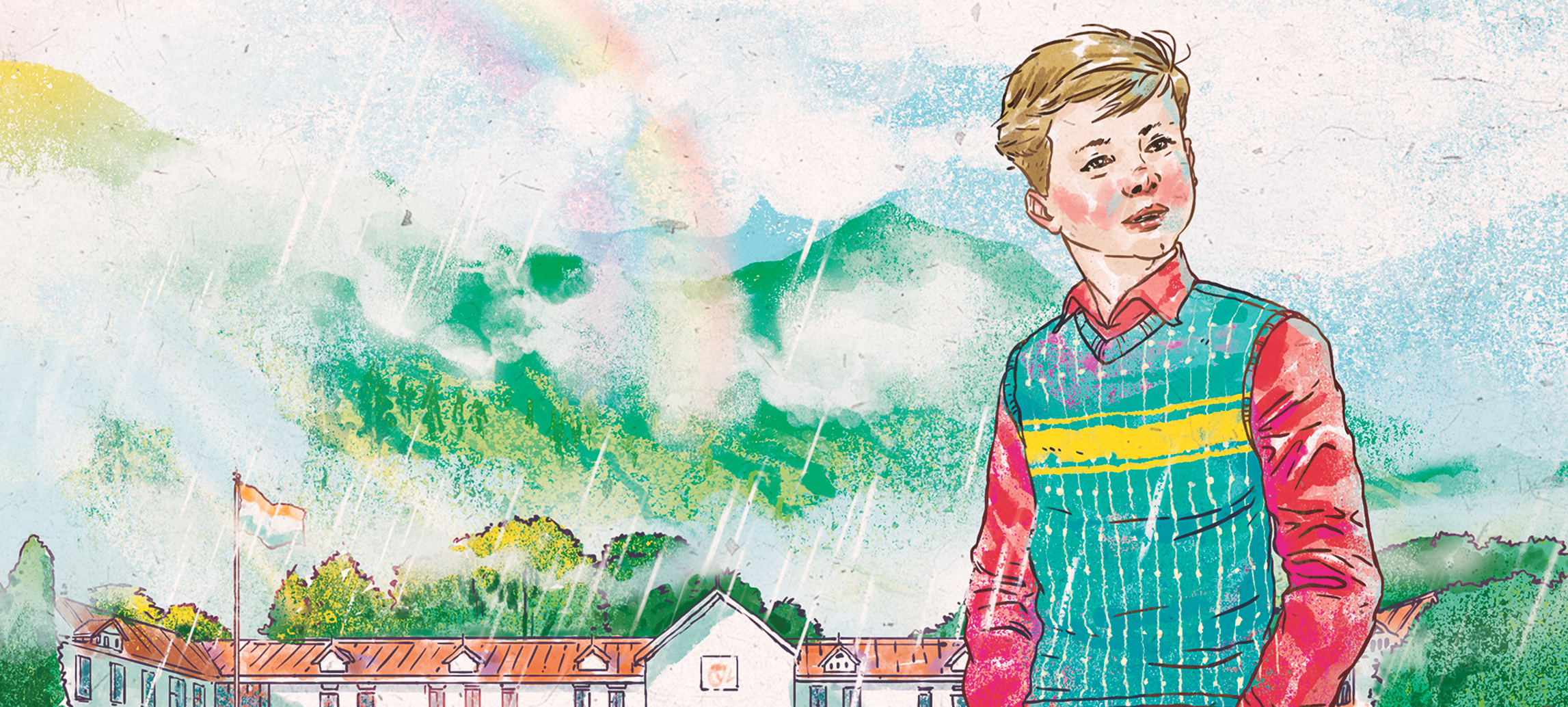
Spirited and powerfully imaginative, Flyaway Boy is a story about embracing everything that makes you uniquely you.

Kabir doesn’t fit in. Not in the wintry hill town, he lives in, and not in his school, where the lines are always straight. Backed into a corner with no way out, Kabir vanishes.

With every adult’s nightmare now coming true, finding this flyaway boy will mean understanding who he really is. Or is it too late?

With her imaginative, lilting prose, that seamlessly follows the contours of a child’s imagination. Jane D’Suza gently but powerfully peels back the layers and reminds us what it is to navigate problems from a child’s level. Every parent needs to read this, as to truly help and guide our children, we need to alter our own labels and expectations rather than altering their personalities to suit us. Sometimes, the best form of nurturing is to let children be who they really are!

Here are eight reasons why you must pick up this book!


It offers a whimsical yet poignant exploration into a child’s imagination

“Then, during one push, some egg curry slopped over and fell on the table cloth. It made a shape like a bull with his horns lowered. ‘Pshooooo!’ said the bull, kicking up dust, and charging at the offending bitter gourd which was the root of all evil. Kabir ‘accidentally’ slopped some more curry spots around his plate . . . and some more . . .

AND THEN THE DRAMA BEGAN!”

It reminds us that children don’t always follow our expectations, and that’s alright!

“But then Kabir always does things that aren’t expected. He should stick to the rules. His curly hair should stick to his head. His white socks should stick to his skinny legs. His ‘shoulds’ should stick to what ‘shoulds’ should do.”

It takes a fascinating look at the trajectory of childrens’ thoughts and the fact that they don’t always move in an ‘acceptably’ linear pattern.

“But this line zoomed across them all and across the corner, almost knocking down someone. And that someone was Principal De. ‘Kabir!’ Kabir looked up and saw the maths teacher looking quite annoyed. ‘Have you drawn your line?’ ‘Yes. Oh no.’ Kabir looked at the blank page in front of him. ‘It ran away.”

It suggests that a slower academic performance needs to approached with empathy and understanding rather than being dismissed  as  ‘laziness’ or ‘foolishness’

“‘F!’ She pointed out his mark. ‘In fact, if I could grade it any lower, I would give you a . . . a . . . G . . . lower than F. The school should allow Gs for children who are obviously not even interested in studying. What a Great waste of the money your parents are paying for you, and what a Great waste of my time and what a Great waste of any Godgiven intelligence you have.’ Kabir kept focusing on the way she grated out the Gs while she spoke. So very interesting.”

Labelling people is tempting and convenient for us, but can be incredibly limiting and suffocating for children to conform to.

“Kabir’s sister Kavni lived in a neat little box which announced, through its flawlessly printed labels, ‘Class Topper’, ‘Perfect’ and ‘Hope of the Family’. Kavni used to be fun, but now she was a tenth grader and disappeared into her box to study all the time. No-fun no-more!”

It reminds us that we need to stop comparing and pitting children against each other. This affects not only on the child being compared, but also on the ‘paragons of perfection’ who are held up as examples!

“Chinmoy slammed his fist on the table. ‘Don’t you people get it? It’s not fair! His face was now red and he was close to tears. ‘I do everything right, I get the highest marks and yet, Kabir has only got to do something wild and everyone surrounds him.”

 Amidst all of the discipline, perhaps we ought to remember to praise a little more. A little gesture of acceptance and comradeship can change a bad day

“Josh’s hand—on his shoulder! Trumpets blared and drums rolled. Kabir puffed his chest out. He began to smile. He was walking on a cloud. Higher and higher. And higher. Right up there in the sky near the yellow smiley sun, from where he could look down at the school ground and all the children down there were just dots.”

 ∼

 Its essential message is to accept children’s’ differences as an acknowledgement of they really are

“Why can’t you be more . . . . . . quiet? . . . disciplined? . . . normal? . . . studious? All the ‘Why can’t you be more’s’ actually meant ‘Why can’t you be less like you?”


Get your copy of Flyaway Boy today!

Beautiful Lines From Sudha Murty’s New Book for Children!

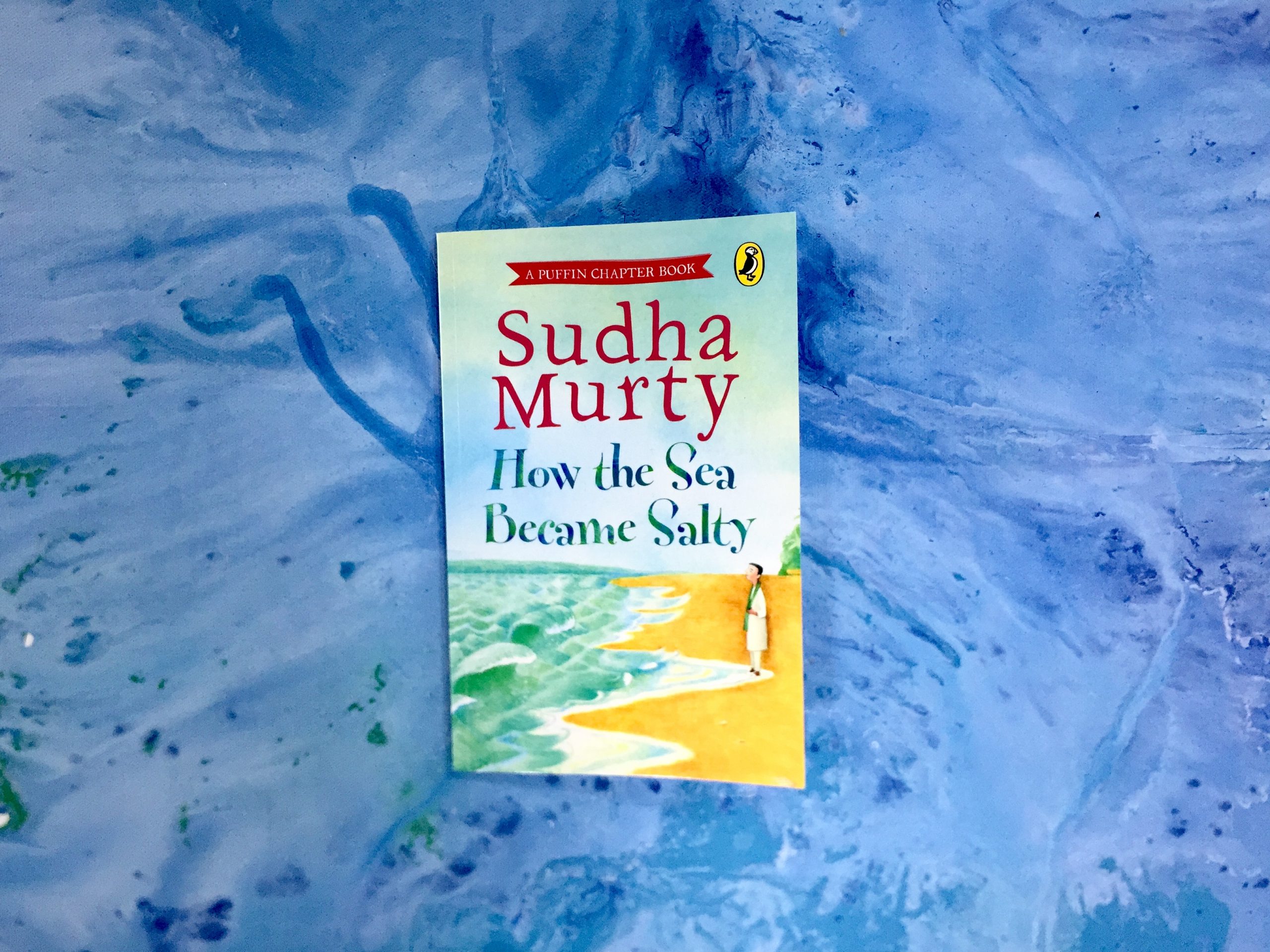
“A long, long time ago, seawater was sweet and drinkable. How it became salty is a remarkable story.”

India’s favourite storyteller brings alive this timeless tale with her inimitable wit and simplicity. Dotted with charming illustrations, this gorgeous chapter book is the ideal introduction to the world of Sudha Murty.

Here are some quotes from the book:


‘But by then the sea was full of salt, which had all dissolved into water. And the sea remained salty for ever after that.’

*

The night passed – with the dwarves dancing and Sridhar feeding the fire with fresh wood when it looked like it was dying.

*
He decided not to go to his brother’s house. Instead, he went to the beautiful town near the sea, and there, he built a house made money and never wanted for anything, thanks to the magic fan.

*
‘Suddenly, storm clouds gathered and rain started pouring down. Sridhar spotted a flicker light in the distance and ran towards it.’

*
‘The salt spilled into the sea. It rained salt sacks for many, many days, till the dwarves heard about it and used their magic to make the fan stop.’

*
‘That night, when everyone was asleep, she made Keshav creep into the room where the fan was kept and steal it.’


How the Sea Became Salty  is the ideal introduction for beginners to the world of Sudha Murty.

Meet the Wimpy Author of ‘Diary of an Awesome Friendly Kid’!

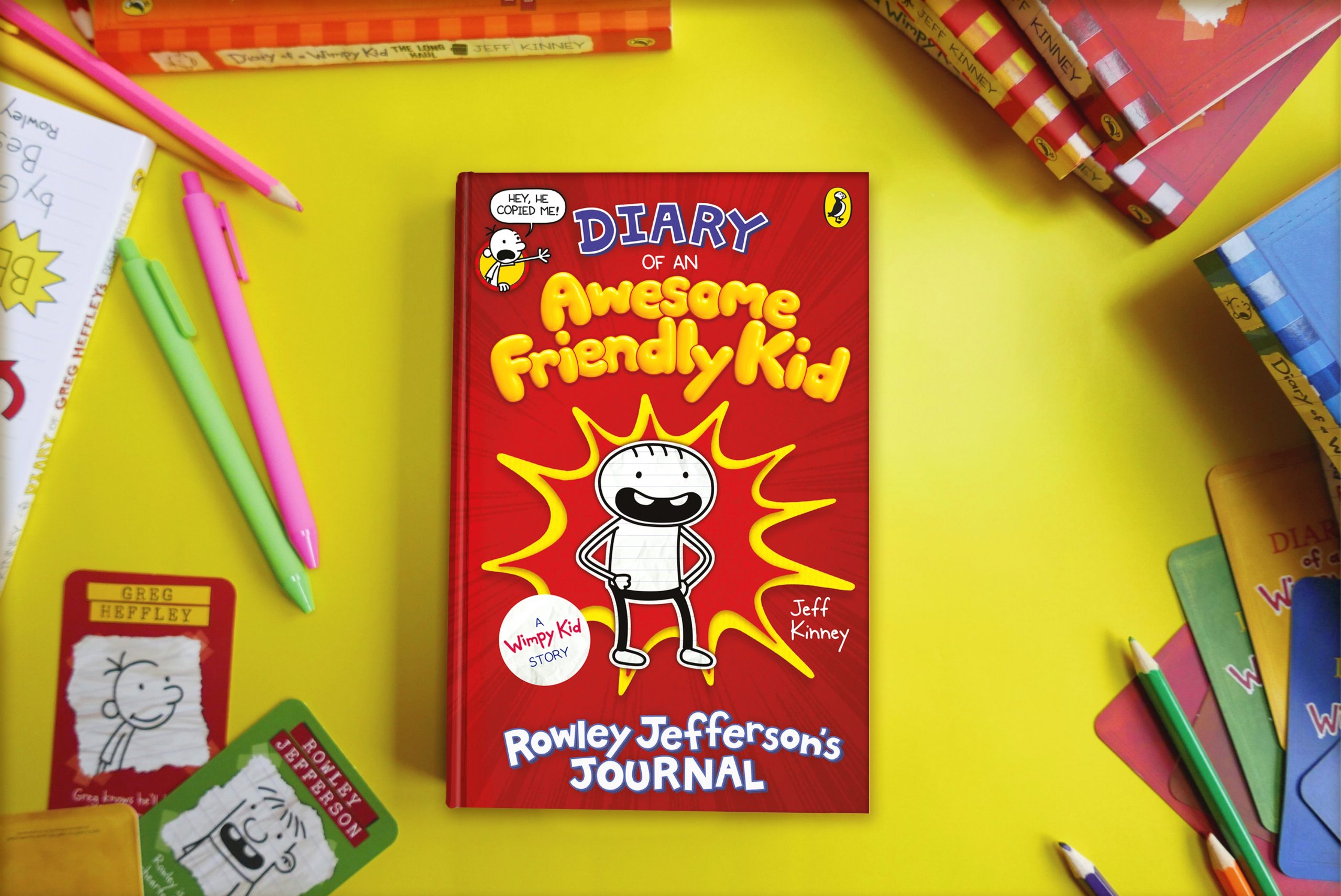
Here’s introducing the newest Wimpy Kid author – Rowley Jefferson! Rowley’s best friend Greg Heffley has been chronicling his middle-school years in thirteen diary of a Wimpy Kid journals… and counting. But it’s finally time for readers to hear directly from Rowley in a journal of his own.

In Diary of an Awesome Friendly Kid, Rowley writes about his experiences and agrees to play the role of biographer for Greg along the way. (After all, one day Greg will be rich and famous and everyone will want to know his life’s story.)

Let’s meet the author, Rowley Jefferson!


Rowley doesn’t like horror stories as we can tell from this incident.

“I’ve gotta tell the whole truth. I wet my pants when I was in the basement and heard those noises outside.”

*

Rowley has observed odd things about Greg’s stories.

“We’ve been friends for a long time and he’s told me a BUNCH of things that seemed a little shaky so now I’m kind of thinking not everything he’s told me is a hundred percent accurate.”

*

Rowley is composed.

“I knew that Greg was trying to make me mad but for some reason that song didn’t really bother me that much.”

*

Rowley might be a little naïve and gullible.

“Well I knew Greg was just trying to get out of giving me the candy he owed me so I tried to act like I thought this Good Boy award thing was dumb. But somehow Greg could tell I thought it was kind of COOL.”

*

Rowley is honest and doesn’t encourage cheating on tests.

“I whispered to Greg to go away because he was trying to CHEAT. But Greg said it’s not cheating since we were study partners and we both had the exact same information in our brains.”

*

Rowley is hardworking.

“I had to stay up for two more hours uncrinkling my notes and taping them into my notebook and was up ANOTHER half hour researching stuff on my dad’s computer.”

*

Rowley is a true friend to Greg.

“I know me and Greg don’t always get along but like Mrs Heffley said, sometimes friends get on each other’s nerves.”


Diary of an Awesome Friendly Kid: Rowley Jefferson’s Journal offers readers a new way to look at the Wimpy world—one fans won’t want to miss!

Make Parenting A Cakewalk With These Dietary Tips for Your Tiny Tot

With practical, handy tips on topics such as introducing a sleep schedule, travelling with a child, weaning and advice on raising two children together, All You Need To Know About Parenting by Tanya Khubchandani Vatsa will see you through every sleepless night and temper tantrum.

Here are some handy tips for new moms, when it comes to feeding right!


The American Academy of Pediatrics recommends starting solids (mushy solids, of course) at around six months of age because children should be exclusively breastfed for six months.

The amount you are feeding your child should not go down even with solid food. Some moms believe this to be true till one year, but medically, your child should be getting three meals in addition to breast milk or formula by nine months of age.

Many paediatricians use their experience, combined with the guidelines, to recommend that solids be started between the ages of five and six months, as iron and vitamin D are nutrients that breastfed babies tend to be deficient in at this point.

You can start with veggies, fruits or cereal. However, if your child is getting gassy, using cereal(mixed with breast milk or formula) to dilute the quantity of vegetables can help.

There are some foods that are best avoided until one year of age: cow’s milk, wheat, strawberries, nuts or egg whites (can cause allergies), honey (can cause botulism), chocolate or caffeine, unpasteurized cheese (too much bacteria), shellfish and processed juice (more sugar than nutrition, healthier to give fruits).

 Children get fussier about food as they get older, so introduce different foods when they are young.

After one year, it is safe to offer sweets and cater to their tastes in moderation so that they do not feel deprived and instead have well-rounded palettes.


Read All You Need to Know About Parenting for more such helpful tips!

Eight incredible career ideas for your child to Reignite their future

Following the success of Reignited: Scientific Pathways to a Brighter Future, Srijan Pal Singh— CEO and Co-Founder of  Dr. A.P.J Abdul Kalam Centre and former technology and policy advisor to Dr Kalam at the Indian Institute of Space Science and Techology— pens yet another significant book for students. Reignited 2: Emerging Technologies of Tomorrow bares all about some exciting and cutting-edge fields in sciences, such as automobiles; energy; astrobiology; environment and defense technologies; and a lot more!

Read on to if you want to know how to ignite a path in some of the most exciting and futuristic technologies out there!


AUTOMOBILE EXPERT

 What makes it Reignited?

The automobile sector is one of the most formidable sectors to have a career in with rapidly advancing requirements ranging from electric cars and self-driving, completely automated vehicles to 3-D printed automobiles that will allow you automatically print your selected car—exactly the way you want it!

“An expert in automobiles should definitely have excellent knowledge of the sciences, especially the physics of motion and friction. You need to go beyond textbooks and read articles on the Internet about the latest trends in cars, especially electrical engines and the computer programmes that enable cars to selfdrive. Several free car magazines are also available online, and you can find them in libraries too. With the need to constantly come up with newer, sleeker and aesthetically superior models, there is always room for product designers and artistic minds in the sector.”

~

 ENVIRONMENTAL SCIENTIST

 What makes it Reignited?

With global warming on the rise and weather change very apparent, environmental scientists are crucial assets to any nation’s economy and growth. Your future job, as an environmental scientist, will not only involve protecting humans from climate change but also endeavoring to protect every one of these unique and vivid species that fill the spectrum of life.

“Environmental science offers you a wide array of fields to work in, such as global warming, pollution of air, water quality, soil quality. It is a diverse career; you can take up a specialized course for your bachelor’s degree itself or do a bachelor’s in physics, chemistry, geography, botany or engineering and then pursue a specialized master’s degree in environmental science. Also, keenly follow geography and read about issues related to the environment on the Internet and in libraries. Keep reading and learning, and perhaps you can be the one to shape the environment of other planets, where we may choose to live in the future.”

~

NANOSCIENTIST

What makes it Reignited?

Nanotechnology is the science of working with matter that is in the range of 10-9 metres in dimension but with an even more exciting aspect. When certain materials are brought to nanoscale, they start to show new and unique properties. Nanotechnology can be our solution to almost every problem we face today, be it pollution, disease, superstrong structures and energy.

“Nanoscience has a wide career path as it touches on several different dimensions of application, such as medical science construction, the space sector, botany, agriculture, the environment, to name a few.. You must also keep following the experts in the area. A good expert in nanoscience is able to think laterally, see the problems around us and deploy their knowledge to solve it. The ideal way is that you first become an electrical engineer, textile engineer, automobile engineer, mechanical engineer or agriculture scientist, etc. and then start applying the principles of nano in your particular field.”

~

AGRICULTURAL SCIENTIST

 What makes it Reignited?

Agriculture may seem like a sleepy corner of the economy, but it’s actually very complex and sophisticated. You can make one of the greatest contributions to humankind if you revolutionize this field, because it touches everything.

“To become an agricultural scientist, you can pursue a variety of subjects. Of course, the easiest route is to study courses in agricultural science, which are available at the bachelor’s and master’s levels. Such courses often deal with geology, chemistry, food sciences and biosciences. You need to develop a keen understanding of biology, both botany and zoology. The knowledge of chemistry is also very important especially in producing fertilizers. Geography will give you the tools to study weather patterns, which is also an important factor in agriculture. Modern vertical farms also deploy an array of agricultural data scientists who have the knowledge of computers and mathematics.”

 ~

 WEAPONS SCIENTIST

 What makes it Reignited?

Weapons science is a truly global topic, and nearly all countries in the world now have a great demand for experts in this domain, given the tension among nations to become superpowers in the world, and due to the fight over resources. While the military handles the operation of weapons, a weapons engineer handles the thinking, planning and designing of these weapons.

“A master’s degree in security studies, armament engineering, microwave and radar engineering or engineering in combat vehicles will enhance your chances of securing a career in the field of weapons engineering. In addition to this education, you must possess the ability to think critically and have strong analytical skills to become a weapons scientist.”

~

ASTROBIOLOGY

What makes it Reignited?

Are we alone in the universe?

The branch of science that deals with life in the universe is called astrobiology. There will be two major quests for astrobiologists of the future: first, to continue the mission of searching for alien life, beyond Planet Earth; second, to discover and create extraterrestrial habitation for humankind and other life forms on new planets.

“This interdisciplinary field requires an understanding of life and the environment that supports it, as well as planetary and cosmic phenomena. It encompasses knowledge and technique from many fields, including physics, chemistry, astronomy, biology, ecology, planetary science, geography, mechanics and geology. There is no specific, defined course for you to study to become an astrobiologist. However, you can enrol in massive open source online courses, or MOOCs, offered by several international universities to nurture your interests.”

 ~

ARTIFICIAL INTELLIGENCE EXPERT

 What makes it Reignited?

Artificial intelligence is one of the frontier sectors of human advancement. Every major product and service today is now deploying AI to enhance its efficacy. This means an increased demand for experts who can design better, more robust and more effective artificial intelligence algorithms.

“Complicated computer software and programmes, automation and robotics characterize a career in AI. Since it is an emerging field, three things are key to becoming an expert in AI: curiosity, perseverance and continuously keeping yourself updated. An AI programmer needs to have problem-solving abilities, both creative and critical thinking, and a strong maths and computers background. You would need to complete your graduation in computer science or engineering (mechanical, electrical, robotic, computer) and then enrol in a master’s degree, offered by several universities abroad.”

 ~

ENERGY SCIENTIST

What makes it Reignited?

As energy scientists of tomorrow, your goal will be to amplify clean power sources like solar and discover new sources of energy such as Nuclear power from thorium, antimatter energy or zero-point energy.

“First is the most obvious choice: pursuing engineering in electrical or similar fields. Such engineers work on improving modern energy sources, such as solar, wind, geothermal and nuclear power. The second approach towards a career in energy is the field of scientific research, primarily in the subject of physics, wherein one gets to deal with antimatter, zero-point energy and similar concepts. You need to keep yourself updated on the latest developments related to energy generation and storage methods.”


 This must-have guidebook will provide budding scientists with a whole new world of ideas, inspiration and inputs from pioneers in fields that have shaped the world, helping them think out of the box and make a difference in the future!

Why and How do People Pray across the Earth?

(The Sun and the Moon will tell you)

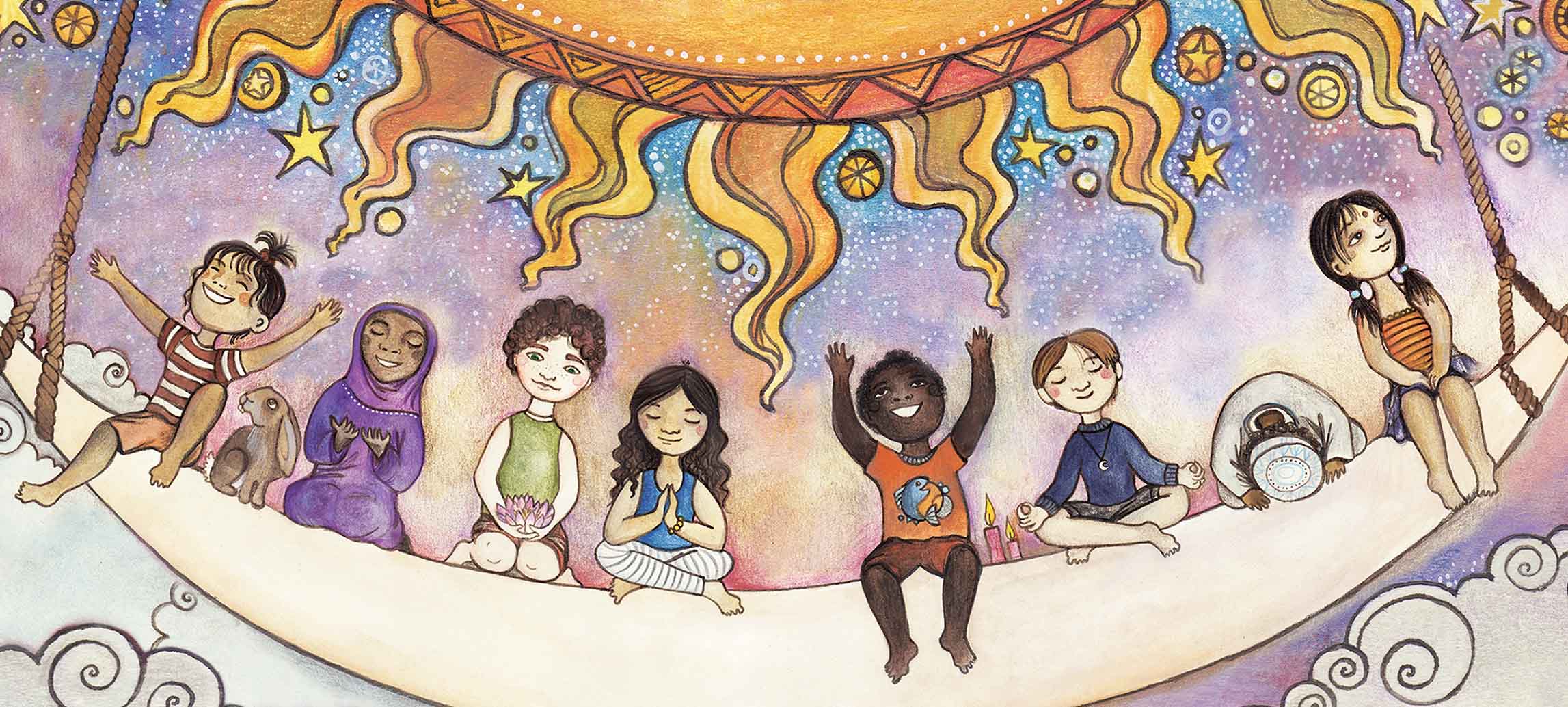
We all need a little time to re-affirm the healing, calming power of faith and to appreciate the plurality and flexibility of prayer, to appreciate prayers as a source of community rather than communalism. Children are usually already intuitively aware and accepting of spirituality and of individual differences and Trishla Jain’s Sunrise, Moonrise with its beautiful illustrations and lilting, flowing rhymes is a magical way to ensure that little ones understand and appreciate this further while retaining their instinctive wonder.

Join the most wonderful elemental forces of our universe, the sun and moon as they take you on a journey around Earth to see people joined in prayer across different cultures and faiths.

Read on to find out what families can learn about prayer when you read Sunrise, Moonrise together.


Travel with the sun and the moon in this heartfelt picture book to find out how people from different cultures and faiths pray. Read Sunrise, Moonrise aloud to spark a discussion with your young ones about the meaning of prayer and what it can do for us.

The Best of Ruskin Bond’s Years with his Daddy

At age eight, Ruskin goes to live with his father in Delhi. His time in the capital is filled with books, visits to the cinema, music and walks and conversations with his father—a dream life for a curious and wildly imaginative boy, which turns tragic all too soon. 

This Father’s Day, we revisit the story in the form of quotes from the book!


Long Ago in New Delhi

“My father would come home – usually by pony-driven tonga – at five or six in the evening, and after having tea together (lots of bread and jam for me), I would help him sort and arrange his postage stamps. He was an avid stamp collector with separate albums for different countries.”

*

“There were four cinema halls showing the latest Hollywood and British films, and whenever my father came home early he would take me to the pictures. That year I must have seen at least twenty films with him!”

*

“It was impossible to escape the gnats and mosquitoes. My father fell ill with a sever attack of malaria. he had to be admitted to the military hospital, out at Palam. I was on my own.”

*

“But towards evening I began to feel lonely. I missed my father. I missed his presence at the dining table, the talks we had, the discussion about stamps, the visits to the cinema, the touch of his hand.”

*

“After nearly a fortnight my father came home from the hospital, looking very weak and tired…As winter set in, my father’s health improved, and we began visiting the bookshops and cinemas again. He took me to see the Red Fort in Old Delhi, and we wandered about the palaces and pavilions.”

*

The School in the Hills 

“I did not cry or make a fuss when my dad said goodbye. He had promised to come up and see me at the first opportunity, and I knew he would keep his word. Having spent many days on my own in the Atul Grove flat, I had developed a certain fortitude, an ability to stand alone, a dependence on myself rather than on others. I was devoted to only one person – my father. And when he wasn’t around, I got on with what I wanted to do.”

*

“A long letter came from my father – the first of many. He wrote about his plans for the future – of leaving India when the war was over, and of finding a good school for me in England.”

*

“My father came to see me towards the end of August… In spite of the mist and the rain, it was wonderful day – a day that I would never forget. It was to be the last time I saw my father – but, of course, I did not know that at the time.”

*

“Mr Young did his best. He put his hand on my shoulder and let me down past the school gate, down an avenue of young deodars.

‘Your dear father,’ he stammered. ‘Your dear father – God needed him for other things -‘

I knew what was coming, and I burst into tears. I had no one else in the world – just that one dear father – and he had been snatched away. We had been taught that God was a loving, merciful being, and here he was doing the cruelest possible thing to a small boy. Why did he need my father? What could be possible want him for? Did he want his stamp collection?”


For years, Ruskin Bond has regaled and mesmerised readers with his tales. In Looking for the Rainbow, Bond travels to his own past, recalling his favourite adventures (and misadventures) with extraordinary charm.

Take a journey down memory lane with Ruskin Bond

On the heels of Looking for the Rainbow and Till the Clouds Roll By, Coming Round the Mountain is yet another look at the past, in particular one memorable year, 1947, during which a lot happened to Ruskin Bond and those around him. It is a fitting finale to a journey down memory lane, one about accepting change and finding hope in the unknown days to come.

Read some lines from the series that give us a glimpse of Ruskin Bond’s childhood:


One of India’s beloved writers, Ruskin Bond is back with a new book Coming Round the Mountain: In the Year of Independence which takes us down memory lane.


Meet the Generation of Weird from ‘Children of Destruction’

Between a blind and telekinetic mass murderer, a girl bound to a shadow-demon and a genetically engineered pseudo messiah, a whole generation of weird is ready to come of age, in Kuber Kaushik’s book titled The Children of Destruction. And when it does, the world will change…

Who are these children of Destruction….let’s meet them!


Alice, The Dreamer

Sun Alice is a 15 year old from Hong Kong. She is the heir to the ancient power of the Elementals and can control air. Confused and annoyed by creepy supernatural creatures, she is very sarcastic (it’s a defense mechanism).

*

Tao, The Disciple 

14 year old Tao is from the outskirts of Kathmandu. Blinded and orphaned as a child, he was raised as a Disciple to the god Yama. He is telekinetic and even-tempered to the point of emotionless. Oh, and he has a murder list.


*

Adam, The Vessel 

Adam Al-Kharsan is from a secret base somewhere in Afghanistan. The 11 year old is genetically engineered to save the world. Though eternally curious, optimistic and confident, he has problems with rules…rules like ‘don’t kill people’.

 *

Violetta, The Hybrid

Violetta of Santor is from a mystical hidden valley in the Hindu Kush Mountains. Bonded to an ancient shadow creature called Shade, the 12 year old tends to brood a lot. She has nightmares…400 years’ worth of nightmares.


You would think that after causing minor hurricanes with a major sneeze, being visited by a talking fox and ending up on a journey with death around every corner, things can’t get much worse. But they can…find out how in Kuber Kaushik’s Children of Destruction.

6 Lines by Ruskin Bond that will make you smile

Ruskin Bond’s stories have never failed to thrill us and make us laugh. Our growing up years would not have remained the same had it not been for Bond’s hilarious anecdotes.

Here are 6 Ruskin Bond quotes that made us laugh out loud:


Ruskin Bond’s characters always try to do some good… 

Mrs Fisher took one look at the bundle in my arms and let out a shriek. ‘What have you brought here, Bond?’
‘A baby, ma’am. I think it’s a girl. Do you want to adopt it?’

Thick As Thieves

*

The characters are always very talented… whether others appreciate those talents is up for debate

“He went down the lane, trumpeting away, and one or two people shouted at him to ‘Stop that horrible noise!’ Thus he made his way down the next lane, where he was even less welcome and the dogs ran away with their tails between their legs.”

– Ranji the Music Maker

*

Characters do not hesitate to take their pranks to the next level

“On one occasion Grandfather drove Granny to the bank without her recognizing him, that too in a tonga with a white pony.Granny was superstitious about white ponies and avoided them as far as possible. But grandfather, in his tonga driver’s disguise, persuaded her that his white pony was the best behaved little pony in the world.”

The Parrot Who Wouldn’t Talk and Other Stories 

*

Despite their young age the characters are very sensible.

“Suddenly I saw a big male bird emerge from a thicket about a hundred yards away. He stood still and stared at me for a few moments; then, expanding his wings and with his tail erect, he came bounding towards me. Believing discretion to be the better part of valour (at least in that particular situation), I turned and ran towards the fence.”

Panther’s Moon and Other Stories 

*

The adults may not be as sensible as the children….

“Granny should never have entrusted Uncle Ken with the job of taking me to the station and putting me on the train for Delhi. He got me to the station all right, but then proceeded to put me on the wrong train!”

White Mice

*

Ghosts may not be friendly but grandparents don’t mind them.

“‘…Grandfather says he has seen them(ghosts) many times,when he has passed through the ruins late at night. He has seen them playing in the moonlight.’
‘Wasn’t he frightened?’
‘No. Old people don’t mind seeing ghosts.’”

The Wind on Haunted Hill


Ruskin Bond’s latest book Coming Round the Mountain: In the Year of Independence is yet another look at the past, in particular one memorable year, 1947, during which a lot happened to Ruskin and those around him. The book is AVAILABLE NOW!

error: Content is protected !!