Publish with Us

Follow Penguin

Follow Penguinsters

Follow Penguin Swadesh

Meet the characters from the historical epic Asoca

Asoca-often spelled Ashoka-was hailed as Ashoka the Great, the emperor who ruled most of the Indian Subcontinent and was pivotal in the spread of Buddhism from India to other parts of Asia in the third century BC. But his life as emperor was not always led by non-violence. History has it that he masterminded one of the biggest and deadliest wars ever fought, and it was the insurmountable grief he experienced at the sight of the people dying and dead on the battleground that made him turn to Buddhism and take a vow of ahimsa.


Who was the man, and who was the king? What were his demons, and what gave him strength? Asoca: A Sutra,  drawn from research and portrayed with energy and complexity, transports the reader to the era of the Mauryan dynasty with atmospheric vividness and insight.


Here are 5 memorable characters from Irwin Allen Sealy’s historical novel


**


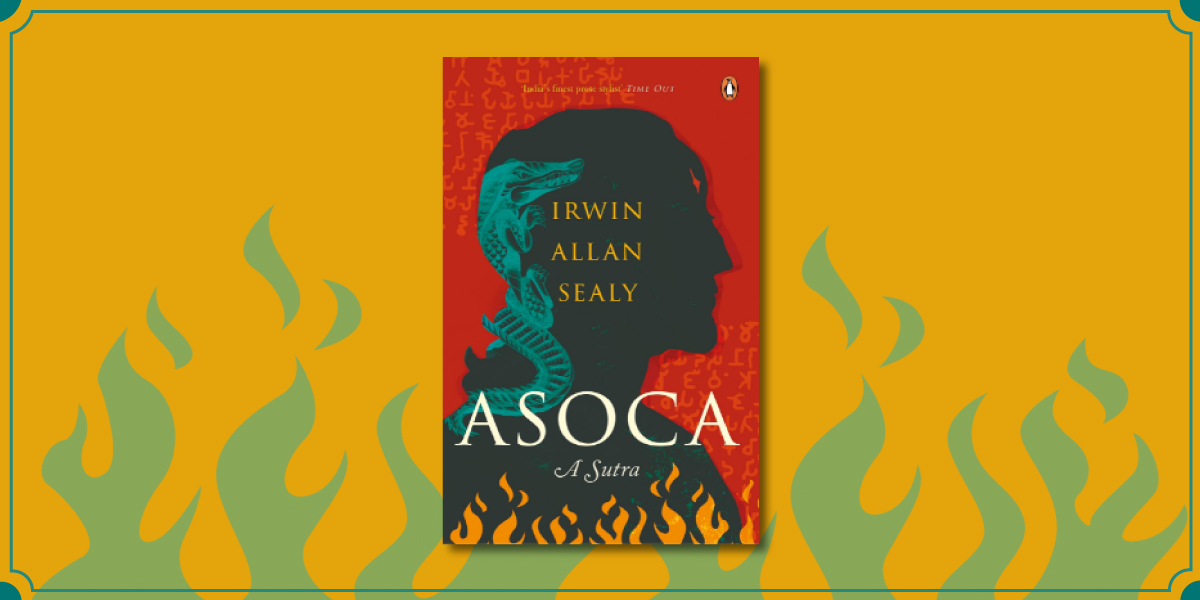
Asoca FC
Asoca||Irwin Allen Sealy

Asoca – The nonconformist, mighty emperor of the Mauryan empire. A contrarian by nature, he is stubborn but thoughtful. He may not the most good-looking man, but for his mother he is her ‘little rhizome.’


‘From early childhood words were a game, and the pleasures of this game were those of reshaping the world… Rule your speech and you rule the world. My voice owed a little to every person and place I had known and admired, but the mix was mine alone.’


‘The hardest part, I found, was sitting there at all once all your factotums had left: alone with empire, imagining the extent of it off to one side and then the other way and then forward and backward on every side till you felt yourself positively abandoned.’

‘Every kingdom needs an honest, fearless man…to show up both the charlatan who seizes power and the incumbent who has lost his way.’


Uncle K –  The shrewd strategist of Mauryan legacy, the creator of the immense Arthashastra, Asoca’s Uncle K is always by the King’s side. The King’s chief advisor, Uncle K talks like a book and his eyes, ears and mind are everywhere.


“Crooked as his name portends, bent in every part, twisted from hairpiece to toenails, this aged crow makes blackness look grey. Guile is younger—the hills are younger—than Kautilya, maker and keeper of kings.”


“The arch-monarchist for whom the kingdom was more important than his tenure as prime minister, than his own position as kingmaker, than life itself.”


Bindusara, the Dotted – He is the handsome Mauryan King, the man of virtues who prefers reconciliation to war. He grew up to rule—and to rue the day he was born.

‘My father Bindusara was a handsome man. Good looks were important to him, and they reappeared in his firstborn like vindication. Susima was a mirror in which he saw his chief virtue displayed, and father and son took it less as a gift of nature than as a divine right: it was a mark of approval, even, you would think, accomplishment.’

‘Father, whose sword leapt from its scabbard in the course of every rousing speech, whose lusty verses were applauded in the gardens at the annual festival, and whose concubines lived in terror of a visit on any given night, this man was crying.’


Madhumitta – Her name implies nectar of the gods. She is Asoca’s Queen Bee, his anchor, the woman he loved and desired.

‘The look in her eye said she would serve the truth. Such assurance burns in the elect; it is what creates disciples. Her determination awed me. Service was to me an abstract concept, a secular, almost departmental thing. For Madhumitta it was an article of faith.’

‘Madhumitta, dear wife, I cannot believe you have forgotten me in your nunnery. I have forgotten nothing, not the tender abstraction on your forehead, not the soft broom in your gentle hand of a morning, not the silent reproof to an erring child or errant husband, not the loving kindness you spread through that house you ruled.’


Susima – The eldest son of Bindusara, heir apparent of the empire. The apple of everyone’s eyes, he become Asoca’s arch-rival in his quest for the throne.

‘He [Susima] was, truth be told, the noblest of us all. He didnt lie or cheat or push and shove and scramble. But then, he didnt have to. He carried himself as if the crown were a settled thing.’

‘Susima, ultimate theoretician, wrapped in birchbark scroll for armour. He was still the master of the cool shot, born of meditation and intellect; I was the poor guerilla. A Susiman universe was the opposite of mine.’

**

Asoca: A Sutra leaves the reader breathless with the full-bodied richness of Sealys prose, his trademark whimsy and his imaginative modern reconstruction of that enigmatic and brilliant ruler of the Indian subcontinent.


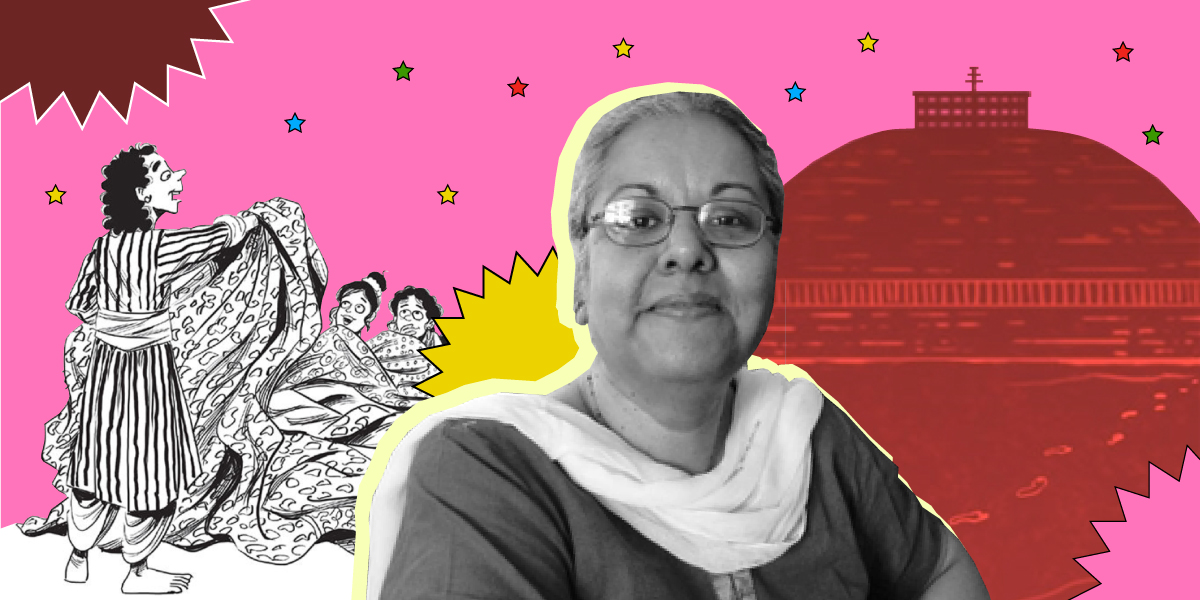
Ode to an Indian childhood’s favourite friend, Subhadra Sen Gupta

Covid might have taken away one of our most beloved authors, Subhadra Sen Gupta this year, but when schools reopen and children are back to their libraries, we could meet her again. In every children’s library in India, there’ll always be a corner that would sound like the shrieky excitement and the giggly wonder of kids and it would forever belong to the writer who said she wrote stories for the best readers in the world – children.


Since decades now, she is one of the ‘most issued’ authors in our school libraries along with J.K. Rowling and Roald Dahl. Her books were the first few that introduced children of India to literature that was based in the environment they belonged to. Her characters had names like ours, lived in cities like ours and had a life that we could relate to, unlike the western culture that had been dominating children’s and adult literature in India. Most importantly, Sen Gupta made history interesting for so many of us!


She took us through historical times with stories of unknown and unsung characters like a young maid of a princess during the Mauryan period or a dhobi who learnt to sing from Tansen under the reign of Akbar. The author introduced a literary culture that revolutionized writing in the day! Inculcating the thought that every story matters, whether it is the tale of a king or a pawn, interweaving genres together so children can learn about history through interactive storytelling or to make the habit of reading genuinely fun- Sen Gupta did it all!


While some of her most recounted stories are The Story of the World’s Worst Cook, Goodbye Pasha Begum and Mystery of the House of Pigeons, she went on to do something quite remarkable and extraordinary. She wrote The Constitution of India for Children and created a handbook in a fun and digestible format, explaining the most important document of our nation and even addressed issues like the participation of women in the drafting of the constitution.


Unfortunately, the literary icon passed away in May of this year due to Covid-19, at the age of 68, with probably more interesting stories and books inside her, waiting to be inked on paper.

However, we do have one last gift from her to the world and we’d love to share it with you! Told through the portraits of children growing up in the villages, towns and courts of our country, Let’s Go Time Travelling Again is Subhadra Sen Gupta’s sequel to the series and a vivid glimpse into our past.


Let’s Go Time Travelling Again || Subhadra Sen Gupta

How did Indian mulmuls make it into Cleopatra’s wardrobe? Who popularized the Mahabharata in households across the country? Did our ancestors really identify Jupiter and Saturn without even a telescope?

Find the answers to these and many other unusual questions about the India of yesterday. Go time travelling through the alleys of history and explore the many occupations that have existed through time – from dancers and playwrights to farmers and doctors. Sift through snapshots of the rich life led by ordinary Indians and discover unexpected titbits about language, food and culture.

This last book by our beloved author is replete with fascinating stories, information, and trivia about our ancient civilizations, kingdoms, and people.


Dreamers Series: Stories of Teejan Bai and Satyajit Ray

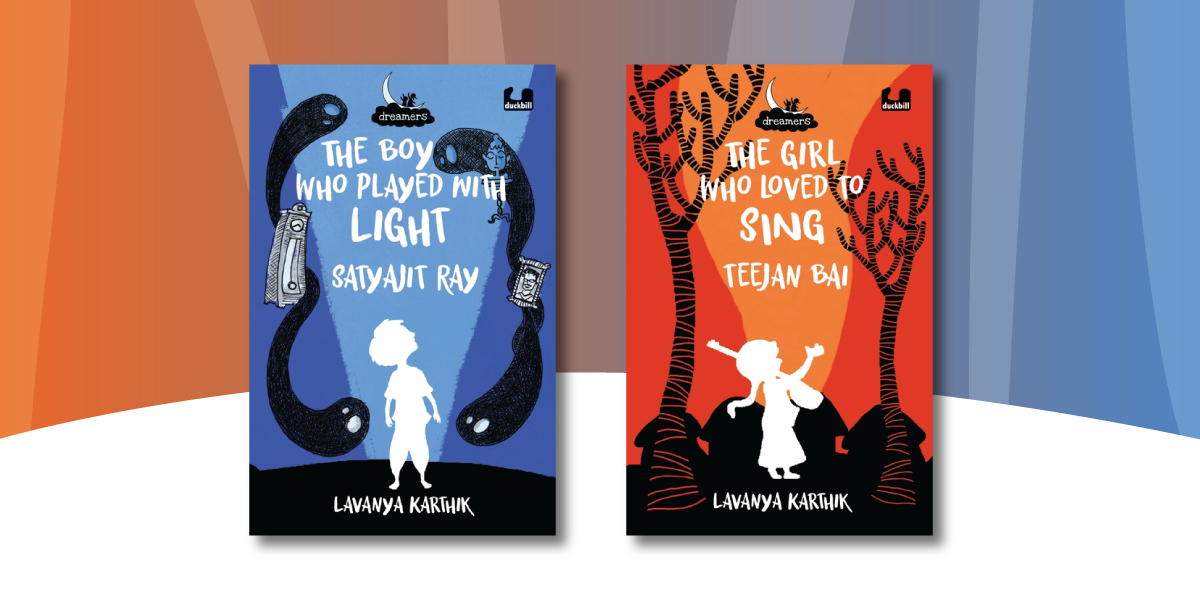
The vividly illustrated stories of Teejan Bai and Satyajit Ray in Lavanya Karthik’s Dreamers Series are inspiring for young kids. Karthik’s stories and artworks are perfectly synced with the high and low notes of Teejan Bai’s life and have captured the most significant shots of Satyajit Ray’s life. Both of them are acknowledged and appreciated for their unique talents.

Get your children hooked to the pages of Dreamers Series and let them get inspired to hone their skills. Here’s a glimpse of the younger selves of Teejan Bai and Satyajit Ray.

*

The Girl Who Loved To Sing: Teejan Bai
The Girl Who Loved To Sing: Teejan Bai || Lavanya Karthik

Once again, Teejan sneaks out after her chores for lessons with her grandfather.

Brijlal gives her her first tanpura.

‘Become your characters! Become your story!’

‘Feel the music!

‘Feel the story!

‘Feel it come alive!’

Teejan sings!

‘Don’t just sing—become the song!
‘Become the characters in it!’

Teejan cannot eat, she cannot sleep! All she can think of is song.

She forgets her chores; she ignores her siblings, until one day,

Ma catches her singing . . .

Teejan runs away.


The Boy Who Played with Light: Satyajit Ray
The Boy Who Played with Light: Satyajit Ray || Lavanya Karthik

There was light in the new home we made.

In the eyes of the family that welcomed us.

In the stories that Ma told me every night.

In the notebooks I filled with drawings, just like Baba once did.

But . . .

The shadows were always there.

They loomed in corners, watching me.

They crouched under tables, muttering and hissing.

I tried to describe them to my family.

My cousins chuckled. ‘Manik will be a writer like his baba!’

The shadows lurked in doorways.

They followed me through the house.

I thought my drawings might help.

‘What an imagination!’ Ma smiled. ‘Manik will be an artist like his baba!’

I raced through the house, up the stairs, down the corridors. The shadows followed!

‘Manik!’ my aunt called out, through the haze of the afternoon heat. ‘Play quietly! We’re trying to sleep!’

I dodged!

I dived!

I ducked!

The shadows kept pace!

Until . . .  An open door!

. . .

They were stories, waiting for me to notice them.


**

Read The Girl Who Loved To Sing: Teejan Bai and The Boy Who Played with Light: Satyajit Ray from Lavanya Karthik’s ‘Dreamers Series’ to know what happens in the lives of these two great personalities and how did they become as the world knows them today.

Scientists, Mary, and topi rocket from Thumba

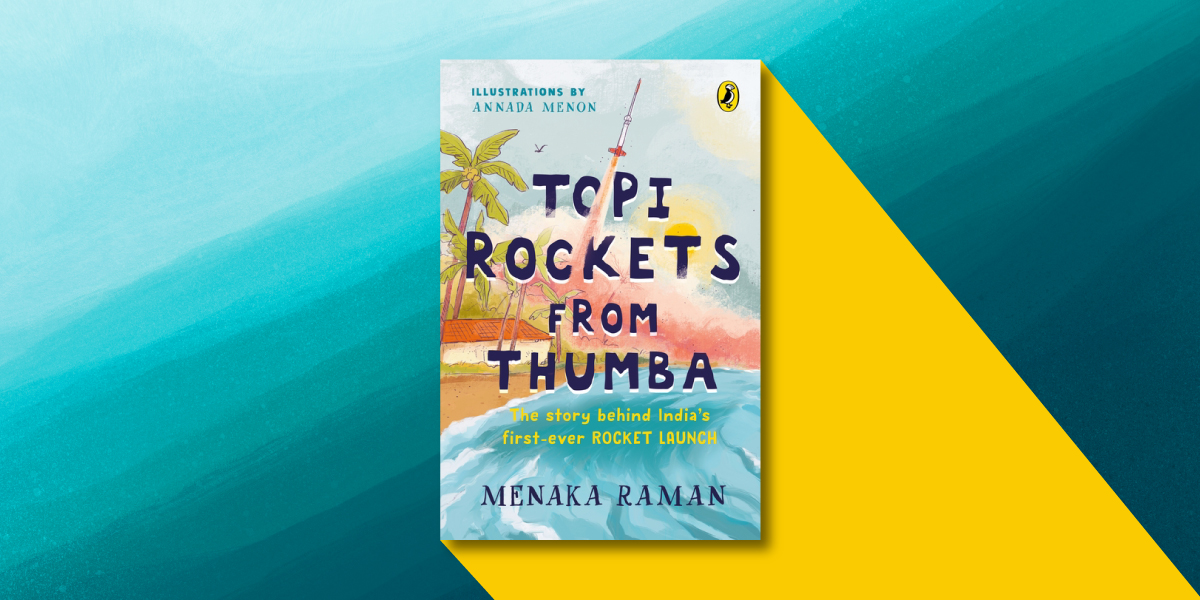
In this book about the launch of a rocket from Thumba, Menaka Raman’s story and characters are sure to tap on the creative nerves of young kids. The first time when Mary heard that a rocket will be a launched from Thumba, her excitement knew no bounds. She was bitten by an inquisitive bug and had a list of questions to find the answers of. She waited and hoped to see the rocket go up in Space every day.

Here’s an extract for those who, like Mary, are eager to know about India’s first ever rocket launch.

*

Topi Rockets from Thumba
Topi Rockets from Thumba || Menaka Raman

January 1963

Every morning, a rickety old bus would arrive in Thumba from Trivandrum and drop off a group of men.

Everyone would come out of their homes and shops, wondering what was inside the many boxes the men carried into the church, watching them as they cycled from here to there or walked together in pairs.

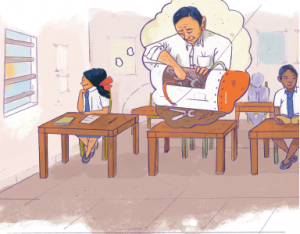
Mary watched too, but her friends at school did not care.

‘So what?’ said George Thomas.

‘Big deal!’ dismissed Thomas George.

‘Who cares?’ shrugged Shoshakutty.

‘I can launch a rocket all by myself!’ boasted Chacko.

‘Why does Dr Sarabhai need so many people to launch just one rocket then?’ Mary wondered.

One day, Mary and her amma were on their way to the market when she saw a car pulling up outside the church. She caught sight of a tall man unfolding himself from the back seat, and knew immediately who it was.

Mary ran right up to him once again.

‘Dr Sarabhai! When is the rocket going to be ready? Why is it taking so long? My friend Chacko can launch a rocket all by himself. Why do you need so many people?’

Dr Sarabhai’s eyes lit up.

‘Mary, you remind me of myself when I was your age. Always asking questions! Let me try and answer yours.’

It’s taking time because India’s friends from around the world are sending us things we need for the rocket launch. We have to wait for them to arrive and only then can we start to put things together. And I need the help of hundreds and hundreds of hands and minds to do it.

The National Aeronautics and Space Administration (NASA) of the United States is sending us a NIKE APACHE ROCKET. They are also training our scientists at their centres in America.

March 1963

Days, weeks and months came and went. Mary turned ten. Ouso made her ayala fry, Amma stitched her a new dress and her brother gifted her his old bicycle.

Some days, Mary would cycle by the church to see if she could catch sight of the rocket.

But there was no rocket.

Mary studied hard for her exams, praying they would not launch the rocket while she was writing her maths paper.

They didn’t.

She spent the summer holidays learning swimming in the lazy blue sea.

Nothing.

Mary celebrated Palm Sunday, Easter Friday and Onam.

Mary was disappointed.

But her friends at school were not.

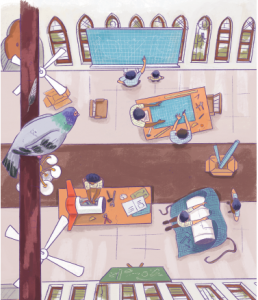
Sometimes, Mary wished she was one of the pigeons that sat on the rafters high up on the ceiling of the church so that she could see what was happening inside.


September 1963

By now, Mary knew some of the serious men who worked in the church. She knew where they were from and what they ate for breakfast. She discovered they were not so serious after all. And since Dr Sarabhai wasn’t always there to answer her questions, she had started asking them instead.

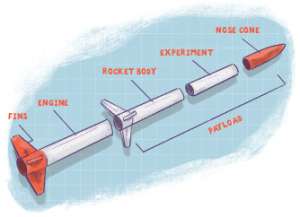
Mary: What are the parts of a rocket?

Scientist 1: A rocket has four main parts: the nose cone, fins, rocket body and engine. The nose cone carries the main cargo or payload of the rocket.

Mary: How do you launch a rocket?

Scientist 2: Rockets burn fuel in the engine and this creates exhaust. The hot exhaust comes out very fast in one direction pushing the rocket in the opposite direction! WHOOSH!

**

To know the answers to Mary’s numerous questions about Space and rockets, read Topi Rockets from Thumba.

Is there a proverb your grandparents use often?

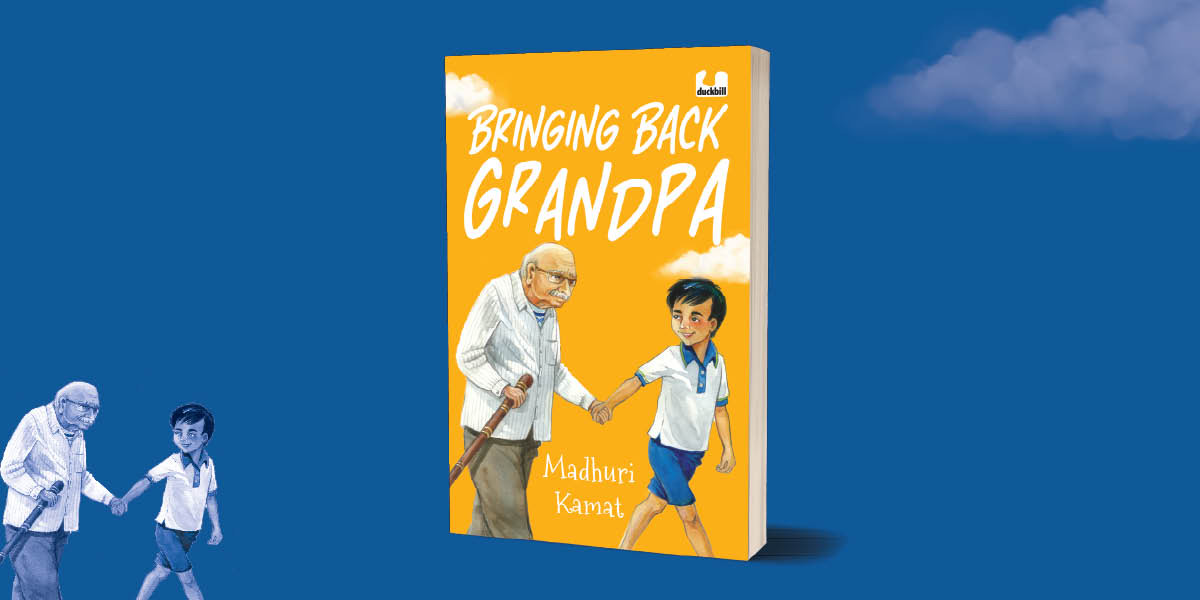
Grandparents play an important part in a child’s worldview. But our favourite childhood allies grow old and sick and may at times get confused and stop to recognize us! Xerxes is facing the same challenge where his main ally Grandpa is not himself and he is having to solve the complex problems in his life, right from bullies at school to the growing tension at home, all alone.

*

‘So, did it work?’

‘It worked, Grandpa, I not only found my essay; I found my badge, too!’

He tried to go in to hug him but Grandpa put out his walking stick and barred his way.

‘You have to pay me! Now give me something sweet.’

Xerxes stopped short.

‘It’s the rule. If Ratan Bhagat worked, you’ve to give me something sweet.’

‘I don’t have anything. Later.’

‘No. Now. That’s what it means, Ratan Bhagat ni khan. Khan as in something sweet.’

Xerxes dashed out again and tried to get in through the side door into the kitchen. But Grandpa raced there and banged it shut.

‘Grandpa, if you let me into the kitchen, I can give you a sweet.’

When Sonji came in she found Grandpa holding the door fast against Xerxes.

‘Papa, what’re you doing? Let him inside.’

Grandpa suddenly started yelling.

‘Help! Help me! There’s a thief!’

Sonji calmed him down and took him to his room. Then she confronted Xerxes.

‘Don’t ever do that again, Xeroo! You know that Mamavaji’s old and gets confused. Why in the world were you coming in through the kitchen?’

Xerxes was about to blurt out all that had happened, but then held his tongue as he realized he’d have to admit he’d been very forgetful.

*

Bringing Back Grandpa is a touching and funny story of the confusions of growing up and tackling challenges and of how children are affected when there is illness and tension at home.


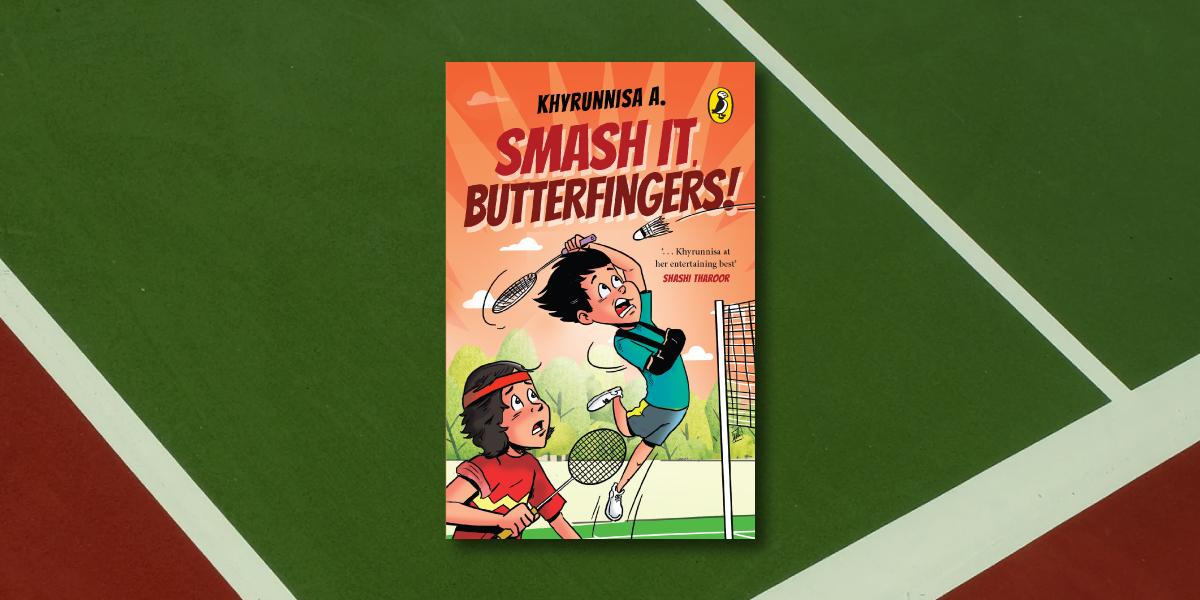
The boisterous, bewitching world of Butterfingers is back!

Look out! It’s Butterfingers again, and in smashing form!

There’s a lot going on in Green Park School. Ozymandias, a black cat, walks into classrooms and there’s a buzz about a badminton tournament that is to be played on Friday the thirteenth.

Sponsored by Brijesh K. Singh, an eccentric multimillionaire who loves badminton and hates superstitions, this tournament is good news for sports-crazy Amar Kishen, aka Butterfingers, and his friends.

Badminton practice begins, but can it be smooth sailing with talk of scams, superstitions and suspicions? Butterfingers sure has a lot on his hands!

Here’s an excerpt from Smash It, Butterfingers that will take you into the wild, whimsical world of Amar.

**

Amar was superstitious when it came to sports, for he believed one should leave nothing to chance. Cricks in the neck were normal after he had watched important matches, because his heroes, with great timing, unerringly went for match-turning shots just when he was in an awkward position. There was an occasion when he had just looked over his shoulder to locate the potato chips, when Nadal, his tennis idol, hit his first winner at a French Open final. Amar had watched the rest of the match frozen in the same pose, head held at an uncomfortable 45-degree angle, afraid to move lest it triggered off a series of unforced errors. He couldn’t turn his neck properly for a week, but so what? All in a good cause.

But now here were Sindhu and Saina before him. Was he dreaming? He rubbed his eyes again. Sindhu turned to him and offered him a plate on which medals glinted, dazzling his eyes. Saina held out another plate.

‘Do you want to wear my world champion gold medal?’ Sindhu asked, dangling it and flashing her trademark broad smile.

Amar couldn’t believe he had heard her right. Elbowing Kiran aside, he said, ‘Yes, please,’ in an awed tone, stretching out his right hand to accept the plate on which she had dropped the medal.

‘No, no, take my Olympic bronze medal first,’ Saina said, holding out her plate. Confused, he looked from one plate to the other, accepted both and promptly dropped them.

‘Butter!’ yelled Kiran, dismayed. ‘You’ve done it again!’ Amar’s uncanny ability to drop things had given him the nickname Butterfingers, and he never allowed anyone to forget his formidable reputation with regular demonstrations of his slip-grip methods.

‘Oops, sorry!’ His most used phrase escaped his lips as the plates rolled merrily in two different directions, scattering the medals about. Bzzzzzzzz!!! The medals turned into a thick cluster of bees and mosquitoes that made a beeline for him. He took to his heels in horror with Kiran panting behind him. Sindhu and Saina, meanwhile, had jumped up in rage and, brandishing their racquets that had been resting against the stone like battle axes, gave chase.

‘Help! Help!’ Amar thrashed his arms about to protect himself and dodge the dangerously swinging racquets, only to find the fast-multiplying insects coming closer and forming a dense hood about his face, from which he struggled to escape . . .

‘Ummph! Mmph!’ Amar woke up breathless as he tried to break free from the sheet that he had managed to wrap tightly about his neck and over his head in his sleep. He flailed his hands about like the tentacles of an octopus until a lucky tug finally secured his release. Gasping, he surfaced and began to breathe in large gulps of air. ‘Whew!!’ he muttered. ‘What a nightmare. But I actually saw Sindhu! And Saina! And I thought I glimpsed Lin Dan in the background. Get lost, you!’

He brushed away a mosquito that sang around his head. Parched, he croaked, ‘Water! Help, I’m dying of thirst!’

**

Join Amar on his hilarious adventures as he defies luck with his madcap schemes. Let the game begin!


September’s list of books in sight

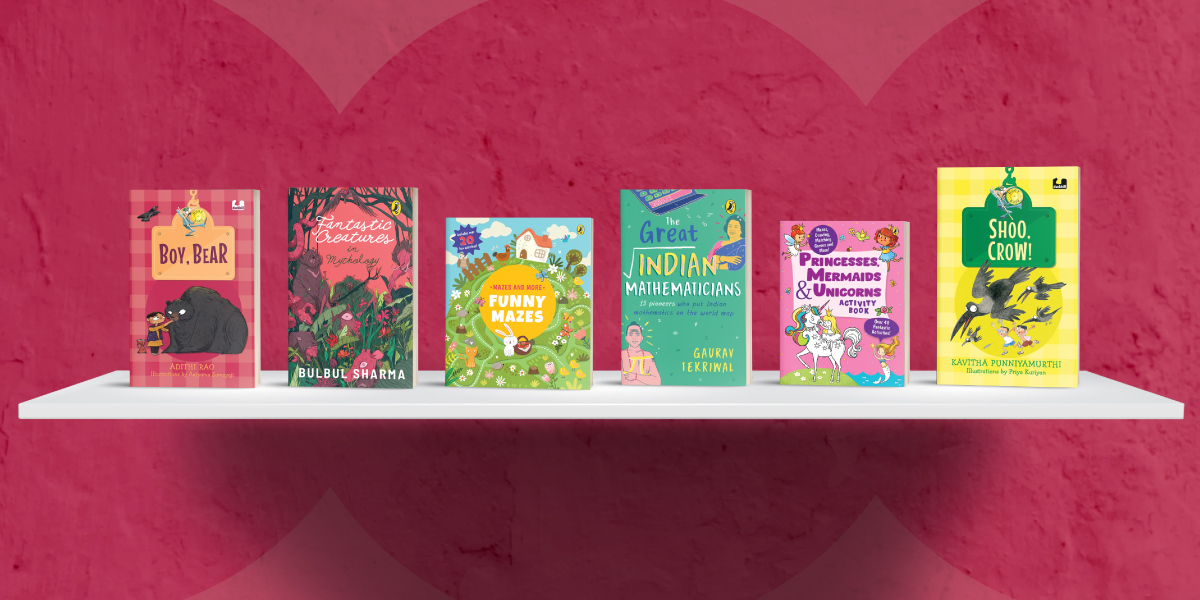
As the little ones step into the ninth month of the year, we know they need some good company to welcome the no-melting-no-freezing September. So, look nowhere else! We wholeheartedly sign up to accompany them, match their enthusiasm for reading, and give them a chance to taste the different flavors of imagination. Our books promise to stay by their bedside, on their study table, and make just enough space to be warmly packed in their already stuffed vacation bags. The vibrant covers of the books will have the kids googly eyes even before they begin reading the diverse stories.

Here’s our specially curated list of books that will get your children hooked and will transport them to the fantastical realms while they complete the plethora of engaging activities. It’s time to get them ready to cross the whirlpool of mazes and traverse through the wild alleys to meet mermaids and unicorns.


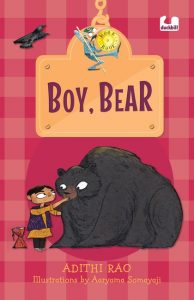
Boy, Bear
Boy, Bear || Adithi Rao

For ages: 5+ years

Boy and Bear have grown up together on the streets of Mumbai. Baba is a madari. But now that Baba is gone, how are Boy and Bear to survive?

The Hook Book series of short simple stories for beginning readers come with fun stories set in different parts of India. The gorgeous illustrations and short exercises are sure to enhance their reading experience.


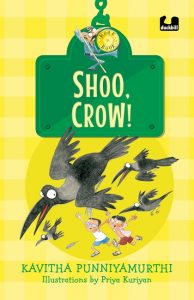
Shoo, Crow!
Shoo, Crow! || Kavitha Punniyamurthi

For ages: 5+ years

The crows of Rajipuram are eating up all the corn in the fields. Can Velu and Akif find a way to shoo them away?

The Hook Book series of short simple stories for beginning readers come with fun stories set in different parts of India, gorgeous illustrations and short exercises to enhance the reading experience.


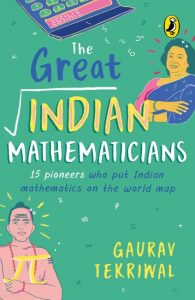
The Great Indian Mathematicians
The Great Indian Mathematicians || Gaurav Tekriwal

For ages: 10+ years

India’s mathematicians have made significant contributions over the last 5000 years. From the ever-popular Aryabhata, widely recognized for revolutionizing the number system and Shakuntala Devi, universally admired for her fast mental calculations to pioneers forgotten by time, like Baudhayana, who explained the Pythagoras’ theorem nearly 3000 years ago, the figures included in this book are trailblazers in the world of mathematics.

Fresh, accessible and inspiring, The Great Indian Mathematicians celebrates persistent mathematicians throughout Indian history. This book is an ideal introduction for the next generation of tenacious and curious maths wizards, and features a goldmine of tips and tricks, nuggets of surprise and much more!


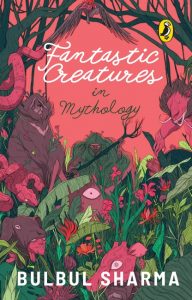
Fantastic Creatures in Mythology
Fantastic Creatures in Mythology || Bulbul Sharma

For ages: 8+ years

Did you know that a celestial elephant once hid in the ocean after causing mischief ?
What happened when Rama and Lakshmana encountered a one-eyed headless demon?
Why did Ilvala turn his brother Vatapi into a goat and serve him to passers-by?

Find answers to these and meet many strange and wonderful creatures in this hand-picked collection of legends. Delve into the exploits of gods who took on magical avatars, birds and animals with superpowers, and demons and demonesses who were once good souls.

Bestselling children’s author Bulbul Sharma’s deft prose accompanied by bewitching illustrations will transport you to the fantastical realms inhabited by the Hindu pantheon. This book is sure to leave you spellbound!


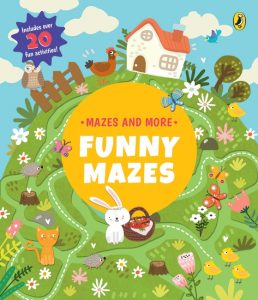
Mazes and more: Funny Mazes

For ages: 3+ years

Funny Mazes is a book from the series Mazes and More that features full-colour pages filled with different puzzles and mazes, along with search and find activities to keep little minds engaged. Designed to encourage logical thinking, sharpen hand-eye coordination, these activity-filled pages are sure to keep little puzzlers engaged. Grab your pencils, trace the squiggly path and follow each funny maze to a new discovery! With eye-catching illustrations, the book has puzzles organized by themes such as Circus, Island adventure, Fairyland, Camping among others. All mazes and puzzles come with answers to help kids if they get stuck on a puzzle.


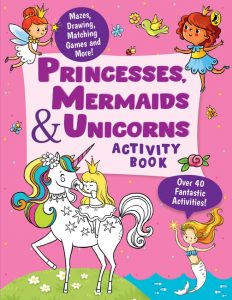
Princesses, Mermaids and Unicorns Activity Book

For ages: 3+ years

From mermaids and princesses to unicorns and fairies, the fairyland brought alive inside this quirky activity book provides hours of creative fun for kids. Jam-packed with colouring pages and fantastic activities like interactive puzzles, dot-to-dot, spot the difference and playing peek-a-boo with fairies, Princesses, Mermaids and Unicorns Activity Book is the perfect companion to keep young minds engaged.

Children can follow mazes that feature prompts for problem-solving along the way. They can trace the path to the desired end, colour in the pictures, use the colour by number prompt to create a mystery picture, find the differences between two pictures, complete the drawings, connect the dots, learn to draw a simple picture, match the identical objects, find and circle objects, order the events, and much more. This carefully researched book aims to build vocabulary through picture-word association for toddlers and pre-schoolers and is suitable for parent-child association.


This fall’s book haul

Yes, we have made it to September, said goodbye to ‘hot girl summer’ and prepared ourselves for the lazy season. But before you go asking people to wake you up when September ends, you have to see all the amazing book releases you’d miss if you chose the Sleeping Beauty life. Our latest literary haul has the potential to keep you occupied until next fall. If you take our advice into consideration, we’d suggest you settle down with a strong cup of your favourite caffeinated beverage instead, because you’re going to want to stay awake for this months reading recommendations.


The Elephant in the Womb||Kalki Koechlin

The Elephant in the Womb

Motherhood is the greatest job in the world…right?

In this unique graphic narrative, we finally have that candid, funny and relatable book on pregnancy and parenting that mothers, expectant mothers, and anyone even thinking about motherhood have been waiting for. Actor and writer Kalki Koechlin opens up about so much that we don’t talk about-the social stigma of abortions and unmarried pregnancies, the toll that pregnancy takes on a body, the unacknowledged domestic labour of women, the emotional rollercoaster of giving birth, bouts of postpartum melancholy, the unsolicited parenting advice from every corner, and of course the innumerable moments of joy and delight in bringing a real little person into this very weird world.

With whimsy and compassion, with uproariously funny art and spellbinding honesty, The Elephant in the Womb blends the deeply private with the blazingly political. It’s an eye-opener for anyone who has ever thought that pregnancy was all about the glow and that motherhood was all about fulfilment. From fixing broken parts to enduring untimely farts, Koechlin’s nuanced prose-gorgeously illustrated by Valeriya Polyanychko-tells us the bare-faced truth about the physiological discomfort and manic expectations that make it a bittersweet experience.

With a combination of personal essays and think-pieces, journal entries captured in real time, reflections and anecdotes, this is the motherload!


The Blind Matriarch||Gokhale Namita

The Blind Matriarch

The blind matriarch, Matangi-Ma, lives on the topmost floor of an old house with many stories. From her eyrie, she hovers unseeingly over the lives of her family. Her long-time companion Lali is her emissary to the world. Her three children are by turn overprotective and dismissive of her. Her grandchildren are coming to terms with old secrets and growing pains. Life goes on this way until one day the world comes to a standstill-and they all begin to look inward.

This assured novel records the different registers in the complex inner life of an extended family. Like
the nation itself, the strict hierarchy of the joint-family home can be dysfunctional, and yet it is this home that often provides unexpected relief and succour to the vulnerable within its walls.

As certainties dissolve, endings lead to new beginnings. Structured with the warp of memory and the weft of conjoined lives, the narrative follows middle India, even as it records the struggles for individual growth, with successive generations trying to break out of the stranglehold of the all-encompassing Indian family.

Ebbing and flowing like the waves of a pandemic, the novel is a clear-eyed chronicle of the tragedies of India’s encounter with the Coronavirus, the cynicism and despair that accompanied it, and the resilience and strength of the human spirit.


On a Wing and a Prayer||Kushal M Choksi

On A Wing and a Prayer

What would you do if your life turned upside down overnight?

Witnessing the devastation of 9/11 before his eyes and narrowly escaping death, Kushal’s life was never going to be the same again. Suddenly, all his pursuits felt meaningless and he felt a void within him like he had never felt before-until one day, when he reluctantly decided to spend an afternoon with a spiritual master in New York City.

From being a Wall Street trader immersed in the material world to embarking on a quest to find answers to life’s biggest questions, Kushal Choksi writes about his doubts, struggles and revelations on a spiritual path as a left-brained sceptic.

On a Wing and a Prayer is one such (true) account of one man finding himself on a fifteen-year long journey shadowing the spiritual leader Gurudev Sri Sri Ravi Shankar


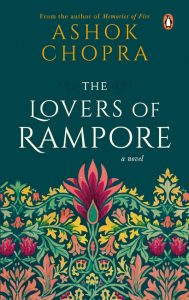
The Lovers of Rampore||Ashok Chopra

The Lovers of Rampore

In The Lovers of Rampore, Ashok Chopra delves into the many mysterious forms of love thus introducing a mystic quality to the everyday lives of his characters. From the thrills of lust to the joys and fears of genuine commitment, to the exploration of desire and dispassion that exist in all relationships, this is the story of love in all its different manifestations.

Raja Rajvendra Veer Bahadur Singh married Rani Padmakshi Devi Singh, a woman thirty-three years younger to him, after losing his first wife. Theirs is a love built on respect, trust and the desire to support each other against all odds. In Rampore, their son, the dashing Yuvraj, is curiously averse to the very ideals his parents’ marriage embodies, choosing instead the path of instant gratification. In Mumbai, we’re introduced to Vikram Desai-an enigmatic architect whose principles, charm and persona change the course of all those whom he interacts with.

Ashok Chopra weaves a contemporary Bayeux tapestry of richly detailed stories which are mature, slow-burning and strum with a quiet passion that cuts across class, gender, and age, fundamentally altering the way we perceive love. In doing so, he also challenges society’s archaic understanding of the bonding between people.


10 Steps to the Boardroom||G.S. Rattan

10 Steps to the Boardroom

There is no linear path to reach the top. In today’s day and age, when there is so much competition and nepotism that is being spoken about, one has to wonder: Does talent and merit have a chance? In my opinion, they do. So how does one knock on the door of success and reach the boardroom?

This book takes you through the crucial ten steps you need to climb as you progress in your career to reach the top via the author’s own personal journey. Each chapter deals with one specific quality that a CEO is required to have and is accompanied with a worksheet next to it that will help you chart your growth. Peppered with wisdom and experience, each story will help you understand the implications of your decisions and the right career stage that one should look at making a move. An absolute must-have for anyone looking to make a mark in their corporate career.


The Battle of Rezang La||Kulpreet Yadav

The Battle of Rezang La

On 18 November 1962, the Charlie Company of the 13 Kumaon Battalion, Kumaon Regiment, fought a Chinese attack at Rezang La Pass in Ladakh, India. The company comprised 120 soldiers and was led by Maj. Shaitan Singh. Of these soldiers, 110 were martyred in the attack.

The Indian search party, which visited the battlefield on 10 February 1963, made a startling discovery-the frozen bodies of the men who had died were still holding guns in their hands, having taken bullets on their chests. One PVC (Param Vir Chakra), eight VCs (Vir Chakras), four SMs (Sena Medals) and one M-in-D (Mentioned-in-Dispatches) were awarded to the soldiers of the Charlie Company, making it one of the highest decorated companies of the Indian Army to this day. The valour of the Charlie Company not only successfully stopped China’s advance, but it also resulted in the Chushul airport being saved, thereby preventing a possible Chinese occupation of the entire Ladakh region in 1962. According to reports, a total of 1300 Chinese soldiers were killed trying to capture Rezang La. The Charlie Company was an all-Ahir company, and most of the soldiers who fought the battle at 18,000 feet came from the plains of Haryana. The Battle of Rezang La is their story.


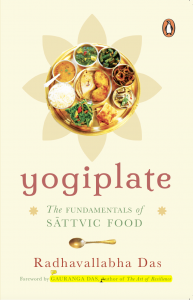
Yogiplate||Radhavallabha Das

Yogiplate: The Basics of Sattvik

Ayurvedic diet varies by body type, a person’s nature, their lifestyle and the food they grew up eating. Nobody knows that better than Radhavallabha Das, who cooked for thousands of devotees and monks at the ISKCON ashram in Mumbai and the adjoining Govinda’s restaurant.

In Yogiplate, he teaches us how to identify our unique body type, lists the vegetables, fruits, grains and spices that will suit us, and e xplains how sāttvic food nourishes the body, mind and inner soul. Written in a conversational style, Radhavallabha shows us how to pair the correct ingredients, avoid the ones that are harmful to us, and focus on the oil, salt and water that we use for cooking.

This book will teach you how to tailor a unique diet that will form the foundation of a happy and healthy life.


The Unforgiving City and Other Stories||Vasudhendra

The Unforgiving City and Other Stories

From the Karnataka Sahitya Akademi winner Vasudhendra comes a powerful collection of stories that shock, move and amuse by turns. As the characters struggle to find their feet in a fast-changing India, they mirror our unspoken dilemmas, torn loyalties and the loss of innocence.

In the extremely popular ‘Red Parrot’, an innocuous image from childhood returns to haunt a man when he visits his idyllic hometown. In ‘Recession’, the desire for a child leads a couple down unexpected paths. In other stories, a young woman in love rethinks her future when buried family secrets are suddenly revealed; a boy learns that insomnia may be the symptom of something more ominous; lonely apartment residents discover the thrills and perils of social media.

Deftly crafted with gentle wit and a lightness of touch, each gripping story exposes the deepest contradictions of modern life. The fluid translation retains the flavour and nuances of the original Kannada, creating a rich reading experience.


Sita||Bhanumathi Narasimhan

Sita

Sita, the beloved princess of Mithila, is one of the most revered women in Indian history; so well known, yet probably the least understood. At every crossroad of her life, she chose acceptance and grace over self-pity. Her life was filled with sacrifice yet wherever she was, there was abundance. It was as if she was carved out of an intense longing for Rama, yet she had infinite patience. In every situation she reflected his light and he reflected her love.

In her, we find someone who is so divine yet so human.

In this poignant narration, Bhanumathi shows us the world through the eyes of Sita. We think what Sita thinks, we feel what she feels, and for these few special moments, we become a part of her. And perhaps, through this perspective, and Sita’s immortal story, we will discover the true strength of a woman.


Passionate About Baking||Deeba Rajpal

Passionate about Baking: Everything Chocolate

A home baker for over 20 years, food stylist and photographer Deeba Rajpal put her passion to the test when she decided to blog about her adventures in the kitchen. Soon, her simple yet delectable dessert recipes accompanied by beautiful, evocative imagery struck a chord with people across the globe, turning her blog, Passionate about Baking, into one of the most popular blogs in the country.

Inspired by her blog, this book is a collection of some of her most loved chocolate dessert recipes for every kind of indulgence. With healthy, tasty yet easy-to-make chocolate delights — from tarts, tea cakes and cupcakes to cookies, traybakes and cakes for special occasions — and simple tips and tricks, Deeba shows you how working with chocolate can be oh so fun!


Good Genes Gone Bad||Narendra Chirmule

Good Genes Gone Bad

The field of biotechnology has evolved over the past four decades, developing medicines which are curing diseases. But this journey of success has been tough and arduous, built upon the shoulders of major failures.
Good Genes Gone Bad highlights seven such colossal failures in drug development-all of which culminated in the development of novel drugs-weaving together various analogies through the stories and thus allowing the reader to understand complex biological phenomena. These stories include treatment of medical conditions such as genetic clotting disorder (haemophilia), childhood-diarrhoea (rotavirus vaccine), preventing HIV infection, activation of the immune systems to treat cancer, gene therapy for treatment of diseases caused by gene-defects/mutations, cell therapy for treatment of leukaemias, and finally the success of Biocon’s approval of the first biologic drug for breast cancer.
Written by the former R&D head of Biocon, India’s largest pharmaceutical company, Good Genes Gone Bad is a fascinating look at the complex world of medicine and drug development, providing the readers with a sense of magnitude of challenges and the extent of difficulty that it takes to make novel medicines.


Economist Gandhi||Jaithirth Rao

Economist Gandhi

The Political Economy of the Mahatma, Its Roots and Relevance.

This book is a refreshing take on Gandhi’s economic philosophy. It provides insights into the hidden facet of Gandhi’s personality, and his thoughts on economics and capitalism. The book captures aspects of Gandhi’s thinking usually missed by those who are sure they know Gandhi.

This is probably the first book on Gandhi that claims that Gandhi was not against business and capitalists. In fact, the author maintains that Gandhi was a Baniya by caste, and this is what explains Gandhi’s positive approach towards business, trade and wealth.


Kathmandu Dilemma||Ranjit Rae

Kathmandu Dilemma

The first two decades of the new millennium have witnessed a dramatic socio-political transformation of Nepal. A violent Maoist insurgency ended peacefully, a new constitution abolished the monarchy and established a secular federal democratic republic. Nevertheless, political stability and a peace dividend have both remained
elusive. Nepal is also buffeted by changing geopolitics, including the US-China contestation for influence
and the uneasy relationship between India and China.

As a close neighbour, India has been deeply associated with the seminal changes in Nepal, and the bilateral relationship has seen many twists and turns. Partly a memoir, this book examines India’s perspective on these developments, in the context of the civilizational and economic underpinnings of the India-Nepal
relationship, as well as issues that continue to prevent this relationship from exploiting its full potential. Though there are several Nepalese accounts that deal with this subject, there are few from an Indian point of view. Kathmandu Dilemma fills this gap.


A Thousand Cuts||T.J. Joseph

A Thousand Cuts: An Innocent

In 2010, T.J. Joseph, a professor of Malayalam at Newman College, Kerala, framed an innocuous question for an internal examination that changed his life forever. Following a trumped-up charge of blasphemy, members of a radical Islamist organization set upon him in public, viciously maiming him and chopping off his right hand. His memoir, told with amazing restraint and wry humour, is the moving tale of his life and family as they went through hell and beyond. Here’s the extraordinary story of a man who survived dismembering only to be betrayed by his
own Church. Let alone stand by him, it robbed him of his livelihood and isolated him from his community, driving Joseph’s long-suffering wife to melancholia and eventual suicide. Joseph’s story is one of fortitude, will power, forgiveness and compassion, told with rare wit that will make readers chuckle through their tears.
This is a tale that will leave the reader seething, weeping and smiling by turns.


Eternal Echoes||Sadhguru

Eternal Echoes

Beautifully designed, Eternal Echoes is a compilation of poems by Sadhguru between the time period of 1994 and 2021. These poems cover every aspect of his life and travels. There are poems on nature, environment, human nature, the experiences, and resonances he has felt during these three decades and many more. These poems seem simple at first. However, as one reads, one begins to understand the hidden layers within. The words and meanings linger on…

This book is a very special collector’s item for all the followers of Sadhguru that they can savour for years to come. It is also perfect as a gift to loved ones

Two lives in letters

Two teenagers—Saumya in Delhi and Duaa in Kashmir—ask through letters they exchanged over almost three years some pertinent questions about Kashmir.

Like Anne Frank’s letters, Post Box Kashmir:Two Lives in Letters provides an insight into the minds and hearts of teenage girls undergoing momentous points in history.

*

Finding my letter writer in Delhi was a pleasant accident. I hadn’t really started looking at that time. On a completely different mission, one winter afternoon in February 2017, I found myself at Saumya’s house. It was books that led my husband and me there. Both of us, he way more than me, are guilty of hoarding books. And now, a carefully built selection of over fifteen years needed a new purpose. Our search for a library, where we could part with our much-loved treasures knowing they will be equally valued, was what led us there. It was a cosy unassuming two-bedroom flat in a colony in outer Delhi. Saumya’s parents ran a small library-cum-reading room from an even smaller space on the floor above.

Front cover of Postbox Kashmir
Postbox Kashmir || Divya Arya

They could have rented it out to supplement their income, but decided to use it to work with schoolgoing children by providing them a place to come read. As the name suggested, Umang Library was to spread the simple ‘joy’ of immersing in the written word, to give wings to young imaginations. We were inspired with what we saw and went back down three floors to make multiple rounds, heaving cartons full of books up a narrow, broken staircase.

Saumya didn’t speak much at that time. She quietly helped with the unpacking and laying out of books, stopping only to peer at some titles from behind her thick spectacles. She was fifteen years old and preparing for her Class X board exams. We didn’t talk about Kashmir.

A few weeks later, when I started the search for my letter writers, I recalled the shy young girl from that winter afternoon. The more I thought about it, the more she seemed to be the perfect fit. A couple of phone calls later, it was done. Saumya Sagrika was waiting to get her first letter.

In Kashmir, the situation was very different. I had never been there, I had no family there and very few friends. As I started making calls, finding connections and building bridges to reach out to parents, it became very clear that the biggest hurdle was going to be trust. It was the casualty of decades of conflict. Entering into anyone’s circle of trust is always difficult, but on some days, it seemed unsurmountable. The physical distance, lack of confidence that a personal meeting could build, all added to the challenge.

In 2017, there were visible strains of pain and anger. The violent autumn after Wani’s encounter had quietened as snow covered the streets in the Valley. But the cold seeped in through the telephone line from the other side when I tried to explain our project. The memories were very raw.

There was a strong belief that the momentous upheaval led by young people was going to change something. The rage was still simmering. At that time, when opinions, borders and beliefs had a razor-sharp edge to them, my offer of a quiet conversation over letters seemed suspiciously innocuous to the parents on the other end of the phone call.

But I persisted, not losing hope. Days turned into weeks, which turned into months. And finally, a door opened just a crack. My request had landed at fifteen-year-old Duaa’s doorstep, with just a recommendation from an acquaintance trusted by her family, holding this together.

Duaa’s father had a gentle demeanour. We discussed the project a little and then some more. But we spent a lot of time trying to know more about each other. Me and my family and Duaa and hers. The conversations with her parents were never rushed and always began with courtesies that extended to my parents, my husband and his family. This was my lovely introduction to Kashmiri tehzeeb (etiquette). As trust grew, the anxieties became more honest too. And some stemmed from what had happened to another Kashmiri teenager.

*

Divya Arya has been telling people’s stories on social issues for almost two decades now. In Post Box Kashmir she deals with another non-fiction story on the backdrop of political history and turbulent present of Kashmir and India.

Inspire young minds with Sudha Murty’s books for children!

Sudha Murty is loved by children and adults alike. Many of us grew up reading her and would love for our children to enjoy her work as well.

Not only a beloved writer, Sudha Murty is a very accomplished and inspiring woman. She did her MTech in computer science (and was the only girl in her class!) and is now the chairperson of the Infosys Foundation.

If you’ve not really ever read her work, but would like your young ones to start – this is the right article for you! We have put together some of her most loved books below. Let’s celebrate her together!


Grandma’s Bag of Stories                   

Memories of a grandparent spinning tales around animals and mysterious characters have kept many of us rapt till date. Sudha Murty’s Grandma’s Bag of Stories is simply delightful.

Though unlikely in combination, stories makes perfect sense when Grandma is the one narrating them. This book is ideal for young children and those who are 5+ in age. Stories are accompanied by colourful illustrations and morals. Lucid and simple language of the book, makes reading a pleasure.


The Magic of the Lost Temple            

Nooni is a city girl who is very surprised at the unexpected pace of life in her grandparent’s village in the state of Karnataka. Not being fazed with the turn of events, she engages herself in many of the odd jobs that are available in the village. She resorts to doing work like Papad making, organising enjoyable picnics, learning to ride a cycle and a long list of activities with her new found friends.


How I Taught My Grandmother to Read         

What do you do when your grandmother asks you to teach her the alphabet? Or the President of India takes you on a train ride with him? Or your teacher gives you more marks than you deserve? These are just some of the questions you will find answered in this delightful collection of stories recounting real life incidents from the life of Sudha Murty teacher, social worker and bestselling writer.


The Magic Drum and Other Favourite Stories

A princess who thinks she was a bird, a coconut that cost a thousand rupees and a shepherd with a bag of words kings and misers, princes and paupers, wise men and foolish boys, the funniest and oddest men and women come alive in this sparkling new collection of stories. The clever princess will only marry the man who can ask her a question she cannot answer the orphan boy outwits his greedy uncles with a bag of ash and an old couple in distress is saved by a magic drum.


The Bird with the Golden Wings: Stories of Wit and Magic            


A poor little girl is reward  with lovely gifts when she feeds a hungry bird all the rice she has. What happens when the girl’s greedy, nosy neighbour hears the story and tries to get better gifts for herself? Why did the once sweet sea water turn salty? How did the learned teacher forget his lessons only to be aided by the school cook? And how did the king hide his horrible donkey ears from the people of his kingdom?
For answers to all this and more, delve right into another fabulous collection of stories by Sudha Murty.


The Upside-Down King: Unusual Tales              


The tales in this collection surround the two most popular avatars of Lord Vishnu-Rama and Krishna-and their lineage. Countless stories about the two abound, yet most are simply disappearing from the hearts and minds of the present generation.
Bestselling author Sudha Murty takes you on an arresting tour, all the while telling you of the days when demons and gods walked alongside humans, animals could talk and gods granted the most glorious boons to common people.


The Man from the Egg

The Trinity, consisting of Brahma, Shiva and Vishnu, is the omnipresent trio responsible for the survival of the human race and the world as we know it. They are popular deities of worship all over India, but what remain largely unknown are some of their extraordinary stories.
Award-winning author Sudha Murty walks by your side, weaving enchanting tales of the three most powerful gods from the ancient world. Each story will take you back to a magical time when people could teleport, animals could fly and reincarnation was simply a fact of life.


The Daughter from a Wishing Tree


The women in Indian mythology might be fewer in number, but their stories of strength and mystery in the pages of ancient texts and epics are many. They slayed demons and protected their devotees fiercely. From Parvati to Ashokasundari and from Bhamati to Mandodari, this collection features enchanting and fearless women who frequently led wars on behalf of the gods, were the backbone of their families and makers of their own destinies.


error: Content is protected !!