Publish with Us

Follow Penguin

Follow Penguinsters

Follow Penguin Swadesh

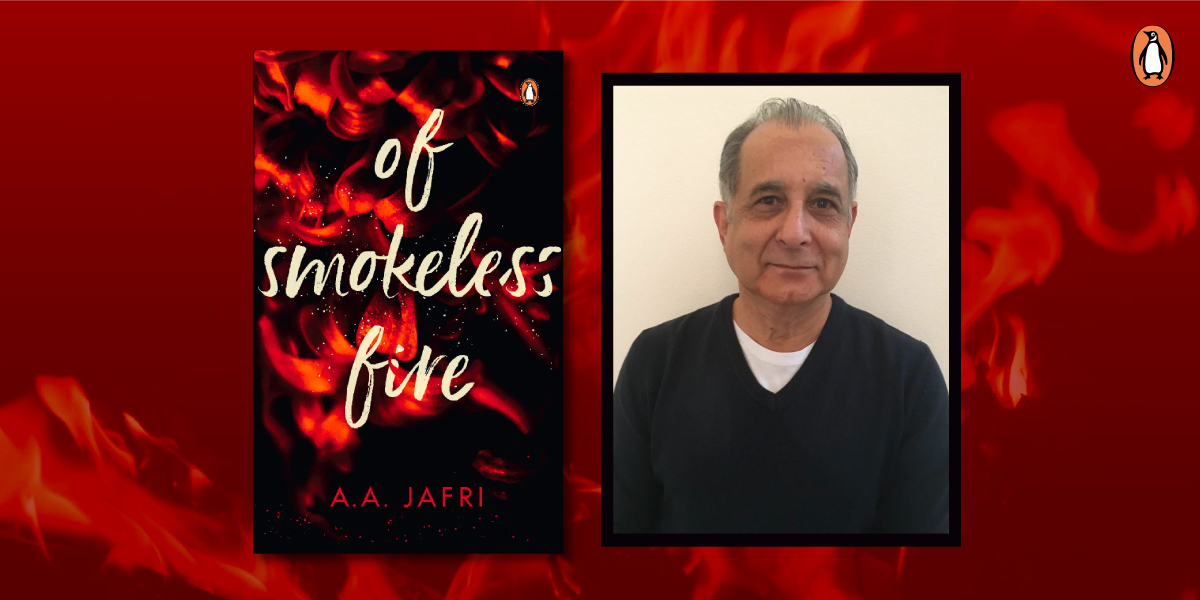
Getting to know A.A. Jafri

A.A. Jafri was born and raised in Karachi, Pakistan. He is an economist by day and a writer by night. Of Smokeless Fire is his first novel.

We caught up with him and asked him a few questions that really intrigued us. Keep reading to find out his answers.

~

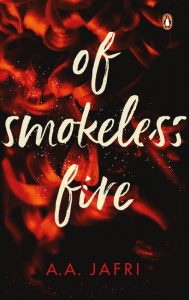
Of Smokeless Fire FC
Of Smokeless Fire||A.A. Jafri

Of Smokeless Fire was your first published book, was it also your first attempt at writing one?

I started writing from a very early age, first with poetry and then short stories in Urdu. Initially, I think it was an exercise in self-discovery, a stream of consciousness experience without much structure or order. This novel was the first time I wrote in a serious, sustained way. So, yes, this is my first attempt at writing with the hope of getting my work published.


How was writing this book as an experience for you? Do you plan on writing and publishing more works in the future?

For me, writing Of Smokeless Fire has been a joyous journey. It has given me a sense of perspective, a place to give voice to my thoughts, memories, and reflections. Writing this novel has also been an incredibly cathartic experience, providing me with the means to revisit Pakistan’s complicated history and delve into the aftermath of the partition of India that my parents’ generation experienced. By creating and recreating characters and situations, it has helped me frame some uncomfortable questions.

As for the future, I’m writing a prequel to Of Smokeless Fire, imagining the life Noor ul Haq, one of the novel’s protagonists in the story, led in pre-partition India. What made him who he was? And why was the sense of belonging and displacement so pronounced in his life? While my present novel, among other things, explores the relationship between Noor and his son Mansoor, the prequel examines Noor’s relationship with his father.


You’re an economist who deals with facts and figures all day, what compelled you to write fiction?

Behind facts and figures, there are always stories of human beings—how people live, how they scrape a living, and how they die. I have always questioned the way professional economists have dealt with human problems. My interest in economics has always been related to issues of poverty and economic development. John Steinbeck wrote The Grapes of Wrath about how families got uprooted by the Great Depression. Charles Dickens’s Hard Times is about the social and economic conditions of the early industrial age and how it dehumanized workers. Fiction sometimes explains economics better than professional economists. I often imagine the “what-ifs” of policies. Although my novel raises questions about alienation and belonging, I hope it also reveals deep-seated economic issues and issues of class and gender in our society. I’m compelled to write the human interest behind these issues.


Is the story in fact, purely fiction, or are there bits and pieces drawn from life and experience? 

I can’t envision any story as solely fiction; it has to emulate lived experiences and invent replications. My novel is, of course, a fabrication, but it also draws from people I met or knew or heard about, the conversations I eavesdropped on, the fleeting encounters with strangers, the myths I grew up with, the rumors that circulated. I have tried to retrieve all those memories—real or fantastic—and applied them to a concocted reality, imagining the what-ifs and trying the why-not. The change of fortunes in Joseph’s and Mehrun’s lives—the servants’ children—in Of Smokeless Fire is fictitious but inspired by stories of real people who broke out of the cycle of grinding poverty.


The lines from the Qur’an that serve as an epigraph to Part I of the book are rather significant. What made the ‘djinn’ so central to your plot while you conceptualised your story?

I grew up listening to stories about djinns and reading about their existence in the Qur’an. I knew many who believed in a literal interpretation of djinns, while others explained them metaphorically. Opinions about the sacred often become such a steadfast belief that no amount of fact or logic can shake that certainty. Even followers from the same faith have conflicting views about such beliefs. It is like you are speaking a different language in the chaos of contrasting opinions. I felt that such disjunctions needed to be told in a story. So often, disparate explanations create an interesting plot, bringing in contradictions, contempt, and cruelty. I wanted to capture all that in my novel.

In my story, Noor explains what the word djinn means. It is something hidden, the part of everyone’s self that’s concealed, even from our own selves. According to him, one needs to discover that reality. He tells his son that if he finds his inner djinn, he will find his true self. My book explores the internal struggle that one has with oneself.

Childhood, the country to which we once belonged

A storyteller of the highest order, illuminating truths about our society and culture through his gorgeous, often searing prose. In his latest collection of nonfiction, Salman Rushdie brings together insightful and inspiring essays, criticism, and speeches, written between 2003 and 2020, that focus on his relationship with the written word and solidify his place as one of the most original thinkers of our time.

Languages of Truth chronicles Rushdie’s intellectual engagement with a period of momentous cultural shifts. Immersing the reader in a wide variety of subjects, he delves into the nature of storytelling as a human need. He explores what the work of authors from Shakespeare and Cervantes to Samuel Beckett, Eudora Welty, and Toni Morrison mean to him.

Here us a taste of Rushdie’s signature wit and dazzling voice in Languages of Truth:

~

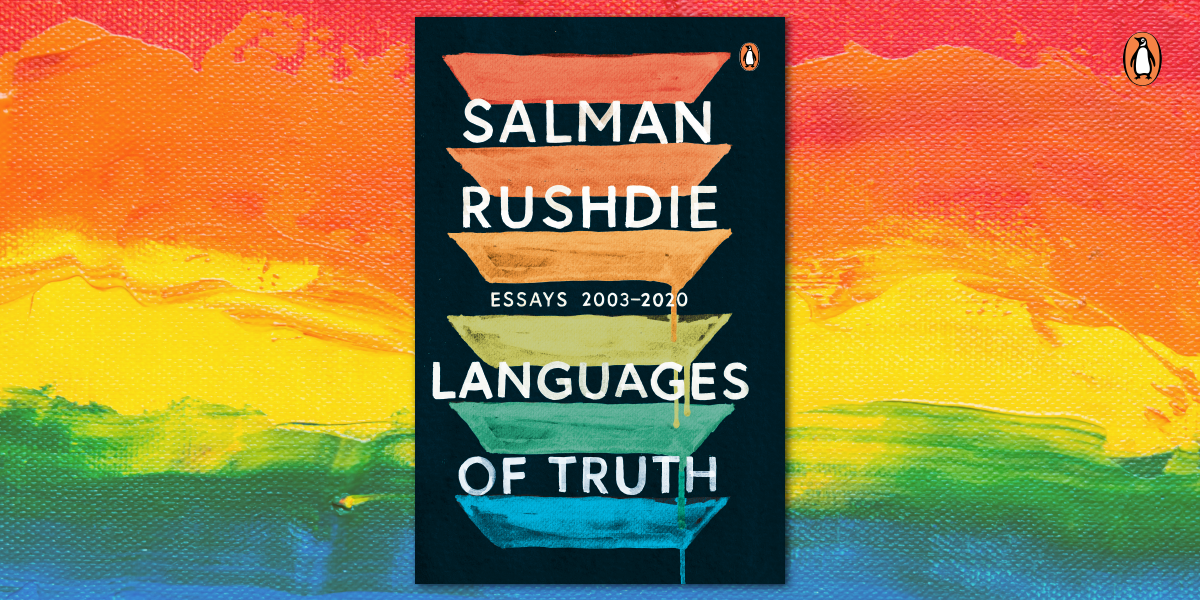
Languages of Truth FC
Languages of Truth||Salman Rushdie

Before there were books, there were stories. At first the stories weren’t written down. Sometimes they were even sung. Children were born, and before they could speak, their parents sang them songs, a song about an egg that fell off a wall, perhaps, or about a boy and a girl who went up a hill and fell down it. As the children grew older, they asked for stories almost as often as they asked for food. Now there was a goose that laid golden eggs, or a boy who sold the family cow for a handful of magic beans, or a naughty rabbit trespassing on a dangerous farmer’s land. The children fell in love with these stories and wanted to hear them over and over again. Then they grew older and found those stories in books. And other stories that they had never heard before, about a girl who fell down a rabbit hole, or a silly old bear and an easily scared piglet and a gloomy donkey, or a phantom tollbooth, or a place where wild things were. They heard and read stories and they fell in love with them, Mickey in the night kitchen with magic bakers who all looked like Oliver Hardy, and Peter Pan, who thought death would be an awfully big adventure, and Bilbo Baggins under a mountain winning a riddle contest against a strange creature who had lost his precious, and the act of falling in love with stories awakened something in the children that would nourish them all their lives: their imagination.

The children fell in love with stories easily and lived in stories too; they made up play stories every day, they stormed castles and conquered nations and sailed the ocean blue, and at night their dreams were full of dragons. They were all storytellers now, makers of stories as well as receivers of stories. But they went on growing up and slowly the stories fell away from them, the stories were packed away in boxes in the attic, and it became harder for the former children to tell and receive stories, harder for them, sadly, to fall in love. For some of them, stories began to seem irrelevant, unnecessary: kids’ stuff. These were sad people, and we must pity them and try not to think of them as stupid boring philistine losers.

I believe that the books and stories we fall in love with make us who we are, or, not to claim too much, that the act of falling in love with a book or story changes us in some way, and the beloved tale becomes a part of our picture of the world, a part of the way in which we understand things and make judgements and choices in our daily lives. As adults, falling in love less easily, we may end up with only a handful of books that we can truly say we love. Maybe this is why we make so many bad judgements.

Nor is this love unconditional or eternal. A book may cease to speak to us as we grow older, and our feeling for it will fade. Or we may suddenly, as our lives shape and hopefully increase our understanding, be able to appreciate a book we dismissed earlier; we may suddenly be able to hear its music, to be enraptured by its song. When, as a college student, I first read Günter Grass’s great novel The Tin Drum, I was unable to finish it. It languished on a shelf for fully ten years before I gave it a second chance, whereupon it became one of my favourite novels of all time: one of the books I would say that I love. It is an interesting question to ask oneself: Which are the books that you truly love? Try it. The answer will tell you a lot about who you presently are.

I grew up in Bombay, India, a city that is no longer, today, at all like the city it once was and has even changed its name to the much less euphonious Mumbai, in a time so unlike the present that it feels impossibly remote, even fantastic: a real- life version of the mythic golden age. Childhood, as A. E. Housman reminds us in ‘The Land of Lost Content’, often also called ‘Blue Remembered Hills’, is the country to which we all once belonged and will all eventually lose: Into my heart an air that kills

From yon far country blows:

What are those blue remembered hills,

What spires, what farms are those?

That is the land of lost content,

I see it shining plain,

The happy highways where I went

And cannot come again.

All about history: An interview with the queen of children’s historical fiction, Devika Rangachari

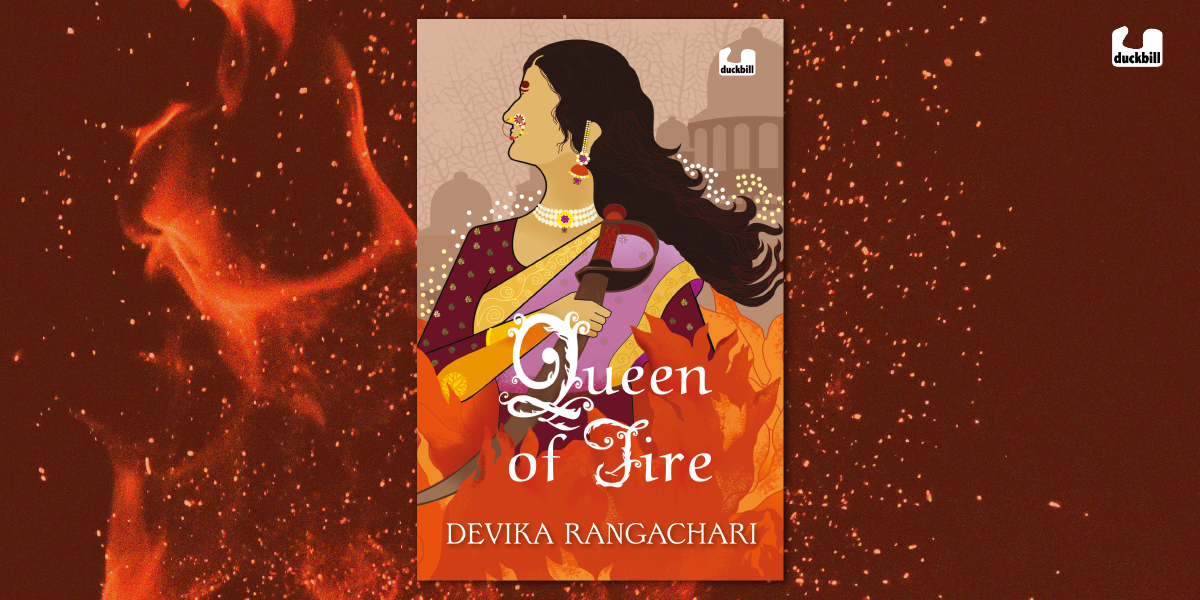
Devika Rangachari is an award-winning author of several historical fiction books for children. Her book Queen of Fire came out in April this year. It brings to vivid life the interior life of Lakshmibai, the nineteenth-century queen of Jhansi, thrust into a position she does not desire but must assume, and of her son, who is cowed by the challenges he has to face but determined to live up to his mother’s courage.

We recently got the chance to ask her some questions about her enthusiasm for writing for children and the challenges involved, how she decides on her protagonists and her favourite historians. Read on to find out her answers!


  1. Queen of Ice, Queen of Earth, and now, Queen of Fire, we are sensing a pattern here. Is there a specific reason why we see you writing about queens in Indian history? How do you decide who’s going to be the protagonist of your next book? 


A word about these three books, to begin with. Queen of Ice is the story of Didda who ruled Kashmir in the tenth century for around fifty years despite being physically lame. Her rule formed part of my doctoral research on gender in early medieval north India. Didda’s powerful and competent rule notwithstanding, she has been virtually removed from historical narratives of Kashmir due to the gender bias that exists in the writing of history. Alternatively, she has been vilified for daring to challenge patriarchal stereotypes and follow her ambition. Queen of Earth, on the other hand, deals with Prithvimahadevi who ruled the Bhaumakara dynasty of Odisha in the ninth century. Her reign formed part of my post-doctoral research on gender in early medieval Odisha. Prithvimahadevi

managed to hold her own over a rival populace and, additionally, employed clever tactics to justify her rule, indicating her political shrewdness and sagacity. In a similar vein to Didda, however, she has either been made invisible in historical accounts of Odisha or criticised for her rule. I wanted to enable my young readers to know about these important women from the past whom they are unlikely to get to know about through their textbooks or any other source.

Queen of Fire, which deals with Rani Lakshmibai of Jhansi, is slightly different because it aims to resurrect the real woman behind the name. In most accounts of this valorous queen, she is treated almost like a goddess and no weight is given to her emotions, thoughts or fears. Nor is her relationship with her adopted son, Damodar, given any importance. I have, however, examined both these aspects in my book.

While the stories of all these women are extremely inspiring, there is no specific reason for my current focus on queens. It is just something that happened organically. If I decide that the story of a particular woman from history, culled from my academic research, is interesting and engrossing, then she becomes the protagonist of my next book. At least, that is how it has been so far!


  1. Writing historical fiction involves a lot of research, and the task gets more complex when the subject needs to be adapted for a younger audience. What has been your experience like writing historical narratives for children? Could you also shed some light on your research process? 


The challenge in writing historical fiction for children is that history is a subject that most of them dread, in any case, and, therefore, I have to make my writing enjoyable and gripping while, at the same time, maintaining a balance between historical fact and fiction. The aim is to draw my readers into the world of history and enable them to discover for themselves how exciting it really is. In addition, I have to ensure that I do not drown the narrative in facts and what could be construed as dry details. Historical accuracy is essential but the writing should convey the elements of the past in a painless and palatable manner. I have, however, immensely enjoyed the process of writing historical narratives for young readers.

My research process involves studying the original sources pertaining to the historical period or personality I am writing on. These could range from texts and inscriptions to coins, buildings and other archaeological material. For instance, the Rajatarangini, a Sanskrit text written by a poet, Kalhana, in the twelfth century is pivotal as a source for Didda’s reign, along with some coins and inscriptions that she issued. In Prithvimahadevi’s case, the sources are even more meagre, principally featuring two inscriptions that she issued and some references to her in contemporary sources. In Rani Lakshmibai’s case, though, there is plentiful information, ranging from memoirs to letters to archival documents. Historical sources become more difficult to come by the further back in time one goes. There are significant gaps in our knowledge of the early medieval queens, for instance, and a lot of guesswork is involved in order to fill these.


  1. Are there some women in Indian history whom you feel particularly moved by, but have not written about yet?


There are several—royal and non-royal—who played important roles in the polity and society of the early medieval period but have not received the acknowledgement that they deserve in the historical narrative. Apart from some powerful women in Kashmir, there are others in the south who have not really been the subject of much research or writing so far. I would like to write about many of these.


  1. When you are not writing and researching, what would we find you occupied with?

 I love reading, so I would be curled up with a book.


  1. Who are your favourite historians on Indian history?

 There are several but I will mention only two of them. Prof. Nayanjot Lahiri, my doctoral supervisor, is a well-known archaeologist who has, in addition, managed to encapsulate her research—such as on the Indus valley civilisation and on the discipline of history, as a whole—into extremely readable books for the general reader. Another historian that I greatly admire is Prof. Upinder Singh who has also successfully managed to write about the Indian past in a very accessible, engrossing manner for the layman reader, particularly on the ancient and early medieval time spans.
 

  1. What are some of your favourite historical retellings?

I grew up reading Jean Plaidy who has written an enormous range of historical fiction. Her works made me develop a real love for history. I also enjoyed Hilary Mantel’s works of historical fiction, especially her trilogy on Thomas Cromwell and the Tudor court under Henry VIII of England, and Philippa Gregory’s writing.


Ready for June Readathon?

While we are still getting past the uncertain times and the young ones are spending the summer break indoors, we have come to their rescue with our interesting June book collection. With a tinge of laughter, a touch of magic, a series of adventures, and a sea full of learning, our books promise to offer entertainment, comfort, and knowledge.

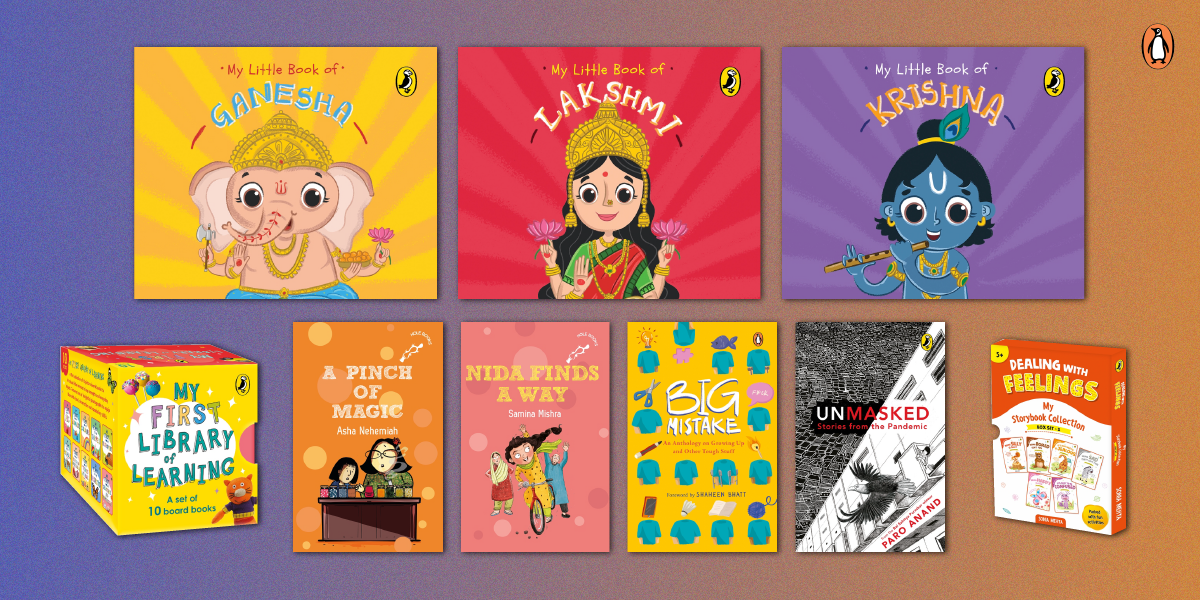
Here’s a curated list for June readathon!

*

My First Library of Learning: Box set
My First Library Learning || .
Ages: 0 to 3 years

Foster a habit of reading in your little ones with this box set of 10 gorgeously designed and thoughtfully created board books. These books equip toddlers and preschoolers with essential reading, language, visual, motor and imagination skills. This bright, handy, easy-to-read and fun library contains books on English alphabet, numbers, colours, shapes, things at home, fruits and vegetables, seasons and opposites, transport, animals and insects.


Dealing with Feelings Box Set 2

Sonia Mehta

Dealing with Feelings || Sonia Mehta
Ages: 5+ years

Foggy Forest is inhabited by many fun little animals. These quirky creatures are always there for one another—helping each other overcome jealousy, boredom, sadness and confusion. Together, they deal with all the different feelings one might have every day. This special box set edition brings together six exciting titles to start a conversation with kids about their feelings and emotions.


Big Mistake
Big Mistake
Ages: 16+ years

Insecurities and assurances, conflict and solidarity, fearfulness and courage—the personal histories, stories and #ownvoices in this anthology cover a lot of ground in just a few pages. Let them spark conversations on love, identity, disability, family, body positivity, ambition and other tough stuff. After all, no matter how old we get, growing up can feel like one big mistake.


Nida Finds a Way

Samina Mishra

Nida Finds A Way || Samina Mishra
Ages: 7 to 9 years

Whenever Nida wants to do something new, Abba is scared for her and says NONONO. But Nida needs to learn and do new things—so the only way is for her to persuade Abba. Can Nida find a way?


A Pinch of Magic

Asha Nehemiah

A Pinch of Magic || Asha Nehemiah
Ages: 7 to 9 years

Veena’s aunt Malu is in trouble. Her pinching spoon is broken. She must get a new spoon or close down her herbal medicine business. But the only person who makes pinching spoons has disappeared. Can Veena help her aunt?


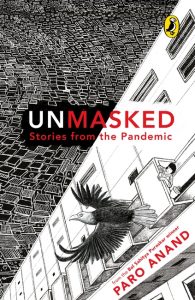
Unmasked

Paro Anand

Unmasked || Paro Anand
Ages: 11+ years

The year 2020 will forever be reported as the time when we all fell down. But it was also the year we all got back up and were forced to come together in a way we had never imagined before. In this timely masterpiece, Paro Anand writes of despair, courage and hope. Through eighteen short stories from the pandemic, Anand introduces us to characters who feel familiar and their stories intimate.

From a mother and son looking to make ends meet as the lockdown brutally affects their lives to a housewife who’s a victim of domestic abuse, from young keyboard wizards keen on making a difference to a home delivery executive who becomes an unlikely hero, this book unmasks the layers of the year that changed us all.


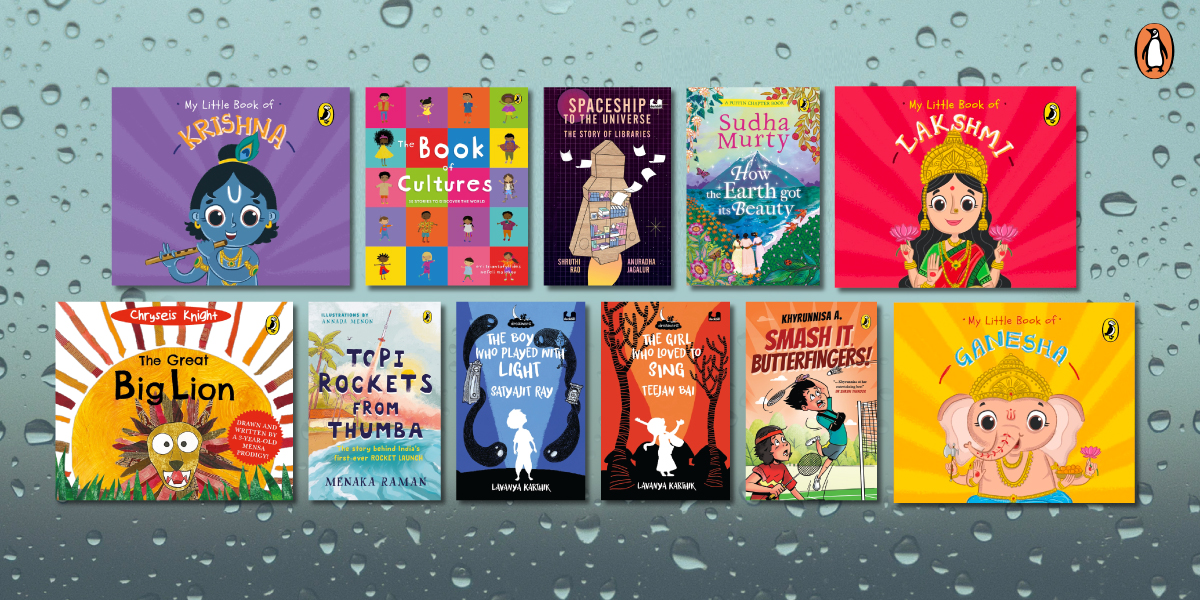
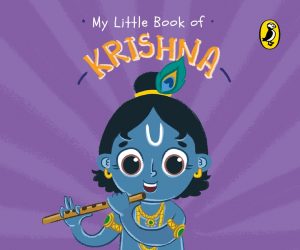
My Little Book of Krishna
My Little Book of Krishna || .
Ages: 3+ years

Naughty little Krishna’s search for butter leads to an unexpected adventure. With charming illustrations and simple language, this short tale about Krishna will entertain and delight. It is a perfect way to familiarize the little ones with India’s rich cultural fabric. It’s a must have to introduce a god from popular Hindu mythology and impart valuable life lessons.


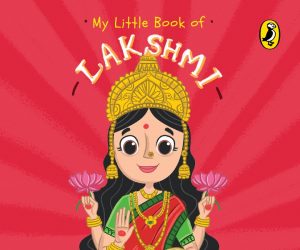
My Little Book of Lakshmi
My Little Book of Lakshmi || .
Ages: 3+ years

Lovely Lakshmi comes to Earth once a year. Will she have a good time here?
With the beautifully illustrated pages, this short tale about Lakshmi offers a fun and enjoyable read about timeless myths and festivals for modern kids.


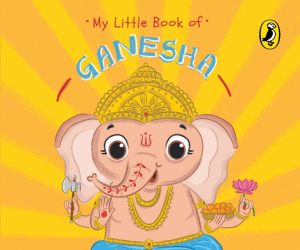
My Little Book of Ganesha
My Little Book of Ganesha || .
Ages: 3+ years

Clever Ganesha’s got something on his mind, but what that is you’ll have to read on to find.
This short tale about Ganesha has fascinating illustrations and lucid language, making it suitable for bedtime reading and parent-child association. It’s dotted with interesting facts as well as an interactive activities.

**

Careful what you wish for

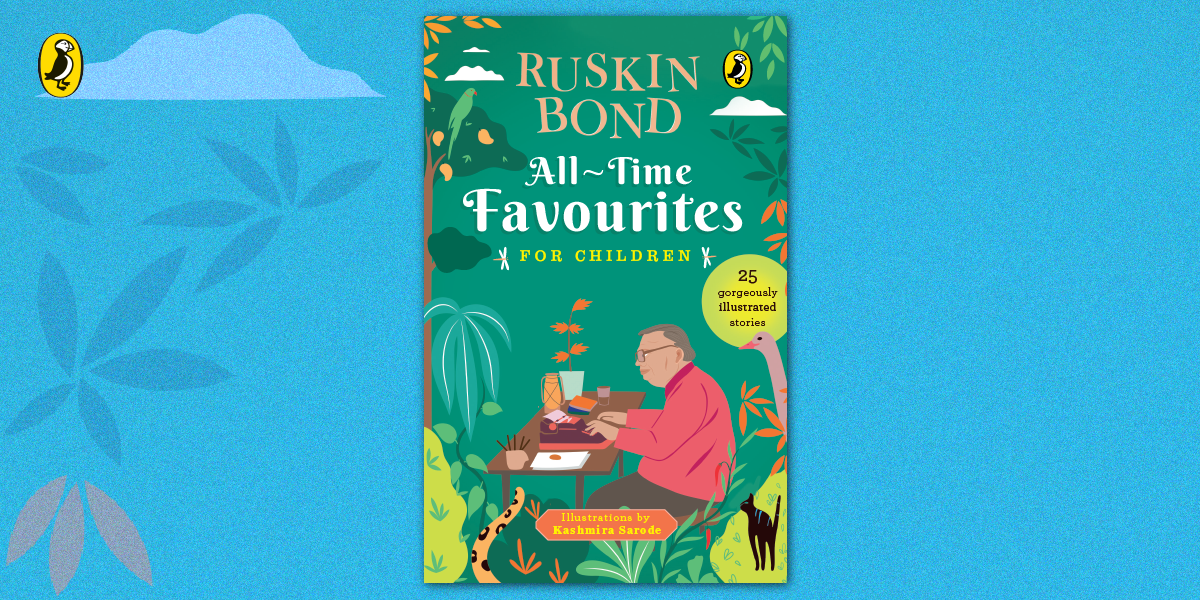
All Time Favourites for Children celebrates Ruskin Bond’s writing with stories that are perennially loved and can now be enjoyed in a single collectible volume. Curated and selected by India’s most loved writer, this collection brings some of the evocative episodes from Ruskin’s life. It brings together many known charming, endearing characters such as the iconic Rusty, the eccentric Uncle Ken and the ubiquitous grandmother, and a smattering of new ones that are sure to be firm favourites with young readers, especially middle schoolers. Heart-warming, funny and spirited, this is a must-have on every bookshelf!

All-Time Favourites FC
All-Time Favourites||Ruskin Bond

Here’s a taste of what’s in store in this exciting collection of stories. An extract from the story of a parrot who could, but ‘wouldn’t’ talk. ‘What goes around comes around’ is a complete mood in this one.

~

‘Kiss, kiss!’ Aunt Ruby would coo, putting her face close to the barge of the cage. But the parrot would back away, its beady little eyes getting even smaller with anger at the prospect of being kissed by Aunt Ruby. On one occasion, it lunged forward without warning and knocked my aunt’s spectacles off her nose.

After that, Aunt Ruby gave up her endearments and became quite hostile towards the poor bird, making faces at it and calling out, ‘Can’t talk, can’t sing, can’t dance!’ and other nasty comments.

It fell upon me, then ten years old, to feed the parrot, and it seemed quite happy to receive green chillies and ripe tomatoes from my hands, these delicacies being supplemented by slices of mango, for it was then the mango season. It also gave me an opportunity to consume a couple of mangoes while feeding the parrot.

One afternoon, while everyone was indoors enjoying a siesta, I gave the parrot his lunch and then deliberately left the cage door open. Seconds later, the bird was winging its way to the freedom of the mango orchard.

At the same time, Grandfather came to the veranda and remarked, ‘I see your aunt’s parrot has escaped!’

‘The door was quite loose,’ I said with a shrug.

‘Well, I don’t suppose we’ll see it again.’

Aunt Ruby was upset at first and threatened to buy another bird. We put her off by promising to buy her a bowl of goldfish.

‘But goldfish don’t talk!’ she protested.

‘Well, neither did your bird,’ said Grandfather. ‘So we’ll get you a gramophone. You can listen to Clara Cluck all day. They say she sings like a nightingale.’
I thought we’d never see the parrot again, but it probably missed its green chillies, because a few days later I found the bird sitting on the veranda railing, looking expectantly at me with its head cocked to one side. Unselfishly, I gave the parrot

half of my mango.

While the bird was enjoying the mango, Aunt Ruby emerged from her room and, with a cry of surprise, called out, ‘Look, my parrot’s come back! He must have missed me!’

With a loud squawk, the parrot flew out of her reach and, perching on the nearest rose bush, glared at Aunt Ruby and shrieked at her in my aunt’s familiar tones: ‘You’re no beauty! Can’t talk, can’t sing, can’t dance!’

Aunt Ruby went ruby-red and dashed indoors.

But that wasn’t the end of the affair. The parrot became a frequent visitor to the garden and veranda and whenever it saw Aunt Ruby it would call out, ‘You’re no beauty, you’re no beauty! Can’t sing, can’t dance!’
The parrot had learnt to talk, after all.
Growing up body shamed

Five years earlier, a friend’s nasty comment made Ananya start hating her body. She decided to change into a new person; one who effortlessly fits into all kinds of clothes, who shuns food unless it’s salad, and who can never be called ‘Miss Piggy’ – and to cut everything from her ‘old’ life, including her best friend, Raghu, for being witness to her humiliation.

Ananya was on her way to becoming who she wished to be, but she’s continued to see herself as a work in progress.

One day, her parents announced that they were expecting a baby, which worried her. To make matters worse, Raghu reappeared in her life …

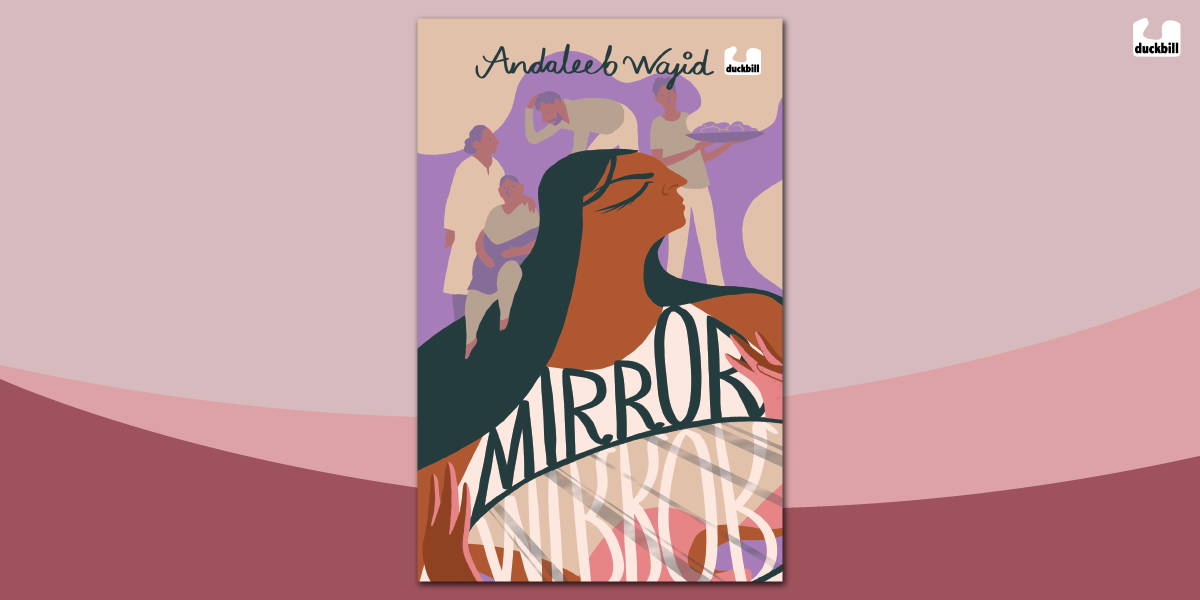
Andaleeb Wajid’s latest novel for young adults is a touching and funny story about a young girl’s journey to acceptance and self-love. Here’s a glimpse into her struggle as she finds her way.

~

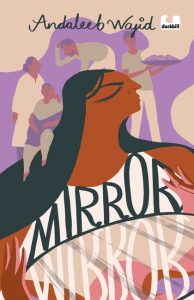
Mirror mirror front cover
Mirror, Mirror||Andaleeb Wajid

I felt a little guilty about the way I had been treating Ma so I went looking for her. When I didn’t find her at home, I called her phone.

‘I’m back home. Where are you?’ I asked.

‘I left you messages. You didn’t see?’ Her voice was a little muffled. Where was she?

‘No. Why? Where are you?’

‘At the gynaecologist,’ she said. What? Already?

‘But you just found out yesterday!’

‘At my age, sweetie, you can’t be too careful,’ she said. ‘Okay, I have to go now.’ She hung up and I continued staring at my phone.

At her age?

Mom was just forty-three. But . . . having a baby at her age . . . I suddenly felt a spasm of fear. What if something went wrong and she died? All because of this stupid baby.

My throat closed with panic. I needed to talk to someone but didn’t want to call up Nisha. Obviously, I didn’t want to talk to Anirudh about it either. I called up Papa instead.

‘What is it?’ he asked, his voice coming muffled too.

‘Are you also at the gynaecologist’s?’ I asked, surprised.

‘Yes, of course,’ he said gruffly. ‘What is it, Ananya?’

‘I . . .’ I didn’t know how to tell him what I’d been thinking.

‘Nothing. I’ll see you at home,’ I said.

‘Okay,’ he said and he hung up too.

I sat on my bed, feeling out of sorts. I needed to do something. I needed to take my mind off this panic.

I rolled out my yoga mat and did a few stretches, and then sat down, trying to calm my mind. It wasn’t working. My mind was fixated on something else. Something with chocolate in it.

No, we’re not going there, I told my mind firmly.

Please?

One square of dark chocolate wouldn’t hurt anyone. I knew Ma kept a stash in the fridge but I had never ventured near it, as though afraid it would bite me.


Saliva pooled under my tongue and I felt an unbearable urge to just taste one little piece.

No. I knew exactly how to change that. I got up from the yoga mat and, bracing myself, walked over to the mirror.

That one piece of chocolate is going to show on your tummy, I told myself, making myself study my reflection. On your thighs. Do you want that?

I pinched my stomach and winced at the pain. Despite all the crunches, this was never going to go away, was it?

Fat bitch. Ugly cow. You’ll always be like this.

The thought of chocolate was no longer appealing. I sat in the hall, waiting for my parents to return home and when I heard the sound of the car, I got up to meet them at the door. I looked for an indication on Ma’s face that everything was all right. But she looked fatigued and anxious.

‘What is it? Are you going to die?’ the words tripped out of my mouth before I realized how silly I sounded.

Ma sidestepped me and walked towards the living room slowly. Papa followed her, looking grim, holding on to a file.

I held his thick wrist and he stopped. ‘What is it? You guys are scaring me,’ I whispered to him.

He looked confused. ‘Why are you scared? Everything is fine,’ he said. I didn’t believe him because his face looked drawn and worried.

Ninja Nani – The mystery hero

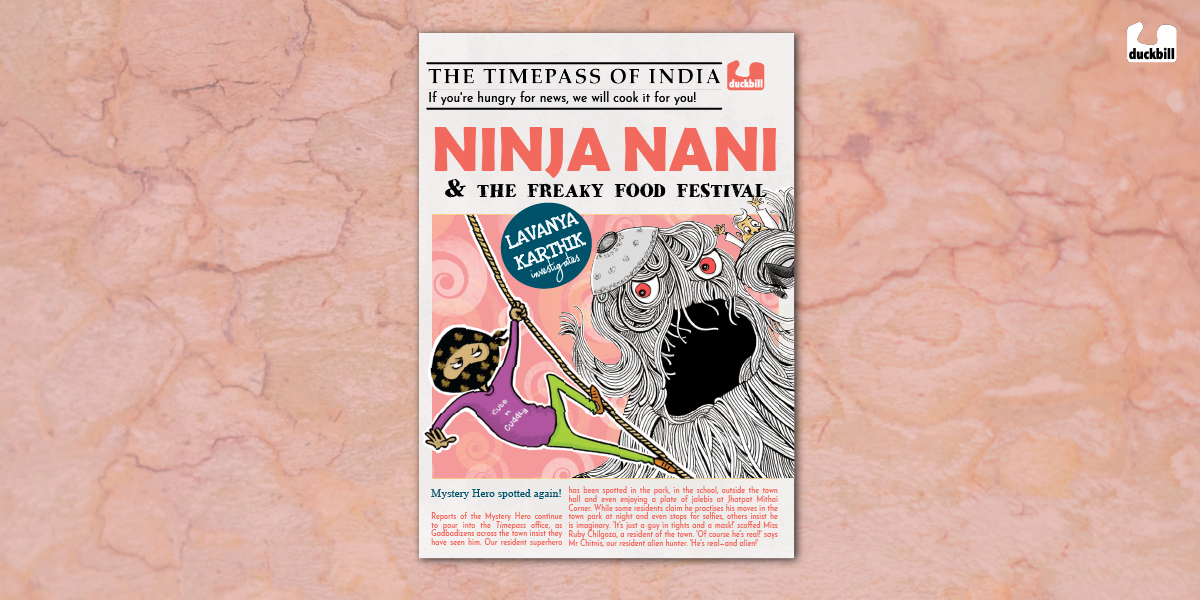
It is common for Nani to somersault around the room and backflip without a flinch. Her ninja senses jingle when there is danger in Gadbadnagar and the air then wibbles and wobbles around her. Nani steps out every night, catches robbers, helps people trapped in lifts and burning buildings, and saves stray pups and little birdies. Is it hard to believe?

Here’s an excerpt from the book where Nani gives a glimpse of her superpowers to young Deepu.

*

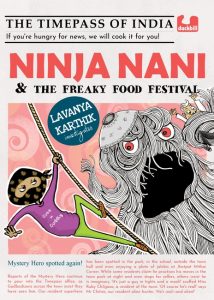
Ninja Nani and the Freaky Food Festival || Lavanya Karthik

‘So what happened? Where did you go? How?’ If Deepu’s questions had had feet, they would have tripped over themselves trying to get out of his head.

The door slammed as Papa rushed out of the house to get to his doctor.

Upstairs, another door slammed. Then they heard the SKREECH-THUD! of Mummy pulling her chair out and plonking herself in it. The muffled sounds of her talking on the phone followed.

Nani turned to Deepu. ‘I could tell you, or . . .’ She smiled and raised her hands. The air around her fingers fizzled! Little electric sparks danced.

Deepu gasped. ‘Is this . . .?’ he whispered.

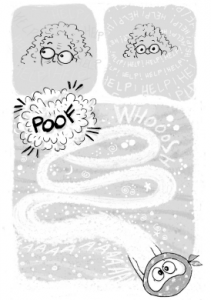
Nani pressed her fingers gently to either side of Deepu’s forehead. Deepu’s brain sparked and frizzled! More jutsu!

‘The Ninja ThoughtMeld!’ Deepu shut his eyes tight, as images jumped and crashed and fizzed about inside his head. Morimori used it on his show all the time!

Who knows?’ said Nani’s voice, inside his head. ‘It’s this trick I picked up last week.’

‘Am I hearing your thoughts?’

You are! Pretty neat, huh? But wait, it gets better!’

She was right.

Deepu couldn’t just hear her thoughts, he could see them as well.


*

To know how Nani, Deepu’s own Superhero, fights the monsters and saves everyone from gadbad, read Ninja Nani and the Freaky Food Festival.

An unfinished portrait

A gift book for children and teens, Another Dozen Stories is a must-read collection of 12 fascinating short stories by award-winning author Satyajit Ray.  It is our homage to this brilliant writer who has blessed us with an era of enchanting stories. Translated for the very first time into English by noted translator Indrani Majumdar, this edition is a gift for his many fans and children who are nine years old or more, on the centenary of his birth.

Another Dozen Stories brings to you the magical, bizarre, spooky and sometimes astonishing worlds created by Satyajit Ray, featuring an extraordinary bunch of characters! This collection includes twelve hair-raising stories that will leave you asking for more!

We decided to add to the gift by giving away a part of a story. If the cliff-hanger at the end piques your curiosity, you know what to do.

~

Another Dozen Stories front cover
Another Dozen Stories||Satyajit Ray

Ranjan Purakayastha is a noted painter in Calcutta. Why just Calcutta? His popularity has spread way beyond Bengal, across the whole of India. He has had exhibitions in Bombay, Madras, Delhi, Bangalore and Hyderabad. Ranjanbabu’s income, which is quite substantial, comes from selling his paintings. Last month in Bombay, one of his oil paintings was sold for thirty-five thousand rupees.

The painting style Ranjanbabu has adopted is modern. Very little of the real world can be associated with his work. His human figures look like puppets created by some incapable artisan; the trees resemble the twigs of a broomstick; the clouds in the sky look like floating chunks of meat; and his birds and animals have nothing to do with nature or a zoo. But as today’s art connoisseurs appreciate this kind of approach, Ranjanbabu’s earnings have not been affected. Yet I must also add, Ranjanbabu remains unrivalled in creating portraitures of people. Here he doesn’t adopt his modern style, the pictures look like real people and the likenesses are rather good too. Due to the nature of his work, Ranjanbabu needs to travel often, and that offers him a good income too. For a life-size oil painting, he charges fifteen thousand rupees, which he plans to increase to twenty-five thousand next year. Even in the age of photographs, a few wealthy people still prefer to have their portraits made, and Ranjanbabu gets to prove his expertise again and again.

One Sunday morning, a gentleman arrives at Ranjanbabu’s fancily decorated flat on Richi Road. At a glance, one can tell he is wealthy. Tall and hefty, attired in a raw silk suit, and sporting five rings on five fingers. His appearance is marked by a strapping personality. The gentleman says his name is Bilash Mallik, and he is keen to have his portrait done. When Ranjanbabu hears his name, he knows the gentleman is one of Calcutta’s most affluent businessmen. His will be a life-size portrait, and he is ready to pay any amount stipulated.

‘How much will you charge?’ Mr Mallik asks.

With a straight face, Ranjanbabu says, ‘Fifty thousand rupees.’

The client promptly agrees.

Ranjanbabu already has an incomplete work at hand, a large painting. He needs at least seven days to finish it. Accordingly, he calculates his timeframe and offers Mr Mallik a date. He will have to do a one-hour sitting every day at 9 a.m.

‘How many days will you take to finish it?’ Mr Mallik queries.

‘About a fortnight.’

‘Very well,’ says Mr Mallik. ‘It’s settled. Hmm . . . do you require an advance?’

‘No, sir.’

Before embarking on any major project, Ranjanbabu always seeks his guru’s blessings. He became Saralananda Swami’s—also known as Babaji or Swamiji—disciple ten years ago. On many occasions he takes Babaji’s advice, and the latter too is very fond of this disciple. Babaji has been bestowed with many powers, and fortune-telling is one of them.

After listening to everything his disciple tells him, Babaji meditates for three minutes and then says, ‘There is danger.’

‘What danger, Swamiji?’

‘A lot of mishaps. You didn’t do the right thing by taking up this task.’

‘Then should I refuse the gentleman?’

‘Wait.’

Babaji closes his eyes once again and begins to sway.

This continues for another five minutes, after which Babaji finally opens his eyes. Ranjanbabu is looking at his guru reverentially.

‘I can foresee you ultimately crossing all the hurdles and finding success. Don’t worry; get on with your work,’ Babaji says.

Greatly relieved, Ranjan Purakayastha touches Babaji’s feet and takes his leave.

The work on Bilash Mallik’s portrait commences on Saturday, 21 January. Mr Mallik is a jovial fellow. Right at the outset he checks if he can talk during sittings. Usually Ranjanbabu doesn’t permit this, but since this is an exceptional client, he has to say yes.

‘But you shouldn’t move your neck. If you speak, speak in one direction, that is, look at my right shoulder and then speak.’

When the first stroke of charcoal appears on the canvas, the time is 9.15 a.m.

Day by day, Mr Mallik’s face begins to emerge. There’s no doubt that Ranjanbabu is a very skilful artist, but at this juncture the only person who can see his work is the artist himself. The person whose portrait is being created will get to see it only after it’s completed. Even though this condition wasn’t discussed beforehand, Mr Mallik doesn’t have any objections.

It’s the twelfth day, and the portrait is nearing completion. After half an hour of sitting, Mr Mallik says he’s feeling dizzy.

Ranjanbabu stops and says, ‘Please go home. In any case, the portrait is almost complete. If you feel better, please come back tomorrow morning.’

But Mr Mallik doesn’t feel any better the next day. In fact, his fever goes up to 103 degrees. On the third day, things turn even more serious and he is shifted to a hospital.

Ranjan Purakayastha removes the portrait from the easel, puts it aside and fixes a brand-new canvas on it. Then he starts to work on a landscape with a modern touch.

After spending one-and-a half months in hospital, when Mr Bilash Mallik finally returns home, he no longer carries any resemblance to his former self. He has lost weight—down to seventy-two kilos from ninety. His cheeks are now hollow and his eyes sunken. He sends word to Ranjan Purakayastha that the portrait can wait. When his appearance becomes a little better, he can once again come for a sitting.

A month later, Mr Bilash Mallik begins to look better. Yet there’s no resemblance between his former and present selves. Doctors have advised him to control his diet. With the result, his weight can never go beyond eighty kilos.

Mallik says, ‘Let’s do a new portrait in my present state.’

Ranjan Purakayastha places a fresh canvas on his easel. Mr Mallik has altered his clothes to fit his reduced frame. But it’s a fact that he no longer looks unwell.

After four days of sketching, Ranjanbabu goes shopping to New Market in his Fiat one evening. On the way back, as soon as he crosses the turn at Park Street, a mini bus coming at high speed rams into the car from the right.

Of course, the Fiat is damaged, but along with it, Ranjanbabu’s right hand is severely battered. In the

hospital, the X-ray reveals multiple fractures on his elbow, wrist and the right thumb.

Once the cast on his hand is taken off after two months, Ranjanbabu discovers that he will never regain the same level of artistic expertise as he had before the accident. The most critical issue is his thumb. One can create modern art by holding a brush between the index and middle fingers,

but not a natural portrait.

This causes a huge trauma in Ranjanbabu’s life. He stops all work and goes on a pilgrimage. After spending three months travelling in Kashi, Haridwar, Rishikesh and Lakshman Jhula, he returns home and starts painting again using two fingers. The work produced looks slack and the appearance of his work completely changes. Ranjanbabu can now no longer demand thirty to forty thousand rupees for a painting. He needs to re-establish his market.

Meanwhile, Mr Bilash Mallik enquires about him, extends his sympathies and deeply regrets that he can now no longer have a Ranjan Purakayastha portrait in his house.

After trying for three months, using the paintbrush with only two fingers, Ranjanbabu manages to evolve a style that eventually earns him an endorsement in the art market. One Sunday morning, the retainer comes to his studio to announce the arrival of a gentleman.

‘You know him,’ the retainer remarks.

error: Content is protected !!