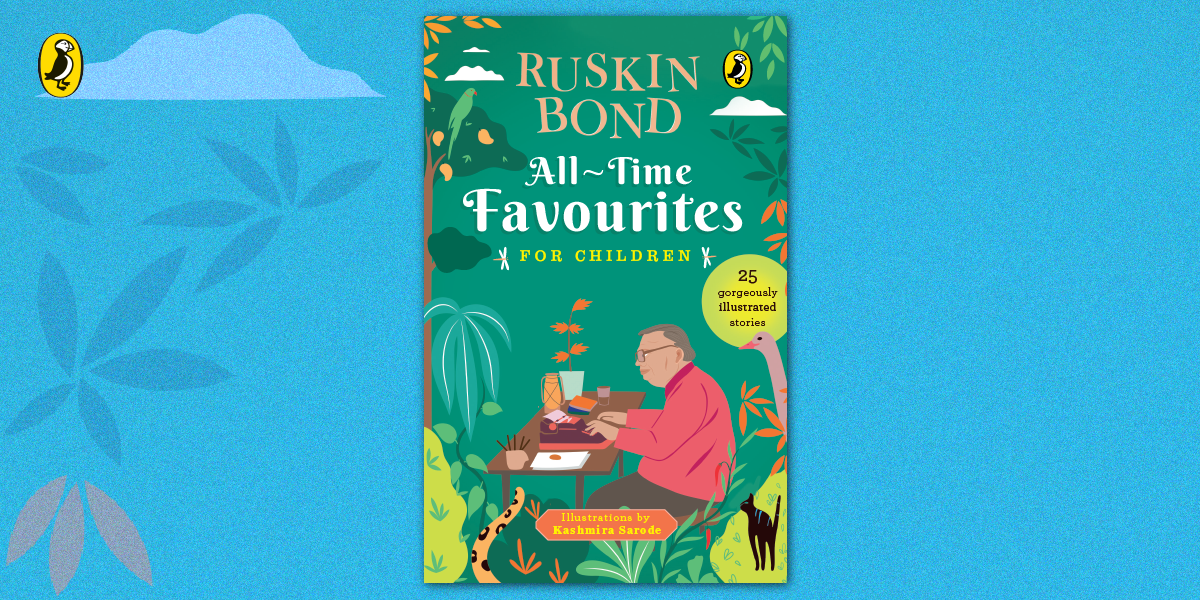
All Time Favourites for Children celebrates Ruskin Bond’s writing with stories that are perennially loved and can now be enjoyed in a single collectible volume. Curated and selected by India’s most loved writer, this collection brings some of the evocative episodes from Ruskin’s life. It brings together many known charming, endearing characters such as the iconic Rusty, the eccentric Uncle Ken and the ubiquitous grandmother, and a smattering of new ones that are sure to be firm favourites with young readers, especially middle schoolers. Heart-warming, funny and spirited, this is a must-have on every bookshelf!
All-Time Favourites||Ruskin Bond
Here’s a taste of what’s in store in this exciting collection of stories. An extract from the story of a parrot who could, but ‘wouldn’t’ talk. ‘What goes around comes around’ is a complete mood in this one.
~
‘Kiss, kiss!’ Aunt Ruby would coo, putting her face close to the barge of the cage. But the parrot would back away, its beady little eyes getting even smaller with anger at the prospect of being kissed by Aunt Ruby. On one occasion, it lunged forward without warning and knocked my aunt’s spectacles off her nose.
After that, Aunt Ruby gave up her endearments and became quite hostile towards the poor bird, making faces at it and calling out, ‘Can’t talk, can’t sing, can’t dance!’ and other nasty comments.
It fell upon me, then ten years old, to feed the parrot, and it seemed quite happy to receive green chillies and ripe tomatoes from my hands, these delicacies being supplemented by slices of mango, for it was then the mango season. It also gave me an opportunity to consume a couple of mangoes while feeding the parrot.
One afternoon, while everyone was indoors enjoying a siesta, I gave the parrot his lunch and then deliberately left the cage door open. Seconds later, the bird was winging its way to the freedom of the mango orchard.
At the same time, Grandfather came to the veranda and remarked, ‘I see your aunt’s parrot has escaped!’
‘The door was quite loose,’ I said with a shrug.
‘Well, I don’t suppose we’ll see it again.’
Aunt Ruby was upset at first and threatened to buy another bird. We put her off by promising to buy her a bowl of goldfish.
‘But goldfish don’t talk!’ she protested.
‘Well, neither did your bird,’ said Grandfather. ‘So we’ll get you a gramophone. You can listen to Clara Cluck all day. They say she sings like a nightingale.’
I thought we’d never see the parrot again, but it probably missed its green chillies, because a few days later I found the bird sitting on the veranda railing, looking expectantly at me with its head cocked to one side. Unselfishly, I gave the parrot
half of my mango.
While the bird was enjoying the mango, Aunt Ruby emerged from her room and, with a cry of surprise, called out, ‘Look, my parrot’s come back! He must have missed me!’
With a loud squawk, the parrot flew out of her reach and, perching on the nearest rose bush, glared at Aunt Ruby and shrieked at her in my aunt’s familiar tones: ‘You’re no beauty! Can’t talk, can’t sing, can’t dance!’
Aunt Ruby went ruby-red and dashed indoors.
But that wasn’t the end of the affair. The parrot became a frequent visitor to the garden and veranda and whenever it saw Aunt Ruby it would call out, ‘You’re no beauty, you’re no beauty! Can’t sing, can’t dance!’
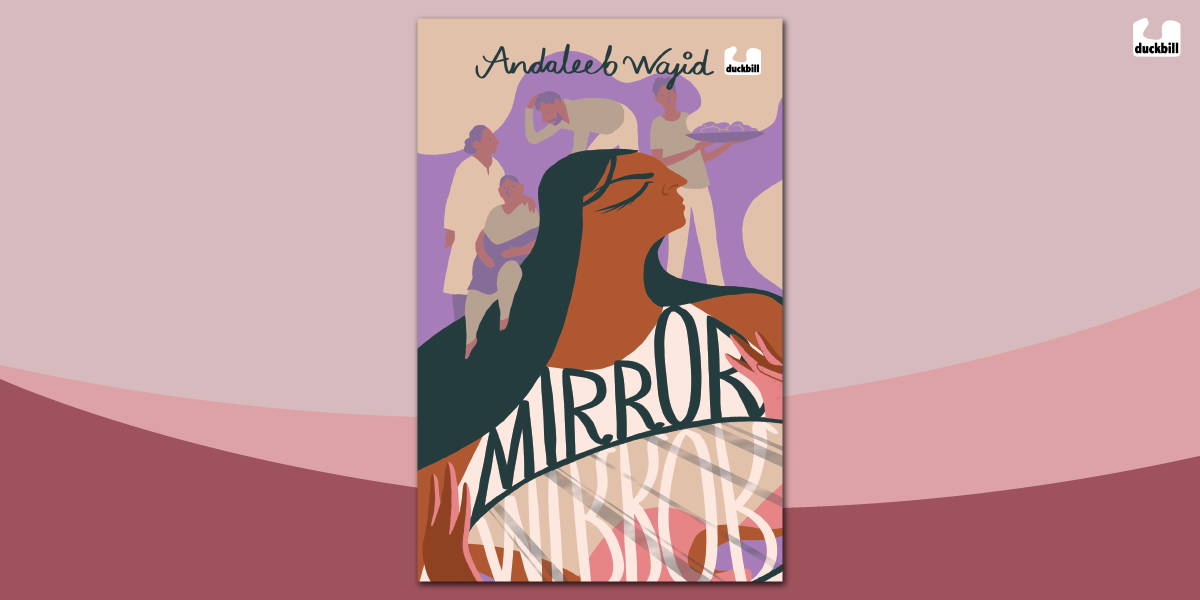
Five years earlier, a friend’s nasty comment made Ananya start hating her body. She decided to change into a new person; one who effortlessly fits into all kinds of clothes, who shuns food unless it’s salad, and who can never be called ‘Miss Piggy’ – and to cut everything from her ‘old’ life, including her best friend, Raghu, for being witness to her humiliation.
Ananya was on her way to becoming who she wished to be, but she’s continued to see herself as a work in progress.
One day, her parents announced that they were expecting a baby, which worried her. To make matters worse, Raghu reappeared in her life …
Andaleeb Wajid’s latest novel for young adults is a touching and funny story about a young girl’s journey to acceptance and self-love. Here’s a glimpse into her struggle as she finds her way.
~
Mirror, Mirror||Andaleeb Wajid
I felt a little guilty about the way I had been treating Ma so I went looking for her. When I didn’t find her at home, I called her phone.
‘I’m back home. Where are you?’ I asked.
‘I left you messages. You didn’t see?’ Her voice was a little muffled. Where was she?
‘No. Why? Where are you?’
‘At the gynaecologist,’ she said. What? Already?
‘But you just found out yesterday!’
‘At my age, sweetie, you can’t be too careful,’ she said. ‘Okay, I have to go now.’ She hung up and I continued staring at my phone.
At her age?
Mom was just forty-three. But . . . having a baby at her age . . . I suddenly felt a spasm of fear. What if something went wrong and she died? All because of this stupid baby.
My throat closed with panic. I needed to talk to someone but didn’t want to call up Nisha. Obviously, I didn’t want to talk to Anirudh about it either. I called up Papa instead.
‘What is it?’ he asked, his voice coming muffled too.
‘Are you also at the gynaecologist’s?’ I asked, surprised.
‘Yes, of course,’ he said gruffly. ‘What is it, Ananya?’
‘I . . .’ I didn’t know how to tell him what I’d been thinking.
‘Nothing. I’ll see you at home,’ I said.
‘Okay,’ he said and he hung up too.
I sat on my bed, feeling out of sorts. I needed to do something. I needed to take my mind off this panic.
I rolled out my yoga mat and did a few stretches, and then sat down, trying to calm my mind. It wasn’t working. My mind was fixated on something else. Something with chocolate in it.
No, we’re not going there, I told my mind firmly.
Please?
One square of dark chocolate wouldn’t hurt anyone. I knew Ma kept a stash in the fridge but I had never ventured near it, as though afraid it would bite me.
Saliva pooled under my tongue and I felt an unbearable urge to just taste one little piece.
No. I knew exactly how to change that. I got up from the yoga mat and, bracing myself, walked over to the mirror.
That one piece of chocolate is going to show on your tummy, I told myself, making myself study my reflection. On your thighs. Do you want that?
I pinched my stomach and winced at the pain. Despite all the crunches, this was never going to go away, was it?
Fat bitch. Ugly cow. You’ll always be like this.
The thought of chocolate was no longer appealing. I sat in the hall, waiting for my parents to return home and when I heard the sound of the car, I got up to meet them at the door. I looked for an indication on Ma’s face that everything was all right. But she looked fatigued and anxious.
‘What is it? Are you going to die?’ the words tripped out of my mouth before I realized how silly I sounded.
Ma sidestepped me and walked towards the living room slowly. Papa followed her, looking grim, holding on to a file.
I held his thick wrist and he stopped. ‘What is it? You guys are scaring me,’ I whispered to him.
He looked confused. ‘Why are you scared? Everything is fine,’ he said. I didn’t believe him because his face looked drawn and worried.
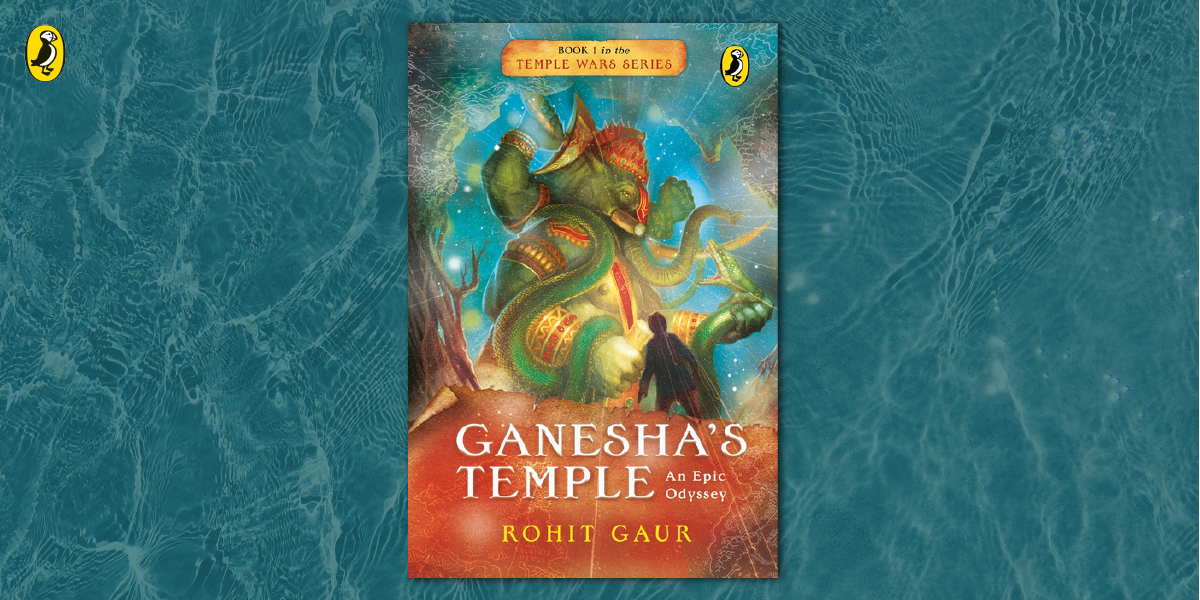
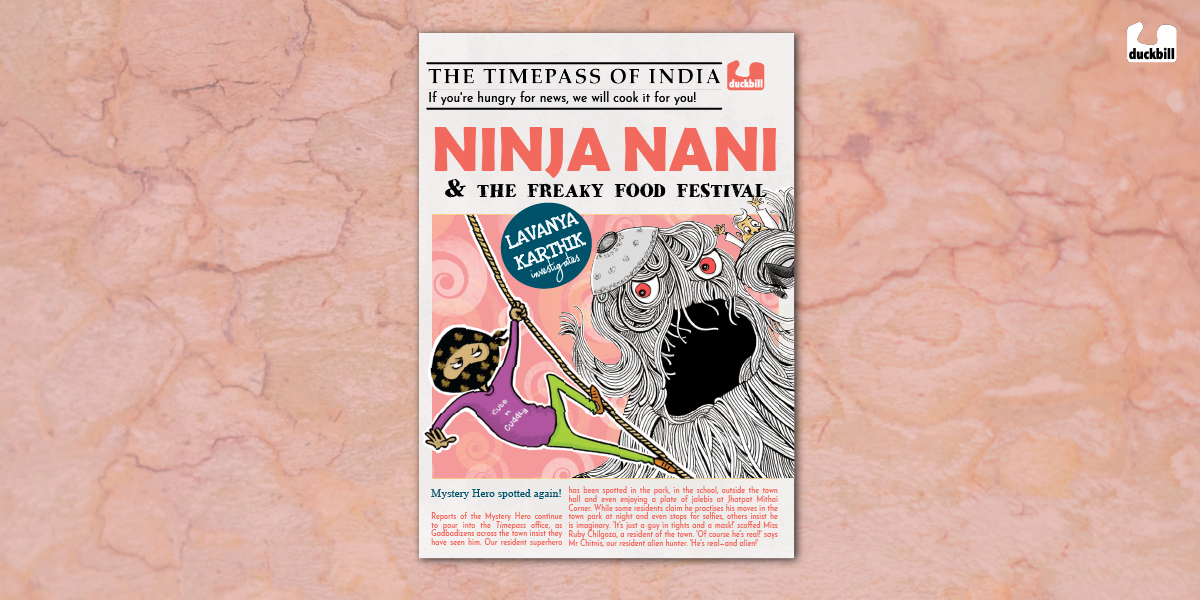
It is common for Nani to somersault around the room and backflip without a flinch. Her ninja senses jingle when there is danger in Gadbadnagar and the air then wibbles and wobbles around her. Nani steps out every night, catches robbers, helps people trapped in lifts and burning buildings, and saves stray pups and little birdies. Is it hard to believe?
Here’s an excerpt from the book where Nani gives a glimpse of her superpowers to young Deepu.
*
Ninja Nani and the Freaky Food Festival || Lavanya Karthik
‘So what happened? Where did you go? How?’ If Deepu’s questions had had feet, they would have tripped over themselves trying to get out of his head.
The door slammed as Papa rushed out of the house to get to his doctor.
Upstairs, another door slammed. Then they heard the SKREECH-THUD! of Mummy pulling her chair out and plonking herself in it. The muffled sounds of her talking on the phone followed.
Nani turned to Deepu. ‘I could tell you, or . . .’ She smiled and raised her hands. The air around her fingers fizzled! Little electric sparks danced.
Deepu gasped. ‘Is this . . .?’ he whispered.
Nani pressed her fingers gently to either side of Deepu’s forehead. Deepu’s brain sparked and frizzled! More jutsu!
‘The Ninja ThoughtMeld!’ Deepu shut his eyes tight, as images jumped and crashed and fizzed about inside his head. Morimori used it on his show all the time!
‘Who knows?’ said Nani’s voice, inside his head. ‘It’s this trick I picked up last week.’
‘Am I hearing your thoughts?’
‘You are! Pretty neat, huh? But wait, it gets better!’
She was right.
Deepu couldn’t just hear her thoughts, he could see them as well.
*
To know how Nani, Deepu’s own Superhero, fights the monsters and saves everyone from gadbad, read Ninja Nani and the Freaky Food Festival.
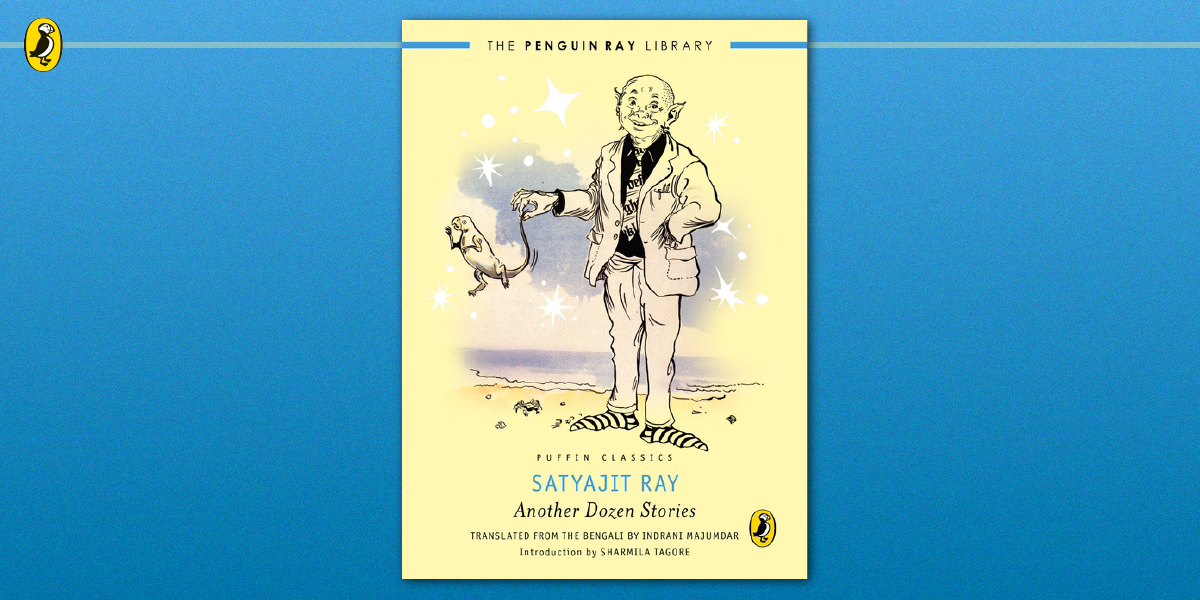
A gift book for children and teens, Another Dozen Stories is a must-read collection of 12 fascinating short stories by award-winning author Satyajit Ray. It is our homage to this brilliant writer who has blessed us with an era of enchanting stories. Translated for the very first time into English by noted translator Indrani Majumdar, this edition is a gift for his many fans and children who are nine years old or more, on the centenary of his birth.
Another Dozen Stories brings to you the magical, bizarre, spooky and sometimes astonishing worlds created by Satyajit Ray, featuring an extraordinary bunch of characters! This collection includes twelve hair-raising stories that will leave you asking for more!
We decided to add to the gift by giving away a part of a story. If the cliff-hanger at the end piques your curiosity, you know what to do.
~
Another Dozen Stories||Satyajit Ray
Ranjan Purakayastha is a noted painter in Calcutta. Why just Calcutta? His popularity has spread way beyond Bengal, across the whole of India. He has had exhibitions in Bombay, Madras, Delhi, Bangalore and Hyderabad. Ranjanbabu’s income, which is quite substantial, comes from selling his paintings. Last month in Bombay, one of his oil paintings was sold for thirty-five thousand rupees.
The painting style Ranjanbabu has adopted is modern. Very little of the real world can be associated with his work. His human figures look like puppets created by some incapable artisan; the trees resemble the twigs of a broomstick; the clouds in the sky look like floating chunks of meat; and his birds and animals have nothing to do with nature or a zoo. But as today’s art connoisseurs appreciate this kind of approach, Ranjanbabu’s earnings have not been affected. Yet I must also add, Ranjanbabu remains unrivalled in creating portraitures of people. Here he doesn’t adopt his modern style, the pictures look like real people and the likenesses are rather good too. Due to the nature of his work, Ranjanbabu needs to travel often, and that offers him a good income too. For a life-size oil painting, he charges fifteen thousand rupees, which he plans to increase to twenty-five thousand next year. Even in the age of photographs, a few wealthy people still prefer to have their portraits made, and Ranjanbabu gets to prove his expertise again and again.
One Sunday morning, a gentleman arrives at Ranjanbabu’s fancily decorated flat on Richi Road. At a glance, one can tell he is wealthy. Tall and hefty, attired in a raw silk suit, and sporting five rings on five fingers. His appearance is marked by a strapping personality. The gentleman says his name is Bilash Mallik, and he is keen to have his portrait done. When Ranjanbabu hears his name, he knows the gentleman is one of Calcutta’s most affluent businessmen. His will be a life-size portrait, and he is ready to pay any amount stipulated.
‘How much will you charge?’ Mr Mallik asks.
With a straight face, Ranjanbabu says, ‘Fifty thousand rupees.’
The client promptly agrees.
Ranjanbabu already has an incomplete work at hand, a large painting. He needs at least seven days to finish it. Accordingly, he calculates his timeframe and offers Mr Mallik a date. He will have to do a one-hour sitting every day at 9 a.m.
‘How many days will you take to finish it?’ Mr Mallik queries.
‘About a fortnight.’
‘Very well,’ says Mr Mallik. ‘It’s settled. Hmm . . . do you require an advance?’
‘No, sir.’
Before embarking on any major project, Ranjanbabu always seeks his guru’s blessings. He became Saralananda Swami’s—also known as Babaji or Swamiji—disciple ten years ago. On many occasions he takes Babaji’s advice, and the latter too is very fond of this disciple. Babaji has been bestowed with many powers, and fortune-telling is one of them.
After listening to everything his disciple tells him, Babaji meditates for three minutes and then says, ‘There is danger.’
‘What danger, Swamiji?’
‘A lot of mishaps. You didn’t do the right thing by taking up this task.’
‘Then should I refuse the gentleman?’
‘Wait.’
Babaji closes his eyes once again and begins to sway.
This continues for another five minutes, after which Babaji finally opens his eyes. Ranjanbabu is looking at his guru reverentially.
‘I can foresee you ultimately crossing all the hurdles and finding success. Don’t worry; get on with your work,’ Babaji says.
Greatly relieved, Ranjan Purakayastha touches Babaji’s feet and takes his leave.
The work on Bilash Mallik’s portrait commences on Saturday, 21 January. Mr Mallik is a jovial fellow. Right at the outset he checks if he can talk during sittings. Usually Ranjanbabu doesn’t permit this, but since this is an exceptional client, he has to say yes.
‘But you shouldn’t move your neck. If you speak, speak in one direction, that is, look at my right shoulder and then speak.’
When the first stroke of charcoal appears on the canvas, the time is 9.15 a.m.
Day by day, Mr Mallik’s face begins to emerge. There’s no doubt that Ranjanbabu is a very skilful artist, but at this juncture the only person who can see his work is the artist himself. The person whose portrait is being created will get to see it only after it’s completed. Even though this condition wasn’t discussed beforehand, Mr Mallik doesn’t have any objections.
It’s the twelfth day, and the portrait is nearing completion. After half an hour of sitting, Mr Mallik says he’s feeling dizzy.
Ranjanbabu stops and says, ‘Please go home. In any case, the portrait is almost complete. If you feel better, please come back tomorrow morning.’
But Mr Mallik doesn’t feel any better the next day. In fact, his fever goes up to 103 degrees. On the third day, things turn even more serious and he is shifted to a hospital.
Ranjan Purakayastha removes the portrait from the easel, puts it aside and fixes a brand-new canvas on it. Then he starts to work on a landscape with a modern touch.
After spending one-and-a half months in hospital, when Mr Bilash Mallik finally returns home, he no longer carries any resemblance to his former self. He has lost weight—down to seventy-two kilos from ninety. His cheeks are now hollow and his eyes sunken. He sends word to Ranjan Purakayastha that the portrait can wait. When his appearance becomes a little better, he can once again come for a sitting.
A month later, Mr Bilash Mallik begins to look better. Yet there’s no resemblance between his former and present selves. Doctors have advised him to control his diet. With the result, his weight can never go beyond eighty kilos.
Mallik says, ‘Let’s do a new portrait in my present state.’
Ranjan Purakayastha places a fresh canvas on his easel. Mr Mallik has altered his clothes to fit his reduced frame. But it’s a fact that he no longer looks unwell.
After four days of sketching, Ranjanbabu goes shopping to New Market in his Fiat one evening. On the way back, as soon as he crosses the turn at Park Street, a mini bus coming at high speed rams into the car from the right.
Of course, the Fiat is damaged, but along with it, Ranjanbabu’s right hand is severely battered. In the
hospital, the X-ray reveals multiple fractures on his elbow, wrist and the right thumb.
Once the cast on his hand is taken off after two months, Ranjanbabu discovers that he will never regain the same level of artistic expertise as he had before the accident. The most critical issue is his thumb. One can create modern art by holding a brush between the index and middle fingers,
but not a natural portrait.
This causes a huge trauma in Ranjanbabu’s life. He stops all work and goes on a pilgrimage. After spending three months travelling in Kashi, Haridwar, Rishikesh and Lakshman Jhula, he returns home and starts painting again using two fingers. The work produced looks slack and the appearance of his work completely changes. Ranjanbabu can now no longer demand thirty to forty thousand rupees for a painting. He needs to re-establish his market.
Meanwhile, Mr Bilash Mallik enquires about him, extends his sympathies and deeply regrets that he can now no longer have a Ranjan Purakayastha portrait in his house.
After trying for three months, using the paintbrush with only two fingers, Ranjanbabu manages to evolve a style that eventually earns him an endorsement in the art market. One Sunday morning, the retainer comes to his studio to announce the arrival of a gentleman.
Ruskin Bond – what a warm feeling it is to simply hear the man’s name! If you grew up loving Ruskin Bond, we bet you’re looking for the perfect books to inculcate the love within your little ones.
Ruskin Bond’s writing is influenced by his own life and is admired worldwide for its simplicity and absolute joy to read.
Celebrating his birthday today, here is a list of books to get your child started on Ruskin Bond’s most loved work!
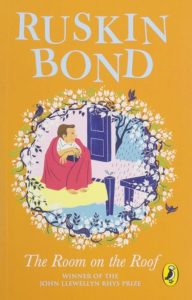
The Room on the Roof
Rusty, a sixteen-year-old Anglo-Indian boy, is orphaned, and has to live with his English guardian in the claustrophobic European part in Dehra Dun. Unhappy with the strict ways of his guardian, Rusty runs away from home to live with his Indian friends. Plunging for the first time into the dream-bright world of the bazaar, Hindu festivals and other aspects of Indian life, Rusty is enchanted . . . and is lost forever to the prim proprieties of the European community.
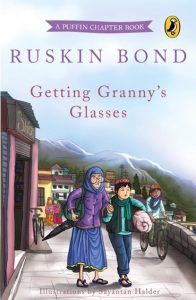
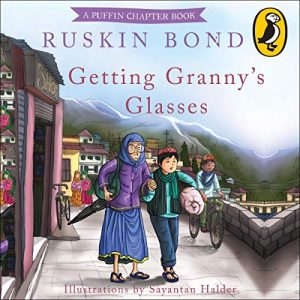
Getting Granny’s Glasses
Mani’s Granny is seventy and can barely see through her old, scratched glasses. With only a hundred and fifty rupees in their pockets and a thirst for adventure, Mani and Granny set off to buy a new pair. On the way, they get drenched in the rain, run into mules and encounter a terrible landslide. Will Granny ever be able to reach the town and get herself a new pair of glasses?
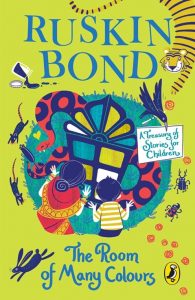
The Room of Many Colours
For over five decades, Ruskin Bond has written charming tales that have mesmerized readers of all ages. This collection brings together his finest stories for children in one volume. Published previously as A Treasury of Stories for Children, this attractive rejacketed edition includes two new stories The Big Race and Remember This Day. Filled with superb illustrations and a rich cast of characters, The Room of Many Colours: A Treasury of Stories for Children is the definitive book for all Ruskin Bond fans truly a collector’s item.
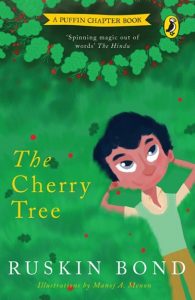
The Cherry Tree
Rakesh plants a cherry seedling in his garden and watches it grow. As seasons go by, the small tree survives heavy monsoon showers, a hungry goat that eats most of the leaves and a grass cutter who splits it into two with one sweep. At last, on his ninth birthday, Rakesh is rewarded with a miraculous sight-the first pink blossoms of his precious cherry tree!
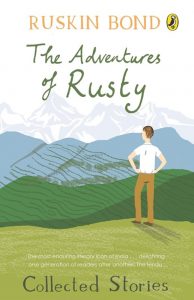
The Adventures of Rusty
The Adventures Of Rusty: Collected Stories features stories from the time when Rusty studies at a residential school located in Dehra. It also features stories where Rusty is surrounded by the vastness of nature and its infinitely beautiful creations. This book also features Uncle Ken as a character who has trouble finding a well-paying, steady job. Also included is a story where Rusty plans to travel 800 miles in order to meet his Uncle Jim, who is a sailor.
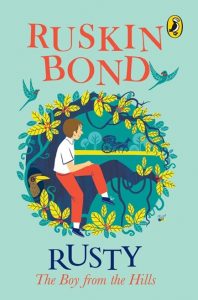
Rusty: The Boy from the Hills
Rusty is a quiet, imaginative and sensitive boy who lives with his grandparents in pre-Independence Dehra Dun. Though he is not the adventurous himself, the strangest and most extraordinary things keep happening around him.
The Hidden Pool
Laurie is an English boy who moves to a hill town with his parents when his father is posted to India on work for two years. Laurie makes two new friends: Anil, the son of a local cloth merchant, and Kamal, who lost his parents during Partition and now sells buttons and shoelaces but dreams of going to college. Anil and Kamal introduce Laurie to an enchanted world of beetle races, ghosts, cheat and Holi, and he shares with them the secret pool he finds on the mountainside.
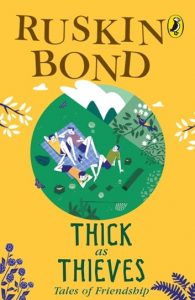
Thick as Thieves
Somewhere in life there must be someone to take your hand and share the torrid day
Some stories will make you smile, some will bring tears to your eyes and some may even make your heart skip a beat—but all of them will renew your faith in the power of friendship.
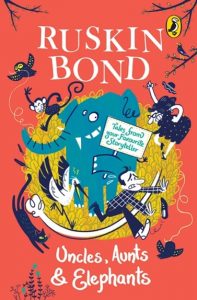
Uncles, Aunts and Elephants
India’s favorite storyteller, Ruskin Bond has regaled generations of readers for decades. This delightful collection of poetry, prose and selected non-fiction brings together some of his best work in a single volume. Sumptuously illustrated, Uncles, Aunts and Elephants is a book to treasure for all times.
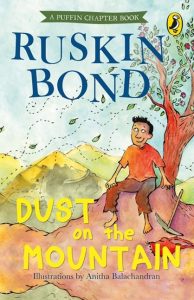
Dust on the Mountain
Ruskin Bond wrote his first short story; Untouchable; at the age of sixteen and since then, over hundred stories; including the classics A Face in Dark; The Kitemaker; The Tunnel; The Room if many Colours; Dust on the Mountain; and Times Stops at Shamli. This volume brings together the best of all the short fiction Ruskin Bond has ever written.
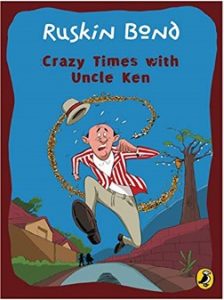
Crazy Times with Uncle Ken
Who doesn’t like an eccentric uncle? Ruskin Bond certainly does. Read all the stories about bumbling and endearing Uncle Ken in this collection. Whenever Uncle Ken arrives at Grandma’s house, and he does frequently, there is trouble afoot Uncle Ken drives his car into a wall, is mistaken for a famous cricketer, troubled by a mischievous ghost, chased by a swarm of bees and attacked by flying foxes. Be it the numerous bicycle rides with the author or his futile attempts at finding a job, Uncle Ken’s misadventures provide huge doses of laughter. Crazy Times with Uncle Ken includes old classics as well as new stories, and will be enjoyed by all Ruskin Bond fans.
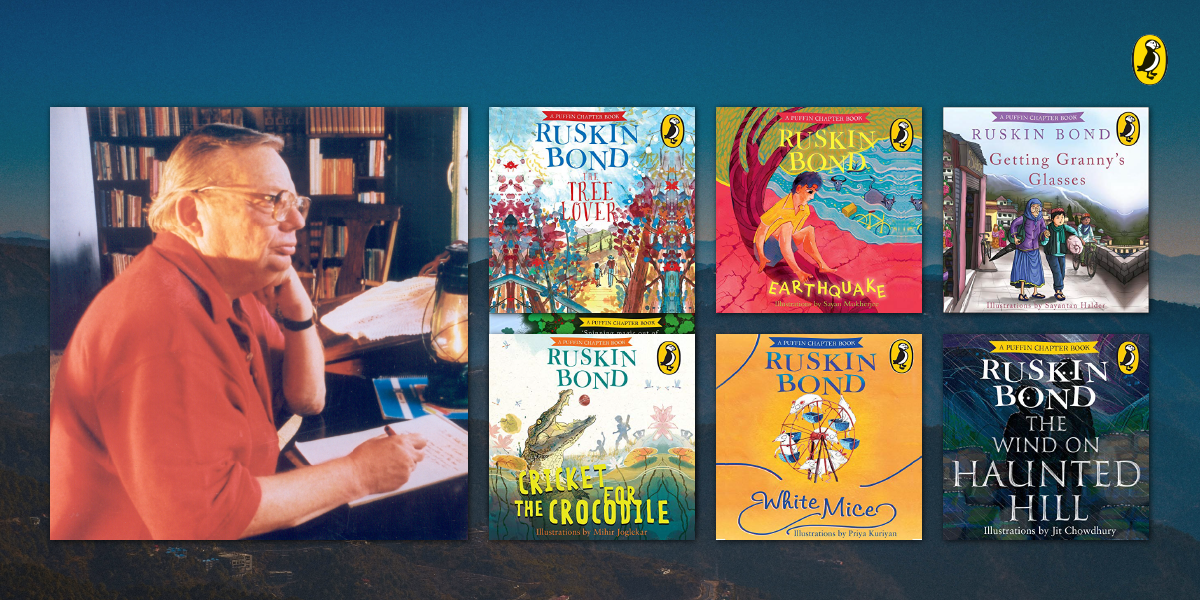
In a world that seems increasingly complicated, we all need a quick step through the looking-glass into the quietly beautiful world of Ruskin Bond, a hillside utopia where generous old ladies provide solace to thoughtful children (and to our souls), and the clouds roll gently over fruit-laden trees. Ruskin Bond is truly among the most avuncular figures of literary India, bringing the magic of wistful nostalgia and bursts of quiet happiness into our imaginative landscapes for nearly half a century. On his 88th birthday, we bring to you some auditory therapy, a soothing balm for overtired brains, Ruskin Bond’s poignant prose rendered even more magical by the gentle calm of his own voice!
Read on for a list of some of his most loved works narrated as audiobooks by our favourite author himself!
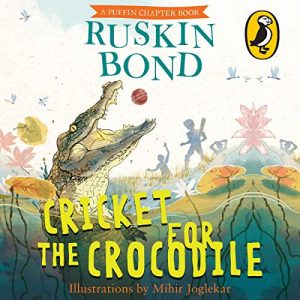
Cricket for the Crocodile
Ranji’s team finds an unexpected opponent – a nosy crocodile – when they play a cricket match against the village boys. Annoyed at the swarms of boys crowding the riverbank and the alarming cricket balls plopping around his place of rest, Nakoo the crocodile decides to take his revenge.
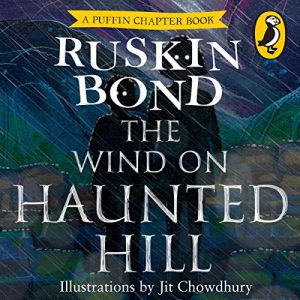
The Wind On Haunted Hill
‘Who…whoo…whooo cried the wind as it swept down from the Himalayan snows.’
The wild wind pushes open windows, chokes chimneys, and blows away clothes as it huffs and puffs over the village by Haunted Hill, where Usha, Suresh, and Binya live. It’s even more mighty the day Usha is on her way back from the bazaar. A deep rumble echoes down the slope and a sudden flash of lightning lights up the valley as fat drops come raining down.
In search of shelter, Usha rushes into the ruins on Haunted Hill, grim and creepy against the dark sky. Inside, the tin roof groans, strange shadows are thrown against the walls, and little Usha shivers with fear.
For she isn’t alone.
A gritty, hair-raising story about friendship, courage, and survival, this stunning edition will introduce another lot of young listeners to the magic of Ruskin Bond’s craft.
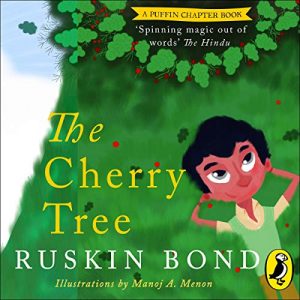
The Cherry Tree
Rakesh plants a cherry seedling in his garden and watches it grow. As seasons go by, the small tree survives heavy monsoon showers, a hungry goat that eats most of the leaves, and a grass cutter who splits it into two with one sweep. At last, on his ninth birthday, Rakesh is rewarded with a miraculous sight – the first pink blossoms of his precious cherry tree!
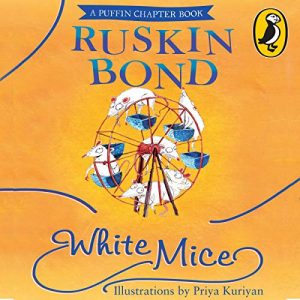
White Mice
A tale of sweet revenge!
Ruskin is keen to teach his scatterbrained uncle a lesson. After all, he put him on the wrong train! Armed with gifts from his new friend, the stationmaster – yummy rasgullas and a pair of beautiful white mice – Ruskin devises the perfect payback.
Peppered with endearing characters, this is one of Bond’s most unforgettable tales.
Getting Granny’s Glasses
Mani’s Granny is 70 and can barely see through her old, scratched glasses. With only 150 rupees in their pockets and a thirst for adventure, Mani and Granny set off to buy a new pair. On the way, they get drenched in the rain, run into mules, and encounter a terrible landslide. Will Granny ever be able to reach the town and get herself a new pair of glasses?
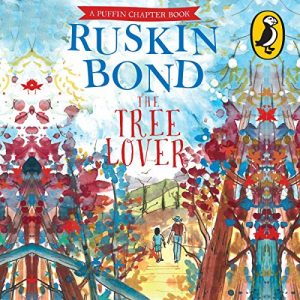
The Tree Lover
Everything that you’ve always loved about Ruskin Bond is back.
His mesmerizing descriptions of nature and his wonderful way with words – this is Ruskin Bond at his finest.
Listen in as Rusty tells the story of his grandfather’s relationship with the trees around him, who’s convinced that they love him back with as much tenderness as he loves them.
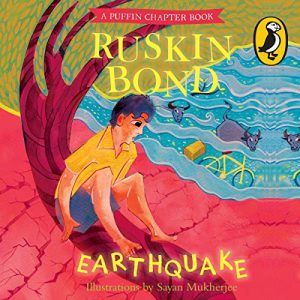
Earthquake
‘What do you do when there’s an earthquake?’ asks Rakesh. Everyone in the Burman household has their own ideas, but when the tremors begin and things start to quake and crumble, they are all taken by surprise. Amidst the destruction, Rakesh’s family stays strong. But will they survive the onslaught of yet another earthquake?
Gather your family (or just your own thoughts) for an incredibly relaxing audio interlude after downloading your audiobooks!
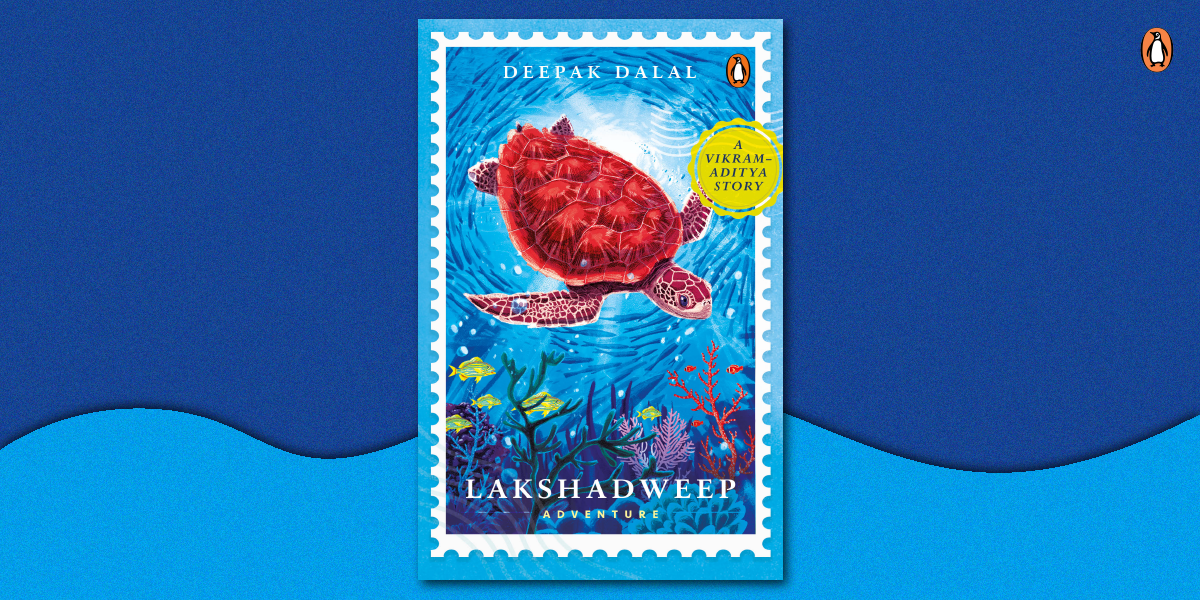
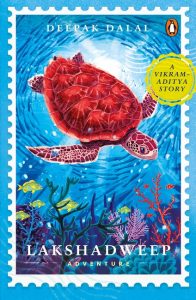
Far out in the Arabian Sea, where the waters plunge many thousands of metres to the ocean floor, lies a chain of bewitching coral atolls – the Lakshadweep Islands. Vikram and Aditya dive into lagoons with crystal-clear water and reefs that are deep and shrouded in mystery. But when they stumble upon a devious kidnapping plot, their idyllic holiday turns into a desperate struggle for survival.
Here is an excerpt from Deepak Dalal’s new book, Lakshadweep Adventure where Faisal – the boy who’s care Vikram and Aditya are left in – makes a disturbing discovery.
A Vikram–Aditya Story: Lakshadweep Adventure
Faisal was in a bad mood. His uncle’s impending arrival hovered like a dark cloud above him. And his friends’ decision to abandon him for the day only made things worse.
Faisal had noticed the wind the moment he had strolled out on to the beach, and his mood had soured even further when he saw his friends enjoying themselves. He wished he had accepted Aditya’s offer as he watched them speed their boards across the lagoon. But it was too late now. His uncle would be arriving shortly.
Faisal sat under a palm tree. He passed time drawing figures in the sand. Above him, palm fronds shook and fluttered as the wind whistled through them. The sun shone brightly. The sand intensified its glare, forcing Faisal to shut his eyes. It was pleasant under the tree and the wind was crisp and enjoyable. The rustling of the palms overhead soothed him and he soon fell asleep.
The tide slowly crept up the beach and finally washed over Faisal’s feet, waking him with a start. He looked at his watch, muttering softly to himself. It was past midday.
Basheer uncle would have arrived by now. He dusted sand from his clothes and rose hurriedly to his feet.
Faisal heard raised voices from the living room window when he entered the yard. He crept forward till he was below the window and peeped in.
His uncle was standing in the centre of the room, facing a group of men.
Basheer Koya was a copy of Faisal’s father, except that he was fatter and there was hardly any hair on his head. But unlike his brother, whose manner was calm and collected, Basheer Koya’s face was contorted with rage. His cheeks were dark and red and he was shouting like a man possessed.
‘Fools!’ thundered Basheer Koya in Malayalam. ‘Monkeys have more brains than you lot. Idiots. I thought you had ears. But obviously you don’t. You weren’t to set foot in Kalpeni. How many times did I tell you not to come here? Yet, not only do you come to the island, but even more brainlessly, you visit my home.’
A bearded man with big, wide shoulders spoke. ‘Sir,’ he began. ‘Sir—’
Basheer Koya ranted on, cutting off the man. ‘I travelled all the way to Kochi to make certain that no suspicion fell on me and I returned only after the operation was over. And you? I come home and see you fools sitting in my house. I take all these precautions and now everyone on this island can link me to you and from there to the operation.’
‘But, sir—’
‘You were under orders to head to Tinakara Island. What are you doing here?’
‘Sir. I was trying to explain just that, sir. We were headed for Tinakara. But we had engine trouble, sir. A terrible rattling noise came from the engine and we were forced to head for the nearest island. You can speak to the mechanic, sir. He looked at our boat and said we were lucky to make it here to Kalpeni.’
The explanation diminished Basheer Koya’s rage, yet he continued to glare at the bearded man. ‘Kumar. Where is Kumar?’ he barked.
‘Kumar is safely on board, sir. There’s no need to worry about him. He is in the lower cabin and one of our men is with him all the time. He can’t make a sound or do anything. He won’t be able to alert the mechanics.’
Faisal froze. This was not for his ears. It was wrong of him to eavesdrop. He wondered if he should leave, but who was Kumar and what was his uncle up to?
‘No one is to know that we have a prisoner on board,’ growled Basheer Koya. ‘Even Allah will not be able to help you if he is discovered. I make no allowances for mistakes.’ Basheer Koya stared at his men, shifting his gaze from one to the other. ‘Do you understand?’
There was silence in the room.
Faisal understood full well what his uncle meant. He shuddered.
***
Journey through these breath-taking islands with a tale of scuba diving and sabotage, set in one of India’s most splendid destinations.
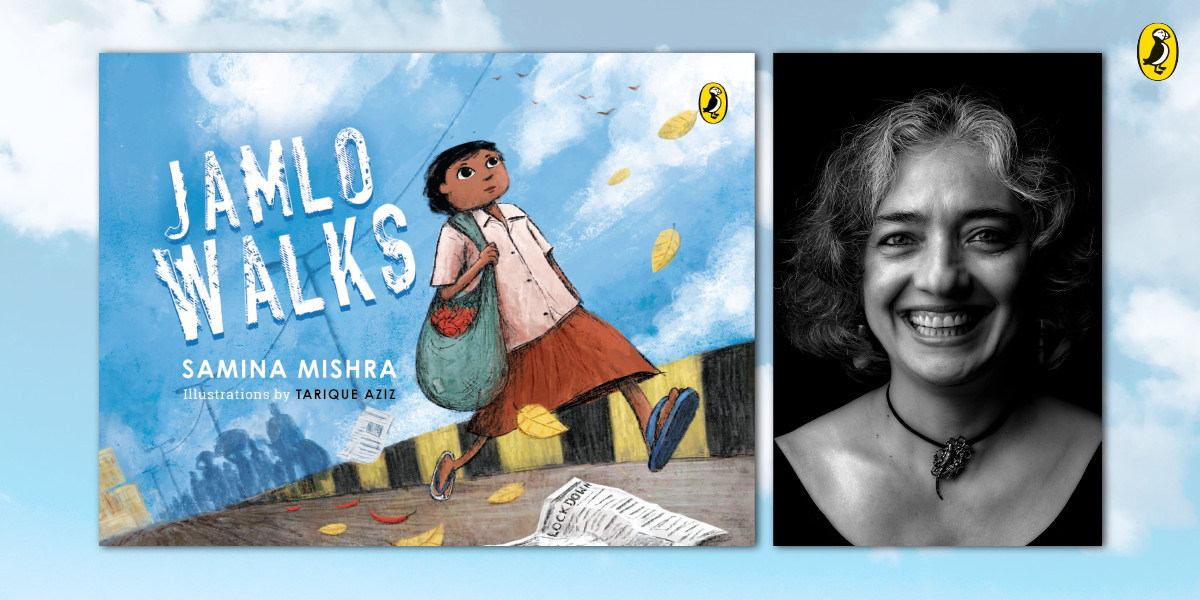
Samina Mishra’s Jamlo Walks, though filled with beautiful and colourful illustrations, in not a happy story, but it contains an extremely important message, the dissemination of which is imperative for the future generation. In many ways, it is reminiscent of Hans Christian Andersen’s stories. Not Little Mermaid or Ugly Ducklingwhich have been glorified or retold with happy endings. It is more like the Little Match Girl, which is a lesser known tale about a girl who tries to sell matchsticks on New Year’s Eve, but cold and unsuccessful, she collapses, a victim to lack of empathy, much like Jamlo.
Jamlo Walks is a book meant to bring awareness to its young readers who span from ages seven to nine, of the plight of other children and people not very different from themselves, but who are faced with completely different circumstances.
Here is a glimpse into the author’s mind to give you some insight into how and why she created this sad, yet beautiful story.
~
Jamlo Walks||Samina Mishra
Where do ideas come from? There are no clear answers to this question but certainly, some ideas come from what we experience and observe. Jamlo Walks came to me sometime in April last year. I don’t think I actively decided to write the story – the first draft just came in one sitting. I think it came as a response to the vulgar inhumanity that was on display last year – and continues to be even now. The working class, in conjunction with caste, has always been treated differently but what we have seen in the pandemic has been naked and ugly like never before. The stark images of the migrants walking through the night, out of Delhi on the Yamuna bridge, the middle class apathy on social media, the way domestic workers were treated at colony gates, police thrashing common citizens… Jamlo’s story was reported as one casualty in this series of unending tragedies. It was heartbreaking. It made me think of what these experiences means for all children – how are they to think about these stark divides across different childhoods, would they go on to continue institutionalizing this inhumanity… So, I think the first draft just came out of a need to respond to all this.
Once an idea arrives in its own mysterious way, our job as creative practitioners is to wrestle with it and hone it. We have to make choices and take decisions about what we want to do with it and shape the work. That was perhaps more of a challenge with this one because of the content. Picture books are generally seen as books for young readers and though we know that that is not true, putting this story out threw up questions around readership for me. Was the story too grown-up? Was the form of the story something children could understand and respond to? It was important that I try and answer these questions for myself. For me, it’s a picture book that I hope children across ages will read, that will prompt them to reflect.
While I was writing and rewriting, trying to make it a story that could be shared with the world, the thing that was important to me was to make Jamlo a person, a layered character, and not just the girl we read about in the news reports. This was not easy given the pandemic. My practice is very connected to being on the ground, getting out, talking to people. But here I was – in lockdown – without access to details on the ground that normally build context in my work. So I tried to imagine the inner world of the child, for Jamlo and for the other children in the story. I hope that works. I hope that readers find a bit of themselves in Jamlo and/or the other kids. And I hope that Jamlo is remembered so that we do not witness another such incident.