Publish with Us

Follow Penguin

Follow Penguinsters

Follow Penguin Swadesh

Did our universe… always exist??

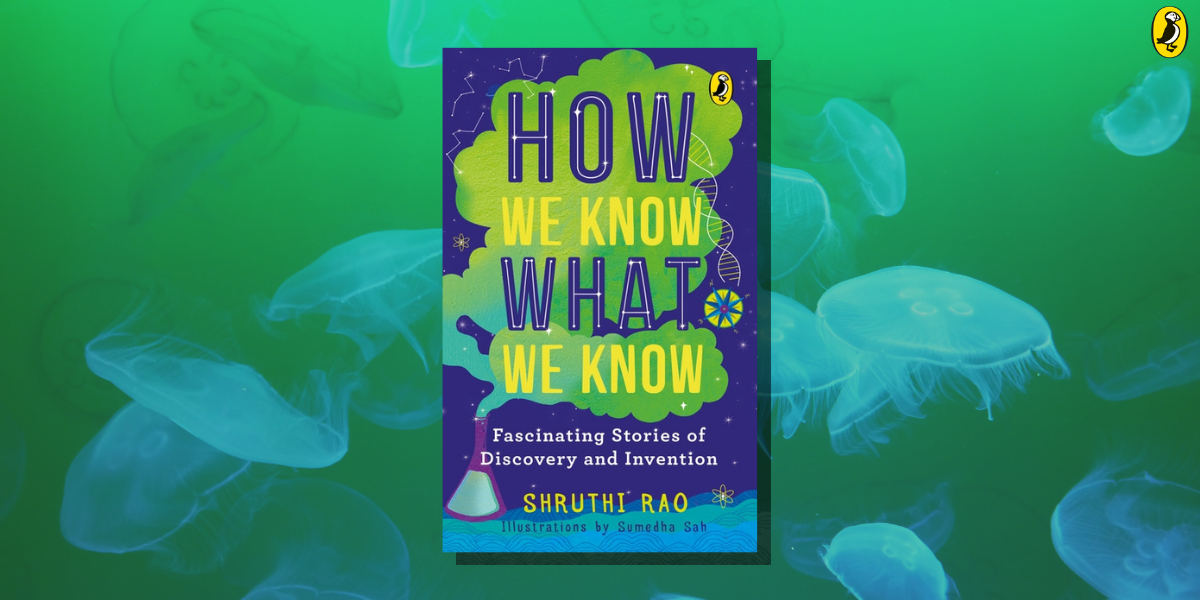
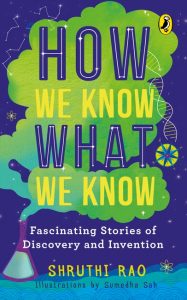
It all started with a big cosmic blast. Or did it? Refresh your facts with this excerpt from Shruthi Rao’s How We Know What We Know  and immerse yourself in a world of fun facts about the world, its origins and all the awe-inspiring details of how everything works.

~

What is the Big Bang? The sound you hear when you burst a big balloon?

Umm, no. The Big Bang Theory is an attempt to explain what happened at the beginning of our universe.

Wait. Our universe had a beginning? Didn’t it always exist?

That’s what scientists thought too, till a few decades ago. But research and studies suggest that there was indeed a beginning. A point. Before that point, there was nothing. And after that point, the universe came into existence.

Scientists think that the universe came out of a singularity—an infinitely small, infinitely dense, infinitely hot point. What exactly is this, though? If the universe was born from this singularity, where did the singularity come from? Why did it appear?

We don’t know that. Yet.
But how do we know that this is what happened?
The story began about a 100 years ago, with Georges Lemaître of Belgium. Though he was an officer of the church, he was fascinated by physics and he studied Albert Einstein’s theories of space and time and gravitation. He concluded that if Einstein’s theories were right, it meant that the galaxies in the universe are moving away from each other. Lemaître said this proved that the universe is not just static and unmoving, as everybody previously thought. It was expanding.

cover How We Know What We Know
How We Know What We Know||Shruthi Rao

It was a theory, and though Lemaître had come up with it on the basis of an established theory, scientists needed other proof before they could accept it. But Lemaître didn’t have any data to support this idea.

Meanwhile, American astronomer Henrietta Leavitt came up with a way to calculate how far away stars are from Earth. Using her work, astronomer Edwin Hubble looked through his telescope and calculated the distances of various stars from Earth. He concluded that things in the universe were moving away from Earth. Not just that, things that were farther away from Earth were moving away faster than things close to Earth. This could only mean one thing. The universe is indeed expanding. Georges Lemaître was right.

Okay. The universe is expanding. But how does that prove there was a Big Bang?

If the universe is expanding, it must have expanded from some point. Think of the expanding universe as a movie. The galaxies are moving outwards, away from each other. Now run that movie backwards. You can imagine it as the galaxies rushing towards each other. So then, all the galaxies must meet at some point. At this point, all the matter of the universe must have been contained in a very small space, that is, the singularity.

The moment at which this singularity started expanding is the Big Bang.

But where was the proof?

Decades later, in 1965, two scientists, Arno Allan Penzias and Robert Woodrow Wilson, were trying to measure radio signals in the empty space between galaxies. They used a giant horn-shaped antenna, called the Holmdel Horn Antenna, in their observatory at Bell Labs in New Jersey, USA. But as they tried to take measurements, an annoying noise kept interfering, like static on a radio.

Where was this noise coming from?

They pointed the antenna towards New York City. No, it wasn’t city noise.

They took measurements of the noise all through the year. No, it didn’t change with the seasons.

Could the noise be from a nuclear test that had taken place a while ago? It couldn’t be. If it was, the noise should have decreased year by year.

Then what was it?

Perhaps it was just the pigeons roosting in the antenna? They chased away the pigeons, and scooped up and cleaned the droppings. But the noise still remained.

Then they learnt about the scientist Robert Dicke, a professor at Princeton University. Dicke had been thinking about the Big Bang. His opinion was that if the Big Bang was true, there should be some kind of matter remaining from the explosion. And most probably, he said, this would be a kind of low-level background radiation throughout the universe.

Dicke wanted to try and find it. But it turned out that it was exactly what Penzias and Wilson had already found! The hum they had encountered was this very radiation resulting from the Big Bang!

Penzias and Wilson got the Nobel Prize for this discovery, because it proved that the Big Bang Theory was true.

Researchers all over the world are still taking better measurements of this noise, and are finding more things to think about.

~

Exciting trivia awaits you in How We Know What We Know.


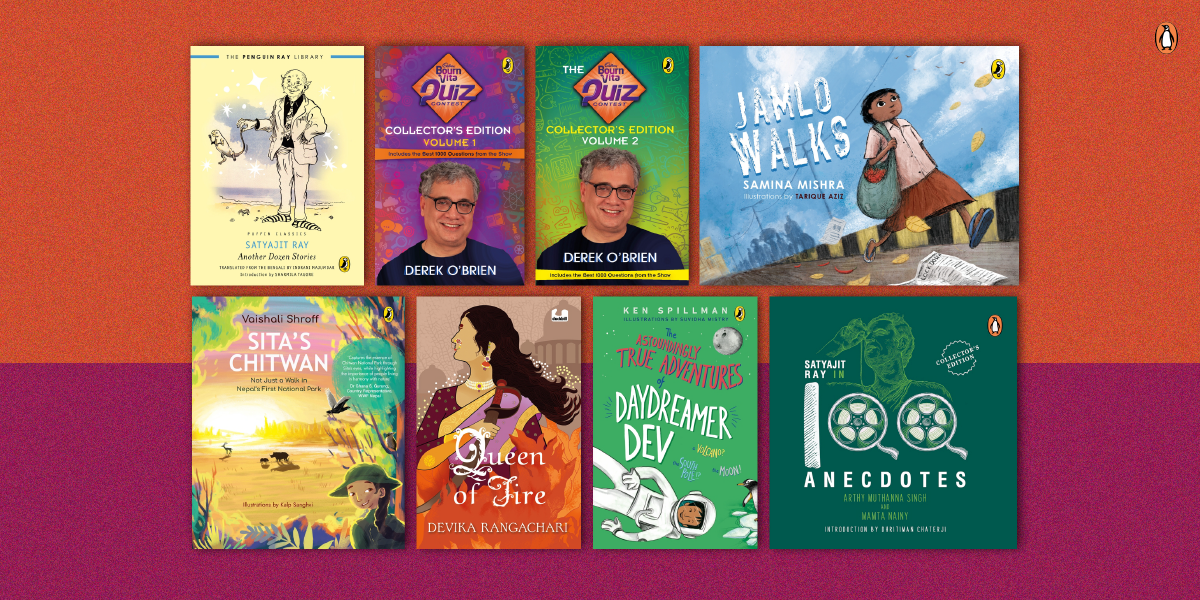
Magnificent reads for young readers for the month of April

As days get longer and warmer, we find ourselves cooped up in our homes, avoiding the scorching heat and that deadly virus no one should name. But time indoors doesn’t have to feel like a chore necessarily, thanks to our age-old friends—books.

Here’s a list of refreshing reads to keep you engrossed and entertained through the long, sunny days of April.

**


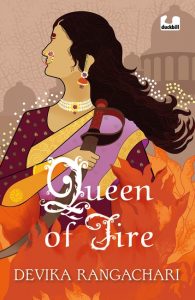
Queen of Fire

Devika Rangachari

front cover of Queen of Fire
Queen of Fire || Devika Rangachari


Lakshmibai, the widowed queen of Jhansi, is determined to protect her son’s right to his father’s throne and safeguard the welfare of her kingdom. Faced with machinations to take over Jhansi, at a time when all of India is rising up against the British, she has to prove her valour and sagacity time and again. But will this be enough to save all that she values?

In this gripping novel, award-winning historical novelist Devika Rangachari brings to vivid life the interior life of this nineteenth-century queen, thrust into a position she does not desire but must assume, and of her son, who is cowed by the challenges he has to face but determined to live up to his mother’s courage.


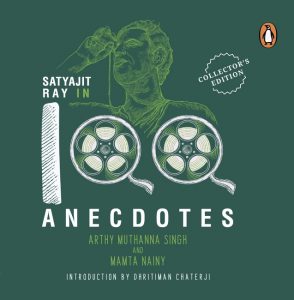
Satyajit Ray in 100 Anecdotes

Arthy Muthanna Singh, Mamta Nainy

front cover of Satyajit Ray in 100 Anecdotes
Satyajit Ray in 100 Anecdotes || Arthy Muthanna Singh, Mamta Nainy


Tracing his magnificent life with 100 little-known and inspiring incidents as well as unusual trivia, this collectible edition pays homage to the maestro on his 100th birth anniversary.

A master filmmaker, a remarkable auteur, a writer par excellence and an artist of immense reach and range, Satyajit Ray was an indefinable genius. This book is a classic tribute that celebrates his many accomplishments across literature, music, art and more.


Satyajit Ray
front cover of Another Dozen Stories
Another Dozen Stories || Satyajit Ray


Another Dozen Stories brings to you the magical, bizarre, spooky and sometimes astonishing worlds created by Satyajit Ray, featuring an extraordinary bunch of characters!

While ‘The McKenzie Fruit’ trails a humble man trying to leave his mark in history, ‘Worthless’ is a moving story about a seemingly hapless character not quite able to win the confidence of his family. Meet Professor Hijibijbij, the eccentric scientist bent on creating living replicas of peculiar creatures and follow Master Angshuman into a nail-biting and unexpected adventure on the sets of his very first film. This collection includes twelve hair-raising stories that will leave you asking for more!


Jamlo Walks

Samina Mishra

front cover of Jamlo Walks
Jamlo Walks || Samina Mishra


It is day 7 of the lockdown and everyone says the skies are blue again.
Jamlo walks. She looks straight at the road ahead. It is long.

The world has stood still. The streets lie empty and schools are closed. All work has dried up and people keep whispering the word ‘corona’ all the time. Jamlo walks down a long and hot road, alongside hundreds of other men and women and children whom Tara sees on TV. Jamlo walks as Rahul watches the streets turn quiet.

Jamlo walks and walks in a world that needs to be kind and just and equal. A world where all lives are seen as important.


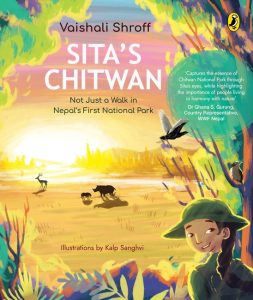
Sita’s Chitwan

Vaishali Shroff

front cover of Sita's Chitwan
Sita’s Chitwan || Vaishali Shroff


As big as 1,78,000 football fields, Nepal’s first protected national park is home to over 550 species of birds; awe-inspiring animals, such as greater one-horned rhinoceroses, Bengal tigers, clouded leopards; and a confident, brave girl called Sita.

Sita dreams of being a nature guide like her baba. With a spring in her step and a group of eager tourists, she unravels the secrets of the forest. But when she wanders astray and comes face to face with a mamma rhino, will this eight-year-old be able to listen to the stillness of the jungle?


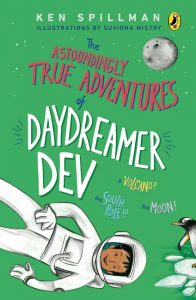
The Astoundingly True Adventures of Daydreamer Dev

Ken Spillman

front cover of The Astoundingly True Adventures of Daydreamer Dev
The Astoundingly True Adventures of Daydreamer Dev || Ken Spillman


Forever daydreaming-that’s Dev. Sitting in class or watching the clouds from the roof of Kwality Carpets, he floats off to places all over the world and has wonderful, bizarre adventures.

Mild-mannered schoolboy Dev is no stranger to survival in extreme environments. Classroom trances and home-made flights of fancy take him all over the place-what other kid could have visited Amazon rainforests, summited Mount Everest and crossed the Sahara? Along with the challenges of all this, he also needs to avoid the wrath of teachers and make Amma and Baba proud . . . Not so easy when your brain lives elsewhere!


The Bournvita Quiz Contest Quiz Collector’s Edition, Vol. 1

Derek O’Brien

front cover of The Bournvita Quiz Contest Quiz Collector's Edition
The Bournvita Quiz Contest Quiz Collector’s Edition || Derek O’Brien


The award-winning Bournvita Quiz Contest started as a radio programme in 1972, then shifted to television in the 1990s. Since 1994, it has been hosted by Asia’s best-known quizmaster, Derek O’Brien, in his inimitable style, and it holds the record for being the longest-running knowledge game show on Indian television.
This definitive edition comprises a selection of the best Q & As from this iconic children’s show. Featuring 1000 questions, carefully curated from the exhaustive twenty-year-old archives, this book is dotted with heartening anecdotes, fun trivia and thoughtful essays by people who worked on this much-loved show.


The Bournvita Quiz Contest Quiz Collector’s Edition, Vol. 2

Derek O’Brien

front cover of The Bournvita Quiz Contest Quiz Collector's Edition
The Bournvita Quiz Contest Quiz Collector’s Edition || Derek O’Brien


Which Nobel laureate wrote articles under the name Gul Makai?
Hilsa is the national fish of which neighbouring country of India?
In which organ of the human body would you find the aqueous humour?

With fun Q&As carefully curated from the exhaustive twenty-year-old archives, this definitive book is a treat for all quiz aficionados who can choose from an array of fifty sections including:

Art and Culture
Science
Politics
Mythology
Books and Authors

**

The Absence of Adolescence

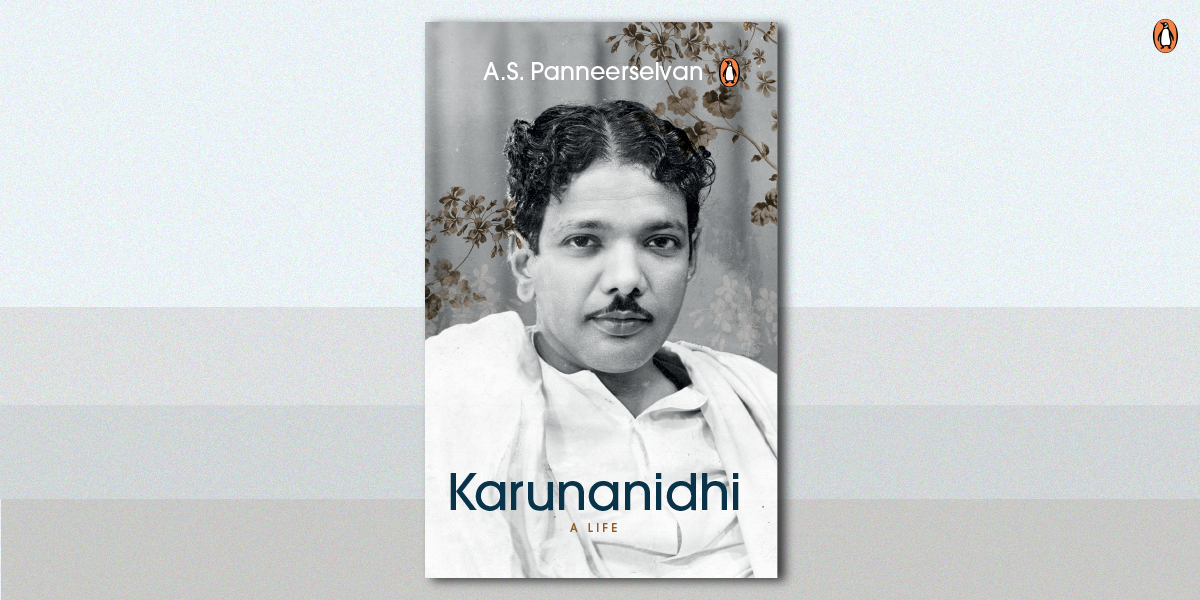
Writer – politician Muthuvel Karunanidhi is amongst the most important political leaders India has ever seen. In Karunanidhi: A Life, author A.S. Panneerselvan tells the story of the man who became a metaphor for modern Tamil Nadu, where language, empowerment, self-respect, art, literary forms and films coalesced to lend a unique vibrancy to politics.

Here is an excerpt from the chapter titled, The Absence of Adolescence.

Karunanidhi
Karunanidhi A Life || A.S. Panneerselvan


Like many underprivileged children, karunanidhi’s life moved straight to adulthood from childhood, bypassing the phase of indulgent adolescence. The politicization that began with the anti-Hindi agitation and exposure to the literature of the Self- Respect Movement propelled karunanidhi into becoming an activist right from his days in the second form. The police excesses and the custodial deaths of two anti-Hindi agitators, Thalamuthu and natarajan, had a profound impact on the young karunanidhi.


The late 1930s witnessed varied crises for all the political players: the imperial government was getting ready for the Second World War; the great Depression and its fallout was taking its toll; Mahatma gandhi’s supremacy was challenged within the Congress by the election of Subhas Chandra Bose as the party president for the second time; and the Left was emerging as a distinct political force with its leaders gaining a hold over decision-making in both the Congress as well as other popular fronts. There was also a shift in Dravidian politics with the leadership moving from the wealthy section among the non-Brahmins to Periyar and Annadurai.


The twists and turns of the Left’s mobilization need elaboration in order to understand how, despite its revolutionary aura, karunanidhi remained with the Dravidian Movement’s social reform agenda. in his essay, in the January–March 1984 issue of The Marxist, E.M.S. namboodiripad points out that when the Congress Socialist Party was formed in 1934, the Communist Party of india initially branded it as Social Fascist. With the Comintern’s change of policy towards the politics of the Popular Front, the indian communists’ relationship to the inC witnessed a reversal. The communists joined the Congress Socialist Party (CSP), which worked as the left wing of the Congress. Once they had joined, the Communist Party of india (CPi) accepted the CSP demand for the Constituent Assembly, which it had denounced two years before.1


in July 1937, the first kerala unit of the CPi was founded at a clandestine meeting in Calicut. The five persons present at the meeting were E.M.S. namboodiripad, krishna Pillai, n.C. Sekhar, k. Damodaran and S.V. ghate. The first four were members of the CSP in kerala; ghate was a CPi Central Committee member, who had come from Madras. Contacts between the CSP in kerala and the CPi had begun in 1935, when P. Sundarayya (Central Committee member of CPi, based in Madras at the time) met with EMS and krishna Pillai. Sundarayya and ghate visited kerala several times and met with the CSP leaders there. The contacts were facilitated through the national meetings of the Congress, CSP and All india kisan Sabha.


in 1936–1937, the cooperation between socialists and communists reached its peak. At the second congress of the CSP, held in Meerut in January 1936, a thesis was adopted which declared that there was a need to build ‘a united indian Socialist Party based on Marxism-Leninism’. in kerala the communists won control over the CSP, and for a brief period controlled the Congress there.2


While the Congress in kerala had a distinct leftward tilt, in Tamil nadu it was virtually under the conservative leadership of stalwarts such as C. Rajagopalachari and S. Satyamurti.


Thiruvarur became a microcosm of the play of these multiple forces. Smitten by Periyar’s radicalism and Annadurai’s eloquence, karunanidhi began devouring the entire oeuvre of Dravidian literature. Periyar had already published the Tamil version of The Communist Manifesto in 1937; a number of serious political publications were being published from various parts of the state. Periyar’s Kudiarasu (The Republic) was the key vehicle for dissemination as well as articulating new ideas and planning political mobilization towards an egalitarian society.3


While Muthuvelar and Anjugam were rejoicing at their son’s tireless learning, little did they realize what he was reading about. Textbooks were last on karunanidhi’s reading list. The extensive literature in politics was revelatory for young karunanidhi. For the first time, he realized that he too had two priceless possessions—his oratory and his pen. His first public speech was a clear pointer. it was a school competition. And karunanidhi decided to make a mark. He looked at some of the redeeming features of the so-called villains within Hindu mythology. karunanidhi spoke at length about the friendship between karna and Duryodhana—a friendship that cut across both caste and class.


The speech was well-received, and the teachers developed a new respect for their wayward student. But, what they did not know was the effort that went behind this oratory. karunanidhi worked on the text of the speech for nearly a week; rehearsed the speech frequently before the mirror; changed the words, similes and metaphors to get the rhythm that would alter the art of public speaking in Tamil forever.


He also created his own publication—Maanavanesan (Friend of students). A handwritten fortnightly of eight pages in demy size that dealt with a range of issues—from questioning orthodoxy to exploring the poetics of early Tamil. He and his friends would make about fifty copies of the magazine and circulate it for a modest fee that managed to just cover the cost of the paper. Years later, when i met him at Murasoli along with Kungumam editor Paavai Chandran for a short interview for the Illustrated Weekly of India, karunanidhi said the handwritten journal was a great learning experience. ‘We could not afford to make any spelling mistakes or grammatical errors. A single mistake meant rewriting fifty copies. The sheer labour of correcting made me write a very clean first draft, without any corrections or overwriting,’ he recalled. He also took pains to mail a copy of the magazine to the leaders of the Self-Respect Movement.


But not all of karunanidhi’s icons were happy with the handwritten magazine. Bharathidasan, the well-known poet and a life-long supporter of the Dravidian Movement and karunanidhi, called it a waste of time and effort. He told karunanidhi: ‘The madness of expecting changes from handwritten publications can only be compared to the madness in thinking that development will happen due to spinning charkhas.’


Muthuvel Karunanidhi was ardent as a social reformer and unrelenting as an opposition leader. To read more about him, his life and his work, get your copy of Karunanidhi: A Life.

Taran’s fascinating rendezvous with Lord Ganesha

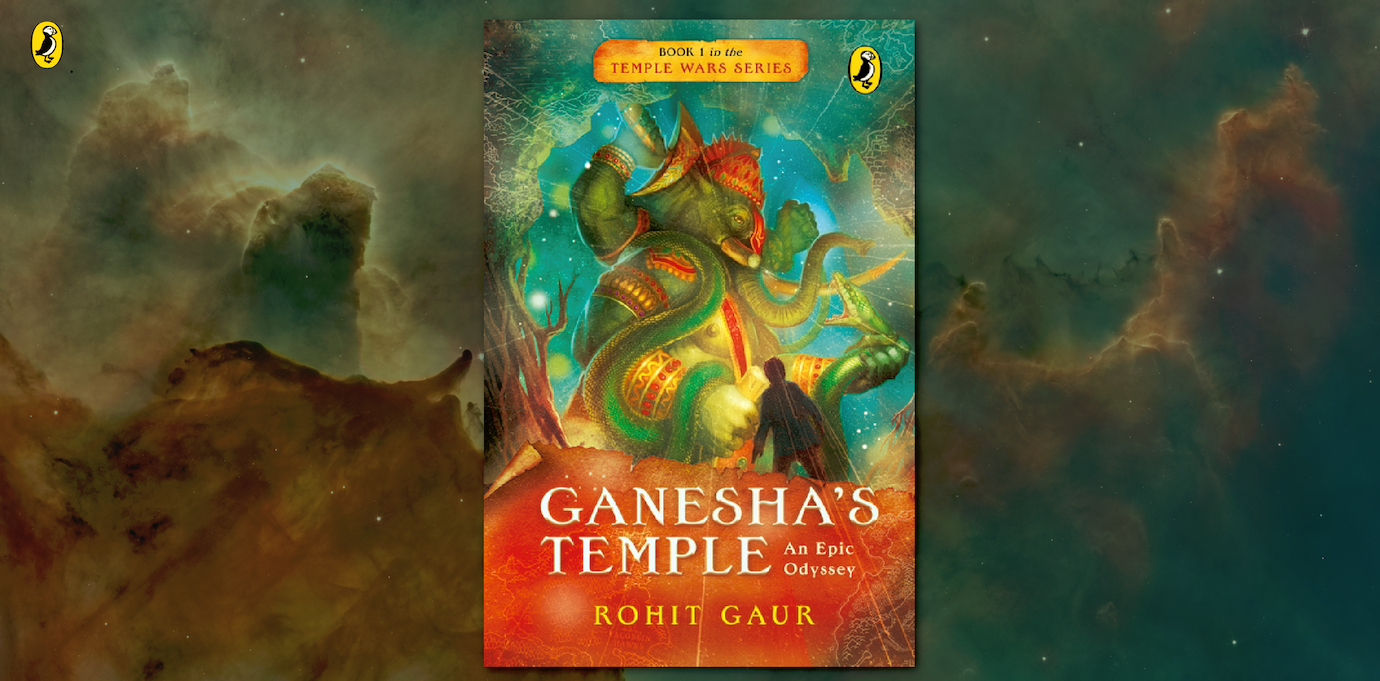
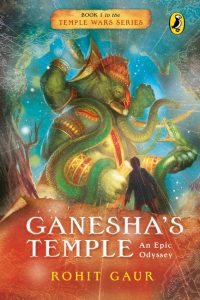
Not a lot is going right for Taran Sharma. First, he stole his annoying brother’s necklace and ran off into the night. Then, his family got taken hostage by spindly creatures of the dead. And to top it all, he’s just been charged with a mission by Lord Ganesha himself! Now, in order to rescue his family from the hands of the preta, he has to undertake a journey more fantastical than he can begin to comprehend.

As Taran embarks on an epic voyage that may lead to disastrous consequence, he realizes that having faith, especially in himself, might be harder than he was led to believe.

Dive into a riveting adventure to the Veiled Lands, replete with evil Naga armies, mythical creatures and a supervillain who will stop at nothing to reach the elusive Gateway of Moksha in Ganesha’s Temple.

**

Ganesha closed his eyes and raised all four of his hands. Particles of light appeared from thin air. They formed images in the centre of the room, and then began shimmering, swirling into new images. Taran saw human figures eating, dozing, bathing, riding horses.

‘Many thousands of years ago, gods and goddesses ruled happily over a vast world called the Veiled Lands. It was a spiritual world filled with an energy that forms the spiritual core of all life. We call this prana.’

Ganesha focused his kind, brown gaze on Taran.

‘The Veiled Lands are very simply an old earth, and its beings as old as this world itself. They have seen endless cycles of destruction and rebirth, existing far longer than you can imagine.

front cover of Ganesha's Temple
Ganesha’s Temple || Rohit Gaur


‘In the Veiled Lands, through prana, came the first beings of light and dark—a duality exists wherever life forms. Dyaus the Sky Father and Prithvi the Earth Mother created Shiva, Brahma and Vishnu, as well as many other devas like Surya, Agni, Indra, Varuna. These devas went on to create spirits and magical creatures, who lived peacefully together. Some devas turned into asuras, who are demons and titans. I could go on for years if I had to narrate the lives of every single deva and asura.’ Ganesha waved his hand as though turning a page in a book.

From the light particles over Ganesha’s head, new images appeared. One of the figures, snake-like and menacing, was pictured standing over a fallen deva, a staff raised above his head. Taran stared in fascination.

‘Vritra,’ Ganesha said soberly. ‘Once a deva, Vritra grew ambitious and power-hungry and sought to conquer his brethren. He attempted to overthrow the peaceful order, dominate the other devas and asuras, and rule the Veiled Lands by himself.

‘His rebellion was unsuccessful and the other devas, pitying their brother for his vanity, vowed to exile him from the Veiled Lands. They decided to create a parallel world for asuras like him, which lacked all prana. They had to combine all their powers in order to create such a world, and that powerful spell also created the Bare Lands—the world you now inhabit, Taran.

**

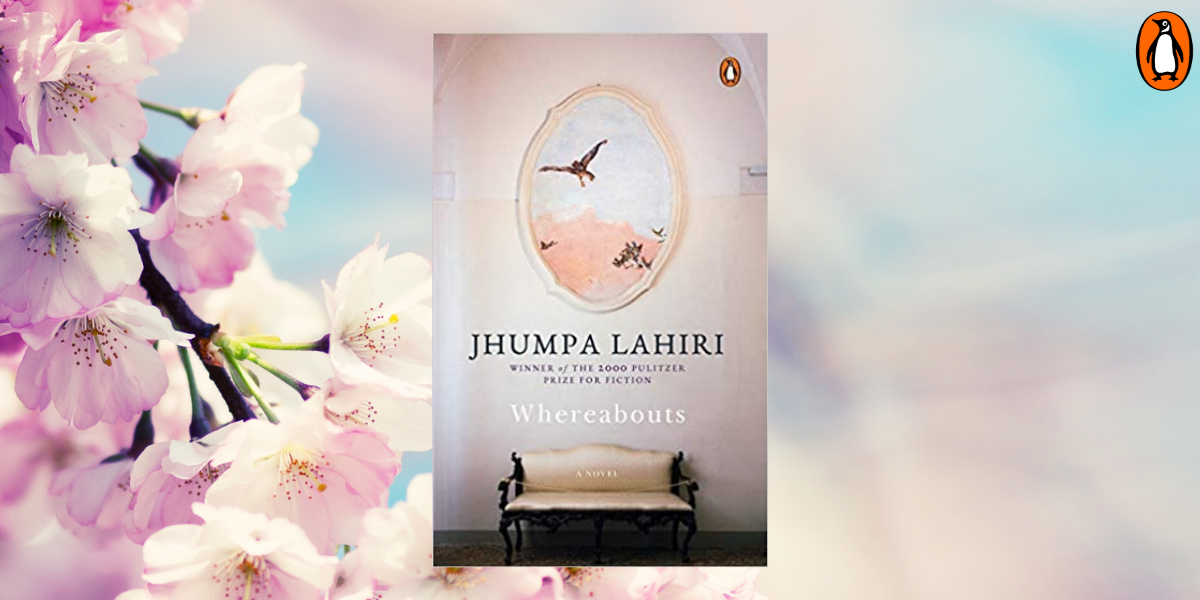
Whereabouts: Jhumpa Lahiri’s latest literary landscape

Exuberance and dread, attachment and estrangement: in this novel, Jhumpa Lahiri stretches her themes to the limit. The woman at the center wavers between stasis and movement, between the need to belong and the refusal to form lasting ties. The city she calls home, an engaging backdrop to her days, acts as a confidant: the sidewalks around her house, parks, bridges, piazzas, streets, stores, coffee bars. We follow her to the pool she frequents and to the train station that sometimes leads her to her mother, mired in a desperate solitude after her father’s untimely death. In addition to colleagues at work, where she never quite feels at ease, she has girl friends, guy friends, and “him,” a shadow who both consoles and unsettles her. But in the arc of a year, as one season gives way to the next, transformation awaits. One day at the sea, both overwhelmed and replenished by the sun’s vital heat, her perspective will change. This is the first novel she has written in Italian and translated into English. It brims with the impulse to cross barriers. By grafting herself onto a new literary language, Lahiri has pushed herself to a new level of artistic achievement.


Here is an excerpt from the book Whereabouts by Jhumpa Lahiri:


The city doesn’t beckon or lend me a shoulder today. Maybe it knows I’m about to leave. The sun’s dull disk defeats me; the dense sky is the same one that will carry me away. That vast and vaporous territory, lacking precise pathways, is all that binds us together now. But it never preserves our tracks. The sky, unlike the sea, never holds on to the people that pass through it. The sky contains nothing of our spirit, it doesn’t care. Always shifting, altering its aspect from one moment to the next, it can’t be defined.


Whereabouts| Jhumpa Lahiri


This morning I’m scared. I’m afraid to leave this house, this neighborhood, this urban cocoon. But I’ve already got one foot out the door. The suitcases, purchased at my former stationery store, are already packed. I just need to lock them now. I’ve given the key to my subletter and I’ve told her how often she needs to water the plants, and how the handle of the door to the balcony sometimes sticks. I’ve emptied out one closet and locked another, inside of which I’ve amassed everything I consider important. It’s not much in the end: notebooks, letters, some photos and papers, my diligent agendas. As for the rest, I don’t really care, though it does occur to me that for the first time someone else will be using my cups, dishes, forks, and napkins on a daily basis.


Last night at dinner, at a friend’s house, everyone wished me well, telling me to have a wonderful time. They hugged me and said, Good luck! He wasn’t there, he had other plans. I had a nice time anyway, we lingered at the table, still talking after midnight.


I tell myself: A new sky awaits me, even though it’s the same as this one. In some ways it will be quite grand. For an entire year, for example, I won’t have to shop for food, or cook, or do the dishes. I’ll never have to eat dinner by myself.


I might have said no, I might have just stayed put. But something’s telling me to push past the barrier of my life, just like the dog that pulled me along the paths of the villa. And so I heed my call, having come to know the guts and soul of this place a little too well. It’s just that today, feeling slothful, I’m prey to those embedded fears that don’t dissipate.

‘We need to see inclusion as a basic human right’ – Lavanya Karthik

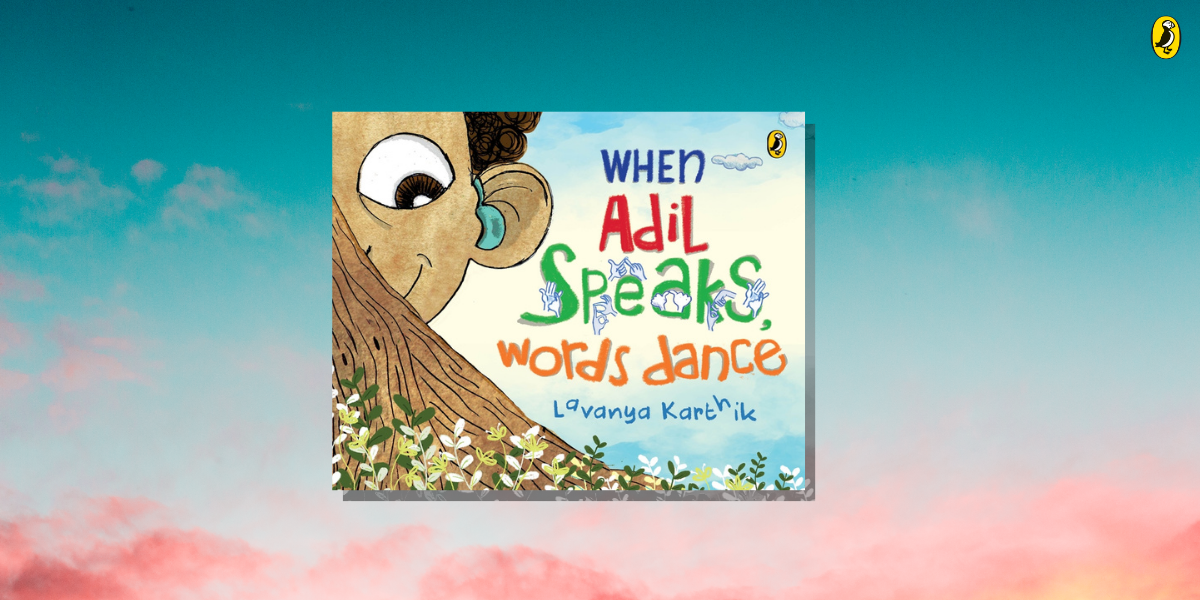
We have adored Adil ever since we got our hands on the book. We chatted with Lavanya Karthik, the author of When Adil Speaks, about her creative process, favourite books, and more!


How did Adil come into being?

LK: Adil was a little glimmer of an idea in my head for a long while. I wanted to explore the idea of communication in a picture book. I wanted to address the idea of diversity, as well as look at the little things that make us all the same – fear of not being accepted, shyness, wanting to be heard and seen.  And I was fascinated by sign language. I realised I could do all of this in one book and, slowly and steadily, these ideas developed into ‘Adil’.


What was your creative process behind a children’s book on inclusivity?

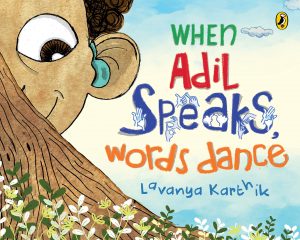
Front cover of When adil speaks
When Adil Speaks||Lavanya Karthik

LK: While the central character is disabled, I did not want that to be the focus of the book. Rather, it is his personality that stands out – he is fun, popular, a great athlete. I wanted this book to be about communication, and finding ways to connect. And what better way to connect than through art!

This book then evolved quite organically, as I imagined how the story of Adil and his friend would develop, and how they would figure out a way to ‘speak’ without words.  Comics seemed the obvious choice; whenever I visit schools or conduct workshops, I find that kids – from the quietest ones to the noisiest, from municipal schools and elite private institutions – love drawing comics. They dive right in, drawing themselves as superheroes, confronting demons, making great speeches. filling up pages and pages with art and ideas.  Then they would gather around, inspecting each other’s comics. What better way to make friends!


If you had to recommend a reading list on inclusivity for children (or adults!), which books would you add to it?

LK: This would really be a very, very long list! To narrow it down to a very short one,

Picture Books

  • I Didn’t Understand by Mini Shrinivasan
  • Guthli Has Wings by Kanak Shashi
  • My Travelin’ Eye by Jenny Sue Kostecki-Shaw


Middle Grade

  • El Deafo by Cece Bell
  • Caleb and Kit by Beth Vrabel
  • Simply Nanju by Zainab Suleiman


YA

  • Five Flavors of Dumb by Antony John
  • There Will be Lies by Nick Lake
  • Dear Rachel Maddow by Adrienne Kisner


Inclusivity and the idea of embracing difference is still a severely stunted conversation in the country. Do you think some level of sensitivity training should be mandatory, particularly for people working in educational institutions?

LK: I think we need to see inclusion as a basic human right and not as an act of benevolence. We need schools and playgrounds, systems and processes that can be accessed by everyone, and that acknowledge diversity, not enforce sameness. Sensitivity training is definitely important as a first step to enabling this.


The despair of the barren landscape

Dust and ash engulf the land, dry rivers snake the earth and a phantom darkness looms over everyone. As most of India reels from this environmental catastrophe, water replaces oil as the most valuable commodity and cities get infested with gangs and powerful religious figures.

In this dystopia, the hi-tech Millennium City, which is inhabited by the rich, overlooks the quarters of the poor. Millennium City gives rise to a form of technology that manufactures artificial humans in laboratories.

Born in one such lab, Haksh does the forbidden: he falls in love with Chhaya, a human.

A coming-of-age novel about violence and transgression, Darklands is about one thing above all: love-both all-consuming and redemptive. Here’s an excerpt from this dark tale of love.

**

He woke up, dreaming of sheep. They were everywhere. Atop a hillock, cascading down a brook, their curly white fur gleaming in the soft, wintry sun. And then, with a slight flutter of an eyelid, they were gone. What surfaced was the wasteland, corroding away in the harsh morning sun. It was still early morning, but the sun was already severe. Through his half-open eyes, still very heavy with sleep, Easwaran tried to look. The dust and ash had begun to swirl across the barren landscape. Some people were up from their sleep, while some had wrapped their tattered blankets around their heads, trying to evade the daylight. Easwaran tried to gauge what time it must have been. Probably still seven. But in the vast, desolate landscape, time and its precise classification had become vestigial rituals of an age that no longer can be. It was reduced instead to a rough probability. As was everything else. Life even. His son was still in the blanket, but Easwaran knew he was wide awake. The infant was still asleep close to him. From a bit afar, towards the edges of the makeshift camp, the lanterns were giving up the last of their flames. Set against the glowing daylight, these tiny flames seemed pathetic, like a puny space rover approaching the cosmic infinitude of Jupiter. But the flames stayed, pale and almost invisible, but intact nevertheless. No one in the camp seemed to mind.

Aakash walked softly over to Easwaran, a cold rifle gleaming in his hand. His face was taut and visible from a distance. Well, at least to Easwaran, it seemed hardened. As if laughter hadn’t meandered on the soft pastures of his face for a long time now.

‘There’s trouble,’ Aakash said, crouching unevenly near the man. ‘Apparently, that Phanai’s lad is missing.’

‘Is it what I fear?’ Easwaran remarked. He was up by now. Granules of dust and ash were on his face, but he seemed unperturbed by this.

‘Could be. But no one knows. I saw him last night, quiet and all by himself, as he normally is. More than anything, he seemed safe.’ Aakash regretted the moment he said this and he even anticipated what Easwaran’s reply would be.

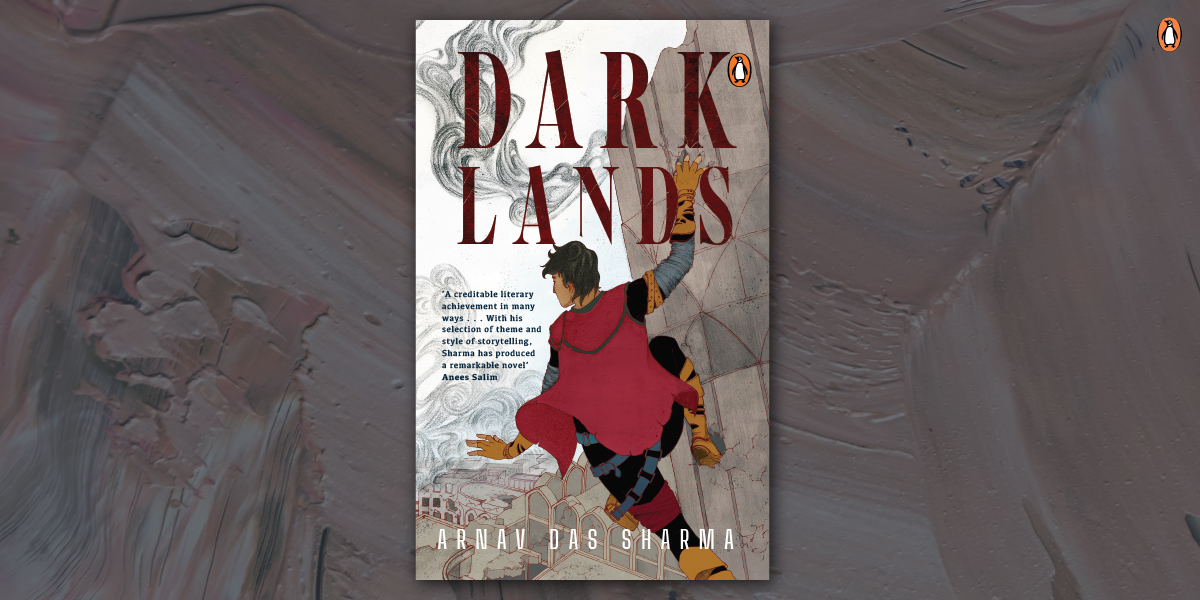
front cover of Darklands
Darklands || Arnav Das Sharma


‘Nothing is safe,’ Easwaran replied, his eyes turning away from Aakash and towards the desert landscape that stretched before him and all around and shimmered like a hot metal freshly pulled out of industrial fire.

‘I was thinking of telling Eaklavya that we need a search party. We should look for him, no?’

‘Look for him where? Where do you think he could go? How many nooks and crannies and undiscovered lanes do you see here? It’s a damned wasteland.’ Easwaran tasted the bitter trickle of bile rising in his mouth. He thought he had accepted his fate and along with it, everyone’s. He thought that he had stopped caring. For that was the only way he could make sense of it all. But he was clearly wrong, it seemed.

‘What else are we supposed to do then?’ Aakash asked. Easwaran knew he could not answer that—he didn’t have an answer. He chose to keep quiet. The infant woke up crying. He picked it up and began cradling it in his arms. He recognized those to be peals of hunger. But he also knew he could do nothing about it.

**


Success stories of people with diabetes

Making Excellence a Habit is a behind-the-scenes account of a person honoured internationally for delivering path-breaking care to hundreds of thousands of people with diabetes. While hard work, passion and focus emerge as winning lessons, delicate and tender learnings from Dr Mohan’s life, such as empathy or spirituality, are not forgotten.

Here is an excerpt from the book that talks about success stories of people with diabetes.


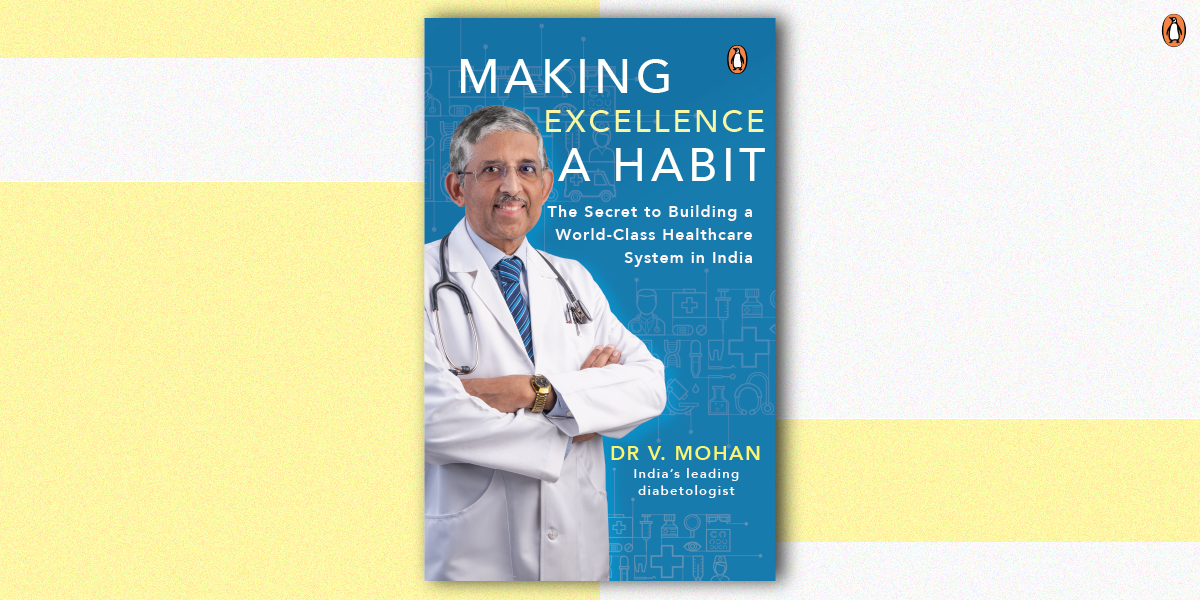
Front cover of Making Excellence A Habit
Making Excellence A Habit || Dr V. Mohan

Many people with diabetes believe that because of their illness, they cannot achieve their ambitions. Of the two most common forms of diabetes, type 2 and type 1, the former can be treated with tablets, diet and exercise, although some individuals may need insulin at some point in their life. Type 1 diabetes, on the other hand, is a more severe form of the disorder where insulin injections are needed from the beginning, and often several times a day, in order to maintain good health. I have seen that when people develop type 1 diabetes (or even type 2 diabetes, for that matter), they often tend to give up. Their family also thinks that they are doomed to a life of mediocrity, devoid of any ambitions or success.


Doctors, too, unknowingly, reinforce this mindset. We were taught as students that if somebody is fifty years old and has had diabetes for twenty years, their arteries and blood vessels would be seventy years old. We therefore recognize what’s referred to as the ‘chronological age’, which is the actual age of the patient, and the ‘biological age’, which is the age of the arteries. In the case of people with diabetes, almost every study has shown that diabetes decreases the lifespan of an individual. Statistics show that in both men and women between seven to eight years of life are lost due to diabetes. Currently, the average lifespan of an Indian is sixty- seven years for males and sixty-nine years for females. Hence, for Indians with diabetes, one would expect that the average lifespan would be around sixty years for both males and females. By this calculation, one would assume that it would be almost impossible to find an elderly person with diabetes in India. Only 0.001 per cent of India’s population today are nonagenarians, that is aged ninety years or above. Hence, finding a ninety-year-old person with diabetes in India would be an absolutely rarity.


While these statistics are well established, they’re not necessarily true, and moreover, there are a lot of exceptions to the rule. Over the last few years, we have been noticing at our centre that our patients with diabetes, presumably due to better control, are living longer and longer. In 2013, I published a paper to show that patients with type 2 diabetes could live for forty or fifty years despite their diabetes. This paper was published in the prestigious American journal Diabetes Care and became a landmark paper. My colleagues and I were pleased that we as Indians were the first to report on the long-term survival of patients with type 2 diabetes.


After we had submitted the paper, Dr William Cefalu, then the editor of Diabetes Care, visited me in Chennai. Dr Cefalu told me that he was delighted to receive our paper and wanted to learn more about the survival among people with type 2 diabetes. Dr Cefalu then suggested that we have, as a control group, patients who were ‘non-survivors’, that is, had not survived for forty years. I mentioned to him that this would take time, as we would have to painstakingly match the ‘survivors’ and ‘non-survivors’ from our large electronic records. He gave us additional time to do it, and once we were done, we submitted the paper again to the journal. The paper was an instant hit—and was the first in the world to demonstrate the long-term survival of patients with type 2 diabetes of more than forty years duration.


In fact, when I received the Harold Rifkin Award for Distinguished International Service in the Cause of Diabetes from the American Diabetes Association, Dr Cefalu was present at the ceremony. I walked up to him and asked him whether he remembered me. Dr Cefalu smiled and said, ‘Why do you think you are receiving this award?’ By then, Dr Cefalu was the chief scientific officer of the association and, despite his high position, he hadn’t forgotten my paper in his journal. ‘That paper of yours was definitely one of the highlights of your career,’ he said. I agreed. I was humbled to receive the award, and even more so because I was the first diabetologist from India to have been chosen for the award.


However, in that study we did not take the age of the patients into consideration—only the duration of diabetes. Only recently have we started looking at our electronic medical records again to see how many patients lived very long lives. This time, our study showed that 325 of our patients with type 2 diabetes had survived beyond ninety years of age. This meant that if one applied the formula taught by our teachers, the biological age of these patients was unbelievably long. By now, I have several patients who have crossed ninety-five years of age and are approaching their hundredth birthday. I have also seen my first patient with diabetes cross the coveted hundred-year birth-anniversary mark. This man was the former vice chancellor of two universities and has had diabetes for almost sixty years. This means his biological age would be 160 years!


To understand the fundamentals of what makes a person achieve meaningful success, get your copy of Dr Mohan’s Making Excellence A Habit

A Women’s Day reading list for boys and girls

It isn’t always easy to be a woman. As our little girls grow up, we’d love to have them mentored by some of the strong women, with strong voices who aren’t always brought to the limelight. There is so much the women before us have done to bring us where we are – and it’s important we teach our girls – and boys – that women are as strong as men….if not stronger.
Here is a list of books for children to celebrate women, this Women’s Day
The Girl Who Chose by Devdutt Pattnaik

‘You are bound by rules, but not I. I am free to choose.’
Two thousand years ago, the poet-sage Valmiki wrote the Ramayana. It is the tale of Ram, the sun-prince of Ayodhya, who is obliged to follow family rules and so makes no choices.

India’s favourite mythologist brings you this charmingly illustrated retelling of the Ramayana that is sure to empower and entertain a new generation readers.

The Daughter from a Wishing Tree
The Daughter from a Wishing Tree by Sudha Murty 

The women in Indian mythology might be fewer in number, but their stories of strength and mystery in the pages of ancient texts and epics are many. They slayed demons and protected their devotees fiercely. From Parvati to Ashokasundari and from Bhamati to Mandodari, this collection features enchanting and fearless women who frequently led wars on behalf of the gods, were the backbone of their families and makers of their own destinies.

I Need to Pee
I Need to Pee by Neha Singh


Rahi simply loves slurping refreshing drinks, and so she always needs to pee. But boy, does she hate public loos! Travel with the cheeky Rahi and read all about her yucky, icky, sticky adventures in this quirky and vibrant book about the ever-relevant worry of having a safe and clean toilet experience.

Manya Learns To Roar by Shruthi Rao

Manya badly, badly wants to be Shere Khan in her school play. The Jungle Book is her favourite film and she knows all the lines. She’s sure she’ll be a superb Shere Khan.

But not everyone thinks so. Her classmate Rajat is always making fun of her stammer. Her English teacher thinks its risky to let her get on stage and her principal seems to agree.

The more anxious Manya gets, the worse her stammer becomes. Will Manya lose her dream role? Can she overcome her fears and learn to roar?

Strong women, behind the scenes

What do the strong women we know, go through to become who they are? What goes on behind the scenes – and what makes a woman strong?

Many of them have fought to bring the world where it is today. And we must continue to be inspired by them so we can continue their paths and legacy’s. Here is a list of books of strong women with strong voices, to inspire you, this Women’s Day


Lajja
Lajja by Taslima Nasrin

A savage indictment of religious extremism and man’s inhumanity to man, Lajja was banned in Bangladesh but became a bestseller in the rest of the world. This brand-new translation marks the twentieth anniversary of this controversial novel. The Dattas Sudhamoy and Kironmoyee and their children, Suronjon and Maya have lived in Bangladesh all their lives. Despite being members of a small Hindu community that is terrorized at every opportunity by Muslim fundamentalists, they refuse to leave their country, unlike most of their friends and relatives.

*

Split
Split by Taslima Nasrin 


Taslima Nasrin is known for her powerful writing on women’s rights and uncompromising criticism of religious fundamentalism. This defiance on her part had led to the ban on the Bengali original of this book by the Left Front in West Bengal as well as the Government of Bangladesh in 2003. While the West Bengal government lifted the injunction after the ban was struck down by the Calcutta High Court in 2005, Nasrin was eventually driven out of Kolkata and forced to expunge passages from the book, besides facing a four-million-dollar defamation lawsuit. Bold and evocative, Split: A Life opens a window to the experiences and works of one of the bravest writers of our times.

*

Dark Holds No Terrors
The Dark Holds No Terrors by Shashi Deshpande 

‘Why are you still alive-why didn’t you die?’
Years on, Sarita still remembers her mother’s bitter words uttered when as a little girl she was unable to save her younger brother from drowning. Now, her mother is dead and Sarita returns to the family home, ostensibly to take care of her father, but in reality to escape the nightmarish brutality her husband inflicts on her every night. In the quiet of her old father’s company Sarita reflects on the events of her life: her stultifying small town childhood, her domineering mother, her marriage to the charismatic young poet Mahohar.

*

Lifting The Veil
Lifting the Veil by Ismat Chughtai

At a time when writing by and about women was rare and tentative, Chughtai explored female sexuality with unparalleled frankness and examined the political and social mores of her time. She wrote about the world that she knew, bringing the idiom of the middle class to Urdu prose, and totally transformed the complexion of Urdu fiction. Lifting the Veil brings together Ismat Chughtai’s fiction and non-fiction writing. The twenty-one pieces in this selection are Chughtai at her best, marked by her brilliant turn of phrase, scintillating dialogue and wry humor, her characteristic irreverence, wit and eye for detail.

*


A Gift of Goddess Lakshmi by Manobi Bandopadhyay

The extraordinary and courageous journey of a transgender to define her identity and set new standards of achievement.

With unflinching honesty and deep understanding, Manobi tells the moving story of her transformation from a man to a woman; about how she continued to pursue her academics despite the severe upheavals and went on to become the first transgender principal of a girls’ college. And in doing so, she did not just define her own identity, but also inspired her entire community.

*

Empress
Empress by Ruby Lal

Acclaimed historian Ruby Lal uncovers the rich life and world of Nur Jahan, rescuing this dazzling figure from patriarchal and orientalist cliches of romance and intrigue, while giving a new insight into the lives of the women and the girls during the Mughal Empire, even where scholars claim there are no sources. Nur’s confident assertion of authority and talent is revelatory. In Empress, she finally receives her due in a deeply researched and evocative biography that awakens us to a fascinating history.

*

The Inheritance of Loss
The Inheritance of Loss by Kiran Desai

In a crumbling, isolated house at the foot of Mount Kanchenjunga in the Himalayas lives an embittered judge who wants only to retire in peace, when his orphaned granddaughter, Sai, arrives on his doorstep. The judge’s cook watches over her distractedly, for his thoughts are often on his son, Biju, who is hopscotching from one gritty New York restaurant to another. Kiran Desai’s brilliant novel, published to huge acclaim, is a story of joy and despair. Her characters face numerous choices that majestically illuminate the consequences of colonialism as it collides with the modern world.

*

Calling Sehmat
Calling Sehmat by Harinder Sikka

When a young college-going Kashmiri girl, Sehmat, gets to know her dying father’s last wish, she can do little but surrender to his passion and patriotism and follow the path he has so painstakingly laid out. It is the beginning of her transformation from an ordinary girl into a deadly spy.
She’s then married off to the son of a well-connected Pakistani general, and her mission is to regularly pass information to the Indian intelligence. Something she does with extreme courage and bravado, till she stumbles on information that could destroy the naval might of her beloved country.

*

Born Again on the Mountain
Born Again on the mountain

National-level volleyball player Arunima Sinha had a promising future ahead of her. Then one day she was shoved from a moving train by thieves as she attempted to fight them off. The horrific accident cost the twenty-four-year-old her left leg, but it never deterred her. A year later, she had retrained as a mountaineer and become the first female amputee to reach Mount Everest. This is her unforgettable story of hope, courage and resilience.

*

Millionaire Housewives
Millionaire Housewives by Rinku Paul | Puja Singhal 

Millionaire Housewives tells the stories of twelve enterprising homemakers who, in spite of having no prior experience in business, managed to build successful empires through the single-minded pursuit of their goal, defying all stereotypes. Amidst their varied motivations and struggles, Millionaire Housewives offers valuable lessons for homemakers who want to venture into entrepreneurship.

error: Content is protected !!