Publish with Us

Follow Penguin

Follow Penguinsters

Follow Penguin Swadesh

Champions of mindfulness: September reads for the young minds!

Another month has rolled around and we hope that like us, the young minds are excited for some new stories!

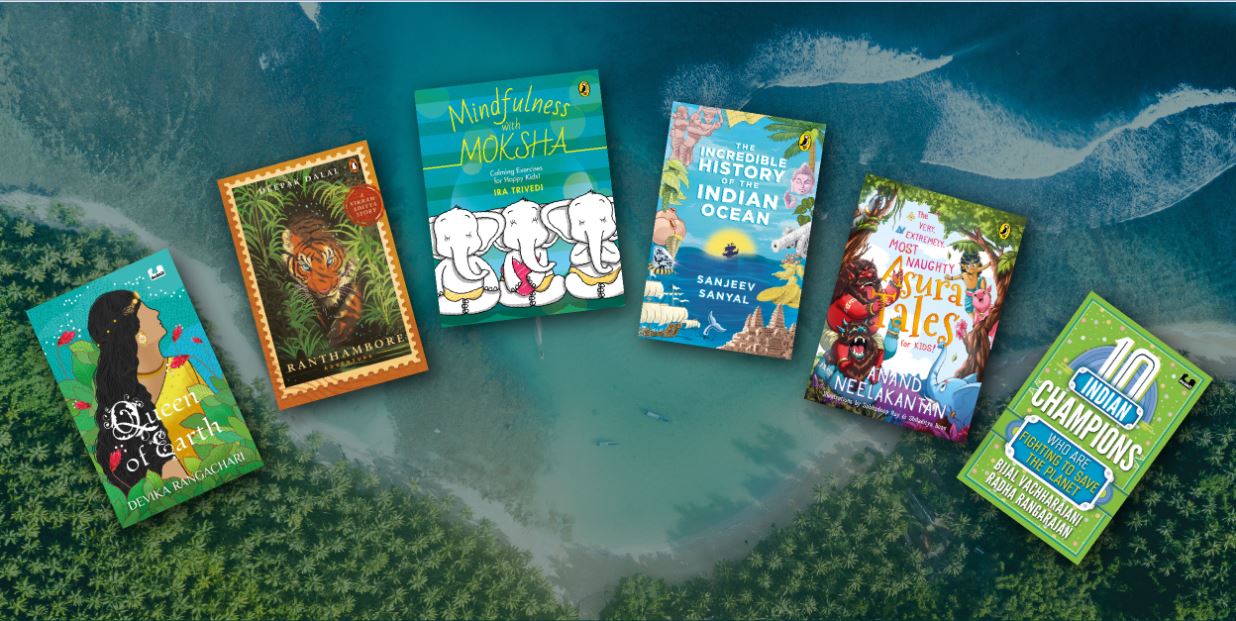
Our list for this month will make them champions of mythology, nature, mindfulness and even of the Indian Ocean!

Time to flip through!

**

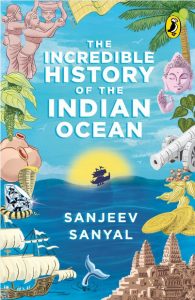
Incredible History of the Indian Ocean
Sanjeev Sanyal (author), Jit Chowdhury (Illustrator)
The Incredible History of the Indian Ocean || Sanjeev Sanyal


When did the first humans arrive in India and how did they get here? What are Roman artefacts from hundreds of years ago doing in a town near Puducherry? How did merchants from Arabia end up near Kochi?

Read on to learn about the fearless travellers and sailors, pirates and conquerors who set out to cross the ocean in search of gold and glory!


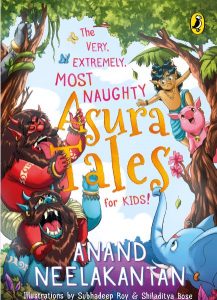
The Very, Extremely, Most Naughty Asura Tales For Kids!
Anand Neelakantan


The Very, Extremely, Most Naughty Asura Tales for Kids || Anand Neelakantan

Aren’t we chubby, aren’t we cute?

Aren’t we lovely, as sweet as fruit?

Give us a bear hug, give us a kiss

Regret not later for giving it a miss.

Indulge in some very, extremely, most funny naughty tales of asura twins Kundakka and Mandakka, who hate going to school; clumsy Bhasma and pet pig Nakura, who create trouble in the village; brothers Atapi and Vatapi, who like to eat ninety-six cartfuls of fruits as dessert; the great Bana who claps with his thousand hands and so many more!


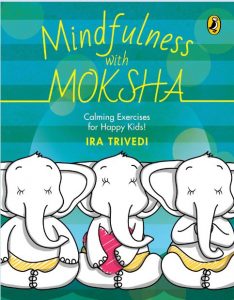
Mindfulness with Moksha
Ira Trivedi


Mindfulness with Moksha || Ira Trivedi

The practice of mindfulness at any age can have profound effect on your life. So why not get your young one to start early? In this fast-paced world, with so many distractions, it is important to stay grounded and not lose sight of what’s important. Being mindful brings clarity, mental strength, focus and inner peace.

With this calming read-along book, parents and guardians can help their children work through fun exercises-a great way to spend quality family time!


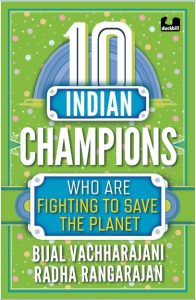
10 Indian Champions Who Are Trying To Save The Planet
Bijal Vaccharajani, Radha Rangarajan


10 Indian Champions || Bijal Vachharajani, Radha Rangarajan

This book tells the stories of ten Indian conservationists working in diverse ways to save the world from human destructiveness, often facing seemingly insurmountable odds.

Get the young readers to learn about the inspiring lives of people who are striving to solve the most pressing problems on this planet—from climate change to habitat degradation, from food insecurity to species loss.


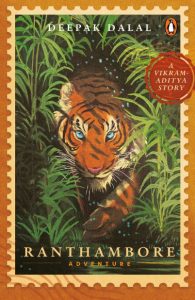
A Vikram–Aditya Story: Ranthambore Adventure
Deepak Dalal
Ranthambore Adventure || Deepak Dalal


This is the story of a tiger.

Once a helpless ball of fur, Genghis emerges as a mighty predator, the king of the forest. But the jungle isn’t just his kingdom. Soon, Genghis finds himself fighting for his skin against equally powerful predators of a different kind–humans.

The very same ones that Vikram and Aditya get embroiled with when they attempt to lay their hands on a diary that belongs to a ruthless tiger poacher.


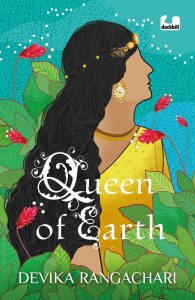
Queen of Earth  
Devika Rangachari


Queen of Earth || Devika Rangachari

Prithvimahadevi is the daughter of the powerful Somavamshi king of Kosala. Her life is circumscribed by the rules that govern the existence of women of her royal family.

She is married to her father’s enemy, the Bhaumakara ruler, Shubhakaradeva, who worships strange gods. There seems to be some hope for her to fulfil her dreams of becoming a great queen…But is she willing to play the game of sacrifice and betrayal that this will entail?

Helmets, flutes and an adventure of our own!

We are all set to witness an AWESOME FRIENDLY EPIC adventure that our AWESOME friend Greg Heffley has invited us on.

But first, we need to get to know our companions! Scroll down below to meet ROLAND THE KIND, who really, really wants an adventure of his own!

*

Once upon a time in a land far away there lived a boy named Roland. And Roland was a very good boy.
Back then school hadn’t been invented yet so most kids worked on their family farms all day.
But Roland’s parents thought it was important for their son to get an education and to learn to play an instrument. So he spent his days inside, reading books and practicing the flute.
Awesome Friendly Adventure || Jeff Kinney
Roland didn’t like practicing the flute very much but he never complained because he wanted to be a good son.
It was a dangerous time when ogres and giants roamed the land. So Roland’s parents liked him to stay indoors where it was safe, especially after dark.
Roland had never even been outside his village. He wished he could go on adventures like his grandpa Bampy the Brave who used to fight monsters and search for treasure.
But Bampy was never the same after he got back from his adventures. And Roland knew that was because Bampy didn’t always wear his helmet and he got hit on the head a few too many times.
Roland promised his parents that if he went on an adventure he’d ALWAYS wear a helmet and he’d make good choices. But they said he’d be much safer staying at home and practicing his flute.
So the only thing Roland could do was read stories about Bampy and imagine what it would be like to have adventures of his OWN.
*


Will Roland the Kind get to have an AWESOME ADVENTURE of his own?

Insights into elephant conservation in India

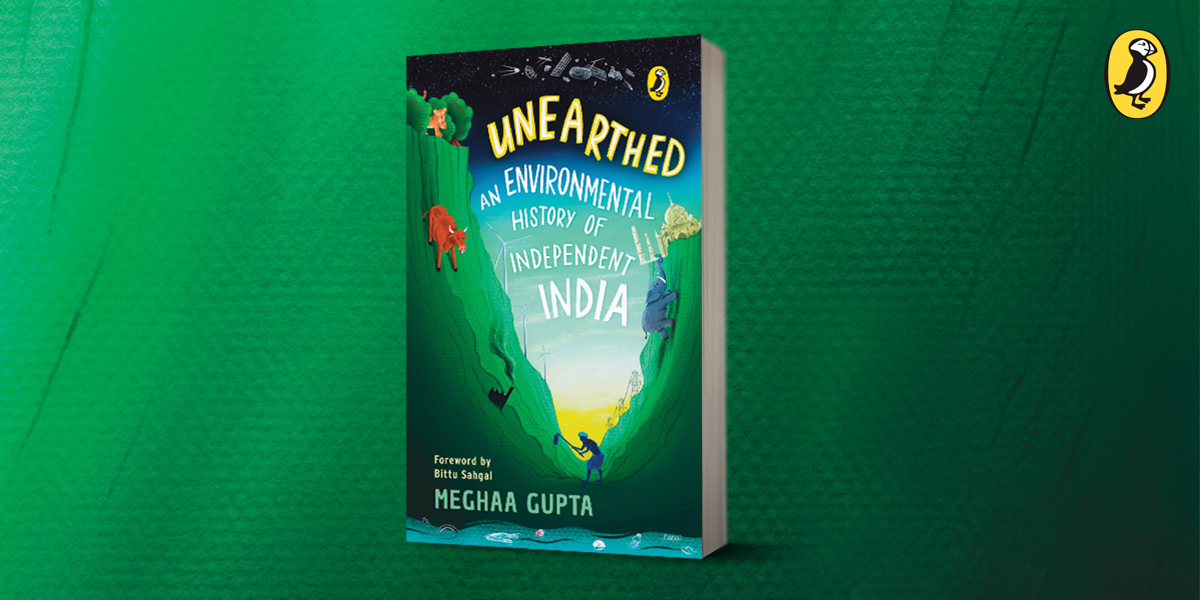
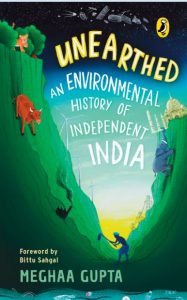
From the Green Revolution to the National Action Plan on Climate Change, Unearthed: An Environmental History of Independent India chronicles the country’s historical movements and significant green missions since 1947. Interspersed with lots of trivia, tales of eco-heroes and humorous cartoons, this easy-to-read account uncovers the story of a past with the hope that we will rewrite India’s future.

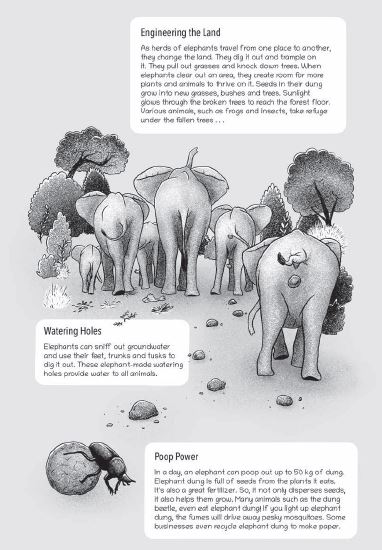
Read below an excerpt from the book:


Elephants are the world’s largest land animals and they need a large area to live freely—not just a forest, but entire landscapes or ranges with paths they can use to walk from one place to another in search of food and water. After all, their needs are also big. An adult Asian elephant can eat more than 100 kilograms of food and drink more than 100 litres of water in a day. Just one forest is not enough to meet these needs. That’s why they walk hundreds of kilometres every year, allowing forests along their way to regenerate in time for them to return several months later. In the first few decades after Independence, India was on a development drive. Land was cleared to grow crops, natural forests were replaced by plantations or mined to support industry, rivers were dammed, roads were built, factories, power transmission lines and railway lines were set up in more places and the human population began to explode. No one really thought about leaving room for elephants. As their habitats were lost to development, cases of human-elephant conflict began to rise. Among the most common forms of this conflict was crop-raiding. Hungry elephants found an easy supply of food in farmlands. So, they ransacked crops worth a lot of money and sometimes ended up injuring and killing villagers. In retaliation, angry villagers slaughtered elephants by poisoning or electrocuting them.

States found themselves struggling endlessly with this mammoth problem. Finally, in 1989, the central government set up a task force to look into the details of the problems being reported by different states. Among other things, the task force found that elephants had disappeared from many places in which they were once found. It also noted that the wildlife reserves set aside during Project Tiger  in 1973 were woefully inadequate for elephants. Conserving elephants meant that India needed to think big. In 1992, the government launched Project Elephant to save its gentle giants.

Saving Elephant Habitats

The task force had identified landscapes inhabited by elephants across India. These included the forest habitats of elephants, as well as corridors or routes they used to walk from one forest to another in search of food and water. One of the first strategies of Project Elephant was to set aside forests in different landscapes as elephant reserves, fortified with plant varieties that could serve as food. It also sought to secure the corridors connecting these reserves to each other. The idea was to limit the need for elephants to venture into surrounding human habitats for food and water. In 2001, Singhbhum in Jharkhand was officially declared the first elephant reserve of India. Sprawling over thousands of square kilometres across three south-eastern districts of the state, the reserve was part of an elephant range that also included other reserves in West Bengal, Odisha and Chhattisgarh. Today, elephant reserves cover more than 65,000 square kilometres of forest land spread across eleven elephant ranges in different states in north-western, north-eastern, central and southern India. Meanwhile, more than 100 elephant corridors have been identified throughout the country with the help of the Wildlife Trust of India (WTI). Unfortunately, less than 30% of elephant reserves and corridors fall within legally protected areas of India. This has made it easy for land in elephant ranges to be diverted for everything from mining and agriculture to building tourist resorts and constructing roads. More than 60% of elephant corridors have a national or state highway passing through them while about twenty of them have railway lines. Hundreds of elephants have been killed in train accidents over the years. One of the worst accidents took place in 2013, when a passenger train passing through the Chapramari Forest in northern West Bengal failed to apply brakes on time and rammed into a herd of elephants that were foraging near and on the tracks. Five adult elephants and two calves were killed while ten elephants were injured. Various measures have been tried to prevent train accidents. These include reducing train speeds in elephant corridors and activating early warning systems. For example, in Tamil Nadu, sensors mounted on poles along the railway track monitor elephant movement. If an elephant sets off a sensor, a text message is sent to the railway staff and the animals are chased away. Railways have also experimented with some creative solutions such as devices that produce the buzzing sound of honeybees to keep elephants at bay. Long-term solutions include building overpasses or underpasses as safe crossing points for elephants, raising the railway track, or removing tracks from accident-prone areas.

A shrinking range, intersected by an ever-growing number of human settlements, farmlands, plantations, roads and railway lines, remains the biggest threat for elephants and a major reason behind human-elephant conflicts.


Get your copy of Unearthed: The Environmental History of Independent India here

Celebrate the spirit of Independence with your young ones!

This Independence Day, we recommend some immersive reads to help children understand our country, its triumphs and its struggles. Here are our top three picks for the curious minds. Read on!


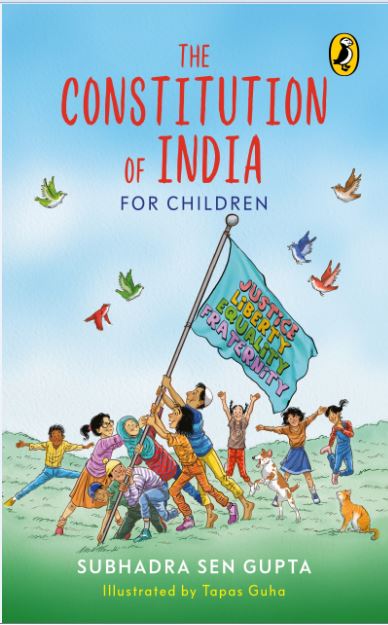
Constitution of India for Children
The Constitution of India for Children || Subhadra Sen Gupta

Which language is our Constitution written in?

Were women a part of the team that drafted the Constitution?

Why do political parties have symbols next to their names?

What is the official language of India?

An essential handbook for every student and denizen of India, here is a compendium of knowledge that serves as an insightful introduction to the most important document of Independent India.


10 Indian Women Who Were the First to do What They Did


10 Indian Women Who Were the First to Do What They Did || Shruthi Rao

This book tells the stories of ten Indian women who were pioneers in diverse fields. While their stories and challenges are different, what is common is that they all opened up the way for all women to achieve their dreams. Shruthi Rao writes absorbing tales of the lives, times and societies that these women lived and worked in.


The Puffin History of India (Volumes 1 and 2)


The Puffin History of India (Volumes 1) || Roshen Dalal

Pick up these books for a rollercoaster ride through centuries of our country’s history! They pack in exciting trivia, numerous maps and illustrations that provide a breathtaking overview of Indian history. Ideal for students and young readers, this amazing reference guide helps to bring the past to life like never before.

The Puffin History of India (Volumes 2) || Roshen Dalal

Friendship, nature and adventures: August bookshelf for the young readers!

It’s a new month and we have new friends and new adventures lined up for the young minds!

Which ones would they like to begin with?


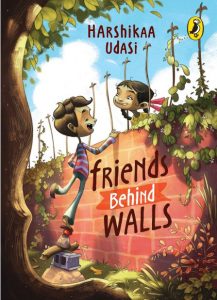
Friends Behind Walls

Friends Behind Walls || Harshikaa Udasi


Why won’t anyone let Inu and Putti be friends?

Putti is spending his summer vacation in Deolali and he thinks life is going to be fun with his new friend Inu. But with their parents FORBIDDING them from playing with each other, the two kids are flabbergasted. Flab-ber-gas-ted. Means shocked. Nothing to do with food and farts.

Join the two of them have decided to find out why.


*


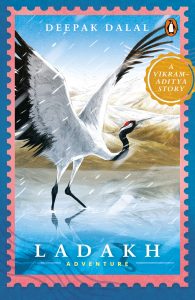
Ladakh Adventure

Ladakh Adventure || Deepak Dalal


On their visit to the Changthang plateau of Ladakh, Vikram and Aditya find themselves on the run along with Tsering, a young Tibetan boy they meet while camping on this grand yet barren frontier of India.

Determined to protect Tsering from the mysterious band of men chasing him, the three boys traverse the majestic land beyond the Himalayas in search of answers.

Join them to journey across journey across one of India’s most splendid destinations.


*


Unearthed


Unearthed || Meghaa Gupta

Protesting against dams, protecting tigers, hugging trees, saving seeds, making room for elephants, battling mountains of waste, fighting air pollution, coping with soaring temperatures-India and its people have shared a remarkable relationship with the environment.

Full of trivia, tales of eco-heroes and humorous cartoons, this easy-to-read account uncovers the story of a past with the hope that we will rewrite India’s future.


*


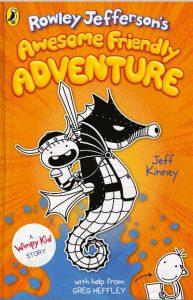
Rowley Jefferson’s Awesome Friendly Adventure


Awesome Friendly Adventure || Jeff Kinney

You’ve never seen the Wimpy Kid World like this before – an entirely new, awesome, friendly, truly fantastic fantasy quest from #1 international bestselling author Jeff Kinney!

From the imagination of Wimpy Kid’s Rowley Jefferson comes an adventure of epic proportions! Join Roland and his best friend, Garg the Barbarian, as they leave the safety of their village and embark on a quest to save Roland’s mum from the White Warlock. Will our heroes survive?

**

Meet the king and queen of Ullas!

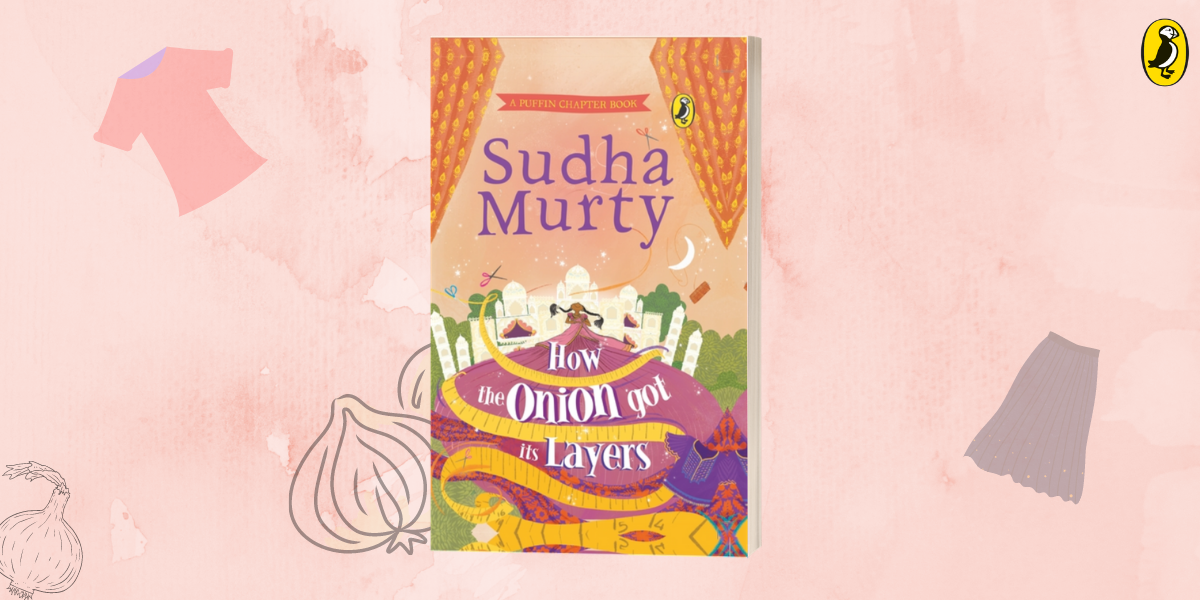
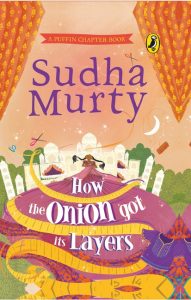
Have you wondered how the onion got so many layers? The story begins with the king and queen of the kingdom of Ullas, who really wanted a child.

Have a peek below!


**


The kingdom of Ullas was very prosperous. The subjects were happy, the farmers had grown a bumper crop and the kingdom was surrounded by friendly allies. But the king and queen of Ullas were very sad. Their sadness seemed to envelop them wherever they went. This was because they really longed for a child and did not have one.


One day, they learnt of a place in the forests in the kingdom where, if you prayed hard and well, you were granted your wish.

They went there and for many days, prayed to the goddess of the forest for a long time. Finally, their prayers were heard and the goddess appeared before them in a flash of green light.


‘What do you wish for, my dear children?’ she asked.

The king and queen, overjoyed, bowed low and said, ‘We wish to have a child.’

‘So be it, you will soon have a little girl,’ said the goddess, shimmering in the greenery. ‘But remember, though she will be a loving child, she will have one flaw: She will love new clothes too much and it will make life difficult for you. Do you still want such a child?’


How the Onion Got its Layers || Sudha Murty


The king and queen looked at each other with their eyes full of hope and love. ‘Yes, we do,’ they said to the goddess. ‘We can’t think of anything else we want more in this world.’

The goddess smiled and vanished back among the trees.


**


What will happen now? Will the king and queen be happy? And how will this lead to the onion’s many layers?

Your favourite storyteller, Sudha Murty, is back to tell you all this and more!

Story of a friendship

Nandita Basu’s evocative graphic novel traces the unlikely journey of a piano across the tumultuous twentieth journey from pre-war Leipzig, across the destruction of the First World War, to 1930s Chandernagore and Indian Independence. The Piano: Story Of A Friendship tells the story of a rare and indefinable friendship—one between a young musician and the medium of her creativity—of unexpected affinities, of bonds lost and regained. Read on to learn more about the actual friendship that inspired this delightful tale.

**


‘Meet the real Marcus Aurelius Fact and fiction always merge at a certain point, and then you begin to wonder what is real and which one is the story. Many years ago, I came across a rundown brown piano lying under a staircase in Vasant Kunj, Delhi. It was for sale. It stood with another old broken piano, which was black in colour, but my eye was caught by the more rickety one, I am not quite sure why. There was a large price tag even though the piano was quite broken. Yes, in India people sell even broken pianos for a lot of money.


The Piano || Nandita Basu

My negotiating skills are very poor, so I ended up emptying my bank account. I was eighteen then and the money I shelled out was everything I had earned from kind relatives who would give me money on my birthday or other occasions. Eighteen years’ worth of birthday− and gift−money, and some other money I had earned from odd jobs, went into buying this brown piano. I had no clue where I would get the money to repair it. I named my piano Marcus Aurelius. The reason was simple: I was influenced by the emperor Marcus Aurelius at the time. I would carry his book with me. So the choice of name was obvious. This brown broody piano seemed to have so many things to say, if only one knew how to speak to it. Right from the start, I felt that piano had a soul, just like you and I do. Sometimes, it seemed a bit dark but that’s probably because it had seen way too much. And that made me curious. I wanted to trace its history. The piano was made by a well−known German company called Julius Feurich (founded in 1851 in Leipzig, Germany). Pianos usually have a number embossed on the inside. Piano−makers put it in there to track down manufacturing details, especially the age of the piano. It wasn’t easy to find an address for the makers of Marcus because Leipzig had been behind the Iron Curtain for decades after World War II. In 2012, it had been sold to an Austrian piano manufacturer. Also, artisanal piano-making is rare these days, and almost all pianos are now made in factories. So to trace the Feurich-makers was a bit of work. But I finally did. I sent them an email with the embossed number and asked them if they had more details about this piano. I received a reply a few days later. I was told that the number indicated that Marcus was made around 1914. Unfortunately, there was no other information because the workshop had been bombed during World War II. They ended the mail by saying they were really happy I owned such a classic piano that still played, because it had a really fine sound. As bizarre as it may sound, musical instruments also need to be broken in, much like riding a horse. You might think playing a piano is just pressing notes so that you hear the sounds. It’s not exactly like that. For a pianist to get the right sound, there is a transfer of energy that happens between the player and the piano. It’s hard to explain unless you play yourself. But a lot happens between the instrument and the player. Marcus was unlike any other piano I had played. With Marcus, I was faced with rejection and disappointment. It was like Marcus didn’t want me to play it. Or maybe Marcus didn’t want to sing anymore. Whatever it was, for the first few years—yes, years!—I could never create the right sound on that piano. It was as if the more I tried to talk to Marcus, the more Marcus rejected me. And then one day, I am not sure why, I was playing a sonata by Mozart and like magic, the sound I had been struggling to find just burst out. Marcus had finally spoken. That was Marcus’s first hello to me, the start of our friendship. I still have Marcus, and Marcus needs another round of repairs soon, which is going to blow a hole in my pocket. But I would have it no other way. It’s like we were meant for each other.’

***

5 times Evan Purcell’s character had us laughing out loud

All his life, Karma has defended his village from monsters, creatures and forces of darkness. He’s not the bravest or the smartest kid, but he always tries to do what’s right.

Through his latest adventure of stopping one of his classmates, who has shown up to school as a zombie, there are many instances where Karma has us amused. Here are 5 times Karma had us laughing out loud in Evan Purcell’s newest addition to the Karma Tandin, Monster Hunter Series – Karma Meets a Zombie


“Last month, I’d stopped a shark monster from eating my classmates. She was the school librarian. She even wore a fake human head on top of her shark head. I’d scared her off thanks to my bravery (and dumb luck), but not before she (I think) ate one of my classmates.”

*

“We stood in silence for a long time. What else could we say? It’s hard to make small talk with the undead. After a bit, we started walking.”

*

“Quick tip: if you’re surrounded by a screaming mob of people, don’t tell them to calm down. It does not work.”

*

“But I couldn’t ignore a monster. That went against every belief I held dearly, every brain cell in my growing, twelve-year-old brain.”

*

“I love Chimmi. He’s my closest friend. He’s always there for me. But he does not come up with good plans.”


Is this zombie really bad? Is he dangerous, or is he just under some horrible spell? Read Karma Meets a Zombie to find out!

error: Content is protected !!