Publish with Us

Follow Penguin

Follow Penguinsters

Follow Penguin Swadesh

Books to Challenge Your Young Ones to Read this Festive Season

We are back with our Puffin reading challenge for your young ones! Keeping up with the mood of the many festivities and celebrations that are approaching, we have curated a list of delightful reads which your kids will find enjoyable and also leave them informed about the significance of various festivals and their mythological origins.
With these books, your children will also know about the the stories about mythological figures, increasing their knowledge in the most interesting way.
This selection of books has been carefully handpicked to suit the fun-loving spirit of your children and are sure to leave them hooked. Challenge your kids to read them all!
 

For Middle Graders:

The Upside Down King by Sudha Murty

The tales in this collection surround the two most popular avatars of Lord Vishnu-Rama and Krishna-and their lineage. Countless stories about two bound, yet most are simply disappearing from the hearts and minds of the present generation.
Bestselling author Sudha Murty will take you children on an arresting tour, all the while telling you of the days when demons and gods walked alongside humans, animals, could talk and gods granted the most glorious boon to common people.
The Girl Who Chose by Devdutt Pattanaik

Over the centuries, hundreds have retold the Ramayana in different languages, adding new twists and turns. But few have noticed that the tale always depends on the five choices made by Sita. What were Sita’s five choices? India’s favourite mythologist brings you this charmingly illustrated retelling of the Ramayana that is sure to empower and entertain a new generation of readers.
The Puffin Book of Hindu Gods and Goddesses

Dive into the coolest book ever written on the Hindu gods and goddesses, and discover all sorts of quirky, fun facts about them. From silly arguments to epic battles, from nasty monsters to divine divas, The Puffin Book of Hindu Gods and Goddesses juggles a range of tales and characters from Hindu mythology with colourful, zany illustrations to boot.
Amma, Take Me to Tirupati by Bhakti Mathur

Follow Amma and the boys to know all about the world-famous temple of Tirupati Balaji. Told through interesting stories with captivating illustrations, this new series introduces readers to the history of different faiths and their associated monuments.
Magnus Chase: 9 from the Nine Worlds by Rick Riordan

This is an all-new collection of short stories from the world of Magnus Chase. With an exclusive fold-out illustration of the world tree!
Through this riveting book your kids will get a chance to travel the Nine Worlds with their favourite characters from the world of Magnus Chase in a brand-new series of adventures.
 

For Younger Age Groups:

 Devlok series by Devdutt Pattanaik 

This is a fascinating set of six stories based on Indian mythology for the young readers. Helping the children get familiar with the mythologies and the culture of India, these books offer the children a fun way to learn. These exciting stories are woven around Gods and Goddesses placed in the current context. The stories in this collection are Shiva Plays Dumb Charades, Saraswati’s Secret River, Indra Finds Happiness, Kama Vs. Yama, Gauri and The Talking Cow, and An Identity Card for Krishna.

Which book will be your kids’ choice in this festive season?


Map of Days – an Excerpt

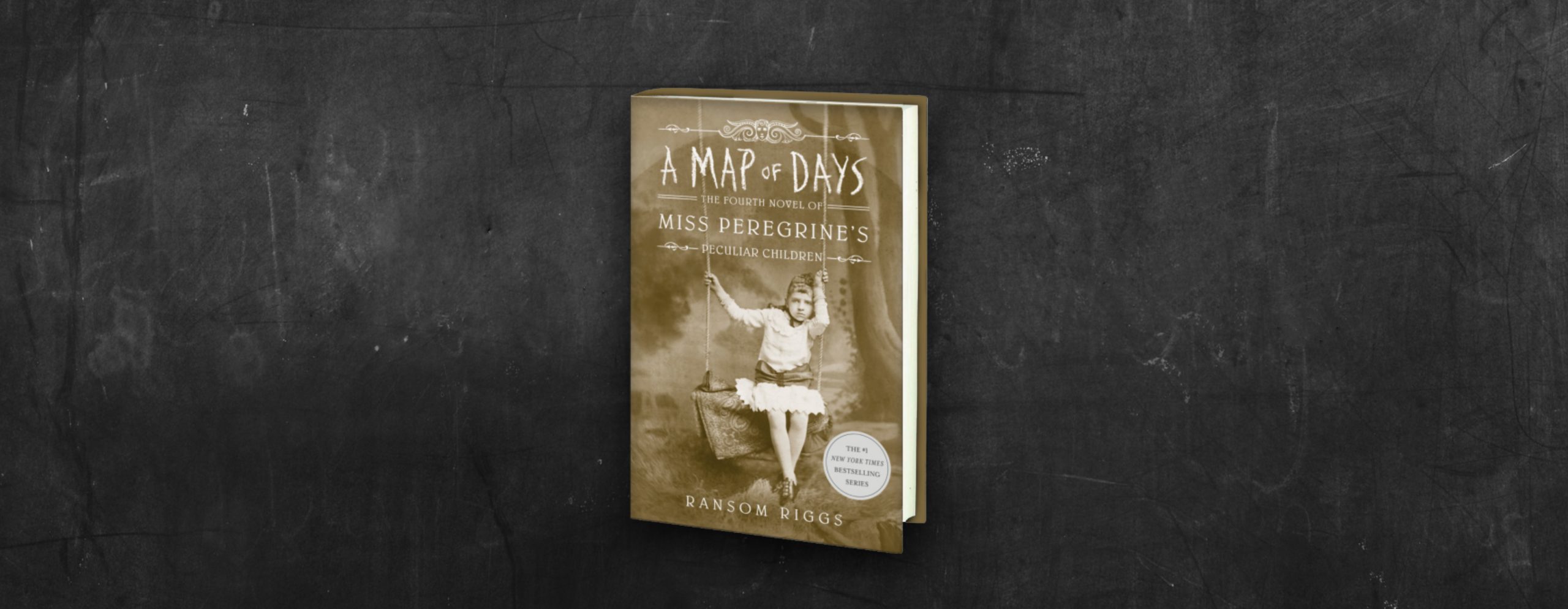
Having defeated the monstrous threat that nearly destroyed the peculiar world, Jacob Portman is back in Florida, where his story began. Jacob begins to learn more about the dangerous legacy he’s inherited, and the truths that were part of him long before he walked into Miss Peregrine’s time loop. Now, the stakes are higher than ever as Jacob and his friends are thrust into the untamed landscape of American peculiardom – a world that none of them understand. New wonders, and dangers, await in this darkly brilliant next chapter for Miss Peregrine’s Peculiar Children.
An excerpt from the book below. Go on, have a read.


It’s strange, what the mind can digest and what it resists. I had just survived the most surreal summer imaginable— skipping back to bygone centuries, taming invisible monsters, falling in love with my grandfather’s time-arrested ex-girlfriend—but only now, in the unexceptional present, in suburban Florida, in the house I’d grown up in, was I finding it hard to believe my eyes.
Here was Enoch, splayed upon our beige sectional, sipping Coke from my dad’s Tampa Bay Buccaneers tumbler; here was Olive, unstrapping her lead shoes to float ceilingward and ride circles on our fan; here were Horace and Hugh in our kitchen, Horace studying the photos on the fridge door while Hugh rustled for a snack;
here was Claire, both mouths slack as she gazed at the great black monolith of our wall-mounted television; here was Millard, my mother’s decor magazines rising from the coffee table and splitting in midair as he skimmed them, the shape of his bare feet imprinted into our carpet. It was a mingling of worlds I’d imagined a thousand times but never dreamed possible. But here it was: my Before and After, colliding with the force of planets.
Millard had already tried to explain to me how it was possible they could be here, apparently safe and unafraid. The loop collapse that had nearly killed us all in Devil’s Acre had reset their internal clocks. He didn’t quite understand  why, only that they were no longer in danger of sudden catastrophic aging if they stayed too long in the present. They would get older one day at a time, just like I did, their debt of years seemingly forgiven, as if they hadn’t spent
most of the twentieth century reliving the same sunny day. It was undoubtedly a miracle—a breakthrough unprecedented in peculiar history—and yet how it had come to be was not half as amazing to me as the fact that they were here at all: that beside me stood Emma, lovely, strong Emma, her hand entwined with mine, her green eyes shining as they scanned the room in wonder. Emma, whom I’d so often dreamed about in the long, lonely weeks since my return home. She wore a sensible gray dress that fell below the knee, hard flat shoes she could run in if she had to, her sandy hair pulled back into a ponytail. Decades of being depended on had made her practical to the core, but neither the responsibility nor the weight of years she carried had managed to snuff the girlish spark that lit her so brightly from the inside. She was both hard and soft, sour and sweet, old and young. That she could contain so much was what I loved most about her. Her soul was bottomless.
“Jacob?”
She was talking to me. I tried to reply, but my head was mired in dreamy quicksand.
She waved at me, then snapped her fingers, her thumb sparking like struck flint. I startled and came back to myself.
“Hey,” I said. “Sorry.”
“Where’d you go?”
“I’m just—” I waved as if raking cobwebs from the air. “It’s good to see you, that’s all.” Completing a sentence felt like trying to gather a dozen balloons in my arms.
Her smile couldn’t mask a look of mild concern. “I know it must be awfully strange for you, all of us dropping in like this. I hope we didn’t shock you too badly.”
“No, no. Well, maybe a little.” I nodded at the room and everyone in it. Happy chaos accompanied our friends wherever they went.
“You sure I’m not dreaming?”
“Are you sure I’m not?” She took my other hand and squeezed it, and her warmth and solidness seemed to lend the world some weight. “I can’t tell you how many times, over the years, I’ve pictured myself visiting this little town.”
For a moment I was confused, but then . . . of course. My grandfather. Abe had lived here since before my dad was born; I’d seen his Florida address on letters Emma had kept. Her gaze drifted as if she were lost in a memory, and I felt an unwelcome twinge of jealousy—then was embarrassed for it. She was entitled to her past, and had every right to feel as unmoored by the collision of our worlds as I did.
Miss Peregrine blew in like a tornado. She had taken off her traveling coat to reveal a striking jacket of green tweed and riding pants, as if she’d just arrived on horseback. She crossed the room tossing out orders. “Olive, come down from there! Enoch, remove your feet from the sofa!” She hooked a finger at me and nodded toward the kitchen. “Mr. Portman, there are matters which require your attention.”
Emma took my arm and accompanied me, for which I was grateful; the room had not quite stopped spinning.
“Off to snog each other already?” said Enoch. “We only just arrived!”
Emma’s free hand darted out to singe the top of his hair. Enoch recoiled and slapped at his smoking head, and the laugh that burst out of me seemed to clear some of the cobwebs from my head.
Yes, my friends were real and they were here. Not only that, Miss Peregrine had said they were going to stay awhile. Learn about the modern world a bit. Have a holiday, a well-earned respite from the squalor of Devil’s Acre—which, with their proud old house on Cairnholm gone, had become their temporary home. Of course they were welcome, and I was inexpressibly grateful to have them here. But how would this work, exactly? What about my parents and uncles, who at this very moment Bronwyn was guarding in the garage? It was too much to grapple with all at once, so for the moment I shoved it aside.


In A Map of Days, the stakes are higher than ever as Jacob and his friends are thrust into the untamed landscape of American peculiardom—a world with few ymbrynes, or rules—that none of them understand.

Our favourite quotes from Mark Zusak's books!

Markus Zusak is the award-winning, #1 bestselling author of The Book Thief, I Am the Messenger, Fighting Ruben Wolf, and Getting the Girl. His newest, much-anticipated novel, Bridge of Clay, has released in October 2018. Here are five quotes from his books that prove that he’s a master storyteller!

“I wanted to tell the book thief many things, about beauty and brutality. But what could I tell her about those things that she didn’t already know? I wanted to explain that I am constantly overestimating and underestimating the human race-that rarely do I ever simply estimate it. I wanted to ask her how the same thing could be so ugly and so glorious, and its words and stories so damning and brilliant.”
Markus Zusak, The Book Thief
 
“Have you ever noticed that idiots have a lot of friends? It’s just an observation.”
Markus Zusak, I Am the Messenger
 
 
“I had to decide what I was going to do, and what I was going to be.
I was standing there, waiting for someone to do something , till I realised the person I was waiting for was myself.”
Markus Zusak, Underdog
 
“We both laugh and run and the moment is so thick around me that i feel like dropping into it to let it carry me.”
Markus Zusak, I Am the Messenger
 
Liesel continued the examination. She moved around him and shrugged. “Not bad.”
Not bad!” I look better than just not bad.”
The shoes let you down. And your face.”
Rudy placed the lantern on the counter and came toward her in mock-anger, and Liesel had to admit that a nervousness started gripping her. It was with both relief and disappointment that she watched him trip and fall on the disgraced mannequin.
On the floor, Rudy laughed.
Then he closed his eyes, clenching them hard.
Liesel rushed over.
She crouched above him.
Kis him, Liesel, kiss him.
Are you all right, Rudy? Rudy?”
I miss him,” said the boy, sideways, across the floor.
Frohe Weihnachten,” Liesel replied. She helped him up, straightening the suit. “Merry Christmas.”
Markus Zusak, The Book Thief

Want more? Go on to this page to read more from this gem!
 

Meet Feluda and Other Characters from Satyajit Ray's 'Feluda Omnibus'

Feluda Omnibus (Volume One) is a collection of three thrilling stories on the crafty detective, Feluda, and his loyal sidekick, Topshe. Written by the celebrated writer and filmmaker Satyajit Ray, they are filled to the brim with adventure and intrigue, promising to keep you on your toes until the very end.
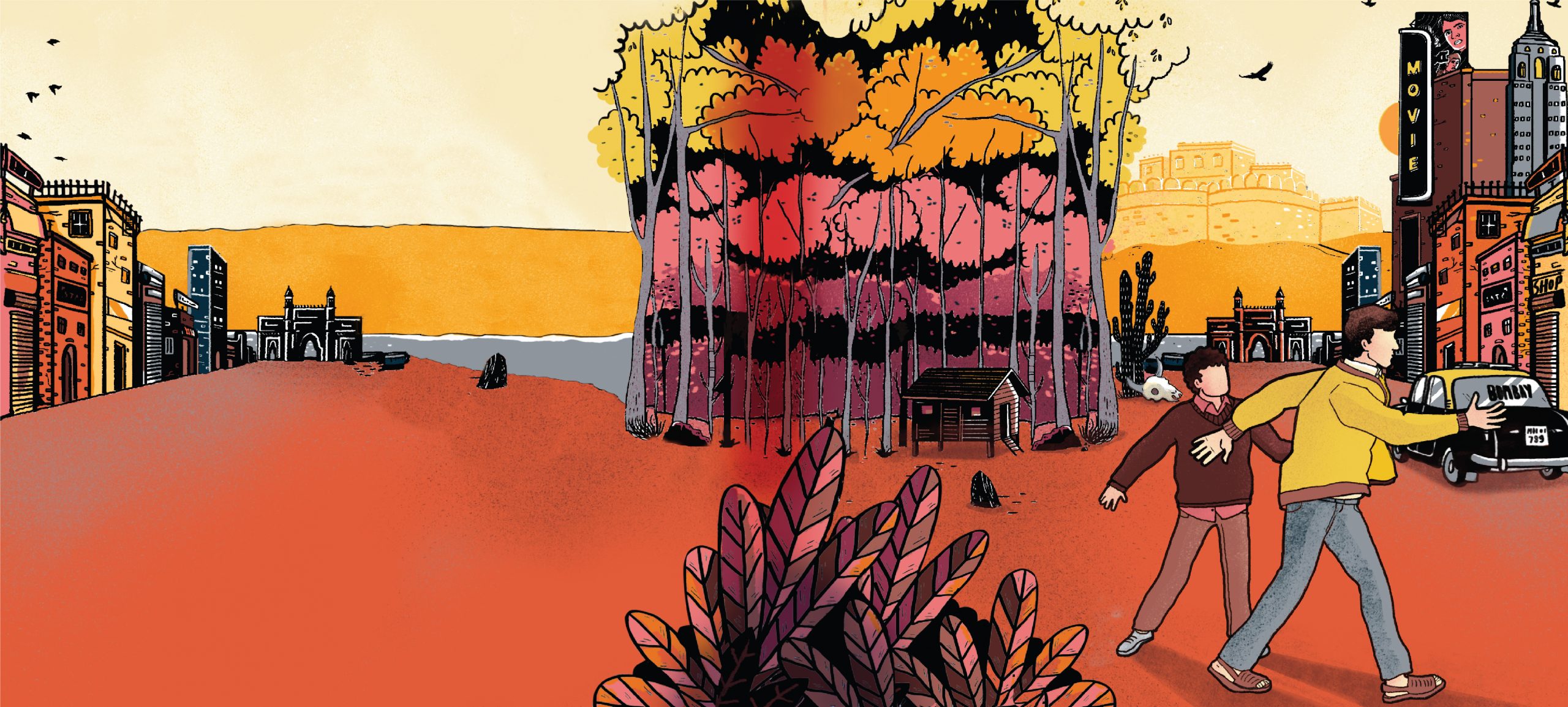
In The Emperor’s Ring, Feluda and Topshe are on holiday in Lucknow when a priceless Mughal ring is stolen. While investigating the theft, Feluda finds himself in pursuit of a notorious criminal. In The Golden Fortress, Feluda and Topshe are in Rajasthan with Dr Hajra, a parapsychologist, and Mukul, a young boy who claims to remember his previous life. Their thrilling search for answers leads them to the recurring fortress of Mukul’s dreams, all the while evading dangerous men after the young boy. Finally, in Bandits of Bombay, a frightening murder during a film shoot prompts the detective duo to investigate. In true filmy style, the hair-raising climax takes place aboard a train – can Feluda save the day?
With electrifying escapades traversing the Indian landscape, Feluda Omnibus (Volume One) is a must-have for fans of detective fiction.
Here are some of the main characters from the book that you ought to know:
Feluda

Feluda is a 27- years-old Bengali private investigator with a sharp mind and knack for deduction. His acute attention to details is what makes him a brilliant private investigator. A man of numerous talents, he is ambidextrous with an eidetic memory. He solves many of his cases through the mere help of his quick-thinking and intelligent reasoning skill. No wonder there is a case awaiting him wherever he goes!
Topshe

No one knows Feluda like his sidekick and cousin, Topshe. Despite being just 14-years-old, he is a quick learner who assists Feluda in solving even the most bizarre of cases. He is a bright assistant and apprentice to Feluda, and looks up to his brainy cousin. Earnest and insightful in his own regard, he proves to be indispensable to Feluda.
 Dr Srivastava


 Dr Srivastava is an osteopath who lives in Lucknow. He knows a little bit of Bengali and is a well-read man. As a successful doctor, he makes a decent living, sometimes indulging in a bit of ostentation regarding his wealth. However, he does not bear any ill will to anyone and proves to be a crucial character in The Emperor’s Ring as the narrative progresses.
Bonobihari Babu
 
 A businessperson originally from Bengal, Bonobihari Babu comes from a long line of zamindars. After they lost their land, he turned to the business of exporting animals. Given the high demand of Indian animals for purposes like zoos, circuses, and television, he did well for himself. Bonobihari Babu is now retired in Lucknow and he is a pivotal character in The Emperor’s Ring.
Mukul

In The Golden Fortress, Mukul is an eight-year-old young boy who comes to be known as a jatismar – someone who can recall his previous life. Plagued by flashes from his past life, his claims alarm his parents who seek help from a parapsychologist. When Mukul’s life is in grave danger, his parents engage the services of Feluda for the protection of their son.
 Dr Hemanga Hajra

Dr Hemanga Hajra is a parapsychologist, a specialist in psychic phenomena. He is highly educated, with many of his articles published in journals. He offers to help Mukul in his ordeal to find out more about his previous life. On the premise of conducting research regarding the case, Hajra takes Mukul to Rajasthan to find the Golden Fortress.
Jatayu
 
 Lalmohan Ganguly, better known as Jatayu, is a published writer of Bengali crime thrillers. He is a good acquaintance of Feluda who occasionally helps him with his stories.  When one of his stories set to be adapted into a film, Jatayu is elated and journeys with Feluda and Topshe to Bombay.


Traversing fascinating landscapes and electrifying escapades, this collection is an absolute classic and a must-have for fans of detective fiction.

Three James Patterson Titles your Little Ones Shouldn't Miss

James Patterson has created more enduring fictional characters than any other novelist writing today and has sold over 350 million books worldwide and currently holds the Guinness World Record for the most #1 New York Times bestsellers.
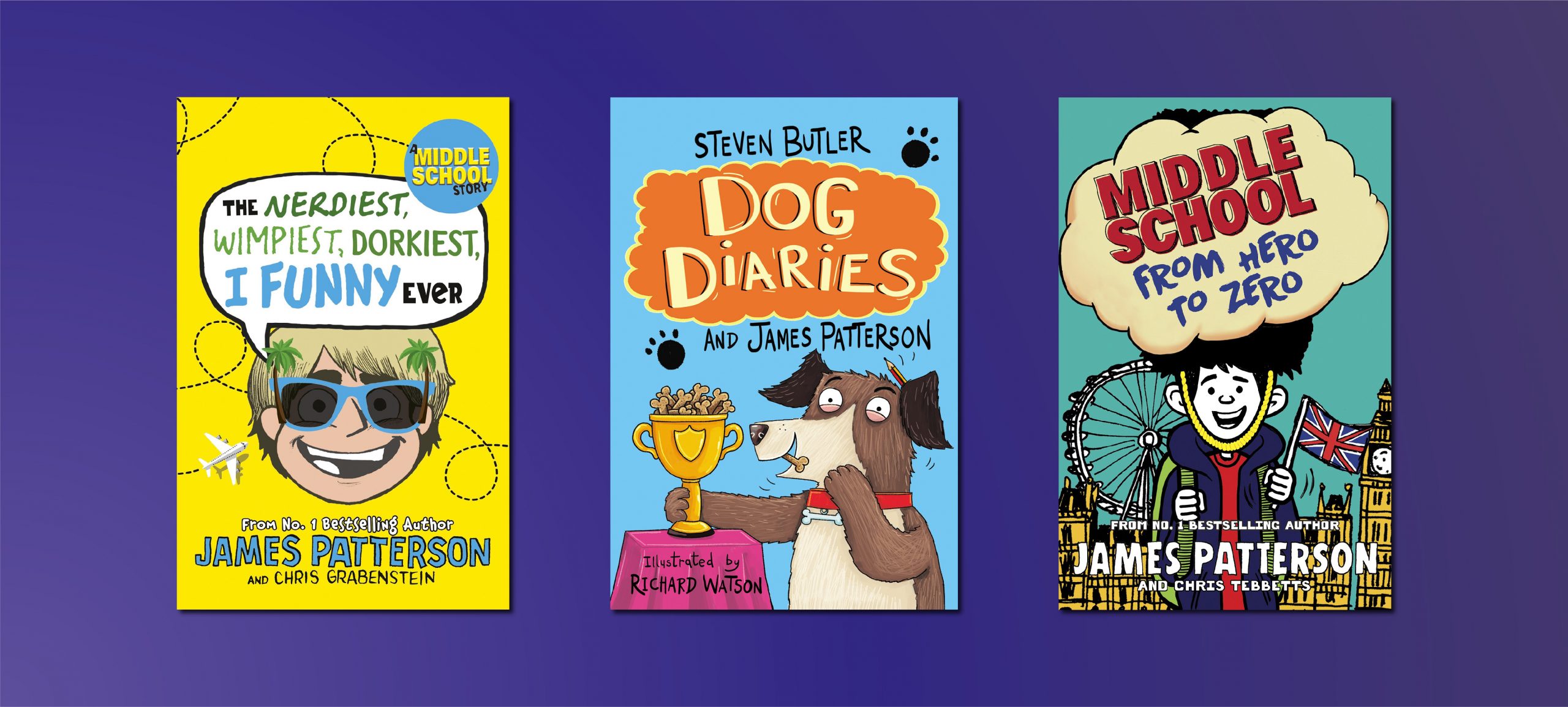
From Hero to Zero is his latest book, in which Rafe visits the incredible city of London with his class. Out of all of his adventures, this trip could prove to be Rafe’s most embarrassing yet, undoing everything good he has going for him back home!
Here are three titles in The Middle School series by him that your little ones must read.
From Hero To Zero

 
After a mostly-successful stint at Hills Valley Middle School, Rafe is excited to visit the incredible city of London with his class. But it’s no surprise that Rafe’s bad luck follows him across the pond, putting him in one crazy situation after another – all under the watchful eye of his bad-tempered principal.
The Nerdiest, Wimpiest and Dorkiest

 
Comedian Jamie Grimm can’t help feeling like he’s reached the top – he has his own smash hit TV show and he’s won a national funny-kid competition. But now he’s taking his fame and fortune to international levels by competing in the upcoming world kid comic contest! Will Jamie prove that he’s the funniest kid on earth – or does he stand (or sit!) to lose his crown?
Dog Diaries


Oh boy, oh boy, oh boy! I’ve been waiting for ages to tell my story, and now it’s finally happening! Being Rafe’s dog isn’t always easy, but it is always EXCITING! I’ve got so much to tell you about:
-How I protect the yard from birds, raccoons, squirrels, raccoons, mail carriers…and did I mention RACCOONS?
-Sniffing pooch posteriors for the latest canine news.
-And the terrifying monster hiding in the hall closet: the vacuum cleaner!

For more posts like this, follow Penguin India on Facebook!

And The Ocean was Our Sky – the Birth of the Idea

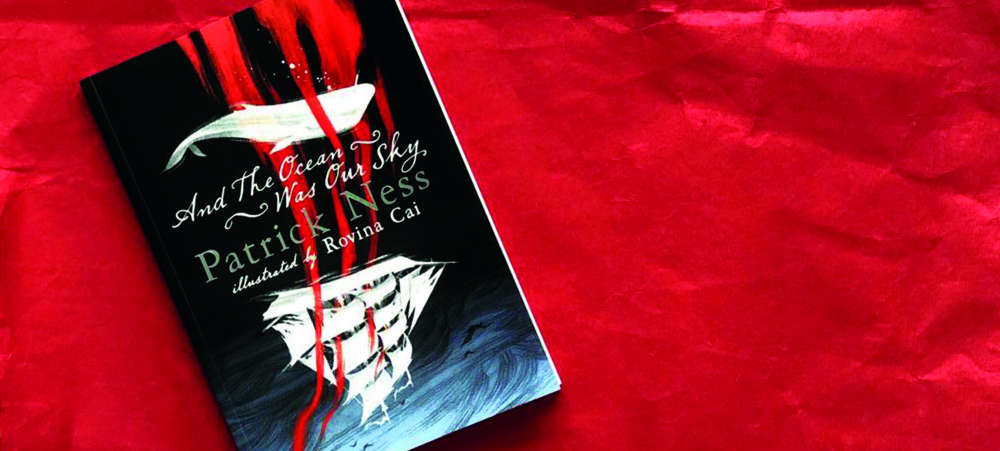
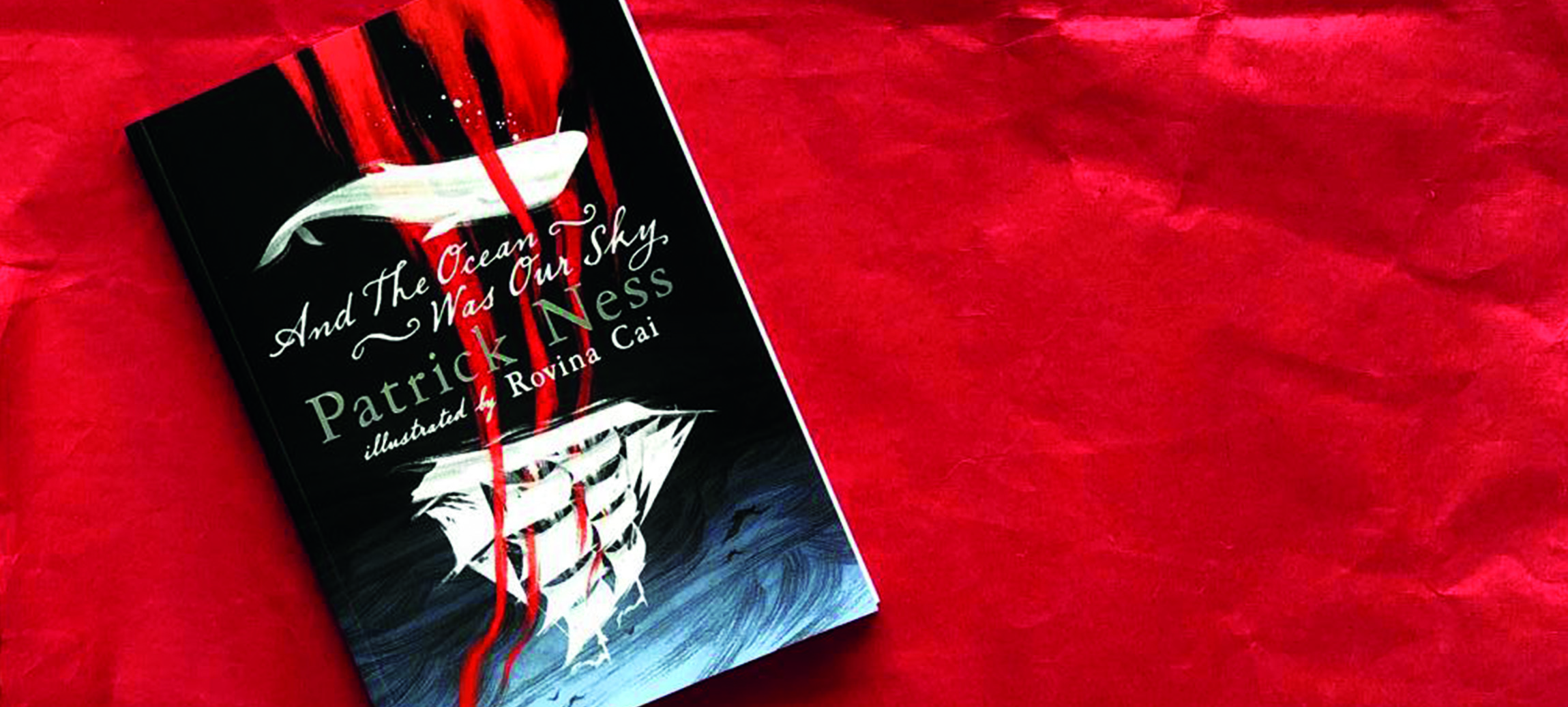
With lush and atmospheric art of Rovina Cai woven in throughout, “And The Ocean Was Our Sky” by Patrick Ness turns the familiar tale of “Moby Dick” upside down and tells a story all its own with epic triumph and devastating fate.
But where did the idea for And The Ocean Was Our Sky come from? Here is an excerpt from the introduction of the book by Patrick Ness, where he tells us just that. Take a look!


And The Ocean Was Our Sky started with a simple question, and then got weirder from there. I was thinking one day, “What if Moby Dick was told by the whale?” I’m always fascinated by who tells a story and how that changes it. A good example is a story like Wicked, where the Wicked Witch of the West has an entirely different take on Oz. I love that. Imagine if cats got to write all the books about what dogs are like.
But then the idea kept growing. What if whales hunted men like men hunted whales? What if there was a world where they both did that at the same time? What legends would arise? Most interestingly, how strange and compelling to look through the eyes of a main character who, at the start at least, views us as little more than prey.
Which spawned the character of Bathsheba, our narrator. Young, but tough. Moreover, a strikingly different kind of intellect and emotions than a human might have. I’m Scandinavian, and the stereotype about us is our stoicism. I’ve argued for years that stoicism doesn’t mean unemotional; it means privately emotional. And that’s what a whale felt like to me. There are deep, deep feelings in her, as deep as the sea. What happens when they get close to the surface?
And then the illustrations! Good God. I can barely draw a stick figure, and the beauty and breadth and drama that Rovina Cai has brought to this book – in much the same way the genius Jim Kay did on A Monster Calls – are astonishing to me as things I could never have thought of. She took the story to a whole new level. Bathsheba is alive and on the page. Facing her demons.
Because to my surprise, this became in the end a story of the devils we chase, the devils we hunt, the devils we perhaps create. And our need for constant vigilance over those very devils who would seek power over all of us. It became a very contemporary story of the power of rumour, the power that words have to change and sometimes even make reality. And not always in a good way.
And so here are the first couple of chapters of the story of my brave and powerful Bathsheba, coming to understand the scope of the world, hoping that she’s not too late…
All best,
Patrick Ness
March 2018

Your Puffin Reads this Autumn

This autumn, we have a list of books full of adventure for your little ones! You can send them to solve a mystery with Feluda and Topshe or to meet the ghosts from Ruskin Bond’s world. They can hang with the two most popular avatars of Lord Vishnu or read Sonia Mehta’s fun series on how to deal with feelings!
Here is the list of Puffin Reads to choose from:

Feluda Omnibus by Satyajit Ray


Including three unputdownable mysteries by master storyteller Satyajit Ray, this omnibus edition is the perfect introduction to the greatest exploits of Feluda and his sidekick, Topshe. Traversing fascinating landscapes and electrifying escapades, this collection is an absolute classic and a must-have for fans of detective fiction.

The Upside-down King by Sudha Murty


The tales in this collection surround the two most popular avatars of Lord Vishnu-Rama and Krishna-and their lineage. Countless stories about the two abound, yet most are simply disappearing from the hearts and minds of the present generation. Bestselling author Sudha Murty takes you on an arresting tour, all the while telling you of the days when demons and gods walked alongside humans, animals could talk and gods granted the most glorious boons to common people.

Wind on the Haunted Hill by Ruskin Bond


A gritty, hair-raising story about friendship, courage and survival from India’s favourite teller of tales, this stunning edition is an absolute must-have to introduce young readers to the magic of Ruskin Bond’s craft.
 

Dealing with Feelings Series by Sonia Mehta


Sonia Mehta is a children’s writer who believes that sparking off a child’s imagination opens up a world of adventure. Here is a list of books by her, that your little one will enjoy (and learn from)!

  1. Being Happy Is Fun
  2. It’s not nice to be jealous
  3. It’s okay to be confused
  4. Being Sad isn’t any fun
  5. Being Bored isn’t fun
  6. Being Silly is Silly


For more posts like this one, follow Penguin India on Facebook!

Know More About Satyajit Ray: the Author of Feluda Omnibus

The eminent filmmaker and author Satyajit Ray’s Feluda Omnibus consists of a set of three short stories featuring Feluda and his sidekick, Topshe. These stories contain the many exploits of the famous private investigator and his reliable partner, making for an absolute must-read for the young readers.
In The Emperor’s Ring, Feluda and Topshe happen to be in Lucknow for vacation when a priceless ring belonging to a Mughal emperor is stolen. Feluda finds himself in the midst of danger and the target of a vicious criminal. In The Golden Fortress, Feluda and his sidekick set course for Rajasthan in search for Dr. Hajra and a boy who claims to recall his previous life. On reaching Mukul’s Golden Fortress, they are surprised by the unfolding of one of their most beguiling cases. Their numerous fascinating adventures continue in the third story – Bandits of Bombay. Feluda and his companions find themselves in a treacherous state the exciting climax to which occurs  aboard a train during a film-shoot.
These thrilling short stories by Satyajit Ray make for an incredible read! But first, here are a few facts about the author:

Traversing fascinating landscapes and electrifying escapades, this collection is an absolute classic and a must-have for fans of detective fiction.
 

Seven Incredible Moments from the Wishing-Chair Series

Of all the reasons to love Enid Blyton, The Wishing-Chair series is a big one. These books are full of fun, as we follow Peter and Mollie on strange and wonderful adventures on the Wishing-Chair.
Together with Binky the pixie, the children visit exciting and magical places – from the Land of Wishes to Snoogle’s Castle and the Island of Surprises. They meet giants, goblins, witches, wizards and other amazing creatures along the way.
Let’s take a look at seven incredible moments from the series.
When the children discover the shop with ‘Antiques’ written on a label in the window…

“It was the most curious shop they had ever been in! Fancy keeping all those queer things in boxes! Really, there must be magic about somewhere. It couldn’t be a proper shop.”

When they wish to be out of the shop and back home, and the chair they are sitting in suddenly floats off the ground…

“And then the most extraordinary thing of all happened! The chair they were in began to creak and groan, and suddenly it rose up in the air, with the two children in it! They held tight, wondering what ever was happening!”

When the children help Binky the pixie escape from a horrid giant in a castle…

“‘Quick, quick, Binky!’ shouted Peter, and he dragged the amazed pixie to the magic chair. They all three sat in it, huddled together, and Peter shouted, ‘Take us home!'”

When they go to visit Binky’s village…

“It didn’t take them very long to get there. The chair put them down in the middle of the village street, and was at once surrounded by an excited crowd of pixies, who shook hands with Binky and asked him a hundred questions.”

When they go to the Land of Dreams, and the Wishing-Chair keeps changing…

“‘There goes our chair!’ said Binky sorrowfully. ‘It looks as if we are here for ever now! First it turned into a dog, then into a duck, and now into ice-cream! This is a horrid adventure!'”

When a witch puts a spell on the garden so the children can’t escape…but the Wishing Chair saves the day!

“They saw something flying around the garden, like a big black bird! Mollie started – and then she leapt up and whispered as loudly as she dared – ‘It isn’t a bird! It’s the dear old Wishing-Chair! It’s come to find us!'”

When some elves invite the children to Magician Greatheart’s party…

“There were hundreds of fairy folk there of all kinds – gnomes, goblins, brownies, fairies, elves, pixies – but only two children, so Mollie and Peter felt most honoured.”


Jump aboard the Wishing-Chair and whizz off on three magical adventures! For more posts like this one, follow Penguin India on Facebook!

Not Just Grades- An Excerpt

In the race to admit more and more children in privately run, English-medium schools and orient them to a world of cut-throat competition and grades-based performance, the quality of education is suffering.
Not Just Grades by Professor Rajeev Sharma, is about schools that have proved that it is possible to yield positive personal development together with academic excellence. This book aims to show how these schools achieve overall development of their student as well as establish a healthy learning environment with creative and innovative ideas.
Here is an excerpt from the book:


Education is a lifelong process and schooling provides the foundation for it. One needs to articulate the objectives of education that can be achieved through schooling. Our difficulty begins here. There is a diversity of views regarding the goal of education and how schools should teach children. This may be part of the reason why schools differ so widely from one another. Additionally, there may also be a variance between the stated purposes of schools and what they actually attempt to deliver or are able to deliver.
SOME VIEWS ABOUT EDUCATION

  1. Education has large, consistent returns in terms of income; it counters inequality. For individuals, it promotes employment, earnings, health, and helps in reducing poverty. For societies, it drives long-term economic growth, spurs innovation, strengthens institutions and fosters social cohesion. (World Bank, 2017)
  2. Every individual has a unique potential, regardless of their physical or psychological inequality. The goal of education is to aid every individual to achieve their unique potential so that they may make their unique contribution to society. (Dewey, as cited in Garrison and Neiman, 2003, 27)
  3. Education is ‘the practice of freedom’, the means by which men and women deal critically and creatively with reality and discover how to participate in the ‘transformation of the world’. (Freire, 1977, 13)
  4. The function of education is ‘to bring about a mind that will not only act in the immediate but go beyond . . . a mind that is extraordinarily alive, not with knowledge, not with experience, but alive’. (Krishnamurthy, 2003)
  5. Education should be the stepping stone to knowledge and wisdom that ultimately helps the seeker on the spiritual path. It should not be seen as a narrow means of making careers and achieving social status, but for seeking a larger role for self and society. (Mahatma Gandhi on education, Gandhi Research Foundation, accessed 2016)

The points of view shared above represent a diverse and wide spectrum of goals: from removing inequality in society through skill building to seeking knowledge and wisdom for pursuing a spiritual path to developing capacity to help people participate in transforming the world. There is yet another view that education should help individuals in discovering their true potential and contribute to society. Some others emphasize that education should aim at building moral values; develop a thinking mind and soul. The goals of acquiring skills to make a living, of developing the full potential of an individual or to transform society are all positive and worth pursuing, but they are very different from each other. If the goals of education are so different, will their pursuit require a different curriculum and process of teaching, learning and evaluation? Will it make schools different from one another? Probably, it will. That is one of the reasons why a school aiming to provide ‘necessary skill to children so they can earn a living and also help remove poverty’ (World Bank, 2017) will be very different from a school that aims to educate ‘not only for making careers, but equipping the individual for a larger role for self and society’ (Gandhi). These could be some of the reasons why schools differ with respect to what they teach and how they teach. However, there are many historical, political and economic reasons that have shaped schools and their practices in current times. Some of these are reviewed briefly in the following section.
Centrality of Schooling
Schooling covers a substantial period of an individual’s life, from the formative years till adolescence or early adulthood. During this period, a whole range of physiological, psychological and sociological changes take place in children that may cause the overall experience of schooling to be both exciting and turbulent at the same time. Once past, this cannot be undone; it is not plausible to go back to school. If time, resources and circumstances permit, one can go for new or additional courses/studies to acquire additional competencies or gain knowledge, but this is for a much shorter duration as compared with the time spent in school.
With schooling, the time which is gone cannot come back. The experiences one has had cannot be relived. The impact that schooling might have on a growing child is long-lasting. The experience at school can be extremely positive and remain an inspiration throughout life or it could be a traumatic one and leave a lasting scar on an individual’s life. Or it can just be ordinary and unexciting. Whatever the case may be, the fact remains that schooling is an important part of one’s life and the experience stays with us for a long time afterwards.


Not Just Grades is about schools that have proved that it is impossible to weave positive personal development together with academic excellence.
AVAILABLE NOW!

error: Content is protected !!