Publish with Us

Follow Penguin

Follow Penguinsters

Follow Penguin Swadesh

Seven Incredible Moments from the Wishing-Chair Series

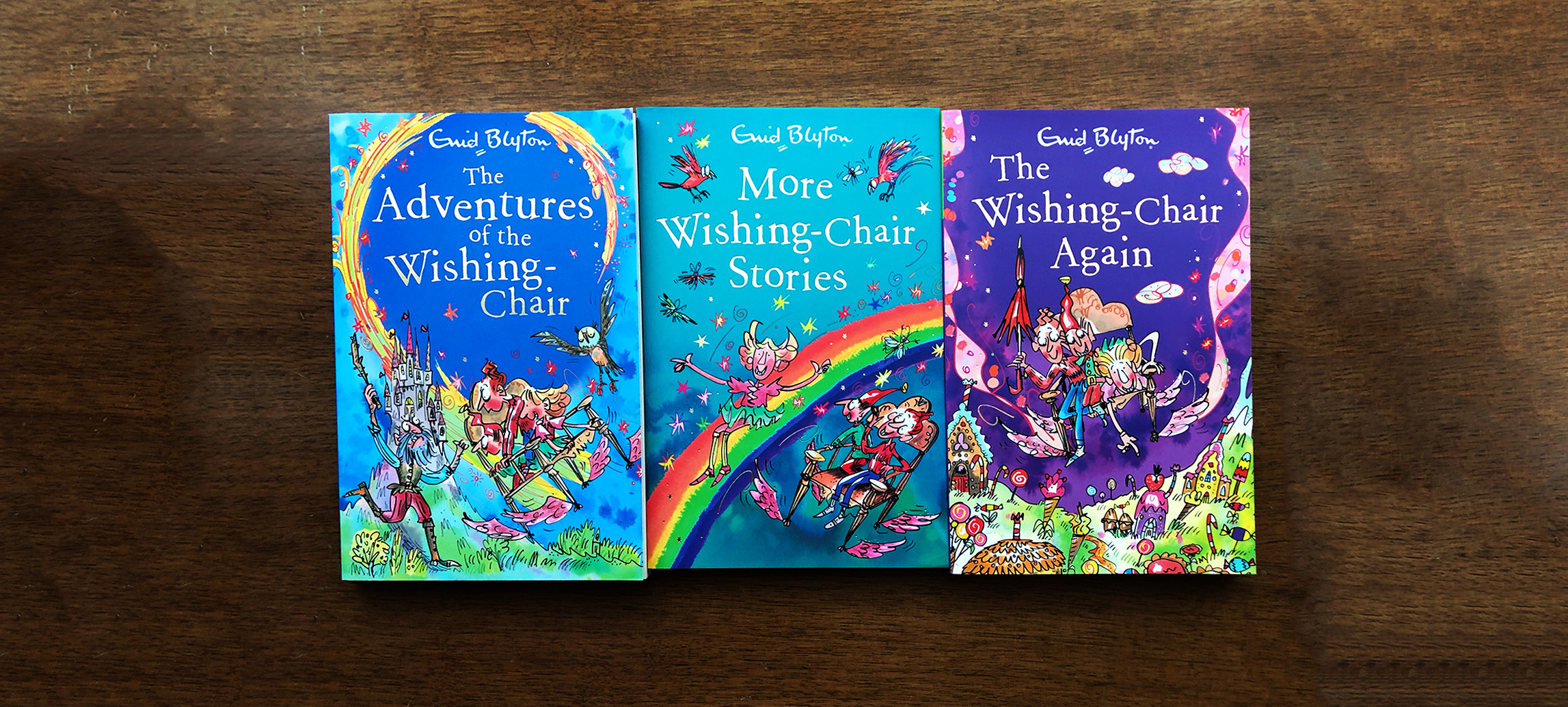
Of all the reasons to love Enid Blyton, The Wishing-Chair series is a big one. These books are full of fun, as we follow Peter and Mollie on strange and wonderful adventures on the Wishing-Chair.
Together with Binky the pixie, the children visit exciting and magical places – from the Land of Wishes to Snoogle’s Castle and the Island of Surprises. They meet giants, goblins, witches, wizards and other amazing creatures along the way.
Let’s take a look at seven incredible moments from the series.
When the children discover the shop with ‘Antiques’ written on a label in the window…

“It was the most curious shop they had ever been in! Fancy keeping all those queer things in boxes! Really, there must be magic about somewhere. It couldn’t be a proper shop.”

When they wish to be out of the shop and back home, and the chair they are sitting in suddenly floats off the ground…

“And then the most extraordinary thing of all happened! The chair they were in began to creak and groan, and suddenly it rose up in the air, with the two children in it! They held tight, wondering what ever was happening!”

When the children help Binky the pixie escape from a horrid giant in a castle…

“‘Quick, quick, Binky!’ shouted Peter, and he dragged the amazed pixie to the magic chair. They all three sat in it, huddled together, and Peter shouted, ‘Take us home!'”

When they go to visit Binky’s village…

“It didn’t take them very long to get there. The chair put them down in the middle of the village street, and was at once surrounded by an excited crowd of pixies, who shook hands with Binky and asked him a hundred questions.”

When they go to the Land of Dreams, and the Wishing-Chair keeps changing…

“‘There goes our chair!’ said Binky sorrowfully. ‘It looks as if we are here for ever now! First it turned into a dog, then into a duck, and now into ice-cream! This is a horrid adventure!'”

When a witch puts a spell on the garden so the children can’t escape…but the Wishing Chair saves the day!

“They saw something flying around the garden, like a big black bird! Mollie started – and then she leapt up and whispered as loudly as she dared – ‘It isn’t a bird! It’s the dear old Wishing-Chair! It’s come to find us!'”

When some elves invite the children to Magician Greatheart’s party…

“There were hundreds of fairy folk there of all kinds – gnomes, goblins, brownies, fairies, elves, pixies – but only two children, so Mollie and Peter felt most honoured.”


Jump aboard the Wishing-Chair and whizz off on three magical adventures! For more posts like this one, follow Penguin India on Facebook!

Not Just Grades- An Excerpt

In the race to admit more and more children in privately run, English-medium schools and orient them to a world of cut-throat competition and grades-based performance, the quality of education is suffering.
Not Just Grades by Professor Rajeev Sharma, is about schools that have proved that it is possible to yield positive personal development together with academic excellence. This book aims to show how these schools achieve overall development of their student as well as establish a healthy learning environment with creative and innovative ideas.
Here is an excerpt from the book:


Education is a lifelong process and schooling provides the foundation for it. One needs to articulate the objectives of education that can be achieved through schooling. Our difficulty begins here. There is a diversity of views regarding the goal of education and how schools should teach children. This may be part of the reason why schools differ so widely from one another. Additionally, there may also be a variance between the stated purposes of schools and what they actually attempt to deliver or are able to deliver.
SOME VIEWS ABOUT EDUCATION

  1. Education has large, consistent returns in terms of income; it counters inequality. For individuals, it promotes employment, earnings, health, and helps in reducing poverty. For societies, it drives long-term economic growth, spurs innovation, strengthens institutions and fosters social cohesion. (World Bank, 2017)
  2. Every individual has a unique potential, regardless of their physical or psychological inequality. The goal of education is to aid every individual to achieve their unique potential so that they may make their unique contribution to society. (Dewey, as cited in Garrison and Neiman, 2003, 27)
  3. Education is ‘the practice of freedom’, the means by which men and women deal critically and creatively with reality and discover how to participate in the ‘transformation of the world’. (Freire, 1977, 13)
  4. The function of education is ‘to bring about a mind that will not only act in the immediate but go beyond . . . a mind that is extraordinarily alive, not with knowledge, not with experience, but alive’. (Krishnamurthy, 2003)
  5. Education should be the stepping stone to knowledge and wisdom that ultimately helps the seeker on the spiritual path. It should not be seen as a narrow means of making careers and achieving social status, but for seeking a larger role for self and society. (Mahatma Gandhi on education, Gandhi Research Foundation, accessed 2016)

The points of view shared above represent a diverse and wide spectrum of goals: from removing inequality in society through skill building to seeking knowledge and wisdom for pursuing a spiritual path to developing capacity to help people participate in transforming the world. There is yet another view that education should help individuals in discovering their true potential and contribute to society. Some others emphasize that education should aim at building moral values; develop a thinking mind and soul. The goals of acquiring skills to make a living, of developing the full potential of an individual or to transform society are all positive and worth pursuing, but they are very different from each other. If the goals of education are so different, will their pursuit require a different curriculum and process of teaching, learning and evaluation? Will it make schools different from one another? Probably, it will. That is one of the reasons why a school aiming to provide ‘necessary skill to children so they can earn a living and also help remove poverty’ (World Bank, 2017) will be very different from a school that aims to educate ‘not only for making careers, but equipping the individual for a larger role for self and society’ (Gandhi). These could be some of the reasons why schools differ with respect to what they teach and how they teach. However, there are many historical, political and economic reasons that have shaped schools and their practices in current times. Some of these are reviewed briefly in the following section.
Centrality of Schooling
Schooling covers a substantial period of an individual’s life, from the formative years till adolescence or early adulthood. During this period, a whole range of physiological, psychological and sociological changes take place in children that may cause the overall experience of schooling to be both exciting and turbulent at the same time. Once past, this cannot be undone; it is not plausible to go back to school. If time, resources and circumstances permit, one can go for new or additional courses/studies to acquire additional competencies or gain knowledge, but this is for a much shorter duration as compared with the time spent in school.
With schooling, the time which is gone cannot come back. The experiences one has had cannot be relived. The impact that schooling might have on a growing child is long-lasting. The experience at school can be extremely positive and remain an inspiration throughout life or it could be a traumatic one and leave a lasting scar on an individual’s life. Or it can just be ordinary and unexciting. Whatever the case may be, the fact remains that schooling is an important part of one’s life and the experience stays with us for a long time afterwards.


Not Just Grades is about schools that have proved that it is impossible to weave positive personal development together with academic excellence.
AVAILABLE NOW!

Meet the Caravan Family

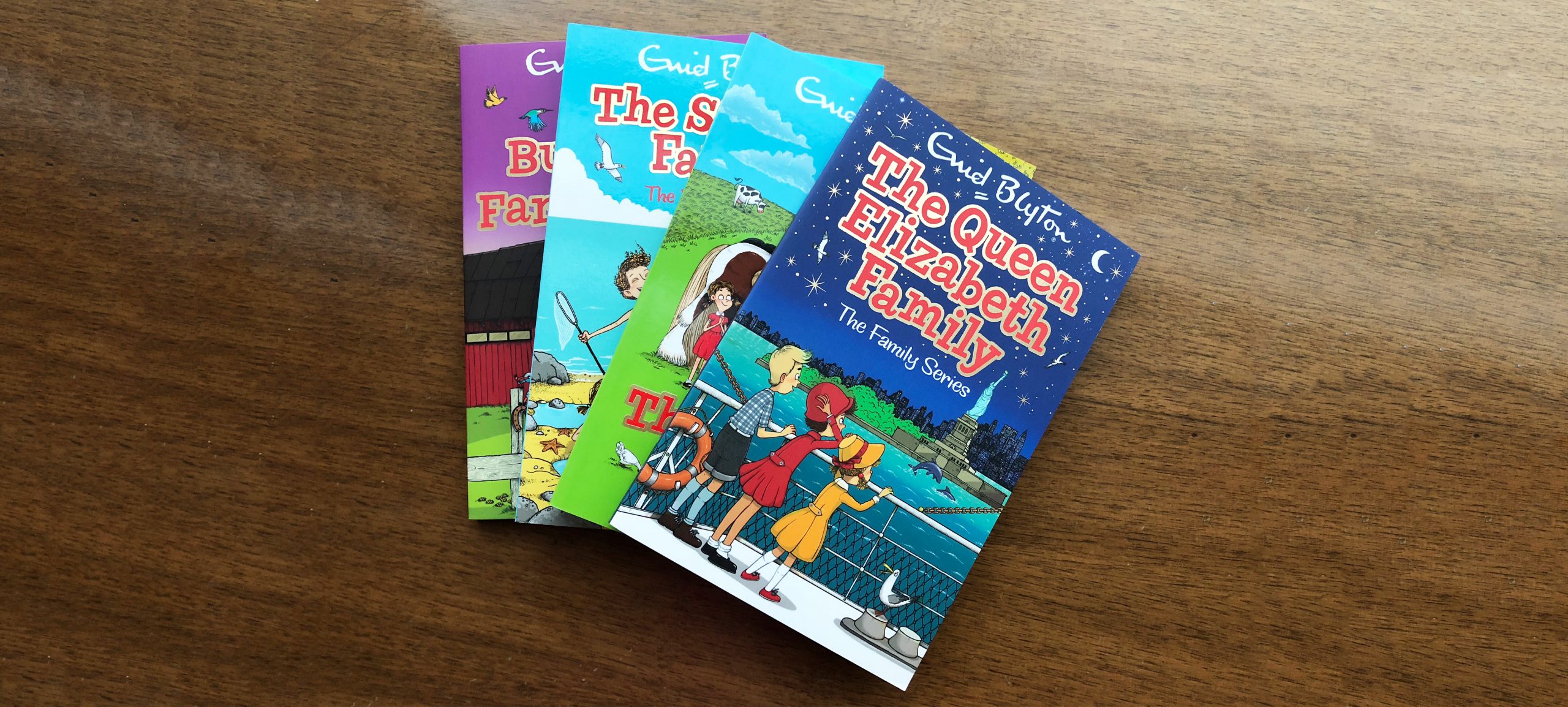
Everyone at school calls Mike, Belinda and Ann the Caravan Family, because they live in two caravans. The children live at school from Monday to Friday in term-time, and come back to the caravans at weekends. Their lives are full of adventure, as we can see in Enid Blyton’s The Family Series.
Let’s meet the family!
Ann is the youngest, and the baby of the family. Before the family’s trip to New York her parents are talking about sky scrapers and she says:

“‘I’d like to climb up to the top of one and catch a cloud,’ said Ann. ‘I’d tie it to my wrist and fly it like a balloon.'”

Mother is caring and kind, and before her and Daddy’s trip to America she tells the children, who are going to stay with their aunt and uncle on Buttercup Farm:

“‘Now mind you’re good and helpful,’ said Mummy. ‘And be kind to everyone, and remember to say your prayers every single night, and be sure to put Daddy and me into them.”

Responsible Belinda, when helping to take care of the hens at Buttercup farm, tells her aunt:

“‘I won’t get tired of it and give up. I promise I won’t. Well – if I do get tired, I still won’t give up! Will that do?'”

Daddy loves to take his family on holidays and adventures. When the children start to ask him if they can go to the beach, he says:

“‘Well, before you begin, let me break the news to you,’ said Daddy firmly. ‘Whatever ideas you’ve got in your head have got to come out. I’ve no money to spend on a summer holiday by the sea! That is – if you want to go to a hotel. The only thing I can do for you this summer is to let you go away somewhere fresh and new in the caravans.'”

Mike, who makes a selfless decision when their cabin on the ship has only one bed by the port-hole:

“He looked longingly at the bed by the porthole. He badly wanted it himself, but he was very unselfish with his two sisters.”
 

For more posts like this one, follow Penguin India on Facebook!

The Secret Of The Sage: The Birth of the Kalki Chronicles

Ever wondered what it takes to come out with a book: and a good one at that? What the book-writing process is and how the author plans everything out?
Abhinav, the author of The Sage’s Secret tells us – in this special piece – all about the birth of the Kalki Chronicles. The book is centered around one interesting question: What if the legend of Kalki, the tenth avatar of Vishnu, is an elaborate hoax created by Lord Krishna?
He takes us through the story behind Kalki, tells us about the research, the characters and explores the past and present. We must warn you though:

[Warning: Article Contains Spoilers]

THE STORY BEHIND KALKI
The Kalki Chronicles was conceptualized around six years back, with a simple thought behind it: What if Kalki was really to exist in our world? What were to happen if the last avatar has already taken birth?
As a child, tales and legends from the Indian mythology fascinated me. And this was when the allure of Kalki took hold as well. During my school days, one of my teachers broached the topic of Kalki, while explaining the concept of the Yugas. The idea itself was captivating: the tenth and final avatar of one of Hindu pantheon’s most powerful Gods that was yet to manifest, as told in legends.  That’s where the story started. That is how the idea for the Kalki Chronicles came to me: the story of a god, the destructive avatar of the Preserver God, born in the current, modern era, trying to find balance. This paradoxical idea and the character in itself needed to be explored: his perception of the world, his life in the contemporary times, his motivations and sense of identity and agency, and the hardships the avatar would face when he tries to restore balance on earth. I wanted to know what would happen, so I began writing the story.
The Research
My earliest sources of stories from the Indian mythology were my grandfather and mom. Amar Chitra Katha comics, some articles I read here and there, and of course, the famous television series that aired during the time, added to it as I grew older.  However, I always kept on going back to my grandfather’s oral narration. Sadly, as it happens, stories tend to fade away with the course of time. But the thirst of knowing more seemed unquenchable, when I look back now, and so I asked him to narrate more and more. And so, he picked and chose and told me more tales from the Mahabharata and the Ramayana, which I later weaved into the plot for the series. While drawing the blueprint for the series, I also read C. Rajagopalachari’s retelling of the Epic that is simply titled Mahabharata.
Exploring the Past and the Present
The Kalki Chronicles takes the reader through winding timelines that commences post the great war of Kurukshetra, and it doesn’t stop there. We are transported to the contemporary era, years 2005 and then 2025. For me, it was an obvious and logical choice that we started the journey with Krishna, one of the greatest strategists in any and all mythology, revealing a certain truth to Sage Dweepa around 28 years after the Great War. I think it will be fair to say we begin at the crest of the tale. Therefore, from the perspective of narration, the story flows from past and present and vice versa. At a personal level, this is what makes storytelling an exciting experience for me. So to keep the reader intrigued, I keep going back and forth between these two timelines. The past, for the most part, sees Krishna, while the present is Anirudh’s life.
As you proceed through the series you’ll notice two sequences at work—one that follows Kalki’s efforts to restore the balance between man and the universe, and the second which follows his fight against Kali (not to be confused with the Goddess Kali or Kalika). I wanted to add some elements of fantasy in this book and this plotline helped me explore the avatar’s supernatural powers. Another major theme, if readers read between the lines, is the concept of mortality, which helped keep things in close proximity with realism—something I didn’t want to let go off, lest the story became too fantastical in nature. I wanted to explore both these concepts, trying to strike a balance between the two, however, taking the liberty to let my imagination wander into various possibilities, at times.
The Gods and Characters
Sage Dweepa is one of the first characters we meet in the book. He is the sage in The Sage’s Secret. Hence one of the pivotal people in the book without whom the story would not advance and our protagonist would be, to put it simply, clueless. Some might consider him a sidekick of sorts, first to Krishna and then to Kalki. He’s one of those personalities that are generally silent but present in the backdrop, invisible but important to the storyline. So the sage here is the secret-keeper and the only person on Earth who knows about Krishna’s grand ‘lie’, his master plan. I needed a confidante who would share Krishna’s burden and undertake this quest with Kalki, and the Sage was the answer. Thus, “The Sage’s Secret”, rightly so, is the truth about the Kalki avatar which Dweepa treasures and has to live with, in the book.
It might be strange reading about the sidekick before the main character, but that’s how the story proceeds in this saga. But by no means is Anirudh on the sidelines; he is very much in the thick of things. I have tried to play with the characters of Krishna and Kalki; where one ends, the other emerges. As I elaborated the plot sketch for the series, there were a few things I perceived early on: that Krishna had to be one of the main focal points of this book. His role alongside Kalki’s kept coming up incessantly; however, there wasn’t any friction between the two characters in terms of space; the presence of both has a certain harmony and no one jostles for space. One of the reasons for this could be that Kalki is an extension of Krishna (somewhat). We don’t see a destructive God, obliterating his way to attain justice and eliminating evil. We witness a young boy all of twenty, who has a quiet but resolute personality, which is very much like his previous avatar. The age that I chose is intentional; Anirudh is beyond teenage but on the cusp of manhood. He’s not completely mature, but is getting there by his own understanding of the world and experiences. I wanted him to see the world as a grown man, but perceive it with a certain naivety. There is a assured innocence and immaturity in his perception at this age, which makes it perfect to introduce him to his destiny as Kalki.
And finally, we get to the antagonist. So, at this point, if you haven’t read the book and wish to, you should stop reading this article.
Kali (pronounced k-uh-lee and not be confused with Kali the Hindu Goddess, as I’ve said before) is the primary antagonist of Kalki. Therefore, I chalked out his personality and role in the series in the nascent stages. As I drew his role for the book, I remembered him as literally the personification of evil – as I recalled my conversations with my grandfather on this subject. It is called Kali Yug because of him; it is his era, the era of evil. My thoughts on Kali, as the antagonist of the book, made me dig deeper into my childhood memories and conversations, and also my knowledge of the Mahabharata, and lead me to the realization that it should all start with Krishna as it all leads back to Krishna, even Kali. And thus, the yarn started spinning and the thread led me to Krishna, again. When you read the story, you might understand as to why I chose to start this saga with Krishna – it is only befitting to the god, a master at strategy and foresight.



Quotes to Celebrate Roald Dahl Day

Roald Dahl is one of the most beloved authors of our time and has encouraged children world over to read. Known to use fun, self-created words, he has created a magical world for children to grow up in, inspired from his own life as well as his imagination. With plenty of laughter and lots of lessons to be learnt, his books are the perfect companion for children (and adults too!).
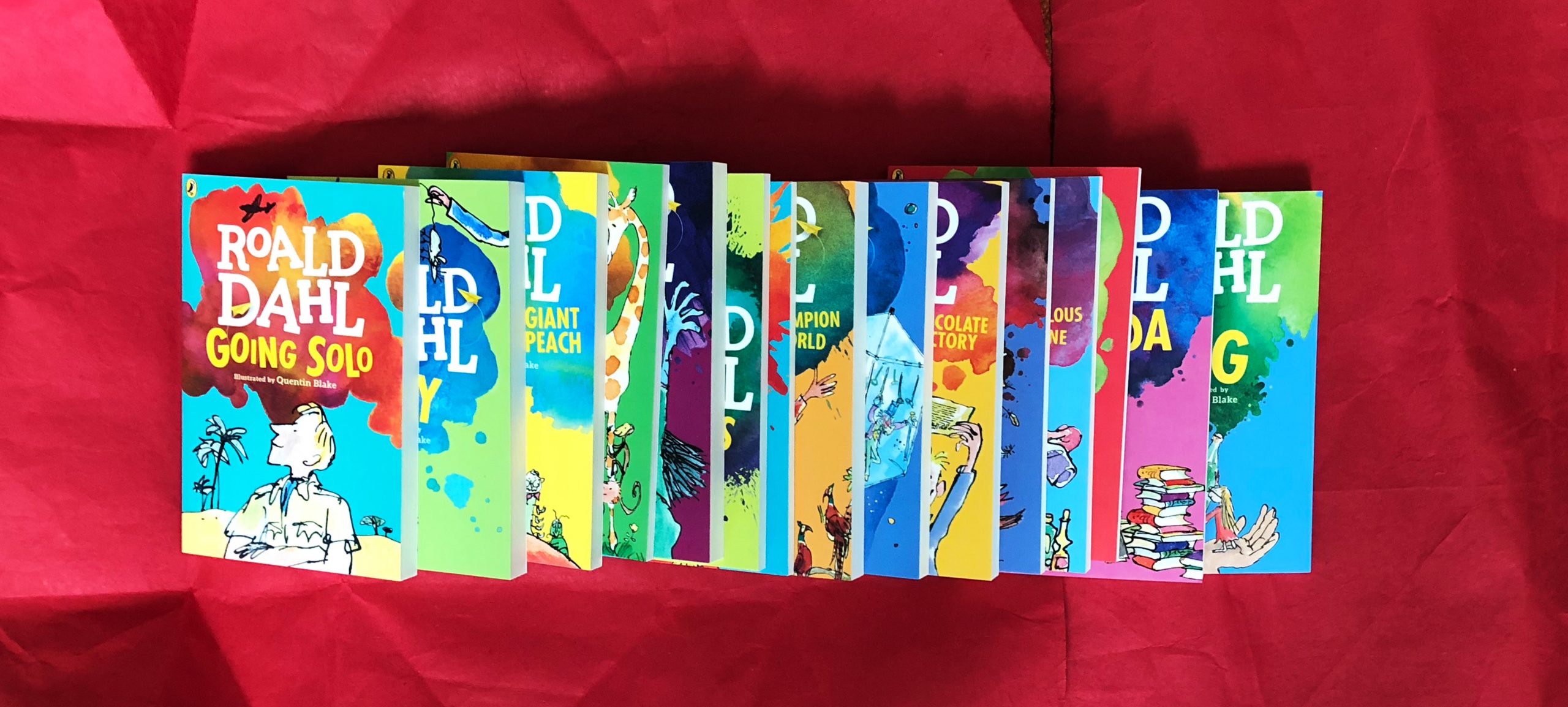
On occasion of his birthday, we got together quotes from fifteen of his books to remind us why we love him so. Take a look!

“A life is made up of a great number of small incidents and small number of great ones.” – Going Solo
“It is almost worth going away because it’s so lovely coming back.” – Boy
“Well, maybe it started that way. As a dream, but doesn’t everything? Those buildings. These lights. This whole city. Somebody had to dream about it first.” – James and the Giant Peach
“No book ever ends, when it’s full of your friends…” – The Giraffe and the Pelly and Me
“It doesn’t matter who you are or what you look like, as long as somebody loves you.” – The Witches
“You can have a wonky nose and a crooked mouth and a double chin and stick-out teeth, but if you have good thoughts it will shine out of your face like sunbeams and you will always look lovely.” -The Twits
“The magic finger is something I have been able to do all my life. I can’t tell you just how I do it, because I don’t even know myself.” – The Magic Finger
“What I have been trying so hard to tell you all along is simply that my father, without the slightest doubt, was the most marvelous and exciting father a boy ever had.” – Danny The Champion of the World
“A little nonsense, now and then, is relished by the wisest men.” – Charlie and the Great Glass Elevator

“So please, oh PLEASE, we beg, we pray,

Go throw your TV set away,
And in its place you can install,
A lovely bookshelf on the wall.” – Charlie and the Chocolate Factory
“I understand what you’re saying, and your comments are valuable, but I’m gonna ignore your advice.” Fantastic Mr Fox
“For a few brief moments he had touched with the very tips of his fingers the edge of a magical world.” – George’s Marvellous Medicine
“Tortoise, Tortoise get bigger, bigger. Come on Tortoise grow up, puff up, shoot up! Spring up, Blow up swell up! Gorge! Guzzle! Stuff! Gulp! Put on fat, Tortoise, Put on fat! get on, Get on! Gobble food!!” – Esio Trot
“If you are good, life is good.” – Matilda
“’Meaning is not important, said the BFG. ‘I cannot be right all the time. Quite often I is left instead of right.’” – The BFG

The Roald Dahl Reading Challenge

Author Kate DiCamillo said, “Reading should not be presented to children as a chore, a duty. It should be offered as a gift.” Which book or author would make the perfect gift of reading for a child? One name popular across generations is Roald Dahl.
Roald Dahl is a favorite among children and grown-ups alike, thanks to the fun adventures he takes us on! From books for 4 year olds to 13 year olds, all children are bound to love him! His loving characters and creative words are sure to keep your child (and even you) hooked!
Depending on their age, these are the books by Roald Dahl you should pick up for your little ones, and give them a fun challenge to read them all!

4-7 Years: 

Opposites

Busy little hands can lift the flaps to discover the opposites with iconic illustrations of Dahl’s much loved characters from the one and only, Quentin Blake.
123

With beautiful, bright, colourful illustrations from Quentin Blake, plus a lift the flap surprise at the end, this is the perfect first baby book for all budding Dahl fans.
Billy and the Minpins 

Billy’s mum says he must never go out through the garden gate and explore the dark forest beyond. So, one day, that’s exactly what he does! There he meets the Minpins, tiny tree-dwelling people whose children are the size of matchsticks. They live in fear of the terrible, galloping GRUNCHER. Will it gobble Billy too – or can he find a way to defeat the hungry beast?
 
8-10 years:
James and the Giant Peach

James is  very lonely until one day something peculiar happens. At the end of the garden a peach starts to grow and GROW AND GROW. Inside that peach are seven very unusual insects – all waiting to take James on a magical adventure. But where will they go in their Giant Peach and what will happen to the horrible aunts if they stand in their way? There’s only one way to find out . . .
The Twits

With filthy hair all over his face and horrid plots growing in his mind, Mr Twit is one of the nastiest people you’ll ever meet and Mrs Twit is just as bad and even uglier! But they don’t stop at tricking each other: neighbouring children and even the local birds are in danger, and that’s where the Muggle-Wumps come in. This family of monkeys has had enough of the Twits’ tricks and, with the help of the handsome Roly-Poly Bird, they decide it’s time for sweet revenge…
The Witches

The Grand High Witch of all the World has gathered together the witches of England for an annual conference at the Hotel Magnificent in Bournemouth. Their agenda is the elimination of all the children in the country and the prospects for their young victims look bleak. But the Grand High Witch and her cronies have reckoned without the spark and ingenuity of a young guest at the hotel and his rather brilliant grandmother…
Charlie and the Great Glass Elevator

WHOOSH! Inside the Great Glass Elevator, Willy Wonka, Charlie Bucket and his family are cruising a thousand feet above the chocolate factory.
They can see the whole world below them, but they’re not alone. The American Space Hotel has just launched. Lurking inside are the Vernicious Knids – the most brutal, vindictive murderous beasts in the universe.
So grab your gizzard! Hold your hats! Only Charlie and Willy Wonka can stop the Knids from destroying everything!
 

10-13 years:

Boy; Tales of Childhood

As a boy, all sorts of unusual things happened to Roald Dahl. Boy, Roald Dahl’s bestselling autobiography, is full of hilarious anecdotes about his childhood and school days, illustrated by Quentin Blake.
Going Solo

In 1938 Roald Dahl was fresh out of school and bound for his first job in Africa, hoping to find adventure far from home. However, he got far more excitement than he bargained for when the outbreak of the Second World War led him to join the RAF.

Words of Wisdom from our Beloved, Ruskin Bond

Ruskin Bond has been capturing hearts with his writing for many years now. Most of us who grew up reading his work are happy to read almost anything by him especially as we realize how beautiful and relevant his quotes always are. Here are four quotes by him, that we hold close to our hearts from his new book, The Beauty of All My Days.


The Beauty of All My Days is Ruskin Bond’s latest book. Each chapter of this memoir is a remembrance of times past, an attempt to resurrect a person or a period or an episode, a reflection on the unpredictability of life. For more posts like these, check out our Facebook page!

Four Things to Know About Jammu and Kashmir

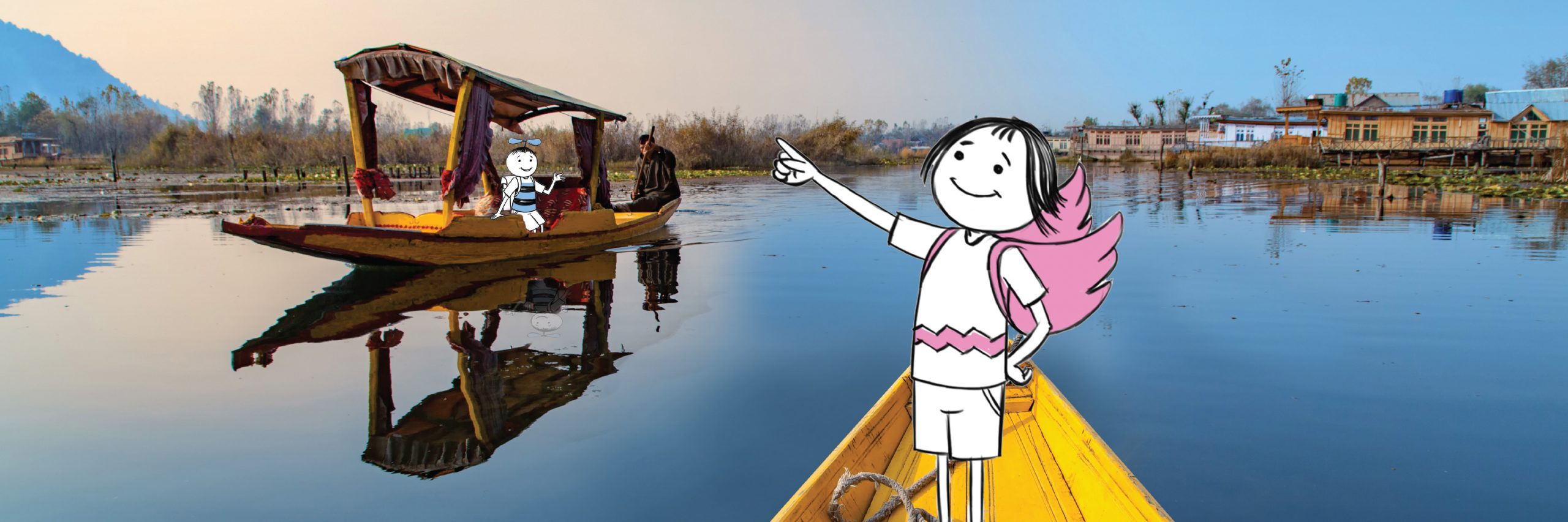
The Discover India series by Sonia Mehta brings to you and your young ones an opportunity to travel the land of Jammu and Kashmir in the book Discover India: off to Jammu and Kashmir.  Hop on to this joyride with Pushka, Mishki and Daadu Dolma for an adventure filled trip! Through song and dance, clothing and architecture, they will take you to the beating heart of Jammu and Kashmir.
Here are 4 things to know about Jammu and Kashmir:


With puzzles, crosswords and dozens of other activities, the books will entertain, educate and enlighten young minds.
AVAILABLE NOW!

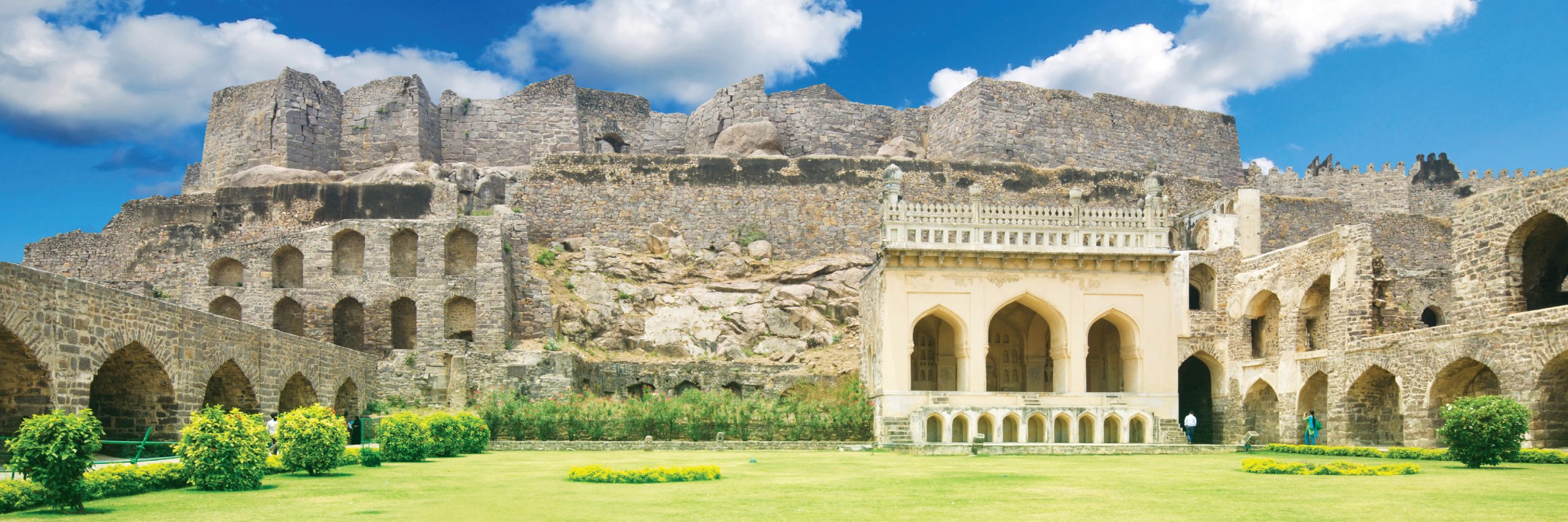
Four Things to Know About Telangana

From the Discover India series, we bring to you a yet exciting book Discover India: Off to Telangana. With Pushka, Mishki and Daadu Dolma, this book will tell you about fun facts and landmarks of Telangana. Showing all the wonderful places in the state, the book is sure to become a favourite with your young ones!
Here are four things to know about Telangana:


With puzzles, crosswords and dozens of other activities, the books will entertain, educate and enlighten young minds.
AVAILABLE NOW!

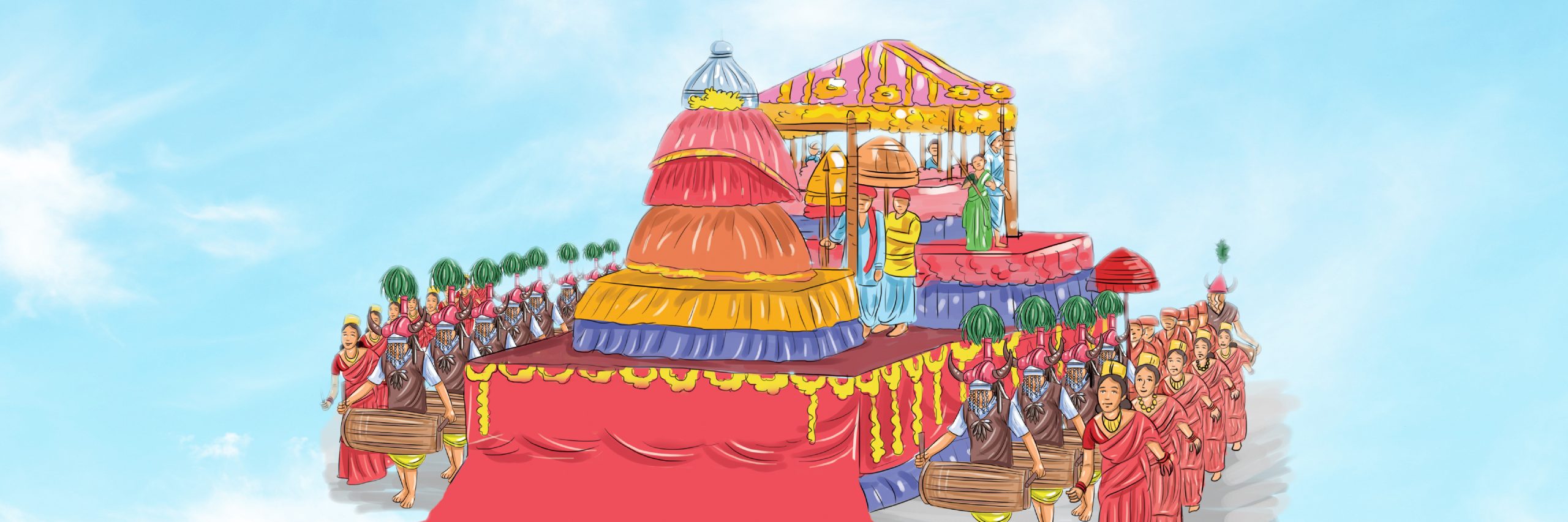
Four Things to Know About Chhattisgarh

The Discover India series is a delightful and educational read for the young reader curious about India and its vast diversity. Discover India: Off to Chhattisgarh by Sonia Mehta will transport your little ones to the land of Chhattisgarh, telling them about the major landmarks, heritage and culture of the state. This book is sure to make your children learn more about the state in an interactive way with the help of Pushka, Mishki and the witty Daadu Dolma.
Here are 4 things to know about Chhattisgarh:


With puzzles, crosswords and dozens of other activities, the books will entertain, educate and enlighten young minds.
AVAILABLE NOW
 

error: Content is protected !!