



Pelham Grenville Wodehouse is one of the best humorists known today to bibliophiles. He wrote more than ninety novels and some three hundred short stories over 73 years.
Along with his iconic characters Bertie Wooster and Jeeves, Wodehouse also created the world of Blandings Castle, home to Lord Emsworth and his cherished pig, the Empress of Blandings. His stories are never complete without the disreputable Ukridge; Psmith, the elegant socialist; the ever-so-slightly-unscrupulous Fifth Earl of Ickenham, better known as Uncle Fred; and those related by Mr Mulliner, the charming raconteur of The Angler’s Rest, and the Oldest Member at the Golf Club.
Here are 5 quotes by Wodehouse that make him a renowned humorists in the world of literature.


Did you just laugh your guts out? Tell us which quote did you find the funniest.
The classic pair returns! Jeeves and Wooster are all prepared to tickle your funny bone. Get your box sets here.
Category: Children’s Features
Children’s Features articles
Gift Your Child These Deliciously Spooky Tales This Halloween
Halloween is just around the corner and the chill in the air has begun to set in! As we pull out our pumpkin delicacies and prepare to make merry in the creepiest of costumes, here are a few amazingly spooky books for your child to feast on this Halloween!
Trick or treat? You tell us!
Secrets by Ruskin Bond

Set in the 1940s, all is not what it looks like in the sleepy little town of Dehradun. The quaint place has its set of dark secrets — from plucky old women to mysterious murderers, Ruskin Bond’s Secrets brings to life the delectably dark tales of a small town set in the black and white days.
Amelia Fang and the Barbaric Ball by Laura Ellen Anderson
 Have you met the inhabitants of Nocturnia yet? Nocturnia — a place where sparkles, colours and unicorns are things to be afraid of. Oh, and it’s also home to the little Amelia Fang and her pet pumpkin Squashy, who are in for some trouble as they race against time and discover that Nocturnia is much darker than they thought it is!
The Puffin Book of Spooky Ghost Stories
 An ominous collection of 13 spooky stories where you meet spirits in deserted bungalows, death traps on swings that take you a little too far away, a reincarnated goddess with an insatiable bloodthirst and a whole lot others from beyond the grave and the unknown!
The Witches by Roald Dahl

The Grand High Witch is out to get you! She loathes children and schemes to trick you by dressing up as an ordinary woman, while being an extraordinarily evil witch all along! Only a little boy and his grandmother can stop The Grand High Witch from coming for you. Will they succeed?
This Halloween, tell us which story you read to your child in the dead of the night and celebrated the autumn nip with a chill down your spine. Happy Halloween!
‘This is no ordinary cat’: The Nine Lives of Montezuma — An Excerpt
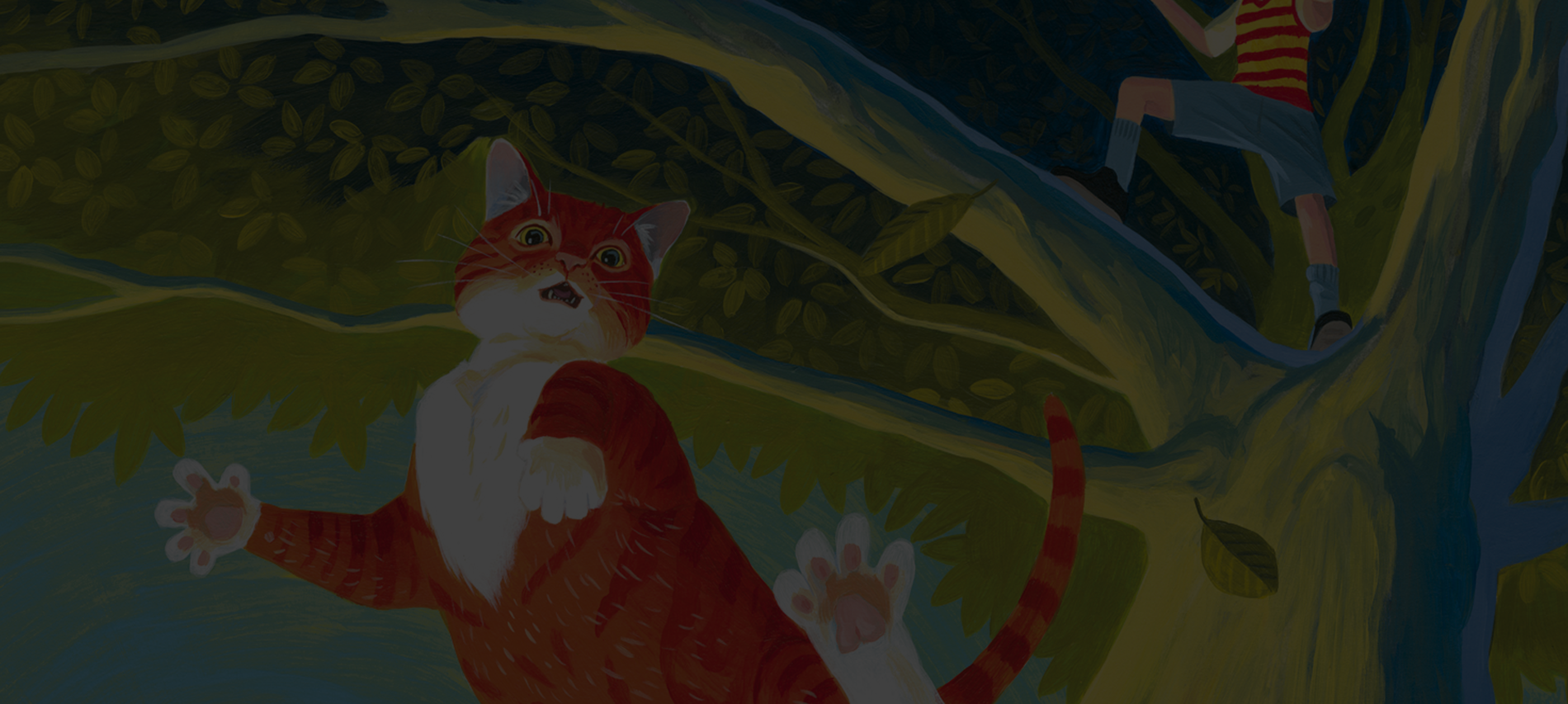
As the famous saying in English tells us every cat has nine lives, Michael Morpurgo’s The Nine Lives of Motenzuma proves that cats indeed are survivors in this big, bad world.
Montezuma, a ginger cat, is anything but your ordinary furry friend. As soon as he is discovered, the characters in the story realise that this cat is not a normal alley cat but a creature with magical powers, much like its namesake, the survivor King of the Aztec.
Here’s a short excerpt from the book.
He found Montezuma crouching at the end of a long tapering branch that hung out over the pond. The branch looked thick enough and safe enough near the trunk, but the further away it stretched the more fragile it looked. Matthew stood in the fork of the tree and considered all the alternatives, trying to ignore the warnings and advice from below. He could not climb out along the branch to Monty – the branch would not take his weight. He needed a net to throw out over the cat, but there was no-one who could bring a net up to him – neither his father nor his mother could climb trees – at least he had never seen them. He would have to talk the kitten back to safety, that was the only way.
‘Monty,’ he said in as soothing a tone as he could manage. ‘It’s me, Monty. You can’t stay out there all day. You’ll be all right now. I’ll take you down. Come on then, come on. I won’t hurt you.’
But the kitten crouched low, glued to the branch like lichen. He blinked back at Matthew, swallowing hard and mewing weakly every so often. Matthew talked on in a consoling, sympathetic tone; but he received no encouragement from Montezuma who never moved a muscle.
From down below his father was shouting up to him. ‘Can’t you get him down?’ A question which Matthew didn’t feel he could answer politely.
‘Fire Brigade,’ his mother shouted up. ‘What about the Fire Brigade?’ They looked so small down there in the yard. Matthew felt his parents had been getting smaller in recent years, but he had never seen them this small.
‘Not yet,’ Matthew shouted back. ‘Not yet. I’ll try one more thing.’
‘Do be careful, dear. Do be careful.’ His mother’s voice sounded hysterical, but then it always did whenever she shouted.
Matthew held onto the branch above him and edged out onto Montezuma’s branch, stepping sideways like a cautious crab. The two branches ran parallel for a few yards and then the upper one that Matthew was holding onto came to an abrupt halt. Matthew went as far as he could and then released the upper branch. For a moment he stood balancing with nothing to hold onto. The branch swayed underneath him and he lowered himself carefully until he was sitting astride the branch, his hands clasping it firmly in front of him. Like this he pulled himself along inch by inch until he knew he could go no further. The kitten was still well out of reach.
‘That’s far enough.’ His father’s shout was sharp. ‘No further. That’s far enough. The branch won’t take the weight. No further.’
Matthew knew he was right, but he was nearly there and it was only a few more feet. He lay now flat along the branch gripping behind with his feet, his hands holding on in front of him. ‘Come on Monty, come on down. Please, there’s a good kitten. Come on now.’ But as he released one hand to reach out towards the cat, he lost his balance and had to grab at the branch suddenly to retrieve himself. Alarmed, the kitten backed away, lost his grip and tumbled down through the air towards the pond. Matthew watched for the splash and saw his father running down across the yard towards the pond. The ducks evacuated the pond noisily, leaving Matthew’s father alone in the pond striding waist deep to the spot where Montezuma had fallen in. Matthew waited, closed his eyes and prayed. When he opened them his father was shouting up at him and laughing, holding up a dripping kitten. ‘Got him. He’s all right. The little divil’s still breathing.’
By the time Matthew had made the descent, his father was out of the pond and had pulled off his shoes. He was sitting on the ground taking his socks off and wringing out the water. ‘Your father will catch his death,’ said Matthew’s mother, who was holding on to Montezuma in a vice-like grip. ‘Here’s your Monty,’ she said. ‘You take him. And for God’s sake hang on to him. You worry me to death, you two. First you go climbing up trees and then he goes jumping into cold ponds – at his age. You should know better. Could have killed you both and all for what? For a kitten.’
‘For Monty,’ said Matthew, rubbing the kitten dry with the tail of his shirt. ‘This is no ordinary cat, you know. Can you imagine my Dad jumping into a pond to rescue any other cat? He’s dropped plenty of kittens into this pond, but this is the first one he’s ever pulled out and that’s a fact.’
‘And the last,’ said his father wriggling his wet toes. ‘Definitely the last.’
Find out which adventure Montezuma encounters next in this enchanting book by Michael Morpurgo!

Who Are Nicky and Noni and Why Should You Introduce Them To Your Children?
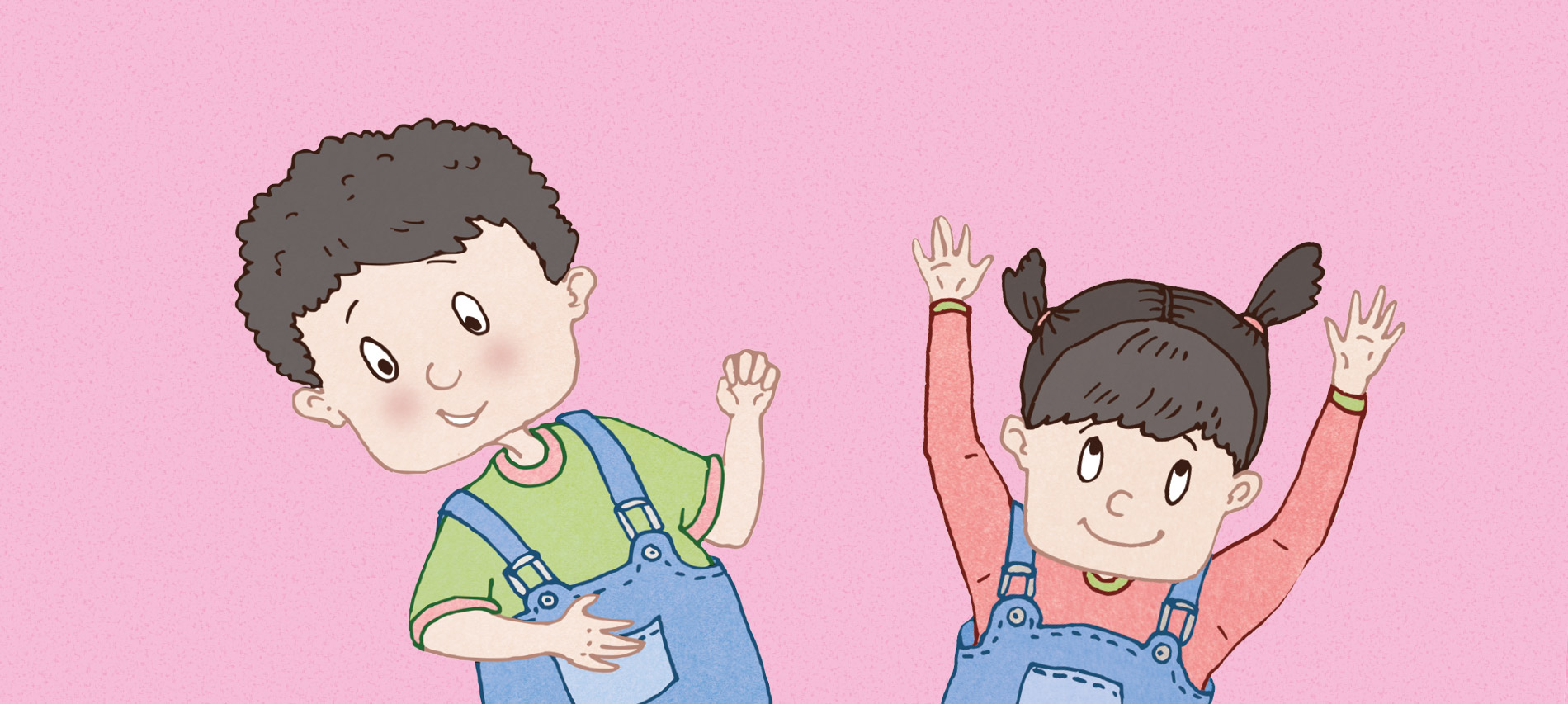
Meet Nicky and Noni — the uber cool twins from author Sonia Mehta’s new series of books for children — ‘My Book of Values’.
Like any kid, Nicky and Noni too love to engage in fun activities. But as kids, they get into trouble too.
Nicky and Noni now know that learning good values can be very cool. It can be fun, and super engaging!
Do you want to meet them?

Dear Moms and Dads,
Would you believe that your little one is already old enough to take small decisions by herself or himself? There will be a hundred tiny things that happen to them during the day, where they have to act in a certain way, take small calls and make their own judgement. This then is the right time to prepare and give them that sense of right and wrong that we all grew up with.
But it needs to be done subtly. Today’s child isn’t up to lectures and threats. This is the purpose of this series. Being able to differentiate right from wrong and good from bad, building a strong value system, learning to accept consequences—all through relatable stories and fun activities.
Nicky and Noni are typical twenty-first-century kids. Smart, communicative and alert, they know how to get their way. But as they go about their lives, they encounter situations and challenges during which their value system is tested.
Using Nicky and Noni as protagonists, and with activities that make your child think and apply certain concepts, the series highlights the importance of key values and how they make a difference in life.
We’ve tried to make the series fun and engaging while communicating a single message: that in today’s time, BEING GOOD IS COOL.
Find out what new lesson Nicky and Noni learnt today! Grab your copy of ‘My Book of Values’ by Sonia Mehta now!

Why Should Every Child Know the Story of Auggie Pullman?

The answer to that question is rather simple. It is because August ‘Auggie’ Pullman’s story teaches one about the importance of kindness, and how kindness is the only way one can stand up to bullies.
R. J. Palacio’s novel, Wonder, is a moving tale of how young August Pullman battles some of life’s most cruel adversities from a very young age with the simplest of weapons — kindness and love.
Here are a few times Palacio’s novel reminded us as to why it’s kindness that keeps the world going.
Sometimes, one needs to walk that extra mile.

The difference between being friendly and being a friend.

Kindness is a choice one has to make, not a quality one is born with.

The world could always do with a little more kindness.

Learn more about August’s extraordinary journey as he leaves home for the first time in his life to go to school in fifth grade. All August wants now is to be treated like an ordinary child. But what makes him extraordinary? Grab your copy today and find out!

4 Ways in Which You Can Improve Your Concentration in Mathematics
Mathematics is an integral part of our life but many of us think of it only as a subject to be studied in school or college. In How to Be A Mathemagician, Aditi and Sudhir Singhal not only make mathematical principles fun and easy-to-learn but also show a different a side to this subject – a side that can help us improve our concentration skills and increase our attention span.
Blocks (such as shown below) help improve concentration, reading speed and problem-solving skills. Here are 4 ways in which you can improve your skills using the block below:

Always count!

Your brain is all you need!

Abide by the time limit

Practice till you get it right

Tell us what you do to improve your concentration.

5 Books You Must Read in Remembrance of the Partition
The pain of partition accompanied the joy of freedom for India. Even after seventy years, the horrors of violence still haunt the two countries.
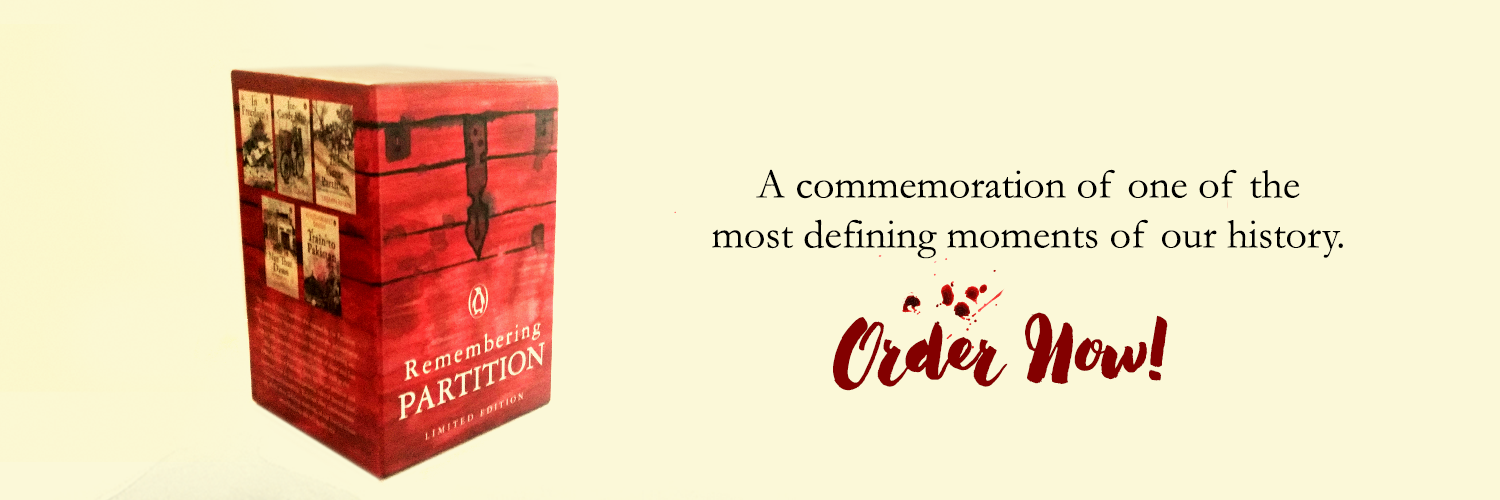
The Remembering Partition Box Set is a collection of five iconic books which look at the different faces of partition, from the larger political and historical view to the very personal tales of hatred, grief, courage and friendship.
Here are the five books that commemorates one of the most defining moments of our history.
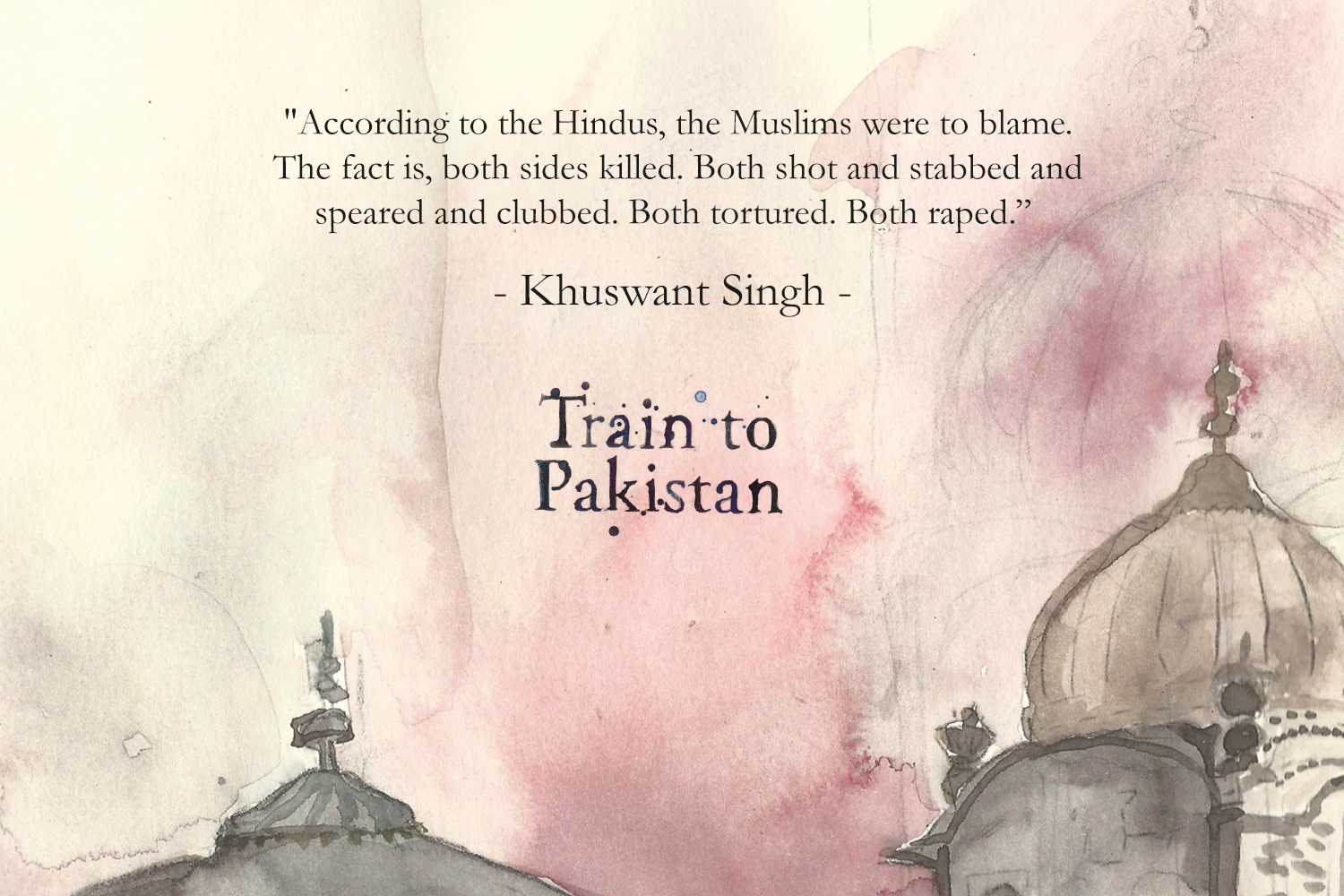
Train to Pakistan by Khushwant Singh
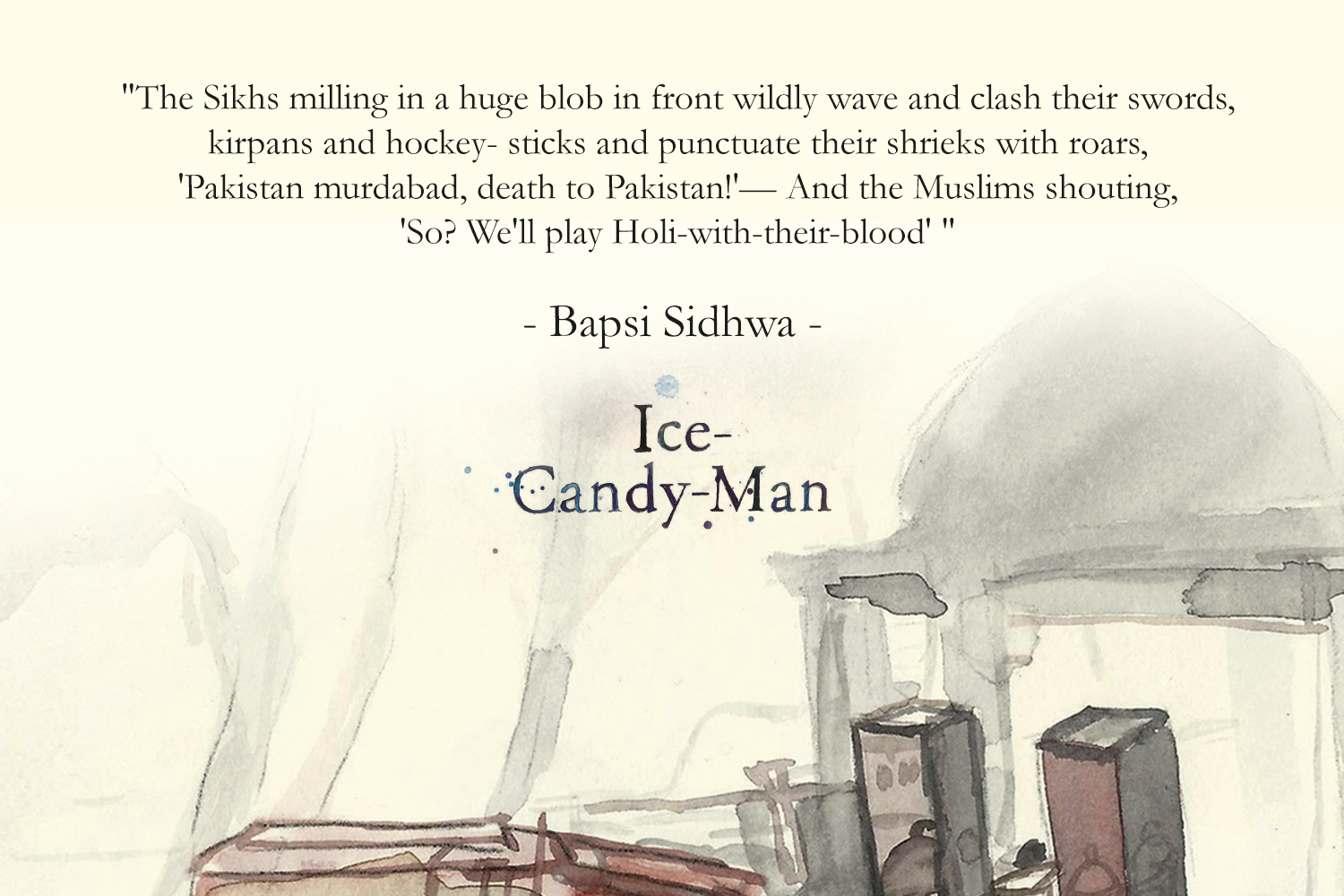
Ice-Candy-Man by Bapsi Sidhwa
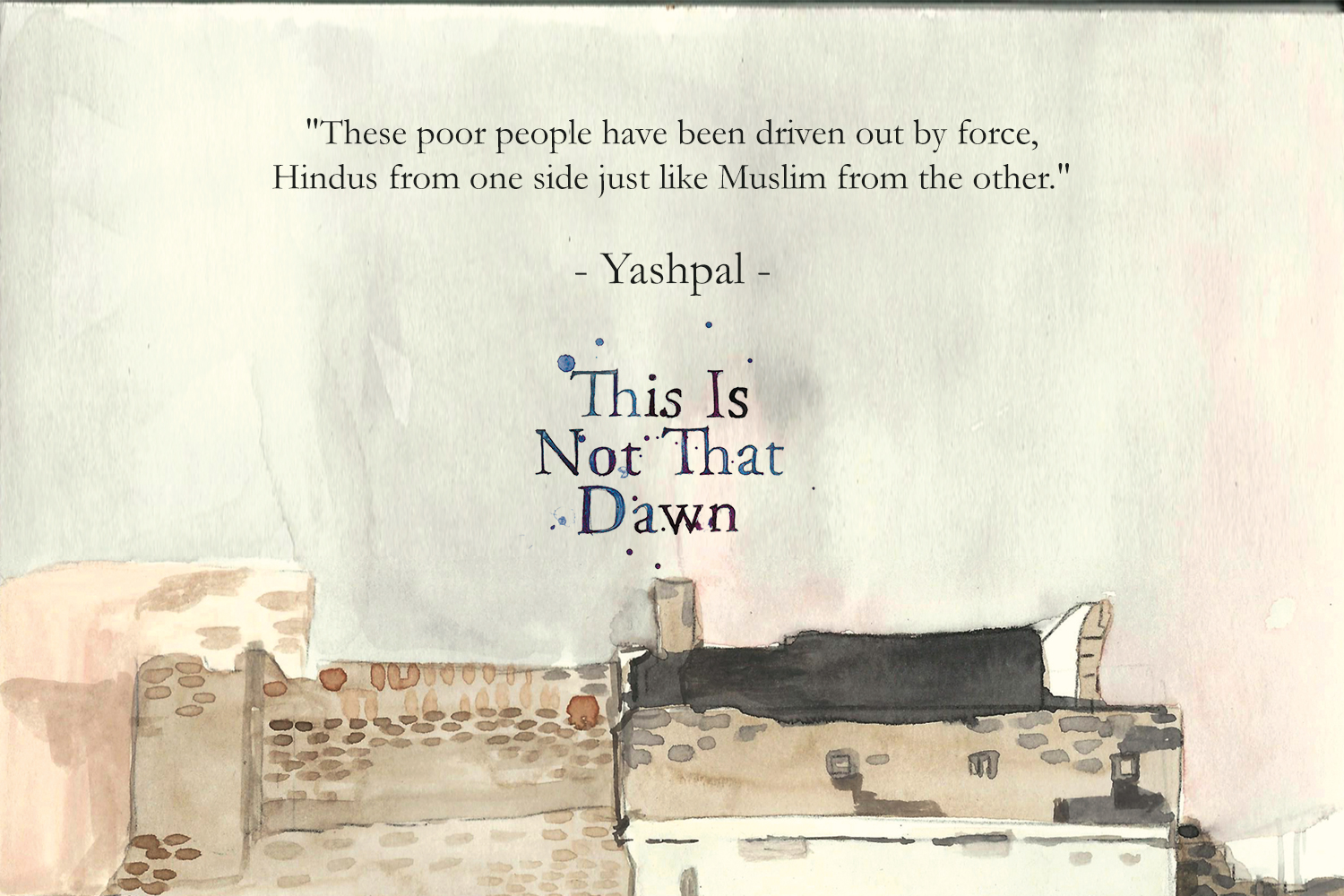
This Is Not That Dawn by Yashpal
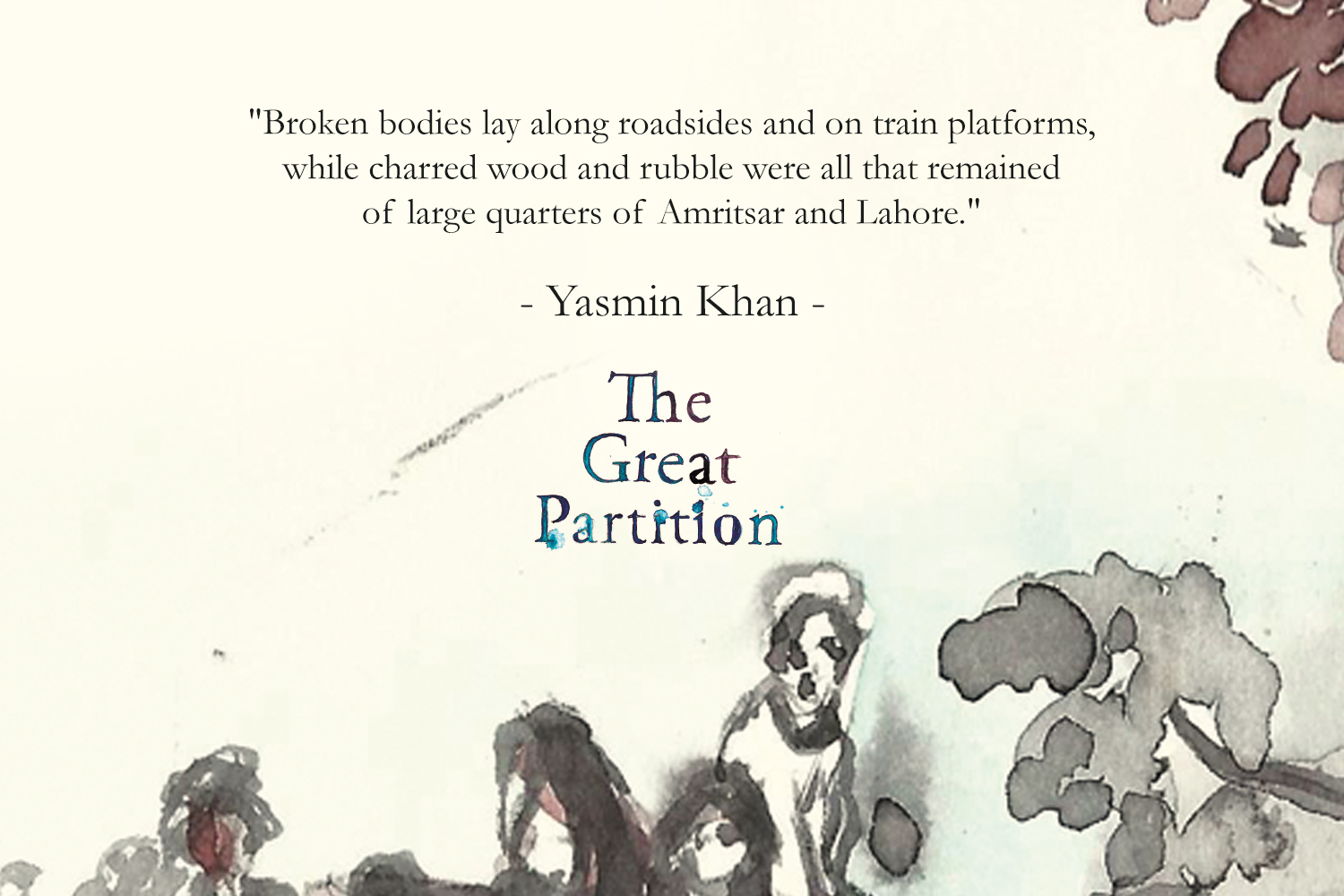
The Great Partition by Yasmin Khan
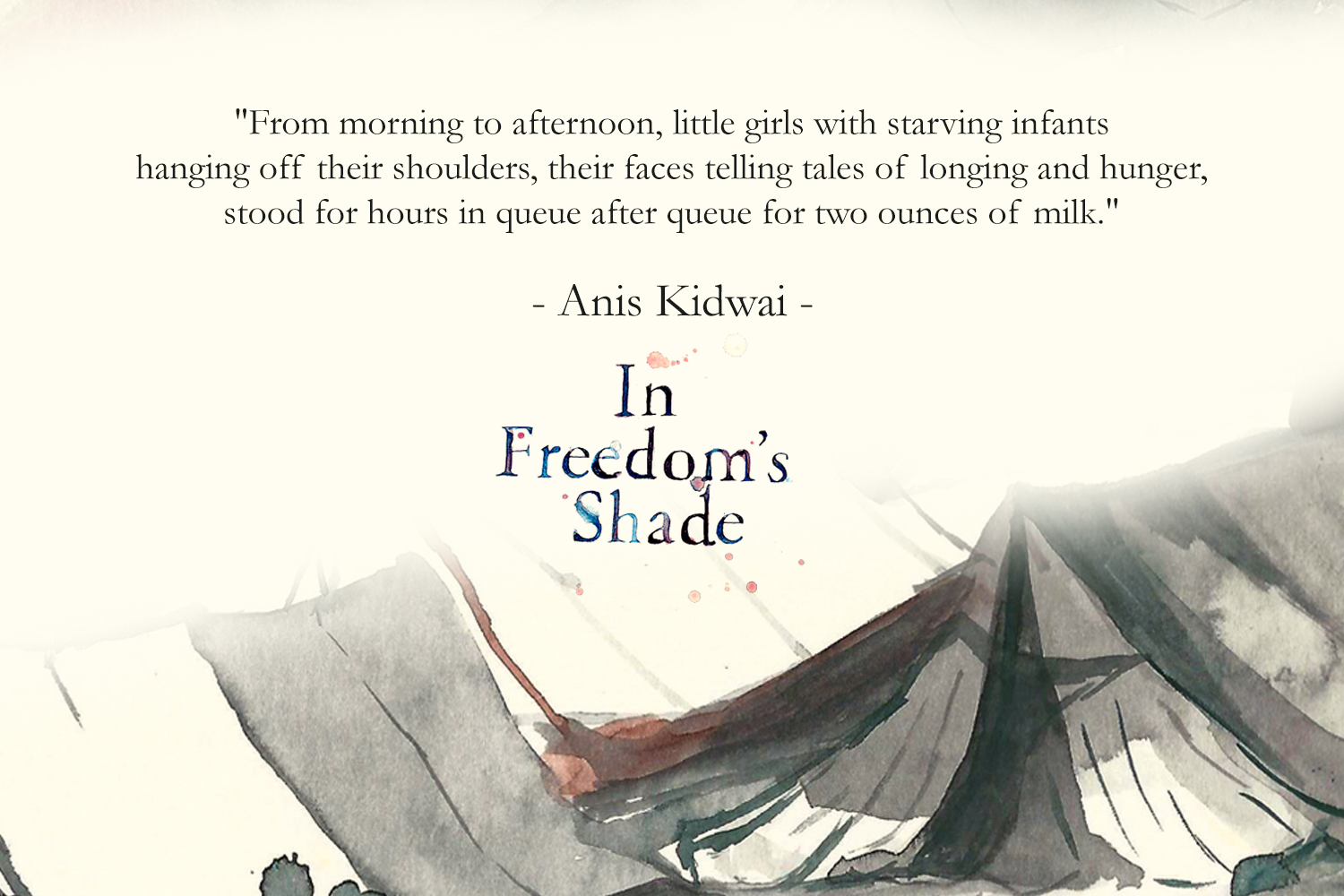
In Freedom’s Shade by Anis Kidwai
Pick up this collection and re-visit the heart-rending event.
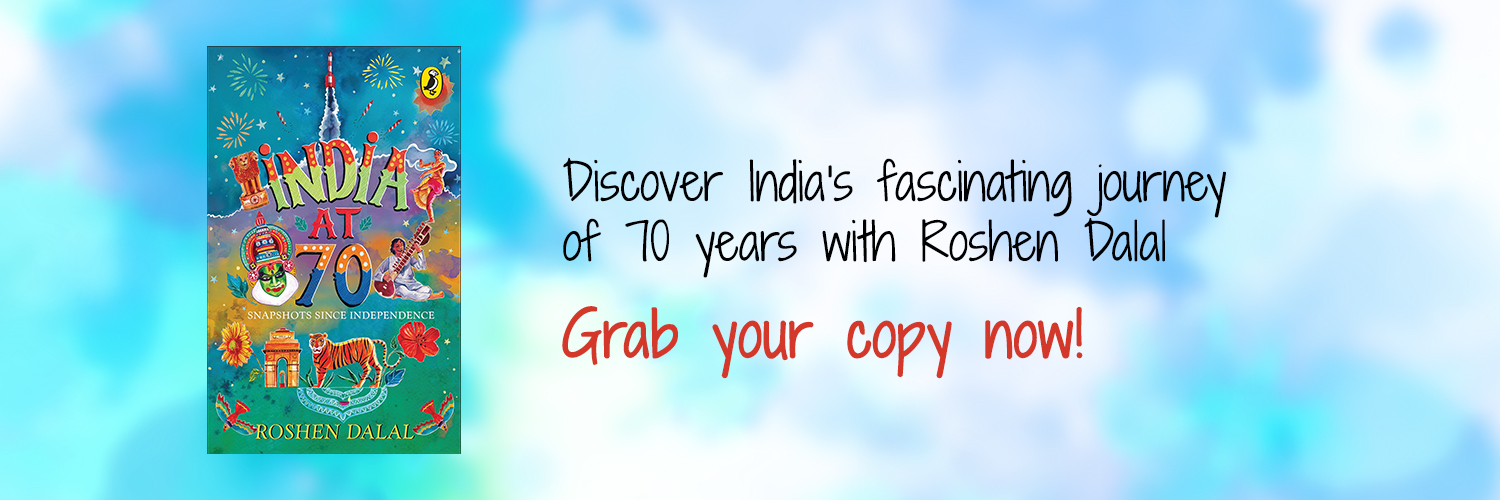
India: 70 Years of Independence
By Roshen Dalal
India celebrates 70 years of independence on 15 August, and we may wonder why this date is so important. A simple answer is that on this date in 1947, India gained freedom from almost 200 years of British rule. But further questions follow. What was wrong with British rule? How was it different from that of earlier invaders and settlers? Through the narrow passes and river valleys in the high mountains, India had seen many invasions from ancient times. Darius I (522-486 BCE)of Persia (Iran) included part of north-west India in his territories. Alexander, the Macedonian conquerer, too, came to the north-west in 336 BCE, but could not stay long. The Bactrian Greeks (from 200 BCE), the Parthians (1st century CE), Kushanas (1st to 3rd centuries CE), Indo-Sasanians (3rd -4th centuries CE), and Hunas (5th century CE), and were among other invaders. All of them set up kingdoms for short periods of time, and many were absorbed into Indian society. Later there were invasions from Ghazni and Ghur in the region of present Afghanistan, which led to the rule of the sultans. The sultans defended India against the invasions of the Mongols. The Mughal dynasty was then founded by Babur in 1526, who originated in the small kingdom of Farghana in Central Asia. There were other dynasties such as the Ahoms, who invaded the north-east of today’s India. But most of these who were once invaders, ruled parts of India much like other kings of the country. They collected and spent taxes here, constructed buildings, provided justice, and encouraged the arts. British rule was different, in that they used India as a source for money and raw materials that were transmitted to their own country. Dadabhai Naoroji (1825-1917), an Indian political leader and the first Asian to become a member of Parliament in Britain, explained this as ‘the drain of wealth’, in his book Poverty and and Un-British Rule in India. He estimated that the British were taking money away from India at the rate of 30,000,000 to 40,000,000 pounds a year. Railways had been constructed, but the money earned from them belonged to Britain. In addition, railways were used to transport raw materials, which were later sent out of India. It seemed as if there were some good points, as law and order were maintained, but Naoroji said that under the British, ‘the Indian starves in peace and perishes in peace, with law and order’. Artisans lost their livelihood. There was inequality, as only the British were given high posts. India was a ‘colony’ of Britain, but neither India nor Britain were unique. Across the world, other European nations, the including France, Portugal and Germany, had their own colonies, and similarly exploited those they colonized.
It was a long struggle to gain freedom from the British. The Revolt of 1857 was the first widespread expression of protest. After the founding of the Indian National Congress in 1885, the movement became more organized, and finally, though many groups had participated, it was Mahatama Gandhi who led India to freedom through satyagraha, his policy of peaceful protest, combining non-violence and truth. There were around 565 Indian states, which the British did not directly rule, though they controlled them through their agents. Many people in these states also participated in the freedom movement.
These peaceful protests brought about gradual changes, and an involvement of Indians in the government in the British provinces.
India became free at one minute past midnight on the of 14th August, that is, the first minute of the 15th. Though many celebrated and rejoiced, some, like Mahatma Gandhi, were sad–firstly because two countries of India and Pakistan were created instead of one, and secondly because there were riots and killings between Hindus and Sikhs on one side, and Muslims on the other.
But the new country of India overcame these problems. With the adoption of the Constitution on 26 January 1950, India became fully independent. It became a democracy, a Republic with two houses of Parliament, the Lok Sabha and the Rajya Sabha, headed by the president, with real power in the hands of the prime minister, the other ministers, and Parliament.
What we must celebrate after 70 years, is that this democracy is still functioning. As I see it, this has been India’s greatest achievement. Pakistan gained independence at the same time as India, but could not provide a stable government. Many more countries gained Independence after India, both in Asia and Africa. Most of them have faced problems, in governance and otherwise.
As we celebrate India’s freedom, we must guard and protect its greatest treasure–that of being a democracy, with a Constitution that guarantees certain freedoms, and provides equal rights to people of all communities, castes and religions.
Michael Burns Gives the Tips to Hack into Your Creativity
Michael Burns is a university teacher, writing coach, actor, editor and storyteller. He has directed five films for international television and his work has been seen in over twenty countries. He moved to India in 2011, and founded Tall Tales, the country’s longest-running, live-storytelling event series. He also conducts popular writing workshops around India.
Here’s what he has to say about his book Hack Into Your Creativity
Everyone has at least one great story. What’s yours?
If you’re reading this book, welcome.
I’m so glad we’ve found each other.
This is a book of story prompts: ideas, questions and thought experiments for you to enjoy and to write on. They’re designed to stimulate, energize and challenge you (the third of these being the most important). They’ve been written in a particular manner so that the maximum number of people can relate to them in some way. The writing that they inspire is best when it’s detailed, original and sourced from deep inside the writer’s heart and mind. There are eight categories of prompts:
- What Happens Next?
- Character-Building
- Incredible India
- Genres
- Everyday Magic
- Two-Parters
- Integration
- Every Hair on Its Head
Each of these subjects starts with a mini introduction to the category. Work your way through them or skip around if there’s a particular skill that you need to work on. I’ve added extra pages at the end of this book for you to write in, but I would recommend combining this text with a notebook so that you never run out of room for epiphanies.
This collection differs from other story-prompt resources in a few important ways. First, the prompts that follow are not random, provocative words or phrases designed to stir you to write just anything. While there is something to be said for that style, I’ve elected, instead, to put together prompts that help you to investigate visceral, transformational and pivotal moments in storytelling. This way, your writing is targeted and helps fabricate a tool that you can use on a regular basis and even in the most dramatic points in your future stories. So, there’s a special emphasis on dramatic tension. Second, this collection also readily explores both fiction and non-fiction because both are essential skills. As all writers know, your ability to find depth and nuance in fictional characters is only possible if you’re willing to, at some point in time, turn that high-powered lens back on yourself. Third, in the vast majority of cases I’ve kept the prompts targeted but very simple, steering clear of the types of prompts that shout, ‘Look how clever this story starter is!’ and instead tried to keep the focus right where it should be: getting you started down a path to discover how clever you are. Fourth, and perhaps most importantly, as suggested above, this book offers you a curated sample of many different kinds of prompts that speak to the many different kinds of storytelling that a writer will likely indulge in—from introspective questions and sentence integration to science-fiction plot twists and character development. In other words, there is a substantial selection of varied prompts to suit your particular interest, mood or even work-related priorities.
These prompts are both specific and flexible. Just like an exercise machine at a gym, the prompts are designed to get you to work on a specific skill, but they can and should be adapted as necessary. I have randomly assigned pronouns (he or she) to the prompts, details that are obviously yours to change at will. I have also suggested goals for the amount of writing you should do after each prompt. This is just a minimal suggestion to help you create a proto-story, a foundational core that can give rise to a story over time. (Having said that, obviously, if you’re set on fire by a topic, with sparks flying off the end of your pen, keep writing!) Having a proto-story as a goal is important because a quality story is not something that usually reveals itself in one inspired session. It evolves over time and builds like a snowball. Some ideas are discarded while others are expanded. Therefore, a reasonable goal for yourself should be to meet at least the minimum lengths I’ve suggested and to infuse those seeds with so much love that they’re busting to grow. A more advanced goal might be to pair this book with your understanding of the universal story structure, giving your writing exposition, rising tension, and a satisfying but unexpected resolution. At the very least, consider three short acts for a simple story structure: let the prompts set things in motion, then let disaster strike your scene, and then finally, see if the characters you’ve created will be ingenious enough to survive or be overwhelmed enough to be snuffed out.
Treat this book as a source of inspiration when you need some. Treat it like a partner to help you get under the surface and beyond the barriers that might be temporarily blocking your creativity. Perhaps, above all, treat it as activation energy. Every chemist knows that reactions need a little push to get them going. And once the reactions start and combinations begin to agitate, percolate and transmute in the unpredictable ways that they sometimes do, you never quite know where you’ll end up.
So, as we get started on creating together, peace be the journey—the alchemist’s journey.
This is an excerpt from Michael Burns’ Hack Into Your Creativity.

Let Chhota Bheem Turn Your Child into a Reader
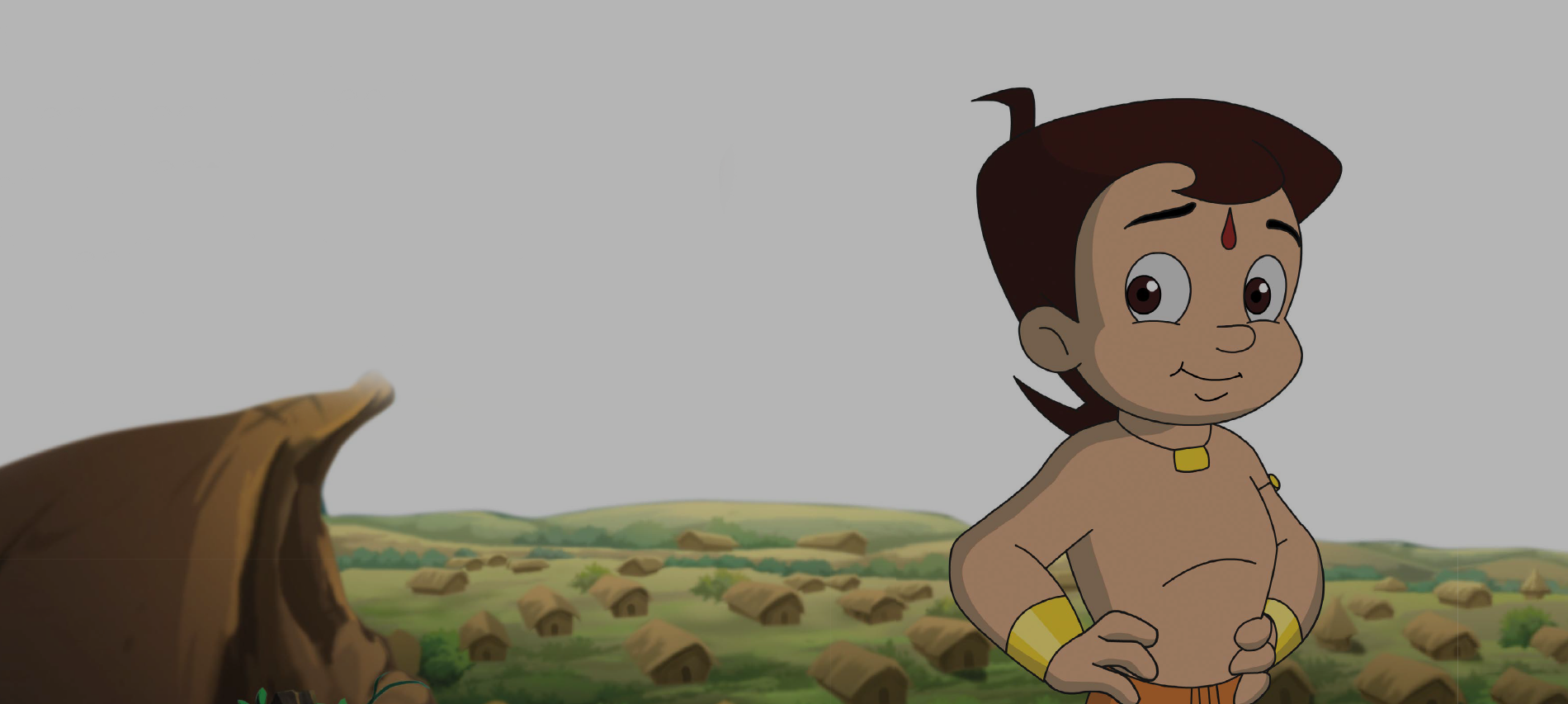
Is your little bundle of joy going to start school soon? Have you been looking for books that will ease them into this new phase of life? The Chhota Bheem series by DK Books, is where your search ends. The series is a set of four books, ideal for kids between 4-6 years. It aims to enrich your kid’s general knowledge and also inculcate a fondness for reading.
Here are 5 ways in which your child can enjoy the series:
Easy-To-Read Text
The book series aims to educate and entertain your little one through illustrations and easy-to-read-text. Combining familiarity of the much loved characters with educational content adds to your tot’s understanding.

Increase General Awareness
The series covers topics such as types of transport, animals, seasons, and the concept of party. Like the TV series, the books will make your little one aware of things which they see around them every day. The storytelling format in the books will let them have as much fun as they have while watching an episode.

Engage in Fun Activities
Learning becomes easier when you’re having fun! The books also contain activities like crafting a paper boat or making lemonade which incorporate fun learning for your child, thereby increasing their attention span and enabling them to fare better at school.

Improve Cognitive Skills
Apart from helping children develop the habit of reading, the books focus on improving their thinking and analytical skills, achieving this through word search, spot the difference, solve the maze, etc. The analytical skills come into play when your kid is learning subjects like mathematics and science.

Respect for the Environment
In the light of the on-going climate change, the series aims to make the children aware of their surroundings. The books cover topics such as climate change and endangerment of animals. These topics will help you instill in your child, respect for the environment and its gifts.

Are you ready to see your kid set off on an exciting journey of learning? Tell us what they think of the books.
