




Sudha Murthy in ‘The Man from the Egg’ weaves enchanting tales about the holy trinity in Hindu mythology. Consisting of Brahma, Vishnu, and Shiva, the trinity is responsible for the survival of the human race and the world.
Here’s an excerpt chronicling the birth of goddess Parvati:
Taraka was a powerful and ambitious asura, and a devotee of Lord Brahma. One day he began a severe penance for Brahma, living on a mountain for a long period of time. pleased with Taraka’s devotion, the creator appeared before him.
‘O my lord!’ Taraka cried. ‘my life’s purpose has been fulfilled now that I have felt your presence.’
Brahma smiled. ‘tell me what your heart desires.’
‘I want to live forever,’ replied Taraka.
‘My dearest devotee, you know that such a boon is not possible. why don’t you ask me for something else?’
Taraka thought for some time. ‘I don’t want to die at the hands of just any man or god. if i must perish, I would rather it happened at the hands of the son of Shiva,’ he said, knowing full well that Shiva, grief-stricken by the loss of Dakshayani, was far from even the thought of marrying
again. So, the boon would actually make Taraka invincible and keep him safe from Yama, the god of death.
Brahma understood Taraka’s intention. nevertheless, he said, ‘So may it be.’
His penance now complete, Taraka descended from the mountain and returned to his abode. Over time, he created a powerful army headed by ten cruel generals. and then he went on a rampage, conquering kingdoms, abusing living beings on earth as well as the gods above. he terrorized them all so much that everyone began praying to Lord Vishnu.
Vishnu heard their pleas. ‘Shiva and parvati’s son will be the cause of taraka’s doom,’ he declared.
Himavat or Parvatraj, the king of the Himalayas, had a wife named Menaka. the queen really wanted a daughter who would grow up to become Shiva’s consort. when Menaka heard about Dakshayani, she instinctively knew that Shiva’s wife would be reborn as her daughter. She thus decided to go into deep meditation, convinced that destiny would soon take its course.
Menaka gave birth to a beautiful baby girl, whom she named Uma. as Uma was the daughter of Parvatraj, she was also known as Parvati, or Himani (from her father’s other name, Himavat), or Girija (meaning the daughter of the king of mountains), or Shailaja (meaning the daughter of the mountains).
Parvati was a charming child and unusually devoted to Shiva right from her birth. Even as an adult, she was always found either praying to Shiva or just talking about him. News of her beauty and intelligence spread far and wide. Though suitors came in hordes with the hope of winning her heart, Parvati could only think of Shiva and refused to entertain the
idea of marrying anyone else.
The devas were watching all this with great interest. they eagerly awaited the arrival of Parvati and Shiva’s son—the harbinger of Taraka’s death.
Shiva, on the other hand, deep in meditation atop the cold mount Kailash, remained unaware of what was going on. much to the concern of her parents, a determined Parvati made the arduous journey to Kailash and began serving Shiva. She took care of his surroundings, brought him fruits and made garlands for him every day. She wanted to be there the moment he opened his eyes so they could marry as soon as possible.
The gods sighed with relief and hoped that Shiva would soon awaken from his penance.
Days, months and years passed but Shiva showed no signs of emerging from his meditation. if he did not open his eyes, he would never see Parvati, which meant that he wouldn’t marry her or have a son. and if the current state of affairs continued, Taraka’s cruel reign would be the end of everybody.
Frustrated, the gods decided to take matters into their own hands. all the realms were in grave danger. they had to intervene and force Shiva to awaken, but who would take the risk? no one dared offer to be the one to disturb Shiva’s penance and become the target of his infamous temper.
Everyone knew that when he was extremely angry, his third eye would open and immediately spew a great fire that destroyed everything in its path. And yet the task needed to be done.
the gods decided to approach the diplomatic Lord Vishnu and beseech him to find a way to guarantee Shiva and Parvati’s marriage.
‘All right, let’s see how things turn out,’ Vishnu said with a mysterious smile.

Category: Children’s Features
Children’s Features articles
Letters from a Father to his Daughter – An Excerpt
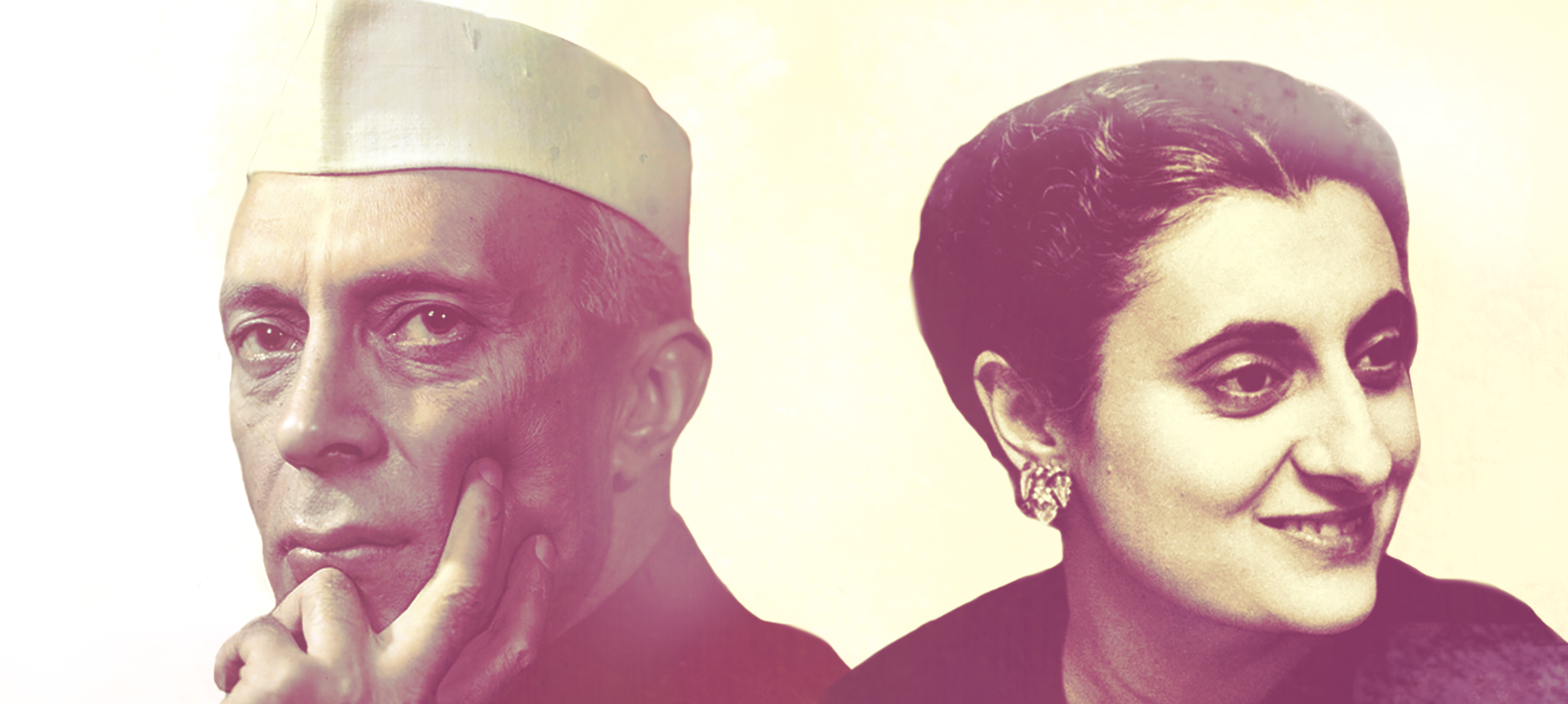
Jawaharlal Nehru, the first prime minister of independent India, was one of the prominent figures during the Indian freedom struggle. He started writing letters to his daughter Indira when she was ten years old. He wrote to her about diverse topics, ranging from the origin of the Earth to history of races and faith.
In a collection of 30 letters, Pandit Nehru imparted wisdom to his growing up daughter, while steering the movement to Indian freedom.
Here’s an excerpt from the book.
We saw in our last letter that the chief difference between man and the other animals was the intelligence of man. This intelligence made him cleverer and stronger than enormous animals who would otherwise have destroyed him. As man’s intelligence grew, so also grew his power.
To begin with, man had no special weapons to fight his enemies. He could only throw stones at them. Then he began to make out of stone: axes, spears and many other things, including fine stone needles. We saw many of these stone weapons in the South Kensington Museum and also in the museum in Geneva.
The Ice Age, about which I said something in my last letter, slowly ended and the glaciers disappeared from Central Europe and Asia. As it became warmer, men spread out.
In those days there were no houses or other buildings. People lived in caves. There was no cultivation, that is working in the fields. Men ate fruits and nuts and the animals they killed. They had no bread or rice because they did not grow anything in the fields. They did not know cooking but perhaps they just heated the meat on the big fires they had. They had no cooking vessels or pots and pans.
One thing is very curious. These savage men knew how to draw. Of course they had no paper or pens or pencils or brushes. They simply had their stone needles and pointed instruments. With these they scratched or drew animals on the walls of caves. Some of their drawings are quite good but they are almost all profiles. You know that it is easier to draw profiles, and children usually draw in this way. As the caves must have been dark it is probable that they used some kind of simple lamp.
These men that we have described are called Palaeolithic men, or the men of the old Stone Age. That period is called the Stone Age because men made all their tools with stone. They did not know how to use the metals. Today most of your things are made of metals, specially iron. But iron or bronze was not known then, and so stone, which is much more difficult to work with, was used.
Before the Stone Age came to an end, the climate of the world changed greatly and became much warmer. The glaciers had gone far back to the Arctic Ocean, and in Central Asia and Europe great forests arose. Among these forests we find a new race of men living. These people were cleverer in many ways than the Palaeolithic men whom we have just described. But they still made their tools out of stone. These men also belonged to the Stone Age but it was the later Stone Age. They are called Neolithic men or men of the new Stone Age.
We find when examining these Neolithic men that great progress has been made. The intelligence of man is making him go ahead fast compared to the other animals. These Neolithic men made the very great discovery of cultivation. They started tilling fields and growing their food there. This was a great thing for them. They could now get their food more easily instead of having to hunt animals all the time. They got more leisure, more time to rest and think. And the more leisure they had, the more progress they made in discovering new things and methods. They started making earthen pots, and with the help of these they began to cook their food. The stone tools were much better and were beautifully polished. They also knew how to tame animals like the cow, the dog, the sheep and the goat. They also knew how to weave.
They used to live in houses or huts. These huts were very often made in the middle of lakes as the wild animals or other men could not attack them easily there. These people are therefore called lake-dwellers.
You will wonder how we know so much about these people. They wrote no books of course. But I have already told you that the book where we read the story of these men is the great book of nature. It is not easy to read it. It requires great patience. Many people have spent their lives in trying to read this book and they have collected large numbers of fossils and other remains of old times. These fossils are collected together in the great museums, and we can see there the fine polished axes and the pots and stone arrows and needles and many other things which were made by the Neolithic man. You have seen many of these things yourself but perhaps you have forgotten them. If you see them again you will be able to understand them better.
There was, I remember, a very good model of a lake-dwelling in the Geneva museum. Wooden poles were stuck in the lake, and on top of these poles a wooden platform was made. On the platform the wooden huts were put up and the thing was connected by a little bridge to the land.
These Neolithic men clothed themselves with the skins of animals or sometimes with a rough cloth of flax. Flax is a plant which has a good fibre used for making cloth. Linen is now made out of flax. But in those days cloth of flax must have been very rough.
These men went on making progress. They started making tools of copper and of bronze. Bronze, as you know, is a mixture of copper and tin and is harder than either of these. They also used gold and were vain enough to make ornaments out of it!
These people must have lived about 10,000 years ago. Of course, we do not know the exact dates or periods. All this is largely guesswork. You will notice that so far we have been talking of millions of years. We are now gradually getting nearer and nearer to our present age. From the Neolithic man to the man today there is no break or sudden change. But still we are very different from him. The changes came slowly, as is nature’s way. Different races developed and each race went its own way and lived its own life. The climate being different in different parts of the world, people had to adapt themselves to it and changed greatly. But we shall talk about this later.
One thing more I want to tell you today. About the end of the Neolithic age a very great disaster happened to man. I have told you already that at that time the Mediterranean was not a sea at all. There were just some lakes there and in these lakes many people lived. Suddenly, the land near Gibraltar, between Europe and Africa, was washed away and the waters of the Atlantic Ocean poured into the low valley of the Mediterranean. The water went on pouring and filling it up, and large numbers of the men and women living near or over the lakes must have been drowned. They could not escape anywhere. There was water all over the place for hundreds of miles. The Atlantic Ocean continued to pour in till it had filled up the valley, and the Mediterranean Sea came into existence.
You have heard, of course, and perhaps read, about the great flood. The Bible speaks about it and some of our Sanskrit books also refer to it. It may be that this mighty flood was the filling up of the Mediterranean. It was such a terrible disaster that the few people who managed to escape must have told all about it to their children, and they to their own children, and so the story was handed down from generation to generation.

Books Ruskin Bond Recommends for Your Little One
Our introduction to the world of books, when we were children, was through our elders who would gift us a novel on different occasions. But imagine having a list of books recommended to us specially by one of our favourite storytellers while we were growing up, fantastic right?
Well, a book is a book, and honestly, no one is ever too old to read ‘children’s book’, don’t you think?
So gear up for some amazing recommendations by the inimitable Ruskin Bond who wrote this very special introduction for ‘Puffin’s Good Reading Guide for Children’, and don’t forget to pass them onto your child!
Adventure with Books
The palaces, lawns and gardens of Jamnagar, where I spent the first six years of my life, were just the right setting for a child whose first book was Alice in Wonderland. Princes and princesses were all over the place, and if the King and Queen of Hearts had emerged from behind the rose bushes I would not have been at all surprised. In one of the old palaces lived a rather dotty old princess who was rather like the Duchess in Alice. When I grew up I put her into one of my stories, ‘The Room of Many Colours’, and several readers remarked that she had walked straight out of Wonderland. And indeed she had. Our first books have a strong and lasting influence on our thinking and the way we look at life.
From Wonderland I travelled to Never Never Land, for my second book was Barrie’s Peter Pan. Not the text of the play but the book written specially for children. I did read the play (along with all Barrie’s works) when I was at school; and later, a young man in London, I went to the old Scala theatre to see the annual Christmas production of Peter Pan. That great actor Donald Wolfit took the part of Captain Hook, with beautiful Margaret Lockwood as Peter. I had expected the theatre to be full of children, but the audience consisted largely of adults. Peter, the boy who never grew up, must have appealed to the eternal child in each of us. And when, in order to save Wendy’s life, he appeals to the audience to clap their hands if they believe in fairies, everyone clapped, this writer included.
I believed in fairies, I wish I could still believe in them.
Barrie was one of my favourite authors and playwrights. It is not easy to find his works today (apart from Peter Pan), but if you come across his other plays— Dear Brutus, Mary Rose and A Kiss for Cinderella—don’t pass them by. They have a certain magic.
In junior school I moved on from Wonderland to the real world, enjoying realistic novels of adventure such as R.M. Ballantyne’s The Coral Island, Stevenson’s Treasure Island and Jack London’s Call of the Wild. But it was only after my father died (when I was ten) that I became a voracious reader. He had been the perfect companion. There was no one to replace him. So I turned to books for companionship.
In my stepfather’s house there were very few books, and I had to look elsewhere for my needs. I did not have enough pocket money to buy books, and there was no library worth the name in 1940s Dehradun. But I was to discover some wonderful books in an unusual way.
My mother and stepfather were fond of shikar, and frequently went on hunting trips into the forests around Dehra. On one occasion they rented a forest bungalow for a week, and I was taken along against my wishes. I found these shikar outings very boring. The animals did not have much of a chance—not when they were shot at from jeeps or the backs of elephants.
Resentfully I went along, but declined to take part in the pleasures of the hunt. Left alone in the bungalow, I discovered a cupboard full of books in one of the unoccupied rooms. Here were many authors I had not read before, and I was soon immersed in Ghost Stories of an Antiquary by M.R. James, Love among the Chickens by P.G. Wodehouse (an early Ukridge story), The Thirtynine Steps by John Buchan, and a couple of Agatha Christie titles. While the shikaris came and went, cursing their luck—for most of the wildlife had already been decimated—I had the time of my life with this little neglected library. I don’t suppose it’s still there after sixty years. I did not take any of the books when we left, but in later years I went out of my way to acquire these same titles, and I dip into them from time to time. I love re-reading old favourites, especially authors who have a distinctive style or tone of voice—Wodehouse, ‘Saki’, Maugham, M.R. James, Walter de la Mare, J.B. Priestly, William Saroyan, Thurber, Joseph Conrad …
And, of course, Dickens.
I discovered Charles Dickens in my school library, when I was twelve or thirteen. It began with David Copperfield and it would be no exaggeration to say that this book set me on the high road to literary adventure. So closely did I identify with young David that I resolved that I would run away from home and become a writer. I was to run away (briefly) and be a writer all my life.
Dickens’s characters, often larger than life, appealed to me, and I went on to read almost all his works. My favourites after Copperfield were Pickwick Papers, Nicholas Nickleby and Our Mutual Friend. His descriptions of London’s dockland and East End led me to explore these areas a few years later. That London has vanished now, but in the early 1950s, parts of Dickens’s London could still be found and recognized.
When I became a senior at school, I was given charge of the library, which meant that I kept the keys with me. Whenever I had a little time to myself, I’d escape to this little world of books, make myself comfortable in a sunny corner, and read anything that took my fancy. It was the only place in school where I could have a little privacy, for boarding schools are not meant for solitary, reflective individuals. I must have read more than half the books in that library. This meant that I did not pay much attention to the subjects I was supposed to be studying; but I managed to get through my exams. And in any case, I had no intention of becoming anything but a writer
After school, I was packed off to England—or rather, to the Channel Islands, which were part of the United Kingdom. Over there I was terribly homesick—more for India and friends than for ‘home’. My office job was drab and monotonous; my relatives, with whom I was living, were unsympathetic to my literary ambitions. Once again, it was a library that came to my rescue—in this case, the Jersey Public Library, where I spent my evenings.
I read everything that I could get hold of that pertained to India—the plays and poems of Rabindranath Tagore, the memoirs of Sudhin Ghose, the novels of Mulk Raj Anand, Attia Hosein and Rumer Godden. I found Rumer Godden’s novels especially enchanting—Black Narcissus (set in Darjeeling), The River and Breakfast with the Nikolides (set in East Bengal); her journal Rungli-Rungliot, which described life on a tea-estate; and finally, Kingfishers Catch Fire, set in Kashmir. I think it was the combined influence of Tagore and Rumer Godden that made me determined to return to India as soon as possible.
But first there were three years in London, where I wrote my first novel; and there I haunted the secondhand bookshops and bought and read almost everything that came my way. But there were three books that always remained with me, and came back to India with me—my Copperfield, my Collected Tagore (the Macmillan edition) and Boswell’s Life of Dr Johnson.
My Favourite Books
(over the years)
Alice in Wonderland by Lewis Carroll
Peter Pan by J.M. Barrie
Just William by Richmal Crompton
Adventures of Dr Dolittle by Hugh Lofting
The Incredible Adventures of Professor Branestawm by Norman Hunter
The Adventures of Sherlock Holmes by Arthur Conan Doyle
David Copperfield by Charles Dickens
Pickwick Papers by Dickens
Nicholas Nickleby by Dickens
Wuthering Heights by Emily Brontë
Boswell’s Life of Dr Johnson by James Boswell
Boswell’s London Journal by Boswell
The Diary of Samuel Pepys by Samuel Pepys
The Seven Pillars of Wisdom by T.E. Lawrence
Black Narcissus by Rumer Godden
Hindoo Holiday by J.R. Ackerly
The Big Heart by Mulk Raj Anand
The Crescent Moon by Rabindranath Tagore
And Gazelles Leaping by Sudhin Ghose
My Name Is Aram by William Saroyan
My Uncle Silas by H.E. Bates
The Moon and Sixpence by W. Somerset Maugham
The Story of My Heart by Richard Jefferies
Walden by H.D. Thoreau
Kim by Rudyard Kipling
Decline and Fall by Evelyn Waug
You will have your own favourites, of course, and naturally they will be different from mine. I asked several young readers to tell me the names of their favourite authors. These were their chosen few: Roald Dahl, Emily Brontë, Enid Blyton, J.K. Rowling, Louisa M. Alcott, J.R.R. Tolkien, John Grisham, Thomas Hardy. A mixed bunch, indeed! And it only goes to show that the world of books is rich and varied, and that there are writers to suit every taste. So search for the authors that you enjoy most, and they will be your good companions wherever you go.
Ruskin Bond
Landour October 2005
Do we still have to convince you to grab a copy of this book? Hurry up and make sure you gift some of them to your little one this Children’s Day!

5 PG Wodehouse Characters Who Will Make You Laugh Out Loud
P.G. Wodehouse is widely recognised as one of the greatest 20th-century writers of humour in the English language. As well as his novels and short stories, he wrote lyrics for musical comedies with Guy Bolton and Jerome Kern, and at one time had five musicals running simultaneously on Broadway. His time in Hollywood also provided much source material for fiction. His iconic characters have always been successful in bringing a smile to his readers’ faces. So much so, that in 1936, he was awarded the Mark Twain Prize for ‘having made an outstanding and lasting contribution to the happiness of the world’. He was subsequently made a Doctor of Letters by Oxford University and in 1975, aged 93, he was knighted by Queen Elizabeth II.
Here are a few characters from Wodehouse’s books who will make you speechless with their wit.


Aren’t these characters outrageously funny? Tell us which character you found the funniest.
5 Quotes That Show PG Wodehouse Was The Master of Humour
Pelham Grenville Wodehouse is one of the best humorists known today to bibliophiles. He wrote more than ninety novels and some three hundred short stories over 73 years.
Along with his iconic characters Bertie Wooster and Jeeves, Wodehouse also created the world of Blandings Castle, home to Lord Emsworth and his cherished pig, the Empress of Blandings. His stories are never complete without the disreputable Ukridge; Psmith, the elegant socialist; the ever-so-slightly-unscrupulous Fifth Earl of Ickenham, better known as Uncle Fred; and those related by Mr Mulliner, the charming raconteur of The Angler’s Rest, and the Oldest Member at the Golf Club.
Here are 5 quotes by Wodehouse that make him a renowned humorists in the world of literature.


Did you just laugh your guts out? Tell us which quote did you find the funniest.
The classic pair returns! Jeeves and Wooster are all prepared to tickle your funny bone. Get your box sets here.
Gift Your Child These Deliciously Spooky Tales This Halloween
Halloween is just around the corner and the chill in the air has begun to set in! As we pull out our pumpkin delicacies and prepare to make merry in the creepiest of costumes, here are a few amazingly spooky books for your child to feast on this Halloween!
Trick or treat? You tell us!
Secrets by Ruskin Bond

Set in the 1940s, all is not what it looks like in the sleepy little town of Dehradun. The quaint place has its set of dark secrets — from plucky old women to mysterious murderers, Ruskin Bond’s Secrets brings to life the delectably dark tales of a small town set in the black and white days.
Amelia Fang and the Barbaric Ball by Laura Ellen Anderson
 Have you met the inhabitants of Nocturnia yet? Nocturnia — a place where sparkles, colours and unicorns are things to be afraid of. Oh, and it’s also home to the little Amelia Fang and her pet pumpkin Squashy, who are in for some trouble as they race against time and discover that Nocturnia is much darker than they thought it is!
The Puffin Book of Spooky Ghost Stories
 An ominous collection of 13 spooky stories where you meet spirits in deserted bungalows, death traps on swings that take you a little too far away, a reincarnated goddess with an insatiable bloodthirst and a whole lot others from beyond the grave and the unknown!
The Witches by Roald Dahl

The Grand High Witch is out to get you! She loathes children and schemes to trick you by dressing up as an ordinary woman, while being an extraordinarily evil witch all along! Only a little boy and his grandmother can stop The Grand High Witch from coming for you. Will they succeed?
This Halloween, tell us which story you read to your child in the dead of the night and celebrated the autumn nip with a chill down your spine. Happy Halloween!
‘This is no ordinary cat’: The Nine Lives of Montezuma — An Excerpt
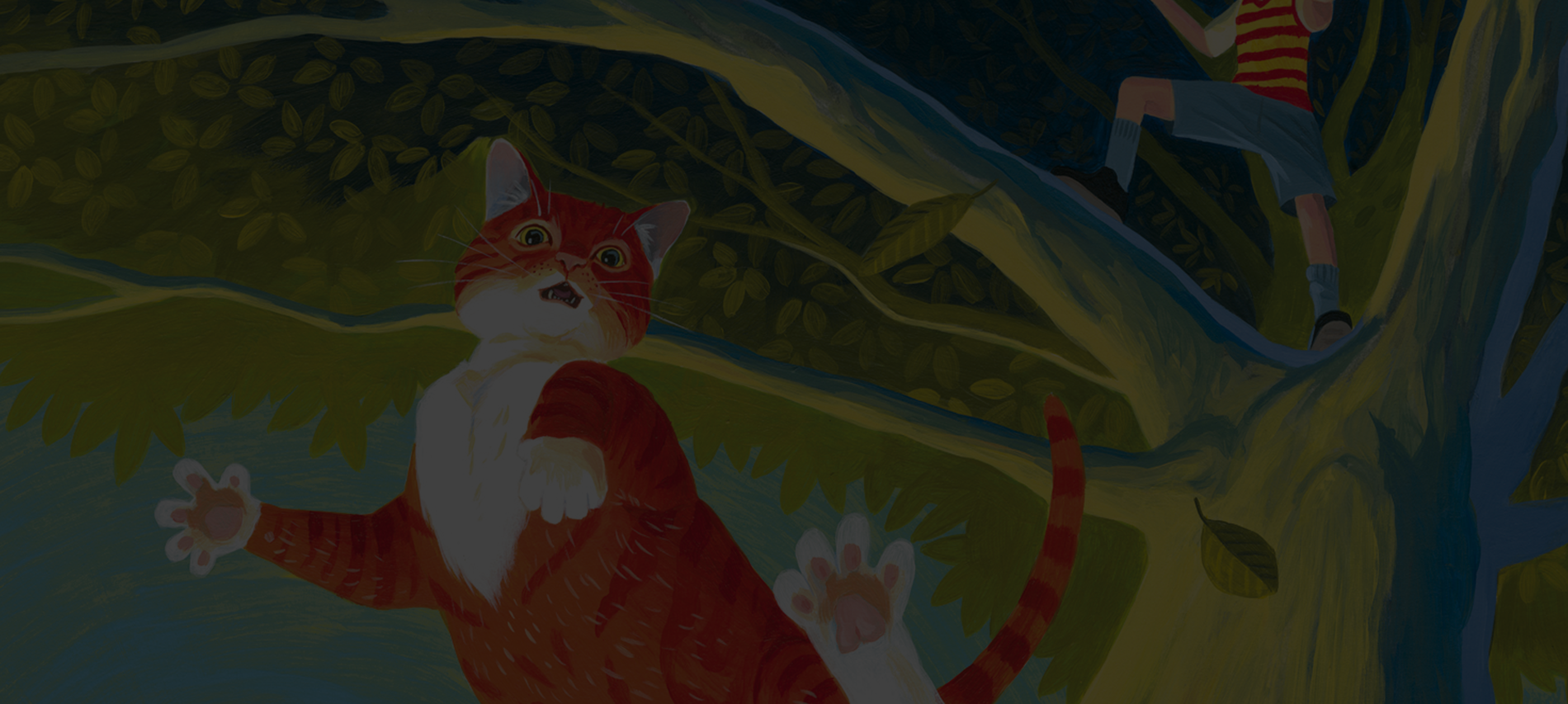
As the famous saying in English tells us every cat has nine lives, Michael Morpurgo’s The Nine Lives of Motenzuma proves that cats indeed are survivors in this big, bad world.
Montezuma, a ginger cat, is anything but your ordinary furry friend. As soon as he is discovered, the characters in the story realise that this cat is not a normal alley cat but a creature with magical powers, much like its namesake, the survivor King of the Aztec.
Here’s a short excerpt from the book.
He found Montezuma crouching at the end of a long tapering branch that hung out over the pond. The branch looked thick enough and safe enough near the trunk, but the further away it stretched the more fragile it looked. Matthew stood in the fork of the tree and considered all the alternatives, trying to ignore the warnings and advice from below. He could not climb out along the branch to Monty – the branch would not take his weight. He needed a net to throw out over the cat, but there was no-one who could bring a net up to him – neither his father nor his mother could climb trees – at least he had never seen them. He would have to talk the kitten back to safety, that was the only way.
‘Monty,’ he said in as soothing a tone as he could manage. ‘It’s me, Monty. You can’t stay out there all day. You’ll be all right now. I’ll take you down. Come on then, come on. I won’t hurt you.’
But the kitten crouched low, glued to the branch like lichen. He blinked back at Matthew, swallowing hard and mewing weakly every so often. Matthew talked on in a consoling, sympathetic tone; but he received no encouragement from Montezuma who never moved a muscle.
From down below his father was shouting up to him. ‘Can’t you get him down?’ A question which Matthew didn’t feel he could answer politely.
‘Fire Brigade,’ his mother shouted up. ‘What about the Fire Brigade?’ They looked so small down there in the yard. Matthew felt his parents had been getting smaller in recent years, but he had never seen them this small.
‘Not yet,’ Matthew shouted back. ‘Not yet. I’ll try one more thing.’
‘Do be careful, dear. Do be careful.’ His mother’s voice sounded hysterical, but then it always did whenever she shouted.
Matthew held onto the branch above him and edged out onto Montezuma’s branch, stepping sideways like a cautious crab. The two branches ran parallel for a few yards and then the upper one that Matthew was holding onto came to an abrupt halt. Matthew went as far as he could and then released the upper branch. For a moment he stood balancing with nothing to hold onto. The branch swayed underneath him and he lowered himself carefully until he was sitting astride the branch, his hands clasping it firmly in front of him. Like this he pulled himself along inch by inch until he knew he could go no further. The kitten was still well out of reach.
‘That’s far enough.’ His father’s shout was sharp. ‘No further. That’s far enough. The branch won’t take the weight. No further.’
Matthew knew he was right, but he was nearly there and it was only a few more feet. He lay now flat along the branch gripping behind with his feet, his hands holding on in front of him. ‘Come on Monty, come on down. Please, there’s a good kitten. Come on now.’ But as he released one hand to reach out towards the cat, he lost his balance and had to grab at the branch suddenly to retrieve himself. Alarmed, the kitten backed away, lost his grip and tumbled down through the air towards the pond. Matthew watched for the splash and saw his father running down across the yard towards the pond. The ducks evacuated the pond noisily, leaving Matthew’s father alone in the pond striding waist deep to the spot where Montezuma had fallen in. Matthew waited, closed his eyes and prayed. When he opened them his father was shouting up at him and laughing, holding up a dripping kitten. ‘Got him. He’s all right. The little divil’s still breathing.’
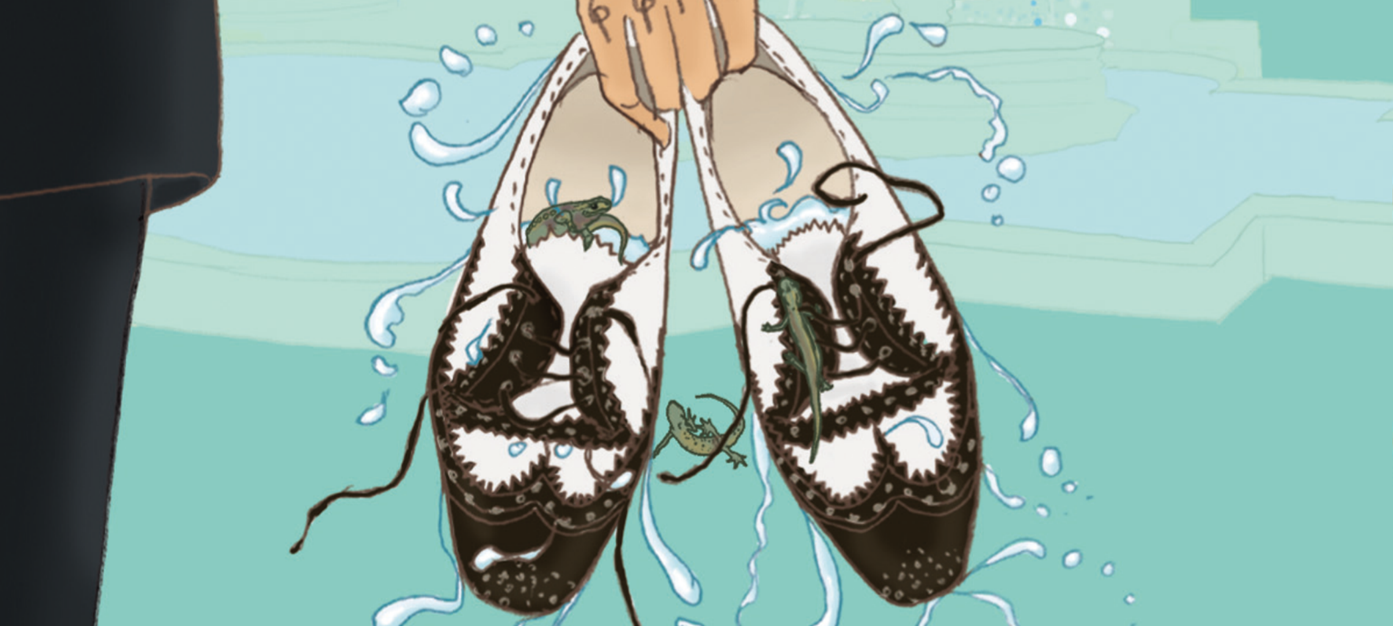
By the time Matthew had made the descent, his father was out of the pond and had pulled off his shoes. He was sitting on the ground taking his socks off and wringing out the water. ‘Your father will catch his death,’ said Matthew’s mother, who was holding on to Montezuma in a vice-like grip. ‘Here’s your Monty,’ she said. ‘You take him. And for God’s sake hang on to him. You worry me to death, you two. First you go climbing up trees and then he goes jumping into cold ponds – at his age. You should know better. Could have killed you both and all for what? For a kitten.’
‘For Monty,’ said Matthew, rubbing the kitten dry with the tail of his shirt. ‘This is no ordinary cat, you know. Can you imagine my Dad jumping into a pond to rescue any other cat? He’s dropped plenty of kittens into this pond, but this is the first one he’s ever pulled out and that’s a fact.’
‘And the last,’ said his father wriggling his wet toes. ‘Definitely the last.’
Find out which adventure Montezuma encounters next in this enchanting book by Michael Morpurgo!

Who Are Nicky and Noni and Why Should You Introduce Them To Your Children?
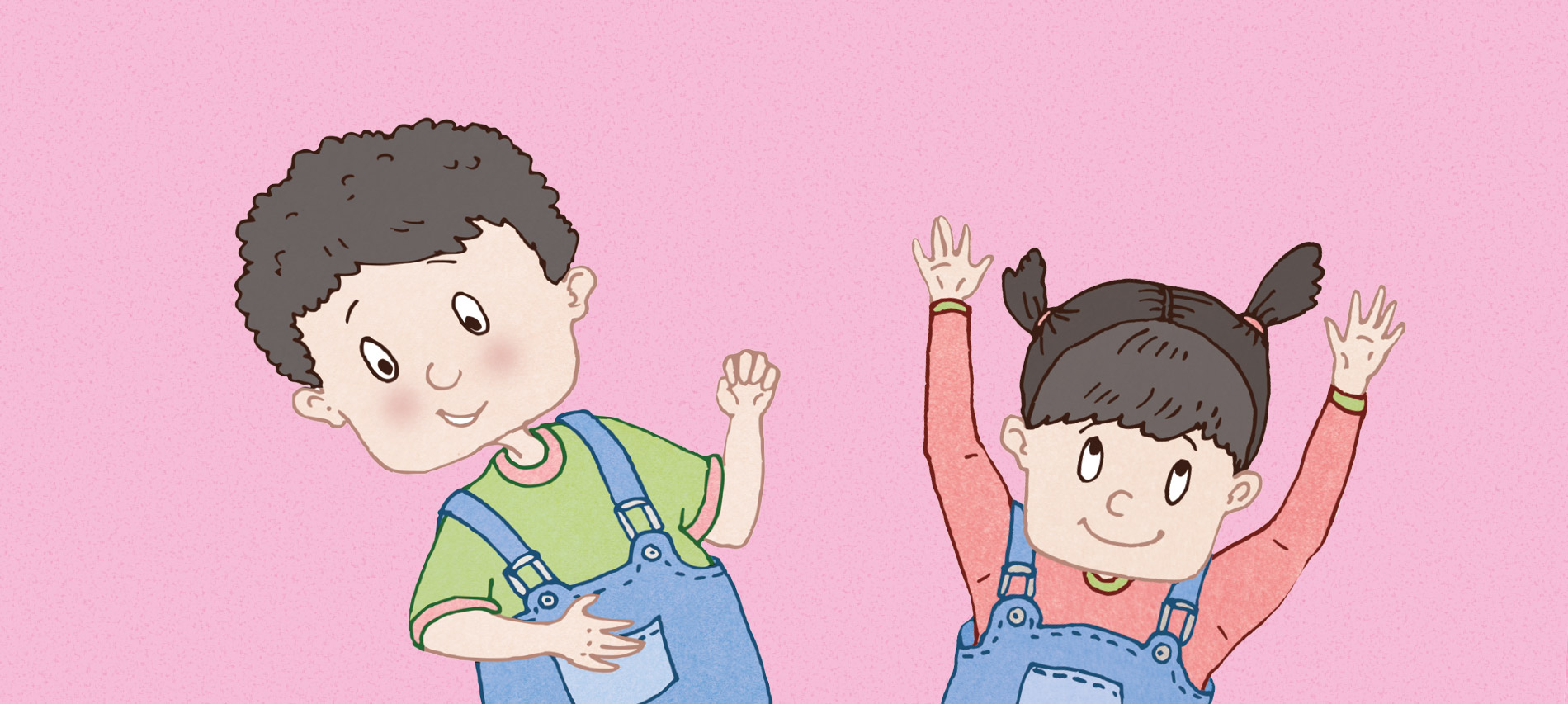
Meet Nicky and Noni — the uber cool twins from author Sonia Mehta’s new series of books for children — ‘My Book of Values’.
Like any kid, Nicky and Noni too love to engage in fun activities. But as kids, they get into trouble too.
Nicky and Noni now know that learning good values can be very cool. It can be fun, and super engaging!
Do you want to meet them?

Dear Moms and Dads,
Would you believe that your little one is already old enough to take small decisions by herself or himself? There will be a hundred tiny things that happen to them during the day, where they have to act in a certain way, take small calls and make their own judgement. This then is the right time to prepare and give them that sense of right and wrong that we all grew up with.
But it needs to be done subtly. Today’s child isn’t up to lectures and threats. This is the purpose of this series. Being able to differentiate right from wrong and good from bad, building a strong value system, learning to accept consequences—all through relatable stories and fun activities.
Nicky and Noni are typical twenty-first-century kids. Smart, communicative and alert, they know how to get their way. But as they go about their lives, they encounter situations and challenges during which their value system is tested.
Using Nicky and Noni as protagonists, and with activities that make your child think and apply certain concepts, the series highlights the importance of key values and how they make a difference in life.
We’ve tried to make the series fun and engaging while communicating a single message: that in today’s time, BEING GOOD IS COOL.
Find out what new lesson Nicky and Noni learnt today! Grab your copy of ‘My Book of Values’ by Sonia Mehta now!

Why Should Every Child Know the Story of Auggie Pullman?

The answer to that question is rather simple. It is because August ‘Auggie’ Pullman’s story teaches one about the importance of kindness, and how kindness is the only way one can stand up to bullies.
R. J. Palacio’s novel, Wonder, is a moving tale of how young August Pullman battles some of life’s most cruel adversities from a very young age with the simplest of weapons — kindness and love.
Here are a few times Palacio’s novel reminded us as to why it’s kindness that keeps the world going.
Sometimes, one needs to walk that extra mile.

The difference between being friendly and being a friend.

Kindness is a choice one has to make, not a quality one is born with.

The world could always do with a little more kindness.

Learn more about August’s extraordinary journey as he leaves home for the first time in his life to go to school in fifth grade. All August wants now is to be treated like an ordinary child. But what makes him extraordinary? Grab your copy today and find out!

4 Ways in Which You Can Improve Your Concentration in Mathematics
Mathematics is an integral part of our life but many of us think of it only as a subject to be studied in school or college. In How to Be A Mathemagician, Aditi and Sudhir Singhal not only make mathematical principles fun and easy-to-learn but also show a different a side to this subject – a side that can help us improve our concentration skills and increase our attention span.
Blocks (such as shown below) help improve concentration, reading speed and problem-solving skills. Here are 4 ways in which you can improve your skills using the block below:

Always count!

Your brain is all you need!

Abide by the time limit

Practice till you get it right

Tell us what you do to improve your concentration.
