Publish with Us

Follow Penguin

Follow Penguinsters

Follow Penguin Swadesh

Biggest hurdle for millennials: The education system

India is one of the youngest countries in the world and the generation of millennials make up for over 400 million people. This is the largest generation of people in the world.

That means that the choices and trajectory of this generation have pivotal consequences on local, regional, and global politics and economics. So the important question is: What do Indian millennials want? What are their economic aspirations and their social views? Most importantly, what makes them tick?

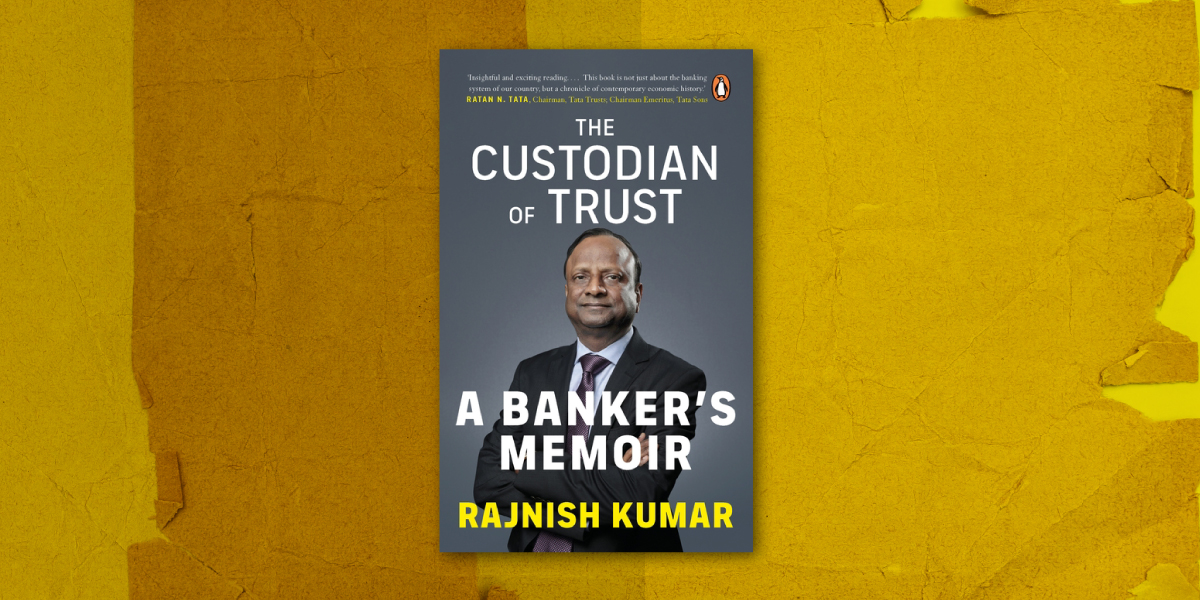
One thing that definitely gets in the way of millennials getting what they want, is the Indian education system. Read this exclusive excerpt from Vivan Marwaha’s What Millennials Want to find out how and why.

~

What Millennials Want FC
What Millennials Want||Vivan Marwaha

In 1961, the government of Prime Minister Jawaharlal Nehru established two Indian Institutes of Management (IIM), the first in Calcutta and the second in Ahmedabad. Calcutta was established in conjunction with the Massachusetts Institute of Technology’s Sloan School of Management, while the campus in Ahmedabad was to collaborate with the Harvard Business School.

The institutions, which have trained some of India’s and the world’s brightest business leaders, were the product of an inherently socialist idea. Almost ten years after independence from British colonial rule, there were simply not enough managers for India’s numerous public sector enterprises. These public undertakings, from mining corporations to ordnance factories, required well-trained executives to steer the young country’s industrial growth, and native talent was in short supply. The Planning Commission of India, the Soviet-inspired body which was tasked with developing five-year plans for the growth of the Indian economy, invited Professor George Robbins from the University of California, Los Angeles to fix this problem and help conceive an education institution to offer young Indians a practical business education.

Since then, investments were made in expanding university education, and the two institutions soon grew to twenty. The flagship institutions boast of a roster of hugely successful alumni, from RBI governor Raghuram Rajan and cricket commentator Harsha Bhogle to novelist Chetan Bhagat and former PepsiCo worldwide CEO Indira Nooyi, among numerous others in the Indian and global financial system. But they just weren’t enough. As Indians began to see these elite institutions as a ticket to a prosperous job at a multinational, and eventually, a career outside India, admission became extremely competitive. The private sector began to fill the gap between the demand and supply, and since then, thousands of private colleges opened across India to offer students a management education.

Most of India’s education system has a similar story. Today, the few good universities, colleges and schools, largely founded by the government or built during colonial rule, educate only a small number of individuals, while a vast private sector has mushroomed to fill the gaps in what the government failed to universalize.

What all of this has created is a deeply flawed system which tends to reward those with existing privileges or resources. Karthik Muralidharan, the Tata Chancellor’s Professor of economics at the University of California, San Diego, finds that the Indian education system is not built to educate students, but to filter them.1 In a 2005 paper, with co-authors Gretchen Cheney and Betsy Ruzzi, he argues that historically education in India served as a ‘gatekeeper, permitting an avenue of upward mobility only to those with resources’.2 Unfortunately, this remains true in 2021. Indian students spend years studying for board examinations, college entrance examinations, and public sector job tests to continuously filter them towards better opportunities. But in all the rote memorization and formulae required for success, the most significant purpose of learning— education, gets lost.

Although the privatization taking place in the sector was intended to make it more inclusive, it was, in fact, exclusionary and insufficient. Furthermore, India’s early prioritization of tertiary education came at the expense of primary-level schooling, creating vast inequities and poor standards of education that continue to this very day. These problems only exacerbated as India’s population continued to increase, as socialist India could not provide employment to the millions of young Indians who needed it. As the economy began to open up, the growth of Information Technology services in the country led to the creation of coaching industries dedicated to preparing students to either become software engineers or government servants. This is not because the education system had succeeded in preparing students for the future, but rather because it had failed.

In effect, India created an elaborate system which serves to filter its students towards IITs, IIMs and public service jobs instead of educating them to succeed in the modern economy Millennials have largely finished their education at the time of writing this book, and their time in school or college is not the first experience we may think about when understanding the generation. But if we’re looking at many of the challenges millennials face today, it’s because of the education system.

Perveen Mistry can’t rest until she sees justice done

November 1921. Edward VIII, Prince of Wales and future ruler of India, is arriving in Bombay to begin a fourmonth tour. The Indian subcontinent is chafing under British rule, and Bombay solicitor Perveen Mistry isn’t surprised when local unrest over the royal arrival spirals into riots. But she’s horrified by the death of Freny Cuttingmaster, an eighteen-year-old female Parsi student, who falls from a second-floor gallery just as the prince’s grand procession is passing by her college.

When Freny’s death appears suspicious, Perveen knows she can’t rest until she sees justice done. But Bombay is erupting: as armed British secret service march the streets, rioters attack anyone with perceived British connections and desperate shopkeepers destroy their own wares so they will not be targets of racial violence. Can Perveen help a suffering family when her own is in danger?

Here is an excerpt from Sujata Massey’s new book, The Bombay Prince that talks about Freny’s death.

*

The Bombay Prince: Perveen Mistry Investigates || Sujata Massey

“Miss Mistry, come down here,” Miss Daboo beseeched. Perveen knelt down and, feeling queasy, reached out to touch Freny’s wrist. It was still warm, yet the veins on the inside of her wrist seemed deflated. She could not detect a pulse. Perveen’s mother, Camellia, and sister-in-law, Gulnaz, were the kind of women brave enough to volunteer in hospitals. They might know another spot to look for a pulse. All Perveen could think of was the heartbeat.
Freny had fallen on her right side, so it was possible for Perveen to slide her hand under the khadi cloth and over the left side of Freny’s white cotton blouse.

“Don’t be obscene!” Miss Daboo muttered in Gujarati, and Perveen belatedly realized there were men watching her. Having felt no sign of life, she pulled back her hand.

“We must pray. God can work miracles.” Another Englishman had appeared. He looked to be in his fifties, with a long face made even paler by its contrast with his black robe. Right behind him was a breathless Principal Atherton.

The principal and the college chaplain had taken long enough to arrive at a scene of crucial emergency. But perhaps the police had occupied Principal Atherton’s time getting details about Dinesh Apte. And why weren’t they with him now?

The answer came: The college’s leadership didn’t know Freny was dead. Only she and Miss Daboo knew the truth. Or maybe— Lalita also did. Surely she would have tried to help her friend sit up. Surely

Mr. Atherton spoke between gasps. “I’ve just heard—about the accident—from the reverend.” Two more breaths. “Who is she?”

“Her name is Freny Cuttingmaster,” Alice said. “She’s a second-year student.”

“And what about you? Are you a nurse?” Mr. Atherton’s face was reddened, no doubt from agitation and heat.

“Sorry, I am not.” Perveen looked away from him and back at Freny. She thought of saying she was a lawyer, but it didn’t seem the right place.

“Miss Perveen Mistry, my old friend from Oxford, is here at my invitation,” Alice said quickly. “Miss Mistry, this is Mr. Ath- erton, our principal, and our chaplain, Reverend Sullivan.”

Principal Atherton pressed his lips together disapprovingly. “I am not—entertaining interviews for women faculty. This is an emergency—”

“I’m not a teacher; I’m a solicitor with a practice nearby.” Having honestly admitted her field, Perveen didn’t know how long the college administrator would allow her to linger.

“Miss Acharya, is it correct that you were first on the scene?” Atherton had turned his attention to the student, who was clutching Alice.

“Yes. I was a few yards ahead of the others,” Lalita said in a choked voice. “Miss Daboo was with me as well.”

Atherton’s eyebrows drew together. “And where was Miss Cuttingmaster during the procession?”

“Actually, we realized midway through the proceedings she wasn’t in the stands with us.” Lalita’s voice was hesitant, as if she didn’t want to admit she’d known all along the girl hadn’t showed up.

“Yes. She must have had her accident while we were turned watching the prince!” Miss Daboo said.

The excitement of the parade could have masked any cries, even though the college and its garden were just a few dozen yards behind the viewing stand.

“Maybe she fell down. I only hope . . .” Lalita’s voice trailed off.

“What is it you are hoping, my dear?” Reverend Sullivan prompted.

“I hope she’s going to wake up.” Lalita was clenching and unclenching her hands. “Why can’t the nurse come from the infirmary? Didn’t anyone call for her?”

“Leave the response to faculty,” said the reverend.

“I think someone should fetch the police.” As Perveen said it, she couldn’t believe the words had even come from her mouth. The police! The men who’d so recently challenged her were needed to secure the scene and take note of details.

“The police?” Mr. Atherton’s voice faltered. “But Miss Daboo says this is an accident.” He shook his head as he looked at the smooth path and neat green lawn. “I wonder what caused her to fall?”

“It could be that she jumped. This was going to be a day of protest for some.” Reverend Sullivan turned to grimace at the mass of students standing a respectful distance behind. “I know some of you are in the resistance club. If you were aware that she was planning self-destruction, you must tell us now.”

Did the chaplain understand Freny’s life was gone? Perveen looked at his stern, unmoving face until he glared at her.

One of the boys in a Gandhi cap raised a hand and spoke when the chaplain acknowledged him. “Reverend, nobody heard any such talk in the Student Union meetings.”

A blond man in his twenties, who had a shaken expression, put a hand on the shoulder of the student who’d spoken. “That is my impression as well. Arjun, thank you for coming forward.”

“I’ll go for the police,” a student voice said from within the crowd, and three boys took off through the gate.

*

What really happened? And what is going to happen next?

Get a copy of Sujata Massey’s The Bombay Prince to find out!

A lesson to become a great leader

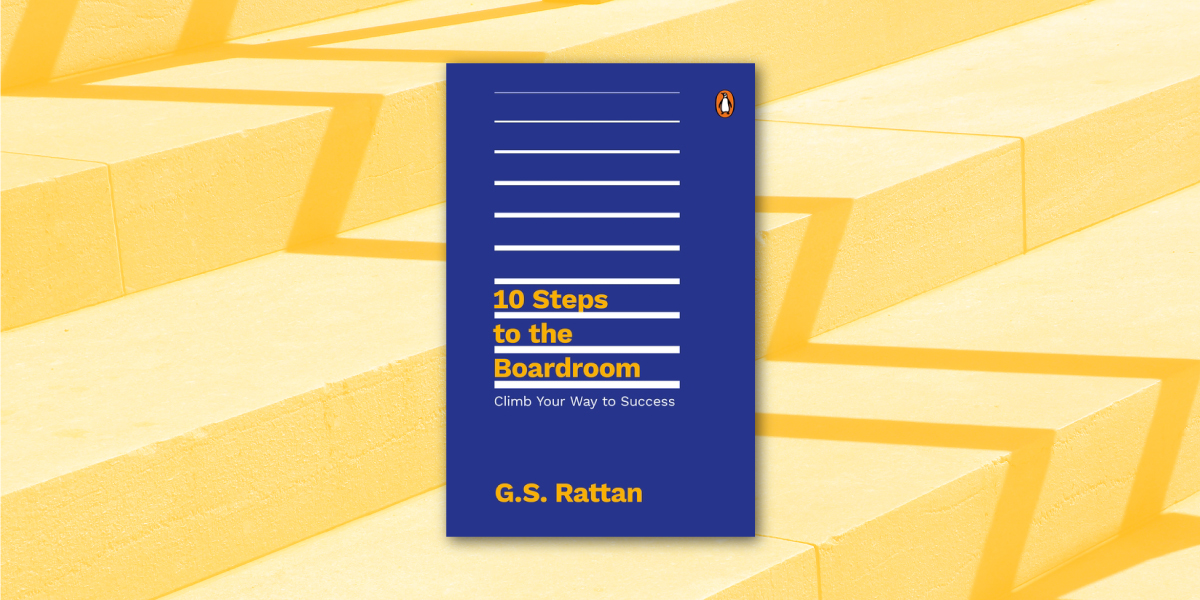
Your education teaches a lot, but it doesn’t quite prepare you for the larger game of life. Does it? Prakash Iyer’s How Come No One Told Me That? is a cornucopia of stories that can help you lead a life of purpose and significance. The small and seemingly unimportant experiences of your life can teach you many valuable lessons and Iyer’s book is a collection of such anecdotes and everyday events.

Here’s an excerpt from the book about the white handkerchief of the chairman of Hindustan Unilever. It’s a story that’s been retold to successive generations of young managers at the company. It’s a reminder for all to fix a problem when they see it.

*

How Come No One Told Me That?
How Come No One Told Me That? || Prakash Iyer

The chairman of Hindustan Unilever was on a market visit in a small town in Kerala. At one store, he noticed a tin of Dalda (a popular brand of vanaspati at that time) on a corner shelf. As he reached out to take a closer look at the tin, he was horrified to see a thick layer of dust on the lid. There were sheepish looks on the faces of the folks accompanying the chairman. It wasn’t something they wanted the chairman to see. The sales team’s routine included cleaning stocks on the shelf—with particular attention to food products. This was a bad miss.

And what did the chairman do? Scream and shout? Threaten to sack someone? Talk about the need for better execution? Nope.

He put his hand into his trouser pocket, pulled out a clean, white handkerchief and proceeded to wipe the Dalda tin clean. That was it. He did what any foot soldier of the company might have done. It was about getting a job done, rather than worrying about whose job it was.

The sales team got the message, of course. Far better than they might have had the chairman shown anger and disappointment. The retailer’s respect for the company went up a few notches in that instant too. All those present that day got a masterclass in leadership. And as the story got retold over the years, young managers began to understand what a leader’s work ethic ought to be. And what great leadership looks like.

I was reminded of the Dalda and the handkerchief story once again several decades later. I was in a meeting with the managing director of a large auto ancillary company. With him was his head of Learning and Development. We sat around a little roundtable at their guesthouse. As the L&D head began the discussion, I saw the managing director get up and go into the kitchen. And he was back in a jiffy, with a cleaning cloth in his hand. He then went on to wipe the table clean. And as he saw the look of surprise on our faces, he said that when he put his diary on the table, he figured the table was dusty, and so he decided to clean it.

Now this is such a rare sight, I thought to myself. When was the last time you saw the managing director of a company actually take a mop out and clean a table—in front of a group of other people?

Think about it. He could have so easily done something else. He could have called out to the attendant, who at that stage was busy making some tea and coffee for us, and said, ‘Come, I want you to clean the table right now!’ Or he could have shouted at him for not having maintained a clean table. Or he could have complained about the world we live in and said, ‘Look, there’s so much dust around us!’ He didn’t do any of those, for he was a man who had seen a problem (which none of us had actually noticed) and then decided, ‘Hey, let me do something about it!’ He went out, got a cloth and cleaned the table.

Great leaders are like that.

It is the kind of leadership that’s becoming so rare to find in our world today. And it’s also the kind of leadership that we all need to see more of. And show more of.

The chairman did it. The managing director did it. What’s stopping you? What’s your excuse? The next time you see a problem—when you see dust on the table or on your company’s products—which nobody else has noticed, don’t leave it there. Don’t shout. Don’t ask someone to set it right. Take a cloth and clean it!

Not only will you have a clean table—and clean products—but you’ll also become a role model for others, exemplifying what great leadership looks like.

And, many years later, they will still be telling your story.

**

Read How Come No One Told Me That? to think clearly, take better decisions, learn lessons, become a better leader and a better person in life.


A hundred beautiful forms

Sarasvati is the feminine force worshipped as the goddess of learning, yet we barely know much about this goddess. In Sarasvati’s Gift, Kavita Kané brings to light Sarasvati’s story. The goddess of art, music and knowledge – told in the voices of nameless celestials, powerful gods and lesser mortals. Through the passage below, you can get a glimpse of an extraordinary woman and her remarkable life.

~

Sarasvati’s Gift || Kavita Kane

Brahmalok looked warmer in the daylight. The mist had thinned, and from her palace window, Sarasvati could glimpse the five peaks of the golden Mount Meru on whose summit lay the vast city of Brahmalok, encircled by a river, the Akash Ganga.

Her palace stood halfway down a steep hill and from her window, she could glimpse a narrow strip of the sea below and, opposite, the city of Brahmalok.

Sarasvati had not ventured outside the palace yet, but she intended to scour the capital city as well as the other eight cities that surrounded it. One was supposed to be of Indra, and the other seven of the other devas like Surya, Chandra and Agni.

Perhaps they were more populated than Brahmalok: this city was unusually isolated, she frowned as she absently strung at the veena, thoughtfully placed in her chamber. In a vague way, she realized that this was all for her benefit. Even the lake outside her window turned obligingly to a deep wine colour in the evenings, with the ivory swans loitering delightfully at her windowsill. It was a privileged paradise, this white little palace on the water, surrounded by woods in which she was free to do what she liked because . . . she was Sarasvati.

She was surrounded by beautiful things that breathed of taste and refinement. If you live in an atmosphere of luxury, luxury is yours whether it is yours or another’s, Sarasvati decided. She would rather treat it like an educational institution.

Likewise, since the past week, the palace had kept her busy: it was well-stocked with enough books for her to stay put. She had barely browsed through half of the enormous library downstairs, and she was yet to explore the music room. Brahma was as generous as he was thoughtful; she pursed her lips, pondering.

Brahma. He was a strange person; a person of few words, and almost no presence. She had met him a few times since that first day and from what she could gather, he seemed to be a loner, or rather an intellectual hermit, always deep in work and thought. Everyone revered him, with less fear and more awe. He mixed very rarely, very little with people. In the mornings, she occasionally spotted him in the distance, strolling by the seashore, lost in his thoughts and then retiring to his palace for the day, often disappearing for weeks. He was seldom invited anywhere, as people found him daunting. Besides, he seldom accepted the invitation.

Just as she did; she preferred her own company. She vaguely strung the instrument again. She had to do something, she sighed.

‘Look up,’ she heard a voice command her. She turned around with a start to see Brahma standing at the doorway.

He walked in slowly, his gait guarded and careful. ‘When you play music, always look up,’ he said to her, pointing to the sky with his long, muscled arm. ‘Look up at the sky! Even the tiniest stars are all worlds! And you are creating an entire new world yourself with the music you make—how significant you are compared to the universe!’

She was surprised to hear the vehemence in his voice, so dissimilar to his otherwise stony demeanour.

‘A modest speck!’ She beamed her brilliant smile, gesturing with a wide wave of her hands. ‘This palace is a trove, a museum of sorts, and I haven’t gone through even half of it.’

‘As is Brahmalok,’ he remarked, his lips pursed thin. ‘You will take some time to get used to it. It’s not very . . . lively, more on the quieter side. Because it is a planet composed entirely of Brahman—the highest thought.’

Sarasvati gave a knowing nod. ‘The land of the abstract Supreme Soul, greater even than Svarga, or Heaven: sated with eternity, knowledge and bliss.’

As always, her words pleased him more than he thought could affect him. Brahma watched her as she gracefully stood up to greet him, her hair delectably tousled, flowing free down her shoulders, below her waist, her sari creased as she attempted to smoothen the wrinkles at the waist. Yet she looked heavenly.

And as he looked at her, he felt a thickness in his throat.

‘There is no hurry, you can take all your time to study, to explore,’ he said unevenly, his tone slipping to slight hesitancy.

He cleared his throat, his face an expressionless mask again.

‘Er, I would not have interrupted you from your pursuits but for a reason. A certain urgency . . .’ he faltered. ‘I come here today, asking for a favour . . .’

‘Favour?’ she frowned, tilting her head sideways, appraising him with her steady stare. He flushed, feeling the heat climbing up his neck.

‘Am I supposed to run some errand?’ she asked bluntly.

Some could term her forthrightness rude, but he found it strangely exhilarating. He looked at her, hoping he was not staring. He saw her face turned at an angle and at the same time he was again struck by that strange thing about her which excited him. He swallowed convulsively, the thickness tight in his throat. She was oddly disconcerting.

He struggled. ‘I created you as a woman so as to aid me in my work of creation. Shatarupa, a female deity in many forms . . .’ he said, not moving a muscle except to speak.

She widened her eyes. ‘Am I supposed to be her?’

She had this charming way of framing her views as a question, as opinionated as herself. Brahma found himself relaxing in such talks, enthralling his mind and his heart.

He raised his brows again and nodded.

His brows seem more vocal than his words, she thought irreverently.

His baritone had gone husky. ‘Like your presence, your origin holds great importance in the balance and creation of the world. After creating the universe, I checked what was made and realized it was utterly lacking in concept. To help me with this monumental task of creating a form, I created you to help me out . . .’

Savarkar’s scepticism about Nehru’s China policy

After the success of the first part, Vikram Sampath now unveils the concluding volume of the Savarkar series, the exploration of the life and works of one of the most contentious political thinkers and leaders of the twentieth century, Vinayak Damodar Savarkar.

Here is an exclusive and intriguing excerpt from the book where the author talks about Savarkar’s scepticism towards Nehru’s policy towards China and other matters of international relations:


Savarkar (Part 2) A Contested Legacy, 1924-1966 || Vikram Sampath

With the restrictions on his political activities ceasing, Savarkar began to be more vocal on various aspects of national and foreign policy and governance. He was particularly sceptical and critical of Nehru’s policy towards China. On 29 April 1954, India signed the Panchsheel or the Five Principles of Peaceful Coexistence with China. Four years earlier, China had invaded and occupied Tibet and India had remained silent. Writing about these in the Kesari on 26 January 1954, Savarkar said:

When China, without even consulting India, invaded the buffer state of Tibet, India should at once have protested and demanded the fulfilment of rights and privileges as per her agreements and pacts entered into with Tibet. But our Indian Government was not able to do any such thing. We closed our eyes in the name of world peace and co-existence and did not even raise a finger against this invasion of Tibet. Neither did we help this buffer state of Tibet when her very existence was at stake. Why? The only reason that I visualize is our unpreparedness for such an eventuality and/or war . . . That is the reason why after swallowing the whole of Tibet the strong armies of China and Russia are now standing right on our borders in a state of complete preparedness and on the strength of the above, China is today openly playing the game of liquidating the remaining buffer states of Nepal and Bhutan . . . We have not been able to put before her an army which can match the strength of her armies on these borders of ours even today. This is precisely the reason why China dares come forward with such an unabashed claim on our territories . . . China completely overran Tibet and destroyed the only buffer state so as to strengthen her vast borders. By this act of hers, China had with one stroke come right on our borders by force and prepared the way for an open aggression against India whenever she felt like it. Britain, when she was ruling over India, had by careful planning, pacts, treaties and agreements created a chain of buffer states like Tibet, Nepal and Bhutan in order to strengthen the borders of India and to safeguard it from China and Russia. Afghanistan also acted like a buffer state on the other side. Britain had on behalf of the Government of India, directly or indirectly taken upon herself by various pacts, charters and agreements even the guarantee of continued existence of these buffer states. Immediately on attainment of independence all these rights were transferred to the independent sovereign Republic of India. But in the very six years that we criminally wasted, China has equipped her whole nation with most modern and up-to-date arms, and without in the least caring for the feelings and sentiments of India had completely overrun Tibet and destroyed the only buffer state so as to strengthen her vast borders. 15


Savarkar asked India to emulate the example of Israel that came into existence in May 1948 after almost a two-thousand-year struggle by the Jews for a homeland of their own. Israel, he said, ‘is besieged by their staunch enemies Arab nations. But this tiny nation has given military education to its men and women, procured weapons from Britain and U.S.A., established arm [sic] factories in their own nation, intelligently signed treaties and with foreign nations and raised its own strategic power to that extent that their enemy Arab nations would never dare to invade them.’ 16

He claimed that it was still not too late for India to wake up from its slumber and similarly increase her military and strategic strength as the world recognizes only that. The Chinese prime minister Zhou Enlai was accorded a warm welcome in New Delhi on 26 June 1954 and Nehru coined his favourite phrase ‘Hindi Chini Bhai Bhai’. In an interview on this India–China diplomacy in the Kesari on 4 July 1954, Savarkar welcomed this bonhomie with a sense of cautious optimism. He said:

‘In politics the enemy of our enemy is our best friend. Enlightened self-interest is the only touchstone on which friendship in political dealings could be tested, since there is no such thing as real and selfless friendship in the political arena. If the meeting between Chou En-Lai and Nehru angered the U.S.A., Indians should not pay attention to it because the U.S.A. too did not care to pause and think about India’s sensitivities if America entered into a military pact with Pakistan. All the policies of

India must be dependent on what was good or bad for India herself. If it was advantageous to India she should not in the least worry or care whether anyone felt enraged, insulted or irritated . . . The general principles that are being propagated as fundamental in this visit are very good and sound, so far as their language is concerned. Nothing is lost in proclaiming wishes for world peace, prosperity and brotherhood. But so long as India does not have any effective practical remedy or measures to check the transgressions, such visits have no more than a formal status. While crying from the roof tops about these principles it was worth noting that China, by swallowing Tibet, had ruthlessly trampled those very principles of world peace, brotherhood and peaceful co-existence. That was the funniest part of the whole deal, and it at once raised doubts in Indian minds about the bona fides of China and Chou En-Lai. There was at that time a political party in Tibet aiming at independence.


It was curious and in a way most astonishing that after preying on and swallowing the mouse of Tibet the Chinese cat was talking of going on a pilgrimage. That was exactly the role that the Chinese Premier Chou En-Lai and President Mao Tse-tung were playing. 17

In the same piece Savarkar also emphasized on the fundamental theory of foreign policy, which was permanent national interests and not merely high-sounding, one-sided moral principles. He hoped that the Panchsheel did not run this risk.


He said:

China, Russia, Britain and even the recently established Pakistan all are talking of high-sounding principles, but they do so as a step towards diplomatic measures to achieve their own ends, and for the success of their own political objectives. In the present state of human relationship it should be just so; but of all the countries India alone has for long been in the habit of preaching sermons of high principles to others and unilaterally bringing them into practice, which ultimately proves disastrous to the interests of India. I only hope that this does not happen in this case of the Panchsheel. What I feel is that if at all China uses India as a springboard to push forward her own territorial aims and interests, India should also primarily safeguard her own interests and if these moves do not go against her interests then alone take part in it. So long as China is looking to further her interests alone, India should also follow the same and use the good wishes of China only in so far as they help to push the interests of India forward. We should believe in their good faith and good intentions as much as and as long as they believe in ours. One fact must be made clear here and it is that [the] U.K., U.S.A., U.S.S.R. and China can force India to bring into practice all these principles because they hold the upper hand, being in possession of atomic and nuclear weapons of warfare. But can India do the same? Can India force these nations to see that they follow the principles that they profess to preach? This is the most important question. It is no use having political or diplomatic friendship alone with either China or Russia. We must immediately undertake to see that military potential and preparedness of the Indian armed forces with modern and most upto-date weapons of warfare is not being neglected and that we too can produce atomic and nuclear weapons just as these nations can. If China can erect plants and factories for the manufacture of atomic weapons of warfare in Sinkiang and other places we should also be able to do so. There is nothing difficult in it. Our scientists and laboratories might be able to invent and manufacture such weapons in a year or two or they might invent even more destructive ones . . . But so long a weak and impotent Government at the Centre does not take even one step to achieve these objectives it is no use talking of high principles and running after the mirage of world peace, peaceful co-existence, world brotherhood and prosperity, and nothing good can come out of such so-called good-will visits. High principles must have a robust armed strength behind them to see that they are brought into practice by those who wax eloquent about it. Taking all these things into consideration I feel that the time has come now when the Central Government must immediately take steps to increase the armed might and the military potential of India. 18

A lot of what Savarkar wrote about and cautioned was to turn prophetically true in the decades to come as far as India’s strategic, military and foreign relations were concerned.

*

Read Vikram Sampath’s Savarkar (Part 2) A Contested Legacy, 1924-1966 to know more about the opinions and works of Savarkar.

Khwabnama—Kulsum recalling the past

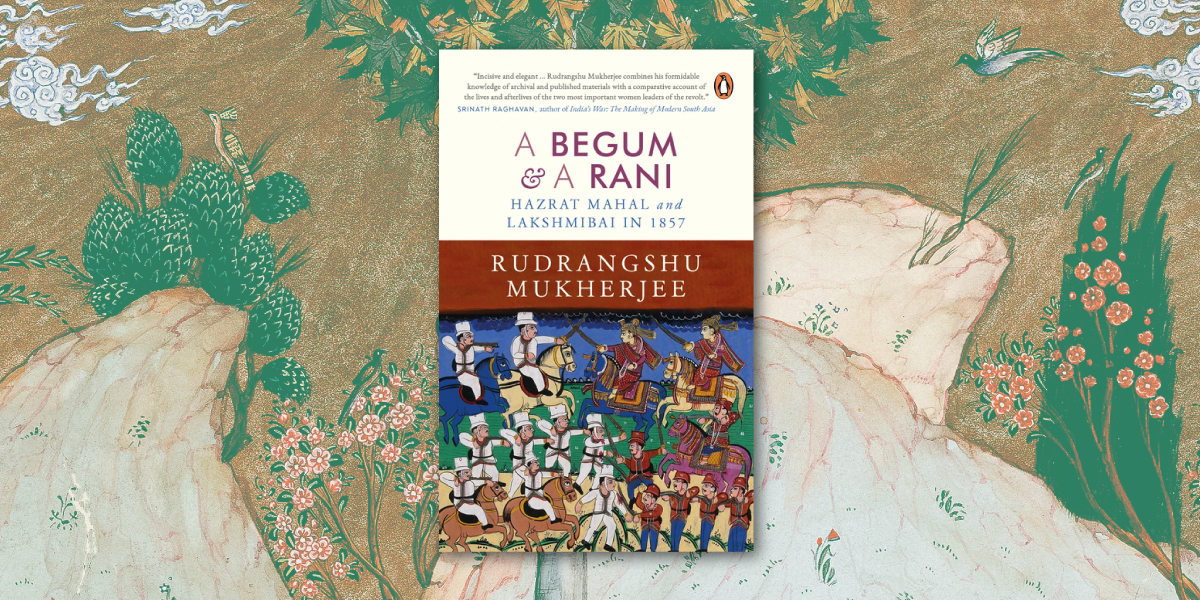
Akhtaruzzaman Elias’s literary piece titled Khwabnama is translated by Arunava Sinha from Bengali to English. In this magnum opus, Elias documents the Tebhaga movement, wherein peasants demanded two-thirds of the harvest they produced on the land owned by zamindars. Let us read this excerpt from Khwabnama in which Kulsum walks down the memory lane recalling her relationship with her husband and step son. She also reminisces the time before the famine when their lives were different.

*

Khwabnama
Khwabnama || Akhtaruzzaman Elias || Arunava Sinha (Translator)

All these memories from long ago, the exuberance from the past, the happiness before the famine—all of them surged through the troubled times that had passed since then to bubble up in Kulsum’s heart. She had not given birth to a child from her own womb. So whether you talked of a son or of a daughter, Tamiz was both of these for her. When this surge of emotion spilled out of her heart, her entire body thrilled to it, and to escape this infestation she suddenly grew desperate to find fault with Tamiz. But then she was an illiterate woman, the daughter of a fakir; how was she to find a flaw in the strapping young man that Tamiz was? Instead, she took advantage of Tamiz’s father sleeping like the dead to steal some of his anger with his son and taste it—do you have to go to Khiyar in search of work? But there was less and less of work to be had with every passing day, this was true too. Not too long ago, even eleven or twelve years ago, old-timers used to say, sowing, weeding, reaping—all sorts of jobs were available right here in Girirdanga and Nijgirirdanga, on both sides of the lake. Apparently there weren’t enough people looking for work then. And in case something needed to be done at short notice, Pocha’s son Kasimuddi, who lived across the lake, had to be sent for. He was as stupid as his father, didn’t own even a sliver of land, and lived in other farmers’ huts or cowsheds or verandas. People would beg and plead with him when they needed a tree trimmed or a house repaired. And look, since then a thousand Kasimuddis had sprung up in every direction. All the bastards were in search of work. So many people died in the famine, so many more sold their house and land and went away, but still the number of people never decreased. All those who had sold their land and house but not left the village were desperate to work as hired hands. But where was the work? Earlier the sharecroppers hired daily labourers, but now they even set their own babies in arms to work in the fields. All right, all understandable. What choice did Tamiz have but to go to Khiyar for work? But consider what his father was saying, consider it well. Why all this flirtation with women when you go to Khiyar? Tamiz’s father knew everything, Kulsum could imagine too, they weren’t good people over at Khiyar. Whenever they spotted young men, working men, they set their daughters to trap them. They got their daughters to marry these men and then kept them in their own homes, forcing the grooms to work on the land that they had taken on lease, to look after the cattle, to build their houses for them. Kneading clay and making walls with it was hard work. The young men became permanent members of their families. The witches cast their spells and the men passed their entire lives as their slaves, not even remembering their own parents any more. A man settling down in his wife’s home—the whole thing suddenly appeared intolerable to Kulsum. Not for nothing had Tamiz’s father become despondent. Let me tell you, he was no ordinary man. No one knew whose call he answered in his sleep when he walked out at night, or where he went, or how far. People said so many things about Tamiz’s father, but no matter what he did in his sleep, there was no match for him when it came to hard work. It was the people of Majhipara who used to enjoy the fish that Tamiz’s father caught in Katlahar Lake before it passed into Sharafat Mondol’s control. Back then Tamiz’s father could snare carp weighing 6 or 7 seers each even with his ripped fishing net. Those little nets would often sink to the bottom of the lake under the weight of the fish, forcing him to wade neck-deep into the water to reel the net back in. The veteran fishermen would say, ‘You’d better be careful going in there. All the fish come running when you cast your net. Not a good sign.

**

Read Khwabnama to understand the many layers of the Tebhaga movement and to appreciate Elias’ writing style and thematic structure of the novel.

India and China’s conflict over Sikkim

Both India and China began their attempts to claim vassalage over Sikkim in the nineteenth century and after some pockets of dormancy, the issue returned to haunt India–China relations in the twenty-first century. The graph of Sikkim’s history saw many curves due to the conflict between India and China over its territory. Therefore, China’s recognition of Sikkim in 2005 represents an important milestone in India’s China diplomacy.

Here’s an excerpt from The Long Game that will give you a glimpse of the chequered history of tutelage and vassalage of Tibet and Sikkim due to their shared Himalayan Buddhist heritage.

*

The Long Game
The Long Game || Vijay Gokhale

In 1904, weary of Tibetan intransigence in accepting the boundary and trading arrangements negotiated between the British and the Chinese, the Government of India sent Sir Francis Younghusband with a military force into Lhasa. The resultant convention between Great Britain and Tibet (known as the Lhasa Convention of 7 September 1904), compelled the Dalai Lama’s government to recognize the frontier between Sikkim and Tibet as defined by the 1890 Anglo–Chinese Convention. With the Chinese and Tibetans on the same page, so to speak, the British government could have resumed the process of demarcation of the Sikkim–Tibet boundary that was interrupted in 1895. They chose not to do so.

The crumbling Chinese Empire, in a last gasp, launched a military campaign in Tibet under Chao Erh-feng, the Imperial Viceroy, and occupied Lhasa, thereby distracting the Tibetans from creating further problems on the Sikkim–Tibet frontier. Soon thereafter in 1911, the Chinese Empire itself collapsed, and the British were left as the sole dominant power in the Himalayas. Hence the British might not, any longer, have considered the Sikkim–Tibet border to be an immediate problem for the British Indian Empire’s Himalayan frontier. They never resumed the process of demarcation. This British decision would return to haunt India–China relations in the twenty-first century.

Following the independence of India in 1947, the new Government of India entered into a new treaty with Sikkim in 1950 under which it became a protectorate. Sikkim’s defence, foreign affairs and communications were to be handled by the Government of India. Hence, when boundary negotiations began with China in the late 1950s, the Sikkim-Tibet frontier was deemed by the Indian side to be a part of the agenda for the India–China boundary talks. In 1956, Chinese Premier Zhou Enlai acknowledged the special relations that India had with Sikkim, but subsequently avoided any discussion with India on the Tibet–Sikkim boundary during the border talks in the late 1950s and in the official level talks in 1960. In fact, Premier Zhou wrote to Nehru on 8 September 1959 making it clear that the boundary between China and Sikkim ‘does not fall within the scope of our present discussion . . .’

This was no coincidence; it is now known that the Chinese were already aware of correspondence between the Government of India and the Dalai Lama’s government in 1948 (before the founding of the People’s Republic of China), wherein the Tibetan government had demanded that independent India should first return all the lands occupied by the British Empire. Sikkim was one of the territories claimed by them. A cable from the Chinese Foreign Ministry to their ambassadors in July 1955, which contained several suggestions to strengthen ties with Afro-Asian nations, contained instructions to the effect that ‘we should formulate a secret stipulation on the status of Sikkim, Bhutan, Kanjuti, etc.’ In 1954, the Chinese published a map showing Sikkim as a part of China. These instances suggest that the new Communist government in Beijing wanted to keep all options open, including the Tibetan claims over Sikkim.

Although they were in no position at that point of time to challenge India over Sikkim, Zhou Enlai shrewdly declined to engage in any activity that might suggest China’s de jure recognition of Sikkim as a protectorate of India. For this reason, when India proposed that the boundary discussions should include the Sikkim–Tibet (China) sector, the Chinese Ministry of Foreign Affairs wrote to the Indian Embassy in Beijing on 26 December 1959, saying that ‘the boundary between China and Sikkim has long been formally delimited and there is neither any discrepancy between the maps nor any disputes in practice.’ When Indian Ambassador Parathasarathi paid his farewell call on Vice Foreign Minister Geng Biao in Beijing on 19 July 1961, the Head of the Asian Department, Zhang Wenjin, who was also present, even alleged that India was wilfully trying to involve China in order to pressurize Sikkim (and Bhutan) into accepting India’s version of where their boundaries with China lay. In reality, the Chinese were buying time, and possibly studying records, while they made up their minds about Tibetan claims on Sikkim as well as the Anglo-Chinese discussions in earlier periods that had led to the 1890 and 1906 Conventions between Britain and China.

**

The life and teachings of the Buddha

A book on an epic poem on the life of The Buddha and his teachings, by Sir Edwin Arnold that was first published in 1879 and has since captivated many iconic personalities like Swami Vivekananda, Rabindranath Tagore, Mahatma Gandhi, Jawaharlal Nehru and Dr B.R. Ambedkar.

 *

The Light of Asia was in ‘eight books of blank verse, with some five or six hundred lines in each’. Arnold did not give any descriptive title to each of the books and refers to them simply in chronological order.

Book the First deals with the birth, boyhood and childhood of Siddartha and contains 436 lines.

Book the Second concerns his teenage years leading up to his marriage to Yasodhara and has 515 lines.

Book the Third is about the luxurious life he leads as a husband and father but also with his growing doubts after seeing an old man, a sick man, a corpse and a wandering ascetic. It has 601 lines.

Book the Fourth deals with his Great Renunciation and the beginning of his search for the cure to the ills of human existence. This is covered in 568 lines.

Book the Fifth elaborates on his self-mortification in the company of wandering ascetics and has 560 lines.

Book the Sixth explains his disenchantment with self mortification as a solution, his partaking of Sujata’s gift of milk to end his starvation and his attainment of Buddhahood under the Bodhi tree. Not surprisingly, it is the longest and has 780 lines.

Book the Seventh deals with his father’s grief, his wife’s anguish and his son’s bewilderment at his absence, his homecoming and their recognition of what he had accomplished. It has 520 lines.

Front cover of The Light of Asia
The Light of Asia || Jairam Ramesh

Book the Eighth is the easiest to read, with 611 lines, and goes over the establishment of the order of the monks and expositions of the Buddha’s teachings and doctrines. It is probably the most powerful section of the entire poem.

In all, there are 5300 lines and 41,000 words in The Light of Asia.The poem starts off thus:

The Scripture of the Saviour of the World,

Lord Buddha—Prince Siddhartha styled on earth—

In Earth and Heavens and Hells Incomparable,

All-honoured, Wisest, Best, most Pitiful;

The Teacher of Nirvana and the Law.

Thus came he to be born again for men.

Book the Eighth is clearly the crux of The Light of Asia. It contains stirring descriptions of the Buddha’s philosophy and his teachings, his exposition of the Four Noble Truths and the Eightfold Path, his Five Rules for good behaviour and explanation of the doctrines of Karma and Nirvana. More than anything else in the poem, the closing of Book the Eighth perhaps caught the public imagination the most:

Here endeth what I write

Who love the Master for his love of us.

A little knowing, little have I told

Touching the Teacher and the Ways of Peace.

Forty-five rains thereafter showed he those

In many lands and many tongues, and gave

Our Asia light, that still is beautiful,

Conquering the word with spirit of strong grace;

All of which is written in the holy Books,

And where he passed and what proud Emperors

Carved his sweet words upon the rocks and caves:

The Buddha died, the great Tathagato,

Even as a man ‘mongst men, fulfilling all:

And how a thousand crores since then

Have tred the Path which leads where he went

Unto NIRVANA where the Silence lives

*

Indian Parliamentarian, economist and author Jairam Ramesh, narrates a fascinating story of this deeply consequential and compelling poem that has shaped our thinking of an ancient sage and his teachings.


Two lives in letters

Two teenagers—Saumya in Delhi and Duaa in Kashmir—ask through letters they exchanged over almost three years some pertinent questions about Kashmir.

Like Anne Frank’s letters, Post Box Kashmir:Two Lives in Letters provides an insight into the minds and hearts of teenage girls undergoing momentous points in history.

*

Finding my letter writer in Delhi was a pleasant accident. I hadn’t really started looking at that time. On a completely different mission, one winter afternoon in February 2017, I found myself at Saumya’s house. It was books that led my husband and me there. Both of us, he way more than me, are guilty of hoarding books. And now, a carefully built selection of over fifteen years needed a new purpose. Our search for a library, where we could part with our much-loved treasures knowing they will be equally valued, was what led us there. It was a cosy unassuming two-bedroom flat in a colony in outer Delhi. Saumya’s parents ran a small library-cum-reading room from an even smaller space on the floor above.

Front cover of Postbox Kashmir
Postbox Kashmir || Divya Arya

They could have rented it out to supplement their income, but decided to use it to work with schoolgoing children by providing them a place to come read. As the name suggested, Umang Library was to spread the simple ‘joy’ of immersing in the written word, to give wings to young imaginations. We were inspired with what we saw and went back down three floors to make multiple rounds, heaving cartons full of books up a narrow, broken staircase.

Saumya didn’t speak much at that time. She quietly helped with the unpacking and laying out of books, stopping only to peer at some titles from behind her thick spectacles. She was fifteen years old and preparing for her Class X board exams. We didn’t talk about Kashmir.

A few weeks later, when I started the search for my letter writers, I recalled the shy young girl from that winter afternoon. The more I thought about it, the more she seemed to be the perfect fit. A couple of phone calls later, it was done. Saumya Sagrika was waiting to get her first letter.

In Kashmir, the situation was very different. I had never been there, I had no family there and very few friends. As I started making calls, finding connections and building bridges to reach out to parents, it became very clear that the biggest hurdle was going to be trust. It was the casualty of decades of conflict. Entering into anyone’s circle of trust is always difficult, but on some days, it seemed unsurmountable. The physical distance, lack of confidence that a personal meeting could build, all added to the challenge.

In 2017, there were visible strains of pain and anger. The violent autumn after Wani’s encounter had quietened as snow covered the streets in the Valley. But the cold seeped in through the telephone line from the other side when I tried to explain our project. The memories were very raw.

There was a strong belief that the momentous upheaval led by young people was going to change something. The rage was still simmering. At that time, when opinions, borders and beliefs had a razor-sharp edge to them, my offer of a quiet conversation over letters seemed suspiciously innocuous to the parents on the other end of the phone call.

But I persisted, not losing hope. Days turned into weeks, which turned into months. And finally, a door opened just a crack. My request had landed at fifteen-year-old Duaa’s doorstep, with just a recommendation from an acquaintance trusted by her family, holding this together.

Duaa’s father had a gentle demeanour. We discussed the project a little and then some more. But we spent a lot of time trying to know more about each other. Me and my family and Duaa and hers. The conversations with her parents were never rushed and always began with courtesies that extended to my parents, my husband and his family. This was my lovely introduction to Kashmiri tehzeeb (etiquette). As trust grew, the anxieties became more honest too. And some stemmed from what had happened to another Kashmiri teenager.

*

Divya Arya has been telling people’s stories on social issues for almost two decades now. In Post Box Kashmir she deals with another non-fiction story on the backdrop of political history and turbulent present of Kashmir and India.

Of war, grief and longing

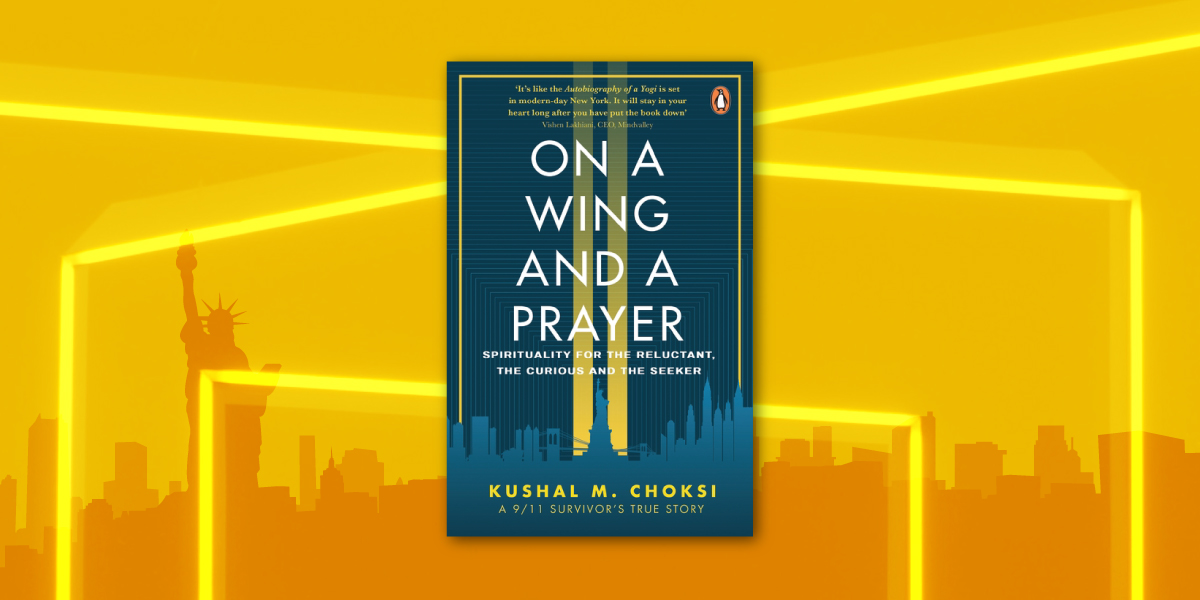
Long-listed for the Booker Prize 2021, A Passage North begins with a message from out of the blue: a telephone call informing Krishan that his grandmother’s caretaker, Rani, has died under unexpected circumstances-found at the bottom of a well in her village in the north, her neck broken by the fall.

Scroll down for a searing glimpse into Anuk Arudpragasam’s powerful story of longing, loss, grief and legacy of war.

*

front cover of A Passage North
A Passage North || Anuk Arudpragasam

The caller had introduced herself, somewhat hesitantly, as Rani’s eldest daughter, an introduction whose meaning it had taken him a few seconds to register, not only because he’d been distracted by the email but also because it had been some time since the thought of his grandmother’s caretaker Rani had crossed his mind. The last time he’d seen her had been seven or eight months before, when she had left to go on what was supposed to have been just a four- or five- day trip to her village in the north. She had gone to make arrangements for the five- year death anniversary of her youngest son, who’d been killed by shelling on the penultimate day of the war, then to attend the small remembrance that would be held the day after by survivors at the site of the final battle, which was only a few hours by bus from where she lived. She’d called a week later to say she would need a little more time, that there were some urgent matters she needed to attend to before returning— they’d spent more money than planned on the anniversary, apparently, and she needed to go to her son- in-law’s village to discuss finances with her daughter and son- in- law in person, which wouldn’t take more than a day or two. It was two weeks before they heard back from her again, when she called to say she’d gotten sick, it had been raining and she’d caught some kind of flu, she’d told them, would need just a few more days to recover before making the long journey back. It had been hard to imagine Rani seriously affected by flu, for despite the fact that she was in her late fifties, her large frame and substantial build gave the impression of someone exceptionally robust, not the kind of person it was easy to imagine laid low by a common virus. Krishan could still remember how on New Year’s Day the year before, when they’d been boiling milk rice in the garden early in the morning, one of the three bricks that propped up the fully laden steel pot had given way, causing the pot to tip, how Rani had without any hesitation bent down and held the burning pot steady with her bare hands, waiting, without any sign of urgency, for him to reposition the brick so she could set the pot back down. If she hadn’t yet returned it couldn’t have been that she was too weak or too sick for the ride back home, he and his mother had felt, the delay had its source, more likely, in the strain of the anniversary and the remembrance on her already fragile mental state. Not wanting to put unnecessary pressure on her they’d told her not to worry, to take her time, to come back only when she was feeling better. Appamma’s condition had improved dramatically since she’d come to stay with them and she no longer needed to be watched every hour of the day and night, the two of them would be able to manage without help for a few more days. Another three weeks passed without any news, and after calling several times and getting no response, Krishan and his mother had been forced to conclude that they were wrong, that Rani simply didn’t want to come back. It was surprising that she hadn’t bothered to call and tell them, since she was usually meticulous about matters of that kind, but most likely she’d just gotten so sick of spending all her time alone with Appamma that it didn’t even occur to her that she should let them know. Confined to a small room in a house on the other side of the country, forced to tolerate the endless drone of Appamma’s voice every day and night, unable to go outside the house for significant periods of time, since she didn’t know anyone and couldn’t speak Sinhalese, it made sense, they’d agreed between themselves, if Rani had decided after almost two years in Colombo that it was time finally to leave.


*


error: Content is protected !!