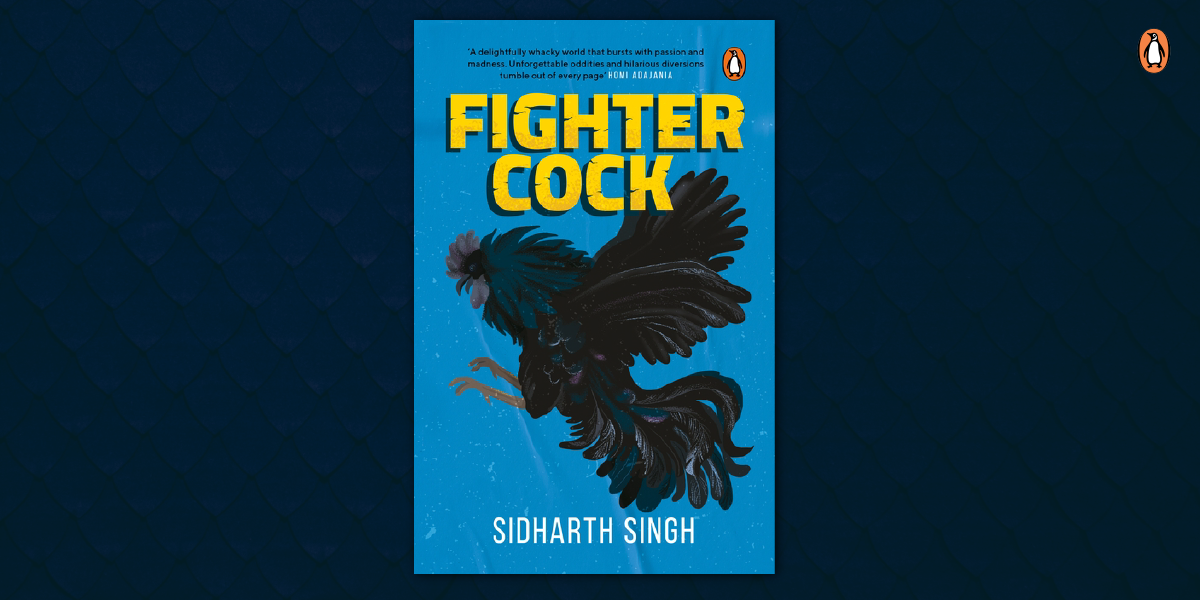
This is a narrative about the clash within the royal family which traces the arc of gory violence and brutal bloodshed. In all of Raja Ratan Shah’s life, nobody had made him feel more insecure than his own bastard son, Teja. With no heir in sight, Teja felt entitled to usurp the power. This marked the beginning of a series of cockfights and conflicts.
Here’s an excerpt from the book which gives a glimpse of one of the many cockfights.
*
Fighter Cock || Sidharth Singh
One of Teja’s men brought a fierce-looking Aseel into the pit. The raja picked one of his Karianaths, a young battle stag that was taken inside the pit by its handler. The cocks were pitted by a touch of beaks, and the fight began. The Karianath was aggressive from the get-go, circling the Aseel in top spinner style, using quick footwork. The Aseel, a battle cock of some repute, stood its ground, weaving and bobbing, looking for an opening. As the Karianath tried to take the Aseel head-on, the Aseel jumped up in the air and came crashing down on its head, slashing its neck with a short-blade fitted on its left foot, killing it instantly. Half the crowd ‘ooh’ed in pity while the other half ‘aah’ed in joy. A lot of money exchanged hands. This was Teja’s sixth straight win of the night, and he was jubilant.
An old Bollywood hit played shrilly on loudspeakers installed around the arena. Teja and his henchmen danced wildly to the song, rousing the crowd to join in, and turned the arena into a rave. The raja plied Sheru with more mahua as he moved on to another ganja chillum, blowing smoke like a steam engine and descending further into the grip of lunacy. By now, Sheru was also drunk and had no choice but to drop his guard and enjoy this insane spectacle. The raja signalled for the music to stop and for the next fight to begin. Teja decided to field the winning cock once again while the raja entered his top fighter, the champion battle cock ‘Toofani’, in this bout.
As earlier, the cocks were pitted beak to beak and the fight began. Teja’s Aseel, overconfident from the previous bout, went for the kill immediately, attacking the Karianath from all angles, in a departure from its earlier bob-and-weave style. Toofani circled around in a slinky top-spinning style, its quick hopping reminiscent of B-grade kung fu films. The Aseel took a few quick jabs at the Karianath, who warded them off with ease. Then the Aseel charged down the pit and took a giant leap. The Karianath countered with a massive on-the-spot jump, and, in a gory mid-air collision, kicked the Aseel in the eyes with both its long-bladed feet and blinded it completely.
Blood gushed out of the Aseel’s eyes and the crowd went berserk, shouting with bloodlust. The raja jumped up from his seat and screamed, ‘Kill the bastard! Kill the motherfucker!’ The Aseel hopped around the pit in panic. Toofani strutted to the far end for a long run-up and, then, charging down the pit, leapt into the air and pounced on the helpless Aseel, pinning it to the ground. It then proceeded to kill its foe with repeated machine-gun pecks to its head and neck in a crazed quick-beak style. By the end of the fight, Toofani was drenched in the blood of its victim. It walked up, as if drunk on its gory victory, towards the cheering spectators and fanned its wings violently, splashing blood on the crowd, and making them ecstatic.
**
To know more about the conflicts and cockfights in the royal household of Shikargarh dive into the pages of Sidharth Singh’s rough and ready noir titled Fighter Cock.
Banaras, Varanasi, Kashi. India’s holy city on the banks of the Ganges has many names but holds one ultimate promise for Hindus. It is the place where pilgrims come for a good death, to be released from the cycle of reincarnation by purifying fire.
As the dutiful manager of a death hostel in Kashi, Pramesh welcomes the dying and assists the families bound for the funeral pyres that burn constantly on the ghats. He lives contentedly with his wife, Shobha, their young daughter, Rani, the hostel priests, his hapless but winning assistant, and the constant flow of families with their dying.
But one day the past arrives in the lifeless form of a man pulled from the river-a man with an uncanny resemblance to Pramesh. Called ‘twins’ in their childhood village, he and his cousin Sagar were inseparable until Pramesh left to see the world and Sagar stayed back to look after the land. For Shobha, Sagar’s reemergence casts a shadow over the life she’s built for her family. Soon, an unwelcome guest takes up residence in the death hostel, the dying mysteriously continue to live and Pramesh is forced to confront his own ideas about death, rebirth and redemption.
***
The City Of Good Death||Priyanka Champaneri
As the sun broke free from the horizon like a balloon slipping from a child’s grasp, the light lift ed the veil of fog from Kashi and beyond. The white sands of Magadha winked with the allure of crushed pearls. Birds skated along the air above, traveling in perfect circles over the land, dipping toward a pair of dogs that snarled and fought, spiraling above a tented barge that trundled along the river on an aimless journey. The Ganges, calm and composed in the absence of the monsoon, gathered the early morning pink over its expanse like a sari laid out to dry in the sun, the edges curling against the many carved stone steps leading up to the city . The buildings towering above the ghats gleamed iridescent in the halo of light washing over the water. The bells rang in the temples; the monkeys watched with indifferent faces from their perches atop the roofs. Men bobbed in the water, dunking themselves once, twice, holding their noses closed with one hand while the other directed the holy river over heads, arms, bellies. Women wrung out their wet saris and crowded near each other as they changed into fresh clothing. The ghaatiye—priests who sat on snug platforms with large umbrellas fanning behind them like cobra hoods—collected coins from the bathers, passed a cracked mirror to one man, said a blessing for another, listened to the dilemma of a third. A perpetual stream of people flowed down to the river and back up the steps, hurried feet sidestepping the drunk stretched out with an earthenware pot clutched in his arms. Funeral pyres crowded a stone platform at the bottom of the steps, Flames crackling, the surrounding men looking like cotton spindles from a distance with their shaved heads and sheer white dhotis. Chants laced the air, each word crisp and new as if emerging for the first time from the lips of red-eyed priests. Black smoke spangled with the occasional swirling orange spark rose up and over the stairs, where the walls bordering the alleyways and lanes drew closer, cinching all who passed through in a concrete embrace that blocked out all light and sense of direction. Four men shouldering a bier navigated tight corners
and crowded alleys. Wrapped in coarse white fabric that rose in crisp lines over the nose, the shoulders, the knobby toes, the body had become nameless, an insect tucked and tightly wound with spider’s silk. Their voices, frozen in a monotone chant, echoed in the lanes. Rama Nam Satya Hai. Rama Nam Satya Hai. Rama is truth. God is truth. The chant chased after the feet of a delivery boy, an old woman walking with quick steps, a white dog trotting out of the open mouth of an alley. The dog sniffed at a discarded tobacco wrapper and paused to scratch behind its ear. It looked back and then raised its nose into the air and disappeared into the alley, its tail held upward like a sail, intent on an errand whispered by the breeze. The news traveled quickly, and speculation trailed after to fill the holes that remained. The note found in the dead man’s pocket could have pointed to suicide . . . but the rope tied around the wrist suggested an accidental drowning. And what of the two boatmen who dragged the body back, who certainly could have been murderers? All the other boatmen at Lalita ghat stuck up for the pair except for Raman. Annoyed that his craft required exorcizing and purification by priests, who insisted that it would take an entire day and a hefty sum of rupees, Raman sat on the topmost steps of the ghat cursing his luck and smoking beedi after mango-flavored beedi. The others sat around gossiping or shouted theories as they passed each other on trips up and down the river. All focused on one detail. “They found a note, didn’t they? Has anyone read it?” “A love letter, most probably,” a priest called out from the middle of the ghat as he scratched his chest. “Always a woman to blame,” he added to no one in particular as he labored up the stairs. “Debts, more likely.”
“Perhaps he had a curse on his head.”
“Or he was looking for Yamraj—see how close he was to Magadha?” “Nonsense. He was drunk and fell over.” “That Raman should have secured things better. What kind of duffer leaves his boat free for anyone to take?” “Well, he died in Kashi, so at least he will find peace.”
“What fool would call that a good death, Kashi or no?”
*
Priyanka Champaneri’s novel is an exquisitely lyrical ode to Banaras where where death is so blatantly placed alongside everyday life.
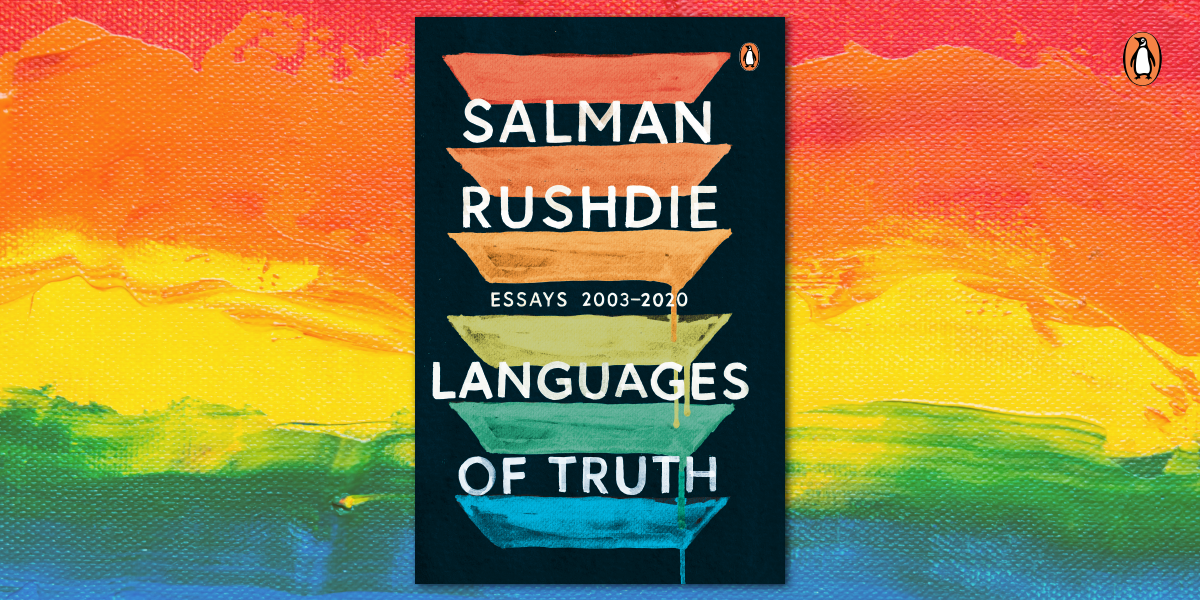
A storyteller of the highest order, illuminating truths about our society and culture through his gorgeous, often searing prose. In his latest collection of nonfiction, Salman Rushdie brings together insightful and inspiring essays, criticism, and speeches, written between 2003 and 2020, that focus on his relationship with the written word and solidify his place as one of the most original thinkers of our time.
Languages of Truth chronicles Rushdie’s intellectual engagement with a period of momentous cultural shifts. Immersing the reader in a wide variety of subjects, he delves into the nature of storytelling as a human need. He explores what the work of authors from Shakespeare and Cervantes to Samuel Beckett, Eudora Welty, and Toni Morrison mean to him.
Here us a taste of Rushdie’s signature wit and dazzling voice inLanguages of Truth:
~
Languages of Truth||Salman Rushdie
Before there were books, there were stories. At first the stories weren’t written down. Sometimes they were even sung. Children were born, and before they could speak, their parents sang them songs, a song about an egg that fell off a wall, perhaps, or about a boy and a girl who went up a hill and fell down it. As the children grew older, they asked for stories almost as often as they asked for food. Now there was a goose that laid golden eggs, or a boy who sold the family cow for a handful of magic beans, or a naughty rabbit trespassing on a dangerous farmer’s land. The children fell in love with these stories and wanted to hear them over and over again. Then they grew older and found those stories in books. And other stories that they had never heard before, about a girl who fell down a rabbit hole, or a silly old bear and an easily scared piglet and a gloomy donkey, or a phantom tollbooth, or a place where wild things were. They heard and read stories and they fell in love with them, Mickey in the night kitchen with magic bakers who all looked like Oliver Hardy, and Peter Pan, who thought death would be an awfully big adventure, and Bilbo Baggins under a mountain winning a riddle contest against a strange creature who had lost his precious, and the act of falling in love with stories awakened something in the children that would nourish them all their lives: their imagination.
The children fell in love with stories easily and lived in stories too; they made up play stories every day, they stormed castles and conquered nations and sailed the ocean blue, and at night their dreams were full of dragons. They were all storytellers now, makers of stories as well as receivers of stories. But they went on growing up and slowly the stories fell away from them, the stories were packed away in boxes in the attic, and it became harder for the former children to tell and receive stories, harder for them, sadly, to fall in love. For some of them, stories began to seem irrelevant, unnecessary: kids’ stuff. These were sad people, and we must pity them and try not to think of them as stupid boring philistine losers.
I believe that the books and stories we fall in love with make us who we are, or, not to claim too much, that the act of falling in love with a book or story changes us in some way, and the beloved tale becomes a part of our picture of the world, a part of the way in which we understand things and make judgements and choices in our daily lives. As adults, falling in love less easily, we may end up with only a handful of books that we can truly say we love. Maybe this is why we make so many bad judgements.
Nor is this love unconditional or eternal. A book may cease to speak to us as we grow older, and our feeling for it will fade. Or we may suddenly, as our lives shape and hopefully increase our understanding, be able to appreciate a book we dismissed earlier; we may suddenly be able to hear its music, to be enraptured by its song. When, as a college student, I first read Günter Grass’s great novel The Tin Drum, I was unable to finish it. It languished on a shelf for fully ten years before I gave it a second chance, whereupon it became one of my favourite novels of all time: one of the books I would say that I love. It is an interesting question to ask oneself: Which are the books that you truly love? Try it. The answer will tell you a lot about who you presently are.
I grew up in Bombay, India, a city that is no longer, today, at all like the city it once was and has even changed its name to the much less euphonious Mumbai, in a time so unlike the present that it feels impossibly remote, even fantastic: a real- life version of the mythic golden age. Childhood, as A. E. Housman reminds us in ‘The Land of Lost Content’, often also called ‘Blue Remembered Hills’, is the country to which we all once belonged and will all eventually lose: Into my heart an air that kills
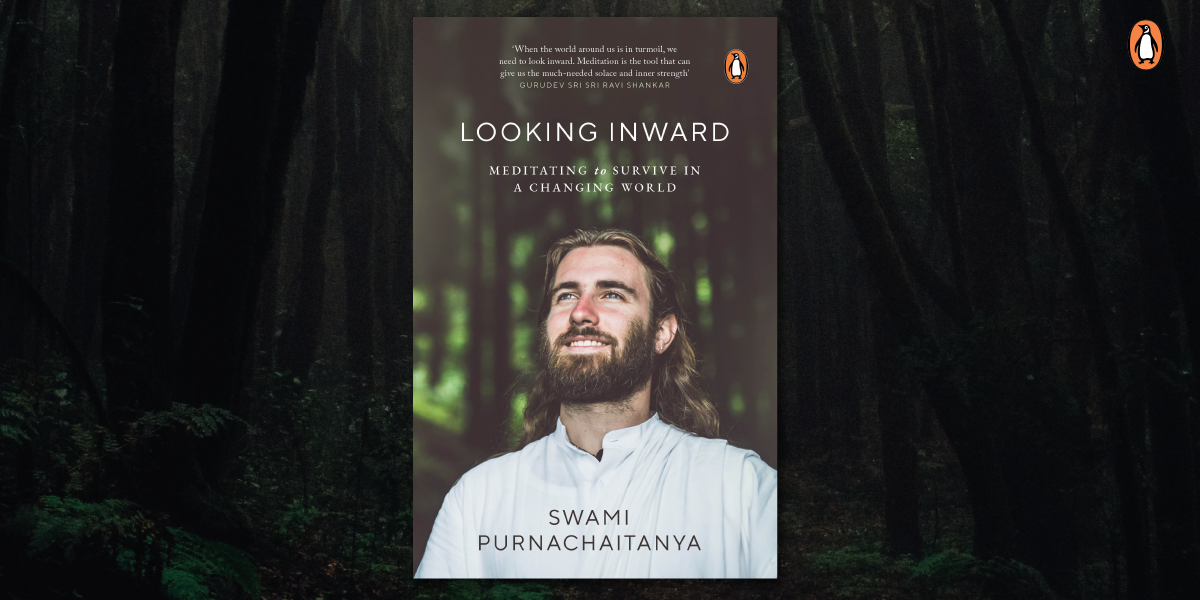
There are many misconceptions and wrong notions when it comes to meditation nowadays, as in the last few decades it has found itself transitioning from what was by many perceived as maybe a strange occult practice, that was associated with scarcely clad yogis in the Himalayas, to the latest trend of mental fitness for the hip and successful, with an increasing number of mobile apps that promise you peace of mind in as little as three minute ‘instant’ meditations. On top of that many embraced the term ‘mindfulness’ as the new and much more secular word for meditation, making it much easier to market to both the masses and corporate honchos, not realizing that meditation and mindfulness are really not the same, and in some ways are even exactly opposite to each other.
I felt it was high time, therefore, to write a book that clears many of these misconceptions and wrong notions, and that allows anyone with an interest to start exploring meditation to do so in the proper manner, and without getting caught up in either too much incense, or too little substance.
Meditation is an ancient, time-tested and very effective art of managing our mind and transcending it. It has countless benefits, ranging from how it impacts your social and professional life, to your personal health, happiness and sense of freedom and fulfilment. Trying to strip it from its context and tradition will not only be an injustice to the very masters that have preserved this knowledge till today, but it would also deprive the practice of some of its most effective and essential aspects.
At the same time, our modern world and lifestyle requires us to make this ancient wisdom and techniques available in a way that they can be easily understood, related to, and practiced by anyone who wishes to explore the manifold benefits it offers. This book will help you do so, as your personal guide to understanding this profound practice for a healthier, happier and well-adjusted life.
The way this book is structured is that each chapter will teach you some of the tools, and help you progress on the journey, giving you the knowledge and know-how of principles that will finally come together in your personal meditation practice. Many of the principles that you will learn in these pages will also make you more effective, efficient, and empathic even in your day-to-day activities and will help you to deal more skilfully with this abstract thing called the mind and all its tantrums. It will make your life easier, more enjoyable, and more fulfilling, but it will require you to read, understand, and practice what has been shared.
You will learn that meditation does not require a lot of focus or concentration, rather the opposite, and that it can actually be a joyful journey full of eye-openers. It is a journey from effort to effortlessness, from activity to stillness, and from stress, anxiety and frustration to a state of peace and tranquillity. One thing that I would like to emphasize though, is that meditation is so much more than just a solution to some of these problems that many of us face. And practicing it simply to overcome these problems would mean you may drop the practice when your mind or life has settled down again. I would rather encourage you to aim higher and think bigger. Meditation will give you all those benefits, but these are more like the side effects. The real treasure you can find inside lies beyond, and it is only revealed to those who are really ready to look inward.
Come then, whether you are totally new to meditation, or have been practicing regularly or irregularly for many years. I invite you to embark on this fascinating journey with an open mind. When you are able to do this, I guarantee that you will learn and realize many things that can help you understand and deepen your meditation practice and enrich your life. After all, in today’s modern world, meditation is not a luxury, it is a necessity, and the sooner we realize this, the better.
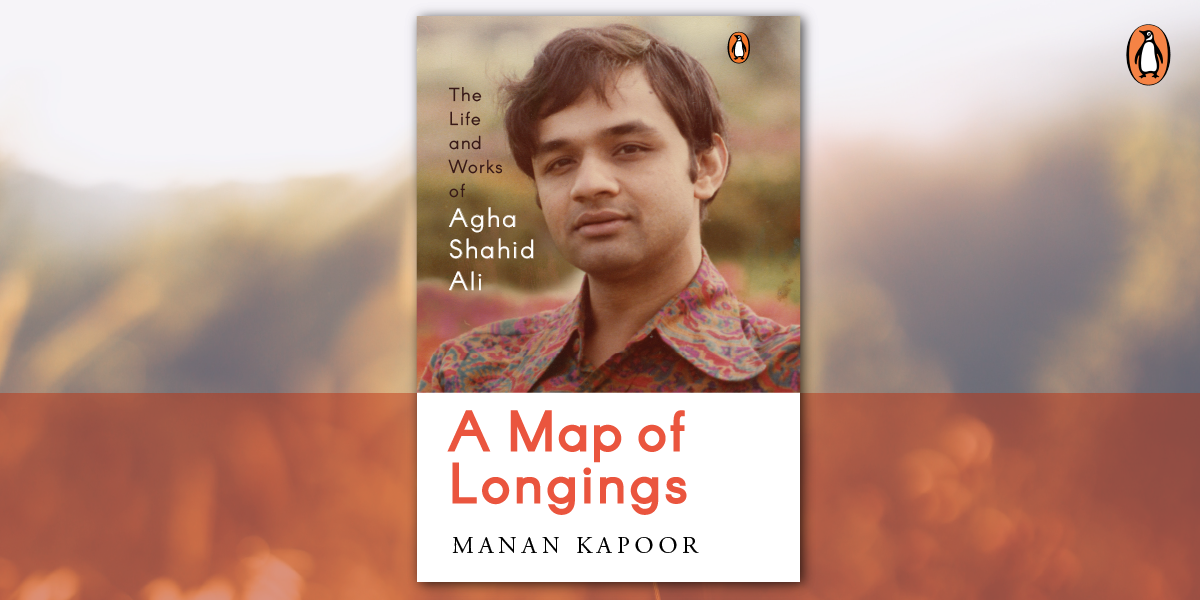
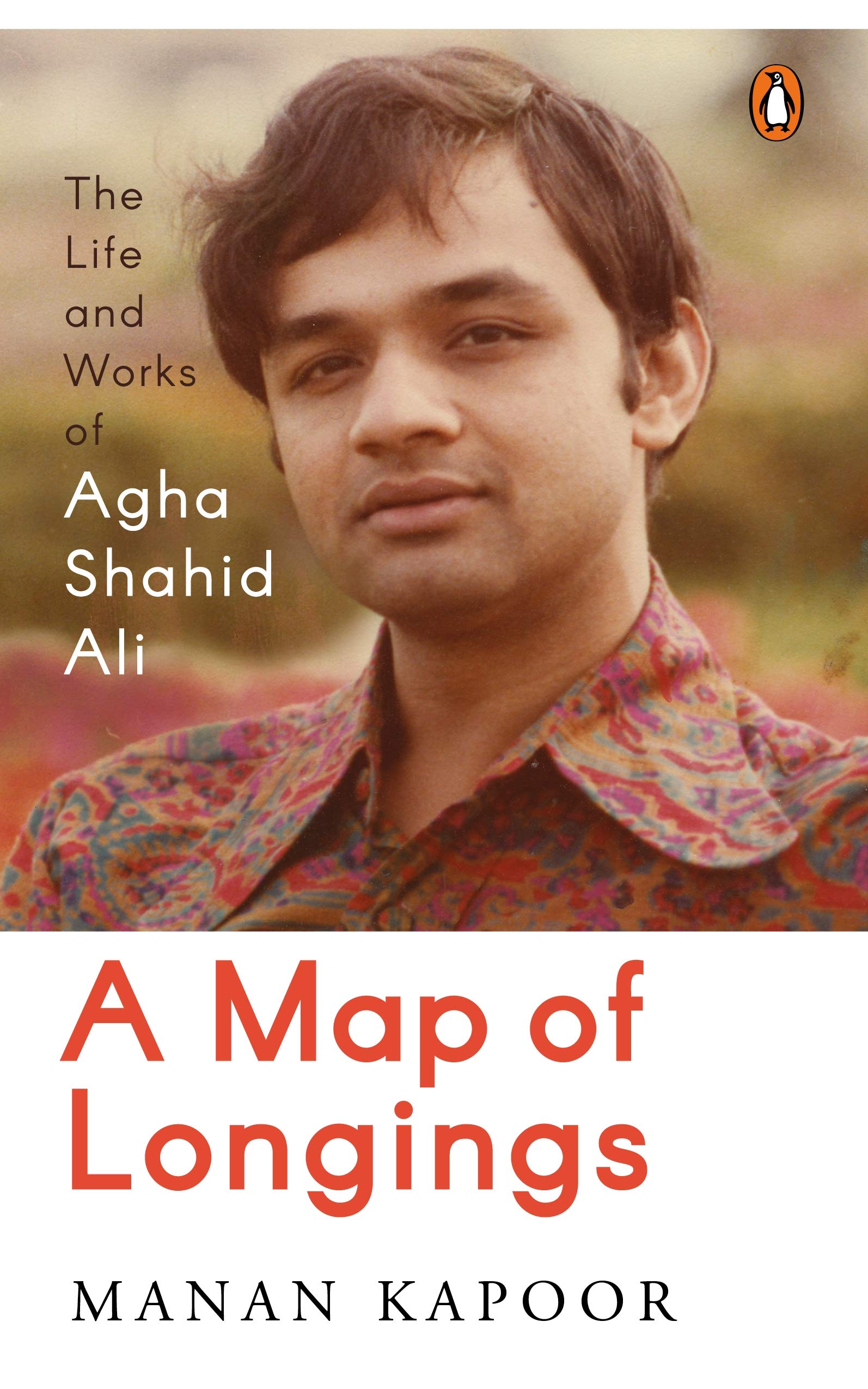
Agha Shahid Ali is widely regarded as one of the finest poets from the Indian subcontinent, and his works are read across the world, touching millions of lives.
In A Map of Longings, Manan Kapoor explores the concerns that shaped Shahid’s life and works, following in the footsteps of the ‘Beloved Witness’ from Kashmir to New Delhi and finally to the United States. Here is an excerpt from the introduction of the book.
A Map of Longings: Life and Works of Agha Shahid Ali|| Manan Kapoor
My first formal encounter with poetry happened through my mother, who, looking at the lilies that bloomed in our garden each spring, quoted from T.S. Eliot’s ‘The Waste Land’: ‘April is the cruellest month, breeding / Lilacs out of the dead land, mixing / memory and desire.’ But it could also very well have been through the renditions of the ghazals of Mirza Ghalib that my father played so often. I cannot recall which came first, but the magical presence of poetry during my formative years had caused a wound. This wound opened itself once again in my teenage years when I first read a poem by Agha Shahid Ali.
I vividly remember reading poems like ‘A Rehearsal for Loss’, ‘Stationery’ and his famous one-liners, ‘Suicide Note’ and ‘On Hearing a Lover Not Seen for Twenty Years Has Attempted Suicide’ (a poem whose title is longer than the body), and marvelling at the sheer simplicity and clarity—there was something ineffable about his language that instantly took a hold of me. Years later, I was informed by his brother, Agha Iqbal Ali, that Shahid had singled out some short poems like ‘Stationery’ as crowd-pleasers that he would open his readings with to charm the audience. The trick had worked on me, and over the next few years, the more I read, the more Shahid reeled me in.
I could also say, at the risk of romanticizing the past, that I became aware of Shahid at just the right moment, when I was ready for him. The years leading up to my first novel, The Lamentations of a Sombre Sky, were also the years of my political coming of age. Throughout my bachelor’s degree, I was working on a novel set in Srinagar in the early ’90s. Although I read numerous accounts of writers and journalists, I fell back, naturally, on Shahid’s collection The Country without a Post Office, only to realize that no one— absolutely no one—was a match for him. Eventually, I ended up using a couplet from Shahid’s ghazal ‘Of Light’ as the epigraph to a section of my novel. Although the political subject matter of the collection was important, it was the aesthetic sensibility, reflected in his language, that made it remarkable. Much later, I read in an interview that Shahid always placed the aesthetic value over the subject matter of his poems.2 For three years leading up to the publication of my novel, I had used Shahid’s works as a lens through which I saw and understood Kashmir. In time, however, the lens itself became the object, which I started looking at from a fresh set of eyes.
I suspect that one of the reasons I fell in love with Shahid was because his poems mapped all the languages, cultures and worlds that I believed I belonged to. Shahid was completely South Asian and completely cosmopolitan at the same time, and in his poems, I could sense the presence of both Ghalib and Eliot, of the West as well as the subcontinent. But as I delved into his work, I discovered that there were more layers than I could have ever imagined.
Shahid was a beneficiary of three cultures—Hindu, Muslim and Western—and at his home, poetry was recited in four languages—English, Urdu, Persian and Kashmiri. Although he wrote in English, his poems, in essence, captured the sensibilities of all these languages and traditions. His father, Agha Ashraf Ali, was an educationist with socialist inclinations and introduced him to the ideas of Mahatma Gandhi, Jawaharlal Nehru and Martin Buber, while his mother, Sufia Agha, a Sunni Muslim from Uttar Pradesh, sang bhajans to him and dressed him as Krishna for Janmashtami. While on the one hand his paternal grandmother, Begum Zafar Ali, was a devout Shia Muslim who taught him about Islam, on the other hand he went to a Catholic school and, throughout his formative years, was fascinated by Christ. I soon realized that Shahid was the sum total of these different cultures and learnt from all of them, that he never viewed them as contradictions but simply as different world views that later coalesced in his poetry.
This first definitive biography of Agha Shahid Ali offers a rich portrait of the poet and the world he inhabited.
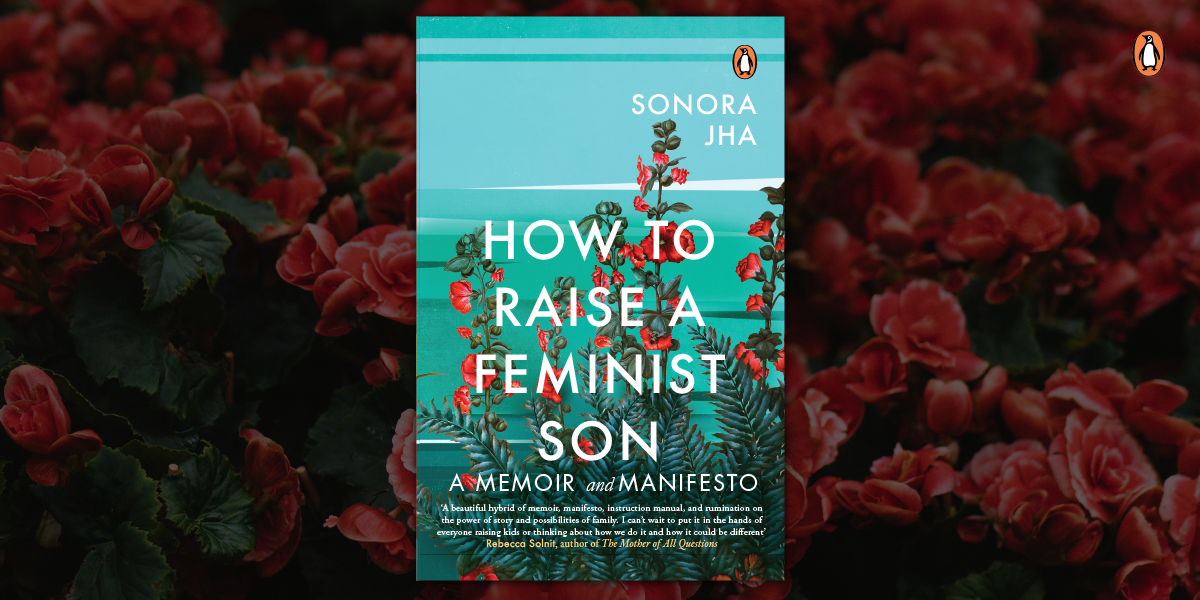
Informed by the author’s work as a professor of journalism specializing in social-justice movements, How to Raise a Feminist Son will resonate with every feminist hoping to change the world, one kind boy at a time. From teaching consent to counteracting problematic messages from the media, well-meaning family, and the culture at large, we have big work to do when it comes to our boys. A beautifully written and deeply personal story of struggling, failing, and eventually succeeding at raising a feminist son, the advice in this book all comes from first hand experience and learning from trial and error.
From taking on internet trolls to dealing with real life hurdles, Sonora Jha shows us all how to be better feminists and better teachers of the next generation of men. Here’s a look into this electrifying tour de force.
~
How to Raise a Feminist Son||Sonora Jha
In India, when a mother has a baby, she is given post-partum massage to soothe her from childbirth and help her regain her strength and shape. Then, when the baby is around a month old, the mother is encouraged to massage her baby. It is said to help bond the baby and mother while also removing toxins from the baby’s system. When done right after the baby’s bath, it eases the baby into a deep sleep—and we all know how badly we want that.
For my baby, I would use a mixture of olive oil, coconut oil, Ayurvedic oil, and Johnson’s Baby Oil. I would coo to him and he would gurgle. He would blink at me with his huge, longlashed black eyes as if wondering if this feeling rushing over him was love. Yes, it is, I would whisper as I folded his chubby left
leg over his right and gently pressed them into his tummy, the way the woman who had taught traditional Ayurvedic massage for generations had instructed me, to aid baby’s digestion and promote suppleness in his joints.
In those early months, I looked at my baby and knew he was the most beautiful thing in the world. I thought I would die from this love. This was in the days before Facebook and Instagram, so I couldn’t share it with the world. And so I could just quietly believe it and bask in our moments of gurgle and coo.
I also had time to wonder how to turn this beautiful, doughlimbed, ink-pool-eyed miracle of mine into a mighty warrior of feminist revolution.
I wanted nothing but the best for this boy (thus the combination of massage oils). A part of me then paused to wonder if my plan to raise him as a feminist would be good for the world, yes, but perhaps set him back? Why not let him stay in a deep sleep instead of using his tender heart and limbs and
brain for a cause that didn’t celebrate him?
Fortunately, I started to read everything I could find about feminism and its benefits for boys. I sought out both poetry and research that would help me stay the course. I talked with friends. Over the years, as Gibran grew and grew, I kept all of that close.
Twenty years later, when my friend Julie found out that she was pregnant with a boy, she went through somewhat similar emotions. This was going to be fun, she concluded. (And, of
course, the boy would grow up to be a feminist.)
Perhaps your friends are cheering and buying cute onesies for your baby shower that say, ‘This is what a feminist looks like.’ Or, after too many Trump years and in the reckoning of the #MeToo movement, perhaps they can barely manage a steely ‘Yes!’ and a grim nod. Either way, we know that more and
more of us are on board and aching to raise feminist boys.
This desire doesn’t span merely the twenty years between Julie’s boy and mine, of course. Feminists have been imploring men to be allies for centuries, actually. Let’s harken back to Britain’s ‘first feminist,’ Mary Wollstonecraft, when she wrote in her essay A Vindication of the Rights of Woman:
Would men but generously snap our chains, and be content with rational fellowship instead of slavish
obedience, they would find us more observant daughters, more affectionate sisters, more faithful wives, more reasonable mothers—in a word, better citizens.1
Centuries later, a little bit has shifted in that we are now trying to convince men—and some women—that we’d like to be characterized simply as human, rather than appeal to men as daughters, sisters, wives, and mothers; but yeah, Mary, I get you: feminism will help my son be in a rational fellowship. To this reasonable mother, that means that he will be given permission to be wrong sometimes—to fail, to fall, to cry, to be protected rather than always be protector, to be provided for rather than always be provider, to seek and receive wise counsel, to be chastised as much as he is cheered, to be led to wild fun, to be held and to be held responsible, to get schooled and to get laid.
I greedily, reasonably, wholeheartedly want all these things for my son.
Is this even possible? Can boys be feminists? Are they doing it for the greater common good, in selfless solidarity, or is there something in it for him?
A pertinent and eloquent response to this question came from a gentleman on Twitter, when I shared an essay about raising a feminist son. ‘Raise a feminist son? Why didn’t you just cut his dick off at birth?’ his tweet said, blinking at me in rage. I didn’t respond at the time. I imagined his question was rhetorical.
I realized soon that the man was addressing an important and rising question in the universal zeitgeist. Boyhood, especially in America, has become some sort of battleground. An odd battle, this, in which boys are both the soldiers and the spoils. Tweet- Man has his finger on America’s pulse, perhaps better than I. Tweet-Man demands a response.
So, dear Tweet-Man: I didn’t cut off my baby’s dick because that would be sexual violence. (Feminists are sort of opposed to sexual violence.) And, to be a feminist, my son would need his brain, his heart, his hands, his feet, his tears, his voice, his breath, and definitely his dick. Make no mistake—he would need his dick to ‘fuck like a feminist,’ a call put out to our men by political commentator Samantha Bee in the wake of the #MeToo movement.
I can see why Tweet-Man wouldn’t want to trust me on all this. To understand why the time has finally come for boys to be raised as feminists, I’d point him to the opinions of someone with a dick. To be precise, I’d like him to hear what Pope John Paul II said in a letter he sent to women back in September 1995 as they gathered for a United Nations conference in Beijing. It was a letter he wrote on 29 June, less than a month after my son was born:
There is an urgent need to achieve real equality in every area [of women’s personal rights]: equal pay for equal work, protection for working mothers, fairness in career advancements, equality of spouses with regard to family rights . . . The time has come to condemn vigorously the types of sexual violence which frequently have women for their object. [emphasis added]
This love letter from the Pope was more widely published than the words of any woman saying the same thing, whether in whispers or in clear-eyed articles or in screams. And it was certainly never said by any Catholic woman priest ever, because even the Pope couldn’t go so far as to heed his own call for fairness in career advancement and, gasp, ordain a woman priest.
Enough about dicks. In the same year the Pope wrote his letter, as my baby was fattening himself on the milk of my human kindness, I first heard of American journalist and activist Gloria Steinem’s suggestion that men should embrace feminism because it could add four years to their lives by reducing the stress associated with traditional masculine roles. All right, then. Breast milk would turn my baby strong and feminism would give him a long life. Jiyo, mere laal.
Of Smokeless Fire on the surface is the story of a lifelong friendship between three unlikely children, but at its very heart it’s a story about belonging and displacement. It is a reminder that belonging is not just about allegiance, and exile is not just physical. The novel asks the questions: Once you are ripped from your homeland, do you become homeless forever? What does it mean to live in a land that has forsaken you? Whether rooted or uprooted, is your relationship with your country conditioned by its politics?
Here’s a glimpse into how the troubled life of our rumoured djinn began.
~
Of Smokeless Fire||A.A. Jafri
Djinns, the invisible beings made of smokeless fire, are Allah’s creations. Human beings cannot create or beget them, but whether it was a djinn or not, a rumour took birth that day that a djinn had been born at the residence of Noor ul Haq, barristerat- law.
Farhat Haq, the wife of barrister Noor ul Haq, almost died in labour that day. It had nothing to do with the delivery, wretched as it was, but had everything to do with that horrible midwife, Kaneez, and her piercing screams: ‘Djinn, djinn! Oh Allah, he’s a djinn! Take him away from me. Take him away from me; he will get inside me!’
What a thing to say after such excruciating labour andcthe relief of finally giving birth successfully after eleven miscarriages! True, propriety had never been Kaneez’s strong suit, but a stupid outburst like that at such a critical hour was something that not even Farhat had expected from that ignorant one-eyed churail.
The well-established superstition is that churails are the most terrible creatures on this side of the Ganga. Born with inverted feet and an ingrained nail in their skulls, these one-eyed Medusas are believed to thrive on children’s livers. Women who die in childbirth are sometimes reincarnated as churails who come back to seek revenge on other pregnant women. Everyone in Pakistan knows this even though the Qur’an doesn’t mention churails.
Everyone in Pakistan also knows about djinns, the invisible beings made of smokeless fire; they exist because they are mentioned in the Qur’an. They are Allah’s creation. Women can’t carry them in their wombs for nine months, nor can they give birth to them. So how could Kaneez utter such nonsense with her loudspeaker-like mouth and broadcast that rubbish to the entire neighbourhood? How do you control a rumour once it leaves her blathering mouth? You can’t! It grows wings and flies into every ear.
*
The malicious gossip that a hideous djinn had been born at Kashana-e-Haq, the sprawling residence of Noor ul Haq, on that fateful day in October 1951 acquired such currency that many
people avoided going there for a long time. The day had begun as a scorcher, and no sooner had the sun come out from behind the eastern hills of Karachi than the city turned into a veritable tandoor, broiling everything in sight: buckling up roads, flaring tempers and wilting flowers. It was not even noon, and yet it felt like dozakh, or the sixth circle of Dante’s hell. The chowkidar
sat on a concrete bench under a neem tree just outside the front gate of the barrister’s house, dozing off, his head falling forward on to his chest, jerking up now and again. The discarded front page of the Morning Gazette got picked up by the hot wind and caught against his leg, the picture of the first prime minister of Pakistan, with his fist raised, and his title, Leader of the Nation, prominently displayed on it. Suddenly, an ear-splitting horn from a black Hudson Commodore startled the chowkidar. He jumped up and instinctively saluted the car, as the Gazette’s front page peeled away from his leg, carried off by the warm breeze. From inside the vehicle, Noor ul Haq’s driver, Sikander, craned his neck out and shouted at the chowkidar, ‘Oye! Son of Genghis Khan, you are supposed to guard the house, not sleep.’
‘Oye, Quaid-e-Azam, let a man sleep! How am I going to guard this Taj Mahal if I don’t sleep well?’ the chowkidar roared. The servants shared a spirited relationship, always joking and pulling each other’s leg. The guard’s name was Changez Gul, but Sikander teasingly called him Genghis Khan’s son. Changez returned the favour by calling Sikander Quaid-e-Azam, the Great Leader, the title given to the founder of Pakistan, Mohammad Ali Jinnah. It was not because Sikander was the founder’s biggest fan or admired his politics; it was because he bore an uncanny resemblance to him. Tall, gaunt, with a triangular face and a slight gap between his front teeth that was noticeable only when he smiled broadly, Sikander could have passed for the founder’s twin brother. However, that is where the similarities ended and the differences magnified. But to Changez, it was the similarities that mattered the most.
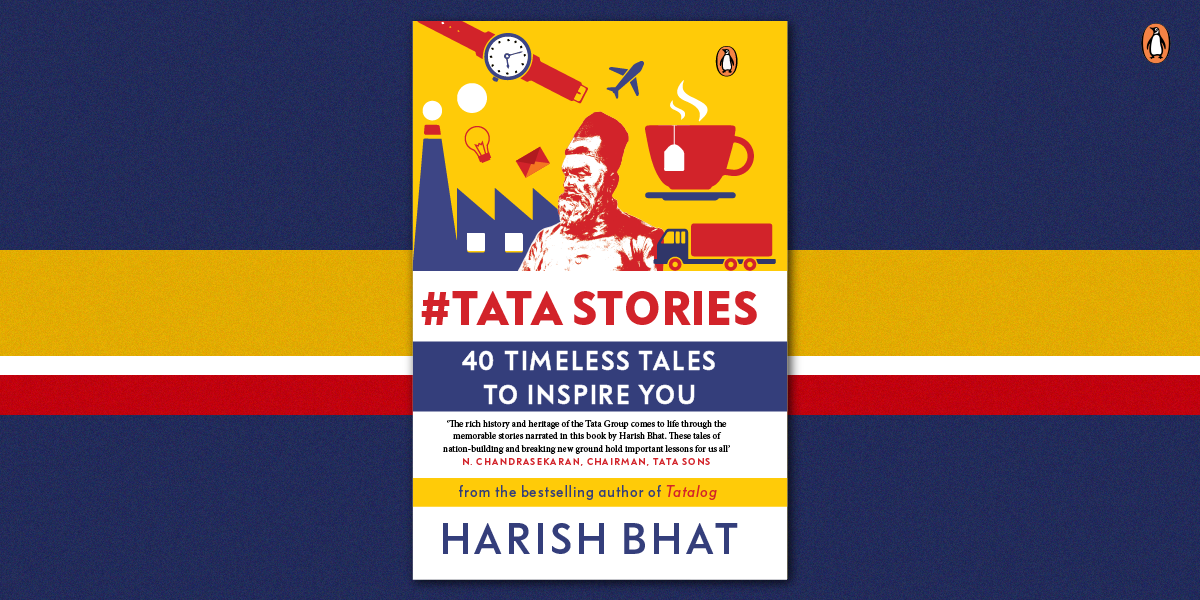
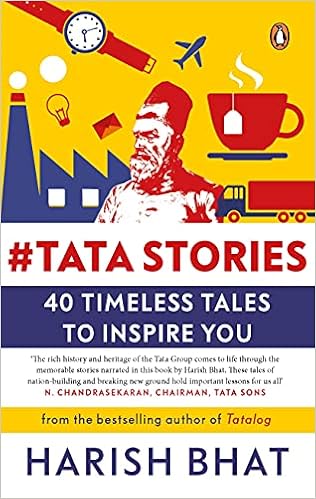
The Tata Group, in the Indian imagination is far more than a corporate group, it is institution whose inception and growth mirrors that of the modern India and whose value systems are as legendary as its success. Dancing across more than a century of greatness are beautiful, astonishing #TATASTORIES, many of which can inspire and provoke us, even move us to meaningful action in our own lives. Harish Bhat’s vivid glimpses into some of the distinctive cultural legacy of the Tata Group bring to life the extraordinary longevity, vibrancy and success of Tata. But at their essence, they are simple, moving stories of great teams, men and women, which hold deep lessons for all of us.
Read on for one such truly poignant moment, when the great man who would go onto become The Father of the Nation visited Jamshedpur, the beating heart of the institution that shaped, and continues to shape the growth of a nation.
#TATASTORIES: 40 Timeless Tales to Inspire You || Harish Bhat
The steel city of Jamshedpur was teeming with excitement in August 1925. Mahatma Gandhi was coming to visit the town where India’s first integrated steel plant had been established by Jamsetji Tata. This would be a unique event—the man who was leading the charge for Indian independence visiting an industrial city which had taken a step towards economic independence. Mahatma Gandhi knew of Jamsetji Tata’s enterprise. Indeed, in 1905, soon after Jamsetji’s passing, he had written in the Indian Opinion newspaper, ‘In whatever he did, Mr Tata never looked to self-interest. He never cared for any titles from the Government, nor did he ever take distinctions of caste or race into consideration…His simplicity was remarkable. May India produce many Tatas!’
The Mahatma had been keen to visit the steel city himself, and now he was responding to a special invitation from Dinabandhu C.F. Andrews, who was at that time a labour leader in Jamshedpur. He had sought Gandhiji’s guidance to resolve some labour issues. Interestingly, many years later, Subhash Chandra Bose would also head the Tata Steel Workers’ Union in Jamshedpur, but that is the subject of another story. Gandhiji arrived in Jamshedpur and was shown around the steel factory. I can imagine how eagerly workers in the factory would have milled around to see the great man walk briskly by their furnaces that had begun proudly producing steel for the nation. He also visited the township and wrote later in his journal: ‘This town owes a debt of gratitude to the courage of Jamsetji Tata.’ But he went on to say: ‘However, what can one see of such a large factory in two days?’ At the Director’s Bungalow, he completed talks with R.D. Tata (father of J.R.D. Tata), and three outstanding labour matters were resolved after some discussion. It is remarkable that Gandhi took the time and effort to travel all the way to Jamshedpur to help bring these matters to a successful conclusion. Then, in the evening, he addressed a mass meeting on the maidan behind the TISCO Institute, now called the United Club. This was a huge gathering, attended by over 20,000 people. A sea of humanity stood waiting for the Mahatma to arrive, and he did not disappoint them. In fact, Gandhiji delivered a fine and spirited speech, which was both moving and inspiring. Here are some excerpts.
It was my ambition to see one of the greatest—if not the greatest—Indian enterprises in India, and study the conditions of work there. But none of my activities is onesided, and as my religion begins and ends with truth and non-violence, my identification with labour does not conflict with my friendship with capital. And believe me, throughout my public service of thirty-five years, though I have been obliged to range myself seemingly against capital, capitalists have in the end regarded me as their true friend. I am told that though so many Europeans and Indians live here (together), their relations are of a happy character . . . It is the privilege of both of you to be associated in this great enterprise, and it is possible for you to give Indians an object lesson in amity and goodwill . . . you will carry your amity outside your workshops and both of you will realize that you have come to live and work here as brothers and sisters, never regarding another as inferior, or oneself as inferior. And if you succeed in doing that, you will have a miniature Swaraj.
Gandhiji also narrated to the audience an anecdote about how his connection with the Tatas began.
In South Africa, when I was struggling with the Indians there, in the attempt to retain our self-respect and to vindicate our status, it was the late Sir Ratan Tata who first came forward with assistance. He wrote me a great letter, and sent a princely donation—a cheque for Rs 25,000 and a promise in the letter to send more, if necessary.
This was a reference to the spontaneous donation that Sir Ratan Tata, younger son of Jamsetji Tata, had made in the year 1909.
How many times have you stopped at a traffic signal and turned your face away from the hijra who stood outside your car window asking for money? Wasn’t it pure loathing that you felt? Wasn’t it worse than what you normally feel when a beggar woman with a child does the same? Why? I’ll tell you why. You abhorred the eunuch because you couldn’t identify with her sex. You thought of her as a strange, detestable creature, perhaps a criminal and definitely sub-human.
I am one of them. All my life people have called me hijra, brihannala, napungshak, khoja, launda . . . and I have lived these years knowing that I am an outcast. Did it pain me? It maimed me. But time, to use a cliché, is the biggest healer. The adage worked a little differently in my case. The pain remains but the ache has dulled with time. It visits me in my loneliest hours, when I come face to face with the question of my existential reality. Who am I and why was I born a woman trapped in a man’s body? What is my destiny?
Beneath my colourful exterior lies a curled up, bruised individual that yearns for freedom—freedom to live life on her own terms and freedom to come across as the person she is. Acceptance is what I seek. My tough exterior and nonchalance is an armour that I have learnt to wear to protect my vulnerability. Today, through my good fate, I have achieved a rare success that is generally not destined to my lot. But what if my trajectory had been different? I keep telling myself that this is my time under the sun, my time to feel happy, but something deep inside warns me. My inner voice tells me that the fame and celebration that I see all around is maya (illusion) and I should accept all this adulation with the detachment of a sanyasi (hermit).
The first ever transgender to become a college principal is a rare feat, the media has proclaimed. My phones have not stopped ringing since, and invitations to felicitations have not ceased to pile up on my desk. I would love to believe that those who fete me also accept me as I am, but how can I ignore the sniggers, the sneers and the smirks that they try to hide but fail? For them I am just another excuse to watch a tamasha (spectacle), and who doesn’t want some free fun at someone else’s expense?
Hurt and anger are two emotions that I have learnt to suppress and let go. It is part of the immunity package that I am insured under. I have finally accepted the fact that my achievements have no bearing on the people around me. They still think I am sexless between my legs and that is my only identity. That I also have a right to have emotions is an idea that is still completely foreign to most. I don’t blame them. I blame myself for not being able to ignore such pain. I should have long stopped bothering about them.
It is not that I have not had my share of love in all my fifty-one years of life. They were good while they lasted. I have had major heartbreaks too, but each time I learnt a new lesson. I have loved well and deeply, and I hope my partners, wherever they are now, would silently remember that bit about me. It’s another matter that relationships don’t seem to work for me. Those who have loved me have always left me, and each time I have lost a piece of me to them.
Memories rush back as I sit down to write my story. I write with the belief that it would help society understand people like me better. We are slightly different outwardly, but we are humans just as you are and have the same needs—physical and emotional—just as you have.
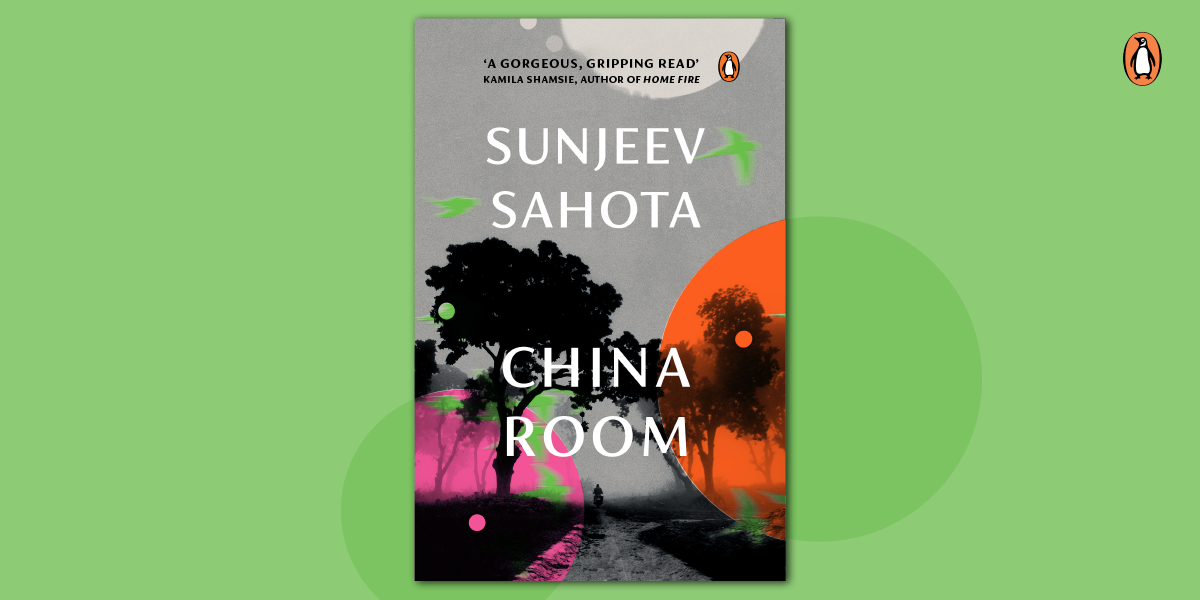
Inspired in part by the author’s family history and told with courage, compassion and deep humanity, Sunjeev Sahota’s China Room is an astonishing feat of storytelling from an exceptional novelist.
Mehar, a young bride in the rural Punjab of 1929, is trying to discover the identity of her new husband. She and her sisters-in-law, married to three brothers in a single ceremony, spend their days hard at work in the family’s ‘china room’, sequestered from contact with the men. Their new lives are those of servitude, much like all new brides of that time and place. When Mehar develops a theory as to which of them is hers, a passion is ignited that puts more than one life at risk.
Spiralling around Mehar’s story is that of a young man who, in 1999, travels from England to the now-deserted farm, its ‘china room’ locked and barred. In enforced flight from the traumas of his adolescence-his experiences of addiction, racism and estrangement from the culture of his birth-he spends a summer in painful contemplation and recovery, before finally finding the strength to return home.
We hope you enjoy this sneak preview of a chapter from this engrossing new read by a Booker Prize nominated novelist.
~
China Room||Sunjeev Sahota
It is their second Sunday married and an hour before the sun drops, Mehar, Gurleen and Harbans slip into some old cottons and heave the giant sloshing vat into the courtyard and on to the groundsheet. At this hour the air is lushly warm rather than oppressive and the courtyard
is free of the brothers. They think their men go to the bazaar on these nights, though that is another thing they have never been told. Perhaps they play cards, Mehar suggests, as if she knows what that is. All three hitch up their salwars and twine some old jute around their legs, so they’re naked from the knees down. ‘The leaves have come up,’ Gurleen says, feeling for a way out of the chore, a rare one she finds even more tedious than rubbing clean the spinach. But Harbans is having none of it and points out that there is still plenty of ink left in them. They hold hands, forming a triad, and one by one step inside the metal vat, the indigo plants sliding around the soles of their feet. The water, as if answering a question, rises up to their calves and their feet begin their work, up-down-up-down, a surging spilling tempest, the colour wrenched out and out. They do not speak, it is enough to try to keep their balance, and slowly the pool starts to
darken, their clothes and skin too, indigo staining legs and hips and face, but they stay in harmony, up-downup-down, minutes upon minutes, so that by the time the sun has disappeared and the moon is the whole light, they let go of one another’s hands and double over, gasping.
‘One more week,’ Harbans says, as they haul the vat back to its spot against the wall.
‘Oh, go crack an egg! Surely we’re done now!’ Gurleen complains.
Mehar says nothing, picks up the crumbling soap at the pump and starts on the blue bands striping her feet. It’s up to Mai, in any case. She will decide when the time is right to colour their blooded wedding sheets and hang them out to dry.