Publish with Us

Follow Penguin

Follow Penguinsters

Follow Penguin Swadesh

Invaluable dissenters in troubled democracies

What is the value of freedom of speech and dissent in a democracy today, and how does it affect the very pillars of this system of governance? These are difficult questions, often leaving us with no answers. T.T. Ram Mohan navigates these tensions in his book:


We don’t like dissenting voices and we don’t like to express dissent. Authority, in particular, doesn’t like to be questioned or challenged. And people don’t like to challenge or question authority because they know there’s a price to be paid for doing so. We are exhorted by wise men and women to ‘stand up for what is right’ and ‘speak truth to fear’. We are careful not to heed these exhortations. Our survival instincts tell us otherwise. It’s far more rewarding to stay quiet, nod assent or, better still, practise unabashed sycophancy.


In recent years, we have heard a great deal in India about intolerance and the supposed muffling of dissent on the part of the present government. Governments everywhere do try to stifle or manage dissent in varying degrees and in different ways. But the situation is not very different in other spheres of life, such as the corporate world, the bureaucracy, non-government organizations or even academia.


This is truly a sad state of affairs. Dissent is invaluable. We need dissent, whether in government or in the other institutions of society, in order to ensure accountability of those in authority. Dissent is also vital for generating ideas and solving problems. It is only through the clash of ideas that the best solutions emerge. Herd mentality or ‘group think’, as it is now called, is the surest recipe for mediocrity and underperformance. Institutions must be designed to protect and foster dissent.


Since dissent is all too rare, it’s worth celebrating dissenters. In this book, I profile seven of them from different walks of life. The personalities I have chosen are not necessarily the most famous or the most effective dissenters. The American linguist and intellectual, Noam Chomsky, would have easily qualified. So would the economist and Nobel Laureate Joseph Stiglitz. But these are celebrities whose ideas are quite well known. I have chosen to write about individuals whose dissenting ideas may not be known to many. Ideally, I would have liked to meet the individuals in person or at least interview them over the Net. Alas, I had no luck, except with Kancha Ilaiah.


I have not attempted to be comprehensive in my treatment of these personalities and, indeed, lay no claim to being familiar with all of their works. They are all so prolific that whole books could be written about them. Rather, I have focused on some of their works or themes just to capture the flavor of their dissent.


In what ways are these dissenters questioning the mainstream view? What challenges have they mounted to the establishment? How have they managed to shape public perceptions on important issues? These are the questions I have attempted to answer. The impact the dissenters in this book have had is quite modest. Roy has been able to influence policy on large dams and the rehabilitation of displaced individuals. Stone has contributed to the anti-war sentiment in the US and to the conspiracy theories about the assassination of President Kennedy. Ilaiah has raised awareness of the inequities in the Hindu order but hasn’t had much luck in stopping the Hindutva juggernaut. U.G. Krishnamurti has got people thinking seriously about spirituality and the pursuit of enlightenment. Varoufakis languishes on the margins of European politics. Irving is a virtual pariah amongst historians and in the mainstream media. Pilger’s journalism thrives mostly on the Net.


The value of these dissenters is to be judged by positing the counterfactual: If it were not for the likes of them, how would the establishment have behaved? These individuals may not have been able to change the dominant narrative. But they have, at times, been able to apply the brakes on it. That is a valuable contribution.


With the possible exception of Irving, the dissenters in this book have been professionally and financially successful. This suggests that despite the hostility of the establishment, there is room in the market economy for dissent of high quality. Indeed, as I note later, it is the celebrity status of these dissenters that acts as a protective charm and keeps them from being trampled on. The moral in today’s world seems to be that if you want to express serious dissent, make sure that you are rich and famous enough to be able to afford it.


Rebels With a Cause does the difficult work of explaining the real value of dissent, and therefore, a democracy. Read it here.

Are you breathing correctly?

There is nothing more essential to our health and well-being than breathing. Yet, as a species, humans have lost the ability to breathe correctly, with grave consequences.

Journalist James Nestor travels the world to track down men and women exploring the hidden science behind ancient breathing practices like Pranayama, Sudarshan Kriya, and Tummo, and covers modern research that shows that that making even slight adjustments to the way we inhale and exhale can jump-start athletic performance, rejuvenate internal organs, even halt auto-immune disease.

Drawing on thousands of years of medical texts and recent cutting-edge studies in pulmonology, psychology, biochemistry, and human physiology, Breath is here to transform how we perform our most basic biological function,

Read on for an excerpt from this extraordinary book:


Breath || James Nestor

The freedivers told me they’d previously been “most people.” Their transformation was a matter of training; they’d coaxed their lungs to work harder, to tap the pulmonary capabilities that the rest of us ignore. They insisted they weren’t special. Anyone in reasonable health willing to put in the hours could dive to 100, 200, even 300 feet. It didn’t matter how old you were, how much you weighed, or what your genetic makeup was. To freedive, they said, all anyone had to do was master the art of breathing. To them breathing wasn’t an unconscious act; it wasn’t something they just did. It was a force, a medicine, and a mechanism through which they could gain an almost superhuman power. “There are as many ways to breathe as there are foods to eat,” said one female instructor who had held her breath for more than eight minutes and once dived below 300 feet. “And each way we breathe will affect our bodies in different ways.” Another diver told me that some methods of breathing will nourish our brains, while others will kill neurons; some will make us healthy, while others will hasten our death. They told crazy stories, about how they’d breathed in ways that expanded the size of their lungs by 30 percent or more. They told me about an Indian doctor who lost several pounds by simply changing the way he inhaled, and about another man who was injected with the bacterial endotoxin E. coli, then breathed in a rhythmic pattern to stimulate his immune system and destroy the toxins within minutes. They told me about women who put their cancers into remission and monks who could melt circles in the snow around their bare bodies over a period of several hours. It all sounded nuts. During my off- hours from doing underwater research, usually late at night, I read through reams of literature on the subject. Surely someone had studied the effects of this conscious breathing on landlubbers? Surely someone had corroborated the freedivers’ fantastic stories of using breathing for weight loss, health, and longevity? I found a library’s worth of material. The problem was, the sources were hundreds, sometimes thousands, of years old. Seven books of the Chinese Tao dating back to around 400 bce focused entirely on breathing, how it could kill us or heal us, depending on how we used it. These manuscripts included detailed instructions on how to regulate the breath, slow it, hold it, and swallow it. Even earlier, Hindus considered breath and spirit the same thing, and described elaborate practices that were meant to balance breathing and preserve both physical and mental health. Then there were the Buddhists, who used breathing not only to lengthen their lives but to reach higher planes of consciousness. Breathing, for all these people, for all these cultures, was powerful medicine.

**

Inhale.

Exhale.

Inside the world of the streaming superpower, Netflix

No Rules Rules || Reed Hastings, Erin Meyer

No Rules Rules, written by Netflix CEO Reed Hastings, lets the readers in on the eclectic and revolutionary culture prevalent at Netflix, which has allowed the company to turn into a streaming superpower. From unlimited holidays to abolishing approvals, Netflix offers a fundamentally different way to run any organization, one far more in tune with an ever-changing fast-paced world. For anyone interested in creativity, productivity and innovation, the Netflix culture is something close to a holy grail. Written with INSEAD business school professor Erin Meyer, the book makes the company and its creator fully accessible for the first time.

The excerpt from the book below throws light on some of the ways in which Netflix has turned established norms on its head to pave the way for its immense success.


**

With my next company, Netflix, I hoped to promote flexibility, employee freedom, and innovation, instead of error prevention and rule adherence. At the same time, I understood that as a company grows, if you don’t manage it with policies or control processes, the organization is likely to descend into chaos.

Through a gradual evolution, over many years of trial and error, we found an approach for making this work. If you give employees more freedom instead of developing processes to prevent them from exercising their own judgment, they will make better decisions and it’s easier to hold them accountable.

This also makes for a happier, more motivated workforce as well as a more nimble company. But to develop a foundation that enables this level of freedom you need to first increase two other elements:


+ Build up talent density.

At most companies, policies and control processes are put in place to deal with employees who exhibit sloppy, unprofessional, or irresponsible behavior. But if you avoid or move out these people, you don’t need the rules. If you build an organization made up of high performers, you can eliminate most controls. The denser the talent, the greater the freedom you can offer.


+ Increase candor.

Talented employees have an enormous amount to learn from one another. But the normal polite human protocols often prevent employees from providing the feedback necessary to take performance to another level. When talented staff members get into the feedback habit, they all get better at what they do while becoming implicitly accountable to one another, further reducing the need for traditional controls. With these two elements in place you can now . . .


– Reduce controls.

Start by ripping pages from the employee handbook. Travel policies, expense policies, vacation policies— these can all go. Later, as talent becomes increasingly denser and feedback more frequent and candid, you can remove approval processes throughout the organization, teaching your managers principles like, “Lead with context, not control,” and coaching your employees using such guidelines as, “Don’t seek to please your boss.”


Best of all, once you start developing this type of culture, a virtuous cycle kicks in. Removing controls creates a culture of “Freedom and Responsibility” (a term Netflix employees use so much that they now just say “F&R”), which attracts top talent and makes possible even fewer controls. All this takes you to a level of speed and innovation that most companies can’t match. But you can’t reach this level in one go.

**


Who are angel investors?

Are you finding it tough to fund your start-up? Especially in the post-COVID-19 world, where money is scarce? Well, then, this book is for you.

It not only takes you through stories of early-stage start-ups and how they successfully managed to raise funding, but also culls important lessons from -start-ups that failed to raise funding for various reasons. The  authors also interview some of the most accomplished founders in the world of business, such as Deep Kalra of MakeMyTrip, Yashish Dahiya of PolicyBazaar, Dinesh Agarwal of IndiaMART and Sairee Chahal of SHEROES, bringing their stories together in as useful ‘PERSISTENT’ framework, which helps make a start-up investment-ready. Read on to learn about the people who act as ‘angels’ in start-up heaven!

Angel investors are the first external investors in your business. Those who do not know you. Why are they willing to invest in your business? Very simply because they want to make money. They have tried fixed deposits and debt funds, and have learnt that they don’t make more than 7 per cent or so—and, of course, they pay tax on this interest. Some of them have tried out the stock market and made money, but they have realized that stock markets can at best give you around 15 per cent returns over the long term. That’s it. Real estate is a good option, but the amounts involved are very large and the investments are illiquid. And anyway, real estate seems to be stagnating, at least in the foreseeable future . . . And therefore, investors are constantly on the lookout for new avenues of investment. Something that can potentially get them much higher returns than these traditional investment options. Where they can park a small part of their investments, even if the risks are substantially higher. And what better place for this than start-ups? Look at it this way. What are our unicorns such as Flipkart, Oyo Rooms and Ola Cabs valued at? Over a billion dollars each, isn’t it? And in some cases, several billion dollars—Flipkart, for instance, was valued at $21 billion when Walmart bought it. Now, can you buy shares in any of these companies at this valuation? Unless you are a direct descendant of some royal family and have inherited pots of gold, certainly not. But—and this is a very important but—could you have bought shares in these companies when they were toddlers and just about starting off? Aha! Sure you could have.

Funding Your Start-Up || Dhruv Nath, Sushanto Mitra

And that, ladies and gentlemen, is the concept of the angel investor. QED. Angel investors—sometimes simply called angels—are people who are either rich or at least comfortably off, and are looking atinvesting in companies at an early stage. In the hope that they will become the next Flipkart or Naukri.com. And since they have invested at an early stage, they own a large chunk of the company’s shares, whose value could increase dramatically when these companies grow ever so rapidly. So the word ‘angel’ is probably a bit of a misnomer— they are very, very keen to make money. But they are also willing to take a risk. They are, therefore, willing to help you out with funding when your business has not really stabilized and no one else is willing to fund you. And that is how they came to be called ‘angel’ investors. After all, angels are those who help you when you’re in trouble, isn’t it?

And We Came Outside and Saw the Stars Again: a powerful antidote

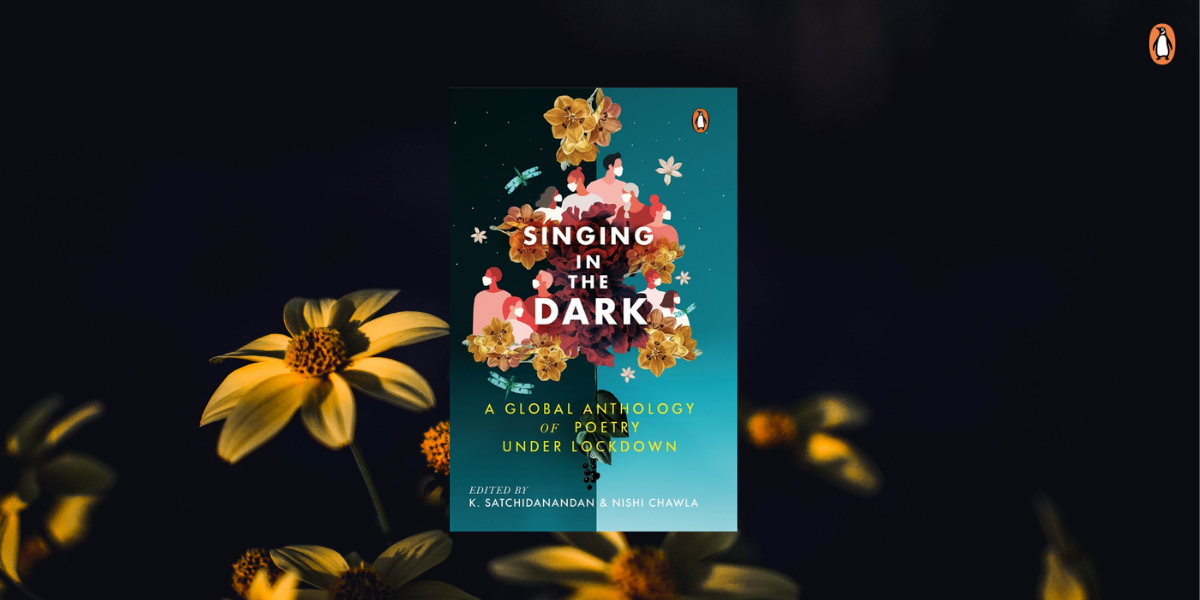
A  rich, eye-opening  anthology, And We Came Outside and Saw the Stars Again , dozens of esteemed writers, poets, artists and translators from more than thirty countries offer a profound, kaleidoscopic portrait of lives transformed by the coronavirus pandemic.

As COVID-19 has become the defining global experience of our time, writers transcend borders and genres to offer a powerful antidote to the fearful confines of isolation: a window onto corners of the world beyond our own.


UNPRECEDENTED was the ubiquitous term first used to describe the COVID-19 pandemic that swept the world in 2020, as if the event were unlike any other. The truth is that it has been rather routine in its procedure, part of the eternal cycles of nature. Even in the Bible, similar disasters—earthquakes, deluges, famines, plagues of insects, pestilence of livestock, boils, thunderstorms of hail and fire—are recurrent visitors in the theater of human affairs. Which doesn’t mean, of course, that newcalamities such as this one aren’t extraordinary.

It isn’t surprising that the official approach to the pandemic was initially forensic, with an insistence on numbers: how many deaths and infections per day in a given hospital of a given city in a given country, how long a possible vaccine could take to bring us all out of purgatory, and so on, as if suffering could be quantified, ignoring that each and every person lost was unique and irreplaceable. The Talmud says that death is a kind of sleep and that one person’s sleep is unknowable to others. Although the misfortune arrived at a time when the essential tenets of globalism were being questioned—tariffs imposed, borders closed,immigrants seen with suspicion—the pandemic was planetary, hitting wherever people did what people do. It preyed with distinct fury on the poor and vulnerable, as natural catastrophes always do, especially in countries ruled by tyrants responding with disdain and hubris. Inevitably, the lockdown also forced a new method to everything everywhere. The sound of the kitchen clock suddenly felt new, the warmth of a handshake, the taste of fresh soup. As an antidote to numbers, it was once again left to writers to notice those changes, to chronicle them by interweaving words. That’s what literature does well: it champions nuance while resisting the easy tricks of generalization. This international anthology includes over fifty of those writers representing thirty-five countries and arriving in about a dozen languages. Cumulatively, their accounts are proof of the degree to which COVID-19 brought about the collapse of a hierarchy of principles we had all embraced until then. Call it the end of an era Shenaz Patel, from Mauritius, for instance, realizes that “suddenly, like an octopus disturbed in its sleep, everything kept hidden under the placid surface latched onto us with its many arms and spit its ink into our faces.” She adds: “We are faced with a true ‘civil war’ of speech, echoing through radios and social media, between those who respect the lockdown and those who don’t; those who understand and the ‘cocovids,’ the empty heads who go out anyway; between the ‘true patriots’ and the selfish few who knowingly put others in danger.”

How the tech titans plan to stay on top forever

Acclaimed tech reporter, Alex Kantrowitz, gives a fascinating insight into the inner workings of the Tech Titans —Amazon, Google and Facebook, playing with the Amazon mantra of ‘Day One’— code for inventing like a startup, with little regard for legacy and prioritizing reinvention over tradition and collaboration over ownership.

Through 130 interviews with insiders, from Mark Zuckerberg to hourly workers, Always Day One shows the way forward for everyone who wants to compete with–and beat–the titans!

*

“Day One” is everywhere at Amazon. It’s the name of a key building, it’s the title of the company’s blog, and it’s a recurring theme in Bezos’s annual letter to shareholders. And though it’s tempting to read it as an order to work ceaselessly, particularly at the notoriously hard- charging Amazon, its meaning runs deeper.

Always Day One || Alex Kantrowitz

“Day One” at Amazon is code for inventing like a startup, with little regard for legacy. It’s an acknowledgment that competitors today can create new products at record speeds— thanks to advances in artificial intelligence and cloud computing especially— so you might as well build for the future, even at the present’s expense. It’s a departure from how corporate giants like GM and Exxon once ruled our economy: by developing core advantages, hunkering down, and defending them at all costs. Getting fat on existing businesses is no longer an option. In the 1920s, the average life expectancy of a Fortune 500 company was sixty- seven years. By 2015, it was fifteen. What does Day Two look like? It looks a lot like death. From its origins as an online bookseller, Amazon has lived its Day One mantra, inventing new businesses with abandon, with a near-complete disregard for how they might challenge its existing revenue streams. The company remains a bookseller, but it’s also a clearinghouse for almost every imaginable product, a thriving third party marketplace, a world- class fulfillment operation, an Academy Award–winning movie studio, a grocer, a cloud services provider, a voice- computing operating system, a hardware manufacturer, and a robotics company. After each successful invention, Amazon returns to Day One and figures out what’s next.

*

Find out more about the secrets behind the tech giants’ sustainable success, in Always Day One.

A peek into Quaid-i-Azam’s life

Jinnah || Ishtiaq Ahmed

Mohammad Ali Jinnah has been both celebrated and reviled for his role in the Partition of India, and the controversies surrounding his actions have only increased in the seven decades and more since his death. Ishtiaq Ahmed places Jinnah’s actions under intense scrutiny to ascertain the Quaid-i-Azam’s successes and failures and the meaning and significance of his legacy. Using a wealth of contemporary records and archival material, Dr Ahmed traces Jinnah’s journey from Indian nationalist to Muslim communitarian, and from a Muslim nationalist to, finally, Pakistan’s all-powerful head of state.

Here’s an excerpt from this thoroughly researched and deeply perceptive book.


**

The establishment of Pakistan in mid-August 1947 is proverbially attributed to the sterling leadership of Mohammad Ali Jinnah. The British writer Beverley Nichols, who met Jinnah in 1943, described him as ‘the most important man in Asia’. The chapter on Jinnah was titled ‘Dialogue with a Giant’. The Pakistan government’s officially appointed biographer for Jinnah, Hector Bolitho, noted in his introductory chapter that ‘Pakistan and India were irrevocably divided, largely through Mohammad Ali Jinnah’s imagination and persistence . . .’ Jinnah’s other famous biographer, Stanley Wolpert, paid him the ultimate tribute in the following words: ‘Few individuals significantly alter the course of history. Fewer still modify the map of the world. Hardly anyone can be credited with creating a nation-state. Mohammad Ali Jinnah did all three.’3 In the Pakistani national narrative, homage paid to him is understandably hagiographical. Founders of religion and founders of a state always enjoy sui generis status among their devotees. One can therefore quote many other lavish remarks extolling Jinnah’s extraordinary achievements, but he has his detractors as well who accuse him of being the villain of the piece who bears most responsibility for the bloody partition of India, which claimed more than a million Hindu, Muslim and Sikh lives.

Jinnah had to surmount stiff opposition from the Indian National Congress (hereafter referred to also as the Congress Party, the Congress or the INC), which was then the biggest political party in India, a grass-roots mass organization since the 1920s, with branches all over undivided India and long years of political organization and activity. It demanded freedom from British rule in the name of all Indians in a united India. In opposition to it, the All-India Muslim League (hereafter referred to also as the Muslim League, the League or the AIML) demanded separate states for the Muslims in the north-western and north-eastern zones of India, where they constituted a majority, on the grounds that they were a distinct and separate nation and not merely a large minority (one-fourth of the total population of India). It was an elitist party till 1940, which thereafter rapidly acquired popular support and became a mass party by the time the future of India was put to vote in 1945–46.

Although Jinnah won the case for Pakistan, the partition of India and the two Muslim-majority provinces of Bengal and the Punjab resulted in unprecedented violence and rioting, in which more than a million Hindus, Muslims and Sikhs died, and the biggest migration in history, mostly to escape death and injury, took place; some 12–15 million crossed the international border drawn between India and Pakistan.

**


Establishing rights and deepening democracy

A regime of economic rights constitutes a blow against the spontaneity of capitalism. Therefore, this regime cannot be instituted except through struggles, that is, through collective action. Hence, even though the rights may be individually enjoyed, they can come into being only through a collective struggle. The collective struggle of the workers that is needed for achieving a set of individual rights, including above all a set of economic rights, already makes the workers transcend their individualism.

…Furthermore, the unprecedented crisis caused by the pandemic and the lockdown have created both a clear necessity for the state to meet its obligations with regards to these rights, and greater public awareness of the costs of not meeting them. This can therefore provide an opportune moment in which to rethink the social contract between people and the state in ways that would ensure the future realization of these basic rights.

Oxfam released its 2019 inequality report titled Public Good or Private Wealth? during the World Economic Forum at Davos… The fulcrum of the Oxfam report is the trend of growing inequality in the world, which is reflected in the tremendous concentration of wealth amongst a few individuals and a small number of TNCs (transnational corporations). The report says that twenty-six individuals (not surprisingly, all men) have more wealth than the bottom 50 per cent of the global population. Globally, the number of billionaires has doubled since the financial crisis. India has added eighteen new billionaires in the last year, raising the number of billionaires in the country to 119. In 2018, the total wealth of India increased by $151 billion (Rs 10,591 billion). However, the wealth of the top 1 per cent increased by 39 per cent, whereas the wealth of the bottom 50 per cent increased by a dismal 3 per cent.3

Front Cover of We the People
We the People || Nikhil Dey, Aruna Roy, Rakshita Swamy

According to the India Inequality Report 2018, India is home to 17 per cent of the world’s population; it is also home to the largest number of people living below the World Bank’s international poverty line measure of $1.90 per day… In the chapter titled ‘Grip of Inequality’, in the 2013 book An Uncertain Glory: India and Its Contradictions, economists Jean Drèze and Amartya Sen state that inequality may be rising in the last couple of decades but India has a historical legacy for multiple social inequalities… Drèze and Sen show how caste hierarchies have bred inequality. They look at a 1901 study12 that compared the literacy rates of Brahmins and Dalits. The study showed that in most regions, a majority of Brahmin men were already literate (in Baroda, up to 73 per cent). At the other end of the spectrum was the literacy rate among Dalit women, which was zero in most states. Dalit men achieved a literacy rate of at the most 1 per cent and Brahmin women a maximum of 6 per cent. The data showed a clear gender and caste monopoly of education back then.13

Education and health are central to achieving a dignified life for all. While the Constitution of India now explicitly recognizes the right to education, a number of Supreme Court judgments and the spirit of the Directive Principles of the Indian Constitution imply that the right to healthcare is also something that is accepted… While there have been significant improvements, health and education outcomes in India still remain poor and uneven, calling for continued and greater investments in these sectors with reforms to strengthen the government programmes in a manner such that they deliver.

The crisis in public health became even more apparent in the wake of COVID-19, which exposed the huge gaps in health infrastructure and access to personal protective equipment (PPE), staff, test kits and so on… Health allocations have been historically low, with currently only about 1.4 per cent of GDP being allocated to health, while the National Policy on Health, 2017, makes a commitment of spending 2.5 per cent of GDP on health by 2025.2 The Union government’s spending on health as a percentage of the GDP reached an all-time low in 2015–16, even lower than in the much-tainted early 1990s.3 Given such a low base, the Government of India announced only an additional Rs 15,000 crore (~0.1 per cent of GDP) in March 2020 for COVID-19 emergency response and health system preparedness.

[In Kerala, redistributive] measures—such as land reforms, collective bargaining for higher wages and public provisioning of education, healthcare, food and social security and so on—ensured that the average citizen is assured of the basic needs that uphold human dignity… Access to government schools and hospitals was given to all sections of society, even in the first quarter of the twentieth century. Rights-consciousness among the backward classes, inculcated by social reform initiatives, enabled them to fully utilize these opportunities.

It was against such a background that the People’s Plan was launched in August 1996… The People’s Plan approach consciously embodied the spirit of rights-based development… Most of the people-related functions such as health, education, women and child development, SC/ST development, agriculture-related development, poverty alleviation, the provision of basic needs like housing, sanitation, water supply, etc. were entrusted to local governments at the cutting-edge level—village panchayats, municipalities and corporations.

[…] The big lesson from Kerala is that the potential for participatory rights-based development is real and achievable in local governments. But nothing is ‘per se’ or ‘ipso facto’; there is a need for proactive policy by the government, which has to be translated into purposive processes and procedures with active involvement, support and guidance from the fraternity of believers in democratic decentralization, inclusion and participatory development from all sections of the society.


The life and times of Vasoo Paranjape: The Cricket Drona

“You couldn’t miss Vasoo Paranjape”, writes Dilip Vengsarkar, opening his essay on the legendary cricket coach who changed the lives of everyone who crossed paths with him in marvellous and indelible ways. Cricket Drona is a portrait of the life and times of Vasoo Paranjape, created through first-hand accounts and stories told by the people who were shaped by his wisdom and his compassion. Get a glimpse into the illustrious mentor’s life trough this extract:


“ I must have been ten or twelve years old when I watched Denis Compton and Vinoo Mankad playing at the Cricket Club of India in a Ranji final. By 1947–48, I was training at the New Hind Club nets and became a member of the Dadar Union Sporting Club at Matunga. I was given a two-year playing membership by the P.J. Hindu Gymkhana in Mumbai. I was a left-arm slow-spin bowler, and I used to bowl the chinaman as a regular part of my armoury. It was a big occasion for me when, one day, I saw all the Indian players playing at the adjoining Matunga Gymkhana ground, including the great Vijay Merchant. Watching me bowl, Merchant called me over for a chat. However, I was so awestruck that I couldn’t muster the courage to respond. In retrospect, my love for the game of cricket originated with that encounter!…

I studied at the King George School and was the captain of the junior team there… During this period, I had the advantage of being coached by the great Homi Vajifdar, who was the first Bombay captain. Vajifdar was a big man with powerful wrists…Leading by example, Vajifdar taught us the value of being a good person. He was disciplined, meticulous and had an eye for detail. If you trained with him, your shoes had to be properly polished and your cricket attire had to be perfect. He always said, ‘Whatever you do, you must be the best at it.’

…I joined Dadar Union in 1953, when Madhav Mantri was captain. We never had any meetings but focused on fielding a month before the league. Mantri used to come from work at 6.05 p.m., remove his tie, get into his cricket attire, and we practised like maniacs…‘A family atmosphere. Terrific bowlers, terrific batsmen and even more terrific fielders. We were a great fielding unit. Daya Dudhwadkar, Suresh Tigdi, Avinash Karnik, Ramnath Parkar, with Sunny in the slips and myself…When I saw him for the first time, Sunny was a young boy who would accompany his father to Dadar Union games. Right from that time I could sense how serious he was about batting. He would play on the sidelines, with one of the team members chucking balls at him endlessly. He played with a very straight bat—quite uncommon for a beginner, as your instinct is to put power into the shot with your bottom hand, which then changes the angle of your bat from the vertical to the horizontal…

On all his English tours, though, he invariably excelled. He had an intuitive ability to adjust to the varying conditions of the English atmosphere and pitches. The matchless 221 he scored at the Oval, during the 1979–80 season, in challenging conditions was possibly the pinnacle of his career, though the 101 he made at Old Trafford in typical English conditions probably gave him greater satisfaction. But for all his successes in England, he could never fulfil the ultimate dream that every batsman has—to score a hundred at Lord’s, the Mecca of cricket.”


Cricket Drona is out now! To read more inspired accounts of how Vasoo Paranjape impacted and changed lives of the most famous cricketers, get your copy here.

Of profound visions and a higher calling

Running Toward Mystery || Tenzin Priyadarshi, Zara Houshmand

At the age of six, The Venerable Tenzin Priyadarshi began having visions of a mysterious mountain peak, and of men with shaved heads wearing robes of the color of sunset. At the age of ten, he ran away from boarding school to find this place which he saw in his visions.

Running Toward Mystery is the Venerable Tenzin Priyadarshi’s profound account of his lifelong journey as a seeker. At its heart is a story of striving for enlightenment, the vital importance of mentors in that search, and of the many remarkable teachers he met along the way, among them the Dalai Lama, Archbishop Desmond Tutu, and Mother Teresa.

Here’s an excerpt from the book.


**


I was six years old in 1985, when the dreams and visions had started. The very first time too, there was no question that I was wide awake. I was with a friend who lived in the same compound, at Evelyn Lodge, where our bungalow was. I had gone to his apartment to ask him to play and we were walking toward the cricket field when I saw what looked at first like streaks and patches of orange in the sky. Was it sun- set already? That would mean it was time to go home, but it couldn’t be. We hadn’t even started playing. Then the colors resolved into shapes and their outlines became clear. Men in robes of that saffron sunset color, with shaved heads, were milling about. There was a deer and a small hut. Some of the men went into the hut and came out again. It was as vivid as if I were watching a scene from life.

“Do you see that?”

My friend followed my gaze, squinting into the sky. “See what?” He swung the bat at nothing. I pinched myself. That was what you were supposed to do if you thought you were dreaming. It made no difference. Slowly, as we continued to walk, the scene faded into the sky and disappeared. Later, when I got home, I told my parents, but they said I must have imagined it.

I worried that there was something wrong with my eyes. But I had no trouble seeing the blackboard in class, or the ball when it was my turn to bat, or the mangoes hanging in the orchard, waiting for my arrows. And if it was my mind that wasn’t right? Well, it was right enough in all other depart- ments. My grades were excellent.

And so it was forgotten, no big deal, and the memory would have been lost in the jumbled closet of a child’s mind if I hadn’t seen the other things later. There was a place that I dreamt of again and again, but even when I was awake it ap- peared very clearly to my mind’s eye: A rocky peak loomed above a plain, wrapped in woods and scrub but with boulders and a cliff face exposed. I had a bird’s-eye view, but I could see no buildings, no human mark on the landscape, nothing to hint at where this place was or why it should rouse in me a lingering sweetness, a yearning. It was as perplexing as the man who kept visiting my dreams, and just as persistent. There were other people who appeared at times, some with shaved heads and some with dreadlocks, wearing different shades of yellow, orange, or red. But he was the one I saw most clearly.

I was old enough to know that dreams, however weird they might seem, are normally rooted in the workings of our own minds and that waking hallucinations are not normal. I didn’t have a theory—not even a half-baked hint—about what these intrusions in my mind might signify. They seemed to come from beyond me, beyond the world of logical sense, a genuine mystery that begged to be solved.

Now I lay there in the darkened room, listening to the random snuffles and snores of a hundred sleeping boys, and felt a mounting sense of urgency. I wasn’t going to get any closer to the answer by lying here wide awake until the morning bell.

To find it, I needed to go out and search for it. After all, mysteries are how adventures begin.

It was time. I crept out of bed slowly. There was just enough shadowy light spilling over from the foyer to see by. Moving as quietly as possible, I put some clothes into a small daypack. I sat on the edge of the bed, so I didn’t have to risk the noise of pulling out the desk chair, and wrote a note to my parents. Just a few words that revealed nothing so much as a ten-year- old’s hubris—that I was leaving on a spiritual quest and didn’t know where it would take me, but they shouldn’t worry. I slid the note under the wooden lid of the desk.

** 


error: Content is protected !!