Right from childhood, Sahil and Ayra have been very different from each other. While Sahil is careless, carefree, ‘new money’ and ‘the brat’, Ayra is sensitive, reserved, shy and not easy to talk to. And that is probably what attracts Sahil to her. Their story progresses slowly and delicately, and things gradually take on a love-tinged hue.
Find an excerpt below that gives a glimpse into how Sahil and Ayra’s relationship blooms.
**
The earthy smell of damp soil filled the void between us. Semi-drenched, we took shelter in the nearest shop and I gave her the scarlet silk scarf that I had bought from the store earlier that evening—my first ever present to her. ‘Happy birthday!’ I wished her again as she placed the scarf around her neck. It complimented her skin and she looked lovely. Yes, I did curse myself for not being able to give her the pair of earrings, which were waiting for us at the restaurant but this was no way less. Like us, many other people pushed themselves under a tiny shelter and so she had to come closer to me. We spoke in whispers and marvelled at the rain. as the rain clouds started to disperse, people moved away and so did she. after around half an hour later, the rain finally stopped. It was time for us to part ways as I had to go to attend college the next day in another city and she had to get back home in time because that evening she was to be home alone. I offered to arrange a ride for her to go back home but she preferred to take an uber instead after she dropped me at the airport.
‘I hope I didn’t hurt you,’ she revisited the topic one last time as we were about to say goodbye to each other at the airport. There were so many people around going in and out of the place. I didn’t want to go in; I wanted to talk to her all night that night but I knew that we both had to go. It was getting dark already and a sudden worry around her safety crept into my head.
‘No!’ I said shaking my head. I was amazed that she felt the way she did because if someone had to be sorry it had to be me. Meeting her that day and then going away made me realize that I did not want to go back. all this was so new to me—the meeting and the parting all happening at such short notice. I wanted to know her more and ask her everything that she had to tell me. I knew that it was all so sudden and also kind of rushed. But you cannot control your feelings—I felt embarrassed by my feelings despite being aware that they were as genuine as they can be. She had touched my heart with her genuineness and I smiled at her to tell her that it was all good—nothing that she ever said could have hurt me.
To You, With Love || Shravya Bhinder
She gave me a warm smile in return and moved her tongue over her lips while she framed her thoughts into a sentence. In a grave, low voice—the kind that one uses with kids to make them understand very important matters of life—she told me, ‘Sometimes I feel that intelligent people are so full of doubts nowadays while fools are full of themselves and overly confident. If intelligent people do not follow their dreams and only fools do, the world will be a circus for the next generation. Think about it.’ With these words, she gently kissed my right cheek making me the happiest man at the airport at that time and murmured a soft goodbye. She walked away not looking back at me even once as I stood there almost melting under the cold breeze.
She was broken but pure magic. Her understanding of things made life so much simpler. Her presence was what I had been looking for in my life and by then I knew that as well.
When I reached home that night, I decided to work on my book as soon as I was done with the assignment from college. I will have to accept that I did struggle a lot trying to brush aside the memories of the gentle goodbye kiss, which took me by surprise. It was all happening very quickly and I wondered if I was living in some parallel universe. She was too good to be true and we had known each other for only a few weeks, yet it felt as if we had known one another for decades, and if you look at it, we really did. Her entry in my life made something click, like when a key clicks inside a lock and you know that you have found the right one.
**
A beautiful story about how true love triumphs over all odds that life throws its way, To You, With Love is sure to tug at your heartstrings.
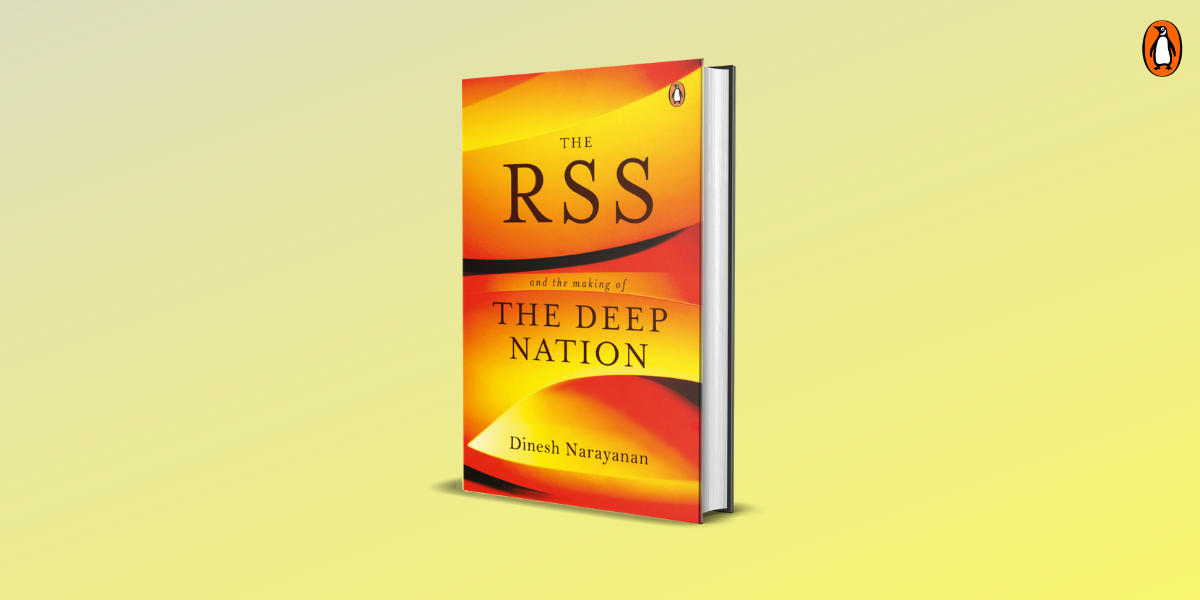
Since its inception in 1925, the RSS has perplexed observers with its organizational skills, military discipline and single-minded quest for influence in all walks of Indian life. Often seen as insidious and banned thrice, the pace of its growth and ideological dominance of the political landscape in the second decade of the millennium have been remarkable.
Delhi-based journalist Dinesh Narayanan is deeply interested in understanding the interplay of politics, society and business and the impact of these on our lives, both as individuals and collectively as a nation.
**
In June 2018, the Ministry of Defence and the Prime Minister’s Office (PMO) discussed a proposal to train a million young men and women annually to prepare them for the purpose of creating a disciplined nationalist force of youth. Titled the National Youth Empowerment Scheme (N-YES), the year-long training was proposed to be an essential qualification for enrolment in the army and paramilitary services. The scheme was aimed at instilling values of discipline, nationalism and self-esteem in young people, the Indian Express reported. The government called the report sensationalizing but did not deny the meeting in the PMO. It said the meeting had discussed strengthening the National Cadet Corps (NCC) and the National Service Scheme (NSS).
Established in 1948, at the instance of then prime minister, Jawaharlal Nehru, and home minister, Sardar Patel, in the wake of the invasion of Kashmir by Pakistan-supported tribesmen, the NCC’s stated aim is ‘developing character, comradeship, discipline, a secular outlook, the spirit of adventure and ideals of selfless service amongst young citizens . . . and creating a pool of organized, trained and motivated youth with leadership qualities in all walks of life, who will serve the nation regardless of which career they choose’. The NSS was established to provide ‘hands on experience to young students in delivering social service’. These organizations’ values aligned with those of the RSS although the latter’s definition of ‘secular outlook’ is different. It contends that India is a Hindu nation, and a Hindu by nature and definition can be nothing but secular. Like the NCC, the RSS also considers itself as a reserve force.
The RSS || Dinesh Narayanan
The N-YES proposal sounded very close to the RSS’s idea of creating a militaristic society. Sarsanghchalak Mohan Bhagwat has claimed that although the RSS was not a military organization, its discipline was like that of the army. While the army may require six to seven months to ready a force, the RSS could raise a trained force of its volunteers in three days.
Organizers of Hindus often rue that they are pusillanimous compared to other communities. V.D. Savarkar, one of the early ideological mentors of the RSS, wrote: ‘At the time of the first inroads of the Muhammadans, the fierce unity of faith, that social cohesion and valorous fervour which made them as a body so irresistible, were qualities in which the Hindus proved woefully wanting.’
**
The RSS is a close and relevant insight into the current socio-political landscape of our country.
Everyone has a dark, ugly side-some of us just choose to hide it better than others
She’s a young woman going through a mid-twenties crisis, trying to deal with the dark and intoxicating side of life with haunting memories of an abusive ex-boyfriend, remnants of a broken family and obvious mental health issues.
We all find something that is therapeutic, that is personal and special to us, that helps us cope. For her – it’s art.
Find an excerpt below that talks about how she found art and how it helps us be her in the present time.
**
Goner || Tazmeen Amna
I gave the test and begged my teacher to score me the minute I submitted that piece of paper. I was so sure I’d get a 10 out of 10. I just wanted the formality of knowing out of the way, because the sooner I knew my marks the sooner I could get those crayons. My hands were itching to pull those gorgeous crayons out of the box and actually feel them gliding over paper, filling up the bland blank sheet with their colours.
The teacher raised her eyebrows at my worksheet and handed it back to me. She also patted my shoulder slightly.
Dang.
My stomach fell.
8/10.
I cried the whole bus ride back home. Or stared pointedly out of the window without even blinking.
I went home and dejectedly walked up to my mom and handed her the worksheet. She saw the score and stooped down to me and said, ‘You know what? I think you did well and I’m going to buy you those crayons anyway.’ Then she handed me fifty bucks and I ran to the shop, wild with excitement. Not only would I be the proud owner of that set of crayons, I also realized at that moment how much of a rockstar my mom was.
It was on that day that I decided that I would never put down the paintbrush, for as long as I lived, because of the faith that my mom showed in me. Sometimes it really just takes one empathetic glance, one touch of tenderness, and a teeny, tiny, minute sliver of hope to, I don’t know, set things rolling.
And since then, it’s been a pretty stable relationship (between me and my art). The only stable relationship I’ve ever had in my entire life, fortunately and unfortunately. I went from pastels to watercolours, pencils to charcoals, acrylics to oil paints, paper to canvas, and many other mediums. It is the only thing that helps me connect with myself. Not the me that is sedated with antidepressants and high on mood-booster pills. Not the me that is a lifeless machine running on tablets and capsules and surviving (barely) on therapy. But the me that’s . . . just me.
**
A hard-hitting narrative of a young woman’s struggle with mental illness, Goner is a voice that needs to be heard today.
Can she defeat her infamous trait of self-sabotage and manoeuvre her way through some hard-hitting truths?
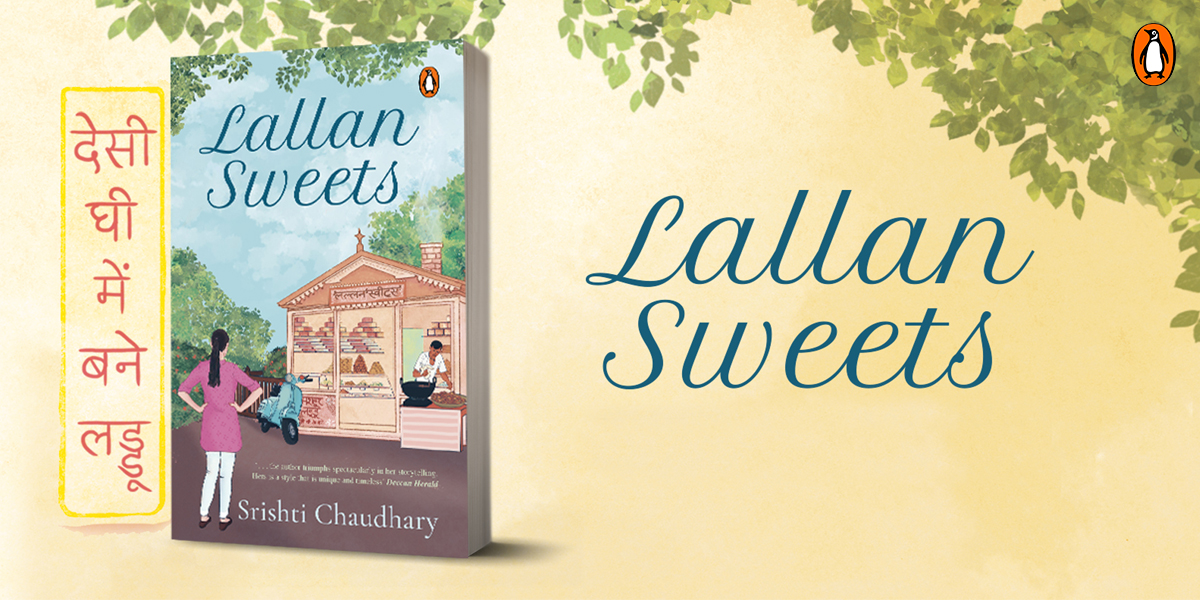
It is 1995. Tara Taneja lives in the small town of Siyaka, running Ultimate Mathematics Tuition Centre and working for Lalaji, her grandfather, at Lallan Sweets, his famous sweet shop. The laddoos sold at the shop are made using a secret family recipe that contains a magic ingredient known only to Lalaji.
When Lalaji chooses to retire, he decides that Lallan Sweets will not be inherited but earned. He devises a quest for his three grandchildren-Tara, Rohit and Mohit-to discover the magic ingredient.
Tara’s long-time crush and neighbour, fun-loving and good-natured Nikku Sabharwal, returns to Siyaka after years. Within the ensuing competition, we see Tara going through some regular challenges of womanhood – broken hearts and budding romance being at the forefront!
Find a glimpse of this in the excerpt below:
**
‘Can you imagine how things would have turned out if I had stayed here in Siyaka? I would have remained stupid, not knowing anything of the world outside.’
Affronted, I raised my eyebrows. It was classic Nikku to say something like that. ‘What do you mean? You think just because I never went away from Siyaka I am stupid?’
‘No, that’s not what I meant at all. I meant, for me, I needed to go out, I couldn’t have stayed here, I knew that I had to go out and see the world.’
I nodded at him and looked away, trying to fight off the wave of indignation that came over me. He always spoke about going out there as if the rest of us were lazy idiots tonot want to do the same as him, as if our minds were smaller.
‘You turned out completely fine, Taru Taneja,’ he said,almost as if reading my thoughts. ‘It’s a battle I had, or stillhave, with myself. I’m so proud of what you have done,building a name for yourself, Ultimate Mathematics Tuition Centre. But my mother always wanted me to go, she told meto go and make a bigman out of myself, in Delhi or Bombay.’
I still didn’t look at him, continuing to stare at the lakeinstead. It was that time in the afternoon when everything fell quiet. He looked towards me once more.
‘I’m sorry I didn’t keep in touch,’ he spoke abruptly.
I swallowed my tears. ‘You said you would call every week, but you even stopped writing nice letters after a point.’
Out of the corner of my eyes I saw him hang his head.
‘I’m really sorry.’
Of course I wasn’t going to forgive him. Years and yearsof broken promises. I simply got up and ignored whatever he said, putting on a bright smile and walking towards the Kinetic. ‘Come on now, we are yet to have the orange ice cream.’
He looked like he was going to say something, but then thought the better of it and sat behind me.
**
Lallan Sweets || Srishti Chaudhary
What will this journey bring forth for Tara and Lalaji’s grandchildren? And what exactly is the magic ingredient? Join Tara in her quest to find out!
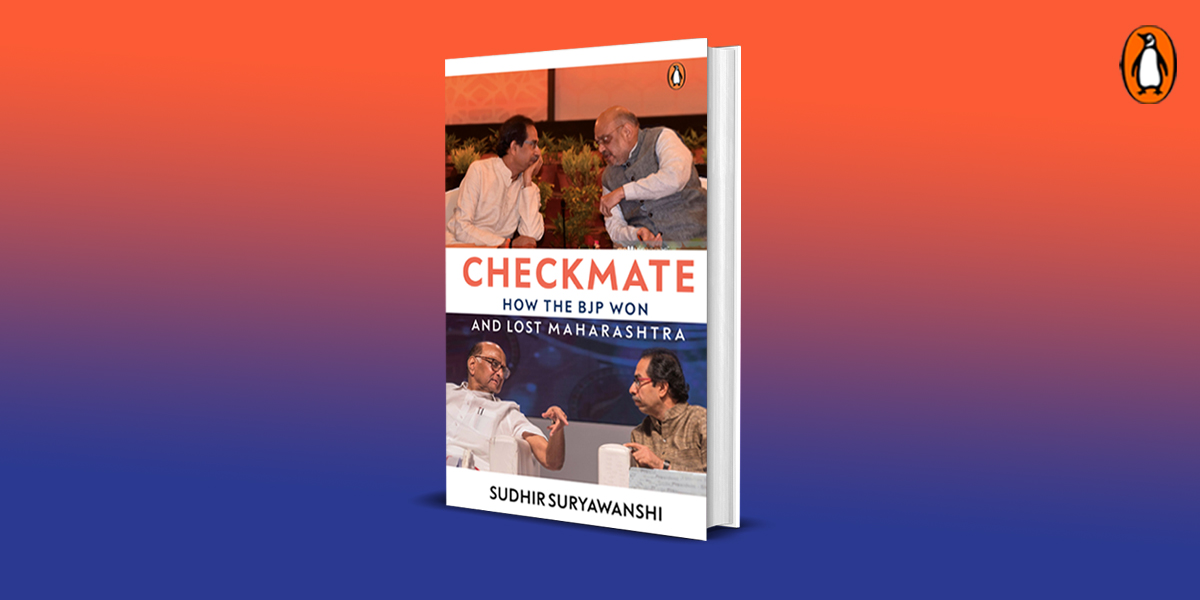
On 28 November 2019, Uddhav Thackeray, the Shiv Sena chief, was sworn in as the eighteenth chief minister of Maharashtra. This event marked the culmination of a high-voltage political drama that had the entire nation glued to their television sets for days on end. With no party being able to claim a majority in the assembly, President’s Rule was imposed in the state. This book takes its readers through the twists and turns of the dramatic political crisis that unfolded as Maharashtra waited for its chief minister.
What really went on behind the scenes?
With access to inside sources and private conversations, this book reveals the hitherto untold story of this political drama, with a comprehensive overview of the state’s politics in the last few decades.
Read below an excerpt from the book:
After leaving the Maha Vikas Aghadi meeting at the Nehru Centre (Worli) on 22 November 2019, Ajit Pawar arrived at his Churchgate residence. He again left the house at around 10.30 p.m. He asked his driver to stop on the way. He then asked the driver to return to his house with the car. Pawar stepped into another car and left for the western suburbs. Around the same time, Fadnavis also left his chief ministerial convoy and, in a different vehicle, arrived at the Hotel Sofitel in BKC, around midnight. Both leaders chose to avoid the public glare and media attention. They entered the five-star luxury hotel from a back door. It was an hour-long meeting. After hearing the name of Uddhav Thackeray as a possible candidate for the position of the chief minister of Maharashtra, Devendra Fadnavis panicked and informed Ajit Pawar that they had to take the oath the very next day, on 23 November 2019, at Raj Bhavan. Ajit Pawar asked him about President’s Rule and other procedures and requested Fadnavis to not be in a hurry. Ajit Pawar told Fadnavis that Sharad Pawar had given the green signal but the final discussion was yet to happen. However, according to an NCP leader who spoke with the author, Fadnavis told him that discussions could take place later.According to Fadnavis, it was of utmost importance to take the oath as soon as possible and then resolve other pending matters.
Meanwhile, Ajit Pawar had come to know that his uncle was reluctant to align with the BJP. A person close to Ajit Pawar said to this author that while planning the formation of the government with the Shiv Sena and the Congress, the state NCP president Jayant Patil’s name was finalized for the position of the deputy chief minister with the home portfolio. It was a big shock for Ajit Pawar. There seemed to be a plan afoot to systematically sideline Ajit Pawar, and to later bring in Supriya Sule as the chief minister of Maharashtra for the half term once Uddhav Thackeray’s two and a half years were over . . . It seemed like the end of Ajit Pawar’s career.
Perhaps, therefore, Ajit Pawar also panicked and decided to go ahead with what must have seemed to be his last resort—joining hands with the BJP despite his uncle’s reluctance. …
Ajit Pawar and his close aide had called the thirty-eight NCP legislators in Mumbai and had asked them to assemble at Dhananjay Munde’s bungalow in front of the Secretariat House (Mantralaya) at 12.30 a.m. Sunil Tatkare, Dhananjay Munde and Praful Patel had been kept in the loop. …While leaving their own constituencies, the NCP legislators started calling each other, mentioning that Ajit Pawar had called them for a meeting. It turned out that the other legislators who were not a part of the thirty-eight had no clue about this meeting in Mumbai. … Finally, out of thirty-eight, only fifteen NCP legislators reached Mumbai. This was perhaps the first signal that Ajit Pawar’s coup would not be a cakewalk.
The NCP chief, Sharad Pawar, got wind of this development around 12.30 or 1 a.m. on 23 November. At Raj Bhavan, the engineers had asked the sound and microphone system operators to remain there only. This news spread and there were suspicions that something was up at Raj Bhavan. The NCP legislators who were directly in touch with Sharad Pawar informed him that Ajit Pawar had called them for a meeting. However, after speaking with Sharad Pawar, many of them decided not to attend the meeting. Pawar thus had an idea about his nephew’s plans, but he remained doubtful about its success. Later, around 3 a.m., on Saturday, Pawar sought an update on how many legislators were siding with Ajit Pawar. He knew that if only these fifteen legislators went with his nephew that would not help him to form the government. The BJP had 105 seats and the support of fifteen independent legislators; it needed at least twenty-five to thirty legislators to cross the 145 mark. Ajit Pawar teaming up with the BJP would not only be a fiasco but he would also lose his credibility
As per his interview with ABP Majha, Sharad Pawar said that he went to bed late, around 3 a.m., at Silver Oak, hardly a fifteen-minute drive from Raj Bhavan. Around the same time, Devendra Fadnavis was getting ready to take the oath as chief minister of Maharashtra for a second time. As per a local television channel, around 4 a.m. in the morning, Fadnavis and his wife, Amruta Fadnavis organized a mirchi havan (a sacred ritual around a fire), which was performed by the priests from Nalkheda’s Baglamukhi temple in Madhya Pradesh. Baglamukhi is a tantric deity in Hinduism. Fadnavis was told that this same havan was performed to save the Harish Rawat government in Uttarakhand. When the Rawat government lost the majority in the house, his brother Jagdish Rawat rushed to the Baglamukhi temple to perform the mirchi havan and, eventually, apparently, Rawat was able to save his government. Since then, this temple town had become famous among politicians and businessmen. The report of the channel stated that Fadnavis was convinced that if this mirchi havan was performed by him at Varsha Bungalow, his official residence in Mumbai, he would again be chief minister of Maharashtra. Earlier also, Fadnavis had conducted the same mirchi havan on several occasions to retain the chief minister’s chair whenever it was in trouble. Once the havan was done, the tantriks were paid dakshina (donation) and they left for Madhya Pradesh; their return journey was coordinated by Prasad Lad.
It was time for Fadnavis to get ready for his second swearing-in ceremony at Raj Bhavan. Rather than choosing his favourite blue jacket, he had, as per the instructions of the tantrik, opted for the colour black to ward off evil spirits. Ajit Pawar, as leader of the NCP’s legislative party, had with him two original copies of the signatures of the fifty-four NCP legislators, in Marathi and in English. A copy of the list was handed over to Maharashtra’s chief secretary, Ajoy Mehta, who was waiting at Varsha Bungalow. As per an Indian Express report dated 2 December 2019, Mehta had been specially flown in from Delhi to expedite the Devendra Fadnavis–Ajit Pawar swearing-in ceremony on 23 November.
‘All the vitality and all the energy I have comes to me because my body is purified by fasting’
—Mahatma Gandhi
You must always turn to nature when you are sick or afflicted with disease. Nature holds all the answers, and when you align yourself with it, you heal and recover. Dry fasting is one such answer. Dry fasting is complete abstinence from food and water for a particular window during the day, followed by breaking the fast in a specific manner. This window during which one fasts is called the elimination phase, and the window during which one eats is called the building phase.
Dry fasting—or absolute fasting or Hebrew fasting— comes naturally to animals that are sick and wounded. They retire to a secluded place and fast until the body is restored to normal. it’s their natural instinct to refuse food during this time of recovery. At the most, they partake only of water and medicinal herbs. Ever seen a sick cat eat grass? The body is intelligent enough to heal. When the crisis is over, the appetite returns naturally. Humans also have fasting instincts, just like animals. but, unfortunately, when we fall sick, in most cases we fail to follow nature. We continue to eat food, even if in small amounts, and suffer because of it.
The Dry Fasting Miracle|| Luke Coutinho and Sheikh Abdulaziz Bin Ali Bin Rashed Al Nuaimi
Go back a thousand years. What did the early man do? Since food was scarce, they could only feast when they hunted—otherwise they fasted. This evolutionary adaptation has made our bodies efficient at fasting even in this era. if one observes children carefully—and even adults, for that matter—the moment they get sick or hurt, their appetite is what drops first. By switching on its healing mechanism, the body uses its natural intelligence to protect us. The appetite is lost for healing to take place as the immune system requires a lot of energy.
One of my clients, Neha Gupta, wrote to me saying that she had completed seventeen hours of fasting yesterday and thirteen-and-a-half hours today. She said she could never have imagined that she could dry-fast and that, too, with no hunger pangs, as she is known in her family as someone with no control over her appetite. She feels calmer now and more composed, with clarity of thought, but, most importantly, she says she feels happy!
The body is made up of five elements: Earth, Water, Fire, air and Ether. Fasting cleanses the element of Ether. During dry fasting, all vital forces are engaged in cleansing the body. It should be understood that the fast in itself does not bring about a new vital force but removes toxins in the body, which are the real cause of ill health. In the case of a disease, however, dry fasting is most beneficial when one practises it right from the initial stage.
Well, this is just the beginning of what dry fasting does. Read on to know more about the ancient wisdom behind the practice.
From beauty to general well-being, discover the miracle of dry fasting and the route to a new you in Luke Coutinho and Sheikh Abdulaziz Bin Ali Bin Rashed Al Nuaimi’s book, The Dry Fasting Miracle. Get your book here.
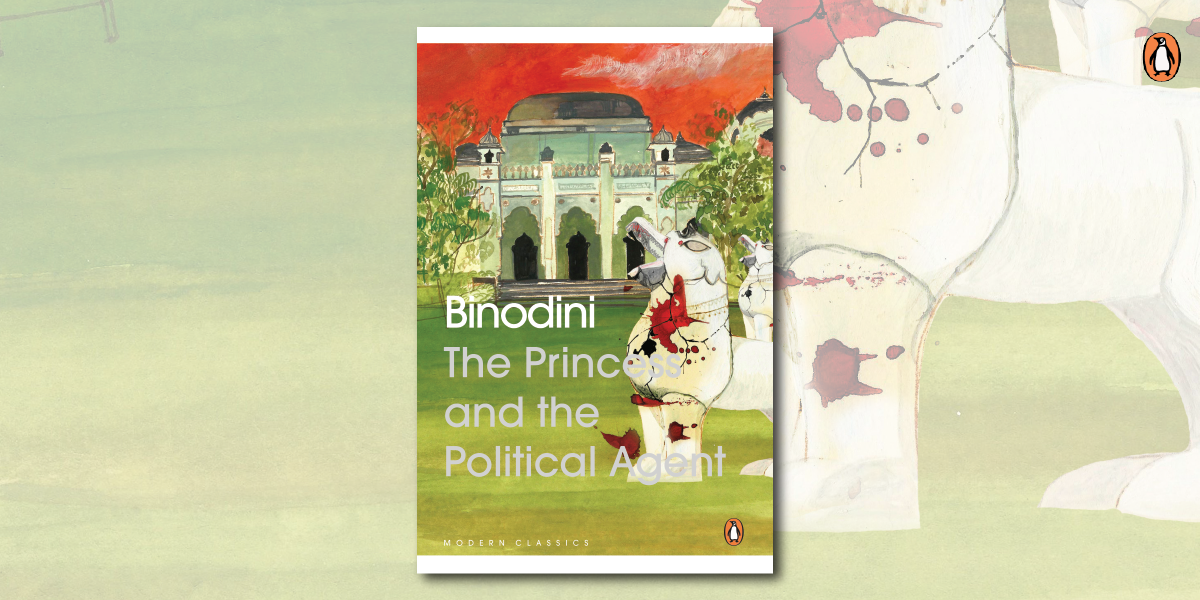
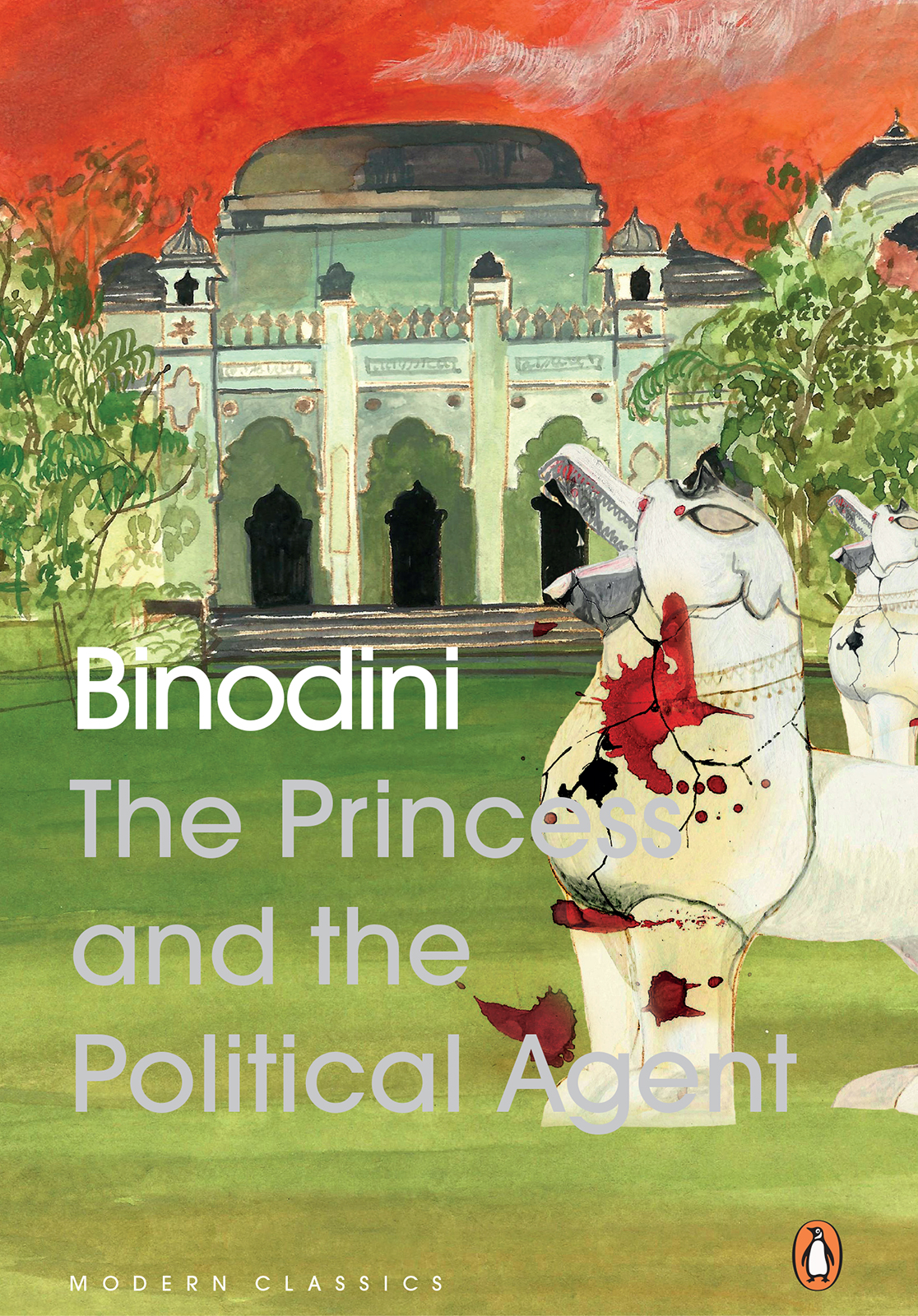
The Manipuri writer Binodini’s Sahitya Akademi Award-winning historical novel The Princess and the Political Agent tells the love story of her aunt Princess Sanatombi and Lt. Col. Henry P. Maxwell, the British representative in the subjugated Tibeto-Burman kingdom of Manipur.
A poignant story of love and fealty, treachery and valour, it is set in the midst of the imperialist intrigues of the British Raj, the glory of kings, warring princes, clever queens and loyal retainers. Reviving front-page global headlines of the day, Binodini’s perspective is from the vanquished by love and war, and the humbling of a proud kingdom. Its sorrows and empathy sparkle with wit and beauty, as it deftly dissects the build-up and aftermath of the perfidy of the Anglo-Manipuri War of 1891.
Here is an excerpt from the book!
Sanatombi saw Manipur’s last war first-hand. She witnessed as a young child the bitter rivalries of the princes, their quarrels, the entanglements of politics. She had seen it all: the fears, the sorrows, the consultations, the talks.
And there were many internal matters of the palace. She saw the splendid throne her grandfather his lordship Chandrakirti sat on for thirty-six years. But she did not get to live in the palace for very long. She was given in marriage at a young age to a man called Manikchand from the Nongmaithem family. There was a reason for this.
One day the Grand Queen Mother summoned Jasumati, consort of her royal grandson Crown Prince Surchandra and said, ‘My dear, keep a close eye on your daughter. She is wilful and is going to be a handful. It is not enough to be kind-hearted. It will not do to be an accommodating and accepting worm of a person. You do not have any male offspring. The astrologers also say your daughter is of strong birth. I want to find a good match for her and get her married. What do you think?’
‘The Grand Queen Mother needs only to instruct us. What can your humble servant say? After you inform your royal grandson, I defer to whatever the Divine Majesty and the Grand Queen Mother decide,’ replied the meek Lady of Satpam.
Jasumati was a gentle woman. No one in the palace talked about her much. She may have had her disappointments and sorrows but she expressed them to no one. Most people in the palace did not even know of her existence. Her senior sister-wife Premamayi, Lady of Ngangbam, dominated all. Even though Premamayi was not the first wife of Surchandra, she overshadowed all—and so it must be. It was only to be
expected that the clever rises above the many. It might be said that Jasumati merely gave birth to her daughter, for Sanatombi spent most of her time with her co-mother the Lady of Ngangbam, and the Grand Queen Mother. She only came home to sleep and her mother barely got to see her at all. She spent her days going from one household in the palace to another. Jasumati worried about her too. She knew her daughter was unruly, strong-willed and driven to win. It would have been better if she had been a boy, she thought to herself. Time and again Sanatombi would cause an uproar and stir up trouble. Even when as a mother she could not bear it any longer she could not beat Sanatombi or discipline her, for the Grand Queen Mother stood as her bulwark. The Grand Queen Mother, Lady of Meisnam, doted excessively on her great-grandchild. And then she says—Watch your daughter closely, when it is she who allows her to run wild . . . —but who could she have said this to? There was no one who could dare to talk back to the Grand Queen Mother, the Lady of Meisnam. So, even though she followed all palace protocol with great care, she suffered defeat at the hands of Sanatombi; she weakened when it came to her. Her great-grandmother favoured the unruly Sanatombi.
One day when Sanatombi had grown up a bit, she said, ‘I will play kang, Grand Queen Mother.’ ‘Of course, my grandchild shall play. And who will be the kang teams?’ The Grand Queen Mother arranged it all. The court shuffleboard teams were Hijam Leikai and the palace. They gathered only the prettiest girls among them, both the palace and Hijam Leikai. They established many rules—no borrowing of pucks, no throwing of pucks in the air, and suchlike. The shuffleboard court was polished with fresh milk. There was a lot of noisy activity. Sanatombi was going to play her first game of court shuffleboard at the palace. But as the sorry tale unspooled, Sanatombi came to her royal great-grandmother, her face red with fury, and demanded, ‘Grand Queen Mother, beat Lukhoi. He has stopped us from playing kang, he says we cannot play.’
A little while later, there was a great hue and cry. ‘Sanatombi has bitten Prince Lukhoi! Oh no, what is to be done!’
The matter was this. Prince Lukhoi had barred Sanatombi when she arrived to play at the shuffleboard court. Lukhoi was born to the Lady of Ngangbam, wife of Surchandra. The Lady of Ngangbam was not only clever but she had even produced a male offspring, and one day, sooner or later, Lukhoi could ascend the throne at Kangla. Even though he was a child, Lukhoi was well aware of this. His unthinking caregivers and attendants never failed to remind the child of it, and so he was very headstrong. He and Sanatombi were not that far apart in age.
He had come in while Sanatombi and her friends were noisily busy in the shuffleboard court and said, ‘Is it true you all are going to play kang, Royal Elder Sister? You may not play.’
‘Why not?’
‘Because I am telling you. You cannot.’
‘And who are you? Should I stop just because you do not
allow it? It is none of your business. I am doing it. What are you going to do about it?’
The Princess and the Political Agent|| Binodini
‘You cannot do as you like.’ ‘And why not?’
‘I am Prince Lukhoi.’
‘And I am Sanatombi.’
‘I am the male offspring—you are female.’
‘What attitude, Mr Male Offspring!’
Sanatombi flared up in anger. It was true she was a daughter. A daughter had no claim upon the throne at Kangla. But she did not accept this; she did not accept being told she could not do as she wanted. She did not know that her mother who only had daughters was not considered a blessed woman. It was especially true in the palace. How was she any different from a barren woman? Her birth mother lived choked in secret, her throat constricted, dry. It was not as if Sanatombi had not sometimes heard her mother heave a deep sigh. But she never found out why. The Grand Queen Mother had never once said to her face, ‘You are a female; you are of inferior destiny.’ She had said, ‘Now, there’s my great-granddaughter, now that’s my great-granddaughter.’ But sometimes late at night, her mother Jasumati said to her quietly, ‘Sanatombi, you are a daughter, so conduct yourself with that knowledge … … … .’ What was it she said? Sanatombi, her thoughts wandering somewhere else, paid her scant heed. Lukhoi not allowing her to play court shuffleboard enraged Sanatombi no end.
Sanatombi said, ‘So what if you are a male?’
‘I am stopping you from playing kang, that’s what,’
Lukhoi answered with attitude. He was also just a boy at the time. It was around that age just before youth when boys are at their most obnoxious.
Sanatombi said, ‘What is it that you want?’ ‘Let Hijam Ibemhal play on the palace team.’ ‘Oh really? The one from Hijam Leikai?’ ‘Even so.’
‘Oh, is that why you are coming and sticking your nose in?’
‘Why did you go to Grand Queen Mother without telling me first you were playing kang?’
‘Meaning?’
‘You have to inform me first—I was going to rehearse my dance here. If you want to play kang here, you have to inform me first.’
‘Your dancing goes on in the women dancers’ court. Has this male offspring no shame, being in the women dancers’ court?’
‘Men should be part of the women dancers’ court. You cannot play kang, and that is that.’ Saying this, he plunked himself down cross-legged in the middle of the shuffleboard court. Smoothened and polished for many days beforehand, the shuffleboard court shone like a mirror. It was not to be stepped upon. Sanatombi could not bear it any longer. She leapt at him and grabbed his hair. The two fought, they could not be pulled apart.
Suddenly Lukhoi yelled, ‘She bit me! The witch, the witch!’
Sanatombi went off to tell the Grand Queen Mother. Lukhoi was left crying, yelling ‘She-Demon, She-Demon’ at her. ‘She-Demon’ was Sanatombi’s hated nickname.
All hurried towards the quarters of the Grand Queen Mother. Sanatombi’s mother, the Lady of Satpam, heard and came running. She lashed out at her child and hit her. She struck out at her wildly. Sanatombi did not cry. She stood rock- still. The others separated them. Hearing of this, Sanatombi’s nurse came running and put her arms around her child.
Sanatombi said, ‘Of course, I beat him up. Can he do as he pleases just because he’s a male offspring? I will beat him, I will keep on beating him.’
‘Look at the mouth on her.’ Her mother tried to hit her again. The Grand Queen Mother tried to separate them. Then Sanatombi went and stood by the Grand Queen Mother, watching. She was very pleased with herself.
Lukhoi’s mother, the Lady of Ngangbam, arrived.
Laughing, she said, ‘Do not beat her, sister-wife. Why make a big thing of a matter between children?’ Saying this, she examined her child’s wounds. She did not mean what she said, for she was upset.
‘Please do as you see fit, elder sister-wife. I am not going to be able to handle this girl. Look how she has bitten the child on his arm … Here, let Mother take a look.’
The Lady of Ngangbam laughed and said, ‘Of course you should beat him, my child. How can he be disrespectful to
his older royal sister? Lukhoi, say you are sorry to your older sister. Why did you try to destroy my daughter’s kang court? What right does a boy have to do that.’ She pretended to blame her son.
‘Why should I kowtow when I did no wrong?’ ‘How he lies and says he did no wrong!’
They went at each other again. The Lady of Ngangbam stopped them, laughing. They made light of the matter but both the Lady of Ngangbam and the Lady of Satpam each knew what the other was thinking.
There were countless incidents and uproars like this because of Sanatombi. The girl-bearing Jasumati conducted herself with great discretion. But male offspring or female did not matter to Sanatombi. She did as she pleased.
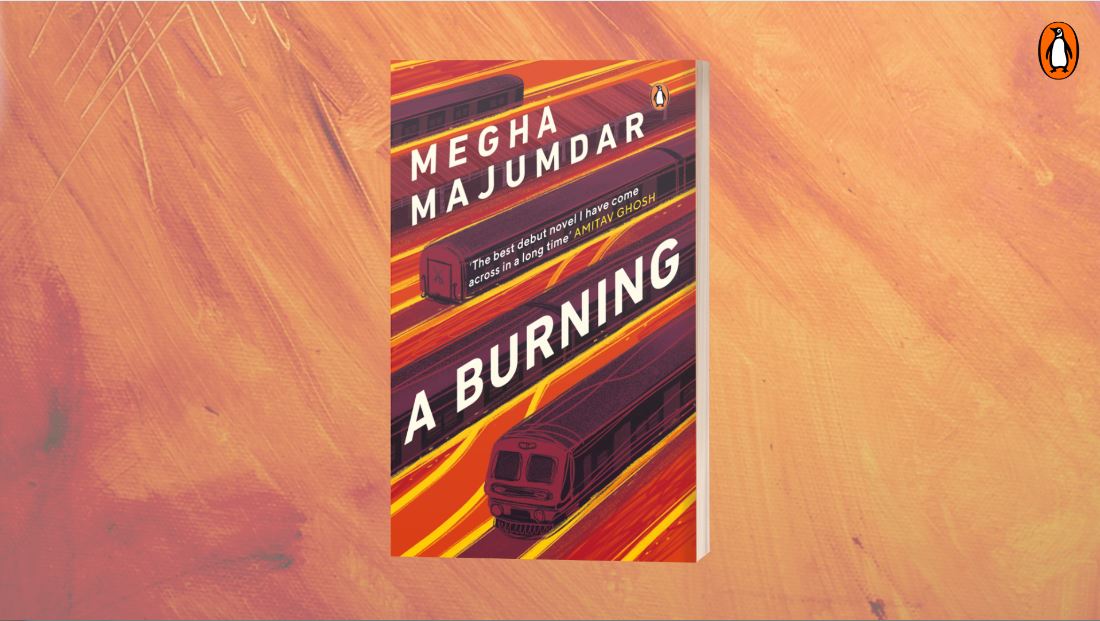
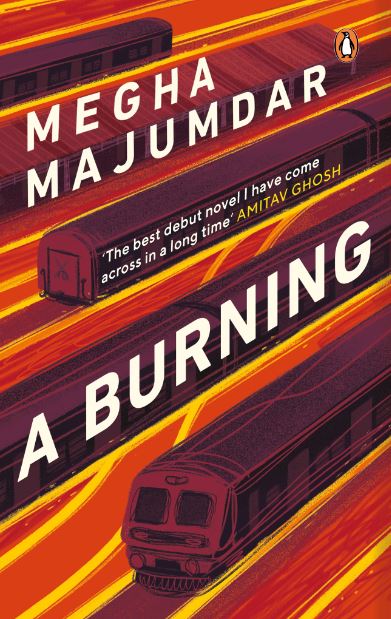
A Burning by Megha Majumdar is an electrifying debut novel about three unforgettable characters who seek to rise to the middle class, to political power, to fame in the movies.
One is Jivan, a Muslim girl from the slums accused of executing a terrorist attack on a train because of a careless comment on Facebook. The second is PT Sir, an opportunistic gym teacher who hitches his aspirations to a right-wing political party, only to find his own ascent linked to Jivan’s fall. And the third is Lovely, an irresistible outcast who has an alibi that can set Jivan free-but at the cost of everything she holds dear.
The excerpt below marks the starting moment of the adversity Jivan will face, as well as, the beginning of understanding lovely’s life.
Jivan
A hand reached out of the dark and dragged me up in my nightie. I screamed and fought, believing it was a man come to do what men do. But it was a policewoman.
My father, on the floor his throat dry and his painful back rigid, mewled. Nighttime turned him into a child.
Then I was in the back of a police van, watching through the wire mesh a view of roads glowing orange under streetlamps. I exhausted myself appealing to the policewoman sitting in front of me: “Sister, what is happening? I am a working girl. I work at Pantaloons. I have nothing to do with the police!”
They said nothing. Now and then a crackle came from the radio on the dashboard, far in front. At some point, a car filled with boys sped by, and I heard whooping and cheering. They were coming from a nightclub. The doddering police van meant nothing to these boys. They did not slow down. They were not afraid. Their fathers knew police commissioners and members of the legislature, figures who were capable of making all problems disappear. And me, how would I get out of this? Whom did I know?
A Burning || Megha Majumdar
Lovely
At night, after the acting class, I am lying in bed with Azad, my husband, my businessman who is buying and reselling Sansung electronics and Tony Hilfiger wristwatches from Chinese ships docking on Diamond Harbor. I am showing him my practice video from the day’s class, and now he is saying, “I have been telling you for hundred years! You have star material in you!” He is pinching my cheek, and I am laughing even though it is hurting. I am feeling peaceful, like this thin mattress on the floor is our own luxury five-star hotel bed. In this room I am having everything I am needing. A jar of drinking water, some dishes, a small kerosene stove, and a shelf of my clothes and jewelry. On the wall, giving me their blessings everyday, are Priyanka Chopra and Shah Rukh Khan. When I am looking around, I am seeing their beautiful faces, and some of their good fortune is sprinkling down on me.
“Azad,” I am saying this night. My face is close to his face, like we are in a romantic scene in a blockbuster. “Promise you will not get angry if I am telling you something?”
I am taking a moment to look at his face, dark and gray. Some long hairs in his eyebrows are trying to make an escape. I am having difficulty looking eye to eye for these hard words.
“Aren’t you thinking,” I am saying finally, “about a family and all? We are not so young–”
Azad is starting to talk over me like always. “Again?” is he saying. I am knowing that he is annoyed. “Was my brother coming here?”
“No!”
“Was my brother putting this rubbish in your head?”
“No, I am telling you!”
Why Azad is always accusing me of such things?
**
A Burning has been so masterfully compressed that it can be read in a single sitting to reveal how Jivan deals with the mounts of challenges coming her way. Continue to see how two other integral characters – PT Sir and Lovely – weave their way into the heart of the story in an unprecedented, yet vital manner that will leave you wanting more.
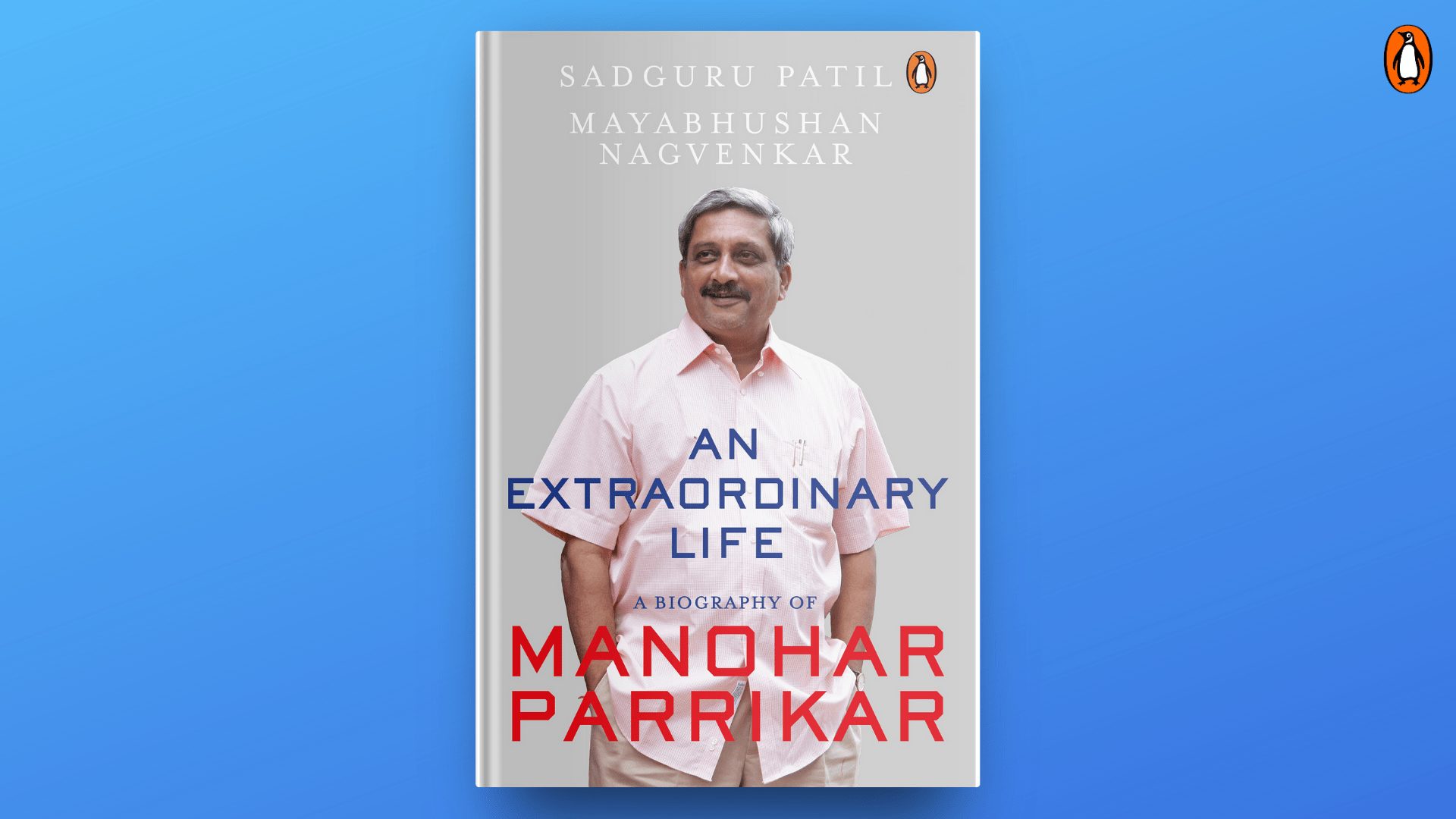
Over the last two decades, the exploits of one man, an IIT-Bombay alumnus, changed the way mainstream India looked at Goa and the political goings-on in the country’s smallest state.
An Extraordinary Life by Sadguru Patil and Mayabhushan Nagvenkar traces the life and times of Manohar Parrikar through the informed voices of his relatives, friends, foes, bureaucrats and IIT contemporaries. The daily battles of a gifted individual are brought to the fore as he encounters love and vices.
Find an excerpt below that narrates an anecdote from his childhood and family that made for one of the many moments defining Mahor Parrikar’s personality as an individual and politician.
*
Maths, Masti and Mapusa
Falling into trouble isn’t rare when one is young. But even at the age of eight, Manohar had the temperament to find a way out of it. Avdhoot, his elder brother, had seen Manohar emerge from several sticky situations with little more than some quick thinking. Avdhoot was nine, a year older than Manohar, when the latter fell into a deep, dry rainwater ditch near their ancestral house in Parra village. The gutter was deep enough to make Manohar’s efforts to climb out of it futile. Avdhoot was in a state of panic too. He could not pull Manohar out, because he did not have enough body strength to lift his younger brother up.
Where their collective brawn failed, Manohar thought of a plan.
Like in many rural homes at the time, the Parrikar household also reared a few head of cattle, mostly cows. There was one particular calf whom the Parrikar siblings called Mangala. She was particularly adored by Manohar and Avdhoot. There was also a greedy bull named Diglo who would always try to hog and gorge a major share of the fodder. During dry weather spells, their father, Gopalkrishna, would stock feed, mostly bundles of dry straw, which were stacked together near the house.
‘Manohar told me to fetch at least five bundles of straw. They weren’t too heavy, so I brought them one by one and, on his direction, threw them into the gutter. He piled them one on top of the other and managed to climb out,’ Avdhoot recalled.
The next morning, the telltale signs—dry grass strewn along the gutter bed—were not missed by other members of the family, but they smiled and ignored them.
With time and maturity, Parrikar the politician learnt not to leave behind such telltale signs.
But when he was born at Mapusa’s Dr Olavo Ribeiro Hospital, at 4.04 a.m. on 13 December 1955, Kaiee, the elderly mother of Manohar’s cousin Kashinath, did see signs of greatness, according to Parrikar’s elder sister Lata.
‘Kaiee told my mother that the boy will bring laurels to the Parrikar household,’ she said.
For an infant who would grow up to sting his political opponents with his acerbic wit and sharp intellect, Parrikar was born under the Scorpio star sign, while his nakshatra was Anuradha, symbolized by a blooming lotus. Kaiee, one must say, was not too off her mark, because under Parrikar’s watchful care, the lotus, the symbol of BJP, did eventually bloom in Goa.
The book narrates the daily battles of a gifted individual as he encounters love and vices. But more importantly, it showcases his rise in politics from the son of a grocery store owner in a nondescript town, a sanghachalak in Mapusa town, an Opposition MLA and leader, to a chief minister (on multiple occasions) and, finally, to a defence minister.
“As time passed [at the Indian Military Academy], it became clear that his apparent outspoken nature, which initially was mistaken for arrogance, was anything but that. He was genuine and not afraid to speak his mind. He had all the qualities of an ideal GC—fitness, enthusiasm and vigour. He did not hesitate to take a stand. His optimism and cheerfulness were infectious, and these, along with his never-give-up attitude, made him endearing. No matter what his fri
ends asked him, Robin never said, ‘I don’t know.’ Mostly he did know. And even if he didn’t, he tried to figure it out.”
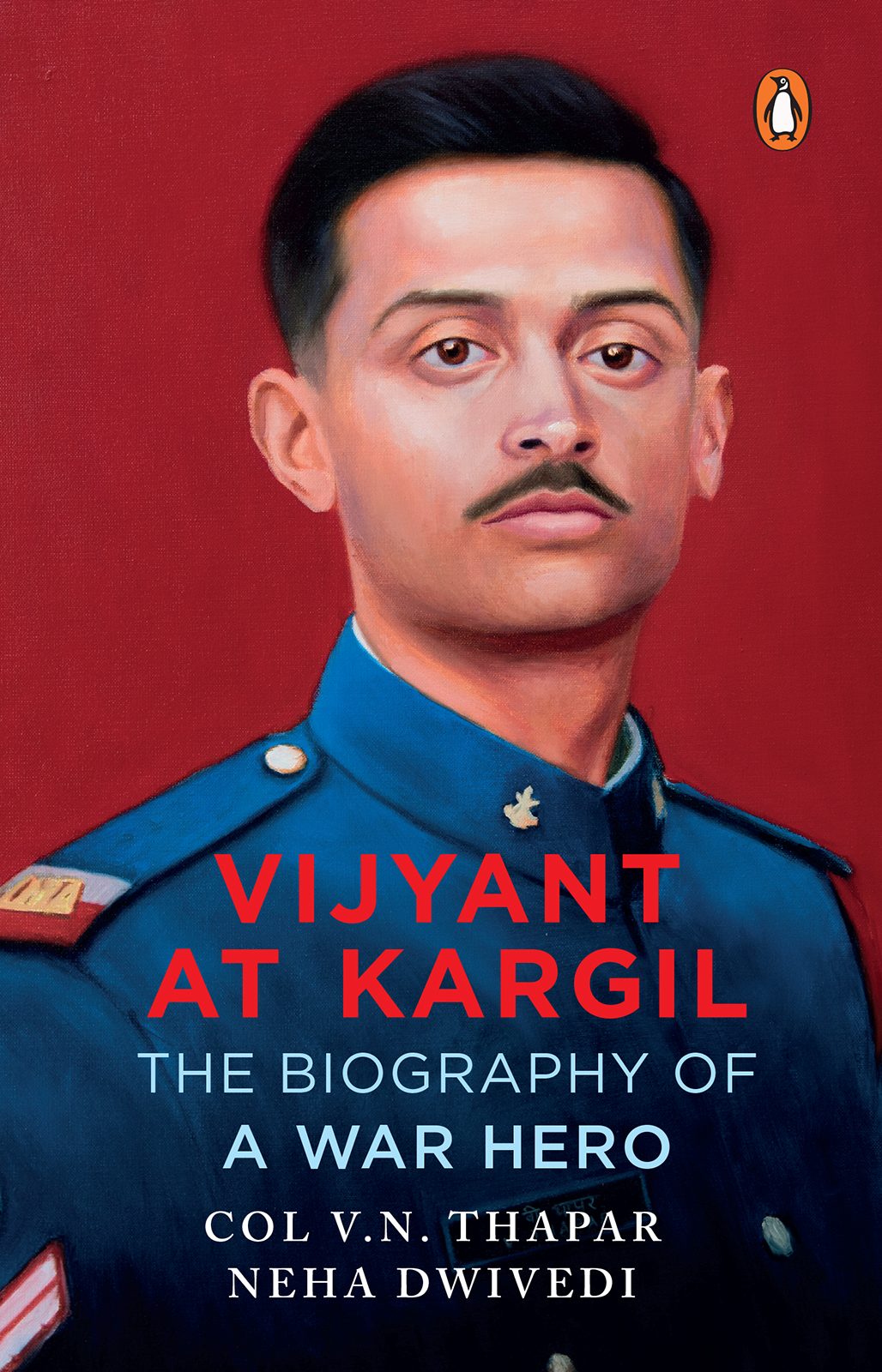
Here are some traits of Captain Vijyant,who was only twenty-two when he was martyred in the Kargil War, from his biography, Vijyant at Kargil writtenby his father and Neha Dwivedi.
He loved adventure (and the outdoors)
“Robin was growing up to be a warm, friendly, ever-curious and outgoing child. He was now a happy three-year-old who was always seeking adventure.”
“When made to study, he would ask his father to read to him instead. Being inherently outdoorsy, the need to absorb bookish information was lost on him. He learnt far better by experimenting and exploring.”
*
He was self-sufficient
“On the nights his parents were busy and couldn’t read to him, Robin would pick up one of his books and flip through the pages himself till he fell asleep.”
*
He was emotionally mature
“At six, Robin could feel the kind of emotions that were lost on people much older than him.”
*
He liked to teach others what he already knew
“Having learnt how to cycle at an early age, Robin now thought himself to be an expert and fully equipped to teach other children.”
*
He adapted well to situations
“Robin was seven years old then. Learning to adapt to new cities and making new friends came naturally to him. Still a lover of the outdoors, he was happiest when out in the open, playing his favourite games.”
*
He wasn’t easily offended
“One time, when all the boys were chatting among each other, including Robin and Parag, it was revealed that both Robin and his little brother were named after birds. The boys found this funny and started teasing Robin about it. He simply laughed along and did not let it get to him. He did not fight back or hold a grudge against anyone. Parag couldn’t help but admire this quality in someone his own age.”
*
Robin took great pleasure in the success and achievement of his friends and loved ones.
“He didn’t have a jealous bone in his body. One day, he came home jumping with joy because Donny had stood third in class.”
*
He was a responsible boy, even at age 10
“Running with his big brother was a moment to cherish for Birdie. Robin, too, would be careful not to race and would pace himself instead. He was aware that his younger brother would emulate him and so would act accordingly in his presence. Mamoon had an uneven ground, thorny shrubs, plenty of insects and birds, even small animals waiting to be discovered.”
*
He very happily indulged his younger brother (by six years)
“Instead of competing with him, he would let him win. He always thought of Birdie as his responsibility, and would always be available to solve his problems or give him gentle pushes when he needed them.”
*
He was assertive
“Robin always tried to do everything better than the rest. Often, he would be the one asking extra questions, eliciting silent groans from the rest of the class. He was aware of the sentiment, but his focus was rock solid. He was assertive and did not hesitate to take a stand, a quality mostly found in leaders.”
*
He had many admirable qualities
“He had great qualities like consideration, concern and kindness for others. But he was also humble. He felt embarrassed talking about his achievements. With a shy smile, he would brush aside any compliment given to him.”
*
He was faithful to his beliefs
“Robin had immense faith in his beliefs and once he had made up his mind about something, there was little one could do to change it.”
*
He was always setting an example for others
“His spirit often motivated others around him. He took immense pride in his turnout, and so his kits and rigs would always be spick and span and ready. He also always had a spare set of web equipment, cleaned and polished, which he gladly lent to his peers. He even kept his cabin shipshape, setting an example for others.”
Vijyant At Kargil: The Biography of A War Hero || Col V.N. Thapar, Neha Dwivedi