Publish with Us

Follow Penguin

Follow Penguinsters

Follow Penguin Swadesh

Of Love, Home, and the Outside

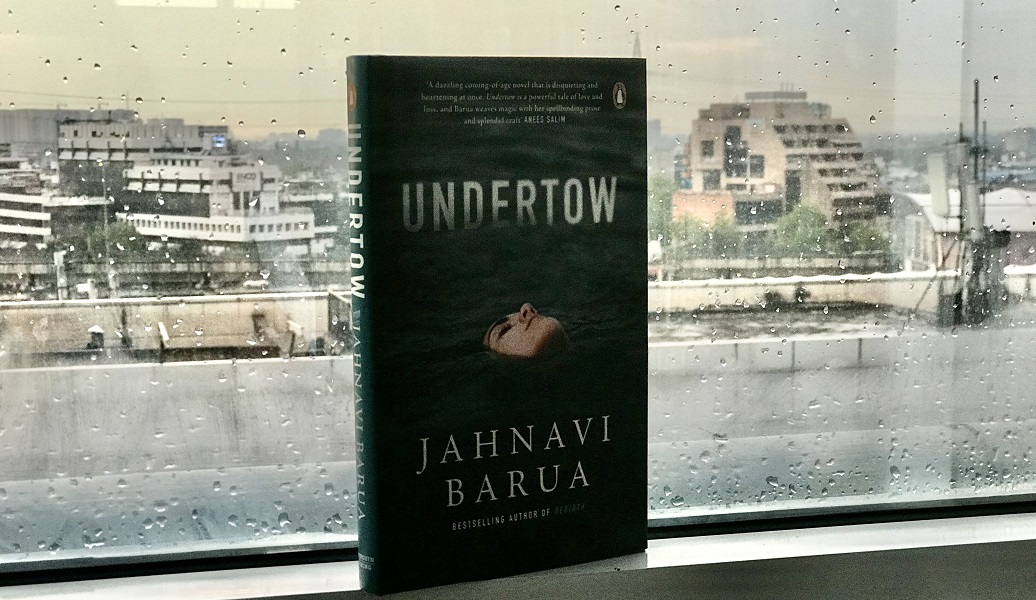
Loya is twenty-five, solitary and with restless stirrings in her heart. In an unexpected move, she sets off on an unexpected journey, away from her mother, Rukmini, and her home in Bengaluru, to distant, misty Assam. She seeks her grandfather, Torun Ram Goswami, someone she has never met before.

Twenty-five years ago, Rukmini had been cast out of the family home by her mother, the formidable and charismatic Usha, while Torun had watched silently. Loya now seeks answers, both from him and the place her mother once called home.

In the excerpt below, find a glimpse of the fateful wedding day in 1983, which ends up defining Loya’s exploration of home and family.


The Wedding

3 December 1983


Despite her father’s enormous love for her and her brother’s steady affection, she had been consigned to the margins of life in the Yellow House by Usha. Well, Rukmini found she did not feel so negligible any more. In a glad inversion of the way Usha diminished her, with Alex Rukmini was enhanced; she felt more of herself.

The world would alter again this morning, Rukmini thought as she walked up the path towards Alex. In a few hours, she would be a wife and Alex, her husband. She shivered again and, as if sensing her fear, Arun turned and linked his arm with hers.

At the veranda, Arun released Rukmini’s arm and she walked, instead, beside Alex, into Robin Khura’s small drawing room. It was a humble room, with its old wooden threepiece sofa set and a couple of cane armchairs. That it lacked a woman’s touch was obvious. But Jitu and Robin, with the aid of the woman hired to help around the house, had done their best to smarten it up. The cushion covers were freshly washed and ironed. There were vases of clumsily arranged flowers on the bookshelves, one tall arrangement of fragrant rajnigandha and other of red roses, overblown and already shedding petals.

‘Sit, sit!’ Robin Khura ushered the couple into the twoseater sofa. ‘The magistrate will be here any minute.’

Rukmini sat down beside Alex. Her hand resting on the seat of the sofa was alarmingly close to Alex’s. She hoped he would not reach across and take her hand. She did not know how things were done in his family down in Bangalore but here it was taboo to touch even your spouse in public view. In fact, it was bad form to express any affection or love between a wife and a husband at all. This was not a society that believed in a hug or embrace outside the bedroom.

‘Tea, anyone?’ Jitu asked.

Rukmini spoke quickly, maybe too soon, and regretting her haste. ‘Not now, later, maybe.’ She could not possibly eat or drink anything now. When would the magistrate arrive? She wanted to be done with it all as soon as she could.

‘Easy, sweetheart,’ Alex said and Rukmini felt herself flush. She was embarrassed at Alex’s use of this endearment before the assembled.

There was just the five of them this morning. There would have been more had it not been for the bandh. All eight of their study circle group and many more of their batch mates—Alex after all was a favourite with many. Some of her friends too, from school, may have shown up. The bandh had kept them all indoors. No family either, though Arun and she had three cousins—all in Jorhat. There were none they were particularly close to.

But what of Alex?

Rukmini realized she had not given any thought to Alex’s family, who were absent. His father had died two years ago, but what of his mother and sister, Rose? When asked, he had said that it was too far for them to travel and they would be going down to Bangalore the next day anyway. There, he said, there would a big reception at Bangalore Club. She had not thought it odd then, but now sitting in the still drawing room, suffocated by the cloying scent of the rajnigandhas, Rukmini was struck by how very strange it all was.

The magistrate arrived, half an hour late. At ten minutes past ten, Rukmini put down the pen she had signed her name with and allowed Alex to gather her up in a quick embrace, before bursting into tears.


Undertow presents a delicate and poignant portrait of family and all that it contains. Through Rukmini’s and Loya’s journeys, Jahnavi Barua crafts a complex exploration of home and the outside world, and the ever-evolving nature of love itself.


The Girl Who Disappeared- An Excerpt

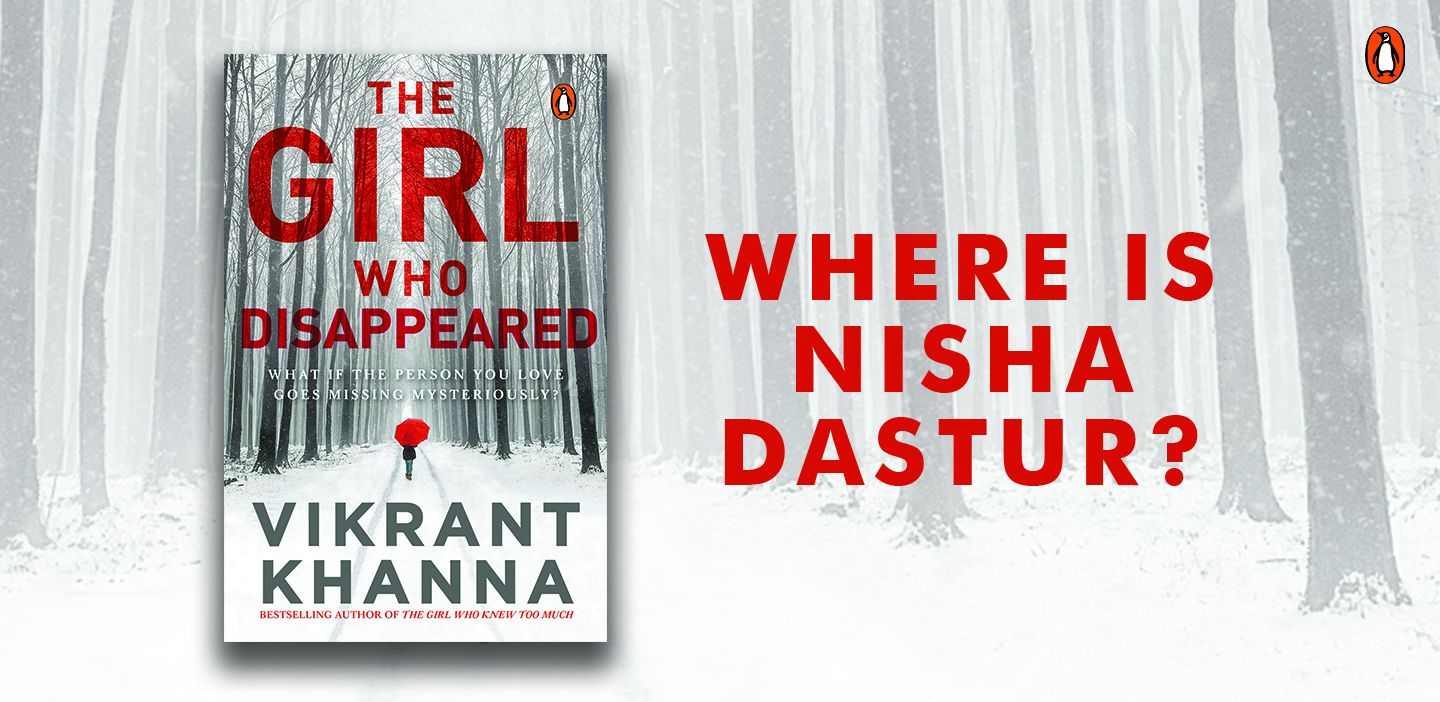
Nisha opens her eyes when the car jerks suddenly. She thinks she had been asleep and dreaming about an incident that hadn’t happened. But reality soon sinks in and she feels her throat constrict. The screeching sound of the brakes seems sinister to her. And when she sees what is in front of the car, she freezes. She looks at Rishi in horror.


Rishi shrugs. ‘The cat just jumped in front of the car from nowhere!’


‘You realize what this means?’


‘Nothing,’ Rishi replies. ‘It means nothing. Don’t make a big deal out of this.’


‘It’s a bad omen.’


Nisha glances at the black cat that has now wandered towards her side. The cat gazes back at Nisha. She doesn’t like the cat’s deep yellow eyes. Its stare is intimidating. Nisha swears there is malice in the eyes. Bile rises in her throat.


Finally, she has to drop her gaze as the cat doesn’t concede.


Rishi puts the engine in first gear and drives away.


‘Something bad is going to happen,’ Nisha whispers. ‘I feel it. Something bad is going to happen on this trip.’

The Other Side of the Divide- An Excerpt

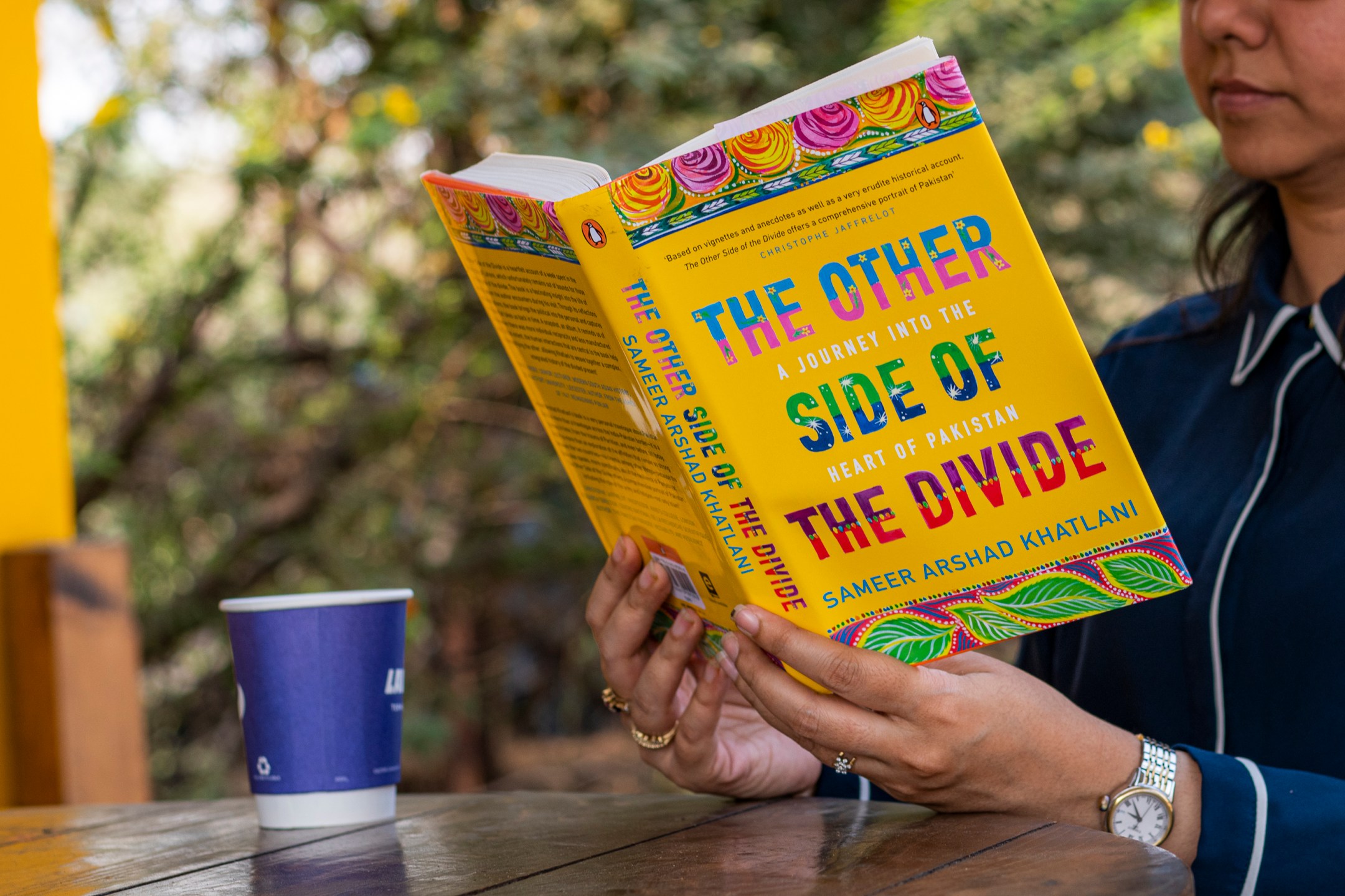
Pegged on journalist Sameer Arshad Khatlani’s visit to Pakistan, The Other Side of the Divide provides insights into the country beyond what we already know about it. These include details on the impact of India’s soft power, thanks to Bollywood, and the remnants of Pakistan’s multireligious past, and how it frittered away advantages of impressive growth in the first three decades of its existence by embracing religious conservatism.

Read an excerpt from the book below:


Anarkali Bazaar gets its name from a white semi-octagonal towered tomb believed to be that of slave girl Nadira Begum… popularly known as Anarkali… Legend has it that Mughal emperor Akbar had Anarkali interred alive in upright position in a masonry wall at the turn of the seventeenth century. She earned Akbar’s wrath for daring to fall in love with his heir apparent, Jahangir… The ‘love story’ has little historicity; it appears more to be a figment of somebody’s fertile imagination…

Lahore is replete with symbols and structures reaffirming shared India–Pakistan history and culture. Civil Lines is one such place around a kilometre from Anarkali’s tomb, where anti-colonial hero Bhagat Singh reignited the revolutionary Indian national movement.

Tempers ran high in Lahore in the winter of 1929. National movement leader Lala Lajpat Rai had succumbed to injuries sustained in a police assault at a protest rally. Young blood in revolutionary ranks sought revenge. Bhagat Singh volunteered to kill Lahore police chief JA Scott to avenge Rai’s death around the police chief’s office near the DAV (now Islamia) College. His comrades Rajguru, Jai Gopal and Chandrashekhar followed suit. They were disillusioned with Gandhi’s pacifist policies and wanted to fire militant youth imagination against the British. Bhagat Singh was chosen to pull the trigger. Rajguru was to provide him cover. Chandrashekhar Azad was tasked with ensuring their escape. The revolutionaries rehearsed the killing two days before the chosen date in the busy lanes of Civil Lines. They had prepared a red poster declaring: ‘Scott killed’, in anticipation of a successful mission. Everything except Scott’s identification went as per plan when the revolutionaries emerged out of DAV College hostel and took their positions. Jai Gopal, tasked to identify Scott, had never seen the British officer before. But he hid this fact from others. Bhagat Singh ended up pumping five bullets into the wrong person — twenty-one-year-old probationary police officer JP Saunders. Rajguru had seconds earlier waylaid and shot Saunders in his neck. He killed an Indian policeman who was in their hot pursuit. The revolutionaries ran into the DAV college campus, where they scaled a wall to enter its hostel compound. They fled to their hideout and eventually to Lahore, where they were brought back for their trial and were executed…

The scene of Saunders’ murder is now a busy street surrounded by the traffic police office, Islamia College, Metrobus route, Government College hostel, Lahore district courts and the Central Model School. Very few people remember its association with Bhagat Singh, who was an alumnus of DAV (Islamia) College, which was shifted to Ambala after the Partition. The college, which Hindu revivalist Arya Samaj managed before the Partition, is better known today as the alma mater of cricket legend Wasim Akram. It changed hands and was rechristened after the Partition. Three samadhis of Ranjit Singh’s relatives are located on the campus.

A road named after Hindu reformist Deva Samaj movement between Anarkali’s tomb and the DAV College is another remnant of Lahore’s past. Pandit Shiv Narayan Agnihotri founded it in Lahore in 1887. Deva Samaj began as theistic before re-emerging as an atheistic society. Deva Samaj emphasized ‘ethical conduct and confession of sins’ but denied the existence of gods. Agnihotri, too, is a forgotten man around the road named after his movement. Queries about the origin of the road’s name drew blank stares.

Deva Samaj Road begins close to the Civil Secretariat Metrobus station on the edge of civil court complex before merging into Abdali Road near Vishnu Street. Then Opposition leader Imran Khan, who had been campaigning against alleged election fraud had just held a huge anti-government rally in the area when I was there. Khan’s banners were hanging near Nasir Bagh as I passed by on my way to the Mall Road where the best of Lahore’s colonial heritage is located. The tree-shaded avenue is lined with chic shops, restaurants, hotels and mansions. Hindu and Sikhs owned most of the properties before the Partition also on the Mall Road, built in 1851 to connect Anarkali with Lahore Cantonment. A handful of Muslims owned businesses on the Mall Road before 1947. Today, a sprinkling of Hindus is left in Lahore; most of them are Valmiki.

An orange flag fluttering atop a temple stands out as a sign of Hindu presence at the corner of Bheem Street just across the Metrobus line off the Mall Road. Located in Lahore’s biggest tyre markets amid small shops and dhabas, it is one of Lahore’s two functioning temples. A bell hangs besides an Om symbol at the temple’s main door, where a board declares in Urdu: ‘Insaf ka mandir hai yeh, bhagwan ka ghar hai [This is temple of justice and the lord’s house].’… Valmiki temple is more than a place of worship, it is sort of a community centre, where Valmiki converts to Christianity are among regular visitors.

The day 24 December 2013, when I was roaming around in the area, was one of celebration for the Lahori Hindus; they had finally been handed possession of 14,200 square feet of land for a crematorium at Babu Sabu Chowk. The transfer followed an August 2013 Supreme Court order for the allotment. Lahore’s Hindus had moved the top court seeking the immediate transfer of the land for last rites. The handover had been hanging fire since the government was forced to allocate the land in 2006 following a sixty-two-year-old Hindu woman’s burial at a Muslim graveyard…

The Krishna temple on Ravi Road, over 3 km north of Valmiki temple, is the other functional Hindu place of worship in Lahore. The temples feature regularly on Pakistani TV channels… They invariably have sound bites of saffron-kurta-pyjama-clad priest Bhagat Lal, a balding man in his sixties. Lal has been the mainstay of Hindu religiosity in Lahore for decades.

The Krishna temple was the scene of an arsonist attack hours after foot soldiers of India’s current ruling party demolished the Babri Masjid hundreds of kilometres away in 1992. The lives of Lahori Hindus were suddenly turned upside down for no fault of theirs just when they had begun picking up the pieces decades after the Partition upheavals. The temple, however, was up and running within six months thanks to Lal’s resilience. He reopened the temple and restarted pujas twice daily with the help of government compensation. The fraught India–Pakistan ties took an unexpected turn for the better a decade later… A group of Indian pilgrims to Katas Raj temples in northern Pakistan reinstalled Krishna, Radha and Hanuman idols at the temple for the first time since the Partition in February 2007…

The reinstallation overlapped with the brief India–Pakistan détente from 2003 to 2008. The restoration of Katas Raj temples remains an important legacy of the thaw. The choice of Hindu nationalist and former Indian deputy prime minister Lal Krishna Advani for inaugurating the restoration project in 2005 showed Pakistan’s willingness to move beyond his legacy. Advani led the campaign for the construction of a temple dedicated to Lord Ram in place of the Babri Masjid in Ayodhya in the 1990s. The campaign led to the demolition of the ancient mosque in 1992 and provoked anti-Muslim violence across India…

In his book India after Gandhi, Ramachandra Guha writes: ‘Hindu mobs attacked Muslim localities, and — in a manner reminiscent of the grisly Partition massacres — stopped trains to pull out and kill those who were recognizably Muslim.’ The demolition also triggered violence against Hindus in Bangladesh and Pakistan in a throwback to the late 1940s bloodbath that ripped the subcontinent and made the Partition inevitable. Shrines like Katas Raj temples fell into disrepair as the bloodbath forced the virtual flight of Hindus from West Punjab in 1947. The first religious service at the temples since the Partition in 2006 turned the page a year after Advani’s visit to Pakistan for the inauguration of its conservation project… But the typical one-step-forward-two-steps-back routine in India–Pakistan ties followed.

Mata Hinglaj temple is perhaps Pakistan’s most important Hindu shrine dedicated to the Kshatriya caste’s deity in the remote mountains of Baluchistan. It is one of the fifty-one Shakti Peeths associated with ‘indescribable spiritual power’ believed to have been created at places where body parts of Shiva’s consort, Sati, had fallen. They are said to have been created after Shiva took her corpse around following her self-immolation in Daksh’s court. Hinglaj has an important place in Hinduism since Sati’s head is said to have fallen there. It is among the most important syncretic shrines dotting the subcontinent. Muslims revere the shrine too; they call it Nani Pir.

Pilgrimage to Hinglaj from India abruptly ended after the Partition, accounts of which date back to the fourth century. The thaw in India–Pakistan ties facilitated a rare visit of a group of Indian pilgrims in February 2006…

Pakistani Hindus want more Hindu pilgrimage sites in their country to flourish like those of the Sikhs. They hope the two countries will encourage Hindu religious tourism. It would create more stakes in peace and benefit local Hindus… Many Indian pilgrims to Katas and Nankana Sahib visit Anarkali and are often surprised to see the Hindu presence in Lahore, where restoration of abandoned Jain temples could attract rich Jain pilgrims. Digambar Mandir, located a kilometre south of the Valmiki temple, is one of at least six abandoned Jain temples in Lahore. They stand as a reminder of Jain pre-eminence across the subcontinent before the emergence of Buddhism and Hinduism. Swetambar and Digambar Jain temples are located next to each other in Lahore’s Mohallah Bhabrian. As many Jain temples are situated on tony Ferozpur Road. Footprints said to be that of Jainism founder Rishabha’s in stone at Lahore’s Guru Mangat Jain temple are believed to be the region’s oldest religious relics. A site of great religious tourism potential remains untapped and hostage to India–Pakistan tensions and a lack of vision…


The Other Side of The Divide attempts to present a contemporary portrait of Pakistan-where prohibition remains only on paper and one of the biggest taxpayers is a Parsee-owned brewery-as a complicated and conflicted country suspended between tradition and modernity.


The Lone Empress- An Excerpt

Today, Jayalalithaa, a woman who successfully challenged the mainstream values of Tamil Nadu politics, was born. Jayalalithaa’s journey from a glamour queen to a towering political leader is one of the most extraordinary stories of contemporary India.

The Lone Empress candidly chronicles Jayalalithaa’s tumultuous political life, examining her battle with intra-party rivalry to become the first elected woman chief minister of India; the long-lasting hostility with her rivals; her pursuit of support from the Centre for political survival; and her discomfort with criticism and dissent.

Here’s an excerpt from the book:

The AIADMK was now a divided house. The anti-Jayalalithaa wave inside the party gathered momentum and some leaders made her a target of attack in public meetings. The pro-Jayalalithaa group in the party retaliated with equal vehemence, while MGR tried to ignore what was going on. Perhaps he knew what was in store when he suddenly fell ill on 5 October 1984 and was rushed to Apollo Hospital. He had suffered a stroke and lost his speech. His kidneys had stopped functioning. He was also suffering from diabetes. This had been discovered only a few months earlier, when he complained of giddiness at a function in Thanjavur. MGR was always very secretive about his health problems, not wishing the public to know of them. He must have hidden his problems even from Jayalalithaa who, therefore, was shocked when she learnt that he was in the intensive care unit (ICU), fighting for his life.

Fearing the political fallout if the public and the Opposition came to know, the top brass decided that visitors, especially Jayalalithaa, should not be allowed. Of course, there was no question of allowing press reporters, with their cameras, anywhere in the vicinity. RMV was worried that if MGR’s face, which looked ghastly now, was photographed and shown to people, they would think it was lifeless.

Within no time, all hell would break loose. He most certainly did not want Jayalalithaa to step into the hospital. She was good at theatrics and could go out and declare that MGR was in no position to hold office any more or, for that matter, even likely to live. Pro- Jayalalithaa party members noticed that MGR’s relatives were allowed to see him. Vaali from the film world could see him. RMV could see him. But Jayalalithaa, who had been propaganda secretary of the party until the previous month, could not.

Solai says, ‘When MGR was admitted into Apollo, these men decided to finish her off. They even planned to have her beaten up. Dr Pratap Reddy, chairman, Apollo Hospital, came to know of this and asked her not to visit MGR in the hospital. Anything could happen when she was in the lift. Later, Thirunavukkarasu would go in a pilot car and K.K.S.S.R. Ramachandran would follow her in another’, as a precaution. Thirunavukkarasu, an AIADMK member and her ardent supporter, later turned against her and would join the Congress, while K.K.S.S.R. Ramachandran became an opponent and joined the DMK.

With the chief minister suddenly taking ill, the state assembly was adjourned sine die. V.R. Nedunchezhian was made acting chief minister. The entire cabinet was camping at the hospital, expecting the worst. Following the doctors’ diagnosis, it was decided that a neurologist, a cardiologist and an urologist be brought from the US. Dr Hande, who was then health minister, went by chartered plane to fetch the doctors after they reached Delhi. They were surprised to find the patient still alive. In spite of the panel of experts attending to him, MGR’s condition became critical on 18 October. Soon he was shifted to the Brooklyn Hospital, New York, for treatment. When Jayalalithaa came to know of this she was devastated.

With MGR away in the US, things became difficult for her. She was being deliberately alienated from the party by the seniors. It is said that Jayalalithaa approached Indira Gandhi for support, which could only have been a moral support. Jayalalithaa was aware that the prime minister was well disposed towards her as was evident from her association with Indira Gandhi in Delhi. Jayalalithaa must have been confident that Indira Gandhi would step in as her mentor. The Congress and the AIADMK were alliance partners and Jayalalithaa probably thought that if something happened to MGR, she could muster support from Indira Gandhi to strengthen her position. Jayalalithaa was still a greenhorn in politics and one does not know exactly what was on her mind. She briefed Mrs Gandhi on how she was being sidelined by senior party men, who were being vindictive out of selfish reasons. Indira Gandhi, though sympathetic, apparently advised Jayalalithaa to be patient.


The Lone Empress  is available now!

Death: The Most Fundamental Question – An Excerpt From ‘Death’

Death is a taboo in most societies in the world. But what if we have got this completely wrong? What if death was not the catastrophe it is made out to be but an essential aspect of life, rife with spiritual possibilities for transcendence? For the first time, someone is saying just that.

In this unique treatise-like exposition, Sadhguru dwells extensively upon his inner experience as he expounds on the more profound aspects of death that are rarely spoken about. From a practical standpoint, he elaborates on what preparations one can make for one’s death, how best we can assist someone who is dying and how we can continue to support their journey even after death.

Whether a believer or not, a devotee or an agnostic, an accomplished seeker or a simpleton, this is truly a book for all those who shall die!

Here’s an excerpt from the book:

Death is a very fundamental question. Actually, death is closer to us than the statistics we read about it. Each moment, death is happening in us at the organ and cellular levels. This is how, with just one look at your insides, your doctor knows how old you are. In fact, death began in us even before we were born. Only if you are ignorant and unaware does it seem like death will come to you someday later. If you are aware, you will see both life and death are happening every moment. If you as much as breathe a little more consciously, you will notice that with every inhalation there is life, with every exhalation there is death. Upon birth, the first thing that a child does is to inhale, to take in a gasp of air. And the last thing that you will do in your life is an exhalation. You exhale now, and if you do not take the next inhalation, you will be dead. If you do not get this, just do an exhalation, hold your nose and do not do the next inhalation. Within a few moments, every cell in your body will start screaming for life. Life and death are happening all the time. They exist together, inseparably, in the same breath. This relationship goes even beyond the breath. Breath is only a supporting actor; the real process is of the life energy, or prana, that controls physical existence. With certain mastery over prana, one can exist beyond breath for substantial amounts of time. Breath is a bit more immediate in its requirement, but in the same category as food and water.

Death is such a fundamental aspect, because if one small thing happens, you can be gone tomorrow morning. Why tomorrow morning—one small thing now and you could be off the next moment. If you were like any other creature, maybe you would be unable to think about all this, but once one is endowed with human intelligence, how can you just ignore such a significant aspect of your life? How can you avoid it and live on as if you are going to be here forever? How is it that after living here for millions of years of life, human beings still don’t know a damn thing about death? Well, they know nothing about life either. We know all the trappings about life, but what do you know about life as such?

Fundamentally, this situation has come about because you have lost perspective as to who you are in this Universe. If this solar system, in which we are, evaporates tomorrow morning, no one will even notice it in this Cosmos. It is that small, just a speck. In this speck of a solar system, Planet Earth is a micro speck. In that micro speck, the city you live in is a super-micro speck. In that, you are a big man. This is a serious problem. When you have completely lost perspective as to who you are, how do you think you will grasp anything about the nature of life or death?


Want to read more? Death is available now!

Will Ullis be Alright?- An Excerpt from ‘Low’

Following the death of his wife, Dominic Ullis escapes to Bombay in search of oblivion and a dangerous new drug, Meow Meow. So begins a glorious weekend of misadventure as he tours the teeming, kaleidoscopic city from its sleek eyries of high-capital to the piss-stained streets, encountering a cast with their own stories to tell, but none of whom Ullis – his faculties ever distorted – is quite sure he can trust. Heady, heartbroken and heartfelt, Low is a blazing joyride through the darklands of grief towards obliteration – and, perhaps, epiphany.

Read an excerpt from the book below:

The mysterious quality of in-flight air. The low whine of tinnitus, a charged anxious ringing that kept adjusting its volume. The sense of something about to happen, something decisive. Then the lights dimmed as the aircraft dropped through the clouds and prepared to land. It taxied and turned, taxied and stopped.

Payal sprang up again, grabbed her wheeled case from the overhead bin, and went to the front exit, resplendent in her sari. Ullis stayed where he was until the other passengers had left. Then he put half an Ambien under his tongue and took the white plastic box from the overhead bin and floated towards the lovely slum city.

He’d left Delhi on a whim, carrying only the box from the crematorium. If not for the box what would he do with his hands? He would wring them. Repeatedly. Aki was dead and he didn’t know what to do from one moment to the next. The vast abstraction of time reduced to this: stupefaction with the hands. For now it was okay. For now his hands were cradling the box that contained her ashes.

The events of the week had passed through him without resistance from the moment he came home to find Aki dead in the study.

He’d panicked and called her mother. Then he drove to her house, breathless and shouting in the suffocating car. Aki’s mother had come back with him to the apartment in Defence Colony and they’d taken his wife’s body to the hospital. A quartet of stone-faced orderlies had moved her from the emergency room to the morgue. All night the panic sat like a heavy bear on his chest. The bear stayed for many days and nights, until it gave way to exhaustion and blessed amnesia. His mind disengaged from his surroundings. He felt separated from his body, but only partially, as if he’d been insufficiently anaesthetised.

Later, the only thing he remembered clearly was the crematorium, the priests in their white dhotis and saffron forehead smears, their oily faces peering at him from clouds of smoke, the cold young eyes devoid of all earthly emotion except boredom. He’d been shaken by their indifference and dazed by all that was expected of him.

Her mother had dressed Aki in a spectacularly inappropriate multi-coloured silk sari, and she’d made Ullis don a black suit and white shirt. He’d added a pair of chocolate loafers for urgent private reasons and foregone a tie as a concession to the April heat. This was how husband and dead wife had arrived at the crematorium: dressed for a wedding, in clothes neither had worn in their life together.

The suit and sari had been unnecessary. There were no mourners, no witnesses other than a handful of crematorium employees and Ullis and his dry-eyed mother-in-law. She had organised the cremation in such haste that there had been no time to call those who had known Aki and loved her. There was no time for anything other than the observance of rituals, each more pointless than the next.

The bored priests had mouthed their inane mantras. They had sifted uncooked rice and read from ancient leather-bound tomes and stared with their oily eyes. They rang tiny brass bells in a sequence to which only they were privy. (The bells are an omen, and they ring more than once in this story.) When they demanded of him some minor role in the general pagan tumult, he had obliged with the acquiescence required of the husband of the bride. After all, this was what she had been made to resemble, a young bride in silks and flowers. Except that the marigolds were uniformly wilted. Were they leftovers from a previous funeral?

When the priests told him to push the button that would slide her into the electric furnace, he had worried that the absurd sari would burst into flame.

He’d taken a last look at her slight figure dwarfed by piles of flowers and sundry low-priced objects, her face obscured by the sari’s pallu, artfully obscured so no viewer would remark at the blood vessels that had burst on her cheeks and forehead and neck like scarlet-brown buds that would never bloom. “Kar do,” the priest had said. Obediently Ullis slid her in, and some time later his mother-in-law divided his wife’s ashes into two boxes: “One for you and one for me.”

From the crematorium, clutching the box and dressed in his mourning suit, he walked into the dust of an enclosed courtyard surrounded by dead trees and broken concrete columns. From there he walked into the dust of the street.

“Dominic,” his mother-in-law had said. “You will be all right.”

“No,” he said. Was she now his former mother-in-law?

“Of course you will,” she said. “You’ll be just fine.”

“Okay.”

“Shall I ask Jeevan to drop you home?”

“No thank you,” he said. “I’ll take a taxi.”

“Arré, why? I have car and driver. He can drop.”

“I’ll take a cab. But thanks.”

As soon as he took a seat in the back of the battered white Honda that smelled of garam masala and hand sanitiser, Ullis decided not to return to the empty apartment in Defence Colony where each room reminded him of his dead wife and his abject failure as a husband and a man.

What was the point of going home? It was the last place he wished to go. No, he could do better. He’d travel to a city by the sea. After all, was he not carrying his wife’s ashes and did they not need to be immersed?

“Can you take me to the airport?”

The driver was young and easily shocked. He seemed unreasonably upset by the change of plans.

“Sir, I cannot,” he said.

“But why not?”

“First, you must change destination on phone.”

Ullis opened the app. He deleted “Defence Colony” from the drop location and typed in ‘Delhi Indira Gandhi International Airport’.

In half an hour he was at a reservation desk where he bought himself a ticket to the city he knew best, where oblivion was purchased cheaply and without consequence.


Low is a blazing joyride through the darklands of grief towards obliteration – and, perhaps, epiphany. The book is available now!

Is Secularism a Colonial Concept?

How did India aspire to become a secular country? Given our colonial past, we derive many of our laws and institutions from England. We have a parliamentary democracy with a Westminster model of government. Our courts routinely use catchphrases like ‘rule of law’ or ‘natural justice’, which have their roots in London.

In Republic of Religion, eminent scholar Abhinav Chandrachud presents well-researched reasons to argue that the secular structure of the colonial state in India was imposed by a colonial power.

Find an excerpt from his narrative that sets up this argument while exploring the nuances of secularism as a concept.


Though scholars disagree on the meaning of secularism, broadly speaking, two factors go into making a secular state: no religion should be established by law as the official state religion and all citizens should have the freedom to practise their own religious beliefs.7 Unlike the US, England has an established religion. If India derives so many of her laws and institutions from England, how is it that there is no established religion in India?

In the coming pages, we will see that secularism was artificially imposed by the British colonial government in India even though it did not fully exist in England. The law in England assumed only Christianity to be the one true religion, and Indian religions like Hinduism and Islam were considered to be ‘heathen’. Therefore, though England had an established religion—Christianity through the Church of England—it could not declare an Indian religion, like Hinduism or Islam, as the official religion of India. It could not force Christianity on India probably due to the fact that this would have made the colony ungovernable.8 Instead, it decided to separate religion and the state in India. Though government officials in England were entangled with the administration of churches there, colonial officials felt uncomfortable associating with ‘false’ Indian houses of worship like temples and mosques and therefore assigned them to the administration of Indian trustees.

British officials adopted a policy of secularism in India—in contrast to England—which will be referred to here as ‘colonial secularism’. Though ‘secularism’ is itself a relatively new9 word and one of imprecision,10 broadly speaking, colonial secularism in British India meant that the government did three things. Firstly, the colonial state would not endorse or get itself entangled in the administration of any local religions. So it disentangled itself from the management of temples—a function which was historically performed by Indian rulers—and handed temple administration over to trustees. This was despite the fact that a parallel nineteenthcentury campaign to disestablish the Church of England failed in the metropole.11 Further, before taking up office, public officials in India were made to solemnly swear or affirm their oaths, though they might have had no conscientious objection to swearing in the name of God, Vishnu or Allah. In other words, any mention of the word ‘God’ was removed from the oaths administered to public officials in India—an accommodation which was only available to Quakers and some others in England. Secondly, the colonial state provided heightened protection to religious minorities, often feeding into a sense of paranoia that they would be left helpless without its imperial

intervention. So the personal laws of different religious groups were, in theory,12 left alone,13 though England did not have a separate set of ‘personal’ laws for its religious minorities like Catholics and Jews. Adopting the old Roman strategy of retaining the laws of conquered territories in order to make them more easily governable, colonial officials decided against adopting a uniform civil code in family law matters. Cow slaughter, though reviled by much of India’s majority Hindu populace, was permitted to be carried out by Muslims during the festival of Bakr Id and Hindus who objected to it were considered ‘hypersensitive’. Seats on legislative bodies were filled by voters on the basis of separate electorates. Thirdly, the government tacitly, though nervously, encouraged Christian missionaries to preach Christianity and obtain converts though a Hindu or Muslim preacher who might have tried to do the same in England would have put himself at risk for criminal prosecution.


Secularism is one of the most celebrated ideals of a diverse India. Republic of Religion is a unique narrative presenting a never-before explored perspective and colonial ties that can potentially lie behind this term.


Troubled Neighbours: India, China and His Holiness the Dalai Lama

In 1959, the Dalai Lama escaped from Tibet into India, where he was granted refuge. Few know about the carefully calibrated operation to escort him safely from the Indian border.

Political officer Har Mander Singh successfully managed this operation, and kept diary entries of his time. His niece, Rani Singh, brings to the fore the story that forever changed relations between India, China and Tibet in An Officer and His Holiness.

India’s relationship with its neighbour China was quite troubled back in the 1950s. The excerpt below, taken from Rani Singh’s book, presents a glimpse into how this troubled backdrop became a precursor to His Holiness the Dalai Lama’s escape and refuge into India.


The key reason for the disagreement between India and China was that contrary to India’s perception of matters, the Chinese saw themselves as leaders of the new world order. They therefore expected— indeed demanded—the prestige, respect and servitude that went along with it.

When China overran Tibet, partly as a way of securing its western flank, India did not react. Instead, elephant-like Delhi sat and waited patiently for the aggression to abate.

It did not. Instead, it grew in intensity.

During the 1950s, Chinese premier Zhou Enlai had been on two ‘goodwill’ visits to India. But Zhou Enlai’s polite gestures at diplomatic meetings had not stopped him from laying claim to India’s vulnerable northern flanks outside of these discussions: Ladakh and territories in the NEFA, now known as Arunachal Pradesh. Moreover, China was eyeing Barahoti in Uttar Pradesh, just south of Tibet. Indian troops were based there, and when Chinese soldiers tried to cross the southern border into India, the elephant finally protested. But the dragon did not blink.

In the late 1950s, China denounced the McMahon Line, challenging its international validity. At the end of that year, Zhou Enlai visited Nehru in India with soothing words, assuring him that the border issue with Tibet would be resolved peacefully. In that same meeting, China also recognized the Indian boundary with Burma.

By that time, Chinese soldiers were actually in Barahoti and had marched ten miles into Indian territory. The latter had taken too passive a role and now sat helpless as the dragon advanced, fired up. The following year, talks took place between the two countries. China was persuaded to withdraw its military but left its civilians in the territory.

In January 1959, Zhou Enlai formally claimed Ladakh and NEFA for his country, giving orders for his command to be reflected in Chinese maps.

Just four years earlier, India had formally handed over control of communication services in Tibet to China. When the Tibetan Buddhist leader, the Dalai Lama, asked Nehru for refuge in India because of increasing Chinese pressure on him and the Tibetan people, Nehru who was balanced precariously on a political tightrope, chose to side with Peking and refused the request.

By March 1959, the eyes of the world were on the highly charged power plays. Following a crackdown on the Tibetan capital of Lhasa by the People’s Liberation Army (PLA), the Dalai Lama managed to escape possible capture and containment. He again sought refuge in India.


An Officer and His Holiness presents extracts from  Har Mander Singh’s diary entries, detailing some escape plans for the Dalai Lama. Full of never-seen-before pictures and account of this operation, the book also presents a relevant and comprehensive overview of socio-political relations between China, India and Tibet today.

Does Amal Love Qais?- An Excerpt from ‘The World Between Us’

When Amal finds out that her disastrous Tinder match is now going to be her boss, she can’t be more annoyed. Qais Ahmed is everything she never wants to be: narcissistic, manipulative and arrogant.
However, despite her relentless efforts, she is unable to resist his charm and wit and is drawn to him once she gets to know the real him.
She soon discovers that he isn’t just a part of her professional life but has a deep connection to a past she is trying to forget.
Will this disturbing secret tear them apart or bind them together forever?

Read an excerpt from The World Between Us below:

‘Looking for me?’ I asked from behind her.
She spun around and looked at me. ‘Qais!’
‘Hi,’ I said, smiling at her.
She quickly came up to me. ‘Where were you yesterday? Why didn’t you come to work? Do you know how worried I was?’ I was silent all through her grand inquisition and just stood looking at her, admiring her.
‘You went home that day without a word to me and then yesterday you didn’t show up at all. You could have at least informed me. You got me so worried, you’ve no idea!’ I could hear the panic in her voice. ‘Qais . . . are you even listening to me? Tell me, what happened to you yesterday? Were you all right? Is everything okay?’
When I remained silent, she asked again, ‘Qais, what’s wrong? Talk to me!’
Gathering myself, I reached for her hands, my eyes downcast. ‘Were you really worried about me?’ I asked, my voice low.
‘Of course, I was!’ she exclaimed in a low voice to match mine.
‘Why?’ I asked, looking into her eyes.
‘What?’ she whispered, frowning.
‘Why were you worried about me, Amal?’ I asked, tightening my grip on her hands and drawing her closer.
‘Qais . . .’ she whispered breathlessly as the space between us reduced.
‘Would you get worried if something were to happen to me?’ I asked, looking deep into her eyes. She looked back at me but stayed silent. ‘Would you miss me if I died?’
‘Qais!’ She put her finger on my lip. ‘Please don’t say that.’ Her eyes welled.
‘Tell me, would you care if I died?’ I continued.
‘Please . . . stop saying that,’ she said as a tear rolled down her cheek, her finger trembling over my lips.
Taking advantage of her emotional vulnerability, I kissed her finger. She gasped and looked at me wide-eyed.
‘Qais . . .’ she whispered, shocked, taking a step back.
‘I know you care . . . I know you do . . .’ I said, reaching for her hand.
She withdrew her hand from mine and wiped her cheek. ‘What . . . what are you saying?’ she sniffed,
turning away.
‘Just answer my question. Do you care for me?’
‘Of course, I do. So what?’ she asked, turning back to look at me.
I smiled. ‘That means only one thing, Amal. You’re in love with me.’


Is Amal in love with Qais? Read The World Between Us to find out!

Heartbreak, Sadness and Vampires

Love isn’t easy like Sunday morning. Seventeen-year-old Gehna Rai has normal friends, goes to normal school and belongs to a normally dysfunctional family. Everything about her is normal – except for the fact that she is also going to be a mom.

Erma is a nerdy high-school drop-out and dreams of becoming a poker pro. He also takes care of his dad, who has Parkinson’s disease.

Meet our latest favourite millennials in the excerpt below!


Gehna Rai was a girl who flirted with sadness.

She was tempted by it the way a person with vertigo sometimes feels drawn to the edge. It free-floated around the periphery of her days and she was aware of it following her always. When she was younger, and didn’t fully understand its nature, she would turn to meet it and it would squeeze her heart, seeping into her bones like a cold fog. In those days Gehna was optimistic: she believed that the sadness was a mood and, therefore, that certain distractions—like listening to music or going for a swim—could make it go away.

Wiser now, Gehna was no longer sure that she had any say in the comings and goings of the sadness, but she still held hope of ducking it. She had drawn strict boundaries, drip-feeding herself the pop songs about heartbreak and the tragic movies she loved, never exceeding a ratio of one part sad to nine parts happy. She stopped watching historical docudramas on the Holocaust and got Eram to screen her books before she agreed to read them.

‘I don’t get it,’ he had said the first time she asked him, shuffling through the pile of new books on her desk. Gehna was sitting on a floor cushion as far as she could from the books while still being in the same room. ‘You want me to tell you what happens in the stories?’

‘No. I want you to tell me what doesn’t happen.’ Eram steepled his fingers and nodded intelligently. ‘Right. It all becomes clear to me now. You’re saying, read the books and tell you what doesn’t happen in them.’ He lifted, with his thumb and forefinger, a book from the pile. ‘Now, this, for instance. Ian McEwan’s Atonement. I haven’t read it but I can tell you—just judging from the cover, mind you, and the fact that it was shortlisted for the Booker Prize in 2001—that vampires don’t happen in it. No vampires at all. Or exploding sheep. It doesn’t enlighten us on the dark and bloody past of shipping insurance. Also, it only touches on the oral sex techniques of the natives of Bora Bora but doesn’t really—

‘Stoppit,’ Gehna cut off his riff. ‘Like, children dying. Or nice people. If any children or nice people die in a book, I don’t want to read it. You know what I mean.’


Amidst the quirkiness, author Arjun Nath gives us some very heartfelt moments like these to remember.

Caught between a sincere friendship and something more, Eram and Gehna give us a story that is #litAF!

error: Content is protected !!