Publish with Us

Follow Penguin

Follow Penguinsters

Follow Penguin Swadesh

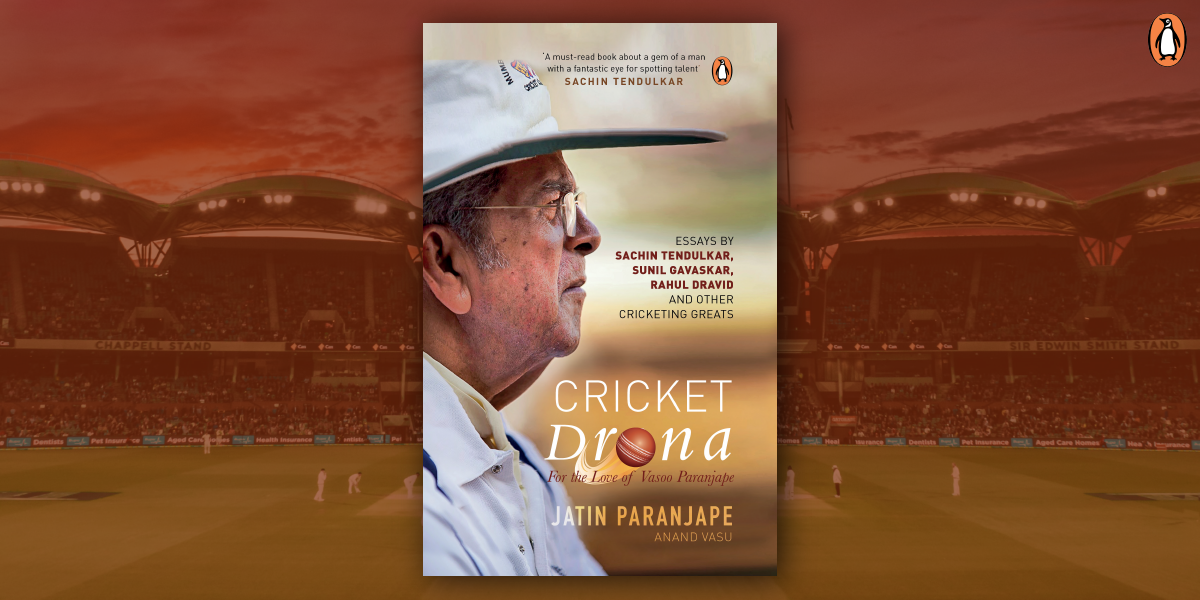
The life and times of Vasoo Paranjape: The Cricket Drona

“You couldn’t miss Vasoo Paranjape”, writes Dilip Vengsarkar, opening his essay on the legendary cricket coach who changed the lives of everyone who crossed paths with him in marvellous and indelible ways. Cricket Drona is a portrait of the life and times of Vasoo Paranjape, created through first-hand accounts and stories told by the people who were shaped by his wisdom and his compassion. Get a glimpse into the illustrious mentor’s life trough this extract:


“ I must have been ten or twelve years old when I watched Denis Compton and Vinoo Mankad playing at the Cricket Club of India in a Ranji final. By 1947–48, I was training at the New Hind Club nets and became a member of the Dadar Union Sporting Club at Matunga. I was given a two-year playing membership by the P.J. Hindu Gymkhana in Mumbai. I was a left-arm slow-spin bowler, and I used to bowl the chinaman as a regular part of my armoury. It was a big occasion for me when, one day, I saw all the Indian players playing at the adjoining Matunga Gymkhana ground, including the great Vijay Merchant. Watching me bowl, Merchant called me over for a chat. However, I was so awestruck that I couldn’t muster the courage to respond. In retrospect, my love for the game of cricket originated with that encounter!…

I studied at the King George School and was the captain of the junior team there… During this period, I had the advantage of being coached by the great Homi Vajifdar, who was the first Bombay captain. Vajifdar was a big man with powerful wrists…Leading by example, Vajifdar taught us the value of being a good person. He was disciplined, meticulous and had an eye for detail. If you trained with him, your shoes had to be properly polished and your cricket attire had to be perfect. He always said, ‘Whatever you do, you must be the best at it.’

…I joined Dadar Union in 1953, when Madhav Mantri was captain. We never had any meetings but focused on fielding a month before the league. Mantri used to come from work at 6.05 p.m., remove his tie, get into his cricket attire, and we practised like maniacs…‘A family atmosphere. Terrific bowlers, terrific batsmen and even more terrific fielders. We were a great fielding unit. Daya Dudhwadkar, Suresh Tigdi, Avinash Karnik, Ramnath Parkar, with Sunny in the slips and myself…When I saw him for the first time, Sunny was a young boy who would accompany his father to Dadar Union games. Right from that time I could sense how serious he was about batting. He would play on the sidelines, with one of the team members chucking balls at him endlessly. He played with a very straight bat—quite uncommon for a beginner, as your instinct is to put power into the shot with your bottom hand, which then changes the angle of your bat from the vertical to the horizontal…

On all his English tours, though, he invariably excelled. He had an intuitive ability to adjust to the varying conditions of the English atmosphere and pitches. The matchless 221 he scored at the Oval, during the 1979–80 season, in challenging conditions was possibly the pinnacle of his career, though the 101 he made at Old Trafford in typical English conditions probably gave him greater satisfaction. But for all his successes in England, he could never fulfil the ultimate dream that every batsman has—to score a hundred at Lord’s, the Mecca of cricket.”


Cricket Drona is out now! To read more inspired accounts of how Vasoo Paranjape impacted and changed lives of the most famous cricketers, get your copy here.
Of profound visions and a higher calling

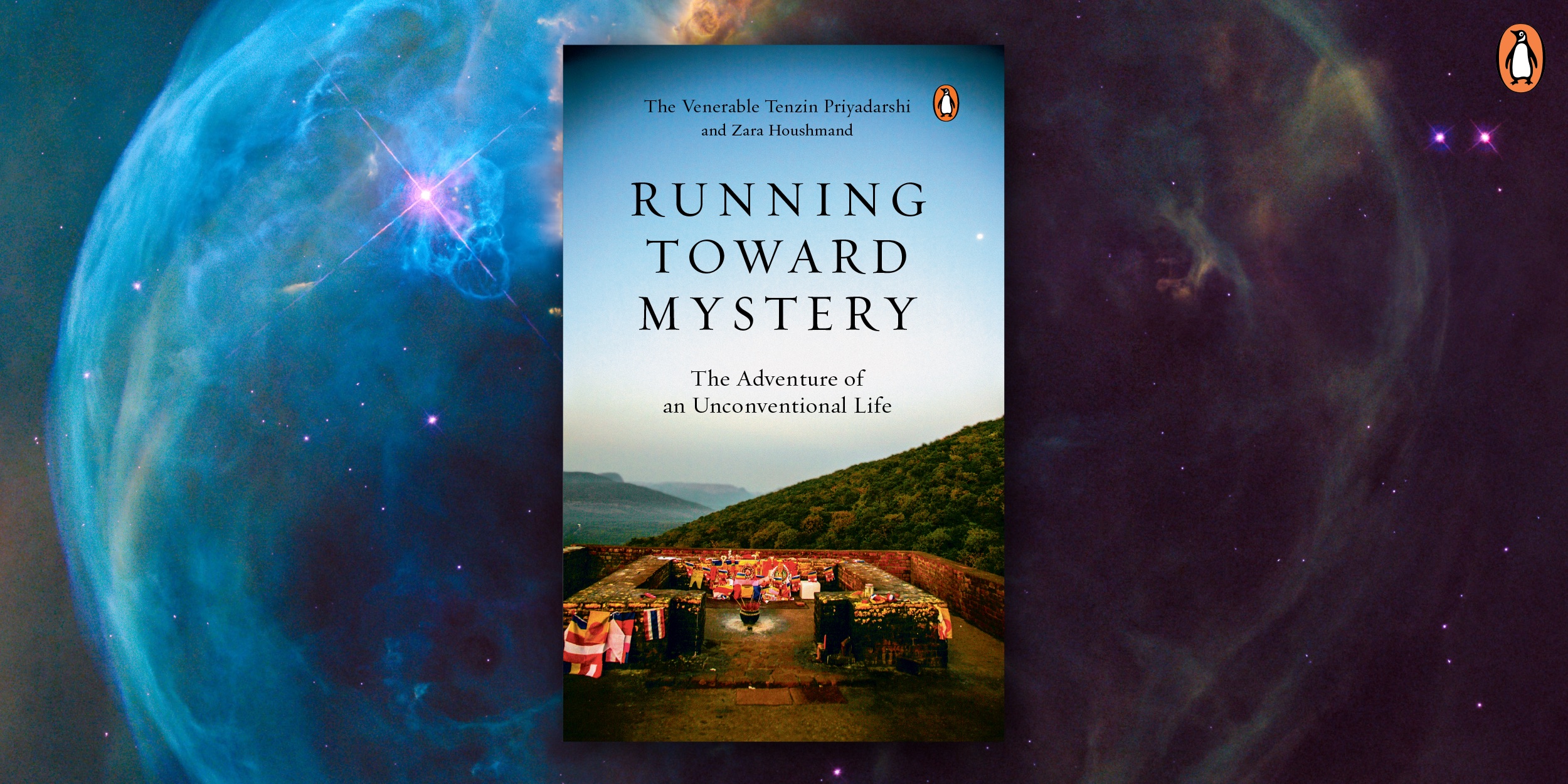
Running Toward Mystery || Tenzin Priyadarshi, Zara Houshmand

At the age of six, The Venerable Tenzin Priyadarshi began having visions of a mysterious mountain peak, and of men with shaved heads wearing robes of the color of sunset. At the age of ten, he ran away from boarding school to find this place which he saw in his visions.

Running Toward Mystery is the Venerable Tenzin Priyadarshi’s profound account of his lifelong journey as a seeker. At its heart is a story of striving for enlightenment, the vital importance of mentors in that search, and of the many remarkable teachers he met along the way, among them the Dalai Lama, Archbishop Desmond Tutu, and Mother Teresa.

Here’s an excerpt from the book.


**


I was six years old in 1985, when the dreams and visions had started. The very first time too, there was no question that I was wide awake. I was with a friend who lived in the same compound, at Evelyn Lodge, where our bungalow was. I had gone to his apartment to ask him to play and we were walking toward the cricket field when I saw what looked at first like streaks and patches of orange in the sky. Was it sun- set already? That would mean it was time to go home, but it couldn’t be. We hadn’t even started playing. Then the colors resolved into shapes and their outlines became clear. Men in robes of that saffron sunset color, with shaved heads, were milling about. There was a deer and a small hut. Some of the men went into the hut and came out again. It was as vivid as if I were watching a scene from life.

“Do you see that?”

My friend followed my gaze, squinting into the sky. “See what?” He swung the bat at nothing. I pinched myself. That was what you were supposed to do if you thought you were dreaming. It made no difference. Slowly, as we continued to walk, the scene faded into the sky and disappeared. Later, when I got home, I told my parents, but they said I must have imagined it.

I worried that there was something wrong with my eyes. But I had no trouble seeing the blackboard in class, or the ball when it was my turn to bat, or the mangoes hanging in the orchard, waiting for my arrows. And if it was my mind that wasn’t right? Well, it was right enough in all other depart- ments. My grades were excellent.

And so it was forgotten, no big deal, and the memory would have been lost in the jumbled closet of a child’s mind if I hadn’t seen the other things later. There was a place that I dreamt of again and again, but even when I was awake it ap- peared very clearly to my mind’s eye: A rocky peak loomed above a plain, wrapped in woods and scrub but with boulders and a cliff face exposed. I had a bird’s-eye view, but I could see no buildings, no human mark on the landscape, nothing to hint at where this place was or why it should rouse in me a lingering sweetness, a yearning. It was as perplexing as the man who kept visiting my dreams, and just as persistent. There were other people who appeared at times, some with shaved heads and some with dreadlocks, wearing different shades of yellow, orange, or red. But he was the one I saw most clearly.

I was old enough to know that dreams, however weird they might seem, are normally rooted in the workings of our own minds and that waking hallucinations are not normal. I didn’t have a theory—not even a half-baked hint—about what these intrusions in my mind might signify. They seemed to come from beyond me, beyond the world of logical sense, a genuine mystery that begged to be solved.

Now I lay there in the darkened room, listening to the random snuffles and snores of a hundred sleeping boys, and felt a mounting sense of urgency. I wasn’t going to get any closer to the answer by lying here wide awake until the morning bell.

To find it, I needed to go out and search for it. After all, mysteries are how adventures begin.

It was time. I crept out of bed slowly. There was just enough shadowy light spilling over from the foyer to see by. Moving as quietly as possible, I put some clothes into a small daypack. I sat on the edge of the bed, so I didn’t have to risk the noise of pulling out the desk chair, and wrote a note to my parents. Just a few words that revealed nothing so much as a ten-year- old’s hubris—that I was leaving on a spiritual quest and didn’t know where it would take me, but they shouldn’t worry. I slid the note under the wooden lid of the desk.

** 


Thrilled in 240 pages

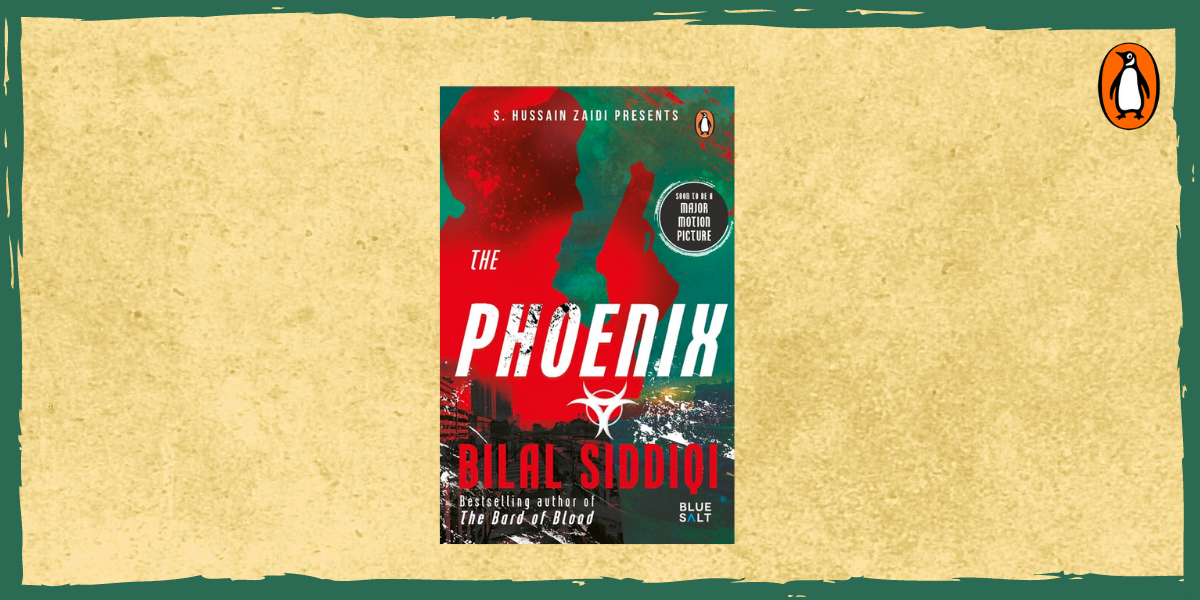
Bilal Siddiqi’s The Phoenix is a classic roller coaster of intrigue, vengeance and excitement. Read an extract here.

Mumbai

The Gateway of India was beautifully illuminated in honour of the victims of that fateful night of 26 November 2008. It had now been over a decade since the day those ten Lashkar-e-Taiba terrorists swarmed in and carried out a series of attacks that brought the city to its knees. The coordinated massacre had lasted about four days, taking at least 170 lives and leaving some 300 injured. The city had been under siege, but the residents began to pick up the broken pieces soon after, resuming their everyday lives with their indomitable spirit.

The city was now paying homage to the martyrs of 26/11. Around 200 people had gathered at the Gateway of India, and the number was increasing with every passing minute. A popular actor had just taken to the stage and was addressing the crowd. It was a sombre moment for everyone present—some were reduced to tears as they lit their candles and uttered their prayers. Little did they know that there were plans for an unprecedented attack to be carried out that very night by a patriot who had repeatedly put his life on the line for his country.

The Indian flag fluttered proudly in the wind. People bowed their heads in respect. The actor’s voice from the stage broke the two-minute silence…


Aryaman’s eyes met those of a policeman. They nodded to each other, and Aryaman put on his hoodie. The policeman stepped back and turned off the metal detector as Aryaman went through. Aryaman read the policeman’s name as he moved past: Sanjay Rane.

Although he had switched off the security system to allow Aryaman to pass, Rane went slightly against Eymen’s plan and frisked Aryaman when he saw that a fellow constable was casually looking over at him. Aryaman felt Rane’s hand go over the concealed vest. The frisking done, Rane cleared Aryaman and gently pushed him in towards the venue.

Aryaman moved past the crowd, reluctantly walking towards the centre… His unsure steps were being watched through a sniper scope by Eymen, who had perched himself atop a nearby terrace.

Eymen’s instructions could be clearly heard through the earpiece that Aryaman was wearing: ‘Any funny business and a bullet ends you on the spot. And I don’t have to tell you what happens to your family after that.’

Aryaman didn’t bother responding. He was going to do it. There were no two ways about that. He stepped on a poster that had the faces of the deceased printed on it with the words ‘Gone But Not Forgotten’, and he pushed past a group of children as he reached the centre.

A middle-aged woman looked at him disapprovingly. She saw his bruised face, his glassy eyes, his salt-and-pepper stubble and his dishevelled, greying hair. And then she witnessed something she couldn’t decipher until it was too late…


There was mayhem—the kind Aryaman had rarely witnessed. People began to scream and run haphazardly. The actor, who until a few moments ago had been talking about how Mumbai had risen like a phoenix from the ashes after the 26/11 attacks, was now being whisked away by security personnel into an armoured car. Aryaman was jostled and pushed to the ground by the frenzied crowd.

A security team of four, all in hazmat suits, rushed towards him. They handcuffed and dragged him along the ground towards an armoured vehicle.

[The Phoenix is out now. Get your copy today!]

The Phoenix|| Bilal Siddiqi

Preparing for a world without work

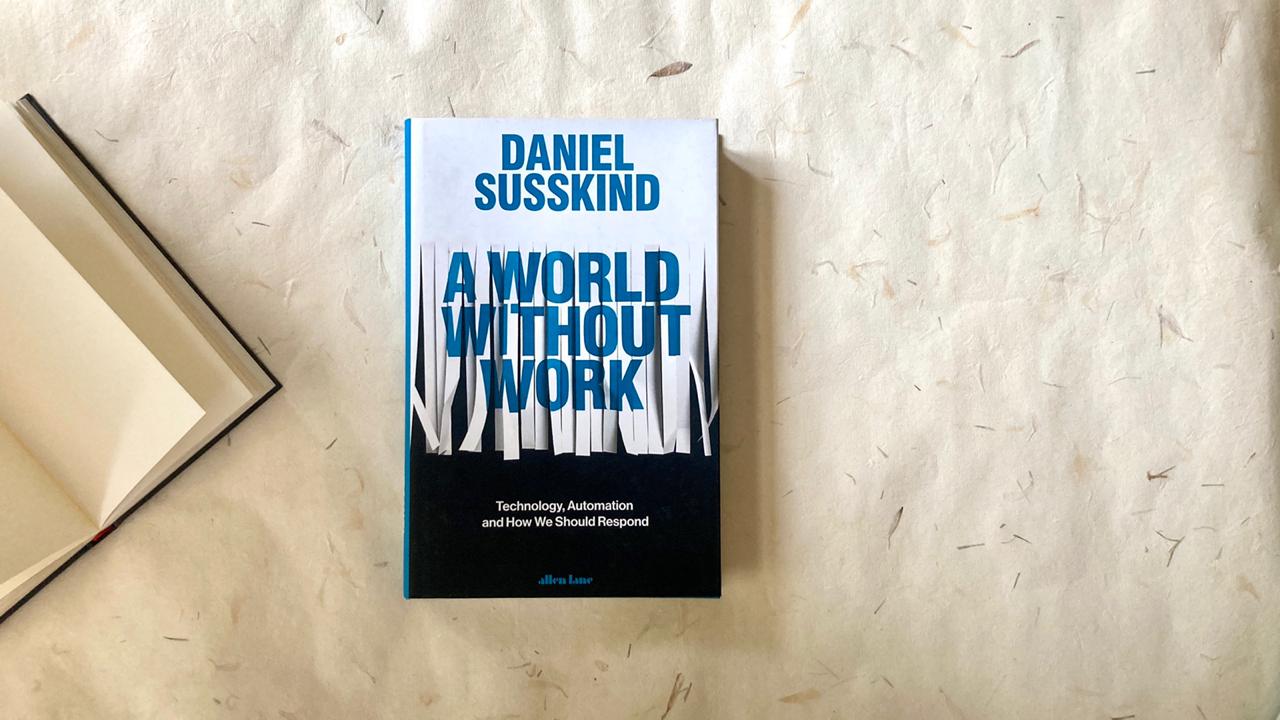
New technologies have always provoked panic about workers being replaced by machines. In A World Without Work, Daniel Susskind shows how these fears, that were hitherto misplaced, are very real now owing to advances in artificial intelligence.

A World Without Work || Daniel Susskind

As machines no longer need to reason like us in order to outperform us, eventually we must learn to thrive in a world with less work. The challenge will be to distribute prosperity fairly, constrain the burgeoning power of Big Tech, and provide meaning in a world where work is no longer the centre of our lives. In this visionary, pragmatic and ultimately hopeful book, Susskind shows us the way.

Read on for a peek into A World Without Work.


**


A lot of people have assumed that, if a machine at the bottom of the mountain is to join us at the summit, it must go through apotheosis as well—not to become more like a god, but to become more like a human being. This is the purist view of AI. Once the machine gains ‘human intelligence’,peak capability is reached and its climb is over.

But as the pragmatist revolution has shown us, there are two problems with this assumption. The first is that there are other ways to climb in the Capability Mountains than to follow the particular path that human beings have taken. The purist route is just one way to make the ascent; technological progress has revealed a range of other promising paths as well. The second revelation is that there are other peaks in this mountain range alongside the one that humans proudly sit atop of. Many humans have become distracted by the view down from the summit: we spend our time looking down at the less capable machines below, or gazing at each other and marvelling at our own abilities. But if we looked up, rather than down or across, we would see other mountains towering above us.

For the moment, human beings may be the most capable machines in existence—but there are a great many other possible designs that machines could take. Imagine a cosmic warehouse that stores all those different combinations and iterations: it would be unimaginably big, perhaps infinitely so. Natural selection has searched one tiny corner of this vast expanse, spent its time browsing in one (albeit very long) aisle, and settled upon the human design. However, human beings, armed with new technologies, are now exploring others. Where evolution used time, we use computational power. And it is hard to see how, in the future, we will not stumble across different designs, entirely new ways of building machines, ones that will open up peaks in capability well beyond the reach of even the most competent human beings alive today.

If machines do not need to copy human intelligence to be highly capable, the vast gaps in science’s current understanding of intelligence matter far less than is commonly supposed. We do not need to solve the mysteries of how the brain and mind operate to build machines that can outperform human beings.

And if machines do not need to replicate human intelligence to be highly capable, there is no reason to think that what human beings are currently able to do represents a limit on what future machines might accomplish. Yet this is what is commonly supposed—that the intellectual prowess of human beings is as far as machines can ever reach. Quite simply, it is implausible in the extreme that this will be the case.

**

On the pressures of present-day work environments

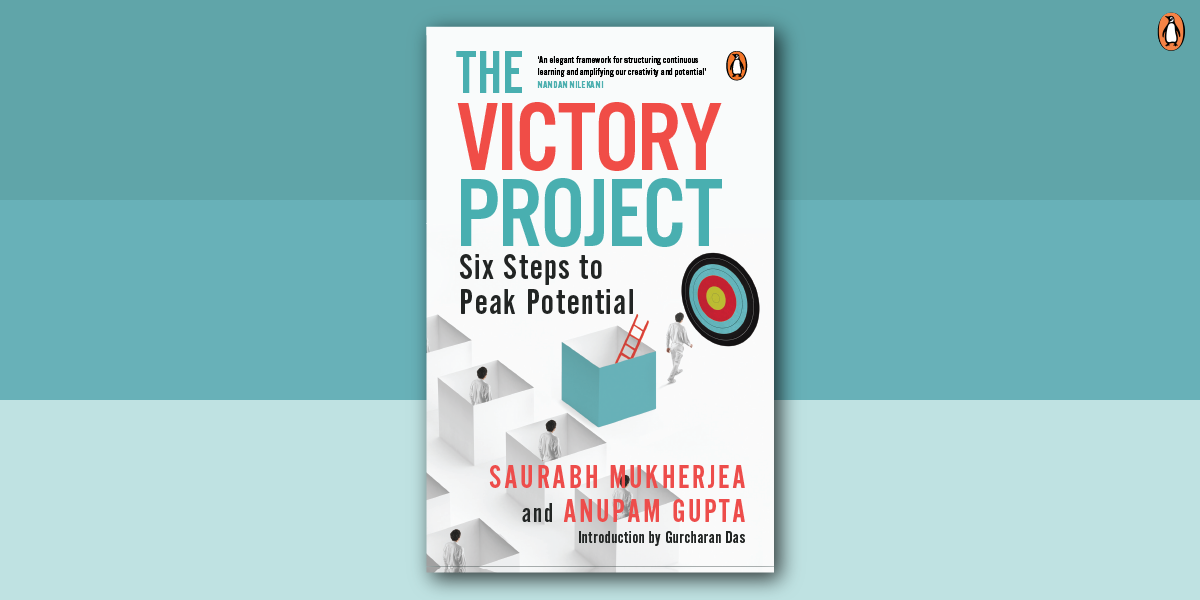
Amidst the stress of juggling high expectations in a highly competitive work environment, how does our generation, achieve our goals while leading fulfilling lives? Saurabh Mukherjea and Anupam Gupta attempt to answer this question by using the principles of Simplicity, Specialization, Creativity and Collaboration. They delve into a treasure trove of material from global gurus and successful business professionals while and drawing on their own careers to show how readers can apply these principles to the fields of business and investment, even to life itself. The Victory Project is the ultimate guide to surviving and thriving in the professional and social domains.

The Victory Project || Saurabh Mukherjea, Anupam Gupta

**

Things were not like this, our parents told us. But our parents lived in simpler times in a world of closed economies, government jobs, cocooned from the rest of the world, happy with 10 per cent increments and one-month bonuses. Their biggest dreams were to send their kids abroad and enjoy a retired life on government pensions in government colonies. T.V. Mohandas Pai, the former chief financial officer (CFO) of Infosys and current chairman of Manipal Global Education, tells us: ‘When I was growing up, we had a very simple life. We were happy with whatever we had—from a radio to a cycle to a company-owned car. We’d go to the library, read a book or read a comic. There was not much growth for us and no impetus to change. We had lower incomes and we didn’t know what more we could do as opportunities were scarce. The economy grew slowly! There wasn’t even a television to show us the world outside.’ Nearly thirty years after India opened up its economy to the world, our lifestyles—and those of youngsters after us—have seen a sea change that makes our lives almost unrecognizable to our parents. The plus side is the immense wealth created and enjoyed as new sectors and new careers propelled us forwards. The minus side is the price we have paid in physical and mental health. India’s weak infrastructure, unable to cope with decades of rapid economic growth, has only added to the pressures. Our aspirations might be on par with developed countries, but we are trying to fulfil those aspirations with gridlocked traffic, overflowing local trains and decrepit bridges. Pai says, ‘China invested in human capital to export to the world. They took the surpluses from that and put the money into improving infrastructure, improving the school and college networks. They incentivized heavy industry and so they went to a commanding position. We never put enough money into infrastructure. Now in India, human capital hasn’t grown much. The economy can grow at 8 per cent compound annual growth rate (CAGR) for a long time but employees simply can’t grow at that pace in their jobs and be more productive, and the infrastructure simply can’t keep up with the economy. As a result, the stress on their managers, on the C-Suite has gone up . . . All these things have resulted in the increased stress of urban living in India.’ When our ambitions get shackled by the limitations of the world around us, we seek help to cope. And the Internet is at our service. In all probability, while you are reading this book, you have notifications for twelve unread emails, fifteen WhatsApp pings and sundry other alerts on your mobile clamouring for your attention. And then there is infotainment—everything from TED Talks to National Geographic documentaries, books on pop psychology and behavioural finance to podcasts on history, science and politics. Thanks to the Internet, we have easy access to enormous amounts of wisdom and—remarkably enough—most of it can be accessed for free or at a nominal charge. And yet this cornucopia of knowledge flatters to deceive. As we show in the next chapter, psychologists and cognitive and behavioural scientists are now moving towards a view that our brains are experts at fooling us. How does this cluttered mind affect us? For one, we lose focus and our attention span suffers. There is also the small matter that this diversity of material does not seem to be making us wiser or happier or less stressed. In fact, stress levels in India are: (a) higher compared to other countries; and (b) rising ever higher for the employed workforce.

**


Flight Lt. Gunjan Saxena: Rising to the challenge

In 1994, twenty-year-old Gunjan Saxena boards a train to Mysore to appear for the selection process of the fourth Short Service Commission (for women) pilot course. Seventy-four weeks of back-breaking training later, she passes out of the Air Force Academy in Dundigal as Pilot Officer Gunjan Saxena.

The Kargil Girl || Gunjan Saxena and Kiran Nirvan

On 3 May 1999, local shepherds report a Pakistani intrusion in Kargil. By mid-May, thousands of Indian troops are engaged in fierce mountain warfare with the aim to flush out the intruders. The Indian Air Force launches Operation Safed Sagar, with all its pilots at its disposal. While female pilots are yet to be employed in a war zone, they are called in for medical evacuation, dropping of supplies and reconnaissance.

This is the time for Saxena to prove her mettle. From airdropping vital supplies to Indian troops and casualty evacuation from the midst of the ongoing battle, to meticulously informing her seniors of enemy positions and even narrowly escaping a Pakistani rocket missile during one of her sorties, Saxena fearlessly discharges her duties, earning herself the moniker ‘The Kargil Girl’. This is her inspiring story, in her words.

Here’s an excerpt from the book that recounts the feelings that Gunjan experienced as she prepared herself to face one of the toughest interviews in the country.

**

Job interviews are generally tailored to judge how well the interviewee can convince the interviewer that he or she is fit for the job. It is even more challenging when the interviewer is hell-bent on finding a good reason to deem the candidate unfit. How do you convince them in such a situation? The answer is—with honesty. That is what is required in the personal interviews of the SSB exam, according to Papaji. He would tell me that if I missed even one of the prerequisite qualities, the armed forces would not even consider my candidature; it would not put the lives of its men and women at risk just because someone like me would lose a job opportunity. So making sugar-coated statements wasn’t going to help at all. If one is not chosen, it’s better to accept the inevitable rather than feel disheartened, prepare well and execute better in the next SSB exam. On the morning of the fifth day, just before the personal interviews were to commence, I promised myself I would not crib or cry if I failed—I would accept the results calmly and go back like a true fighter.

‘I wonder if we’ll get tickets to go back home tonight, in case we don’t get recommended?’ Deepa asked. We were all sitting in rows outside the conference hall, waiting for the interviews to begin. There were two bulbs fitted to sockets above the hall’s door, one red and one green. The red one was glowing, indicating an interview was in progress inside.

‘You think you won’t make it?’ I asked Deepa in a hushed tone.

‘We can’t be too sure, can we?’ she replied.

‘It’s all about being confident,’ Aditi said. ‘I’ve only shown them what they needed to see. There’s no chance I’m going back today without a yes.’

‘Such overconfidence!’ Hema couldn’t keep herself from commenting. Aditi rolled her eyes detestably. ‘If I can see it, surely they can too,’ Hema said to me faintly. ‘I can bet a wager on her rejection.’

I had my eyes fixed on the bulbs. As soon as the green one glowed, I’d be only one candidate away from my interview. I looked at my attire for the day—my pants and shirt were neatly ironed, my hair was tied in a tight bun. I cleared my throat. I was set. And as if on cue, the green light flashed.

As soon as the interviewee went inside, the light turned from green to red. My gaze was fixed on the bulb. It must have been less than ten minutes, but it felt like an eternity before the candidate came out. She seemed relaxed. After about another two minutes, the green bulb lit up again. I could feel my heart flutter as I stood up to go in. Hema wished me luck and I smiled back at her. I pulled open the door of the conference room and, just as I had imagined, I saw in front of me a panel of six officers sitting behind a rounded table. They were all familiar faces I had encountered during our various tests.

‘May I come in?’ I asked.

‘Please be seated,’ Wing Commander Pathak signalled. He was the interviewing officer (IO) I had seen during the PABT.

I seated myself on the edge of the chair, both my hands carefully folded on my lap. Sqn Ldr Yadav and Sqn Ldr Virk smiled at me. I was too nervous to smile back. The others were busy going through the files that had been kept in front of them. I guessed it was my personal information questionnaire form, which each of us had filled up on the first day of the SSB. I patiently waited for the IO to shoot the first question.

‘How was your SSB experience, Ms Saxena?’ he finally lifted his head and asked.

‘Informative, Sir,’ I replied at once, ‘and memorable.’ ‘How many friends did you make here?’ he asked.

I’ve interacted with all the other candidates, and I plan to keep in touch with them, Sir, regardless of how things pan out,’ I replied. I didn’t want them to think I was partial and avoided telling them that Hema was the only one I could call a ‘friend’ there. But the truth was that I had interacted with all of them. The IO then asked me basic questions about my family and education. The more I talked, the more relaxed I felt. But there was one question that made me stop and think for a while.

‘Tell us why you want to join the Indian Air Force?’

I knew the answer to this question. I had prepared for it all my life. What I did not know was how to frame my answer. Should I sound passionate? What if I sounded desperate instead? How could I tackle this? What should I say to convince them? There was no time to plan or prepare. I had to be quick.

**

Facing the inevitable

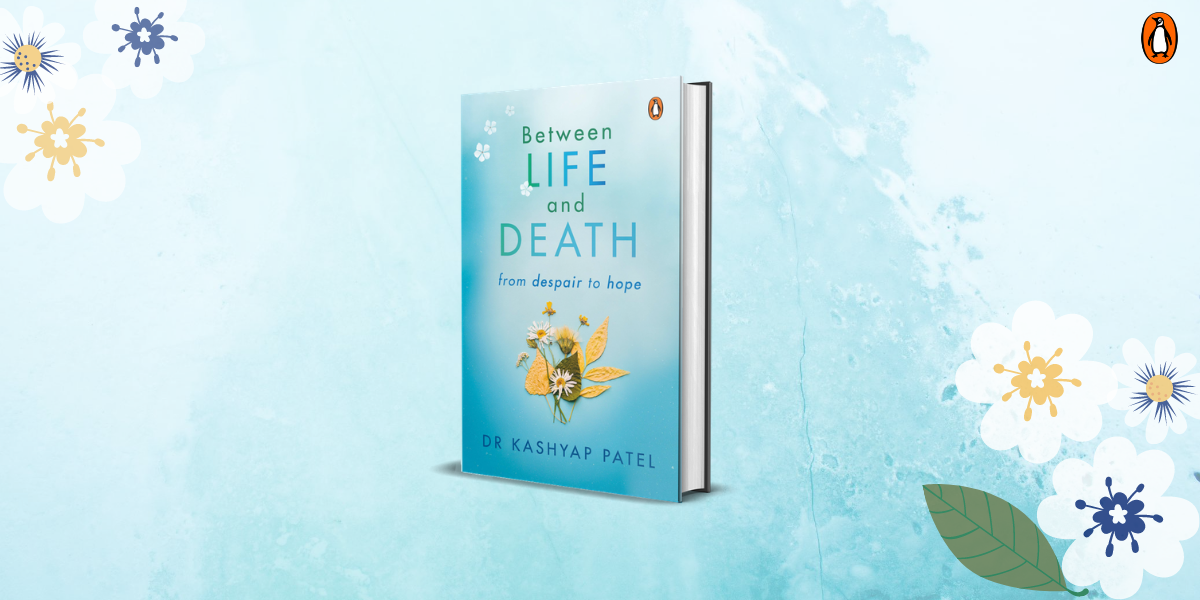
Dr Kashyap Patel is a renowned oncologist in the US who works with terminally ill cancer patients. In his book Between Life and Death, we meet Harry, who, after a life full of adventure, is diagnosed with terminal lung cancer. As he stares death in the face, Harry leans on Dr Patel, an expert in understanding the process of death and dying. His questions and fears are addressed through the stories of many other patients that Dr Patel has treated-from the young and vivacious to those who had already lived full lives, from patients who could barely afford their rent to those who had been wildly successful. What ties these stories together is the single thread of the lessons Harry learns along the way, lessons that ultimately enable him to plan his own exit from the world gracefully-dying without fear. 

Between Life and Death || Dr Kashyap Patel


Here’s a moving excerpt from the book.

**

‘Hi, Kashyap, this is John.’

I was taken aback. John never called me at home or on weekends. My wife and I were getting ready to go see my son Maharshi at Duke University and take him out to dinner. The only time John had called during non-business hours was when his mother, Lily, was dying. Before I could solve the puzzle of his unusual timing, I remembered that I had promised John I would help him celebrate his fifth year of remission from cancer. 

‘Hey, John! So good to hear from you. What’s up?’ I was somewhat apologetic as I had been meaning to call him. ‘I was planning a big party for your victory over your cancer. You chased it away! Let me know some dates, and I’ll start getting things together.’ 

There was awkward silence at the other end. 

‘Are you okay? Is everyone all right in your family? I still recall the funny conversations we had at Maharshi’s send-off to join the Blue Devils at Duke. We had a great time.’ 

‘I’m afraid it’s over, Kashyap,’ John said sombrely.

‘What do you mean?’

‘Kashyap, it’s all over,’ John said again. ‘The beast came back with a vengeance a month after we dropped Maharshi off at Duke.’ 

I could feel my heart pounding at his news. ‘Tell me what happened. I know there are many options out there. Latest therapies, new surgical procedures—we can try many things . . .’ 

‘Sorry to interrupt, but I did some of those promising options, and they did not work. I have, maybe, a few weeks. If I’m lucky, a couple of months. So my docs say. They want to keep trying too. But I feel like I’m done with it all. Time for me to move on.’ 

John sounded resigned to the inevitable. ‘I wanted to call you and let you know I have decided to pack my bags and move on, literally and figuratively, away from Charlotte and beyond this human life. Do you remember my beach house at Ocean Isle, where we sailed and had lots of fun with jet skis?’ 

‘Yes, yes, I loved that place. I would love to retire to a place like that.’ My desire now was to cut short the painful parts of the discussion and keep John focused on happier times. 

‘Well,’ John continued, ‘I’m going to retire from work and life to move down there to prepare for my journey beyond this life. I’ve packed my bags. I’ve given away whatever I could, while holding on to a few sweet and sour memories. I wish I could erase all memories and press Ctrl+Alt+Del to reboot the bad memories and enjoy the rest of the days. Never mind. We have to go through our destiny.’ 

‘You sound like a philosopher, my friend! I never knew you were so good at such metaphors!’ 

‘I was and I wasn’t. Time changes everything, Kashyap. I hope you’ll never have to go through what I have been through in my life. I lost everything. My battle against cancer, my sanity, my house and my sweet wife.’ John paused briefly. ‘Now I am patiently awaiting the Grim Reaper’s arrival for me.’ 

Understandably, he sounded discouraged and sad. I had no words to console him, no strength to infuse any optimism into him, no language to ease his anguish. Finally, I gathered the courage and asked, ‘Where are you, John? Can I come and see you right now?’ 

‘Well, I’m moving down to the beach today. Lots to catch up on. I wish I had the time to catch up with you and put some closure to our lives together.’ 


As John was speaking, Robert Frost’s words were ringing in my ears: 

The woods are lovely, dark and deep And I have promises to keep

And miles to go before I sleep

And miles to go before I sleep. 

‘Listen, Kashyap, I wanted to say goodbye, forever, for sure.’ His voice sounded choked. ‘Please convey my love to Alpa, Maharshi, TJ, Bobby, Charles and Jim.’ 

‘John, I will visit you at the beach as soon as I can.’ 

‘I may not be alive then. See if you can. If not, I sure will wait for you in unknown lands, maybe in heaven. Goodbye for now.’ 

John hung up. 

**

Between Life and Death shows us how we can learn to accept the inevitable with grace and courage.

Quality vs quantity

Do you have numerous friends on social media, but hardly any in real life?
Do you find that your relationships don’t last?

Sustaining quality friendships and bonds have become even more important in today’s times. The warmth and companionship that a good friend can provide is unmatched.

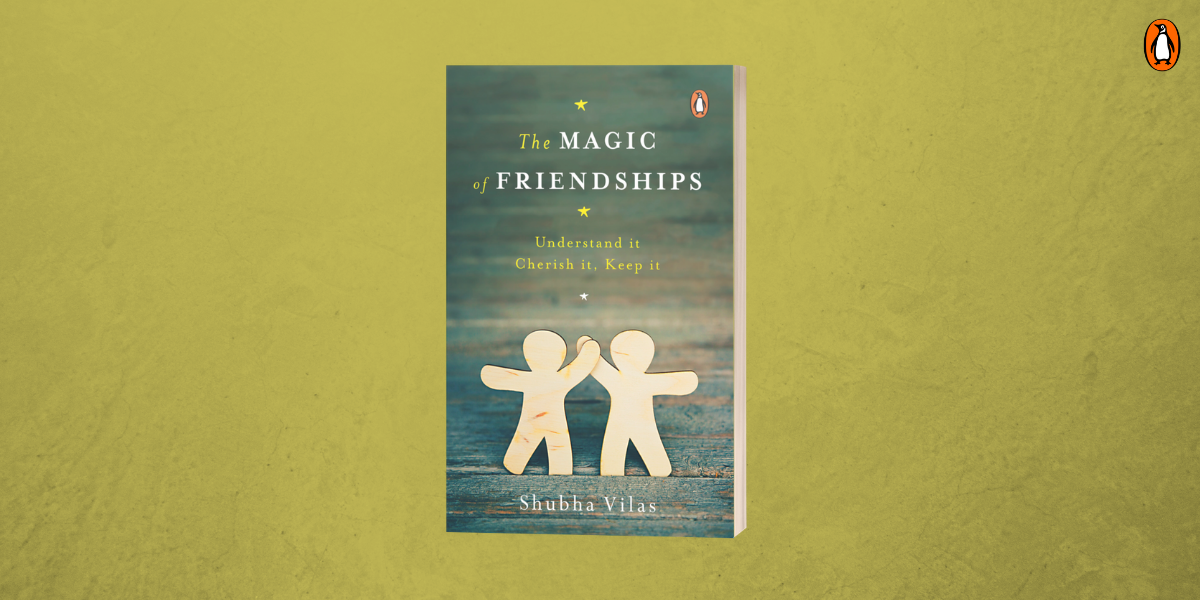
In The Magic of Friendships, Shubha Vilas discusses, in a simple and straight-forward manner, what is missing in our friendships today and the various scenarios that prevent people from making and maintaining good friends. Find an excerpt below that explores the need for quality and strength of the friendship over the number of friends.


**


Friendships Should Bring Joy

Blood relationships are formed when you share DNA, the substance of the body. Friendship is formed when you share the substance of the mind.

Most people today form friendships due to circumstances. These are called ‘circumstantial friendships’. Though some of them may end up becoming genuinely deep bonds, usually, they do not cross the first level of friendship. Now you may think, ‘What is Level 1 of friendship? How many levels does friendship have?’ Let me introduce you to the various levels of friendship before we take this conversation ahead. I will start with an example. Kamla was a smart and talented girl. It was no wonder she was popular in college. She also knew what made people happy: a little bit of kindness and a few words of appreciation. She used these generously in her dealings with everyone, and people were drawn towards her. Her life was busy, what with so many invitations and so many friends wanting her company all the time. She was always surrounded by people. Life felt like it could not have been better or happier for Kamla.


The Magic of Friendships || Shubha Vilas

One day, she woke very excited: they were celebrating Friendship Day in college. She had given a lot of thought to the matter of whom she wanted to give gifts to. She had many friends to choose from and she didn’t want anyone to feel left out. But she couldn’t possibly give gifts to each and every friend she had! So she finally settled on two people she had recently befriended. Of course, she was as excited about receiving gifts as she was about giving them. However, she was not prepared for what happened next.

She sought out both her friends, as she had planned, and gave them their gifts. They laughed and smiled as they chatted, but they did not give anything to her. She waited all day for gifts to come her way. She had imagined friends falling all over her, showering gifts on her. But nothing like that happened. In fact, she was the only girl in class who did not receive a single gift! She was in such shock that she went home in tears. How was it that a girl who was the life of every party did not receive a single present? Did she not smile and hug her friends often enough? Did she not call them regularly to chat with them? Did she not attend their parties when they invited her? All this and yet, no one thought of her as a friend? It was too much for her to bear.

Her family consoled her, but her mother pointed out that perhaps, in her effort to be a friend to everyone, she had not been a true friend to anyone; in an attempt to win a large number of friends, she had undermined the importance of building quality friendships. Kamla understood her mother’s words, but what could she do now?

**

Which of your friends are you remembering today? Do drop them a (virtual) hug in the comments below!

Will love find a way?

Right from childhood, Sahil and Ayra have been very different from each other. While Sahil is careless, carefree, ‘new money’ and ‘the brat’, Ayra is sensitive, reserved, shy and not easy to talk to. And that is probably what attracts Sahil to her. Their story progresses slowly and delicately, and things gradually take on a love-tinged hue.

Find an excerpt below that gives a glimpse into how Sahil and Ayra’s relationship blooms.

**

The earthy smell of damp soil filled the void between us. Semi-drenched, we took shelter in the nearest shop and I gave her the scarlet silk scarf that I had bought from the store earlier that evening—my first ever present to her. ‘Happy birthday!’ I wished her again as she placed the scarf around her neck. It complimented her skin and she looked lovely. Yes, I did curse myself for not being able to give her the pair of earrings, which were waiting for us at the restaurant but this was no way less. Like us, many other people pushed themselves under a tiny shelter and so she had to come closer to me. We spoke in whispers and marvelled at the rain. as the rain clouds started to disperse, people moved away and so did she. after around half an hour later, the rain finally stopped. It was time for us to part ways as I had to go to attend college the next day in another city and she had to get back home in time because that evening she was to be home alone. I offered to arrange a ride for her to go back home but she preferred to take an uber instead after she dropped me at the airport.

‘I hope I didn’t hurt you,’ she revisited the topic one last time as we were about to say goodbye to each other at the airport. There were so many people around going in and out of the place. I didn’t want to go in; I wanted to talk to her all night that night but I knew that we both had to go. It was getting dark already and a sudden worry around her safety crept into my head.

‘No!’ I said shaking my head. I was amazed that she felt the way she did because if someone had to be sorry it had to be me. Meeting her that day and then going away made me realize that I did not want to go back. all this was so new to me—the meeting and the parting all happening at such short notice. I wanted to know her more and ask her everything that she had to tell me. I knew that it was all so sudden and also kind of rushed. But you cannot control your feelings—I felt embarrassed by my feelings despite being aware that they were as genuine as they can be. She had touched my heart with her genuineness and I smiled at her to tell her that it was all good—nothing that she ever said could have hurt me.

To You, With Love || Shravya Bhinder

She gave me a warm smile in return and moved her tongue over her lips while she framed her thoughts into a sentence. In a grave, low voice—the kind that one uses with kids to make them understand very important matters of life—she told me, ‘Sometimes I feel that intelligent people are so full of doubts nowadays while fools are full of themselves and overly confident. If intelligent people do not follow their dreams and only fools do, the world will be a circus for the next generation. Think about it.’ With these words, she gently kissed my right cheek making me the happiest man at the airport at that time and murmured a soft goodbye. She walked away not looking back at me even once as I stood there almost melting under the cold breeze.

She was broken but pure magic. Her understanding of things made life so much simpler. Her presence was what I had been looking for in my life and by then I knew that as well.

When I reached home that night, I decided to work on my book as soon as I was done with the assignment from college. I will have to accept that I did struggle a lot trying to brush aside the memories of the gentle goodbye kiss, which took me by surprise. It was all happening very quickly and I wondered if I was living in some parallel universe. She was too good to be true and we had known each other for only a few weeks, yet it felt as if we had known one another for decades, and if you look at it, we really did. Her entry in my life made something click, like when a key clicks inside a lock and you know that you have found the right one.

**

A beautiful story about how true love triumphs over all odds that life throws its way, To You, With Love is sure to tug at your heartstrings.

Soul-keepers

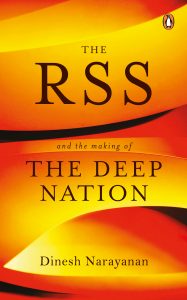
Since its inception in 1925, the RSS has perplexed observers with its organizational skills, military discipline and single-minded quest for influence in all walks of Indian life. Often seen as insidious and banned thrice, the pace of its growth and ideological dominance of the political landscape in the second decade of the millennium have been remarkable.

Delhi-based journalist Dinesh Narayanan is deeply interested in understanding the interplay of politics, society and business and the impact of these on our lives, both as individuals and collectively as a nation.


**

In June 2018, the Ministry of Defence and the Prime Minister’s Office (PMO) discussed a proposal to train a million young men and women annually to prepare them for the purpose of creating a disciplined nationalist force of youth. Titled the National Youth Empowerment Scheme (N-YES), the year-long training was proposed to be an essential qualification for enrolment in the army and paramilitary services. The scheme was aimed at instilling values of discipline, nationalism and self-esteem in young people, the Indian Express reported.  The government called the report sensationalizing but did not deny the meeting in the PMO. It said the meeting had discussed strengthening the National Cadet Corps (NCC) and the National Service Scheme (NSS).

Established in 1948, at the instance of then prime minister, Jawaharlal Nehru, and home minister, Sardar Patel, in the wake of the invasion of Kashmir by Pakistan-supported tribesmen, the NCC’s stated aim is ‘developing character, comradeship, discipline, a secular outlook, the spirit of adventure and ideals of selfless service amongst young citizens . . . and creating a pool of organized, trained and motivated youth with leadership qualities in all walks of life, who will serve the nation regardless of which career they choose’. The NSS was established to provide ‘hands on experience to young students in delivering social service’. These organizations’ values aligned with those of the RSS although the latter’s definition of ‘secular outlook’ is  different. It contends that India is a Hindu nation, and a Hindu by nature and definition can be nothing but secular. Like the NCC, the RSS also considers itself as a reserve force.

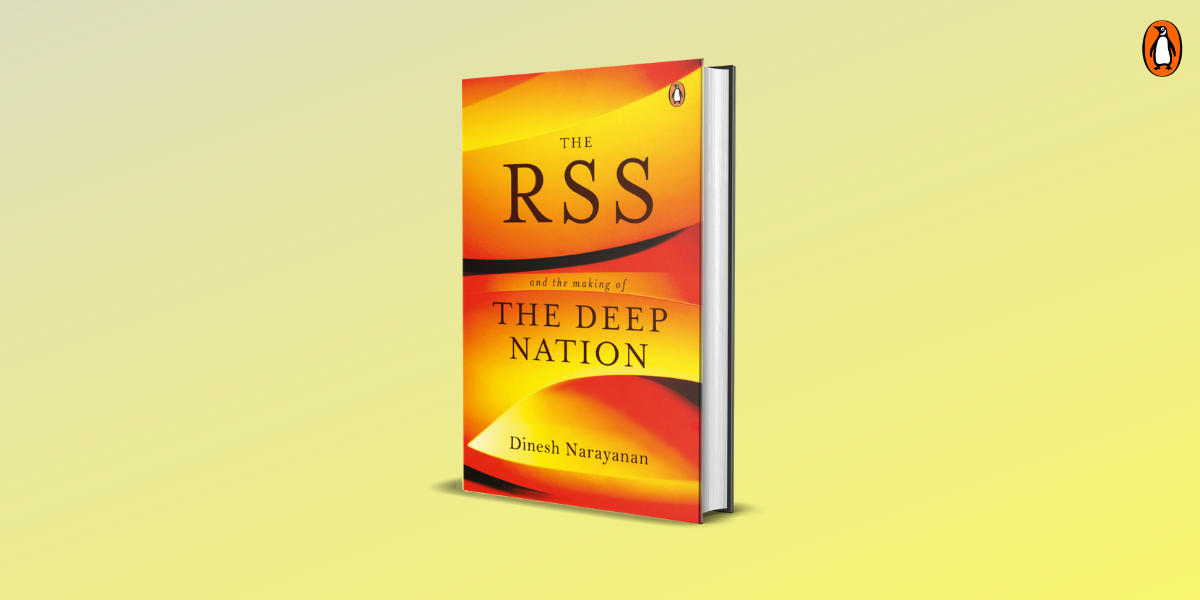
The RSS || Dinesh Narayanan

The N-YES proposal sounded very close to the RSS’s idea of creating a militaristic society. Sarsanghchalak Mohan Bhagwat has claimed that although the RSS was not a military organization, its discipline was like that of the army. While the army may require six to seven months to ready a force, the RSS could raise a trained force of its volunteers in three days.

Organizers of Hindus often rue that they are pusillanimous compared to other communities. V.D. Savarkar, one of the early ideological mentors of the RSS, wrote: ‘At the time of the first inroads of the Muhammadans, the fierce unity of faith, that social cohesion and valorous fervour which made them as a body so irresistible, were qualities in which the Hindus proved woefully wanting.’

**

The RSS is a close and relevant insight into the current socio-political landscape of our country.

error: Content is protected !!