Publish with Us

Follow Penguin

Follow Penguinsters

Follow Penguin Swadesh

What Really is ‘Happily Ever After’?

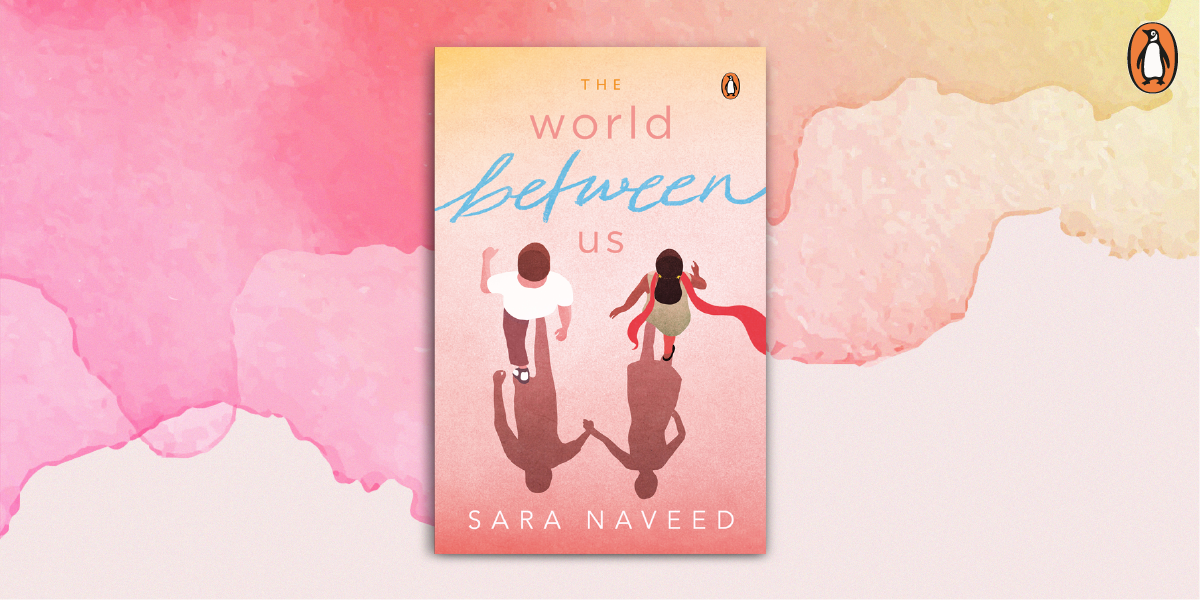
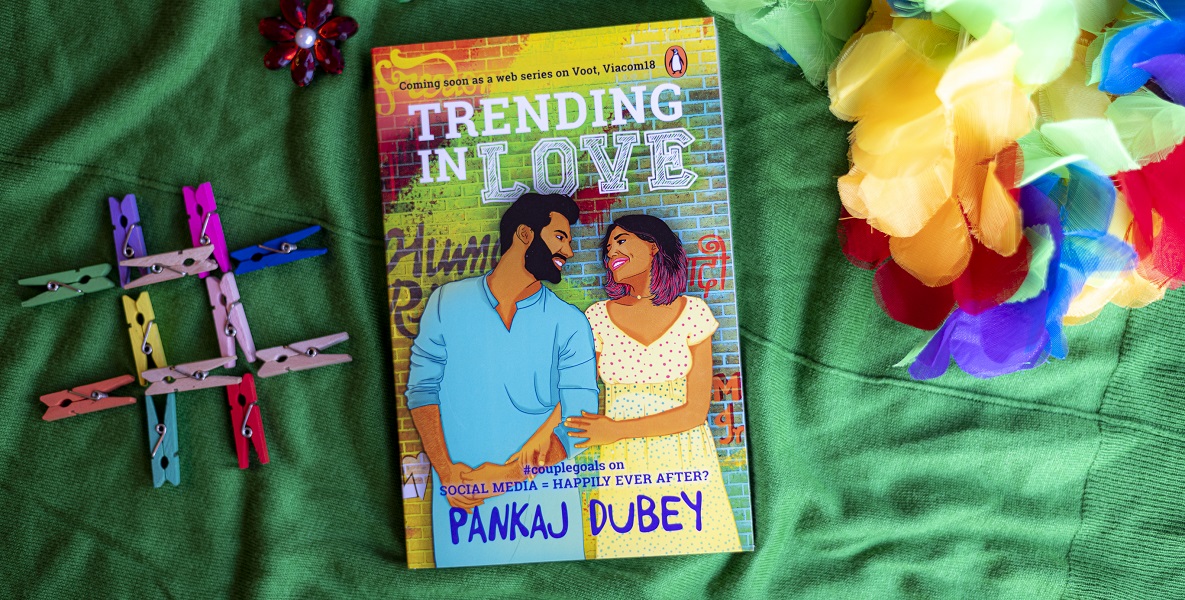
Sanam is a carefree, but headstrong young girl. A spat with a politician’s son pushes her to take up the challenge of becoming an IAS. At the same time, a small-town boy, Aamir, is nudged into studying for the civil services too. Both become rank holders.

They meet at the IAS Training Academy, Mussoorie. They fall in love and all hell breaks loose. Their religious differences come to the fore, things take a dangerous turn and there is an explosion on social media.

Meet the ambitious Sanam in an excerpt from the book below!

Life has a way of changing things around you with blinding speed, and in a way that you have little choice but to adapt to your new circumstances. Even a smiling sunflower basking in happiness could be dragged under the harshest spotlight the very next instance and whacked to answer questions that burn its yellow tongue. Our Sanam became one such bakra.

Not that you would’ve ever thought that possible, seeing the level of comfort and confidence with which she rode.

Two ‘Best Student’ trophies took pride of place on her desk—the one that had been awarded the previous day at college dwarfed the one presented at school four years ago, in sheer size. A figurine of the Laughing Buddha in onyx reclined next to them, guaranteeing both luck and prosperity.

The biggest challenge for Sanam today was to airbrush her Europe trip itinerary in such a way that she could squeeze out the maximum from this much-awaited time out to spend with her friends.

Two days in Lucerne . . . or just a day trip to Jungfrau, with an extra evening in Innsbruck? Sanam shakes her head. There are no easy answers in life!

But wait! Wasn’t there someone whose biggest preoccupation in life was to make the tough easy for her!

‘Dad!’

Sanam sallies forth to seek the one person who with his magic wand could iron out every crease and wrinkle in her way.

‘Dad!’ she calls out. The television news blared louder than her . . . her call drowning in the reporter’s excited outpouring:

‘Eight people have died as thousands of Dalits took to streets across India, protesting a Supreme Court order that, according to them, undermines a law designed to protect lower-caste and backward communities. Train services have been severely affected and main roads are blocked in a number of states . . .’

Grabbing the remote of the gigantic electronic screen that held her dad spellbound, Sanam reduces the volume.

Two pairs of eyes and ears swivel towards her immediately.


A heady mix of dreams and desire, Trending in Love is a story of undying love in the face of our society’s most dangerous beliefs. Are you all set to meet the couple?


The Bane of Each Other’s Existence- An Excerpt from ‘Pataakha’

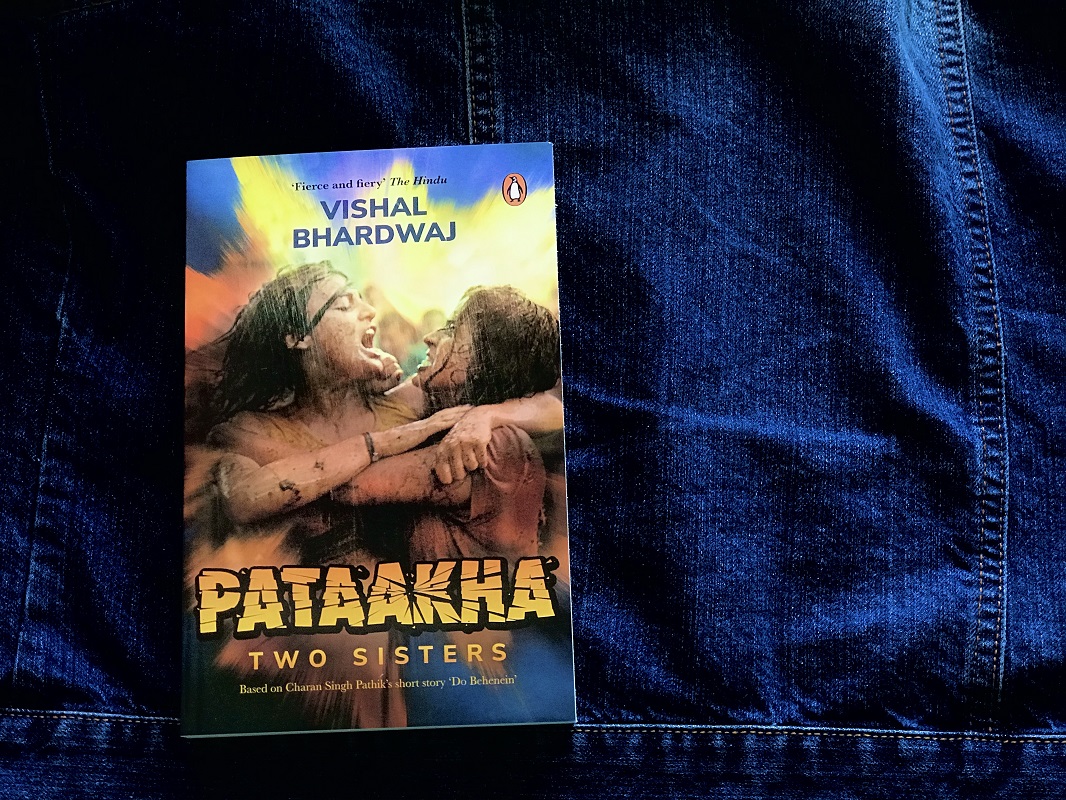
They cannot live with each other, they cannot live without each other. As children, they squabbled all day long. When they were old enough, they married two brothers, and took with them their feuds to their in-laws. Boisterous and fiery pataakhas, sisters Badki and Chhutki are the bane of each other’s existence.

Based on Charan Singh Pathik’s eponymous short story, Vishal Bhardwaj’s adaptation is a hilarious tour de force that obliquely and mischievously takes into its ambit notions of patriarchy and diplomacy between nations. This translation, which includes the novella and the screenplay that the film-maker developed from the short story, not only brings to the reader a rustic, elemental tale rooted in the soil, but also provides a unique glimpse into the art of adapting a literary work into film.

Here’s an excerpt from the book below:

Badki’s husband dropped her back to the village after buying her medicines. Although Badki religiously took her medicines as prescribed, she found no relief even after the stipulated three days. Badki’s husband brought her back to the city. This time he showed her to a specialist who ran a battery of tests.

‘I can’t find anything wrong with these results,’ said the mystified specialist. ‘Let me prescribe some other medicines, however. Come back to me after five days.’

Badki flounced out of the doctor’s cabin in a huff and her embarrassed husband ran after her. She turned on him furiously. ‘What kind of a quack is this guy? He knows nothing. How in the name of the devil will he treat me?’ And with that she returned home, deeply annoyed.

At night, she said to her elder son, ‘Call your cousins in Agra. I want to talk to your maasi.’

The soldier, who had just come home from work, answered, ‘Hello, who is this?’
‘It’s me . . . Golu.’

‘Yes, Golu. Tell me . . . is everything okay?’

‘Everything is fine.’

‘Is budhi-maa okay?’ he said, referring to his mother; all the kids were used to calling their grandmother budhi-maa or ‘old-mother’.

‘Yes, she is. Please give the phone to maasi. Ammi wants to talk to her.’

The soldier handed the phone to Chhutki. ‘A call from home.’

Chhutki snatched the phone. ‘I’m Chhutki. Who is this?’

‘It’s me . . . Badki.’

‘Idiot! Why this urgent need to talk to me?’

‘Did you see the Red Fort and the Taj Mahal?’

‘May you suffer, dari.’

‘I’m already very unwell.’

‘You’ll die suffocating,’ Chhutki retorted, unsympathetically.

‘Did you sit in the aeroplane?’

‘Don’t you dare talk, witch! I’m also unwell. Agra’s water doesn’t suit me.’

‘You left me behind to go gallivanting with your husband. You had to pay, so pay!’

‘You’re a monster from another life, dari!’

‘And acting like a lioness just because you are at a safe distance, you hedgehog! If you have any guts, and are a red-blooded man’s daughter, I dare you to come to the village and face me . . .’ Badki challenged again. ‘Trying to behave like a soldier’s wife from far away!’

‘I’ll be back in two days, dari . . . and then see if I don’t grab your braids, twirl you around and hurl you a hundred yards out! Then you’ll know whether I’m the daughter of a red-blooded man or not!’

The soldier was dumbstruck to see the transformation in his wife. She seemed to have instantly thrown off the wan, sickly air that she had been carrying for days now.

Upon hearing that Chhutki was due to return in two days, Badki immediately switched off her phone.

That night she devoured several rotis and polished off a double helping of milk and rabdi. The next day she tossed out the packet of medicines. She announced, ‘It has been ages since I slept as well as I did last night.’


Will things go too far between Badki and Chhutki? You’ll have to read Pataakha to find out!

A Friendship Set in Stone

In Sarojini’s Mother, Sarojini-Saz-Campbell comes to India to search for her biological mother. Adopted and taken to England at an early age, she has a degree from Cambridge and a mathematician’s brain adept in solving puzzles. Handicapped by a missing shoebox that held her birth papers and the death of her English mother, she has few leads to carry out her mission and scant knowledge of Calcutta, her birthplace.

Through an emotionally intense journey of survival and mental demons – Sarojini discovers how the concept of motherhood is much more nuanced than simple biology.

Chiru Sen, an Elvis lookalike, becomes her guide and confidante on this journey. Find a glimpse of their first meeting in the excerpt below.


It was easy to spot Saz at the Rex. She was sitting by herself near the window. At first glance she looked Indian, but not fully so, given the way she was flapping the menu around awkwardly, troubled by the flies. She nodded when I mentioned Idris and pointed to the seat across from her. Then she gave a start as I grabbed the menu from her hand and swatted a fly that was about to perch on her half-eaten croissant.

‘Did you have to kill it!’ She scowled; eyes fixed on the dead fly.

‘Not unless you wished to share your meal with it!’ Shrugging, I tried to lighten the air.

She didn’t speak to me for a good while, kept her eyes locked on my face. From her puzzled look you could see she wasn’t expecting Idris’s friend to resemble a rock star. ‘Why do you dress like a dead man?’ Saw asked.

Right away I knew she was special and why Suleiman was bent on saving her from being spoilt.

‘The King isn’t dead!’ I joked.

‘Really! If he was alive, his hair would’ve fallen out by now. Would you have shaved your head then?’ Regaining her composure after the fly incident, she returned tot he croissant, taking small bites and chewing thoroughly.

Words came to my lips, but I kept them closed hoping to hear some more from Saz.

‘Or are you hoping he lives on through you? Like we want our parents and grandparents to keep on living forever.’

I wasn’t expecting philosophy straight up, I have to confess, not before we had discussed matters of hygiene at least. Like the condition of her flat and toilet and the owner’s demeanour, whether she had managed to acquire an Indian SIM for her phone, and stayed healthy from her travels.

Finished with her meal, she avoided the Rex’s yellowing napkin and took out a pack of tissues to wipe her lips. Then she cut into my thoughts.

‘It isn’t all bad to imagine we are somebody else. Especially if there is confusion over who we really are.’

She appeared calm, and the words coming out of her mouth were crisp and clear. Much as I was prepared to strike up a Geordie, a Brummie or a Cockney, her English was clearly BBC.

‘Especially if we aren’t sure where we’ve come from, or where we belong?’

It was my turn for lofty talk, and a chance to impress my new friend. ‘Which is…’

‘Which is true for half the people on this planet!’ She took the words right out of my mouth, ‘like the two of us—you a Bengali Elvis and me a brown Saz Campbell from Bromley!’

Smart girl!—I thought. She was playing my role, out of the wings and joining up two strangers with nothing more than a few chosen words.

Did I want a coffee of the cinnamon tea she’d ordered, Saz asked when the waiter came around. I shook my head. It was too early in our friendship to have her buy me refreshments. ‘A croissant perhaps?’ She smiled, pointing to the menu and keeping it out of my reach to avoid another unnecessary killing.

I wasn’t expecting Suleiman’s ‘girl’ to be a stunner, but her smile was quite extraordinary. The eyes are the most revealing, they say, but in her case it was definitely the smile. Dressed Western but Indian in looks, it made her out to be her own person unattached to a place of birth or home address.


The bestselling author of The Japanese Wife is back with an intimate look at human connections, friendships and family.

Saz, Chiru and his band members set off to help Saz look for her birth mother. Will they be successful? Find out in Kunal Basu’s, Sarojini’s Mother!

Perils of the City: Everyday Realities of Urban

So All Is Peace is a story of twin sisters – Layla and Tanya, who were anointed the ‘Starving Sisters’ when they were found to be starving in an upper middle class gated apartment complex in Delhi. Their news became instantly sensational and nobody could figure out what had caused two educated, beautiful women to starve themselves.

Here are some excerpts from Vandana Singh-Lal’s book, So All Is Peace, that highlights the feelings of alienation that the girls experienced while living in a big city.


Living in Delhi, Layla and Tanya were taught to avoid places where women felt vulnerable to inappropriate glances. Tanya remembers,

“With our carefully controlled outings with Mamma and Papa—shopping only at the malls, going to school in the school bus and to college in university-special or U-special as they are called; never going to any religious festival or a fair or any place where there may be crowds and the potential for a stampede (which was almost every place in Delhi)—our experience of groping fingers and lascivious glances was almost non-existent and we entered the territory that came with being a woman in Delhi or perhaps anywhere in India, unprepared, naked and woefully unarmed.”

*

Soon after their parents passed away, Tanya recalls an incident when feelings of loneliness gripped her, and she couldn’t discuss her harrowing experience of sexual assault with anyone around.

“Like sparks flying out of a short-circuit, it spewed out stray thoughts that I had nobody to share with, pieces of conversations that I could not have, bits of passages that nobody was present to hear, tears of sympathetic neighbours that had no place inside me, whispers of curious onlookers that I could not hide away from, the buzzing and sparking and searing and the absolute emptiness of a house where every room was still filled with the paraphernalia of the living but where everything had died.”

*

With Tanya relocating to Andhra Pradesh, Layla started dating Deepak. He often came to their house because,

“In a country where everything takes place outside in the open, where people bathe, eat, pray, sleep, shit, fight, play, kill and die on the road, the only thing that does not and that cannot happen on the road is love; the making of it, the display of it, or even the allusion to it, except in the larger than life film posters. But the posters too remain coy, allegorical, metaphorical. No kissing is allowed on the roads of the country, no holding of hands, no looking for too long into each others’ eyes either. So Layla had to find a place for them to meet and a relationship; a veneer however thin or translucent or unconvincing.”

*

Raman, the award-winning journalist, who has been tasked to write about the ‘Starving Sisters’ had begun to have strong feelings for Tanya.

Although he had spent relatively short time with her in person, he had devoted long hours to her mentally, analyzing the smallest of her gestures and the tiniest of inflictions in her voice ad-infinitum, and something in her had suggested a kind of depth that he was not used to encountering. Now he has been provided with some more clues about what exists behind her vulnerable tarsier eyes, and he is excited. This is a new challenge. And yet. Wouldn’t it have been easier if she did not have this other side? If she could have been enfolded within the narrative that was furiously being woven about her with the help of disparate threads—some real, most imaginary—but all being accorded the same amount of space and value as if the difference between the fake and the real does not matter anymore as long as everything could be fitted into an easily explained, easily propagated, easily digested world.

*

The gated societies of Delhi often have Residents’ Welfare Association (RWA) that have rules for visitors, especially males. When Deepak had moved in with the twins, Layla was regularly pestered by the head of RWA – Mr. Deol, to submit Deepak’s identity documents. Mr. Deol explained,

“We made the rule that we could not allow any overnight male visitor in any all-women household until they handed over his passport copy and gave us in writing what relationship they had with the man. I personally went to tell the sister that and to give them a copy of the notice. You know, the sister had looked at me very strangely then.’”


Pick your copy of So All Is Peace, to read how the shocking events unfolded in the starving sisters’ lives.

Milind Soman Sashays Down Memory Lane in ‘Made In India’

On the twenty-fifth anniversary of ‘Made in India’, the breakout pop music video of the 1990s that made him the nation’s darling across genders and generations, Milind Soman talks about his fascinating life-controversies, relationships, the breaking of vicious habits like smoking, alcohol, rage, and more-in a freewheeling, bare-all memoir titled Made In India.

Looking through the prism of hope and positivity, Milind Soman shares his perspective on life, ‘All we can do is stay curious and treat each new day as a great new adventure, packed with the promise of new experiences that may not always be pleasant but are certainly not to be feared.’

Here is a glimpse of his time with another supermodel who conquered the world of fashion:

But her podium finish at Miss Universe wasn’t the only reason Madhu Sapre made such a huge ripple in the popular consciousness or left such a lasting impression on it. In fact, it was her conscious and unconscious flouting of all kinds of norms, both societal and institutional, that made her a hero. Her unconventional looks—Madhu was too tall, too dark-skinned, too slim and too angular to fit the traditional Indian ideal of feminine beauty— did not deter her, for instance, from participating in a beauty contest (the Femina Miss India pageant). When she won it, she changed the country’s perception—and the perception of legions of dark-skinned girls like herself—of beauty itself.

When she scored an almost-perfect 9.9 out of 10 in the swimsuit round at Miss Universe, the highest ever by an Indian contestant, organizers of the Miss India pageant took note, and included a swimsuit round (horror of horrors— Indian girls baring so much skin!) in the Indian edition. Two years later, this addition, along with several other suggestions made by Madhu after her Miss Universe experience, would see two better-prepared Indian contestants—Sushmita Sen and Aishwarya Rai—clinch both the Miss Universe and Miss World crowns in a landmark outing.

And then, of course, there was her (in)famous response to the final question at the Miss Universe pageant. Unlike most other female models of the time, Madhu had built her statuesque, perfectly toned body on the sports field— she had been a national-level volleyball player before she began to model. And therefore, when she was asked, in the pageant’s title-decider round, ‘What would you do for your country if you were prime minister?’, she answered, unhesitatingly and truthfully, that she would build a world-class sports complex, so that other girls would not have to suffer like she had from having to use inferior sporting facilities. That politically incorrect ‘gaffe’ (the ‘correct’ answer would have been something far more noble-sounding—and completely infeasible—like ‘I will do my best to eradicate poverty’) not only cost her the crown but also brought the whole country’s disdain upon her for being such a clueless hick. But Madhu was unfazed; today, her conviction about what the country really needed is borne out by an entire generation of world-beating Indian sportswomen who have had access to precisely such first-class facilities. Right.

All this elaborate scene-setting was simply to establish that Madhu was already a national celebrity by the time I met her later the same year. People think that we were drawn to each other because of our backgrounds—we were both from Bombay, both Maharashtrian, both sportspeople. The truth is that I fell in love with Madhu Sapre simply because she was such a sweet, unspoilt person, so comfortable in her own skin. Within the fashion fraternity, she was even more of an outlier than I was, in one key aspect—English was not her strong suit; when she did speak it, it was with a thick Marathi accent. In India, and within a certain set, that kind of handicap can be severely debilitating to one’s selfesteem. But even that did not come in the way of the goals Madhu set for herself and, with her strong work ethic and unwavering focus, achieved.

By the time we met, the media had already followed, tracked and love-hated the two of us as individuals. When we became a couple, we were pitched into a whole new orbit of media gaga. Madhu–Milind, in short, spelt Magic.


‘Keep your body in top condition as a matter of course, and you free your mind up to go after what it really wants.’ writes avid sportsman and fitness enthusiast Milind Soman who has lived life on his own terms. Co-authored with bestselling author Roopa Pai, Made In India is an unapologetic recollection of the people and incidents that shaped his life.

8 Reasons Samra Zafar is an Inspiration to ALL Women

Samra Zafar, the author of  A Good Wife, witnessed the perils of an abusive marriage early in her life. Being married at 17, when still in school, Samra longed to study in a university abroad and her husband’s family’s promises to support her aspirations soon turned out to be a trap. As soon as she got married and shifted to Canada, her controlling in-laws and abusive marriage weighed heavily on her with every passing day.

When Samra became pregnant with her second child, she made a few futile attempts at running away from the abusive household. However, the diminishing prospect of studying in a university and her father’s death made her realise that her struggle is hers to fight. Samra is an inspiration to all women battling to keep their head above the murky waters of conventional marriage.

Here are some excerpts from inspiring lessons and incidents from Samra’s fight ––

While playing cricket in school one day, a male student who was officiating took a bad call and dismissed Samra and her friends. This called for a punch in the nose by Samra. Soon she was summoned to the principal’s office…

‘When we finally exited the principal’s office, my head was bowed and my shoulders slumped. All of the satisfaction I’d felt at putting that stupid boy right was overshadowed by feelings of guilt and shame. But as we walked outside into the sunshine, my father smiled and bent his head towards mine. … I had forgotten. If fearfulness was to be resisted, so was meekness. “Way to go,” he whispered in my ear.’

Resisting the sexual passes often made at her, she learned to fight back…

‘Suddenly I felt a hand press against my bottom. I whirled around to face the man who had just caressed me. Without a thought, I slapped him across the face—hard. His mouth dropped open as he raised his hand to his burning cheek. His friends burst out laughing as my sisters and cousins gasped in surprise and delight. They had felt the man’s touch too but had been too scared to do anything.’

With the everyday struggle of living in an abusive household, her biggest learning from her husband was how not to treat people…

‘Ahmed would pick me up in the car at the end of my shift. … One day, I couldn’t wait until we got home to go to the washroom. I ducked into the toilets and got back out as soon as I could, but this tiny delay meant that other employees were already exiting into the parking lot. … Before I could even shut the door, however, Ahmed was interrogating me. “Why were others out before you? Where were you?” I tried to say something but he cut me off. “Who were you talking to? What guy were you flirting with?” “Ahmed, I just stopped to go to the washroom!” “Stop lying to me,” he came back. “You love talking with other men. You’re just a shameless whore.” ’

Samra learned that she was brave and confident to take responsible decisions…

’As I packed my suitcase, I made sure to take every bit of paper- work I had—school report cards, Aisha’s birth certificate and vaccination records, bank account information and anything else I thought I might need in the future. Slipping the papers under my folded clothes, I reminded myself not to give Ahmed any hint that I wanted to remain in Ruwais. A week’s worth of relative peace had not expelled my thoughts of escape.’

Often overcome with suicidal thoughts, Samra realized that her past shouldn’t take away her daughters’ right to pursue their goals and dreams…

‘The image of Sonia[my daughter][ hunkered down in the closet, praying for her mother’s safety, just as I had done as a girl, was shattering. Cherri was right. The only way I could prevent the girls from travelling the same road I had was to stay in their lives.’

She never let go of her dreams…

‘All the times I had walked around my bedroom, pretending that I was moving towards a university provost offering a hand and a diploma. And now it was better than I had ever imagined. As I crossed the stage, I could hear Sonia and Aisha hooting and hollering from the audience. I wished so much that they could have been joined by my mother, my sisters, my father. Papa had always said, “One day, my daughter will be a top student at a top university.” If only he could have seen his prediction come true.’


She chose to do the right thing…

 ‘I had suffered at Ahmed’s hands for nearly a decade, and yet despite the hurt and humiliation I had protected his image with my extended family and his. I had acted the good wife with all his friends. I had done what I was told. But why should I continue to pretend? Why did he deserve this kind of compassion from me? I had been told by the helpline and my counsellors that reporting abuse was important. Now I wanted to do the right thing.’

Despite the troubles that Samra was put through, she realized the power of forgiveness…

‘Through all the years of our marriage, it had been Ahmed who did the talking. I had had no voice in our relationship. But those times were truly past. I was no longer afraid, but what surprised me more, I was no longer angry. All the resentment, the hurt, the humiliation had somehow slipped away. And in its place—a peaceful confidence and the power of forgiveness.’


Even in trying times when life seemed less and less hopeful, Samra took every blow in her stride and kept resisting. Pick your copy of A Good Wife to be inspired by her struggle!

Escaping the Life I Never Chose- An Excerpt from ‘A Good Wife’

At fifteen, Samra Zafar had big dreams for herself. Then with almost no warning, those dreams were pulled away from her when she was suddenly married to a stranger at seventeen and had to leave behind her family in Pakistan to move to Canada.

In the years that followed she suffered her husband’s emotional and physical abuse that left her feeling isolated, humiliated and assaulted. Desperate to get out, she hatched an escape plan for herself and her two daughters.

A Good Wife tells her inspiring story.

Read an excerpt from the book below:

I wake to the crackling of bird calls outside my bedroom window, the anemic light of a Canadian spring morning seeping through the curtains. I lie very still, listening. The house is quiet. My in-laws are in the bedroom down the hall. My husband sleeps ten feet below me, in the den. My infant daughter slumbers peacefully beside me. At first, I’m surprised to see her. Why didn’t I put her in her crib in the room next door last night? Why is she still here with me? And then I remember. I rub a painful spot on my upper chest. My heart aches almost every morning, but today my ribs are sore as well.

As my drowsiness falls away, another feeling works its way through my body. A frayed, rippling tension, a growing brittleness: anticipation and fear. At any moment, the cold brick house will come alive, and I will be thrown together with the rest of the inhabitants. If all goes well, Ahmed will take his lunch and walk wordlessly out the front door, and I will start on a long, dull day, locked here in the house with his mother and my daughter. The hours will creep by, broken only by chores, television, empty chat.

But perhaps it won’t be dull. Yesterday was not dull. Or at least it didn’t end that way. And I have come to understand that in this new world of mine, anything other than grey monotony is scary. Anything else is dangerous.

My daughter shifts. I can hear my mother-in-law’s slippers as she begins to pad about her room. It is time for me to go in to say salaam. It is time for me to head downstairs with the baby. It is time for me to make my husband’s lunch. It is time for me to start my dreary routine.

As I rise, I realize that I am saying a little prayer. I am praying for luck. I am praying for another dull day.


Intrigued about what happens next? You will have to read  A Good Wife  to find out!

The Generous Nawab- An Excerpt from ‘Bahawalpur’

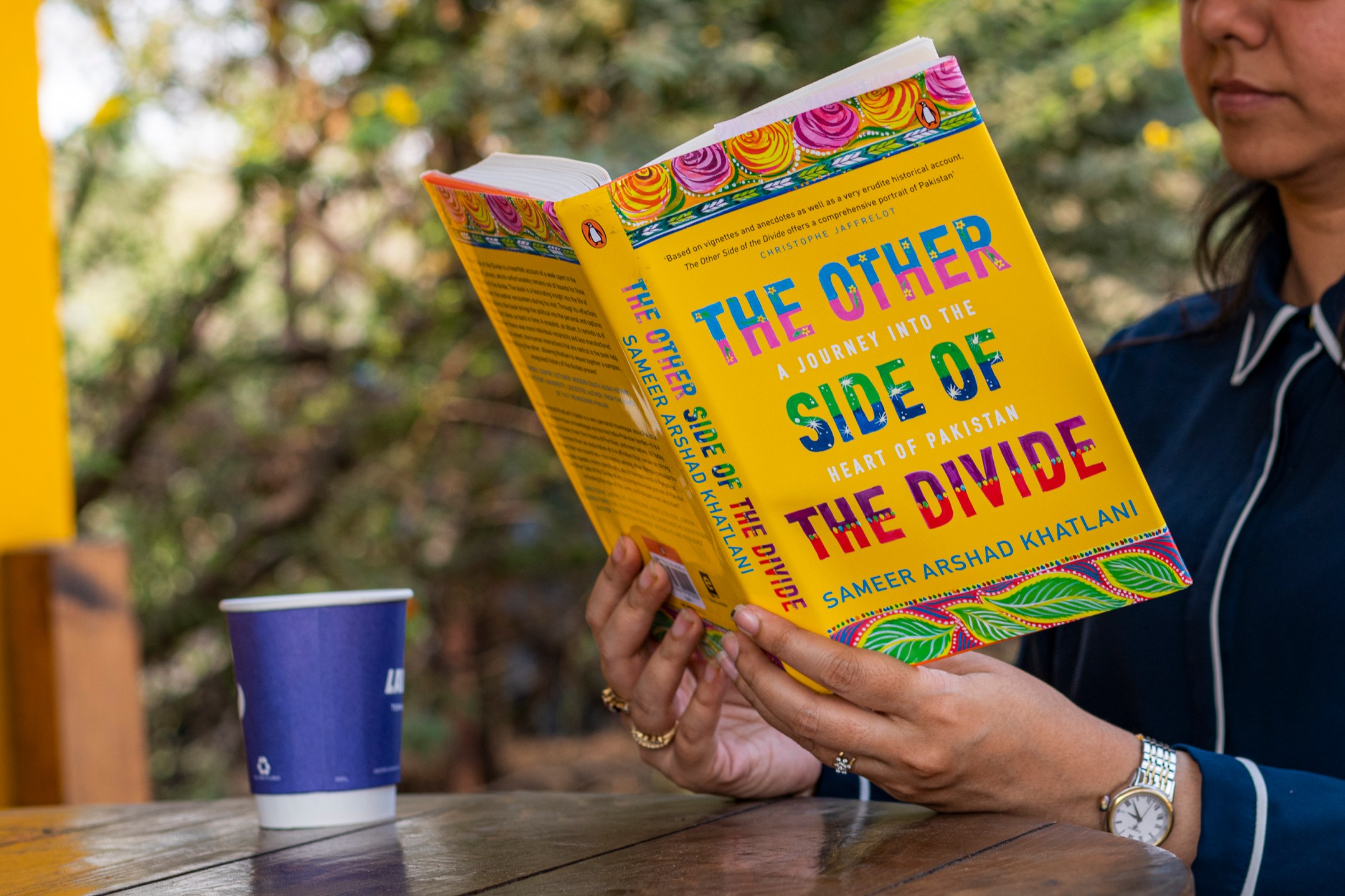
In the seventy or so years since Independence, much less has been written about the Princely States which acceded to Pakistan than those that remained in India. The name of the once great State of Bahawalpur is no longer remembered among its well-mapped peers over the border in Rajasthan.

Bahwalpur by Anabel Loyd is a record of the conversations between the author and Salahuddin Abbasi who reminisces about his family and sheds light to stories of Bahawalpur’s princes from old records, letters, and the accounts of British travellers and civil servants. The following is an intriguing excerpt from the book:

Nawab Bahawal Khan had ruled for long enough to see his enemies fail, fall or die off. He had avoided confrontation with Ranjit Singh through judicious advice to the Sikh leader during his siege of Multan, being rewarded with gifts of an elephant and a shawl, added to several instalments of ‘friendly messages’.


Bahawal Khan’s most inveterate enemy, the makhdoom of Uch, died and was succeeded by his son, Makhdoom Shams ud-din and his brother who was recognized by the nawab when he rode to Uch in person to perform the ceremony of placing the ‘Turban of Recognition’ on his head. In 1808, Mountstuart Elphinstone came to Bahawalpur en route to Kabul on the exploratory journey he described  in An Account of The Kingdom of Caubul and Its Dependencies in Persia, Tartary and India.

The Treaty of Tilsit in 1807 between Napoleon and Tsar Alexander I had raised, for the first time, the fear of overland invasion of India by Russia in alliance with the French bogeyman, and the governor general, Lord Minto, sent Elphinstone to Afghanistan, with other envoys to Persia and to Ranjit Singh, to gain promises of cooperation in the event of French incursions.

It is unsurprising that Elphinstone was impressed by Bahawal Khan. He must have been impressive to have successfully maneuvered a path through the hurdles, both of the tribal enmities of his times and greater invading powers. Before ‘we enter on the narrative of the passage of an embassy from the British Government’, it is too irresistible not to digress to Shahamet Ali’s rose-tinted description of England, where the roads of London are ‘paved with stones of various colours’, the town always kept in ‘clean order’ while the suburbs ‘are said to be covered with delightful gardens and noble buildings’ and ‘it is a fixed rule with every citizen, rich or poor, to whitewash his dwelling once a year’. That cloudless image might have surprised those breathing in the Great Stink and living through the cholera pandemic of the time.

Elphinstone described Bahawal Khan when he first met him on 1 December 1808 as a ‘plain, open, pleasant man, about forty-five or fifty years of age, he had on white tunic, with small gold buttons, over which was a white mantle of a very rich and beautiful gold brocade and over it a loongee. About six of his attendants sat; the rest stood round and were all well dressed and respectable’. The following day, ‘the Khan received us in a handsome room with attic windows and ‘conversed freely on all subjects’. He ‘praised the King of Caubul’ but had never seen him and ‘please God he never would’. He was a ‘desert dweller and feared the snows of Caubul’. Instead, ‘he could live in his desert, hunt his deer, and he had no desire to follow courts’. The nawab then demonstrated the skills of his people with a ‘curious clock’ made in Bahawalpur and gave Elphinstone parting gifts of greyhounds, two horses, ‘one with gold and one with enameled trappings’ and a very beautiful matchlock ‘with a powder flask in the English fashion’.

Elphinstone added, the nawab ‘has been liberal and kind to us without over-civility or ceremony’, with ‘an appearance of sincerity in everything he said’ and had shown ‘a spirit of kindness and hospitality which could not be surpassed’. Elphinstone was astonished that, unlike other princes he had encountered, they did not have to ‘struggle against the rapacity of the Nawab’, who, on the contrary, ‘would take nothing without negotiation’ and was himself almost embarrassingly generous in his gifts, sending a profusion of sweetmeats, flour, nuts and raisins, ‘a vast number of baskets of oranges’ and, most difficult to accept, five bags of rupees to be divided amongst the servants. 

It appears the ambassador and the nawab were pleased with each other—certainly this meeting and the first treaty of friendship between Bahawalpur and the British was the start of a remarkably close friendship.


Anyone with a penchant for history and politics would definitely consider the book, Bahawalpur an insightful read, shedding light on the troubled history of Pakistan which has clouded a clear picture of it and shrouded its component parts. Give it a read tell us what you think!


So Many Gods! Richard Dawkins’ Quest into Faith and Spirituality

Author Richard Dawkins was fifteen when he stopped believing in God. Deeply impressed by the beauty and complexity of living things, he felt certain they must have had a designer. Learning about evolution changed his mind.

In Outgrowing God, Dawkins, as a bestselling science communicator, gives young and old readers the same opportunity to rethink the big questions.

Find an excerpt from the book below, where he introduces the historic and current frameworks of god and religion within which we need to rethink questions of faith, religion, and spirituality.


Do you believe in God?

Which god?

Thousands of gods have been worshipped throughout the world, throughout history. Polytheists believe in lots of gods all at the same time (theos is Greek for ‘god’ and poly is Greek for ‘many’). Wotan (or Odin) was the chief god of the Vikings. Other Viking gods were Baldr (god of beauty), Thor (the thunder god with his mighty hammer) and his daughter Throd. There were goddesses like Snotra (goddess of wisdom), Frigg (goddess of motherhood) and Ran (goddess of the sea).

The ancient Greeks and Romans were also polytheistic. Their gods, like the Viking ones, were very human-like, with powerful human lusts and emotions. The twelve Greek gods and goddesses are often paired with Roman equivalents who were thought to do the same jobs, such as Zeus (Roman Jupiter), king of the gods, with his thuderbolts; Hera, his wife (Juno); Poseidon (Neptune), god of the sea; Aphrodite (Venus), goddess of love; Hermes (Mercury), messenger of the gods, who flew on winged sandals; Dionysos (Bacchus), god of wine. Of the major religions that survive today, Hinduism is also polytheistic, with thousands of gods.

Countless Greeks and Romans thought their gods were real – prayed to them, sacrificed animals to them, thanked them for good fortune and blamed them when things went wrong. How do we know those ancient people weren’t right? Why does nobody believe in Zeus any more? We can’t know for sure, but most of us are confident enough to say we are ‘atheists’ with respect to those old gods (a ‘theist’ is somebody who believes in god(s) and an ‘atheist’ – a-theist, the ‘a’ meaning ‘not’ – is someone who doesn’t). Romans at one time said the early Christians were atheists because they didn’t believe in Jupiter or Neptune or any of that crowd. Nowadays we use the word for people who don’t believe in any gods at all.


Outgrowing God asks pertinent and highly relevant questions on life and human connection. Concise and provocative, it is a crucial guide to thinking for yourself.

Standing By One’s Principles- An Excerpt from ‘Excellence Has No Borders’

Have you ever hit a point so low where hope was your only option? Dr B.S. Ajaikumar did too. He lost twenty million dollars and he almost lost his son. He hit a point where he stopped feeling that life was worth living but what brought him back was his zeal to never give up. His innate tendency to test the limits of his mental endurance. His tenacity for his principles. His family. Himself.

Meet Dr. Ajai Kumar in Excellence Has No Borders

—-

As a young adult, I was not immune to these social upheavals. With my tendency to stand up for the underdog, my internal volcano seemed to bubble up at the slightest hint of injustice. At St John’s, I was known to be an unapologetic leftist who stood for values. I was just over sixteen years old, the youngest in my class. I do understand that sixteen years was very young to get into medical college. Fortunately, I was able to get several double promotions in my primary and middle school due to new educational rules. I used to sit in the second bench and was very nervous, since it was my first year at university. All the other students in my class were adults, street-smart and hostel boarders.


One incident that transpired among the hallowed portals of St John’s changed things considerably. The physics teacher had a bit of an accent and used to pronounce ‘cc’ (cubic centimetres) as ‘sheeshee’. One day, unable to control myself, I ended up covering my mouth and laughing. Face contorted with anger, the lecturer strode up to me.


‘Take your books and get out!’


I sat there in silence, without moving.


‘I said take your books and get out,’ he repeated.


Finally I found my voice. ‘I’ve done nothing wrong. When I’m not guilty, I won’t go out.’


Anger turning to mortification, the lecturer blurted, ‘I will report you to the Father, who is the head of the department of physics!’


‘Please do.’ I felt strangely calm.


I was reported to the head of the department and summoned by the Father. This was a matter of principle for me. I was ready to stand up for it. 


I told the principal, ‘Father, I will not leave the classroom when I’ve done nothing wrong.’


I was able to hold my ground, and no action was taken against me. My older classmates began to treat me with respect after this incident. It crystallized for me the importance of standing like a rock by one’s principles. Coupled with my internal volcano of tenacity and my hunger for challenges, this gave my emerging personality multiple dimensions. I would no longer stand with my head bowed when injustice slapped me in the face. I would not take indignities lying down. I would not shy away from taking someone on when they threw down the gauntlet to me. In the coming years, it would be one or more of this triad of personality traits that would come to the fore when it came to life decisions or whenever I found myself at a crossroads.


Dr. Ajaikumar has always stood for what he believes in and has had a tactful, problem solving approach to every hurdle that has stood between him and his goals. His book reflects the strength he’s had to gather to face every hurdle that has been thrown at him.

Read more about him and his experiences in his book, Excellence Has No Borders.

error: Content is protected !!