Publish with Us

Follow Penguin

Follow Penguinsters

Follow Penguin Swadesh

What it take to Build a Happy Family

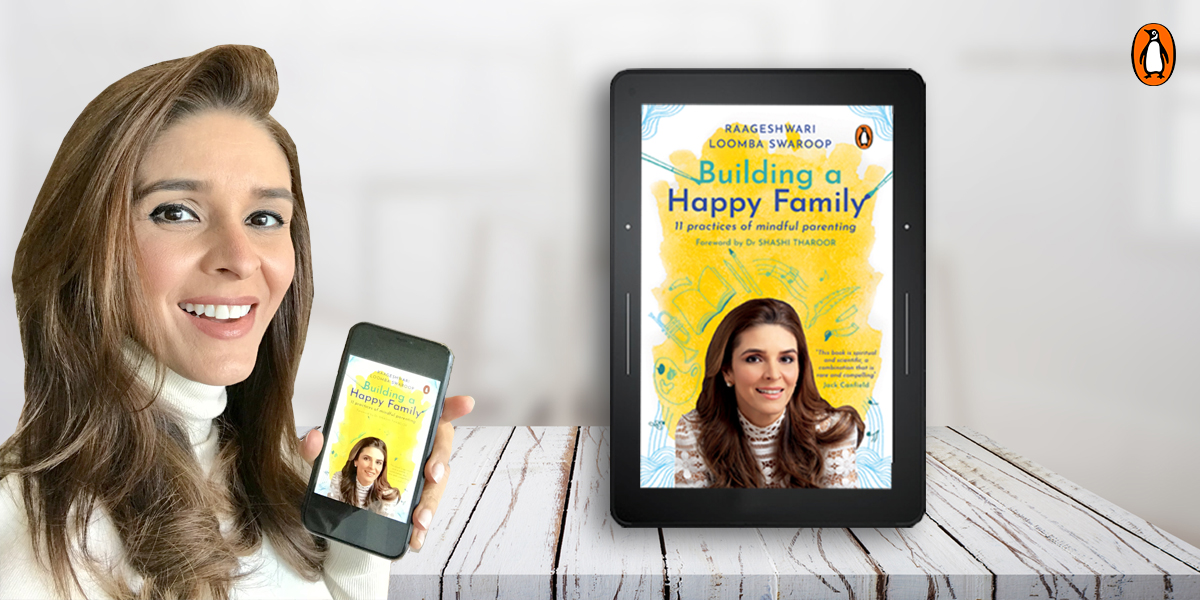
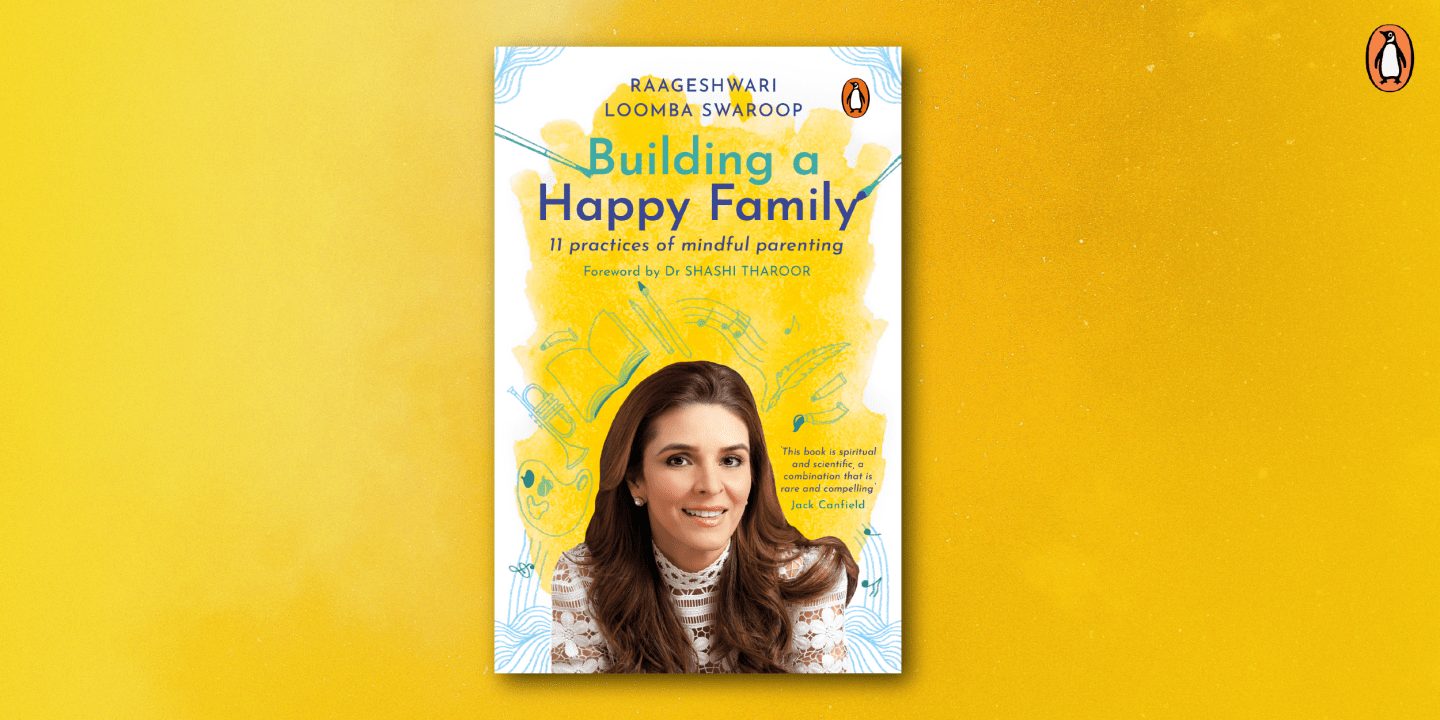
You can’t have a happy family unless you’re happy yourself. Raageshwari Loomba, an award-winning speaker on mindfulness, shows us how to create an excellent atmosphere for the entire family to thrive in. Her relateable style is coupled with real-life examples, such as that of Albert Einstein, who couldn’t speak till the age of four and was a poor student. His parents encouraged him with love and allowed him to learn at his own pace. This, she shows, is the way to bring up your own little genius.
Building a Happy Family brings to you 11 simple mindfulness philosophies that will enrich and strengthen your and your children’s inner world. Through scientific research and her own intimate story of heartbreak and facial paralysis, Raageshwari emphasises how our thoughts can manifest further struggles or glory, and how teaching children early that our inner world attracts our outer world is key. Parents are taught to encourage their children’s original expressions, creativity and joy, and not lose sight of it in their own lives too. This is the secret to a happy family.


Read an excerpt from the book below:


Why Mindfulness?


There are many inner-work philosophies, just as there are many meditation techniques. To counter anxiety, restlessness, anger, stress and depression, we can turn to the following:
  • The zen method, wherein we build our centre by focusing only on one object.
  • The mantra method, wherein we build our awareness by consistent repetition of a mantra or a shloka.
  •  The t’ai chi, yoga or qigong method, wherein we build our alertness with slow body movements to align with our inner feelings and thoughts.
However, mindfulness is particularly brilliant for parents because it gently reminds us to be present, to live to the fullest now, to not be concerned about getting to the next place. By being present now, we give children what they crave— our complete attention. Not to mention, we learn to be happy, we learn to be grateful and we alleviate stress and anxiety. In short, we become like children.
Santhosh Babu, founder, OD Alternatives, and mindfulness coach, says, ‘Psychologists, whichever branch of psychology they believe or practice, collectively agree that our behavioural patterns are shaped at an early stage of our lives. The most important influence for most of us at an early stage is the influence of our parents. Thus, our parenting styles, our behaviour towards children and the way we bring them up become the most influencing factors in who they end up becoming. Here, the importance of mindful parenting comes into the picture. Are we projecting our unfulfilled dreams on to our children? The way we react or act in front of our children could shape their world view and belief system. So how can we be the role models who allow healthy mental development in our children while we live in a world of distractions? Mindfulness philosophy and mindfulness techniques help us to be fully present for our children which in turn develop empathy and emotional resilience in them.’
Why is mindfulness important?
Do you wake up exhausted, thinking, ‘What needs to be done today?’ Wake up spouse, wake up children, pack the tiffin, get to school, get to work, answer emails, answer texts and oh! We are hosting a dinner tonight!’ Do you keep thinking about what needs to be done next? Do you always seem to be in a rush? All these are classic symptoms that you are never fully HERE and are constantly anxious and stressed about the next action on the to-do list.  You are overwhelmed and constantly snapping. You get irritated and provoked by family, friends and especially your children. Rather than listening and being still for a while, you react impulsively. Then you keep thinking about it and regretting your outburst.  The same pattern of anxiety, restlessness, worry and anger, followed by regret, continues in your life. Hence, mindfulness is important.  With mindfulness, we can train ourselves to slow down so that we can achieve much more. We can learn to enjoy this moment NOW and savour its memories.  Our family, friends and colleagues will then see that we can listen with love and reason with patience. Our relationships will flourish. With a few simple changes and techniques, you will see how your life is in your control again. You will have patience, presence, more focus, less anger and more insight.  The fact that you are able to focus on the present moment will take away a great deal of stress and anxiety from your life.
But what does my mindfulness have to do with the mindfulness of my children?
The philosophy of mindfulness is all about not being judgemental and being present. Today, parenting is the opposite of mindfulness; it is all about judging and rushing around. Children are naturally mindful as they are not culturebound, have zero judgemental qualities, zero prejudices, are happy without a reason and not concerned about getting to the next destination.They are born with the gift to understand that our inner world creates our external world.  Children are naturally curious and filled with wonder. They cheer up quickly and forgive and forget easily. Their desires are simpler; they wish to touch a pebble or wave at another kid passing by or simply play in the rain. They love being present in the NOW and are not even aware of the great gift they possess. Children lose this gift because of conditioning and well-meaning adults. Adults are the ones rushing them and urging them to get to the next moment or next destination. For example, a parent taking their child to a birthday party will say, ‘We don’t have time, get into the car. We don’t have much time, so we must reach soon.’ Once they are at the party, the parent says, ‘Eat the cake quickly and take the balloons if you want to. We don’t have time and we have to leave now to avoid the terrible traffic.’ And before we know it, the child has turned out just like them. Adults unknowingly train children to believe that happiness is a moving target and life is all about reaching the next destination. Hence, it’s ironic and amusing to see adults trying to achieve mindfulness, a quality that we once possessed in abundance as kids and were forced to let go of. Sadly, this terrible cycle continues with our own children. So, as parents, it is vital that we learn how to be mindful all over again so that we can allow our children to grow into mindful individuals.
How can I be mindful when a child irritates me?
Sometimes, when our children take too long to get ready and we have chores to finish, or when they are rude and angry, we immediately want to clarify who’s boss and fire back promptly. But do remember, our anger can never defuse a child’s anger, only calmness can. We are all sensitive to vibrations, and children are brilliant at sensing ours. On an external level, when children see us acting stressed, angry and restless, they internalize this behaviour and present it back to us in their times of distress. Let us remind ourselves that asking someone to hurry up too many times only triggers and escalates stress and anger. Hence, children reflect this behaviour. It is just like a boss hovering around us, waiting for us to finish a task. ‘Hurry up, I said. Hurry up, will you? Are you listening to me? Goodness, how slow are you?’ I wonder how well we would do a task under such circumstances. Just like an irate and hyper individual comes across as weak, so too does an irate and hyper parent. Stress and anger are a chain reaction, just like peace, patience and mindfulness.  An angry parent asking a child to be calm will not work for long. A parent who rarely gives focused attention to a child cannot expect the child to communicate effectively with them in the future. Hence, can you be mindful of your emotions the next time your child upsets you? It is in your control to stop the vicious cycle of helplessness and start the cycle of mindfulness. Just be still, sip some water and breathe. Reframe your thinking, focus on something that brings you joy. Now observe the same child; you will notice a shift in their behaviour too.  When we are at ease and show confidence, our children take us far more seriously and naturally reflect that. This book is about training you to take the onus on yourself in every situation. This book is about you accepting the reality that parenting is all about bringing up the parent and not the child. Once you master this art, you will magically navigate every situation. This is science. This is the magic of mindfulness!

Get your copy of Building a Happy Family here 🙂
A Soldier’s Sacrifice: A glimpse into Captain Vijyant Thapar’s life

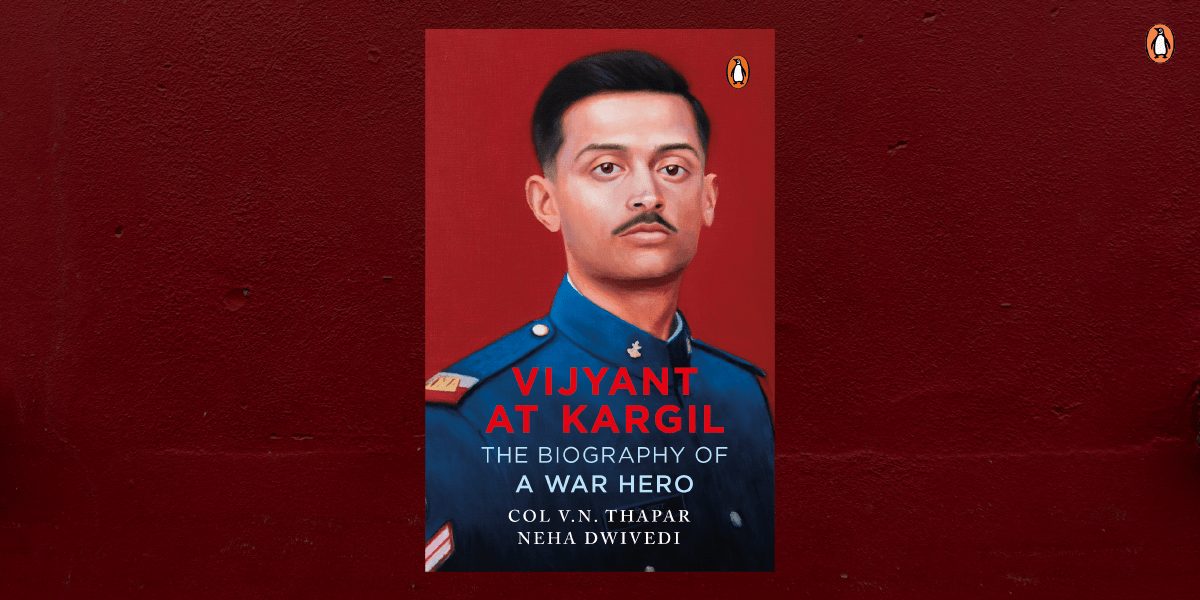
Captain Vijyant Thapar was twenty-two when he was martyred in the Kargil War, having fought bravely in the crucial battles of Tololing and Knoll. A fourth-generation army officer, Vijyant dreamt of serving his country even as a young boy. In this first-ever biography, titled Vijyant at Kargil, we learn about his journey to join the Indian Military Academy and the experiences that shaped him into a fine officer.

Told by his father, Col. V.N. Thapar and Neha Dwivedi, a martyr’s daughter herself, the anecdotes from his family and close friends come alive, and we have a chance to know the exceptional young man that Vijyant was. His inspiring story provides a rare glimpse into the heart of a brave soldier. His legacy stays alive through these fond memories and his service to the country.

Here is an excerpt from the prologue of the book that talks about his last few moments, and the reaction of his friends and family as they received the news of his martyr.


28 June 1999

Finally, the time had come. Men with faces covered with camouflage paint, with the white of their eyeballs visible in the dark, started moving forward silently like ghosts, clutching their AKs tightly. Muscles taut, jaws clenched, they advanced towards the crest. Robin raised his right arm and everyone froze as a shell burst in the sky some distance away, followed by a rattle of fire from the hill about 800 metres ahead. It was still dark but soon the almost full moon would rise and light up the entire area.

He looked at his sturdy G-Shock watch, which read 1945 hours, 28 June. In a few minutes, they would reach their destination. Around fifteen minutes ago, at 1930 hours, heavy artillery fire had started. He did not want to wait a minute longer than required, now that he was so close to the enemy. Suddenly, the machine guns opened up behind him. It was time. They held their breath in anticipation for the signal to move, their eyes fixed on the silhouette of the hill in front, from where flashes of fire were visible. And then it happened. A shell from the enemy guns landed in their midst.

29 June 1999

All of India was in the middle of Operation Vijay. The Indian Army was fighting almost impossible battles on the extremely tough and unforgiving heights of Drass and Kargil. After weeks of bloody struggle, the tables had turned. News of spectacular victories and stories of unbelievable courage of the valiant men in uniform were flooding the news channels, newspapers and magazines. While some just read the news with their morning cup of tea, others extended support to the officers and jawans by way of inspirational letters, cards and other gestures. This was the first time the country was privy to inside news from the war zone, thanks to the various reporters, who brought it right into their living rooms.

On this day, the country was waking up to the glorious news of another important feature, namely Knoll, being captured, ever so bravely, by the officers and men of the ‘Ever-Victorious’ 2 Rajputana Rifles, one of the most prestigious units of the Indian Army. But some families were destined to face the flip side of the victory. The painful side of war.

They woke up to the much-awaited call from the front. However, this time, they didn’t hear the voice they longed for.

A brother had no strength left to hold the receiver of the phone after hearing about his only sibling’s brave sacrifice.

A mother had her heart torn out as she was summoned home in the middle of her working day.

A father, who was always planning and building the brightest future for his son, bit by bit, had his dreams shattered into more pieces than he could count.

A young girl, who was busy counting the days until she would meet the handsome young officer her heart belonged to, was left abandoned.

A little child, who had perhaps learnt to smile again because of her angel in uniform, would never see his face again.

A friend, who was oceans away, had just dreamt of his best friend and woken up with a start, oblivious to what the phone call that would come barely a few minutes later had in store.

To the world he was but a man, but to many others he was the world.

The ‘world’, however, did come together, as the people of Noida made their way to Col Virender Thapar’s house on a hot Tuesday afternoon when they learnt of the brave sacrifice of a son of their own. The young boy—who had run on the streets and exercised in the parks till a couple of years ago, who had donned the smart uniform for barely six months after years of preparation—had breathed his last in the highest tradition of the Indian Army. They couldn’t wait to get a glimpse of the courageous son of their soil. The reaction the sacrifice of this young and valiant officer drew from an entire city was the first of its kind. Until that day, no other event had united the people of the city in such a manner. Men, women and children alike, with an overwhelming feeling of love and respect, came together in large numbers to pay respect to the fallen hero and extend their heartfelt support to the bereaved family. The brave soldier deserved the utmost respect from his country, and every person present was determined to give him just that.

Thousands of people surrounded his house and waited for him to arrive, wrapped in the tricolour. His family and friends tried to hold their own. Their eyes were wet and their hearts heavy despite being full of pride. No one said it aloud, but each one of them silently wished: ‘I wish it isn’t our Robin. Not our sweet Robin.’


Get to know the exceptional young man, and brave soldier, Captain Vijyant Thapar by reading his biography, Vijyant at Kargil. Order the e-book here.

Mass Entrepreneurship as a Solution to the Jobs Problem

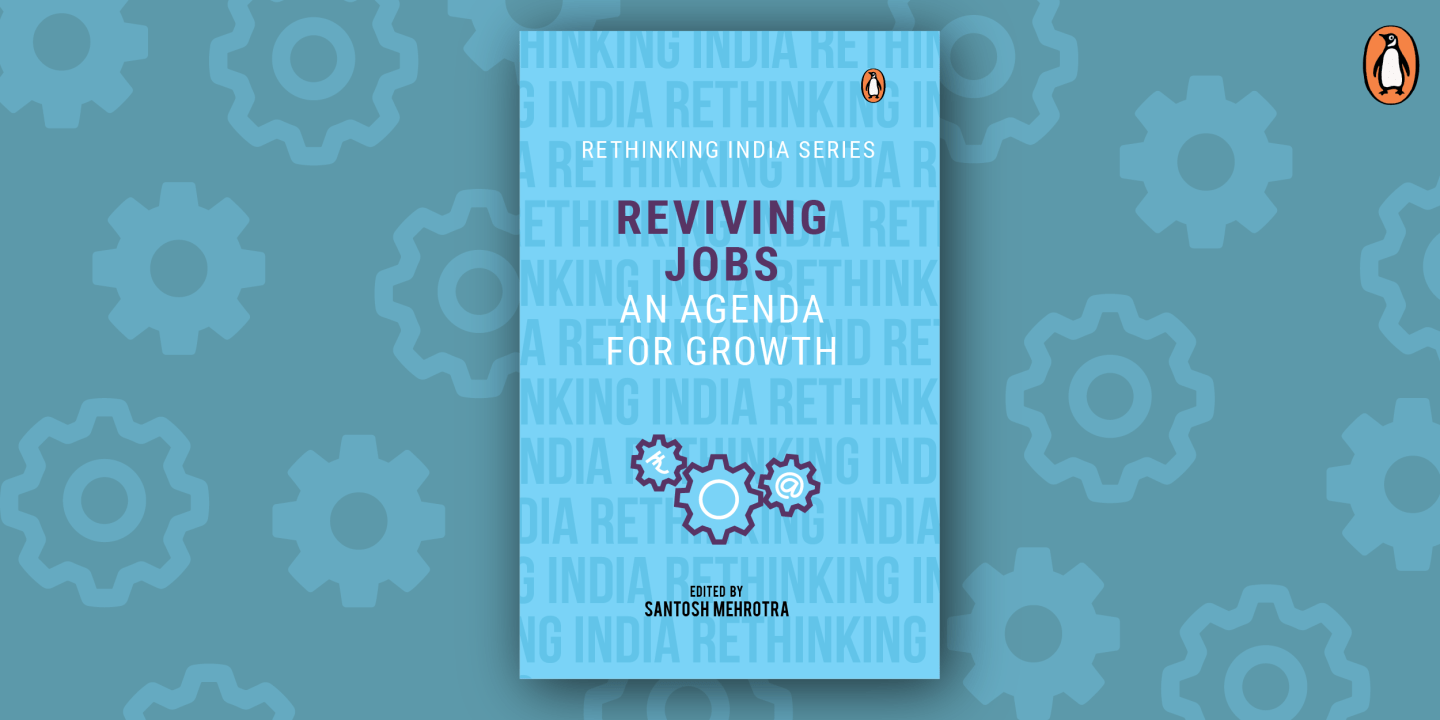
Since 2012, the number of youth entrants into the labour force has increased at an accelerating pace, while the number of jobs created has decreased. This situation might become graver between 2020 and 2030 as the labour force swells further. Reviving Jobs, the third volume in the Rethinking India series, edited by Santosh Mehrotra, offers suggestions on how India can make the best use of the remaining period of its demographic dividend-any failure to do so will cause millions to suffer in poverty for decades to come.

In this excerpt, Sandhya Thukaram and Madan Padaki talk about mass entrepreneurship as a solution to the jobs problem.


India is a land of radical and substantive change. At any point of time, a revolution is underway. These revolutions are silent and not always evident, but nevertheless on the cusp of influencing change. This constant change affects people on a scale that is unimaginable elsewhere. There is a massive change silently transforming our economy, and this may well set the national discourse around growth and employment for decades to come. This is coupled with the extreme unemployment of our times, and these factors work in tandem and apart. But their interaction, and how we respond to it, can be significant to our economy’s future.

The major change is a demographic one, which all countries have gone through or will go through. India’s massive young population is one of the largest in the world—a double-edged sword which can be channelled to be India’s singular strength. It provides India and its businesses with a large supply of labour. It also means that there are a large number of consumers willing to buy the goods and services that generate income for these very businesses. This is good for the economy; the aggregate supply as well as demand can be high, creating a virtuous cycle that causes growth, employment and better lives for all.

However, simple macroeconomics tells us that an extremely high supply can mean there is an excess of the resource at hand, and very often that excess is simply discarded or devalued to a lower price. Millions now live in unemployment after being discarded by the economy, and millions more subsist through jobs that pay much less than they reasonably should.

But if one looks at it from a broader economic perspective, it doesn’t make sense. Labour is unique in the sense that it can create its own demand. By virtue of having to simply exist, the youth of this country have to consume goods and services. This consumption should boost demand in an economy, creating jobs that employ these same youth.

But amidst the worst unemployment we have seen in decades, this line of thinking is clearly wrong. We have the people, we have the demand, we have the labour, so why are there no jobs?

There are a few explanations. One is bad timing. Due to the NPA crisis, private investment in the economy is falling as firms are afraid to lend and individuals are afraid to borrow. Moreover, demonetization created a cash crunch that severely affected consumption and exports. The government is also in a mood for slow reform and no big projects with massive budgets have been laid that could have stimulated growth. Unlike the bull market of the 2000s, there is no supportive global environment that can boost growth. Had only one of these occurred, the other factors would have probably balanced it out. However, these did occur at the same time, and this hit growth and employment hard, causing high joblessness.

There is probably some truth to this explanation. These conditions could very likely have made the jobs crisis of recent times worse. But it is probable that the explanation is more structural than it being just the result of recent misfortune.

Jobs are not provided by big employers. The world’s largest private employer, Walmart, employs only 2.3 million people, and this number drops fast when you look at the next biggest employer. The next largest private employer, Foxconn, employs just a little more than 8,00,000, a third of Walmart’s figure.These numbers are massive. However, they are minuscule compared to the total workforce of a country (or the world, as these companies operate in several countries). Even if we gave all the jobs across the world at Walmart only to Indian youngsters, it would employ less than 1 per cent of them. So where will all the jobs come from?

To answer this, we refer to the words of Nobel Prize–winning economist Edmund Phelps, who wrote, ‘Most innovation (and job-creation) wasn’t driven by a few isolated visionaries like Henry Ford and Steve Jobs; rather, it was driven by millions of people empowered to think of, develop, and market innumerable new products and processes, and improvements to existing ones (in their local communities).This line captures the essence of mass entrepreneurship as a solution to the jobs problem.

Let us take a closer look at what Phelps is saying. He says that big companies and lone individuals did not and simply cannot provide the volume of employment any economy requires; even the largest of companies are minuscule compared to an economy. Instead, employment at that scale has to be provided by many, many small entrepreneurs. These entrepreneurs are nowhere near the size of large companies like Walmart, but instead employ only a handful of people. This number is usually above five and below twenty. These small entrepreneurs perform basic tasks in a local economy—a barber, a grocer, a pub owner.

This scenario, reproduced across hundreds of communities, creates the millions of jobs and growth that propel an economy. These are the people and businesses that have to provide employment for an economy. And that is the core of mass entrepreneurship.


You can read more about this in Reviving Jobs: An Agenda for Growth, which you can order here.

All Books Talk . . . and Listen! – The How’s and Why’s of Making your Child a Reader

‘If you want your children to be intelligent, read fairy tales to them.’  

—Albert Einstein 

You can’t have a happy family unless you’re happy yourself. Raageshwari Loomba, an award-winning speaker on mindfulness, shows us how to create an excellent atmosphere for the entire family to thrive in. Her new book, Building a Happy Family brings to you 11 simple mindfulness philosophies that will enrich and strengthen your and your children’s inner world. 

Through scientific research and her own intimate story of heartbreak and facial paralysis, Raageshwari emphasises how our thoughts can manifest further struggles or glory, and how teaching children early that our inner world attracts our outer world is key.

In this excerpt from her new book, Raageshwari tells you about the benefits of reading, and how to get your children to become readers! 


Imagination will save the day 

Einstein said, ‘Imagination is everything.’ It can relieve a child of stress or anxiety and have creative benefits for you as well. It’s the only pathway for us to escape into a magical world, especially when things are not going our way. If your boss is acting boorish, or you’re stuck in a traffic jam or have a dentist’s appointment coming up, you have to shift focus to something joyful and uplifting. 

Imagination truly thrives with the guidance of books. No wonder research in 2016 by Harvard Health Publishing (Harvard Medical School) says that ‘reading books could add years to your life’. I definitely think it has to do with them being happier as they have more imagination. 

‘The researchers studied the records of 5635 participants in the health and retirement study, an ongoing investigation of people who were fifty or older had provided information on their reading habits when the study began. They determined that people who read books regularly had a 20 per cent lower risk of dying over the next twelve years compared with people who weren’t readers or who read periodicals. This difference remained regardless of race, education, state of health, wealth, marital status and depression.’ 

Now, children need imagination to believe that anything is achievable and possible, especially during their most formative years when they build beliefs and patterns for life. 

Reading books to children helps boost their brain power, as opposed to the TV or phone, which offers comatose viewing that actually stills the brain. 

Reading to children introduces them to emotions that we display as we read out to them. As a result, your child will have a larger vocabulary, greater confidence and wonderful social skills. 

Perhaps you already know all this, but did you know that YOU are the greatest conduit through which your child will learn to love books? 

Sudhanshu and I read to Samaya every evening even when she was in my womb. We decided to watch TV only by appointment over the weekends and view shows that were musical or uplifting. We knew that if we wished to inculcate reading habits in our child, we would have to first do away with mindless browsing of the Internet or the TV. 

We bought fairy-tale books that we had loved as children. We loved reading them to Samaya. It opened so many windows into our own childhood and interesting memories came flooding back. I cannot recommend this practice enough. You will bond as a couple on deeper levels. 

Plant the seeds of reading 

When Samaya was born, we read picture pop-up books to her every evening. Sometimes she would cry, sometimes babble, sometimes just go to sleep, but we were consistent and never ended a reading session without finishing a book. Soon she started to nibble on the books, and then she started to tear them and destroy them. We accepted this interaction. It was a relationship with books, and we had to be patient and be positive that it would grow into a lifelong bond. As she grew up, she crawled around distracted, while we kept reading to her after supper every evening. It did seem she was least interested, but we knew she was absorbing it all like a sponge. Samaya would look at covers and jabber away, trying to say the names. 

At fifteen months old, she pulled out a book from her library and came running to us, prattling, ‘Story book.’ She was hooked to one of the purest forms of entertainment, the most loyal friend one can have, and a world of its own: books! 

At age two, she knew her choices and intricate titles such as Incredible You, Snail and the Whale and Giraffes Can’t Dance. She is now three, and her mornings begin with a book and her evenings end with a book. She uses words such as kaleidoscope, stabilizer, Stegosaurus, Panchatantra and meditation. She is forming an understanding of good and bad, why empathy is important, why reaching out to strangers can be a good thing too. 

Reading for pleasure 

I know of many adults who read long and information- packed documents all day at the office. Hence, they don’t wish to read a word when they come back home, let alone read to children. I understand as I’m married to a barrister. However, reading for pleasure is completely different, and there is enough research to back this. Scientists have urged professionals to not mix ‘reading information’ with ‘reading for pleasure’.1 Evidence suggests that no matter how stressed and worn out you may be, once you read for pleasure, you immediately feel re-energized as this is a mindful activity of stepping into another world. 

Adults argue with me, saying that TV is a greater escape as they just have to sit on a couch with food and enjoy a show. I don’t disregard TV, as with selective viewing we can gain immense insights and knowledge. However, if you are seeking mindfulness, peace and energy in your life, books are a far greater escape. 

TV and films may also bring new worlds into our lives with vibrant characters. They can push us to the edge of our seats and entertain, but books are inclusive. With books, it becomes about your story, your character and your life. This movement in the brain leads to imagination that is vital in our world today. 

Reading for pleasure entails picking up a book that has no connection with your work. So it could be a book on travel, science fiction, a biography or just a cookbook. It is reading a book with no agenda and no schema, for relaxation and the joy it brings you. 

Interestingly, for toddlers, every book is a pathway to pleasure. 

Reading parents will have reading children 

I have learnt that discipline and diktats rarely work in the long run. They have not worked on us and will not work on our children, especially if you want confident children with free spirits and buzzing minds. What works is setting examples. BE what you wish to see. We cannot expect our children to pick up books if we are busy picking up phones. Your children look up to you more than you know. Hence, they love aping you. So grab a book and get started. Remain focused and give books your complete commitment first, and the rest will follow. 

In case the well-being of the family is not incentive enough, the beauty about the glorious habit of reading is that you will finally start to connect with your core and the real you. People spend a lifetime being lost, without knowing themselves. With books, you will gift this pathway to self- realization to your child and yourself. 

You may frown upon my selling reading to you when your concern is your children. Well, children do not do as they are told but as they see. Research tells us that children who become avid readers live in an environment where family members read at home. Parents who are members of libraries, read books and read aloud to their children are twice as likely to have children who are voracious readers. Also, you must be aware by now that this book emphasizes the philosophy that mindful parenting is about bringing up the parent and not the child. The focus has to be on us, our inner world, be it when we are dealing with children, spouses or our colleagues at work. Once you master this art, you will thrive. 


In Building a Happy Family, parents are taught to encourage their children’s original expressions, creativity and joy, and not lose sight of it in their own lives too. This is the secret to a happy family!

Meditating for Healthier Emotions – a Lesson from Ikigai

Ikigai is the Japanese word for ‘a reason to live’ or ‘a reason to jump out of bed in the morning’, and we all have it. It’s the place where your needs, desires, ambitions, and satisfaction meet. A place of balance. It’s a small wonder that finding your ikigai is closely linked to living longer.

As we find ourselves in challenging times, it’s important to keep our minds healthy. Embracing the impermanence of things and meditating is hence, necessary and in this excerpt from Héctor García and Francesc Miralles’s book, Ikigai, you will learn just that.


Meditating for Healthier Emotions

In addition to negative visualization and not giving in to negative emotions, another central tenet of Stoicism is

knowing what we can control and what we can’t, as we see in the Serenity Prayer. Worrying about things that are beyond our control accomplishes nothing. We should have a clear sense of what we can change and what we can’t, which in turn will allow us to resist giving in to negative emotions. In the words of Epictetus, “It’s not what happens to you, but how you react that matters.”

In Zen Buddhism, meditation is a way to become aware of our desires and emotions and thereby free ourselves from them. It is not simply a question of keeping the mind free of thoughts but instead involves observing our thoughts and emotions as they appear, without getting carried away by them. In this way, we train our minds not to get swept up in anger, jealousy, or resentment.

One of the most commonly used mantras in Buddhism focuses on controlling negative emotions: “Om.

man.i padme hūm.,” in which om. is the generosity that purifies the ego, ma is the ethics that purifies jealousy, n.i is the patience that purifies passion and desire, pad is the precision that purifies bias, me is the surrender that purifies greed, and m. is the wisdom that purifies hatred.

The here and now, and the impermanence of things

Another key to cultivating resilience is knowing in which time to live. Both Buddhism and Stoicism remind us that the present is all that exists, and it is the only thing we can control. Instead of worrying about the past or the future, we should appreciate things just as they are in the moment, in the now.

“The only moment in which you can be truly alive is the present moment,” observes the Buddhist monk Thich Nhat Hanh.

In addition to living in the here and now, the Stoics recommend reflecting on the impermanence of the things around us.

The Roman emperor Marcus Aurelius said that the things we love are like the leaves of a tree: They can fall at any moment with a gust of wind. He also said that changes in the world around us are not accidental but rather form part of the essence of the universe—a rather Buddhist notion, in fact. We should never forget that everything we have and all the people we love will disappear at some point. This is something we should keep in mind, but without giving in to pessimism.

Being aware of the impermanence of things does not have to make us sad; it should help us love the present moment and those who surround us.

“All things human are short-lived and perishable,” Seneca tells us.

The temporary, ephemeral, and impermanent nature of the world is central to every Buddhist discipline. Keeping this always in mind helps us avoid excessive pain in times of loss.


Finding your ikigai is easier than you might think. This book will help you work out what your own ikigai really is, and equip you to change your life. You have a purpose in this world: your skills, your interests, your desires and your history have made you the perfect candidate for something. All you have to do is find it.

The Night Sparkled and So Did All of Us

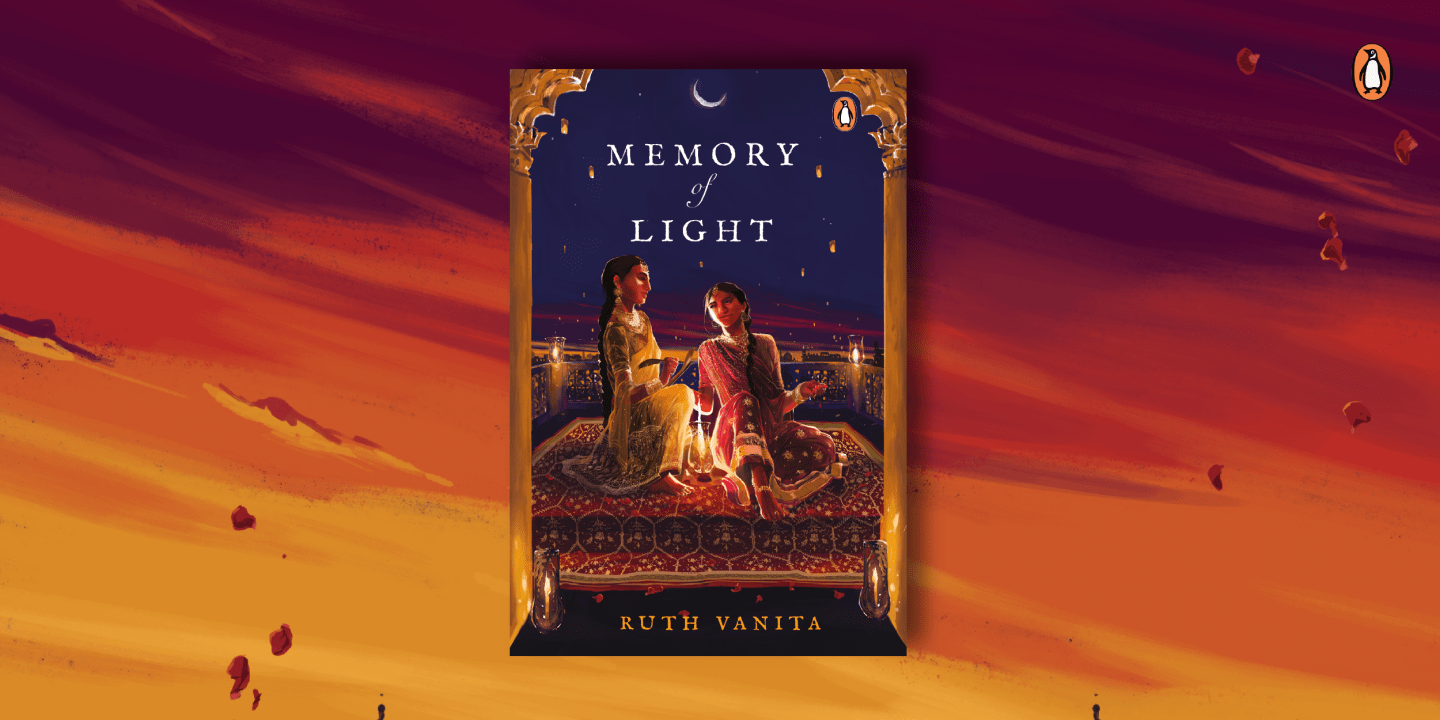
Memory of Light is a tender romance of two young courtesans in Nawabi-era Lucknow. The entire novel unfolds through the narrator, Nafis Bai’s memory of events, lending it her unique voice, which stays with the reader.

Intrigued? Read an excerpt from the book below:

Late at night before the big occasion, I tried the outfit on her; the fabrics I had chosen kissed her skin, her skin not washed-out white like the English ladies’ but kanak kamini, warm as wheat, as gold.

‘Like lightning flashing in the summer sky,’ I said, as I tied the silver drawstring with its pearl pendants, gleaming through the pale blue swirl of the peshwaz and dangling below its hem.

While I dressed her she undressed me, discarding the purple I had selected for myself.

‘Purple doesn’t suit you,’ she said. ‘Parrot-green blossoms on you. Wear this green one with—let’s see.’ She threw her red orhni over me. ‘There—it’s like a flame on you.’

Until then purple had been my favourite colour. I’ve never worn it with pleasure since.

The night sparkled and so did all of us, lit by the sheen of youth. Even I felt beautiful when her eyes touched me. The whole town seemed to be there, troops of merchants with tributes for the English, foreigners with heavily powdered hair, and every dancer worth the name. Bands were playing foreign instruments, organs bellowed and fireworks fizzed above. A group of hijras performed and then Ratan. I looked up from a dark corner where I was adjusting Chapla’s shoes with their long curling toes, to see Sharad framed in a lighted doorway, chest half-visible through lacy white embroidery—a flowering tree covered with leaves and buds. His hair was abundant in those days, long curls almost out of control, and his eyes were on Ratan.

Mir Insha was in his element—flitting from group to group, alight with laughter. ‘Even the buds are proffering their glasses,’ he whispered to me, as champagne bubbled up in crystal for a fat European lady and her young daughter. ‘Look, flowers and bunches, all are imbibing.’ I giggled; the lady’s dress, billowing stiffly round her, did make her look a bit like a bunch of large showy flowers, the kind that the white people favour.

Then he whispered to Chapla:

Chaar naachaar hu’a jaana hi Landan apna
Le ga’i chheen ke dil ek firangan apna

No choice, I have to go to London now
A foreign woman has snatched away my heart

At this, both of us burst out laughing and Ammi threw us a reproachful glance.

He brought it all to life again in his poem—glasses, bottles, free-flowing liquor, lights in the trees, delicacies laid out on tables. He ignored Azizan resplendent in magenta and gold, and devoted his attention to Chapla, doing justice to my handiwork:

With a silken drawstring flowing like water,
Satin trousers blooming like foliage,
A light blue silk peshwaz like a cloud,
Its skirt edged with silver like a moonflower,
A veil of moon and stars like a moonlit night,
Anklets tinkling like drops of rain,
Chapla Bai stood up to dance.
Seeing her, Khutan gazelles forget to leap
Nature made her replete with beauty
From her face the Pleiades borrow radiance
The envy of fairies, she’s called ‘Lightning’
Light’s world turns dark when she departs . . .
Who can praise the breasts of that infidel idol?
Oh lord, their curves and that rising youth—
Half-blossomed lotuses, two fine founts,
They shine like round swelling whirlpools
Or like chakva and chakvi sitting on two shores,
The string of pearls between is Jamuna . . .
That ring-watch blooming with delicacy
I’d sacrifice to it hundreds of sounding organs . . .
Her plait like the shade of a kadamb tree . . .

What an eye he had for detail—the verse I liked best described how her red heels made the white beads on her pearlescent white silk shoes reddish like ratti, those poisonous seeds used to weigh gold, or like red champa flowers with their creamy insides:

Those two arms boughs of the tree of Paradise—
Obtain from them what your heart desires

Her forearms male and female skinks
The sight of them drives men and women wild . . .
Those red heels make the pearls on her shoes
Look like red ratti seeds or champa flowers
. . . Today’s the fourth day of the month of June
This happy day shines with special beauty


To know what happens next, check out Memory of Light

The Star of India – An Excerpt

From the glitz of Hollywood to the lush chambers of Indian royalty, The Star of India weaves a spirited tale of a strong-willed woman whose fate was deeply entwined with the momentous birth of modern India.

Read an excerpt from the book below:


But this weekend, it would be just us.

It was low tide. I ran down to the water, planted my legs and felt the icy surf rush over my feet. Sporty rolled up his trousers and followed, capturing me in his arms.

As we walked along the hard-packed sand, he told   me of a boyhood passed in two worlds, the traditional one where he was a demi-god to his people and the modern one where he studied at Cambridge and lived with a freedom he could not know at home.

‘You’re cast in two different roles—but in real life.

Does it feel confusing?’

His pace slowed. ‘I do need to change hats frequently.’ ‘Or turbans? Handsome, I’ll bet,’ I flirted, thinking how dashing he’d look in royal attire. A piece of dark red sea glass caught my eye. I picked it up and presented it  to

him with my head bowed. ‘Tribute, Your Highness.’

He studied the piece, rubbing his finger over its edges, holding it up to the light.

I was embarrassed. ‘It’s nothing really.’

‘Ah, but this is a jewel from the heart.’ The smile that had flickered across his face faded. ‘After a while, when one is surrounded by so much treasure, these things become commonplace.’ The smile returned. ‘Like pebbles on a beach.’ I glanced at the shoreline, trying to imagine such a life.

Such wealth.

‘I will tell you the story of another gift,’ he said. ‘An ancient ruby, red as blood. It was brought to India by the Central Asian Mughal invaders and passed from father to son as a symbol of their rulership. You may know the name Shah Jahan?’

‘He built the Taj Mahal! For his wife who died in childbirth.’ That I remembered from my research in the library.

‘Before her death, Mumtaz gave him four sons. To prevent their eventual power struggle, Shah Jahan had the Mughal Ruby set in a special ornament, which he alone would place on the turban of his chosen successor. He would, in effect, maintain control of the “crown.”’

I paused, the surf numbing my feet, my ankles.

‘But this was not to be. After all, Shah Jahan had rebelled against his own father. And so it was with his sons, for the most ambitious was his least favourite; he was disrespectful and close-minded. To prevent the ruby from falling into his hands, the emperor bestowed it on a raja of Bengal who had saved his life in battle—the King of Koch, my ancestor. But with the gift came a prophecy: If ever he or his descendants ever lost control of this precious jewel, our family would fall.’ We set off, walking up the beach.

The curse Tony had mentioned. ‘How terrible. Don’t you worry about thieves?’

‘Not really. The ornament is kept with our everyday jewels inside a palace vault, protected by a high official. I wear it on ceremonial occasions.’

Everyday jewels.  ‘I  never  read  about  any  of  that in

National  Geographic.’

‘And you never will. Even our curses remain a secret,’ he said with a twinkle.

‘My lips are sealed.’

Sporty gave me a searing look. ‘I hope not.’

I leaned down and splashed him. ‘You said you’d never known a woman with a real job. But your mother ruled when you were young. Sounds like she had a job, too.’

He tipped his head. ‘Ma was an astute ruler, strong- minded and protective of our people. They revere her, love her.’

‘What does she do now?’

‘Ma is not shy about giving me advice.’ He grinned. ‘She travels quite a bit—friends all over Europe. She leads a different kind of life there. Freer. She is a fascinating woman with a keen intelligence and great style. I want you to meet her.’

‘I’d like to.’ His mother had telephoned his Beverly Hills Hotel bungalow from Paris a few times, and I’d heard them talk about political events back home.

‘When your film is over, we will fly to New York and you can show me around. Then I can show you Paris. How does that sound?’

Boris had hinted Sporty planned to invite me to India, but this was the first mention of travel plans. Giddy with fear and hope, I inhaled the sharp salty smell, gazing down at a ruffle of white foam. When I looked up, the sun had appeared behind his face. For an instant, I couldn’t see his features, only his golden aura. ‘I’ll check my datebook.’ I tried to be nonchalant.

Do you Feel Lost without HIS Presence?

To be a better spiritual being and to better even that with every step is the goal of every soul so it can then ultimately merge into The One . . .

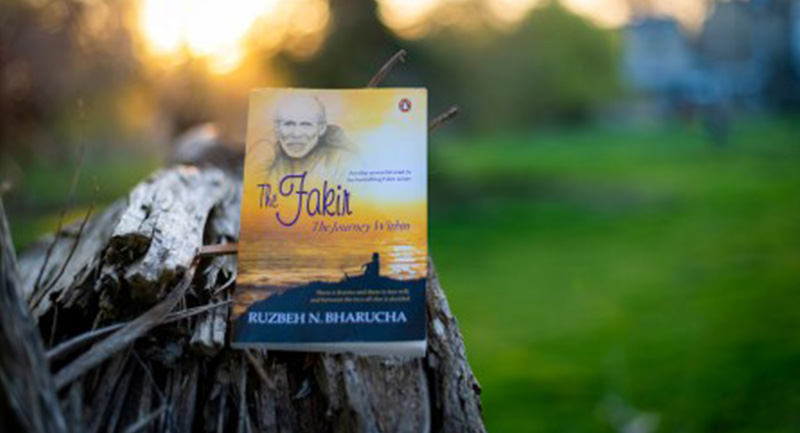
Rudra is exactly where he wants to be-with his kind, loving BABA, talking about life and the laws of the spiritual realm. He is taken to various villages to see for himself what the right way to live and pray is.

As he serves his BABA and asks Him questions, much is revealed to him: ‘When you pray with such intensity that The One shall listen to your prayer, then your purity, intensity, devotion and yearning will get wings to reach The One’

BABA also talks about how we should be in life, how our relationships should be, how jealousy and anger are detrimental to the development of good karma and how conducting oneself without cribbing and complaining takes on to the higher plane.

Take the journey withing with The Fakir.

Here’s an excerpt from the book:

Very often baba would disappear for a few days and Rudra realized that on those days he was unusually preoccupied with some mundane things. Stuff that needed to be sorted out in the cottage or he was simply not in the zone to do anything and be dazed, all appointments cancelled, he preferred being by himself. He never understood how every time Baba would leave, Rudra’s days were either packed with worldly chores or just depressing.

On those days he drank far more than he should but always outside the cottage, never within its holy premises. He always made sure the oil lamps burnt twenty-four seven, and Baba would light a small fire, mainly burning embers, which Rudra would tend to in order to always keep the fire awake. Without Baba’s physical presence Rudra was lost, though he knew that he should not be as Baba was always with and within him.

Rudra always remembered Baba’s words to him. He had told him in the early days of their meeting, ‘Beta, heaven is filled with those who have failed but who have got back on their feet, dusted off their mistakes and follies, smiled and walked on with The Name on their lips and the comfort of a compassionate heaven in their hearts.’

Rudra missed serving Baba and massaging His feet. When Baba was physically with him Rudra’s day would be remarkably the same, making sure Baba was taken care of, from the innumerable cups of chai to hot bowls of soup to prayers and laughter and conversations ending the day with him massaging Baba’s feet. He loved to massage His feet.

The last time when Baba had left, there was a tremendous forest fire in California. Rudra always noticed that whenever Baba would leave the cottage, some place in the world would be going through unusual turmoil or devastation. It was as though He was needed and He had to be alone. Rudra never pried or questioned Baba. Rudra just served silently and joyously.

Blondie, Boy and Girl never left Rudra’s side when Baba was not present. It was as though they understood that he was alone and they rallied around him and sought his attention. On those days, Rudra would give them a bath and pedicures and pamper them as he needed to be active to prevent the ache felt in his heart because of Baba’s absence.

Heaven is filled with those who have failed but who have got back on their feet, dusted off their mistakes and follies, smiled and walked on with The Name on their lips and the comfort of a compassionate heaven in their hearts.


What other lessons can BABA teach you? Read The Fakir to find out!

The Economics of COVID-19

On the eve of 31 December 2019, as the world celebrated the start of a new decade, the province of Wuhan alerted the World Health Organization of several ‘flu-like’ cases. Less than a week later, a novel coronavirus, was identified. In February, the disease it caused was named COVID-19. Even now, as the global infection rate crosses 1,00,000 and the death toll surpasses 3000, we are yet to understand the threat posed by this new coronavirus. There is no vaccination to prevent it, and no antiviral to cure the sick. While high numbers are being reported daily, agencies may still be unaware of many cases.

While some of us may find it easier to resign ourselves to fate, what we need most right now is credible and comprehensive information from professionals that can help us understand what the Coronavirus is, and how we can prepare and protect ourselves against it. The Coronavirus is the first book that addresses the history, evolution, facts and myths around the pandemic.

Here’s an excerpt from the book below:

‘Give me a one-handed economist. All my economists say “on the one hand”, then “but on the other . . .”’
—Harry Truman

Since the economists that President Truman sought are even more elusive than Sundarbans tigers, the ambidextrous opinions of even-handed experts could map our strategies.

Each new infection moderately severe or worse is estimated to cost approximately $570 million or 0.7 per cent of global income, according to the World Bank. On 9 March, economists at the United Nations estimated the economic impact of COVID-19 to range from $1 trillion to $2 trillion, depending on the ability of various governments to mitigate its impact.

According to World Bank estimates, six major zoonotic outbreaks between 1997 and 2009—Nipah, West Nile fever USA, SARS, HPAI or bird flu, Bovine Spongiform Encephalopathy or mad cow disease, and Rift Valley fever—have cumulatively cost the world at least $80 billion. While the global economic cost of the Spanish flu pandemic of 1918–19 is unknown, McKibbin and Fernando have estimated that if it repeated itself in the year 2020, it could cost the global economy up to $9 trillion.

The SARS outbreak of 2002–03 cost the global economy about $54 billion as per World Bank estimates. The Ebola outbreak in West Africa in 2014 exemplified the grave economic toll of an emerging infectious disease in an unprepared region. Gross Domestic Product (GDP) growth in Liberia and Sierra Leone dropped from 8.7 per cent and 5.3 per cent respectively, to less than 1 per cent between 2013 and 2014, despite the illness-related death toll falling during the same time. Guinea saw a GDP growth of 0.1 per cent for 2015, compared to the 4 per cent predicted. The outbreak cost these three nations a total loss of $1.6 billion, whereas the rest of the world lost about $550 million.

MERS hit South Korea in 2015. With over 16,000 quarantined and thirty-eight deaths, 41 per cent fewer tourists visiting the country, residents avoiding public spaces like malls, restaurants and theatres, the impact on the economy
was severe. Eventually, the Bank of Korea was forced to reduce its interest rates to a record low, and the country faced a total loss of roughly $12 billion. Saudi Arabia was estimated to have lost $16 billion during the MERS outbreak due to a complete standstill on pilgrim activities. The Zika epidemic in Latin America and the Caribbean drained their economy of an estimated $7–18 billion between 2015 and 2017. Influenza, which returns annually causing about 700,000 deaths, costs the economy roughly $500 million each year, according to a 2017 WHO study by Victoria Fan and colleagues.

Disease outbreaks affect economies, both directly and indirectly. Government expenses increase as it intervenes to provide basic amenities to its people. Often this involves lowering prices of goods and commodities and reduced direct taxation on companies. Companies face setbacks as sales plummet with people less likely to spend on non-essential goods and leisure activities. This further lowers income from value-added taxation. Illness or forced quarantines impact labour and production and manufacturing abilities of industries. At the individual level, people face increased medical costs, lost pay due to sickness, mortality and loss of close ones. Private and foreign investors do not invest in an uncertain market.

Even if the disease is contained, its aftermath lingers. With business hurt, economy disrupted, stigma and fear plaguing citizens, with the most vulnerable populations hardest hit, the outbreak has far-reaching social, economic, political and psychological effects.


The Coronavirus: What You Need to know about the Global Pandemic brings together medical experts Dr. Swapneil Parikh, Dr. Rajesh Parikh, and Maherra Desai, to present a timely and reliable narrative on the Covid 19 pandemic and possible ways forward.

What Makes India Different?

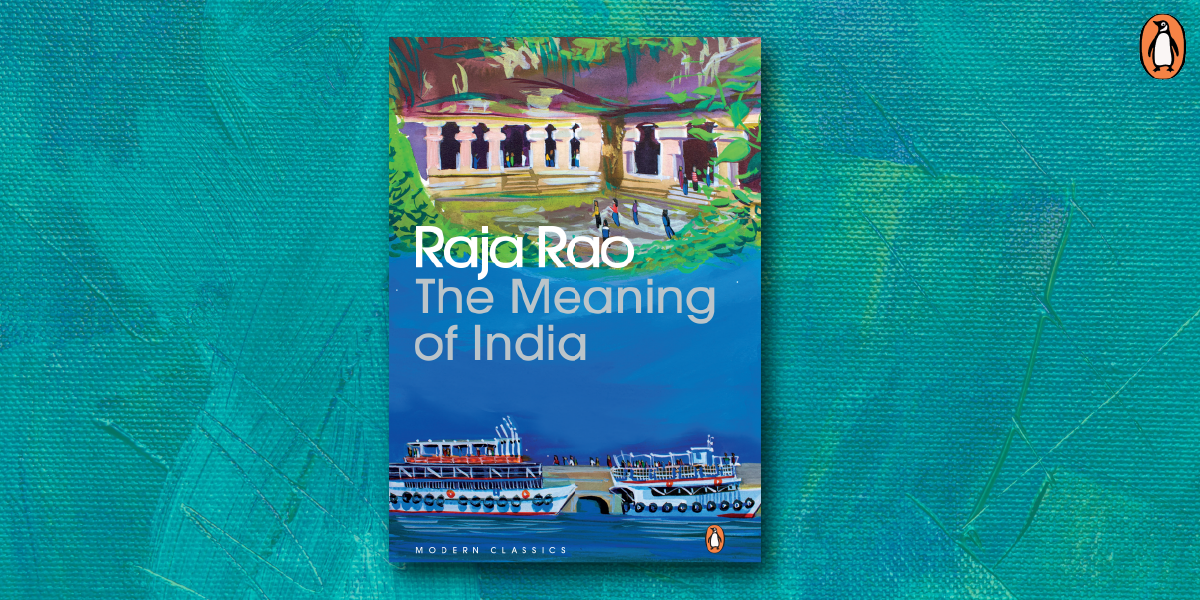
First published in 1996 when he was eighty-eight years old, The Meaning of India is a selection of nearly six decades of Raja Rao’s non-fiction. It is an audacious contemplation on the deeper significance of India. A combination of fables, journeys, discussions and meditations, the book advances the view that India is not just a geographical entity, or even a civilization-state. India is, above all, a metaphysic, a way of being and regarding the self and the world.

Read an excerpt from the book below:

In  The  Meaning  of  India,  Raja  Rao  declares,  ‘India  is  not  a  country  (desa);  it  is  a  perspective  (darsana).’  The  word  ‘darsana’, incidentally,  is  the  Hindu  word  for  philosophy;  it  means  seeing,  experience,  vision,  perception,  standpoint,  insight  and  outlook.  But  what  darsanadoes  India  embody?  Absolute, non-dual consciousness, according to Rao. Even if there  was  no  India  in  a  physical,  material  sense,  India  as  an  idea would always exist. As Rao puts it, ‘India has no enemies. She only has adversaries’ , and she ‘has to turn defeat into victory’.

The  entire  universe,  sentient  and  non-sentient,  in  its  own infinitely rich and diverse ways, also seeks the Absolute. That, I think, is what the Buddha meant when he said that the whole universe is on fire: ‘“What does not disappear does not  exist.”  For  every  sense  perception  is  afire.  “Look,  the  universe is burning!”’ Again, to quote Rao, “There can be  no  world  without  duality,  yet  there  can  be  no  peace  in  duality.’ Duality is primordial unhappiness. That is why everything  that  exists  experiences  this  dukkha, which  is  the  very essence of duality. Duality, two-ness, implies separation from  the  source.  Whatever  has  individuality  is  therefore  separated, ego-bound, vibhakt (divided), and therefore seeks self-transcendence—in  dissolution  or  union—as  the  means  to regain its lost wholeness.

But if everyone and everything seeks the same ‘thing’ that India seeks, what makes her different?

The  difference  is  that  it  is  in  India  where  this  seeking  has  become  self-conscious,  reiterated  generation  after  generation,  down the centuries. Not just that, one might even say that India has not only sought but found the Absolute. There is a prevalent Buddhist belief that if the world is to be saved from destruction, the  inspiration  for  the  radical  transformation  in  consciousness  must come from India.

Rao also states this position quite unequivocally:

There are, it seems to me, only two possible perspectives on human  understanding:  the  horizontal  and  (or)  the  vertical.  They  could  also  be  named  the  anthropomorphic  and  the  abhuman. The vertical movement is the sheer upward thrust towards the unnamable, the unutterable, the very source of wholeness. The horizontal is the human condition expressing itself,  in  terms  of  concern  for  man  as  one’s  neighbour—biological  and  social,  the  predicament  of  one  who  knows  how to say, I and you.

The  vertical  rises  slowly,  desperately,  to  move  from  the I to the non-I, as non-dual Vedanta would say. It is the move towards the impersonal, the universal (though there is no universe there, so to say) reaching out to ultimate being, where there are no two entities, no you and I.

The horizontal again, on its long, arduous and confused pathways, will reach the same ultimacy by stripping the I of its  many  vestments,  through  concern  and  compassion  for  the other . . .The vertical then is the inherent reality in the horizontal . . . (139–140)

Or again:

There  are  only  two  pathways  to  looking  at  the  world:  the  causal  way  or  the  unpredictable:  or  to  use  my  metaphor  .  .  .  the  horizontal  or  the  vertical  .  .  .  In  the  context  of  Indian  philosophy, we could say, either there is duality or non-duality.(194)

Rao,  using  a  method  akin  to  scientific  reductionism,  ensures  that the crux of the matter boils down to one contest—between duality and non-duality.

For  him,  ‘There  are  indeed  no  horizontal  solutions,  the human  has  no  answer  ever.’  Locating  this  contrast  in  a  trans-civilizational dialogue with André Malraux, Rao quotes the latter as saying, ‘You remember what Dostoevsky said: Europe is a cemetery of ideas—yes, we cannot go beyond good and evil. We can never go, as the Indians can, beyond duality.’

Excerpted with permission from the “Introduction to the New Edition”, written by Makarand Paranjape.


The Meaning of India is available now.

error: Content is protected !!