Publish with Us

Follow Penguin

Follow Penguinsters

Follow Penguin Swadesh

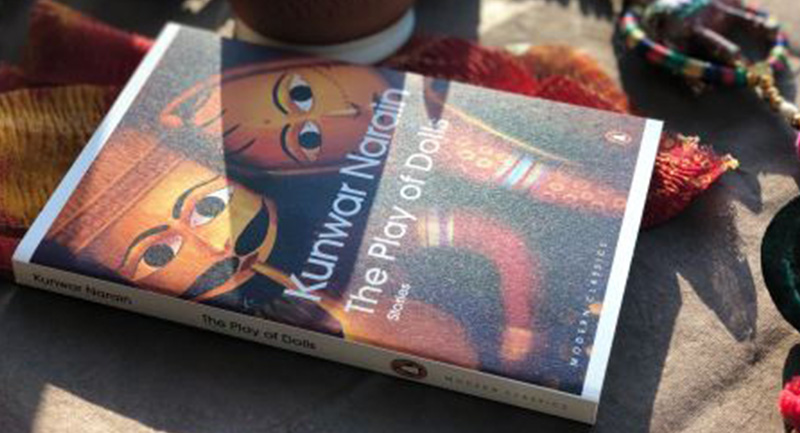
The Play of Dolls- An Excerpt

Kunwar Narain’s unusual short stories broke new ground and rejuvenated the genre when they appeared on the Indian literary landscape in 1971. Half a century later, in vivid English translation for the first time, they seem just as far-reaching: sometimes in the novelty of their insight, sometimes in their transcendence, sometimes in the world views they together uncover.

Read an excerpt from the short story ‘The Court of Public Opinion’ below:

Sadiq Miyan managed to keep his motives in check at first, but then they went awry. A completely new bicycle, stood completely unclaimed—without even a lock to guard it! He glanced around once, then ran his hand over the bike’s glittering handle, as if caressing the mane of a magnificent Arabian horse. He couldn’t hold back any longer, and jumped on the bike. No one objected, nor noticed; and, well, what could the poor bike say either? He pushed down on the pedal lightly. The youthful cycle was ready to take off with him right away. The people nearby came and went by as usual, just as before.

Sadiq Miyan spurred the bicycle on, and it began to fly like the wind. It was his now.

But, alas, what an awful stroke of bad luck! An endless herd of buffaloes came along, straying right into the middle of the road. Sadiq Miyan lost control and collided with one of the stoutest in the bunch—head-on. What could he do, the poor guy? He hit the ground—his own injury less, the cycle’s, more. Bent and broken, the wheel went from being hoop-shaped to heap-like. The handle, twisted backwards, gazed at the seat, and the mudguard took on a look as if it were not a part of the bike but of the buffalo. The buffalo stood in stunned silence; Sadiq Miyan glanced nervously at the crippled bike. What could he do? He’d really landed himself in a strange sort of trouble. It crossed his mind to abandon the bike and make a run for it. After all, it was only the bike that was broken—nothing wrong with his legs!

But in the meantime, a crowd began to gather all around him, as was only natural. Running just then would have meant getting himself in more trouble. Two, four, six . . .dozens of women, men and children began surrounding him. In the middle lay the mangled bike; with the buffalo, chewing cud, on one side, and Sadiq Miyan, head reeling, on the other.

At first, the people pitied the bike that was now a mess, then their hearts were kindled with compassion for Sadiq Miyan, and finally, they got angry at the buffalo. Because there was clear evidence before them of what happens when one locks horns with a buffalo, they decided to tackle the herdboy instead. It was because of him that the hazard of something like a buffalo had sprung up in the middle of the road, and someone upright like a Sadiq Miyan had become the victim of that hazard.

By consensus, it was decided that they should fix the herdboy properly, right then and there. But Sadiq Miyan objected: in his view, it was more important to fix the bicycle first—and the herdboy should be made to do that. Everyone agreed.

The crowd lifted the bike tenderly and delivered it to a nearby cycle hospital with great care, where its wounds were treated for a cost of ten rupees. But when the herdboy was told to cough up the money, he expressed his inability to do so, and asked how on earth was he supposed to come up with ten rupees when he hadn’t even ten paise to his name then?

Confronted by this new problem, an extraordinary debate took place among the ordinary folk assembled there; so many arguments all at once that it was practically impossible to make out any argument clearly. Nevertheless, one solution somehow seemed to survive intact: whatever the herdboy was wearing should be sold to cover the penalty cost of the repairs.

This too was easier said than done, because the herdboy had nothing but a dhoti around his waist and a lathi in his hand. Even if both these items were taken, it wouldn’t be enough.

Anyhow, after the cycle had recovered, it was agreed that Sadiq Miyan and the cycle should be considered free from the whole dust-up. This was deemed incontestable not only in the eyes of the public, but also in the eyes of the luckless bicycle mechanic, who now, having taken the entire burden of Sadiq Miyan’s ten-rupee misadventure on his own head, was an eager prosecutor of the blameworthy herdboy. As for the public, it was surely commendable that not a single person there was willing to step back until final justice had been delivered, no matter what.

Some wise guy then repeated the suggestion that, if it satisfied the cycle mechanic, the herdboy could also be handily fixed, with a flogging worth ten rupees! But nobody paid much mind to this idiocy, though the herdboy was entirely willing to go along. Everyone’s attention was stuck on the intricate problem at hand: how could they wring ten rupees from the herdboy in his present condition?

One gentleman, who had perhaps trained as a lawyer, or was capable of being a lawyer, came up with a novel proposal: by selling that same buffalo which had given rise to all this mess, the cost of the fine could be recovered. The idea wasn’t unreasonable, and his submission was accepted.

The buffalo again became the centre of attention. For five minutes, the people waited. But where would they find a ready buyer for a thing as big as a buffalo? A buffalo isn’t some wad of paan, a bidi or a cigarette that can be purchased along the road, tucked in one’s pocket, and hung along with the pocket on a peg on some wall back home. It was a matter of responsibility, which could go as far as spelling fortune or disaster for one’s offspring. Second, who had the cash on hand worth a buffalo at this time? As a result, this attempt at justice proved unsuccessful as well.

Around now, everyone was sorely feeling the need for some kind of mastermind in the crowd. A few sights fell on one particular gentleman, and remained on him. He certainly looked like a wiseacre—though some others pegged him as a daydreaming wiseass. They held a vote; and it was decided that he was indeed a wiseacre, not a wiseass, though he himself kept claiming to be nothing less than a prophet.


What will happen next? You’ll have to read The Play of Dolls to find out!
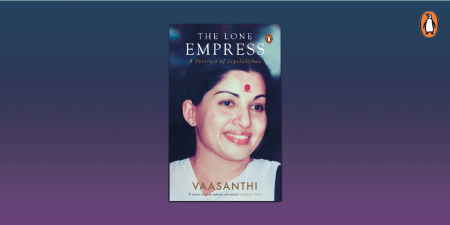
An Insight into the Life of The Lone Empress, Jayalalithaa

The Lone Empress is the journey of a proud Ammu to an indefatigable Rossappu Amma. Despite her immense popularity, she felt lonely and vulnerable in personal life after her mother – Veda (popularly known as Sandhya) and her mentor – MGR, passed away. The book tells the story of how a charismatic and talented woman steered through a male-dominated film industry, developed a loyal political fan base without the support of her party seniors, and stood her ground even when sentenced to four years in jail.

Here are a few excerpts that reveal some of the characteristics of her fiery personality.

She was an honour roll student

‘Look closer, you will find J. Jayalalithaa’s name printed in bold white letters, on the annual roll of honour, as the recipient of the Best Outgoing Student Rolling Shield for the year 1964. The school’s Centenary Celebrations (2009) special souvenir carries a photo of a young Jayalalithaa in her school uniform proudly posing with the shield.’ 

She was more than a pretty face

‘The AIADMK’s party conference was being organised on a huge scale and the town people thronged to hear the star speaker who to give her maiden political speech, one that she herself had prepared. MGR was present, too, drawing hordes of men and women, most of them film fans. The town square was a sea of humanity and the theme of Jayalalithaa’s speech was, “Pennin perumai” (woman’s greatness). The public, expecting only to see a pretty face, were in for a big surprise. Jayalalithaa’s speech was fiery and impressive, an instant success. She had arrived, barely having left, as it were, the starting the block.’ 

She honoured MGR at his death ceremony in her own way

‘Jayalalithaa did not shed a tear. She did not wail. She stunned the onlookers and mourners by standing in vigil for two days – thirteen long hours on the first day and eight hours on the second. Because of her enormous will power, she was not exhausted physically, but she experienced the mental and physical torture from other sources. Several women from Janaki’s side stood near her and began stamping on her feet and pinching her to drive her away. But she stood undaunted, swallowing the humiliation, her pride keeping her firmly where she has taken position.’ 

Jail changed her

‘She was in jail for twenty-eight days; and on coming out she appeared to have been hardened rather than chastened. It must have been a traumatic period for her, proud and used to sophistication, like a queen whose feet had never touched the earth and whose head had never felt the heat of the blazing sun. But the jail wardens were struck and deeply touched by the dignity with which she had conducted herself. She hardly spoke to any of them. She spent her time reading books. She later described in graphic detail how she had suffered in the bandicoot-infested jail.’ 

Victory was her goal

‘As long as she lived, victory was her goal. “V” was her symbol. “Naalai namathe”, tomorrow is ours, was her mantra. Now, there is no tomorrow. The Supreme Court waited till her death to release the verdict. She remained “not guilty” till her last breath, innocent, fully acquitted of all charges. She dies in office as the chief minister. She was the victor even in death.’ 


Grab a copy of The Lone Empress to read the dramatic turn of events and the struggles that made Jayalalithaa such a controversial figure.

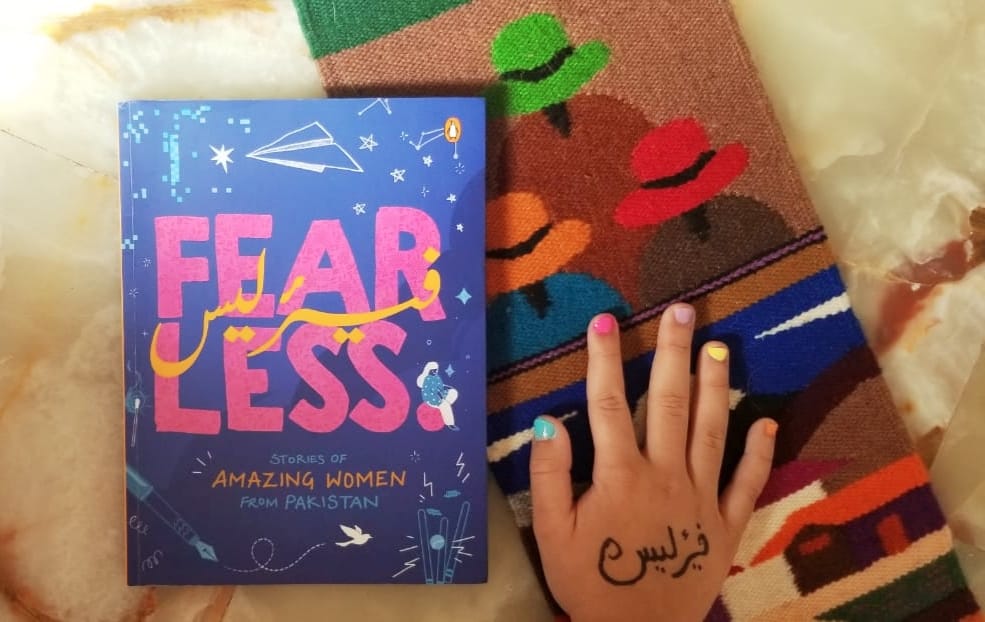
Reach for the Stars! – An excerpt from ‘Fearless’

Inspirational women from all over the world have held their own in the face of discrimination, inequality and injustice. These women have been politicians, lawyers, activists, artists and more – with the common goal of raising their voices and fighting for the greater good no matter their nationality, race or religion.

Fearless explores this notion by collating a variety of stories focused on the inspirational women of Pakistan and the strength they have displayed in their own lives.

You can read an example of one such story, about the life astronaut Namira Salim below:

Namira Salim was a quiet, meditative child whose head was quite literally in the stars. It was her dream to become an astronaut but for a little girl from Pakistan, this seemed an impossible fantasy.

Namira was obsessed with the night sky and never asked for her parents for anything— except to be sent into space! ‘I was literally born with the dream of going to space. And the unshaken belief that I would.’

Her parents caved and got Namira her first telescope at the age of 14—she never looked down again as her sights were firmly set on her goal! She was part of the pioneering astronomy society in Pakistan and would spend hours gazing at the stars. Her family moved to the UAE and Namira eagerly participated in star-gazing parties in the desert. She met David McNaughton, one of the first people in the world to go into space, here and became his mentee.

As a college student studying International Relations and later as a resident of Monaco, Namira continued to be deeply absorbed by and involved in space-related activities, even launching a range of ‘space true’ jewelry under a private artistic label called A Soul Affair.

A recognized polar explorer, Namira was the first Pakistani to reach the North Pole in April 2007 and the South Pole in January 2008. She is also the first Asian to skydive (tandem) over Mount Everest in 2008 and the only Pakistani in Virgin’s Galactic commercial space liner, an opportunity he was shortlisted for as a future astronaut out of 1,44,000 applications to travel into space.

However, Namira wasn’t about to just sit around waiting for the first commercial flight to take off! She decided to get qualified officially by completing her training in the US and became the first Pakistani to do so. She also founded Space Trust, a non-profit initiative that promotes space as the New Frontier for Peace, via novel peace initiatives to inspire change and encourage dialogue.


You can read more about Namira and other stories about inspirational and incredible women like her in Fearless – grab your copy today!

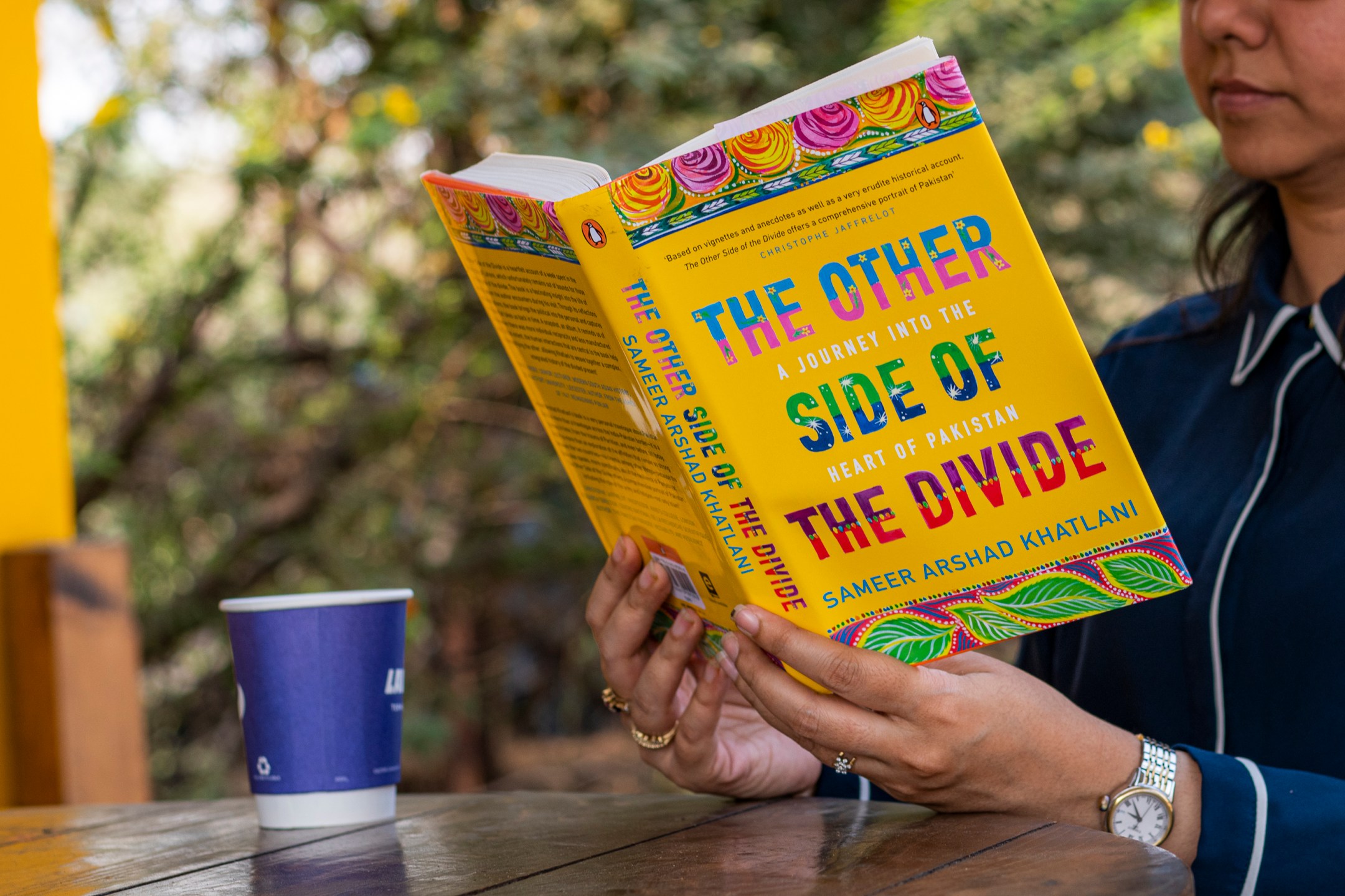
What are Stereotypes about Pakistan among Indians?

Many of us have concluded Pakistan as an economically, culturally, socially and ideologically regressive country. Most of us have dropped the idea of exploring the picturesque landscape of Pakistan due to a dangerously false perception of it being a terrorism inflicted country. That is why when a journalist – Sameer Arshad Khatlani, decided to attend the World Punjabi Conference in Lahore, his family felt extremely anxious about his decision.

The Other Side of the Divide is a journalist’s reflective travelogue that bares the complexities of culture and class in Pakistan. Khatlani’s adventurous journey to the heart of Pakistan reveals the connecting thread between two nations through stories that fail to reach the masses in India.

Here are some excerpts that render all commonly held stereotypes about Pakistan as false:


  1. Stereotype: Pakistan is a land that breeds hostility

‘The immigration clearances were prompt. I had never seen a more cheerful immigration official than the one who stamped my passport. the atmosphere was not even remotely as hostile as what it used to be a decade ago. […] I did not find any hostility. Far from it…’

  1. Stereotype: Pakistan is full of only Muslims

‘Everything across the border looked as if harmonized with the Indian side. […] An artificial line drawn through the heart of Punjab cannot be deep enough to change the shared language, culture, customs, idioms and attitudes shaped over centuries. Sikh men in their beautiful and colorful turbans in eastern (Indian) Punjab and ubiquitous Urdu in western (Pakistani) Punjab are perhaps the only outliers on the surface. Punjabi is the language of the people on the street.’ 

  1. Stereotype: Pakistan rejects everything that is Indian

‘The market was abuzz despite the cold. it could have been easily mistaken for a market in Indian Punjab had not it been for Urdu signages. Virtually every shop sold artificial jewellery, Indian beauty products and prominently displayed Amul Macho undergarments packs with pictures of Bollywood stars Saif Ali Khan and Akshay Kumar.’


  1. Stereotype: Cities in Pakistan aren’t as developed as India

‘The Pak Heritage is a budget hotel particularly popular with Sikh pilgrims. it is located on the busy and mostly gridlocked Davis road with many similarities with Delhi’s Daryaganj. […] In Lahore, posh, leafy and well-maintained areas like the Mall are located just a few kilometers away, south of Davis road. Daryaganj, likewise, is a five-minute drive from the heart of tree-shaded Lutyens’s Delhi, distinguished by its colonial-era bungalows and wide avenues.’ 

  1. Stereotype: Bollywood doesn’t have Pakistani fans

‘… one of Pakistan’s best-known newspapers, Dawn, gushed about Madhuri’s ‘dazzling and disarming smile’, which she ‘quite literally patented’ and honed ‘into an art form’. […] In Lahore, and indeed across Pakistan, Bollywood is ubiquitous and gets prime slots on TV news channels, sometimes at the cost of more pressing issues.’ 

  1. Stereotype: Pakistan has an extremely orthodox culture

‘No one disappeared after the screening. A party-like atmosphere continued outside the hall well past midnight. Television crews surrounded filmmakers and socialites for sound bites about the film. Camera flashlights brightened the dimly lit waiting area. Some spoke to at least half a dozen camera crews about the film and performances of the lead actors, Aamir Khan and Katrina Kaif.’ 

  1. Stereotype: Pakistan has an Urdu speaking community

‘Punjabi, along with its variants, still remains the mother tongue of an overwhelming number—close to 60 per cent—of Pakistanis. Beyond the urban upper-class pockets of Lahore and other bigger cities, it remains the colourful language of choice for the masses…Urdu-speakers have accounted for roughly 10 per cent of Pakistan’s population.’ 


To understand how the common people of Pakistan have often challenged the dehumanizing discourse about their country, there may be no better place to begin than The Other Side of the Divide.

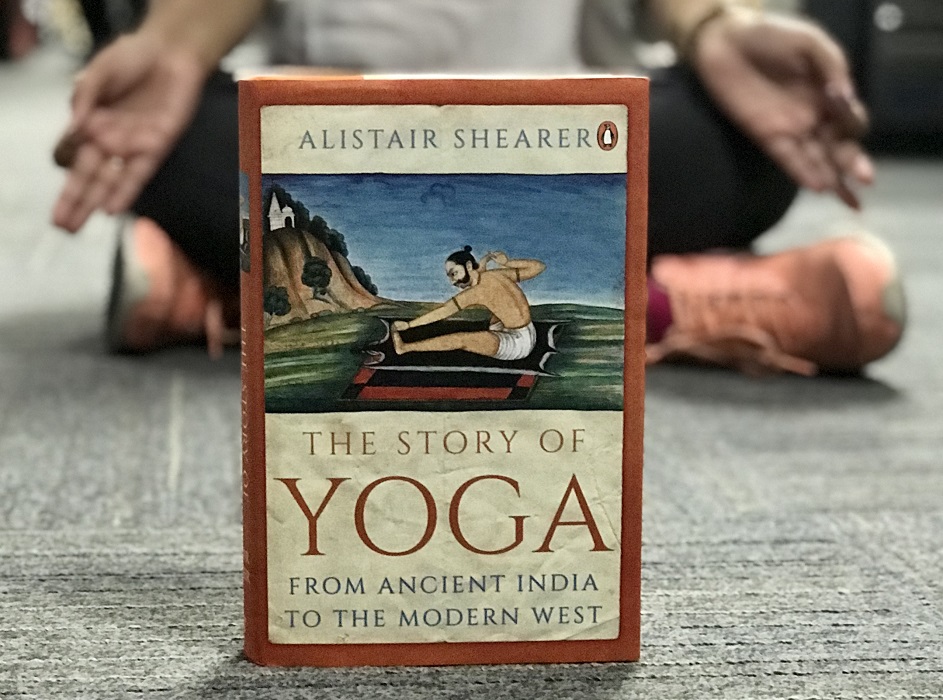
The Complete Story – Warts and All

In Shashi Tharoor’s words: ‘Alistair Shearer’s The Story of Yoga offers an absorbing chronicle of the rise of yoga, tracing its evolution through history to its rapid global proliferation today, with insights into the challenges ahead.’

Alistair Shearer himself calls it a “how come” book rather than a “how to” one. For the first time, The Story of Yoga presents a narrative setting out a comprehensive and accessible history of yoga in its global cultural context.

Find a glimpse of the expansive global outreach and popularity of yoga in an excerpt below:


WAY BACK WHEN…?

It’s a typical Friday evening in downtown America. A group of youthful practitioners, mostly women kitted out in fashionable sportswear and carrying plastic water bottles, arrives at a large, well-lit gym. Tanned and toned, they have come to relax after a hard day at the office, tighten up their abs and flabs, reduce their blood pressure and cholesterol. During the session there is a lot of talk of anatomical details amidst a pervasive atmosphere of ‘no pain no gain’; the stretching and relaxing may involve blocks, ropes and other appliances, but there is a determined energy exerted in most of the postures. Everything takes place in front of the wall-to-wall mirrors and the ethos is one of goal-directed accomplishment. Everyone is getting somewhere, burning off fat and sweating out stress, improving themselves. At the end of the session, recharged and clear-headed, people chat while quickly changing back into street gear. Some are advocating the benefits of the latest detox programmes and high-energy diets, while almost all are checking their phones and consulting their upcoming schedules.

Not far away on the other side of town, another group is meeting. Its members are older than the gym-goers but, again, almost exclusively female. Here the lighting is dimmer, sitar music is playing softly in the background and the scent of sandalwood wafts from an incense stick smouldering in front of an image of the Dancing Shiva. The session, led by a Western teacher with an Indian name who is just back from a three-month stay at an ashram in Rishikesh, begins with mispronounced chanting from a sacred Hindu text, followed by some mantras that the group repeats after her. Sanskrit terminology is used to describe the postures, which are performed slowly and gently. The session is brought to a gentle close with a guided meditation, and then, after some relaxed socializing and prolonged hugging, people drift away into their various weekends.

***

The understanding of yoga typified by the first group above will be dealt with later in this book, but for the moment, let us focus on the second. As do millions of others, its members would see their practice as being in some way connected to the nourishing well-spring of Indian wisdom. However vaguely the connection may be articulated, practitioners and teachers take for granted that this yoga is the subcontinent’s practical and perennial spiritual gift to the rest of the world. One of the most popular English translations of Patanjali’s classic Yoga Sutra is How to Know God, a poetic collaboration between the California-based Indian guru Swami Prabhavananda and the English writer Christopher Isherwood. First published in 1953, this version is still the Vedanta Press’ best-selling book, and has remained so respected over the years that until very recently the official governing body of yoga in the UK, The British Wheel of Yoga, chose it as the recommended text for its teacher training courses. In the opening paragraph of their introduction, the authors tell us: ‘the yoga doctrine may be said to have been handed down from prehistoric times’. Such an impressive pedigree might perhaps be proved one day, but in fact there is currently no hard evidence to support such a claim, and certainly not as regards body-yoga. Much water has flowed under the scholastic bridge in the almost seventy years since this translation was first published, and such broad statements rarely go unchallenged today. Indeed, as we shall see, a great deal of what is practised as yoga in the twenty-first century actually has very little in common with what we now know of ancient India, in terms of both its socio-cultural norms and its spiritual aims.

**

Shearer’s book boasts of a colourful cast of characters, past and present, who tell an engaging tale of scholars, scandal, science and spirit, wisdom and waywardness. This is a definitively untold story of yoga – warts and all.

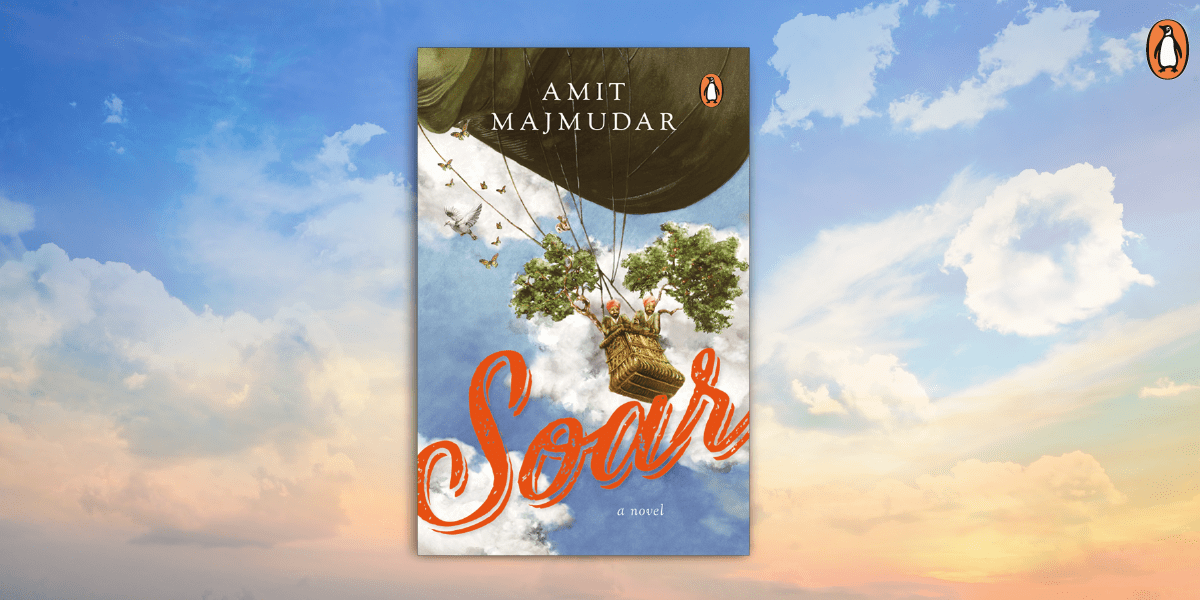
Bholanath and Khudabaksh Discover German Mushrooms

Bholanath and Khudabaksh are two soldiers in the British Indian Army, sent off to Europe to fight in World War I. One happens to be Hindu and the other happens to be Muslim, but that doesn’t keep them from being the best of friends.

When a mission in a surveillance balloon goes awry, these two gentle soldiers-along with an exceptionally ill-tempered squirrel-are set adrift high above the Western Front.

Intrigued? Read an excerpt from Soar:


The two soldiers kept searching the forest for food. The only thing they found, and this only when Bholanath stubbed his toe and punctured a hollow, half-rotted log, was a clutch of gray mushrooms. They began hunting in such dark hideaways for more mushrooms, and eventually had collected whole pocketsfull of them, dirt-speckled and with droopy caps of various dun colors. Only one variety was orange. Bholanath blew the dirt off it.

“These may be good for breakfast, seeing as we have no fruit.”

They took their harvest back to the stream, where they dunked each mushroom and let the current rinse it, rubbing the more stubborn dirt stains with their thumbs. The orange caps proved even brighter after the washing. He handed Khudabaksh a few and kept a few for himself. They savored each one and chased this meal, such as it was, with more water. They were still hungry, and it was hard not to eat the rest of the mushrooms on their way back to the balloon.

They were still walking when Khudabaksh turned to Bholanath and saw his friend’s temples form little spuds. The calf’s stubs lengthened all the way to proud, S-shaped horns. His pupils dilated and kept dilating until they filled his eyes, which had no whites left. Bholanath’s nostrils flared and kept flaring until a rough, off-pink tongue slithered out of his mouth and licked them. At this point, Bholanath mooed outright, terrifying Khudabaksh, who stumbled away with one hand and one wrist-stump thrust out at Bholanath. Backing away, he tripped over a log; he knocked his ankle and steadied himself, but fell onto his rear. “Ah!” he cried. When he sat up, he was straddling the log.

This black log, in Bholanath’s eyes, immediately sprang onto four feet, a small black horse. Khudabaksh’s hand held a burning book in it, obviously, from the way his Mussalmaan companion had shouted “Allah!”, the Qur’an. A pink gauze-strip dangling from his wrist lengthened and hardened into a blood-stained Mughal dagger with a mother-of-pearl hilt. Bholanath raised his own right arm out of reflex, to protect himself, and where his wrist-stump was, Khudabaksh saw a hoof. They both shouted, Khudabaksh for Allah’s help, Bholanath for Mahadev’s, and this only redoubled their terror of one another. For several minutes, they cowered behind oak trees fifty feet apart. Finally, they called across the distance.

“Khudabaksh?”

“Bhola?”

“Put that bloody dagger away, or I won’t talk to you!”

“First you put those horns back in your head!”

“Horns? What horns?”

Khudabaksh stuck his finger in his ear and toggled it smartly, eyes squinched. “Talk Gujarati, you shapeshifting Hindu! Stop that mooing!”

Bholanath looked around the tree and gasped. “First you whistle your Arabian over! He’s still glaring at me with his—with those eyes of his!”

“My Arabian?”

“The horse, you crazed old Mussalmaan!”

“Where?”

“Right there!”

“That’s a log, Bholanath!”

Bholanath put his fists to his eyes, rubbed hard, and looked again. “No, it’s definitely a horse. And now it’s lifting its tail and shitting fire. Take a look yourself if you don’t believe me.”

He retreated behind his oak and hugged his knees for warmth. To his surprise, his own knees had grown nipples that poked suggestively through the khaki. He stared, not particularly aroused, but mesmerized. The attempted dialogue stopped here for the next several minutes. On his end, Khudabaksh watched the mushroom-caps in his pocket inflate and subside rhythmically, like jellyfish breathing themselves along. Finally, when they exhaled for the last time, he checked back.

“Bholanath? Oy Bholanath!”

Bholanath peeked tentatively around his oak.

“See? I can talk to you now that you’ve put those horns back in your head.”

“Thanks for calling off your horse. What did you do with your Qur’an?”

“It’s in my pocket.”

“I mean the one that was on fire.”

“Who would dare burn a Qur’an? In a forest no less!”

Bholanath glimpsed the dangling gauze strip and rubbed his eyes again. No, it definitely wasn’t a dagger.

The two soldiers emerged tentatively, in their own shapes, no longer demonically transformed. They felt each other’s faces like blind friends meeting after a long time apart, and, satisfied, returned to the balloon together.


What happens next? You’ll have to read Soar to find out!

Of Love, Home, and the Outside

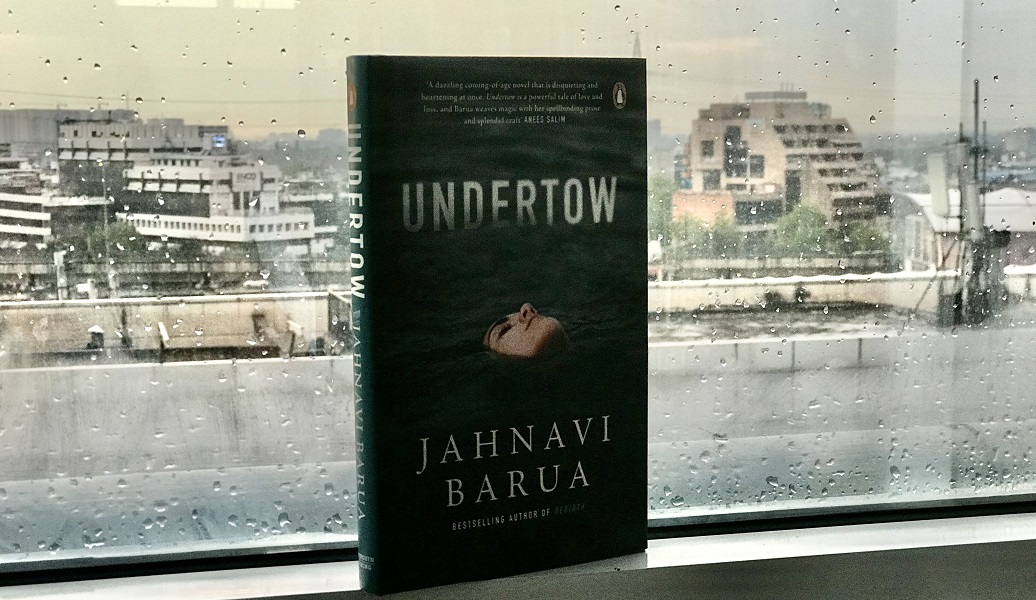
Loya is twenty-five, solitary and with restless stirrings in her heart. In an unexpected move, she sets off on an unexpected journey, away from her mother, Rukmini, and her home in Bengaluru, to distant, misty Assam. She seeks her grandfather, Torun Ram Goswami, someone she has never met before.

Twenty-five years ago, Rukmini had been cast out of the family home by her mother, the formidable and charismatic Usha, while Torun had watched silently. Loya now seeks answers, both from him and the place her mother once called home.

In the excerpt below, find a glimpse of the fateful wedding day in 1983, which ends up defining Loya’s exploration of home and family.


The Wedding

3 December 1983


Despite her father’s enormous love for her and her brother’s steady affection, she had been consigned to the margins of life in the Yellow House by Usha. Well, Rukmini found she did not feel so negligible any more. In a glad inversion of the way Usha diminished her, with Alex Rukmini was enhanced; she felt more of herself.

The world would alter again this morning, Rukmini thought as she walked up the path towards Alex. In a few hours, she would be a wife and Alex, her husband. She shivered again and, as if sensing her fear, Arun turned and linked his arm with hers.

At the veranda, Arun released Rukmini’s arm and she walked, instead, beside Alex, into Robin Khura’s small drawing room. It was a humble room, with its old wooden threepiece sofa set and a couple of cane armchairs. That it lacked a woman’s touch was obvious. But Jitu and Robin, with the aid of the woman hired to help around the house, had done their best to smarten it up. The cushion covers were freshly washed and ironed. There were vases of clumsily arranged flowers on the bookshelves, one tall arrangement of fragrant rajnigandha and other of red roses, overblown and already shedding petals.

‘Sit, sit!’ Robin Khura ushered the couple into the twoseater sofa. ‘The magistrate will be here any minute.’

Rukmini sat down beside Alex. Her hand resting on the seat of the sofa was alarmingly close to Alex’s. She hoped he would not reach across and take her hand. She did not know how things were done in his family down in Bangalore but here it was taboo to touch even your spouse in public view. In fact, it was bad form to express any affection or love between a wife and a husband at all. This was not a society that believed in a hug or embrace outside the bedroom.

‘Tea, anyone?’ Jitu asked.

Rukmini spoke quickly, maybe too soon, and regretting her haste. ‘Not now, later, maybe.’ She could not possibly eat or drink anything now. When would the magistrate arrive? She wanted to be done with it all as soon as she could.

‘Easy, sweetheart,’ Alex said and Rukmini felt herself flush. She was embarrassed at Alex’s use of this endearment before the assembled.

There was just the five of them this morning. There would have been more had it not been for the bandh. All eight of their study circle group and many more of their batch mates—Alex after all was a favourite with many. Some of her friends too, from school, may have shown up. The bandh had kept them all indoors. No family either, though Arun and she had three cousins—all in Jorhat. There were none they were particularly close to.

But what of Alex?

Rukmini realized she had not given any thought to Alex’s family, who were absent. His father had died two years ago, but what of his mother and sister, Rose? When asked, he had said that it was too far for them to travel and they would be going down to Bangalore the next day anyway. There, he said, there would a big reception at Bangalore Club. She had not thought it odd then, but now sitting in the still drawing room, suffocated by the cloying scent of the rajnigandhas, Rukmini was struck by how very strange it all was.

The magistrate arrived, half an hour late. At ten minutes past ten, Rukmini put down the pen she had signed her name with and allowed Alex to gather her up in a quick embrace, before bursting into tears.


Undertow presents a delicate and poignant portrait of family and all that it contains. Through Rukmini’s and Loya’s journeys, Jahnavi Barua crafts a complex exploration of home and the outside world, and the ever-evolving nature of love itself.


The Girl Who Disappeared- An Excerpt

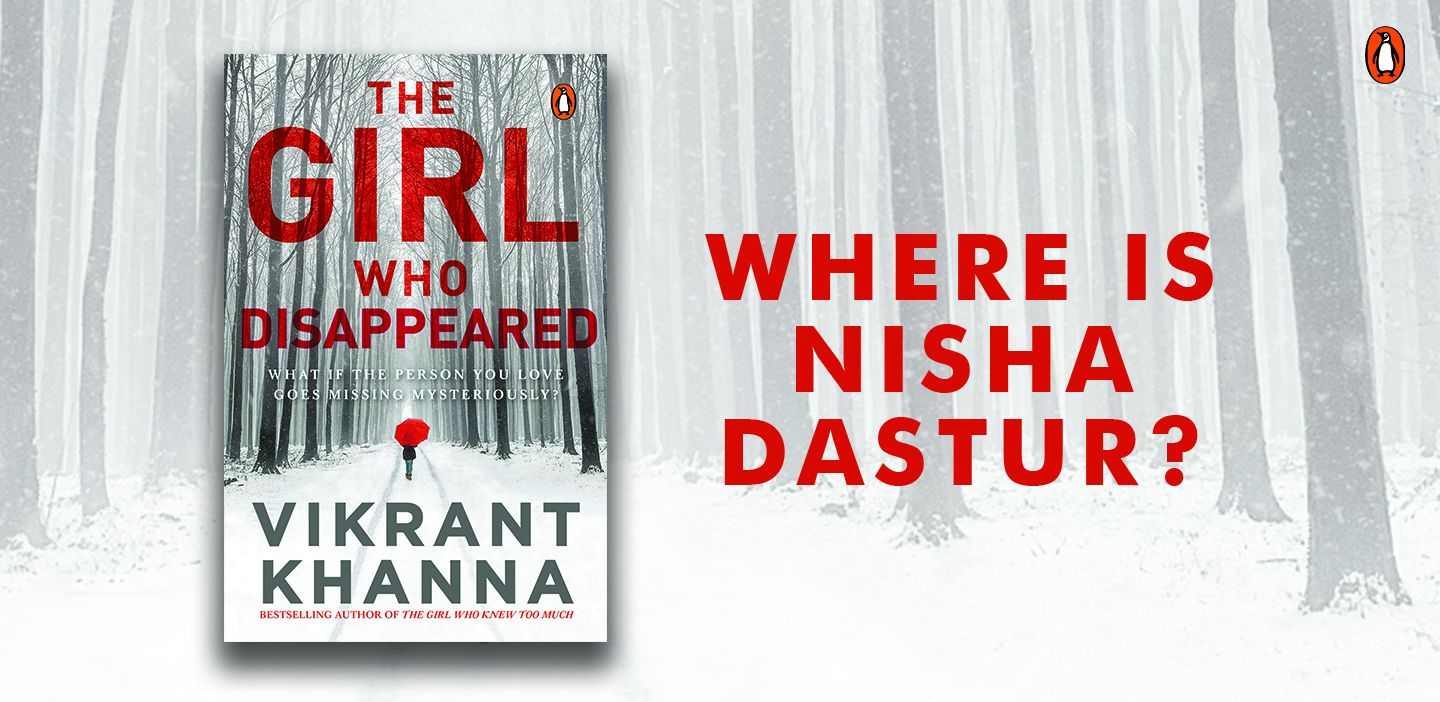
Nisha opens her eyes when the car jerks suddenly. She thinks she had been asleep and dreaming about an incident that hadn’t happened. But reality soon sinks in and she feels her throat constrict. The screeching sound of the brakes seems sinister to her. And when she sees what is in front of the car, she freezes. She looks at Rishi in horror.


Rishi shrugs. ‘The cat just jumped in front of the car from nowhere!’


‘You realize what this means?’


‘Nothing,’ Rishi replies. ‘It means nothing. Don’t make a big deal out of this.’


‘It’s a bad omen.’


Nisha glances at the black cat that has now wandered towards her side. The cat gazes back at Nisha. She doesn’t like the cat’s deep yellow eyes. Its stare is intimidating. Nisha swears there is malice in the eyes. Bile rises in her throat.


Finally, she has to drop her gaze as the cat doesn’t concede.


Rishi puts the engine in first gear and drives away.


‘Something bad is going to happen,’ Nisha whispers. ‘I feel it. Something bad is going to happen on this trip.’

The Other Side of the Divide- An Excerpt

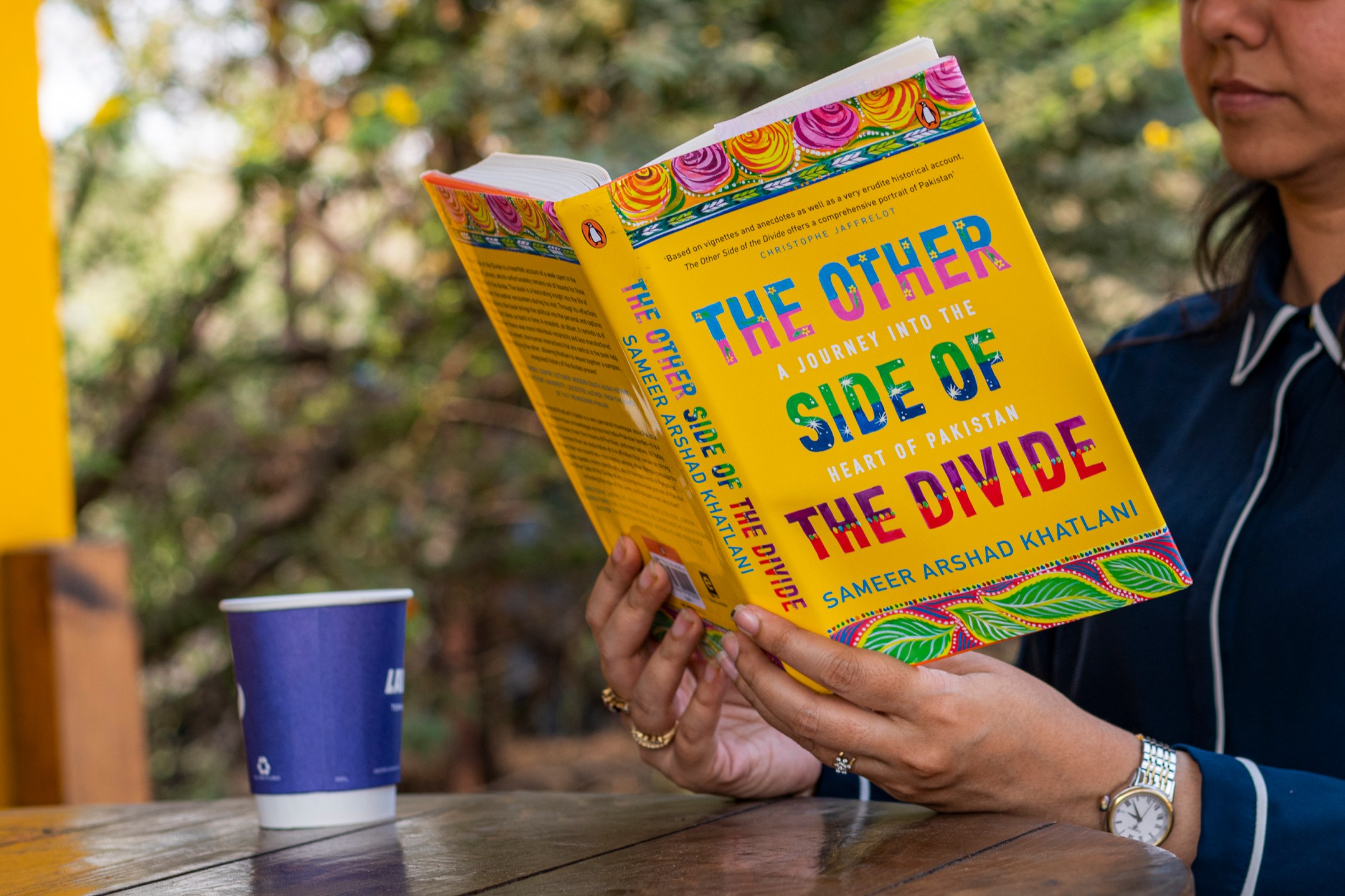
Pegged on journalist Sameer Arshad Khatlani’s visit to Pakistan, The Other Side of the Divide provides insights into the country beyond what we already know about it. These include details on the impact of India’s soft power, thanks to Bollywood, and the remnants of Pakistan’s multireligious past, and how it frittered away advantages of impressive growth in the first three decades of its existence by embracing religious conservatism.

Read an excerpt from the book below:


Anarkali Bazaar gets its name from a white semi-octagonal towered tomb believed to be that of slave girl Nadira Begum… popularly known as Anarkali… Legend has it that Mughal emperor Akbar had Anarkali interred alive in upright position in a masonry wall at the turn of the seventeenth century. She earned Akbar’s wrath for daring to fall in love with his heir apparent, Jahangir… The ‘love story’ has little historicity; it appears more to be a figment of somebody’s fertile imagination…

Lahore is replete with symbols and structures reaffirming shared India–Pakistan history and culture. Civil Lines is one such place around a kilometre from Anarkali’s tomb, where anti-colonial hero Bhagat Singh reignited the revolutionary Indian national movement.

Tempers ran high in Lahore in the winter of 1929. National movement leader Lala Lajpat Rai had succumbed to injuries sustained in a police assault at a protest rally. Young blood in revolutionary ranks sought revenge. Bhagat Singh volunteered to kill Lahore police chief JA Scott to avenge Rai’s death around the police chief’s office near the DAV (now Islamia) College. His comrades Rajguru, Jai Gopal and Chandrashekhar followed suit. They were disillusioned with Gandhi’s pacifist policies and wanted to fire militant youth imagination against the British. Bhagat Singh was chosen to pull the trigger. Rajguru was to provide him cover. Chandrashekhar Azad was tasked with ensuring their escape. The revolutionaries rehearsed the killing two days before the chosen date in the busy lanes of Civil Lines. They had prepared a red poster declaring: ‘Scott killed’, in anticipation of a successful mission. Everything except Scott’s identification went as per plan when the revolutionaries emerged out of DAV College hostel and took their positions. Jai Gopal, tasked to identify Scott, had never seen the British officer before. But he hid this fact from others. Bhagat Singh ended up pumping five bullets into the wrong person — twenty-one-year-old probationary police officer JP Saunders. Rajguru had seconds earlier waylaid and shot Saunders in his neck. He killed an Indian policeman who was in their hot pursuit. The revolutionaries ran into the DAV college campus, where they scaled a wall to enter its hostel compound. They fled to their hideout and eventually to Lahore, where they were brought back for their trial and were executed…

The scene of Saunders’ murder is now a busy street surrounded by the traffic police office, Islamia College, Metrobus route, Government College hostel, Lahore district courts and the Central Model School. Very few people remember its association with Bhagat Singh, who was an alumnus of DAV (Islamia) College, which was shifted to Ambala after the Partition. The college, which Hindu revivalist Arya Samaj managed before the Partition, is better known today as the alma mater of cricket legend Wasim Akram. It changed hands and was rechristened after the Partition. Three samadhis of Ranjit Singh’s relatives are located on the campus.

A road named after Hindu reformist Deva Samaj movement between Anarkali’s tomb and the DAV College is another remnant of Lahore’s past. Pandit Shiv Narayan Agnihotri founded it in Lahore in 1887. Deva Samaj began as theistic before re-emerging as an atheistic society. Deva Samaj emphasized ‘ethical conduct and confession of sins’ but denied the existence of gods. Agnihotri, too, is a forgotten man around the road named after his movement. Queries about the origin of the road’s name drew blank stares.

Deva Samaj Road begins close to the Civil Secretariat Metrobus station on the edge of civil court complex before merging into Abdali Road near Vishnu Street. Then Opposition leader Imran Khan, who had been campaigning against alleged election fraud had just held a huge anti-government rally in the area when I was there. Khan’s banners were hanging near Nasir Bagh as I passed by on my way to the Mall Road where the best of Lahore’s colonial heritage is located. The tree-shaded avenue is lined with chic shops, restaurants, hotels and mansions. Hindu and Sikhs owned most of the properties before the Partition also on the Mall Road, built in 1851 to connect Anarkali with Lahore Cantonment. A handful of Muslims owned businesses on the Mall Road before 1947. Today, a sprinkling of Hindus is left in Lahore; most of them are Valmiki.

An orange flag fluttering atop a temple stands out as a sign of Hindu presence at the corner of Bheem Street just across the Metrobus line off the Mall Road. Located in Lahore’s biggest tyre markets amid small shops and dhabas, it is one of Lahore’s two functioning temples. A bell hangs besides an Om symbol at the temple’s main door, where a board declares in Urdu: ‘Insaf ka mandir hai yeh, bhagwan ka ghar hai [This is temple of justice and the lord’s house].’… Valmiki temple is more than a place of worship, it is sort of a community centre, where Valmiki converts to Christianity are among regular visitors.

The day 24 December 2013, when I was roaming around in the area, was one of celebration for the Lahori Hindus; they had finally been handed possession of 14,200 square feet of land for a crematorium at Babu Sabu Chowk. The transfer followed an August 2013 Supreme Court order for the allotment. Lahore’s Hindus had moved the top court seeking the immediate transfer of the land for last rites. The handover had been hanging fire since the government was forced to allocate the land in 2006 following a sixty-two-year-old Hindu woman’s burial at a Muslim graveyard…

The Krishna temple on Ravi Road, over 3 km north of Valmiki temple, is the other functional Hindu place of worship in Lahore. The temples feature regularly on Pakistani TV channels… They invariably have sound bites of saffron-kurta-pyjama-clad priest Bhagat Lal, a balding man in his sixties. Lal has been the mainstay of Hindu religiosity in Lahore for decades.

The Krishna temple was the scene of an arsonist attack hours after foot soldiers of India’s current ruling party demolished the Babri Masjid hundreds of kilometres away in 1992. The lives of Lahori Hindus were suddenly turned upside down for no fault of theirs just when they had begun picking up the pieces decades after the Partition upheavals. The temple, however, was up and running within six months thanks to Lal’s resilience. He reopened the temple and restarted pujas twice daily with the help of government compensation. The fraught India–Pakistan ties took an unexpected turn for the better a decade later… A group of Indian pilgrims to Katas Raj temples in northern Pakistan reinstalled Krishna, Radha and Hanuman idols at the temple for the first time since the Partition in February 2007…

The reinstallation overlapped with the brief India–Pakistan détente from 2003 to 2008. The restoration of Katas Raj temples remains an important legacy of the thaw. The choice of Hindu nationalist and former Indian deputy prime minister Lal Krishna Advani for inaugurating the restoration project in 2005 showed Pakistan’s willingness to move beyond his legacy. Advani led the campaign for the construction of a temple dedicated to Lord Ram in place of the Babri Masjid in Ayodhya in the 1990s. The campaign led to the demolition of the ancient mosque in 1992 and provoked anti-Muslim violence across India…

In his book India after Gandhi, Ramachandra Guha writes: ‘Hindu mobs attacked Muslim localities, and — in a manner reminiscent of the grisly Partition massacres — stopped trains to pull out and kill those who were recognizably Muslim.’ The demolition also triggered violence against Hindus in Bangladesh and Pakistan in a throwback to the late 1940s bloodbath that ripped the subcontinent and made the Partition inevitable. Shrines like Katas Raj temples fell into disrepair as the bloodbath forced the virtual flight of Hindus from West Punjab in 1947. The first religious service at the temples since the Partition in 2006 turned the page a year after Advani’s visit to Pakistan for the inauguration of its conservation project… But the typical one-step-forward-two-steps-back routine in India–Pakistan ties followed.

Mata Hinglaj temple is perhaps Pakistan’s most important Hindu shrine dedicated to the Kshatriya caste’s deity in the remote mountains of Baluchistan. It is one of the fifty-one Shakti Peeths associated with ‘indescribable spiritual power’ believed to have been created at places where body parts of Shiva’s consort, Sati, had fallen. They are said to have been created after Shiva took her corpse around following her self-immolation in Daksh’s court. Hinglaj has an important place in Hinduism since Sati’s head is said to have fallen there. It is among the most important syncretic shrines dotting the subcontinent. Muslims revere the shrine too; they call it Nani Pir.

Pilgrimage to Hinglaj from India abruptly ended after the Partition, accounts of which date back to the fourth century. The thaw in India–Pakistan ties facilitated a rare visit of a group of Indian pilgrims in February 2006…

Pakistani Hindus want more Hindu pilgrimage sites in their country to flourish like those of the Sikhs. They hope the two countries will encourage Hindu religious tourism. It would create more stakes in peace and benefit local Hindus… Many Indian pilgrims to Katas and Nankana Sahib visit Anarkali and are often surprised to see the Hindu presence in Lahore, where restoration of abandoned Jain temples could attract rich Jain pilgrims. Digambar Mandir, located a kilometre south of the Valmiki temple, is one of at least six abandoned Jain temples in Lahore. They stand as a reminder of Jain pre-eminence across the subcontinent before the emergence of Buddhism and Hinduism. Swetambar and Digambar Jain temples are located next to each other in Lahore’s Mohallah Bhabrian. As many Jain temples are situated on tony Ferozpur Road. Footprints said to be that of Jainism founder Rishabha’s in stone at Lahore’s Guru Mangat Jain temple are believed to be the region’s oldest religious relics. A site of great religious tourism potential remains untapped and hostage to India–Pakistan tensions and a lack of vision…


The Other Side of The Divide attempts to present a contemporary portrait of Pakistan-where prohibition remains only on paper and one of the biggest taxpayers is a Parsee-owned brewery-as a complicated and conflicted country suspended between tradition and modernity.


The Lone Empress- An Excerpt

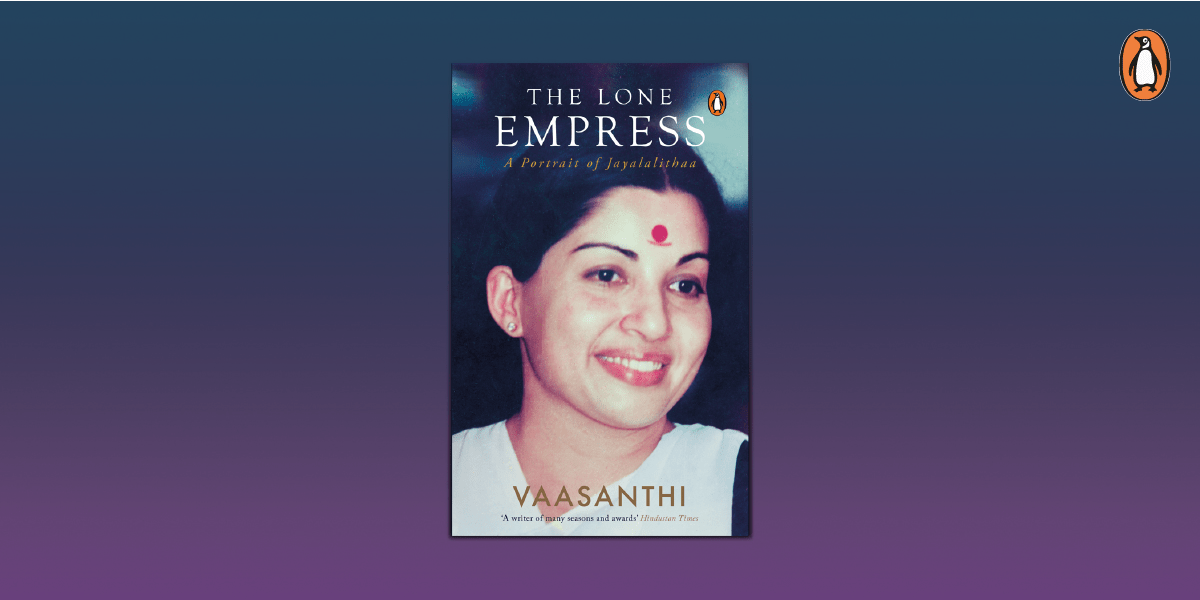
Today, Jayalalithaa, a woman who successfully challenged the mainstream values of Tamil Nadu politics, was born. Jayalalithaa’s journey from a glamour queen to a towering political leader is one of the most extraordinary stories of contemporary India.

The Lone Empress candidly chronicles Jayalalithaa’s tumultuous political life, examining her battle with intra-party rivalry to become the first elected woman chief minister of India; the long-lasting hostility with her rivals; her pursuit of support from the Centre for political survival; and her discomfort with criticism and dissent.

Here’s an excerpt from the book:

The AIADMK was now a divided house. The anti-Jayalalithaa wave inside the party gathered momentum and some leaders made her a target of attack in public meetings. The pro-Jayalalithaa group in the party retaliated with equal vehemence, while MGR tried to ignore what was going on. Perhaps he knew what was in store when he suddenly fell ill on 5 October 1984 and was rushed to Apollo Hospital. He had suffered a stroke and lost his speech. His kidneys had stopped functioning. He was also suffering from diabetes. This had been discovered only a few months earlier, when he complained of giddiness at a function in Thanjavur. MGR was always very secretive about his health problems, not wishing the public to know of them. He must have hidden his problems even from Jayalalithaa who, therefore, was shocked when she learnt that he was in the intensive care unit (ICU), fighting for his life.

Fearing the political fallout if the public and the Opposition came to know, the top brass decided that visitors, especially Jayalalithaa, should not be allowed. Of course, there was no question of allowing press reporters, with their cameras, anywhere in the vicinity. RMV was worried that if MGR’s face, which looked ghastly now, was photographed and shown to people, they would think it was lifeless.

Within no time, all hell would break loose. He most certainly did not want Jayalalithaa to step into the hospital. She was good at theatrics and could go out and declare that MGR was in no position to hold office any more or, for that matter, even likely to live. Pro- Jayalalithaa party members noticed that MGR’s relatives were allowed to see him. Vaali from the film world could see him. RMV could see him. But Jayalalithaa, who had been propaganda secretary of the party until the previous month, could not.

Solai says, ‘When MGR was admitted into Apollo, these men decided to finish her off. They even planned to have her beaten up. Dr Pratap Reddy, chairman, Apollo Hospital, came to know of this and asked her not to visit MGR in the hospital. Anything could happen when she was in the lift. Later, Thirunavukkarasu would go in a pilot car and K.K.S.S.R. Ramachandran would follow her in another’, as a precaution. Thirunavukkarasu, an AIADMK member and her ardent supporter, later turned against her and would join the Congress, while K.K.S.S.R. Ramachandran became an opponent and joined the DMK.

With the chief minister suddenly taking ill, the state assembly was adjourned sine die. V.R. Nedunchezhian was made acting chief minister. The entire cabinet was camping at the hospital, expecting the worst. Following the doctors’ diagnosis, it was decided that a neurologist, a cardiologist and an urologist be brought from the US. Dr Hande, who was then health minister, went by chartered plane to fetch the doctors after they reached Delhi. They were surprised to find the patient still alive. In spite of the panel of experts attending to him, MGR’s condition became critical on 18 October. Soon he was shifted to the Brooklyn Hospital, New York, for treatment. When Jayalalithaa came to know of this she was devastated.

With MGR away in the US, things became difficult for her. She was being deliberately alienated from the party by the seniors. It is said that Jayalalithaa approached Indira Gandhi for support, which could only have been a moral support. Jayalalithaa was aware that the prime minister was well disposed towards her as was evident from her association with Indira Gandhi in Delhi. Jayalalithaa must have been confident that Indira Gandhi would step in as her mentor. The Congress and the AIADMK were alliance partners and Jayalalithaa probably thought that if something happened to MGR, she could muster support from Indira Gandhi to strengthen her position. Jayalalithaa was still a greenhorn in politics and one does not know exactly what was on her mind. She briefed Mrs Gandhi on how she was being sidelined by senior party men, who were being vindictive out of selfish reasons. Indira Gandhi, though sympathetic, apparently advised Jayalalithaa to be patient.


The Lone Empress  is available now!

error: Content is protected !!