Publish with Us

Follow Penguin

Follow Penguinsters

Follow Penguin Swadesh

Death: The Most Fundamental Question – An Excerpt From ‘Death’

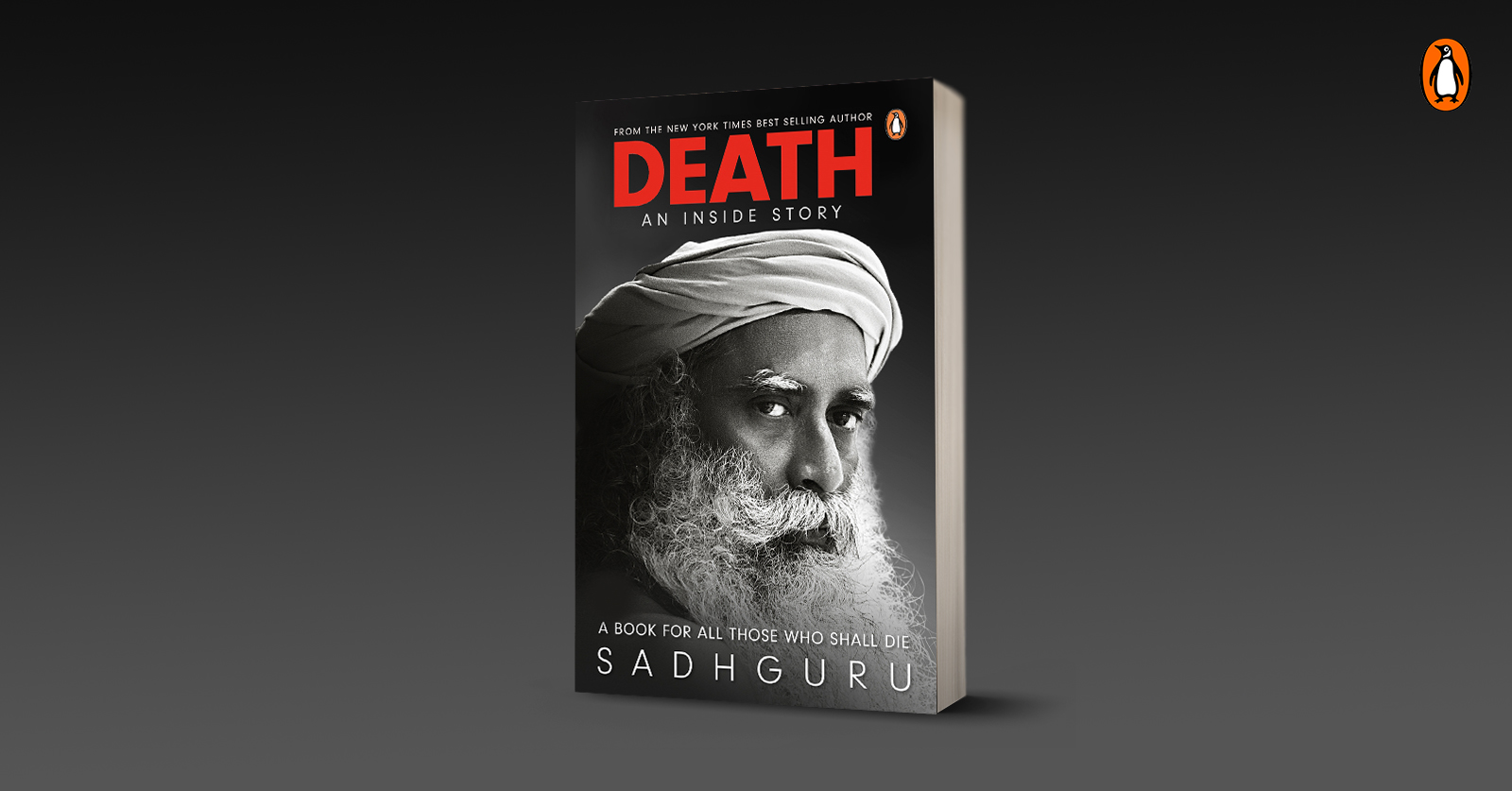
Death is a taboo in most societies in the world. But what if we have got this completely wrong? What if death was not the catastrophe it is made out to be but an essential aspect of life, rife with spiritual possibilities for transcendence? For the first time, someone is saying just that.

In this unique treatise-like exposition, Sadhguru dwells extensively upon his inner experience as he expounds on the more profound aspects of death that are rarely spoken about. From a practical standpoint, he elaborates on what preparations one can make for one’s death, how best we can assist someone who is dying and how we can continue to support their journey even after death.

Whether a believer or not, a devotee or an agnostic, an accomplished seeker or a simpleton, this is truly a book for all those who shall die!

Here’s an excerpt from the book:

Death is a very fundamental question. Actually, death is closer to us than the statistics we read about it. Each moment, death is happening in us at the organ and cellular levels. This is how, with just one look at your insides, your doctor knows how old you are. In fact, death began in us even before we were born. Only if you are ignorant and unaware does it seem like death will come to you someday later. If you are aware, you will see both life and death are happening every moment. If you as much as breathe a little more consciously, you will notice that with every inhalation there is life, with every exhalation there is death. Upon birth, the first thing that a child does is to inhale, to take in a gasp of air. And the last thing that you will do in your life is an exhalation. You exhale now, and if you do not take the next inhalation, you will be dead. If you do not get this, just do an exhalation, hold your nose and do not do the next inhalation. Within a few moments, every cell in your body will start screaming for life. Life and death are happening all the time. They exist together, inseparably, in the same breath. This relationship goes even beyond the breath. Breath is only a supporting actor; the real process is of the life energy, or prana, that controls physical existence. With certain mastery over prana, one can exist beyond breath for substantial amounts of time. Breath is a bit more immediate in its requirement, but in the same category as food and water.

Death is such a fundamental aspect, because if one small thing happens, you can be gone tomorrow morning. Why tomorrow morning—one small thing now and you could be off the next moment. If you were like any other creature, maybe you would be unable to think about all this, but once one is endowed with human intelligence, how can you just ignore such a significant aspect of your life? How can you avoid it and live on as if you are going to be here forever? How is it that after living here for millions of years of life, human beings still don’t know a damn thing about death? Well, they know nothing about life either. We know all the trappings about life, but what do you know about life as such?

Fundamentally, this situation has come about because you have lost perspective as to who you are in this Universe. If this solar system, in which we are, evaporates tomorrow morning, no one will even notice it in this Cosmos. It is that small, just a speck. In this speck of a solar system, Planet Earth is a micro speck. In that micro speck, the city you live in is a super-micro speck. In that, you are a big man. This is a serious problem. When you have completely lost perspective as to who you are, how do you think you will grasp anything about the nature of life or death?


Want to read more? Death is available now!
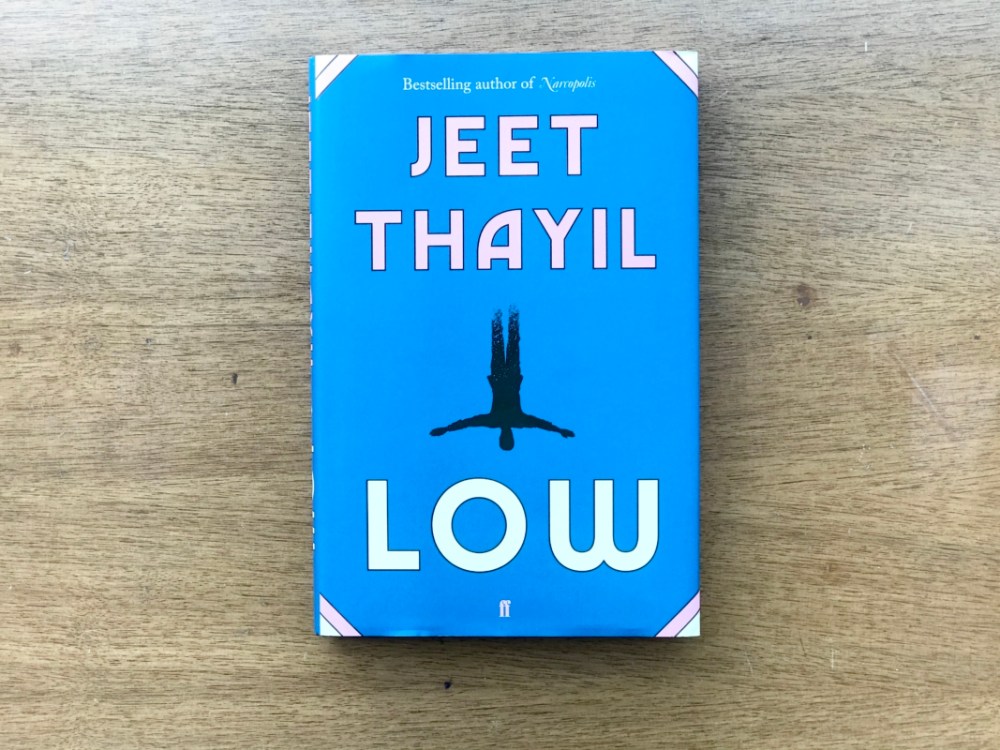
Will Ullis be Alright?- An Excerpt from ‘Low’

Following the death of his wife, Dominic Ullis escapes to Bombay in search of oblivion and a dangerous new drug, Meow Meow. So begins a glorious weekend of misadventure as he tours the teeming, kaleidoscopic city from its sleek eyries of high-capital to the piss-stained streets, encountering a cast with their own stories to tell, but none of whom Ullis – his faculties ever distorted – is quite sure he can trust. Heady, heartbroken and heartfelt, Low is a blazing joyride through the darklands of grief towards obliteration – and, perhaps, epiphany.

Read an excerpt from the book below:

The mysterious quality of in-flight air. The low whine of tinnitus, a charged anxious ringing that kept adjusting its volume. The sense of something about to happen, something decisive. Then the lights dimmed as the aircraft dropped through the clouds and prepared to land. It taxied and turned, taxied and stopped.

Payal sprang up again, grabbed her wheeled case from the overhead bin, and went to the front exit, resplendent in her sari. Ullis stayed where he was until the other passengers had left. Then he put half an Ambien under his tongue and took the white plastic box from the overhead bin and floated towards the lovely slum city.

He’d left Delhi on a whim, carrying only the box from the crematorium. If not for the box what would he do with his hands? He would wring them. Repeatedly. Aki was dead and he didn’t know what to do from one moment to the next. The vast abstraction of time reduced to this: stupefaction with the hands. For now it was okay. For now his hands were cradling the box that contained her ashes.

The events of the week had passed through him without resistance from the moment he came home to find Aki dead in the study.

He’d panicked and called her mother. Then he drove to her house, breathless and shouting in the suffocating car. Aki’s mother had come back with him to the apartment in Defence Colony and they’d taken his wife’s body to the hospital. A quartet of stone-faced orderlies had moved her from the emergency room to the morgue. All night the panic sat like a heavy bear on his chest. The bear stayed for many days and nights, until it gave way to exhaustion and blessed amnesia. His mind disengaged from his surroundings. He felt separated from his body, but only partially, as if he’d been insufficiently anaesthetised.

Later, the only thing he remembered clearly was the crematorium, the priests in their white dhotis and saffron forehead smears, their oily faces peering at him from clouds of smoke, the cold young eyes devoid of all earthly emotion except boredom. He’d been shaken by their indifference and dazed by all that was expected of him.

Her mother had dressed Aki in a spectacularly inappropriate multi-coloured silk sari, and she’d made Ullis don a black suit and white shirt. He’d added a pair of chocolate loafers for urgent private reasons and foregone a tie as a concession to the April heat. This was how husband and dead wife had arrived at the crematorium: dressed for a wedding, in clothes neither had worn in their life together.

The suit and sari had been unnecessary. There were no mourners, no witnesses other than a handful of crematorium employees and Ullis and his dry-eyed mother-in-law. She had organised the cremation in such haste that there had been no time to call those who had known Aki and loved her. There was no time for anything other than the observance of rituals, each more pointless than the next.

The bored priests had mouthed their inane mantras. They had sifted uncooked rice and read from ancient leather-bound tomes and stared with their oily eyes. They rang tiny brass bells in a sequence to which only they were privy. (The bells are an omen, and they ring more than once in this story.) When they demanded of him some minor role in the general pagan tumult, he had obliged with the acquiescence required of the husband of the bride. After all, this was what she had been made to resemble, a young bride in silks and flowers. Except that the marigolds were uniformly wilted. Were they leftovers from a previous funeral?

When the priests told him to push the button that would slide her into the electric furnace, he had worried that the absurd sari would burst into flame.

He’d taken a last look at her slight figure dwarfed by piles of flowers and sundry low-priced objects, her face obscured by the sari’s pallu, artfully obscured so no viewer would remark at the blood vessels that had burst on her cheeks and forehead and neck like scarlet-brown buds that would never bloom. “Kar do,” the priest had said. Obediently Ullis slid her in, and some time later his mother-in-law divided his wife’s ashes into two boxes: “One for you and one for me.”

From the crematorium, clutching the box and dressed in his mourning suit, he walked into the dust of an enclosed courtyard surrounded by dead trees and broken concrete columns. From there he walked into the dust of the street.

“Dominic,” his mother-in-law had said. “You will be all right.”

“No,” he said. Was she now his former mother-in-law?

“Of course you will,” she said. “You’ll be just fine.”

“Okay.”

“Shall I ask Jeevan to drop you home?”

“No thank you,” he said. “I’ll take a taxi.”

“Arré, why? I have car and driver. He can drop.”

“I’ll take a cab. But thanks.”

As soon as he took a seat in the back of the battered white Honda that smelled of garam masala and hand sanitiser, Ullis decided not to return to the empty apartment in Defence Colony where each room reminded him of his dead wife and his abject failure as a husband and a man.

What was the point of going home? It was the last place he wished to go. No, he could do better. He’d travel to a city by the sea. After all, was he not carrying his wife’s ashes and did they not need to be immersed?

“Can you take me to the airport?”

The driver was young and easily shocked. He seemed unreasonably upset by the change of plans.

“Sir, I cannot,” he said.

“But why not?”

“First, you must change destination on phone.”

Ullis opened the app. He deleted “Defence Colony” from the drop location and typed in ‘Delhi Indira Gandhi International Airport’.

In half an hour he was at a reservation desk where he bought himself a ticket to the city he knew best, where oblivion was purchased cheaply and without consequence.


Low is a blazing joyride through the darklands of grief towards obliteration – and, perhaps, epiphany. The book is available now!

Is Secularism a Colonial Concept?

How did India aspire to become a secular country? Given our colonial past, we derive many of our laws and institutions from England. We have a parliamentary democracy with a Westminster model of government. Our courts routinely use catchphrases like ‘rule of law’ or ‘natural justice’, which have their roots in London.

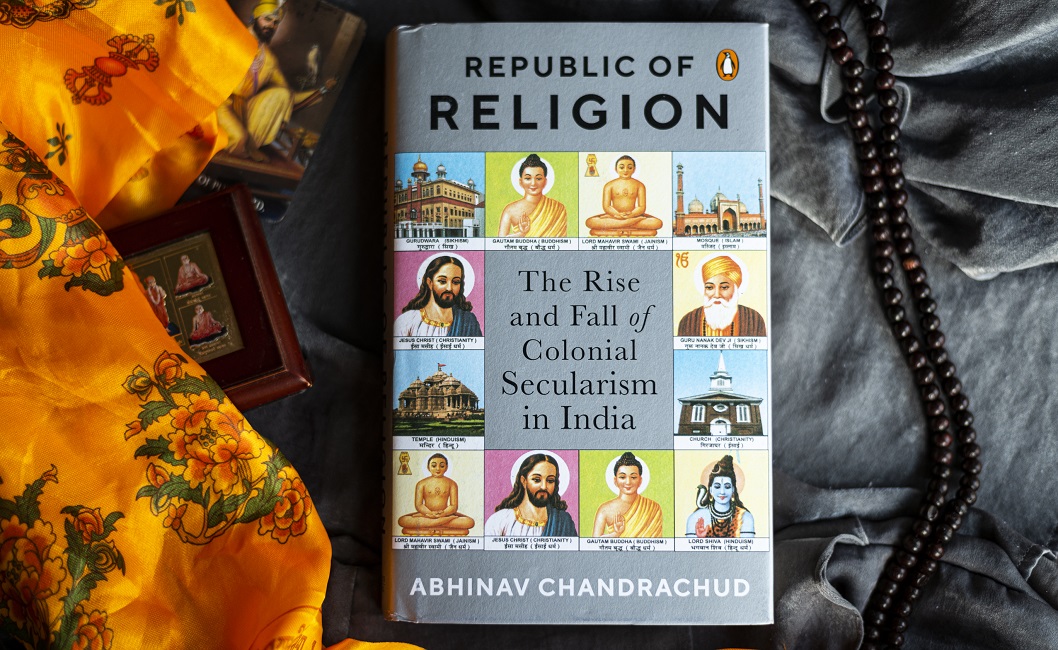
In Republic of Religion, eminent scholar Abhinav Chandrachud presents well-researched reasons to argue that the secular structure of the colonial state in India was imposed by a colonial power.

Find an excerpt from his narrative that sets up this argument while exploring the nuances of secularism as a concept.


Though scholars disagree on the meaning of secularism, broadly speaking, two factors go into making a secular state: no religion should be established by law as the official state religion and all citizens should have the freedom to practise their own religious beliefs.7 Unlike the US, England has an established religion. If India derives so many of her laws and institutions from England, how is it that there is no established religion in India?

In the coming pages, we will see that secularism was artificially imposed by the British colonial government in India even though it did not fully exist in England. The law in England assumed only Christianity to be the one true religion, and Indian religions like Hinduism and Islam were considered to be ‘heathen’. Therefore, though England had an established religion—Christianity through the Church of England—it could not declare an Indian religion, like Hinduism or Islam, as the official religion of India. It could not force Christianity on India probably due to the fact that this would have made the colony ungovernable.8 Instead, it decided to separate religion and the state in India. Though government officials in England were entangled with the administration of churches there, colonial officials felt uncomfortable associating with ‘false’ Indian houses of worship like temples and mosques and therefore assigned them to the administration of Indian trustees.

British officials adopted a policy of secularism in India—in contrast to England—which will be referred to here as ‘colonial secularism’. Though ‘secularism’ is itself a relatively new9 word and one of imprecision,10 broadly speaking, colonial secularism in British India meant that the government did three things. Firstly, the colonial state would not endorse or get itself entangled in the administration of any local religions. So it disentangled itself from the management of temples—a function which was historically performed by Indian rulers—and handed temple administration over to trustees. This was despite the fact that a parallel nineteenthcentury campaign to disestablish the Church of England failed in the metropole.11 Further, before taking up office, public officials in India were made to solemnly swear or affirm their oaths, though they might have had no conscientious objection to swearing in the name of God, Vishnu or Allah. In other words, any mention of the word ‘God’ was removed from the oaths administered to public officials in India—an accommodation which was only available to Quakers and some others in England. Secondly, the colonial state provided heightened protection to religious minorities, often feeding into a sense of paranoia that they would be left helpless without its imperial

intervention. So the personal laws of different religious groups were, in theory,12 left alone,13 though England did not have a separate set of ‘personal’ laws for its religious minorities like Catholics and Jews. Adopting the old Roman strategy of retaining the laws of conquered territories in order to make them more easily governable, colonial officials decided against adopting a uniform civil code in family law matters. Cow slaughter, though reviled by much of India’s majority Hindu populace, was permitted to be carried out by Muslims during the festival of Bakr Id and Hindus who objected to it were considered ‘hypersensitive’. Seats on legislative bodies were filled by voters on the basis of separate electorates. Thirdly, the government tacitly, though nervously, encouraged Christian missionaries to preach Christianity and obtain converts though a Hindu or Muslim preacher who might have tried to do the same in England would have put himself at risk for criminal prosecution.


Secularism is one of the most celebrated ideals of a diverse India. Republic of Religion is a unique narrative presenting a never-before explored perspective and colonial ties that can potentially lie behind this term.


Troubled Neighbours: India, China and His Holiness the Dalai Lama

In 1959, the Dalai Lama escaped from Tibet into India, where he was granted refuge. Few know about the carefully calibrated operation to escort him safely from the Indian border.

Political officer Har Mander Singh successfully managed this operation, and kept diary entries of his time. His niece, Rani Singh, brings to the fore the story that forever changed relations between India, China and Tibet in An Officer and His Holiness.

India’s relationship with its neighbour China was quite troubled back in the 1950s. The excerpt below, taken from Rani Singh’s book, presents a glimpse into how this troubled backdrop became a precursor to His Holiness the Dalai Lama’s escape and refuge into India.


The key reason for the disagreement between India and China was that contrary to India’s perception of matters, the Chinese saw themselves as leaders of the new world order. They therefore expected— indeed demanded—the prestige, respect and servitude that went along with it.

When China overran Tibet, partly as a way of securing its western flank, India did not react. Instead, elephant-like Delhi sat and waited patiently for the aggression to abate.

It did not. Instead, it grew in intensity.

During the 1950s, Chinese premier Zhou Enlai had been on two ‘goodwill’ visits to India. But Zhou Enlai’s polite gestures at diplomatic meetings had not stopped him from laying claim to India’s vulnerable northern flanks outside of these discussions: Ladakh and territories in the NEFA, now known as Arunachal Pradesh. Moreover, China was eyeing Barahoti in Uttar Pradesh, just south of Tibet. Indian troops were based there, and when Chinese soldiers tried to cross the southern border into India, the elephant finally protested. But the dragon did not blink.

In the late 1950s, China denounced the McMahon Line, challenging its international validity. At the end of that year, Zhou Enlai visited Nehru in India with soothing words, assuring him that the border issue with Tibet would be resolved peacefully. In that same meeting, China also recognized the Indian boundary with Burma.

By that time, Chinese soldiers were actually in Barahoti and had marched ten miles into Indian territory. The latter had taken too passive a role and now sat helpless as the dragon advanced, fired up. The following year, talks took place between the two countries. China was persuaded to withdraw its military but left its civilians in the territory.

In January 1959, Zhou Enlai formally claimed Ladakh and NEFA for his country, giving orders for his command to be reflected in Chinese maps.

Just four years earlier, India had formally handed over control of communication services in Tibet to China. When the Tibetan Buddhist leader, the Dalai Lama, asked Nehru for refuge in India because of increasing Chinese pressure on him and the Tibetan people, Nehru who was balanced precariously on a political tightrope, chose to side with Peking and refused the request.

By March 1959, the eyes of the world were on the highly charged power plays. Following a crackdown on the Tibetan capital of Lhasa by the People’s Liberation Army (PLA), the Dalai Lama managed to escape possible capture and containment. He again sought refuge in India.


An Officer and His Holiness presents extracts from  Har Mander Singh’s diary entries, detailing some escape plans for the Dalai Lama. Full of never-seen-before pictures and account of this operation, the book also presents a relevant and comprehensive overview of socio-political relations between China, India and Tibet today.

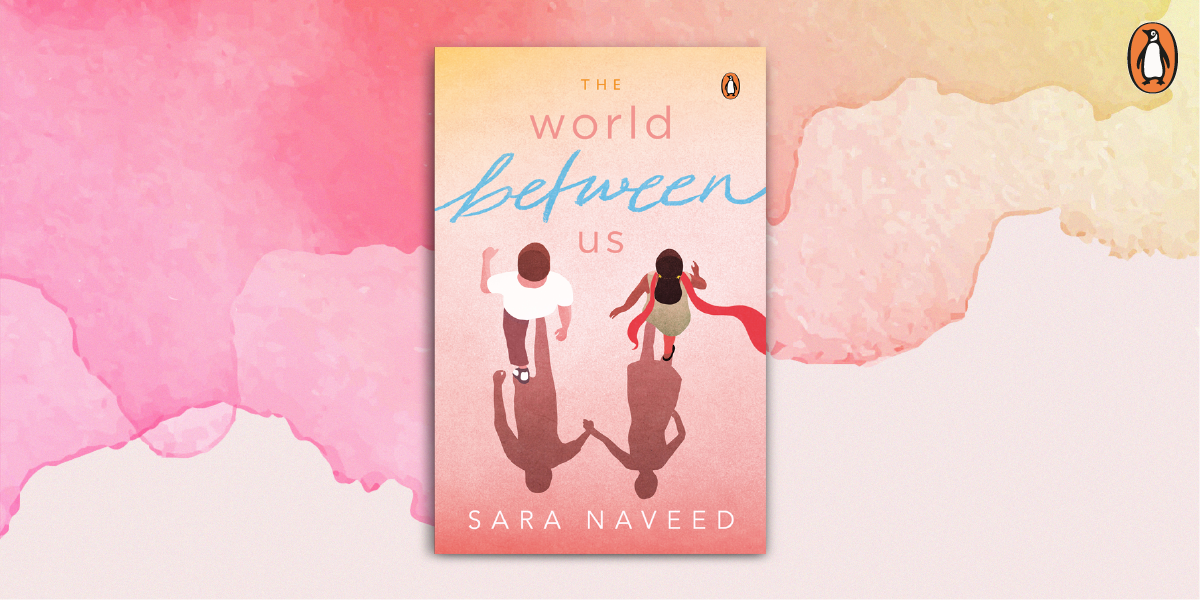
Does Amal Love Qais?- An Excerpt from ‘The World Between Us’

When Amal finds out that her disastrous Tinder match is now going to be her boss, she can’t be more annoyed. Qais Ahmed is everything she never wants to be: narcissistic, manipulative and arrogant.
However, despite her relentless efforts, she is unable to resist his charm and wit and is drawn to him once she gets to know the real him.
She soon discovers that he isn’t just a part of her professional life but has a deep connection to a past she is trying to forget.
Will this disturbing secret tear them apart or bind them together forever?

Read an excerpt from The World Between Us below:

‘Looking for me?’ I asked from behind her.
She spun around and looked at me. ‘Qais!’
‘Hi,’ I said, smiling at her.
She quickly came up to me. ‘Where were you yesterday? Why didn’t you come to work? Do you know how worried I was?’ I was silent all through her grand inquisition and just stood looking at her, admiring her.
‘You went home that day without a word to me and then yesterday you didn’t show up at all. You could have at least informed me. You got me so worried, you’ve no idea!’ I could hear the panic in her voice. ‘Qais . . . are you even listening to me? Tell me, what happened to you yesterday? Were you all right? Is everything okay?’
When I remained silent, she asked again, ‘Qais, what’s wrong? Talk to me!’
Gathering myself, I reached for her hands, my eyes downcast. ‘Were you really worried about me?’ I asked, my voice low.
‘Of course, I was!’ she exclaimed in a low voice to match mine.
‘Why?’ I asked, looking into her eyes.
‘What?’ she whispered, frowning.
‘Why were you worried about me, Amal?’ I asked, tightening my grip on her hands and drawing her closer.
‘Qais . . .’ she whispered breathlessly as the space between us reduced.
‘Would you get worried if something were to happen to me?’ I asked, looking deep into her eyes. She looked back at me but stayed silent. ‘Would you miss me if I died?’
‘Qais!’ She put her finger on my lip. ‘Please don’t say that.’ Her eyes welled.
‘Tell me, would you care if I died?’ I continued.
‘Please . . . stop saying that,’ she said as a tear rolled down her cheek, her finger trembling over my lips.
Taking advantage of her emotional vulnerability, I kissed her finger. She gasped and looked at me wide-eyed.
‘Qais . . .’ she whispered, shocked, taking a step back.
‘I know you care . . . I know you do . . .’ I said, reaching for her hand.
She withdrew her hand from mine and wiped her cheek. ‘What . . . what are you saying?’ she sniffed,
turning away.
‘Just answer my question. Do you care for me?’
‘Of course, I do. So what?’ she asked, turning back to look at me.
I smiled. ‘That means only one thing, Amal. You’re in love with me.’


Is Amal in love with Qais? Read The World Between Us to find out!

Heartbreak, Sadness and Vampires

Love isn’t easy like Sunday morning. Seventeen-year-old Gehna Rai has normal friends, goes to normal school and belongs to a normally dysfunctional family. Everything about her is normal – except for the fact that she is also going to be a mom.

Erma is a nerdy high-school drop-out and dreams of becoming a poker pro. He also takes care of his dad, who has Parkinson’s disease.

Meet our latest favourite millennials in the excerpt below!


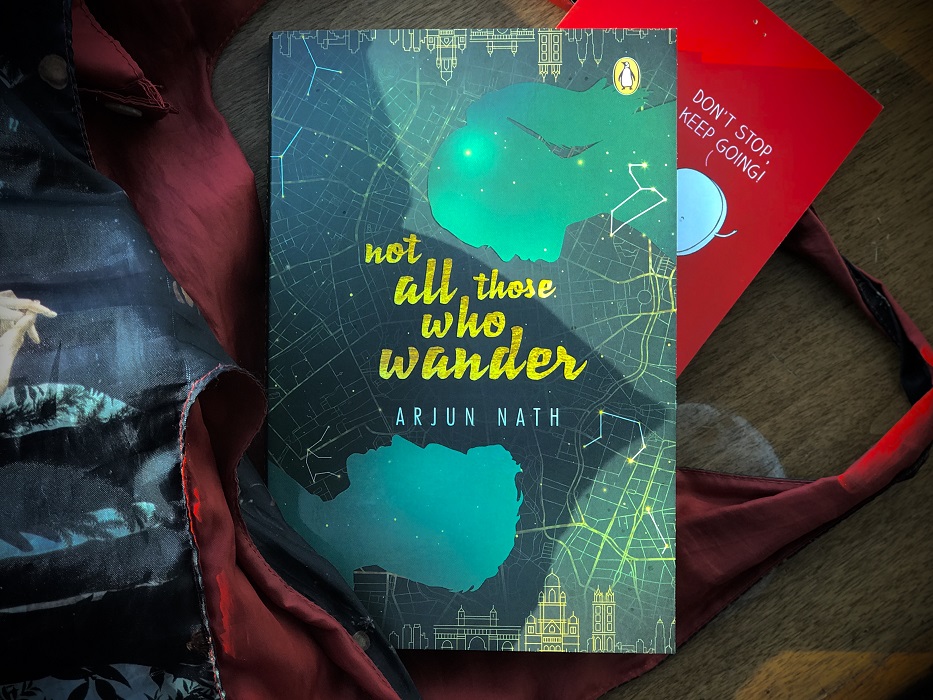
Gehna Rai was a girl who flirted with sadness.

She was tempted by it the way a person with vertigo sometimes feels drawn to the edge. It free-floated around the periphery of her days and she was aware of it following her always. When she was younger, and didn’t fully understand its nature, she would turn to meet it and it would squeeze her heart, seeping into her bones like a cold fog. In those days Gehna was optimistic: she believed that the sadness was a mood and, therefore, that certain distractions—like listening to music or going for a swim—could make it go away.

Wiser now, Gehna was no longer sure that she had any say in the comings and goings of the sadness, but she still held hope of ducking it. She had drawn strict boundaries, drip-feeding herself the pop songs about heartbreak and the tragic movies she loved, never exceeding a ratio of one part sad to nine parts happy. She stopped watching historical docudramas on the Holocaust and got Eram to screen her books before she agreed to read them.

‘I don’t get it,’ he had said the first time she asked him, shuffling through the pile of new books on her desk. Gehna was sitting on a floor cushion as far as she could from the books while still being in the same room. ‘You want me to tell you what happens in the stories?’

‘No. I want you to tell me what doesn’t happen.’ Eram steepled his fingers and nodded intelligently. ‘Right. It all becomes clear to me now. You’re saying, read the books and tell you what doesn’t happen in them.’ He lifted, with his thumb and forefinger, a book from the pile. ‘Now, this, for instance. Ian McEwan’s Atonement. I haven’t read it but I can tell you—just judging from the cover, mind you, and the fact that it was shortlisted for the Booker Prize in 2001—that vampires don’t happen in it. No vampires at all. Or exploding sheep. It doesn’t enlighten us on the dark and bloody past of shipping insurance. Also, it only touches on the oral sex techniques of the natives of Bora Bora but doesn’t really—

‘Stoppit,’ Gehna cut off his riff. ‘Like, children dying. Or nice people. If any children or nice people die in a book, I don’t want to read it. You know what I mean.’


Amidst the quirkiness, author Arjun Nath gives us some very heartfelt moments like these to remember.

Caught between a sincere friendship and something more, Eram and Gehna give us a story that is #litAF!

What Really is ‘Happily Ever After’?

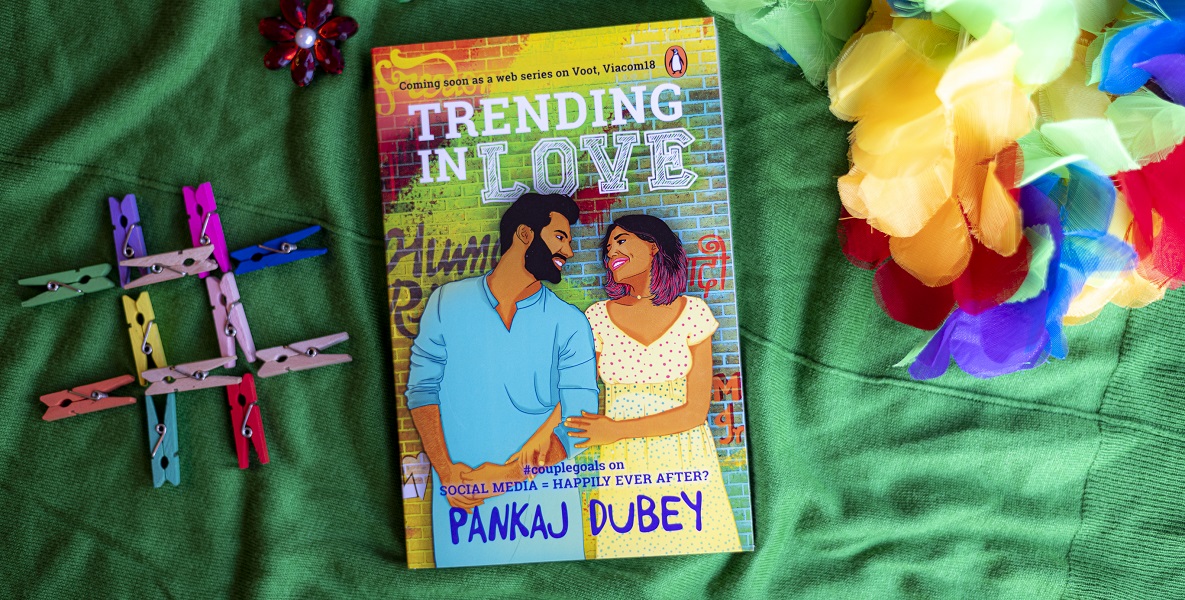
Sanam is a carefree, but headstrong young girl. A spat with a politician’s son pushes her to take up the challenge of becoming an IAS. At the same time, a small-town boy, Aamir, is nudged into studying for the civil services too. Both become rank holders.

They meet at the IAS Training Academy, Mussoorie. They fall in love and all hell breaks loose. Their religious differences come to the fore, things take a dangerous turn and there is an explosion on social media.

Meet the ambitious Sanam in an excerpt from the book below!

Life has a way of changing things around you with blinding speed, and in a way that you have little choice but to adapt to your new circumstances. Even a smiling sunflower basking in happiness could be dragged under the harshest spotlight the very next instance and whacked to answer questions that burn its yellow tongue. Our Sanam became one such bakra.

Not that you would’ve ever thought that possible, seeing the level of comfort and confidence with which she rode.

Two ‘Best Student’ trophies took pride of place on her desk—the one that had been awarded the previous day at college dwarfed the one presented at school four years ago, in sheer size. A figurine of the Laughing Buddha in onyx reclined next to them, guaranteeing both luck and prosperity.

The biggest challenge for Sanam today was to airbrush her Europe trip itinerary in such a way that she could squeeze out the maximum from this much-awaited time out to spend with her friends.

Two days in Lucerne . . . or just a day trip to Jungfrau, with an extra evening in Innsbruck? Sanam shakes her head. There are no easy answers in life!

But wait! Wasn’t there someone whose biggest preoccupation in life was to make the tough easy for her!

‘Dad!’

Sanam sallies forth to seek the one person who with his magic wand could iron out every crease and wrinkle in her way.

‘Dad!’ she calls out. The television news blared louder than her . . . her call drowning in the reporter’s excited outpouring:

‘Eight people have died as thousands of Dalits took to streets across India, protesting a Supreme Court order that, according to them, undermines a law designed to protect lower-caste and backward communities. Train services have been severely affected and main roads are blocked in a number of states . . .’

Grabbing the remote of the gigantic electronic screen that held her dad spellbound, Sanam reduces the volume.

Two pairs of eyes and ears swivel towards her immediately.


A heady mix of dreams and desire, Trending in Love is a story of undying love in the face of our society’s most dangerous beliefs. Are you all set to meet the couple?


The Bane of Each Other’s Existence- An Excerpt from ‘Pataakha’

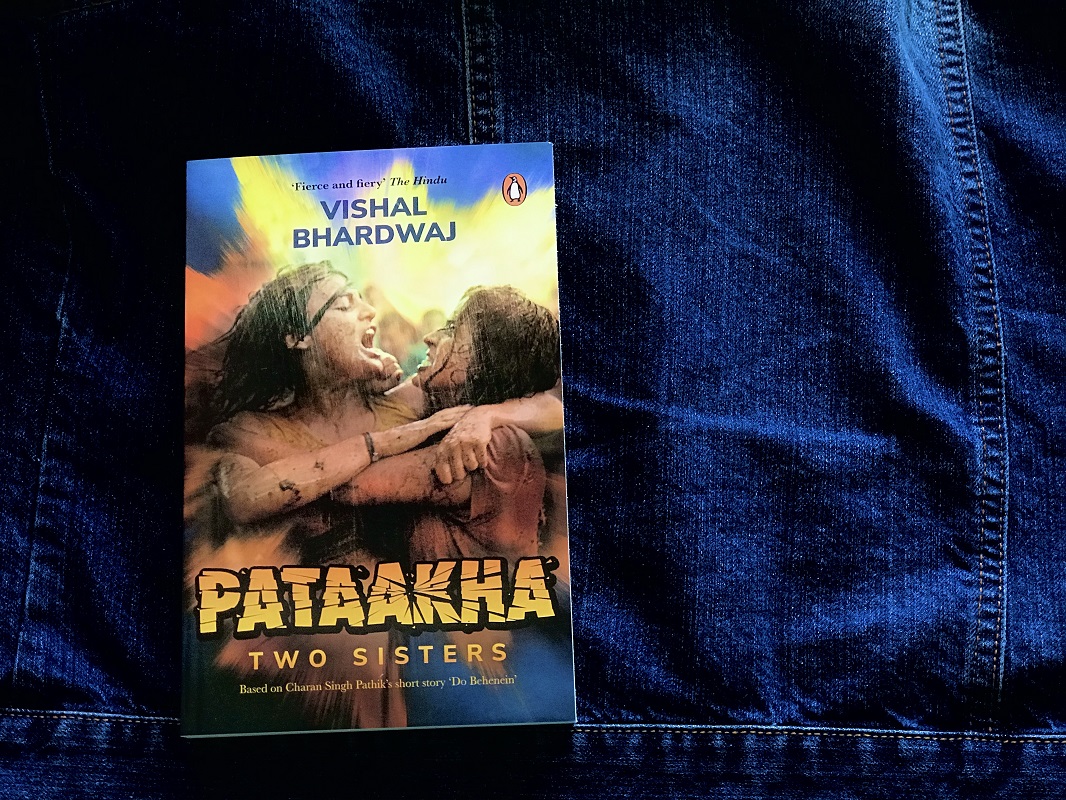
They cannot live with each other, they cannot live without each other. As children, they squabbled all day long. When they were old enough, they married two brothers, and took with them their feuds to their in-laws. Boisterous and fiery pataakhas, sisters Badki and Chhutki are the bane of each other’s existence.

Based on Charan Singh Pathik’s eponymous short story, Vishal Bhardwaj’s adaptation is a hilarious tour de force that obliquely and mischievously takes into its ambit notions of patriarchy and diplomacy between nations. This translation, which includes the novella and the screenplay that the film-maker developed from the short story, not only brings to the reader a rustic, elemental tale rooted in the soil, but also provides a unique glimpse into the art of adapting a literary work into film.

Here’s an excerpt from the book below:

Badki’s husband dropped her back to the village after buying her medicines. Although Badki religiously took her medicines as prescribed, she found no relief even after the stipulated three days. Badki’s husband brought her back to the city. This time he showed her to a specialist who ran a battery of tests.

‘I can’t find anything wrong with these results,’ said the mystified specialist. ‘Let me prescribe some other medicines, however. Come back to me after five days.’

Badki flounced out of the doctor’s cabin in a huff and her embarrassed husband ran after her. She turned on him furiously. ‘What kind of a quack is this guy? He knows nothing. How in the name of the devil will he treat me?’ And with that she returned home, deeply annoyed.

At night, she said to her elder son, ‘Call your cousins in Agra. I want to talk to your maasi.’

The soldier, who had just come home from work, answered, ‘Hello, who is this?’
‘It’s me . . . Golu.’

‘Yes, Golu. Tell me . . . is everything okay?’

‘Everything is fine.’

‘Is budhi-maa okay?’ he said, referring to his mother; all the kids were used to calling their grandmother budhi-maa or ‘old-mother’.

‘Yes, she is. Please give the phone to maasi. Ammi wants to talk to her.’

The soldier handed the phone to Chhutki. ‘A call from home.’

Chhutki snatched the phone. ‘I’m Chhutki. Who is this?’

‘It’s me . . . Badki.’

‘Idiot! Why this urgent need to talk to me?’

‘Did you see the Red Fort and the Taj Mahal?’

‘May you suffer, dari.’

‘I’m already very unwell.’

‘You’ll die suffocating,’ Chhutki retorted, unsympathetically.

‘Did you sit in the aeroplane?’

‘Don’t you dare talk, witch! I’m also unwell. Agra’s water doesn’t suit me.’

‘You left me behind to go gallivanting with your husband. You had to pay, so pay!’

‘You’re a monster from another life, dari!’

‘And acting like a lioness just because you are at a safe distance, you hedgehog! If you have any guts, and are a red-blooded man’s daughter, I dare you to come to the village and face me . . .’ Badki challenged again. ‘Trying to behave like a soldier’s wife from far away!’

‘I’ll be back in two days, dari . . . and then see if I don’t grab your braids, twirl you around and hurl you a hundred yards out! Then you’ll know whether I’m the daughter of a red-blooded man or not!’

The soldier was dumbstruck to see the transformation in his wife. She seemed to have instantly thrown off the wan, sickly air that she had been carrying for days now.

Upon hearing that Chhutki was due to return in two days, Badki immediately switched off her phone.

That night she devoured several rotis and polished off a double helping of milk and rabdi. The next day she tossed out the packet of medicines. She announced, ‘It has been ages since I slept as well as I did last night.’


Will things go too far between Badki and Chhutki? You’ll have to read Pataakha to find out!

A Friendship Set in Stone

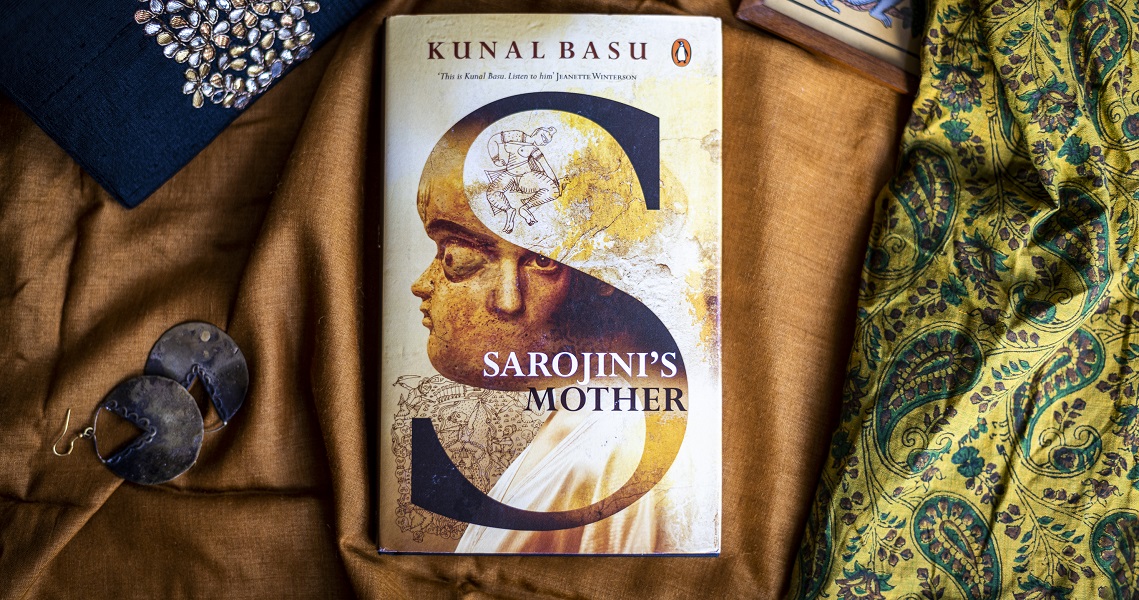
In Sarojini’s Mother, Sarojini-Saz-Campbell comes to India to search for her biological mother. Adopted and taken to England at an early age, she has a degree from Cambridge and a mathematician’s brain adept in solving puzzles. Handicapped by a missing shoebox that held her birth papers and the death of her English mother, she has few leads to carry out her mission and scant knowledge of Calcutta, her birthplace.

Through an emotionally intense journey of survival and mental demons – Sarojini discovers how the concept of motherhood is much more nuanced than simple biology.

Chiru Sen, an Elvis lookalike, becomes her guide and confidante on this journey. Find a glimpse of their first meeting in the excerpt below.


It was easy to spot Saz at the Rex. She was sitting by herself near the window. At first glance she looked Indian, but not fully so, given the way she was flapping the menu around awkwardly, troubled by the flies. She nodded when I mentioned Idris and pointed to the seat across from her. Then she gave a start as I grabbed the menu from her hand and swatted a fly that was about to perch on her half-eaten croissant.

‘Did you have to kill it!’ She scowled; eyes fixed on the dead fly.

‘Not unless you wished to share your meal with it!’ Shrugging, I tried to lighten the air.

She didn’t speak to me for a good while, kept her eyes locked on my face. From her puzzled look you could see she wasn’t expecting Idris’s friend to resemble a rock star. ‘Why do you dress like a dead man?’ Saw asked.

Right away I knew she was special and why Suleiman was bent on saving her from being spoilt.

‘The King isn’t dead!’ I joked.

‘Really! If he was alive, his hair would’ve fallen out by now. Would you have shaved your head then?’ Regaining her composure after the fly incident, she returned tot he croissant, taking small bites and chewing thoroughly.

Words came to my lips, but I kept them closed hoping to hear some more from Saz.

‘Or are you hoping he lives on through you? Like we want our parents and grandparents to keep on living forever.’

I wasn’t expecting philosophy straight up, I have to confess, not before we had discussed matters of hygiene at least. Like the condition of her flat and toilet and the owner’s demeanour, whether she had managed to acquire an Indian SIM for her phone, and stayed healthy from her travels.

Finished with her meal, she avoided the Rex’s yellowing napkin and took out a pack of tissues to wipe her lips. Then she cut into my thoughts.

‘It isn’t all bad to imagine we are somebody else. Especially if there is confusion over who we really are.’

She appeared calm, and the words coming out of her mouth were crisp and clear. Much as I was prepared to strike up a Geordie, a Brummie or a Cockney, her English was clearly BBC.

‘Especially if we aren’t sure where we’ve come from, or where we belong?’

It was my turn for lofty talk, and a chance to impress my new friend. ‘Which is…’

‘Which is true for half the people on this planet!’ She took the words right out of my mouth, ‘like the two of us—you a Bengali Elvis and me a brown Saz Campbell from Bromley!’

Smart girl!—I thought. She was playing my role, out of the wings and joining up two strangers with nothing more than a few chosen words.

Did I want a coffee of the cinnamon tea she’d ordered, Saz asked when the waiter came around. I shook my head. It was too early in our friendship to have her buy me refreshments. ‘A croissant perhaps?’ She smiled, pointing to the menu and keeping it out of my reach to avoid another unnecessary killing.

I wasn’t expecting Suleiman’s ‘girl’ to be a stunner, but her smile was quite extraordinary. The eyes are the most revealing, they say, but in her case it was definitely the smile. Dressed Western but Indian in looks, it made her out to be her own person unattached to a place of birth or home address.


The bestselling author of The Japanese Wife is back with an intimate look at human connections, friendships and family.

Saz, Chiru and his band members set off to help Saz look for her birth mother. Will they be successful? Find out in Kunal Basu’s, Sarojini’s Mother!

Perils of the City: Everyday Realities of Urban

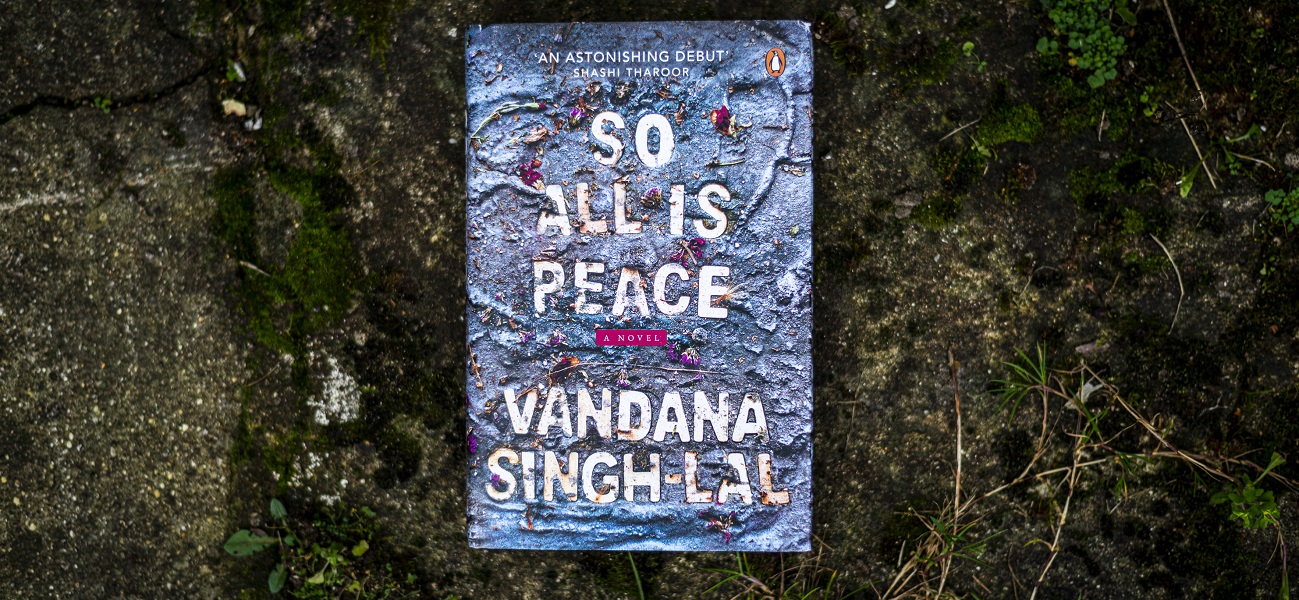
So All Is Peace is a story of twin sisters – Layla and Tanya, who were anointed the ‘Starving Sisters’ when they were found to be starving in an upper middle class gated apartment complex in Delhi. Their news became instantly sensational and nobody could figure out what had caused two educated, beautiful women to starve themselves.

Here are some excerpts from Vandana Singh-Lal’s book, So All Is Peace, that highlights the feelings of alienation that the girls experienced while living in a big city.


Living in Delhi, Layla and Tanya were taught to avoid places where women felt vulnerable to inappropriate glances. Tanya remembers,

“With our carefully controlled outings with Mamma and Papa—shopping only at the malls, going to school in the school bus and to college in university-special or U-special as they are called; never going to any religious festival or a fair or any place where there may be crowds and the potential for a stampede (which was almost every place in Delhi)—our experience of groping fingers and lascivious glances was almost non-existent and we entered the territory that came with being a woman in Delhi or perhaps anywhere in India, unprepared, naked and woefully unarmed.”

*

Soon after their parents passed away, Tanya recalls an incident when feelings of loneliness gripped her, and she couldn’t discuss her harrowing experience of sexual assault with anyone around.

“Like sparks flying out of a short-circuit, it spewed out stray thoughts that I had nobody to share with, pieces of conversations that I could not have, bits of passages that nobody was present to hear, tears of sympathetic neighbours that had no place inside me, whispers of curious onlookers that I could not hide away from, the buzzing and sparking and searing and the absolute emptiness of a house where every room was still filled with the paraphernalia of the living but where everything had died.”

*

With Tanya relocating to Andhra Pradesh, Layla started dating Deepak. He often came to their house because,

“In a country where everything takes place outside in the open, where people bathe, eat, pray, sleep, shit, fight, play, kill and die on the road, the only thing that does not and that cannot happen on the road is love; the making of it, the display of it, or even the allusion to it, except in the larger than life film posters. But the posters too remain coy, allegorical, metaphorical. No kissing is allowed on the roads of the country, no holding of hands, no looking for too long into each others’ eyes either. So Layla had to find a place for them to meet and a relationship; a veneer however thin or translucent or unconvincing.”

*

Raman, the award-winning journalist, who has been tasked to write about the ‘Starving Sisters’ had begun to have strong feelings for Tanya.

Although he had spent relatively short time with her in person, he had devoted long hours to her mentally, analyzing the smallest of her gestures and the tiniest of inflictions in her voice ad-infinitum, and something in her had suggested a kind of depth that he was not used to encountering. Now he has been provided with some more clues about what exists behind her vulnerable tarsier eyes, and he is excited. This is a new challenge. And yet. Wouldn’t it have been easier if she did not have this other side? If she could have been enfolded within the narrative that was furiously being woven about her with the help of disparate threads—some real, most imaginary—but all being accorded the same amount of space and value as if the difference between the fake and the real does not matter anymore as long as everything could be fitted into an easily explained, easily propagated, easily digested world.

*

The gated societies of Delhi often have Residents’ Welfare Association (RWA) that have rules for visitors, especially males. When Deepak had moved in with the twins, Layla was regularly pestered by the head of RWA – Mr. Deol, to submit Deepak’s identity documents. Mr. Deol explained,

“We made the rule that we could not allow any overnight male visitor in any all-women household until they handed over his passport copy and gave us in writing what relationship they had with the man. I personally went to tell the sister that and to give them a copy of the notice. You know, the sister had looked at me very strangely then.’”


Pick your copy of So All Is Peace, to read how the shocking events unfolded in the starving sisters’ lives.

error: Content is protected !!