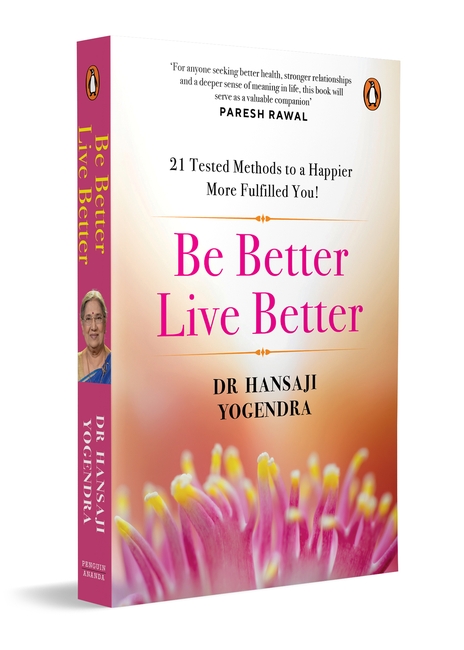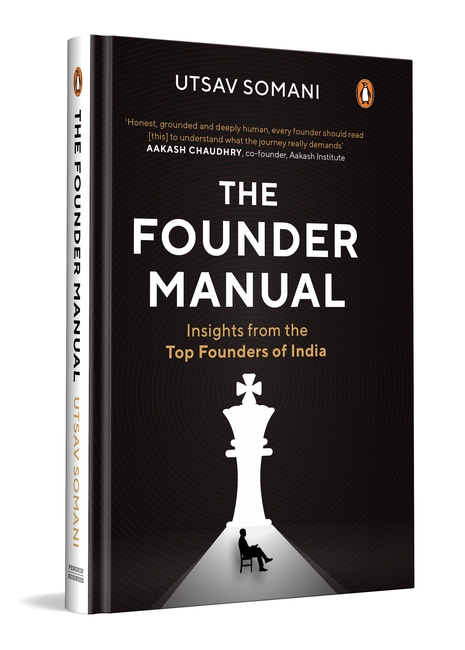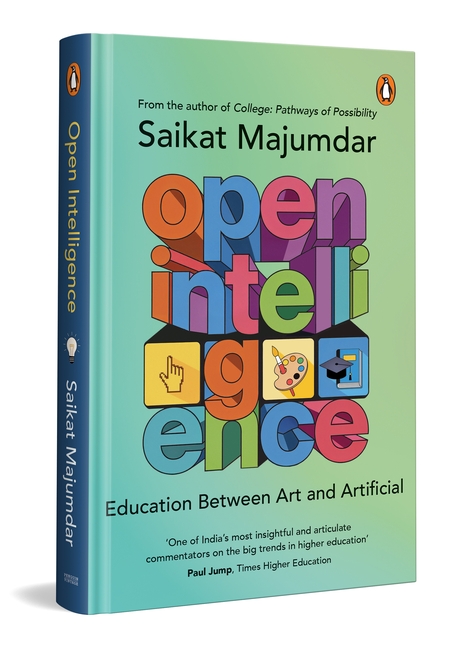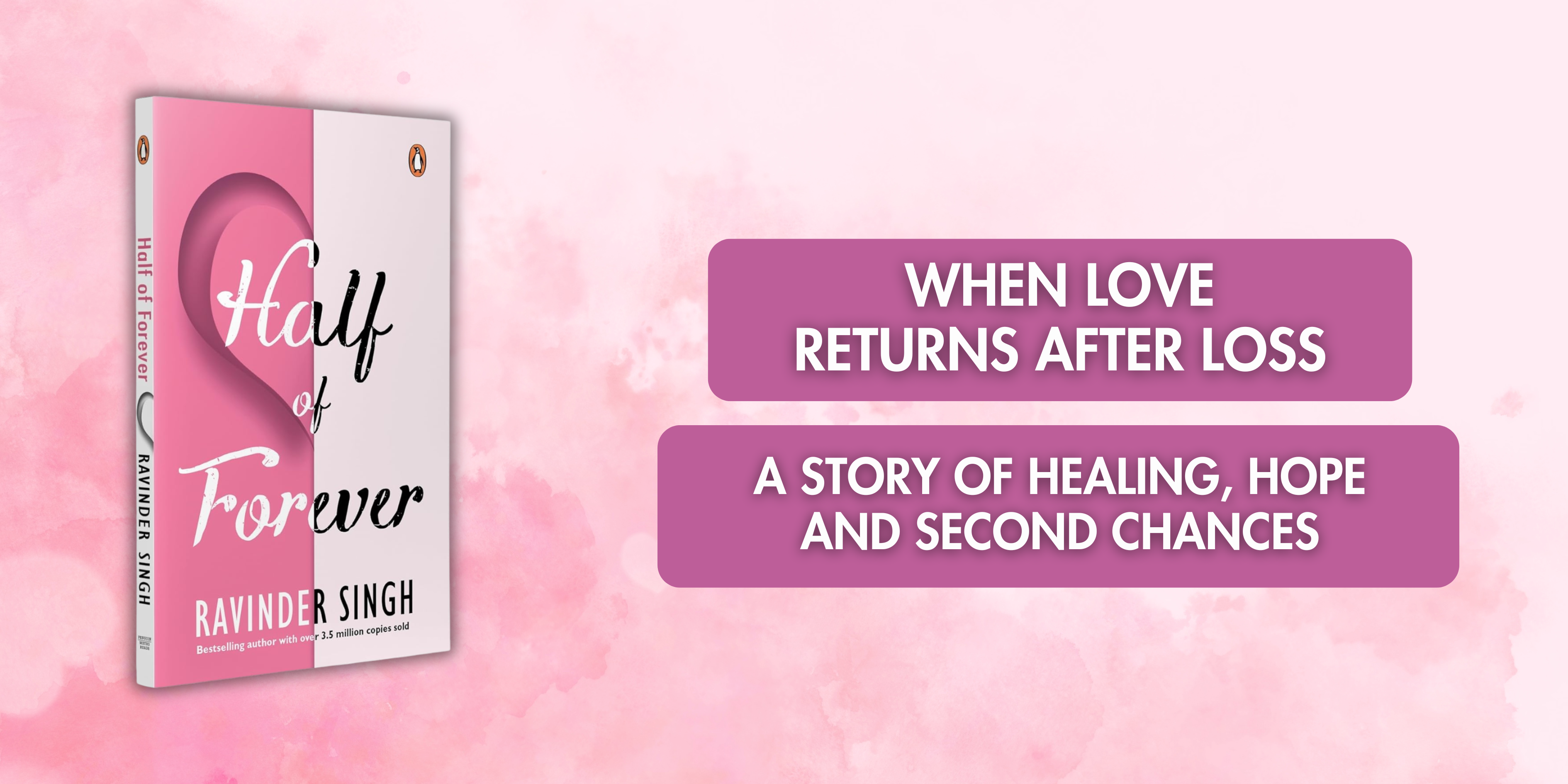
Publish with Us

Follow Penguin

Follow Penguinsters

Follow Penguin Swadesh

The Reality of Women’s Freedom in Modern India

Are women free to fly, or are they still tethered by family, marriage and expectations? In Busy Women, Shinjini Kumar explores ambition, work, migration and the quiet constraints shaping women’s lives today.


Front cover Busy Women
Know more!


***


Why Bother About Women?

Neena Gupta is an actress in art and mainstream cinema and a television producer and director. She gained a cult following in the nineties as a talented artist and a single mother; more recently, she made a stunning comeback in mainstream cinema and broke Instagram, saying it as it is. Neena told me once that a woman is like a cow tethered with a rope that keeps her within the perimeter of the family. The man, on the other hand, is like a bird, who can freely go anywhere.

It is not the kind of parable that I like to hear. Women younger than me like to hear it even less. You look at her and think: ‘What is she talking about? She has lived on her terms and is still doing it. She has got it all. Why would others not be able to do it?’ So, I want to prove her wrong. I want to prove that gender is not a barrier to a determined woman, and that she can do everything that a man can, including flying like a bird.

I am looking for the women who are indeed flying. And if ind them. But I also find the truth of Neena’s parable. Women’s lives are indeed circumscribed differently from those of men. For one thing, they rarely choose the space they get to live in. A small percentage of women, like me or Neena, leave their parental homes for education or work, and set up their own homes. For the large majority, leaving home is a given. But where they will end up for the rest of their lives is dependent on who they marry. Even if she finds education, work and money, decisions relating to her body, childbearing, career and asset ownership are often not her own. She may still be able to make a meaningful life for herself and her family, but the tether is firmly in place.

In more elite families, the frequent hypocrisy of raising daughters like a ‘papa ki pari’ (Dad’s fairy) and then giving them away with a dowry, while the business or property is inherited by the son(s) is a tiny bit less common than before, but certainly not gone away. The simple fact of marital dislocation has tremendous implications for the woman and the community. For the community, these implications are mostly positive. In a crude sense, it matches the free labour supply for household work, childbirth and eldercare with the demand. In more refined ways, there are extremely positive externalities to women becoming vectors of care and culture by being mobile. For the woman, they can be positive, disruptive or debilitating, depending on the combination of circumstances. T he question for me was whether the contribution of women within and outside home is being recognized and understood, or undermined and broad-brushed under age-old stereotypes?

This is an interesting but often overlooked fact. Men migrate for work. With rare exceptions, they follow professional opportunities and networks that are expected to help them in their quest of work, job, career, money. On the other hand, almost all women who move places, do so for marriage. Which means that they leave their networks and do not seize the professional opportunities best suited to them. Of course, they can get lucky. But more often than not, despite all the love and affection, they encounter a phase of darkness and confusion, before they begin to assess opportunities available to them in their new habitat.

This geographical constraint is accompanied by another unfortunate constraint, that of physical safety. The fact that women are not safe, for the most part, in most places and at most times, affects their lives in general and work life in particular. In addition, their life stages are very different from those experienced by their brothers and husbands. Even coming from the same backgrounds and families, women go through more disruption in work at early stages. Do all these constraints stop the women? Has greater access to education and skills allowed women to take advantage of opportunities in a growing economy? And what is this opportunity here and now after three decades of economic liberalization? Is the physical infrastructure generating advantage for Middle India and its residents, men and women? If so, what does it mean for migration and creation of many more urban centres with thriving urban culture across the country?

I started my travels with these questions and an open mind. Making my way through thirty cities over three years, I made friends, drank nimbu paani, ate dosas, wore sarees, took selfies, laughed, sweated, walked on pavements and promenades and collected personal histories of the soaring women, the tethered women and the women in between!


***

Get a copy from Amazon or wherever books are sold!

A Second-Chance Romance About Fate, Heartbreak and Finding Love Again | Call it Coincidence by Nona Uppal

In Call It Coincidence, bestselling author Nona Uppal crafts a swoony yet emotional romance about an unforgettable first date, a devastating falling-out and the possibility that some loves are destined to find their way back.


Front cover Call it Coincidence
Know more!

***

Three years ago

‘What’s the verdict?’

‘Late, obviously.’

Here’s what my profound yet wholly regrettable experience re: first dates has brought to me—a rock-solid sixth sense that can scope out, within seconds, if a date is going to suck or end up in me taking them back home. (You can stop reading here, Mom.) This is the third one this week; so, I’m either too desperate and the likelihood of the universe sending an eligible bachelor in place of my date is indirectly proportional to the extent of my desperation . . . or, every single man within a five-kilometre radius of where I live comes to dates with a non-negotiable fatal flaw in tow.

Not this one though.

He’s just . . . late. Which, before the pitchforks take for my scrawny throat, does not mean he’s late by five—or even ten—minutes, but a whole forty-five! A little south of an hour! And he hasn’t once apologized for it, unless you count a ‘Hey, running twenty minutes late’ by-the-way text sent—mind you, after I had already been waiting for the last twenty minutes—as an apology.

So, it’s not about being late, really. It’s the callousness. It’s the not caring about it. It’s the whiplash of an excellently written bio countered by a man who can’t be bothered to do the single most important thing on first dates: show up on time.

‘I wouldn’t normally be this pissed, you know?’ I squeal into my receiver, finally padding towards the bar counter my date is standing up against, waiting for me, after I’ve spent close to an hour loitering outside the restaurant, biding time—god forbid strangers snicker behind my back, exchanging gossip and dissecting, as filler conversation, the story behind that girl sitting at the bar who has most certainly been stood up. (Fine, I know this because I’ve done this to people.)

All at once, our eyes meet, the glimmer of familiarity softening his sharp gaze around the room. I look at him, feign a smile, bobbing my head to tell him to give me a moment, and add: ‘But like, be decent? Apologize?’

Sarina, my childhood best friend, the platonic love of my life and the only person who not only tolerates but, secretly, enjoys my persistent bickering before first dates, sighs from across the line, ‘I get it, Naina, but it’s not really their fault, na? When are boys ever taught to apologize growing up? Remember Nitin from school? The one who put gum in your hair and laughed while I had to cut it out with safety scissors during lunch period?’

‘Yes, and I had a crush on him, Sarina. Maybe I’m attracting these men,’ I say, shifting my phone from one ear to the other. ‘Anyway, he’s here. I’ll call you when I’m done.’

I watch my date gawk at his phone from all the way across the room while I stand still, considering my choices of intoxication. A margarita would get me just tipsy enough to want to stay a little longer, maybe even flirt a little, and I’ve already had enough sugar in my coffee today for a cosmopolitan, so a tequila soda it is—classic, tough to mess up no matter the bartender’s relative inexperience, and easy to knock back through an hour of tired small talk.

When did this become my life—willing myself to survive dates I never thought I’d have to go on? No, I was done. At twenty-five, I almost had it all. A great—although slightly soul-sucking—job straight out of college, a wonderful— Fine! Decent!—boyfriend and a normal family life, as normal as it can be. I was happy. I had enough. I was content.

Until my ex, he-who-shall-not-be-named, decided that this ‘stability’ thing was too much for him, that his twenties with me by his side were a little less roaring than he’d expected, and that he wanted to have more fun before the clutches of adulthood took him hostage forever. He could’ve just said what he really meant—I want to have sex with other girls, Naina, which is an activity he promptly took to a week after our break-up—but I spared him the horror, read between the lines, and said goodbye like it wasn’t breaking my heart, and my plans, and my bank.

Like today, my date for the night is scheduled at South Delhi’s poshest new restro-club Django. I’d suggested the place: I knew a friend who knew a friend who could get us a pretty decent discount. And this way, I got to put down my card for the dinner in advance so the guy doesn’t pick up the bill; I don’t want to feel pressured to agree to a second date just because he paid for this one.

But life, as they say—rather tritely but hey, if the shoe fits—is full of surprises. As I curve along the U, my date and I finally close enough to properly register each other, knowing now for certain it’s us we’re looking for, I suddenly feel the built-up dread wash away. The anger and anxiety give way to something softer, calmer, something . . . wait, these can’t be butterflies? I inch up closer to the man I am formally bound to spend the rest of the evening with. With a gait that can only accompany a stature and built like that, he saunters over towards me and, with his arm outstretched, opens the conversation with, ‘You must be Naina. I’m so sorry I’m late.’

Turns out, six foot two is awfully tall on a man—and while height has never been a criterion of mine, oh my god. Maybe my luck isn’t rotten after all.


***

Get a copy from Amazon or wherever books are sold!

Small-Town Dreams, Big Stardom: The Story of Munger ki Rani

In Munger ki Rani, Manisha Rani recounts her journey from a small village in Bihar – where the birth of a daughter was often met with disappointment – to becoming one of India’s most loved social media stars.


Front cover Munger Ki Rani
Know more!


***

‘Phir se ladki!?’ (Again another girl!?)
I was born in a village nestled in the rural district of Munger, Bihar, India, where age-old traditions and patriarchal conventions still reign supreme, and the birth of a daughter is generally welcomed with resignation. Slow-paced development, if any happens, has little impact on people’s lifestyles there. But in one poor home, a new story began to unfold—one of hope, defiance and the relentless pursuit of progress.

I am from a culture in which the birth of a girl is viewed as a financial burden. My parents, Ragini and Manoj, or Maa or Baba as I call them, already had a daughter. In a town where the community valued sons over daughters, the birth of another daughter was interpreted as a kind of curse. However, from the moment I was born my parents saw me as a beacon of light, a blessing in disguise. My mother recounts that when she cradled me in her arms after birth, she murmured to my father, ‘Our little Lakshmi has come to bless us,’ and Baba affectionately added, ‘She is our joy, not our burden.’ However, the town elders, mired in tradition, were not as welcoming. The whispers began almost immediately, as people speculated about my family’s future and the weight of the dowry obligations that my father would have to undertake. ‘Yeh to dahej nahi de payega,’ (He won’t be able to afford her dowry) was their verdict.

But Munger’s archaic habits did not overshadow my youth. Despite the murmurs and social pressure, Maa and Baba made a daring decision. They would provide me with formal educational opportunities and other possibilities that were mostly denied to girls in our community. They believed that a girl deserved to pursue her full potential, regardless of cultural expectations. My father was firm: ‘Our daughters will be educated. They will have options.’ Growing up, my mother constantly encouraged me, ‘You will learn, grow and choose your own path.’ As the years went by, the townsfolk watched all that went on in our family with a mix of curiosity and disapproval. While most girls my age were pulled out of school and prepared for early marriage, I continued my studies. My parents’ determination set them apart, making them a source of inspiration to some, but gossip to most.

‘She’s almost thirteen. Why isn’t she being prepared for marriage?’ asked one elder sceptically.

‘Education won’t help her in the kitchen,’ another scoffed.

Baghi aur Baghavat: The Rebel and the Rebellion

I thrived in school. My curiosity knew no bounds, and from very early on, I dreamt of a world beyond the confines of Munger. My parents’ firm support helped my ambitions grow, but the town elders’ expectations loomed large. In Munger, a girl’s destiny was often sealed by tradition and societal norms. As I approached my fourteenth birthday, the pressure really started to ramp up. I recall that almost everyone seemed to want me married off. You see, in my village, turning fourteen is a big deal—it’s when a lot of girls get married off, and their futures are decided by generational practices instead of what they wished for. People in the town began to question my parents going against tradition and choosing to keep me in school: ‘Ladki ki shadi nahi karni hai kya? Samaaj mein naak katvaoge kya?’ (Aren’t you going to get the girl married? Do you want to be shamed by society?)

‘Why waste money on education? She’ll just get married,’ another judgemental neighbour questioned.

Yet, my parents remained calm and composed. They were willing to face isolation, whispers and even outright disapproval for the sake of their daughter’s future. They believed in my potential and desired to give me a chance to pursue my dreams, no matter the cost.

‘Manisha deserves more than this town can offer. She deserves to choose,’ Maa asserted fiercely.

‘We will stand by her, against all odds,’ Baba added, resolute.

As I continued my studies, I became more and more aware of the sacrifices my parents were making. Their quiet rebellion against the deeply entrenched mores of Munger was both inspiring and a bit scary. I realized that my future was this delicate balance between my dreams and the harsh realities of our world.


***

Get a copy from Amazon or wherever books are sold!
When Strangers Meet at the Worst Moment | While We Wait by Durjoy Datta

Some stories begin with grand gestures. In While We Wait by Durjoy Datta, the story starts in the most ordinary place, like an airport queue where two strangers strike up a conversation while waiting for the people they love.


Front cover While We Wait
Know more!


***

Raghav. 

I can feel the steam rising from people’s bodies around me. They are losing patience, their pulses quickening, their weight shifting from one foot to another. They are looking over their shoulder and hoping that the line in front of them moves quicker. People with hope. I hate that. I envy that. Hope should come from logic, not optimism. Which line have we ever been in moved quicker than we anticipated? I used to be like them. But that was before today. Hope’s nice, like a toy. But real life runs on being real. It’s in the phrase. I don’t know how I missed that for so long.

I want to tell everyone in the line that it’s going to take as long as it does. You’re just bitter, everyone will tell me. But I’m also happy. Can I be both bitter and happy?

‘Hey? Can you move ahead?’

I step forward. I want to tell her that we moved one tiny step, and that no one has moved away from the counter. We are still the same number of people in this line, but I’m still doing what Megha says I have started doing a lot—misplacing my frustration.

‘One more step,’ says the girl in a dark grey T-shirt two sizes too big, and a pair of jeans that are way too balloony, and over her shoulder is a backpack bursting at its seams.

This time I want to tell her off, but before I can say anything, her phone beeps and she begins to text. Phones are a great way to cut a conversation you don’t want to have. And common sense says she shouldn’t have a conversation with me. She’s 5’1” and I’m 5’10”, and the way we’ve broken the world, those numbers alone are reason enough for a girl to think twice before speaking to a man, even in a public space.

So I don’t move.

She looks up from her phone.

‘If you move up,’ she says, ‘there’s a fan there.’ She points to the one hanging precariously over the signboard that says, ‘Visitor’s Tickets, Delhi Airport’. She continues brightly, ‘The sooner you get there, the quicker you can stop sweating.’

She points to the rivulets of sweat pouring down my forehead and sweat patches forming under my arms. Fucking embarrassing. But I usually don’t stink. That’s because I already know I sweat like a pig and invest heavily in deodorants. But maybe she can detect a stink. She looks the kind—petite with a sensitive nose. I step away from her, move closer to the man ahead of me, and take a deo out from my backpack.

I’m about to spray it when she says, ‘My fiancé has the same perfume. I could smell it on you.’

‘So I’m not stinking?’

‘Why would you think that?’

She’s on her phone again. The line moves and now I’m right below the fan and the air is cool and I get what she meant. The line moves once more, but I’m still looking at her, still thinking if I should spray the perfume or not, when the cashier slaps the cool marble ledge and calls out to me. ‘Haanji?’

When I turn back to face him, he looks at me with irritation and outstretched hands. ‘Cash, 200 rupees. No UPI.’

‘But I only—’ ‘Only cash. Did you not hear? Next.’

‘I will pay,’ says the girl from behind me. ‘Two tickets, please.’

Before I can say anything, the girl has opened her bag, fetched two notes and paid. Tickets in our hands, we are politely shoved out of the line by the people behind us.

‘If you can give me your UPI details—’ She cuts me with a smile.

‘You can buy me a chai inside. Or a water. Whatever is 200 rupees. Or whoever you’re meeting can pay me back. Whatever suits you.’

‘Sure,’ I say to the girl who has somehow helped me twice in a matter of minutes. ‘Thank you for the . . . fan thing? And for helping me pay.’

‘You call that help? Are we calling basic decency help now?’

She’s walking away from me now, and I follow her. I feel like I should be talking to her, to make up for the stubbornness of not moving two minutes ago.

‘Who have you come to receive?’ I ask her.

Her face is suddenly even brighter. ‘My fiancé.’

Fiancé. The word warms my heart. So weird that a word can hold so much power. I’m thinking of Megha now. Her opened boxes in our new apartment. Those framed pictures of ours which we will put up together in the evening because she doesn’t trust me with their positioning.

‘You?’ she asks. ‘Fiancée too,’ I answer, savouring the word.


***


Get a copy from Amazon or wherever books are sold!

Empire, Faith, and the Making of Modern Political Power | An Excerpt

In After Nations, Rana Dasgupta begins not with borders or ballots, but with a crown of thorns. Through empire and theology, he traces how sacred authority laid the foundations of the modern nation-state.


Front cover After Nations
Know more!


***

In 1238, King Louis IX of France paid 135,000 livres tournois – more than half his kingdom’s revenue – to acquire the most valuable object in the world: the crown of thorns worn by Christ on his way to the crucifixion. With this purchase, Louis acquired a tangible claim on Christ’s celestial majesty, and magnified the aura of his own, golden, diadem. We may begin a theological history of the nation-state from here.

The crown was already withered and ancient, and it had passed through many ordeals. After Christ’s execution twelve centuries before, so Catholic tradition had it, the Romans had buried the crown on the site – the hilly wasteland outside Jerusalem called Golgotha or Calvary – along with the cross and other instruments of his torture. Hoping to discourage Christian outlaws from excavating and venerating these relics, they had piled boulders over the area, but pilgrims flocked nonetheless, their numbers increasing with the years. In the 130s, as a final deterrent,  the emperor Hadrian sealed the sites of Christ’s death and burial by
building a temple to Venus on the hill.

Christianity’s fate took a dramatic turn when the emperor Constantine converted to the faith in 312. The imperial coinage was emblazoned with the chi-rho symbol revealed to him in a vision (‘Under this sign,’ shone Christ’s words in the sky, ‘you will conquer’), and the emperor himself began to superintend and standardise a religion that had mutated into many local variants. He summoned the First Council of Nicaea, where a grand assembly of bishops, priests and deacons arrived from all over Europe, West Asia and North Africa to resolve their doctrinal disputes, and so create a unified statement of belief (the Nicene Creed) for all the empire’s Christians. He also set about identifying Christianity’s holy sites and relics: he built the first basilica of St Peter where the latter had been buried in Rome, and, in about 325, sent his mother, Helena, backed with funds from the imperial treasury, to visit the holy sites of Palestine. ‘When the empress beheld the place where the Saviour suffered,’ wrote the historian Theodoret of Cyrrhus in the 440s, ‘she immediately ordered the idolatrous temple which had been there erected to be destroyed, and the very earth on which it stood to be removed.’ Buried underneath were three wooden crosses, one of which was revealed, by its miraculous healing powers, to be the actual instrument of Christ’s crucifixion.

Helena founded several churches in Palestine to house pieces of this ‘True Cross’. Most spectacular was the Church of the Holy Sepulchre, built on the site of the earlier temple of Venus, for which Constantine himself sent instructions to the bishop of Jerusalem: ‘Take every necessary care, not only that the basilica itself surpass all others; but that all its arrangements be such that this building may be incomparably superior to the most beautiful structures in every city throughout the world.’

Private devotion, quite clearly, was not his only consideration. Constantine was battling an ongoing imperial crisis, which the emperor Diocletian (r. 284–305 CE) had previously tried to solve by dividing the empire among four rulers. Constantine declared war on the so-called ‘tetrarchy’: between 306 and 324, he subdued his rivals and submitted Rome, once again, to a single emperor. He also introduced a number of administrative reforms – including moving the capital from Rome to a new metropolis in Byzantium dubbed ‘Constantinople’ – designed to preserve it from further disintegration. His theological innovations were part of the same project. Christianity had arisen as a critique of worldly power and money, to be sure; but it also inaugurated a new kind of universal citizenship that was especially productive for a large and diverse empire. Christ had dismissed folkish divisions; he rejected priestly privilege and the exclusion of the ‘impure’ (tax collectors, prostitutes, adulterers). He also rejected ethnic superstition (St Paul would write, ‘Here there is no Gentile or Jew, circumcised or uncircumcised, barbarian, Scythian, slave or free, but Christ is all, and is in all’). For him, human beings were metaphysically equal citizens of a universal ‘kingdom of Heaven’ administered by a single, benign, transcendental, male godhead. The ultimate truth and justice of this kingdom would be
revealed only in the end-times – but Christ’s ‘modern’ conception of citizenship was not merely otherworldly. In this life, too, he instructed his followers to give up parochial taboos and conform their practices to ‘global’ society.


***


Get a copy of After Nations from Amazon or wherever books are sold.

The Science Behind Milk Supply: What Every New Mom Should Know – An Excerpt

Along with a newborn comes a flood of advice – not all of it always helpful. In Bacchon Ki Doctor, Dr. Madhavi Bharadwaj offers honest insight into what’s normal and what’s not.


Front cover Bacchon ki Doctor
Know more!


***


Breastfeeding: The First Food

Physiology
During one of my workshops for expectant mothers, I asked my participants to name their biggest fear about childbirth and the post-partum period. To my surprise, it was not labour pain or the fear of normal or caesarean birth, but the fear of breastfeeding, and the fear is real.

The unsaid pressure to do the best for your baby and the shoulds and woulds around breastfeeding and parenting in general put a lot of subconscious stress on the mother. Sometimes, the lack of knowledge and right guidance at the right time results in failures during breastfeeding. So, it becomes very important for a new mom to prepare herself with the right knowledge and then let nature take its course. Now, let us get our hands on some useful information about breastfeeding.

Even before the birth of a baby, a mother’s body is preparing for milk production and feeding.

Breast Size: As pregnancy proceeds, the size of the breasts increase as the glandular tissue matures to start producing milk. Breasts become soft as fibrofatty tissue increases too. They become sensitive under hormonal (oestrogen and progesterone) influence. Sometimes, mothers feel a tingling sensation, which is perfectly normal. Tenderness, heaviness or soreness felt by some to-be moms is fine too.

The nipple-areola complex enlarges and darkens under hormonal influence. Montgomery’s tubercles will appear on the areola. These are responsible for producing pheromones to attract a newborn towards the breast, and they have antibacterial properties. The nipple is sensitive and full of nerve endings. Suckling of nipples will send messages to the brain to produce both prolactin and oxytocin hormones, which are responsible for milk production and let-down, respectively. Some to-be mums may experience colostrum, a yellowish liquid secreted by the nipples, starting from the end of the second trimester itself. Some may experience it only after the birth of the baby. Both situations are perfectly normal.

Once the little one is born, both the baby’s and the mother’s natural instinct would be towards breastfeeding. A mother prepares customized food inside her body for the baby, but does breastfeeding come as naturally to mothers as they say? No! Breastfeeding is a skill that a new mother gradually learns with her newborn. It may take days or even weeks in order for breastfeeding to begin.

‘When the doctor was the patient’

Sharing a story straight out of my life. The memory is fresh in my mind, as if it happened yesterday. It was my second day after delivering my younger one via caesarean section. I was exhausted with pain and putting my baby to my breast every two hours. Yes, I am a paediatrician, but my baby was not. Like all babies, I knew my little one would also take her time learning to open her mouth wide open and properly latch on. During the morning rounds, a nurse came into the room, checked my vitals and, without preamble, pinched my nipples to check my milk output. I was still reeling from the shock of this physical assault when she announced that I have no milk and told my husband to get a formula ka dabba. I still find it hard to express my anguish and frustration in words. This is a common occurrence in hospitals and households where mothers are constantly told that their milk is not enough and they need to give their baby formula.

What they forget to inform the mother and the family is that it is perfectly normal to not have much milk in the first week post childbirth. Sometimes, milk takes a while coming in. In the meantime, stay stress-free and continue latching your baby to your breasts before topping up with formula. It is a complex crosstalk between hormones and the mother’s physical and mental health that determines the milk output. So let’s see some facts.

Crosstalk between hormones

For successful breastfeeding, the two most important hormones needed are prolactin and oxytocin. During pregnancy, prolactin secretion gradually increases and leads to the development of glandular tissue in the mother’s breast in preparation for the production of milk soon. Due to the presence of high oestrogen and progesterone during pregnancy, milk production by prolactin is blocked. But as soon as the baby is delivered, oestrogen and progesterone markedly drop, and prolactin is free to start milk production. That is why it takes three to five days post-delivery for milk to flow.

Nipples are full of nerve endings. This stimulation sends signals to the brain, where the anterior pituitary produces the hormone prolactin and posterior pituitary produces the hormone oxytocin. The sooner the baby latches on to the mother after birth, the sooner the breastfeeding hormone cycle is triggered in the mother’s body. The more the baby suckles, the more signals reach the brain, and the feeding hormones and cycle get consolidated. That is why even if you feel there is no milk, keep latching your baby on to your breast to establish the milk production soon.


***


Get a copy of Bacchon ki Doctor from Amazon or wherever books are sold.

From Ithaca to Mumbai: How Winter the Dog Helped Heal a Lost Adult – An Excerpt

In Thinking of Winter, Shantanu Naidu reflects on isolation, responsibility, and the small, life-altering choices we make in moments of despair. The following excerpt captures the quiet transformation that begins when Winter enters his life.


Front cover Thinking of Winter
Know more!


***


People do selfish things when they are lonely. I don’t know if that justifies it, but I did them too.

In the eighth month of university, all the love letters posted abroad were spent, all the attempts to make friends had failed, and all that there was to do at the end of every day at Cornell, was to look in the mirror in disbelief: This was not how I thought it would be.

I would like to believe that a lot of smaller breakdowns over a longer period of time lead to a single moment that brings you to your knees and makes you give up once and for all. It can be losing your keys, or a phone call that wasn’t picked up, or missing the last bus home.

But what did ‘giving up’ even mean? There was a library of answers to that question. I, however, chose the most selfish one.

His name, was Winter.

Let’s be abundantly clear. Bad dogs do not exist. This is a blanket rule. There are no bad dogs, and we could, of course, delve deeper into unpacking this and talk about bad parenting and other reasons for some dear souls come to have behaviours that make them seem like bad boys, but for now, we’re just going to establish the inexistence of bad dogs.

I am in favour and support of a very large community of human beings who greet every dog with ‘whoozagoodboy’’ and sure enough the answer is and always should be, hesagoodboy.

But not Winter, no. A few million times during this story I will remind you with sweet frustration that I simply do not know what it was: genetics, soul, character or maybe something beyond our limited understanding of the world. But I do not know what was wrong with Winter.

Winter was a golden retriever, a runtof-the-litter puppy in a far-off town called Moravia while I studied in Ithaca. Forsakenness had me ride there, claim him one night in the fall of 2016, and bring him home a month later with the only friend I had: a Taiwanese introvert called Wen-Ko.

In the first week of Winter in my student apartment, while I contemplated daily whether I was even remotely capable of taking care of another life, Winter was busy stuffing himself in every gap that could be defined as one, even the ones that barely qualified. The only way to find him was to spot an absolute bushy butt sticking out of one place or the other. Some days easy to spot, some days laying still, waiting to be discovered, or worse, rescued.

As the urine stains on the carpet began to stay as contemporary art forms, depending on how hard you squinted, me and Wen would sit amidst them, saying very little but with the shared activity of looking at whatever Winter was up to in the room. Which, of course, was identifying gaps and stuffing himself in them.

Wen, a germophobe, who likes every aspect of her life in complete order, would watch in silence as Winter would create another pee spot next to her. Wen, the germophobe, would say nothing. As one loner to another, she accepted, in not so many words or any words, the reason why Winter was there in the first place. Her being there with us a was a strong nod in my direction saying, ‘If this is what will rescue you, I will support it.’

The Barron’s dog bible on golden retrievers that I had picked up in Boston instead of attending a job interview had me brace myself for what was to come after pee spots: poop on the carpet, furniture chewing, destroyed shoes, destroyed cables, lots of biting—unruly, unhinged, drunk puppy behaviour—and I was very ready for the damage. My roommate, on the other hand, was unaware, let alone prepared.

But it never happened.

Shoes stayed intact and the furniture unbothered. Cables right where I left them. Not a bark or a whimper. Nor a bite or a scratch. And while I waited patiently, anticipatingly almost, for Winter’s standard puppy phase, he seemed to have missed the memo.


***


Get a copy of Thinking of Winter from Amazon or wherever books are sold.

More Than a Lean Patch: A Cricketer’s Inner Collapse

What does a champion do when applause turns into scrutiny? This excerpt from The Unbecoming traces the moment when outer mastery gives way to inner disquiet. 


Front cover The Unbecoming
Know more


***

Siddharth Kapoor, once hailed as a legend in the world of cricket for his impeccable batting record, now found his fame fading fast. His batting average stood at an impressive 60 per cent, having scored an astonishing 10,000 One-Day International runs in a mere 203 innings—the fastest in the history of cricket.

Yet, the last two series witnessed the decline of this cricketing legend, who over his distinguished decadelong international career had exultantly scored thirtyfive centuries. His unease in facing a delivery that moved away from him was laid bare for his opponents to exploit. It had been a major worry for both his team and his coach.

To surmount this challenge, he devoted a substantial amount of time practising and yet, more than his skill, it was the tumultuous state of his mind that encumbered him. Despite his reluctance to concede this handicap, deep within, he was aware of this truth.

Still, he was grappling with the fact that for a player of his calibre, something elementary could become an obstacle, especially when it used to be his strength. In the last five innings, he repeatedly got out on short-of-a-length balls swinging away from him, deliveries he was once brilliant at playing. Convinced that it had always been his forte, Siddharth couldn’t resist the urge to go after those short-pitched deliveries. It was agonizing for him to let go.

An eerie silence enveloped the room as the air felt oppressively heavy. The only sound that filled the entire room came from the television. Siddharth’s whole attention was fixed on the hosts’ words, while he aimlessly fiddled with an empty glass in his hand.

The media was making the matters worse for him ‘Siddharth Kapoor’s poor form a worry as India look to restore parity in the World Cup’. ‘Time for team India to look for a new opening batsman’, the television anchor mercilessly pounded Siddharth for his lacklustre performance, detailing his three consecutive dismissals in the World Cup.

This further stressed the atmosphere of the hotel room, where Shraddha and Siddharth were having dinner. ‘Shall I switch off the television?’ Shraddha asked. ‘No, let it be,’ Siddharth replied resignedly. ‘No matter how much you contribute to your country and the sport, one bad phase obliterates it all; they make you look like a cipher,’ murmured a chagrined Siddharth, his eyes tearing up, voice heavy.

‘You are a star, Siddharth, I know it, and your loyal fans know it too. It’s just a matter of time before you bounce back. You have no idea how much you are loved by this nation. People understand that the media spice up the story for their TRPs. You shouldn’t let this get to you,’ Shraddha comforted Siddharth.

‘It’s not fair, Shraddha,’ Siddharth protested, frustration etched in his voice. ‘The media is painting me as if I’m already history. They have no idea who I am or what I’m capable of. No one of my calibre should be treated this way. To tell you the truth, these remarks are taken quite seriously, and have often influenced selectors’ opinions.

I am eagerly waiting to get back in form. It would be a befitting reply to my critics. Until recently, they considered me the best batsman in the history of this sport, and now, in the blink of an eye, I am not good enough! Such theatrics, right, Shraddha?’ Siddharth awaited validation from her.

Shraddha looked into his eyes. She could see that he was blinded by his ego, and that his entire focus was on proving himself to the world instead of bettering his game. His low self-esteem was palpable. She could sense that his confidence was shaken. Although she wanted to make him see his folly, she considered it best not to confront him, as he seemed emotionally fragile.

She reckoned that someone with a nuanced understanding of the game could counsel him better. ‘Yes, Siddharth, you are right. Please don’t take this criticism seriously,’ Shraddha concurred reassuringly. ‘You’ve silenced your critics on numerous occasions,’ Shraddha said embracing him from behind.

These emotions were not atypical of Siddharth who, apart from his batting genius, had a controversial cricketing career marked by premarital affairs, verbal spats with colleagues, journalists, anchors and senior players and a fallout with his childhood coach had occasioned a lot of negative media attention. In fact, it was his colourful personality that made him a darling of the media.

Siddharth soon realized that merely hours of practice were not enough; he needed something else.


***


Get your copy from Amazon or wherever books are sold.

Between Ritual and Remembrance: Making Sense of Loss

In many Indian households, rituals are not declarations of belief so much as acts of continuity. In this excerpt from Tell My Mother I Like Boys, Suvir Saran reflects on how childhood rituals, memory, and faith shape an enduring understanding of grief and belonging.


Front cover Tell my mother I like boys
Know more


***

One of the earliest memories I have, as vivid as the sunlight piercing through the crack of a drawn curtain, is of a biscuit—a simple, sweet thing that was handed to me every morning by my grandfather, Bhagat Saran Bhatnagar. It was an unspoken ritual, a silent conversation. Before accepting the biscuit, I would always touch his feet—a small act of reverence. My tiny fingers would brush against his skin, and he would respond with a smile that was both a blessing and an embrace. The biscuit would crumble in my hands, its sweetness dissolving on my tongue, a fleeting joy that lingered far longer in my memory. That biscuit was more than a treat; it was a bridge—a bond that tied us together, a rhythm that whispered, I see you, I cherish you, you belong.

That ritual, so steady and so sure, came to an abrupt halt on a day that was to cast a long shadow over my childhood. My grandfather passed away in Agra, at the shrine of his guru. He died fulfilling what he believed to be his spiritual destiny. I was five at the time—too young to comprehend the finality of his departure—yet I understood, in the way children often do, that something monumental had shifted.

When we returned to our home in South Extension, Part 2, New Delhi, the house, usually bright with life, felt suspended in a kind of breathless quiet. My grandmother, Kamla Bhatnagar—Dadi—spent long hours in her prayer room, her hands trembling as she made her offerings. This room, her sanctuary, was filled with idols of all faiths: Krishna, Saraswati, Christ and Guru Nanak. Every morning, she would wake them with hymns, bathe them with water, adorn them with sandalwood paste and offer food at their feet. These offerings, prasad, were placed in my hands with a gentle instruction: ‘Feed the birds outside. They carry our love to the heavens.’

At first, I didn’t understand what she meant. But as I scattered the grains of rice and the pieces of bread on the ground and watched the sparrows, crows and pigeons swoop down and peck at the food, pausing only to look up, their wings beating as they soared higher and higher, something stirred in me. I imagined them carrying not just food but messages, invisible letters written in prayer, from us to those we had lost. My grandmother told me that our loved ones who had departed were always watching us, blessing us from above. The birds, she said, were the carriers of our love, our gratitude, our remembrances. ‘They take what we offer with humility, without ego, and return it to the heavens,’ she would say.

It was a rich metaphor, one that stayed with me for a long time. The act of feeding birds was not just about them. It was a way of understanding the cyclical nature of life, the seamless transition between the ephemeral and the eternal. It was about recognizing that life does not end with death; it transforms, continues, finds new forms. As I watched the birds lift into the sky, their wings glinting in the sunlight, I felt a strange kind of peace.

Years later, this memory would return to me in Bombay, when I lost a close friend to a car accident. She was young, full of life, her laughter still echoing in my ears when the news reached me. The world around me seemed to collapse in grief, but I couldn’t mourn her passing the way others did. I saw her not as gone but as living beyond that moment of impact. I imagined her soaring, like those birds I had fed as a child, lifted by the invisible threads of love and memory. Her passing did not feel like an end; it felt like the opening of a door.

In New York, I lost many more friends—friends who had shared their dreams with me, whose lives were cut short by cruel circumstances. Each loss could have broken me, but instead, they gave me strength. I became, as my mother had once been, a steady presence for others. I stepped into the spaces where grief lived, organizing, connecting, holding others while they broke. I had learnt, through those rituals of my childhood, to see death not as a void but as a continuation. Those who had departed were not gone; they lived on in the memories they left behind, in the movements they had begun, in the love they had shared.


***


Get your copy from Amazon or wherever books are sold!

From Confusion to Clarity: Discovering Purpose in a Life That Feels Stuck

What happens when you spend years making decisions without knowing what truly drives you? In this excerpt from Pursuit of Purpose, Jordan Tarver examines the emotional cost of living without purpose and introduces a framework for rediscovering meaning, direction, and fulfilment.


Front cover Pursuit of Purpose
Know more


***

Trusting the direction of your life when you have no defined purpose is like trusting a compass when there is no magnetic field. In both instances, the results will waver. You may think you’re going in the right direction and making the right decisions only to find out years later that the path you’ve been walking took you away from the true essence of your being. Therefore, it’s in your best interests to dive deeply into your inner world and discover your purpose so you can live the life you desire. Otherwise, expect to continue suffering from the blocks and frustrations that hold you back.

You may feel unworthy, frustrated, unhappy, lost, and uninspired about life, all of which make you feel stuck. You have an inner knowing that you want to do something different, find a new path, or break old limiting patterns, but no matter how hard you try, you just can’t seem to find a way around the mental wall that traps you. Some days you may feel like the only solution is to give in to tears of frustration. I’ve been right where you are—living in a realm of complex confusion—so please know I understand. This is why I am devoted to helping you embark on a path in a new direction.

Unfortunately, feeling stuck is likely not the only struggle you’re experiencing on your journey. You may also lack clarity and a sense of direction. Without either of these, you may feel like you don’t know what you want or who you are as a person. This causes life to happen to you, not for you.

The tough part about not knowing what to do with your life or who you are as a person is the absence of fulfilment—feeling happiness and satisfaction. It’s not that you’re unaware that life isn’t making you feel fulfilled, it’s that you don’t know what makes you feel fulfilled. The actions you choose to take aren’t truly aligned with your authentic self nor do they align with the person you want to become.

Not only do each of these feelings play individual roles in your life, but they also feed into how meaningful your life feels, or doesn’t feel. If your life lacks meaning, it’s common to feel uninspired to get out of bed in the morning, be optimistic about your future, or experience joy. The goal is to turn the lack of meaning in your life into a never-ending reservoir full of meaning. When you live a meaningful life, you’re supported by a purpose that ignites clarity and direction, which leads toward the light at the end of the tunnel – your fulfilment.

While you may be experiencing a somewhat lackluster life right now, those feelings don’t have to define your entire existence. It’s always in your power to make small incremental changes that shift the direction of your life. You may be reading this book because you’ve had enough of your wavering life path that leaves you feeling empty, and you’re ready to write your next chapter— one defined by purpose, meaning, and a life you will genuinely cherish.

Your life purpose is not what most people think it is. It is not your job title or occupation. Your purpose is your personal mission statement. It is your “why”— the reason you do something. Your life’s purpose becomes a grounded reminder of why you were born and how to serve those around you, giving you crystal clear direction.

Your purpose is not stagnant, it is ever-evolving. It’s typically relevant to the current stage of your life. For instance, your purpose at ages 21, 35, 55, and 75 may be different because your purpose changes as you grow as an individual. Understanding this now will help you become more open to change in your purpose as it presents itself. Resisting change and instead marrying yourself to one purpose for your entire life holds you back from reaching your full potential.

In the simplest form, the purpose of life is to experience life while serving others and representing your core values—what you believe is most important to you—which you will read about in phase two of this book. Living with purpose also comes from living in alignment with your life purpose statement and using it to guide your decisions and actions. You will learn about your life purpose statement in phase four and then develop it in the workbook.

We should clear something up: Although a large part of our society uses purpose and passion interchangeably, they are not interchangeable. While your purpose is the reason you do something, your passions are the activities and hobbies that make you feel fulfilled.

Think of it this way, your passions are the vehicle that gets you from point A to point B, and your purpose is the gas that motivates you to keep moving forward. For example, my purpose is not writing; writing is one of my passions. My purpose is to heal people through my creativity. This is the reason behind why I write—the gas that moves my vehicle (writing) forward.


*** 


Get your copy from Amazon or wherever books are sold.

error: Content is protected !!