Publish with Us

Follow Penguin

Follow Penguinsters

Follow Penguin Swadesh

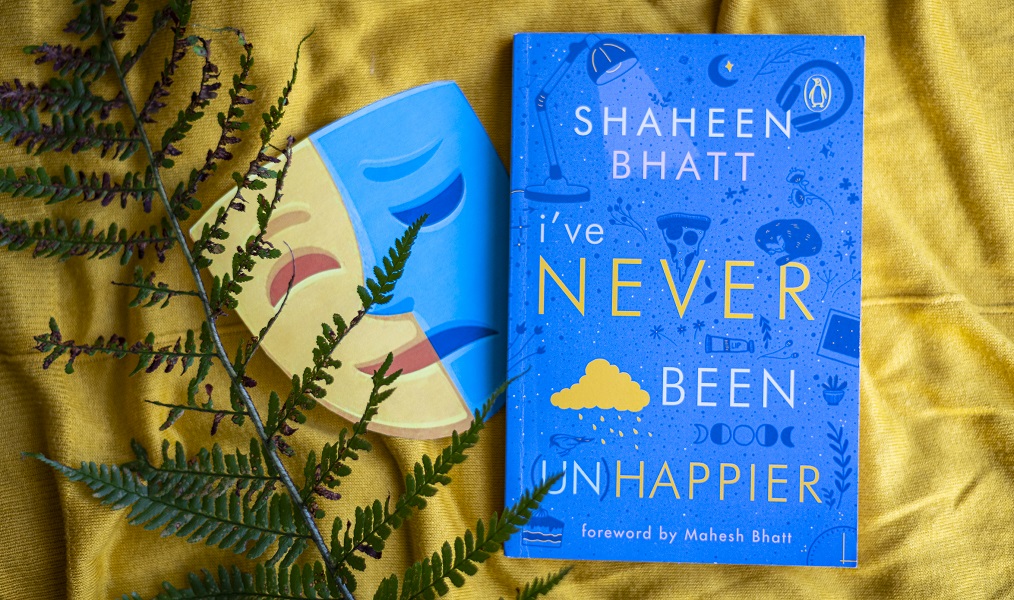
Fear of Transience: Excerpt from Shaheen Bhatt’s ‘I’ve Never Been (Un)Happier’

‘I don’t write about my experiences with depression to defend the legitimacy of my pain. My pain is real; it does not come to me because of my lifestyle, and it is not taken away by my lifestyle,’ says Shaheen Bhatt in her multidimensional philosophical tell-all book, I’ve Never Been (Un)Happier.

A poignant illustration of her day-to-day struggles with depression, Shaheen Bhatt’s memoir is crucial in starting a conversation that has been hushed for too long.

Read on to find an excerpt to begin a dialogue around mental health in India.

**

Perpetual bliss does not exist and anyone who peddles the belief that it does, or tries to convince you that there is a secret path through the woods that leads to an oasis of unending peace and happiness is either deluded, or a liar.

For too long we’ve been convinced that the emotional fairy tale—the perfect state of emotional well-being— exists, and that it’s tantalizingly close but just out of reach. We’ve been convinced that it exists and we’ve been convinced that there’s something fundamentally wrong with us for not being able to attain it.

It’s high time that we realize that there’s nothing wrong with us.

There’s something wrong with the fairy tale. Perpetual bliss does not exist, and saying that does not make me a nihilist.

I sit on the same see-saw that we all do and it continuously goes up and down, shifting between darkness and light—it’s the same for us all. Some of us simply stay down a little longer in a dark that’s just a little darker.

Transience is something we’re all so afraid of, and we live in perpetual fear of a new, different reality.

But thank God for transience because even though it means that happiness doesn’t last it also means that pain eventually passes.

It means that neither heaven nor hell are permanent.

There is nothing glorious or freeing or romantic or lovely about depression. Depression is a monster, a villain and thief, but even the worst of experiences teach you something. Depression has taken a lot from me and it has also given me a lot, but only because I eventually demanded it. I demanded my lessons and I took them head on.

‘You must not allow your pain to be wasted, Shaheen,’ my father said to me. I chant that quietly to myself—‘My pain must not be wasted,’ I say—and I try to learn, I try to do. I grieve and cry and hurt but I also take my medication and go to therapy. I watch my soul being bent and twisted into painful, unnatural shapes and marvel at how I’ve never seen it from those angles before. There are still days and weeks and months when I am also consumed by depression, when I forget all my lessons, when I forget everything but the pain. And that’s also when I turn to the very idea I’m afraid of: transience.

I remind myself if happiness is fleeting, then so is sadness.

I remind myself depression is the weather, and I’m a weather-worn tree.

I remind myself even the worst storms pass.

I remind myself I’ve survived them all.


**

A topic of massive interest to anyone with mental health disorders, I’ve Never Been (Un)Happier stretches out a hand to gently provide solace and solidarity. Go get your copy today!

Dear reader: A letter from Jojo Moyes

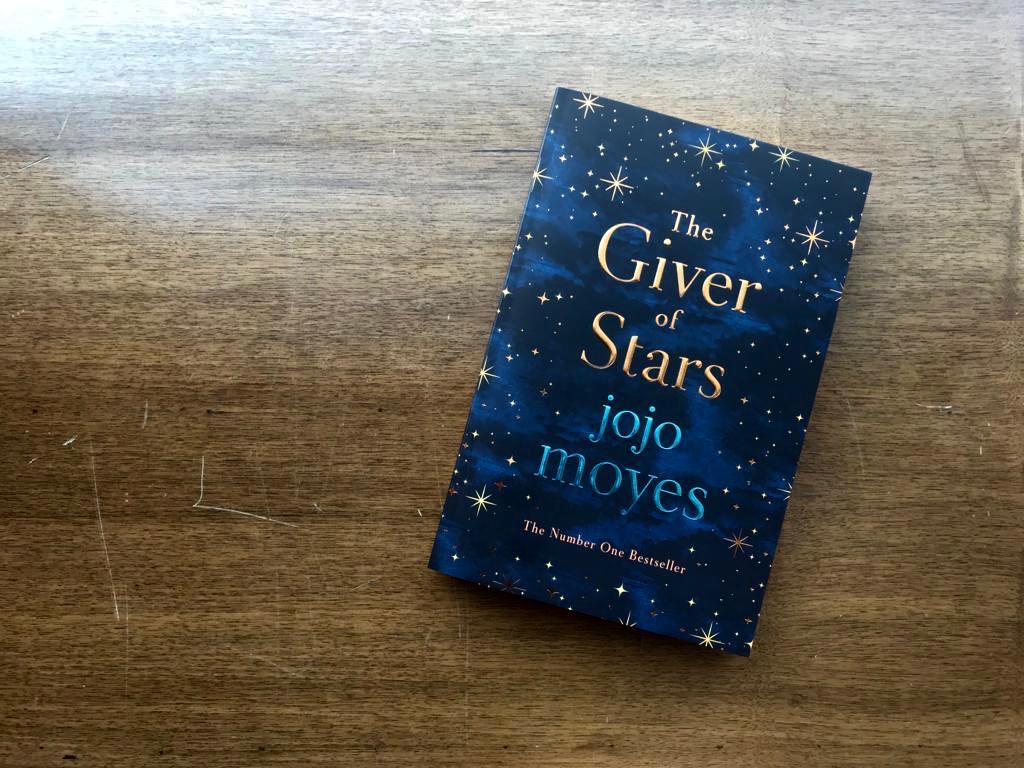
Bestselling author Jojo Moyes’ new book The Giver of Stars is a mesmerising tale of female friendship, romance, and the wonder of books and reading, inspired by a remarkable true story.

Here’s a special letter from the author in which she gives insight into the inspiration behind her novel:


Dear Reader,


Fifteen months ago I read an article in the Smithsonian magazine about the Horseback Librarians of Kentucky — a group of young women employed by the US Government’s WPA scheme to go into the mountains after the Great Depression and take books and magazines to families who might not otherwise read a word.


Enduring harsh conditions and braving all kinds of dangers — snakes, dangerous mountains, moonshiners and criminals — they would saddle up and ride hundreds of miles a week to read to the sick, teach children, encourage the spread of facts in a time where religion and snake oil salesmen were able to battle for people’s minds. They often faced fierce resistance, both for their sex and from families who were suspicious of any reading materials other than The Bible, but worked together in a system that lasted seven years across several states, bringing everything from recipes to comic books biological texts to these remote families. Many of them became beloved to the people they served.


The photographic images of these young women were extraordinary, and their relevance to today hit me hard. I travelled to this remote area of East Kentucky on two separate research trips, rode the trails that the librarians would have ridden and stayed a week in a remote log cabin so that I could experience nature as they would have done (I got told off for moving a snake with a stick). I fell in love with the landscape and the storytelling people who inhabit it.


The Giver of Stars is the result — a story of five such women from very different backgrounds, brought together in a tiny community in the mountains of Kentucky. The story is fictional, but I have rested it on a skeleton of facts. I can honestly say I have never loved writing a book more, or been more inspired by my subject matter. I really hope everyone else enjoys it as much as I have.


Jojo Moyes


Intrigued? The Giver of Stars is available now.

Even True Love Has a Dangerous Side- The Prologue from Novoneel Chakraborty’s New Book

‘I’ll gift you a love story that every girl desires, but few get to live.’

He’d told me once. And boy, did he stick to his words! Vanav Thakur is the perfect boyfriend that any girl can have. Sometimes, I wonder if I really deserve him.

I’m Aarisha Shergill and my life is about to get ripped apart because I should have known some things should be left alone.

Bestselling author Novoneel Chakraborty is back with Roses Are Blood Red. Read the prologue from the book below:

TOSH, HIMACHAL PRADESH Sometime Ago

It was an important day for her. Very important. He was coming down to meet her after . . . in fact, she had been counting: three months, fifteen days, eleven hours and—as she left her house—exactly nine minutes. She had told her parents that she would stay with her bestie from college— Pragya—that night. Pragya, obviously, had no idea about her subterfuge.

He had selected the venue for their clandestine meet. It was only two blocks from her house to the small tea shop that would have closed for the day by then.

Despite the several layers she had on, Aarisha’s teeth chattered as she cycled towards the tea shop. The shiver was partially due to the unseasonal cold wave that had gripped the Himalayan town; she trembled more in anticipation of the impending rendezvous. Should I launch into his arms as soon as we meet? Or should I stand back and simply admire him for a bit? With an avalanche of thoughts crashing through her mind, she finally reached the location for their tryst. She stopped nineteen-to-the-dozen. Only the rarest find their harmony in silence. They were rare, she knew.

She cupped his jaw in her long-fingered hands and caressed his three-day-old stubble with her thumbs. He stretched out an arm to flick the switch on the car stereo. Ariana Grande’s husky voice softly permeated the interior of the car with one of her favourite tracks: ‘God is a Woman’. Aarisha leaned in, but before their lips could touch, he gripped her waist and stopped her descent.

‘Not so quick, Ranisa,’ he whispered.

She loved it when he called her by that name. ‘Ranisa’ meant queen—his queen.

If there was one thing she absolutely loved and couldn’t quite define, it was his enormous respect for her. It was so deep-seated that she often wondered whether she deserved to be placed on such a high pedestal.

‘You always say this,’ she whispered petulantly. ‘Don’t you want to kiss me?’

He stared at her beauty, her dark hair cascading like a cloud around her shoulders. Her eyes didn’t reflect pain, they carried a complaint.

‘D’you honestly believe that I don’t want to kiss you?’ he asked.

‘Then why don’t you?’ she sulked. ‘Also,’ she dismounted from him and scrambled back into her seat, ‘I hate it when you leave me and go away.’ He sensed the flood of tears about to burst through the dam at any moment.

‘Why?’ he asked softly.‘I feel insecure about you, about us,’ Aarisha choked.

An ironical smile touched his face. ‘You know this thing we call love, it’s like a dense forest. As you enter, you hear the growl of several wild beasts. At times, you may even encounter them. Insecurity is the most ferocious beast in this jungle. Whether to fall victim to it or vanquish it to continue one’s quest to unearth the greatest treasure ever, which is also hidden in this very forest, is the lover’s call. I’ve taken mine. What’s your call, Ranisa?’

She stared at him, amazed at the total conviction in his eyes. How could someone’s eyes always reflect such confidence? It was the kind of assurance one developed after scrutinizing life so closely that its tricks became only too predictable. She leaned over and kissed his closed eyelids.

‘I’ll fight. I promise I’ll fight all the beasts that come our way,’ she whispered.

There was a faint smile on his face as he said, ‘Don’t worry about the distance between us.’ He raised her downcast face and kissed her forehead, ‘The body is only what is. The soul is what is, what was and what will be. The scope of all the urges stemming from the body is a mere molecule compared to the intense longing that arises from the soul. And for the soul, distance is an alien concept. Distance only restricts the body.’

‘But the body is also important in its own way, isn’t it?’

‘As much as a house of bricks and mortar, because it houses the vulnerable and the fragile within. But we all know that the shelter is temporary and, as all temporary things, too transient to worry about.’

‘What’s permanent then?’ Aarisha asked.

He placed his right hand flat against her left hand, palm to palm, their fingertips splayed until they found the gaps through which the fingers slipped, and the hands clasped each other.

‘This,’ he said, tightening the clasp, ‘this is permanent.’

I wish I could tell you the number of wars I’ve fought to make this permanent, he thought.

‘D’you know, there are times in your absence when I get the feeling that I hardly know you at all. Is that good?’ she asked, resting her head on his shoulder.

‘You’ll know. You’ll know very soon. It’s just a matter of one more year.’

‘One more year?’ she asked, frowning.

‘Yes. In one more year I’ll gift you a love story that every girl desires, but few, if any, get to live,’ he whispered.

‘What do you mean?’ she drew back to look at his face. There was no response. She raised her head—and suddenly she felt a tug on her hair.

‘Ouch!’ she yelled. Before she realized what was happening, she felt a punch on her face that broke her nose and lacerated her lips. The second punch that buried itself in her gut almost made her throw up. Aarisha fell unconscious, her face a bloodied mess. Three more punches followed: one to her jaw, another landed in her ribs and the third, in the stomach again. He shoved her away from him with force. The side of her head slammed against the window. He yanked down her jeans, slipped them off her legs and tossed them out of the window. He tugged her panties down to her knees and from his pocket he extracted a vial of semen. He smeared

some of the semen on her panties, on her dress and emptied the rest on her bare abdomen. He made sure nobody would ever track down whose semen it was. For a doctor, it wasn’t even a task. He dressed her back in a hasty manner.

As soon as he was done, he used his cell phone to call the local police station. Emotionlessly, he relayed the information, ‘A girl has been raped and abandoned on the road.’ He gave them the approximate location before hanging up. He glanced at Aarisha’s unconscious battered face and muttered, ‘The first thing you should know about me is: I…Don’t…Let…Go…’

He turned on the ignition, opened the passenger side door and pushed the girl’s insensate body out. He put the car into gear, gunned the engine and sped away into the night. After half an hour of driving, he stopped. He alighted from the car and stood at the edge of the abyss, gazing into the darkness. He dialled the police again. They informed him that the girl had been rescued and countered with their own questions about his identity. In reply, he flung the phone into the abyss as far as it would go. He looked up at the night sky— at the constellations of stars—they had mocked him enough. They thought she would never be his. And now, he would win her from everything—and everyone.

He extended both his middle fingers skywards and bellowed a bloodcurdling war-cry against destiny.

Vanav Thakur was no ordinary man. He was soul-deep in love with a girl. And he was a man with a plan.


Curious to know what happens next?  Mysteriously thrilling in its essence, Novoneel Chakraborty’s Roses Are Blood Red is a haunting story of a passionate and eternal love.

 

An Exclusive Excerpt from Harinder Sikka’s Newest Book!

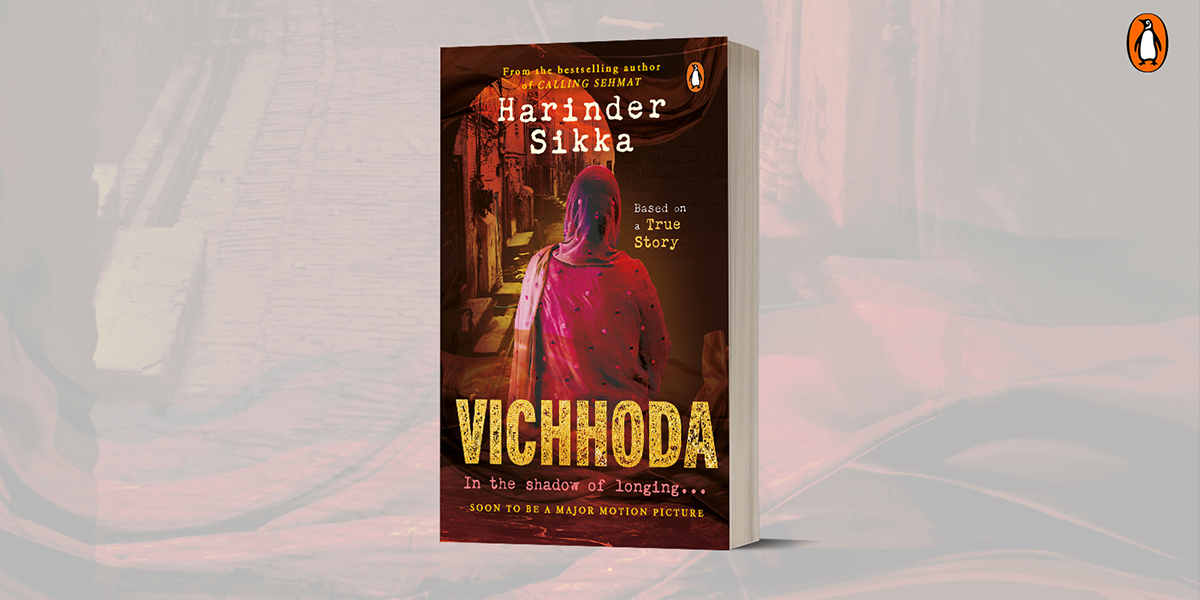
Bestselling author of Calling Sehmat, Harinder Sikka is back! His new book Vichhoda, narrates the experiences of another powerful woman, Bibi Amrit Kaur.

Bibi’s life is torn apart in the 1947 riots. She’s now living in a different country with a different identity, a fate she eventually accepts gracefully. She gets married and has two children. Life, however, has something else in store for her. It breaks her and her children apart. And this time the pain is unbearable.

Read an excerpt from the book below:


In the meantime, Bibi reached home to find a large group of women assembled in front of her home. They were surprised to see her without her burqa. As the tonga stopped, she stepped down, and, without saying a word to the women, rushed into her home and bolted the door from inside. But like jungle fire, stories about her act of bravery reached every ear in no time. It generated praise and fear in equal measure. Even though Sakhiullah was respected by the villagers, most women feared police retaliation. They were all aware of the brutality with which cops often operated, especially in rural areas where they were treated like demigods. When Sakhiullah arrived that evening, he was shocked to learn about the turn of events. He rushed to the army camp situated near his house and narrated the story to the deputy camp commander, a young army captain named Ishtiaq, who was also his first cousin. ‘I need urgent help, Ishtiaq. We have no time to waste. It won’t be long before the police come banging at our doors. And that could mean serious trouble; not only for Bibi, but for the entire family!’


The young captain nodded and called his most senior and experienced jawan at the camp, Subedar Major Mushtaq Khan, for advice. A deep furrow appeared between his brows as Sakhiullah related the story. He mused for a moment and then said, ‘Sir, the camp commandant will have to intervene immediately as this is a case of attack on a serving police officer. But he’s in Islamabad for the entire week. I know the SHO well. He’s politically connected, highly corrupt and most brutal. If he survives, he will take revenge in every possible manner. But even if he doesn’t, his colleagues won’t spare your family. I suggest that you move out with your family immediately. Also, Bibi will have to be sent to India right away if we are to save her.’


Captain Ishtiaq looked at Sakhiullah and said, ‘Bhaijaan, if what Mushtaq Sahib is saying is right, then we don’t have much time. Please decide. I don’t even have the authority to do what we are planning, but I shall not spare any effort.’ A helpless and confused Sakhiullah nodded in affirmation and the subedar swung into action.


An hour later, two military jeeps arrived at Sakhiullah’s residence. Four army jawans in battle rig and armed with rifles stepped out, followed by a subedar and a young lieutenant. The lieutenant took Bibi into custody while Sakhiullah watched from a distance as a mute spectator. The military officer whispered in her ear that her life and that of her entire family was in danger. He explained to her that the arrest was being made only to evade a counter-attack as the police would not interfere with the military forces.


The first jeep left, taking Bibi to an unknown destination. Shortly, Sakhiullah too departed under escort. He was accompanied by his two minor sons and his cousin, Captain Ishtiaq. After travelling for about twenty kilometres, the first vehicle turned left from the narrow highway towards the Indian border while the second one turned right towards the main city. Bibi instinctively realized the plan. She cried and begged for an opportunity to meet her husband and children one last time. But her wails fell on deaf ears. Despite being aware of Sakhiullah’s clout, the young army lieutenant displayed no mercy. He could not have; he was under strict instructions. The jeep reached the border half an hour later. The officer stepped down and went across the border, exchanged pleasantries with his counterpart from India and swiftly handed Bibi over to the Indian armed forces.


What happens to Bibi next? Order your copy of Vichhoda to find out!

A Guide To the Use of Colours and Their Symbolism- An Excerpt from ‘The Hidden Rainbow’

Kelly Dorji takes you on a spiritual journey through Buddhist symbolism to help find your inner peace. In our busy lives, The Hidden Rainbow is the perfect oasis.

Read an excerpt from the book below:


A GUIDE TO THE USE OF COLOURS AND THEIR SYMBOLISM IN BUDDHISM:

The main colours used in Buddhist art are blue, black, white,

red, green and yellow. With black as the exception, the other

five colours are representative of a specific Buddha in the

depiction of the five Wisdom Buddhas of the Vajrayana or

Tantric Tradition of Buddhism.


The colour B L U E is used to represent the Healing Buddha,

signifying calm, purity and healing.


W H I T E signifies purity and is the colour of knowledge

and longevity. The primordial Buddha ‘Vairocana’ is depicted

in white.


The Buddha Amitabha is shown in R E D, which symbolizes

life and holiness.


The Amoghasiddhi Buddha in G R E E N signifies

accomplishment and the elimination of envy.


Y E L L OW is the colour chosen to depict Ratnasambhava,

who is a symbol of balance and humility.


Through meditation, these colours may contribute to the

restorative process of the human condition by transforming human

delusions to original qualities as follows:

– Meditating on the colour blue can pacify aggression.

– White can transform ignorance into wisdom.

– Red turns attachment into selflessness and realization.

– Concentrating on green can eliminate jealousy.

– Meditation on the colour yellow can enrich the sense of self and

eliminate pride.


Keep calm and find your inner peace with The Hidden Rainbow.

The Belief of Oneness in Sikhism, Savayye: An Excerpt from ‘Hymns of the Sikh Gurus’

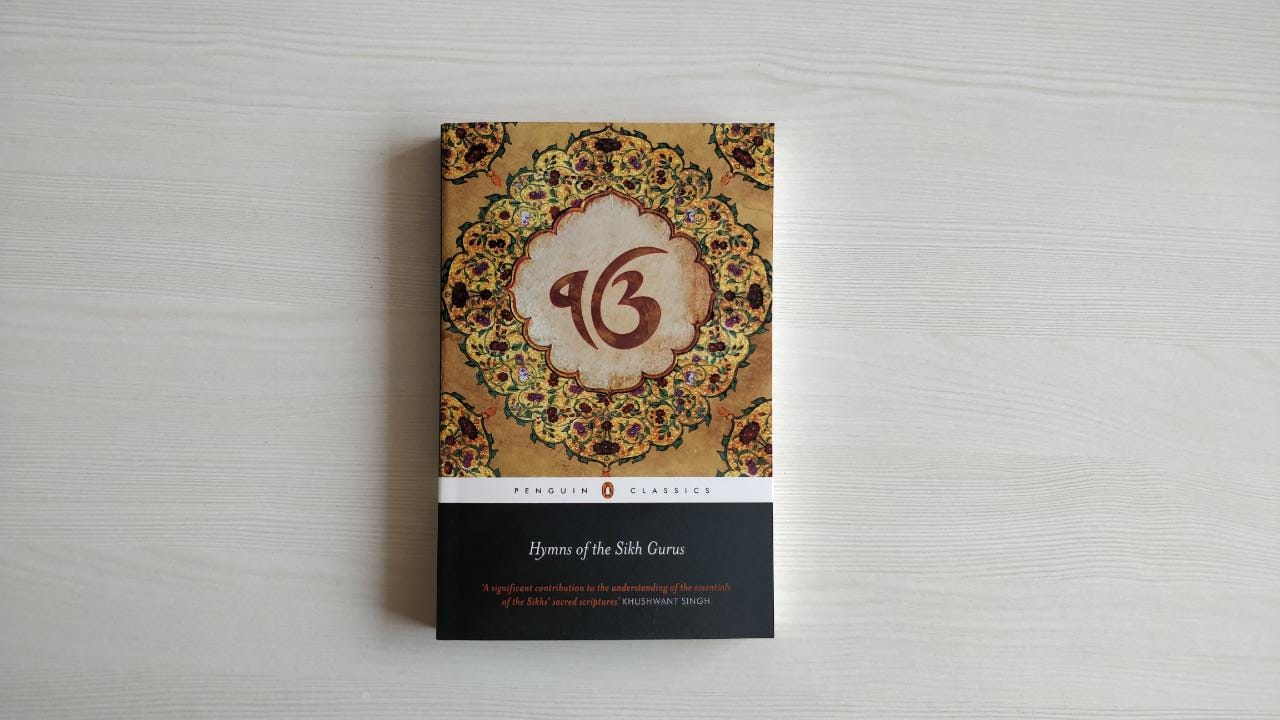
The vision of Guru Nanak, the fifteenth-century founder of the Sikh faith, celebrated the oneness of the Divine that both dwells within and transcends the endless diversity of life. Guru Nanak’s immaculate vision inspired the rich and inclusive philosophy of Sikhism, which is reflected in this exquisite and highly acclaimed translation of poems,Hymns of the Sikh Gurus, from the religion’s most sacred texts: the Guru Granth Sahib, the principal sacred text of the Sikh religion, which consists of poems and hymns by Guru Nanak, his successors and Hindu and Islamic saints; and the Dasam Granth, a collection of devotional verses composed by the tenth Sikh Guru.

Read an excerpt from this book this Gurpurab:


MORNING AND INITIATION
Savayye

SAVAYYE means quatrains. The ten Savayye that have been included in the Sikhs’ morning prayers are from Guru Gobind Singh’s Dasam Granth (see p. 1). They underscore devotion as the essence of religion. They reject all forms of external worship and cast Guru Nanak’s message of internal love in beautiful undulating rhythm. These Savayye are also recited during the administration of amrita, the initiation ceremony of the Khalsa (the Sikh order).

There is One Being. Victory to the wonderful Guru.

The composition of the Tenth Guru.

My wonderful Guru, I recite the Savayye by Your grace.

I have seen hosts of purists and ascetics,
I have visited the homes of yogis and celibates.
Heroes and demons, practitioners of purity
and drinkers of ambrosia, hosts of saints
from countless religions, I have seen them all.
I have seen religions from all countries,
but I have yet to see followers of the Creator.
Without love for the Almighty,
without grace from the Almighty,
all practices are without a grain of worth.


Drunken elephants draped in gold,
first among giants in blazing colours,
Herds of horses, sprinting like gazelles,
swifter than the wind,
The people bow their heads to strong-armed rulers,
But what if they be such mighty owners;
at the last, they depart barefoot from the world.


Conquerors of the world march triumphant
to the beat of kettledrums.
Their herds of handsome elephants trumpet,
their royal steeds lustily neigh.

These rulers of past, future and present
can never be counted.
Without worshipping the supreme Sovereign,
all end in the house of death.

Pilgrimage, ablutions and charities, self-restraint
and countless rituals,
Study of Vedas, Puranas, Kateb and Qur’an,
of all scriptures from all times and places,
Ascetics subsisting on air, practising celibacy;
countless such have I seen and considered.
Without remembering the One, without love for the One,
all rulers and actions go to naught.


Inured and invincible warriors in shining armour,
determined to crush the enemy,
Proudly think, mountains may grow wings and fly away,
but never us.
They can shatter their enemy, they can wring their foe,
they can crush legions of drunken elephants,
But without the grace of the One,
they too must depart this world.


Countless heroes and doughty warriors
who stand fast against the blows of iron,
Who conquer lands and enemies,
who crush the pride of drunken elephants,
Who raze sturdy castles, who gain the world by words,
They are all beggars at the divine Portal,
the almighty Ruler is the only Giver.


Gods, demons, serpents, and ghosts contemplate
Your Name in all time—past, present, and future.

All creatures of land and sea,
You instantly create and destroy.
Their virtuous deeds are heartily celebrated,
their piles of misdeeds utterly eradicated.
The devout go happily in this world,
their enemies sink in shame.

Rulers of mortals and mighty elephants,
leaders of the three worlds,
Performers of endless rituals and charities,
winners of brides in countless swayamvara rites,
Like Brahma, Shiva, Vishnu and Sachi’s husband,
they all end at last in death.
They who touch the feet of the Transcendent One,
they alone are freed from the cycle of birth and death.


How futile to sit in contemplation,
like a stork with both eyes closed.
While trying to bathe in the seven seas,
we lose this world and the next.
How futile to sink in misdeeds,
we only waste away our life.
I tell the truth, do listen to me,
they alone who love, find the Beloved.


Some worship stones, some bear them on their heads;
some wear phalluses around their necks.
Some claim to see the One in the south;
some bow their heads to the west.
Some worship idols, some images of animals;
some run to worship the dead and their graves.
The entire world is lost in false ritual;
none knows the mystery of the Almighty One.


Poetry from these highly revered texts is heard daily and at rites of passage and celebration in Sikh homes and gurudwaras, carrying forward the Sikh belief in the oneness and equality of all humanity.Read Hymns of the Sikh Gurus to know more about these.

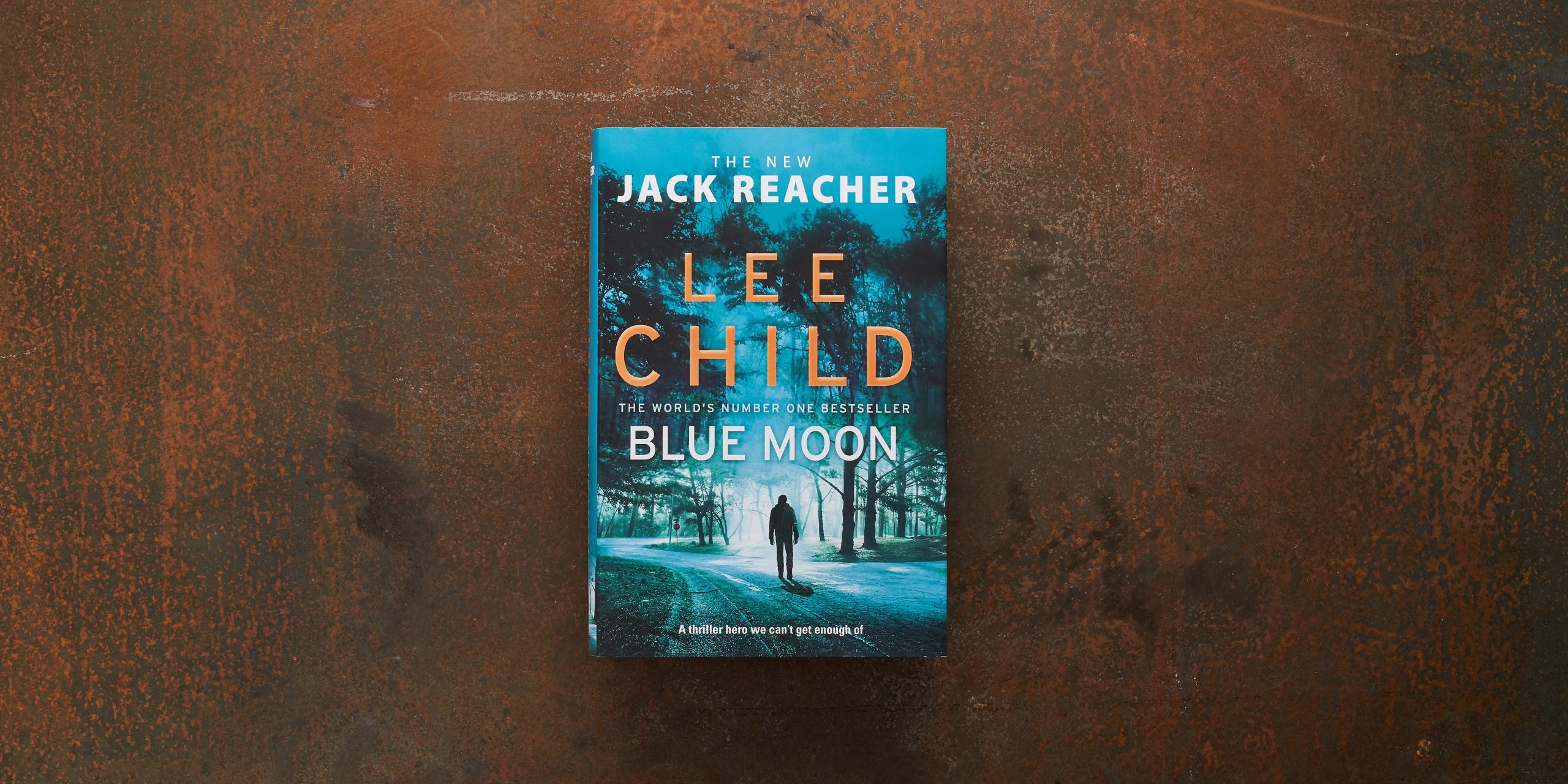
An Excerpt from the Newest Jack Reacher Novel ‘Blue Moon’

Lee Child’s Jack Reacher is back in Blue Moon!

Reacher is trained to notice things. He’s on a greyhound bus, watching an elderly man sleeping in his seat, with a fat envelope of cash hanging out of his pocket. Another passenger is watching too… Obviously hoping to get rich quick. As the mugger makes his move, Reacher steps in. The old man is grateful, yet he turns down Reacher’s offer to help him home. He’s vulnerable, scared, and clearly in big, big trouble. Will Reacher sit back and let things happen?

Read an excerpt from the book below:


The city looked small on a map of America.  It was just a tiny polite dot, near a red threadlike road that ran across an otherwise empty half inch of paper.  But up close and on the ground it had half a million people.  It covered more than a hundred square miles.  It had nearly a hundred and fifty thousand households.  It had more than two thousand acres of parkland.  It spent half a billion dollars a year, and raised almost as much through taxes and fees and charges.  It was big enough that the police department was twelve hundred strong.

And it was big enough that organized crime was split two separate ways.  The west of the city was run by Ukrainians.  The east was run by Albanians.  The demarcation line between them was gerrymandered as tight as a congressional district.  Nominally it followed Center Street, which ran north to south and divided the city in half, but it zigged and zagged and ducked in and out to include or exclude specific blocks and parts of specific neighborhoods, wherever it was felt historic precedents justified special circumstances.  Negotiations had been tense.  There had been minor turf wars.  There had been some unpleasantness.  But eventually an agreement had been reached.  The arrangement seemed to work.  Each side kept out of the other’s way.  For a long time there had been no significant contact between them.

Until one morning in May.  The Ukrainian boss parked in a garage on Center Street, and walked east into Albanian territory.  Alone.  He was fifty years old and built like a bronze statue of an old hero, tall, hard, and solid.  He called himself Gregory, which was as close as Americans could get to pronouncing his given name.  He was unarmed, and he was wearing tight pants and a tight T shirt to prove it.  Nothing in his pockets.  Nothing concealed.  He turned left and right, burrowing deep, heading for a backstreet block, where he knew the Albanians ran their businesses out of a suite of offices in back of a lumber yard.

He was followed all the way, from his first step across the line.  Calls were made ahead, so that when he arrived he was faced by six silent figures, all standing still in the half circle between the sidewalk and the lumber yard’s gate.  Like chess pieces in a defensive formation.  He stopped and held his arms out from his sides.  He turned around slowly, a full 360, his arms still held wide.  Tight pants, tight T shirt.  No lumps.  No bulges.  No knife.  No gun.  Unarmed, in front of six guys who undoubtedly weren’t.  But he wasn’t worried.  To attack him unprovoked was a step the Albanians wouldn’t take.  He knew that.  Courtesies had to be observed.  Manners were manners.

One of the six silent figures stepped up.  Partly a blocking maneuver, partly ready to listen.

Gregory said, “I need to speak with Dino.”

Dino was the Albanian boss.

The guy said, “Why?”

“I have information.”

“About what?”

“Something he needs to know.”

“I could give you a phone number.”

“This is a thing that needs to be said face to face.”

“Does it need to be said right now?”

“Yes, it does.”

The guy said nothing for a spell, and then he turned and ducked through a personnel door set low in a metal roll-up gate.  The other five guys formed up tighter, to replace his missing presence.  Gregory waited.  The five guys watched him, part wary, part fascinated.  It was a unique occasion.  Once in a lifetime.  Like seeing a unicorn.  The other side’s boss.  Right there.  Previous negotiations had been held on neutral ground, on a golf course way out of town, on the other side of the highway.

Gregory waited.  Five long minutes later the guy came back out through the personnel door.  He left it open.  He gestured.  Gregory walked forward and ducked and stepped inside.  He smelled fresh pine and heard the whine of a saw.

The guy said, “We need to search you for a wire.”

Gregory nodded and stripped off his T shirt.  His torso was thick and hard and matted with hair.  No wire.  The guy checked the seams in his T shirt and handed it back.  Gregory put it on and ran his fingers through his hair.

The guy said, “This way.”


Two rival criminal gangs are competing for control in Blue Moon. Will Jack Reacher be able to stop bad things from happening? Read to find out!

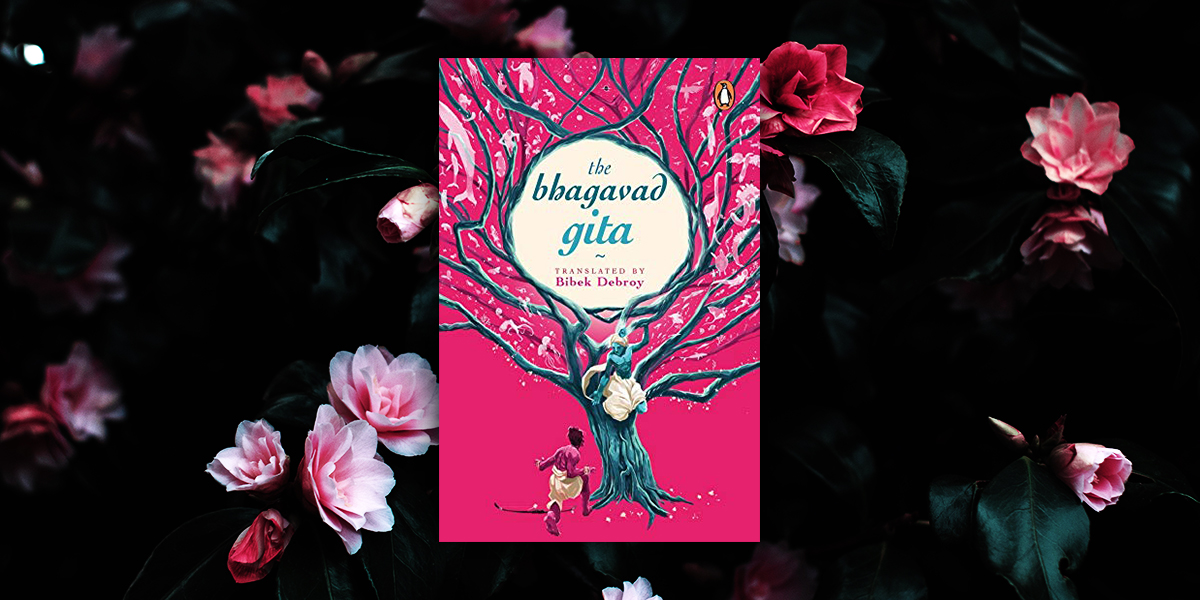
An Excerpt from Bibek Debroy’s Translation of ‘The Bhagavad Gita’

As far as traditional Indian stories and lore go, The Bhagavad Gita is an enduring and nuanced reflection of the relationship between action and consequence, agency and choice. Bibek Debroy’s translation of the book is highly relevant and now accessible to a whole new generation of readers.

Here’s an excerpt that presents a glimpse into the insights this book has to offer!


‘Without performing action, man is not freed from the
bondage of action. And resorting to sannyasa does not
result in liberation.’

~

‘No one can ever exist, even for a short while, without
performing action. Because the qualities of nature force
everyone to perform action.’

~

‘The ignorant person who exists by controlling his organs of
action, while his mind remembers the senses, is said to be
deluded and is a hypocrite.’

~

‘O Arjuna! But he who restrains the senses through his mind
and starts the yoga of action with the organs of action, while
remaining unattached, he is superior.

~

‘Therefore, do the prescribed action. Because action is
superior to not performing action. And without action, even
survival of the body is not possible.’

~

‘O son of Kunti! All action other than that for sacrifices
shackles people to the bondage of action. Therefore, do
action for that purpose, without attachment.

~

‘Earlier, Prajapati created beings, accompanied by a
sacrifice and said, “With this, may you increase, and may
this grant you all objects you desire.’

~

‘Through this, cherish the gods and those gods will
cherish you. By cherishing each other, you will obtain that
which is most desired.’

~

‘Because, cherished by the sacrifice, the gods will give you all
desired objects. He who enjoys these without giving them
their share is certainly a thief.’

~

‘Righteous people who enjoy the leftovers  of sacrifices
are freed from all sins. But those sinners who cook only for
themselves live on sin.’

~

‘Beings are created from food and food is created from rain
clouds. Rain clouds are created from sacrifices and sacrifices
are created from action.’


Full of life-lessons and thought-provoking debates on morals, Bibek Debroy’s Bhagavad Gita is more relevant than ever.

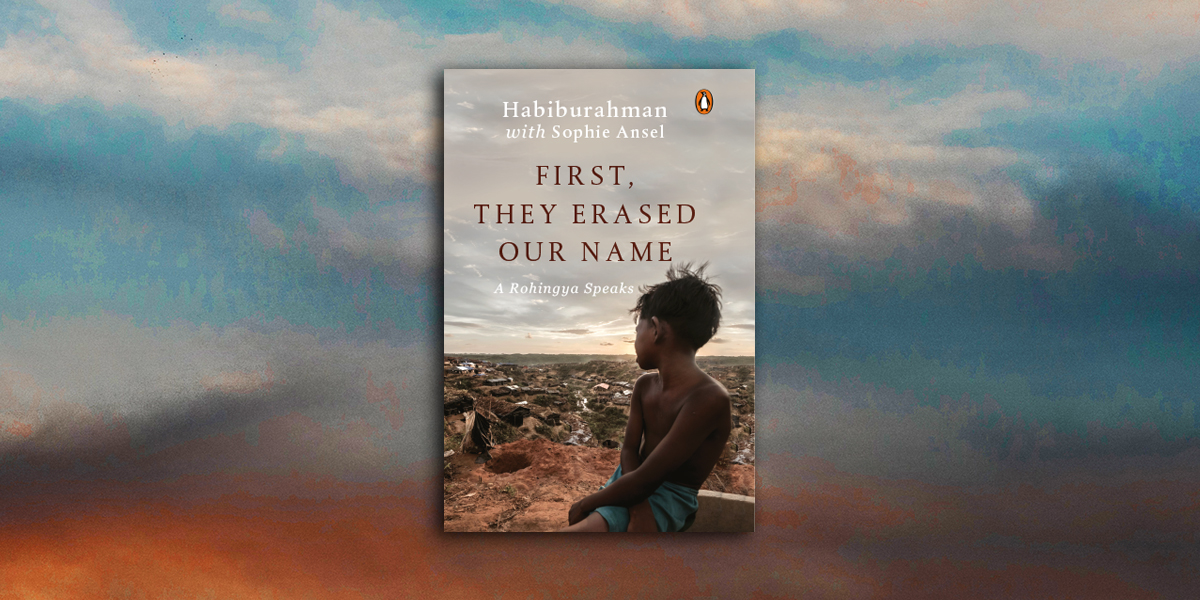
Story of Trauma and Survival: Excerpt from ‘First, They Erased Our Name’

In First, They Erased Our Name, for the first time, a Rohingya speaks up to expose the truth behind a global humanitarian crisis. Through the eyes of a child, we learn about the historic persecution of the Rohingya people and witness the violence young Habiburahman endured throughout his life until he escaped the country in 2000.

The narrative is an intimate and personal portrayal of trauma that endures even today. Here is a glimpse into Habiburahman’s story of survival and his struggles to exist:

“The dictator U Ne Win has presided over a reign of terror in Burma for decades. In 1982, he has a new project. He is planning to redefine national identity and fabricate an enemy to fuel fear. A new law comes into force. Henceforth, to retain Burmese citizenship, you must belong to one of the 135 recognised ethnic groups, which form part of eight ‘national races’. The Rohingya are not among them. With a stroke of the pen, our ethnic group officially disappears. The announcement falls like a thunderbolt on more than a million Rohingya who live in Arakan State, our ancestral land in western Burma. The brainwashing starts. Rumours and alarm spread insidiously from village to village. From now on, the word ‘Rohingya’ is prohibited. It no longer exists. We no longer exist.

I am three years old and am effectively erased from existence. I become a foreigner to my neighbours: they believe that we are Bengali invaders who have entered their country illegally and now threaten to overrun it. They call us kalars, a pejorative term expressing scorn and disgust for dark-skinned ethnic groups. In a different time and place, under different circumstances, kalar would have meant wog or nigger. The word is like a slap in the face; it undermines us more with each passing day. An outlandish tale takes root by firesides in thatched huts across Burma. They say that because of our physical appearance we are evil ogres from a faraway land, more animal than human. This image persists, haunting the thoughts of adults and the nightmares of children.

I am three years old and will have to grow up with the hostility of others. I am already an outlaw in my own country, an outlaw in the world. I am three years old, and don’t yet know that I am stateless. A tyrant leant over my cradle and traced a destiny for me that will be hard to avoid: I will either be a fugitive or I won’t exist at all.”


Habiburahman’s First, They Erased Our Name is an urgent, moving memoir about what it feels like to be repressed in one’s own country and a refugee in others. It gives voice to the voiceless.

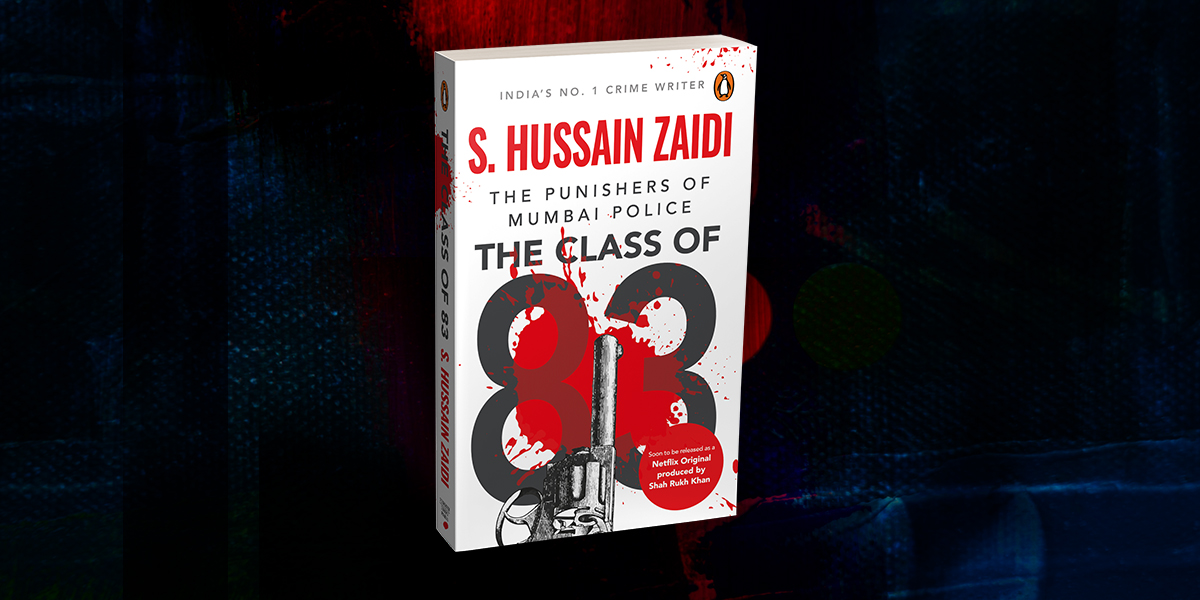
The Encounter Specialists: An Excerpt from ‘The Class of 83’ 

At a time when Mumbai was plagued by underworld gangsters like Dawood Ibrahim, Iqbal Kaskar and Chhota Rajan, the batch of 1983 from the Police Training School (PTC) in Nashik-trained by the legendary Arvind Inamdar-produced a group of prominent encounter specialists who have been credited with bringing back the rule of law in the city.

Famed even within this batch, trigger-happy senior police inspector Pradeep Sharma understood that to save the city from the clutches of the underworld, he would need to dilute rival gangs. The Class of 83 delves deep into the most famous (or infamous) encounters conducted by Sharma and his batch mates. Pradeep Sharma was arrested by the same department he had served for two-and-a-half decades. He faced the ignominy of jail, clubbed in the same cell as the criminals he had arrested. However, he fought for his honour, was acquitted and reinstated into service.

Here is an excerpt from this one-of-a-kind story of a policeman’s triumphs, struggles and redemption-


‘I will get you this man, sir,’ Sharma said, even though he was not sure how he was going to do so.

‘Shabaash,’ Karkare said. ‘Keep it confidential, Pradeep. This is a matter of national security.’

Initially, Sharma’s search for Abdul Latif led him to many dead ends. The phone number turned out to be a prepaid number which had been issued without proper scrutiny of the address. These were early days for the mobile service providers in India. Document verification was not stringent. Sharma tapped his entire network of informants but gave them only the details they needed to know without revealing the context.

Sharma’s hunch was that Latif was in a Muslim dominated locality near a mosque. The possibilities of this theory were endless. In fact, every Muslim dominated locality would have a mosque nearby, similar to other religions and their places of worship. Yet, Sharma made one of his most trusted informers, Saleem, speak with many imams of mosques in the suburbs to find out if any suspicious person had turned up for offering namaz at their mosque recently. Saleem also got in touch with several real estate agents to see if any untoward person had rented out a flat in their locality. But unfortunately, no leads emerged from these efforts.

In 1998, Mumbai Police had come across a bizarre case of a bleeding man walking out of a toilet of a masjid in south Mumbai. It turned out that the man was trying to assemble explosives in the toilet, and it had detonated accidentally and injured him. The bleeding man abruptly left his device in the toilet and escaped on foot, while his white clothes were drenched with blood and he was bleeding all over his face and neck. Then Police commissioner R.H. Mendonca and Crime Chief R.S. Sharma had stepped into a Mumbai masjid for the first time to inspect the spot. However, the crime branch eventually found out that it was a Pakistani who had been staying in a Muslim locality in Nirmal Nagar in Santacruz for six months with a different name.

Sharma presumed that people who visited mosques frequently would notice a stranger and they would share this information with the police. But this time Sharma drew a blank. The only fall-back option now was the mobile number Karkare had given him. Back then there weren’t any sophisticated cellphone tapping capabilities, but Sharma had managed to procure a crude telephone tapping equipment from his sources in the department and set it up in the CIU office at Andheri. Over a listening period of two days, Sharma had figured out that Latif was in an area which had a mosque nearby because the azaan of morning prayer which could be heard distinctly in the background. The area also had a cowshed nearby because the mooing of cows and buffaloes was loud and clear. Sharma called a team of constables into his cabin.

‘How many mosques in Mumbai have a cowshed nearby?’ he asked.

His men were stunned by the question. They were unsure if Sharma was testing their knowledge as many Mumbaikars take immense pride in knowing trivial details about the city like the routes of the BEST buses, the famous delicacies of each area, renowned roadside shops located in the many by-lanes of Mumbai. The constables merely smiled and stared back at Sharma.

‘No one is allowed to go back home until I have this information,’ Sharma said, looking serious.

The constables rushed out of his room. In a few hours, they reported back to Sharma. There were five possible areas matching his description: Cheetah Camp in Mankhurd, Kurla Pipe Road, Amrut Nagar in Mumbra, Thane, and places in Jogeshwari and Goregaon.

Sharma had been continually discussing the case with Hemant Karkare, who was aghast to hear that the terrorists had bigger plans up their sleeves. Kandahar was being tracked by media across the globe. Already, India was being portrayed as a soft state which had been forced to the negotiating table by a rogue group of terrorists. Prime Minister Atal Bihari Vajpayee had climbed down from his aggressive posturing that the Indian government would not engage in any negotiations under the threat of the gun. Now, the government was seeking solace in the fact that the terrorists had apparently scaled down a lot of their demands. India’s image was being tarnished by the international media.

But the government was also concerned for the lives of the 190 civilians. The Indian national whom the hijackers had stabbed had bled to death. The innocent man was returning from his honeymoon trip with his newly wed wife. The pressure on the government was immense, and it was understandable that the lives of the citizens were being made a priority over other considerations. Indian agencies like RAW had also taken a severe beating that an incident like this had occurred in the first place. Meanwhile, Sharma briefed Karkare about the four locations he had zeroed in on. But launching a manhunt at these locations required sizeable manpower which could compromise the secrecy of Karkare’s mission.

‘We can’t take any more damage,’ Karkare told Sharma.

‘Sir, I am close to catching our man.’

‘Pradeep, only the result will count!’ Karkare said. ‘What is your next plan of action?’

‘I’m tapping my resources in the telecom operator to get a tower location on Latif’s number.’

‘Time is against us,’ Karkare replied. ‘Arrest Latif at all costs and soon.’


Hussain Zaidi takes us deep into the brutal world of the men in uniform who put their lives on the line to fight terror.

Read The Class of 83 to meet the men who made dreaded criminals fear death by encounter!

error: Content is protected !!