Publish with Us

Follow Penguin

Follow Penguinsters

Follow Penguin Swadesh

Mayawati: Goddess of Justice, the Lioness of UP or the Iron Lady?

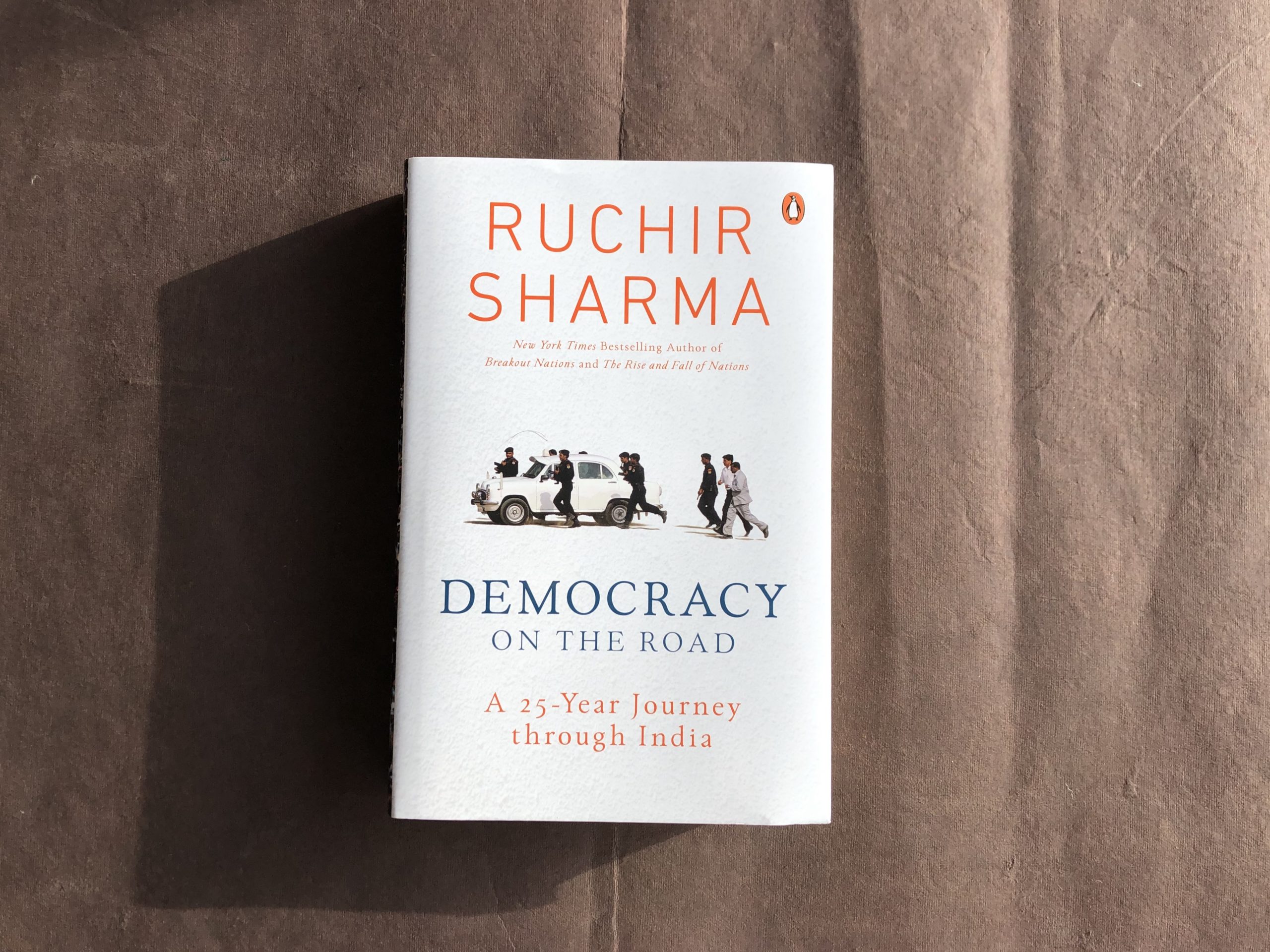
On the eve of a landmark general election, Ruchir Sharma offers an unrivalled portrait of how India and its democracy work, drawn from his two decades on the road chasing election campaigns across every major state, travelling the equivalent of a lap around the earth. Democracy on the Road takes readers on a rollicking ride with Ruchir and his merry band of fellow writers as they talk to farmers, shopkeepers and CEOs from Rajasthan to Tamil Nadu, and interview leaders from Narendra Modi to Rahul Gandhi.

Excerpted here is the author’s encounters with Mayawati as well as her journey in politics.


All of his rivals were accusing Mulayam of running a deeply corrupt administration that was lining the pockets of his fellow Yadavs. Into this breach stepped Mayawati, who aimed to build a winning plurality with the support of castes alienated by Mulayam’s Yadav centric administration. To build on her rock-solid base among Dalits, Mayawati decided on a bold strategy, reaching out to Brahmins, who are politically powerful everywhere but at 10 per cent of the population, double the India average, are particularly important in this critical state. Accustomed to a position of great power, the Brahmins felt marginalized by the Yadav government, but drawing them in to support Mayawati would not be easy: no one had forgotten her party’s old call on Dalits to ‘beat all the upper castes with shoes’. Mayawati appealed to Brahmins with an offer of power, not aid or job reservations. In fact, she didn’t campaign actively, appearing at one or two rallies a day—rather than the usual eight or nine typical of any state leader around election time. Instead, she focused her attention on a detailed and well-researched effort to find candidates—including Brahmin ones—who had the best chance to win in each constituency.

At this point in her career, Mayawati was becoming more and more dictatorial in her leadership of the BSP. It had no number two, no succession plan, no plan to make one. Reports from her camp said that Mayawati was subject to increasingly violent mood swings, that staff cowered in her presence, and that she single-handedly collected and managed the party’s funds. On her birthday, supporters came to her home and placed cash donations directly in her hands.

Mayawati personally picked BSP candidates and assigned them to constituencies. She was also said to be turning inward, increasingly shielding herself from the press and the outside world, and speaking only to her party lackeys.

When the results came in, Mayawati won more comfortably than we expected. She took a chunk of Brahmin and other upper caste voters disillusioned with the BJP. Coupled with her usual Dalit support, that was enough to propel Mayawati to power. With a little more than 30 per cent of the total vote, her BSP won 208 of the 400 seats in the UP assembly. It was the first time a Dalit party had ever won an absolute majority in an Indian state election.

***

In the five years since we had seen Mayawati rise to become chief minister of Uttar Pradesh, she had grown more and more regal. Other chief ministers had encouraged a cult of personality but none on the same scale as Mayawati, who was building towering statues of herself and her party symbol, the elephant, all over the state and its capital. When she came to power, Lucknow was building the ambitious new Ambedkar Park, and she had added as its centerpiece a monument to herself and other Dalit leaders, surrounded by elephants. In 2007, Mayawati had won by courting Brahmin voters and became the first important Dalit leader to draw significant upper-caste votes. But the taboo-shattering alliance soon unravelled.

Many of her Dalit supporters were angry at Mayawati for giving top posts to Brahmins, and by 2012, Mayawati had not only dumped the Brahmins as allies, she was blaming them for the corruption in her government.

We attended a Mayawati rally in Ghatampur, just outside the city of Kanpur, where the warm-up songs praised her as the Goddess of Justice, the Lioness of UP and the Iron Lady. Around 60,000 people poured into the rally grounds, most of them Dalits, waving the blue flag of the BSP and listening raptly to Mayawati’s every word, despite the fact that she was reading from a prepared text, barely making eye contact. Mayawati allowed very few other leaders on her stage, leaving the impression that she was accompanied mainly by a large fan that blew only on her. To the Dalits of UP, Mayawati was more a hero than ever, and few if any begrudged her regal airs. To the rest, she was running a government mired ever more deeply in corruption and favouritism for her own community. Stories abounded about how she personally dispensed all her party’s campaign funds, and distributed nominations to the highest bidders.

***

…Mayawati would ride her bicycle around town, talking to voters, breaking bread with them in their homes. These bonds helped propel Mayawati into the Lok Sabha seat representing Bijnor in 1989, but that was then. As her name and fame grew and Mayawati moved on to the chief minister’s office in Lucknow, her Bijnor supporters had come to see her more as the national hero of the Dalits, less as one of their own. Indian politics had, if anything, grown more intensely local.

Mayawati had long since abandoned her 2007 promise to run a government in ‘everyone’s interests’, and seemed to be retreating back into her caste comfort zone. A founding slogan of her party was a rallying cry to Dalits and a threat to Brahmins: ‘Vote Hamara, Raj Tumhara, Nahin Chalega, Nahin Chalega.’ The vote is ours but the power is yours, this can’t go on. Now, she was telling Dalits at her rallies: ‘Satta ki chabi hum isse jaane nahin denge.’ We got hold of the key to power and we cannot let it go.

Indian elections are lost by the incumbent more often than they are won by the challenger, and this was a prime example: Mayawati was toppled by her own self-infatuation, her statues and her failure to fix run-down schools with absentee teachers. With so many parties competing in winner-take-all system, a small swing in the vote is enough to oust a government. Between 2007 and 2012 about 5 per cent of the vote swung from Mayawati’s party to the Yadav’s, and that was enough to dethrone Mayawati and put the Samajwadi Party in power with a solid majority in the state assembly.

When Mayawati’s helicopter landed, three hours late, they were waiting and eager, shouting, ‘Behenji tum sangharsh karo, hum tumhare saath hain.’ Sister you keep fighting, we are with you. They spoke of Mayawati as a hero who had refused to marry so that she could devote herself to fighting for the Dalits, and no one in the crowd begrudged for a second her increasingly regal ways. Let other politicians dress humbly, all in white to appear ascetic and close to the masses, Mayawati dressed up, hair dyed black, carrying a designer handbag, wearing diamond earrings and a fancy white shawl in the 38-degree heat.

Mayawati called the BJP a party of tainted candidates, criminals and defectors from other parties, and ridiculed it as the ‘Jumla Party’, the party of empty gimmicks. She accused the BJP of stashing its own cash away in safe havens before Modi withdrew all the big bills from circulation, of doing nothing to check rising attacks against Dalits, and of plotting to abolish the system that reserves a share of government posts for the backward castes. But there was also a strong caste tension between Mayawati and Akhilesh. Her vote base is the lowest castes who work as landless labourers in rural areas, while his Yadav vote base, one rung up the caste ladder, often works as supervisors overseeing Dalits and are thus often seen as their most direct oppressors. This clash was magnified by the general stereotype, which Mayawati played on relentlessly, of Yadavs as aggressive bullies. She promised to end the Yadavs’ lawless ‘jungle raj’, and put Samajwadi Party crooks behind bars. For all the cultural differences between south and north, Jayalalithaa shared much with regional leaders like Mayawati in UP or Mamata Banerjee of West Bengal, whom we would see in action on later trips. They were ‘supremos’, big party bosses who ruled their parties with unquestioned authority. Many supremos are men, like the Yadavs of both Bihar and UP, and a growing number are, like Modi, single. What bound the three leading female supremos together was that they were all single, and had risen in the man’s world of politics by sheer force of will.


On the eve of a landmark general election, Ruchir Sharma, in Democracy on the Road, offers an unrivalled portrait of how India and its democracy work, drawn from his two decades on the road chasing election campaigns across every major state, travelling the equivalent of a lap around the earth.


Lie #1: People Care which Company they Work For

In their book, Nine Lies About Work, strengths guru and bestselling author Marcus Buckingham and Cisco Leadership and Team Intelligence head Ashley Goodall show that there are some big lies – distortions, faulty assumptions, wrong thinking – that we encounter every time we show up for work.

Nine lies, to be exact. Here’s an extract from the first chapter, that talks about the first lie i.e. People care which company they work for


From the outside looking in, it’s pretty hard to figure out what it might be like to work for a particular company. If you’re job hunting, you might start by searching online as Lisa did—perhaps on Glassdoor or one of the other job boards where employees can rate their current company—or by talking to friends about where they’ve worked and what their experi- ences were. You might try to talk to a recruiter, although it’s tricky to do that if you’re not yet sure you’re going to apply. You might try to figure it out by reading the coverage of a company in the press, but this can be frustrating, since articles tend to focus more on a company’s products or its strategy, rather than on its culture per se. Wherever you look, you’ll find yourself wondering if what you’re discovering is really representa- tive of the company, and is giving you a good sense of the inside story. In search of more objectivity and breadth, then, you might turn to Fortune magazine’s annual ranking of the 100 Best Companies to Work For.

Fortune publishes its ranking every January, and this issue of the magazine is one of the most widely read of the year. The ranking is based on an anonymous survey of the employees at each com- pany (known as the “Trust Index”), together with a submission that each company puts together describing how it invests in its people and what it has to offer them (called the “Culture Audit”). From all this, the editors at the magazine and the analysts at the Great Place to Work Institute (which conducts the research) put together a list that tells you which companies are the best to work for that year, together with descriptions of the various perks they offer and brief testimony from current employees. In 2018 the top six, in order, were Salesforce, Wegmans, Ultimate Software, Boston Consulting Group, Edward Jones, and Kimpton Hotels, selected for reasons ranging from the pragmatic (paying bonuses for employee referrals, offer- ing Starbucks gift cards during busy times, on-site child day care) to the noble (giving millions of dollars’ worth of reclaimed food to the hungry, building environmentally friendly offices, always trying to promote from within) to the quirky (Salesforce has an entire floor dedicated to ohana, the Hawaiian for family, while Kimpton offers all new hires a welcome care package complete with each person’s favorite snacks).

If you are indeed looking for a job, you read Fortune’s list in search  of insights about a given company. What will your colleagues be like? How will they treat you? What will a typical day be like? Will your work be interesting, challenging, and valued? Is this a company that really cares for its people? If you go through the long process of apply- ing, and interviewing, and negotiating an offer, and ultimately land- ing a job there, will this be a company that puts as much into you and your career as you’re going to put into it?

What, precisely, is this list measuring about these companies? Read the submissions, the press releases, and Fortune’s own descriptions of the winners, and the word you land on is culture. Salesforce has a “family culture,” hence the Ohana floor. Wegmans has a culture based on its mission to “help people live healthier, better lives through food.” Kimpton Hotels has an “inclusiveness culture.” Each of these companies, it appears, has figured out what kind of culture it wants to build, and then has made it onto the list because it has been resolute and effective in its pursuit. Judging by these and other examples, this thing called culture really matters. It is potentially more important than what the company does—“Culture eats strategy for breakfast!”— how the company does it, how much the employees get paid, or even the company’s current stock price.

Culture matters, according to the voluminous literature on the topic, because it has three powerful contributions to make. First, it tells you who you are at work. If you’re  at  Patagonia,  you’d rather be surfing. You work in beautiful Oxnard, California, and your onboarding consists of a day-long beach party where you are gifted the CEO’s autobiography—Let My People Go Surfing—and where your first meeting takes place around a campfire. If you’re at Goldman Sachs, then never mind the surfing—you’d rather be winning. You wear your bespoke suit every day because you’re a winner. It means something to say that you work for Deloitte, or for Apple, or for Chick-fil-A—and this meaning says something about you, something that locates you and differentiates you, that defines your tribe.

Second, culture has come to be how we choose to explain success. When Tesla’s stock was on the rise in the early part of 2017, it wasn’t because people were finally getting the electric cars they’d paid deposits for a year earlier—they weren’t. Rather, it was because Elon Musk had created a culture of cool, a place where you couldn’t even see the cutting edge because it was so far behind you. When Toyota had to recall over six million vehicles, the direct cause was a problem with the shift-lever assembly, but the deeper explanation we arrived at was that it was a problem with their polite yet win-at-all- costs culture.

And third, culture is now a watchword for where we want our company to go: almost overnight, a big part of the job description of senior corporate leaders has become to create a specific sort of culture, a culture of “performance,” perhaps, or a culture of “feedback,” or a culture of “inclusion,” or a culture of “innovation”; to shape the direc- tion of the company they lead by infusing it with particular traits that govern how people behave. Beyond explaining the now, culture has become our handle on the next.

As a team leader you are going to be told, repeatedly, that you must take stock of all this because you are responsible for embodying your company’s culture, and for building a team that adheres to these cultural norms. You will be asked to select only applicants who fit the culture, to identify high-potentials by whether or not they embody the company culture, to run your meetings in a way that fits the cul- ture, and, at company off-sites, to don the T-shirts and sing the songs.

All of which is fine, right up to the point where you start to wonder what, precisely, you are being held accountable for. Read the Fortune list again and you’ll be struck by the fact that a very small percentage of what’s written about your company is in your job description. Having an on-site day-care facility, giving all employees 20 percent of their time to pursue their own interests, offering large rewards for referring a new hire, and building solar panels on the roof are all admirable initiatives, yet none of them is within your control. They are commitments made by others—the executive committee or the board—and while you may think them worthy, and may indeed be proud that they are something your tribe contributes to the world, you can’t do anything about them. They are off in some other place, far from the day-to-day projects and deadlines, the ongoing actions and interactions, that actually comprise your world of work.

When people ask you what it’s “really like” to work at your company, you immediately know you’re going to tell them not about the solar panels and the cafeteria, but about what it’s really like. So you’ll get real, and talk about how work is parceled out, whether many managers play favorites, how disputes get resolved, whether the real meeting happens only after the formal meeting is over, how people get promoted, how territorial the teams are, how large the power distance is between senior leaders and everyone else, whether good news or bad news travels fastest, how much recognition there is, and whether performance or politics is most prized. You’ll get down to the two-foot level of how work actually gets done, and try to tease out what your company truly feels like to the people on the ground.

You won’t know whether to call this “culture” or not, just as you won’t necessarily know how to label each of these two-foot-level details, but in every fiber of your being you’ll know that this ground- level stuff is what’ll decide how hard people will work once they’ve joined, and how long they’ll stay. This ground-level stuff is what they truly care about. Indeed, this ground-level stuff is what you truly care about.

In which case, your most pressing question, as a team leader, will be something like this: If I am to help my team give their best, for as long as possible, which of these details are most critical? Tell me the most important ones, and I’ll do my level best to pay attention to those.

We’ve spent the last two decades attempting to answer this ques- tion for you. In the next few pages we’ll outline what we’ve found, and then we’ll focus the rest of this book on going deeper, and on giving you insights and prescriptions for how you can address the things that matter most.

And in so doing, the first lie we’ll need to expose is precisely that people care which company they work for. It sounds so odd to label this a lie, since each of us does indeed feel some sort of connection to our company, but read on, and we think you’ll see that while what each of us truly cares about may begin as “company,” it quickly morphs into something else rather different.


Nine Lies About Work reveals the few core truths that will help you show just how good you are to those who truly rely on you.

Here’s a Peak into the New Book by the author of ‘Fifty Shades of Grey’!

an excerpt from E.L. James’ new book, The Mister


Alessia opens the door but freezes on the threshold of the room.

He’s here.

The Mister!

Fast asleep facedown and sprawled naked across the large bed. She stands, shocked and fascinated at once, her feet rooted to the wooden floor as she stares. He’s stretched across the length of the bed, tangled in his duvet but naked . . . very naked. His face is turned toward her but covered by unkempt brown hair. One arm is beneath the pillow that supports his head, the other extended toward her. He has broad, defined shoulders, and on his biceps is an elaborate tattoo that is partially hidden by the bedding. His back is sun-kissed with a tan that fades as his hips narrow to dimples and to a pale, taut backside.

His long, muscular legs disappear beneath a knot of grey duvet and silver silk bedspread, though his foot sticks out over the edge of the mattress. He stirs, the muscles in his back rippling, and his eyelids flicker open to reveal unfocused but brilliant green eyes. Alessia stops breathing, convinced he’ll be angry that she’s woken him. Their eyes meet, but he shifts and turns his face away. He settles down and goes back to sleep.


In E.L. James’ new book, The Mister, life has been easy for Maxim, but when tragedy strikes, he inherits his family’s nobility, wealth and estates, and a role he is not ready for. But his biggest challenge is fighting his desire for an enigmatic young woman, Alessia, who’s just arrived in England.

Jaya Prada: the Multilingual Celebrity – an excerpt from ‘Democracy on the Road’

On the eve of a landmark general election, Ruchir Sharma offers an unrivalled portrait of how India and its democracy work, drawn from his two decades on the road chasing election campaigns across every major state, travelling the equivalent of a lap around the earth.
In this excerpt from his book, Democracy On The Road, Ruchir Sharma talks about Jaya Prada’s election contest against Noor Bano in the 2009 elections.


We found yet another spin on the byzantine turns of Indian alliance politics unfolding in the city of Rampur, best known for its Mughlai cuisine, lilting poetry and Rampuri chakus—the long knives once favoured by small-time villains in Hindi movies. As we often do we arranged a meeting with the DM, the district magistrate, and outside his office I noticed a wooden board listing all the previous DMs of Rampur.

The list ran long, implying that the tenure of any one DM was quite short—likely because state governments come and go so quickly, and each new ruling party brings its own roster of local officials. I asked the DM about this and he said with a wry smile that Hinduism recognizes four sequential stages of life, from Brahmacharya (student), Grihastha (householder), Vanaprastha (retired) and finally Sannyasa (renunciation). But the life of a district magistrate bounces between these stages in no apparent order, and they ‘can never be sure which will come next’.

In Rampur, Congress candidate Noor Bano, a scion of Rampur’s royal family, was plotting her comeback against the former film star Jaya Prada, whose rootless career symbolized the fluid loyalties of Indian politics. We met Jaya Prada in a luxury suite at The Modipur Hotel, itself a classically Indian mash-up of garishly colourful decoration and gold-plated religion, with miniatures of Hindu gods dotting the makeshift dining-room temple where Jaya Prada prayed.

Jaya Prada had been a coveted ally not for her Hindu piety or her caste but for her multilingual celebrity: she was the rare actress who had starred in both Telugu and Hindi films. After appearing in more than 300 movies over three decades, she became a favourite of Chandrababu Naidu and later a member of parliament representing his Telugu Desam Party in the Rajya Sabha.

Then she not only switched parties, she switched to a new state and a capital city nearly 1500 kilometres away. After falling out with Naidu she had left his party in 2004 and accepted an invitation to join Mulayam Singh Yadav’s Samajwadi Party in UP. Milling about Jaya Prada’s expansive hotel suite in Rampur we found a mix of her relatives and their kids, Samajwadi Party functionaries and Muslim clerics—all moving around carefully so as not to knock over the Hindu statuettes.

Asked how her transition across state, party and religious lines had gone so far, Jaya Prada smiled and said, ‘AP+UP=JP’, or Andhra Pradesh plus Uttar Pradesh equals Jaya Prada, the kind of formula that could describe the hybrid backgrounds of many itinerant Indian politicians.

There were, however, signs of strife. Some Samajwadi Party members appeared to be secretly manoeuvring to tar Jaya Prada as an immoral ex-starlet, apparently as punishment for showing insufficient respect to their local party boss, the Muslim leader Azam Khan. Though Jaya Prada carried herself with cinematic aplomb, her optimistic glow did crack once—when she described these machinations against her.

She was particularly upset about photos that had surfaced online, doctored to show her in compromising poses. Leaving the interview we made our way past Bollywood movie star and Rajya Sabha member Jaya Bachchan, who had flown in to campaign for Jaya Prada and appeared quite angry that a bunch of journalists had kept her waiting.

Next we went to see the Congress stalwart whom Jaya Prada unseated back in 2004, Noor Bano, and found her dressed sari-tosandals all in pure white, but dark with resentment at losing her Lok Sabha seat to this film industry interloper from Andhra Pradesh.

Bano, seventy, pitched herself as the opposite of a ‘shifty’ ex-actress: as a daughter of Rampur royalty, she was not a migrant politician and could be relied on to remain true to the locals. Whatever progress the Rampur area had enjoyed of late had nothing to do with Jaya Prada or the Samajwadi Party, Noor said. It was all the work of the national government under Prime Minister Manmohan Singh, which had done so much for farmers and the poor.

The most uplifting thing about the Jaya Prada versus Noor Bano battle was that it pitted two women against each other, in a country where women had been rising in politics but at a painfully slow rate. The number of women in the Lok Sabha had risen from just nineteen in 1977 to fifty-nine here in 2009, and we had seen how the constant struggle to command respect in a male-dominated political culture had left many prominent female leaders battle-hardened and suspicious, including supremos like Jayalalithaa and Mayawati. The one clear thing about the Rampur contest was that a woman would win, and be beaten by a woman.


Democracy on the Road takes readers on a rollicking ride with Ruchir and his merry band of fellow writers as they talk to farmers, shopkeepers and CEOs from Rajasthan to Tamil Nadu, and interview leaders from Narendra Modi to Rahul Gandhi.


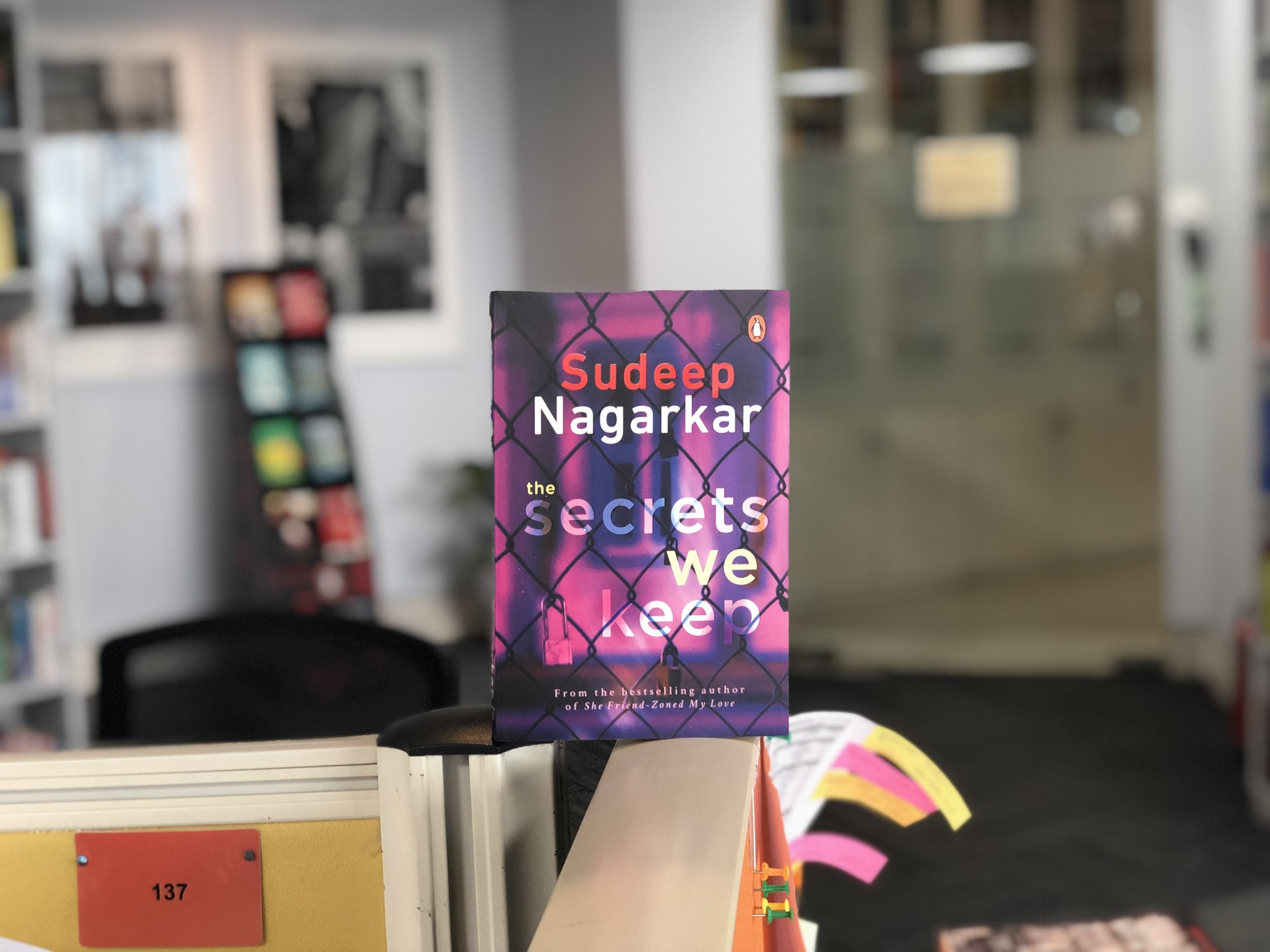
The Secrets We Keep – An Excerpt

Rahul, an intelligence officer on a secret mission, is undercover at a major’s house. In the process, he falls in love with the major’s daughter, Akriti, unknowingly putting her in danger. To protect her, Rahul decides to hide her at his parents’ house. However, estranged from his family for years, he must first make amends with them.

Just when he thinks he has found a haven for Akriti, she goes missing…

Here’s an exclusive excerpt from Sudeep Nagarkar’s much-awaited The Secrets We Keep:

—————————————-

If you could forget a relationship that fleetingly existed in the past, would you? If your past could be erased,
would you erase it?

Sadly, you have no choice in this matter because I—your past—am invincible.

Mysterious and unseen, I am the master of the dark and light and everything in between.

I am a force of nature, an unstoppable wave that’ll tame you by taking away every last bit of your strength until you regret ever standing in my path. A king of manipulation at its finest, I will see into the soul of the characters in this story long before they catch a glimpse, and change the way they think. I am the only God and the only devil, and I am here to destroy you because without destruction there’s no creation.

If you think you can escape me, you’re already doomed.


Grab your copy today!

Do Better with Less – An Excerpt

The world faces a stark challenge: meeting the needs of over 7 billion people without bankrupting the planet. India, with its large population and limited resources, is at the very epicentre of this challenge.

Packed with over fifty case studies, Do Better with Less: Frugal Innovation for Sustainable Growth by the bestselling authors of Jugaad Innovation offers six proven principles that Indian entrepreneurs and businesses can use to co-create frugal solutions in education, energy, healthcare, food and finance that are highly relevant to India and the world.

Here is an excerpt from the first chapter:


In 1999, Jean-Marie Hurtiger, a senior manager at Renault, a French carmaker, was given what seemed like an almost impossible task. His boss, Louis Schweitzer, then Renault’s CEO, wanted him to create a modern, reliable and comfortable car that would retail at $6,000.

Two years earlier, Schweitzer had visited Russia where, to his dismay, he had discovered that the Lada—a locally made car priced at $6,000—was selling fast, while Renault’s fancier cars—twice as expensive as the Lada—had few buyers. As Schweitzer recalls: ‘Seeing those antiquated cars, I found it unacceptable that technical progress should stop you from making a good car for $6,000. I drew up a list of specifications in three words—modern, reliable and affordable—and added that everything else was negotiable.’

Schweitzer instructed Hurtiger, an engineer by training, with international management experience, to build a $6,000 car that matched these specifications.

Technically, Hurtiger could engineer a stripped-down version of a car for that price. But, like the Lada, this car would be clunky and uncomfortable, and customers would question its safety. Renault had a reputation for elegance and quality to protect; launching a shoddy product would be a form of brand suicide. Hurtiger therefore realized that what his boss was asking him to do was not just create a cheaper car,
but one that married high quality and affordability.

This ‘more for less’ proposition was at odds with Hurtiger’s long experience. R&D engineers in the West are taught to push the frontiers of automobile technology by adding features to existing products. Indeed, Western car companies invest billions in R&D to create increasingly more sophisticated products in order to differentiate their brands from do better with less competitors’ and charge customers more for the privilege. Schweitzer’s ‘more for less’ proposition seemed to flout the conventional ‘more for more’ business model that had proven so lucrative in consumption driven Western economies over the previous five decades.

Both Hurtiger and Schweitzer recognized that they would first have to change the way Renault employees think. Creating a $6,000 car required not just a new business model, but a new mental model. This would amount to an immense cultural shift in a company that was over 100 years old and for decades had designed high-quality cars—some for the premium market—primarily for Western middle-class consumers. All Renault’s French engineers had grown up in a resource-rich and relatively stable economy with a ‘bigger is better’ R&D philosophy. Schweitzer and Hurtiger needed a new breed of engineers, with a different outlook, who could innovate under severe constraints and turn adversity into opportunity.


Do Better with Less is India’s guide to claiming global leadership in frugal innovation.

Of Marxists and Mamata – an excerpt from Ruchir Sharma’s ‘Democracy on the Road’

On the eve of a landmark general election, Ruchir Sharma offers an unrivalled portrait of how India and its democracy work, drawn from his two decades on the road chasing election campaigns across every major state, travelling the equivalent of a lap around the earth.

Here is an excerpt from Ruchir Sharma’s book, Democracy on the Road that talks about the power packed campaign led by Mamata Banerjee in May 2011.


Leading the opposition charge was Mamata Banerjee, a Bengali Brahmin who split from the Congress to form her own party in 1998 and had been railing against Marxist ‘tyranny’ for years, mostly to no avail. The Tata conflict, and a second deadly government attempt to acquire agricultural land in and around Nandigram in the district of Purba Medinipur, had given Mamata’s campaign against Marxist rule new momentum and credibility.

We saw Mamata for the first time at a rally in Kolkata, where she sprang out of the helicopter and race-walked past party supporters, a big boss in a diminutive frame, dressed austerely in a white sari with a blue border. Her bearing broadcast immediately that she had no time for the usual campaign greetings; she was a one-woman dynamo running a lifelong crusade, eager to topple communism yesterday.

A poet herself, Mamata promised not only to restore English instruction but also to bring back the poetry of Bengal greats such as Rabindranath Tagore and Kazi Nazrul Islam, and the stories of Bengal heroes like ‘Binoy, Badal and Dinesh’, which the Marxists had expunged as too bourgeois, and replaced with party-approved literature. While English is an aspirational language all over India, perhaps only in Bengal could a politician campaign on promises to restore local poetry to the school curriculum.

She promised that under her All India Trinamool Congress (TMC)—the ‘party of the marginalized’—things would be different. Bengal would have modern schools, colleges and health clinics, with no proof of party loyalty required for access. Non-party members would no longer have to travel out of state for medical treatment. Her campaign slogan promised ‘poriborton’, the Bengali spin on ‘parivartan’ or change. As interesting as what Mamata said was what she didn’t say. Neither the Congress nor the BJP had cracked 7 per cent of the vote in recent Bengal elections, and they hardly bore mention in Mamata’s speech. The caste and religious undercurrents that drive much of Indian politics barely surfaced either, since Bengal was divided mainly between Marxist party members and everyone else. Tapping popular frustration with thirty-four years of Marxist rule, Mamata’s party won in resounding fashion, taking 184 of the 294 state assembly seats, and she became the new chief minister. The Marxists finished a distant second….

Economic growth had picked up at least moderately since the communists departed. Infant mortality was falling. Construction was booming all over the capital, spilling into the outskirts. Amit Mitra, state finance minister under Mamata, told us investment was flowing into cement and fertilizer plants, small- and medium-size companies were growing rapidly and that Tata had begun to expand again in the state.

When Mamata came to power in 2011, she had fired police officials who did not toe her party line, and harassed critics who posted mocking cartoons of her on social media. She was seen as erratic, volatile, an autocrat who brooked no challenge within her own party. Mamata’s writ still ran large, but she was settling down and opening up, as the Marxists fell into disarray. During the last campaign, Mamata had refused to meet us because some of our companions had ties to leading Marxists in Delhi, but this time she called them up to the stage before a Kolkata rally and greeted them warmly.

As Mamata went on the offensive there were flashes of the old paranoia, and over the course of the campaign she would attack everyone from Modi and the media to the Election Commission and the security apparatus for conspiring against her. Her crowds lapped it up. As soon as her Kolkata rally ended and Mamata made it past her security cordon, she was mobbed by supporters, young and old, who wanted to kiss her hand, touch her feet, or receive her blessings.

Over this five-week campaign, Mamata would claim to walk 1000 kilometres in the sweltering heat of April and May to address more than 160 meetings, and while the numbers were implausible, her energy and her centrality to the TMC were not in question. The joke in Kolkata was that ‘there is only one post in the TMC and Mamata holds it. Everyone else is a lamppost.’ She was running a highly centralized government in which her word was the only one that really mattered, yet she was delivering enough to ordinary people to win them over. Many said Mamata had executed on her promises to improve roads and electricity. She had offered subsidies to bring down the price of wheat, vegetables and rice, which were selling for a few rupees per kilo. She had also given free bicycles to girls as an incentive and means to get to school, and offered wedding subsidies to young women.

In the end the TMC won easily. After five straight terms under Marxist party leaders, Bengal may simply not have been ready to throw out Mamata after one. Her personal charisma prevailed over the imploding Marxists and their opportunistic alliance with the Congress. She had mellowed, growing open enough to industry to win business support, remaining generous enough with the public purse to win votes from the poor.

Mamata was also riding the growing wave of voter support for single leaders, whose unmarried status seemed to confirm their claims of all-in devotion to public service. Among India’s twenty one most populous states, there were no unmarried chief ministers in 1988, but by 2016 there were seven, including Mamata, seemingly lifted by growing voter distaste for nepotism inside political parties, and the corruption that flows naturally from running parties as a family business. Mamata had in fact remained far more ascetic in her personal tastes than many other supremos. Even as chief minister she lived in her small ancestral home in the Kolkata neighbourhood of Kalighat. Passing by the home we were stunned to see it in a state of decay with a dilapidated grey tiled roof and rotting bamboo shafts—a stark contrast to the sandstone palaces Mayawati had built for herself in UP. Mamata’s image as a single leader with no taste for diamonds had made her largely impervious to the corruption charges that so often topple Indian governments, and helped her secure this second term.


Democracy on the Road takes readers on a rollicking ride with Ruchir and his merry band of fellow writers as they talk to farmers, shopkeepers and CEOs from Rajasthan to Tamil Nadu, and interview leaders from Narendra Modi to Rahul Gandhi.

Black Leopard, Red Wolf – an excerpt

In the stunning first novel in Marlon James’s Dark Star trilogy, myth, fantasy, and history come together to explore what happens when a mercenary is hired to find a missing child.

The child is dead. There is nothing left to know.

I hear there is a queen in the south who kills the man who brings her bad news. So when I give word of the boy’s death, do I write my own death with it? Truth eats lies just as the crocodile eats the moon, and yet my witness is the same today as it will be tomorrow. No, I did not kill him. Though I may have wanted him dead. Craved for it the way a glutton craves goat flesh. Oh, to draw a bow and fire it through his black heart and watch it explode black blood, and to watch his eyes for when they stop blinking, when they look but stop seeing, and to listen for his voice croaking and hear his chest heave in a death rattle saying, Look, my wretched spirit leaves this most wretched of bodies, and to smile at such tidings and dance at such a loss. Yes, I glut at the conceit of it. But no, I did not kill him.

Bi oju ri enu a pamo.

Not everything the eye sees should be spoken by the mouth.

This cell is larger than the one before. I smell the dried blood of executed men; I hear their ghosts still screaming. Your bread carries weevils, and your water carries the piss of ten and two guards and the goat they fuck for sport.
Shall I give you a story?

I am just a man who some have called a wolf. The child is dead. I know the old woman brings you different news. Call him murderer, she says. Even though my only sorrow is that I did not kill her. The redheaded one said the child’s head was infested with devils. If you believe in devils. I believe in bad blood. You look like a man who has never shed blood. And yet blood sticks between your fingers. A boy you circumcised, a young girl too small for your big… Look how that thrills you. Look at you.

I will give you a story.

It begins with a Leopard.

And a witch.

Grand Inquisitor.

Fetish priest.

No, you will not call for the guards.

My mouth might say too much before they club it shut.

Regard yourself. A man with two hundred cows who delights in a patch of boy skin and the koo of a girl who should be no man’s woman. Because that is what you seek, is it not? A dark little thing that cannot be found in thirty sacks of gold or two hundred cows or two hundred wives. Something that you have lost— no, it was taken from you. That light, you see it and you want it— not light from the sun, or from the thunder god in the night sky, but light with no blemish, light in a boy who has no knowledge of women, a girl you bought for marriage, not because you need a wife, for you have two hundred cows, but a wife you can tear open, because you search for it in holes, black holes, wet holes, undergrown holes for the light that vampires look for, and you will have it, you will dress it up in ceremony, circumcision for the boy, consummation for the girl, and when they shed blood, and spit, and sperm and piss you leave it all on your skin, to go to the iroko tree and use any hole you find.

The child is dead, and so is everyone.

I walked for days, through swarms of flies in the Blood Swamp and skinslicing rocks in salt plains, through day and night. I walked as far south as Omororo and did not know or care. Men detained me as a beggar, took me for a thief, tortured me as a traitor, and when news of the dead child reached your kingdom, arrested me as a murderer. Did you know there were five men in my cell? Four nights ago. The scarf around my neck belongs to the only man who left on two feet. He might even see from his right eye again one day.


Defying categorization and full of unforgettable characters, Black Leopard, Red Wolf is both surprising and profound as it explores the fundamentals of truth, the limits of power, and our need to understand them both.

Big Sky by Kate Atkinson – an excerpt

In Kate Atkinson’s new book, Big Sky, Jackson Brodie has relocated to a quiet seaside village in North Yorkshire, in the occasional company of his recalcitrant teenage son Nathan and ageing Labrador Dido, both at the discretion of his former partner Julia. It’s a picturesque setting, but there’s something darker lurking behind the scenes.

Jackson’s current job, gathering proof of an unfaithful husband for his suspicious wife, seems straightforward, but a chance encounter with a desperate man on a crumbling cliff leads him into a sinister network—and back into the path of someone from his past. Old secrets and new lies intersect in this breathtaking new novel, both sharply funny and achingly sad, by one of the most dazzling and surprising writers at work today.

Read on for an exclusive first chapter of the book.


The Battle of the River Plate

And there’s the Ark Royal, keeping a good distance from the enemy…There were a couple of quiet explosions – pop-pop-pop. The noise of tinny gunfire competing unsuccessfully with the gulls wheeling and screeching overhead.

Oh, and the Achilles has taken a hit, but luckily she has been able to contact the Ark Royal, who is racing to her aid . . .

‘Racing’ wasn’t quite the word that Jackson would have used for the rather laboured progress the Ark Royal was making across the boating lake in the park.

And here come the RAF bombers! Excellent shooting, boys! Let’s hear it for the RAF and the escorts. .  .

A rather weak cheer went up from the audience as two very small wooden planes jerked across the boating lake on zip wires.

‘Jesus,’ Nathan muttered. ‘This is pathetic.’

‘Don’t swear,’ Jackson said automatically. It was pathetic in some ways (the smallest manned navy in the world!), but that was the charm of it, surely? The boats were replicas, the longest twenty foot at most, the others considerably less. There were park employees concealed inside the boats, steering them. The audience was sitting on wooden benches on raked concrete steps. For an hour beforehand an old- fashioned kind of man had played old-fashioned kind of music on an organ in a bandstand and now the same old-fashioned man was commentating on the battle. In an old-fashioned kind of way. (‘Is this ever going to end?’ Nathan asked.)

quotation

‘Didn’t you hear, Jackson?’ Julia said. ‘The class war’s over. Everyone lost.’

Jackson had come here as a kid once himself, not with his own family (when he had a family) – they never did anything together, never went anywhere, not even a day-trip. That was the working class for you, too busy working to have time for pleasure, and too poor to pay for it if they managed to find the time. (‘Didn’t you hear, Jackson?’ Julia said. ‘The class war’s over. Everyone lost.’) He couldn’t remember the circumstances – perhaps he had come here on a Scouts outing, or with the Boys’ Brigade, or even the Salvation Army – the young Jackson had clung to any organization going in the hope of getting something for free. He didn’t let the fact that he was brought up as a Catholic interfere with his beliefs. He had even signed the Pledge at the age of ten, promising the local Salvation Army Temperance Society his lifelong sobriety in exchange for a lemonade and a plate of cakes. (‘And how did that work out for you?’ Julia asked.) It was a relief when he eventually discovered the real Army, where everything was free. At a price.

‘The Battle of the River Plate,’ Jackson told Nathan, ‘was the first naval battle of the Second World War.’ One of his jobs as a father was to educate, especially on his specialist subjects – cars, wars, women. (‘Jackson, you know nothing about women,’ Julia said. ‘Exactly,’ Jack- son said.) Nathan met any information conveyed to him by either rolling his eyes or appearing to be deaf. Jackson hoped that, some- how or other, his son was unconsciously absorbing the continual bombardment of advice and warnings that his behaviour necessitated – ‘Don’t walk so close to the edge of the cliff. Use your knife and fork, not your fingers. Give up your seat on the bus.’ Although when did Nathan ever go anywhere on a bus? He was ferried around like a lord. Jackson’s son was thirteen and his ego was big enough to swallow planets whole.

quotation

Looking on the bright side, Nathan was talking in more or less whole sentences this afternoon, rather than the usual simian grunts.

‘What do they mean – “manned”?’ Nathan said. ‘There are people inside the boats, steering them.’ ‘There aren’t,’ he scoffed. ‘That’s stupid.’

‘There are. You’ll see.’

Here comes Exeter as well. And the enemy submarine is in trouble now . . .

‘You wait,’ Jackson said. ‘One day you’ll have kids of your own and you’ll find that you make them do all the things that you currently despise – museums, stately homes, walks in the countryside – and they in turn will hate you for it. That, my son, is how cosmic justice works.’

‘I won’t be doing this,’ Nathan said.

‘And that sound you can hear will be me laughing.’ ‘No, it won’t. You’ll be dead by then.’

‘Thanks. Thanks, Nathan.’ Jackson sighed. Had he been so callous at his son’s age? And he hardly needed reminding of his mortality, he saw it in his own boy growing older every day.

Looking on the bright side, Nathan was talking in more or less whole sentences this afternoon, rather than the usual simian grunts. He was slumped on the bench, his long legs sprawled out, his arms folded in what could only be described as a sarcastic manner. His feet (designer trainers, of course) were enormous – it wouldn’t be long before he was taller than Jackson. When Jackson was his son’s age he had two sets of clothes and one of those was his school uniform. Apart from his gym plimsolls (‘Your what?’ Nathan puzzled), he had possessed just the one pair of shoes and would have been baffled by the concepts ‘designer’ or ‘logo’.

By the time Jackson was thirteen his mother was already dead of cancer, his sister had been murdered and his brother had killed him- self, helpfully leaving his body – hanging from the light fitting – for Jackson to find when he came home from school. Jackson never got the chance to be selfish, to sprawl and make demands and fold his arms sarcastically. And anyway, if he had, his father would have given him a good skelping. Not that Jackson wished suffering on his son – God forbid – but a little less narcissism wouldn’t go amiss.

Julia, Nathan’s mother, could go toe to toe with Jackson in the grief stakes – one sister murdered, one sister who killed herself, one who died of cancer. (‘Oh, and don’t forget Daddy’s sexual abuse,’ she reminded him. ‘Trumps to me, I think.’) And now all the wretched- ness of their shared pasts had been distilled into this one child. What if somehow, despite his untroubled appearance, it had lodged in Nathan’s DNA and infected his blood, and even now tragedy and grief were growing and multiplying in his bones like a cancer. (‘Have you even tried being an optimist?’ Julia said. ‘Once,’ Jackson said. ‘It didn’t suit me.’)

‘I thought you said you were going to get me an ice-cream.’

‘I think what you meant to say was, “Dad, can I have that ice- cream you promised and seem to have temporarily forgotten about? Please?’’ ’

‘Yeah, whatever.’ After an impressively long pause he added, reluctantly, ‘Please.’ (‘I serve at the pleasure of the President,’ an unruffled Julia said when their offspring demanded something.)

quote

She had a lovely throaty laugh, especially when being self-deprecating. Or pretending to be. It had a certain charm.

‘What do they mean – “manned”?’ Nathan said. ‘There are people inside the boats, steering them.’ ‘There aren’t,’ he scoffed. ‘That’s stupid.’

‘There are. You’ll see.’

Here comes Exeter as well. And the enemy submarine is in trouble now . . .

‘You wait,’ Jackson said. ‘One day you’ll have kids of your own and you’ll find that you make them do all the things that you currently despise – museums, stately homes, walks in the countryside – and they in turn will hate you for it. That, my son, is how cosmic justice works.’

‘I won’t be doing this,’ Nathan said.

‘And that sound you can hear will be me laughing.’ ‘No, it won’t. You’ll be dead by then.’

‘Thanks. Thanks, Nathan.’ Jackson sighed. Had he been so callous at his son’s age? And he hardly needed reminding of his mortality, he saw it in his own boy growing older every day.

Looking on the bright side, Nathan was talking in more or less whole sentences this afternoon, rather than the usual simian grunts. He was slumped on the bench, his long legs sprawled out, his arms folded in what could only be described as a sarcastic manner. His feet (designer trainers, of course) were enormous – it wouldn’t be long before he was taller than Jackson. When Jackson was his son’s age he had two sets of clothes and one of those was his school uniform. Apart from his gym plimsolls (‘Your what?’ Nathan puzzled), he had possessed just the one pair of shoes and would have been baffled by the concepts ‘designer’ or ‘logo’.

By the time Jackson was thirteen his mother was already dead of cancer, his sister had been murdered and his brother had killed him- self, helpfully leaving his body – hanging from the light fitting – for Jackson to find when he came home from school. Jackson never got the chance to be selfish, to sprawl and make demands and fold his arms sarcastically. And anyway, if he had, his father would have given him a good skelping. Not that Jackson wished suffering on his son – God forbid – but a little less narcissism wouldn’t go amiss.

Julia, Nathan’s mother, could go toe to toe with Jackson in the grief stakes – one sister murdered, one sister who killed herself, one who died of cancer. (‘Oh, and don’t forget Daddy’s sexual abuse,’ she reminded him. ‘Trumps to me, I think.’) And now all the wretched- ness of their shared pasts had been distilled into this one child. What if somehow, despite his untroubled appearance, it had lodged in Nathan’s DNA and infected his blood, and even now tragedy and grief were growing and multiplying in his bones like a cancer. (‘Have you even tried being an optimist?’ Julia said. ‘Once,’ Jackson said. ‘It didn’t suit me.’)

‘I thought you said you were going to get me an ice-cream.’

‘I think what you meant to say was, “Dad, can I have that ice- cream you promised and seem to have temporarily forgotten about? Please?’’ ’

‘Yeah, whatever.’ After an impressively long pause he added, reluctantly, ‘Please.’ (‘I serve at the pleasure of the President,’ an unruffled Julia said when their offspring demanded something.)

‘What do you want?’

‘Magnum. Double peanut butter.’

‘I think you might be setting your sights quite high there.’ ‘Whatever. A Cornetto.’

‘Still high.’

Nathan came trailing clouds of instructions where food was concerned. Julia was surprisingly neurotic about snacks. ‘Try and control what he eats,’ she said. ‘He can have a small chocolate bar but no sweets, definitely no Haribo. He’s like a Gremlin after midnight if he gets too much sugar. And if you can get a piece of fruit into him then you’re a better woman than me.’ Another year or two and Julia would be worrying about cigarettes and alcohol and drugs. She should enjoy the sugar years, Jackson thought.

‘While I’m getting your ice-cream,’ Jackson said to Nathan, ‘make sure you keep an eye on our friend Gary there in the front row, will you?’ Nathan showed no sign of having heard him so Jackson waited a beat and then said, ‘What did I just say?’

‘You said, “While I’m gone make sure you keep an eye on our friend Gary there in the front row, will you?”’

‘Right. Good,’ Jackson said, slightly chastened, not that he was going to show it. ‘Here,’ he said, handing over his iPhone, ‘take a photograph if he does anything interesting.’

When Jackson got up, the dog followed him, labouring up the steps behind him to the café. Julia’s dog, Dido, a yellow Labrador, overweight and ageing. Years ago, when Jackson was first introduced to Dido by Julia (‘Jackson, this is Dido – Dido, this is Jackson’), he thought the dog must have been called after the singer, but it turned out she was the namesake of the Queen of Carthage. That was Julia in a nutshell.

quote

‘Nat Brodie’, on the other hand, sounded like a robust adventurer, someone striking west, following the frontier in search of gold or cattle, loose-moraled women following in his wake.

Dido – the dog, not the Queen of Carthage – also came with a long list of instructions. You would think Jackson had never looked after a child or a dog before. (‘But it wasn’t my child or my dog,’ Julia pointed out. ‘I believe that should be our child,’ Jackson said.)

Nathan had been three years old before Jackson was able to claim any ownership of him. Julia, for reasons best known to herself, had denied that Jackson was Nathan’s father, so he had already missed the best years before she admitted to his paternity. (‘I wanted him to myself,’ she said.) Now that the worst years had arrived, however, it seemed that she was more than keen to share him.

Julia was going to be ‘ferociously’ busy for nearly the entire school holiday, so Jackson had brought Nathan to stay with him in the cottage he was currently renting, on the east coast of Yorkshire, a couple of miles north of Whitby. With good wi-fi Jackson could run his business – Brodie Investigations – from just about anywhere. The internet was evil but you had to love it.

Julia played a pathologist (‘the pathologist,’ she corrected) in the long-running police procedural Collier. Collier was described as ‘gritty northern drama’, although these days it was tired hokum thought up by cynical metropolitan types off their heads on coke, or worse, most of the time.

Julia had been given her own storyline for once. ‘It’s a big arc,’ she told Jackson. He thought she said ‘ark’ and it took him a while to sort this mystery out in his head. Now, still, whenever she talked about ‘my arc’ he had a vision of her leading an increasingly bizarre parade of puzzled animals, two by two, up a gangplank. She wouldn’t be the worst person to be with during the Flood. Beneath her scatty, actressy demeanour she was resilient and resourceful, not to mention good with animals.

Her contract was up for renewal and they were drip-feeding the script to her, so, she said, she was pretty certain that she was heading for a grisly exit at the end of her ‘arc’. (‘Aren’t we all?’ Jackson said.) Julia was sanguine, it had been a good run, she said. Her agent was keeping an eye on a Restoration Comedy that was coming up at the West Yorkshire Playhouse. (‘Proper acting,’ Julia said. ‘And if that fails there’s always Strictly. I’ve been offered it twice already. They’re obviously scraping the bottom of the barrel.’) She had a lovely throaty laugh, especially when being self-deprecating. Or pretending to be. It had a certain charm.

‘As suspected, no Magnums, no Cornettos, they only had Bassani’s,’ Jackson said, returning with two cones held aloft like flambeaux. You might have thought that people would want their kids to stop eating Bassani’s ice-cream after what had happened. Carmody’s amusements were still there as well, a rowdy, popular presence on the front. Ice-cream and arcades – the perfect lures for kids. It must be getting on for a decade since the case was in the papers? (The older Jackson grew, the more slippery time became.) Antonio Bassani and Michael Carmody, local ‘worthies’ – one of them was in jail and the other one had topped himself, but Jackson could never remember which was which. He wouldn’t be surprised if the one in jail wasn’t due to get out soon, if he hadn’t already. Bassani and Carmody liked kids. They liked kids too much. They liked handing kids around to other men who liked kids too much. Like gifts, like forfeits.

An eternally hungry Dido had waddled back hopefully on his heels and in lieu of ice-cream Jackson gave her a bone-shaped dog treat. He supposed it didn’t make much difference to her what shape      it was.

‘I got a vanilla and a chocolate,’ he said to Nathan. ‘Which do you want?’ A rhetorical question. Who under voting age ever chose vanilla?

‘Chocolate. Thanks.’

Thanks – a small triumph for good manners, Jackson thought. (‘He’ll come good in the end,’ Julia told him. ‘Being a teenager is so difficult, their hormones are in chaos, they’re exhausted a lot of the time. All that growing uses up a lot of energy.’) But what about all those teenagers in the past who had left school at fourteen (nearly the same age as Nathan!) and gone into factories and steelworks and down coal mines? (Jackson’s own father and his father before him, for example.) Or Jackson himself, in the Army at sixteen, a youth broken into pieces by authority and put back together again by it as a man. Were those teenagers, himself included, allowed the indulgence of chaotic hormones? No, they were not. They went to work alongside men and behaved themselves, they brought their pay packets home to their mothers (or fathers) at the end of the week and— (‘Oh, do shut up, will you?’ Julia said wearily. ‘That life’s gone and it isn’t coming back.’)

‘Where’s Gary?’ Jackson asked, scanning the banks of seats. ‘Gary?’

‘The Gary you’re supposed to be keeping an eye on.’

Without looking up from his phone, Nathan nodded in the direction of the dragon boats where Gary and Kirsty were queuing for tickets.

And the battle is over and the Union Jack is being hoisted. Let’s have a cheer for the good old Union flag!

Jackson cheered along with the rest of the audience. He gave Nathan a friendly nudge and said, ‘Come on, cheer the good old Union flag.’

‘Hurrah,’ Nathan said laconically. Oh, irony, thy name is Nathan Land, Jackson thought. His son had his mother’s surname, it was  a source of some contention between Julia and Jackson. To put it mildly. ‘Nathan Land’ to Jackson’s ears sounded like the name of an eighteenth-century Jewish financier, the progenitor of a European banking dynasty. ‘Nat Brodie’, on the other hand, sounded like a robust adventurer, someone striking west, following the frontier in search of gold or cattle, loose-moraled women following in his wake. (‘When did you get so fanciful?’ Julia asked. Probably when I met you, Jackson thought.)

‘Can we go now?’ Nathan said, yawning excessively and unselfconsciously.

‘In a minute, when I’ve finished this,’ Jackson said, indicating his ice-cream. Nothing, in Jackson’s opinion, made a grown man look more of a twit than walking around licking an ice-cream cone.

The combatants of the Battle of the River Plate began their lap of honour. The men inside had removed the top part of the boats – like conning towers – and were waving at the crowd.

‘See?’ Jackson said to Nathan. ‘Told you so.’

Nathan rolled his eyes. ‘So you did. Now can we go?’ ‘Yeah, well, let’s just check on our Gary.’

Nathan moaned as if he was about to be waterboarded. ‘Suck it up,’ Jackson said cheerfully.

Now that the smallest manned navy in the world was sailing off to its moorings, the park’s dragon boats were coming back out – pedalos in bright primary colours with long necks and big dragon heads, like cartoon versions of Viking longboats. Gary and Kirsty had already mounted their own fiery steed, Gary pedalling heroically out into the middle of the boating lake. Jackson took a couple of photos. When he checked his phone he was pleasantly surprised to find that Nathan had taken a burst – the modern equivalent of the flicker-books of his own childhood – while Jackson was off buying the ice-creams. Gary and Kirsty kissing, puckered up like a pair of puffer fish. ‘Good lad,’ Jackson said to Nathan.

‘Now can we go?’ ‘Yes, we can.’


 To know what happens next, get a copy of the book, here!

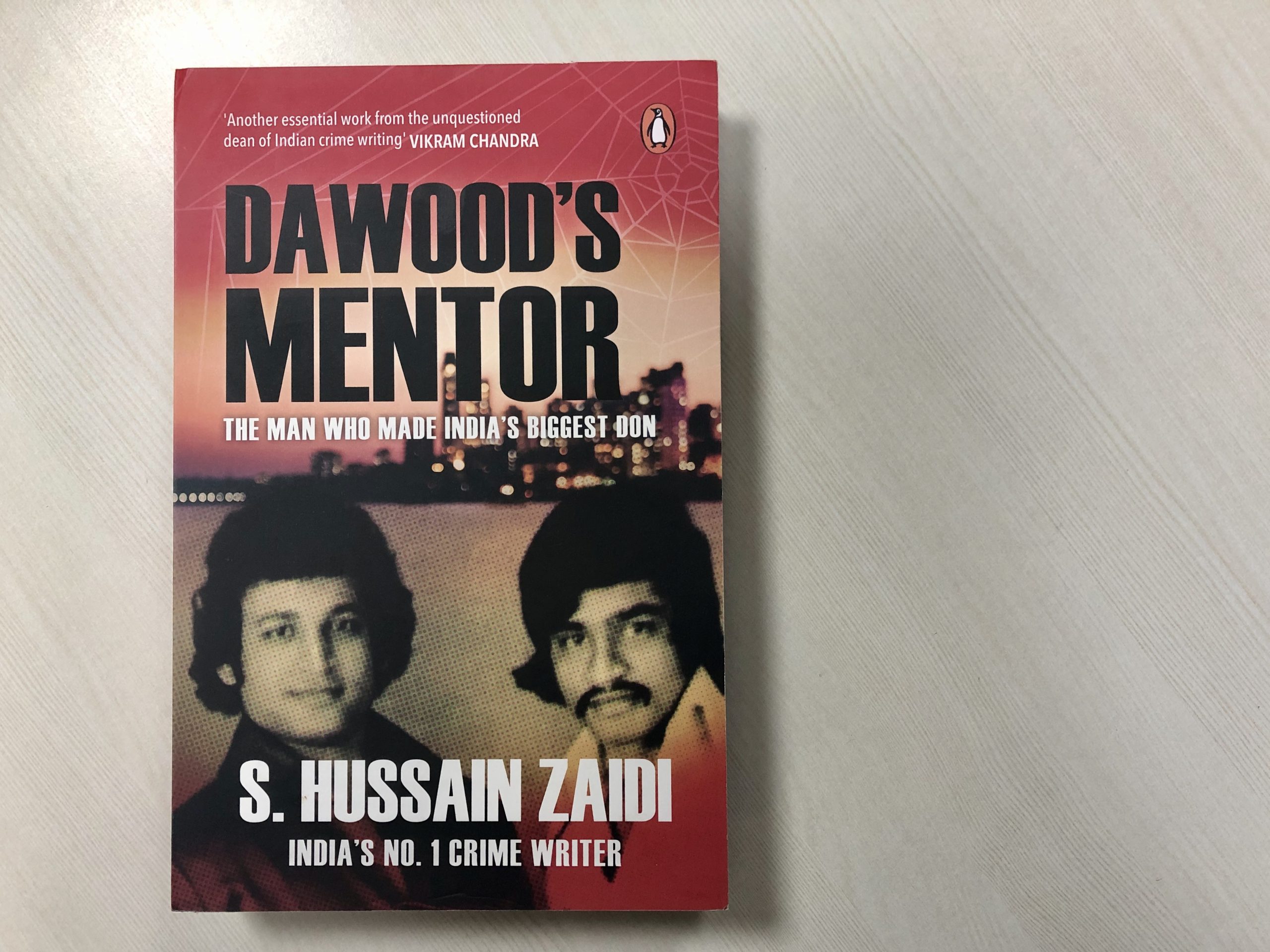
The Pathan Threat – an excerpt from ‘Dawood’s Mentor’

Tired of being bullied, a scrawny, impoverished Dawood Ibrahim is looking for a saviour, Khalid Khan Bachcha, who would teach him the ropes of handling a bunch of hooligans. Instead, what he gets is a mentor who eventually transforms him into a cunning mafia boss.

Here is an excerpt from the first chapter of Hussain Zaidi’s new book, Dawood’s Mentor


The barrel of the gun was pointed at Dawood Ibrahim’s heart. The gunman had been training his focus for a long time. He was waiting for the right moment to pull the trigger. The gunman had only one chance. If the bullet missed the target, the man at the other end would certainly gift him a not-so-exquisite death.

The man pointing the muzzle at Dawood had been sent by his arch-rivals from the underworld. The gunman was accompanied by his cronies, who were huge, hefty men called the Pathans, with Peshawari and Afghan ancestry. Since the 1950s, the Pathans, known for their moneylending habits, had taken to crime. Cousins Amirzada and Alamzeb wanted Dawood dead. The man was a menace. An audacious chit of a boy, he challenged the Pathan hegemony, and since the time he had emerged in the area as a small-time criminal, was proving to be a headache for the Pathans.

In the 1970s, the turf war among the mob generally ended with some serious skirmishes. But the Pathans were so furious with the tenacious Dawood Ibrahim that they decided to investigate his sources of power. They found a nexus between local newspaper-owner and crime reporter Iqbal Natiq and Dawood. The two shared an amazing rapport, with Dawood invariably spending a couple of hours every day at Natiq’s office in BIT Blocks in Dongri. And Natiq’s newspaper—Raazdaar (The Confidante)—exposed the Pathans often, which brought the police to their doorstep.

As retribution, the Pathans killed Natiq brutally. Dawood and his brother Sabir Kaskar swore revenge. Their first target was Saeed Batla. They did not kill Batla, preferring, instead, to maim him and amputate his fingers, something unheard of in the Indian underworld in those times. Before they could proceed with such ‘special treatment’ for the other Pathans, the police picked them up. However, the Kaskar brothers managed to secure bail on attempt-to-murder charges.

Upon receiving bail, as is routine in any police prosecution case, Sabir and Dawood were supposed to intermittently present themselves at the Nagpada police station in central Bombay (now Mumbai). They had to assure the cops that they were not up to any mischief and that they were miles away from any criminal activities. The slang for these routine police-station visits is haazari lagana (marking one’s attendance), where the accused meet the police inspector, answer a few questions and leave within a few minutes.

Dawood preferred the formality of the official haazari to the cold walls of the prison and, of course, it helped that these visits ensured that the police did not land up at their house and complain to their father, Ibrahim Kaskar, who was also a cop. Kaskar senior was an absolute disciplinarian who was known to reserve his leather-belt treatment for the unbridled Dawood, his third child.

On that cool afternoon in October 1980, a defenceless Dawood, along with Sabir, was the target. The Pathans—Amirzada and Alamzeb—knew that Dawood would not be carrying any weapons to the police station. They decided to take advantage of this particular visit to finish off Dawood, because under no other circumstances would they find him unarmed.

But what they did not see coming was another Pathan, Khalid Khan, who shepherded Dawood to the police station that day. Built like a mountain, with a towering height of 6 feet 2 inches and a brawny physique, Khalid was very attached to the promising young Dawood.

Earlier, Khalid had cut his teeth in crime with another don, a local strongman by the name of Bashu Dada. But that was long before Dawood endeared himself to him. Khalid was very protective of Dawood, and that particular day his instincts told him that Dawood would be vulnerable and in a tight spot around the police station. He rationalized that since Nagpada was closer to Kamathipura and Tardeo, the stronghold of the Pathans, they might make a play for Dawood.

Khalid cancelled all his engagements scheduled for that day and decided to follow Dawood to the police station. He also decided to escort him back to his headquarters at Musafir Khana, safe and unharmed. Since Khalid’s name was not in the First Information Report (FIR), he could safely accompany Dawood and also carry a weapon on the sly. The cops would not frisk him for weapons, he surmised.

After Dawood and Sabir signed their attendance and completed other formalities, they saluted the cops—there was a lot of respect for the uniform; it came from their father—and were on their way towards the exit.

They were oblivious to the face of death staring at them from the opposite building and were nonchalantly walking out unaware that their lives would irrevocably change after a few minutes. What transpired in the next few minutes, however, changed Dawood forever, making him invincible.

Khalid, who was extremely alert and looking around, scanning the perimeter, eyes darting like a panther after its prey, suddenly sensed the movement even before he saw the gun. He spotted the barrel of the gun, held by a man at the ground-floor window of Memnani Mansion next door. Khalid knew the man wanted Dawood first, not Khalid or Sabir. In that split second, both the gunman and Khalid acted swiftly.

The gunman pulled the trigger and a bullet flew out, whizzing towards Dawood.

‘Dawood, hato!’ Khalid screamed.

Khalid moved with amazing speed and, before the bullet could complete its trajectory, he managed to push Dawood aside and, in the same moment, whipped out his revolver hidden in the small of his back. Amirzada’s bullet, which was meant for Dawood’s heart, grazed Khalid’s left arm. Khalid began firing at the gunman. Amirzada, who was firing at Dawood, was oblivious to Khalid and Sabir. He had to kill Dawood and kept firing at him. By the time he realized that Khalid had retaliated, he had already been hit below the hip and the bullet got lodged in the flesh. His crony, Alamzeb, saw the blood gushing out and realized that their game was up.


What happens next? Read Dawood’s Mentor to find out!

error: Content is protected !!