Publish with Us

Follow Penguin

Follow Penguinsters

Follow Penguin Swadesh

James Bond: How It All Began!

M laid down his pipe and stared at it tetchily. ‘We have no choice. We’re just going to bring forward this other chap you’ve been preparing. But you didn’t tell me his name.’ 
‘It’s Bond, sir,’ the Chief of Staff replied. ‘James Bond.’
The sea keeps its secrets. But not this time.
One body. Three bullets. 007 floats in the waters of Marseille, killed by an unknown hand.
It’s time for a new agent to step up. Time for a new weapon in the war against organised crime.
This is the story of the birth of a legend, in the brutal underworld of the French Riviera.
Let’s read an excerpt from the book here-
——————————————————————————————————————————————–
‘In the last transmission he made, a week before his death, 007 said he had concrete evidence.’
‘What sort of evidence?’
‘Unfortunately, he didn’t say. If 007 had one fault, it was that he liked to keep his cards close to his chest. In that same transmission, he mentioned that he had arranged to meet someone who could tell him exactly what she was up to – but once again, he didn’t tell us who it was.’ Tanner sighed. ‘The meeting took place at the basin of La Joliette and that was where he was killed.’
‘He must have left notes – or something. Have we been to his house?’
‘He had an apartment in the Rue Foncet and the French police searched it from top to bottom. They found nothing.’
‘Perhaps the opposition got there first.’
‘It’s possible, sir.’
M tamped down his pipe with a thumb that had, over the years, become immune to the heat of the smouldering tobacco. ‘You know what surprises me in all this, Chief of Staff? How could 007 allow himself to be shot at close range in the middle of a crowded city? Seven o’clock in the evening, in the summer months . . . it wouldn’t even have been dark! And why wasn’t he carrying his weapon?’
‘I was puzzled by that,’ Tanner agreed. ‘I can only assume he must have been meeting someone he knew, a friend.’
‘Could he have actually met with Madame 16 herself? Or could she have found out about the meeting and intercepted it?’
‘Both those thoughts had occurred to me, sir. The CIA have people out there and we’ve been trying to talk to them. In fact the whole area is crawling with security services of one sort or another. But so far . . . nothing.’
The heavy, sweet smell of Capstan Navy Flake hung in the air. M used the pipe to punctuate his thoughts. The age-old ritual, the lighting and the relighting, gave him time to consider the decisions that had to be made.
‘We need someone to look into what happened,’ he went on. ‘This business with the Corsicans doesn’t sound particularly pressing. If there are fewer drugs coming out of France, that’s something to be grateful for. But I’m not having one of my best agents put down like a dog. I want to know who did this and why and I want that person removed from the field. And if it turns out that this woman, Sixtine, was responsible, that goes for her too.’
Tanner understood exactly what M was saying. He wanted an eye for an eye. Somebody had to be killed.
‘Who do you want me to send? I’m afraid 008 is still out of action.’
‘You’ve spoken to Sir James?’
‘Yes, sir.’ Sir James Molony was the senior neurologist at St Mary’s Hospital, Paddington and one of the few men who knew M both socially and professionally. Over the years he had treated a number of agents for injuries, including stab wounds and bullet wounds, always with complete insouciance and discretion. ‘It’s going to be another few weeks.’
‘And 0011?’
‘In Miami.’
M laid down the pipe and stared at it tetchily. ‘Well, then we have no choice. We’re just going to bring forward this other chap you’ve been preparing. It’s been on my mind to expand the Double- O Section anyway. Their work is too important and right now we’ve got one injured, another one dead . . . we need to be prepared. How is he doing?’
‘Well, sir, he managed his first kill without any difficulty. It was that Kishida business. The Japanese cipher man.’
‘Yes, yes. I read the report. He’s certainly a good shot and he kept his nerve. At the same time, though, firing a bullet into the thirty-sixth floor of a New York skyscraper doesn’t necessarily prove anything. I’d like to see how he works at closer quarters.’
‘We may very well find out,’ Tanner replied. ‘He’s in Stockholm now. If all goes well, he’ll be reporting back in the next twenty-four hours. I already have his fitness report, his medical and psychological evaluations. He’s come through with flying colours and, for what it’s worth, I like him personally.’
‘If he gets your recommendation, that’s good enough for me, Chief of Staff.’ M frowned. ‘You didn’t tell me his name.’
‘It’s Bond, sir,’ the chief of staff replied. ‘James Bond.’

Under American Eyes: Mark Twain in Bombay

For 230 years, America’s engagement with India, Afghanistan and Pakistan has been characterized by short-term thinking and unintended consequences. Beginning with American traders in India in the eighteenth century, the region has become a locus for American efforts-secular and religious-to remake the world in its image. Even as South Asia has undergone tumultuous and tremendous changes from colonialism to the world wars, the Cold War and globalization, the United States has been a crucial player in regional affairs.
In the definitive history of the US involvement in South Asia, The Most Dangerous Place by Srinath Raghavan presents a gripping account of America’s political and strategic, economic and cultural presence in the region.
Of the many interesting incidents and lesser known anecdotes in the book, one interesting narrative is Mark Twain’s visit to Bombay. Here is an excerpt from it.
————————————————————————————————————————————————–
On a sunny morning in January 1896, the visiting American— decked out in a white suit and straw hat—took a stroll on the outskirts of Bombay. On seeing a row of Indian washermen sweating it out, he asked his guide, ‘Are they breaking those stones with clothes?’ Samuel Langhorne Clemens had kept his sense of humour despite the fact that he had practically been forced to travel to India. A failed venture with a typesetting machine and the bankruptcy of his publishing firm had left Mark Twain ensnared in a web of debt: of over $1,00,000. To shake this off, the fiftyyear- old writer had embarked on a year-long lecture trip covering a hundred cities in Australia and New Zealand, South Africa and the British Isles, Ceylon and India.
In Bombay, Twain’s first appearance was in the Novelty Theatre before an overflowing audience worshipping ‘at the shrine of the world’s great humourist when he made his debut before his first Indian audience’. Twain spoke of, among other things, how there were 352 different kinds of sins, so that ‘the industrious persons could commit them all in one year and be inoculated against all future sins’. He told stories, some apocryphal, about George Washington and other great Americans, and also read a chapter from Tom Sawyer. Twain lunched with the Governor in his official residence and met Jamsetji Tata over dinner.
Like many well-informed Americans of his generation, Mark
Twain had thought of India as a land of fantasy: ‘an imaginary
land—a fairy land, dreamland, a land made of poetry and moonlight
for the Arabian Nights to do their gorgeous miracles in’. Ahead of his trip, he had written jocularly to Kipling, ‘I shall come riding my ayah with his tusks adorned with silver bells and ribbons and escorted by a troop of native howdahs richly clad and mounted upon a herd of wild buffalos; and you must be on hand with a few bottles of ghee, for I shall be thirsty.’3 After spending two months in the country and visiting over sixteen cities and towns, Twain concluded that India was the most interesting country on the planet. But his view of India was a tad more realistic: ‘This is indeed India—the land of dreams and romance, of fabulous wealth and fabulous poverty, of splendor and rags, of palaces and hovels, of tigers and elephants, the cobra and the jungle . . . the one land that all men desire to see, and having seen once, by even a glimpse, would not give that glimpse for the shows of all the rest of the globe combined.’
Twain was a curious and sympathetic traveller. The people, he wrote, were ‘pleasant and accommodating’. ‘They are kindly people . . . The face and bearing that indicate a surly spirit and a bad heart seemed rare among Indians,’ he added. The sight of an Indian servant in his hotel being needlessly struck by a European manager reminded him of his childhood in the American South and the stain of slavery on his own country. The ‘thatched group of native houses’ along the Hooghly River took him back to ‘the negro quarters, familiar to me from nearly forty years ago—and so for six hours this has been the sugar coast of the Mississippi’.5 Even Indian religion and spirituality, of which he had had no high opinion, Twain encountered with an open mind. On the massive Hindu religious festival in Allahabad, he wrote, ‘It is wonderful, the power of a faith like that.’ Meeting an Indian saint in Benares, Twain gave him an autographed copy of Huckleberry Finn and noted his admiration for men who ‘went into the solitudes to live in a hut and study the sacred writings and meditate on virtue and holiness and seek to attain them’. Twain had heard of the storied tradition of ‘thuggee’ or ritual strangling as a boy in America and wrote at inordinate length about it in his account of the passage through India. Nevertheless, he also observed, ‘We white people are merely modified Thugs; Thugs fretting under the restraints of a not very thick skin of civilization.’
All the same, Twain’s views of India were shaped by a sense of civilizational hierarchy. While India was ‘the cradle of human race, birth place of human speech’ and so forth, it was a civilization that had no notion of ‘progress’: ‘repeating and repeating and repeating, century after century, age after age, the barren meaningless process’. India had been the ‘first civilization’ and remained stuck there. If this was redolent of Britain’s ideological justification for the conquest of India, Twain more explicitly endorsed the political rationale of the Raj: ‘Where there are eighty nations and several hundred governments, fighting and quarrelling must be the common business of life; unity of purpose and policy are impossible.’ The beneficence of British rule flowed logically from these premises. ‘When one considers what India was under her Hindoo and Mohammedan rulers, and what she is now; when he remembers the miseries of her millions then and protections and humanities which they enjoy now, he must concede that the most fortunate thing that has ever befallen that empire was the establishment of British supremacy here.’

Surprise Me by Sophie Kinsella – An Excerpt

After being together for ten years, Sylvie and Dan have a comfortable home, fulfilling jobs, beautiful twin girls, and communicate so seamlessly, they finish each other’s sentences. They have a happy marriage until it’s casually mentioned to them that they could be together for another sixty-eight years… and panic sets in.
They quickly decide to create little surprises for each other, to keep their relationship fresh and fun. Gradually, the surprises turn to shocking discoveries. And when a scandal from the past is uncovered, they begin to wonder if they ever really knew each other after all…
Number one bestselling author,  Sophie Kinsella‘s emotionally charged, witty new standalone novel, Surprise Me is about love and long-term relationship survival – and how those we think we know best can sometimes surprise us the most.
Let’s read an excerpt from the book here-
——————————————————————————————————————————————————–
It’s good news, obviously. It’s great news. We’re super-healthy, we’re going to live long . . . we should be celebrating!
But sixty-eight more years of marriage? Seriously? I mean . . .
Seriously?
On the car journey home, we’re both quiet. I keep sending little glances to Dan when he’s not looking, and I can feel him doing the same to me.
‘So, that was nice to hear, wasn’t it?’ I begin at last. ‘About living till a hundred, and being married for . . .’ I can’t say the number out loud, I just can’t. ‘For a while longer,’ I end tamely.
‘Oh,’ replies Dan, without moving his head. ‘Yes. Excellent.’
‘Is that . . . what you imagined?’ I venture. ‘The marriage bit, I mean? The . . . uh . . . the length?’
There’s a huge pause. Dan is frowning ahead in that silent way he gets when his brain is dealing with some huge, knotty problem.
‘I mean, it’s kind of long,’ he says at last. ‘Don’t you think?’
‘It’s long.’ I nod. ‘It’s pretty long.’
There’s a bit more silence as Dan negotiates a junction and I offer him gum, because I’m always the gum-giver in the car.
‘But good long, right?’ I hear myself saying.
‘Absolutely,’ says Dan, almost too quickly. ‘Of course!’
‘Great!’
‘Great. So.’
‘So.’
We lapse into silence again. Normally I would know exactly what Dan’s thinking, but today I’m not quite sure. I look at him about twenty-five times, sending him tacit, thought-wave messages: Say something to me. And, Start a conversation. And, Would it kill you to look this way, just once? But nothing gets through. He seems totally wrapped up in his own thoughts. So at last I resort to doing the thing I never do, which is to say: ‘What are you thinking about?’
Almost immediately, I regret it. I’ve never been that wife who keeps asking, ‘What are you thinking about?’ Now I
feel needy and cross with myself. Why shouldn’t Dan think in silence for a while? Why am I prodding him? Why can’t I give him space?
On the other hand: what the hell is he thinking about?
‘Oh.’ Dan sounds distracted. ‘Nothing. I was thinking about loan agreements. Mortgages.’
Mortgages!
I almost want to laugh out loud. OK, this just shows the difference between men and women. Which is something I
don’t like saying, because I’m very much not a sexist – but honestly. There I am, thinking about our marriage, and there he is, thinking about mortgages.
‘Is there an issue with the mortgage or something?’
‘No,’ he says absently, glancing at the satnav. ‘Jeez, this route is going nowhere.’
‘So why were you thinking about mortgages?’
‘Oh, er . . .’ Dan frowns, preoccupied by his satnav screen.
‘I was just thinking about how before you sign up for one . . .’
He swings the wheel round, doing a U-turn and ignoring the
angry beeps around him. ‘. . . you know exactly how long the loan period is for. I mean, yes, it’s twenty-five years, but
then it’s done. You’re out. You’re free.’
Something clenches my stomach and before I can think straight, I blurt out, ‘You think I’m a mortgage?’
I’m no longer the love of his life. I’m an onerous financial arrangement.
‘What?’ Dan turns to me in astonishment. ‘Sylvie, we’re not talking about you. This isn’t about you.’
Oh my God. Again, I’m really not being sexist, but . . . men.
‘Is that what you think? Do you not hear yourself?’ I put on my Dan-voice to demonstrate. ‘“We’re going to be married for a massive long time. Shit. Hey, a mortgage is really good because after twenty-five years, you’re out. You’re free.”’ I resume my normal Sylvie-voice. ‘Are you saying that was a random thought process? Are you saying the two are unrelated?’
‘That is not—’ Dan breaks off as realization catches up with him. ‘That is not what I meant,’ he says with renewed vigour. ‘I’d actually forgotten all about that conversation with the doctor,’ he adds for good measure.
I shoot him a sceptical look. ‘You’d forgotten it?’
‘Yes. I’d forgotten it.’
He sounds so unconvincing, I almost pity him.
‘You’d forgotten about the sixty-seven more years we’ve got together?’ I can’t help laying a little trap.
‘Sixty-eight,’ he corrects instantly – then a tell-tale flush comes to his face. ‘Or whatever it is. As I say, I really don’t remember.’
He’s such a liar. It’s etched on his brain. Just like it is on mine.
——————————————————————————————————————————————————–


For Reasons of State – An Excerpt

In 1977, two staff reporters at the Patriot – John Dayal and Ajoy Bose – both in their twenties, occupied highly advantageous positions during the nineteen months of the Emergency to observe the turmoil wrought in the capital city of Delhi. In their book, For Reasons of State, they have supplied first-hand evidence of the ruthlessness with which people’s homes were torn down and the impossible resettlement schemes introduced.
The nation found itself in a whirlwind of fear, confusion, violence and destabilization, stemming from forced sterilizations, heartless evictions in the thousands, and the cruel imprisonment of many.
Here is an excerpt from the introduction of their book.
——————————————————————————————————————————————————–
The trouble with the post-election situation in India in 1977 is that the tiny bushes in the foreground have hidden the forest behind. Also hidden, from the less probing eyes, are the myriad beasts that had prowled the jungle so menacingly for twenty months and may well be there still, albeit in an enforced hibernation, hoping for more suitable climes before they flex their muscles again. After the Emergency was relaxed just before the elections to the Lok Sabha, information had trickled down about cases of police brutality in Delhi and the states.
After the new Janata Party government was formed at the Centre, a large volume of reports has appeared on corruption, specially favours shown with or without political duress to companies associated with Sanjay Gandhi and his friends. The Maruti scandal has been hogging newspaper headlines and public discussions and, for the time being, till perhaps the various commissions start their proceedings, even the reports of excesses during the Emergency have tended to take a back seat.
Formidable as it is, Maruti is not the final personification, nor even the most characteristic symbol, of despotic rule under the Emergency. At best it betrays only the logical extension of the happenings that had taken place and in which the principals had acted by the rule of the bazaar to make cash capital out of the political and administrative situation they had so successfully managed to create. This has been brought about by the total depoliticization of society and by the perversion of the administrative system which had indeed for quite some time before the Emergency become ripe for being taken over by upstarts.
Officials and politicians of even the petty variety are explaining their activities during the Emergency as being born out of fear. But it is worth remembering that fear was only one, and in fact for the senior officers and politicians, almost the least important, of the factors responsible for the situation. Those who have closely watched the administrative process of the Union Territory of Delhi just before, during, and after the months of Emergency would know that the diabolical plan was not just a case of Sanjay Gandhi or his friends creating people who would do their bidding. It was a case of such people existing within the administration, simultaneously finding an extra-constitutional centre of authority and recognizing in it the powerhead that would help them in their own respective ambitions. The ambitions of the politician, the official and the bosses of the youth wing of the ruling party had become coterminous, so identical as to be indistinguishable from one another.
At a general level, it now is easy to see the strategy that had been adopted to utilize the situation. In the political institution of the Delhi Pradesh Congress Committee (DPCC), the Congress-run Delhi Administration controlled eventually by a nominated lieutenant governor, the superseded municipal corporation run by an official of the DDA, the Delhi State Industrial Development Corporation (DSIDC) for industries, the New Delhi Municipal Council (NDMC), the subordinate electricity producer and distributor Delhi Electricity Supply Undertaking (DESU), Delhi University (DU) and in Delhi Police which is controlled simultaneously by the lieutenant governor and the central government, there had existed a situation just before the Emergency which had created a coterie of officials bent on consolidating individual power. Internal rivalries and power grouping had reduced most of these institutions which ostensibly had a democratic functioning but in reality were administered on factors more personal to a state where they lacked the internal strength to resist any attempt at their perversion by outside forces.
The ‘extra-constitutional source of power’ recognized this factor and played on it skilfully. These forces in turn had recognized in the concept of Sanjay Gandhi just the additional impetus they needed for themselves. The implementation of the five-point programme became the yardstick of the competition between the various power groups. The number of trees planted, houses demolished and sterilizations done became the measure of closeness of these various groups to Sanjay Gandhi.
 

Snippets from the New Murder Mystery in Town

In Bulbul Sharma’s new book, Murder at the Happy Home for the Aged, the tranquillity at the Happy Home is shattered when a body is found hanging in the garden. The inhabitants of the home are first perplexed, then decide to come together to solve the murder that has suddenly brought the violence of the world into their Goan arcadia.
Set in the lush landscape of Goa, where tourists flock from all over the world, where the rich set come to play, bringing in their wake fortune-hunters and other predators, the cast of possible murderers is infinite. But patiently, and with flashes of inspiration, the unlikely detectives follow the clues and in doing so emerge from the isolated and separate worlds they had inhabited for so long.
Here are some snippets from the book that you’re bound to enjoy!

Fuzzies vs Techies in the World of Innovation

Scott Hartley first heard the terms ‘fuzzy’ and ‘techie’ while studying political science at Stanford University. If you had majored in the humanities or social sciences, you were a fuzzy. If you had majored in the computer sciences, you were a techie. This informal division quietly found its way into a default assumption that has misled the business world for decades-that it’s the techies who drive innovation.
In his book, The Fuzzy and the Techie, Hartley looks inside some of the world’s most dynamic new companies, reveals breakthrough fuzzy-techie collaborations, and explores how such associations are at the centre of innovation in business, education and government, and why liberal arts are still relevant in our techie world.
Here is an excerpt.
————————————————————————————————————————————————
The terms ‘fuzzy’ and ‘techie’ are used to respectively describe those students of the humanities and social sciences, and those students of the engineering or hard sciences at Stanford University. Stanford is what’s known as a ‘liberal arts’ university not because it focuses on subjects that are necessarily liberal, or artistic, but because each student is required to study a broad set of subjects prior to specialization. The term liberal arts comes from the Latin, artes liberales, and denotes disciplines such as music, geometry, and philosophy that can together stretch the mind in different directions and, in that process, make it free. Each of these subjects is meant to broaden the student, force them to think critically, to debate, and to grapple with ambiguities inherent in subjects like philosophy. They are also meant to help the student cultivate empathy for others in subjects such as literature, which forces one to view the world through the eyes of another human being. In short, they are less focused on specific job preparation than they are about the cultivation of a well-rounded human being. But at Stanford, beneath these light-hearted appellations of ‘fuzzies’ and ‘techies’ also rest some charged opinions on degree equality, vocational application, and the role of education. Not surprisingly, these are opinions that have bubbled well beyond the vast acreage of Stanford’s palm-fringed quads and golden hillsides, into Silicon Valley. In fact, these questions of degree equality, automation and relevant skill sets in tomorrow’s technologyled economy are ones we face in India and across the world.
This decades-old debate to separate liberal arts majors from the students who write code and develop software has come to represent a modern incarnation of physicist and novelist Charles Perry Snow’s Two Cultures a false dichotomy between those who are versed in the classical liberal arts, and those with the requisite vocational skills to succeed in tomorrow’s technology-led economy. In India, from the earliest entrance exam standards that determine whether or not students move toward or away from engineering, we have created policy and education pathways that separate rather than foster an understanding between these ‘two cultures.’ Whether a student sits for the Joint Entrance Exam (JEE) for admission to an Indian Institute of Technology (IIT), for the Birla Institute of Technology and Science Admission Test (BITSAT), the VIT Engineering Entrance Exam for a coveted engineering seat at Vellore Institute of Technology or for a regional common entrance exam in Maharashtra, Karnataka, or West Bengal, students are quickly funneled down very specific predetermined paths, and are perhaps less able to explore their own passions or values. And this is not specific or unique to India, but endemic across many cultures and societies.
This book not only seeks to reframe this ongoing debate, by taking into account the very real need for science, technology, engineering and math, so-called ‘STEM’ majors, but also acknowledges their faux opposition to the liberal arts. Indeed, as we evolve our technology to make it ever more accessible and democratic, and as it becomes ever more ubiquitous, the timeless questions of the liberal arts have become essential requirements of our new technological instruments. While those fabled graduates of the Indian Institutes of Technology, or of the great engineering academies such as Manipal, develop critical skills and retain steadfast importance in laying the technological infrastructure, most successful start-ups require great industry context, psychology in understanding user needs and wants, intuitive design, and adept communication and collaboration skills. These are the very skill sets our graduates in literature, philosophy, and the social sciences provide. These are not separate or add-on skills, but the imperative components alongside any technological literacy.
As a fuzzy having grown up in a techie world, this false dichotomy has been something I observed in Palo Alto, California, where Steve Jobs donated the Apple computers we used in high school. This was something I observed furthermore as a Stanford student; as an employee of Google, where I spent over a year launching two teams in Hyderabad and Gurugram, India, as an employee of Facebook, and then as a venture capitalist at a $2-billion fund on Sand Hill Road, California. Peering behind the veil of our greatest technology, it is often our greatest humanity that makes it whole. Having met with thousands of companies, the story I want to share with India is that no matter what you’ve studied, there is a very real, and a very relevant, role for you to play in tomorrow’s tech economy. Our technology ought to provide us with great hope rather than fear, and we require policymakers, educators, parents and students to recognize this false divide between becoming technically literate, and building on our most important skills as humans.
Our greatest human problems require that we blend an appreciation for technology with a continued respect for those who study the human conditions, for they are the ones who teach us how to apply our technology, and to what ends it must actually be purposed. We ought to consider the true value of the liberal arts as we continue to embrace and pioneer our new technological tools. As we move forward, we require the timeless and the timely, the great poets and literature of Bengal and the glass-towers of Bengaluru.

The President is Missing! – An Excerpt

“The President is missing. The world is in shock.”
James Patterson and former-president Bill Clinton’s new book, The President is Missing confronts a threat so huge that it jeopardizes not just Pennsylvania Avenue and Wall Street, but all of America. Uncertainty and fear grip the nation.
Set over the course of three days, The President Is Missing sheds a stunning light upon the inner workings and vulnerabilities of the United States. It is filled with information that only a former Commander-in-Chief could know.
Here is an excerpt from the book.
———————————————————————————————————————————————————
Everything I did was to protect my country. I’d do it again. The problem is, I can’t say any of that.
“All I can tell you is that I have always acted with the security of my country in mind. And I always will.”
I see Carolyn in the corner, reading something on her phone, responding. I maintain eye contact in case I need to drop everything and act on it. Something from General Burke at CENTCOM? From the under secretary of defense? From the Imminent Threat Response Team? We have a lot of balls in the air right now, trying to monitor and defend against this threat. The other shoe could drop at any minute. We think—we hope—that we have another day, at least. But the only thing that is certain is that nothing is certain. We have to be ready any minute, right now, in case—
“Is calling the leaders of ISIS protecting our country?”
“What? I say, returning my focus to this hearing. “What are you talking about? I’ve never called the leaders of ISIS. What does ISIS have to do with this?”
Before I’ve completed my answer, I realize what I’ve done. I wish I could reach out and grab the words and stuff them back in my mouth. But it’s too late. He caught me when I was looking the other way.
“Oh,” he says, “so when I ask you whether you’ve called the leaders of ISIS, you say no, unequivocally. But when the Speaker asks you whether you’ve called Suliman Cindoruk, your answer is ‘executive privilege.’ I think the American people can understand the difference.”
I blow out air and look over at Carolyn Brock, who maintains that implacable expression, though I can imagine a hint of I-told-ya-so in her narrowed eyes.
“Congressman Kearns, this is a matter of national security. It’s not a game of gotcha. This is serious business. Whenever you’re ready to ask a serious question, I’ll be happy to answer.”
“An American died in that fight in Algeria, Mr. President. An American, A CIA operative named Nathan Cromartie, died stopping that anti-Russia militia group from killing Suliman Cindoruk. I think the American people consider that to be serious.”
“Nathan Cromartie was a hero,” I say. “We mourn his loss. I mourn his loss.”
“You’ve heard his mother speak out on this,” he says.
I have. We all have. After what happened in Algeria, we disclosed nothing publicly. We couldn’t. But then the militia group published video of a dead American online, and it didn’t take long before Clara Cromartie identified him as her son, Nathan. She outed him as a CIA operative, too. It was one gigantic shitstorm. The media rushed to her, and within hours she was demanding to know why her son had to die to protect a terrorist responsible for the deaths of hundreds of innocent people, including many Americans. In her grief and pain, she practically wrote the script for the select committee hearing.
“Don’t you think you owe the Cromartie family answers, Mr. President?”
“Nathan Cromartie was a hero,” I say again. “He was a patriot. And he understood as well as anyone that much of what we do in the interest of national security cannot be discussed publicly. I’ve spoken privately to Mrs. Cromartie, and I’m deeply sorry for what happened to her son. Beyond that, I won’t comment. I can’t, and I won’t.”
“Well, in hindsight, Mr. President,” he says, “do you think maybe your policy of negotiating with terrorists hasn’t worked out so well?”
“I don’t negotiate with terrorists.”
“Whatever you want to call it,” he says. “Calling them. Hashing things out with them. Coddling them—“
“I don’t coddle—“
The lights flicker overhead, two quick blinks of interruption. Some groans in response, and Carolyn Brock perks up, writing herself a mental note.
He uses the pause to jump in for another question.
“You’ve made no secret, Mr. President, that you prefer dialogue over shows of force, that you’d rather talk things out with terrorists.”
“No,” I say, drawing out the word, my pulse throbbing in my temple, because that kind of oversimplification epitomizes everything that’s wrong with our politics, “what I have said repeatedly is that if there is a way to peacefully resolve a situation, the peaceful way is the better way. Engaging is not surrendering. Are we here to have a foreign police debate, Congressman? I’d hate to interrupt this witch hunt with a substantive conversation.”
I glance over to the corner of the room, where Carolyn Brock winces, a rare break in her implacable expression.
“Engaging the enemy is one way to put it, Mr. President. Coddling is another way.”
“I do not coddle our enemies,” I say. “Nor do I renounce the use of force in dealing with them. Force is always an option, but I will not use it unless I deem it necessary. That might be hard to understand for some country club, trust-fund baby, who spent his life chugging beer bongs and paddling pledges in some secret-skull college fraternity and calling everybody by their initials, but I have met the enemy head-on in a battlefield. I will pause before I send our sons and daughters into battle, because I was one of those sons, and I know the risks.”
Jenny is leaning forward, wanting more, always wanting me to expound on the details of my military service. Tell them about your tour of duty. Tell them about your time as a POW. Tell them about your injuries, the torture. It was an endless struggle during the campaign, one of the things about me that tested the most favorably. If my advisers had their way, it would have been just about the only thing I ever discussed. But I never gave in. Some things you just don’t talk about.
“Are you finished, Mr. Pres—“
“No, I’m not finished. I already explained all of this to House leadership, to the Speaker and others. I told you I couldn’t have this hearing. You could have said, ‘Okay, Mr. President, we are patriots, too, and we will respect what you’re doing, even if you can’t tell us everything that’s going on.’ But you didn’t do that, did you? You couldn’t resist the chance to haul me in and score points. So let me say to you publicly what I said to you privately. I will not answer your specific questions about conversations I’ve had or actions I’ve taken, because they are dangerous. They are a threat to our national security. If I have to lose this office to protect this country, I will do it. But make no mistake. I have never taken a single action, or uttered a single word, without the safety and security of the United States foremost in my mind. And I never will.”
My questioner is not the least bit deterred by the insults I’ve hurled. He is undoubtedly encouraged by the fact that his questions have now firmly found their place under my skin. He is looking at his notes again, at his flow chart of questions and follow-ups, while I try to calm myself.
“What’s the toughest decision you’ve make this week, Mr. Kearns? Which bow tie to wear to the hearing? Which side to part your hair for that ridiculous combover that isn’t fooling anybody?
“Lately, I spend almost all my time trying to keep this country safe. That requires tough decisions. Sometimes those decisions have to be made when there are many unknowns. Sometimes all the options are flat-out shitty, and I have to choose the least flat-out shitty one. Of course, I wonder if I’ve made the right call, and whether it will work out in the end. So I just do the best I can. And live with it.
“That means I also have to live with the criticism, even when it comes form an opportunistic political hack picking out one move on the chess board without knowing what the rest of the game looks like, then turning that move inside-out without having a single clue how much he might be endangering our nation.
“Mr. Kearns, I’d like to discuss all my actions with you, but there are national security considerations that just don’t permit it. I know you know that, of course. But I also know it’s hard to pass up an easy cheap shot.”
In the corner, Danny Ackers has his hands up, signaling for a time-out.
“Yeah, you know what? You’re right, Danny. It’s time. I’m done with this. This is over. We’re done.”
I lash out and whack the microphone off the table. I knock over my chair as I get to my feet.
Extracted from The President is Missing by President Bill Clinton and James Patterson, to be published by Century on 4th June.

Kannur: Inside India's Bloodiest Revenge Politics by Ullekh N.P. – An Excerpt

Kannur, a sleepy coastal district in the scenic south Indian state of Kerala, has metamorphosed into a hotbed of political bloodshed in the past few decades. Even as India heaves into the age of technology and economic growth, the town has been making it to the national news for horrific crimes and brutal murders with sickening regularity. Ullekh N.P.’s latest book, Kannur: Inside India’s Bloodiest Revenge Politics draws a modern-day graph that charts out the reasons, motivations and the local lore behind the turmoil. 
As Sumantra Bose, Professor of international and comparative politics, London School of Economics and Political Science, mentions in his foreword for the book, “Ullekh N.P. is uniquely placed to write this chronicle of Kannur, both as a native of the place and as the son of the late Marxist leader Pattiam Gopalan. Being an ‘insider’— and a politically connected insider…Ullekh tells the story of unending horror with deadpan factuality, tinged with compassion in his latest book, Kannur: Inside India’s Bloodiest Revenge Politics.
Let’s read an excerpt from the book-
———–
The news that hits headlines from Kannur these days is mostly about its law-and-order situation. TV scrolls announce items such as these with great frequency: ‘One killed in Muslim League–CPI(M) clashes’; ‘Two hurt in RSS–CPI(M) fracas’; ‘CPI(M) man killed, RSS men nabbed’; ‘RSS youth hacked, 7 CPI(M) men held’; ‘PFI [Popular Front of India] activists attacked’; ‘District Collector calls all-party peace meeting’, and so on.
The crime bureau statistics, as of November 2016, show that forty-five CPI(M) activists, forty-four BJP–RSS workers, fifteen Congressmen and four Muslim League followers have been killed since 1991 in Kannur, besides a few other murders of the cadres of parties such as the PFI. Between November 2000 and 2016, the number of party workers killed in Kannur was thirty-one from the RSS and BJP, and thirty from the CPI(M), according to data obtained from the police by the independent news website 101reporters.com through a right-to-information request. While the RSS leaders claim that the CPI(M) are now doing to them what the Congress had done to the communists in the past, the CPI(M) leaders contest it, reeling off stats, and claiming that they have been forced to resist because the Hindu nationalists are hoping to effect a religious polarization through the politics of violence in order to reap electoral gains that have eluded them for long.
The latest numbers do not endorse the RSS’s claims of being a victim in this Left stronghold. Regardless, the Sangh has actively pursued a campaign, spiffily titled Redtrocity(short for Red Atrocity, referring to the reported high-handedness by the Marxists), as a counterweight to the series of accusations hurled against it for allegedly sowing religious hatred, perpetuating violence against non-conformists, triggering riots and deliberately aiding a mission to heighten communal hostilities.
Police records show that the RSS and the BJP have been at loggerheads not with the CPI(M)alone, but also with other parties, including the PFI and the Congress. Yet, equally laughable is the contention by the CPI(M) that it is portrayed as a villain without reason because it has only been engaging in acts of resistance and seldom in violent aggression.
Recent data show that from 1972 to December 2017, of  the 200 who died in political violence in Kannur district—which accounted for the highest number of political crimes
in the state during the period, far ahead of other districts—seventy-eight were from the CPI(M), sixty-eight from the RSS–BJP, thirty-six from the Congress, eight from the Indian
Union Muslim League (IUML), two each from the CPI and the National Development Front (now called the PFI), while the rest were from other parties. Notably, of the total 193 political murder cases that took place in Kannur during the period, 112 of the accused were from the Sangh Parivar and 110 from the CPI(M).
The RSS–BJP argue that the escalation of hostilities started with the killing of an RSS worker on 28 April 1969, but the Marxists aver that the death was a denouement to a series of clashes stemming from the RSS’s support to a beedi baron who refused his workers a justified hike in salary and shut his business before floating two new companies. Media reports often show that more communist workers have died in Kannur than those belonging to any other party. The greatest irony in the RSS–CPI(M) fights is that the pro-Hindu Sangh Parivar has had no qualms about targeting CPI(M)-dependent Hindus, while the Marxists, the much-touted saviours of the proletariat, vehemently, so the story goes, go after the working classes who happen to be aligned with the Hindu nationalists.
Along Payyambalam beach, not far from the grave of K.G. Marar, one of the RSS’s topmost leaders in the state, is a grave of a twenty-one-year old man. Too young to die, that’s what visitors to the place would say. Sachin Gopalan died from sword injuries in July 2012. Allegedly, he was hacked by members of the radical Islamist Campus Front, a feeder organization of the PFI against which the National Investigation Agency (NIA) has now sought a ban for its anti-India activities. Gopal died at a hospital in Mangalore where he had arrived after shifting from one hospital to another in Kannur for want of better facilities. A student of a technical institute in the district, he was attacked when he had gone to a school for political work.
In the darkness of a late windswept evening, standing alone in the forbidding graveyard at Payyambalam, one is filled with evocative visions from the region’s chequered past and a violent present caught in the vortex of vendetta politics.
When I studied in a boarding school in Thiruvananthapuram, my classmates looked down on my hometown as Kerala’s Naples, a thuggish backwater; but then the district had
contributed two chief ministers (and one more later) as well as several luminaries to the state’s cultural, social, professional and political spheres.
I also came to be known as someone from the ‘Bihar of Kerala’. Later, I invented a rather self-deprecating phrase of my own: ‘the Sicily of Kerala’, factoring in the local omertà-
like code the Italian region was once known for. Poking fun at oneself does make sense, as it’s an effort to tide over the mental fatigue that sets in on being judged as a violent people, who are puritanical and foolish. Deep within, however, it hurts like a migraine.
The waves keep breaking hard on the shore like smooth knives on raw flesh.
———–

Our Impossible Love by Durjoy Datta – An Excerpt

Aisha, a late bloomer, has to figure out what it means to be a woman and to be desired. Danish feels time is running out for him and he’s going to end up as a nobody, as opposed to his overachieving, determined younger brother. Life takes a strange turn when Danish, the confused idiot, is appointed as the student counsellor to Aisha. Between the two of them they have to figure out love, life, friendship-most of all, themselves.
Our Impossible Love written by the bestselling author, Durjoy Datta presents, a story that showcases Life the way it is and Love the way it should be.
Let’s read an excerpt from this book.
———–
Danish Roy
They keep telling you, you’re unique, you’re different, you have a calling, a talent, a miracle inside of you. I had bought into this theory for a really long time. But no more. I was ordinary and there was no point waiting for that hidden genius in me to bubble to the surface. I would not discover my yet unexplored talent for painting, or interpreting ancient languages, or being a horse whisperer, or interpreting foreign policy at thirty.
And I think I would have been okay with it, or at least as okay as everyone else is with their ordinariness, had it not been for my overachieving little brother, my parents’ favourite, who was wrecking corporate hierarchies like he was born to do so. Only last year, he got into the top 30 under 30 (at 21) in Forbes magazine for being a start-up prodigy. Fresh out of IIT Delhi, his crazy idea of sending high packets of data over Bluetooth in a matter of seconds sent potential investors in a tizzy. He was always in a tie-suit now, carrying leather folders and taking late night flights to meetings where capital flow, structural accounting and other terrifying things are discussed.
I’m two years older than him and I hadn’t even won a spoon race in my life.
Quite understandably, I was a bit of an embarrassment to my parents—my father was a high-ranking official in the education ministry, and my mother, a tenured physics lecturer  at Delhi University. It’s not that they didn’t love me, of course they did, but it was only because I was their son and they were programmed to love me more than themselves. But yeah, they loved Ankit more, and I didn’t blame them.
Even I loved him more.
I was still struggling to complete my graduation in psychology (a subject my parents had chosen for me) from a college no one knew about, including the government, I presume. I was twenty-three and I had never been employed, a situation that didn’t look like would change in the near future. It was more likely I would flunk my final exams too. Flunking exams by ridiculous margins was my superpower!
I was the most self-aware dumb person I had ever met.
Throw me a Suduko and you could study human behaviour in hostage situations. Medieval torture had nothing on me but keep a mathematics exam paper in front of me and I would start shitting bricks.
————

Here, There and Everywhere: 5 Sudha Murty Stories you Must Read

Wearer of many hats-philanthropist, entrepreneur, computer scientist, engineer, teacher-Sudha Murty has above all always been a storyteller extraordinaire.
Here, There and Everywhere is a celebration of her literary journey and is her 200th title across genres and languages. It brings together her best-loved stories from various collections.
Here are 5 stories by her that you must read, from this collection.

Sudha Murty talks about her journey as a writer in A Tale of Many Tales. She mentions how her mother would force her to sit down and write about the events of her day, and how this ultimately lead to ‘inadvertently improving her expression and adding clarity to her ideas’.

R.H. Kulkarni, a young medical doctor was posted to a small dispensary in a quiet village. One night, during a heavy rain, he heard a knock on his door. Four men wrapped in woolen rugs stood with sticks in their hand. They forced him out of his house and made him sit in a bullock cart. Where were they taking him? Read this gripping story to find out more.

A middle aged man brings an old man with no friends or family into the authors office, saying he met him on the bus stop and needed help in relocating him to an old-age home. A few months later, the old man is in hospital. When she goes to visit him, she sees the same middle-aged man there as well. Who is he and why is he there?

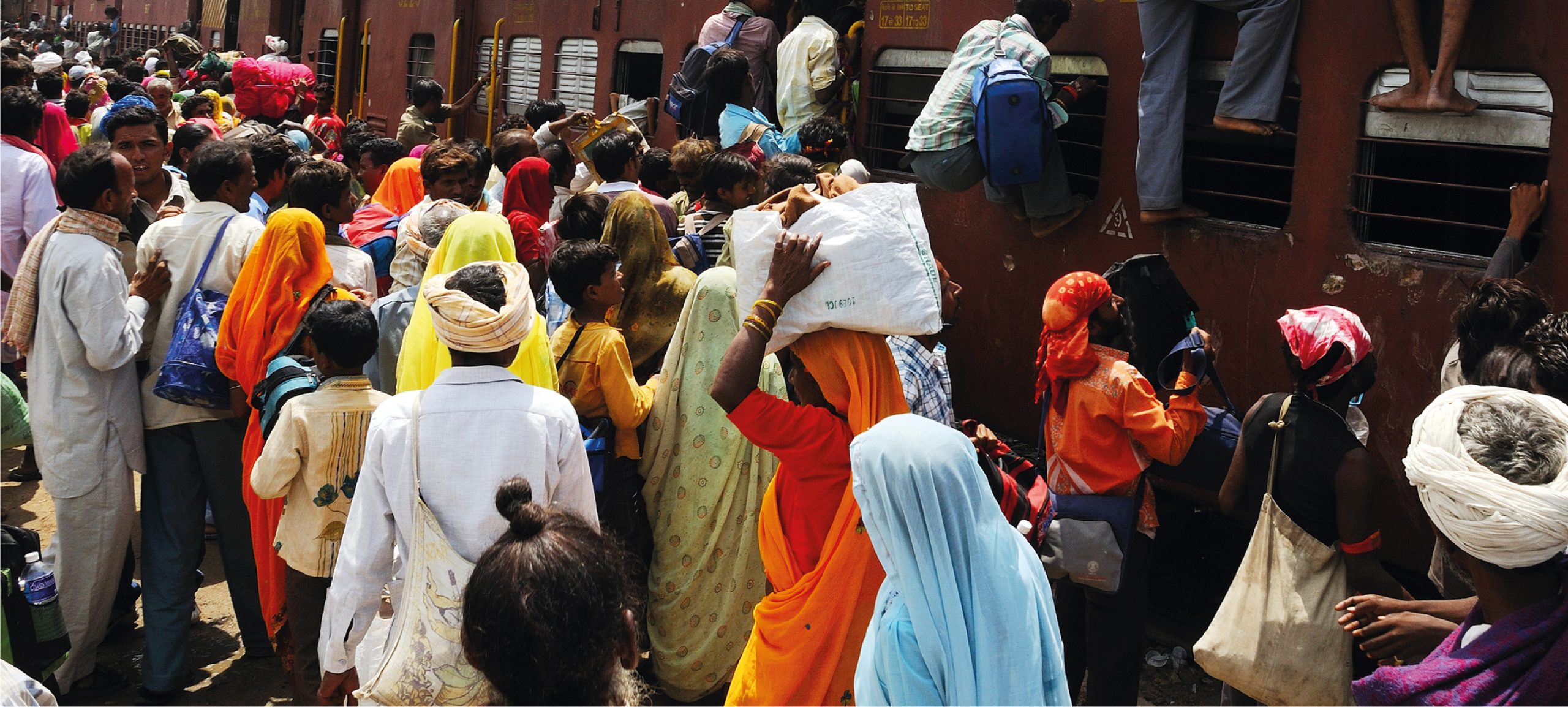
On an overcrowded train from Bombay to Bangalore, the author comes across a young girl in torn clothes without a ticket. She pays the ticket collector the fare for the girl but is unable to get her to talk. When she finally does, she finds out she’s a run away with nowhere to go. She helps her find place in a shelter in Bangalore not realizing then, the long way the girl will go from there, all thanks to a simple train ticket.

Sudha Murty tells us the story of being the only female in her engineering college. She shares her struggles-first in being allowed to actually attend the college, and then those she faced while being there. However, she was adamant to do complete her course and ended up doing better than most of the boys. She joined college as a scared teenager but left as a confident and bright young engineer.

error: Content is protected !!