




Bihar Diaries is an exciting account of the arrest of the ill-famed criminal of Bihar, Vijay Samrat by Amit Lodha. Known for extortion, kidnapping and massacre of numerous people, Vijay Samrat is one of the most feared ganglords of Shekhpura, a sleepy mofussil town in Bihar.
Twinkle Khanna in her foreword to the book praises SP Amit Lodha and says, “When you read the story, you will find that it is vivid and atmospheric because the author has lived each moment, unlike the rest of us who have to often rely on second-hand research and our imaginations while writing from the safety of our armchairs.”
Here are five interesting cases that SP Amit Lodha has worked on:
1. The featured case of how SP Amit Lodha caught the ganglord Vijay Samrat tops this list. With his quick thinking and persistence to mete out justice, he was able to seize the most dangerous criminal of Bihar.

2. When a student from one of the well-known schools of Bihar was abducted, SP Amit Lodha with his flair of working with technology and new gadgets, was able to catch hold of the kidnapper and find the missing child.

3. While on a mission to capture the don of Munger, Kirtan Mishra, SP Amit Lodha bravely went to his hideout and arrested him. This was the first arrest of his career.

4. SP Amit Lodha managed to capture the infamous murderer Hari Sinha with the utmost ease. When he did not get the back-up that he needed, he decided to go without it to capture the criminal.

5. When on a mission to arrest Vijay Samrat, SP Amit Lodha found out about his most trusted accomplice Horlicks Samrat. A long and an interesting process of following the trail of the criminal ensued, resulting in the arrest and bringing him closer to his aim of arresting Vijay Samrat.

Bihar Diaries captures vividly the battle of nerves between a dreaded outlaw and a young urbane IPS officer.
AVAILABLE NOW!
Category: Excerpts
The Bhagavata retold with illustrations – An excerpt

The Bhagavata is the story of Krishna, known as Shyam to those who find beauty, wisdom and love in his dark complexion. It is the third great Hindu epic after the Mahabharata and the Ramayana. However, this narration was composed in fragments over thousands of years.
Devdutt Pattanaik’s book, Shyam seamlessly weaves the story from Krishna’s birth to his death, or rather from his descent to the butter-smeared world of happy women to his ascent from the blood-soaked world of angry men.
While talking of Shyam, Vyasa told Shuka, ‘Some tried to hurt him, he who cannot be hurt. Some tried to protect him, he who needs no protection. Let these tales make you sing lullabies for Shyam who sleeps in the cradle.’
Here is an excerpt of two of the stories from the book that talk about Shyam destroying Putana and Trinavarta, as an infant.

In keeping with tradition, nursing mothers in the village and in the surrounding countryside gathered in Yashoda’s house to offer their milk to her son. Among them was the wet nurse Putana.
Putana had been ordered by Kamsa to fill her breasts with poison and kill every newborn in Vraja. ‘Hopefully, one of them will be the child who escaped, the one destined to kill me.’ Putana let her love for Kamsa eclipse the morality of her action.
After nursing hundreds of infants to death, she arrived at Nanda’s house. ‘Let me feed your little boy,’ she said, a smile on her face and murder in her heart. Shyam leapt into her arms in glee. ‘See, he already likes me!’ Turning to Rohini she said, ‘You carry on with your chores. The child is safe with me.’
With everyone gone, Putana settled Shyam at her breast and let him suckle. She waited patiently for his cherubic limbs to go limp. She waited and waited, but the child showed no signs of slowing down. If anything, he sucked with greater vigour. Feeling uncomfortable, she tried pulling him away, but the dark child clung to her white breast like a baby monkey, suckling furiously. Putana grew weak. She could neither stand nor sit. The child, she realized, was drinking not her milk but her life. She opened her mouth to let out a bloodcurdling scream but the sound caught in her throat. Her vision blurred. And then she breathed no more.


Then Kamsa invoked Trinavarta to sweep into Gokul like the wind, scoop up the child who killed his beloved Putana and dash him to the ground before his mother’s eyes.
Trinavarta transformed into a whirlwind, flew across the Yamuna to Gokul where he found Shyam in the courtyard of Nanda’s house. Yashoda was churning butter while Nanda was busy cleaning the cowsheds. The wind demon swooped down like a hawk and carried the child away. He rose high in the sky, intent on hurling Shyam down from a great height.
But the higher Trinavarta rose, the heavier Shyam became. Though he still looked like an infant, barely three months old, sleeping soundly, unaware of the wind demon’s foul intentions, he weighed as much as a mountain.
When Shyam awoke and found that he was high above the earth, he did not cry. Nor was he afraid. He firmly clung to Trinavarta’s neck as if to steady himself. Trinavarta felt himself choking. Breathless, he could no longer whirl. Reduced to a harmless draught, he slunk back to earth.
It was only when Trinavarta placed Shyam back in his cradle that the child eased his grip. Trinavarta then collapsed and died. That day, the air over Gokul stood still as if in awe of Shyam’s strength.


Chanakya and the Art of Getting Rich by Radhakrishnan Pillai- An Excerpt

Chanakya’s Arthashastra is an unrivalled political treatise that has been used by scholars, academics and leaders across the world. In Chanakya and the Art of Getting Rich, Radhakrishnan Pillai brings out the inherent lessons from Arthashastra to present a strategic and practical way of wealth creation. This is a holistic study, written for anyone and everyone.
Here is an excerpt from the Stages of Wealth:
There are all types of wealthy people: educated, not so educated, large-hearted, miserly, first-generation wealthy, those who inherited their wealth, those who became wealthy at a young age, those who became wealthy after years of struggle, from rags to riches, from rich to very, very rich . . .
The best part about wealth is that there is no one group of wealthy people. They come from all backgrounds, from rich countries and poor countries, they are males and females, they make their money in various fields and industries: food, fashion, books, cinema, science, sports, medicine, real estate, automobiles, computers, technology, art . . . You will find more than one rich and successful person in every field.
There are some patterns common to every rich person’s life. If we understand those patterns, we can identify the principles that are common to the approach of all these wealthy people.
That one underlying rule is: they all loved their work and committed themselves to their work for years before they became rich. They had a long-term approach. Even after they became rich, they continued to work. All wealthy people have enough money to not worry about paying their monthly bills. They might even be able to afford to buy a fleet of limousines with just their leftover pocket money. They can sit by the seashore, sip on a drink and do nothing till the end of their lives. Yet, you will find these people working hard. They enjoy their work and are busy with their teams creating more, better things than what they created in the past. Many can afford large mansions but continue staying in the small apartments they owned even when they were not rich. They have a different mindset, which ordinary people miss to note.
Warren Buffet continued to stay in his hometown of Omaha while he could have moved to a plush penthouse in New York. Steve Jobs continued to wear the black turtleneck T-shirt and jeans till his death when he could have had the best fashion designers at his disposal. Sam Walton continued to drive a simple car though he was among the richest men in the United States of America. Narayana Murthy of Infosys and his wife Sudha Murthy continue to create jobs and distribute wealth the same way they did years ago. The simplicity of their lifestyle has not changed with the fortunes they have earned. The other founders of Infosys sport the same attitude and continue to work in fields they love.
If the owners of Tata group decide to convert their trust’s wealth into personal wealth, they would become the richest people on earth. Yet their commitment to social work and philanthropy continues with the same attitude with which they started over a century ago. They continue to build hospitals, factories, centres of research, along with countless new companies.
The Ford foundation still contributes to unknown areas of education and research. Warren Buffet and Bill Gates give away fortunes in charity and make donations in projects they love. Some rich people donate as individuals, while some donate through their companies and foundations. Yet they give as lavishly as they earn. A study of the lives and the mindset of rich people gives us insights into many such habits, usually not known to others. Once we understand their world, we too can create our world of richness—different, yet similar.
As we read and think about Chanakya, one needs to understand that the world has changed a lot from his days. The world we live in, the twenty-first century, is very different from the world of the fourth century BC. So even the definition of being rich has changed.
During those days the wealth was concentrated with the kings and royal families. Then there could be a few merchants and traders. The occupations were limited and opportunities were few. For someone of the working classes to become rich, he had to fight against established systems of society. The rich and powerful saw this as a threat to their ‘blue blood’ status and would not let others rise. There were many limitations and becoming rich would often end up being just a dream that you would die with—an unfulfilled wish.
Yet all of us living in this generation are lucky. Anyone can become rich. In fact, all of us can become rich. Today wealth is not limited to a particular family or a group of people. You need not be qualified with only a specific set of skills to become rich.

Stories from Storywallah

Storywallah is a collection of short stories written by a handpicked group of writers. This book deals with life in provincial India at a crossroad with modernity. These stories expose readers to the common yet unique life in India at a deeper perspective. It makes us value the land we are born in, relationships we share with people and ordinary objects of everyday life, which become the pathway of creating new friendships.
Let’s take a look at some of the short stories in the book!
- The short story, Home, deals with a son’s realization of how much his father and bua loved him. Even though years have passed, he misses his home country in a foreign land. However, due to the love his own sons have given him, he finds the courage to fulfil the deepest desire of his heart – to reunite with his family.

- The Muffler is a story which symbolizes how relationships can be formed through the smallest of things, like lending a muffler to a stranger on a cold snowy day. It deals with gut feelings and instincts and not questioning instances in life. The aspect of living in the present and let the future remain is a mystery is the crux of it.

- The Evening Tea is a short story which deals with perceptions about relationships, especially the one between a mother-in-law and a daughter-in-law in the Indian household. When an individual tries to understand the reasons behind the actions of the other person, their judgement towards them becomes fair. All the anger and hatred is instead replaced by love and empathy.

- Ayesha is a story about a father whose daughter was kidnapped in Dalhousie. For six years, he searched for her everywhere. Even when his wife lost faith in finding her, he never gave up. One day, he found the first link to his daughter. Slowly, the hope of finding his daughter turned brighter. It is truly said that where there’s a will there’s a way.

- A Bird in Flight is a story about an old man who chose to leave his village life in order to become a part of the city life. Years later, his son wants to sell his ancestral home in the village. However the thought of selling a paramount part of his life breaks him. This story deals with the a man’s affinity to the land he was born in , to go back to his roots and the memories of the happiest time of his life- his childhood.


The Communist Manifesto- An Excerpt

Since the Manifesto was first written in 1848 by Marx and Engels, the text has only grown more influential and relevant. It has been banned,censored,burned and declared ‘dead’ but is still required reading in several courses. The Communist Manifesto is an extensively researched edition that provides an authoritative introduction with the full text of the Manifesto.
This year celebrates Karl Marx’s 200th birth anniversary. Grab this edition that explains Marxism in a nutshell in a reader-friendly format.
Here is an excerpt from the book:
———————————————————————————————————————————————
Life under capitalism is a rat race not only inside the workplace, but out of it as well. In a society constantly on the move, social relations are turned upside down. Capitalism encourages greed, competition, and aggression. It degrades human relations so that they are frequently based on little more than “naked self-interest” and “callous ‘cash payment’”. While its supporters prattle on endlessly about “family values,” capitalism itself rips families apart.
The bourgeois clap-trap about the family and education, about the hallowed co-relation of parent and child, becomes all the more disgusting, the more, by the action of modern industry, all family ties among the proletarians are torn asunder, and their children transformed into simple articles of commerce and instruments of labor. (II.45)
Vast numbers of people are thus denied a truly human existence.
Capitalism’s ceaseless drive to expand not only destabilizes all social relations; sooner or later, it also undermines the conditions for economic growth itself.Marx and Engels argue that capitalism increasingly exhibits a tendency to run out of control—it is a system in which highly destructive economic crises are unavoidable and that has thus become fundamentally irrational.
Modern bourgeois society, with its relations of production, of exchange and of property, a society that has conjured up such gigantic means of production and of exchange, is like the sorcerer who is no longer able to control the powers of the nether world whom he has called up by his spells.(I.27)
In a world threatened by pollution, global warming, and the destruction of ecosystems as the result of uncontrolled capitalist growth, this image perhaps has a special resonance. At the beginning of the twenty-first century, the search for profits threatens to destroy everything in its path, including the natural environment.
The Manifesto does not contain a fully worked-out economic theory—Marx was later to provide that in Capital—but it does provide a description of recurring capitalist crises, which, once again, fits the modern world remarkably well.
For many a decade past, the history of industry and commerce is but the history of the revolt of modern productive forces against modern conditions of production, against the property relations that are the conditions for the existence of the bourgeoisie and of its rule. It is enough to mention the commercial crises that by their periodical return put on its trial, each time more threateningly, the existence of the entire bourgeois society. In these crises a great part not only of the existing products, but also of the previously created productive forces, are periodically destroyed. (I.27)
The periodic crises that the Manifesto describes have continued to plague capitalism ever since, despite repeated claims that they have become a thing of the past.

Book of Rachel- An excerpt

Esther David writes about Jewish life in India and personally illustrates her books. Book of Rachel, her latest book, is a captivating tale of a woman’s battle to live life on her own terms. Continuing the saga of the unique Bene Israel Jews in India, it adds to Esther David’s reputation as a writer of grace and power.
The book follows Rachel who lives alone by the sea. Her children have long migrated to Israel as have her Bene Israel Jew neighbours. Taking care of the local synagogue and preparing exquisite traditional Jewish dishes sustain Rachel’s hope of seeing the community come together again at a future time.
Here is a recipe from Rachel’s kitchen that you should try –
————————————————————————————–
METHI BHAAJI
Ingredients: methi or fenugreek leaves, potatoes, onions, garlic, oil, red chilli powder, coconut, salt
Method: Take two fresh bouquets of methi, cut root ends, pluck leaves, wash well and soak in a large bowl of water, changing water frequently to get rid of residue. When washed clean, drain methi leaves and keep aside.
Slice three onions, chop six cloves garlic and fry till golden brown in two tablespoons oil. Add one large potato peeled and cubed. When potato is almost done, mix well with methi leaves, chilli powder and salt. Cover the pan and cook on slow fire in its own liquid till cooked. Add a heaped tablespoon of freshly grated coconut.
Methi is a bitter herb and coconut helps reduce the bitterness.
Cook on slow fire, till the vegetable absorbs the oil. Serve hot with chapattis.
Optional: Use jaggery instead of grated coconut.
Variation: Vegetables like gavar or cluster beans, french beans, snake gourd, dudhi or marrow, tindla and padval can be cooked in the same way.
A sprig of fenugreek is used as karpas or the bitter herb in the Pessach platter if parsley is not available. Methi has medicinal values and is known to cure constipation. A plain bitter soup made with methi leaves is supposed to have medicinal value when taken early in the morning on an empty stomach. A few methi seeds, soaked and swallowed whole, are also known to cure many ailments.
Whenever Rachel made methi, she missed Jacob. He loved methi and when he was in India he lived on it. Rachel called him methi-mad. And, just for him, she had a patch of methi growing in her backyard. Rachel never understood how Jacob had developed a taste for this bitter herb, which was disliked by the rest of the family. She wondered whether it had anything to do with his thumb-sucking habit as a child.
Soon after Rachel had weaned Jacob from her breast to the milk bottle, he had taken to sucking his thumb. This continued and Rachel was worried when he was four years old and still sucking his thumb. She was ashamed. His habit made her miserable, especially when they went to the synagogue. For no reason at all she felt all eyes were on Jacob. Even if they did not say anything, she felt the women were laughing at her. Rachel would nudge Jacob, whisper veiled threats, scold him and even bandage his hand. Jacob would sulk as they walked to the synagogue, watching his mother with big watery eyes, ready to burst into tears.
Jacob would sit next to his mother in the synagogue, hiding his bandaged hand in the folds of her sari. He felt insulted but suffered till he could bear it no longer. The prayers were long and his mother kept her eyes averted. Besides, she had not hugged him even once. The sobs collected in his chest and he needed his thumb.

James Bond: How It All Began!

M laid down his pipe and stared at it tetchily. ‘We have no choice. We’re just going to bring forward this other chap you’ve been preparing. But you didn’t tell me his name.’
‘It’s Bond, sir,’ the Chief of Staff replied. ‘James Bond.’
The sea keeps its secrets. But not this time.
One body. Three bullets. 007 floats in the waters of Marseille, killed by an unknown hand.
It’s time for a new agent to step up. Time for a new weapon in the war against organised crime.
This is the story of the birth of a legend, in the brutal underworld of the French Riviera.
Let’s read an excerpt from the book here-
——————————————————————————————————————————————–
‘In the last transmission he made, a week before his death, 007 said he had concrete evidence.’
‘What sort of evidence?’
‘Unfortunately, he didn’t say. If 007 had one fault, it was that he liked to keep his cards close to his chest. In that same transmission, he mentioned that he had arranged to meet someone who could tell him exactly what she was up to – but once again, he didn’t tell us who it was.’ Tanner sighed. ‘The meeting took place at the basin of La Joliette and that was where he was killed.’
‘He must have left notes – or something. Have we been to his house?’
‘He had an apartment in the Rue Foncet and the French police searched it from top to bottom. They found nothing.’
‘Perhaps the opposition got there first.’
‘It’s possible, sir.’
M tamped down his pipe with a thumb that had, over the years, become immune to the heat of the smouldering tobacco. ‘You know what surprises me in all this, Chief of Staff? How could 007 allow himself to be shot at close range in the middle of a crowded city? Seven o’clock in the evening, in the summer months . . . it wouldn’t even have been dark! And why wasn’t he carrying his weapon?’
‘I was puzzled by that,’ Tanner agreed. ‘I can only assume he must have been meeting someone he knew, a friend.’
‘Could he have actually met with Madame 16 herself? Or could she have found out about the meeting and intercepted it?’
‘Both those thoughts had occurred to me, sir. The CIA have people out there and we’ve been trying to talk to them. In fact the whole area is crawling with security services of one sort or another. But so far . . . nothing.’
The heavy, sweet smell of Capstan Navy Flake hung in the air. M used the pipe to punctuate his thoughts. The age-old ritual, the lighting and the relighting, gave him time to consider the decisions that had to be made.
‘We need someone to look into what happened,’ he went on. ‘This business with the Corsicans doesn’t sound particularly pressing. If there are fewer drugs coming out of France, that’s something to be grateful for. But I’m not having one of my best agents put down like a dog. I want to know who did this and why and I want that person removed from the field. And if it turns out that this woman, Sixtine, was responsible, that goes for her too.’
Tanner understood exactly what M was saying. He wanted an eye for an eye. Somebody had to be killed.
‘Who do you want me to send? I’m afraid 008 is still out of action.’
‘You’ve spoken to Sir James?’
‘Yes, sir.’ Sir James Molony was the senior neurologist at St Mary’s Hospital, Paddington and one of the few men who knew M both socially and professionally. Over the years he had treated a number of agents for injuries, including stab wounds and bullet wounds, always with complete insouciance and discretion. ‘It’s going to be another few weeks.’
‘And 0011?’
‘In Miami.’
M laid down the pipe and stared at it tetchily. ‘Well, then we have no choice. We’re just going to bring forward this other chap you’ve been preparing. It’s been on my mind to expand the Double- O Section anyway. Their work is too important and right now we’ve got one injured, another one dead . . . we need to be prepared. How is he doing?’
‘Well, sir, he managed his first kill without any difficulty. It was that Kishida business. The Japanese cipher man.’
‘Yes, yes. I read the report. He’s certainly a good shot and he kept his nerve. At the same time, though, firing a bullet into the thirty-sixth floor of a New York skyscraper doesn’t necessarily prove anything. I’d like to see how he works at closer quarters.’
‘We may very well find out,’ Tanner replied. ‘He’s in Stockholm now. If all goes well, he’ll be reporting back in the next twenty-four hours. I already have his fitness report, his medical and psychological evaluations. He’s come through with flying colours and, for what it’s worth, I like him personally.’
‘If he gets your recommendation, that’s good enough for me, Chief of Staff.’ M frowned. ‘You didn’t tell me his name.’
‘It’s Bond, sir,’ the chief of staff replied. ‘James Bond.’

Under American Eyes: Mark Twain in Bombay

For 230 years, America’s engagement with India, Afghanistan and Pakistan has been characterized by short-term thinking and unintended consequences. Beginning with American traders in India in the eighteenth century, the region has become a locus for American efforts-secular and religious-to remake the world in its image. Even as South Asia has undergone tumultuous and tremendous changes from colonialism to the world wars, the Cold War and globalization, the United States has been a crucial player in regional affairs.
In the definitive history of the US involvement in South Asia, The Most Dangerous Place by Srinath Raghavan presents a gripping account of America’s political and strategic, economic and cultural presence in the region.
Of the many interesting incidents and lesser known anecdotes in the book, one interesting narrative is Mark Twain’s visit to Bombay. Here is an excerpt from it.
————————————————————————————————————————————————–
On a sunny morning in January 1896, the visiting American— decked out in a white suit and straw hat—took a stroll on the outskirts of Bombay. On seeing a row of Indian washermen sweating it out, he asked his guide, ‘Are they breaking those stones with clothes?’ Samuel Langhorne Clemens had kept his sense of humour despite the fact that he had practically been forced to travel to India. A failed venture with a typesetting machine and the bankruptcy of his publishing firm had left Mark Twain ensnared in a web of debt: of over $1,00,000. To shake this off, the fiftyyear- old writer had embarked on a year-long lecture trip covering a hundred cities in Australia and New Zealand, South Africa and the British Isles, Ceylon and India.
In Bombay, Twain’s first appearance was in the Novelty Theatre before an overflowing audience worshipping ‘at the shrine of the world’s great humourist when he made his debut before his first Indian audience’. Twain spoke of, among other things, how there were 352 different kinds of sins, so that ‘the industrious persons could commit them all in one year and be inoculated against all future sins’. He told stories, some apocryphal, about George Washington and other great Americans, and also read a chapter from Tom Sawyer. Twain lunched with the Governor in his official residence and met Jamsetji Tata over dinner.
Like many well-informed Americans of his generation, Mark
Twain had thought of India as a land of fantasy: ‘an imaginary
land—a fairy land, dreamland, a land made of poetry and moonlight
for the Arabian Nights to do their gorgeous miracles in’. Ahead of his trip, he had written jocularly to Kipling, ‘I shall come riding my ayah with his tusks adorned with silver bells and ribbons and escorted by a troop of native howdahs richly clad and mounted upon a herd of wild buffalos; and you must be on hand with a few bottles of ghee, for I shall be thirsty.’3 After spending two months in the country and visiting over sixteen cities and towns, Twain concluded that India was the most interesting country on the planet. But his view of India was a tad more realistic: ‘This is indeed India—the land of dreams and romance, of fabulous wealth and fabulous poverty, of splendor and rags, of palaces and hovels, of tigers and elephants, the cobra and the jungle . . . the one land that all men desire to see, and having seen once, by even a glimpse, would not give that glimpse for the shows of all the rest of the globe combined.’
Twain was a curious and sympathetic traveller. The people, he wrote, were ‘pleasant and accommodating’. ‘They are kindly people . . . The face and bearing that indicate a surly spirit and a bad heart seemed rare among Indians,’ he added. The sight of an Indian servant in his hotel being needlessly struck by a European manager reminded him of his childhood in the American South and the stain of slavery on his own country. The ‘thatched group of native houses’ along the Hooghly River took him back to ‘the negro quarters, familiar to me from nearly forty years ago—and so for six hours this has been the sugar coast of the Mississippi’.5 Even Indian religion and spirituality, of which he had had no high opinion, Twain encountered with an open mind. On the massive Hindu religious festival in Allahabad, he wrote, ‘It is wonderful, the power of a faith like that.’ Meeting an Indian saint in Benares, Twain gave him an autographed copy of Huckleberry Finn and noted his admiration for men who ‘went into the solitudes to live in a hut and study the sacred writings and meditate on virtue and holiness and seek to attain them’. Twain had heard of the storied tradition of ‘thuggee’ or ritual strangling as a boy in America and wrote at inordinate length about it in his account of the passage through India. Nevertheless, he also observed, ‘We white people are merely modified Thugs; Thugs fretting under the restraints of a not very thick skin of civilization.’
All the same, Twain’s views of India were shaped by a sense of civilizational hierarchy. While India was ‘the cradle of human race, birth place of human speech’ and so forth, it was a civilization that had no notion of ‘progress’: ‘repeating and repeating and repeating, century after century, age after age, the barren meaningless process’. India had been the ‘first civilization’ and remained stuck there. If this was redolent of Britain’s ideological justification for the conquest of India, Twain more explicitly endorsed the political rationale of the Raj: ‘Where there are eighty nations and several hundred governments, fighting and quarrelling must be the common business of life; unity of purpose and policy are impossible.’ The beneficence of British rule flowed logically from these premises. ‘When one considers what India was under her Hindoo and Mohammedan rulers, and what she is now; when he remembers the miseries of her millions then and protections and humanities which they enjoy now, he must concede that the most fortunate thing that has ever befallen that empire was the establishment of British supremacy here.’

Surprise Me by Sophie Kinsella – An Excerpt

After being together for ten years, Sylvie and Dan have a comfortable home, fulfilling jobs, beautiful twin girls, and communicate so seamlessly, they finish each other’s sentences. They have a happy marriage until it’s casually mentioned to them that they could be together for another sixty-eight years… and panic sets in.
They quickly decide to create little surprises for each other, to keep their relationship fresh and fun. Gradually, the surprises turn to shocking discoveries. And when a scandal from the past is uncovered, they begin to wonder if they ever really knew each other after all…
Number one bestselling author, Sophie Kinsella‘s emotionally charged, witty new standalone novel, Surprise Me is about love and long-term relationship survival – and how those we think we know best can sometimes surprise us the most.
Let’s read an excerpt from the book here-
——————————————————————————————————————————————————–
It’s good news, obviously. It’s great news. We’re super-healthy, we’re going to live long . . . we should be celebrating!
But sixty-eight more years of marriage? Seriously? I mean . . .
Seriously?
On the car journey home, we’re both quiet. I keep sending little glances to Dan when he’s not looking, and I can feel him doing the same to me.
‘So, that was nice to hear, wasn’t it?’ I begin at last. ‘About living till a hundred, and being married for . . .’ I can’t say the number out loud, I just can’t. ‘For a while longer,’ I end tamely.
‘Oh,’ replies Dan, without moving his head. ‘Yes. Excellent.’
‘Is that . . . what you imagined?’ I venture. ‘The marriage bit, I mean? The . . . uh . . . the length?’
There’s a huge pause. Dan is frowning ahead in that silent way he gets when his brain is dealing with some huge, knotty problem.
‘I mean, it’s kind of long,’ he says at last. ‘Don’t you think?’
‘It’s long.’ I nod. ‘It’s pretty long.’
There’s a bit more silence as Dan negotiates a junction and I offer him gum, because I’m always the gum-giver in the car.
‘But good long, right?’ I hear myself saying.
‘Absolutely,’ says Dan, almost too quickly. ‘Of course!’
‘Great!’
‘Great. So.’
‘So.’
We lapse into silence again. Normally I would know exactly what Dan’s thinking, but today I’m not quite sure. I look at him about twenty-five times, sending him tacit, thought-wave messages: Say something to me. And, Start a conversation. And, Would it kill you to look this way, just once? But nothing gets through. He seems totally wrapped up in his own thoughts. So at last I resort to doing the thing I never do, which is to say: ‘What are you thinking about?’
Almost immediately, I regret it. I’ve never been that wife who keeps asking, ‘What are you thinking about?’ Now I
feel needy and cross with myself. Why shouldn’t Dan think in silence for a while? Why am I prodding him? Why can’t I give him space?
On the other hand: what the hell is he thinking about?
‘Oh.’ Dan sounds distracted. ‘Nothing. I was thinking about loan agreements. Mortgages.’
Mortgages!
I almost want to laugh out loud. OK, this just shows the difference between men and women. Which is something I
don’t like saying, because I’m very much not a sexist – but honestly. There I am, thinking about our marriage, and there he is, thinking about mortgages.
‘Is there an issue with the mortgage or something?’
‘No,’ he says absently, glancing at the satnav. ‘Jeez, this route is going nowhere.’
‘So why were you thinking about mortgages?’
‘Oh, er . . .’ Dan frowns, preoccupied by his satnav screen.
‘I was just thinking about how before you sign up for one . . .’
He swings the wheel round, doing a U-turn and ignoring the
angry beeps around him. ‘. . . you know exactly how long the loan period is for. I mean, yes, it’s twenty-five years, but
then it’s done. You’re out. You’re free.’
Something clenches my stomach and before I can think straight, I blurt out, ‘You think I’m a mortgage?’
I’m no longer the love of his life. I’m an onerous financial arrangement.
‘What?’ Dan turns to me in astonishment. ‘Sylvie, we’re not talking about you. This isn’t about you.’
Oh my God. Again, I’m really not being sexist, but . . . men.
‘Is that what you think? Do you not hear yourself?’ I put on my Dan-voice to demonstrate. ‘“We’re going to be married for a massive long time. Shit. Hey, a mortgage is really good because after twenty-five years, you’re out. You’re free.”’ I resume my normal Sylvie-voice. ‘Are you saying that was a random thought process? Are you saying the two are unrelated?’
‘That is not—’ Dan breaks off as realization catches up with him. ‘That is not what I meant,’ he says with renewed vigour. ‘I’d actually forgotten all about that conversation with the doctor,’ he adds for good measure.
I shoot him a sceptical look. ‘You’d forgotten it?’
‘Yes. I’d forgotten it.’
He sounds so unconvincing, I almost pity him.
‘You’d forgotten about the sixty-seven more years we’ve got together?’ I can’t help laying a little trap.
‘Sixty-eight,’ he corrects instantly – then a tell-tale flush comes to his face. ‘Or whatever it is. As I say, I really don’t remember.’
He’s such a liar. It’s etched on his brain. Just like it is on mine.
——————————————————————————————————————————————————–

For Reasons of State – An Excerpt
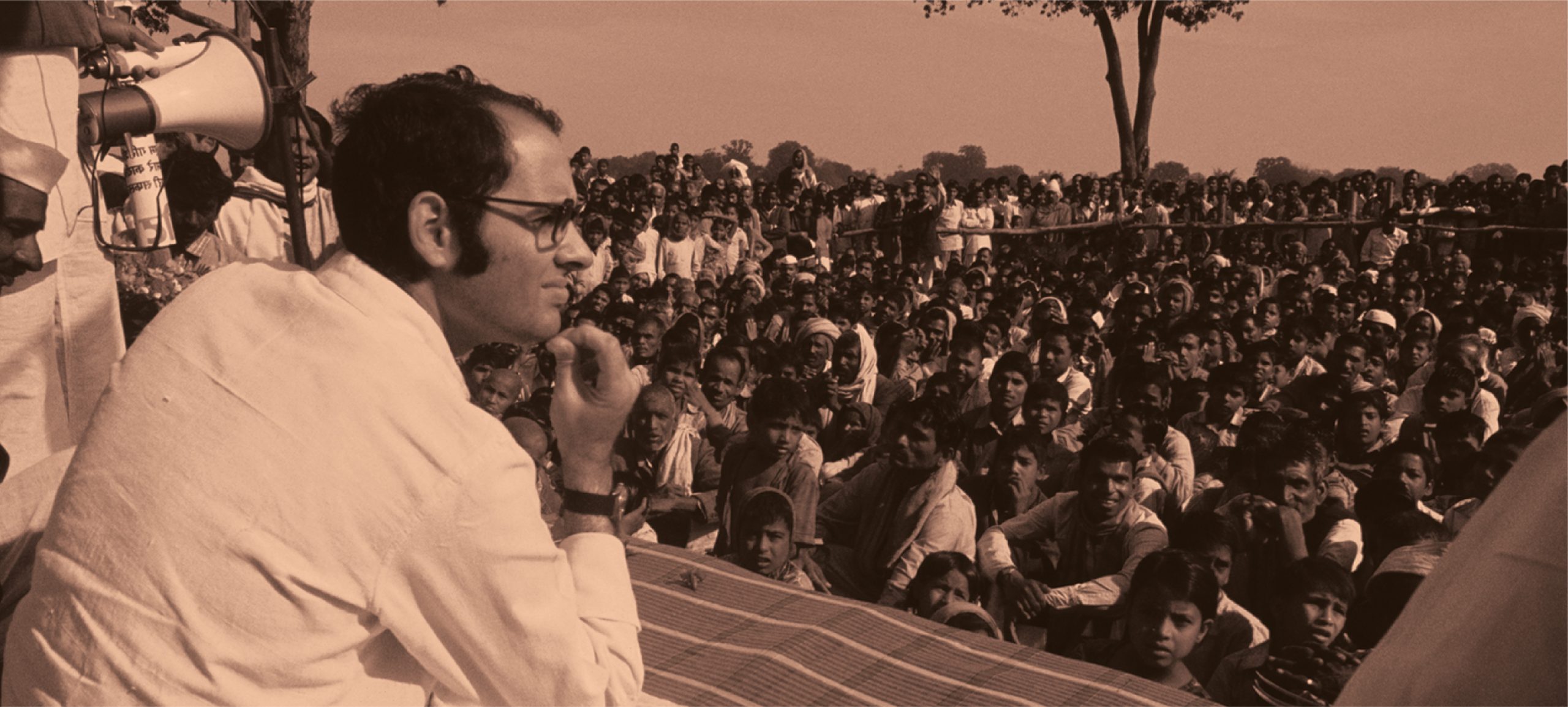
In 1977, two staff reporters at the Patriot – John Dayal and Ajoy Bose – both in their twenties, occupied highly advantageous positions during the nineteen months of the Emergency to observe the turmoil wrought in the capital city of Delhi. In their book, For Reasons of State, they have supplied first-hand evidence of the ruthlessness with which people’s homes were torn down and the impossible resettlement schemes introduced.
The nation found itself in a whirlwind of fear, confusion, violence and destabilization, stemming from forced sterilizations, heartless evictions in the thousands, and the cruel imprisonment of many.
Here is an excerpt from the introduction of their book.
——————————————————————————————————————————————————–
The trouble with the post-election situation in India in 1977 is that the tiny bushes in the foreground have hidden the forest behind. Also hidden, from the less probing eyes, are the myriad beasts that had prowled the jungle so menacingly for twenty months and may well be there still, albeit in an enforced hibernation, hoping for more suitable climes before they flex their muscles again. After the Emergency was relaxed just before the elections to the Lok Sabha, information had trickled down about cases of police brutality in Delhi and the states.
After the new Janata Party government was formed at the Centre, a large volume of reports has appeared on corruption, specially favours shown with or without political duress to companies associated with Sanjay Gandhi and his friends. The Maruti scandal has been hogging newspaper headlines and public discussions and, for the time being, till perhaps the various commissions start their proceedings, even the reports of excesses during the Emergency have tended to take a back seat.
Formidable as it is, Maruti is not the final personification, nor even the most characteristic symbol, of despotic rule under the Emergency. At best it betrays only the logical extension of the happenings that had taken place and in which the principals had acted by the rule of the bazaar to make cash capital out of the political and administrative situation they had so successfully managed to create. This has been brought about by the total depoliticization of society and by the perversion of the administrative system which had indeed for quite some time before the Emergency become ripe for being taken over by upstarts.
Officials and politicians of even the petty variety are explaining their activities during the Emergency as being born out of fear. But it is worth remembering that fear was only one, and in fact for the senior officers and politicians, almost the least important, of the factors responsible for the situation. Those who have closely watched the administrative process of the Union Territory of Delhi just before, during, and after the months of Emergency would know that the diabolical plan was not just a case of Sanjay Gandhi or his friends creating people who would do their bidding. It was a case of such people existing within the administration, simultaneously finding an extra-constitutional centre of authority and recognizing in it the powerhead that would help them in their own respective ambitions. The ambitions of the politician, the official and the bosses of the youth wing of the ruling party had become coterminous, so identical as to be indistinguishable from one another.
At a general level, it now is easy to see the strategy that had been adopted to utilize the situation. In the political institution of the Delhi Pradesh Congress Committee (DPCC), the Congress-run Delhi Administration controlled eventually by a nominated lieutenant governor, the superseded municipal corporation run by an official of the DDA, the Delhi State Industrial Development Corporation (DSIDC) for industries, the New Delhi Municipal Council (NDMC), the subordinate electricity producer and distributor Delhi Electricity Supply Undertaking (DESU), Delhi University (DU) and in Delhi Police which is controlled simultaneously by the lieutenant governor and the central government, there had existed a situation just before the Emergency which had created a coterie of officials bent on consolidating individual power. Internal rivalries and power grouping had reduced most of these institutions which ostensibly had a democratic functioning but in reality were administered on factors more personal to a state where they lacked the internal strength to resist any attempt at their perversion by outside forces.
The ‘extra-constitutional source of power’ recognized this factor and played on it skilfully. These forces in turn had recognized in the concept of Sanjay Gandhi just the additional impetus they needed for themselves. The implementation of the five-point programme became the yardstick of the competition between the various power groups. The number of trees planted, houses demolished and sterilizations done became the measure of closeness of these various groups to Sanjay Gandhi.
