Publish with Us

Follow Penguin

Follow Penguinsters

Follow Penguin Swadesh

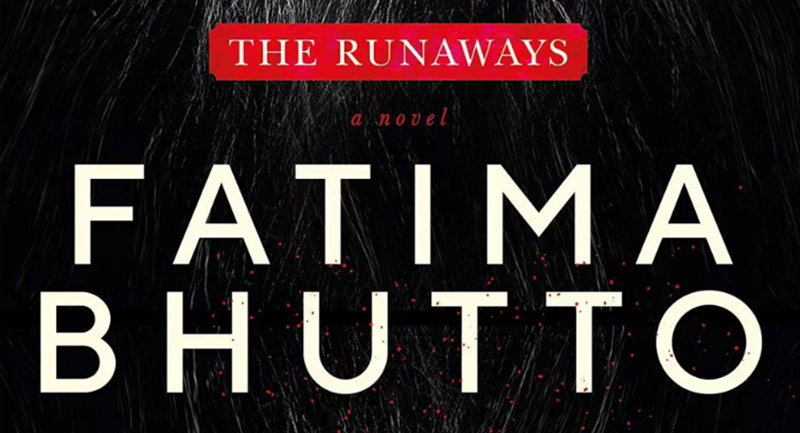
Meet Monty from Fatima Bhutto’s ‘The Runaways’

On one side of Karachi lives Monty, whose father owns half the city. But Monty wants more than fast cars and easy girls. When the rebellious Layla joins his school, he knows his life will never be the same again…
Here is an excerpt from Fatima Bhutto’s The Runaways that will introduce you to Monty!


During the summer, Papa spent about two weeks with the family in their Sloane Street flat, before work called and
he had to return to Pakistan or China or Saudi Arabia for meetings. Even though he spent his evenings having drinks with business associates or else on conference calls, pacing through the park with his earphones connected to his phone, disturbing the birds, it was the most time Monty and his father spent together in any given year.
When Monty was ten, Papa had taken him to Windsor Park and driven through the animals with the radio on Kiss FM, humming along to all the summer hits while Monty cowered in the back seat as lions and baboons circled the car. ‘Sit up, Monty,’ his father ordered, ‘look at the beasts! It’s like being on safari in Africa!’
Monty could see them just fine from where he sat, glued against the door of their rented car so that the animals couldn’t see his head in the window, but he would attempt a straightening- up, first making sure that his seatbelt was secure.
‘Can you see the lions? Can you see them from there?’
Yes, Monty would assure Papa, yes – you could see them a mile away, you could smell their muddy, earthy, dirty- skin scent even with the windows closed.
‘Be brave, beta,’ his father eventually snapped, ruining their father– son day without stopping to consider that Monty was being brave. He had been using his reserve tank of brave to get through the safari park where animal roamed free all day.
The next summer they didn’t go back to Windsor, but to Centre Court at Wimbledon. Monty watched Roger Federer play. He had nurtured a feverish crush on Anna Kournikova, with her short white skirts and tanned, endless legs, but she no longer played, not at Wimbledon at least. The sun – rare for London – had given Monty a migraine and he spent the day trying to hide it from his parents, who drank Pimm’s – even Mummy, because Papa told her there was no alcohol in it – and ate strawberries and cream like real English people.
Everything Monty knew about culture he had learned in London. Watching plays in the West End, eating fine food in Mayfair, watching his father buy tailored suits on Savile Row and feeling not pride, but confidence, when he saw his father step out of a dressing room in expensive cloth cut to his precise measurements. Akbar Ahmed stood with his arms spread akimbo, like the Rio Jesus, while a whitehaired English tailor adjusted his cuffs, stepping back admiringly, before bending to his knees to attend to the fall of the elegant charcoal- black silk trousers.
When he was eighteen, Papa said, he would bring Monty to Anderson & Sheppard for his first bespoke suit. Until then, Monty had to study and work hard and make his father proud. The rewards would follow – nothing could be denied to a man who faced his responsibilities head- on. Nothing could be denied to a man who upheld the honour of his family’s name.
This summer, the summer Monty turned seventeen, Akbar Ahmed couldn’t find the time to spend with his son. There was no boating in Regent’s Park, no steaks at The Wolseley, no strawberries and no Pimm’s. I’m busy, was all Papa said, can’t make it. Tomorrow, day after, at the weekend.
But Monty had walked by Ladurée, behind Harrods, and seen Papa sitting outside under a pale- green umbrella, sipping an espresso by himself, just watching the world go by. He hadn’t looked very busy then. Monty paused, standing on Brompton Road, and wondered whether he should approach his father, whether he should walk across the street and join him, sitting down for a coffee, but Papa looked so happy, so content, sitting at his table alone that Monty bowed his head so his father wouldn’t see him and walked back home without saying anything.


The Runaways is an explosive new novel that asks difficult questions about modern identity in a world on fire.

Meet Sunny from Fatima Bhutto’s ‘The Runaways’

Far away in Portsmouth, Sunny fits in nowhere. It is only when he meets his charismatic, suntanned cousin Oz-whose smile makes Sunny feel found-that that he realizes his true purpose.
Here is an excerpt from Fatima Bhutto’s The Runaways that will introduce you to Monty!


Cricket had been the early love of Sunny’s life. It was a gentleman’s game, a slow, elegant sport that cultivated not only stamina in a player, but also subtle perception. But when his modest athletic scholarship to the University of Portsmouth came in, it was on the strength of his boxing, not his fast bowling, that Sunny had been selected.
Whatever his own personal failures, Sulaiman Jamil had always cheered his son’s successes. Sunny’s victories couldn’t come fast enough. First, a Bachelor’s degree from a marvellous university, next a beautiful job in a booming industry, then an office in the city, a Jaguar, a warm and loving wife, some children. Mixed- race, Hindu, Muslim, Sulaiman Jamil didn’t mind.
That was all Sunny ever heard at home.
Be someone else. Do something else. Be better. Fit in more, try more, work hard. Don’t get stuck in a dead- end job, don’t marry the first lady who comes your way, don’t be a slave all your life. Pa repeated his mantras, smoothing down his soft brown hair, its colour fading with age, absenting himself from his life’s own failures, transmuting his personal traumas into general advice.
I only want you to be happy, he told his son repeatedly. What father can rest until he sees his boy settled?
It made Sunny laugh, coming home from running in the park to see his pa sitting at the kitchen table, the acceptance letter with the second- class stamp propped up before him. The first time that he’d done right by him, it felt like. He would major in business studies for Pa too; he would have preferred Islamic history or even sports therapy, but there was no money in that, no future, Pa said. And a future was all a man really ever had.
‘My boy,’ his widowed pa, Sulaiman Jamil, sang softly when he held the thin acceptance letter in his hands. Sunny had left the envelope with the second- class stamp on the kitchen counter for his father to see. It was one of the few times he had sought his approval. ‘What a thing you’ve done . . . what a marvellous thing you’ve done . . .’ As though Pa knew all about the place, as if he’d got in himself. He hadn’t gone to university, only a polytechnic back in the old country, but his parents couldn’t afford it and, after a year, Pa was forced to drop out. It was a story he told Sunny over and over, embellishing the drama of his life with extra details in every telling.
It had been the first of his life’s tragedies.

‘Look at you now,’ Sulaiman Jamil smiled at his young son. This was the moral of the story: Sulaiman Jamil had fought the karma of his life to build something new, something better for his precious child, his only boy. ‘We did all right, didn’t we?’
Sunny nodded at his pa.
‘You and me, the two of us? We did good, didn’t we?’ Standing at the kitchen counter, Sunny watched his
father’s eyes fill with tears. He bowed his head and nodded once more.
‘You have a home, you have a city, a country even – a place in the world.’ Sulaiman Jamil’s voice broke with emotion. ‘You have a father who loves you. What more could your poor papa have given you?’
Just a moment ago, holding his University of Portsmouth John Doe acceptance letter, they were happy. Sunny was happy. He felt it. But it was gone now. Happiness didn’t hold. Nothing lasted very long for Sunny Jamil.
‘Nothing,’ Sunny mumbled, reaching out his arm to squeeze his old pa’s shoulder, massaging him for a moment, before leaning forward to embrace him. His pa. His protector, his defender. ‘I’ve got everything I need.’


The Runaways is an explosive new novel that asks difficult questions about modern identity in a world on fire.

Meet Michael and John from 'The Last Englishmen'

‘So, with map and compass, rock hammer and theodolite, Michael Spender and John Auden undertook explorations of the world, one they regarded with a naked eye from a distance and close up in a viewfinder or microscope. Similarly, Wystan Auden, Christopher Isherwood and Stephen Spender made up the three points of the literary triangle through which events in Germany and elsewhere would be sited and mapped, in poetry and prose, in the coming decade. They, too, considered the times and the world in front of them, albeit from different angles and with different implements.’
There are few things more exciting than discovering the connections between writers and artists you love. It is like being part of a secret brotherhood. Deborah Baker gives you access to not one but several such fascinating fraternities. There is the louche Bohemian art crowd around the Slade, the ‘Set’ of the wealthy bhadralok of Calcutta and the Oxford poets—Stephen Spender, W.H. Auden and Louis MacNeice (who, Evelyn Waugh once said, had ‘ganged up and captured the decade’ of the 1930s). The threads of love, idealism and of course, mountaineering, weave in and out of the narrative, drawing these disparate groups together.
To the average reader, the Oxford poets Wystan Hugh Auden and Stephen Spender would be a world removed from the freedom struggle of India. Deborah Baker delves into their family trees to draw out their less glamorous, but no less fascinating siblings, the titular ‘last Englishmen’ – John Bicknell Auden, geologist with the Geological Survey of India (GSI) and brother of W.H. Auden; and Michael Spender, surveyor and brother of Stephen Spender – who navigated the tumultuous society of India on the brink of freedom, their sympathies tempered by a practical detachment from the harsh realities of the freedom struggle.
Read on to learn more about the two men who never quite saw the similarities in each other but were alike in so many ways:

Bound by their brothers

Both John Bicknell Auden and Michael Spender were the lesser-known older brothers of two very flamboyant Oxford poets (and good friends) W.H. Auden and Stephen Spender, though their relationships with their respective siblings were quite different.
‘Where Michael and his brother Stephen would become perfect foils, apt to exaggerate their differences or use the existence of the other to define their own, Wystan and John, though nearly three years apart in age, had more in common.’

 Their dedication to science

Both John Auden and Michael Spender were involved in scientific fields—ones closely associated with the establishment of the Empire. John was a geologist with the GSI and Michael was a surveyor.

The Everest expeditions

Auden and Spencer were part of the 1937 survey of the “blank on the map” region around the Karakoram mountain known as K2, the second highest mountain in the world, organized by the Royal Geographic Society in an era when the Himalayan expeditions were seen as a proxy for the jockeying for power over Europe.

Critics of the British Empire in India

Despite their involvement in such expeditions, both John Auden and Michael Spender developed a critical view of the British Empire. John began to question British rule quite late, more so as his ‘sardonic humour and dry sense of the absurd’ caused him to recognize the hypocrisies of the Empire. Michael Spender had grown up among ardent believers in the Empire. However, with his growing respect for his Balti and Sherpa porters and an awareness of the devastating impact of large expeditions had on the Tibetan villages he passed through en route to Everest, came an increasing shame at his own privilege. He recognized the grandiose views British explorers had of themselves as a ‘romantic delusion.

 Their lasting contributions in their respective fields

‘It was an Indian geologist who noticed that though John Auden had focused his conclusions on a single district, he was the first to suggest that the dislocation he mapped and described in his beloved Garhwal arced from west to east down the entire 1,500- mile length of the Himalayan chain. As indeed it did. This fault is now known as the Main Central Thrust.’
John’s notes on geology, including his ideas on how the Himalayas came to be, are used in the GSI even today. Michael’s surveying skills and photographic memory came in handy during his stint in RAF intelligence work during the Second World War. ‘Michael’s insight became known as “comparative cover” and would define the field of photographic interpretation, or PI.

The eternal feminine

Besides family, work and political inclination, the two men remained bound by artist Nancy Sharp Coldstream, whose mystique enthralled both of them. Nancy met Auden first, but a chance introduction (by Auden himself) to Michael Spender entwined all three romantic destinies. She married Michael Spender and had a son with him but after his death during the war resumed her affair with John Auden.


The Last Englishmen is an engrossing and masterful story that traces the end of empire and the stirring of a new world order.

Wise Words from The Rabbit and the Squirrel

A story of thwarted love, and an ode to the enduring pleasures of friendship, The Rabbit and the Squirrel is a charmed fable for grown-ups, in which one life, against all odds, is fated for the other.
From Siddharth Dhanvant Shanghvi’s new book, we came across a list of wise words for you.


A story of thwarted love, and an ode to the enduring pleasures of friendship, The Rabbit and the Squirrel is a charmed fable for grown-ups, in which one life, against all odds, is fated for the other. For more posts like this, follow Penguin India on Facebook!

The secrets of navigating through life from Gaur Gopal Das

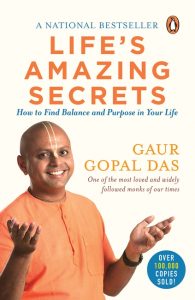
Gaur Gopal Das is one of the most popular and sought-after monks and life coaches in the world, having shared his wisdom with millions. His debut book, Life’s Amazing Secrets, distills his experiences and lessons about life into a light-hearted, thought-provoking book that will help you align yourself with the life you want to live.
Read along to know some important lessons from the book.

More to reality than meets the eye

‘We tend to take everyone at face value, equating what they have on the outside to how they feel on the inside. The paradox of our times is that those who have the most, can often be the least satisfied.We have mastered how to look successful, but not how to organize our lives so that we feel successful.’


Front Cover of Life's Amazing Secrets
Life’s Amazing Secrets || Gaur Gopal Das
Patience develops gradually

‘We all boil at different degrees. Some of us have temperaments like the Indian summer- hot,sticky and easily irritable. Yet, some can remain level-headed in the worst of calamities, and as a monk, I was taught to control my emotions. So, naturally, I assumed that I was the latter level-headed category. That was until the day I realized I wasn’t there yet.’


Check your thoughts

‘The mind is like the tongue. It drifts towards the negative areas of our life, making us restless and uneasy. It schemes to uproot the problems that are causing us so much pain, not realizing that the persistent scheming is causing us more emotional damage.’

Embrace gratitude as a way of life

‘Gratitude is not a feeling; it is a state of mind that can be developed, and it allows us to tap into a reservoir of unlimited positive energy.Being grateful happens in two steps. The first is to realize that there is good in the world and that good has fallen upon us. The second is to know that goodness is coming from something other than us, an external reality is giving the gifts of grace to our very own reality.’

 
Detachment dissolves anxiety

‘When we have a problem beyond our control, we have to turn to our spiritual strength and ask, ‘Why Worry?’ Whether or not we can do something about it, our response should not be anxiety. Learning to detach ourselves from situations that are outside our control is an imperative skill to learn for personal growth.’

Meditate to ease away stress

‘Out of the many types of meditation, I practise mantra meditation. This means I spend some time daily focusing my mind on sacred sounds, chanting the name of God, by which we can free ourselves of anxiety.’

Practice forgiveness over animosity

‘Forgiveness warms the heart and cools the sting. It is a choice that each of us has to make for ourselves to save our relationships and achieve peace of mind.’

Competition is a dangerous game

‘People with a closed mindset want to grow by beating others in their field. Open-minded people, on the other hand, grow by developing themselves. They know that nobody is their competition.They are their own competition.’

 
Spirituality and ambition are not mutually exclusive

‘I strongly encourage people to be successful in the world. If you have the desire to have a luxurious life, have exotic holidays; there is nothing wrong with that. If by blessings of God we have the ambition and the capacity to achieve more, we must fulfill our potential, not suppress it by force.’

Be selfless yet draw boundaries

‘I do believe it is possible to be completely selfless, but it is a journey, a process , not a single event. It takes wisdom to know when we are being selfless and when we are simply causing harm to ourselves by being over caring.’

Service to humanity brings ultimate joy

‘When we practise spirituality, we become like divers: we submerge ourselves underneath the turbulent waves to find a pleasure much deeper, beyond hedonistic ideals. That profound joy is only possible when one feels love to serve others.’


In today’s fast paced and hectic life, sometimes we do need a life coach, a mentor to help us be centered and balanced in life. Read Life’s Amazing Secrets by Gaur Gopal Das and find out how some basic principles like compassion, honesty and forgiveness can bring so much joy in our and our loved ones’ lives.

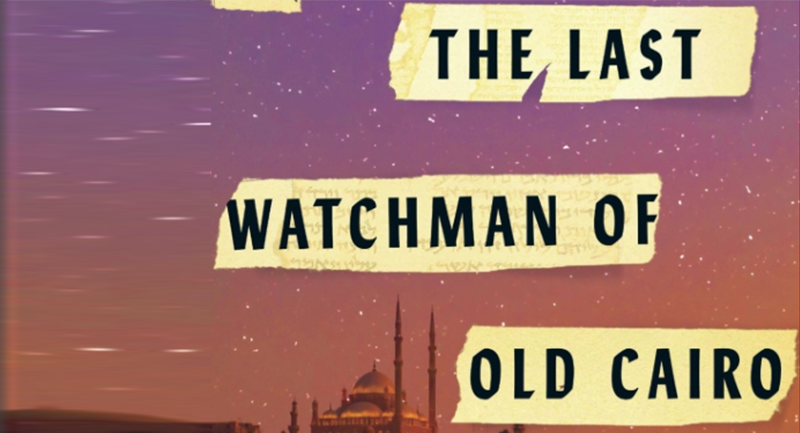
The Last Watchman of Old Cairo – an Excerpt

The Last Watchman of Old Cairo is a moving page-turner of a novel from acclaimed storyteller Michael David Lukas. This tightly woven multigenerational tale illuminates the tensions that have torn communities apart and the unlikely forces—potent magic, forbidden love—that boldly attempt to bridge that divide.
Here is an excerpt!


One Sunday toward the end of fifth grade, my father asked me whether I wanted to spend the summer with him in Egypt. He and my mother had already worked out all the details. I would stay with him in Cairo for two months, then come back to Santa Fe a few weeks before school began.
Of all the days that summer, the one that stuck with me most was the afternoon my father took me, Uncle Hassan, and a couple of distant male cousins on a felucca ride down the Nile.
It was a bright blue-and-white day. There was a soft breeze blowing upriver and the windows of the skyscrapers along the water glinted with reflected sunlight. I was sitting with my father at the back of the boat while Uncle Hassan and my cousins manned the front. We sailed up the Nile for an hour or so; then the captain dropped anchor near the bottom tip of Zamalek and everyone stripped down to their underwear and jumped in. They beckoned for me to join, but in spite of my father’s assurances, I didn’t trust the water. It looked like the kind of river—thick with silt the color of coffee ice cream—where you might find leeches and piranhas or, at the very least, those slimy little fish that ate the dead skin off your feet.
“No, thank you,” I said in Arabic and leaned back against the side of the boat in an effort to convey my comfort.
After a few minutes of splashing around, Uncle Hassan pulled himself back into the boat. I remember he smiled and made as if to light a cigarette. Then, with a violent lurch, he wrapped his arms around my chest and threw me into the Nile. The abruptness of it knocked the wind out of me and when I came up, sputtering and coughing, trying to tread water in wet shoes and jeans, everyone was laughing. My cousins sang a humorous song in my honor and I tried to laugh along with them, even though I knew I was the butt of the joke.
Back in the boat, I took off my wet clothes and set them out to dry. There were angry tears welling up at the corners of my eyes, but I held them back, knowing from experience that crying only made things worse. I was mad at Uncle Hassan. But most of all, I blamed my father, for allowing it to happen, for not protecting me, and for chuckling to himself as he draped the towel over my shoulders. To his credit, he didn’t say anything once he saw that I was upset. He didn’t try to explain himself or apologize. He just sat there with me at the back of the boat, watching the murky brown water pass a few feet below us.
“There is a proverb,” he said eventually. “ ‘Drink from the Nile and you will always return. Swim in it and you will never leave.’ ”
Then he leaned over the edge of the boat and cupped out a handful of water.
“This is our blood,” he went on, trickling the water onto my knee. “Nearly a thousand years our family has lived on the Nile. This river is in our veins.”
He lit a cigarette and we were both quiet for a long while.
“We are watchers,” he said, throwing the half-smoked butt into the Nile. When I didn’t respond, he explained. “Our name, al-Raqb, it means ‘the watcher,’ ‘he who watches.’ ”
“ ‘He who watches,’ ” I repeated, and he smiled.
“It is the forty-third name of God.”
He thought for a moment, shading his eyes against the sun; then he asked me the same question he asked every Sunday night.
“Would you like to hear a story?”
“Yes,” I said, and he began.
“Once there was a boy named Ali—”
I must have heard that story a dozen times before. But that particular afternoon—watching the city unfold from its haze—it felt more immediate, more real. This river a few feet below us was the same river that had flowed through the city a thousand years earlier, when Ali al-Raqb first took up the position of watchman, the same river that had flooded the valley every spring for hundreds of years.
“We protect the synagogue,” my father said when the story finished, “and we guard its secrets.”
“Secrets?” I asked.
He shifted in his seat and, glancing back over his shoulder, dropped his voice slightly, so no one else on the boat could hear what he was saying.
In one corner of the courtyard, he told me, there was a well that marked the place where the baby Moses was taken from the Nile. Beneath the paving stones of the main entrance was a storeroom filled with relics, including a plank from Noah’s Ark. And hidden in the attic, behind a secret panel, was the greatest secret of all, the Ezra Scroll.
He leaned in, so close that I could feel his breath on my face.
More than two thousand years ago, he said, during the time of the prophets, there lived a fiery scribe named Ezra who took it upon himself to produce a perfect Torah scroll, without flaw or innovation. He worked on the scroll for many years and when he was finished, he presented it to the entire community. The people assembled outside the walls of Jerusalem. And when Ezra opened the scroll, they all stood, for they knew that this was the one true version of God’s word. It was the perfect book, the perfect incarnation of God’s name, and it glowed with a magic that could heal the sick, enlighten the perplexed, or bring back the spirits of the dead.
“Have you seen it?” I asked. “Is it real?”
My father lit a new cigarette and stared into the water, as if he might find his story there.
“That’s enough for today,” he said, eventually, and I knew not to press any further.
For the rest of the ride, as we sailed back toward the 26th of July Bridge, I sat with my father at the back of the boat, looking out on the water and thinking about the heroic history of our family, about the Ezra Scroll and the generations of watchmen who protected it.
For much of my childhood, my last name—al-Raqb—had felt like a burden. I hated the questions it inspired, the taunts, and the well-meaning adults wondering where a name like that came from. I dreaded the moment when, without fail, substitute teachers would pause and glance up from the attendance sheet, apologizing in advance for their mispronunciation. It even looked strange—al-Raqb—the hyphen in the middle, the lowercase “a,” and that unpronounceable double consonant at the end. In third grade, prompted by a particularly embarrassing incident with a new teacher, I had waged a semi-protracted and nearly successful campaign to change my last name to Shemarya, like my mom, or Levy, like Bill. But that afternoon on the Nile, I wouldn’t have traded al-Raqb for anything.
I was a watcher, I told myself. He who watches.


Get a copy of The Last Watchman of Old Cairo!

Six Rich People Problems from Mahesh Rao's 'Polite Society'

Keenly observed, sharply plotted and full of wit and brio, Mahesh Rao’s Polite Society reimagines Jane Austen’s Emma in contemporary Delhi to portray a society whose polished surface often reveals far more than is intended.
We humbler mortals would think that an actual house anywhere in the vicinity of the NCR and money without any visible employment, would mean a permanent state of bliss. But as it turns out, the rich have their own problems to deal with.
Read on to feel a sharp stab of sympathy for these six truly awful Rich People Problems!
The sheer futility of art fairs when by even a faintly glamorous foreign celebrity is nowhere in sight
“Excitement rippled across the front lawns as it emerged that there had finally been a sighting of Diana Ross. Determined to make up for other disappointments a group of jewelry designers from New Friends Colony elbowed their way through the main pavilion, gesturing at the tall figure being guided around some hanging steel pots. But the thrill dissipated soon enough-when it was discovered that the lady in question was in fact the wife of the Rwandan ambassador to India.”
 The sordid places the best people have to descend to, to remain the best people.
“Nina would not go so far as to call it a humiliation but it was certainly depressing. The best people were being invited to flashy restaurants that overlooked the flyover. The venue for a book launch might  be at the end of a corridor of sports shops in a shopping mall.”
Being aesthetically disappointed by your pet philanthropic projects
“Anyway, one night we were walking through the Marais and I was astonished to see a restaurant that served their cuisine. It seemed like fate so of course we went in. Such a disappointment, I can’t tell you. Everything tasted of some dreadful sour fermented liquid, and horrid bits of pork fat. I mean, it’s too awful of me, but after that meal I couldn’t help but feel far less sympathetic towards them as a people.”
The suffering experienced on private yachts
“He hated yachts, where he ran the danger of being confined for long periods of time with objectionable characters. He was also convinced that they were breeding grounds for virulent bacteria, which would only result in a boatful of passengers vomiting in the wood-paneled aisles.”
The stress induced by the precise science of invitation- dispensing
“There were questions of future utility to be balanced with the danger of current solecism. Favours sometimes had to be returned but in the correct measure and on the appropriate occasion.”
And that most indescribable of all horrors-the pain of watching a truly insufferable \  social climber  ascend to wealth and prominence
“Year after year, Nina had watched Silky inhabit her role as Mrs Chhabra, settling into its splendid nooks as though she had been born to it. She had traded in her social insecurities for a jangly new personality, in whose service bad manners masqueraded as benevolent plain speaking.”

The British in India – an Excerpt

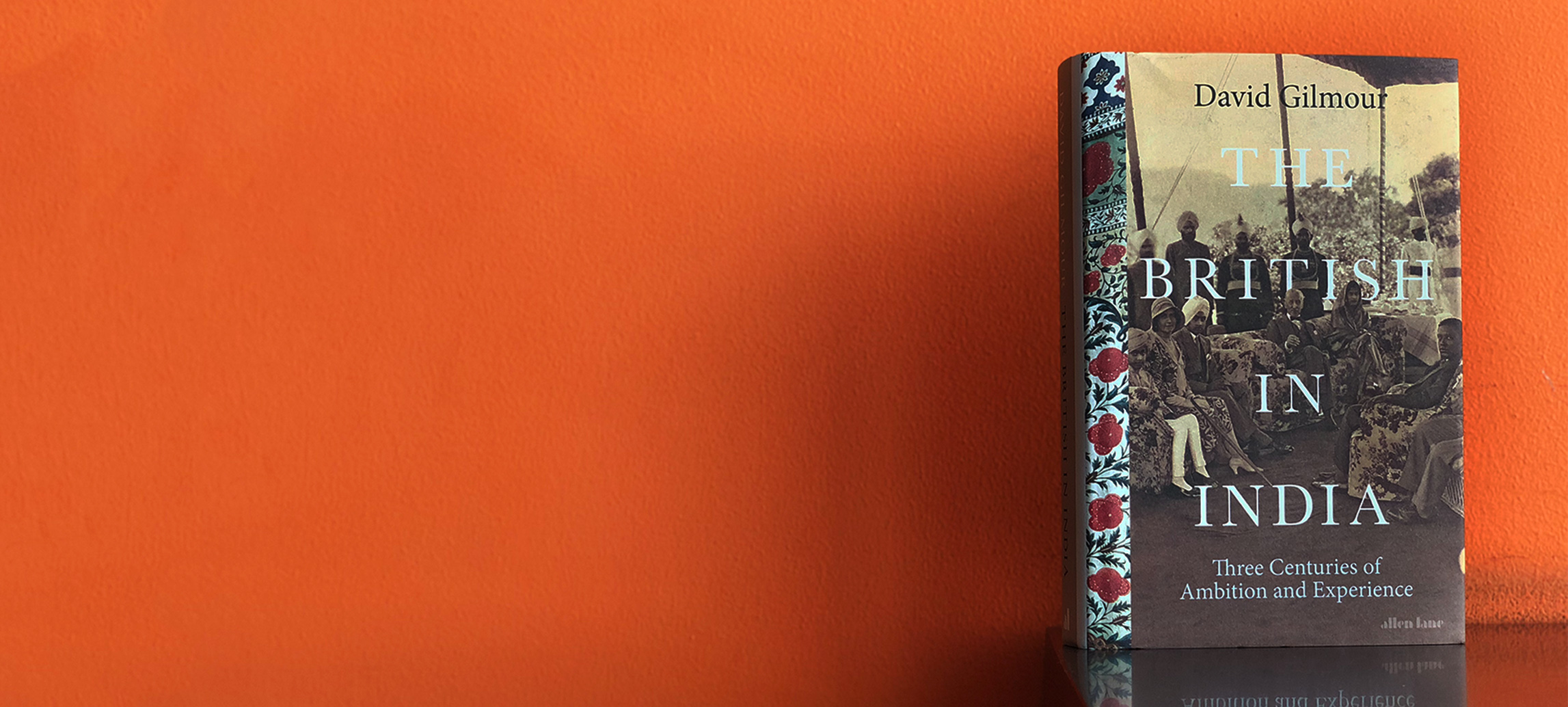
This book explores the lives of the many different sorts of Briton who went to India: viceroys and offcials, soldiers and missionaries, planters and foresters, merchants, engineers, teachers and doctors. It evokes the three and a half centuries of their ambitions and experiences, together with the lives of their families, recording the diversity of their work and their leisure, and the complexity of their relationships with the peoples of India. It also describes the lives of many who did not fit in with the usual image of the Raj: the tramps and rascals, the men who ‘went native’, the women who scorned the role of the traditional memsahib. Below is an excerpt from the book. Read on!


Salvation for Doyle came three years later with his marriage, after which his army report rated him as ‘regular, good and temperate’. The agent of this remarkable transformation was his wife, Margaret, the daughter of John O’Brien, another Irish soldier in India, a private in the Madras Fusiliers whose regiment had been sent north to help counter the Rebellion of 1857.* O’Brien was part of the relief force that arrived too late to save the British in Kanpur (Cawnpore) although it did manage to reach the besieged city of Lucknow. Badly wounded in the shoulder during the conflict, O’Brien decided to retire on his pension to Bangalore. Although the subsequent Doyle-O’Brien marriage might have seemed a purely Irish union taking place in a tropical ambience, this was not in fact the case. As the registry records demonstrate, John’s wife, Matilda, was an Indian girl who at the age of thirteen converted to Christianity a month before her marriage. Billy Connolly’s reaction to the news that he thus had Indian forebears and probably – given that Matilda had several siblings – a large number of Indian cousins, was both charming and bemused. Although the comedian still felt he was a ‘Glaswegian, Scottish person’ – large, white and hairy – he was ‘very proud and happy to be part Indian’ as well.
As Connolly’s story suggests, much of Britain’s relationship with
India, especially at a personal and popular level, has very quickly been forgotten. One cannot help wondering why his maternal grandmother, to whom he was very close, never told him that her own grandparents had lived in India and that her mother had been born in Bangalore; if she had been ashamed to admit her Indian ancestry, she could have left that bit out. The story also indicates how much of the British-Indian relationship, again at a personal level, was accidental. Most British people did not go to India to conquer it, govern it or amass a large fortune there. When Daniel Doyle enlisted in the 3rd Battalion of the 60th Rifles, he did not know that he would be sent to India and spend half his active life there as a soldier who would never be called upon to fight a battle. Like private soldiers, many British women and children lived in India by accident, without having chosen to do so; chance or unexpected circumstances had brought them there. If we look merely at Connolly’s own profession, the theatrical, we find a good number of future actors living fortuitously on the Subcontinent: a list of those who were born in India, or went to school or spent parts of their youth there, would include Vivien Leigh, Merle Oberon, Norman Wisdom, Lindsay Anderson, Spike Milligan, Tom Stoppard, Felicity Kendal and Joanna Lumley, many of whom will appear later in this book. If we examine an even smaller profession, that of writers, we find that Thackeray, Kipling, Saki, Orwell (and Orwell’s second wife, Sonya) were all born in India.
The British in this book lived in India from shortly after the death of Queen Elizabeth I until well into the reign of Queen Elizabeth II, a span of some three hundred and fifty years. Life for them was very different – and was led very differently – in diverse ages, just as it was in Britain. For nearly three-quarters of that time British settlements – and later possessions – were administered by the East India Company (EIC); for the last ninety years of the Indian Empire (1858–1947) they were under the direct rule of the British government. All divisions by ‘period’ are artificial and prone to generalization, but perhaps one can divide Britain’s time in India roughly into thirds. The first (and largest) had its share of war and violence, especially on the west coast, but was mainly a matter of small enclaves concentrating on trade. The second, stretching from the 1740s to the 1850s, was a period of conquest and expansion during which the East India Company, one of several rival European entities, emerged to become the paramount power in India. The third (and shortest), ending in 1947, was an era of consolidation and subsequent withdrawal. Yet even these divisions would need to be divided into contrasting subdivisions. As at home, the behaviour of the British in India was very different in the Regency period from what it was in the more earnest years of the early Victorians.


The British in India makes a highly original and engaging contribution to a long an important period of British and Indian history.

Stories at Work – an Excerpt

Is there a way to influence people without pushing data and analysis on them? Is there an effective way to drive change in an organization? Yes, through stories. Stories at Work will teach you how to wrap your stories in context and deliver them in a way that grabs your audience’s attention. Read an excerpt from the book to know more!


This book is designed to take you from being a believer of the power of stories to a seasoned user of stories in business, first by introducing you to the various elements of story work and then sharing with you the process you can use to unlock this enormous potential.
However, to do that I must first shift a belief most people have about stories. Imagine that you are one among ten people sitting in a conference room waiting for a very important meeting to start and someone in the room says ‘let me tell you a story’. Pause and think about what would be the first thing that would go through your mind. Take a minute.
If you are like 95 per cent of the 1500-plus senior leaders that I have run into during my workshops, your first thought would be along the line—‘why is he wasting our time’, ‘it’s time to be serious’, ‘what an idiot’, ‘has he not prepared for this’, ‘how long will this take’ or ‘why do I have to listen to it’. Very few of you, the 5 per cent, would say ‘I want to know what he has to say’ or ‘I hope it is interesting.’ That is the barrier stories face in business.
Most of you who have been in sales, and many of you who have not, would have at some point in time in the past been told by your boss ‘Kahaani mat batao!’ (Don’t tell me a story), when you were genuinely trying to explain the real reasons behind why something didn’t happen. Most people label stories as being made up, something to be used for entertainment or something usually for children.
While this myth will surely be shattered as we journey through the book, it would be useful to introduce you to my definition of business storytelling. Story is a fact. What we will do is wrap it in context and deliver it with emotion.
You might ask, ‘Can’t stories be created or made up?’
Of course they can, but not in this book and definitely not in the world of business. ‘Can’t I borrow from mythology?’ Of course you can if you have a huge memory bank for mythological stories and know how to connect them to business. But not in this book. In this book, and in the work I do, we will stick to stories being facts. After all, the currency of business is fact.


Stories at Work will teach you how to wrap your stories in context and deliver them in a way that grabs your audience’s attention.

Take The Gender Bias Out Of Your Work Ads

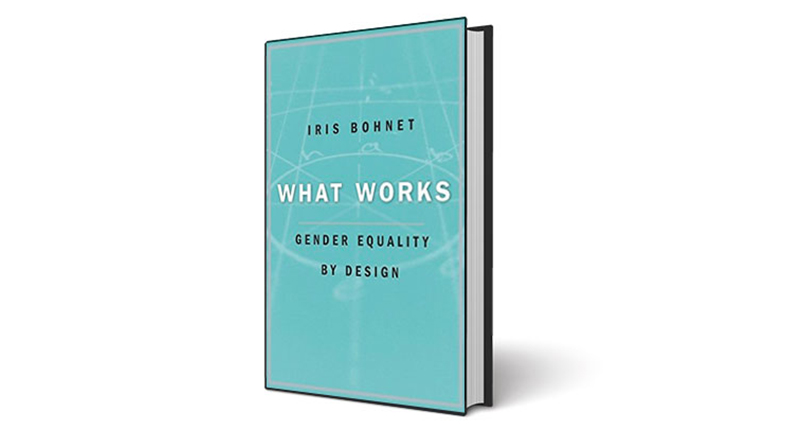
What Works: Gender Equality by Design discusses how organizations can leverage findings from behavioral science research to fight gender bias in the workplace—starting with job listings. Read an excerpt from the book below.


Attracting the right people instead of managing the wrong ones is one of the most important tasks any organization confronts. This is the mantra Google lives by—or, as Laszlo Bock writes: “Only hire people who are better than you.” In an interview on the company’s hiring and corporate culture, Eric Schmidt, the executive chairman, explained that in addition to judging the technical qualifications of potential hires, a key focus at Google was to determine whether they were passionate and committed to innovation.
Surely, allowing all Google engineers to spend 20 percent of their time developing their own ideas serves as a sorting device. It attracts creative, independent minds who invent Google News, Orkut, or a social networking site. The time is not written in stone nor necessarily utilized, but it matters as an idea: “No one gets a ‘20 percent time’ packet at orientation, or is pushed into distracting themselves with a side project. Twenty percent time has always operated on a somewhat ad hoc basis, providing an outlet for the company’s brightest, most restless, and most persistent employees—for people determined to see an idea through to completion, come hell or high water.”
Not many of those “seeing an idea through to completion, come hell or high water” are women. In the spring of 2015, a gender discrimination trial brought by a former junior partner at a venture capital firm in Silicon Valley drew renewed attention to the low fraction of women in technology. While in the end a jury found against the plaintiff, the low numbers were undeniable: fewer than 20 percent in most tech companies and even fewer in Silicon Valley’s venture capital firms.
Some argue that the “tech bros” mentality of Silicon Valley keeps women out and even discourages female students from focusing on computer science. Perhaps. Surely, the male-dominated environment does not help tech firms attract women. As we know, deviating from behavior that is expected of a social category, either by others or by oneself, can be costly. A woman who acts against the norms by definition doesn’t “belong”; not surprisingly, the fear of not belonging is influential.
Indeed, research by Boris Groysberg, Ashish Nanda, and Nitin Nohria (now dean of Harvard Business School) suggests establishing belonging turns out to be a major concern of female job seekers. They report that women consider more factors than men when screening jobs; in particular, cultural fit, values, and managerial style. There is a surprising silver lining to this research, however: it carries hidden benefits for women and their employers. In follow-up work, Groysberg identifies this scrutiny as one of the key variables explaining why women transition more successfully to new companies than men. Women know better what they are getting themselves into.
The researchers analyzed the performance of more than a thousand “star” analysts working for almost eighty different in- vestment banks over a nine-year period. Analysts were labeled “stars” if they were ranked as one of the best in the industry by Institutional Investor magazine. The team was interested in better understanding whether the analysts’ skills were portable when they switched companies. It turns out most analysts lost their stardom when they changed employers unless they moved to a better firm or brought their whole team along—with the exception of female analysts. Not only had the women studied a potential new employer more carefully before joining, they had also built their expertise differently than their male colleagues.
The top-performing female analysts had “built their franchises on portable, external relationships with clients and the companies they covered, rather than on relationships within their firms.” Or as one female star analyst put it: “For a woman in any business, it’s easier to focus outward, where you can define and deliver the services required to succeed, than to navigate the internal affiliations and power structure within a male-dominant firm.”
People choose organizations based on their preferences and their beliefs about whether or not they could thrive in a given organization. Messages shape those beliefs. Consider the messages sent when Lieutenant General David Morrison stated in a video posted on the Australian army’s official YouTube channel that he was committed to inclusion. “If that does not suit you, then get out,” Morrison flatly declared. “There is no place for you amongst this band of brothers and sisters.”
Acting in response to a 2013 investigation into sexual abuse, Morrison sent a strong message. In 2014, Morrison joined the Australian delegation to the Global Summit to End Sexual Violence in Conflict in London. Speaking again with admirable bluntness, he said that armies that assign more value to men than to women and tolerate sexual violence “do nothing to distinguish the soldier from the brute.”
Will these messages attract and retain soldiers valuing equality and inclusion? Time will tell. And while actions have followed his words, we all know that talk can be cheap. When and how messages affect behavior is a large field of inquiry in itself, but experimental evidence is rare. One example, however, is encouraging.
Robert Jensen and Emily Oster took advantage of the fact that cable television became available at different times in different parts of India, allowing them to trace whether attitudes and behaviors went along with exposure to the new information cable programming provided.
They found that the introduction of cable television was associated with improvements in women’s status in rural areas, including female school enrollment, decreases in fertility, as well as reported increases in autonomy and decreases in the acceptability of beating women and son preference. The information conveyed via cable television, often through somewhat surprising means, such as soap operas, exposed rural viewers to gender attitudes and ways of life, including within the household, more prevalent in urban areas. And it changed behavior.
Sorting mechanisms are powerful and often overlooked. Those charged with attracting the largest, most talented pool of applicants should make sure they scrutinize the messages, overt and biased, conveyed in their advertisements, websites, or other communications.

error: Content is protected !!