




Shobhaa De’s writing exudes an empathy that has turned several of her books into life manuals for generations of Indians. Her keen wit spears and spares none, least of all herself. Her book ‘Seventy and to hell with it’, she says is a gift to herself for entering into the seventh decade of life.
Here’s an excerpt from the book where she talks about risks and her experiences with them.
Here I am, looking back on seven decades of a life that has been pretty exhilarating. Yes, of course I have messed up. But even those mess-ups have taught me vital lessons—in survival, coping, collapsing, undoing, rejoicing. Most of these lessons have come from allowing myself to be open to everything life is throwing my way—good stuff, bad stuff, indifferent stuff. This is what I frequently tell my children when they are despairing. If you remain yourself and stay receptive to what’s happening around you, you will pickup signals that will provide most of the answers you seek.
Perhaps not instantly, but the answers will come.
When I was a teenager, I used to take every aspect of my life for granted, without questioning what was going on around me. In a way, this attitude protected me and spurred me on to take crazy chances, often with my life. I thought nothing of jumping in and out of rapidly moving local trains which I took to and from school. Of course, I was showing off my daredevilry, since there was always a crowd at Churchgate station. But those adrenaline-fuelled seconds when I tried to
make it inside the compartment without losing my footing gave me such a rush it made that lunatic risk very attractive. Today, I can ask myself, ‘What on earth were you thinking? Or proving?’ I still don’t have an answer that satisfies me. Perhaps I was testing myself. All I know is, danger and dangerous situations still attract me. I have never opted for ‘safe’ when there was ‘risky’ staring at me. It’s a personality trait, or a character flaw. God knows. Show me two scenarios, one that is controlled and the other that’s insane, and I’ll instinctively opt for the latter. This worries my husband and children, but deep within, even I know half of this is nothing more than posturing. Confronting fear is just a part of it.
I am in the process of identifying my biggest fears as I key this in. What do most human beings fear the most? I’d say it is loss. Loss of a loved one, loss of face, loss of security, loss of health, loss of identity, loss of mental and physical faculties. Loss of one’s own life. From this abbreviated list, I would say, for a wife and mother, there can be no greater loss than the loss of a child and spouse. Nothing prepares you for it. Nothing can. Sages advise us to start gearing ourselves up for such an eventuality from the time marriage vows are taken to that dreaded moment you are forced to come face-to-face with tragedy. Meditate, they tell you. Pray. Ask God to provide succour. Does any of this help you to deal with a wound that can never be healed? I don’t know. I hope I am never tested. But it is this fear of losing a beloved that is at the root of all other fears. As a child, you fear losing your parents. As a grown-up, you fear losing your child. Conquering this fundamental fear is what drives us to face other fears.
When I think of all those reckless stunts I performed in school and college (most of which were unknown to my trusting parents), did I stop to think what the repercussions would have been on so many lives had something terrible happened to me as I hung out of a fast train, tempting fate
every second day? I continued to ride racing bikes down crowded roads, clinging on to the handle of a public transport bus for additional speed. I crashed cars that didn’t belong to me when I was grossly underage, after persuading the children of the owners to steal the car keys. I lied about my adventures in local trains (ticketless travel being the more innocent one) to my mother, who believed I was at a school picnic when I was actually bunking school and loitering on distant beaches. What if any of these silly jaunts had backfired? Point is, they didn’t. I was fortunate.
Risk-taking is something I enjoy immensely. It comes naturally to me. I like stepping into the unknown and seeing where those steps take me. This is true whether it involves love and romance in my youth or professional choices later in life. My decisions were mainly impetuous (‘immature’ is how my father described them) and spontaneous. Where did this behaviour pattern come from? Certainly not from my home environment, which was conservative, conformist and solidly, comfortingly middle class. I appreciated anarchy and chaos far more than control and comfort. This troubled my parents a great deal, and I must have given them countless sleepless nights during those restless years when I couldn’t wait to get out into the big, wicked world, the one beyond my traditional Maharashtrian home, and taste the myriad exotic flavours waiting to consume me, in Turkey, Brazil, Japan, just about anywhere. But where was I stuck? At home!

Category: Excerpts
Forever is True: Prologue

It has been six months since Prisha was pushed to death by the person she loved the most, Saveer. Novoneel Chakraborty is back with a riveting finale to his bestseller ‘Forever is a lie’.
Here’s an excerpt from the prologue of the book.
Fortis Hospital, Bengaluru
Private cabin, 10.35 p.m.
‘I’m sorry, Prisha, but I had no other option,’ the person said, standing close to the hospital bed on
which Prisha was lying with her eyes closed. Beneath a blanket that covered her till her bosom, she was wearing a sky-blue patient’s uniform. Her forehead was freshly bandaged. Her right hand, with a drip, was placed on her belly while the left one was by her side, a pulse-monitoring clip attached to the index finger. There was a saline water stand beside the bed. Her left leg was plastered and her face bruised. It was quiet except for the occasional beeping of the monitor that was keeping a track of her heartbeats. The room was bathed in an eerie green-coloured light.
‘Just like I had no other option with Ishanvi. She was a good girl. So were you. But you both fell for the wrong person, bad person. And sometimes, even when you aren’t at fault, life still holds you guilty and makes you pay for it. But how do you atone for something you haven’t done?’ Silence. The person grasped Prisha’s left hand. It was cold.
‘Not that I expected you to be alive but now I can at least talk to you, unlike Ishanvi.’
After a deep sigh, the person added, ‘I had tried warning you like I had tried warning Ishanvi but neither of you paid heed. Why? You were in love. Love! I hate that emotion because it is the most customizable emotion a human can feel. Its definition changes the way one thinks. Its syntax changes the way one feels. It is not like sadness or happiness. It is not absolute. Though we think it is. I hate it. In fact, hate is a soft word. I abhor love, loathe it. If you had been in your senses, I’m sure you would have asked what makes me so anti love. Well, it is a long story but I carry the moral in my heart every day. And will do so till I turn into ashes.’
There was silence. The person caressed Prisha’s forehead.
‘Unfortunately, nobody will ever know my story. But that doesn’t bother me. The only thing that bothers me is that the person who mattered the most to me will also never get to hear my story. You tell me, Prisha, is it fair to live someone else’s story all your life? But . . .’ The person leaned close to her left ear and whispered, ‘If you can listen, then listen well. Chances are you will die soon on this bed. But in case you survive, don’t push me into killing you again. Next time, there won’t be any passerby to bring you to any hospital on time. One last request: don’t test me for I’ve been killing people for a long time now. You are my only failure. And failing is something which doesn’t go down well with me.’ After staring at Prisha for a while, the person said, ‘May your soul rest in peace, Prisha. Next life, choose someone better. Choose someone who’s worth it.’
The person stopped caressing her forehead and tiptoed out of the room. Prisha had opened her eyes by then. She had been in her senses throughout. Or was she? She didn’t see the person’s face but she did feel the person’s touch. Contrary to the person’s words, the touch wasn’t threatening. The last statement had made her hair stand on its end.
This was the first time Saveer had visited her in the hospital since she had regained consciousness. Why would he want to kill her? she wondered. Or for that matter Ishanvi?
These, however, were the least of her concerns at that moment. There was something she noticed that was extremely disturbing. Prisha saw the person leaving the room. But in a woman’s attire.
What’s wrong with Saveer? she wondered. Then she thought to herself: was she hallucinating because of the heavy sedatives she had been taking for some time now? Prisha couldn’t tell. She dozed off.

The Naked Blogger of Cairo, An Excerpt
Marwan M. Kraidy in ‘The Naked Blogger of Cairo’ uncovers the creative insurgency at the heart of the Arab uprisings that took place in the Arab world from 2010 to 2012. Fueled by a desire of sovereignty, protestors flooded the streets and the media, voicing dissent through slogans, graffiti, puppetry, videos and satire that called for the overthrow of dictators and the regimes that sustained them.
Here’s an excerpt from the book.
The Naked Blogger of Cairo taps the human body as an organizing principle to understand creative insurgency. Th e body was a common thread in the massive trove of images and jo, essays and songs, videos and conversations I gathered while living in the Arab world between June 2011 and August 2012, during shorter research trips to Amsterdam, Beirut, Berlin, Cairo, Copenhagen, and Istanbul, and in protracted expeditions on the Internet. Bodies, burning with anger and defiance, throbbing with pain and hope, brazenly violating social taboos and political red lines, haunted my primary materials. A stencil graffiti to I photographed in November 2011 in Zamalek, an affluent Cairo neighborhood, features a television set with a headshot of a Pinocchio with a nose so overgrown it bursts through the screen. Here was a brief, compelling message that television is a liar, based on the body’s ability to betray falsity. It echoed fists, hands, and fingers in graffiti of the Syrian revolution I tracked in Beirut. Watching satirical videos, I wondered whom they skewered most: Was it Ben Ali, trapped on an airplane and unable to land in the jocular Journal du Zaba? Or Assad, downsized to a pathetic finger puppet in Top Goon— Diaries of a Little Dictator? Or maybe Mubarak, diminished by the splendid Laughing Cow trope to dumb, regurgitating cattle? Spectacular body acts that underlay pivotal events of the Arab uprisings take center stage in this book: Mohamed Bouazizi, the Burning Man of Tunisia; Aliaa al- Mahdy, the Naked Blogger of Cairo; Assala, the Rebellious Singer of Damascus. Regimes responded with body mutilation: hand breaking, eye sniping, virginity testing, as street art commemorated heroic bodies of martyrs pitted against repressive bodies of despots.
Why is the body fundamental to the Arab uprisings?
History tells us that corporeal metaphor is central to political power: from before Louis XIV to after Bashar al- Assad, the sovereign’s figure is the body of the realm. Writing in Baghdad and Damascus during the tenth century, the Islamic Golden Age philosopher and translator Abu Nasr alFarabi cast the ideal polity as a healthy body, and he described in The Perfect State different parts of the state as limbs, ruled by a commanding organ, the heart, that unifies their efforts toward achieving the contentment of the community. In The King’s Two Bodies: A Study in Mediaeval Political Theology, the German- American historian Ernst Kantorowicz traced a concept of “body politic” that envisions a kingdom as a human body, the king as its head and his subjects as organs and limbs. Developing fully in Elizabethan England, this notion recurred for centuries in European political thought and popular culture, from Rousseau’s essays to Shakespeare’s plays, and became influential in France in the sixteenth century. During the French Revolution, corporeal symbolism focused on separating the king’s biological body natural from his symbolic body politic.
In medieval Europe, God was considered the greatest good, and from him the body politic flowed as a unified organism. In contrast, in the months beginning with Mohamed Bouazizi’s self-immolation on December 17, 2010, the three Arab countries that we are most concerned with— Egypt, Syria, and Tunisia— were thoroughly secular autocracies. In all three, political leaders subjected clerics to their dominion and manipulated religion for political ends, but none of them derived his power from the divine, ruled in the name of God, or based foreign policy on religious grounds. Whereas in thirteenth- century Eu rope the body politic belonged to the sacred, in early twenty-first-century Egypt, Syria, and Tunisia the body politic was resolutely worldly. Body imagery is important to modern, secular absolutism, with its image of “the omniscient, omnipotent, benevolent” leader who “defies the laws of nature by his super- male energy.” As you read The Naked Blogger of Cairo, you will encounter the same language in encomia to Assad, Ben Ali, Mubarak, and Sisi. Creative insurgencies against these rulers subvert the imagery propagated by cults centered on the leader’s figure. The body is as foundational to the fall of dictators as it is essential to their rise. Over time, the notion of the body politic evolved to balance hierarchy with interdependence, leading to political pacts that preserved stability but, if broken, invited rebellion. By confirming “the irreplaceable and irreducible moral dignity and spiritual worth of individual man” and insisting that the king was an integral part of the body politic, not standing above it, the medieval notion succumbed to ideological manipulation by politicians leading the rise of new secular states. Emerging lay conceptions of the body politic pilfered at will from Christian theology, Roman law, and canon law, diluting monarchical power. By the late 1300s, bodily metaphor was moving away from the absolute concentration of power in the body of the king, as a conception of a “composite” body of authority including courts, councils, or parliaments gained ground. In the notion of distributive justice that arose to balance these different constituents, one can hear echoes, however faint, of bread- for- stability social contracts that since the 1950s have propped up Arab dictatorships. Because these bargains were fickle, bread riots occurred frequently. Since the 1980s, a combination of economic liberalization, political predation, and rising food staple prices has stretched the bargain to a breaking point.

What Health Risks Will You Be Taking on Your Trip to Mars
In ‘Science(ish)’, Rick Edwards and Dr Michael Brooks dwell on all the questions that your favourite sci-fi movies provoke. Inspired by their award-winning podcast, this popular science book dedicates each chapter to a different sci-fi classic, and wittily explores the fascinating issues that arise.
Here’s an excerpt from the chapter on the movie ‘The Martian’ which chalks out the health risk that come with a trip to Mars.
Even real astronauts, who are selected and trained to be as mission-focused as possible, can behave badly under the pressures of life in space. In 1973, some of the astronauts on the Skylab space station went on strike for a day because they felt they were being overworked. Then there was the case of the silent cosmonauts: in 1982, two of them went almost seven months on Salyut 7 without talking. Why? They didn’t like each other. If you want to know the other health risks you’ll be taking on your trip to Mars, we’ve compiled a handy list:
Space flu
Your body did not evolve to cope with microgravity. Your heart is designed to pump against gravity, so on the way to Mars, blood and other fluids will accumulate more in your upper body. The result will be a puffy face, headaches, nasal congestion (in space, everyone will hear you sniff) and skinny little chicken legs. Your diaphragm will float upwards too, making it a little more difficult to breathe. Your back will ache because your vertebrae will float apart without gravity. (On the plus side, you could grow a couple of inches in height.)
Muscle loss
You’ll lose muscle mass because you just don’t need to work as hard in microgravity. That means fewer calories are being burned, though. It’s lucky the food is going to be so terrible, because if you don’t exercise whenever possible, you are going to go to seed. And nobody wants a fat, smelly Martian.
B.O.
Yes, you will smell. Washing is difficult in space. Not only because a shower is surprisingly gravity-dependent, but because water is a precious resource.
Nausea
That shift of fluids affects the inner ear, making you nauseous in the first few days. You’re very likely to be spacesick. Just under half of all astronauts are, and they’ve all been chosen because they’ve got the ‘right stuff’. So be prepared to vomit, suffer headaches and dizziness, and generally want to lie down. Except there is no down. Which, as it happens, will also add to your general confusion and disorientation.
Insomnia
Your sleep patterns are going to change radically. It’s often noisy on a spacecraft, and you’ll struggle to fall asleep. Your daily sleep/wake cycles are toast, because there is no pattern of darkness and light to give your body the necessary cues. Fatigue is going to hit you like a late-running train. As well as leaving you tired, disoriented and fuzzy-brained, the lack of sleep will also affect your immune system. You’re going to catch colds and other viral infections if fellow astronauts are carrying any, and you’ll succumb more easily to bacterial infection. Antivirals and antibiotics degrade after a few months, so you’ll be mixing your own medicines from dry ingredients. If you’re awake enough.
Bone loss
Eventually, you’ll suffer bone loss equivalent to a pensioner, because in microgravity astronauts excrete calcium and phosphorus. That means your bones will fracture more easily, and you might have to pass stones through your urinary tract.
Psychosis
Psychological effects of the journey include depression, anxiety, insomnia (ha! and you’re already so tired!) and, in extreme cases, psychosis.
Malformed cells
Oh and your cells, especially your blood cells, may not grow and function properly in the long term, because the lack of gravity will change their shape. We don’t yet know what the effects of this will be, but come on – it’s unlikely to be good.

The Birth of Prithviraj Chauhan, An Excerpt
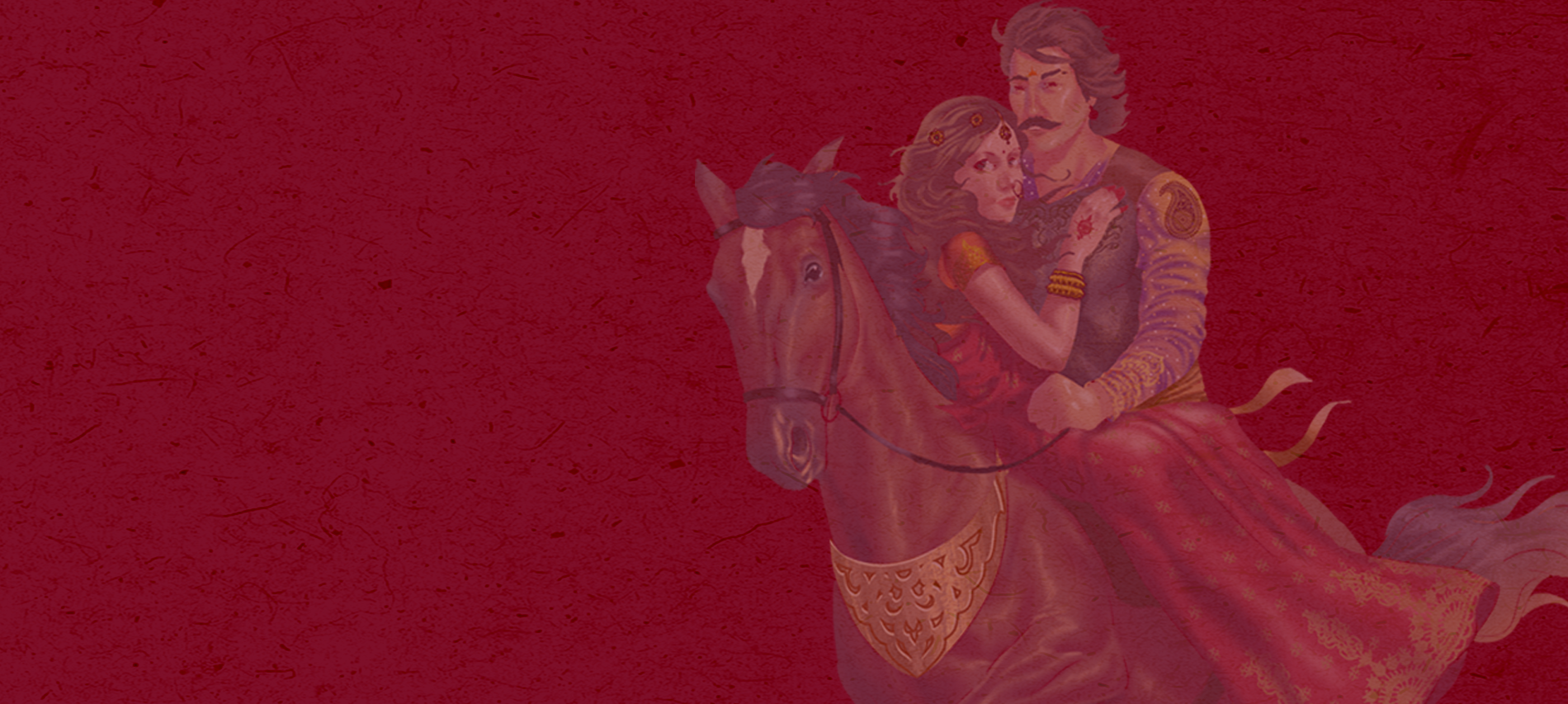
Prithviraj Chauhan was destiny’s chosen one, singled out for glory and greatness. Anuja Chandramouli is back with an endearing tale of the legendary warrior who lives on in the hearts of those who remember his unmatched valour and timeless heroism.
Here’s an excerpt from the book.
The queen tossed and turned; her sweat-streaked body caused the soft sheets to cling to her contours as she stifled a scream that fought to burst from her lips. A good girl must be seen not heard, she had been taught since childhood.
Silently she pleaded with she knew not whom, begging to escape the terror that was engulfing her. When that failed, she tried to wake up. Her efforts were entirely futile. No matter how much she tried, a force she could not withstand tore her apart, dragging her along the serpentine alleys of her simmering subconscious.
Propelled along a rocky slope, she felt the flesh scraped off her delicate feet, which were decorated with intricate henna patterns, leaving them battered and bloodied. Dragged along sandy plains, under a blazing sun, her skin, softened with milk and honey, caught fire. She wrapped her burning arms protectively around her tender belly and snarled savagely at the elements.
Then she was swimming against the currents of a raging river as predators with serrated teeth and spiked tails pursued her ruthlessly. The wind snatched her from their jaws as they were about to swallow her and lifted her high up in the air. Shrieking its terrible intent into her ears, it ripped off her garments before releasing her in endless space.
As she plunged into the depths below, she could not hold back the primeval screams of agony from bursting out in a shrill cacophony. Then she was falling through emptiness, plummeting towards certain death. Shutting her eyes tight, her arms flailing, she forced her leaden legs to move, desperate to arrest her fall.
Then with a suddenness that made her dizzy, everything went still. Holding her swollen belly in her arms, she opened her eyes. She was standing at the threshold of a stone temple. Before her, was an altar where a smokeless fire was burning. Vigorous and strong, it was brighter than her eyes could bear.
Shining with divine vehemence, it beckoned her forward. Helpless in front of the hypnotic pull of those ancient flames, she stood before it, so close that the heat scoured her clean even as her heart grew hot. And yet, she could not draw back.
Enraptured, she stared into its depths. She watched the mesmerizing dance of the flames as they swayed in discord to the crackling cadence of the age-old rhythms, orchestrated by the divine father out of his deep love for the sacred mother. The sky and the earth—always together; forever apart.
Tears sprang into her eyes and she clasped her hands in prayer as the earth mother addressed her throbbing heart.
What is it that you would know of me?
‘Tell me of the child I bear in my womb.’
A mother always knows. A mother must.
‘My boy will be the greatest of kings. A mighty warrior. A lion among men and as such will be entitled to the king’s share of success, prosperity and happiness. He will shine with the brilliance of a thousand suns. His name will live forever.’
So it shall be. The flame in his soul is destined to burn for as long as his lion’s heart can bear it. Blessed as he is with the tejas of the divine, he will shine brightest when he makes the ascent to the pinnacle of glory, just before his swift descent to darkness and the depths of abject failure. For so it must be.
‘Never! I will never allow such fate to befall my son.’
A mother is a fool! He was never yours alone. And never will be. Prepare yourself for the reign of the king of the earth. For fame and fortune, love and death, glory and grief!
The flames rose higher and higher, oblivious to the mother who wailed in misery. Blinded by the all-encompassing radiance, magnified by the strength of her tears, she was ill-prepared for the darkness that descended without warning, snuffing out every trace of the sacred fire.
The silence was broken only by infernal howls of abject sorrow—a mother’s terrible lament—amid the hushed murmur of a premonition, repeated over and over.
Prithviraj! Prithviraj! Prithviraj! King of the earth!
All around there was nothing but darkness. And the memory of light.

5 Tips in Which You Can Tone Your Life

Venugopal Acharya is a practicing monk at the ISKCON. In his book Are You Connected, he shares the different skills and experiences that help one feel loved and in touch with one’s self, the people who matter and God. He also highlights the need to delve deeper into the meaning and purpose of life and gives tools to achieve peace of mind.
Here are five tips from the book which will help you connect with you true self.


Tell us how you are toning your life.

A Recipe to Keep You Warm This Winter and Help You Tackle Diabetes

In Reversing Diabetes, Dr Nandita Shah provides a fresh and practical perspective on curing diabetes. She also elaborately breaks down the real cause of diabetes using scientific evidence and intelligently outlines a routine that will not just prevent the disease but also reverse it.
Here is an excerpt from the book on one of the recipes of the book, which will help you deal with diabetes.
Herbal Tea
Makes 2 cups
These are actually infusions. Here is a list of possible ingredients: lemongrass, mint leaves, tulsi leaves, ginger, cinnamon, cloves, cardamom, saffron, dried apple, lemon or orange peels, liquorice, dried chamomile flowers, anise seeds (saunf ) . . . the list is endless and you can use these as single flavours or in combinations. Cinnamon is good for diabetics and it also lends a sweet taste.
Here are a few combinations:
- Mint leaves, grated ginger, lemongrass, crushed black pepper
- Cinnamon, cardamom, cloves, anise seeds, liquorice
- Tulsi, ginger
- Tulsi, ginger, turmeric
- Saffron strands, cinnamon sticks, cardamom
- Dried orange, cinnamon
Ingredient:
1 tablespoon of your preferred ingredient
Method:
Put 1 tablespoon of the ingredient/combination into a teapot. Pour 2 cups of boiling water into it. Wait for 5–7 minutes, strain and serve.

5 Dan Brown Book Quotes Which Will Compel You To Pick Up The Books Again
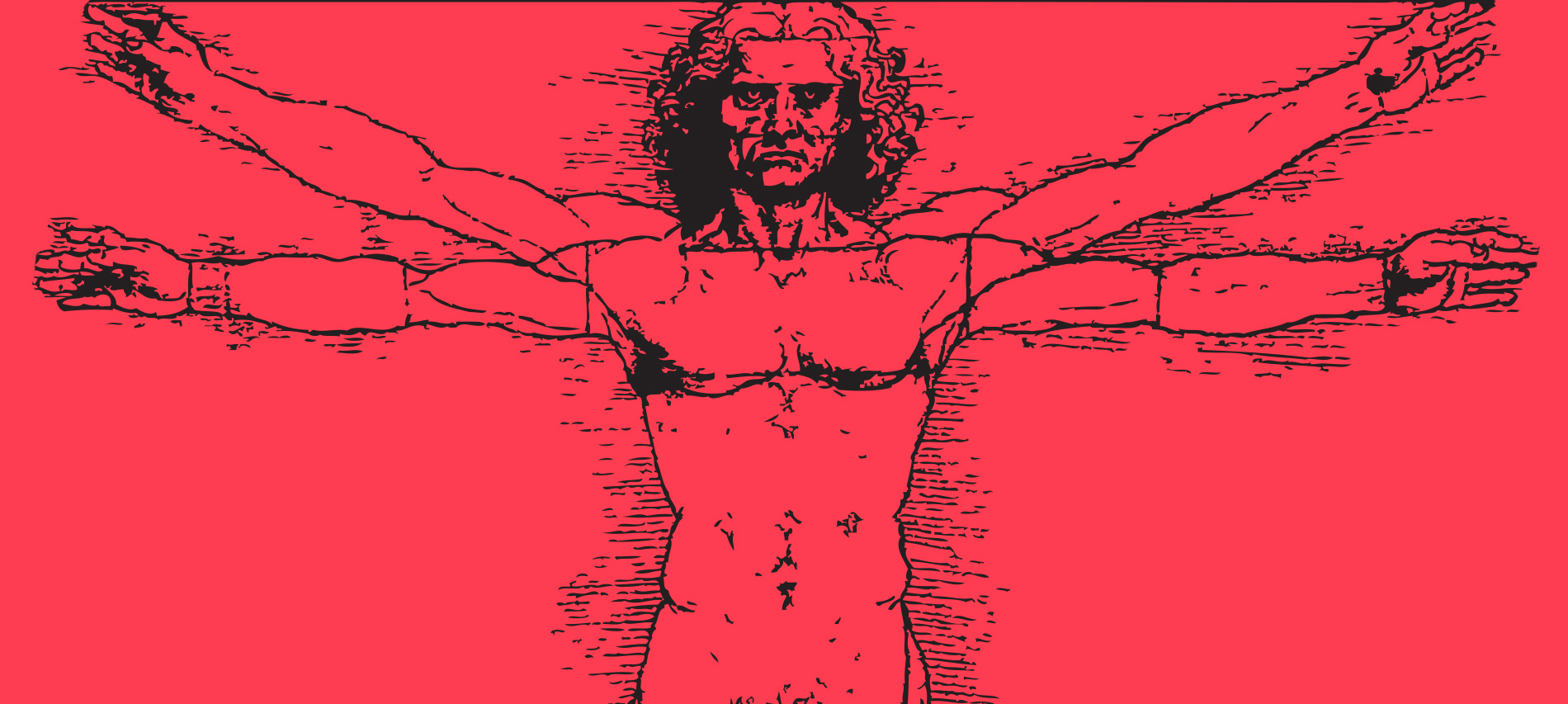
One of the most acknowledged authors of thriller fiction, Dan Brown wrote some of the best-selling novels of all time. Best known for the The Da Vinci Code, Angels and Demons, and Inferno, Dan Brown’s novels have been the subject of intellectual debate among readers and scholars.
His novel Origin is the new installment in Brown’s oeuvre.
Here are 5 quotes from his book.


Do you have a favourite?
Get your copy of Dan Brown’s latest book Origin here.
Making of a CEO, An Excerpt

Sandeep Krishnan is an adjunct professor at IIM Bangalore. His book ‘Making of a CEO’ found its genesis in a popular course he taught at IIM Bangalore, where the students interviewed and analyzed twenty CEOs to learn how they charted a clear path to the top. The book explores nuances of leading in different contexts like start-ups, large corporations, family businesses, educational institutions, not-for-profits, public sector and the government.
Here’s an excerpt from the book.
The chief executive officer (CEO) epitomizes the organization. The organization’s existence and its future are defined by the role the CEO plays. The CEO is the ultimate decision maker and can often be defined as a combination of a chief operations, marketing, finance, people and communications officer apart from the other key roles. The success or failure of the organization is often directly attributed to the CEO. At one level, the CEO is also the chief decision officer.
Great CEOs leave their footprints behind. They have the ability to transform businesses and even change the way society operates. Bill Gates changed the way the world works with Microsoft. Steve Jobs changed the way the world designs gadgets with Apple. N.R. Narayana Murthy of Infosys paved the way and showed how corporations can share their wealth with employees in India. Dhirubhai Ambani, founder of Reliance, showed how an entrepreneur can start from scratch to create an empire. Larry Page and Sergey Brin, co-founders of Google, changed the way the world searches for information. It is amply clear that every CEO has a unique opportunity to leave behind an enduring legacy.
In this book, the word CEO is sometimes used synonymously with positions such as managing director and chairman if the incumbent is also, in many ways, handling the operating role of running the company. Research shows that the role of a CEO is becoming more significant and often has a more direct impact on the company’s performance. With the environment of organizations becoming more dynamic and competitive, it is the top management’s strategy led by the CEO that can steer the company towards sustained growth. A CEO also shapes the culture of the organization—either sustaining or changing it. An interesting example of this would be of the ex-chairman of IBM, Louis V. Gerstner, who is credited for its turnaround. Gerstner revived the ailing IBM by pulling the levers of its culture, changing the attitude towards teamwork, providing solution to the customers, integrating different business units, changing the measurement of results, and improving communication with external and internal stakeholders. In the end, it is a well-known fact that Gerstner got IBM to dance!
There are leaders in corporates, NGOs, government and public sectors who have made a tremendous impact. There are great examples of public servants heading government enterprises and making a lasting impact on society. In India, E. Sreedharan illustrated how a government servant can influence society by high levels of effectiveness. He is credited with the successful execution of key projects that helped the Indian public. This includes the Konkan Railway, a 741-kilometre line that connected Mumbai to Mangaluru. As per Wikipedia, ‘With a total number of over 2,000 bridges and 91 tunnels to be built through this mountainous terrain containing many rivers, it was the biggest and perhaps the most difficult railway engineering project in the Indian subcontinent at the time.’ He was then entrusted with another key project: to develop the metro lines for urban transport in the National Capital Region (NCR), called the Delhi Metro. The success of the project gave E. Sreedharan a new name: ‘Metro Man’. The ability to lead and make a difference in the society has made E. Sreedharan one of the most successful CEOs that India has seen in the recent past.
Verghese Kurien, known as the Father of the White Revolution, made a tremendous mark on the cooperative movement in the country. He is credited with establishing Amul and the National Dairy Development Board (NDDB). Kurien was able to bring dairy farmers into the fold, changing the dairy supply chain of the country. His ability to organize the cooperative movement, first in Gujarat through Amul and then later to replicate the experiment across the country through NDDB, points to a leader who could articulate a vision and execute it to make a large-scale institution.

5 Ruskin Bond Quotes we’ve Written in Our Journal
Remember the last time you stood and quietly watched the rain patter on the empty streets? Remember the last time you watched a snail lazily drag itself across the grass?
It is hard to find time to appreciate the smaller things in life, and that is precisely where Ruskin Bond’s book Words From the Hills helps us. In the hustle and bustle of our everyday lives, the words from this specially designed journal come as a breath of fresh air, bringing with them the philosophy and legacy of the wonderful author.
Here are 5 quotes from Ruskin Bond we all must have thought of writing in our journals.


Which quote are you going to write in your journal?
