




Miniya Chatterji is a prominent intellectual and speaker, writer and businesswoman. She is the CEO of Sustain Labs Paris. She has also worked at the World Economic Forum in Geneva, Goldman Sachs in London and in the office of the President of France in Paris. Her book, Indian Instincts: Essays on Freedom and Equality in India, presents an accessible yet brilliant intellectual treatise about issues that affect Indians the most. It is a must-read for anyone who wants to know what makes an Indian.
Let’s read an excerpt from this book.
—————-
The reasons for Indians living abroad are not too different from those of our domestic migrants who leave their homes. Many have migrated abroad for jobs. Approximately half of the total migrants are women who have followed such men after marriage, which is often arranged with a boy of the parents’ choice, just like mine nearly was. Indian migrants have moved to high-income countries, and, as of 2015, they are concentrated the most in the UAE, which is inhabited by around 3.5 million Indians, and in the US, where around two million Indians live. Overall, it is in search of a better life—emotionally, socially, financially—that we leave. The fact that India produces the largest number of migrants in the world, but hosts only about 5.2 million international migrants is an indicator of where migrants perceive the environment is conducive for a better life. The Middle East has offered migrants jobs, the United States has beckoned to them with its universities, and they’ve been attracted to the quality of life in Europe, Singapore and Hong Kong. But in the future, a change of political or economic scenarios in these countries could alter the factors that attract migrants to them. We are witnessing this already in Indian migration to the US, where President Donald Trump’s anti-immigration policies have resulted in Indian migrants hesitating to go to the United States since January 2017, and a larger number of Indians now seeming more likely to choose to live in Europe. In the medium to long term, the overall number of Indians moving out of India will not drastically reduce if the environment offered by the destination country is no longer attractive; they will find another destination. It will reduce only if the living conditions for Indians in India improve. Unless the fundamental reasons and situations— often exacerbated by economic and social inequality—that drive us out of India change, we will continue to find new destinations to move to. Also, a more equitable society for the boys and the girls of this land, and the rich and the poor, irrespective of caste and ethnicity, will offer a meritocratic platform for us to strengthen our roots here in India. The strength of our roots will determine our commitment and attachment to being an important stakeholder in India’s future. It will not matter then whether we leave or stay, because strong roots do not mean that the tree cannot have branches that reach out to the sky. Quite the contrary. Exploration and attachment are related, and in fact, the latter is a prerequisite for the former.
About five decades ago, researchers observed fifty infants in a situation that was new and not too frightening. In some cases, the infant’s mother was present, in others, she had left, and in yet others, she was replaced by a stranger. They found that exploration was greatest when the mother was present. Observation of young apes and monkeys and other studies of human infants in similar experiments since then have all supported the view that successful exploration takes place, ironically, when there is secure attachment. The establishment of attachment is an instinctual priority. When it is absent, the need for attachment is dominant and we engage in attachment-searching behaviour similar to that of a baby, who is likely to cry or seek its mother. When we are attached to our city or country of origin, attachment can be taken for granted. In this case, just as an infant would feel free to move out of its crib knowing the mother is always present, we feel more secure in leaving our home base to explore the new and often frightening world. Exploring other lands clearly does not just mean physically living elsewhere. It means being curious about and getting emotionally involved in those places. Strong roots in our home base liberate us to explore or engage more meaningfully with the world. Lacking this, we will move in large numbers but spend less time exploring, instead seeking the missing mother (land) anxiously in a place where she does not exist.
————-

Category: Excerpts
The Black Economy in India by Arun Kumar – An Excerpt

Arun Kumar taught economics at the Centre for Economic Studies and Planning, Jawaharlal Nehru University, Delhi, till 2015. He has a master’s degree in physics from Delhi University and Princeton University, USA, and a doctorate in economics from JNU. A ground-breaking book, The Black Economy in India in India shows how demonetization is not the way to end the black economy, since what India needs is to empower citizens and make leaders accountable.
Here’s an excerpt from the Prologue.
—————
The black economy is once again in the news because of the announcement of demonetization of the large-denomination currency notes. It is not that this is the first step that the present government has taken to tackle the black economy. It started its journey by forming a special investigation team (SIT) under a Supreme Court order in 2014. It has got the approval for many bills, for example, on Benami Property, Black Money held abroad and Income Declaration Scheme. But none of them had the same dramatic impact on the economy since they were not comparable in order of magnitude that demonetization is.
The present move will not be able to tackle the black economy but has the potential to devastate the economy. The impact on the poor, the farmers, workers and producers in the unorganized sectors has already been severe. Thus, it is impacting those who never generated black incomes or held much of the high denomination currency notes. According to reports, much of the high-denomination notes issued by the RBI are coming back into the banks. The implication is that those who held substantial black cash have managed to exchange their old notes for new ones. Thus, the culprits who were supposed to be punished by the demonetization have escaped while the innocent have been trapped into standing in queues or by unemployment.
The prime minister promised normalization in fifty days but that cannot happen since so much currency cannot be printed in such a short time. Not only will the currency shortage continue due to insufficient printing capacity but those with black money are first replenishing their coffers causing a shortage of cash available to the public. Further, hoarding is going on. Thus, the economy would suffer for much longer and irreversibilities have already set in, pushing the economy towards a recession.
All this happening in the context of the black economy has again brought this topic to the centre stage. Public curiosity/ awareness of the issue has suddenly increased by leaps and bounds. It is in this context that this book with a new prologue is being issued at this juncture. The prologue discusses the different remedies to tackle the black economy that have been attempted by the present government. It must also be said that the theoretical framework of the book remains as valid today as it did in 1999. In fact, there is a section on demonetization in the book which had argued against taking such a step for precisely the reasons that are playing out today.
—————

Cheaters by Novoneel Chakraborty – An Excerpt

Novoneel Chakraborty is the bestselling author of ten romantic thriller novels. His novel Forget Me Not, Stranger debuted as the No. 1 bestseller across India. Known for his twists, dark plots and strong female protagonists, Novoneel is referred to as the Sidney Sheldon of India by his readers. His latest book, Cheaters, tells nine short stories of infidelity in today’s times when societal norms are still the same-archaic.
Here’s an excerpt from this gripping read.
——-
Alarm four: 4 p.m.
It struck me last morning when Atulit and I had prolonged toe-curling, stomach-churning and emotionally draining sex. I had an arranged marriage. I didn’t know my husband well enough before getting into bed with him. There was an undeniable restraint in me, which he negated with a subtle force from his side. I think it was necessary else I wouldn’t have been able to do anything at all. Was I comfortable? That’s a different story. Although unknowingly, but it happened differently with Atulit. We chatted and at times talked over the phone. By the time I met him, I felt that I knew him. This knowledge produced a certain comfort during our sexual tryst the previous morning. We always judge people on the basis of their sexual preferences and practices in spite of knowing that emotions are all that matters. I didn’t fly to Gurugram for sex. If it was only about sex, I could have done it in Kolkata itself and nobody would’ve ever known. This vacation was intended for other purposes: to believe that I can still be desired by someone other than my husband, that there is more to life than my family, that I’m not a victim of nuptial attachments, that I can live a different life without upsetting the equilibrium associated with my roles as a wife, mother, daughter-in-law. I managed to help Mini complete her homework via a video call. I updated my husband last night about my fake friend’s health status, asked him about everyone at home. Even though I lied, I didn’t compromise my duties. And I feel good about it. Honestly, I had my doubts about Atulit. Had he come across as predatory, I would have left immediately. But thankfully he wasn’t anything like that. We had dinner at this lovely Burmese restaurant called Burma Burma in Cyber Hub. He is quite chatty, which I like. I know he is trying to impress me. I’ve also distinguished a hint of awe in the way he looks at me; he is chivalrous and gives utmost importance to my comfort. I feel so damn alive. Sometimes I think that a little attention and care are we all need. But I know for sure that if our dalliance stretches beyond a week, Atulit’s adoration will start fading. And he too might turn into my husband. How I wish we can forever remain elusive to our domestic partners. But then I also know that that’s the essence of a domestic relationship: the mundane and the monotonous. We are all emotional explorers deep inside. Some are easy to pacify and some aren’t. For the last twelve years I had been itching for an exploration and I’m happy that I’m having it now.
We went for a movie and then had lunch at his favourite restaurant in Connaught Place. He wanted to take selfies but when I told him that pictures make me uncomfortable, he didn’t insist. He wanted to shop for me as well but I was strict. I couldn’t allow him to do that. Maybe he doesn’t know that I flew to New Delhi not for him, but for myself. I won’t blame him if he interprets my visit as something that I’m doing for us. By the time this ends he will hate me forever. I know it. And still I am okay. For once I’m being selfish. If that’s the price I have to pay for being myself, for once, I guess I’m okay with it. We came back to Gurugram. Atulit wanted to take me to an amusement park. But I reminded him that I’ll have to be at his flat. The alarm beeps. It’s time to go on a video call with Mini. I need to finish her homework. I can sense Atulit’s irritation, but he says, ‘After that whatever I say. Okay?’ I smile and nod. I’ll be back to this reality in a few hours, I tell myself.
For over forty hours, we haven’t left the apartment. I’ve been the centre of his attention. It feels so good to mean something to someone, even if it is just for a day or a week. I feel like a word which kept wondering about its existence till it read its meaning in the dictionary. Atulit, for now, is my dictionary, where I read about different meanings of myself. It’s funny how different people help you realize different meanings of yourself. My husband, at the beginning of our marriage, had a completely different meaning, or idea, of me. He was always trying to be mischievous with me. I enjoyed it too. But I don’t know when it simply ebbed away. Nowadays, we go without sex for months without even telling each other, ‘Listen, we should do it. It has been long.’
Relationships are like a bag full of gifts. The moment we get it we are excited to open it. But after we find out what the gifts are, the excitement fades. My husband and I are past the initial, exciting stage. But with Atulit, I’ve only just started. In between our love making, I look at him and smile to myself. He once asked me to leave my family and be with him. He is so naïve. He really thinks it is that easy to leave everything. He actually thinks I’m with him because I’m done with my family. No! This isn’t a runaway scenario. Nor is it an escapist module. This is just a vacation. And vacations are meant to be temporary. They are meant to rejuvenate you. Perhaps prepare you well so you can take on the monotony of life again. But I don’t tell Atulit anything. I keep nodding whenever he talks about our future. I only make sure I am not misleading him with false hope and fake promises.
——-

Beyond the Last Blue Mountain by R.M. Lala – An Excerpt

Written by Russi M. Lala with J.R.D. Tata’s co-operation, this superb biography tells the JRD story from his birth to 1993, the year in which he died in Switzerland. Divided into four parts, the book explores all the most important aspects of JRD’s life.
Here’s an excerpt from the book.
———-
Jehangir, later to be called Jeh, recalls his early years: ‘My childhood and youth, so different from those of the average middle class Parsee, were mainly conditioned by the fact that my father had married a Frenchwoman, and we spent half of our early years in Paris and half in Bombay. My father loved life in France, French food and wines, and because my mother was at first not familiar with the English language, the language used by all of us was French. What I remember most vividly is that we always seemed to be on the move, and that my lovely and cultured mother had to uproot herself every two years or so to find a new home—alternately in France and in India. With servants and office help available in India, her task whenever we arrived in India or left was relatively simple. But in France, where our domestic help consisted of never more than a maid and a cook, the job of finding a new apartment, furnishing it while looking after her growing brood—there were five of us—represented a real chore which she accomplished with amazing efficiency and apparent ease but at the cost of much fatiguing work.’
One of the problems Jehangir faced early was of language, brought about by his mixed heritage: ‘When I attended one of the government schools in Paris, the Janson De Sailly, I was a much better student in French than I was in English at the Cathedral School in Bombay.’
The language barrier was considerable; in addition, Cathedral School in Bombay bored him. He saw no reason why he should learn British history. ‘I used to ask “But what happened in India?” I have a good recollection of asking: “What about Aurangzeb?” and being smacked down. I don’t know why I chose Aurangzeb!’ Maths and Physics interested him.
‘My first important memories from the point of view of a growing child, blessed with a fairly observant and inquisitive mind, were about cars and aeroplanes. My father decided that we needed a home of our own in which to spend our holidays, and he picked on a new and developing beach resort on the Channel coast of France, south of Boulogne, called Hardelot, where he not only bought a villa but later on built a number of villas and shops as a real estate developer. In fact, one of the two main streets of Hardelot was officially named Avenue des Indes.
‘It happened that the legendary Louis Bleriot, who acquired world fame in 1909 by being the first to fly a plane across the Channel, also chose Hardelot for his family’s summer resort. Bleriot built not only a fine villa close to ours but also a hangar near the beach. On the beach his personal plane used to land much to the excitement of everyone there—grown ups and children, none more starry-eyed than myself. From then on I was hopelessly hooked on aeroplanes and made up my mind that, come what may, one day I would be a pilot. I had to wait many years for that dream to come true.’
R.D. perhaps felt that his family members were more comfortable in France and kept all of them there. Sooni wrote almost daily to him and he— even with his busy schedule–dropped endearing notes and picture postcards to his wife and children. Sooni mailed her husband frequent postcards in French written in Gujarati script. No prying eye could understand it! After Sylla and Jehangir a daughter, Rodabeh, was born in 1909 and a son, Darab, in 1912. In 1916, Jimmy, her last child, was born in Bombay.

Selected Speeches and Writings of Vallabhbhai Patel; An Excerpt
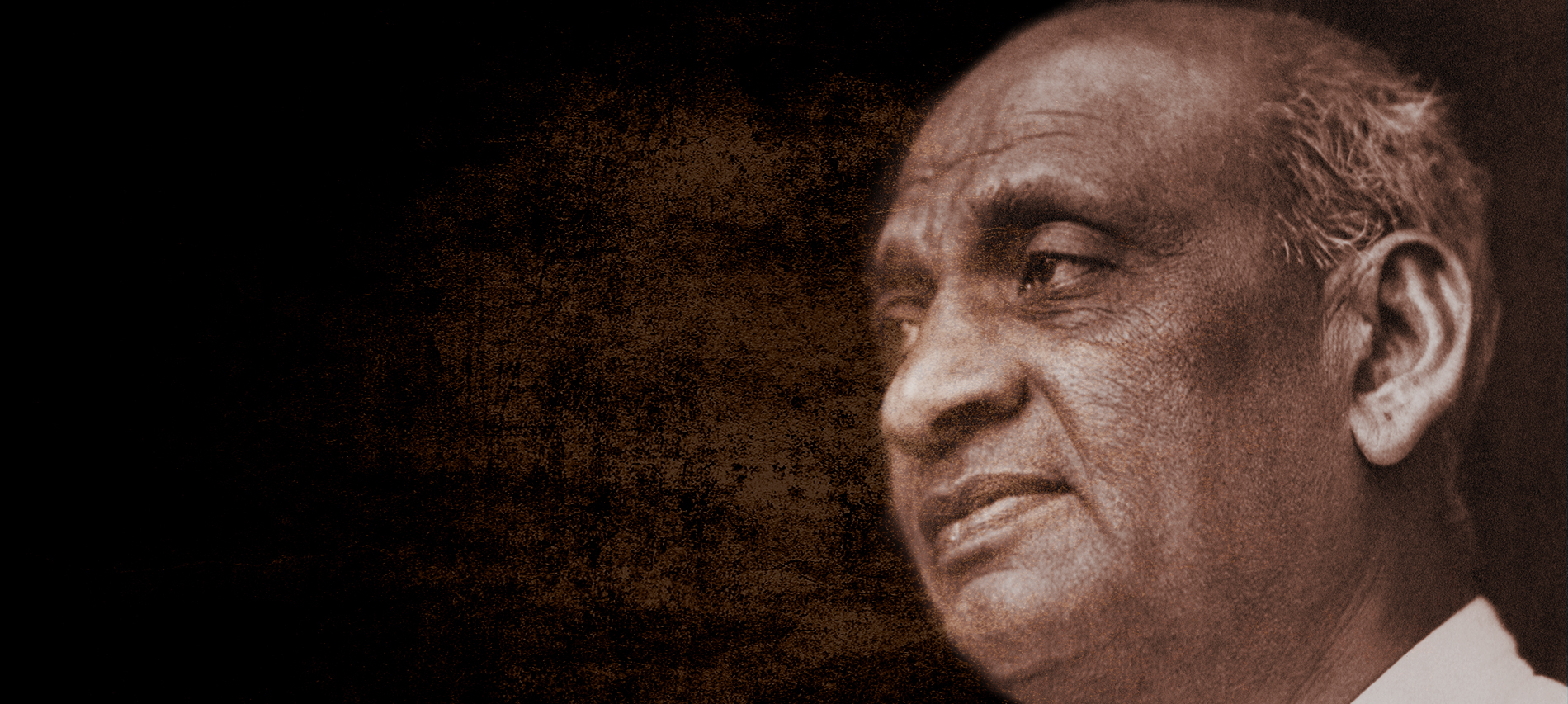
Vallabhbhai Patel, popularly known as Sardar Patel, was one of India’s towering leaders, whose contribution to the Indian Republic is immense. This book, Selected Speeches and Writings of Vallabhbhai Patel, showcases this great man’s commitment to develop this nation – his staunch belief in communal harmony, benefits of freedom for all citizens and in peace and cooperation between different regions.
Here’s an excerpt from the chapter, Build a Strong India Speech at Island Grounds.
————-
YOU WANT ME TO TALK TO YOU IN ENGLISH. I shall obey your command; but take it from me that it will not be long before you yourselves will have to speak in our national language. If you do not do that, you will drag the country backward. We have to exert our maximum effort to go forward. Unless you do that, I am afraid, you will suffer.
After a prolonged struggle the country has secured freedom, but it is not freedom of the kind that we wanted. It is not freedom of the kind that the deliverer of the country expected, and to our shame we have to confess that by our folly we have lost him. Now after his going we must do penance and try our best to deserve the freedom that he obtained for us.
Free India is only a child of a year and a half. It has yet to learn to walk; it has to grow, to be strong, and its future depends upon how we build today. Therefore, we have to nurse it carefully; we have to feed, clothe and strengthen it properly. It is our great good fortune that we have here a rare opportunity to build our own country in our own fashion. History will record what we are doing today.
The first requisite for building a strong, free India is unity and peace. If there is no unity in the country, it is bound to go down. Therefore, we must first of all adjust our differences and behave in such a manner that there is complete harmony and peace in the country. You cannot expect the Government continuously to maintain peace by force. It would be an evil day when in this country the Government has to use repressive measures permanently. Today we are passing through a period of crisis and our young men have, in their impatience, not realised that the freedom which has been obtained with great difficulty is likely to be lost or likely to give no benefit, no advantage, if we do not appreciate that our present duty is to unite and consolidate our freedom.
We lost our leader because we forgot the very first lesson. If we do not realise even after his going that in unity lies our strength, then greater misfortune will befall us.
For unity, we must forget differences of caste and creed and remember that we are all Indians, and all equal. There can be no distinction between man and man in a free country. All must have equal opportunities, equal rights and equal responsibilities. This is difficult for achievement in practice, but we must continuously strive towards that end.
There is one other thing that we have to do to maintain peace and order in this country. For a few years at least, till we are able to stand on our own legs, we must forget that we can every now and then threaten the Government. We cannot function if the Government is to be challenged day after day by groups of people who want to have their own way. What they want may be, according to their own honest thinking, very good; but Gandhiji has put before us the ideal of obtaining what we want by peaceful methods and through truth and non-violence. If people begin to threaten and challenge Government’s authority and try to overthrow it to gain their objectives by force, the latter would not be able to do anything constructive. Forces are existing in this country which would create chaos and disorder, which would weaken the country instead of strengthening it.
We in the Government have been dealing with the R.S.S. movement. They want that Hindu Rajya or Hindu culture should be imposed by force. No Government can tolerate this. There are almost as many Muslims in this country as in the part that has been partitioned away. We are not going to drive them away. It would be an evil day if we started that game, in spite of partition and whatever happens. We must understand that they are going to stay here and it is our obligation and our responsibility to make them feel that this is their country. It is, of course, their responsibility, on the other hand, to discharge their duties as citizens of this country.
We must all understand that partition is behind us. It has to come to stay. I honestly believe that it is good for both the new nations to be rid of a perpetual source of trouble and quarrels. In two hundred years of slavery, the administration created a situation in which we began to drift away from each other. It is good that we have agreed to partition in spite of all its evils; I have never repented my agreeing to partition. From the experience of one year of joint administration when we have not agreed to partition, I know we would have erred grievously and repented if we had not agreed. It would have resulted in a partition not into two countries but into several bits. Therefore, whatever some people may say, I am convinced and I remain convinced that our having agreed to partition has been for the good of the country.

Hinduism and Nature by Nanditha Krishna – An Excerpt

A historian, environmentalist and writer based in Chennai, Nanditha Krishna has a PhD in Ancient Indian Culture from Bombay University. Her latest book, Hinduism and Nature, delves into the religion’s deep respect for all life forms, the forests and trees, rivers and lakes, animals and mountains, which are all manifestations of divinity.
Let’s read an excerpt from this book.
————–
Forests have always been central to Indian civilization, representing the feminine principle in prakriti. They are the primary source of life and fertility, a refuge for the wanderer and a home for the seeker, and have always been viewed as a model for societal and civilizational evolution.
Forests were places of retreat, a source of inspiration, for all Vedic literature was revealed to the sages here. Rama’s entire journey from Ayodhya to Lanka was through forests. In the Mahabharata, the big war is for urbanization and to capture the cities of Mathura, Hastinapur and Indraprastha. Yet the Pandavas spent their years of exile in the forest and made marriage alliances with forest tribes, a move that would help them later in the Kurukshetra war. They also learnt several important lessons from living in the forest, which became a source of knowledge and a place for learning higher truths. There were several classifications of the forest. The ancient forests have survived as the sacred groves of modern India. The seals of the Indus civilization contain figures of wild animals such as the elephant, water buffalo, rhinoceros, deer, gazelle, antelope, wild sheep and goat and ibex and tiger, which means that the area was once covered with dense forests. Rhino habitat ranges from open savannah to dense forest, while tigers live in swamps, grasslands and among trees, bushes and tall grass which camouflage them. Elephants are found in savannah and forests, where they can find fresh water to cool their thick dark skins. The large number of such seals suggests that the Indus–Sarasvati region was once a thick forest, not the agricultural fields or deserts we see today.
The Vedas were composed in the Indus–Sarasvati region. In these texts, there is a fundamental sense of harmony with nature, which, in turn, nurtured a civilizational value. Forests were the primary source of life and inspiration, not a wilderness to be feared or conquered. The Vedas were written by sages living in the forest who saw it as a home and a source of revelation, exaltation and creativity. Some of the greatest verses of philosophy were written in forests. People drew intellectual, emotional and spiritual sustenance from the twin concepts of srishti and prakriti.
‘So may the mountains, the waters, the liberal (wives of the gods), the plants, also heaven and earth, consentient with the Forest Lord (Vanaspati) and both the heaven and earth preserve for us those riches’
One of the most beautiful hymns of the Rig Veda is dedicated to Aranyani, the goddess of the forest. She is an elusive spirit, fond of solitude, and fearless. The poet asks her to explain how she can wander so far from civilization without fear or loneliness. He creates a beautiful image of the village at sunset, with the sounds of the grasshopper and the cicada and the cowherd calling his cattle. She is a mysterious sprite, never seen, but her presence is felt by the tinkling of her anklets and her generosity in feeding both man and animal:
Aranyani Aranyani, who are, as it were, perishing there, why
do you not ask of the village? Does not fear assail you?
When the chichchika (bird) replies to the crying grasshopper,
Aranyani is exalted, resonant, as with cymbals.
It is as if cows were grazing, and it looks like a dwelling, and
Aranyani, at eventide, as it were, dismissed the wagons.
This man calls his cow, another cuts down the timber,
tarrying in the forest at eventide, one thinks there is a cry.
But Aranyani injures no one unless some other assails;
feeding upon the sweet fruit, she penetrates at will.
I praise the musk-scented, fragrant, fertile, uncultivated
Aranyani, the mother of wild animals
(Rig Veda, X.146. 1–6)

A Piece of Cake; An Excerpt

An alumna of Lady Shri Ram College, New Delhi, and an MBA from IIM Calcutta, Swati Kaushal is the bestselling author of five highly acclaimed novels. Her book, Piece of Cake, is a romantic comedy set in the corridors of corporate intrigue with a heroine and a plot sparkling with mischief and a ton of attitude
Here’s an excerpt from this ‘desi Bridget Jones’ novel.
———-
TGIwasF.
I’m not really your manicure-pedicure-facial kind of girl, but the past few days of sun and sand had been rather hard on the epidermis, and my face was ready to give up on me.
God bless the folks at Femina and their compulsive sampling; the ‘Mud spa treatment five-minute masque’ (with natural papaya, grapefruit and cucumber) that came with last month’s issue seemed just the thing. I smothered the pistachio green paste all over my face and neck and waited for ‘new and improved’ ancient science to work its wonders. An encouraging coolness spread across my features, followed by a promising firmness. No wonder women swore by the stuff; it sure beat sticking your head in the fridge and pulling at your cheeks, besides being a lot cheaper than a visit to a spa too! (I remember going to one of those beauty boutiques a couple of months ago with Radha; she’d paid five hundred rupees for one hour with the ‘special thermal pack’; a lava-like substance that had solidified in many crusty layers on her face and had come off whole, like a hollow Egyptian mummy.)
I studied my face in the mirror as I waited for the masque to do its stuff. A guy in Class 11 had once told me I was beautiful. I’m assuming it was hormones, or my Chemistry notes.
It’s not that I’m ugly; in fact I like most of the way I look. It’s just that I wish I didn’t have a big forehead, long nose and extra wide lips in that slightly non-Julia Roberts kind of way. And also my sideburns. I could definitely do without them. I turned my head sideways to check their current length, winced, and turned my head back around again.
At least I had good eyes. On the bigger side like everything else, but intelligent; and they looked especially arresting popping out from the green icing around them. And my eyebrows, and the way they never need threading; I especially like that. In fact not bad, all told, if only there were something I could do with the ears. I squeezed out the last of the green paste from the sample sachet and quickly covered them with it.
My ears are a social embarrassment and cause for deep personal anguish. I have no lobes.
I remember a visit to an ear-piercing salon, many years ago, when the entire staff had buzzed excitedly about my ears, in the manner of scientists around a rare specimen measuring and marking with special finely calibrated rulers to find a spot to pierce. In the end they’d recommended I forget the whole idea.
I’m assuming God used up so much material super-sizing the rest of me that he ran out of stuff to throw on the ears, so he just sort of wrapped up the job with comical miniatures, tucked them behind manly sideburns and hoped no one would notice. Of course, it didn’t work. People notice all the time; my ears are bigger draws than cleavage.
It wouldn’t be so bad if it were just a case of size and appearance. What really distresses me is that I am also tone-deaf. I love music, but my ears just don’t get it. Ever noticed how musicians tend to have nice, big ears with extra-large ear lobes that hang and quiver delicately at the ends, like they were specially designed to pick up variations on even a hundredth of a note? Well, mine have yet to acknowledge the differences between a do, re and mi and I have watched The Sound of Music a thousand times. And I’m sure things would have worked out with Rajiv, back in Class 12, if it hadn’t been for the time I got carried away and tried to sing ‘With a little help from my friends’ in his ear..

The Skull of Alum Bheg, An Excerpt
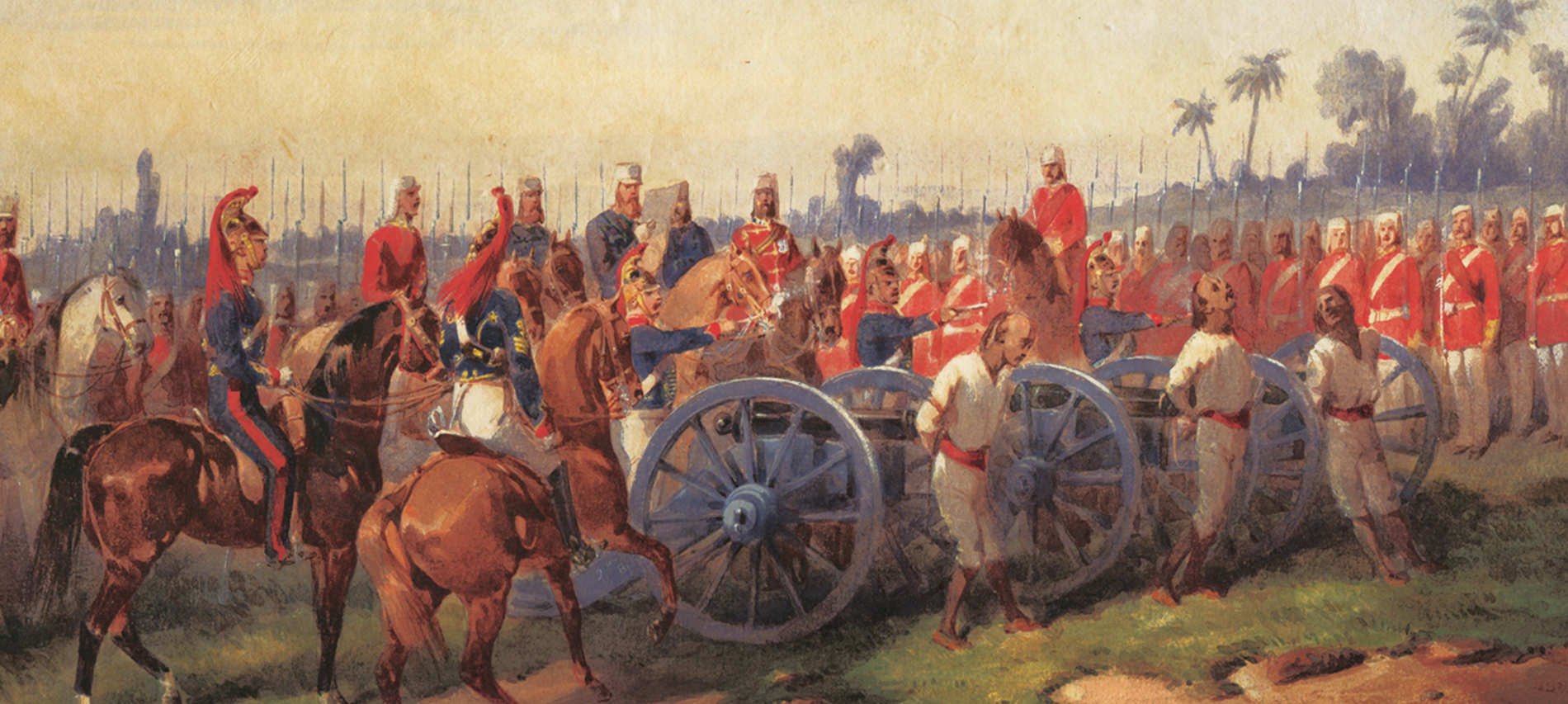
In 1963, a human skull was discovered in a pub in Kent in south-east England. The skull is a troublesome relic of both anti-colonial violence and the brutality and spectacle of British retribution.The Skull of Alum Bheg: The Life and Death of a Rebel of 1857 offers a critical assessment of British imperialism that speaks to contemporary debates about the legacies of Empire and the myth of the ‘Mutiny’.
Here’s an excerpt.
——————
As a havildar, Alum Bheg received a pay of 14 rupees per month, double that of ordinary sepoys, and this had been the rate for more than half a century, even as the prices of commodities increased over time.After 16 and 20 years’ service, sepoys would receive an extra bonus of one or two rupees per month, which according to one Indian officer, made a big difference: ‘A prudent sepoy lives upon two, or at utmost three rupees a month in seasons of moderate plenty; and sends all the rest to his family. A great number of the sipahees of our regiment live upon the increase of two rupees, and send all their former seven to their families.’ A substantial part of their salaries were indeed sent back to the sepoys’ villages, as Sleeman explained: ‘They never take their wives or children with them to their regiments, or to the places where their regiments are stationed. They leave them with their fathers or elder brothers, and enjoy their society only when they return on furlough. Three-fourths of their incomes are sent home to provide for their comfort and subsistence, and to embellish that home in which they hope to spend the winter of their days.’
The close link to a particular region and the ties between the sepoys and the villages, was an outcome of the unique recruitment practices of the Bengal Army as they had developed over the past century. As the East India Company became increasingly involved in politics during the second half of the eighteenth century, the nature of British rule in India gradually assumed all the trappings of a sovereign power. The Company was thus transformed from primarily a trading venture to a colonial state in its own right, which by 1818 derived most of its income from land revenue rather than trade. In order to maintain and expand its territorial possessions, the Company depended on local Indian soldiers led and trained by British officers along European military principles. At the time, however, the British were still an emerging power and had to compete with both Indian and European rivals, who were also offering similar service to local soldiers. Before the advent of the ‘civilising’ impulse, much of the Company’s legitimacy as a state power was, in fact, derived through the continuation of pre-colonial practices, which included the establishment of an army of high-caste Hindu sepoys. Out of sheer necessity, the Company in Bengal thus tapped into the military labour market of northern India and relied on existing networks of patronage and caste-ties to recruit peasant regiments directly from the zamindars or landholders of Awadh and Bihar. Accommodating high-caste usages and practices within its regiments was an effective means by which the East India Company could become an attractive and legitimate military employer in India during this period. The Company thus managed to establish a loyal base of recruitment by employing the rhetoric of high-caste status as well as the promise of regular pay and pension. The British recruited directly from the villages of Awadh and Bihar, and when sepoys returned from furlough, they would bring younger family members back to their regiment as prospective recruits. This dynamic reinforced the links between the regiment and the village and meant that parts of the Bengal Army functioned as a sort of extended kinship network. The end-result was a uniquely homogeneous body of sepoys in the Bengal Army, composed mainly of high-caste Brahmins, Bhumihars, and Rajputs.
The religious identity and social status of Alum Bheg and his fellow sepoys, however, did not simply pre-date colonial rule or reflect Indian traditions that were then merely adopted within the Bengal Army—the social status of the sepoy was itself a product of service within that army. A number of the religious and social identities linked to military service, the status of which was taken more or less for granted by 1857, had actually only emerged during the preceding century and were thus ‘invented’ traditions rather than timeless castes. The decline of the Mughal Empire had caused significant political and social turmoil, but it had also enabled groups such as the Rajputs and Bhumihars, or so-called agricultural Brahmins, of eastern Uttar Pradesh and Bihar, to establish a high-caste status through military service. This entailed a combination of the warrior ideal with the ritual purity and social privilege of Brahmins, and the observance of strict dietary rules associated with priestly Hinduism. At the same time, the indigenous military labour market was becoming increasingly constricted as the British, with the help of the sepoys expanded their sphere of influence. By 1818, the Company had established an effective monopoly of power on the subcontinent, having defeated or pacified most rival Indian states that would otherwise have provided employment for thousands of Indian troops. The Bengal Army, which constituted the military force throughout the newly ceded and conquered territories in north India, provided the perfect frame within which the reinvented high-caste military traditions of the Bhumihars and Rajputs could be formally institutionalised. It presented the sepoys with the opportunity to improve and secure their new-found status and by endorsing and encouraging the high-caste status of the sepoys, the British were better able to control their troops and ensure continued support from the local landowners in the regions that supplied recruits.
————

Memories of Fire by Ashok Chopra – An Excerpt

Author of the bestselling Of Love and Other Sorrows and A Scrapbook of Memories: My Life with the Rich, the Famous and the Scandalous, Ashok Chopra is the chief executive of Hay House Publishers India. His latest book, Memories of Fire, is the compelling story of five childhood friends who meet after a gap of fifty-four years. They embark on a journey into the past, laden with nostalgia and humour, and encompassing all the ugly and wonderful things life has to offer.
Here’s an excerpt from this gripping tale.
——————————————
God’s gift to Deepak was a phenomenal memory. Anything he ever read he could easily recall and quote. Every student and every teacher admired and envied him. They all predicted he would grow up to be a writer and achieve sure fame internationally. ‘He is a rare student . . . Mark my words, Deepak is going to be more than just a professor of literature . . . He will be much more,’ Brother Walsh would tell his colleagues in the staffroom. ‘He will lecture at Oxford!’ This was then the ultimate ambition of every teacher.
‘No, he will grow up to be a very famous and celebrated writer of global acclaim!’ some of the others predicted. How wrong they all were!
Deepak remained a brilliant mind—a genius some would say—but became just a simple professor of literature at the university. Besides an article or two, he only ever wrote letters—to poets, novelists and playwrights; he also wrote regularly to editors of newspapers; only a few of these were published in the ‘letters to the editor’ columns, and that too in truncated versions; most were ignored and junked. Deepak would get most upset if an author quoted incorrectly or translated poorly. He would immediately write to the publication with his copious corrections listed in detail. Over the years, he was in regular correspondence with the eminent writer-historian and the country’s most-read and much-respected columnist Khushwant Singh, whose column ‘With Malice Towards One and All’ was published in over two dozen newspapers and magazines across India and Pakistan. Deepak would point out to the writer his errors, check his translations and cite his misquotations. Normally, Singh would agree with everything sent in and offer his thanks for the same. But once, perhaps in a foul mood, he wrote back to Deepak one line on a postcard: ‘I disagree with you.’ Deepak, who hardly ever got angry, lost his cool and responded equally angrily: ‘Of course you have the right to disagree. Just as Evelyn Beatrice Hall stated in her work The Friends of Voltaire: “I disapprove of what you say, but I will defend to the death your right to say it”—a statement often misattributed to Voltaire himself. But at least propound your reasons for the said disagreement. To say simply: I disagree with you is, to my understanding and knowledge, not enough. What’s the logic? What’s the ratiocination? What’s the sound judgement and chain of thought or coherence, connection or authority behind your disagreement? I fail to understand.’
Finally, Khushwant agreed that Deepak was right and he wrong. Later he wrote about Deepak in his columns and paid him a rich, and well-deserved, compliment: ‘Deepak is a rare being . . . He must be the most erudite man in the country . . . a human encyclopedia. There is just about nothing he doesn’t know . . .’ Most unassuming and totally unambitious, Deepak became a professor in the English department of the university. The position entitled him to a spacious bungalow on its sprawling campus and the headship of the department in rotation. He rejected both. In his private life, he did have a few affairs but they all ended in disaster simply because the women couldn’t discuss poetry, fiction, drama or even history with him. Thereafter, he came to the conclusion that women were a sheer waste of time and would provide various examples from world history and literature to prove his point. Each one was valid. He remained a bachelor. How he met his biological needs no one knew!
—————-

Dreamers by Snigdha Poonam – An Excerpt
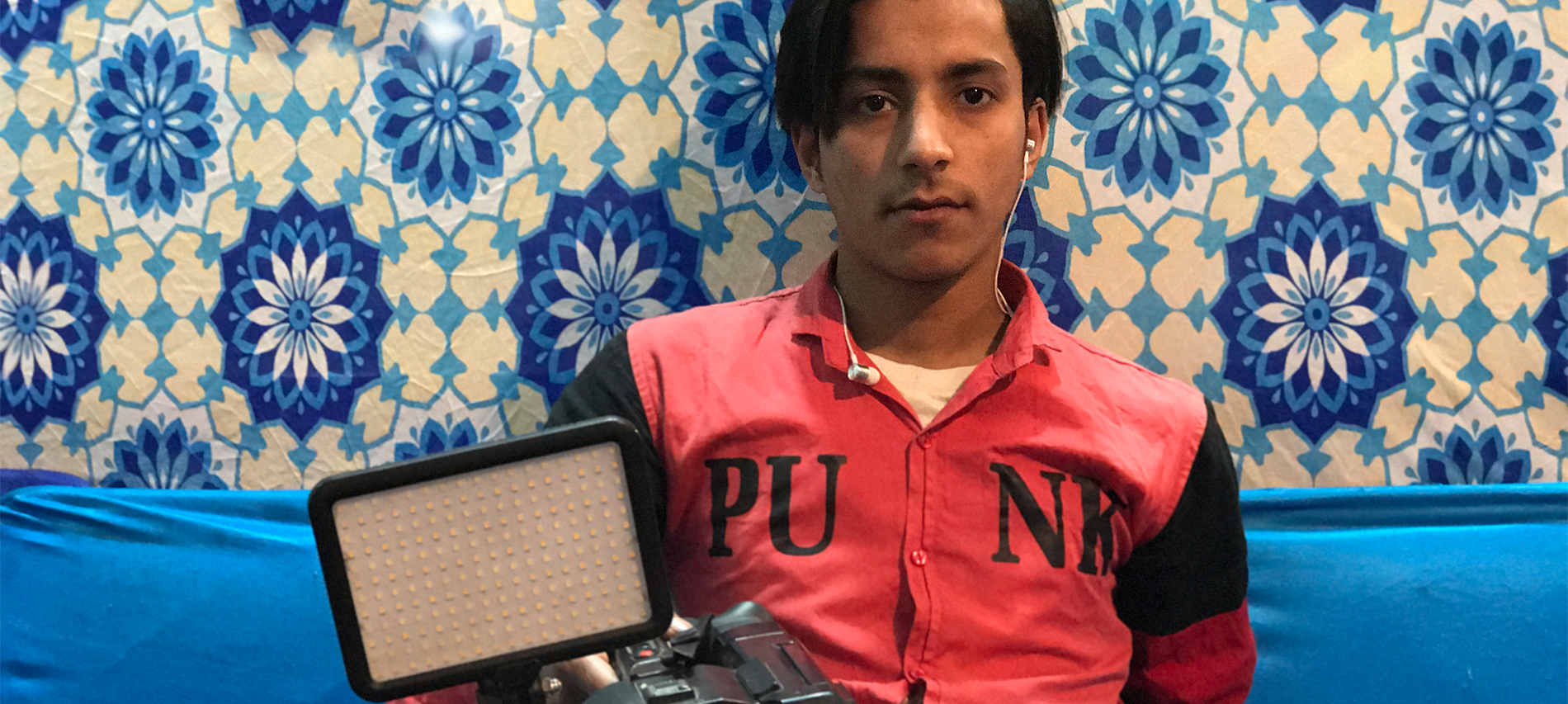
Snigdha Poonam is a journalist based in New Delhi. She currently reports on national affairs at the Hindustan Times. She won the 2017, ‘Journalist of Change’ award of Bournemouth University for a work of reportage that appeared on Huffington Post. Her first book, Dreamers: How Young Indians Are Changing Their World, talks about a generation that cannot – will not – be defined on anything but their own terms. They are wealth-chasers, attention-seekers, power-trappers, fame-hunters. They are the dreamers.
Here’s an excerpt from this powerful book.
——————————————-
It might be any other editorial meeting, in any of a million new clickbait start-ups: a set of editors huddled around a table to discuss what news and gossip to feed their audience next. The process is quick and brutal. Ideas are thrown around like bids on a trading floor.
Why your best friend is your true love, just like Mila Kunis and Ashton Kutcher.
This is what you need to know about Amanda—Justin Bieber’s new girlfriend.
How your face would look if you survived a car crash.
Fifteen times Donald Trump was trolled hilariously.
Fifteen minutes is all it takes the team to go over the whole range of American obsessions, from Kardashians to belly fat, from sex confessions to life hacks; and fifteen seconds is the average time they spend making a decision. Poor Amanda is peremptorily ditched for Victoria Beckham, who has just kicked up a parenting scandal by posting a photo on Instagram in which she is kissing one of her children. The editors opt for a bold stand, and argue the former Spice Girl did nothing wrong. Or, as the published article will later put it, ‘This is why kissing your kids on the lips is not a bad idea.’ They have a reason for choosing the story: ‘Child kissing is trending in the US,’ a young woman wearing black eyeshadow informs the room. The car crash idea is tweaked to imagine the impact of two car crashes on someone’s face at once. Everyone agrees it should only be a visual story. Americans, apparently, simply adore accident horror. Kim Kardashian loses out to Kylie Jenner. Another enterprising young woman volunteers a DIY experiment as research for the story ‘How to get lips like Kylie Jenner without going under the knife’. (‘Kylie Jenner lip challenge’ is also, apparently, trending.) No changes to the last item—Donald Trump is, of course, always hot. Ideas are approved not because of their news value but on account of how they appeal to base emotions. And in this quarter of an hour, these ten youngsters have tapped into the whole range of American emotional triggers: what excites Americans, what terrifies them, what makes them sad, and what makes them curious.
This isn’t an editorial meeting somewhere in the US. Everyone here is less than twenty-three years old, and they’re perched in an all-glass office in a shopping mall in Indore, a medium-sized city in central India. They’re deciding, a few hours before America wakes up, what it will read when it does.
They are hardly ever wrong—or so say the numbers. Millions of people visit their website, WittyFeed, every day. Of them, 80 per cent are foreigners and half these people are from the US. WittyFeed is one of the world’s fastest-growing content farms; over a billion people follow it on Facebook alone. The only website of its kind visited by more people is BuzzFeed, the world leader in viral content. Currently valued at only 30 million dollars, WittyFeed is giving itself a couple of years to beat BuzzFeed. That’s not its ultimate goal, though. What the plucky youngsters who run it want to do is to build the world’s largest media company (‘bigger than BBC, CNN’). How do they hope to do it? By following their maxim: ‘It’s emotion that goes viral.’
Few people have heard of WittyFeed, even in India. The only reason I’m here is because I noticed its crazy numbers: 82 million monthly visits, 1.5 billion page views, 170 million users, 4.2 million likes on Facebook. WittyFeed is news by the same parameter that it uses to define news: the WTF factor. How can a bunch of kids in a small Indian town who have never seen the world dream of ruling it by simply getting the internet better than anyone else?
