



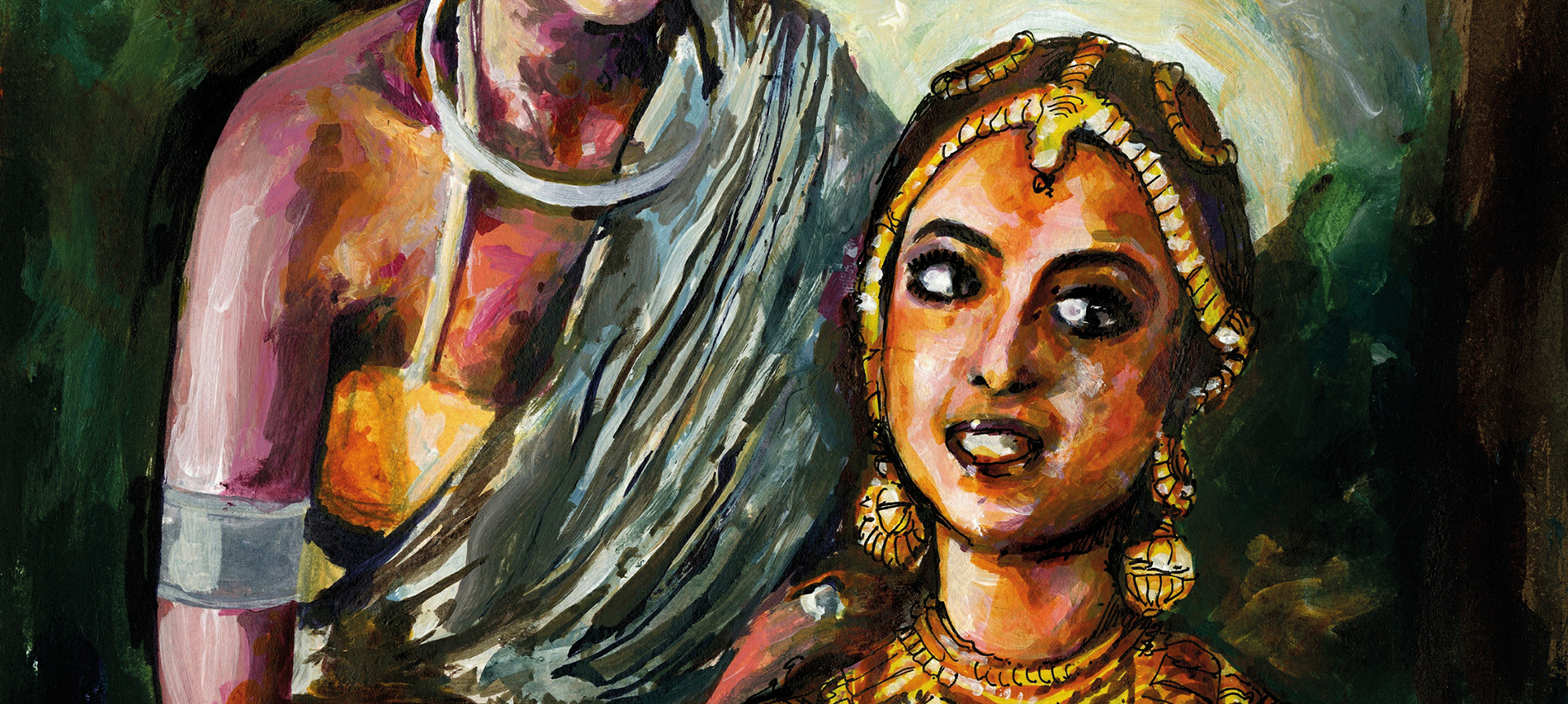
Shudraka is regarded as one of the foremost Sanskrit dramatists. Although his work has been lauded for centuries, his real identity remains a mystery. The Clay Toy-Cart remains one of the foundational works of Sanskrit drama, having been performed numerous times around the world and even serving as the inspiration for Girish Karnad’s highly acclaimed film Utsav.
Here is an excerpt from this iconic play.
—————————————————-
Radanika: (Moving about in fear) Oh my God! A thief has made a hole in the wall of our house and is now getting away! Let me try and rouse Arya Maitreya. Arya Maitreya! Please wake up! A thief had breached the wall and has now got away!
Vidushaka: (Awakens) You daughter of a whore! What are you saying? The thief has been breached and the hole is getting away?
Radanika: No joking for heaven’s sake, you wretch! Can’t you see this? (Points to the hole)
Vidushaka: You daughter of a whore! What do you mean by saying it again as if a second door has been opened? (To Charudatta) Oh! My friend Charudatta! Get up! Get up! A thief has bored a hole in our wall and has disappeared!
Charudatta: (Having risen) All right, that is enough joking!
Vidushaka: I am not joking. You see for yourself.
Charudatta: Where is the hole?
Vidushaka: Over here.
Charudatta: (Looks at the hole and exclaims) But what a beautiful hole! The bricks have been removed from top down! This hole is small at the top and large in the middle. As though this is the heart of this great mansion. Split due to fear of contact with one unworthy. There is expertise even in this kind of work!
Vidushaka: My friend, undoubtedly this breach has been made by one of two kinds of people. Someone new to the city or one merely practising his art! For who in this Ujjayini does not know the state of our finances?
Charudatta: Perhaps a man from foreign parts did it, By way of practising his skill, no doubt. Or he knew not that we were men unburdened with wealth, Who could sleep on soundly with a light heart! His hopes were raised by the first sight of our huge mansion Only to be dashed to the ground. After the long and arduous task of boring the hole. But what will he tell his friends now, that he broke into the house of the scion of a great merchant but found nothing at all to carry away?
Vidushaka: Why do you waste your pity on that thieving rascal? He must have thought that this was such a great big house that surely he could make away with a treasure in gems and gold ornaments! . . . Where is that bundle of ornaments? (Recollecting suddenly) My friend, you always say Maitreya is a fool, Maitreya is ignorant; have I not done well in putting that parcel of ornaments into your hands? Otherwise that son of a whore would have made off with it!
Charudatta: Please, no more jokes.
Vidushaka: I may be a fool but I do know the time and the place for jokes.
Charudatta: When did all this happen?
Vidushaka: When I told you your hands were cold!
Charudatta: Ah! That could have been it! (Looks pleased) Thank God I can tell you something agreeable!
Vidushaka: What? Has it not been stolen?
Charudatta: No, it has been stolen.
Vidushaka: Then why are you pleased?
Charudatta: That he did not go away empty-handed.
Vidushaka: But it had been left in our safe custody!
Charudatta: Oh! It was in our safe custody! (He swoons)
Vidushaka: Please compose yourself. If what was left in our care has been stolen, why do you fall in a faint?
Charudatta: (Recovers) Who will believe the truth of the matter? The world will deride me, for poverty lacks dignity; It is suspect in the eyes of all. Alas! Fate had already eloped with my riches, Why does the cruel one seek to sully my good name as well now?
Vidushaka: I can deny everything, who gave and who received. And who indeed was the witness?
Charudatta: Would I now utter a falsehood? I would not flinch from begging to earn the means to redeem the loss Of what was left in my care; But a falsehood that would destroy my reputation I shall never utter.
Radanika: I had better go and report all this to my mistress Dhuta.
———————————-

Category: Excerpts
An Indian Sense Of Salad by Tara Deshpande Tennebaum – An Excerpt

Tara Deshpande Tennebaum is a trained chef and author. She has studied at the French Culinary Institute in New York and at Le Cordon Bleu in Paris and London. In An Indian Sense of Salad: Eat Raw, Eat More, Tara Deshpande Tennebaum shows how to use fresh, local, easily available Indian vegetables, fruits, nuts and seeds, natural sweeteners and cold-pressed oils to prepare a range of raw and partially cooked salads from around the world.
Let’s read an excerpt from this book.
———————
Placing a salad in the Indian context is difficult because, historically, it occupies a very small part of our diet. Indian cuisine is one of the most multifarious I have ever encountered, and I say this after eighteen years of eating my way through Europe, Japan, China and the United States. The more I learn about Indian cuisine, the more I realize how little I know, despite having spent a majority of my life in the subcontinent.
That the sum of the parts doesn’t make the whole applies aptly to Indian cooking. We are masters of processing and enhancing food and magicians at creating flavours that didn’t exist before. That’s our métier. Take garam masala, for instance. If one were to change the ratio of even one spice, you’d have a new flavour.
Having said that, in India, we don’t favour the consumption of fresh produce or food in its raw form where every individual flavour is perceptible to the palate. Munching on roasted corn or swigging a glass of sugarcane juice outside the office block before heading home are probably the closest we come to consuming raw, unadorned foods. This is surprising because India has a limitless variety of fresh produce. We are the original harvesters of hundreds of varieties of vegetables, lentils, fruits and spices. Eggplant, bitter gourd, ginger, turmeric, pigeon pea, lime, bottle gourd, turnip, mango, jackfruit, cucumber and cumin are just some of the different kinds of produce that are native to India and South Asia. So if we simply go back to what we are good at—which is inventing flavours—and put that into creating unusual dressings and vinaigrettes to serve with raw ingredients that we usually ignore or cook into a pulp in Indian kitchens, we can create something extraordinary.
It’s at home that we should make salads a regular feature on the menu. I’m not promising you six-pack abs or the fountain of youth, nor is it my intention to push for a completely raw diet. But making raw fruits and veggies a component of your daily intake is an excellent idea. Organic food is still limited and expensive but where possibly do try and eat foods grown with less chemicals. Raw food has hardly any preservatives and additives, there are fewer toxins for the body to expel, and the benefits of good fibre, natural vitamins and minerals cannot be emphasized enough.
In the fifteenth century mud-covered root vegetables were considered less desirable and consumed by the poor while fruits and vegetables that grew above the ground were the purview of the rich. Produce such as potatoes and bananas were rumoured to cause sickness—poisoning even—in the early medieval period.
It was only in the sixteenth century that salads in their raw form reappeared in the homes of the wealthy. By the nineteenth century, salads began to develop into entire meals in America.
Many of India’s ancient culinary texts such as the Soopa Shastra (1508), Bhojana Kuthoohala (1670) and the Shiva Tatva Rathnakara (1700) contain elaborate descriptions of cooking vegetables and greens, including multiple ways to process eggplant and gooseberries and dozens of recipes for vadas and pongal. But when it comes to raw food, recipes are limited. In Manosolassa, the twelfth-century text, while the author Somesvara lists dozens of leafy vegetables and fruits that can be cured with lime juice, salt, ground spices and yogurt, there are barely a handful of recipes on raw green salads. It’s only when one gleans through the Ayurveda texts that one finds recipes using raw produce for medicinal concoctions. It makes you wonder if ‘raw’ in India came to be associated with sickness rather than luxury.
Salads are now being prepared by restaurants everywhere in urban India. There are more salads on a menu than soups. A salad, if well planned and constructed is possibly the best, healthiest course you can eat. So do try and make one at home every week. You can choose the recipe, buy the freshest ingredients and control the salt, sugar and oil. If you have to binge, find a salad you love with all your favourite flavours—sweet, spicy, sour. You’ll get lots of satisfaction and have a lot less guilt.
—————–

Seventy And to Hell with it! – An Excerpt
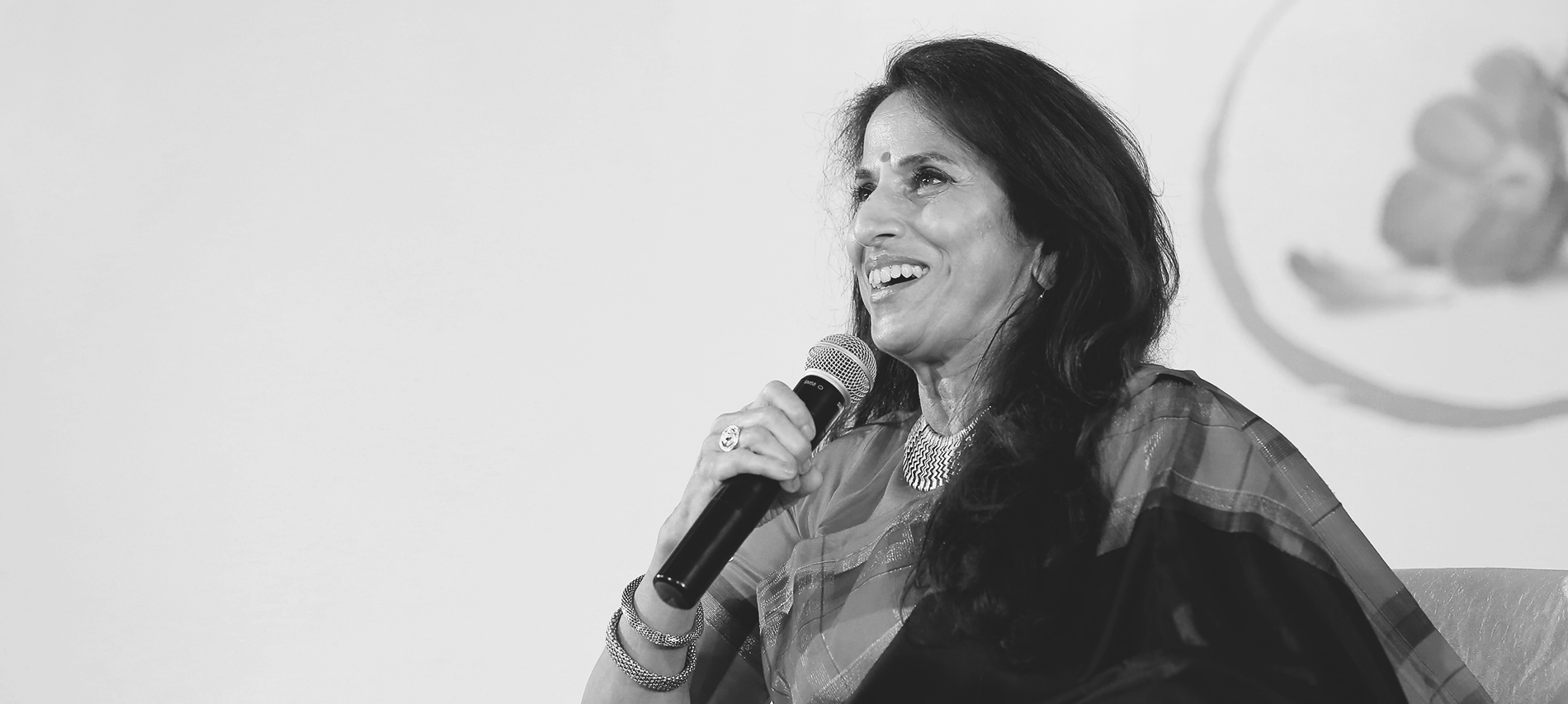
Shobhaa De, voted by Reader’s Digest as one of ‘India’s Most Trusted People’ and one of the ’50 Most Powerful Women in India’ by Daily News and Analysis, is one of India’s highest-selling authors and a popular social commentator. Her new book, Seventy and to Hell with it!, looks back on the terrain of her life. Especially at relationships-hers and those she has observed over the years-and at ever-present fears and grief.
Here’s an excerpt from this fun, entertaining and unputdownable book.
——————————————-
Nails. Would you believe it? Everything comes down to nails. Toenails. I am writing this soon after celebrating my sixty-seventh birthday with the family. As always, they had made it extraordinarily special for me. I felt a little guilty. Poor children and considerate husband—how much longer will they have to keep coming up with birthday surprises for me? Thoughtful, hand-picked gifts, sweet notes, an unexplored venue, candles and flowers. Year after year, my family has taken enormous trouble to make my birthday amazing— to make me feel amazing. This year, perhaps for the first time, I asked myself—do I deserve their love? The question depressed me. I came home in an uncharacteristically pensive mood. The mellow white wine we had consumed contributed to the introspection. Don’t get soppy and sentimental, I told myself. Don’t feel martyred. Feel happy, not guilty. Rejoice. Sixty-seven today, sixty-eight next year, sixty-nine the year after, seventy after that, life goes on.
The next morning, for the first time in my life, as I bent over to clip my toenails, I recoiled in shock. Those couldn’t possibly belong to me. These were the toenails of a really old person! I reached for my reading glasses and looked closely. My toenails had aged. Which meant the rest of me had aged too. But this drastically? Toenails never lie. Look at your own. Check what they are saying. Toenails tell you the sort of bald truths your face doesn’t. Perhaps it has something to do with being taken for granted. I had never thought about my toenails till that defining moment, the morning after my birthday. It was as if I was looking at them for the very first time in my life. And at that precise moment, I felt like I was staring at my mother’s feet. Those were her toenails when she was in her seventies.
It’s not about pedicures or caring enough for your feet. Nails cannot be fooled or pampered. Those damn toenails remind you to take a clear-eyed look at yourself—other body parts that are giving up, slowly but surely. Like the ropelike veins on the back of your hands, the loose skin under your chin and so many other telltale signs of physical deterioration. Since that day, I have started to examine my toenails every morning after my bath. I have scrupulously applied foot cream for years, but mechanically, without paying the slightest attention to the nails. Now that the toenails have become my main focus, I examine them somewhat obsessively. My toenails have started talking to me!
Old people’s nails thicken and are exceedingly hard to clip. They also get discoloured and ridged on the surface. By this point, chances of the toes getting misshapen are pretty high. Feet tend to flatten and broaden with advancing years. When that happens, toenails become brittle and crack vertically, which is very painful. The surrounding skin gets sore, leading to ingrown nails. Jagged edges appear, and get caught in bedclothes. You wake up in the middle of the night wincing in pain. It’s dark. You can’t find your spectacles. You grope on the bedside table, knock over a water jug. Switch on the light. Forget where you’ve stored the nail clipper. Wake up the husband and ask for help. The toenail-fixing operation gets under way. With eyes full of sleep, you nick yourself. There’s blood on the bed sheets. You need ice. You stagger to the kitchen. Wake up the dog. Wake up others. Slip on something squishy. Keel over. Fall. But not badly. Your old training as a sportsperson helps you break the fall. But there will be a bruise tomorrow morning. Ice cubes in hand, you make it back to the bedroom in one piece. Dawn is breaking. And your toenail still hasn’t been fixed. You finally feel old. Yes, old!
It took my toenails to remind me of my biological age. In my head and heart, I am stuck at thirty-four—possibly the best year of my life. That was a long time ago. But so what? What a year it was, tumultuous and life-altering. I decide there and then that no matter what my toenails are telling me, I will treat them as toenails, not as time bombs ticking away, warning me to be cautious, slow down, retire, find my inner calm, change. Sixty-seven is not all that terrible an age to be. If I continue to feel thirty-four, it doesn’t really matter.
That unexpected encounter with the toenails brought me face-to-face with the sixty-seven-year-old me. And forced me to shift my gaze upwards and look more closely into the mirror. All of a sudden, I took note of the deepening lines around the mouth, the additional crow’s feet at the corners of my eyes. The extra strands of grey framing my face, the slackening of the skin on the neck, the slight discoloration of the lips. My reflection was a revelation. How had I not noticed these changes earlier? Had I not looked hard enough? That’s not possible. I am as vain as the next person. I had looked but I hadn’t seen. Such a big difference between looking and seeing. Just as I was fretting over a deep furrow between the brows, I happened to catch a glimpse of my ears. Here’s a confession: I like my ears. And to my great satisfaction and utter relief, the ears looked just the same. The ears could have belonged to a thirty-four-year-old. And that was my big thrill. Why focus on the negatives (discoloured toenails) when there are positives (pretty ears) to cheer you up?
It’s important to be realistic and self-critical in life. But it’s equally important to remain upbeat and positive about the inevitable. Age is one of them. From now on, it’s going to be ears over toenails.
I am not going to put on a fake jaunty attitude and declare: Seventy is the new fifty! Because seventy is seventy. And no matter how ‘young’ you feel, you can neither look it nor hack it as anyone but a (hopefully) well-preserved septuagenarian. Life definitely does not begin at seventy—but neither does it have to end. I don’t believe in milestones. Hitting seventy is not an achievement. And it is certainly not a milestone. It is merely a biological fact of life. I have survived my seventh decade. That’s about all it says to me.
——————————–

An excerpt from The End of India by Khushwant Singh

Khushwant Singh, India’s best-known writer and columnist has authored classics such as Train to Pakistan, I Shall Not Hear the Nightingale and Delhi. He was awarded the Padma Vibhushan in 2007. His book, The End of India forces us to confront the absolute corruption of religion that has made us among the most brutal people on earth.
Here’s an intriguing excerpt from one of its chapters:
——————
It was during British rule that Hindu nationalism took birth. The most powerful movement, the Arya Samaj, began under the leadership of Swami Dayanand Saraswati (1824-1883). His call ‘Back to the Vedas’ received wide response, particularly in northern India. Amongst the Arya Samaj converts was the Punjabi Lala Lajpat Rai (1865-1928) who was both an ardent Hindu and a leader of the Indian National Congress. So was Bal Gangadhar Tilak (1856-1920) of Maharashtra who revived the cult of Ganapati and coined the slogan ‘Swaraj is our birthright’. In due course of time, Hindu militant organizations took birth.
The most important of these was the Rashtriya Swayamsevak Sangh (RSS) founded in 1925 by Keshav Baliram Hedgewar (1889-1940) in Nagpur. He propagated the cause of a Hindu rashtra, a Hindu state. He was anti-Muslim and also anti-Gandhi, because the Mahatma strove for equal rights for all religions. Hedgewar was succeeded by M.S. Golwalkar, who was followed by Balasaheb Deoras. Together, these leaders, all charismatic and all unashamedly communal, strengthened the organization through fascist propaganda, strict discipline and targeted social work among the Hindus during calamities like earthquakes and famines and during Partition.
By 1990, the RSS had over one million members, who included, among others, Atal Behari Vajpayee, L.K. Advani, Murli Manohar Joshi, Uma Bharti—the last three charged with the destruction of the Babri Masjid on 6 December 1992—and Narendra Modi, the present poster boy of the Hindu right who presided over the pogrom in Gujarat. The RSS was, and is, anti-Muslim, anti-Christian and anti-left. It could be dismissed as a lunatic group as long as it remained on the fringes of mainstream politics. Not any more. Its political offshoot, the Bharatiya Jan Sangh, today’s Bharatiya Janata Party, had only two MPs in the Lok Sabha in 1984, but by 1991 it had 117. Today, with its allies, it rules the country.
There are now several other Hindu organizations as, if not more, militant than the RSS. There is the Shiv Sena led by the rabble- rouser Bal Thackerey, an admirer of Adolf Hitler. He started with a movement called ‘Maharashtra for Maharashtrians’ aimed at ousting South Indians from Bombay. His mission soon changed to ousting Muslims from India. In the last decade or so he has spread his tentacles across the country and boasts of his sainiks taking the leading part in destroying the mosque in Ayodhya. Perhaps as reward he has his quota of ministers in the central government. Besides the Shiv Sena, there are the more mischievous Bajrang Dal and the Vishva Hindu Parishad, currently leading the agitation to build a Ramjanmabhoomi temple on the exact site where the now-destroyed Babri Masjid stood—no matter what the government or the courts of law have to say. This is typical. Most members of the extended Sangh parivar regard themselves above the law of the land. They have arrogated to themselves the right to decide the fate of one billion Indians.
———–

Discovering the Vedas: Origins, Mantras, Rituals, Insights; An Excerpt
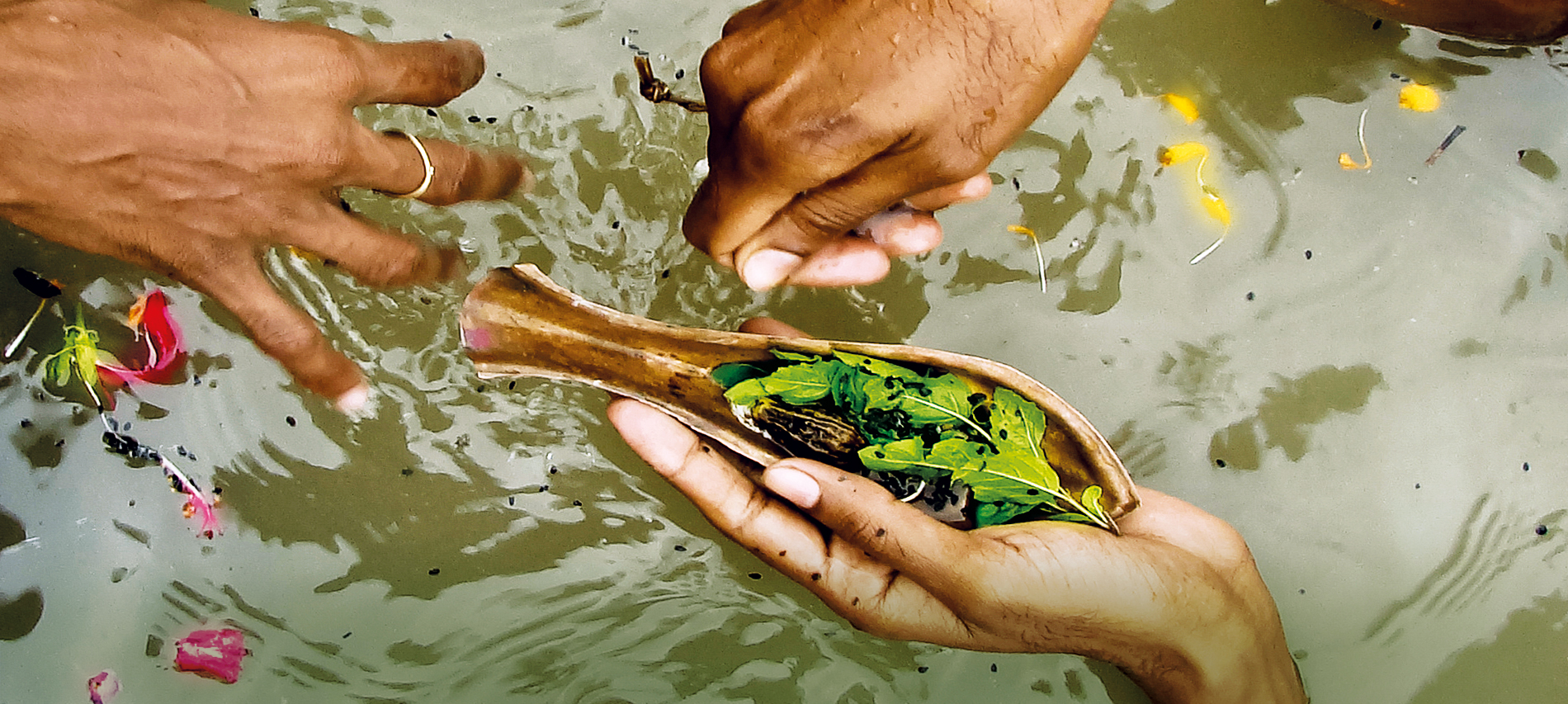
Frits Staal wrote about language, philosophy and ritual but his scientific pursuits have encompassed diverse areas and disciplines. His book, Discovering The Vedas: Origins, Mantras, Rituals, Insights, shows that the Vedas have a logic all their own. Accessible, finely-argued and with a wealth of information and insight, this book is for both the scholar and the interested lay reader.
Here’s an excerpt from the new introduction of this highly revered book.
—————
The Vedas are often puzzling; sometimes abstract or mysterious; they may also be muddled; but those are the exceptions, not the rule. They overflow with information, much of it concrete. Part I of my book extracts such information from the Oral Tradition but also from archaeology. It deals with Vedic people and their language, what they thought and did, and where they went and when. Part II, almost twice as long as any of the others, provides essential information about the canonized four Vedas as we know them. It includes selections and translations. Part III seeks to discover and understand not only the facts and where they come from, but what they mean. It is analytic and attempts to shed light especially on mantras and ritual, about which many absurd statements circulate (ingayanti as the Rigveda puts it: like words moving around in a sentence). Mantras and rituals are the main channels through which Vedic contributions entered what came to be known as Hinduism.
Part III does not arrive at definite conclusions because I do not believe that we know and understand enough. Part IV tries to answer a rarely asked question: what can we learn from the Vedas? I do not advocate a Vedic lifestyle, but believe that there are things the composers of the Vedas knew and we do not. They include the original forms of the Vedic sciences and the meaning of bráhman. Part V, the concluding part, puts the Vedas in perspective in a wide ranging comparison with Indic philosophies and religions, primarily Buddhism.
Before going further, I should say something about myself and my work. In the realm of non-fiction, creativity thrives on specialization, yet I have always been convinced that the distinctions between letters, sciences and other manmade subdivisions and disciplines are arbitrary. The seeds for these beliefs were planted during World War II in Amsterdam. Though I count myself as a citizen of the world, and not a native of any particular country, it is in this cosmopolitan city that I attended a Gymnasium. We did do gymnastics there though we were not naked (Greek gumnos), but concentrated on mathematics, physics, chemistry, biology, history, geography and several languages. Our teachers were not only teaching us these subjects, they were lively and eccentric men and women who were interested in developing our minds. The number of languages we learnt might baffle an Anglo-American, but not an Indian. In addition to Dutch, we were taught English, French, German, Greek, Latin, with optional Italian and Hebrew. To this I added Arabic which I continued to study at the universities of Amsterdam and Leiden.
Languages are the gateways to civilizations. I did not care for literature, but languages may be studied for a variety of reasons. The primary appeal of Arabic had been the beauty of its flowing calligraphy. Without it, I would not have read al-Khwarizmi’s treatise on algebra under the tutelage of a famous scholar. When I was younger, I had played about with Chinese characters; but did not continue, perhaps because I sensed that it might take a lifetime to learn them. The first three languages we learned to read and write at the Gymnasium were English, French and German. The last was the easiest but was not popular because of the German occupation. At the university, its horrors stayed fresh in our minds; but now we began to see similarities with the Dutch colonial empire. These acts might have been of a milder sort, but were detailed where necessary by the Indonesian students in our midst. The classical languages, five years of Latin and six of Greek, belonged to a more idealized world. But not one of dreams, because it gave access to ancient civilizations and especially to Greek philosophy which became my favourite. I continued with Greek philosophy at the University of Amsterdam, where I combined philosophy and mathematics which led to the first subject I studied in greater depth: mathematical logic. It was the time of L.E.J. Brouwer in intuitionistic mathematics, Kurt Gödel and Alfred Tarski in logic and foundations.
Amsterdam itself was, of course, ‘a center of culture’, though no one called it that. If I now try to remember how that quality appeared to me when I was young—a flavour that has evaporated in the course of more recent visits—I recall only the facts. When I walked from my home to the Gymnasium, I passed the Concertgebouw and sniffed the dusky air beneath the large passage gateway of the Rijksmuseum. I had been at home in the Concertgebouw since I was five years old. My violin teacher took me there during rehearsals when I was allowed to sit on a podium chair. I heard and saw all the great conductors of Europe before my legs could reach the floor. All of it prepared me to play the violin and viola in the student’s orchestra and in string quartets and quintets. These are perhaps the ultimate reasons that I added a fifth part to a book about the four Vedas.
—————

6 Things You Didn’t Know About How India Became Democratic
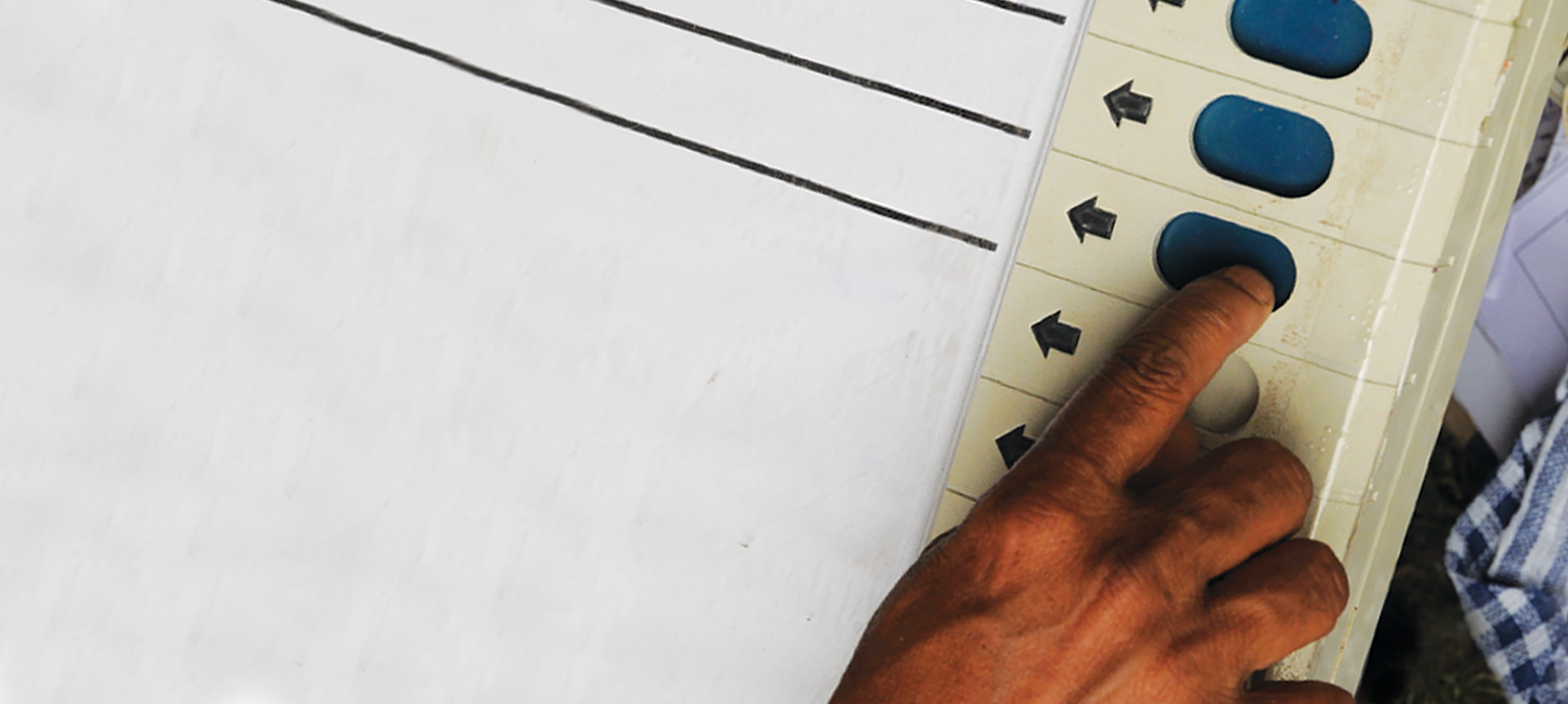
Ornit Shani is senior lecturer at the Department of Asian Studies, University of Haifa. She received her PhD from the University of Cambridge. Her new book How India Became Democratic: Citizenship and the Making of the Universal Franchise tells the untold story of the preparation of the electoral roll on the basis of universal adult franchise in the world’s largest democracy.
Here are a few interesting facts from the book we bet you didn’t know.
The Impediment of the Bureaucratic Colonial Imagination

Registering Partition Refugees

Universal Franchise connected the Indian people to the idea of a nation

The birth of the electoral roll during the mayhem of Partition

Disciplining the Federal structure

The Limits of Inclusion

How many facts did you know already?

Ashoka in Our Time; An Excerpt

Bruce Rich is an author and lawyer who has worked with major US environmental groups as well as with international organizations over the past three and a half decades. His book, Ashoka in Our Time: The Question of Dharma for a Globalized World, offers a compelling critique of the forces of globalization that, while connecting the world in unprecedented ways, have deprived us of a unifying dharma. Rich looks for answers to contemporary issues in the paradoxes of Ashoka’s empire, as well as in the ideas of thinkers from across the ages.
Here’s an excerpt from the new preface of this exemplary book.
————————-
This book was first published in India in early 2008, months before the full magnitude of the global economic crisis became apparent. The severity and unexpectedness of the crisis only accentuated for more and more people the realization that a global economy requires a global ethic. A global order that one-sidedly prioritizes unbridled market forces over other social values has created a profoundly unstable world, a world where the viability of whole societies, nations and democracy itself can be put at risk. As economies slowly recovered and stabilized, the global and local structures of political economy reflecting this order have intensified economic inequality, social insecurity and the dissolution of traditional communities. The reaction in many societies worldwide has been a growing quest for identity, community and justice, an evolution that holds great promise but also great menace. Our world is nearing a juncture where every citizen may be faced with a choice between embracing a more pluralistic, open, ecumenical social and political ethic or a flight into reactionary nationalism, ethnic and religious fundamentalism, and a futile embrace of authoritarian pseudo-solutions.
In researching and writing this book over a decade ago, I sought to better understand the challenges facing our present age by examining the ethics and governance of one of India’s—and humanity’s— archetypal figures, Ashoka. The Maurya Empire of Ashoka’s epoch was a multi-ethnic realm with a multitude of differing religious and philosophical beliefs, including even in some cases sects espousing an agnostic or atheistic materialism. Ashoka’s ethic of Dharma embodied public values that would enable the inhabitants of what was then the world’s largest empire to live and prosper together in a time of social and economic change.
This book begins with what in 2008 was a timely vignette on the world geopolitical scene: a reference to the fundamentalist violence in Afghanistan and the violent reaction it provoked through the invasion by the US and allied troops, in poignant contrast to the peaceful, multicultural polity reflected in the Ashokan inscriptions one can still see in south-eastern Afghanistan. I never thought we would be witnessing an exacerbation of almost exactly the same situation in 2017, including a recent increase of US troops in Afghanistan to attempt to deal with similar threats. Over the past decade, ethnic and sectarian violence has proliferated, with destabilizing effects that ripple out across the globe. The conflict in Syria and the persecution of a Muslim minority in Myanmar—a country whose Buddhism long ago was inspired by Ashoka—are just two of the many symptoms of a humanity that is globalized and tearing itself apart at the same time.
Nor would I have imagined that in major countries all over the world we would witness a growing resurgence of nationalistic, xenophobic and, in some cases, outright neo-fascist political movements. This reaction to the social effects of one-sided economistic market fundamentalism was astutely examined by Karl Polanyi over seventy years ago.
The global environmental crisis has only accelerated as evidence of climate change is increasingly visible. Like the inequalities and imbalances in the global political economy, climate change also can only be addressed by concerted action that prompts changed economic priorities and values in every nation and community on the planet.
In short, what we witness around the world is a search for what might be called a unifying ideology of ‘dharma’. This is the dharma that Ashoka sought, a concept or construct of ethics, law and community which establishes guiding values for individuals and society.

Bimal Roy: The Man Who Spoke In Pictures; An Excerpt
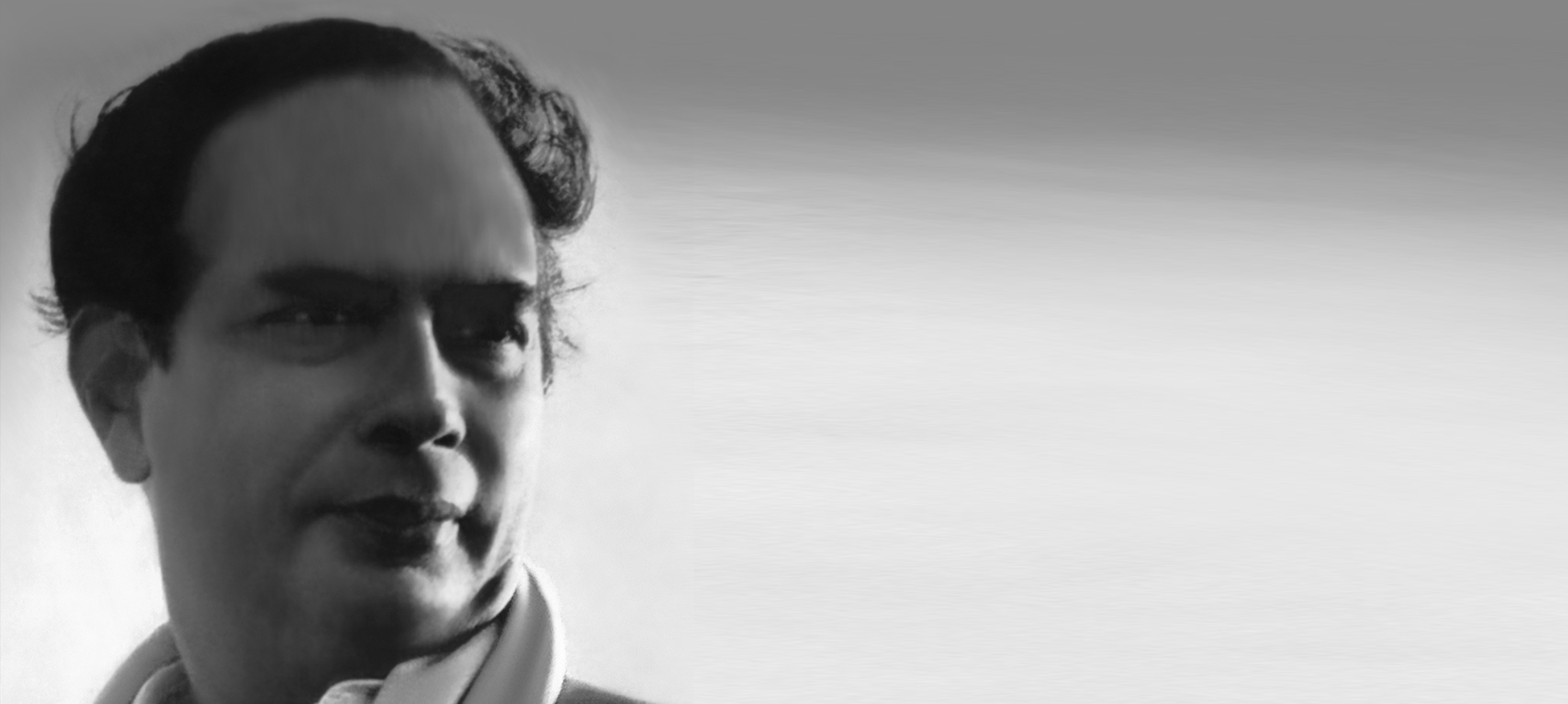
Rinki Roy Bhattacharya has cinema in her veins, daughter of Bimal Roy, she married Basu Bhattacharya and collaborated on his films. Her book, The Man Who Spoke in Pictures, shows Roy’s spare storytelling and nuanced understanding of the human condition that are reflected in classics like Devdas, Sujata and Madhumati. In this book, his Bombay years are recorded through a collection of analyses and anecdotes from leading literary and cinematic luminaries, including Nayantara Sahgal, Gulzar, Naseeruddin Shah and Khalid Mohammed.
Here’s an excerpt where Shashi Kapoor reminisces his fondest memories of Dada.
———————————————
I was little more than a boy when I first met Bimalda. I think it was at a movie premiere that we first met. He was a soft-spoken gentleman and I still remember his interesting eyes. By 1959, I was on my own with a small family and urgently in need of work, and of course, money.
We met again at a dinner at the Ritz Hotel in Churchgate. The Filmfare magazine had organized a talent contest; I did not go for the contest but went to the dinner later. I had to borrow a Jodhpuri coat for the occasion from Tiger (the Nawab of Pataudi). Within a week of this meeting I got a message from his company, Bimal Roy Productions, that he wished to meet me. I rejoiced at this news and literally flew to meet Bimalda at Mohan Studios.
Many of his assistants had assembled outside his room. Amongst them were Hrishida, Basu, Raghunath Jhalani and S. Khalil. They informed me that Bimalda was going to start two new films Bandiniand Prempatra (a remake of the successful Uttam–Suchitra Bengali film Sagarika). They suggested that I choose Prempatra as it had a good romantic role. For me, there was no question of choosing. Uppermost on my mind was the irresistible longing to work with Bimalda. Finally, I stepped into his room. He was having a quiet smoke, and after a long silence he said,‘Shoshibabu, ek picture banayga. . . I want you.’ I said, ‘Yes.’ Since that day when I first met him, I knew we liked each other. I was young, eager and excited at the prospect of working with Bimal Roy.
When I came out I met his assistants, all still sitting outside the room. They were curious to know. Gulzar asked me, ‘What happened?’ I said: ‘Dada is asking for dates.’
‘For which one?’ they asked me. I said I did not know. Dharam (Dharmendra) was also waiting outside Bimalda’s room. After almost a month we heard that Dharam was to be cast in Bandini while I was selected for the romantic lead in Prempatra. One day Bimalda asked me how much money I expected. I, quite frankly, felt awkward about talking money with him. He sensed my discomfort and said, ‘All right, tell me how much money is B. R. Chopra Productions paying you?’
‘Twenty-five thousand,’ I answered.
He was surprised and asked, ‘Are you sure they will pay you so much?’
‘Yes, they are pretty big producers,’ I replied
‘All right,’ he said. ‘I will pay you the same.’
Then shooting for Prempatra started. Bimalda, being the shy person he was, had forgotten to introduce me to Sadhana, the heroine. It was also her big film. So we introduced ourselves. I realized that whenever Bimalda was pleased with me, I would get to share his tea—special tea made and served by his man Friday, Ganpat. I was very proud to share his tea. Later, during the filming of Benazir, Meenaji was also invited to share his tea. We were both pleased by Bimalda’s affection for us.
I must tell you about another interesting incident. I was going to England in 1961 and Dada wanted some ambience shots taken in London for Prempatra. I was touched by the incredible faith he showed in me. He explained that due to the economic constraints and tight shooting schedule of Bandini he could not go to London. He explained the required shots and made me write them down, gave directions explaining the shots in detail. I protested, ‘Dada, but I have never shot a film.’
He simply said, ‘I know you can do it, I have seen you on the sets and know you can do it. My man in London will contact you, organize the camera but you take your own shots.’
‘All right, if you say so,’ I replied. We took the shots and some of them were used in the film.
Prempatra did not fare too well at the box office. That made Bimalda feel guilty, I do not know why, and whenever we would meet socially at premieres or other places, he would say, ‘Phirse tumko lega, hum ek saath kaam karega. . . you are one of us at BRP.’

Everybody Loves a Good Drought (20th anniversary edition), An Excerpt
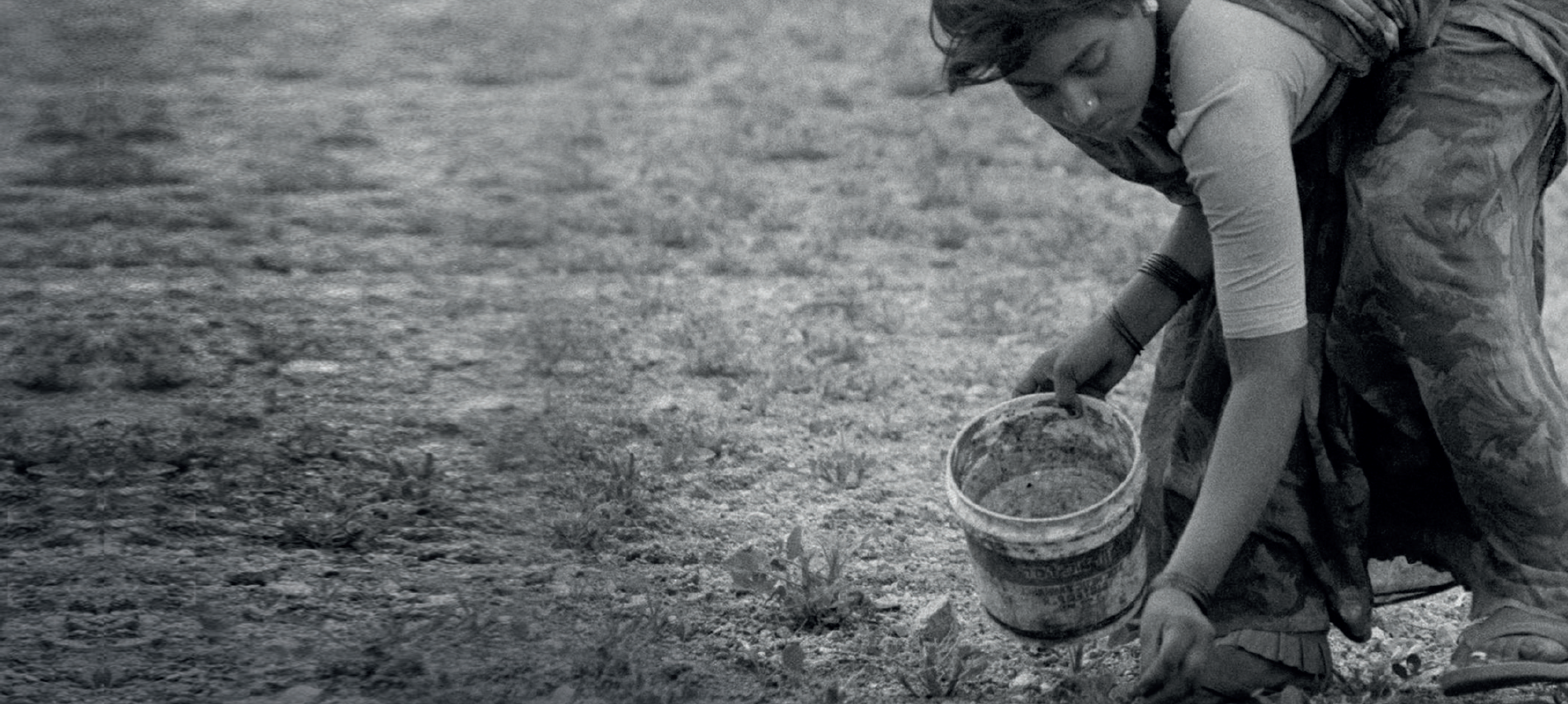
Palagummi Sainath has been a journalist and reporter for thirty-seven years and has covered rural India full time for twenty-five of those. His book, Everybody Loves a Good Drought, is the established classic on rural poverty in India. Twenty years after publication, it remains unsurpassed in the scope and depth of reportage, providing an intimate view of the daily struggles of the poor and the efforts, often ludicrous, made to uplift them.
Here’s an excerpt from the new introduction to this critically acclaimed work.
———————————-
One of the first things people who have read Everybody Loves a Good Drought ask me is: ‘How did you come to give this book its name?’ I didn’t. I just grabbed the idea from Ramji Lakhan. He was a peasant activist who organized agricultural labourers to fight for their rights in Palamu (then in Bihar, now in Jharkhand).
‘We have a great drought going here,’ he told me. ‘The big people are making much money out of it. And the Block Development Officer (BDO) has gone to harvest the Third Crop.’
I was mystified. ‘I know of the kharif crop, harvested in autumn after the rainy season. And I know of the rabi, sown in winter and harvested in spring. But what is this Third Crop?’
‘Drought relief,’ said Ramji. He’d been hoping I would ask. ‘The money that comes in as relief makes the powerful richer than they were. It’s quite a good business. We like a good drought here.’
He called the BDO the BTDO, or Block The Development Officer. ‘No work takes place unless he gets his cut.’ But he did not use the term Third Crop in English. He said teesri fasl. And that remains the title of the Hindi edition of this book.
Another common question: ‘Have things changed in these districts since you wrote this book?’ Yes. Not always for the better, though. The women stone-quarry workers of Pudukkottai, who drew inspiration from their strength as a collective, changed their world for the better. For many others living in the regions the book’s stories come from, things got a lot worse. For a reason Ramji Lakhan understood very well even back then: growing inequality.
An India was emerging where new inequalities were feeding into old ones. Not by accident, but driven by human agency. Even in the year 2000, according to Credit Suisse’s Global Wealth Databook, the top 1 percent of the Indian population held 36.8 percent of the total household wealth. By 2016, their share had risen to 58.4 percent, far ahead of their counterparts in the United States, whose share of wealth in their nation was 42.1 percent.
That also means the top 1 percent of Indians held a greater share of wealth that year within our nation than the top 1 percent of Americans ever did within their own. The same year, the Databook shows, the bottom 10 percent of Indians saw their share fall from 0.1 to -0.7 percent––suggesting that many millions whose assets were far lower than their liabilities were sinking further into debt.
The next two deciles, just above the -0.7 group, recorded shares of 0.2 and 0.5 per cent, respectively. Club those three together and it means the bottom 30 percent of the Indian population own next to nothing.
In the year 2000, Forbes listed nine Indians who were dollar billionaires. In 2011–12, when our Socio Economic and Caste Census found that the main breadwinner in 75 percent of rural households take home less than Rs 5000 a month, Forbes said we had fifty-five dollar billionaires. This year, India logged 101 dollar billionaires in the Forbes 2017 list. We now rank number four in the world in that distinguished line-up. But we also rank 131 in the United Nations Human Development Index.
This is where we needed the media to ‘signal the weakness in society’. Instead, they celebrated this inequality. Unique success stories, and those on super celebrities, took centre stage. And we focused on how wonderful we were. A small part of the population surely did very well. Clinging to our delusions meant trashing the integrity of the data we gathered on ourselves. We did this with poverty numbers. We do it with farm suicide data.

Breach: Remarkable Stories of Espionage and Data Theft and the Fight to Keep Secrets Safe – An Excerpt

Breach brings to light several incidents of phishing, piracy and data theft whose trails find their roots in underground international networks. Full of riveting stories of hackers, police and corporates, Breach reads like a thriller.
Here is a captivating excerpt from this unputdownable book.
——————
The evening before the journalist found himself plunged in this nightmare, the businessman stood at the window in his office in Mumbai, gazing at the evening sun and its last few minutes of orange shimmer before it set in the Arabian Sea. He was contemplating, among other things, the last few years of his business. It had been a particularly tough period for his company. What accentuated the pain was that the lean phase had come right on the heels of a few years of huge success. Like many other businesses in Mumbai, and around the world, his company too had entered a difficult phase with the 2008 collapse of Lehmann Brothers and the meltdown it had triggered in the global markets.
He walked back towards his seat. It was time to wrap up and leave for the day. Just as he was about to close his laptop, the mail icon lit up. The name of the journalist flashed in the notification box on the lower right corner of his screen as the sender of the new email in his inbox.
That was not unusual. He often got emails from a few journalists with whom he maintained open communication channels. He glanced at the subject—it said something about a new draft of a story. He presumed the journalist probably wanted him to answer some questions for his story. He was a tad irritated by journalists emailing him directly rather than going through his company’s corporate communications team. He was about to close it, but then those pesky email notifications were designed to pique curiosity, and he couldn’t resist clicking on it. He opened it.
The text of the email followed from the subject line. The journalist was writing some story and had attached a draft for his review. There was the attachment and precious little else in the email. That was a little odd, considering journalists like this one usually wrote long emails, building the context to their story. But then, he knew this journalist often worked on tight deadlines. In his hurry, he may have forgotten to type in the introductory details, he rationalized. He double-clicked on the attachment.
Nothing happened. He clicked again. Nothing this time either. He minimized the email window to see if any file had opened up and was hidden behind the email window. There was nothing. His desktop wallpaper with the smiling faces of his family from their last vacation stared back at him.
What he obviously didn’t realize when he opened the attachment was that he had not clicked on a word document, as he had assumed, but on an executable file used typically to instal programmes in computers. The malware that was being executed had been disguised as a word document, and the moment he opened it he unwittingly triggered a domino chain of code that chugged along quietly in the background, installing programmes that would ultimately transmit information—in this case valuable business secrets—from his computer. These secrets would start getting transferred to a remote server. It was that simple.
The malware now installed on his system was powerful for the times. It could worm its way into his input devices and record key strokes, turn on the microphone and record conversations, collect saved passwords, search for files by keyword, take screenshots and upload and download all these to remote servers—dumpsites, as they are often referred to by computer nerds. The malware was so sophisticated that it could do pretty much everything a person sitting in front of the computer could, without giving itself away. There was nothing stopping it, except if the system itself was turned off.
But it took some time for the businessman to realize he had made a mistake by clicking on the link. It took time for him to realize that the con was in the code.
To read more of such crazy stories of cyber crime, grab your copy of Breach now!
