



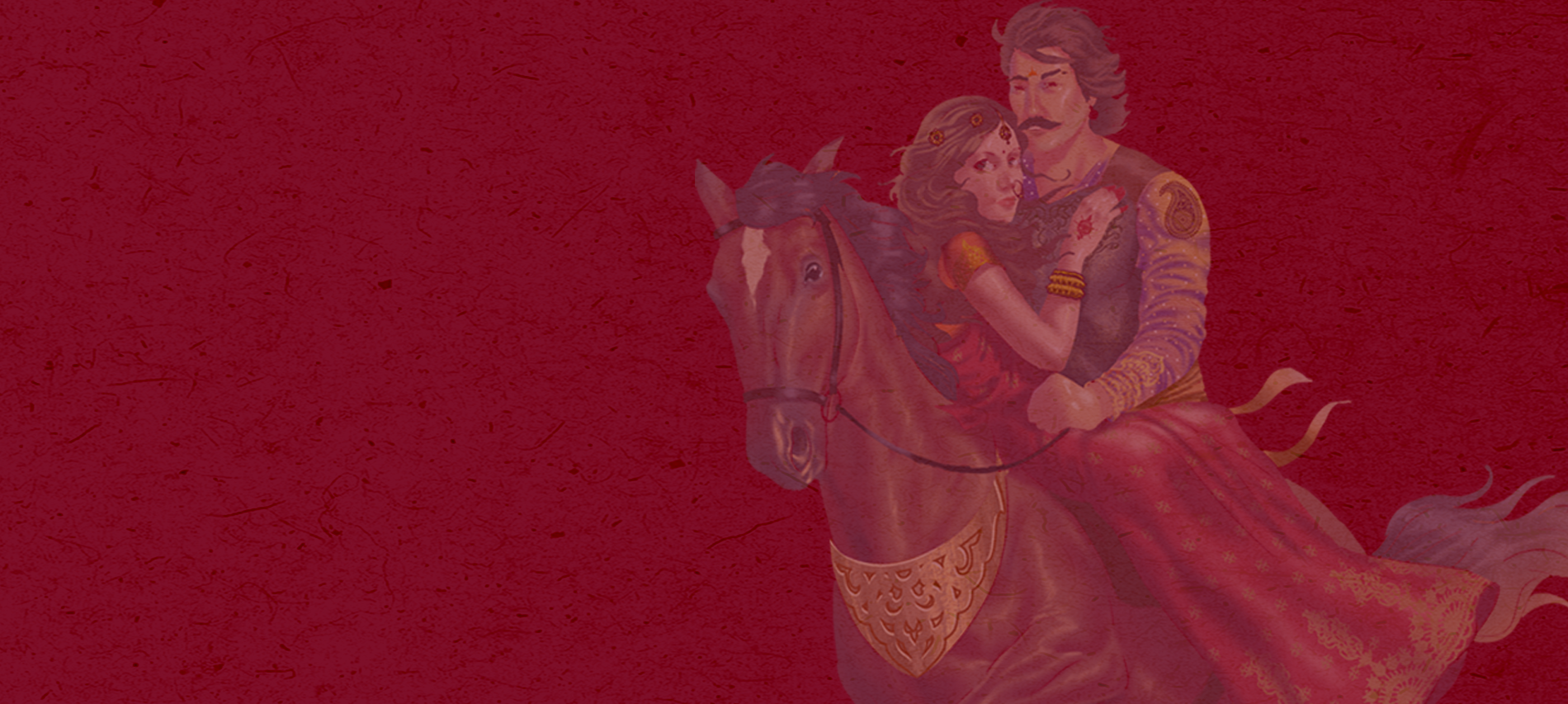
Prithviraj Chauhan was destiny’s chosen one, singled out for glory and greatness. Anuja Chandramouli is back with an endearing tale of the legendary warrior who lives on in the hearts of those who remember his unmatched valour and timeless heroism.
Here’s an excerpt from the book.
The queen tossed and turned; her sweat-streaked body caused the soft sheets to cling to her contours as she stifled a scream that fought to burst from her lips. A good girl must be seen not heard, she had been taught since childhood.
Silently she pleaded with she knew not whom, begging to escape the terror that was engulfing her. When that failed, she tried to wake up. Her efforts were entirely futile. No matter how much she tried, a force she could not withstand tore her apart, dragging her along the serpentine alleys of her simmering subconscious.
Propelled along a rocky slope, she felt the flesh scraped off her delicate feet, which were decorated with intricate henna patterns, leaving them battered and bloodied. Dragged along sandy plains, under a blazing sun, her skin, softened with milk and honey, caught fire. She wrapped her burning arms protectively around her tender belly and snarled savagely at the elements.
Then she was swimming against the currents of a raging river as predators with serrated teeth and spiked tails pursued her ruthlessly. The wind snatched her from their jaws as they were about to swallow her and lifted her high up in the air. Shrieking its terrible intent into her ears, it ripped off her garments before releasing her in endless space.
As she plunged into the depths below, she could not hold back the primeval screams of agony from bursting out in a shrill cacophony. Then she was falling through emptiness, plummeting towards certain death. Shutting her eyes tight, her arms flailing, she forced her leaden legs to move, desperate to arrest her fall.
Then with a suddenness that made her dizzy, everything went still. Holding her swollen belly in her arms, she opened her eyes. She was standing at the threshold of a stone temple. Before her, was an altar where a smokeless fire was burning. Vigorous and strong, it was brighter than her eyes could bear.
Shining with divine vehemence, it beckoned her forward. Helpless in front of the hypnotic pull of those ancient flames, she stood before it, so close that the heat scoured her clean even as her heart grew hot. And yet, she could not draw back.
Enraptured, she stared into its depths. She watched the mesmerizing dance of the flames as they swayed in discord to the crackling cadence of the age-old rhythms, orchestrated by the divine father out of his deep love for the sacred mother. The sky and the earth—always together; forever apart.
Tears sprang into her eyes and she clasped her hands in prayer as the earth mother addressed her throbbing heart.
What is it that you would know of me?
‘Tell me of the child I bear in my womb.’
A mother always knows. A mother must.
‘My boy will be the greatest of kings. A mighty warrior. A lion among men and as such will be entitled to the king’s share of success, prosperity and happiness. He will shine with the brilliance of a thousand suns. His name will live forever.’
So it shall be. The flame in his soul is destined to burn for as long as his lion’s heart can bear it. Blessed as he is with the tejas of the divine, he will shine brightest when he makes the ascent to the pinnacle of glory, just before his swift descent to darkness and the depths of abject failure. For so it must be.
‘Never! I will never allow such fate to befall my son.’
A mother is a fool! He was never yours alone. And never will be. Prepare yourself for the reign of the king of the earth. For fame and fortune, love and death, glory and grief!
The flames rose higher and higher, oblivious to the mother who wailed in misery. Blinded by the all-encompassing radiance, magnified by the strength of her tears, she was ill-prepared for the darkness that descended without warning, snuffing out every trace of the sacred fire.
The silence was broken only by infernal howls of abject sorrow—a mother’s terrible lament—amid the hushed murmur of a premonition, repeated over and over.
Prithviraj! Prithviraj! Prithviraj! King of the earth!
All around there was nothing but darkness. And the memory of light.

Category: Excerpts
5 Tips in Which You Can Tone Your Life

Venugopal Acharya is a practicing monk at the ISKCON. In his book Are You Connected, he shares the different skills and experiences that help one feel loved and in touch with one’s self, the people who matter and God. He also highlights the need to delve deeper into the meaning and purpose of life and gives tools to achieve peace of mind.
Here are five tips from the book which will help you connect with you true self.


Tell us how you are toning your life.

A Recipe to Keep You Warm This Winter and Help You Tackle Diabetes

In Reversing Diabetes, Dr Nandita Shah provides a fresh and practical perspective on curing diabetes. She also elaborately breaks down the real cause of diabetes using scientific evidence and intelligently outlines a routine that will not just prevent the disease but also reverse it.
Here is an excerpt from the book on one of the recipes of the book, which will help you deal with diabetes.
Herbal Tea
Makes 2 cups
These are actually infusions. Here is a list of possible ingredients: lemongrass, mint leaves, tulsi leaves, ginger, cinnamon, cloves, cardamom, saffron, dried apple, lemon or orange peels, liquorice, dried chamomile flowers, anise seeds (saunf ) . . . the list is endless and you can use these as single flavours or in combinations. Cinnamon is good for diabetics and it also lends a sweet taste.
Here are a few combinations:
- Mint leaves, grated ginger, lemongrass, crushed black pepper
- Cinnamon, cardamom, cloves, anise seeds, liquorice
- Tulsi, ginger
- Tulsi, ginger, turmeric
- Saffron strands, cinnamon sticks, cardamom
- Dried orange, cinnamon
Ingredient:
1 tablespoon of your preferred ingredient
Method:
Put 1 tablespoon of the ingredient/combination into a teapot. Pour 2 cups of boiling water into it. Wait for 5–7 minutes, strain and serve.

5 Dan Brown Book Quotes Which Will Compel You To Pick Up The Books Again
One of the most acknowledged authors of thriller fiction, Dan Brown wrote some of the best-selling novels of all time. Best known for the The Da Vinci Code, Angels and Demons, and Inferno, Dan Brown’s novels have been the subject of intellectual debate among readers and scholars.
His novel Origin is the new installment in Brown’s oeuvre.
Here are 5 quotes from his book.


Do you have a favourite?
Get your copy of Dan Brown’s latest book Origin here.
Making of a CEO, An Excerpt

Sandeep Krishnan is an adjunct professor at IIM Bangalore. His book ‘Making of a CEO’ found its genesis in a popular course he taught at IIM Bangalore, where the students interviewed and analyzed twenty CEOs to learn how they charted a clear path to the top. The book explores nuances of leading in different contexts like start-ups, large corporations, family businesses, educational institutions, not-for-profits, public sector and the government.
Here’s an excerpt from the book.
The chief executive officer (CEO) epitomizes the organization. The organization’s existence and its future are defined by the role the CEO plays. The CEO is the ultimate decision maker and can often be defined as a combination of a chief operations, marketing, finance, people and communications officer apart from the other key roles. The success or failure of the organization is often directly attributed to the CEO. At one level, the CEO is also the chief decision officer.
Great CEOs leave their footprints behind. They have the ability to transform businesses and even change the way society operates. Bill Gates changed the way the world works with Microsoft. Steve Jobs changed the way the world designs gadgets with Apple. N.R. Narayana Murthy of Infosys paved the way and showed how corporations can share their wealth with employees in India. Dhirubhai Ambani, founder of Reliance, showed how an entrepreneur can start from scratch to create an empire. Larry Page and Sergey Brin, co-founders of Google, changed the way the world searches for information. It is amply clear that every CEO has a unique opportunity to leave behind an enduring legacy.
In this book, the word CEO is sometimes used synonymously with positions such as managing director and chairman if the incumbent is also, in many ways, handling the operating role of running the company. Research shows that the role of a CEO is becoming more significant and often has a more direct impact on the company’s performance. With the environment of organizations becoming more dynamic and competitive, it is the top management’s strategy led by the CEO that can steer the company towards sustained growth. A CEO also shapes the culture of the organization—either sustaining or changing it. An interesting example of this would be of the ex-chairman of IBM, Louis V. Gerstner, who is credited for its turnaround. Gerstner revived the ailing IBM by pulling the levers of its culture, changing the attitude towards teamwork, providing solution to the customers, integrating different business units, changing the measurement of results, and improving communication with external and internal stakeholders. In the end, it is a well-known fact that Gerstner got IBM to dance!
There are leaders in corporates, NGOs, government and public sectors who have made a tremendous impact. There are great examples of public servants heading government enterprises and making a lasting impact on society. In India, E. Sreedharan illustrated how a government servant can influence society by high levels of effectiveness. He is credited with the successful execution of key projects that helped the Indian public. This includes the Konkan Railway, a 741-kilometre line that connected Mumbai to Mangaluru. As per Wikipedia, ‘With a total number of over 2,000 bridges and 91 tunnels to be built through this mountainous terrain containing many rivers, it was the biggest and perhaps the most difficult railway engineering project in the Indian subcontinent at the time.’ He was then entrusted with another key project: to develop the metro lines for urban transport in the National Capital Region (NCR), called the Delhi Metro. The success of the project gave E. Sreedharan a new name: ‘Metro Man’. The ability to lead and make a difference in the society has made E. Sreedharan one of the most successful CEOs that India has seen in the recent past.
Verghese Kurien, known as the Father of the White Revolution, made a tremendous mark on the cooperative movement in the country. He is credited with establishing Amul and the National Dairy Development Board (NDDB). Kurien was able to bring dairy farmers into the fold, changing the dairy supply chain of the country. His ability to organize the cooperative movement, first in Gujarat through Amul and then later to replicate the experiment across the country through NDDB, points to a leader who could articulate a vision and execute it to make a large-scale institution.

5 Ruskin Bond Quotes we’ve Written in Our Journal

Remember the last time you stood and quietly watched the rain patter on the empty streets? Remember the last time you watched a snail lazily drag itself across the grass?
It is hard to find time to appreciate the smaller things in life, and that is precisely where Ruskin Bond’s book Words From the Hills helps us. In the hustle and bustle of our everyday lives, the words from this specially designed journal come as a breath of fresh air, bringing with them the philosophy and legacy of the wonderful author.
Here are 5 quotes from Ruskin Bond we all must have thought of writing in our journals.


Which quote are you going to write in your journal?

India Turns East, An Excerpt
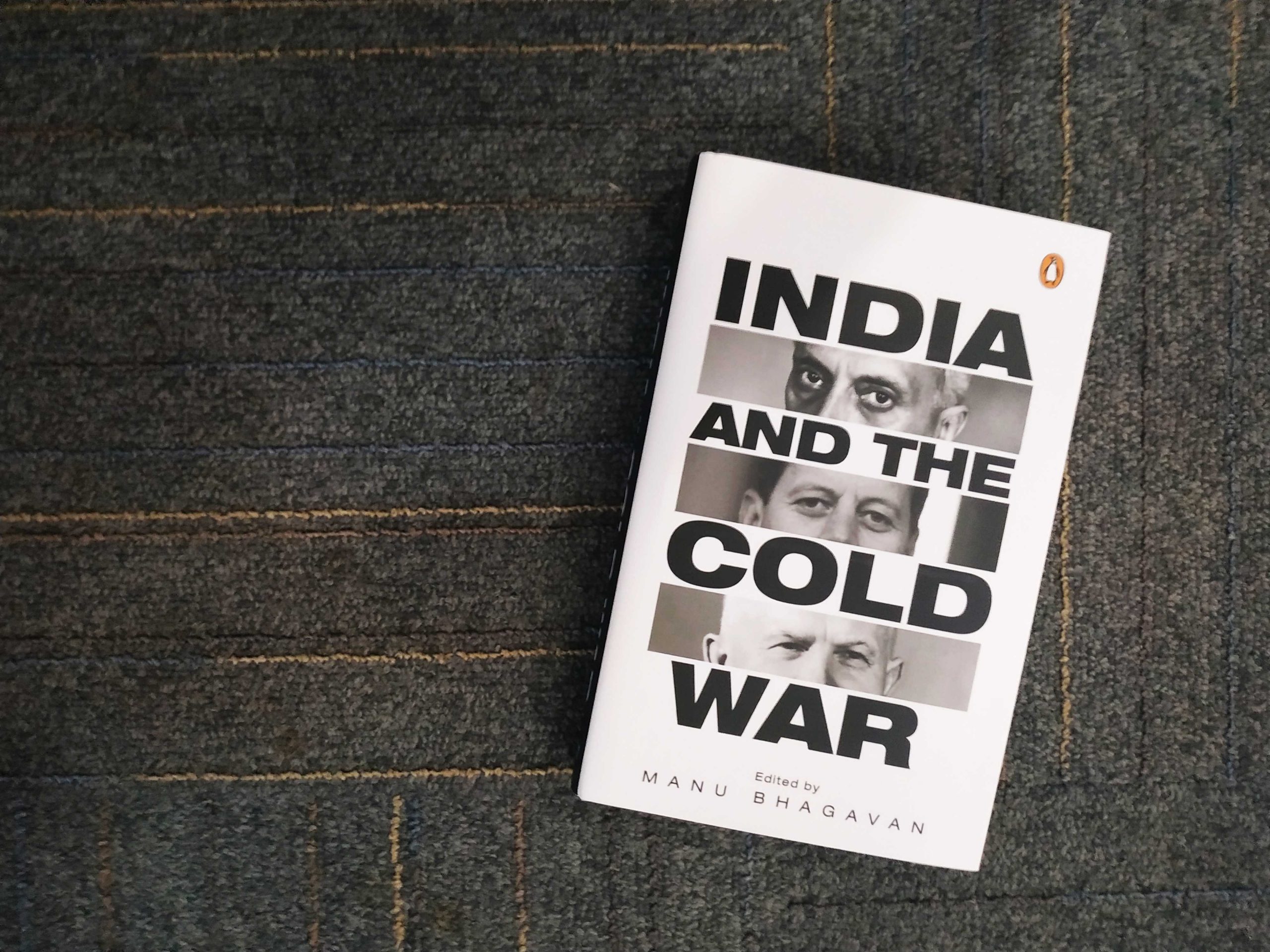
Frédéric Grare is a senior associate in the Carnegie Endowment’s South Asia Program. His book ‘India Turns East’ tells the story of India’s long and difficult journey to reclaim its status in a rapidly changing Asian environment increasingly shaped by the US–China rivalry and the uncertainties of US commitment to Asia’s security.
Here’s an excerpt from the book.
India’s Look East policy cannot be entirely explained by China’s rise and India’s desire to counter it. Yet ongoing bilateral disputes and mistrust between Beijing and New Delhi, coupled with China’s growing economic, political, and military role in Asia and beyond, have been important motivators behind India’s engagement with the region. India’s rich and evolving ties with countries in Southeast and East Asia have been partly but increasingly molded by China’s rise.
The relationship between India and China is complex. It includes territorial and border disputes and elements of rivalry for political dominance in Asia, but also strong economic incentives for cooperation. Many (if not most) components of the India-China relationship are of a strictly bilateral nature. Yet these bilateral issues also affect India’s larger regional policy. It is therefore necessary to analyze the various determinants of the relationship between Beijing and New Delhi and the ways in which India’s relationship with China has shaped its interactions with the broader regional community. The Look East policy is consequently an attempt not only to balance and deter, but also, and perhaps more importantly, to engage China at the same time. India seeks to create a virtuous cycle, by which engagement with Asia will not only mitigate the consequences of the capacity gap between India and China but will also, over time, provide India with the economic, military, and political resources necessary to alter the Asian power structure in its favour.
This chapter does not intend to recall the combined histories of China and India since time immemorial or even since independence. Nor does it aim at establishing a narrow correlation between India’s diplomacy vis-a-vis China and the development of the Look East policy. Instead, it identifies key characteristics of the evolution of the relationship and analyzes the various dynamics at play between the two countries since the early 1990s in order to better understand both India’s approach to regional relations and the way the India- China relationship might play out in the future, specifically with regard to the Asian power structure. By pointing out some obvious gaps in the rhetoric of some Indian strategic circles and the reality of a policy whose initial objectives were only secondarily linked to China, it also seeks to define the constraints under which India’s diplomacy is operating.
The India-China relationship leading up to and following the LEP For India, conflict with China is not an abstract concept. It is a painful, real memory. In November 1962, disputes over the demarcation of the McMahon Line, the border inherited from the colonial era, escalated into a full-scale war. China defeated India in less than a month and withdrew to the current Line of Actual Control (LAC). This humiliating episode has had a dramatic impact on the bilateral relationship—the trust deficit between the two countries has never disappeared—but also on New Delhi’s larger foreign policy which became almost entirely reactive after this episode.
Following the 1962 debacle, diplomatic relations between India and China were suspended for almost fifteen years. They resumed only in 1976, when both countries exchanged ambassadors. It took three more years for the first official visit since 1960 to take place, when External Affairs Minister Atal Bihari Vajpayee went to China to discuss the border issue and China’s support to insurgent groups in Northeast India. China’s attack on Vietnam, following the latter’s invasion of Cambodia, interrupted the visit but did not end the dialogue between the two countries.
In May 1980, soon after her re-election, Indira Gandhi met Chinese premier Hua Guofeng at Tito’s funeral in Yugoslavia. The meeting led to the June 1980 Chinese proposal of a “package deal” institutionalizing the status quo, which India refused. The same year, however, India informed China that it was ready to resume the process of normalization. An annual dialogue at the level of vice-ministers started in June 1981 and continued until 1988 when Rajiv Gandhi visited Beijing, the first visit an Indian prime minister had made to China since 1955. India dropped its earlier demand “of asking for settlement of the border as a precondition for any improvement in relations in other fields.” Two joint working groups were established to deal with trade negotiations and the border issue.

Why Osho was inspired by Pythagoras?
Pythagoras, as we know, was not just a mathematician – he had the power to explore the workings of the inner mind and the outer world. The wisdom of Pythagoras influenced Osho to embark on matters of politics, love and meditation, obedience and surrender.
Pythagoras, the spiritual and divine master stirs an effect in Osho’s ‘Philosophia Perennis’. Osho, in this volume, speaks of the little-known teachings of Pythagoras.
Here’s an excerpt from the book.
The truth of Pythagoras, the truth of the greatest synthesis ever attempted, can trigger a process in you, can start something so immense, about which you could have never have dreamed. That is the whole purpose of satsang: being in communion with a master. His presence, his utterances, his silences start working on you—sometimes even in spite of you. Sometimes you become aware of those processes, sometimes you are not aware of them; they start working underneath your consciousness. One day, they explode into a great blossoming.
Pythagoras really tried the impossible, not only tried, he succeeded. But the world wants to live in division, because the world can only understand conflict. It cannot understand synthesis. Synthesis can only be understood when some synthesis inside you starts happening; otherwise synthesis is non-understandable, will be misunderstood.
Everybody was against Pythagoras. All religions, all sects, all the so-called gurus of those days were against Pythagoras. In fact, they should have been there for him because he was bringing together all the scattered fragments of truth. But it hurts . . .
If I say that the Koran is true, as true as the Vedas, and people understand this, then both Mohammedans and Hindus would be tremendously happy. But that doesn’t happen; both become angry. The Mohammedan becomes angry because I have compared his holy book to an ordinary book, the Vedas; the Hindu becomes angry because I have compared his holy book to an ordinary book, the Koran. They both become angry because their egos are hurt.
You can understand what must have happened to Pythagoras because it is happening to me, it is happening to you, the same process. Hindus are against it, Mohammedans are against it; Jains, Buddhists, and Christians are against it. Why?
I am bringing Christ, Buddha, Mahavir, Zarathustra, Lao Tzu and Krishna to the highest possible synthesis, but still they are all against it. The reason is: they are divided within themselves. They can only understand that which they are. You can never understand anything beyond your consciousness. If you are split, you can only understand a split world. If you are in a subtle harmony inside, only then will any harmony happening outside be understood.
It is good that you felt great gratitude arising in you listening to the synthesis. It shows that something has started becoming integrated in you—something that is bringing you together, that is creating a kind of unity between the two hemispheres of your brain, the left and the right.
These two hemispheres of the brain have to be understood, and very deeply, because much depends on that. Now scientists are also in deep agreement with the ancient mystic lore that unless these two brains are bridged and bridged rightly a man remains schizophrenic. They are bridged, but in a very, very small way; just a small thread bridges them. That thread can be cut.

Excerpt from 'Bharat: The Man Who Built a Nation'

Dr Vineet Agarwal brilliantly retells the story of the son of Dushyant and Shakuntala, the grandson of Brahmarishi Vishwamitra in his latest book, Bharat: The Man Who Built a Nation.
Here’s an excerpt from the book.
Voices filled the royal hall of Hastinapur, bouncing off the two dozen marble pillars that supported the high vaulted ceiling. Wide latticed windows provided illumination as well as ventilation to the cavernous hall that was full of people watching the royal debate.
Aileen, ruler of the Puru kingdom, sat on a beautifully carved sandalwood throne that had been fashioned to resemble the vehicle of the moon god, the founding father of the Chandravansh. It was shaped like a chariot drawn by eight antelopes, and the king occupied the central seat, sheltered by a silver umbrella. The elderly king was presiding over a debate between his eldest son and the royal council. Of his five sons, Dushyant, the eldest, was quite simply the best.
Since the day he had first stepped into the court, the crown prince had shown a flair for solving the tricky situations that arose in the running of a kingdom. Dushyant was almost twenty-five now, and towered over his sire. Aileen saw a glimpse of his own younger self in him; they had the same tan complexion, sharp nose and dark eyes but the king had a greying beard and his face had assimilated fine lines from years of looking after the kingdom, while his son’s visage had the freshness of youth. Rigorous training had made Dushyant’s body lithe like that of a cheetah and his mind as sharp as a needle. He was practical and perceptive, and even now seemed to be winning the debate that had almost reached its conclusion.
For more than a prehar now, the councillors and the prince had been debating the need to change old policies followed by the kingdom—three hours and counting. Aileen had been trying to get his council to formulate new guidelines for more inclusive development, but to no avail. Change was not easy for anyone, let alone senior members of the court who were set in their ways and accustomed to their lavish lifestyles, but the king hoped that his son would be able to convince them.
Rising to his full six feet, Dushyant addressed the assembly emphatically, ‘The time has come for Hastinapur to introspect. We must decide which of our traditions are redundant and which can be retained. As the wielder of Shiva’s axe, Parshu Raam showed us, there is no place for practices that encourage corruption in this new world order.’
Aileen watched the seasoned councillors wince, a tiny smile playing on his lips. The use of Parshu-Raam’s name was a clever touch. Over the past year, the son of Rishi Yamdagni had gone on a rampage, annihilating autocratic rulers from the Himalayas to the southern ocean, paving the way for a new and just class of kings. Brahmins, Vaishyas and Shudras were the new Kshatriyas of Nabhi-varsh and what remained of the old guard was still haunted by the prospect of Parshu Raam’s return. Aileen himself had been lucky to escape with his life. His superior, Kartavirya Arjun, the emperor of the world, had not been so fortunate.
Dushyant’s closing argument had made even the most reluctant of councillors agree to the demand for modernization and as they passed a unanimous motion in favour of the idea, Aileen dismissed the court for the day and called his son to the throne.
‘My son,’ he said in a tone that betrayed his satisfaction, ‘seeing the way you have convinced the senior councillors to change their stance for the benefit of the people, I am confident that you are quite ready to look after the affairs of this kingdom. Acharya Dirghatamas, other senior members of the family and I concur that the time has come to pass on the crown of Puruvansh.’

Bollywood: The Films! The Songs! The Stars! Foreword by Amitabh Bachchan

Who isn’t enchanted by the glitz and glamour of the world’s largest cinema industry AKA Bollywood?
With Bollywood: The Films! The Songs! The Stars!, be mesmerized by the glamour and colour of Bollywood. Known for their glittering costumes and epic song-and-dance routines, the charming movies produced in Mumbai have captured the hearts not just of Indians but of people the world over.
Here’s what Amitabh Bachchan has to say in the foreword of this lavishly illustrated book.
I abhor the title of this book. The Indian Film Industry is what I shall always refer to as Cinema in India. We are an independent creative industry and not a derivative; any attempt to imply otherwise, shall not find favour with me.
But the absence of any kind of film documentation is another malaise that has been of great concern to me; one that I lament greatly. To find a global publishing house now wanting to tap into “the increasing interest in the Hindi film industry from national and international quarters” is indeed most laudable.
Hindi cinema, indeed the entire cinema in India, is the largest film-producing unit in the world. To me it has always played the role of a unifier, an integrator. When we sit inside that darkened hall we never ask who the person sitting next to us is – his or her caste, creed, colour, or religion. Yet we enjoy the same story, laugh at the same jokes, cry at the same emotions, and sing the same songs. In a world that is disintegrating around us faster every day, where can one find a better example of national integration than within those hallowed portals of a cinema hall? There are not many institutions left that can boast or propagate such unity.
I once asked a Russian gentleman in Moscow what it was that attracted him to Hindi cinema. He replied: “When I come out of the theatre after watching a Hindi film, I have a smile on my face and a dry tear on my cheek!” There can be no better assessment of our films than this – and that too from an individual who was not an Indian. But my father, the great poet and litterateur, Harivansh Rai Bachchan, summed it all up most succinctly. On asking him one day what Hindi cinema meant to him, he said: “I get to see poetic justice in three hours! You and me shall not see this in a lifetime… perhaps several lifetimes!”
SMM Ausaja, a friend and a passionate film admirer, curator, and journalist, contributes to a section of this book. My wishes to him and to the publication.
