Publish with Us

Follow Penguin

Follow Penguinsters

Follow Penguin Swadesh

7 Quotes that Sum up the Brilliance of Chanakya’s Wisdom

Chanakya was one of the best strategic thinkers the world has ever seen. In the fourth century BC, he wrote the Arthashastra, an unrivalled political treatise that has since been used by leaders across the globe.
In Inside Chanakya’s Mind, Radhakrishnan Pillai, the best-selling author of Corporate Chanakya, takes us deep into the teachings and philosophy of Chanakya. He will guide readers through Kautilya’s art of thinking through his very practical and innovative approach.
Here are a couple of quotes from the book that highlights the brilliance of Chanakya’s mind.
7
6
5
4
3
2
1

—-

blog1

Introduction to Aanvikshiki – An Excerpt

Let me begin with a story.
There was once a child. Whenever he did something wrong, others used to tell him, ‘Why are you making so many mistakes? Why can’t you understand things well? Can’t you think properly?’
When the child went to school, he was brought up in an examination system instead of an education system. When he did not do well in his exams, his parents and teachers used to say, ‘Why can’t you study properly? Think about what we tell you, otherwise you will not only fail in your exams but also fail in life.’
As a teenager, he fell in love and had his heart broken. His friends told him, ‘We had told you not to go after that girl. Why did you not take our advice?’
When he got out of college and worked in various companies, his bosses would say, ‘Your effort is important in work—but what matters more is the result. Think about it and you will succeed in your career.’
When he got married, had children and was bestowed with the responsibilities of a householder, the elders in the house would advise him. They said, ‘Remember and understand your duties. No one can run away from it. It is part and parcel of life.’
Then came a stage in his life when his children were settled and he was close to retirement. His friend asked him, ‘Have you thought about what you are going to do post-retirement? Do you have a plan?’ He did not.
Finally, he was old and alone. His wife had passed away, his children and grandchildren were busy with their own lives, and he had nothing much to do. He had all the time in the world to look back and ponder over his life.
While reflecting upon every stage of his life—as a child, student, teenager, professional, homemaker, he was constantly advised by others to ‘think’, to succeed in life and to avoid making mistakes.
He hadn’t really got a chance to do an in-depth reflection on the word ‘think’ at all.
Now, for the first time in his life, he was ‘thinking about thinking’.
But was it too late?
Blog creative - 3.png
All his life, he had been told by others to think. But no one actually taught him ‘how to think’.
Does the story tell you something? Does it ring a bell inside your head?
Do you think this story has a connection to your life?
If you really ‘think’, you will understand that this is a story about all of us. This is a story of every man and woman, every child, every teenager, every professional, the young and the old, the married and the unmarried.
This is the story of you and me.
Strange but true, one can lead one’s whole life without thinking.
What a tragedy.
Now let us reverse this story.
Imagine if you were taught how to think from the very beginning, the moment your thinking faculties develop. Instead of loading the child with information, if one taught the child the right methods of thinking—analysis, decision-making, prioritizing, planning, structuring, critical evaluation, logic—things would be different. You would question when questions are required. Accept others’ views where it is necessary. Think through all the consequences. Take calculated risks and, without doubt, you will be far more successful. You will be successful not only at the very end, but also at every stage of your life.
In this book, we present something very interesting: Some methods and techniques of thinking, the philosophy of thinking and alternative ways of thinking. This book is simple yet profound. It will lead you to something that will ignite your mind and intellect.
In a sure yet subtle way, it will change your thinking. It will add a new dimension to your views about life in general. I hope the book becomes a silent killer. It will kill various misassumptions you had in the past. It will kill your ignorance and make you happier. If understood from the right perspective, it will kill your ego. You may die internally once, only to live a full life again.
Most importantly, you will enjoy this journey—it is fun. It will help you discover yourself all over again.
Let us call this process an adventure in thinking.

———

Blog creative - 4.png

My First Earning – An Excerpt

June 1979
For several days, I stayed at home. Initially, I helped my mother in her household chores. I also liked to look after the cattle. I woke up early in the morning, took the cattle for grazing along the hills and also helped in milking the cows. When I prepared the husk for the cattle, it used to get stuck all over my body. My mother then helped me tidy up. After my bath, I would bathe the cattle and in the evening, I again took them for grazing. This routine continued for around three months. By now, the monsoon had arrived and the work at the farm was increasing. Hence, I changed my routine and started taking an interest in working at the farm. The processes of plantation intrigued me and I began to help my father in the farm.
One day, when I was with my father, the mat (account- keeper) came to him and informed him about a plantation job available in the village. He said that every worker would be paid a sum of Rs 5 per day.
As soon as I heard that, my eyes gleamed with excitement. For me, a sum of Rs 5 per day was a huge amount. It struck me that not long ago, we didn’t even have Rs 2.50 for my school fees. Compared to that, Rs 5 seemed like a jackpot! I was motivated to work hard for it.
I was lost in excitement. Earning this money would help me pay the fees of two of my siblings. I felt as if I had landed an incredible opportunity. I wanted to do the job anyhow and informed the mat about my intentions. He looked at me with scorn and left the place. His reaction was natural as I was only eight years old at that time and the task demanded power and stamina. No eight-year-old was fit for the job.
But my mind would not take no for an answer. I needed the job and was ready to work hard for it. However, I was an eight-year-old at the end of the day and had to ask my father for help. Initially, he was reluctant and refused to listen, but later, my determination to help with the family’s situation made him talk to the mat.
The very next day, I was in front of the mat once again. My father tried to convince him about my abilities. I was disappointed by his earlier refusal to let me work for him and did not want to be subjected to it again. He initially hesitated but when I reassured him of my dedication, he agreed and explained how to go about the work.
The work was with the forest department for its new campaign to plant some trees in the village. I had to work at the plant nursery, which was situated some 4 kilometres down the hill. I had to collect the plants, carry them on my back, travel uphill to the village for another 4 kilometres and plant them. Once all the trees were planted, I had to go back again and get more seedlings.
It was the day before I was to start work. The excitement about my new job didn’t let me sleep. The next day I woke up before sunrise. Once awake, I saw that it was raining outside. In the hills, when there is heavy rainfall, it becomes difficult to walk down the hill. The soil becomes wet and there are high chances of losing balance, slipping on the mud and hurting oneself badly. Hence, we were often advised to not go down the hills during heavy rains. That day too, because of the harsh weather, I was told by my parents to not go out. But nothing would deter me. I felt as if this job was the biggest milestone I had crossed in my life and not even the heaviest rains could stop me.
blog-image-1
I didn’t listen to my parents and rushed out of my house. Since I had been told to reach the place by 8 a.m., I picked up my pace. The way to the nursery in the heavy downpour wasn’t easy at all. I slipped a few times and the constant rains made it more and more difficult. But I didn’t look back and continued walking.
When I reached the nursery, to my utter shock and confusion, I couldn’t see a single soul there. There was absolutely no one around! I was in despair. The sudden happiness and excitement of reaching the nursery, working and earning was shattered. I roamed about and found a guard sitting there. When I inquired, he replied that due to the heavy rains no one had shown up yet. Seeing my dejected face, he suggested that I could wait if I wanted for them to arrive.
I decided to wait. By now, the rain had slowed down. It was merely a drizzle and yet no one came. The guard told me to come back the next day. I left the place completely dejected. I didn’t sleep a wink that night. It was a dark and foreboding night. The moon was nowhere to be seen as if it was hiding behind a curtain of clouds. Just like the moon, I felt lost in desolation, trying to hide my feelings and my tears in a ragged blanket. I had been looking forward to my first earning but the day ended with no money in my hands. The rains had completely stopped by then and the sky was pitch- dark and still. I kept on tossing and turning throughout the night, waiting for sleep.
In the morning, I woke up with the same enthusiasm. The gloom of the previous night seemed like a forgotten thing. I got ready and rushed to the nursery. Fortunately, the work was in progress and the presence of the mat was a sign of relief for me. After talking to him, I picked up a sack full of seedlings and a spade. The mat instructed me to complete at least two rounds in the day, so I carried the sack of plants on my shoulder and went up the hill with great enthusiasm. At that time, I felt as if the sack of plants was no ordinary sack; it was a magic box which would gift me my first earning. I kept on walking briskly for the next two hours, planted the seedlings at the designated place and walked down to the nursery to collect more seedlings. The same routine continued for the entire day. I was so involved in the work that I even skipped lunch. Food was the last thing on my mind.
By evening, I realized that I had actually enjoyed the work and had developed an interest in planting the seedlings. When I went to the nursery, the mat was happy as I had completed three rounds of planting. He took out a small bag from his pocket and took out a note with five written on it and gave it to me.
That moment is still fresh in my mind, as if it was only yesterday. It was an inexplicable feeling, something that till date counts as one of my happiest memories. My first earning! I was on cloud nine.
When I reached home, my mother was still in the kitchen waiting for me. I looked around for my father and spotted him lying on a khaat, a string bed, in the courtyard. I gave him the money. He stared at me for a few minutes. I saw tears welling up in his eyes but at that time I was too young to understand his emotions. He slowly patted my back and told me to give the money to my mother.
Perhaps, this was the moment when I stopped being a child. In just a day, I had shed the cloak of childhood and became an earning member of my family.

————-

81zdcymqgel
An inspirational and emotional roller coaster, The Man who became Khali is a no-holds-barred account of a man who not only went on to win the World Heavyweight Championship but also conquered his inner demons and physical anomalies.
This is the story of how Dalip Singh Rana became the international icon – The Great Khali! Get your copy today at Amazon.in or from any leading book store near you.

Things To Leave Behind: Romancing the past

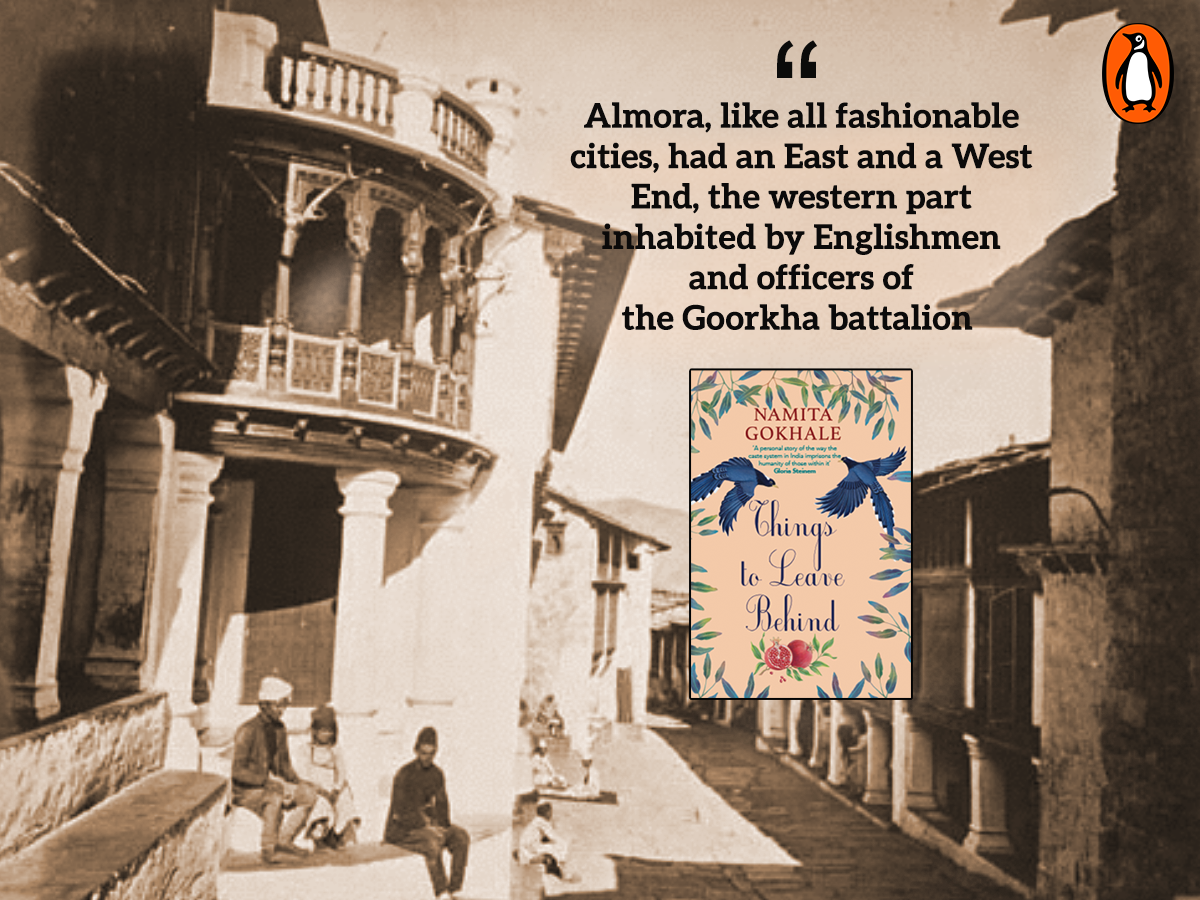
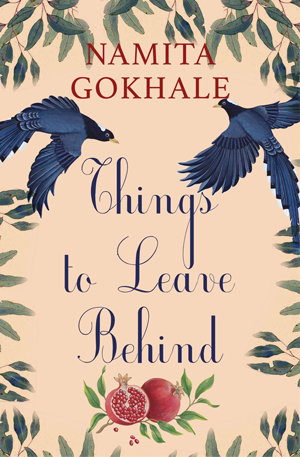
Set in the years 1840 – 1912, Namita Gokhale’s new novel ‘Things to Leave Behind’ brings alive the mixed legacy of the British Raj. The third in her Himalayan series, it evokes the breath-taking beauty of the Kumaon region. Set in a past we have not quite left behind, it chronicles the struggle for love and freedom of three generations of Kumaoni women and the emergence of a fragile modernity at a time of intense change.
Things to Leave Behind: The last novel in the Himalayan trilogy
creative-12
The book chronicles the mixed legacy of the British Indian past.
creative-19
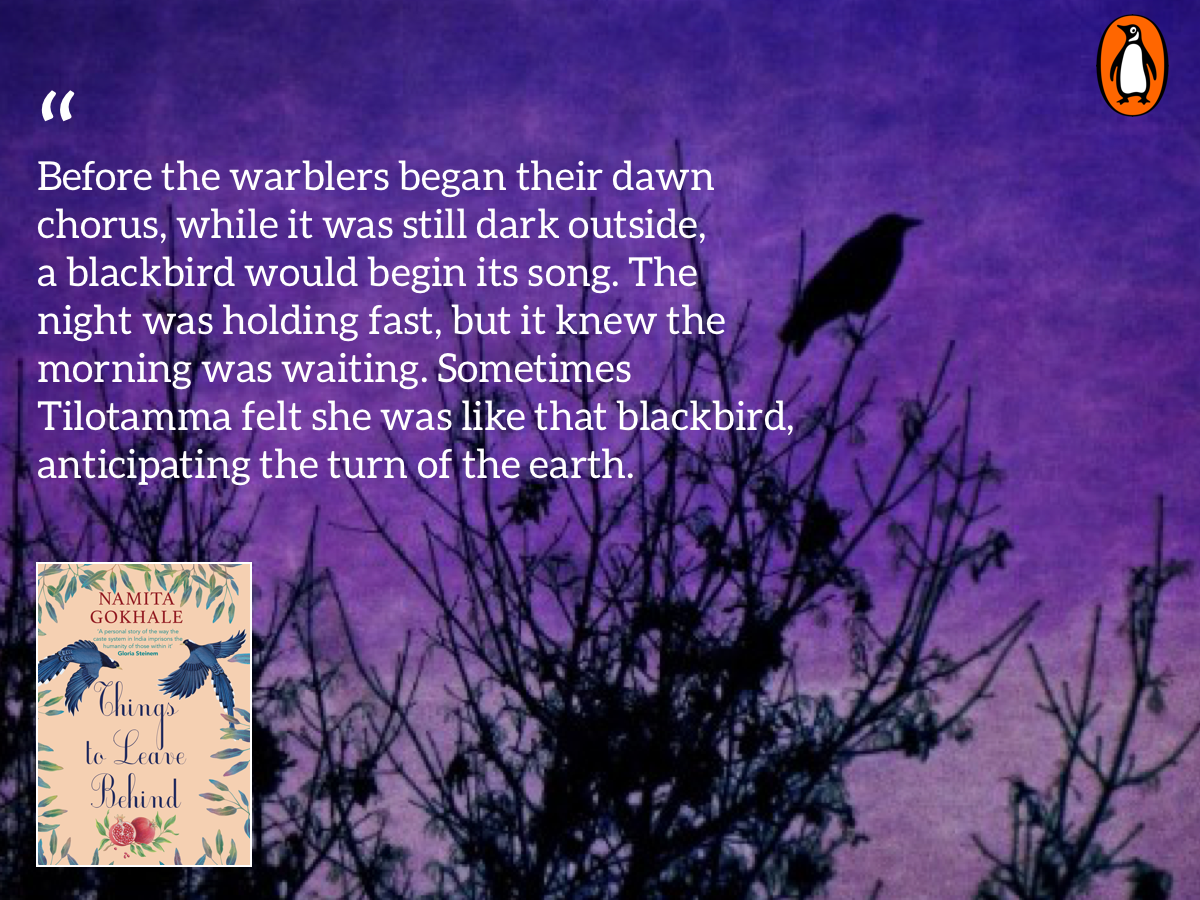
The strong and enigmatic woman characters who are at the heart of Things To Leave Behind
creative-16
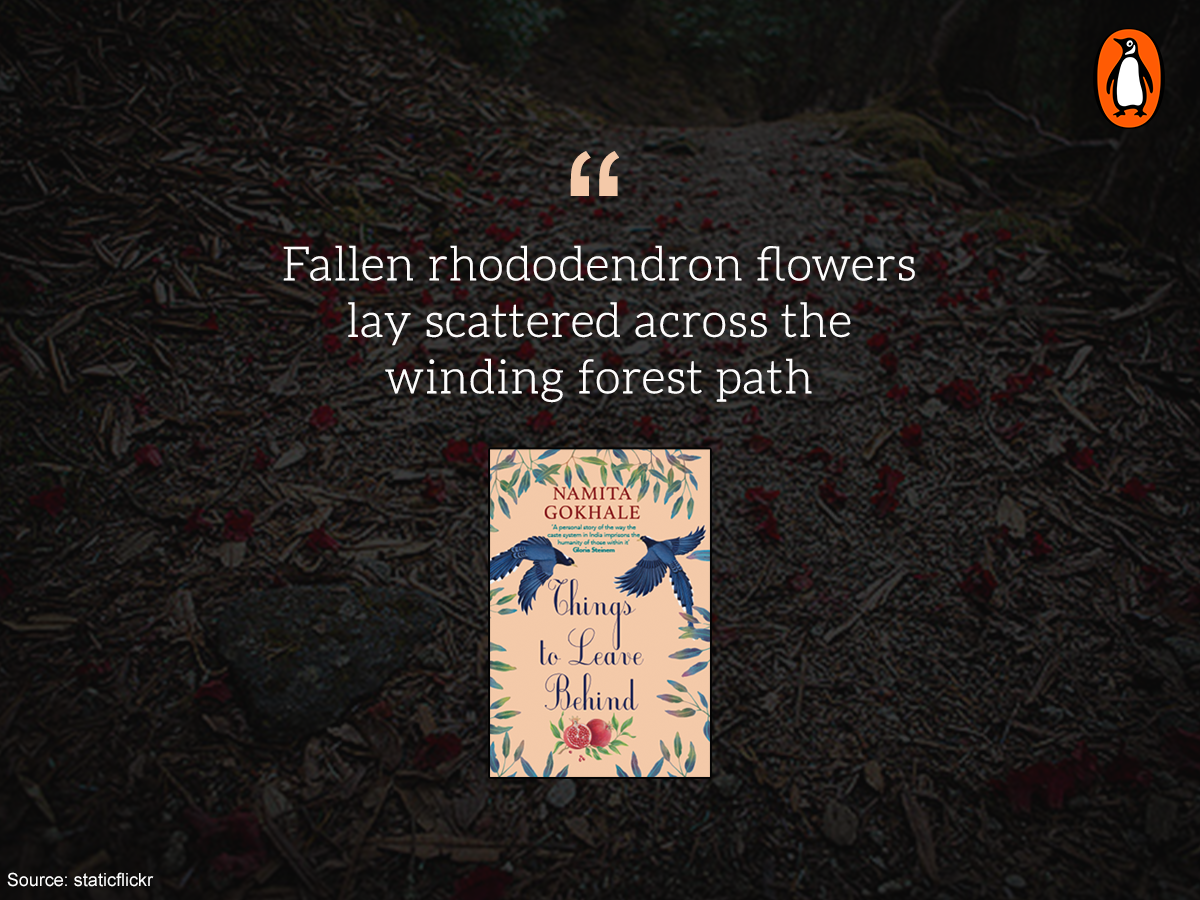
Things To Leave Behind evokes the landscape, the ferns and flowers, trees and clouds, of Kumaon.
creative-17
At the heart of the novel lies one singular painting: a portrait of love, longing and courage.
creative-8-2
The story brings a not-so-distant past to life.
creative-5-1
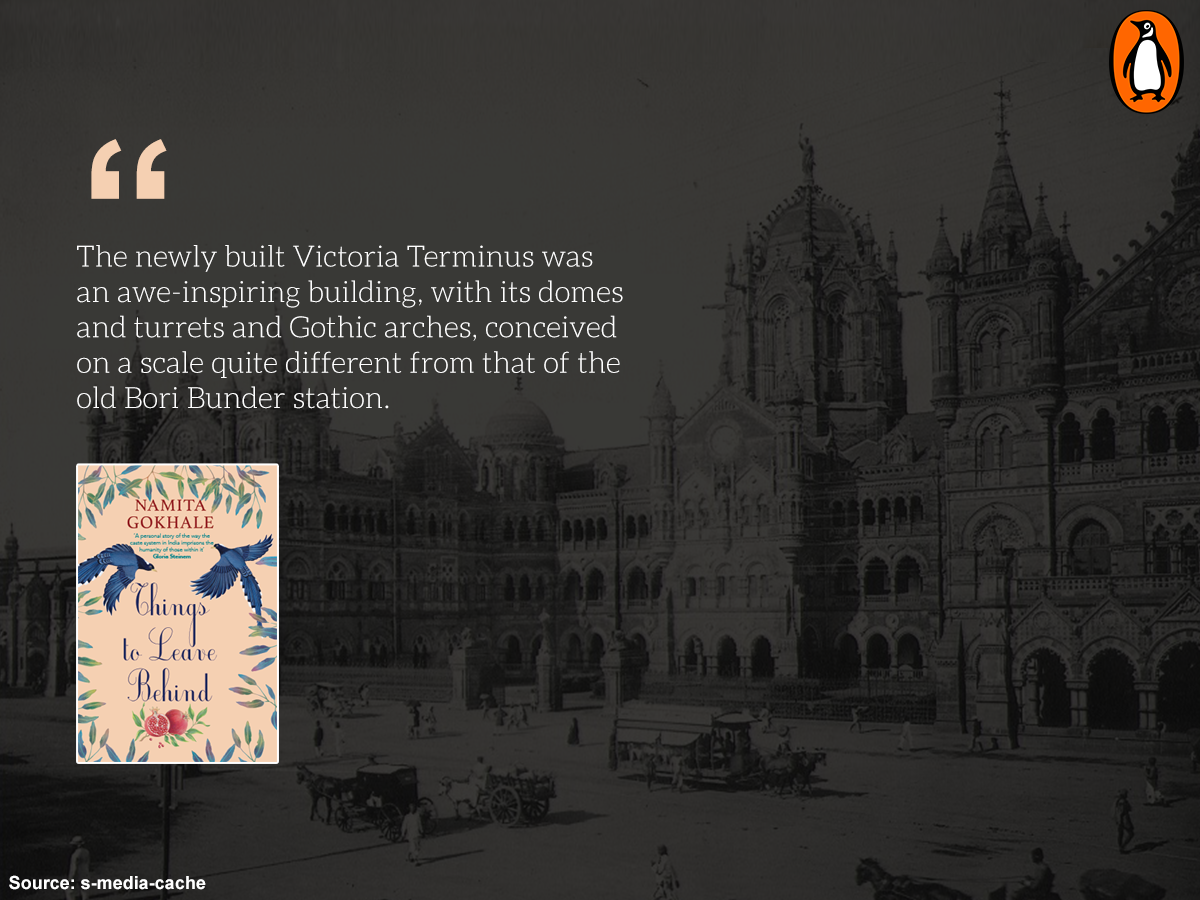
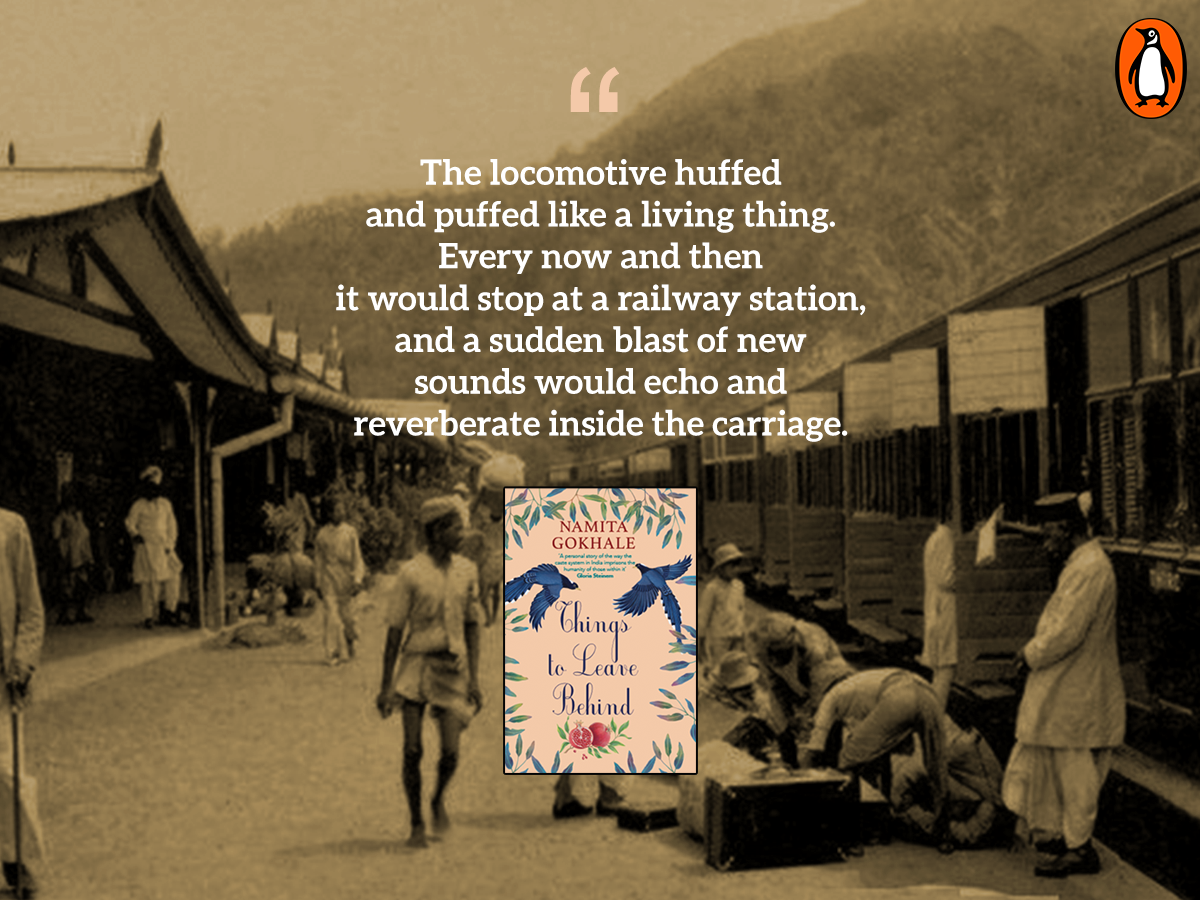
The history of rail transport in India began in 1853, forever changing the history of the subcontinent.
creative-20
Forming a bridge between the past and the future
creative-1-2
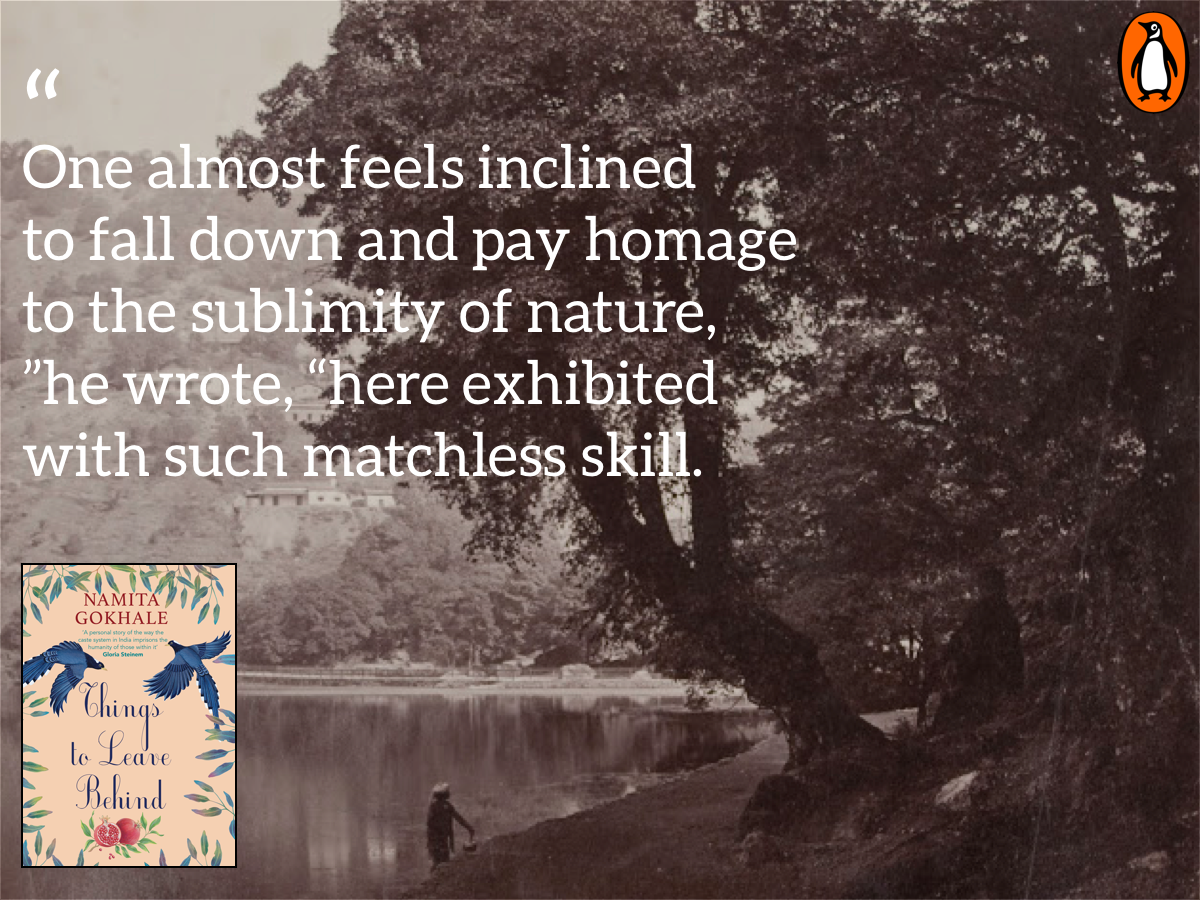
Witness nature like never before.
creative-2-2
about-things-to-leave-behind-by-namita-gokhale-1
Get the book here.
 

The Untold Vajpayee: An Excerpt

Something Is Afoot

15 May 1996. A man in his seventies alighted from an Ambassador car, paused to steel himself against a spasm of vertigo, wiped his broad forehead in the sweltering heat of summertime Delhi with a handkerchief, and began walking towards the office of the President of India.
Raisina Hill, which houses the stately, imposing offices of the federal government, simmered in the sun. For want of shade, even the pigeons had receded into roof voids. The old man’s baggy dhoti didn’t conceal his slightly faltering gait, and though he was panting mildly, his face had the relaxed composure of a man just about to break into laughter, his eyes half closed. Affecting restraint, the clean-shaven man with oiled grey hair muttered to his companion in a soft, conspiratorial tone that was quite uncharacteristic of his oratorical self: ‘Bhai, maamla gadbad hai (something is afoot).’
Atal Bihari Vajpayee was fond of such Orwellian doublespeak, which very often left people perplexed and scurrying to decipher the meaning. Since he knew through experience that no such effort made any good sense, his son-in-law, Ranjan Bhattacharya— Vajpayee’s companion on this hot May afternoon—didn’t bother to inquire further. He preferred to wait and see.
Vajpayee and his humble entourage had left his Raisina Road home just after lunch to meet President Shankar Dayal Sharma, who had invited him to discuss the formalities of forming the next government. The just-concluded national elections had thrown up a fractured verdict with no party in a position to create a government on its own or with its prepoll allies. The Hindu right-wing Bharatiya Janata Party, led by Vajpayee, had emerged as the single biggest constituent in the 543-member Lok Sabha, or Lower House of the Indian Parliament, winning 161 seats. In the run-up to the polls, the BJP had said that it wouldn’t stake any claim to form the government unless it had 220–225 seats in the Lok Sabha. But now, it had a new agenda: to keep the Third Front, a loose term for a grouping of non-BJP, nonCongress parties, out.
The Congress party, the incumbent that had ruled India for several decades, had won only 140 seats and the rest of the seats were divided among a constellation of political outfits, several of which saw the BJP as a pariah. This was why Vajpayee had no inkling of the responsibility that would befall him when he drove to the sprawling Rashtrapati Bhavan, home to the viceroys in the days of the British Raj. The idea was to offer a perfunctory gesture of claiming to form the next government. The BJP was not exactly confident of getting the numbers to ensure a simple majority in the Lok Sabha, 272 seats, with the help of non-Congress, non-Left parties. Still, there was a flicker of hope that in politics, there was always a way to turn adversities into advantages. The BJP, for its part, was ready to reelect Congressman Shivraj Patil as the Speaker if the Congress agreed to abstain from a trust vote of Vajpayee’s government. It also didn’t expect various allies to come together—as they would soon, to form what later came to be known as the United Front (UF) government.
Vajpayee’s car was driven by Majeed, who has been the BJP heavyweight’s chauffeur for a while. Also in the car was a peon of Vajpayee’s. Ranjan Bhattacharya, still an unfamiliar name in Delhi’s power circles, had begun showing signs that he would be the seventy-two-year-old politician’s eyes and ears in the years to come. Vajpayee trusted him, but still called the thirteen-year-long husband of his adopted daughter, Namita (also known as ‘Gunnu’),  ‘Bengali babu’ or ‘Mukherjee bhai’. The BJP veteran was terrible with remembering people’s names, unless they were his buddies from his younger days. He even called his daughter ‘Namrita’ at times and had to be reminded her name was ‘Namita’. But neither Gunnu nor Ranjan minded.
Vajpayee returned less than half an hour later after his meeting with Sharma with a file in his hand. He stayed silent for several minutes. Then he told Bhattacharya that he was carrying a letter from the President requesting him to take the oath of office as the next prime minister of India. Sharma, who was fond of Vajpayee, had even specified the time of the swearing-in, after consulting priests for the auspicious moment. Vajpayee had sensed that his visit was more than just a ceremonial one from the reception he got as soon as he arrived at the presidential palace. He guessed that ‘something was afoot’ and the reverence on display at the gates was confirmation that the President was on his side.
From the Rashtrapati Bhavan, Vajpayee drove back to announce the presidential nod to his party and the public. What followed was disbelief among rival politicians who were busy cobbling a post-poll alliance to secure a simple majority in the House. The walls along the corridors of power clamoured with whispers of shock and gossip.
The next day, Vajpayee became the tenth prime minister of India, a watershed moment for his party, which had the ignominy of winning a mere two seats in the Lok Sabha twelve years earlier. Back then, Congress Prime Minister Rajiv Gandhi had poked fun at the BJP members in the Lok Sabha using the famous family planning slogan of the time: ‘Hum Do, Humare Do (We Two, Our Two).’ Pundits would later attribute the BJP’s 1996 victory partly to the soaring popularity of its prime ministerial candidate, Vajpayee.
Hoping to attract support from other parties, Vajpayee made a speech to the nation, outlining the BJP’s priorities. He argued that inviting the party that had the maximum number of seats to create the next government was the most constitutionally correct decision. He also stressed that the post-election camaraderie between several parties in the Opposition had a single-point agenda: to stop the BJP at any cost.
His speech was powerfully evocative and was meant to establish his credentials as a level-headed leader of the country, someone who was a breakaway from the usual mould of Hindu nationalist BJP leaders, someone who was more secular in his thinking:
India is an ancient civilisation. It has always had different sects and religious practices. We do not limit ourselves to one God or one Prophet or a single book. We are a multi-religious country, and we believe in the equality of all religious faiths. It is because of this that we have never had any tension, leave alone a violent struggle, on the correct path to achieve a realisation of God. ‘Sarva panth samabhav’, or equal respect to all faiths, is part of our lives. India never was, and never will be, a theocratic state . . . what happened in Ayodhya on 6th December 1992 was not the result of any pre-planned conspiracy. If problems related with religion are not resolved for long periods of time, then the result is what happened at Ayodhya . . . It is hardly necessary to recall that immediately after the advent of Islam in West Asia, the first mosque was built in Kerala, then ruled by a Hindu Raja. In like manner, soon after the crucifixion of Jesus Christ, the first Church was established in India. These manifestations of different faiths are living symbols of our secular traditions. We will maintain these traditions.
The reactions to his speech in the media were largely sympathetic. An editorial in the Indian Express soon after suggested that ‘Vajpayee appears to have successfully diluted BJP’s untouchability among the people, even if he has not been able to translate that mood for the political classes’. It also added, ‘Even if he loses the battle, he may end up winning the war.’
Vajpayee’s speeches in the last week of May, delivered on the floor of the Lok Sabha during the trust vote on his government, were even more riveting. In his opening note, he recalled how he used to sit in the opposition benches when Pandit Jawaharlal Nehru was prime minister (he entered Parliament for the first time in the second Lok Sabha in 1957) and how his party (earlier called the Bharatiya Jana Sangh, or BJS) had grown in strength and popularity to become the biggest constituent in the House while the Congress had diminished in electoral prowess over the years. Extolling the transformation under way in the political dynamics of the country, he said he was glad that winds of change were sweeping across the country.

***

51a-xbnozll-_sx311_bo1204203200_

Thoroughly researched, supported by hard facts and accompanied by inside stories and anecdotes, insightful interviews and archival photographs, The Untold Vajpayee will open a window to the life and times of a poet-politician.

error: Content is protected !!