Publish with Us

Follow Penguin

Follow Penguinsters

Follow Penguin Swadesh

‘May’ the odds and the books be ever in your favour

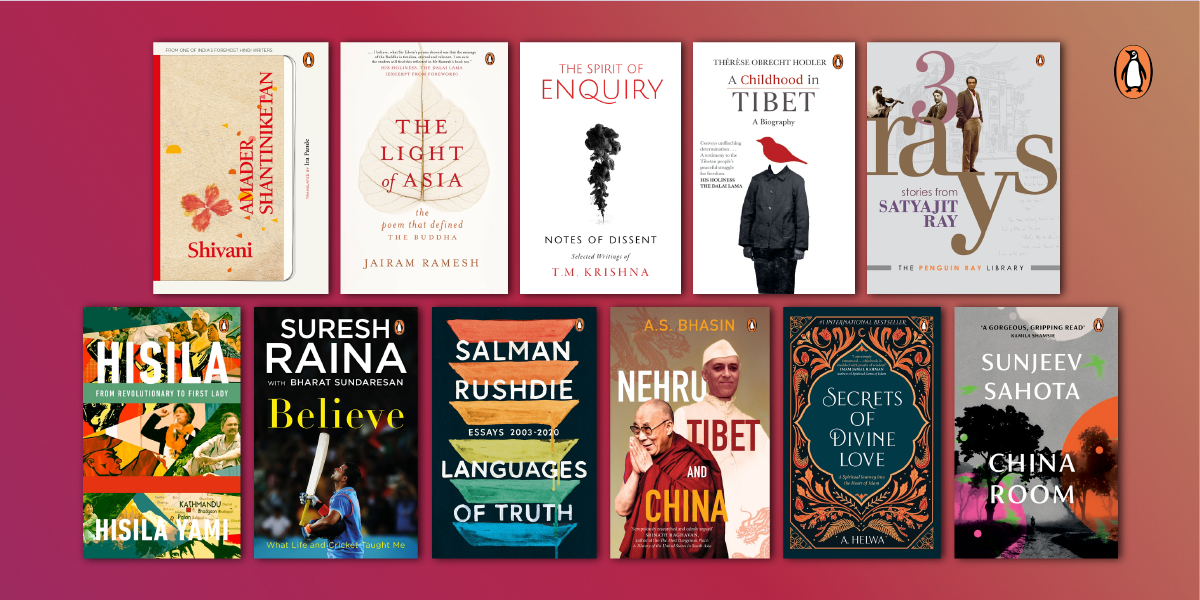
‘May’ is a word filled with promises and possibilities. It is also a word that conveys blessings and best wishes. These are emotions the entire human race has been expressing and feeling toward one another constantly through this difficult period that has spanned over a year. A homograph to this word that is so laden with potential and compassion, is the month we have now stepped into. May ‘may’ have a lot to offer you in terms of comfort and relief, but what we certainly have to offer you this month is an array of our latest releases. May they bring a little light, love, laughter, knowledge and hope into your lives.


Front cover of Hisila
Hisila||Hisila Yami

Hisila

In this fascinating book, Hisila Yami traces her journey from being a young Nepali student of architecture in Delhi in the early eighties to becoming a Maoist revolutionary engaging in guerrilla warfare in Nepal. Yami was one of two women leaders who were a part of the politburo of the Communist Party of Nepal, which led the revolutionary People’s War.
This lucidly written political memoir may talk about gaining political awareness, joining protests, being imprisoned, participating in the People’s War, and later her experiences as the first lady and a minister. But, at the same time, it’s also a narrative that offers glimpses of her personal life. She candidly writes about falling in love and marrying a fellow politician, Baburam Bhattarai, who went on to become the prime minister of Nepal. From how she balanced her political life with motherhood to what it meant to be a woman in the communist party that launched a civil war, Yami narrates an unforgettable account of a remarkable life.


Front cover of Three Rays
Three Rays||Satyajit Ray

Three Rays

Satyajit Ray (1921-1992), through his life, philosophy and works offered a unique aesthetic sensibility, which took our cinema, art and literature to a new height. Ray, an ace designer, music composer, illustrator and a gifted writer, gave us the iconic Feluda and Professor Shonku, loved and revered by millions of readers.

Celebrating his centenary birth anniversary, Three Rays: Stories from Satyajit Ray, the first book in ‘The Penguin Ray Library’ series, opens a window to his brilliance. With more than forty previously unpublished stories, autobiographical writings and illustrations by Ray, this volume opens a window to the Master’s creative genius.



Front cover of Secrets of Devine love
Secrets of Devine Love||A.Helwa

Secrets of Divine Love

Secrets of Divine Love draws upon the spiritual secrets of the Qu’ran, mystical poetry and stories from the world’s greatest prophets and spiritual masters to help you reignite your faith, overcome your doubts and deepen your connection with God. Practical exercises and guided meditations will help you develop the tools and awareness to overcome the inner critic that prevents you from experiencing God’s all-encompassing love.
Through the principles and practices of Islam, you will learn how to unlock your spiritual potential and your divine purpose. This insightful book uses a rational yet heart-based approach towards the Qu’ran that enlightens and inspires towards a deeper intimacy with God.


Front cover of Believe
Believe||Suresh Raina, Bharat Sundaresan

Believe

Believe, Sachin Tendulkar told him – and he took it to heart, getting the word etched on his arm as a tattoo.

In this book, Suresh Raina takes us through the challenges he faced as a young cricketer. He was bullied as a child, but he overcame every adversity life threw at him and never gave up. This is the story of the lessons he learnt and the friendships he built.

Peppered with invaluable insights – about the game and about life – that Raina acquired from senior colleagues, this book will make you believe in the power of hard work, love, luck, hope and camaraderie. It is a journey through the highs and lows in the career of a man who saw his world fall apart and yet became one of the most influential white-ball cricketers India has ever seen.


Front cover of Languages of Truth
Languages of Truth||Salman Rushdie

Languages of Truth

Salman Rushdie is celebrated as a storyteller of the highest order, illuminating truths about our society and culture through his gorgeous prose. In his latest collection of nonfiction, he brings together insightful essays and speeches that focus on his relationship with the written word and reinforce him as one of the most original thinkers of our time.

Gathering pieces written from 2003 to 2020, Languages of Truth chronicles Rushdie’s intellectual engagement with a period of momentous cultural shifts. He delves into the nature of storytelling as a human need in what emerges as a love letter to literature. Rushdie explores what the work of authors from Shakespeare and Cervantes to Samuel Beckett, Eudora Welty, and Toni Morrison mean to him. He delves deep into the nature of ‘truth’, revels in the vibrant malleability of language, the creative lines that join art and life, and looks anew at migration, multiculturalism and censorship.

Enlivened by Rushdie’s signature wit, Languages of Truth offers his piercingly analytical views on the evolution of literature and culture as he takes us on a tour of his own exuberant imagination.


Front cover of Nehru, Tibet and China
Nehru, Tibet and China||Avtar Singh Bhasin

Nehru, Tibet and China

On 1 October 1949, the People’s Republic of China came into being. Power moved from the hands of the nationalist Kuomintang government to the Communist Party of China headed by Mao Tse Tung. All of a sudden, it was not only a new China that India had to deal with but also a Tibet which was under increasing pressure.

Clearly, newly independent India, with Prime Minister Jawaharlal Nehru at its helm, was navigating choppy waters. Its relations with China deteriorated, eventually leading to the Indo-China war in 1962. Today, more than six decades after the war, we are still face border disputes with China that seem to routinely grab headlines. It leads one to question what exactly went on during the emergence of a new China and why have we repeatedly failed to arrive at a solution?

Based on meticulous archival research, this book analyses the events from 1949 to the Indo-China war in 1962 and its aftermath to uncover answers to these burning questions.


Front cover of A Childhood in Tibet
A Childhood in Tibet||Thérèse Obrecht Hodler

A Childhood in Tibet

Tendöl Namling turned 60 in 2019. She was born at the time the Dalai Lama fled from Lhasa and the uprising of his people by the Chinese People’s Army was brutally suppressed. She lived 22 years under Chinese rule. As daughter of a high government official, she underwent the ordeal of ‘re-education’ with full force. All she had from these years are painful memories and crumpled photographs of her with friends and cousins in Lhasa, smiling as if nothing happened. When Tendöl turned 10 her brother was arrested and her mother sentenced to ten years in prison. Tendöl was sent to work in road construction for several years, following which she was allowed to start an apprenticeship as motor mechanic. Thanks to the efforts of her family in exile, Tendöl was able to leave Tibet in 1982. After twenty years of hardship she landed in prosperous Switzerland. She struggled to start her life all over again, but never gave up.

In Tendöl’s words, ‘this little book is dedicated to all the Tibetans who continue to rebel against the Chinese occupation’.


Front cover of The Light of Asia
The Light of Asia||Jairam Ramesh

The Light of Asia

‘The Light of Asia’ is an epic poem by Sir Edwin Arnold that was first published in 1879. It quickly became a huge sensation and has continued to resonate powerfully across the world over the last century and a half. Weaving together literary, cultural, political and social history, Jairam Ramesh uncovers and narrates the fascinating story of this deeply consequential and compelling poem that has shaped our thinking of an ancient sage and his teachings. He brings into this unusual narrative the life of the multi-faceted poet himself who, among other things, was steeped in Sanskrit literature.

Sir Edwin Arnold’s English rendering of the Bhagavad Gita was one of Mahatma Gandhi’s favourites. He was also in many ways the man who may have shaped Bodh Gaya as we know it today.


Front cover of China Room
China Room||Sunjeev Sahota

China Room

A multigenerational novel of love, oppression, trauma and the pursuit of freedom, inspired in part by the author’s own family history, China Room twines together the stories of a woman and a man separated by more than half a century but united by blood.

Mehar, a young bride in the rural Punjab of 1929, is trying to discover the identity of her new husband. She and her sisters-in-law, married to three brothers in a single ceremony, spend their days working in the family’s ‘china room’, separated from the men. When Mehar develops a theory as to which of them is hers, a passion is ignited that puts more than one life at risk.

Spiralling around Mehar’s story is that of a young man who, in 1999, travels from England to a deserted farm, its ‘china room’ locked and barred. In enforced flight from the traumas of his adolescence-his experiences of addiction, racism and estrangement from the culture of his birth-he spends a summer in painful contemplation and recovery, before finally finding the strength to return home.


Front cover of Amader Shantiniketan
Amader Shantiniketan||Shivani, Ira Pande

Amader Shantiniketan

Padma Shri and late Hindi author Shivani’s memoirs of studying at the experimental school set up by Rabindranath Tagore, the Ashram, this charming memoir is a loving homage to a grand institution and its legendary gurus. Written from the perspective of a child, it retains the freshness and innocence of an age when experimental education was not merely a trendy movement. Shivani’s vivid pictures of the Ashram and portraits of her teachers and fellow students remain as alive as they seemed when she first wrote this memoir nearly fifty years ago.

Along with the moving tributes she wrote when some of her beloved contemporaries passed away, this slim memoir is a sort of diptych that captures the spirit of the Ashram and the liveliness of its inmates, many of whom went on to become iconic. Shivani’s recall of her time there takes the reader into an enchanted garden that remains as inspirational to her as it was when she went there a lifetime ago.


Front cover of The Spirit of Enquiry
The Spirit of Enquiry||T.M. Krishna

The Spirit of Enquiry

As a vocalist in the Karnatik tradition, T.M. Krishna eludes standard analyses. Uncommon in his rendition of music and his interpretation of it, Krishna is at once strong and subtle, manifestly traditional and stunningly innovative. His work is spread across the whole spectrum of music and culture, politics and the social sphere; he is at once philosophical, aesthetic and sociopolitical. He asks important questions about how art is made, performed and disseminated. Unabashedly given to rethinking classical paradigms, he addresses crucial issues of caste, class and gender with nuance and openness.

T.M. Krishna’s key writings have been put together for the first time in this extraordinary collection. The Spirit of Enquiry: Dissent as an Art Form draws from his rich body of work, thematically divided into five key sections: art and artistes; the nation state; the theatre of secularism; savage inequalities; and in memoriam. This collection reflects the critical and cultural engagement of one of our finest thinkers, public intellectuals and practitioners of art.
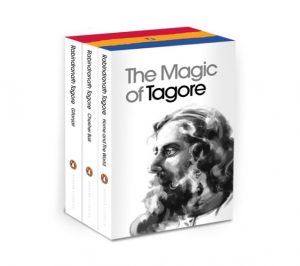
The magic of Rabindranath Tagore explored

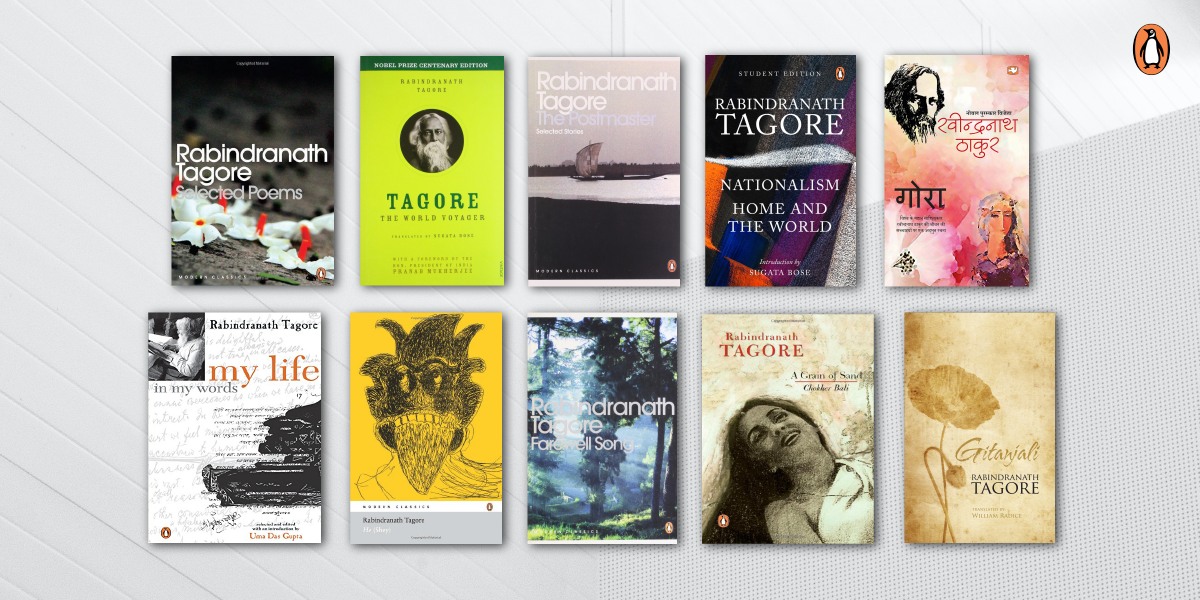
7th May commemorates the birth anniversary of Rabindranath Tagore. His eminence as India’s greatest modern poet remains unchallenged to this day. Tagore was a pioneering literary figure, renowned for his ceaseless innovations in poetry, prose, drama, music and painting, which he took up late in life. His works include novels; plays; essays on religious, social and literary topics; some sixty collections of verse; over a hundred short stories; and more than 2500 songs, including the national anthems of India and Bangladesh.

Born in 1861, Rabindranath Tagore was a key figure of the Bengal Renaissance. He started writing at an early age and by the turn of the century had become a household name in Bengal as a poet, a songwriter, a playwright, an essayist, a short story writer and a novelist.

In 1913 he was awarded the Nobel Prize for Literature and his verse collection Gitanjali came to be known internationally. At about the same time he founded Visva-Bharati, a university located in Santiniketan, near Kolkata. Called the ‘Great Sentinel’ of modern India by Mahatma Gandhi, Tagore steered clear of active politics but is famous for returning his knighthood as a gesture of protest against the Jallianwala Bagh massacre in 1919.

Here is a compilation of some of his work, to celebrate the man.

*

The Magic of Tagore

The Magic of Tagore ||.

A special limited-edition collection of the most beloved works of Nobel laureate Rabindranath Tagore, one of the greatest writers of the Indian subcontinent, featuring two classic novels of profound depth and beauty, and Tagore’s ground-breaking work of poetry. These classic works have been reissued by Penguin Random House India on the occasion of Tagore’s birth month.

*


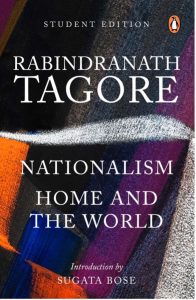
Nationalism and Home and the World

Nationalism Home and the World || .

Combining two classic texts by Rabindranath Tagore, this special edition features a new Introduction by eminent scholar Sugata Bose. Nationalism is based on Tagore’s lectures, warning the world of the disasters of narrow sectarianism and xenophobia. Home and the World is a classic novel, exploring the ever-relevant themes of nationalism, violent revolution and women’s emancipation.


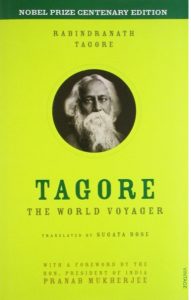
Tagore: The World Voyager

Tagore: The World Voyager || Sugata Bose (Translator)

For long considered untranslatable, Tagore’s songs express most profoundly his romantic and religious perceptions. Prof. Bose aims to convey the artistic value of Tagore’s songs beyond the limits of his province. The first part, ‘Oceanic Songs’, introduces the lyrics and tunes of the songs to a foreign audience through a narrative of Tagore’s travels during which he communicated with the wider world. Since Tagore wrote only forty of his nearly 2500 songs on his journeys abroad, the second part presents a selection of ‘songs in five genres’. This book endeavours to reach Tagore’s songs to people beyond the borders of India, transcending the barriers of language on the wings of music.


The Postmaster: Selected Stories

The Postmaster || .

Poet, novelist, painter and musician Rabindranath Tagore created the modern short story in India. Written in the 1890s, during a period of relative isolation, his best stories—included in this selection—recreate vivid images of life and landscapes. They depict the human condition in its many forms: innocence and childhood; love and loss; the city and the village; the natural and the supernatural. Tagore is India’s great Romantic. These stories reflect his profoundly modern, original vision. Translated and introduced by William Radice, this edition includes selected letters, bibliographical notes and a glossary.


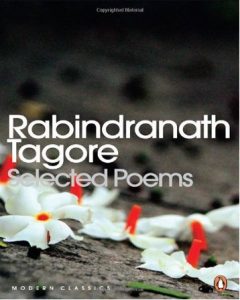
Rabindranath Tagore: Selected Poems

Rabindranath Tagore: Selected Poems || .

The poems of Rabindranath Tagore are among the most haunting and tender in Indian and world literature, expressing a profound and passionate human yearning. His ceaselessly inventive works deal with such subjects as the interplay between God and mortals, the eternal and the transient, and the paradox of an endlessly changing universe that is in tune with unchanging harmonies. Poems such as “Earth” and “In the Eyes of a Peacock” present a picture of natural processes unaffected by human concerns, while others, as in “Recovery14,” convey the poet’s bewilderment about his place in the world. And exuberant works such as “New Rain” and “Grandfather’s Holiday” describe Tagore’s sheer joy at the glories of nature or simply in watching a grandchild play.


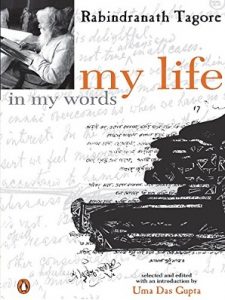
My Life in My Words

My Life in My Words || Uma Das Gupta (Editor)

A unique autobiography that provides an incomparable insight into the mind of a genius. The Renaissance man of modern India, Rabindranath Tagore put his country on the literary map of the world when he won the Nobel Prize for Literature in 1913. My Life in My Words is, quite literally, Tagore on Tagore. The result is a rare glimpse into the world of Tagore: his family of pioneering entrepreneurs who shaped his worldview; the personal tragedies that influenced some of his most eloquent verse; his ground-breaking work in education and social reform; his constant endeavour to bring about a synthesis of the East and the West and his humanitarian approach to politics; and his rise to the status of an international poet. Meticulously researched and sensitively edited, this unique autobiography provides an incomparable insight into the mind of a genius.


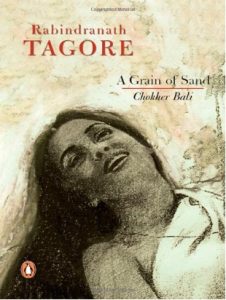
A Grain of Sand: Chokher Bali

A Grain of Sand || .

Chokher Bali is Nobel Prize-winning author Rabindranath Tagore’s classic exposition of an extramarital affair that takes place within the confines of a joint family. A compelling portrayal of the complexity of relationships and of human character, this landmark novel is just as powerful and thought-provoking today as it was a hundred years ago, when it was written.


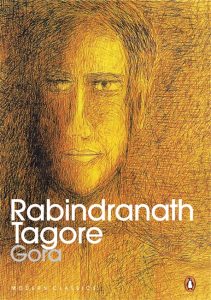
Gora

Gora || .

When Gora had no name, caste, and religion, the circumstances gave him the name – goramohan, caste – Brahmin, and religion – Hindu. While he turned out to be a true advocate of Hinduism, the religion rejected him calling him an outcaste and an untouchable. In this classic masterpiece, Tagore represents the tragedy of Gora in the form of problems faced by all Indian religions.


He: (Shey)

He (Shey) || .

Tagore wrote Shey to satisfy his nine year old granddaughter’s demands for stories. Even as Tagore began to create his fantasy, he planned a story that had no end, and to keep the tales spinning he employed the help of ‘Shey’, a “man constituted entirely of words” and rather talented at concocting tall tales. So we enter the world of Shey’s extraordinary adventures, encountering a bizarre cast of characters, grotesque creatures and caricatures of contemporary figures and events as well as mythological heroes and deities – all brought to life through a sparkling play of words and illustrations in Tagore’s unique style.


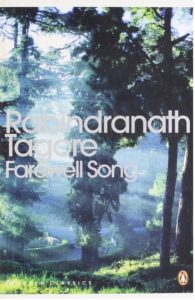
Farewell Song

Farewell Song || .

Rabindranath Tagore reinvented the Bengali novel with Farewell Song, blurring the lines between prose and poetry and creating an effervescent blend of romance and satire. Through Amit and Labanya and a brilliantly etched social milieu, the novel addresses contemporary debates about ‘good’ and ‘bad’ writing, the nature of love and conjugality, and the influence of Western culture on Bengali society. Set against the idyllic backdrop of Shillong and the mannered world of elite Calcutta society, this sparkling novel expresses the complex vision and the mastery of style that characterized Tagore’s later works.


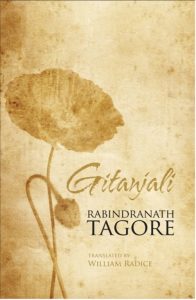
Gitanjali

Gitanjali || William Radice (Translator)

Gitanjali (Penguin Hardback Classics) is a collection of poems by Rabindranath Tagore. This is the English translation of the original Bengali poems. Gitanjali became immensely popular across the globe and was eventually translated into several languages. The book is known for its unmatched style of presentation, fresh poetic structure and spiritual musings.

**


Share this with someone who is fond of – or needs an introduction to – Rabindranath Tagore’s work!


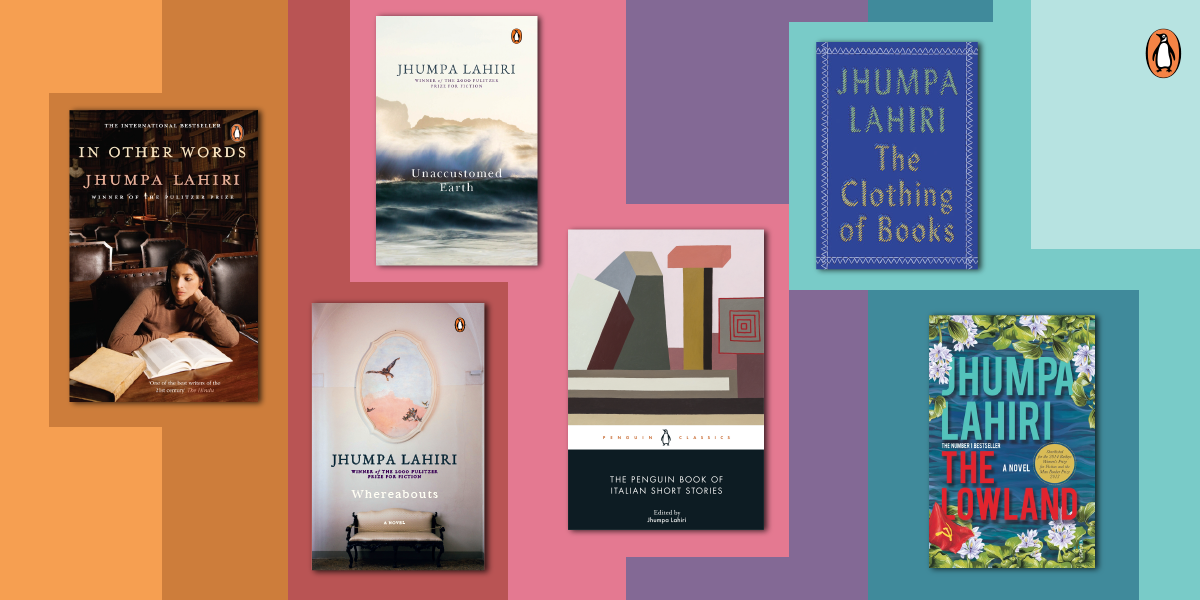
Where to start reading Jhumpa Lahiri’s books

With authors as accomplished as Lahiri, it might be hard to decide where to start with her books, especially when her new novel Whereabouts has just released. Fret not, we’ve got you covered.

As an Indian-American born in England to Bengali parents, Jhumpa Lahiri is the quintessential immigrant. That is perhaps why her insight into the immigrant experience manifests so beautifully through her writing, even tugging at the heartstrings of those individuals who are far removed from such circumstances. Her writings range from fictional to autobiographical in nature, and she has even found success as a translator through her prowess in Italian.

Soon after she made her debut in the literary world with her collection of short stories, she was awarded the Pulitzer Prize for Fiction and the Hemingway Award. A gifted story weaver with an acute awareness of the ‘alien’, she won the Frank O’Connor International Short Story Award, the Man Booker Prize, the National Book Award for Fiction, and many more. Since her list of accomplishments is as long as her list of contributions to literature, we thought we’d ease things out for you by telling you which books to get your hands on first, to enjoy Jhumpa Lahiri’s genius to its full potential.


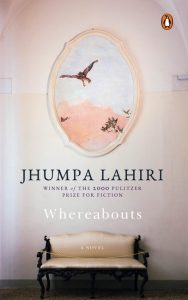
Whereabouts
Whereabouts | | Jhumpa Lahiri


Whereabouts(2021)

Jhumpa Lahiri’s skills as a sensitive author come to the fore in her newest novel, Whereabouts. What’s most distinctive about this novel is the fact that Lahiri has written it in Italian and then translated it into English herself. Her unnamed narrator talks about how solitude has become her “trade”, but shortly after she says it “plagues” her. This quest takes shape allegorically as she wanders through the city connecting with her widowed mother and her friends.

The novel comes together in forty-six short episodes named by their location such as ‘On the Sidewalk,’ ‘At the Ticket Counter,’ ‘By the Sea,’ In My Head,’ and so on. There is a vague sense that the protagonist never quite fits in and her wanderings seem to be a quest to find somewhere to belong. There is something very sad yet beautiful about the entire story. Whereabouts is a novel that beautifully captures the life of a solitary woman in suspension.

The New York Times’ review says ‘Whereabouts is like a photographer’s contact sheet. As our eyes move across the images, sensitive to each reframing, a loose narrative emerges of an Italian woman at a crossroads in her life.’


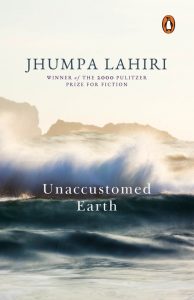
Unaccustomed Earth
Unaccustomed Earth | | Jhumpa Lahiri


Unaccustomed Earth(2013)

Unaccustomed Earth is Lahiri’s second collection of short stories. As with many of her other works, the stories delve into the lives of immigrant characters interacting with a mixed cultural environment. They focus on second-generation immigrants making and remaking lives, loves and identities in a nation not quite their own. We follow brothers, sisters, mothers, fathers, friends and lovers, in stories that take us from Boston and London to Thailand and India. Unaccustomed Earth is a perfect example of the author’s signature style, which includes beautiful prose, poignant wisdom and a taste of some of the innermost workings of the heart and mind of an immigrant.
Blending the individual and the generational, the exotic and the strikingly mundane, these eight haunting, exquisitely detailed and emotionally complex stories are intensely compelling elegies of life, death, love and fate. They represent the dazzling work of a masterful writer.

With regard to this book, The Independent remarks that ‘Lahiri has taken material that is familiar, melodramatic even, yet managed to touch the heights of literary achievement by telling the story on a broad canvas.’


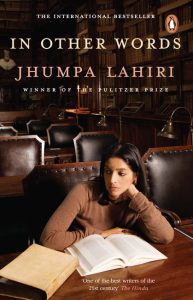
In Other Words | | Jhumpa Lahiri


In Other Words(2015)

Most of Lahiri’s fiction carries autobiographical elements within it. She draws from her own experiences, enabling her to be more believable and relatable to her readers. However, In Other Words, takes this a step further as it in itself is an autobiographical work of writing. Its subject is that of the author’s love, devotion, commitment and desire to possess a language that was not hers.

A young Lahiri had visited Florence shortly after graduating from college, and this began an affair between her and the Italian language. She tried studying it for years but eventually comes to the conclusion that moving to Rome along with her family is the only way to master it. In Other Words is Lahiri’s meditation on the process of learning to express herself in another language and the stunning journey of a writer seeking a new voice.

This book will truly give you a glimpse into the workings of Jhumpa Lahiri’s mind if that is what you are looking for.


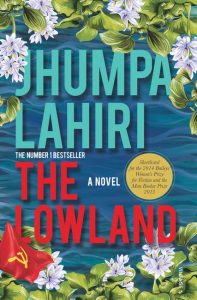
The Lowland | | Jhumpa Lahiri


The Lowland(2013)

This critically acclaimed book was #5 on the New York Times bestsellers list. The Lowland accounts for nearly half a century’s worth of American as well as Indian history through the lives of a single-family. It touches upon the Naxalite uprising in West Bengal in the year 1967, which leads to the two central characters drifting apart, and the older brother Udayan losing his life. Following this, the younger brother, Subhash marries his pregnant widow and takes her to Rhode Island where he maintains the fiction that he is the father. The action then shifts to how this lie corrodes their relationship and the confusion that American customs bring with them.

Lahiri gracefully conveys the shifts in constitution and temperament of her characters. She makes chaos, confusion and pain serene and spins entire lives around such emotions.

The Washington Post in a review for The Lowland says for Lahiri “Her prose, as always, is a miracle of delicate strength, like those threads of spider silk that, wound together, are somehow stronger than steel.”


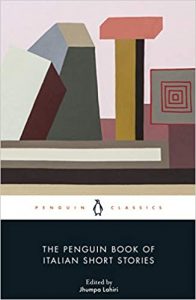
The Penguin Book of Italian Short Stories | | Jhumpa Lahiri


The Penguin Book of Italian Short Stories (2020)

A Penguin Classic, this collection of short stories was hand-picked, compiled, translated and edited by Jhumpa Lahiri. More than half of these Italian stories have never appeared in the English language before. She has taken tales from forty different authors with varied backgrounds that have moulded her interest in the language and its literature. Dating back to over a hundred years, these stories bring to life the geography, private passions and dramatic political events that took place in twentieth-century Italy. Her choice of authors includes many revered names including Italo Calvino, Natalia Ginzburg, Primo Levi, Alberto Moravia, Elsa Morante, Cesare Pavese, Leonardo Sciascia, Italo Svevo and Giovanni Verga.

‘Lahiri’s selection of (mainly 20th-century) stories owes its existence to an appetite for Italian literature,’ says The Telegraph in its review of the book.


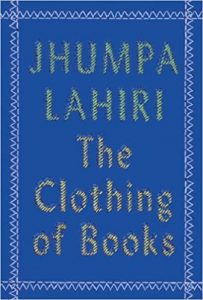
The Clothing of Books | | Jhumpa Lahiri


The Clothing of Books (2016)

Another autobiographical book, this work of writing concerns a topic very close to every reader and book collector’s heart. You can hear “never judge a book by its cover” a billion times, but that won’t stop you from wanting a book with an attractive cover or feeling dissatisfied with a cover that doesn’t meet your expectations. In this personal reflection, Lahiri explores the art of the book jacket and its importance. She presents both, the perspective of the author as well as that of book lovers and readers. She talks at length about the covers that she likes and those she doesn’t. She is particularly a fan of what she calls the “naked book”, which is a minimalistic book jacket.
She probes into the complex relationships shared between texts and images, authors and designers, and art and commerce. Lahiri reveals what book jackets and designs have come to mean to her. She is so enraptured by the art and the role of the book jacket, that she explains that sometimes, “the covers become a part of me.”

If covers are what attract you to a book, this book makes you realise that it’s okay to love pretty jackets!

Five audiobooks to listen to when anxiety strikes

Books and stories have long been responsible for lulling us to sleep after the sun sets, pulling us out of the bog of anxiety we house in our minds. They transport us, not just from our real-life settings to exciting fictional worlds, but often from a state of mind that is in complete disarray to one that is composed, ordered and well informed.

Insomnia is often the result of stress, and even our body’s immunity suffers the consequences of our mind. Knowing how to be poised and in control of a situation, despite the circumstances, is a strength we all need with the global situation post-2020. Since we are in a time when we have the shadow of a lockdown constantly looming over us, audiobooks and eBooks have become a welcome alternative to the old bookstore or delivery services that may be unavailable sometimes. Here’s a list of some of our finest self-help books available as audiobooks that will pacify panic and have a profound impact on the mind.


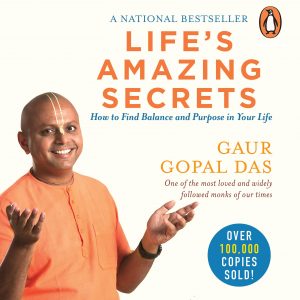
Life's Amazing Secret Audiobook

Read by the Gaur Gopal Das himself in the form of a conversation between him and his affluent friend Harry, this book answers the fundamental questions about life’s purpose in the form of a light-hearted, thought-provoking easy read.

Whether you seek lasting happiness, strengthened relationships, your true potential, to do well at work, or even what you can give back to the world, Gaur Gopal Das’ Life’s Amazing Secrets will speak to you and guide you on your journey with its precious insights on these areas of life.


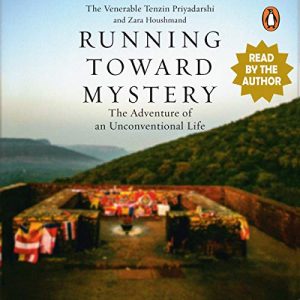
Venerable Tenzin Priyadarshi, born into a prominent Hindu Brahmin family, was only six years old when he began having visions of a mysterious mountain peak, and of men with shaved heads wearing robes the colour of sunset. At the age of ten, he ran away from boarding school and set out to find the place of his dreams. What was stranger than the visions was the fact that at the end of his journey, he mystically did find himself in that very place.

When his parents found him and brought him home, he continued to feel a strong pull towards spiritual life. This audiobook has been read by the Venerable Tenzin Priyadarshi himself and is a profound account of his lifelong journey as a seeker of enlightenment. Running Toward Mystery explores the vital importance of mentors in that search and the experience of meeting exceptional teachers like Dalai Lama, Archbishop Desmond Tutu, and Mother Teresa along the way.


The idea behind laughter yoga is simple yet profound. A practice involving prolonged voluntary laughter is based on scientific studies that have concluded that such laughter offers the same physiological and psychological benefits as spontaneous laughter. These benefits are delved in depth in Laughter Yoga, a book based on this new trend that has gained a lot of popularity worldwide.

This comprehensive book by the founder of the laughter yoga club movement, Dr Madan Kataria, tells you what laughter yoga is, how it works, what its benefits are and how you can apply it to everyday life.


In today’s challenging and busy world, don’t you wish you knew how to quieten your mind and focus on yourself? In On Meditation, renowned spiritual leader, Sri M, answers all your questions on the practice and benefits of meditation. With his knowledge of all the various schools of practice and the ancient texts, he breaks down the complicated practice into a simple and easy method that any working man or woman, young or old, can practise in their everyday lives.


Celebrating Life is an honest expedition into a realm that teaches you how you can be a master of your circumstances and make your life a celebration. If there is a guide to finding happiness, it is this!

The universe has bestowed limitless powers and infinite siddhis upon the human consciousness. Along with being effective and successful in the personal and professional spheres, the purpose of human life is also to ensure the complete blossoming of the individual consciousness. In Celebrating Life, Rishi Nityapragya shares the secrets that can help you explore your infinite potential. He offers an in-depth understanding of how to identify and be free from negative emotions and harmful tendencies, and how to learn to invoke life’s beautiful flavours-like enthusiasm, love, compassion and truth-whenever and wherever you want.

Stay home, stay well and well-read

With April comes the spring! Unfortunately, with the current state of the world, it’s advised you spend more time indoors – for your own safety and that of others.

Make the most of this time spent at home, dear reader. Here is a list of new releases from Penguin Random House India coming your way. We’re sure you’ll find something to keep yourself busy, informed and entertained!


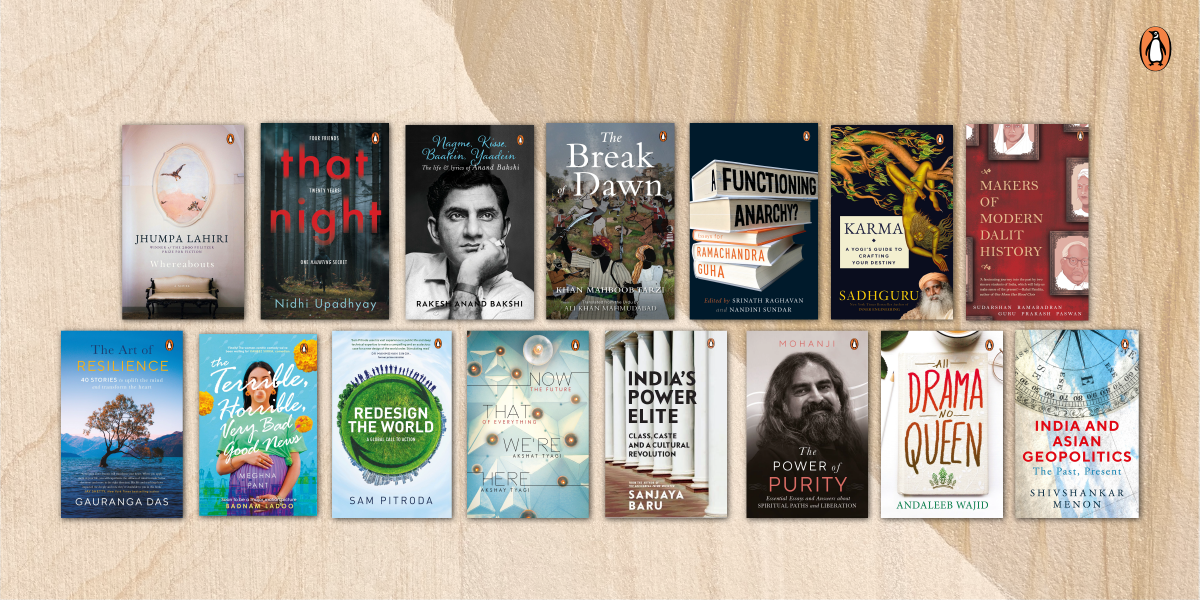
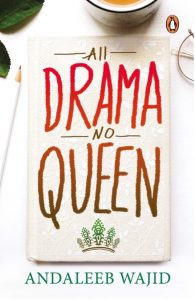
All Drama, No Queen

Front cover of All Drama No Queen
All Drama, No Queen || Andaleeb Wajid

Farida’s parents passed away in an accident when she was twelve. And for years, she’s had to fend off Reshma Phuppu, a distant relative plotting to gain control of her parents’ house in Bangalore. When all the drama gets too much, she runs away to stay with her best friend, Priya. Farida deeply feels the absence of a family, and only has memories of her distant cousin, Irshad. She’s had a crush on him since she was a twelve-year-old, but they lost contact when her parents died. Nearly two decades later, Priya’s boyfriend, Ajay, serendipitously finds Irshad….

*

That Night

Front cover of That Night
That Night || Nidhi Upadhyay

Natasha, Riya, Anjali and Katherine were best friends in college – each different from the other yet inseparable – until that night that began with a bottle of whisky and a game of Ouija but ended with the death of Sania, their unlikeable hostel mate. The friends vowed never to discuss that fateful night.

But now, someone has begun to mess with them, threatening to reveal the truth that only Sania knew. Is it a hacker playing on their guilt or has Sania’s ghost really returned to avenge her death?

That Night is a dark, twisted tale of friendship and betrayal that draws you in and confounds you at every turn.

*

The Terrible, Horrible, Very Bad Good News

Front cover of The Terrible, Horrible, Very Bad Good News
The Terrible, Horrible, Very Bad Good News || Meghna Pant

Thirty-four-year-old Ladoo, a simple middle-class divorcée from Rishikesh, wants only one thing from life–a baby. She eats gondh halwa, drinks badam milk, and takes folic acid, to stop her ticking biological clock and become the world’s most fertile woman.

Along the way, Ladoo must figure out whether motherhood means marriage, whether being a single mother means loneliness, whether ‘my body, my rules’ applies to women, and whether doing something scandalous is outrageous or courageous.

*

The Power Of Purity

Front cover of The Power Of Purity
The Power of Purity || Mohanji

Power of Purity is a compilation of Mohanji’s spontaneous answers to questions posed during various satsangs (spiritual discourses) and interactions across the world. With razor-sharp clarity and wit, Mohanji provides the reader with deep, subtle, yet easy-to-understand insights into the varied aspects of human existence, uniting the seemingly contrasting goals of spiritual mastery and worldly success. Many can use this book as a guide to finding solutions to life’s myriad problems by randomly turning to one of its pages.

*

Nagme, Kisse, Baatein, Yaadein

Front cover of Nagme, Kisse, Baatein, Yaadein
Nagme, Kisse, Baatein, Yaadein || Rakesh Anand Bakshi

An intimate peek into the life of the soldier-turned-lyricist Anand Bakshi, from his formative years in undivided Punjab to eventually moving to Bombay and landing his first film Bhala Aadmi in 1958. Along the way, he lost his mother, his place of birth, and his home and wealth, but his zeal to stand up and walk after every stumble and his desire to become a film artist never abated. He eventually rose to become one of the most revered and sought-after lyricists in Hindi cinema, writing nearly 3300 songs in about 630 films over the next five decades. Written by his son, this is an inspiring story of faith, dreams, success and, above all, human values.

*

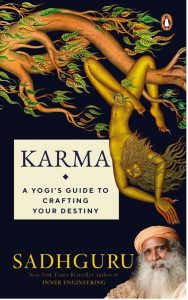
Karma: A Yogi’s Guide to Crafting Your Destiny


Front cover of Karma
Karma || Sadhguru

Through this book, not only does Sadhguru explain what Karma is and how we can use its concepts to enhance our lives, he also tells us about the Sutras, a step-by-step guide to navigating our way in this challenging world. In the process, we get a deeper, richer understanding of life and the power to craft our destinies.

*

Redesign the World

Front cover of Redesign the World
Redesign the World || Sam Pitroda

Redesigning The World is not about looking at it from the point of view of liberal or conservative; left or right; capitalism or socialism; public or private; democracy, dictatorship or monarchy; open or closed systems; rich or poor; urban or rural; east or west; white, brown, black or yellow. This proposed redesign of the world has the planet and its people at the centre; it is built on the foundations of sustainability, inclusion, equality, equity and justice so that everyone on earth can enjoy peace and prosperity. It is not an idealist or utopian vision, but one with humanity at its core.

*

A Functioning Anarchy

Front cover of A Functioning Anarchy
A Functioning Anarchy || Ramachandra Guha


In a long and versatile career spanning thirty-five years, Ramachandra Guha has produced a vast body of work. In each of these, Guha has broken new ground: his pioneering environmental histories of India and his still relevant work (with Madhav Gadgil) on ecology and equity; his social histories of Indian cricket; his monumental history of the Indian republic; his biographies of Verrier Elwin and Gandhi; his anthologies of ecological, social and political thought in India; and his collection of biographical and political essays.

A Functioning Anarchy is a collection of essays by world-renowned historians, lawyers, scientists and journalists sparked by Guha’s work.

*

India’s Power Elite

Front cover of India's Power Elite
India’s Power Elite || Sanjaya Baru

How the post-Covid world will be reshaped by class conflicts and caste prejudices remains to be seen. India’s Power Elite, though, is about pre-Covid India. It is an examination of the nature of power and elitism in the economic and political context of India. The morphology of the Indian power elite presents a complex structure, which is what Baru aims to deconstruct—whether it is the civil services, landed gentry or the remnants of the feudal elite. Aimed at the socially engaged reader, this book will also interest students and those who wield power.

*

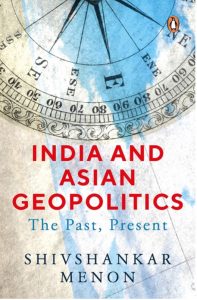
India and Asian Geopolitics

Front cover of India and Asian Geopolitics
India and Asian Geopolitics || Shivshankar Menon

Documenting the changes in India’s foreign policy: from Independence to the Modi era, Shivshankar Menon addresses the many questions, which perplex India as the nation seeks to find its way in the increasingly complex world of Asian geopolitics. From its leading role in the ‘nonaligned’ movement during the Cold War to its current status as a perceived counterweight to China, India often has been an after-thought for global leaders-until they realize how much they needed it.

*

Whereabouts

Front cover of Whereabouts
Whereabouts || Jhumpa Lahiri

Exuberance and dread, attachment and estrangement: in this novel, Jhumpa Lahiri stretches her themes to the limit. The woman at the center wavers between stasis and movement, between the need to belong and the refusal to form lasting ties. The city she calls home, an engaging backdrop to her days, acts as a confidant: the sidewalks around her house, parks, bridges, piazzas, streets, stores, coffee bars. We follow her to the pool she frequents and to the train station that sometimes leads her to her mother, mired in a desperate solitude after her father’s untimely death. In addition to colleagues at work, where she never quite feels at ease, she has girl friends, guy friends, and “him,” a shadow who both consoles and unsettles her.

*

The Art of Resilience

Front cover of The Art of Resilience
The Art of Resilience || Gauranga Das

In this first volume of Yoga Stories, Gauranga Das takes you on an inner journey to explore your inner self, beyond the hills of expectation, through the valleys of disapprovals and beneath the layers of self-deception. Thus, bringing you closer to the home of your heart, enabling you to open the door and introduce yourself, to finally meet, the real you.


*

Makers of Modern Dalit History

Front cover of Makers of Modern Dalit History
Makers of Modern Dalit History || Sudarshan Ramabadran, Guru Prakash Paswan

Featuring several inspiring accounts of individuals who tirelessly battled divisive forces all their lives, this book seeks to enhance present-day India’s imagination and shape its perception of the Dalit community. Makers of Modern Dalit History will be a significant addition to the Dalit discourse. This definitive volume on some of the foremost Dalit thinkers, both past and present, promises to initiate a much-needed conversation around Dalit identity, history and politics.

*

Now That We’re Here

Front cover of Now That We're Here
Now That We’re Here || Akshat Tyagi, Akshay Tyagi

The hyperconnected world that once seemed futuristic is now here. And now that we’re here, it’s time for us to educate ourselves for sweeping and endless possibilities. One way to do that is to blur the lines between technology, democracy, design, economics and data, and reconfigure our approach to learning altogether. This book is a giant leap in that direction. By harnessing the wisdom of thought leaders and intellectuals throughout history, by blending business and humanity, industry and society, and by covering cross-disciplinary themes, authors Akshay Tyagi and Akshat Tyagi give us a groundbreaking, genre-defying and utterly mind-bending collection of essays that will help us prepare for the here and now.

*

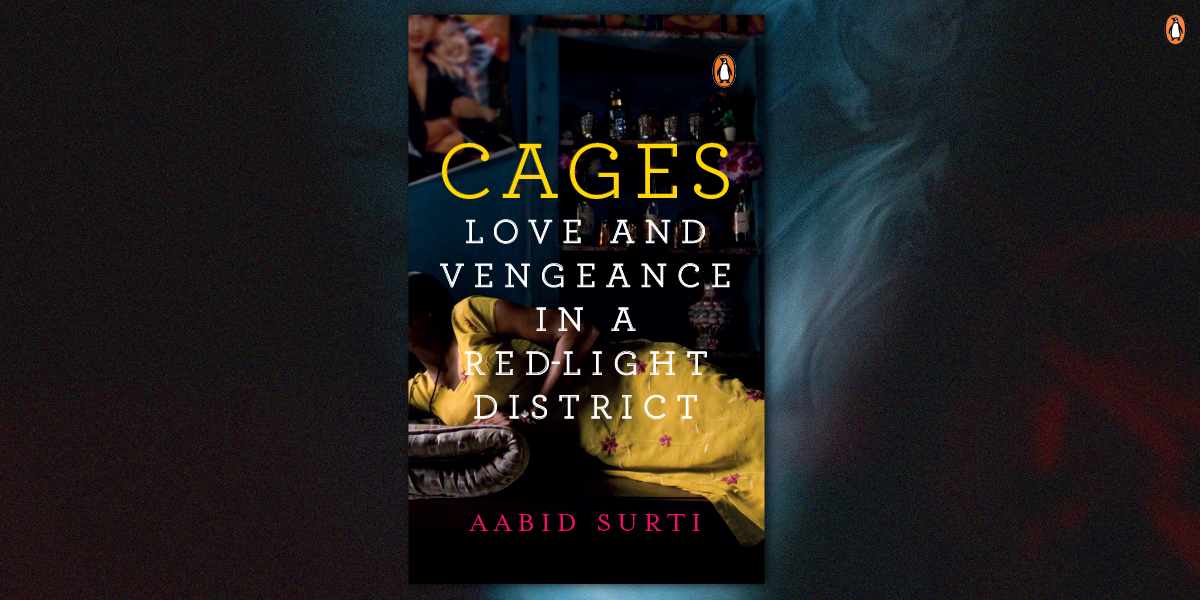
Seven reasons why ‘Cages’ is one of the foremost feminist texts of contemporary Indian literature

Set at the gritty intersection of the world of prostitution in Kamathipura, the Bombay underworld and Bollywood in the 1970s, Cages: Love and Vengeance in a Red-light District is inspired by the true story of Kumud, a sex worker who dared to own her sexuality and play by her rules. A fast-paced tale of a woman who was not ashamed of her occupation, it is honest in its portrayal of the persistent cruelties-small and significant-faced by sex workers and celebrates the power they have to triumph over it.

Even fifty years after it was first written, Cages remains extraordinarily relevant, a courageous exploration of themes of patriarchy, gendered violence, sisterhood and the validity of a woman’s sexual desires. Read on for some of the reasons that Cages reminds us that feminism is necessary for as long as predatory men are around, women will have to fight to retain control over their bodies, their identities and their ability to say no.


  1. The unapologetic rejection of the rules of traditional morality that women are expected to follow to be considered ‘worthy’ of receiving basic human dignity and rights.

I’m sorry if it disappoints you to know that there is no glorious, uplifting message in my story. No moral lesson at the end. This is not the story of Sita, Savitri or the Blessed Virgin Mary. To those hoping for an inspirational tale of such noble and refined women, I would suggest that it will be wise to stop reading right now and get a refund for their hard-earned money.


  1. The incisive dissection of the Madonna-Whore dichotomy, which does even so-called virtuous women a disservice by placing them on a pedestal.

Dig deep into the mind of any pativrata—that loyal slave married to a single man—and you will definitely find many men lying in dark corners. Peep into the heart of a whore who beds hundreds of men and you will be amazed to discover just one man sitting on the throne within…Which of these two women deserves to be placed on a pedestal?


  1. The celebration of sorority, wherein extremely patriarchal structures the only resource for women in the bonds.

Our madam, Sakhu Bai, was a caring soul. She addressed us girls as ‘beti’ and pampered us as if we actually were her daughters. Apart from me, there were three other girls—two giggly twins, Seethe-Geethe from south India; and Nirmala, a busty girl with black lipstick, from Pune. They welcomed me into their little circle of sisterhood.


  1. The pivotal role of Gangu Bai, the real life brothel owner who ruled the male dominated world of Kamathipura with an iron fist, but fought hard for the dignity and rights of prostitutes.

No wonder all the girls in these disreputable lanes looked up to her and called her their mother—she was truly maternal in the way she treated us. Every Diwali, she would gift all her girls a brand new sari. If any girl under her roof fell sick or contracted an STD, she would bear the entire responsibility, including paying the bills for her treatment. When a prostitute became too old to entertain, she was retired with a respectable pension.


  1. Kumud’s extraordinary determination and courage through the course of her life, in defending her principles and dignity in the most difficult of circumstances.

But I held firm to my principle of not accepting more than ten clients a night. Little did I know that in Kamathipura, principles among whores were as dangerous as honesty among the cops.


  1. The consistent emphasis on consent through the course of the book, and Kumud’s insistence on defending her right to refusal, that sex work does not automatically negate the significance of consent.

I shook my head. ‘What if I force myself on you?’ ‘That would be rape.’ Though he was drunk, he burst out laughing. The word ‘rape’ from a prostitute’s mouth was hilarious for him…What followed next can only be classified as rape. I have no other words to verbalize it.


  1. Kumud’s insistence upon taking ownership of her identity, simultaneously making no apologies for her professions while refusing to be defined by it.

Almost all prostitutes have more than one name. One name a prostitute shares with her clients. Her friends know her by a different name. The third is her real name. That name has the fragrance of the native soil of her childhood—and that name has nothing to do with the many fake ones she adopts for the profession.

Strong women, behind the scenes

What do the strong women we know, go through to become who they are? What goes on behind the scenes – and what makes a woman strong?

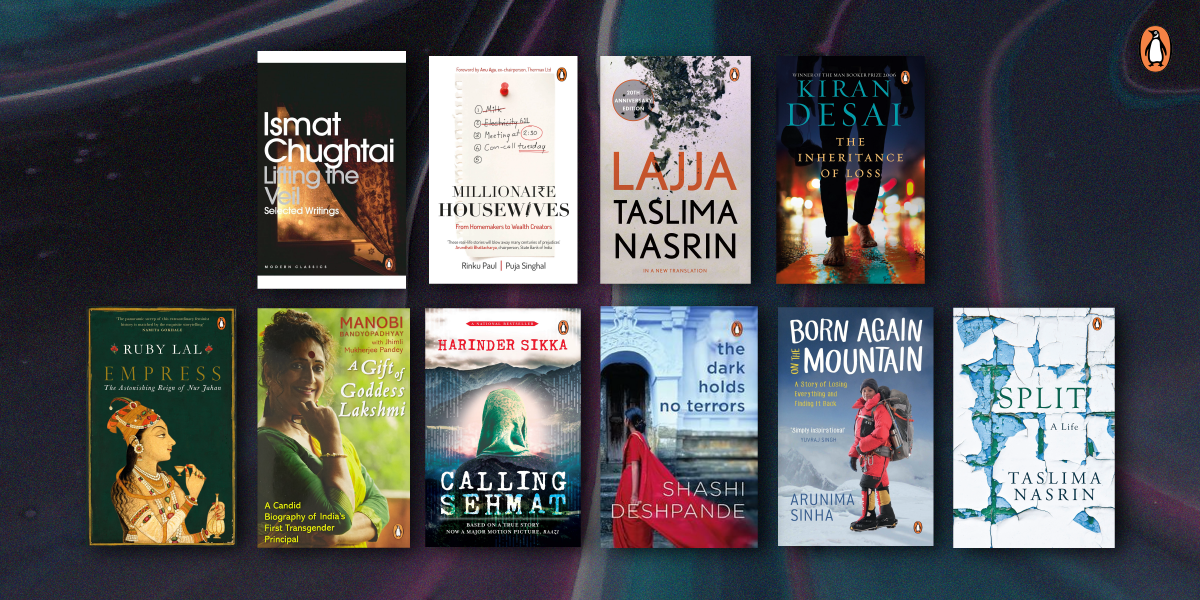
Many of them have fought to bring the world where it is today. And we must continue to be inspired by them so we can continue their paths and legacy’s. Here is a list of books of strong women with strong voices, to inspire you, this Women’s Day


Lajja
Lajja by Taslima Nasrin

A savage indictment of religious extremism and man’s inhumanity to man, Lajja was banned in Bangladesh but became a bestseller in the rest of the world. This brand-new translation marks the twentieth anniversary of this controversial novel. The Dattas Sudhamoy and Kironmoyee and their children, Suronjon and Maya have lived in Bangladesh all their lives. Despite being members of a small Hindu community that is terrorized at every opportunity by Muslim fundamentalists, they refuse to leave their country, unlike most of their friends and relatives.

*

Split
Split by Taslima Nasrin 


Taslima Nasrin is known for her powerful writing on women’s rights and uncompromising criticism of religious fundamentalism. This defiance on her part had led to the ban on the Bengali original of this book by the Left Front in West Bengal as well as the Government of Bangladesh in 2003. While the West Bengal government lifted the injunction after the ban was struck down by the Calcutta High Court in 2005, Nasrin was eventually driven out of Kolkata and forced to expunge passages from the book, besides facing a four-million-dollar defamation lawsuit. Bold and evocative, Split: A Life opens a window to the experiences and works of one of the bravest writers of our times.

*

Dark Holds No Terrors
The Dark Holds No Terrors by Shashi Deshpande 

‘Why are you still alive-why didn’t you die?’
Years on, Sarita still remembers her mother’s bitter words uttered when as a little girl she was unable to save her younger brother from drowning. Now, her mother is dead and Sarita returns to the family home, ostensibly to take care of her father, but in reality to escape the nightmarish brutality her husband inflicts on her every night. In the quiet of her old father’s company Sarita reflects on the events of her life: her stultifying small town childhood, her domineering mother, her marriage to the charismatic young poet Mahohar.

*

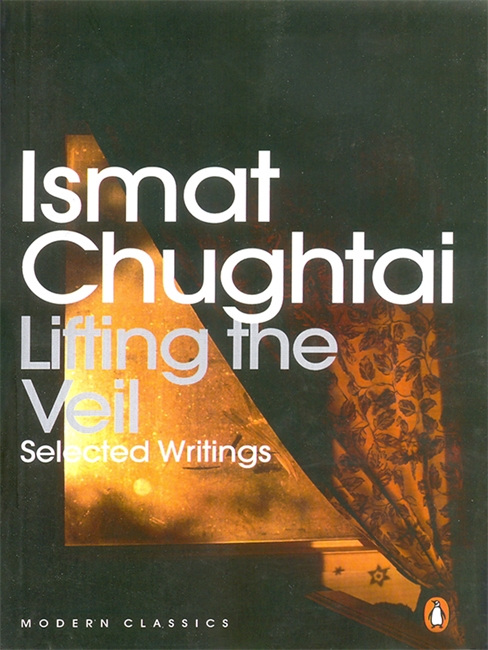
Lifting The Veil
Lifting the Veil by Ismat Chughtai

At a time when writing by and about women was rare and tentative, Chughtai explored female sexuality with unparalleled frankness and examined the political and social mores of her time. She wrote about the world that she knew, bringing the idiom of the middle class to Urdu prose, and totally transformed the complexion of Urdu fiction. Lifting the Veil brings together Ismat Chughtai’s fiction and non-fiction writing. The twenty-one pieces in this selection are Chughtai at her best, marked by her brilliant turn of phrase, scintillating dialogue and wry humor, her characteristic irreverence, wit and eye for detail.

*


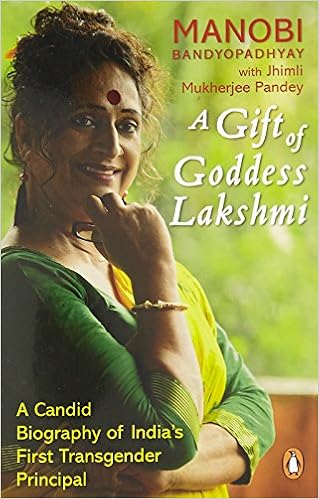
A Gift of Goddess Lakshmi by Manobi Bandopadhyay

The extraordinary and courageous journey of a transgender to define her identity and set new standards of achievement.

With unflinching honesty and deep understanding, Manobi tells the moving story of her transformation from a man to a woman; about how she continued to pursue her academics despite the severe upheavals and went on to become the first transgender principal of a girls’ college. And in doing so, she did not just define her own identity, but also inspired her entire community.

*

Empress
Empress by Ruby Lal

Acclaimed historian Ruby Lal uncovers the rich life and world of Nur Jahan, rescuing this dazzling figure from patriarchal and orientalist cliches of romance and intrigue, while giving a new insight into the lives of the women and the girls during the Mughal Empire, even where scholars claim there are no sources. Nur’s confident assertion of authority and talent is revelatory. In Empress, she finally receives her due in a deeply researched and evocative biography that awakens us to a fascinating history.

*

The Inheritance of Loss
The Inheritance of Loss by Kiran Desai

In a crumbling, isolated house at the foot of Mount Kanchenjunga in the Himalayas lives an embittered judge who wants only to retire in peace, when his orphaned granddaughter, Sai, arrives on his doorstep. The judge’s cook watches over her distractedly, for his thoughts are often on his son, Biju, who is hopscotching from one gritty New York restaurant to another. Kiran Desai’s brilliant novel, published to huge acclaim, is a story of joy and despair. Her characters face numerous choices that majestically illuminate the consequences of colonialism as it collides with the modern world.

*

Calling Sehmat
Calling Sehmat by Harinder Sikka

When a young college-going Kashmiri girl, Sehmat, gets to know her dying father’s last wish, she can do little but surrender to his passion and patriotism and follow the path he has so painstakingly laid out. It is the beginning of her transformation from an ordinary girl into a deadly spy.
She’s then married off to the son of a well-connected Pakistani general, and her mission is to regularly pass information to the Indian intelligence. Something she does with extreme courage and bravado, till she stumbles on information that could destroy the naval might of her beloved country.

*

Born Again on the Mountain
Born Again on the mountain

National-level volleyball player Arunima Sinha had a promising future ahead of her. Then one day she was shoved from a moving train by thieves as she attempted to fight them off. The horrific accident cost the twenty-four-year-old her left leg, but it never deterred her. A year later, she had retrained as a mountaineer and become the first female amputee to reach Mount Everest. This is her unforgettable story of hope, courage and resilience.

*

Millionaire Housewives
Millionaire Housewives by Rinku Paul | Puja Singhal 

Millionaire Housewives tells the stories of twelve enterprising homemakers who, in spite of having no prior experience in business, managed to build successful empires through the single-minded pursuit of their goal, defying all stereotypes. Amidst their varied motivations and struggles, Millionaire Housewives offers valuable lessons for homemakers who want to venture into entrepreneurship.

The literature of love and longing: Books to sweep you away this Valentine’s Day!

Few holidays induce as vastly differing reactions as Valentine’s Day, or stir up such a storm of emotion. Whether you’re floating on the throes of first love, nursing a broken heart, enjoying the calm fulfillment of your own company, or simply prefer fictional romance to the messiness of the real thing, we have the book for you!

Our Ultimate Valentine’s Day Book List will give you the perfect book to celebrate love and friendship across the spectrum through the most passionate prose and lyrical longing.

Memory of Light
Memory of Light || Ruth Vanita

If there was place and time truly meant for romance, it was 18th-century Lucknow, a vibrant city full of musicians, poets and courtesans, of languorous lovers and lilting poetry. Amidst this milieu Memory of Light weaves the exquisite tale of the love between-two women courtesan Chapla Bai and young poet Nafis Bai as they exchange letters and conversations feeding each other the heady fruit of desire.

French Lover
French Lover || Nasrin Taslima

The greatest and most basic necessity for a healthy relationship is to be able to know and love oneself. French Lover is a young Bengali woman’s search for love and independence in a strange city. Stifled in an unhappy marriage, Nilanjana’s long road to self-discovery is initiated by Benoir Dupont, a blond, blue-eyed handsome Frenchman. In her passionate, sexually liberating relationship with Benoir, she finally begins to have an inkling of her own desires.

Undying Affinity
Undying Affinity || Sara Naveed

You’ll fall in love as much with the city of Lahore as with the book’s protagonist in this simple yet touching romance by Sara Naveed. Caught between her childhood friend, Haroon and handsome professor, Ahmar, little does beautiful, spoiled Zarish know that one individual can completely change her perspective towards life. Packed with romance, drama and tragedy, Undying Affinity will stay in your heart forever.

The Beauty of the Moment
The Beauty of the Moment || Tanaz Bhathena

There’s nothing quite as intense or as memorable as the pangs of first love and this delightful YA romance truly celebrates the thrilling ‘beauty of that moment’When sharp and driven ‘new girl’, Susan meets ‘bad boy ‘ Malcolm, sparks fly. The ways they drift apart and come back together are testaments to family, culture, and being true to who you are.

The Rabbit and the Squirrel
The Rabbit and the Squirrel || Siddharth Dhanvant Shanghvi

The critically acclaimed and delightfully illustrated fable for contemporary times  is perfect for lending a dash of elegant whimsy this Valentine’s Day.   Lit with longing, and tender questions of the heart, The Rabbit and the Squirrel is an ode to the enduring pleasures of friendship, traced through the poignant love story of the eponymous Rabbit and the Squirrel who against all odds are fated for togetherness.

The Penguin Book of Classical Indian Love Stories and Lyrics
The Penguin Book of Classical Indian Love Stories and Lyrics || Ruskin Bond

When modern vocabulary fails to evoke romance for you, this extraordinarily lyrical compilation of love stories and poems from the classical literature and folklore of India will come to the rescue. Curated by the master of nuanced emotions, Ruskin Bond and set in regions of great natural beauty where Kamadeva, the god of love, picks his victims with consummate ease, these stories and lyrics celebrate the myriad aspects of love.

An Extreme Love of Coffee
An Extreme Love of Coffee || Harish Bhat

If you think of love as life’s greatest adventure that hits you like a caffeine kick An Extreme Love of Coffee is your cup of (not)tea!  This faced paced mystery romance follows Rahul and Neha who embark upon a quest for treasure, after drinking a  cup of ‘magic’ coffee, discovering their passion for warm frothy concoctions and each other as they race from the plantations of Coorg to Japanese graveyards!

Half Torn Hearts
Half Torn Hearts || Novoneel Chakraborty

Sometimes Valentine’s Day is a time to reminisce and to dwell upon the fact that first cut is the deepest. Half Torn Hearts is both a thrilling suspense story and a  coming-of-age tale of three layered individuals coming to terms with their first loss, which bares the devil that we all possess but are scared of encountering and which eventually becomes the cause of our own ruins.

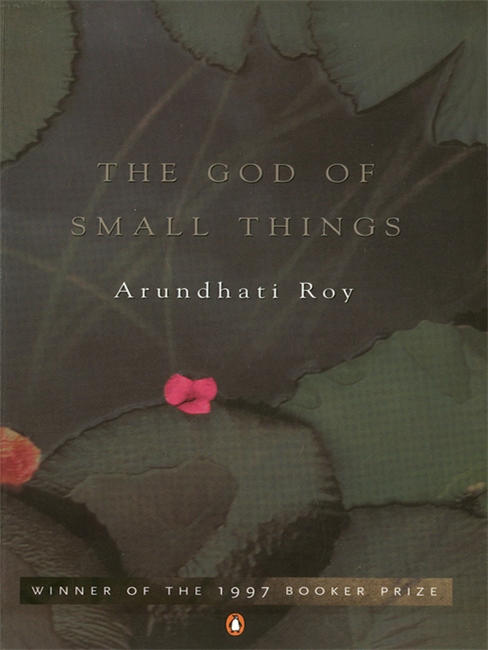
The God of Small Things
The God of Small Things || Arundhati Roy

Arundhati Roy’s modern classic is equal parts powerful family saga, forbidden love story, and piercing political drama. The seven-year-old twins Estha and Rahel see their world shaken irrevocably by the arrival of their beautiful young cousin, Sophie. With its exquisite prose , it makes for  an unusual, but lyrical Valentine’s Day pick.

The Secrets We Keep
The Secrets We Keep || Sudeep Nagarkar

This thrilling romance will have you hooked from start to finish following the story of  Rahul, an intelligence officer on a secret mission,  who falls in love with the major’s daughter, Akriti. But is anyone who they seem to be, or is Rahul about to face the biggest shock of his life? 

Eleven Ways to Love
Eleven Ways to Love || Sreshtha, Sangeeta, Nadika Nadja, Dhrubo Jyoti, Meenakshi Reddy Madhavan, Preeti Vangani, Shrayana Bhattacharya, Nidhi Goyal, Anushree Majumdar, Sharanya Manivannan, Maroosha Muzaffar, D

Love stories coach us to believe that love is selective, somehow, that it can be boxed in and easily defined. With a foreword by the luminary, Gulazar these eleven remarkable essays,  widen the frame of reference: transgender romance; body image issues; race relations; disability; polyamory; class differences; queer love; long distance; caste; loneliness; the single life; the bad boy syndrome . . . and so much more.

TILL THE LAST BREATH by [Durjoy Datta]
Till The Last Breath || Durjoy Datta

This deeply sensitive story explores love in the context of imminent death and  reminds us what it means to be alive. Two patients, a young brilliant girl fighting to stay alive, and a youthful drug addict who can’t wait to die come together in Room 509. Two reputed doctors, fighting their own demons from the past, are trying everything to keep these two patients alive. These last days in the hospital change the two patients, their doctors and all the other people around them in ways they had never imagined.

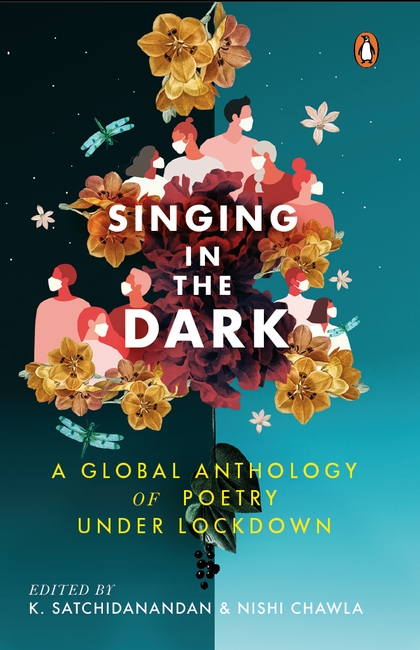
Singing in the Dark
Singing in the Dark || K. Satchidanandan, Nishi Chawla

If love is vulnerability, these strange times have made us even more vulnerable. This global anthology brings together the finest of poetic responses to the coronavirus pandemic. More than a hundred of the world’s most esteemed poets reflect upon a crisis that has dramatically altered our lives, and laid bare our vulnerabilities.

You Are All I Need
You Are All I Need || Ravinder Singh (Ed.)

This collection of touching stories selected by Ravinder Singh  is an ode to the myriad facets of love . This book will make you laugh, cry, think and feel, all at the same time with its eclectic collection of love stories that will warm the cockles of your heart!

Prem Purana
Prem Purana || Usha Narayanan

No one is untouched by love, not even devas and asuras, kings and nymphs. This collection of celestial love stories from Indian mythology celebrates the love of Ravana and Mandodari, Nala and Damayanto among many eithers. Tormented by passion, tortured by betrayal and wracked by the agony of separation, these stories deify love in its many splendorous forms.

With Love
With Love || TTT

The go-to portal for sweet, sharp, heart-wrenching stories brings this collection of letters that celebrates all the different forms of love and bonds we make, spanning the spectrum from family to our childhood homes , from  former loves and future husbands.  Deeply personal and intimate, these letters are a great choice to peruse on Valentine’s Day.

This Time Next Year
This Time Next Year || Sophie Cousens

A lovely  contemporary romance that will give you all the warm fuzzies. Quinn and Minnie are born on the same day, but their lives follow completely different trajectories even as fate conspires to bring them together. This moving, joyful love story, This Time Next Year explores the way fate leads us to the people we least expect–no matter what the odds.

The Time Traveler’s Wife || Audrey Niffenegger

This book is a hugely popular modern classic for a reason, its heartwarming, innovative and a moving depiction of the effects of time on love. Henry is a time traveler–cursed with a rare genetic anomaly that causes him to live his life on a shifting timeline, skipping back and forth through the years with no control. Despite the fact that Henry’s travels force them apart with no warning, and never knowing when they will be reunited, he and his wife Clare try to lead a life of normalcy based on an abiding and passionate love.

The Fault in Our Stars || John Green

One of the most popular and  moving love stories of our times, this brilliantly explores the funny, thrilling, and tragic business of being alive and in love. Despite the tumour-shrinking medical miracle that has bought her a few years, Hazel has never been anything but terminal, her final chapter inscribed upon diagnosis. But when a gorgeous plot twist named Augustus Waters suddenly appears at Cancer Kid Support Group, Hazel’s story is about to be completely rewritten.

Simon vs. the Homo Sapiens Agenda by [Becky Albertalli]
Simon vs. the Homo Sapiens Agenda || Becky Albertalli

An  incredibly funny and poignant, coming-of-age, coming out story—wrapped in a geek romance! When an email falls into the wrong hands, sixteen year old and not-so-openly-gay Simon finds his secret is at risk of being thrust into the spotlight. Now Simon has to find a way to step out of his comfort zone without fumbling a shot at happiness with the most confusing, adorable guy he’s never met.

Essential reads for the Budget season

With the Union Budget under discussion, it is a good time to visit some essential reads that examine the socioeconomic landscape of the country. Here is a list of critical reads to keep things in perspective this Budget season:

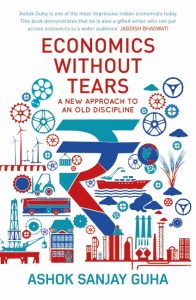
front cover Economics Without Tears
Economics Without Tears||Ashok Sanjay Guha


Economics without Tears

by Ashok Sanjay Guha

If you are a layman wondering what economics is all about or a freshman student of the subject, this is a book you cannot afford to miss. Starting from the first principles and stripped of mathematics and almost all jargon, it introduces you to all the basic concepts of economic theory as well as to some of its more surprising depths.
Economics pervades every aspect of our lives and our world. This book shows how anyone can acquire an understanding of its key principles while finding the exercise not only an exciting intellectual adventure but also great fun.


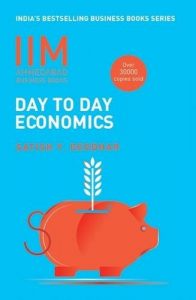
front cover Day to Day Economics
Day to Day Economics||Satish Y. Deodha

Day to Day Economics

by Satish Y. Deodhar

The economy isn’t just for the economists to debate on. All of us are affected by its ups and downs—global recession, rise in interest rates, or hike in food prices. But do we understand the principles at work and how and why they really affect us?
Day to Day Economics is an enjoyable, accessible, and extremely user-friendly book that explains the modern day Indian economy to the layperson. In this relevant book, Professor Deodhar explains the role of the government and its involvement in different aspects of the economy; the need for the RBI and its functions; and how taxes, stock markets, and recessions work. Day to Day Economics will help you go beyond the facts and figures in the budget and connect the trends to your daily life. As with all IIMA Business Books, it comes illustrated with numerous Indian examples and case studies making this the ultimate rookie’s guide to the Indian economy.


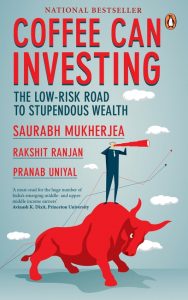
front cover Coffee Can Investing
Coffee Can Investing||Saurabh Mukherjea, Rakshit Ranjan, Pranab Uniyal

Coffee Can Investing

by Saurabh Mukherjea, Rakshit Ranjan and Pranab Uniyal

Most people invest in the usual assets: real estate, gold, mutual funds, fixed deposits and stock markets. It’s always the same four or five instruments. All they end up making is a measly 8 to 12 per cent per annum. Those who are exceptionally unfortunate get stuck in the middle of a crash and end up losing a lot of money.
What if there was another way? What if you could make not 10 not 15 but 20 per cent compound annual growth rate (CAGR) on your investments? What if there was a way to grow your money four to five times whilst taking half the risk compared to the overall market?
Bestselling author of Gurus of Chaos and The Unusual Billionaires, Saurabh Mukherjea puts his money where his mouth is. Saurabh follows the Coffee Can approach to high-quality, low-risk investing. His firm, Ambit Capital, is one the largest wealth managers in India which invests with this approach and delivers stupendous returns. In Coffee Can Investing, Saurabh will show you how to go about low-risk investments that generate great returns.


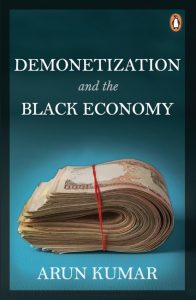
front cover Demonetization and the Black Economy
Demonetization and the Black Economy||Arun Kumar

Demonetization and the Black Economy

by Arun Kumar

On 8 November 2016, the prime minister announced the immediate cancellation of all Rs 500 and Rs 1000 denomination notes, wiping out 86 per cent of the currency in circulation. This move, it was claimed, was made to wipe out corruption, deter the generation of black
money, weed out fake Indian currency notes and curb terrorism. India’s well-functioning economy went into a tailspin. Businesses, especially in the unorganized sectors, came to a grinding halt. India continues to grapple with the effects of this move. The black economy has not been dented; counterfeiting and terrorism continue; the credibility of the RBI, banks and currency is damaged; the accountability of the Parliament and the prime minister has been eroded; and the social divide has widened. There have been many arguments and counter-arguments from both sides, but they have missed the complete picture. Demonetization and the Black Economy lucidly explains the story of demonetization along with its effects on the economy.


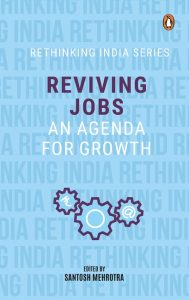
front cover Reviving Jobs
Reviving Jobs||Santosh Mehrotra

Reviving Jobs

by Santosh Mehrotra

Every country in the world experiences the benefits of its demographic dividend, a period that comes but once in the life of a nation-when the share of the working-age population is larger than the non-working-age share. It has the potential to make a country progress towards higher incomes and development. But it can also become a nightmare if there aren’t enough jobs.

Since 2012, the number of youth entrants into the labour force has increased at an accelerating pace, while the number of jobs created has decreased. This situation might become graver between 2020 and 2030 as the labour force swells further. Reviving Jobs, the third volume in the Rethinking India series, offers suggestions on how India can make the best use of the remaining period of its demographic dividend-any failure to do so will cause millions to suffer in poverty for decades to come.

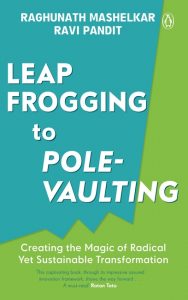
front cover Leapfrogging to Pole-vaulting
Leapfrogging to Pole-vaulting||RA Mashelkar and Ravi Pandit


Leapfrogging to Pole-vaulting

by RA Mashelkar and Ravi Pandit

An exhilarating manifesto for the future, this book convinces readers to make the shift from reactive leapfrogging to proactive pole-vaulting through radical transformation. The unique ‘3-4-7 framework’ demonstrates how a paralysing mass of problems can be brought down to a formidable formula, thus making every problem solvable, no matter how big and complex. The book is dotted with inspiring case studies that can instil confidence in people from across the world to put this framework into practice for assured success.

Dr Mashelkar and Mr Pandit ably show in this must-read book that-as an interplay of global issues constantly raise the bar for innovation today-there has never been a better time to use our learnings to pole-vault over those bars into a new future!


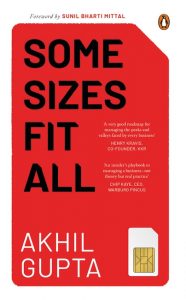
front cover Some Sizes Fit All
Some Sizes Fit All||Akhil Gupta

Some Sizes Fit All

by Akhil Gupta

An oft-repeated dictum every time a company fails to replicate its past successes when introducing a new product or entering a new market is that one size does not fit all. Business gurus advise that every new situation, market and environment calls for a fresh approach and requires ‘unlearning’ what one might have learnt elsewhere, even if that had met with great success. While this statement may appear to be obvious, it is often quoted out of context. The fact is that certain fundamentals of business-irrespective of line of business, geography or scale-are universally applicable.
Some Sizes Fit All is an attempt to explain these fundamental pillars for any kind of business. An authentic and lucid presentation of management concepts and practices-which Akhil Gupta has tried and tested first hand through his illustrious career-this is a must-read for anyone trying to build a robust and financially sound business.

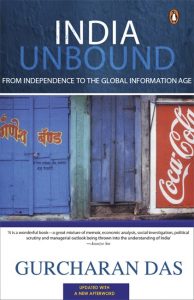
front cover India Unbound
India Unbound||Gurcharan Das


India Unbound

by Gurcharan Das

India Unbound is the riveting story of a nation’s rise from poverty to prosperity and the clash of ideas that occurred along the way. Gurcharan Das examines the highs and lows of independent India through the prism of history, his own experiences and those of numerous others he has met-from young people in sleepy UP villages to chiefs of software companies in Bangalore. Defining and exploring the new mindset of the nation, India Unbound is the perfect introduction to contemporary India.


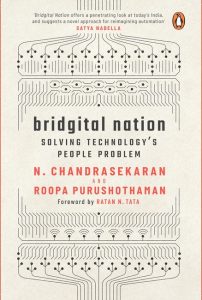
front cover Bridgital Nation
Bridgital Nation||N. Chandrasekaran, Roopa Purushothaman

Bridgital Nation

by N. Chandrasekaran and Roopa Purushothaman

It is 2030. India is among the world’s top three economies. All Indians use advanced technology to either do their job or get their job done. All Indians have access to quality jobs, better healthcare and skill-based education. Technology and human beings coexist in a mutually beneficial ecosystem. This reality is possible. It is within reach. With Bridgital. In this ground-breaking book, N. Chandrasekaran, chairman of Tata Sons, presents a powerful vision for the future. To the coming disruption of artificial intelligence, he proposes an ingenious solution, where India is perfectly positioned to pave a unique path from the rest of the world. Instead of accepting technology as an inevitable replacement for human labour, India can use it as an aid; instead of taking them away, AI can generate jobs.


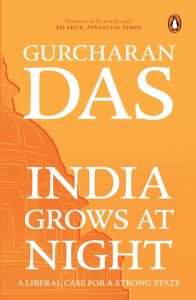
front cover India Grows at Night
India Grows At Night||Gurcharan Das


India Grows At Night

by Gurcharan Das

Indians wryly admit that ‘India grows at night’. But that is only half the saying: the full expression is: India grows at night . . . when the government sleeps’, suggesting that the nation may be rising despite the state. But wouldn’t it be wonderful if India also grew during the day — in other words, if public policy supported private enterprise? What India needs is a strong liberal state, but, says Das, achieving this will not be easy, because India has historically had a weak state and a strong society.


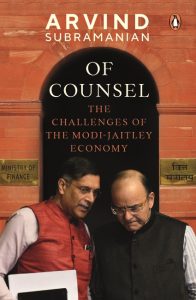
front cover Of Counsel
Of Counsel||Arvind Subramanian

Of Counsel

by Arvind Subramanian

For nearly four years, Arvind Subramanian stood at the centre of economic policymaking in India. Through the communication of big ideas and the publication of accessible Economic Surveys, he gained a reputation as an innovator. Through honest pronouncements that avoided spin, he became a figure of public trust. What does it entail to serve at the helm of the world’s fastest-growing economy, where decision-making affects a population of more than a billion people?

In Of CounselThe Challenges of the Modi-Jaitley Economy, Arvind Subramanian provides an inside account of his rollercoaster journey as the chief economic advisor to the Government of India from 2014-18, succeeding Raghuram Rajan as captain of the ship. With an illustrious cast of characters, Subramanian’s part-memoir, part-analytical writings candidly reveal the numerous triumphs and challenges of policymaking at the zenith, while appraising India’s economic potential, health and future through comprehensive research and original hypotheses.


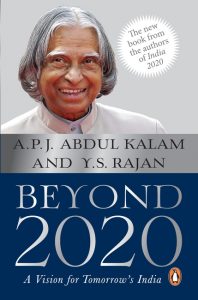
front cover Beyond 2020
Beyond 2020||A.P.J. Abdul Kalam and Yagnaswami Sundara Rajan

Beyond 2020

by A.P.J. Abdul Kalam and Yagnaswami Sundara Rajan

India 2020 is about to become a reality. Are we ready?

In 1998, Dr Kalam and Y.S. Rajan published the now iconic India 2020, a vision document for the new millennium that charted how India could become one of the top five economic powers in the world by 2020. Now, it is time to take stock of how much India has achieved and what lies ahead. In many ways, India’s growth story in the twenty-first century has been hamstrung by missed opportunities and slowdowns in project execution; but it has also been marked by new opportunities and emerging technologies that make faster and more inclusive growth viable. A renewed policy focus is now needed for agriculture, manufacturing, mining, the chemicals industry, health care and infrastructure to invigorate these sectors and boost economic growth, argue Kalam and Rajan. Alongside, education, job creation, emerging technologies, biodiversity, waste management, national security and the knowledge economy are some of the other vital areas that we need to build now that we have arrived beyond 2020.

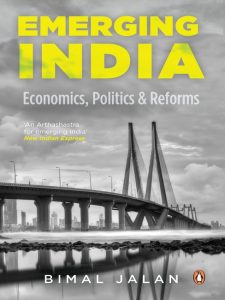
front cover Emerging India
Emerging India||Bimal Jalan


Emerging India

by Bimal Jalan

Bimal Jalan has closely followed the path of India’s economic policies across its changing trajectories, from before the time the economy was liberalized to the present. The pieces in Emerging India study the relationship between political and economic reforms and inclusive and incremental growth.


front cover How to Read Amartya Sen
How to Read Amartya Sen||Lawrence Hamilton


How to Read Amartya Sen

by Lawrence Hamilton

This book offers a much-needed introduction to Amartya Sen’s extraordinary variety of ideas. Lawrence Hamilton provides an excellent, accessible guide to the full range of Sen’s writings, contextualizing his ideas and summarizing the associated debates. Hamilton reconstructs Sen’s critiques of the major philosophies of his time, assesses his now famous concern for capabilities as an alternative for thinking about poverty, inequality, gender discrimination, development, democracy and justice, and unearths some overlooked gems. Throughout, these major theoretical and philosophical achievements are subjected to rigorous scrutiny.
How to Read Amartya Sen is a major work on one of the most influential economists and philosophers of the last few centuries. It will be illuminating for readers keen to understand the breadth of Sen’s vision, and an invaluable resource for scholars, policy makers and global activists.

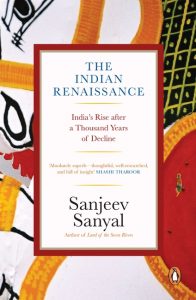
front cover The Indian Rennaissance
The Indian Rennaissance||Sanjeev Sanyal


The Indian Rennaissance

by Sanjeev Sanyal

One thousand years ago, India was at the height of its power, influencing the world with its ideas and trade. Now, ten centuries later, India’s recent economic performance is once again attracting world attention as the country re-awakens not just as an economy but as a civilization.

In The Indian Renaissance: India’s Rise after a Thousand Years of Decline, Sanjeev Sanyal looks at the processes that led to ten centuries of decline. He also examines the powerful economic and social forces that are working together to transform India beyond recognition. These range from demographic shifts to rising literacy levels and, the most important revolution, the opening of minds and changed attitude towards innovation and risk-fundamental, if India is to take advantage of the twenty-first century.


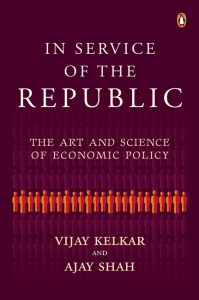
front cover In Service of the Republic
In Service of the Republic||Vijay Kelkar, Ajay Shah

In Service of the Republic

by Vijay Kelkar and Ajay Shah

As a $3-trillion economy, India is on her way to becoming an economic superpower. Between 1991 and 2011, the period of our best growth, there was also a substantial decline in the number of people below the poverty line. Since 2011, however, there has been a marked retreat in the high growth performance of the previous two decades. What happened to the promise? Where have we faltered? How do we change course? How do we overcome the ever-present dangers of the middle-income trap, and get rich before we grow old? And one question above all else: What do we need to do to make our tryst with destiny?

As professional economists as well as former civil servants, Vijay Kelkar and Ajay Shah have spent most of their lives thinking about and working on these questions. The result: In Service  of the Republic, a meticulously researched work that stands at the intersection of economics, political philosophy and public administration. This highly readable book lays out the art and the science of the policymaking that we need, from the high ideas to the gritty practicalities that go into building the Republic.


front cover India’s Long Road
India’s Long Road||Vijay Joshi

India’s Long Road

by Vijay Joshi

India has been the subject of many extravagant predictions and hopes. In this powerful and wide-ranging book, distinguished economist Vijay Joshi argues that the foundations of rapid, durable and inclusive economic growth in India are distinctly shaky. He lays out a penetrating analysis of the country’s recent faltering performance, set against the backdrop of its political economy, and charts the course it should follow to achieve widely shared prosperity.
Joshi argues that for India to realize its huge potential, the relation among the state, the market and the private sector must be comprehensively realigned. Deeper liberalization is very necessary but far from sufficient. The state needs to perform much more effectively many core tasks that belong squarely in its domain. His radical reform model includes a fiscally affordable scheme to provide a regular ‘basic income’ for all citizens that would speedily abolish extreme poverty.
An authoritative work of tremendous scope and depth, India’s Long Road is essential reading for anyone who wants to know where India is today, where it is headed, and what it should do to attain its ambitious goals.


Delve deep into what India’s 72nd Republic Day truly represents with these books

The Constitution of India came into effect on 26th January, 1950. As we celebrate India’s 72nd Republic Day, let’s dig deeper to understand the journey till this day in 1950, and our journey since then.

Here is a list of books from various authors, including Abhinav Chandrachud, Ramachandra Guha, Khushwant Singh, Sagarika Ghosh, K.R. Narayanan and many more! What’s more, there are titles for the little ones as well!


Republic of Rhetoric
Republic of Rhetoric || Abhinav Chandrachud

Exploring socio-political as well as legal history of India, from the British period to the present, this book brings to light the idea of ‘free speech’ or what is popularly known as the freedom expression in the country. Analysing the present law relating to obscenity and free speech, this book will evaluate whether the enactment of the Constitution made a significant difference to the right to free speech in India. Deeply researched, authoritative and anecdotal, this book offers arguments that have not been substantially advanced before.

*

How India Became Democratic
How India Became Democratic || Ornit Shani

How India Became Democratic explores the greatest experiment in democratic human history. It tells the untold story of the preparation of the electoral roll on the basis of universal adult franchise in the world’s largest democracy. Ornit Shani offers a new view of the institutionalisation of democracy in India, and of the way democracy captured the political imagination of its diverse peoples.

*

Makers Of Modern India
Makers of Modern India || Ramachandra Guha

Makers of Modern India is a detailed source for information about the country’s political traditions. The republic of India had a very tumultuous beginning and the author shows you how 19 political activists were instrumental in the evolution of this country. The author goes beyond a description of the people by including extracts of the speeches they have written. Each phase of the freedom movement and the following years of independent India are shown through the written works produced by these 19 individuals.

*

Democrats and Dissenters
Democrats and Dissenters || Ramachandra Guha

A major new collection of essays by Ramachandra Guha, Democrats and Dissenters is a work of rigorous scholarship on topics of compelling contemporary interest, written with elegance and wit.

The book covers a wide range of themes: from the varying national projects of India’s neighbours to political debates within India itself, from the responsibilities of writers to the complex relationship between democracy and violence.

*

The Idea Of India
The Idea Of India || Sunil Khilnani

This long essay makes an eloquent and persuasive argument for Nehru’s idea of nationhood in India. At a time when the relevance of Nehru’s vision is under scrutiny, this book assumes a special significance.

*

The Discovery of India
The Discovery of India || Jawaharlal Nehru

Jawaharlal Nehru wrote the book The Discovery of India, during his imprisonment at Ahmednagar fort for participating in the Quit India Movement (1942 – 1946). The book was written during Nehru’s four years of confinement to solitude in prison and is his way of paying an homage to his beloved country and its rich culture.

*

India’s Legal System
India’s Legal System || Fali S Nariman

India has the second-largest legal profession in the world, but the systemic delays and chronic impediments of its judicial system inspire little confidence in the common person. In India’s Legal System, renowned constitutional expert and senior Supreme Court lawyer Fali S. Nariman looks for possible reasons. While realistically appraising the criminal justice system and the performance of legal practitioners, he elaborates aspects of contemporary practice, such as public interest litigation, judicial review and activism.

*

The Case That Shook India
The Case That Shook India || Prashant Bhushan

On 12 June 1975, for the first time in independent India’s history, the election of a prime minister was set aside by a high court judgment. The watershed case, Indira Gandhi v. Raj Narain, acted as the catalyst for the imposition of the Emergency. Based on detailed notes of the court proceedings, The Case That Shook India is both a significant legal and a historical document.

*

The Great Repression
The Great Repression || Chitranshul Sinha

The Indian Penal Code was formulated in 1860, three years after the first Indian revolt for independence. Where did this law come from? How did it evolve? And what place does it have in a mature democracy? Concise, incisive and thoughtful, The Great Repression by Chitranshul Sinha, an advocate on record of the Supreme Court of India, tells the story of this outdated colonial-era law.

*

The Burden Of Democracy
The Burden Of Democracy || Pratap Bhanu Mehta

After nearly seven decades of its existence, there is a pervasive feeling that India’s democracy is in crisis. But what is the nature of this threat? In this essay, republished now with a new foreword from the author, Pratap Bhanu Mehtare minds us what a bold experiment bringing democracy to a largely illiterate and unpropertied India was.

Optimistic, lively and closely argued, The Burden of Democracy offers a new ideological imagination that throws light on our discontents. By returning to the basics of democracy it serves to illuminate our predicament, even while perceiving the broad contours for change.

*

The End Of India
The End Of India || Khushwant Singh

Analysing the communal violence in Gujarat in 2002, the anti-Sikh riots of 1984, the burning of Graham Staines and his children, the targeted killings by terrorists in Punjab and Kashmir, Khushwant Singh forces us to confront the absolute corruption of religion that has made us among the most brutal people on earth. He also points out that fundamentalism has less to do with religion than with politics. And communal politics, he reminds us, is only the most visible of the demons we have nurtured and let loose upon ourselves.

*

India’s Struggle For Independence
India’s Struggle For Independence || Bipin Chandra & Others

India’s Struggle for Independence by Bipin Chandra is your go to book for an in-depth and detailed overview on Indian independence movement . Indian freedom struggle is one of the most important parts of its history. A lot has been written and said about it, but there still remains a gap. Rarely do we get to hear accounts of the independence from the entire country and not just one region at one place. This book fits in perfectly in this gap and also provides a narration on the impact this movement had on the people.

*

Why I Am a Liberal
Why I Am a Liberal || Sagarika Ghose 


The stamping out of difference, the quelling of diversity and the burial of argument is, in fact, most un-Indian. Anyone who seeks to end that dialogue process is ignoring Indianness and patriotism. The liberal Indian argues for the rights of the marginalized in the tradition of Gandhi for trust, mutual understanding and bridge-building. Real patriotism lies in old-fashioned ideas of accommodation, friendship and generosity; not in force, muscle flexing and dominance. Why I Am a Liberal is Sagarika Ghose’s impassioned meditation on why India needs to be liberal.

*

In The Name Of The People
In The Name Of The People || K R Narayanan

In the Name of the People brings together K.R.Narayanan’s most important writings spanning five decades, from his first published article in 1954 to the Republic Day speech of 2000. In these pieces, he covers a diverse range of topics, from Indo–US ties and India–China relations to human development, Islam in India and women in politics; from the benefits of the parliamentary system and the need to build democracy from the grassroots to the role of education and technology in development and the importance of a sustainable environment.

*

Vichhoda
Vichhoda || Harinder Sikka

Bibi Amrit Kaur’s life is literally torn apart in the 1947 riots. She’s now in a different country with a different identity. She accepts this new life gracefully and begins a new chapter. She gets married and has two children. Life, however, has something else in store for her. It breaks her apart. Again.
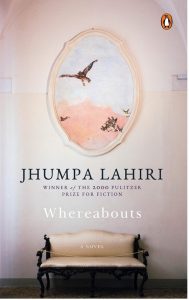
This time the pain is unbearable.

But the hope that she will reunite with her children and be whole again keeps her alive. And she doesn’t let the bitterness cloud her days, becoming a beacon of hope and courage for all.

From the bestselling author of Calling Sehmat comes another hitherto untold story of strength, sacrifice and resilience.

*

Sixteen Stormy Days
Sixteen Stormy Days || Tripurdaman Singh

Sixteen Stormy Days narrates the riveting story of the First Amendment to the Constitution of India-one of the pivotal events in Indian political and constitutional history, and its first great battle of ideas. Drawing on parliamentary debates, press reports, judicial pronouncements, official correspondence and existing scholarship, Sixteen Stormy Days challenges conventional wisdom on iconic figures such as Jawaharlal Nehru, B.R. Ambedkar, Rajendra Prasad, Sardar Patel and Shyama Prasad Mookerji, and lays bare the vast gulf between the liberal promise of India’s Constitution and the authoritarian impulses of her first government.
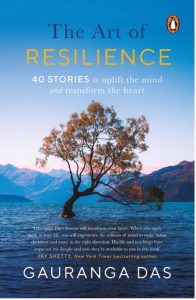
*

Ambedkar’s Preamble
Ambedkar’s Preamble || Aakash Singh Rathore


Although Dr Ambedkar is universally regarded as the chief architect of the Constitution, the specifics of his role as chairman of the Drafting Committee are not widely discussed. Totally neglected is his almost single-handed authorship of the Constitution’s Preamble, which is frequently and mistakenly attributed to B.N. Rau rather than to Ambedkar.
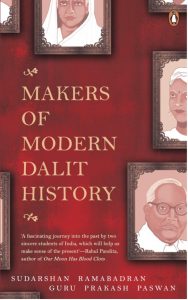
This book establishes how and why the Preamble to the Constitution of India is essentially an Ambedkarite preamble.

*

Vision for a Nation
Vision For A Nation || Ashish Nandy, Aakash Singh Rathore

What is the nation? What is the idea of India? Whose India is it, anyway?
This inaugural volume in the series titled Rethinking India aims to kickstart a national dialogue on the key questions of our times. It brings together India’s foremost intellectuals, academics, activists, technocrats, professionals and policymakers to offer an in-depth exploration of these issues, deriving from their long-standing work, experience and unflinching commitment to the collective idea of India, of who we can and ought to be. Vision for a Nation: Paths and Perspectives champions a plural, inclusive, just, equitable and prosperous India, committed to individual dignity as the foundation of the unity and vibrancy of the nation.

Let’s not leave the children out! Here is a list of books for your children.

We, The Children Of India
We The Children Of India || LeIla Seth 

Former Chief Justice Leila Seth makes the words of the Preamble to the Constitution understandable to even the youngest reader. What is a democratic republic, why are we secular, what is sovereignty? Believing that it is never too early for young people to learn about the Constitution, she tackles these concepts and explains them in a manner everyone can grasp and enjoy. Accompanied by numerous photographs, captivating and inspiring illustrations by acclaimed illustrator Bindia Thapar, and delightful bits of trivia, We, the Children of India is essential reading for every young citizen.

*

The Constitution of India for Children
The Constitution Of India For Children || Subhadra Sen Gupta

Every 26th January, people gather on New Delhi’s Rajpath amidst a colourful jamboree of fluttering flags, marching soldiers and dancing children. What is celebrated on this day is at the heart of our democracy-the magnificent Constitution of India.

The document didn’t only lay down the law but united India with a vision that took two years, eleven months and seventeen days to realise. Subhadra Sen Gupta captures the many momentous occasions in Indian history that led to its making in The Constitution of India for Children. Populated with facts and dotted with cheerful illustrations, this book provides answers to innumerable questions asked over the years.

*

The Puffin History Of India (Vol.1)
The Puffin History Of India (Vol.1) || Roshen Dalal
The Puffin History Of India (Vol. 2)
The Puffin History Of India (Vol. 2) || Roshen Dalal

These books trace the fascinating story of the social, political, cultural and economic development across the high points of Indian history-from the earliest times to the British conquest, the Nationalist movement and, finally, the triumph of Independence. The informal, engaging style and the colourful descriptions of people, events and cultures provide a comprehensive picture of what life was like in India up to 1947. Informative, well researched and containing a host of illustrations and maps, this amazing reference guide helps bring the past to life for students and young readers like never before.

*

India A To Z
India A To Z

What was India’s very own desi dino called? How did India’s currency come to be named the rupee? Which Indian glacier is the highest battleground in the world? Who wrote the world’s first grammar book? If questions like these make you curious about incredible India, here is a bumper info-pedia packed with fascinating facts, terrific trivia and colourful cartoons on just about everything in India, this book encourages interest in a wide range of subjects.

*

My India
My India || A.P.J Abdul Kalam

My India: Ideas for the Future is a collection of excerpts from Dr A.P.J. Abdul Kalam’s speeches in his post presidency years. Drawn from Dr Kalam’s addresses to parliaments, universities, schools and other institutions in India and abroad, they include his ideas on science, nation-building, poverty, compassion and self-confidence.

error: Content is protected !!