Publish with Us

Follow Penguin

Follow Penguinsters

Follow Penguin Swadesh

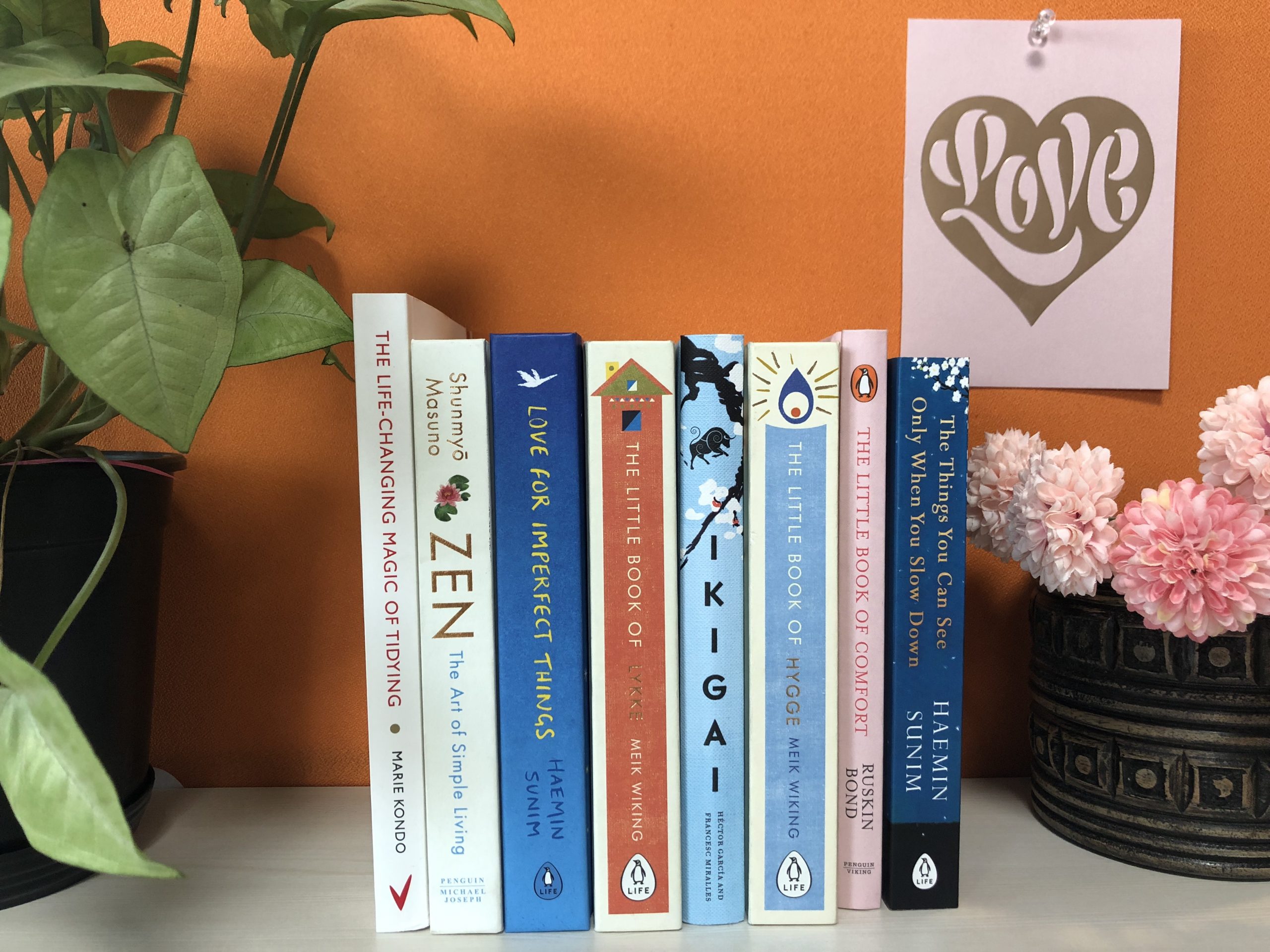
Books to remind you #LoveIsLove, always

September 6, 2019 marks the first anniversary of historic judgement of the Supreme Court of India, decriminalizing homosexuality.  As we celebrate this day of love, we leave you with a bookshelf that will keep you celebrating pride throughout the year

The Carpet Weaver by Nemat Sadat

Described as ‘The Kite Runner’ meets ‘Brokeback Mountain’, Nemat Sadat’s debut novel The Carpet Weaver is published by Penguin in June 2019. Set against Afghanistan in the 70s, Kanishka Nurzada is the son of a carpet seller. He is in love with Maihan, his very first kiss, but he struggles to negotiate his faith with his sexual identity, for the death penalty is meted out to anyone who is kuni. When war breaks, Kanishka and Maihan are in more danger than before.

ShikhandiAnd Other Queer Tales They Don’t Tell You by Devdutt Pattanaik

Patriarchy asserts men are superior to women, Feminism clarifies women and men are equal, Queerness questions what constitutes male and female.

Queerness isn’t only modern, Western or sexual, says mythologist Devdutt Pattanaik. Take a close look at the vast written and oral traditions in Hinduism, some over two thousand years old and you will find many overlooked tales, such as those of Shikhandi, who became a man to satisfy her wife; Mahadeva, who became a woman to deliver his devotee’s child; Chudala, who became a man to enlighten her husband; Samavan, who became the wife of his male friend; and many more.

Playful and touching and sometimes disturbing-these stories when compared with their Mesopotamian, Greek, Chinese and Biblical counterparts, reveal the unique Indian way of making sense of queerness.

The Pregnant King by Devdutt Pattanaik

‘I am not sure that I am a man,’ said Yuvanashva. ‘I have created life outside me as men do. But I have also created life inside me, as women do. What does that make me? Will a body such as mine fetter or free me?’

Among the many hundreds of characters who inhabit the Mahabharata, perhaps the world’s greatest epic and certainly one of the oldest, is Yuvanashva, a childless king, who accidentally drinks a magic potion meant to make his queens pregnant and gives birth to a son. This extraordinary novel is his story.

It is also the story of his mother Shilavati, who cannot be king because she is a woman; of young Somvat, who surrenders his genitals to become a wife; of Shikhandi, a daughter brought up as a son, who fathers a child with a borrowed penis; of Arjuna, the great warrior with many wives, who is forced to masquerade as a woman after being castrated by a nymph; of Ileshwara, a god on full-moon days and a goddess on new-moon nights; and of Adi-natha, the teacher of teachers, worshipped as a hermit by some and as an enchantress by others.

Building on Hinduism’s rich and complex mythology-but driven by a very contemporary sensibility-Devdutt Pattanaik creates a lush and fecund work of fiction in which the lines are continually blurred between men and women, sons and daughters, husbands and wives, fathers and mothers. Confronted with such fluidity the reader is drawn into Yuvanashva’s struggle to be fair to all-those here, those there and all those in between.

The Hungry Ghosts by Shyam Selvadurai

In The Hungry Ghosts the sly and selfish ways of a Sri Lankan matriarch parallels with the political clashes in her country. Much to his grandmother’s disappointment, Shivan Rassiah is gay. He is preparing to return to his Colombo home but the night before his departure, Shivan finds himself contemplating upon ghosts which have not left him yet. Shyam Sevadurai writes a novel about race, migration, sexuality and family.

Cobalt Blue by Sachin Kundalkar; Translated by Jerry Pinto

Translated by Jerry Pinto, Sachin Kundalkar’s Cobalt Blue is about a brother and sister who fall in love with a man who is living with them as a paying guest. The comfort and familiarity of the house is broken by this surprising turn of events. The author called the book a “feminine and masculine monologue”.

The Boyfriend by R. Raj Rao

The Boyfriend by R.Raj Rao is one of the first gay novels to come from India.  Yudi is a 40-something gay journalist has a brief sexual encounter with a 19 year-old-boy and leaves him, afraid that the young man might be a hustler. When riots break out, Yudi finds himself worrying about the boy and reunites with him by chance. A story about masculinity, gay subculture, religion and class in India.

A Life Apart by Neel Mukherjee

Neel Mukherjee’s A Life Apart spans over a vast period of time. From the 1900s of Raj Bengal, to the 70s and 80s in Calcutta to the 90s in England, this novel is about Ritwik, a twenty-two year old orphaned gay man who flees Calcutta and leaves behind a childhood of abuse for the freedom of England. Ritwik forms a special bond with the 86 year old Anne Cameron and wanders the streets and public toilets of London. Mukherjee’s debut novel won the Writer’s Guild of Great Britain Award.

Eleven Ways to Love: Essays by Various Authors

People have been telling their love stories for thousands of years. It is the greatest common human experience. And yet, love stories coach us to believe that love is selective, somehow, that it can be boxed in and easily defined. This is a collection of eleven remarkable essays that widen the frame of reference: transgender romance; body image issues; race relations; disability; polyamory; class differences; queer love; long distance; caste; loneliness; the single life; the bad boy syndrome . . . and so much more.

Pieced together with a dash of poetry and a whole lot of love, featuring a multiplicity of voices and a cast of unlikely heroes and heroines, this is a book of essays that show us, with empathy, humour and wisdom, that there is no such thing as the love that dare not speak its name.


My Brother’s Name is Jessica by John Boyn

Sam waver has always idolized his big brother, Jason. Unlike Sam, Jason, seems to have life sorted – he’s kind, popular, amazing at football and girls are falling over themselves to date him. But then one evening Jason calls his family together to tell them that he’s been struggling with a secret for a long time. A secret which quickly threatens to tear them all apart. His parents don’t want to know and Sam simply doesn’t understand. Because what do you do when your brother says he’s not your brother at all? That he thinks he’s actually… Your sister?.


Besharam by Priya Alika Elias

Besharam is a book on young Indian women and how to be one, written from the author’s personal experience in several countries. It dissects the many things that were never explained to us and the immense expectations placed on us. It breaks down the taboos around sex and love and dating in a world that’s changing with extraordinary rapidity. It tackles everything, from identity questions like what should our culture mean to us? to who are we supposed to be on social media? Are we entitled to loiter in public spaces like men do? Why do we have so many euphemisms for menstruation? Like an encyclopedia, or a really good big sister, Besharam teaches young Indian women something that they almost never hear: it’s okay to put ourselves first and not feel guilty for it.

Part memoir, part manual, Besharam serves up ambitious feminism for the modern Indian woman.


Facing the Mirror: Lesbian Writing from India edited by Ashwini Sukthankar

For decades, most lesbians in India did not know the extent of their presence in the country: networks barely existed and the love they had for other women was a shameful secret to be buried deep within the heart. In Facing the Mirror, Ashwini Sukthankar collected hidden, forgotten, distorted, triumphant stories from across India, revealing the richness and diversity of the lesbian experience for the first time. Going back as far as the 1960s and through the forms of fiction and poetry, essays and personal history, this rare collection mapped a hitherto unknown trajectory.

In celebration of the Supreme Court’s reading down of the draconian Section 377 of the Indian Penal Code, this twentieth-anniversary edition, with a foreword by author and activist Shals Mahajan, brings to readers a remarkable history that illuminates the blood and the tears, the beauty and the magic of the queer movement in India. The raw anger and passion in them still alive, the writings in Facing the Mirrorproudly proclaim the courage, the sensuality, the humour and the vulnerability of being lesbian.

Here’s Looking Forward to a Joyful June!

The month of June brings along with it lazy days and a summer sojourn in tow. Why not take some time out to go through our splendid list of much-awaited books for this month?


Gun Island

 Gun Island

Bundook. Gun. A common word, but one which turns Deen Datta’s world upside down.

A dealer of rare books, Deen is used to a quiet life spent indoors, but as his once-solid beliefs begin to shift, he is forced to set out on an extraordinary journey; one that takes him from India to Los Angeles and Venice via a tangled route through the memories and experiences of those he meets along the way. There is Piya, a fellow Bengali-American who sets his journey in motion; Tipu, an entrepreneurial young man who opens Deen’s eyes to the realities of growing up in today’s world; Rafi, with his desperate attempt to help someone in need; and Cinta, an old friend who provides the missing link in the story they are all a part of. It is a journey which will upend everything he thought he knew about himself, about the Bengali legends of his childhood and about the world around him.
Gun Island is a beautifully realised novel which effortlessly spans space and time. It is the story of a world on the brink, of increasing displacement and unstoppable transition. But it is also a story of hope, of a man whose faith in the world and the future is restored by two remarkable women.


My Seditious Heart

My Seditious Heart collects the work of a two-decade period when Arundhati Roy devoted herself to the political essay as a way of opening up space for justice, rights and freedoms in an increasingly hostile environment. Taken together, these essays trace her twenty-year journey from the Booker Prize-winning The God of Small Things to the extraordinary The Ministry of Utmost Happiness: a journey marked by compassion, clarity and courage. Radical and readable, they speak always in defence of the collective, of the individual and of the land, in the face of the destructive logic of financial, social, religious, military and governmental elites.

In constant conversation with the themes and settings of her novels, the essays form a near-unbroken memoir of Arundhati Roy’s journey as both a writer and a citizen, of both India and the world, from ‘The End of Imagination’, which begins this book, to ‘My Seditious Heart’, with which it ends


The Magic Weight-Loss Pill

The Magic Weight-Loss Pill

What’s the one remedy common to controlling diabetes, hyperthyroidism, kidney and liver stones and excess weight? Lifestyle. Luke Coutinho, co-author of The Great Indian Diet, shows us that nothing parallels the power and impact that simple sustained lifestyle changes can have on a person who’s struggling to lose excess weight or suffering from a chronic disease.

The Vedic Wedding Book

The Vedic Wedding Book
An immensely accessible guide, The Vedic Wedding will take you to the roots of the Hindu wedding ceremony, on a journey of its evolution from the Rig Vedic times to the present day. A.V. Srinivasan brings the best of his experiential wisdom as a Hindu priest and scholar in the US in uniquely accessible explanations of each ritual of the traditional ceremony, along with a wealth of knowledge about their origin, variations and significance. One of its kind, this book will help you understand and appreciate, as well as execute, the traditional Vedic wedding ceremony and get a flavour of India’s wedding culture, its true meaning and significance.

The Deadly Dozen

The Deadly Dozen

A schoolteacher who killed multiple paramours with cyanide; a mother who trained her daughters to kill children; a thug from the 1800s who slaughtered more than 900 people, a manservant who killed girls and devoured their body parts.

If you thought serial killers was a Western phenomenon, think again!

These bone-chilling stories in The Deadly Dozen will take you into the hearts and heads of India’s most devious murderers and schemers, exploring what made them kill and why?

The Reluctant Billionaire

 The Reluctant Billionaire

Shanghvi is one of the most interesting and least understood business minds whose journey has been shrouded in mystery because of his reticence.

This book is an extraordinary story of an ordinary man, who chooses to stay anti-famous. He would rather have his face unrecognized, his story untold. But at a time, when a billion dreams are simmering in an aspiring India, this tale is for everyone who has once had a secret dream, an insanely bold one.

Super Century

 Super Century

What is it about the Indian psyche that makes us so incapable of fulfilling our promise as a nation? Why are we so averse to risk, resigned to mediocrity and mired in a collective lack of confidence? India has so much potential but seems forever stuck on the brink of actualization, unable to muster the political will and geo-economic force to clear the final bar. The stakes are higher than ever, and India’s moment is now.

In Super Century, Raghav Bahl offers a cogent and candid assessment of how we got where we are and a clear blueprint of what we need to do, both at home and in the world, to fulfil our promise going forward.

India’s Most Fearless 2

India’s Most Fearless 2

First-hand reports of the most riveting anti-terror encounters in the wake of the 2016 surgical strikes, the men who hunted terrorists in a magical Kashmir forest where day turns to night, a pair of young Navy men who gave their all to save their entire submarine crew, the Air Force commando who wouldn’t sleep until he had avenged his buddies, the tax babu who found his soul in a terrifying Special Forces assault on Pakistani terrorists, and many more.

Their own stories, in their own words. Or of those who were with them in their final moments. The highly anticipated sequel to Indias Most Fearless brings you fourteen more stories of astonishing fearlessness, and gets you closer than ever before to the personal bravery that Indian military men display in the line of duty.


Go!: India’s Sporting Transformation 

Bright-eyed aspirants in sports-from badminton to gymnastics-are training across the country. Homegrown leagues are attracting the world’s best athletes and professionals. The country boasts multiple World No. 1 teams and athletes, and sporting achievements are handsomely rewarded.

Much of this was simply unthinkable at the turn of the millennium. Today, there is no longer a doubt that an Indian can excel at sports. A country is changing the way it looks at sport and, along the way, how it looks at itself.

Go! features a never-before-seen collection of essays by leading athletes, sports writers and professionals, who together tell a compelling story of India’s ongoing sporting transformation.

Beyond Asanas

Beyond Asanas

Have you ever wondered how these names for yoga poses came about, inspired from animals, nature, and even sages?

Using thirty carefully researched asanas, yoga teacher Pragya Bhatt draws upon her own yoga practice and research to make a connection between ancient Indian mythology and modern yoga practice.

By depicting the beauty and form of each asana through the lens of Joel Koechlin, this book intends to add meaning and value for practitioners and non-practitioners alike, shedding new light on a familiar subject.

Sufi

Sufi

Sufi is the story of two boys who grew up in Dongri, Mumbai.

One of them, Iqbal Rupani, aided and abetted by a corrupt policeman, is drawn towards criminal activities in his teens. As he becomes powerful and influential as a racketeer and smuggler, he creates a puritan code of conduct for himself: no drinking, no smoking and no murders. He comes to be known as ‘Sufi’ because of his principles and philosophical manner of speaking.

The other boy, Aabid Surti, grows up to become a famous author. How did the lives of these two boys, which began on such a similar note, diverge so drastically? This book presents an astonishing real-life story, with the sweep and scale of Kane and Abel, told by one of India’s most beloved storytellers.


Cricket Country

Cricket Country


This is a capacious tale with an improbable cast of characters set against the backdrop of revolutionary protest and princely intrigue. The captain of the Indian team was nineteen-year-old Bhupinder Singh, the embattled Maharaja of Patiala. The other cricketers were selected on the basis of their religious identity. Most remarkable, for the day, was the presence in the side of two Dalits: the Palwankar brothers, Baloo and Shivram.

Drawing on an unparalleled range of original archival sources, Cricket Country is the untold story of how the idea of India was fashioned on the cricket pitch in the high noon of empire.

Bulletproof

Bulletproof

A first-of-its-kind account, Bulletproof is the story of a female combat journalist and her encounters with insurgency from north-east India. Going beyond mere statistics, of deaths and arms recovered, and other documentary evidence, it shows us how conflict impacts women, children, health, environment, sanitation, wildlife and society. This book is a collection of rare human stories from one of the most under-reported regions in the world.

The Body Myth

Mira is a teacher living in the heart of Suryam, the only place in the world the fickle Rasagura fruit grows. Mira lives alone, and with only the French existentialists as companions, until the day she witnesses a beautiful woman having a seizure in the park. Mira runs to help her but is cautious, for she could have sworn the woman looked around to see if anyone was watching right before the seizure began.

Mira is quickly drawn into the lives of this mysterious woman Sara, who suffers a myriad of unexplained illnesses, and her kind, intensely supportive husband Rahil, striking up intimate, volatile and fragile friendships with each of them that quickly become something more.

The Carpet Weaver

The Carpet Weaver

Afghanistan, 1977. Kanishka Nurzada, the son of a leading carpet seller, falls in love with his friend Maihan, with whom he shares his first kiss at the age of sixteen. Their romance must be kept secret in a nation where the death penalty is meted out to those deemed to be kuni, a derogatory term for gay men. And when war comes to Afghanistan, it brings even greater challenges-and danger-for the two lovers.

From the cultural melting pot of Kabul to the horrors of an internment camp in Pakistan, Kanishka’s arduous journey finally takes him to the USA in the desperate search for a place to call home-and the fervent hope of reuniting with his beloved Maihan. But destiny seems to have different plans in store for him.

Intimate and powerful, The Carpet Weaver is a sweeping tale of a young gay man’s struggle to come of age and find love in the face of brutal persecution.

An India Reimagined
An India Reimagined

M.N. Buch, known as the architect of Bhopal, was awarded the Padma Bhushan in 2011. He studied economics at Cambridge University before joining the Indian Administrative Service (IAS) in 1957. He famously wrote five letters to former Prime Minister Manmohan Singh-ranging from the deterioration of the Indian Institutes of Technology (IITs) to Indo-American relations and how India must not be deferential to the US, and to assert the country’s right to help rebuild Afghanistan.

This book is a collection of twenty articles that have been divided into six major themes, namely the IAS, reforms (police, judiciary and electoral system), economics, social challenges (health, corruption and reservation), and governance and environment. Original and thought-provoking, this is a must-read for those concerned with the idea of India and how change can be brought.

Books to Read This World Environment Day

Looking for something to read this World Environment Day? We bring you a carefully curated list that would help you become more conscientious about the environment and celebrate nature!

Take a look below:

The Vanishing

The Vanishing takes an unflinching look at the unacknowledged crisis that India’s wildlife faces, bringing to fore the ecocide that the country’s growth story is leaving in its wake—laying to waste its forests, endangering its wildlife, even tigers whose increasing numbers shield the real story of how development projects are tearing their habitat to shreds. It tells us why extinction matters, linking the fate of wildlife to ours. The end of the gharial, an ancient crocodilian, signifies that the clear, fast-flowing rivers that are our lifelines are stilled and poisoned. The author deconstructs the raging human–wildlife conflict to show wild elephants as peaceable creatures and weaves a beautiful tale of their bond with their protectors.

The Hidden Life of Trees

In The Hidden Life of Trees, Peter Wohlleben shares his deep love of woods and forests and explains the amazing processes of life, death, and regeneration he has observed in the woodland and the amazing scientific mechanisms behind these wonders, of which we are blissfully unaware.

The Great Derangement

Amitav Ghosh, argues that future generations may well think so. How else can we explain our imaginative failure in the face of global warming? In this groundbreaking return to non-fiction, Ghosh examines our inability-at the level of literature, history and politics-to grasp the scale and violence of climate change. The climate crisis asks us to imagine other forms of human existence-a task to which fiction, Ghosh argues, is the best suited of all forms. The Great Derangement serves as a brilliant writer’s summons to confront the most urgent task of our time.

Rage of the River

NDTV journalist Hridayesh Joshi covered the floods in 2013, exposing the government’s apathy and inefficiency. He was the first journalist to reach Kedarnath after the disaster and brought to light the stories from the most remote parts of the state: areas cut off from the rest of the world. Woven into this haunting narrative is also the remarkable history of the ordinary people’s struggle to save the state’s ecology. Rage of the River is a riveting commentary on the socio-environmental landscape of Uttarakhand and is filled with vivid imagery of the calamity.

Cities and Canopies

Native and imported, sacred and ordinary, culinary and floral, favourites of various kings and commoners over the centuries, trees are the most visible signs of nature in cities, fundamentally shaping their identities. Trees are storehouses of the complex origins and histories of city growth, coming as they do from different parts of the world, brought in by various local and colonial rulers. Drawing on extensive research, Cities and Canopies is a book about both the specific and the general aspects of these gentle life-giving creatures.

Indica: A Deep Natural History of the Indian Subcontinent

Did you know that the exquisite caves of Ellora were hewn from rock formed in the greatest lava floods the world has known-eruptions so enormous that they may well have obliterated dinosaurs? Many such amazing facts and discoveries-from 70-million-year-old crocodile eggs in Mumbai to the nesting ground of dinosaurs near Ahmedabad-are a part of Indica: A Deep Natural History of the Indian Subcontinent.

Researching across wide-ranging scientific disciplines and travelling with scientists all over the country, biochemist Pranay Lal has woven together the first compelling narrative of India’s deep natural history filled with fierce reptiles, fantastic dinosaurs, gargantuan mammals and amazing plants.

Sacred Plants of India

Before temples were constructed, trees were open-air shrines sheltering the deity, and many were symbolic of the Buddha himself. Sacred Plants of India systematically lays out the sociocultural roots of the various plants found in the Indian subcontinent, while also asserting their ecological importance to our survival. Informative, thought-provoking and meticulously researched, this book draws on mythology and botany and the ancient religious traditions of India to assemble a detailed and fascinating account of India’s flora.

Jungle Trees of Central India: A Field Guide for Tree Spotters

Covering an area larger than France, and including five of India’s mostvisited tiger reserves, the forests of Central India are one of the country’s most iconic wildscapes. Jungle Trees of Central India is a lavishly illustrated and user-friendly field guide to every wild tree you are will see in this entire region. A culmination of four years of research, the book has over 2000 photographs with thumbnail keys to all the bark, flowers, fruit and leaves. An ideal companion for your travels in the region, this book will turn you into an expert tree spotter and take your enjoyment of wild places to another level.

Trees of Delhi: A Field Guide

Pradip Krishen is a nature-lover and in his book Trees of Delhi: A Field Guide, he has made a list of more than 250 species of trees found in Delhi. This book is not only for botanists, because of its simple language can be understood by anyone who is fond of trees. The book gives specific details about each tree like its leaves, flowers and fruits and also tells you the places in Delhi where you can find those trees.On reading Trees of Delhi: A Field Guide you will possess knowledge about each tree you see.

Environmentalism: A Global History

Environmentalism: A Global History documents the flow of ideas across cultures, the ways in which the environmental movement in one country has been invigorated or transformed by infusions from outside. It interprets the different directions taken by different national traditions, and also explains why in certain contexts (such as the former Socialist Bloc) the green movement is marked only by its absence. Massive in scope but pointed in analysis, written with passion and verve, this book presents a comprehensive account of a significant social movement of our times, and will be of wide interest both within and outside the academy.

A Village Awaits Doomsday

In A Village Awaits Doomsday, Jaideep Hardikar brings us the personal stories of ordinary people from across the country displaced and made destitute by innumerable government and private initiatives. Apart from providing vivid accounts of individual experiences, he analyses the reasons why people protest, the laws that governments use to displace them, the existing rehabilitation and resettlement policies, and the latest debates over the land acquisition process. Hardikar’s writing is evocative, the stories haunting and his book timely and important.

The Great Smog of India

Air pollution kills over a million Indians every year, albeit silently. Families are thrown into a spiralling cycle of hospital visits, critically poor health and financial trouble impacting their productivity and ability to participate in the economy.
With clarity and compelling arguments, and with a dash of irony, Siddharth Singh demystifies the issue: where we are, how we got here, and what we can do now. He discusses not only developments in sectors like transport, industry and energy production that silently contribute to air pollution, but also the ‘agricultural shock’ to air quality triggered by crop burning in northern India every winter.

Animal Intimacies

Built on extensive ethnographic fieldwork in the mountain villages of India’s Central Himalayas, Radhika Govindrajan’s book explores the number of ways that human and animal interact to cultivate relationships as interconnected, related beings. Whether it is through the study of the affect and ethics of ritual animal sacrifice, analysis of the right-wing political project of cow protection, or examination of villagers’ talk about bears who abduct women and have sex with them, Govindrajan illustrates that multispecies relatedness relies on both difference and ineffable affinity between animals.

 The Shooting Star

Shivya Nath quit her corporate job at age twenty-three to travel the world. She gave up her home and the need for a permanent address, sold most of her possessions and embarked on a nomadic journey that has taken her everywhere from remote Himalayan villages to the Amazon rainforests of Ecuador.

With its vivid descriptions, cinematic landscapes, moving encounters and uplifting adventures, The Shooting Star is a travel memoir that maps not just the world but the human spirit.

Ritusamharam

Perhaps the most lively and exuberant of Kalidasa’s extant works, Ritusamharam is a glorious ode to nature’s bounty and the enduring emotional response it evokes in mankind as a whole.


STOP what you’re doing and ask yourself: How are you?

How much time do you set aside for yourself, in a day? With our busy schedules, most of us are so busy worrying about events in our fast-paced lives, that we forget to acknowledge the most important thing here: ourselves.

Today, sit back and reflect on your inner-self. How are you, really?

It is with this spirit that we’ve put together quotes from some of our favourite books on self-help and self-love. Take a look!


Books You Should Be Reading This Election Season!

With the General Elections going on in full swing, it’s needless to say that there’s no better time than now, to get updated with the current political environment, in order to vote consciously!

Here’s a list of books that will help you understand the A to Z of governance!

The Lost Decade (2008-18)

The Lost Decade (2008-18)

Before the global financial meltdown of 2008, India’s economy was thriving and its GDP growth was cruising at an impressive 8.8 per cent. The economic boom impacted a large section of Indians, even if unequally. With sustained high growth over an extended period, India could have achieved what economists call a ‘take-off’ (rapid and self-sustained GDP growth). The global financial meltdown disrupted this momentum in 2008.

In the decade that followed, each time the country’s economy came close to returning to that growth trajectory, political events knocked it off course.

In 2019, India’s GDP is growing at the rate of 7 per cent, making it the fastest-growing major economy in the world, but little on the ground suggests that Indians are actually better off. Economic discontent and insecurity are on the rise, farmers are restive and land-owning classes are demanding quotas in government jobs. The middle class is palpably disaffected, the informal economy is struggling and big businesses are no longer expanding aggressively.

India is not the star it was in 2008 and in effect, the ‘India growth story’ has devolved into ‘growth without a story’. The Lost Decade tells the story of the slide and examines the political context in which the Indian economy failed to recover lost momentum.


Didi: The Untold Mamata Banerjee

Didi

Mamata Banerjee, with her unique style of politics, was able to defeat the formidable three-decade-old Left Front Government in 2011. Exploring her struggles and achievements, Didi opens a window to the life and times of one of the most dynamic politicians of our country.

‘The general elections of 2019 can see [Mamata Banerjee] play kingmaker . . . She is the only regional leader who can claim to have that kind of clout. Jayalalithaa is no more and Nitish Kumar has changed over to the NDA. The year 2018 also witnessed the demise of another pedagogue of Dravidian politics, K. Karunanidhi. With the Congress showing signs of resurgence, and regional parties agreeing to forge a Federal Front, Mamata is more than aware that if she gets her electoral mathematics right, she could play a decisive role in the next Lok Sabha polls-maybe even stand a chance at prime ministership.’


Behenji

Behenji

“This revised edition of Behenji, first published in 2008, examines Mayawati’s record as chief minister since 2007. It pinpoints the reasons behind the BSP’s poor performance in the 2009 Lok Sabha polls, her return to the Dalit agenda prior to the 2012 assembly elections, as well as its surprising results. Also scrutinized are Mayawati’s performance as a Dalit leader and administrator, besides the rampant corruption and failure of her social engineering project during these years. Though no longer likely to become prime minister, the author sees Mayawati playing a pivotal role in UP, and, indeed, Indian politics post the 2014 elections.”


Rahul

Rahul

“Perceptions of Rahul Gandhi have ranged from the great Indian hope to that of an over- promoted dynastic scion. Everyone has an opinion, but the man himself remains opaque, his public persona confined to positions on political events, policies or programmes. Who is Rahul Gandhi—the real man—beneath the hype and the hatchet jobs? What are the ideas and influences that propel him? Who are his advisers? And how will he tackle his new responsibilities as his mother, Sonia Gandhi, makes way for him? Two young journalists, Jatin Gandhi and Veenu Sandhu, trace the evolution of the Rahul brand and explore the fascinating relationship between modernity and dynasty in this incisive political biography. ”


The Great Disappointment

The Great Disappointment

As the National Democratic Alliance (NDA) government completes its current term ahead of the General Elections 2019, it is time to evaluate its performance, specifically in terms of its management of the economy. This book is a critical assessment of five years of the brand of economics Prime Minister Narendra Modi has championed, often referred to as ‘Modinomics’.

Brought into power with the biggest political mandate in almost three decades, did the NDA government succeed in gainfully transforming India’s economic trajectory or did it squander a once-in-a-generation opportunity? The book conjectures it is the latter, and analyses why the Modi government’s stewardship of the economy is a ‘great disappointment’.


Half-Lion

Half-Lion

“When P.V. Narasimha Rao became the unlikely prime minister of India in 1991, he inherited a nation adrift, violent insurgencies, and economic crisis. Despite being unloved by his people, mistrusted by his party, and ruling under the shadow of 10 Janpath, Rao transformed the economy and ushered India into the global arena. With exclusive access to Rao’s never-before-seen personal papers and diaries, this definitive biography provides new revelations on the Indian economy, nuclear programme, foreign policy and the Babri Masjid. Tracing his early life from a small town in Telangana through his years in power, and finally, his humiliation in retirement, it never loses sight of the inner man, his difficult childhood, his corruption and love affairs, and his lingering loneliness. Meticulously researched and brutally honest, this landmark political biography is a must-read for anyone interested in knowing about the man responsible for transforming India. ”


Rajneeti: A Biography of Rajnath Singh

Rajneeti

Rajneeti mein “”neeti”” hai, to “”aneeti”” kyon?’ – Rajnath Singh

Rajnath Singh rose from a Swayamsevak in the RSS to the Chief Minister of Uttar Pradesh, and also served as a Cabinet Minister in the Vajpayee Government. Jailed during the Emergency, Singh was the president of the BJP’s youth wing, the Bharatiya Janata Yuva Morcha. A two-term President, Singh saw the elevation of Narendra Modi as the party’s PM candidate and delivered BJP’s biggest elections victory in 2014. Since then, as India’s Home Minister, he has ushered in a new phase in the country’s security where both internal and external threats have been minimised. Under Singh, the Red Menace from Naxalites and Maoists has been nearly wiped out, and the state of Jammu and Kashmir saw the first local body elections in over a decade. Read on to know more about one of the tallest politicians in present-day India. In a career spanning nearly fifty years, Rajnath Singh has not only witnessed but also played a significant role in shaping the history of this country. Drawing from a vast amount of research and in-depth interviews, Gautam Chintamani’s engaging narrative reveals for the first-time a politician who never shied away from doing the right thing.


Democracy on the Road

Democracy on the Road

On the eve of a landmark general election, Ruchir Sharma offers an unrivalled portrait of how India and its democracy work, drawn from his two decades on the road chasing election campaigns across every major state, travelling the equivalent of a lap around the earth. Democracy on the Road takes readers on a rollicking ride with Ruchir and his merry band of fellow writers as they talk to farmers, shopkeepers and CEOs from Rajasthan to Tamil Nadu, and interview leaders from Narendra Modi to Rahul Gandhi.

No book has traced the arc of modern India by taking readers so close to the action. Offering an intimate view inside the lives and minds of India’s political giants and its people, Sharma explains how the complex forces of family, caste and community, economics and development, money and corruption, Bollywood and Godmen, have conspired to elect and topple Indian leaders since Indira Gandhi. The ultimately encouraging message of Ruchir’s travels is that, while democracy is retreating in many parts of the world, it is thriving in India.


The Verdict

The Verdict

What are the key factors that win or lose elections in India? What does, or does not, make India’s democracy tick? Is this the end of anti-incumbency? Are opinion polls and exit polls reliable? How pervasive is the ‘fear factor’? Does the Indian woman’s vote matter? Does the selection of candidates impact results? Are elections becoming more democratic or less so? Can electronic voting machines (EVMs) be fiddled with? Can Indian elections be called ‘a jugaad system’?

Published on the eve of India’s next general elections, The Verdict uses rigorous psephology, original research and as-yet-undisclosed facts to talk about the entire span of India’s electoral history from the first elections in 1952. Crucially, for 2019, it provides pointers to look out for, to see if the incumbent government will win or lose.
Written by Prannoy Roy, renowned for his knack of demystifying electoral politics, and Dorab R. Sopariwala, this book is compulsory reading for anyone interested in politics and elections in India.


How to Win an Indian Election

How to Win an Indian Election

What role do political consultants play in election campaigns? How are political parties using technological tools such as data analytics, surveys and alternative media to construct effective, micro-targeted campaigns? How does the use of money impact election results? What aids in the en masse dissemination of divisive propaganda and fake news? What does it take to win an election in India today? What is the future of politics in the country?
Written by a former election campaign consultant for a major political party, How to Win an Indian Election takes readers into the forbidden world of election war-rooms and gives them a glimpse of how strategy is formulated, what works with voters on the ground and what doesn’t. Based on research, interviews and the author’s own experiences, this book is invaluable for its insight into the inner workings of politics, political parties and what really makes for a winning election campaign.

Spring has Sprung! Books to read this April

Spring, a lovely reminder of how beautiful change can be! So try a new book, a new author: something out of the ordinary. As nature changes around you, bring a change within yourself by giving your mind and soul a new type of narrative to look forward to.

Penguin presents a new list of books this April. Take a look!

Journeys: Pages from My Diaries

Edited by Krishna Ramanujan and Guillermo Rodríguez, Journeys offers access to Ramanujan’s personal diaries and journals, providing a window into his creative process. It will include literary entries from his travels, his thoughts on writing, poetry drafts, and dreams. His diaries and journals served as fertile ground where he planted the seeds for much of his published work.


Rajneeti: A Biography of Rajnath Singh

A two-term President, Singh saw the elevation of Narendra Modi as the partys PM candidate and delivered BJPs biggest elections victory in 2014. Since then, as Indias Home Minister, he has ushered in a new phase in the countrys security where both internal and external threats have been minimised. Drawing from a vast amount of research and in-depth interviews, Gautam Chintamanis engaging narrative reveals for the first-time a politician who never shied away from doing the right thing.


The City and the Sea

Called the novelist of the newsroom, Raj Kamal Jha cleaves open India’s tragedy of violence against women with a powerful story about our complicity in the culture that supports it. This is a book about masculinity – damaging and toxic and yet enduring and entrenched – that begs the question: What kind of men are our boys growing up to be?


Re-forming India: The Nation Today

India’s social and political landscape has, in recent times, witnessed many significant transformations. This book offers a wide-ranging review of how India has, over the last few years, fared on the most critical dimensions of our collective life-politics, economy, governance, development, culture and society.


Ib’s Endless Search for Satisfaction

In this journey of sadness and self-reflection, Ib tranforms into an ordinary man from an ordinary boy and along the way, tries to figure out life and understand himself. In this audacious debut that is insightful, original and deeply disturbing, Roshan Ali’s play of language is nothing less than masterful.


Autumn Light: Season of Fire and Farewells

After his first year in Japan, almost thirty years ago, Iyer gave us a springtime romance for the ages, The Lady and the Monk; now, half a lifetime later, he shows us a more seasoned place-and observer-looking for what lasts in a life that feels ever more fragile.


Carpenters and Kings

Carpenters and Kings is a tale of Christianity, and equally, a glimpse of the India which has always existed: a multicultural land where every faith has found a home through the centuries.


Siyasi Muslims: A story of political Islams in India

We seldom debate to find pragmatic answers to these queries. Examining the everydayness of Muslims in contemporary India, Hilal Ahmed offers an evocative story of politics and Islam in India, which goes beyond the given narratives of Muslim victimhood and Islamic separation.


The Travel Gods Must be Crazy: Wacky Encounters in exotic lands

Punctuating her droll stories with breathtaking descriptions and stunning photographs, Sudha invites readers on an unexpected and altogether memorable tour around the world!


The Tiger and the Ruby: A Journey to the Other Side of British India

In 1841, Nigel Halleck left Britain as a clerk in the East India Company. He served in the colonial administration for eight years before leaving his post, eventually disappearing in the mountain kingdom of Nepal, never to be heard from again.
A century-and-a-half later, Kief Hillsbery, Nigel’s nephew many times removed, sets out to unravel the mystery.


The Doctor and the Saint: Caste, Race and Annihilation of Caste, the Debate between B.R. Ambedkar and M.K. Gandhi

In The Doctor and the Saint, Roy exposes some uncomfortable, controversial, and even surprising truths about the political thought and career of India’s most famous and most revered figure. In doing so she makes the case for why Ambedkar’s revolutionary intellectual achievements must be resurrected, not only in India but throughout the world.


The Lost Decade (2008-2018): How the India Growth Story Devolved into Growth Without a Story

India is not the star it was in 2008 and in effect, the ‘India growth story’ has devolved into ‘growth without a story’. The Lost Decade tells the story of the slide and examines the political context in which the Indian economy failed to recover lost momentum.


Once Upon a Curfew

It is 1974. Indu has inherited a flat from her grandmother and wants to turn it into a library for women. Her parents think this will keep her suitably occupied till she marries her fiancé, Rajat, who’s away studying in London.
When the Emergency is declared, Indu’s life turns upside down. Rana finds himself in trouble, while Rajat decides it’s time to visit India and settle down. As the Emergency pervades their lives, Indu must decide not only who but what kind of life she will choose.


Dare Eat That

From using sign language to haggle over ant eggs in Bangkok to being hungry enough to eat a horse in Luxembourg, from finding out the perfect eel to barbecue to discovering the best place to source emu eggs in India, Dare Eat That explores their journey to eat every species on earth, at least once!


House of Stars

Kabir follows the most beautiful girl he has ever seen into a mall. But there are gunshots and screams as terrorists storm inside after fleeing an operation gone wrong. Kabir and Diya find themselves trapped, along with other hostages. The terrorists make their demands and announce that until they are met, one person will die every hour. The situation begins to spiral out of control.  Held hostage by fate, looking death in the face, it could be Kabir and Diya’s last chance at love.


The Secrets We Keep

Rahul, an intelligence officer on a secret mission, is undercover at a major’s house. In the process, he falls in love with the major’s daughter, Akriti, unknowingly putting her in danger. To protect her, Rahul decides to hide her at his parents’ house. However, estranged from his family for years, he must first make amends with them.


Mahadev

A little girl asks who Shiva is and it is the beginning of a family journey through stories and incidents across the expanse of Shivbhumi-all the way from the mystical Mount Kailash to the fabled Ocean of Milk and the netherworld. Writing in the Harikatha style of traditional storytelling, Renuka Narayanan builds a unique narrative to draw the reader into the loving, giving world of Mahadev.


Where Will Man Take Us?: The bold story of the human technology is creating

This is a new world we are walking into. And the man who began this journey won’t be the man who ends this journey. Where Will Man Take Us? explores the changes technology is bringing about in us-as a society and as a species. What will the next generation turn into, what will it be like, how will the new Adam and Eve live and love?


Do Better with Less: Frugal Innovation for Sustainable Growth

Packed with over fifty case studies, Do Better with Less offers six proven principles that Indian entrepreneurs and businesses can use to co-create frugal solutions in education, energy, healthcare, food and finance that are highly relevant to India and the world.
This book is India’s guide to claiming global leadership in frugal innovation.


Dawood’s Mentor

In Dawood’s Mentor, Dawood meets Khalid and they eventually forge an unlikely friendship. Together they defeat, crush and neutralize every mafia gang in Mumbai. Khalid lays the foundation for the D-Gang as Dawood goes on to establish a crime syndicate like no other and becomes India’s most wanted criminal.

Books to Read this Navroz!

In celebration of the Parsi New Year, we put some of our books together that will be perfect for you to read this Navroz, from authors Tanaz Bhathena, Sujata Massey, Bapsi Sidhwa, Rohinton Mistry and Roshen Dalal!

The Beauty of the Moment by Tanaz Bhathena

Love is messy and families are messier, but in spite of their burdens, Susan and Malcolm fall for each other. The ways they drift apart and come back together are the picture of being true to oneself.


A Girl Like That by Tanaz Bhathena

This beautifully written debut novel from Tanaz Bhathena reveals a rich and wonderful new world to readers; tackles complicated issues of race, identity, class and religion; and paints a portrait of teenage ambition, angst and alienation that feels both inventive and universal.


A Murder on Malabar Hill by Sujata Massey

A Murder on Malabar Hill is set against the backdrop of colonial Bombay and follows the gripping tale of an incomparable sleuth, a female lawyer, Perveen Mistry.


The Satapur Moonstone by Sujata Massey

When a dispute arises between the royal ladies over the education of the young crown prince, a lawyer’s counsel is required to settle the matter. Since the maharanis live in purdah, the one person who can help is Perveen Mistry, Bombay’s only female lawyer.


The Crow Eaters by Bapsi Sidhwa

Faredoon (Freddie) Junglewalla is either the jewel of the Parsi community or a murdering scoundrel. In this wickedly comic novel, the celebrated author of Ice-Candy Man takes us into the heart of the Parsi community, portraying its varied customs and traits with contagious humor.


Family Matters by Rohinton Mistry

When Nariman Vakeel’s condition worsens he is forced to take up residence with Roxana, his own daughter, her husband, Yezad, and their two young sons. The effect of the new responsibility on Yezad, who is already besieged by financial worries, pushes him into a scheme of deception. This sets in motion a series of events – a great unravelling and a revelation of the family’s love-torn past, that leads to the narrative’s final outcome.


Tales from Firozsha Baag by Rohinton Mistry

Here is a wonderful introduction to the residents of Firozsha Baag, an apartment complex in Bombay. We enter the daily routine and rhythm of their lives, and by the time we reach the final story we are as familiar with the people of Firozsha Baag as we are with our own neighbours. The crowded, throbbing life of India is brilliantly captured in this series of stories.


The Religions of India: A Concise Guide to Nine Major Faiths by Roshen Dalal

In India, the birthplace of some of the world’s major faiths and home to many more, religion is a way of life, existing as much in temples, mosques, churches and wayside shrines as it does in social laws, cultural practices and the political arena.

The Religions of India contains, in a single volume, a comprehensive account of every major faith practised in the country today.


Business Books To Rev Up Your Entrepreneurial Spirit!

Whether you’re thinking of kick-starting own business – and need some sound advice – or whether you need to grow your existing business, we’ve got a set of books for you.

This March, we have put together a list of books that will tell you how to take your business to new heights and avoid common mistakes through tips, facts and true stories by seasoned entrepreneurs. Take a look!


Ground Scorching Tax

Ground Scorching Tax

In this book, well-known economist Arun Kumar explains the reality behind GST. Known for not pulling any punches, the author explains why GST is a double-edged sword for the common man, why it will increase inequality across sectors and regions, why it will hurt small businesses-everything the government does not want you to know.


 Jugaad 3.0: Hacking the Corporation to make it fast, fluid and frugal

Jugaad 3.0

Based on hundreds of interviews, as well as the author’s consulting work within companies, Jugaad 3.0 Hacking the Corporation identifies the competencies these corporate hackers possess. It also offers a spectrum of carefully crafted archetypes to help people see themselves in this trend and allow organizations identify the innovators in their midst.

The Great Disappointment

The Great Disappointment

This book is a critical assessment of five years of the brand of economics Prime Minister Narendra Modi has championed, often referred to as ‘Modinomics’.With the biggest political mandate in almost three decades, did the NDA government succeed in transforming India’s economic trajectory for the better? Or, has its economic performance been a ‘great disappointment’? The book conjectures it is the latter, and analyses why this is so.

Leader’s Block

Leader’s Block

Have you ever felt bored and uninterested at work? Do you feel that you are working hard and not seeing results? Does your day end with frustration and disillusionment? But what happened? After all, you loved this job. It could be ‘leader’s block’, a phase where leaders feel demotivated and unengaged. These are the same leaders who at one point found their work stimulating and exciting. Over several candid interviews, senior professionals reveal why they felt this way and the circumstances that caused it. Ritu G. Mehrish uncovers the reasons behind this feeling and the antidote to this malady. Identify when you are getting into the ‘leader’s block’ and learn how to break out of it!


Books To Read this March!

March is here and along with it come some titles that promise to be informative, enlightening and also, fun! Take a look at what we have in store for you, this March!

The Great Disappointment

With the biggest political mandate in almost three decades, did the NDA government succeed in transforming India’s economic trajectory for the better? Or, has its economic performance been a ‘great disappointment’? The book conjectures it is the latter, and analyses why this is so.


Beast

Aditi and Prithvi race through the dark underbelly of Mumbai-from quiet suburbs to gritty brothels, from forgotten colonial tunnels to the lights and glamour of the inner city-in search of a dangerous truth.

In search of a monster.


Leader’s Block

‘Leader’s block’ is a phase where leaders feel demotivated and unengaged. These are the same leaders who at one point found their work stimulating and exciting. Over several candid interviews, senior professionals reveal why they felt this way and the circumstances that caused it. Ritu G. Mehrish uncovers the reasons behind this feeling and the antidote to this malady.

Identify when you are getting into the ‘leader’s block’ and learn how to break out of it!


The Reluctant Family Man: Shiva in Everyday Life

In The Reluctant Family Man, Nilima Chitgopekar uses the life and personality of Shiva-his self-awareness, his marriage, his balance, his detachment, his contentment-to derive lessons that readers can practically apply to their own lives.With chapters broken down into distinct frames of analysis, she defines concepts of Shaivism and interprets their application in everyday life.


A Tale of Wonder: Kathakautukam

A biblical story travels across regions and time-ultimately reaching medieval India where it is transformed by Shaivite overtones. The result is an exquisite epic love poem of love which also attests to the rich diversity of India’s cultural past.

Magnificent in its simple elegance, A Tale of Wonder is a timeless story that challenges the insidious notion that India has always been dominated by one faith only and insular to other cultural and religious influences.


Besharam

Besharam is a book on young Indian women and how to be one, written from the author’s personal experience in several countries. It dissects the many things that were never explained to us and the immense expectations placed on us. It breaks down the taboos around sex and love and dating in a world that’s changing with extraordinary rapidity.


The Children of Destruction

For Alice, life as a teenager is hard enough without turning into a supernatural herald of destruction. And you would think that after causing minor hurricanes with a major sneeze, being visited by a talking fox and ending up on a journey with death around every corner, things can’t get much worse.

Wrong.

They can.


Books that will Fill your Heart on this Day of Love

The day of love is here, and in celebration, we’ve put together a list of books on the theme of love that we’re sure you’ll enjoy! Here are 7 books on different types of love.

Take a look!

Eleven Ways to Love

Pieced together with a dash of poetry and a whole lot of love, featuring a multiplicity of voices and a cast of unlikely heroes and heroines, this is a book of essays that show us, with empathy, humour and wisdom, that there is no such thing as the love that dare not speak its name.


Kama: The Riddle of Desire

In Kama: The Riddle of Desire, Gurcharan Das examines how to cherish desire in order to live a rich, flourishing life, arguing that if dharma is a duty to another, kama is a duty to oneself. It sheds new light on love, marriage, family, adultery and jealousy as it wrestles with questions such as these: How to nurture desire without harming others or oneself? Are the erotic and the ascetic two aspects of our same human nature? What is the relationship between romantic love and bhakti, the love of god?


Colours of My Heart

The Colours of My Heart introduces readers to little-known gems that display Faiz’s extraordinary flair for tender hope and quiet longing. A rich cornucopia of delights, The Colours of My Heart celebrates Faiz’s greatest work. Baran Farooqi’s superb translation is accompanied by an illuminating introduction to Faiz’s incredible life and enduring legacy.


Ninety-Seven Poems

This is a book of pictures.

Of a park bench and a prescription. And a toothbrush in a mug. It’s got half-lit cigarettes and broken geysers. And a cute apartment in Prague. There’s a fortune cookie, some pigeons in cages and stars tumbling from the sky. There’s the usual traffic, a digital wristwatch and a violin from Uncle James.

We can go on, but you’d rather see for yourself.


The Rabbit and the Squirrel

A story of thwarted love, and an ode to the enduring pleasures of friendship, The Rabbit and the Squirrel is a charmed fable for grown-ups, in which one life, against all odds, is fated for the other.


In My Heart

A very special story to be read with loved ones, In My Heart takes us on a child’s journey of discovering who she really is and where she comes from. Warmly illustrated and deeply felt, this is a fearless and tender celebration of the magical ways in which different kinds of families are born.


Vanara: The Legend of Baali, Sugreeva and Tara

The love triangle between Baali, Tara and Sugreeva is arguably the world’s first. Written by Anand Neelakantan who gave a voice to Ravana in Asura, Duryodhana in the Ajaya series and Sivagami in the Baahubali series, Vanara is a classic tale of love, lust and betrayal. Shakespearean in its tragic depth and epic in its sweep, Vanara gives voice to the greatest warrior in the Ramayana-Baali.


error: Content is protected !!