Publish with Us

Follow Penguin

Follow Penguinsters

Follow Penguin Swadesh

Transformative life lessons on trusting ourselves

Soulful and uproarious, forceful and tender, Untamed is both an intimate memoir and a galvanizing wake-up call on trusting ourselves.

For many years, Glennon Doyle denied her own discontent. Then, while speaking at a conference, she looked at a woman across the room and fell instantly in love. Three words flooded her mind: There She Is. This was her own voice—the one she had buried beneath decades of numbing addictions, cultural conditioning, and institutional allegiances. Glennon decided to quit abandoning herself and to instead abandon the world’s expectations of her. She quit being good so she could be free. She quit pleasing and started living.

Read on for six life-changing lessons we learnt from Untamed, on finding ourselves, honouring our anger and heartbreak, and unleashing our truest, wildest instincts.

 *


Embrace sensitivity as an emblem of bravery, as it takes courage to sense and to stand by that response amidst dismissal.

The opposite of sensitive is not brave. It’s not brave to refuse to pay attention, to refuse to notice, to refuse to feel and know and imagine. The opposite of sensitive is insensitive, and that’s no badge of honor…The culture depends on the sensitivity of a few, because nothing can be healed if it’s not sensed first.


Never undermine or under-value the validity of your own desires, feelings and ambitions.

I was wild until I was tamed by shame. Until I started hiding and numbing my feelings for fear of being too much. Until I started deferring to others’ advice instead of trusting my own intuition. Until I became convinced that my imagination was ridiculous and my desires were selfish. Until I surrendered myself to the cages of others’ expectations, cultural mandates, and institutional allegiances.


Pain and the feeling of sorrow are not meant to be avoided, it is meant to be felt-for resurrection and evolution.

I can use pain to become. I am here to keep becoming truer, more beautiful versions of myself again and again forever. To be alive is to be in a perpetual state of revolution. Whether I like it or not, pain is the fuel of revolution. Everything I need to become the woman I’m meant to be next is inside my feelings of now.


Be still and know. When you block out the distractions, and reach within yourself, you find the answers, the meaning already there waiting to be trusted.

It’s my daily reminder that, if I am willing to sit in the stillness with myself, I always know what to do. That the answers are never out there. They are as close as my breath and as steady as my heartbeat. All I have to do is stop flailing, sink below the surface, and feel for the nudge and the gold. Then I have to t rust it, no matter how illogical or scary the next right thing seems.

Untamed Front Cover
Untamed || Glennon Doyle
Don’t be afraid to ‘destroy’ your life, because it’s only then that you can begin anew, to rise like as phoenix from the ashes of destruction.

Destruction is essential to construction. If we want to build the new, we must be willing to let the old burn. We must be committed to holding on to nothing but the truth. We must decide that if the truth inside us can burn a belief, a family structure, a business, a religion, an industry— it should have become ashes yesterday.


Sometimes the best way to reclaim your life is to simply cede the need to control, to restrain, yourself

I quit spending my life trying to control myself and began to trust myself. We only control what we don’t trust. We can either control ourselves or love ourselves, but we can’t do both. Love is the opposite of control. Love demands trust.


Extracts from Untamed by Glennon Doyle (2020)

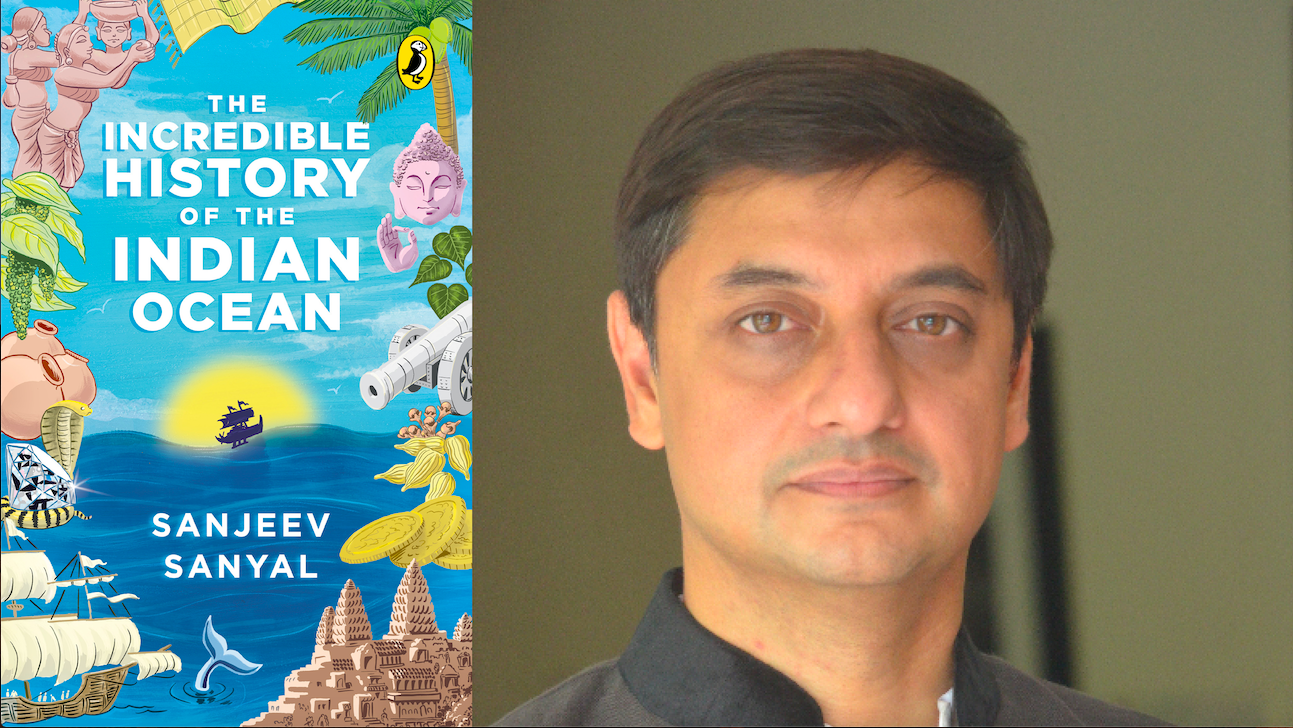
An incredible history of Sanjeev Sanyal

Now that we know that Phoenicians probably sailed around the Cape of Good Hope 2000 years before Vasco da Gama, we’re here to find out more about the man who gave us that amazing fact and others like them! Get to know writer Sanjeev Sanyal a little better.

1) He was one of the first Indians to get a paragliding pilot license. He was part of the first batch of Indians in 1990 to earn a pilot’s license after undergoing training in Himachal Pradesh. Since there was no Indian certification body at that time, the license was given by the British Association of Paragliding Clubs.


An image of a person paragliding

*

2) He also has an Instructor grade certification for kayaking and canoeing from way back in 1991. He was one of the earliest certified instructors of the Indian Kayaking and Canoeing Association.


Illustration of a boy rowing a boat

*

3) He is a martial arts black belt (Taekwondo) which he earned in 2008.


Illustration of a boy in a white Taekwondo attire with a black belt

*

4) He is currently researching a book on the contributions of armed Revolutionaries in India’s freedom struggle


Illustration of a man's silhouette addressing a gathering

*

5) He collects old maps of India, Indian cities and of the Indian Ocean.


An illustration of the world map without borders


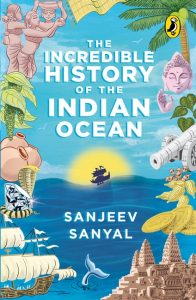
Sanjeev Sanyal has given us a fascinating maritime history of the Indian Ocean, with the most beautiful illustrations.

Front cover of The Incredible History of the Indian Ocean
The Incredible History of the Indian Ocean || Sanjeev Sanyal

On startups and the post-COVID world

Was there a specific ah-ha moment or an incident that made you realize how necessary a book like this was?

Oh there were hundreds. Between the two co-authors, we have met several hundred start-up founders, and they have all been looking for that elusive manna from heaven, namely funding. But we were surprised at how clueless most of them were about how to go about it. Many of them had no entry barrier – something that investors insist on. Most of them did not have scalable businesses, without which investors would simply pass. In fact many of them had no real business plan – they were simply executing.

We used to advise mentor these founders on all the above issues. And then it hit us. Why not write a book about it. And reach not hundreds, but thousands of start-up founders. And that’s where out book was born.


Co-authoring a book comes with its own asset of challenges but the authorial voice in this is so consistent. How did you manage that?

Right from the beginning, we realized that the style of writing had to be consistent right through. Both the authors provided content – and each one clearly had his own strengths. Both wrote drafts. There were the usual fist fights over some of the material – ending amicably over beer, of course. But the final version was penned by one of us – with both the authors concurring.


Is there a secret sauce for a successful start-up?

Yes there is, but its not secret. It’s a framework that the authors have developed after studying hundreds of start-ups – both successes and failures. And its called PERSISTENT. To explain, P stands for PROBLEM. In other words, are you solving a problem for your customer? E refers to EARNINGS MODEL, or simply, how will you make money? R is the RISKS associated with the business. S stands for SIZE OF THE MARKET. I refers to INNOVATION, which your product or solution must have. The second S implies SCALABILITY. After all, even if you are operating in a gigantic market, you will not get anywhere unless your business is scalable. T refers to the TEAM – starting with the founders of course. E stands for ENTRY BARRIER, or how the business will keep competitors at bay. N refers to NICHE – if you are in a large, crowded market, identify a non-crowded NICHE within it. And the final T stands for TRACTION. You many have everything else, but are you actually getting customers and rupees?

We have found that successful start-ups are PERSISTENT, whereas unsuccessful ones lose out on one or more of the PERSISTENT  parameters. And that’s what we have focused on in our book.

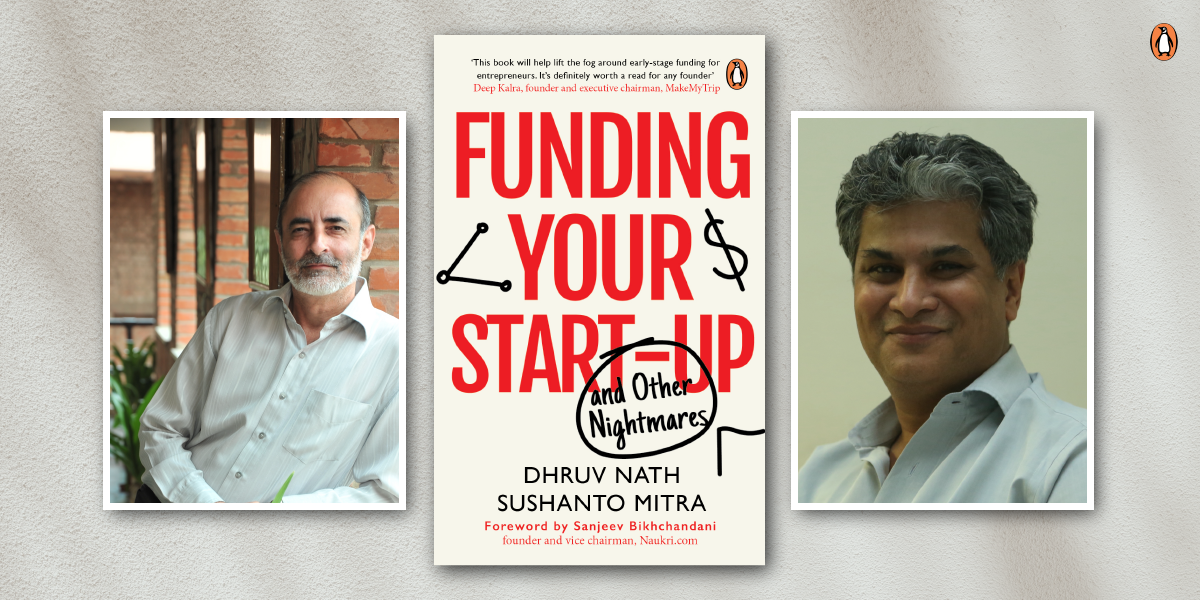
Funding Your Startup Front Cover
Funding Your Startup || Dhruv Nath, Sushanto Mitra
From an investor’s perspectives which sectors do you think would be the best to invest in right now?

We would like to divide sectors into three categories. Those which have been negatively impacted by Covid – such as hotels, restaurants, gyms, movie halls, taxi and bus services, travel, etc. These are a clear no-no for investors right now. After all, why would you invest in such uncertain times?

Then there are those sectors which have not been impacted, either negatively or positively – such as FMCG and agritech. These are evergreen sectors, and will remain so. In fact, Lead Angels has been investing actively in these sectors, even during the pandemic.

Finally, we have the star sectors – those that have been impacted positively by Covid. Sectors that have boomed because people were forced to stay at home and change their lifestyle. On-line gaming is one. After all, what do you do, if you have to sit at home 24×7? You play games, don’t you? Another area is On-line education, all the way from little kids to adults. In fact, several investments that Lead Angels has made in these sectors over the past couple of years, have just skyrocketed beyond our own expectations. And of course there is health. People are getting more and more concerned about health, and that is leading to a surge in businesses in health-tech. As well as businesses which are into organic or natural products. You see, eat healthy, be healthy, and invest healthy is the mantra now.


What kind of impact will the pandemic have on startups?

Apart from the sectoral shifts that we have spoken about earlier, there are two significant impacts. First of all, founders have begun to cut costs dramatically – simply to survive in a low-business environment. Salaries have been reduced, plush offices are being vacated and business are shifting to smaller, lower cost environments. Work from home is becoming a bit of a norm. We believe some of these trends will be permanent – such as the trend in increasing work from home.

The second major impact is that Covid has separated the men from the boys. Here we mean the founders of course. There are those who have simply thrown up their hands and are waiting for God – or the appropriate vaccine – to help. But there are those who are fighting. Those who have pivoted their business model, either temporarily or permanently, to stay afloat in this pandemic. Interestingly, this has given investors a great way to separate out the investible companies from the rest. Namely, look for founders who are fighters. Those who have figured out ways to survive. They are the winners of the future, and they deserve your money, dear investor.


Have you observed some startups that have become successful without funding?

Sure. Unfortunately, funding has become a kind of “In-thing”. You have to get funding because your peers have got it. How else will you hold a glass of beer at the next party and talk nonchalantly about Series A and Series B? Funds should be raised because you need them, and not because it is fashionable to do so. Two highly successful companies mentioned in the book – InfoEdge and IndiaMart – started off over twenty years ago and steadfastly refused to raise funding, except when it was really necessary. They are now both market leaders in their respective fields. Among the recent ones, we have an interesting company called Gadgetrestore, which is into the business of repairing and refurbishing mobile phones. They started just over a year ago, never raised funding, are profitable, and are growing. What more can you ask for? Remember, funding is to be taken when you need it, not when your friend has taken it!


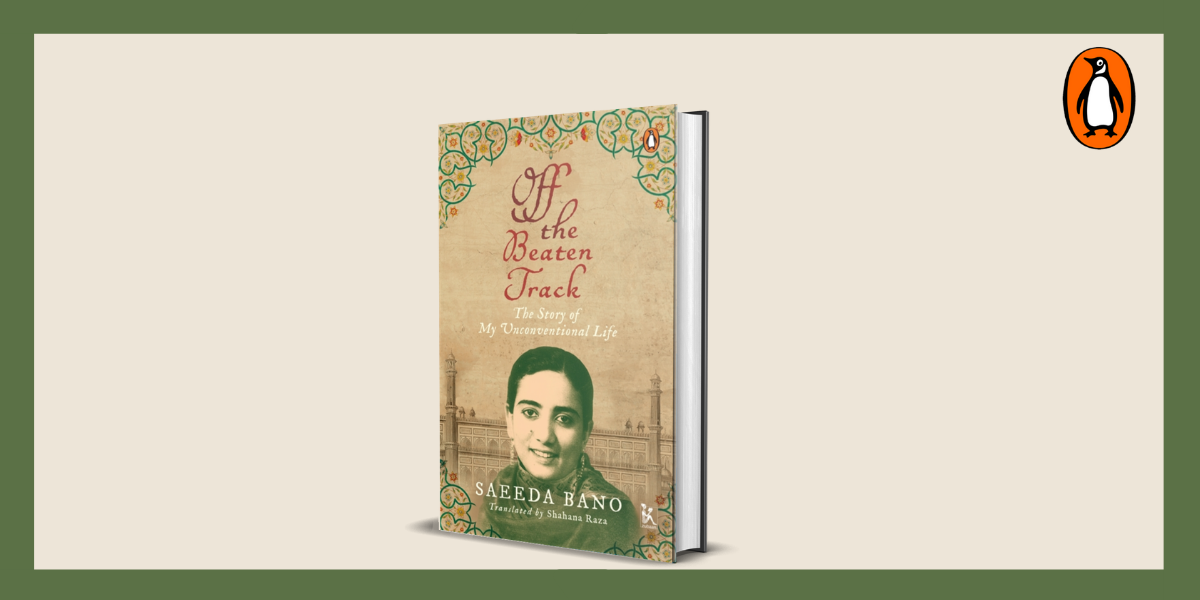
Shahana Raza on translating her grandmother’s memoir

Saeeda Bano was the first woman in India to work as a radio newsreader, known then and still as the doyenne of Urdu broadcasting. Over her unconventional and courageous life, she walked out of a suffocating marriage, witnessed the violence of Partition, lost her son for a night in a refugee camp, ate toast with Nehru and fell in love with a married man who would, in the course of their twenty-five-year relationship, become the Mayor of Delhi. Though she was born into privilege in Bhopal-the only Indian state to be ruled by women for four successive generations-her determination, independence and frankness make this a remarkable memoir and a crucial disruption in India’s understanding of her own past.


Read below an interview with the translator of the book, Shahana Raza:


Q: The seed to translate this book was sown back in the day when your grandmother got her friend to read and record it on to audio cassettes for you. Could you shed some light on this incident/process?

My grandmother wrote the book in Urdu. When I told her, I can’t read or translate it as she has written it in a language I can understand well but can’t read, she asked her friend to narrate and record the entire book on to analog audio cassettes. I had no clue she was doing this! One fine day, 8 neatly marked cassettes were handed to me just as I was leaving for America. The tapes travelled with me – from India to the US and are finally here with me in Dubai. When I decided to translate Bibi’s book, (we all called Saeeda Bano, Bibi) I found Syeda Shan who read the entire book out as I transcribed it word for word. Not only was her Urdu fabulous she also had a huge lughat –Urdu dictionary. Then Urdu

litterateur, translator and writer Zakia Zaheer combed through the entire translation with me to ensure my writing had done justice to the original. My grandmother’s Urdu vocabulary was highly erudite.


Q: Translation requires a certain degree of transparency. How did you manage to indulge and also be detached, especially when this book must have rekindled old memories of your grandmother?

Initially I felt awkward, especially the chapters after her marriage when one realizes her experiences as a wife are not entirely joyful! At this point Bibi quotes Mirza Ghalib,

Phir waza e ahteyat se …. rukne laga hai dum….’

I am so consumed with the anxiety of being discreet, I feel suffocated

I realized this was my grandfather she was talking about! Though he passed away before I was born, everyone who knew him said he was a kind man and a loving father. So, that was not easy. But I strongly believe, people have several sides to their personality, we are not unidimensional creatures. I mean, for example, I may be a better daughter and mother, than a wife or a sister … we can’t judge a person from the perspective of one relationship.  I kept this focus while translating. I saw both her (and him) for who they were – a young couple unable to navigate the complex world of marriage, not from the point of view of my relationship with them. This helped me to flesh out the various shades of emotions Bibi has expressed so beautifully in her memoir.


Q: Is there any section from the book that you look back to in times of uncertainty/adversity?

Several actually, but the main one is the determination with which she leaves behind the life of comfort and familiarity she was used to in Lucknow and comes to Delhi in August 1947, to start working in a male dominated industry as the first woman news reader for AIR’s Urdu service. She chooses to live in a single woman’s hostel (in YWCA) instead of with family friends, experiences communal riots, endures financial hardships and despite tackling occasional bouts of self-doubt, never ever looks back or gives me. I admire the fact that she did what she did without making an apology of the truth, curtailing her innate spirit or bowing down to societal expectations. I am quite fascinated that she could sit and write whatever she faced in life, this candidly.


Q: Which people, other than your grandmother, inspired you while you were growing up?

Most definitely my mother Naushaba. She was quite something herself! Extremely gutsy, loving, fiery, bold, great sense of humour, she could zap boredom out of any experience and make it memorable – from a torturously bumpy rickshaw ride to a formal Parent-Teacher meet. I remember her telling my teachers that they should let me focus on my extra-curricular activities instead of pressurizing me to get better grades! Like all dynamic women she too had several sides to her personality. She is no more, but my aunts and my Mum’s close friends inspire me in many ways to keep focus but not miss the wood for the trees. These ladies have carved strong identities for themselves despite all odds, we have to accept them for the women they are, not just as mothers, aunts and grandmothers.


Get your copy here to get to know about the life and times of Saeeda Bano

Preparing for the road ahead

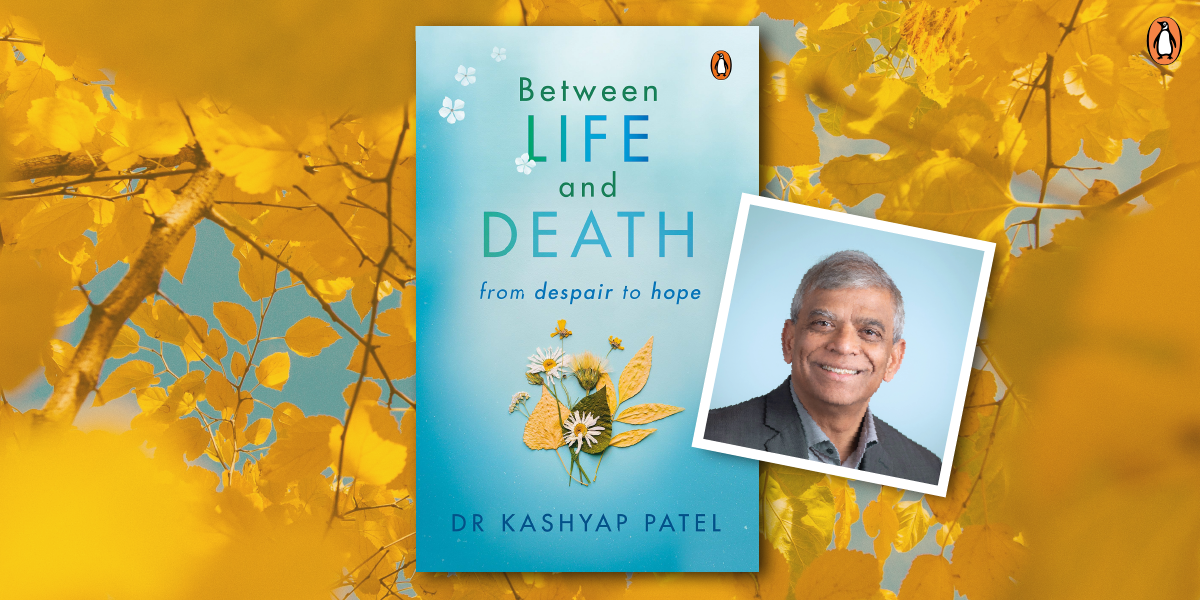
Between Life and Death || Dr Kashyap Patel

Dr Kashyap Patel is a renowned oncologist in the US who works with terminally ill cancer patients. In Between Life and Death, through him, we meet Harry, who, after a life full of adventure, is diagnosed with terminal lung cancer. As he stares death in the face, Harry leans on Dr Patel, an expert in understanding the process of death and dying. His questions and fears are addressed through the stories of many other patients that Dr Patel has treated-from the young and vivacious to those who had already lived full lives, from patients who could barely afford their rent to those who had been wildly successful. What ties these stories together is the single thread of the lessons Harry learns along the way, lessons that ultimately enable him to plan his own exit from the world gracefully-dying without fear.

We caught up with Dr Patel on his motivation behind turning to writing, his changed perspective on life as a result of his professional experiences and the advice he’d give to terminally-ill patients. Keep reading to find out his answers!


Question: From a renowned oncologist in the US to a now published writer of a book, this seems like quite
a journey to undertake. Please share with us what drove you to write this book?

I have lived in three different continents and treated cancer patients in multiple cities from Mumbai
to Manchester and then onwards to New York, US. My purpose of writing this book is to prompt
communal and personal preparation for a profound human experience that is unavoidable,
yet—paradoxically—too seldom a subject of open conversation. I personally feel that humans will
have more meaningful and comfortable experiences of death if we do not treat death as a taboo
subject, or an event to be delayed through extreme, often painful measures that yield meager
improvement in longevity or quality of life. I, therefore, took on this arduous journey to share my
own experience of learning and teaching my patients about the process of death and dying so that
they can have a meaningful life until their scheduled departure from this planet into a blissful
infinity.


Question: Has your job as an oncologist changed your perspective on life? Do you think coming in contact
with terminally-ill patients every day has made you value life more?

Indeed my professional role as an oncologist and walking against the horizon of facing death and
finitude every single day, week, month and year for almost three decades has enabled me to peep
through my own mortality. More than half of the patients I take on to treat for cancer are not likely to
live beyond a few months to years. I have come to value life a whole lot more every second as I could
be one of them, with our roles reversed, having to prepare for my own journey.


Question: How difficult was it for you personally to face a terminally-ill friend and be their doctor? In what
ways was it different from treating a stranger?

I have a difficult time detaching and distinguishing between professional and personal relationships
when it comes to treating cancer patients. I tend to draw very close to my patients and eventually
they tend to become my own family members. Treating all cancer patients as if they were all my
family members allows me to put a complete closure and provides me with a sense of fulfillment and
yet, leaves behind the lasting struggle of separation.


Question: Could you share with us any instances in which a patient or their loved ones showed
extraordinary courage in the face of mortality? Do you think such stories should be discussed
more often?

Harry falls, one of my patients who was also a retired pilot from the Royal Air Force, when was told
about his grim diagnosis of terminal cancer with life expectancy measuring in weeks decides not to
pursue chemotherapy or any other treatments. He told me “After evaluating where I stand and how
I’ve lived all these years, I feel it would be best for me to start packing my bags for the ultimate and
infinite journey. … God blessed me with a life that I have no regrets over … Let’s face it, Doc. From
everything you’ve told me, treating my cancer is like trying to save an exploding plane in mid-air.
Chances are it’s not going to happen… I think of it like I’ve just received an upgrade on a long flight.
I’ve collected so many miles that God has granted me a charter flight to a destination unknown.
Now the only issue is the waiting time.” This book is based on my weekly conversations with him
until he dies.


Question: If you could give one advice to the loved one of someone who has cancer, what would it be?
“Live life to the fullest and be prepared to leave gracefully when treatment stops working.”

Vocabulary of the darkness

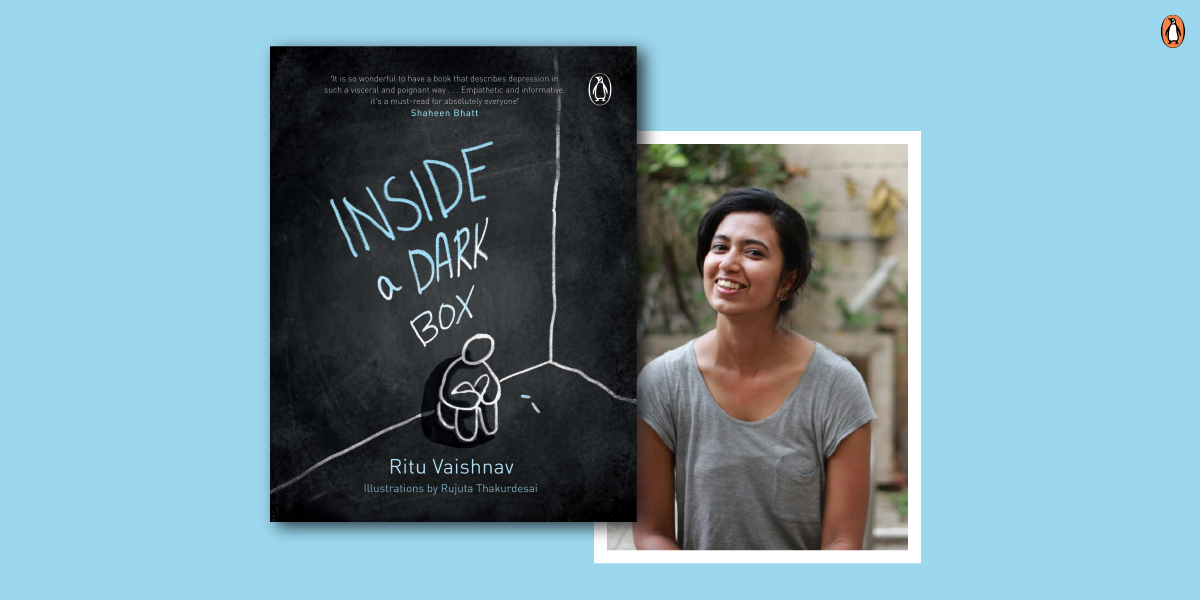
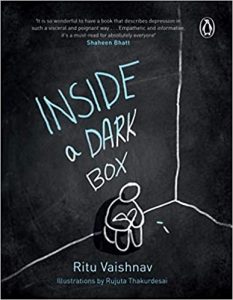
Inside a Dark Box is a simple book about what depression can feel like. When you get trapped in darkness, finding your way out can be a long and lonely battle, especially when the war is within your own head.

Today, we have with us Rujuta Thakurdesai, the illustrator of the book, who talks about her own experience of suffering from depression and what prompted her to take up the project of illustrating Inside a Dark Box.


By Rujuta Thakurdesai


Inside a Dark Box || Ritu Vaishnav

Till about I was fifteen, I would call each and every negative emotion boredom. It may be anxiety, dullness, anger, agitation, sadness, missing, but I would just be ‘bored’. I was thought of as a fickle-minded and disinterested child. In reality, I never meant ‘bored’, but I just had absolutely no idea about how to convey these feelings I was experiencing.

Most of us belong to communities that don’t treat physical and mental wellbeing equally. We don’t talk about anxiety and heartbreaks as openly as we talk about indigestion and fractured bones. This leaves kids with no safe space to understand their minds or tools to diagnose themselves. “You are too young to understand this!” is not a true remark about mental health issues anymore. With changing societal structures, technology, violence and kids’ exposure to it, makes them as susceptible to depression and anxiety as adults.

The opportunity to work on creating this safe space to address these issues came to me in the form of Ritu Vaishnav’s Inside the Dark Box. Ritu had expressed her journey with depression in the form of a short piece reflecting emotions and a few doodles. She wanted to work with someone who had their own experience with depression and could relate to the writing in order to create visuals for it.

Our first meeting was not about discussing the illustration briefs and layouts like any other picture book but was mostly a very deep and personal conversation about our experiences and how our art (writing for her and for me, illustrating) helped us process it. We agreed that we wanted to create a book that would be a conversation starter rather than a how-to guide.


A spread from the book showing the overwhelming darkness


We focused on relatable and friendly yet dark and unsettling art style. Developing a character that has no gender, skin colour or cultural connotations made them just a human, representing all of us. The world around this character is a surreal space that can exist in one’s mind and doesn’t really have physical boundaries. As the book is also intended for kids and young adults, we never tried to dumb it down or overly simplify things. We both believe that kids are much smarter and emotionally evolved than we give them credit for. We created layered images that would evoke emotions every time you look at them.

We used darkness and light as the central metaphor to depict bleakness and hope. Banking on a simple concept like this that everyone can inherently comprehend, we made the story more accessible for all ages. The visual vocabulary used to express the angst in the scribbly ink strokes and calm of the whites is not really hard to decipher either.


The process of developing an artwork from thumbnail to print


Even though it was not easy to talk about my own experience with depression, it gave me deeper understanding and a voice to show what it means to be in the dark box.

The simplicity of Ritu’s writing makes the topic less intimidating and in a way her voice echoes that little voice in your head, making it so much more relatable. Our journey from words to rough thumbnails and then rendered artworks was focused on highlighting the discomfort felt by someone going through a mental illness and creating situations in the book that would resonate with you. The book is one of the most seamless mediums to discuss the delicate topic of mental health. It gives you the freedom to pace it the way you want, interpret it in a way relatable to you and if it becomes too intense, you can close the book and take a breather to open it again and find something new you didn’t see before.

A fabled life: our reading list for this Gandhi Jayanti

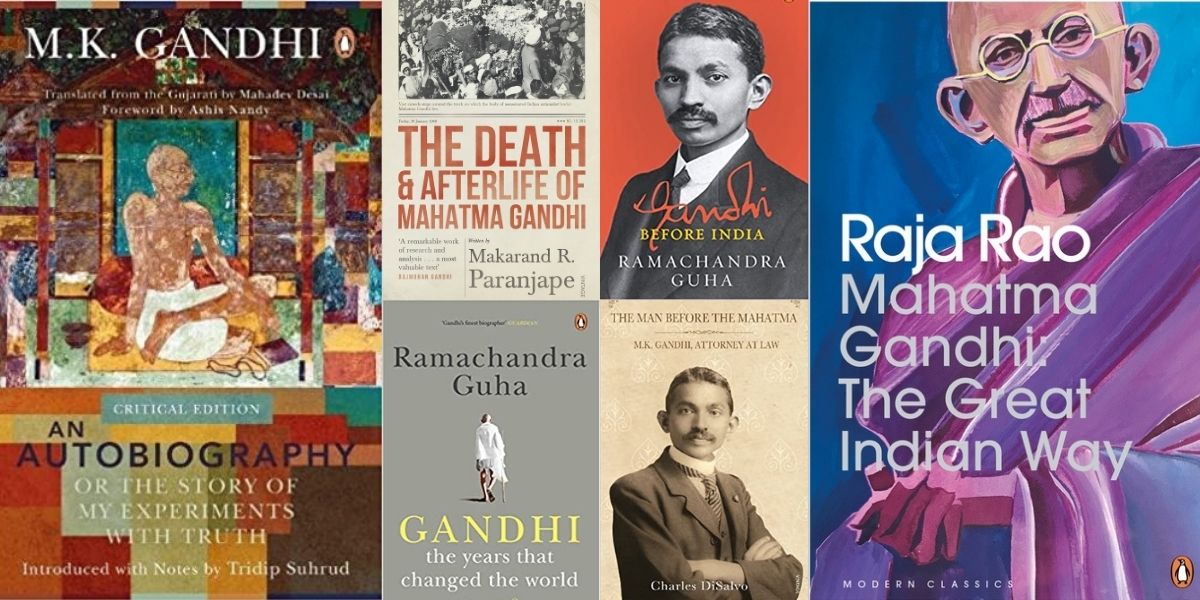
This Gandhi Jayanti, we bring you a list of books that highlight the nuances of the man who became larger than life in our national and political consciousness. ‘Every man’s life is a fable’, says Raja Rao. These books help us understand the fable of Gandhi a little better.

**


Gandhi: The Years That Changed the World, 1914-1948

Ramchandra Guha


Gandhi || Ramachandra Guha

As one of the most prolific historians of modern India, Ramchandra Guha traces the life of Mahatma Gandhi in the three decades preceding his assassination. Examining archival material, Guha explores the details of Gandhi’s anti-colonial struggle, his take on untouchability, and his desire to strengthen India’s moral compass. This book is a record of not only Gandhi himself but also the people in his life.


An Autobiography or The Story of My Experiments with Truth

M.K. Gandhi


An Autobiography || M.K. Gandhi

Gandhi’s Autobiography is one of the most widely read and translated Indian books of all time, is a classic that allows us to glimpse the transformation of a well-meaning lawyer into a Satyagrahi and an ashramite. In this first-ever Critical Edition, eminent scholar Tridip Suhrud shines new light on Gandhi’s life and thought. The deeply researched notes elucidate the contexts and characters of the Autobiography, while the alternative translations capture the flavour, cadence and quirkiness of the Gujarati.


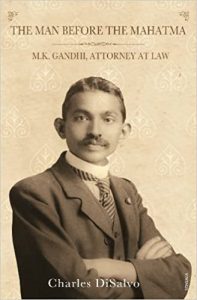
The Man Before the Mahatma

Charles DiSalvo

The Man Before the Mahatma || Charles DiSalvo

As the first biography of Gandhi as a lawyer, DiSalvo’s book traces the change of the man from a reticent 18-year-old who left Gujarat to the titan who became one of the biggest thorns in the British colonial side. The book focuses on Gandhi’s legal work in South Africa and his encounter with the racist policies of white colonialists, which left an inedible mark on him and changed the trajectory of his career.


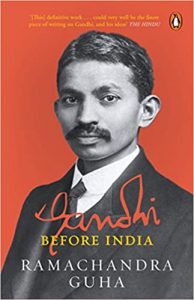
Gandhi Before India 

Ramachandra Guha

Gandhi Before India || Ramachandra Guha

Guha’s book explored the lesser known parts of Mahatma Gandhi’s life, spanning the years from his birth right up to when he returned to India from South Africa after his legal training. The book is a rare insight into the shaping of the Mahatma, the childhood and formative years that chiselled his ideological bent and made him the man he turned out to be.


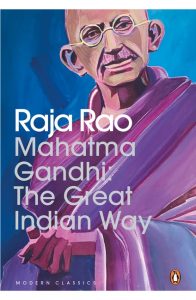
Mahatma Gandhi: The Great Indian Way

Raja Rao

Mahatma Gandhi: The Great India Way || Raja Rao

Raja Rao experiments with narrative linearity and chronological sequence to brings us this unique work on Gandhi that stands out to this day. Using dialogue and anecdotes, Rao maps the progression of Gandhi’s life in a way that contemporises him, making his work and values relevant to the present as well.


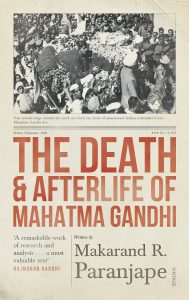
The Death and Afterlife of Mahatma Gandhi

Makarand Paranjape

The Death and Afterlife of Mahatma Gandhi || Makarand R. Paranjape

Paranjape meticulously studies Gandhi’s last six months in Delhi. He analyses the factors that facilitated Gandhi’s assassination, the meaning of his death and what that reveals about the country at large.


**

Celebrate the man and his complexities with us.

Celebrate World Translation Day with these brilliant picks

As readers, we love that our world is enriched by books from various languages, cultures, and countries. This has only been made possible by the immense contribution of translators from all around the world. To celebrate World Translation Day, which is celebrated on 30th September every year, and honour the work of translators everywhere, we have compiled a special list of works translated from various Indian languages into English.

Happy reading!

**


Chowringhee

Sankar, translated from Bengali by Arunava Sinha

Chowringhee || Sankar

Set in 1950s Calcutta, Chowringhee is a sprawling saga of the intimate lives of managers, employees and guests at one of Calcutta’s largest hotels, the Shahjahan. Shankar, the newest recruit, recounts the stories of several people whose lives come together in the suites, restaurants, bar and backrooms of the hotel. As both observer and participant in the events, he
inadvertently peels off the layers of everyday existence to expose the seamy underbelly of unfulfilled desires, broken dreams, callous manipulation and unbidden tragedy. What unfolds is not just the story of individual lives but also the incredible chronicle of a metropolis.


Raag Darbari

Shrilal Shukla, translated from Hindi by Gillian Wright


Raag Darbari || Shrilal Shukla

Raag Darbari’s plot is set in Shivpalganj, which is a small village located in Uttar Pradesh. The narrator of this novel is Ranganath, who is a research student of History. He comes to visit his uncle, Vaidyaji, who serves as the head of the village and his supporters are placed at key locations in the village. Vaidyaji is a highly corrupt ruler who has defeated every individual who tried to stand against him. The readers are also introduced to Langad, who desires to carry out dealings in an honest manner. Things take a turn for Vaidyaji when some people try to bring him down from his influential position. The novel exposes the helplessness of intellectuals in the face of a strong and corrupt nexus between criminals, businessmen, police and politicians.


Tamas

Bhisham Sahni, translated from Hindi by Daisy Rockwell

Tamas || Bhisham Sahni

In a city in undivided Punjab, Nathu, a tanner, is bribed to kill a pig. When the animal’s carcass is discovered on the steps of the local mosque the next morning, simmering tensions explode into an orgy of bloodlust. But in the midst of the ensuing carnage, despite the darkness of the times, rare moments of unexpected friendship and love also surface.

Winner of the Sahitya Akademi Award, Sahni’s iconic novel about the Partition of India tells the tale of an unfolding riot from different vantage points. In Daisy Rockwell’s definitive translation, this magnificent work comes vividly to life.


One Part Woman 

Perumal Murugan, translated from Tamil by Aniruddhan Vasudevan

One Part Woman || Perumal Murugan

Kali and Ponna’s efforts to conceive a child have been in vain. Hounded by the taunts and insinuations of others, all their hopes come to converge on the chariot festival in the temple of Ardhanareeswara, the half-female god. Everything hinges on the one night when rules are relaxed and consensual union between any man and woman is sanctioned. This night could end the couple’s suffering and humiliation. But it will also put their marriage to the ultimate test.


Hangwoman 

K.R. Meera, translated from Malayalam by J. Devika

Hangwoman || K.R. Meera

The Grddha Mullick family bursts with marvellous tales of hangmen and hangings in which they figure as eyewitnesses to the momentous events that have shaped the history of the subcontinent. When twenty-two-year-old Chetna Grddha Mullick is appointed the first woman executioner in India, assistant and successor to her father, her life explodes under the harsh lights of television cameras. When the day of the execution arrives, will she bring herself to take a life?


Lajja

Taslima Nasrin, translated from Bengali by Achinta Ghatak

Lajja || Taslima Nasrin

The Duttas-Sudhamoy and Kironmoyee, and their children, Suranjan and Maya- have lived in Bangladesh all their lives. Despite being members of a small, vulnerable Hindu community, they refuse to leave their country, unlike most of their friends and relatives. Sudhamoy believes with a naive mix of optimism and idealism that his motherland will not let him down. And then, on 6 December 1992, the Babri Masjid is demolished. The world condemns the incident, but its immediate fallout is felt most acutely in Bangladesh, where Muslim mobs begin to seek out and attack Hindus. The nightmare inevitably arrives at the Duttas’ doorstep, and their world begins to fall apart.


Cobalt Blue

Sachin Kundalkar, translated from Marathi by Jerry Pinto

Cobalt Blue || Sachin Kundalkar

A paying guest seems like a win-win proposition to the Joshi family. He’s ready with the rent, he’s willing to lend a hand when he can and he’s happy to listen to Mrs Joshi on the imminent collapse of our culture. But he’s also a man of mystery. He has no last name. He has no family, no friends, no history and no plans for the future. The siblings Tanay and Anuja are smitten by him. He overturns their lives and when he vanishes, he breaks their hearts. Elegantly wrought and exquisitely spare, Cobalt Blue is a tale of rapturous love and fierce heartbreak told with tenderness and unsparing clarity.


A Gujarat Here, A Gujarat There  

Krishna Sobti, translated from Hindi by Daisy Rockwell

A Gujarat Here, A Gujarat There || Krishna Sobti

Delhi, 1947. The city surges with Partition refugees. Eager to escape the welter of pain and confusion that surrounds her, young Krishna applies on a whim to a position at a preschool in the princely state of Sirohi, itself on the cusp of transitioning into the republic of India. She is greeted on arrival with condescension for her refugee status, and treated with sexist disdain by Zutshi Sahib, the man charged with hiring for the position. Undaunted, Krishna fights back. But when an opportunity to become governess to the child maharaja Tej Singh Bahadur presents itself-and with it a chance to make Sirohi her new home once and for all-there is no telling how long this idyll will last.

Part novel, part memoir, part feminist anthem, A Gujarat Here, A Gujarat There is not only a powerful tale of Partition loss and dislocation but also charts the odyssey of a spirited young woman determined to build a new identity for herself on her own terms.


Goat Days

Benyamin, translated from Malayalam by Joseph Koyippally

Goat Days || Benyamin

Najeeb’s dearest wish is to work in the Gulf and earn enough money to send back home. He achieves his dream only to be propelled by a series of incidents, grim and absurd, into a slave-like existence herding goats in the middle of the Saudi desert. Memories of the lush, verdant landscape of his village and of his loving family haunt Najeeb whose only solace is the companionship of goats. In the end, the lonely young man contrives a hazardous scheme to escape his desert prison.


While we are at it, how can we forget our young readers? So here’s a special list just for them!


Timeless Tales from Marwar

Vijaydan Detha, translated by Vishes Kothari

Timeless Tales from Marwar || Vijaydan Detha

For centuries, Rajasthan has been a gold mine of oral traditions and histories with Padma Shri Vijaydan Detha being one of the foremost storytellers of all time. Timeless Tales from Marwar gives a new lease of life to his folk tales. Retold in Detha’s magical narrative style complete with imagery, this selection offers some of the oldest and most popular fables from the Thar Desert region. Discover tales of handsome rajkanwars, evil witches, exploitative thakars, miserly seths, clever insects, benevolent snakes and more. Vishes Kothari’s vivid English translation introduces one of the most venerated figures in Rajasthani folk culture to a wider audience.


Tales from the Kathasaritsagara

Somadeva, translated from Sanskrit by Rohini Chowdhury

Tales from the Kathasaritsagara || Somadeva

Do you know the story of Phalabhuti, who narrowly escaped a grisly fate?

Or of the kind-hearted Jimutavahana, who was willing to give his life to save a snake from death?

Or of young Shringabhuja, who married a rakshasa’s daughter?

These are just some of the many tales that make up Somadeva’s Kathasaritsagara, a classic work of Sanskrit literature that is full of memorable characters. Within the pages of this book, you will encounter demons and demi-gods, faithful guards and foolish villagers, golden swans, magic pots and even automatons made of wood! Adapted and wonderfully retold by Rohini Chowdhury, this is a timeless classic that will entertain and enchant readers everywhere.


The Final Adventures of Professor Shonku

Satyajit Ray, translated from Bengali by Indrani Majumdar

The Final Adventures of Professor Shonku || Satyajit Ray

In this last volume of Professor Shonku’s escapades, the brilliant and benevolent scientist travels around the world once more to face near death situations. Each nerve-wracking experience is faithfully recorded in his diary. We learn of Shonku being outwitted by his own invention, the Tellus computer; his helplessness when his arch-rival in Rome deliberately misplaces his wonder drug, Miracurall; and the thrilling discovery of a three-and-a-half-thousand-year-old sparkling diamond necklace and a papyrus in an ancient tomb in Cairo.


Meet Kiran Nirvan, the co-authors of The Kargil Girl

In 1994, twenty-year-old Gunjan Saxena appeared for the selection process of the fourth Short Service Commission (for women) pilot course. Seventy-four weeks of back-breaking training later, she passed out of the Air Force Academy in Dundigal as Pilot Officer Gunjan Saxena.

The Kargil Girl || Flt Lt Gunjan Saxena (retd.) || Kiran Nirvan

In 1999, The Indian Air Force launched Operation Safed Sagar, when local shepherds reported a Pakistani intrusion in Kargil. While female pilots were yet to be employed in a war zone, they were called in for medical evacuation, dropping off supplies and reconnaissance.

It was then that Gunjan Saxena proved her mettle. From airdropping vital supplies to Indian troops in the Dras and Batalik regions and casualty evacuation from the midst of the ongoing battle, to meticulously informing her seniors of enemy positions and even narrowly escaping a Pakistani rocket missile during one of her sorties, Saxena fearlessly discharges her duties, earning herself the moniker ‘The Kargil Girl’.

This book is her inspiring story and it’s co-authored by Kiran Nirvan, the pseudonym used by authors Kirandeep Singh and Nirvan Singh. Kirandeep Singh is the former head of the department of management studies, Global Institutes, Amritsar, and is currently pursuing his doctorate in the discipline. Nirvan Singh is a serving officer in the Indian Army, while also being an avid artist, writer and adventurer.

We interviewed Kiran Nirvan about the motivation behind writing The Kargil Girl, the first readers of their finished draft, and more. Read on to find out what they had to say.


Question: What propelled you to co-write The Kargil Girl?

Answer:  It has always been our endeavour to write stories of grit and determination, wisdom and valour, of men and women from the Indian Armed Forces and other exemplary men and women of this nation and Flt Lt Gunjan Saxena (Retd) is a pathbreaker who broke stereotypes to achieve her dreams, paving way for future generations of women to do wonders. This book had to be written to celebrate Gunjan Saxena’s achievements, with an aim to inspire others.


Question: Were there any parts in the book that you found more difficult to write about as compared to the others?

Answer: Writing the entire book was challenging. We wanted the narrative to not be jingoistic but measured, sticking to the facts and wanted to educate and entertain the reader at the same time. So, the difficult part was writing about Gunjan ma’am’s SSB process where we had to relate each test to one of the memories from her childhood which ingrained in her the qualities for becoming an airforce officer.


Question: Which is your favourite section in the book and why?

Answer: Our personal favourite part in the book is where we have written about Gunjan ma’am’s training days in the academy. It was simply amazing to learn about the challenges she faced, from following a strict training schedule to getting regular punishments by senior cadets, from being nominated for test sortie with lesser training than others and still being able to clear it to emerging as the best performing flying cadet among her peers at the end of the training, it only shows us what it takes to become a winner. Gunjan Saxena is not the best for no reason.


Question: Who were the first readers of the finished draft of your book?

Answer: A couple of chapters were read by Air Chief Marshal Birender Singh Dhanoa, 25th Chief of Air Staff of The Indian Air Force. The finished draft was read by Pragya Narain, daughter of Flt Lt Gunjan Saxena (Retd), Arushi (Nirvan’s fiancée at the time), management students of Kirandeep, Suhail Mathur, our literary agent and of course, our most talented commissioning editor Gurveen Chadha.


Question: If you could give one message to the youth of the country, what would it be?

Answer: Our message to the youth of the country- discipline, determination and perseverance help achieve all dreams, but you must work harder than the previous day.


A ten-point look at the evolution of then RSS from 1925-2020

Since its inception in 1925, the RSS has perplexed observers with its organizational skills, military discipline and single-minded quest for influence in all walks of Indian life. Often seen as insidious and banned thrice, the pace of its growth and ideological dominance of the political landscape in the second decade of the millennium have been remarkable

Relying on original research, interviews with insiders and analysis of current events, Dinesh Narayanan’s,  The RSS and the Making of the Deep Nation traces the RSS’s roots and its pursuit for ideological dominance in a nation known for its rich diversity of thought, custom and ritual.

Read on for a look at the evolution of the RSS across a nearly a century of operations.


Keshav Baliram Hedgewar, a Maharashtrian Brahmin from Nagpur, founded the RSS on the day of Vijaya Dashami in 1925.

The name RSS was hotly contested. Many questioned that if Hedgewar wanted to unite Hindus, how could it be called rashtriya (nation). Hedgewar prevailed. He conceived the Sangh as an independent organization that bowed to no human. It bows to a saffron flag symbolizing the Hindu nation.

 ¬

Hedgewar kept the RSS largely removed from radical involvement in the freedom movement in the 1930s though it was seen as a pro-independence organization

Yet, Hedgewar kept RSS politically aloof from V.D. Savarkar’s Hindu Mahasabha. Aligning with Savarkar politically would have positioned the RSS as a rival to the Congress, which was a more broad-based platform, and Hedgewar did not want to be antagonistic to the Congress of which he was a member.

The RSS || Dinesh Narayanan

¬

Madhav Sadashiv Golwalkar, who took charge in 1940 too kept the RSS largely apolitical.

Golwalkar scrupulously kept the Sangh away from agitations and took care to not upset the authorities in any way. His disinterest in politics prompted a large section, including the Bombay province sanghchalak, K.B. Limaye, to leave the organization.

¬

By the time Madhukar Dattatreya Deoras took over as sarsanghchalak 1973, the RSS had lost a lot of ground, but he undertook a complete turnaround by focusing on work with a ‘social content’.

After he took over, Deoras quickly began deploying the Sangh’s numerical strength and reach, strategically using it to back political movements and agitations. ‘Deoras had seen that a political mind that was distinctly Hindu in character had emerged in the polity. His motto was: seva [service], samrasta [equitability], sangharsh [struggle].

 ¬

The anti-Emergency agitation of the 70s galavanized the RSS, laying the foundation for its influential student arm –the ABVP.

The spectacular success of the anti-Emergency agitation and the consequent formation of the first, though short-lived, non-Congress government of independent India, however, demonstrated that agitational politics could be rewarding for organizational growth. There were valuable learnings. Its student arm, the ABVP, the principal agitational instrument in the early 1970s, had 1.7 lakh students and teachers in 1977.

¬

It could not deeply tap the Hindu political consciousness until the 1980s when it began meticulously planned agitation to mobilize the divided Hindu community around Lord Ram.

The RSS needed a symbol, something potent and with a national resonance, to rally Hindus around. It found it in Ayodhya, the birthplace of Lord Ram, the hero of Ramayana, an epic told and retold in practically every Hindu, and often non-Hindu, household from Kashmir to Kanyakumari.

¬

Strangely, during the economic liberalization of the 1990s the RSS, opposed to globalization seemed more aligned with the left in opposition to its own government.

The Vajpayee government picked up where the Narasimha Rao government had left off and the RSS behaved as if it was still in opposition. It was a curious situation where the RSS opposed several aspects of the economic policy of the government, and in a sense seemed more aligned to the left than to a government of its own.

¬

As Narenda Modi took charge as Chief Minister in Gujarat, he slowly emerged as the man who would rescue the RSS from the doldrums of the decade of UPA government.

Over the next fourteen years, Modi, the consummate swayamsevak, emerged as someone who could seamlessly merge business and Hindu cultural supremacy, a formula that had eluded the Parivar.

¬

Although Narenda Modi was initially viewed with suspicion by the RSS, a letter from a friend to Mohan Bhagwat was instrumental in cementing the rift.

Mohan Bhagwat read the executive’s missive with concern. The letter hinted that the rift between the rising star of Hindutva and the RSS leadership was the creation of vested interests within the Sangh. Bhagwat immediately invited the executive to Nagpur for a detailed conversation. In a meeting that went on for hours, the executive further elaborated to Bhagwat how a few leaders within the Sangh and the BJP had created misunderstandings between the RSS top leadership and Modi.

 ¬

Destroying all opposition the Modi-led BJP won 303 seats in the Lok Sabha, twenty-one seats more than in 2014, shifting the power balance between the BJP and RSS.

Ideologically, the party and the parivar reflect the Sangh more than ever in its history. At the same time, some RSS leaders who tried to influence political decisions and appointments have been clearly told by the BJP leadership that it was not their place to decide what was in the best interests of the party.

**

error: Content is protected !!