You must always turn to nature when you are sick or afflicted with disease. Nature holds all the answers, and when you align yourself with it, you heal and recover. Dry fasting is one such answer.
Dry fasting is complete abstinence from food and water for a particular window during the day, followed by breaking the fast in a specific manner. This window during which one fasts is called the elimination phase, and the window during which one eats is called the building phase.
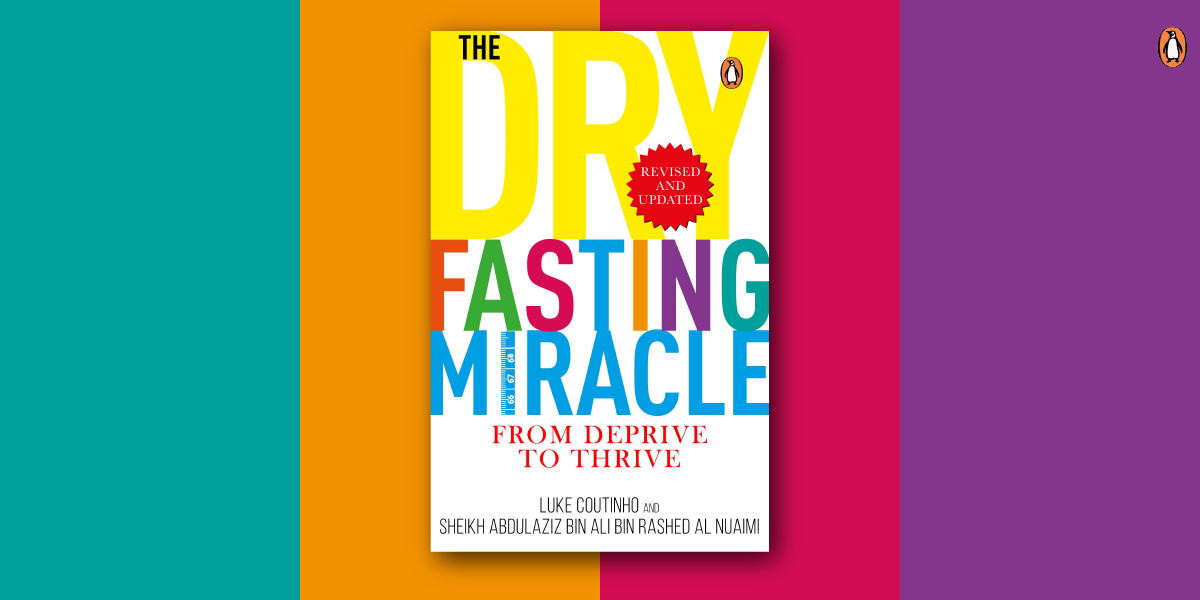
In their book, The Dry Fasting Miracle, Luke Coutinho and Sheikh Abdulaziz Bin Ali Bin Rashed Al Nuaimi teach us how this diet can stimulate the body, help one find the right balance between the ‘elimination phase’ and the ‘building phase’, aid weight loss and help avoid a number of diseases.
Here we talk about why dry fasting is the most superior form of cleansing.
Our body makes its own water
How? As a by-product of the fat that is burnt during the fast. Unlike the water you drink, this metabolic water is of superb quality, produced by the hard work of your own cells. It is almost like it erases all the negative information that was part of the body before the fast, allowing cells to experience a kind of rebirth, taking in moisture from the air and supplying it to the cells.
It target and reduces inflammation, and is immunostimulatory
Inflammation and low immunity are the root causes of any disease – be it cancer, cardiovascular problems, diabetes or simply the inability to lose weight. The body cannot have inflammation without water. Pathological bacteria, viruses and other microbes love a wet environment, which is ideal for them to thrive in—shortage of water is like a kill switch for them.
It enables the burning of toxins as opposed to the flushing out of toxins via urine, bowel movement, kidneys, liver and skin
The body, during a dry fast, absorbs atmospheric carbon dioxide and nitrogen to manufacture its own amino acids. Since there is no water to flush out these endogenous toxins, these are eliminated through a unique mechanism that is dormant during less rigorous modes of fasting. Each cell, thus, self-combusts, becoming the furnace that burns up its own waste.
Dry fasting can help manage the effects of radiation exposure
Regular fasting can also help restore the protective functions of cells and organs against radiation damage. This is particularly important for those who live or work in settings where they are regularly subjected to radiation or have been exposed to palliative radiation in case of cancer treatment. Dry fasting can be highly effective in healing the side effects of chemotherapy.
Give dry fasting a try, yourself! Read more about the processes and more benefits in the book, The Dry Fasting Miracle, available here.
‘Social media and technology are not agents of change. They are just tools. We the connected people are the agents of change.’
—Stuart J. Ellman
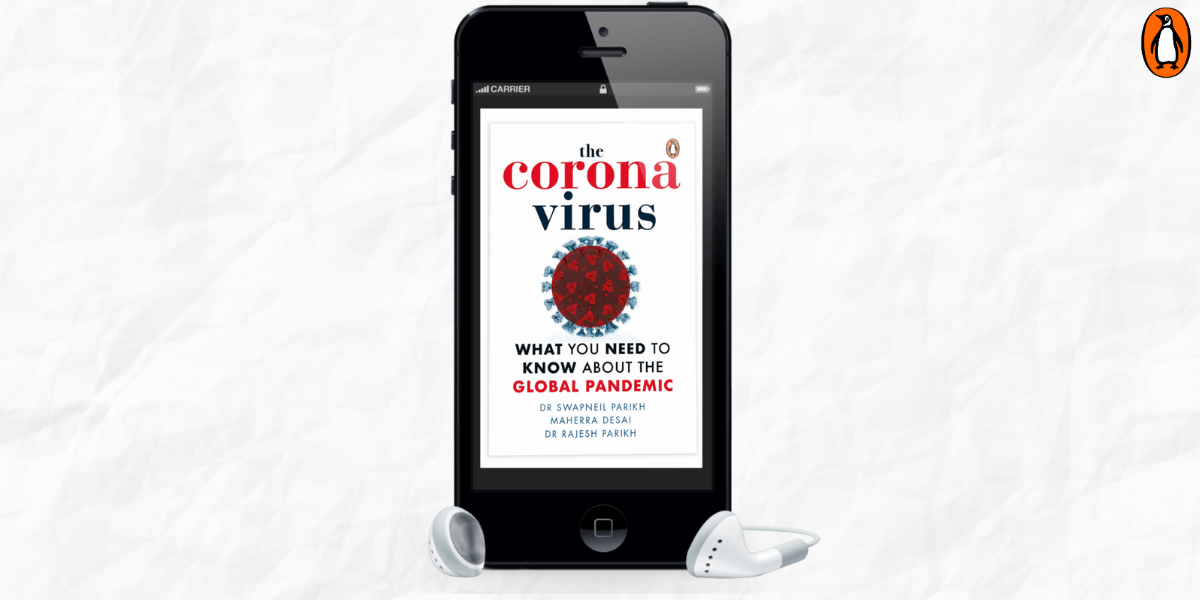
In The Coronavirus: What You Need to Know about the Global Pandemic¸ authors Dr. Swapneil Parikh, Maherra Desai, and Dr. Rajesh Parikh recall a haunting video of Wuhan, wherein a desolate woman bangs a gong in her balcony and cries: ‘There’s nothing I can do, please can someone come help us. Help! Somebody please come!’ Even though it was deleted within a day, it managed to mobilize and alert a huge population of the crisis.
Since 2004, following the inception and launch of Facebook, human interaction has changed drastically. The digital age has played a significant role in generating information, awareness, responses and collective strategies for this pandemic. In a time where it is more necessary than ever for the world to stay connected, social media and the digital age have risen to the occasion.
Personal Stories and Unofficial Reports: Alerting the World from China
In the Chinese province of Wuhan, where the epicenter of the virus lies, Ophthalmologist Dr. Li Wenliang tried to warn his groups on WeChat about a possible outbreak on 30th December 2019. It garnered a lot of traction across social media channels, which resulted in him reprimanded. He eventually died of Covid-19 in early February; and was hailed as one of the earliest whistleblowers in China.
As the crisis in China unfolded, social media revealed its world-shaping power by enabling a decentralized record of humanity and human interaction accessible to anyone with an Internet connection. This record is maintained on smartphones in pockets, computers in bedrooms and massive data centres all over the world. In China, authoritarian leaders have tried desperately to censor and control this record. However, their attempts have only revealed that while an individual’s truth is powerful, a society’s collective truth is unstoppable.
Through social media and many unsung heroes, we learnt of the true scale of the outbreak. Users shared horrific stories, images and videos in WeChat groups and on Weibo. The videos depicted heartrending, heart-breaking scenes of patients pleading for help and families crying and grieving over their dead. Social media posts shared personal stories of what it was like to live in the epicentre of the outbreak. In one video, a lady in her forties, without a mask, without her face censored, shielded only by her courage, cried in desperation ‘Nobody cares about our lives, ordinary people’s lives. You cannot get medicine, even if you are rich. You cannot get a hospital bed, even if you have money.’
Other users posted horrific scenes of Chinese law enforcement teams in hazmat suits dragging people from their homes and locking them in small boxes loaded on trucks. No one knows where they were taken. Videos depicted trucks, aerial vehicles and numerous workers spraying roads and pavements with disinfectant. A once-busy city looked like a deserted ghost town with empty streets and shuttered stores.
Besides keeping the world informed of the experience of the people of China through the outbreak, social media provided organizations like the WHO and CDC actionable data about the outbreak. According to the WHO, over 60 per cent of initial outbreak reports were from ‘unofficial informal sources’. Were it not for social media, it is possible that the Chinese government would have been less forthcoming with information about the outbreak.
The Coronavirus: What you Need to Know about the Global Pandemic|| Dr Swapneil Parikh , Maherra Desai , Dr Rajesh Parikh
Enabling Research, Novel Tools, and Real-time Information
During the COVID-19 outbreak, social media platforms have been extensively used to access accurate information from the WHO and CDC. News outlets have used Twitter and Facebook to keep users informed of the latest statistics about the disease. YouTube has provided access to a tremendous number of excellent videos about the virus and the disease.
The CDC routinely tracks tweets and Facebook posts for signs of a disease outbreak in various parts of the world. Using social media, they follow digital epidemiology to better understand the disease. Google tracks search trends; a spike in specific search terms can detect public health concerns or epidemics.
Social media platforms also provide scientists and researchers with new tools to access new data sets and to share information in real time. A team at the Center for Systems Science and Engineering (CSSE) at Johns Hopkins University built an interactive dashboard to visualize and track reported cases of the COVID-19 in real time. They obtained their data from DXY.cn, a Chinese healthcare social network.
Information available on social media has also enabled a new era of digital epidemiological research. Researchers at the US National Institute of Health used a new approach to study the epidemiology and progression of the COVID-19 outbreak. The novelty of their approach was the reliance on social media and news reports for data.
The Other Side: Myths and Misinformation
During the initial phase of the COVID-19 outbreak, there was little factual information. Social media content creators churned out half-baked theories and blatant falsehoods. As has been observed in past outbreaks, the absence of reliable information coupled with an increasing death count results in panic, confusion and the suspension of critical thinking and fact-checking abilities.
By February 2020, this reached such a crescendo that the WHO declared a ‘massive infodemic’ of COVID-19 misinformation. The WHO leveraged the same tools causing the infodemic to quell it. Further, these tools came in handy for WHO to make information more accessible to the public at large. It created simple infographics and content and shared accurate information on their social media handles. social networking platforms including Facebook, YouTube, WhatsApp, Weibo, Twitter and TikTok, took it upon themselves to clean up their sites. They used fact-checking agencies and AI-based tools to screen misinformation, which was deleted, and redirected visitors to more reliable and accurate information sources.
*
These times are unprecedented and have called for real-time information and communication across the globe for strategy, safety and survival. Even though there have been downsides to social media, in terms of inducing panic (or false sense of safety) through misinformation and propaganda – the larger world has definitely benefited from the accessibility of information social media has been able to present.
On a personal and human level – social media and digital platforms have also helped us stay connected. Community and human support have not been hindered due to isolation and quarantine strategies. Although the future is still uncertain – survival, to a large extent, has been made possible through social media.
The Coronavirus: What You Need to know about the Global Pandemic brings together medical experts Dr. Swapneil Parikh, Dr. Rajesh Parikh, and Maherra Desai, to present a timely and reliable narrative on the Covid 19 pandemic and possible ways forward.
On the eve of 31 December 2019, as the world celebrated the start of a new decade, the province of Wuhan alerted the World Health Organization of several ‘flu-like’ cases. Less than a week later, a novel coronavirus, was identified. In February, the disease it caused was named COVID-19.
The symptoms of Coronavirus are dangerously similar to that of the common flu: fever, coughing, breathlessness, tiredness, headache and muscle pain. But in India, that has such a high population density, we will have to do more than just stick to Namaste to greet each other. What we need most right now is credible and comprehensive information from professionals that can help us understand what the Coronavirus is, and how we can prepare and protect ourselves against it.
Panic is historically an integral component of pandemics. Understanding the Coronavirus within a larger, historical context of pandemics and survival is crucial to prepare – mentally, emotionally, and strategically – for the times about to come. Find an introduction to the history of the coronavirus below:
The Coronavirus
The story of the coronavirus (CoV) begins with Dr David Arthur John Tyrrell, a British virologist studying the common cold. Dr Tyrrell was born in Middlesex, United Kingdom, in 1925, and completed his medical training in 1948. The same year, the Common Cold Research Unit (CCRU) was founded under the auspices of the United Kingdom’s Medical Research Council. In 1957, Dr Tyrrell joined the unit, excited at the prospect of developing a cure for the common cold and, in 1982, became its director.
At the CCRU, he experimented on volunteers to study viruses responsible for the common cold. Newspaper advertisements offered a unique ten-day stay at CCRU where
The volunteers would be infected with preparations of a cold virus. They would be paid £1.75 per day and would be housed in small groups, strictly isolated from one another.
In 1965, Dr Tyrrell’s team isolated an unusual virus from a young boy with the common cold. They exposed several volunteers to his nasal washings and they developed a cold. Interestingly, the virus, initially named B814 after the number of nasal washings, grew exclusively on human embryonic tracheal cultures.
In 1966, Dr Dorothy Hamre and Dr John Procknow identified a similar virus in medical students sick with a cold. Later that year, Dr Tyrrell demonstrated under an electron microscope that the new virus resembled the bird bronchitis virus and the mouse hepatitis virus. With this new information, scientists around the world identified related viruses, giving them similarly unimaginative alphanumeric names. Shortly thereafter, these new viruses were collectively named coronaviruses (CoVs) for their crown-like appearance.
Dr David Tyrrell’s brilliant discovery laid the groundwork for modern research on coronaviruses. Scientists have since identified numerous coronaviruses in a multitude of animal species. These include alpha, beta, gamma, and delta coronaviruses. Gamma and delta coronaviruses infect birds and have not been proven to cause human infections. Alpha and beta coronaviruses have infected humans and many other mammals, especially bats. The seven coronaviruses that have infected humans are called human coronaviruses (HCoVs). Of these, HCoV-229E and HCoV-NL63 are two human alphacoronaviruses, while HCoV-HKU1 and HCoV-OC43 are two human betacoronaviruses. Last, there are the three notorious human betacoronaviruses that have caused SARS, MERS and the ongoing COVID-19 pandemic. The WHO has declared COVID-19 as the most dangerous threat to world public health, the first pandemic due to a coronavirus.
To understand responses and possible ways forward by placing COVID-19 in a historical context, the authors mention Lord Byron’s words: ‘The best prophet of the future is the past’.
A complete story of a disease must include the 5 Ws: the what, who, where, when and why. Epidemiologists are the disease detectives who investigate a new disease like COVID-19. They explore the what (health issue of concern), who (person or people affected), where (place in which the disease is occurring), when (time course of the disease) and why (causes, risk factors, modes of transmission).Stories of past pandemics and viruses help disease investigators and scientists build this framework in order to tackle the novel Coronavirus affecting the world currently.
Becoming a new mother can be an exciting yet overwhelming time. No matter how prepared you are, there will always be many confusing moments, opinions and a whole lot of drama! And just like any other new mom, Esha Deol Takhtani was faced with many such questions soon after the birth of her two daughters-Radhya and Miraya.
Packed with advice, tips, stories and easy and delicious recipes for toddlers, Amma Mia reflects the personal journey of one woman’s transformation into a mother. Informative and easy to follow, this book will help new mothers navigate the ups and downs of raising a healthy toddler and make their child fall in love with food.
Read a recipe from the book below:
Continental Potato Wrap
Ingredients
1 tbsp. cumin seeds
½ tbsp. mustard seeds
1 small onion, chopped
1 tbsp. ginger–garlic paste
1 potato
½ tbsp. turmeric powder
½ tbsp. amchur powder
¼ tbsp. garam masala powder
½ cup of water
½ cup of flour, to which you may add ¼ tsp. salt
1 tbsp. oil
Direction
In a pan add oil and sauté cumin seeds, mustard seeds, chopped onion and ginger–garlic paste. Fry well. Add the spices and mix well.
Add enough water and salt to the flour so it achieves the consistency of dosa batter.
Mix the potato in with the rest of the mixture till cooked.
In a non-stick pan, pour refined oil and spread the flour batter like you would to make a dosa. Fill the stuffing in the centre. Fold it properly and fry on a low flame. Your tasty breakfast is ready to be served.
For more tips and tricks, check out Amma Mia by Esha Deol Takhtani.
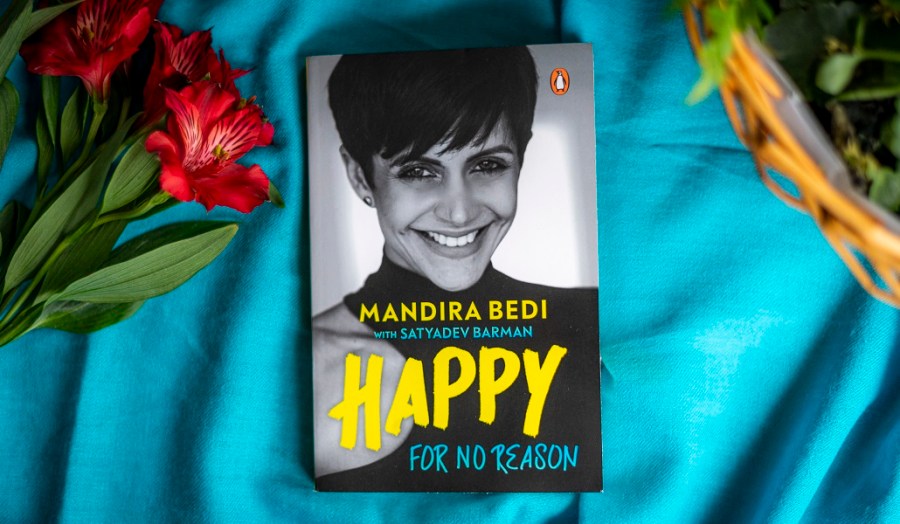
Mandira Bedi is a fitness icon. But behind the six-pack is also a snotty, complaining, can’t-get-out-of-bed-today girl who, in her own way, is still searching for true happiness. Not conditional, materialistic, transactional happiness, but just happiness. So has she cracked it yet? Mandira says ‘No’. But she genuinely believes that she’s headed in the right direction. In her own chaotic way, she seems to have discovered some kind of non-scientific, non-spiritual and as-yet-non-existent formula for finding peace in everything. Just being happy for no reason.
We are sharing here one of her secrets from Happy For No Reason: her terrific playlist for power-packed workout sessions!
Mandira Bedi’s Top 40 Workout Songs (You Will Never Need Another Playlist)
Have It All (Jason Mraz)
Woke Up Late (Drax Project)
Build Me Up Buttercup (The Foundation)
Old Town Road (Lil Nas X)
Don’t Start Now (Dua Lipa)
Close to Me (Ellie Goulding)
Titanium (David Guetta)
Keeping Me Under (Two Another)
Glorious (Macklemore)
More Mess (Kungs)
Don’t Matter to Me (Drake & Michael Jackson)
Empire State of Mind (Jay-Z & Alicia Keys)
Truth Hurts (Lizzo)
Don’t Stop ’Til You Get Enough (Michael Jackson)
The Shape of You (Ed Sheeran)
Faith (Wham)
Wasabi (Little Mix)
Memories (Maroon 5)
Day ’n’ Nite (Kidi Cudi)
2 in a Million (Steve Aoki, Sting & SHAED)
Body (Loud Luxury & Brando)
24k Magic (Bruno Mars)
Respect (Arethra Franklin)
Feel It Still (Portugal. The Man)
Rock DJ (Robbie Williams)
Feels (Calvin Harris)
Cake by the Ocean (DNCE)
Firework (Katy Perry)
Dancing in the Moonlight (Toploader)
Middle of a Heartbreak (Leland)
Classic (MKTO)
Wild Thoughts (DJ Khaled)
Hand in My Pocket (Alanis Morissette)
Attention (Charlie Puth)
Sweet like Cola (Lou Bega)
Desert Rose (Sting)
Good Thing (Zedd & Kehlani)
Talk (Khalid)
Catch & Release (Matt Simmons)
Sky Full of Stars (Coldplay)
To find out more of Mandira’s secrets for being Happy For No Reason, get the book here 🙂
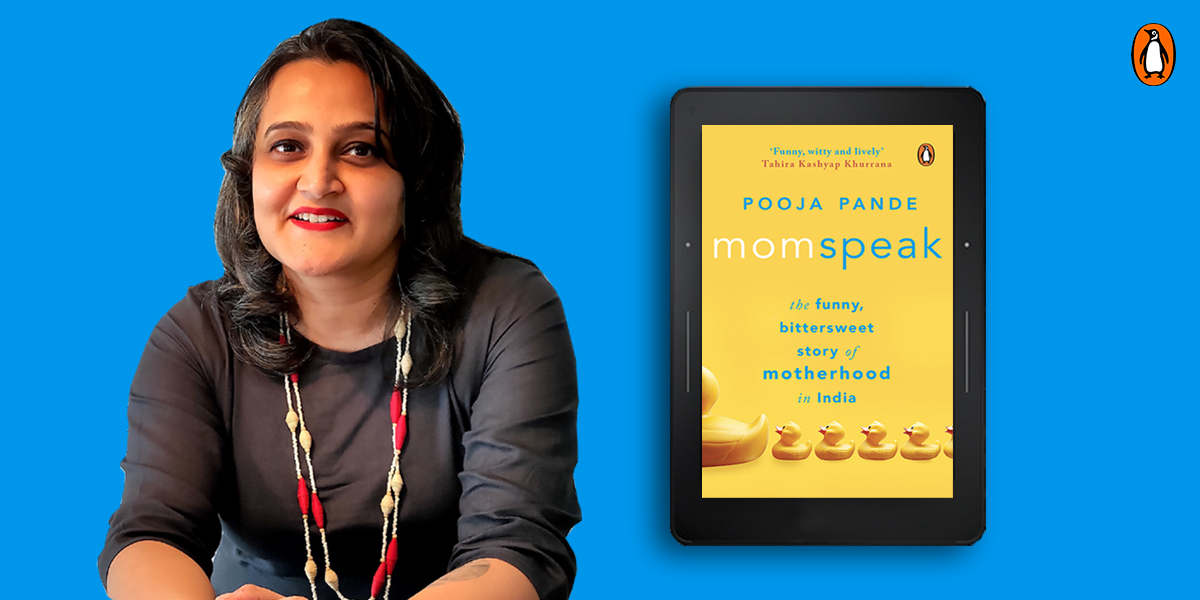
Momspeak: The funny, bittersweet story of motherhood in India is an original, provocative book that peels off the layers of social propriety and delves deep into the visceral reality of motherhood, much glorified but barely understood in India. Exploring the spectrum of experiences mothers have as women, as humans—from ecstasy to depression, jealous possessiveness to indifference, exhaustion to sensual desire—Pooja Pande reveals the personal, social and emotional roller-coaster that motherhood can be.
This Mother’s Day, Pooja Pande shares her thoughts on the experience of motherhood during these unprecedented times, and shares an excerpt from Momspeak. Read on below.
These may be the best of times and the worst of times
It’s the best of times because a pandemic the intensity of which they say is still to come has already caused the human race, every single human being on the planet, to take stock, in different ways, of their lives, their selves, their pasts, presents, and futures.
It’s the worst of times because a pandemic, the intensity of which they say is still to come, has already crippled nations, it’ peoples, its leaders, its economies, claiming lives by the millions, affecting many more. The uncertainty is a never before experienced event for all of humanity.
The uncertainty has caused a never before experienced event of togetherness. As always, even with this global health crisis worsening by the day, perspective is everything. And there’s no other experience that works wonders for putting things into perspective – by first shattering and then reshaping it – than motherhood. Right from carrying the life inside her to birthing, going onto watch her grow, shaping what she can, and above all, letting her go, for she has to ultimately forge her path in the world, a mother’s only lesson is one in perspective.
Thoughts I gathered on this lesson holds me in stead during these best and worst of times – it asks of me to turn the worst of times into the best. I explored them deeply in the chapter titled Letting Go, in my new book Momspeak, and On Mother’s Day today, I’d like to share them with you.
The letting go has to do with the future too, and a preparation, affirmation, acknowledgement of it. We all know we’re going to die, but do we ever mindfully contemplate a world where we have ceased to exist? Nisha, mother to Nakul and Neel, voices this, but she poses a string of fun questions to me, ‘Like, have you ever thought how one day your daughter might be a super-famous pop singer and you will become the famous X ki maa? And then you’ll be a Wikipedia entry when you’re dead? What does that mean?’ Even as I reel from Nisha’s clairvoyant probing—how does she know about Ahaana’s predilection and penchant for crooning Ariana Grande songs?—she goes all existential, but in a good way, ‘It’s a deep, changing the centre of the universe, kind of truth. Genetically, sure, it’s a perpetuation of your pool. But, for all practical purposes, they’re a memento mori—a symbol of your death, your mortality—from the moment they are born. And really, nothing else.’ When they say birth and death are intrinsically intertwined, this is what it means for the mother who has done the birthing business—not only is the certainty of death a given for the one who has just been born, the mother, in her near-death experience of giving birth, is also, in effect, that much closer to it. This universal truth draws attention to itself bang in the middle of her giving life. (…) It is up to us to seek the affirmation inherent in it then, because letting go does not mean you do not care. Oh no. There is much too much building and shaping and crafting and moulding to be done here, with a lot of care. Oh yes. It is, in some sense, an ultimate letting go, because you have made a bid for reaching out to the universe.
Read the many funny, bittersweet stories of motherhood in Pooja Pande’s Momspeak. Get the book here.
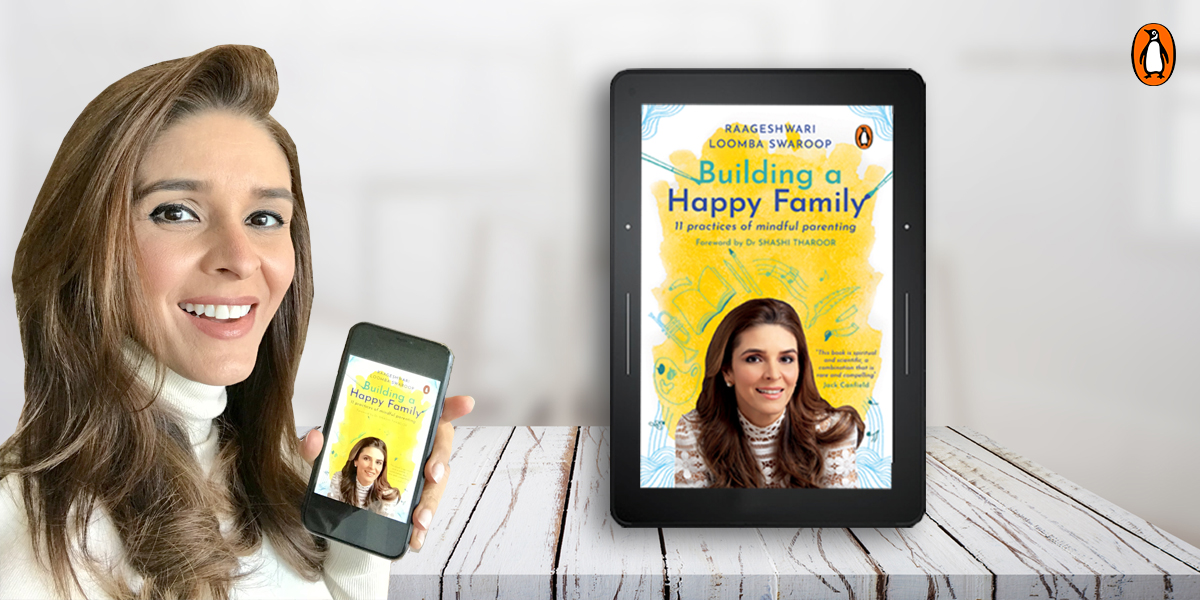
You can’t have a happy family unless you’re happy yourself. Raageshwari Loomba, an award-winning speaker on mindfulness, shows us how to create an excellent atmosphere for the entire family to thrive in. Her relatable style is coupled with real-life examples, such as that of Albert Einstein, who couldn’t speak till the age of four and was a poor student. His parents encouraged him with love and allowed him to learn at his own pace. This, she shows, is the way to bring up your own little genius. Building a Happy Family brings to you 11 simple mindfulness philosophies that will enrich and strengthen your and your children’s inner world. Through scientific research and her own intimate story of heartbreak and facial paralysis, Raageshwari emphasises how our thoughts can manifest further struggles or glory, and how teaching children early that our inner world attracts our outer world is key. Parents are taught to encourage their children’s original expressions, creativity and joy, and not lose sight of it in their own lives too. This is the secret to a happy family.
Read below an interview with the author:
Please tell us about a piece of advice that you got from your mother and still hold on to.
As a child, I remember standing in the kitchen beside my beloved Mom Veera, watching her cook. She would return from office and whip up a delicious tadka dal. She always said and repeats even today “Be grateful you have food that you can eat. Be grateful that you have a family to share it with”. As a child, it translated in my mind to the idea that women must cook. But today, I know the deeper significance it has is to create the true essence of a family. It’s all about gratitude, simplicity and togetherness.
You mention in the book that parenting is about raising the parent and not the child. Would you like to tell us about how you came to a realization this profound?
Even as a child, I would spend time with children younger than me. In school, my friends would be looking for me but I would be helping the teachers in the kindergarten section. I have always loved spending time with toddlers. Where others see tantrums, I see wisdom. I like that toddlers are mindful, easy-going, loving, forgiving and filled with unique insights. They hold no grudges from the past and have no anxiety about the future. The way they learn to walk is a treat to watch. They have single-minded focus. They fall many times but they stand up and try again. And it’s not out of a sense of competition. They are not looking over their shoulders to see if other toddlers have started to walk first. They simply excel in completing the tasks that matter to them. They walk up to strangers and cuddle and bond, not affected by any culture, status or moral ground. They relish these moments and enjoy them to the fullest. What a marvellous attribute of Mindfulness they have. What a pity we parents make them lose it. However, we are well-meaning parents, and once had these very qualities too. So it makes me wonder why many of us don’t see that we can learn about life from these ‘little masters’!
With parents in metropolitan cities working longer hours, children have less access and time to spend with their parents. Any tips on how families can consciously work on this?
Parents who work don’t have any lesser of a bond with their children than the parents who are home with their children all day. The secret lies in connecting with your child and their deep interests. A study by the University of Toronto published in the Journal of Marriage and Family in 2015 said that the average number of hours that parents spend with their children has only grown over the years, contrary to what parents may feel or believe. It has grown from 7.3 hours in 1975 to 13.7 hours in 2010, even as the share of mothers working outside the home rose from 41% in 1965 to 71% in 2014. For fathers, the number rose from 2.4 hours in 1975 to 7.2 hours in 2010. Yet, we parents think we are not doing enough and end up feeling guilty and at fault. So the answer lies in quality time. It is not at all important to always hover around your children to build a bond with them. In fact, step back, and try to enjoy just a 15-minute play date filled with presence, no agenda and complete trust. The idea is to be fully present and give them your complete attention whenever you are with them.
You emphasize on reading as a habit. Which were your favourite books growing up?
Little Snow Girl, Cinderella and Ramayana immediately bring back memories of my childhood. I actually think Cinderella is a masterpiece if explained to a child well. I had little focus on the Prince. For me, the moral of the story was loud and clear—if you are kind, miracles will surround you.
What is the best time for kids to use affirmations during the day? How can a parent choose the right one?
The morning time as they wake up is the best for affirmations, because a good night’s sleep is a mental cleanser. As we wake up, we are naturally in a meditative state. So it is best to stand in front of the mirror or affirm in bed itself to cement your cleansed mind with these beliefs. Choose affirmations according to an attribute you wish to invite into your life. Observe that most probably the child will mirror qualities that you possess or struggle to have yourself. For example, if your child is shy, but wishes to be an extrovert, let them affirm something like, ‘I love my ideas, and I happily share them with the world’. If your child is struggling to focus on books, they can affirm, ‘I enjoy observing the shape of numbers and letters in books.’ If the child is older the affirmation could be, ‘Books are my doorway to great ideas. I’m falling in love with books on a daily basis.’ If your child stammers (first observe if the home has caustic fights, or if the child or either parent is reprimanded constantly to ‘shut up’ or ‘be quiet’) the affirmation could be, ‘I love the sound of my own voice. The world loves the sound of my own voice. I speak clearly just like a king/queen.
Raising kids in a competitive world can bring out parents’ insecurities at times. Any suggestions on dealing with those?
This book is not about training your child to be the best. This book is about making YOU realise that you already have the best child. The Mindfulness journey can only begin from this thought. Observe ‘successful adults ’ (according to your definition ) Do they look happy? The highest number of mental health tragedies are linked to the so-called ‘high achievers’. Our definitions of success and accomplishments will have to change. Most of us adults walk around directionless, and with that empty soul we decide to guide our children. We will have to first nurture our inner child and tell ourselves ‘we are perfect the way we are’. And we will have to allow our children to follow their bliss. We as a community of families, schools and colleges will have to collectively re-define success and accomplishments so our children can truly thrive. We will have to focus on building their inner world first. It is important to make them believe that they are perfect the way they are, and that a parents’ love is not conditional at any cost. We adults will have to first believe ourselves that happiness is not a moving target; happiness is right here, right now.
Looking after yourself before others is necessary for an emotionally healthy life and also very tricky when you’re teaching your kids. Any tips for parents on this?
In my book, I feel the most important chapter is one called ‘Oxygen mask theory’. When you are energized with oxygen first, you will be more alert and able to attend to your child and navigate a crisis situation far better. Parenting too needs an oxygen mask theory. Your needs are like oxygen. Parents must learn to attend to their own needs first, so they can enjoy parenting, not have outbursts and handle decisions with balance. Another important reason why you must value your needs is that it sends an important message to your child. I talk about childhood patterns in the book, so if you want your child to grow up as someone who nurtures himself/herself, then there is no better person than you to show this to your child!
If you could go back to your 20-year-old self and give her a piece of advice, what would that be?
Forgive and let go of the past, don’t worry about the future. Just enjoy this beautiful moment called NOW!
On the occasion of Mother’s Day, is there a message you’d like to share with all the wonderful mothers out there?
First I want to make a space for women who may be struggling to become mothers biologically. I always think of you on every Mother’s Day. I want you to remember this—we women are born mothers. There is something deeply spiritual how daughters nurture their parents from the moment they are born. So you were, are and always will be a mother.
Happy Mother’s Day! Now I would like to wish the rest of us who have been lucky to have been blessed with a child. Remember that you have a child, which is a blessing. On Mother’s Day, I would like to all of us to remember that we are the only ones who can understand each other’s pain, shortcomings, guilt and turmoil like no one else can. Hence, we must be the last ones to cause pain to each other’s soul.
As much as we celebrate motherhood and mothers, the diversity of experiences of mothers as individuals are rarely talked about.
As with everything else, literature gives us an expansive space to explore different facets of motherhood, and the nuances of women’s experiences as mothers. On Mother’s Day, we are looking at some powerful narratives that celebrated mothers as more than mothers – as women, as individuals, and as humans.
Momspeak
What is it like to be a mother in India?
Pooja Pande peels off the layers of social propriety to delve deep into the visceral reality of motherhood, much glorified but barely understood in India. Exploring the spectrum of experiences mothers have as women, as humans-from ecstasy to depression, jealous possessiveness to indifference, exhaustion to sensual desire-she reveals the personal, social and emotional roller-coaster motherhood can be.
Sarojini’s Mother
Is motherhood a purely biological concept?
Sarojini-Saz-Campbell comes to India to search for her biological mother. Adopted and taken to England at an early age, she has a degree from Cambridge and a mathematician’s brain adept in solving puzzles. Her story is a poignant exploration of motherhood as an emotional concept over a biological one; especially through Sarojini’s powerful connection with her adoptive mother Lucy, whose loss is what gets her to look for her ‘real’ mother in an attempt to find purpose in her life.
A Good Wife: Escaping the Life I Never Chose
This memoir does away with all conventional preconceptions to explore a personal experience of enforced wifehood and motherhood. Within this, we also find an overarching female experience through the mother-daughter bond.
Married off at fifteen, Samra Zafar suffered her husband’s emotional and physical abuse that left her feeling isolated, humiliated and assaulted. Desperate to get out, and refusing to give up, she hatched an escape plan for herself and her two daughters.
My Mother is in the Air Force
Another way of breaking barriers is putting a spin to the “superhero” trope for the mums!
Rohan thinks his mom is a bit like a superhero-she flies in to save the day, she loops and swoops between the clouds, she even jumps off planes wearing parachutes! Told from the son’s perspective, this story is unconventional and heartwarming in its depiction of a modern mother working for the air force, and how that informs her child’s perspective of her; an especially important story when the concept of a ‘working mother’ is still so nebulous in the Indian society.
Millionaire Housewives
Millionaire Housewives tells the stories of twelve enterprising homemakers who, in spite of having no prior experience in business, managed to build successful empires through the single-minded pursuit of their goal, defying all stereotypes.
This title features on our list because of the real, personal stories it tells of entrepreneurship and innovation in a society where ‘homemakers’ are often unacknowledged and unseen in their contributions.
Motherhood is a layered concept – like any other human experience. These stories are just some examples wherein writers explore the unseen and unspoken emotions of mothers and women. Which stories about mothers have stayed with you? Share with us in the comments below!
A devotee of Sai Baba of Shirdi, Ruzbeh N. Bharucha is one of the most influential spiritual writers of our times. His latest book, The Fakir: The Journey Within follows Rudra, a lover and devotee of BABA.
Who is Ruzbeh N. Bharucha? Read on to find out:
Ruzbeh N. Bharucha is the author of nineteen published books, his bestselling Fakir trilogy has been translated into several languages.
~
A former journalist, Ruzbeh N. Bharucha is also a documentary film-maker.
~
His documentary Sehat . . . Wings of Freedom, on AIDS and HIV in Tihar Jail, was screened at the XVII International AIDS Conference in 2008.
~
He is the 110th Master for the ‘Speaking Tree’, where he writes an immensely popular blog on spirituality.
~
His book My God Is a Juvenile Delinquent has been included in the reading list of all judicial academies in India.
~
He has appeared on national television and spoken about his contribution to spirituality and spiritual literature.
What makes him and his writing stand out? You’ll have to read his latest book, The Fakirto find out!
Kunwar Narain (1927-2017), an iconic figure in Indian literature. He is regarded as one of the finest writers and thinkers of modern time.
Kunwar Narain
He read widely, across literatures and disciplines, and blended an international sensibility with a grounding in Indian history and thought.
1960s, Lucknow Study
He has written in diverse genres of poetry and prose, including three epics recognised as classics of Indian literature, poems across eight collections, translations of poets like Cavafy, Borges, Herbert and Rózewicz, two short story collections, criticism, essays, memoirs, and writings on world cinema, ideas and the arts.
1980s, Lucknow Study
His oeuvre of seven decades, since his first book in 1956, has evolved continuously and embodies, above all, a unique interplay of the simple and the complex.
1950s, Kilbury Forest
After over five decades in Lucknow, where a major part of his writing was done, he moved to Delhi. Widely translated, his honours include the Sahitya Akademi Award;Kabir Samman; Warsaw University’s honorary medal; Italy’s Premio Feronia for distinguished world author; India’s civilian honour Padma Bhushan; the Senior Fellowship of India’s Academy of Letters; and the Jnanpith, India’s highest literary award.
2000s, Delhi Study
A reclusive presence, he has published selectively; some works remain unpublished.
1994, Venice
In vivid English translation for the first time, The Play of Dolls is a collection of Kunwar Narain’s short stories. These unusual short stories broke new ground and rejuvenated the genre when they appeared on the Indian literary landscape in 1971. The collection also offers valuable insight into what India’s struggle with social change looked like in the sixties.