Based on extensive research and insightful exploration, Steven Levytells the inside story of how a driven tech nerd took a young company from a dorm room to the global arena where the power to change the world came with the inherent danger of such wide- ranging influence.
Mark Zuckerberg acknowledges this danger when he says, “The big lesson from the last few years is we were too idealistic and optimistic about the ways that people would use technology for good and didn’t think enough about the ways that people would abuse it”.
Here are 10 interesting things about this tech giant from Steven Levy’sFacebook: The Inside Story:
Mark Zuckerberg
The man behind the mission to connect the world is the poster boy of extraordinary success-
‘He’s the CEO of Facebook, the world’s largest social network— the world’s largest human network of any kind, ever— approaching 2 billion members, more than half of whom log in every day. It’s made him, in today’s reckoning, the sixth-richest person in the world.’
From the dorm room to being the rage on campus
In 2004, while the company was in its Harvard phase, Kirkland Suite H33 was regarded as Harvard’s own Silicon Valley.
‘Hour by hour, the impetus for students to sign up began to flip from engaging in a diverting pastime to an absolute necessity, as not being on Thefacebook made you a virtual exile on the physical campus.’
The safe social space that brought students together
Thefacebook.com, as registered when it began its journey, promised privacy and safeguarded against misbehaviour.
‘Privacy was perhaps the defining characteristic of this new website. By limiting enrollment to those who had emails on the Harvard.edu domain, he made a safe space for students to share information they volunteered about themselves.’
The gambles that paid off
Open Reg and News Feed were considered high risk features but actually set the growth chart soaring for Facebook.
‘Open Reg allowed billions of users to flock to Facebook. And the News Feed would keep them there, making the site as totally consuming for everybody as it was for college kids when Thefacebook first appeared.’
Facebook gave people a voice
The one thing that made Facebook hugely popular was that it offered people a platform from where their voice could be heard across social groups.
“Not only is it freedom of speech, it’s giving people a platform to actually articulate how they feel and what they think and gain support from it and make it known, which you couldn’t do unless you were being interviewed on TV or by a reporter for a newspaper prior to this.”
When Zuckerberg toyed with the idea of selling Facebook
After mulling over a deal to sell out, Zuckerberg finally said ‘no sale’ to Yahoo! and employees got to stay with the ‘cool’ company.
‘Furthermore, going to Yahoo! would have meant the end of the dream as well as the end of a period of their lives that would never be matched: working like crazy on a project that millions of people loved while being involved in a daily geek spring break of office romances, video games, and gonzo coding binges.’
The 5 guidelines that Facebook worked on
Internal guidelines laid out for company employees listed four points, the fifth being a Zuckerberg addition-
‘Focus on Impact.
Be Bold.
Move Fast and Break Things.
Be Open.
Zuckerberg liked those but insisted on a fifth: Build Social Value.’
The African dream that went bust
In 2016, a Facebook satellite built to extend internet coverage to distant parts of Africa was to be launched with Elon Musk’s SpaceX rocket-
‘It was then that Zuckerberg learned that the SpaceX rocket, the one carrying the satellite he had been gleefully touting as an Internet savior for the struggling continent, had blown up on the launchpad, a day before the scheduled blastoff.’
The “Facebook Effect” on American election
In 2016 the unthinkable happened. As Donald J. Trump took on the world as America’s President, fingers were pointed at Facebook-
‘In the weeks leading up to the election, there had been reports of so- called fake news, or misinformation intentionally spread through Facebook’s algorithms, being circulated widely on Facebook’s News Feed, which had become the major source of news for millions of users.’
The breach of trust that opened floodgates of criticism
The events of 2018 became a major setback for Facebook as privacy violations by the company made headlines across the world.
‘And the dam burst in 2018, when news came that Facebook had allowed personal information of up to 87 million users to end up in the hands of a company called Cambridge Analytica, which allegedly used the data to target vulnerable voters with misinformation.’
In Facebook: The Inside Story, Steven Levy proves his mettle as the founding guru of technology journalism by drawing on his understanding of the dynamics of the Silicon Valley and integrating inputs from key players with interviews of more than three hundred Facebook employees past and present.
About this tech Goliath, Levy writes, “It is a company that both benefits from and struggles with the legacy of its origin, its hunger for growth, and its idealistic and terrifying mission. Its audaciousness— and that of its leader— led it to be so successful. And that same audaciousness came with a punishing price.”!
The prospect of working from home can seem exciting at first. You get to stay at home and you’re grateful that there’s no rush to walk out the door to catch your train, you can watch your favourite TV shows and cook elaborate meals, or sleep through your alarm. However, the initial shine wears off and you don’t recognize one day from another. Work begins to pile up in the absence of a strict work schedule and you’re not sure what to do.
Fret not! There are things you can do to maintain a healthier work schedule and our authors share exactly those to help your work from home days easier:
Draw Boundaries to Co-Exist
“One of the things the virus is teaching us is to co-exist within our family units. However, this too is presenting us with a challenge- how do we manage our family, work, deliverables, etc. on our very own and that too in the confined small spaces of our homes? Since you have a full house with kids, spouse, and others at home, you need to protect your time. Upfront, sit down with the family and work out your schedules together. What are your work hours, when you will have meals together, who will prepare lunch or attend to different chores, when you will have break times, etc. Key is to have a clear communication on how everyone will coexist, without disturbing each other.”
Anju Jain, author of Burnout: Beat Fatigue to Thrive in an Overworked World
Establish a Daily Routine
“Follow a daily routine, while working from home. Where you will sit and work, the number of hours for which you will work each day, which part of the day you will assign to creative work and which other part of the day to routine work. The discipline of establishing and pursuing a daily routine is very important, to ensure that working from home is consistent and productive.”
Harish Bhat, author of Tatalog: Eight Modern Stories from a Timeless Institution
Dress to Trick your Brain
“You must not think you are at home. Get ready as you would for a workday and follow a routine of tasks that you wish to accomplish in the day. This means that you must imbibe the ‘Work Carbohydrates’ so that the thinking part of your day, called ‘Work Proteins’ also figure. The protein and carbohydrate metaphor really works very well.”
R. Gopalakrishnan, author of Crash: Lessons from the Entry and Exit of CEOs
Don’t Let Work Encroach into your Personal Time
“Just like you make time for work, guard your family time too. It is easy to get carried away with your laptop. Close your work as per your committed schedule and gear to spend time with the family. Recall the days of your parents or grandparents, how they spent time with you in the evenings?”
Anju Jain, author of Burnout: Beat Fatigue to Thrive in an Overworked World
Be Kind to Yourself
“Be kind to yourself. You will miss a routine task, not sit for work on time on occasion but as long as these were not meetings or tasks you promised to do, go easy. That small task you promised yourself can wait, if you are stopping to smell the roses.”
Ramesh Dorairaj, author of Games Customers Play: What They Don’t Tell You About Buyer-Seller Relationships
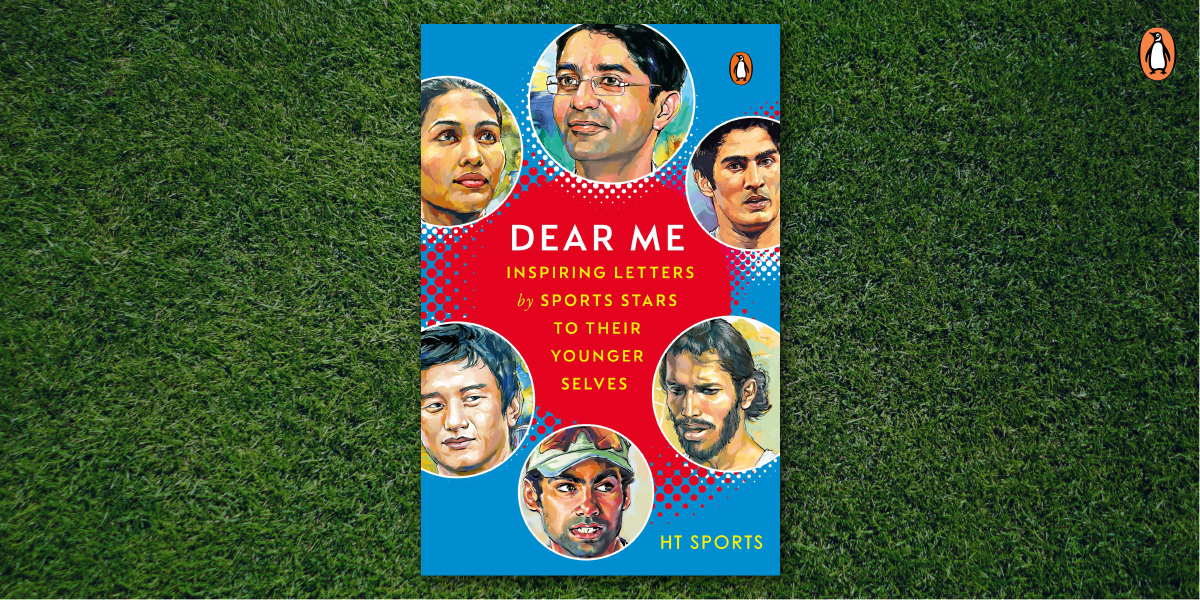
From Anju Bobby George’s unexpected gold medal at the World Athletics Final in Monaco to Abhinav Bindra’s Olympic gold in Beijing, India’s sportspersons have constantly proved that they stand shoulder to shoulder with the world’s best.
However, as easy as they might make it look, their success is the result of years of struggle, focused training and relentless hard work to overcome several challenges.
The ‘Dear Me’ series of letters first appeared in Hindustan Times in 2017. These columns, penned by India’s top sporting icons, were published with the intent to inspire a young generation of struggling sportspersons, to serve as the light at the end of the tunnel for them.
Dubbed as the ‘Sikkimese Sniper’ of India, footballer Bhaichung Bhutia writes to his younger self in Dear Me, which brings all these letters under one cover.
*
Dear eight-year-old Bhaichung,
It is nice to see you going back to your village for the winter vacations from the boarding school. I know you will again complain about the 10-km walk home. But know that sooner or later there will be a road to your house and electricity in your village.
This holiday though will be different for you since Dad has bought a football for the first time! Knowing you, I am sure you will be impatient to reach home and play with older brother Chewang, who is also returning with you and Dad.
Young man, the one thing you need to realize is that you won’t win all the time. So stop fighting and crying every time you lose a match. In other words, stop being a bad loser. Your oldest brother, Rapden, is very good at football and thinks you are very talented, but he finds it difficult to deal with your tantrums when you lose. Winning and losing are part of the game, and you will have to take them in your stride. The sooner you accept this, the further you will go.
Dear Me || HT Sports
I also know how much you are dying to find someone who could teach you lots of tricks about dribbling the ball and, yes, that someone who would show you how to execute a banana kick! When you return to school, everyone will talk about your talent. Except the games teacher. He will not select you, but don’t worry, you have a wonderful principal in Father George. So when you are not picked, you will tell him and he will help you get into the junior school team. Guess who will be chosen as the best player? You. I know your father keeps telling you to study
well and pass your examinations. I love him for the fact that he does not pressure you to top the class or get a high percentage. He just wants you to pass. Be glad that you don’t have a pushy parent because that will mean you have so much freedom to play and think of football. That is because he loves football and has taken you many times to watch him and Rapden play in the village tournament.
An uplifting reminder that dreams do come true, Dear Me allows you to be inspired by their extraordinary stories.
Inhabiting the remote hills and forests of India are isolated communities of people who have survived the ever increasing influence of urbanisation. The Adivasis have their own religious beliefs, traditions and rituals which are far removed from the rest of the country. White As Milk And Rice takes us away from our metropolitan cultural medley and leads us into life stories from six remarkable tribes of India where we see age old traditions manifest in the rapidly changing milieu of their fragile world.
Read on for a glimpse into the traditions of the Adivasis from the stories in White As Milk And Rice –
The Halakkis of Karnataka
The Halakkis’s janapada, or folk songs, are passed on from one generation to another as part of their oral history. These folk songs are sung by the Halakki women, unaccompanied by instruments, as they go about their daily chores. With no formal knowledge of music, the women sing in the same tune ,mostly out of habit, as an expression of joy, sadness, anxiety or contentment.
‘Why did they all know the chorus to these songs? Sukri wonders. They had inherited these songs orally, rather than in written form. Often, the meaning of the colloquial, ancient words escapes them, but they sing it for the sorority—songs that bind them together through their hardships, but songs Sukri associates only with happiness, with festivals, forests, family, weddings, weeding, working on paddy fields.’
The Kanjars of Chambal,Rajasthan
Originally a community of valorous Rajputs, the Bhatus were pushed to the margins of society by multiple invasions in the Indian subcontinent. Of the many Bhati Rajputs that fled into the jungles, some styled themselves as rebels or baghis who operated out of the labyrinthine ravines around Chambal river and came to be known as Kanjars. The Kanjars performed a much revered ritual before leaving for heists –
‘The night before, Lala had taken out a silver bowl from one of the bundles in his sikri, brought the empty bowl to his lips and kissed it, closing his eyes, holding his breath as if tasting the tenacity of his ancestors. Later, his wife had poured in kaccha khatiya and some goat blood into the bowl. Sipping on it, Lala had given an oath or a pledge of loyalty to the gang and acceptance of the consequences if a breach of trust was made.’
The Kurumbas of the Nilgiris, Tamil Nadu
Descendants of the Pallava dynasty of southern India, the forest-dwelling Kurumbas are regarded as some of the oldest inhabitants of the Indian subcontinent. Scattered in the hills around the Nilgiris, the Kurumbas are believed to possess extraordinary spiritual and supernatural powers. Most Kurumbas survive by selling forest produce and the honey-gathering season is celebrated with ceremony-
‘Old grandmothers of the hamlet would sing songs in the village square about honey collection; interspersed would be songs on elopement with lovers, extramarital affairs, abnormal sex organs, jackfruits, cucumbers, etc. The men would have played tamabati, or the drum, to which the younger women would dance in circles, clapping their hands together below the waist. ‘
The Marias of Bastar, Chattisgarh
In the Gond society, Ghotul is a tradition that is integral to the Marias socio-religious beliefs. The nightly ritual is announced with the beating of drums and a procession of young boys and girls heads to the ghotul which could be described as a clubhouse. Dressed to please, the young Marias sharpen their seduction skills while enjoying music, dance, games and massages. Most activities are designed to develop intimacy between the sexes.
‘In this soft, diffused glow of affection, boys and girls lived together in that dormitory for years; a charming mixture of learning and experimenting with lovemaking, none of it meant to be taken seriously.’
The Khasis of Shillong, Meghalaya
Being a devout Khasi entails a life of discipline and familial duty. In old-fashioned Khasi families the birth of a female child is celebrated with a feast. Learning to keep a home, performing ancestral worship and looking after family members is part of induction to life as a Khasi female.
‘The Khasis follow the matrilineal principle of descent, residence and inheritance. The youngest daughter inherits, children take their mother’s surname, and once married, the khadduh, or the youngest sister, and her husband live in her mother’s home.’
The Konyaks of Nagaland
Straddling the Indo-Myanmar border, the fiercely independent Konyaks are believed to be followers of an indigenous animist religion. Young men in the tribe practise war skills and their training is focused on preparing them for life as warriors. The tribe’s collection of severed enemy- heads is their pride.
‘A “good naomei” protected his comrades and never refused a beautiful woman’s advances. Our village must grow bigger, stronger and for that, enemies’ heads must be secured, brought to the village and fed rice beer. This would bring it prosperity and for the naomei, some virility. The more the heads, the more the reverence.’
Nidhi Dugar Kundalia takes us into the remote regions of India where tribal communities practice and preserve their traditions with reverence even as external forces make inroads into their precariously balanced existence.
This is a tricky one because I’m nearly old enough to be considered a Boomer myself! I was attending a wedding recently and an older gentleman — within a few minutes of meeting me for the first time ever — asked why I wasn’t married yet. When I asked him why he felt I should be married, he said: Vedon mein likha hai ki yeh tumhara dharma hai. Really? So being happy with your highly personal life choices is a big no-no, but preaching a 3000-year-old sacred text at a complete stranger about the ‘right’ way to live their life is somehow fine? OK Boomer.
Any tips on bridging the generation gap with parents?
It’s a big subject and I’m nowhere near qualified enough to be handing out tips on it. But in my experience, parents are nosy as hell. I mean, aside from being the ones with the money, that’s basically their one defining trait. It comes from fear. They don’t want to control your life, they want to know that you’re safe. So throw them a bone once in a while. Let them know when you’ll be out late, and who your friends are. Share any one meal with them every day. It’s no big deal and it’ll make your life much easier.
Any personal #litAF friendship stories you still cherish?
I made a friend when I was at a drug rehab 10 years ago. For the sake of anonymity, let’s call her by the oddly specific name Kajal Sheth. Because she lives in London and I in Delhi, we’ve met only a handful of times since. And because I dread speaking on the phone (to anyone), we are sometimes not in touch for months at a stretch. This is a frustrating, often hurtful, situation for her. And yet, no matter how many calls I don’t take or texts I don’t respond to, she’s always there for me when I need her to be. Gehna’s baby, in the book, is named Sitara after Kajal’s daughter.
Who do you relate more to: Eram or Gehna?
At a circumstantial level, Eram. He had, like myself, a father with Parkinson’s. He also enjoys games of chance, and strives to be better than he is. Gehna is more of a manic pixie — overly sensitive, bipolar, spontaneous, and self-absorbed, and I am none of those things.
Rom-coms or Thrillers?
Thrillers. Rom-coms are a guilty pleasure, and they have this annoying habit of sneaking up on you and stabbing you right in the heart.
Favourite sports movie?
That’s an impossible question. How to narrow it down to just one? Sports movies, even the badly made ones, always make me cry. Probably something to do with the winning-against-all-odds trope that hits deep. In English, Seabiscuit. Closer to home, Lagaan.
What’s the story behind the title [“Not All Those Who Wander”]?
JRR Tolkien, in the Lord of the Rings trilogy, wrote a poem that starts with the couplet: All that is gold does not glitter / Not all those who wander are lost. I borrowed from it for the title of the book, partly as tribute to the literary master craftsman and partly because feeling LOST is such a common experience for teenagers.
What food are you craving right now?
Sev Puri. I am always craving sev puri — even while eating it! Indian street food is the best street food, Chaat is the best Indian street food, and sev puri is the best Indian chaat street food.
Be honest – how many drafts did it take for Not All Those Who Wander to take shape?
I’ll be honest — one draft. I take no pride in that fact. A famous author, I forget who, was asked a similar question in The Paris Review. She (or possibly he) said that there are two kinds of writers. One: those who just put words on a page willy-nilly until the first draft is done and then work out the kinks in the rewrite. Two: those who are constitutionally incapable of moving onto the next sentence until the preceding one is polished and perfect. I’m the latter sort. It takes me a long time to finish a first draft but when I’m done, it’s done.
Any procrastination tactics you employed while writing the novel?
Yes. Netflix, the Internet, and examining the contents of my belly button. Getting anything done without a deadline, a boss, and irate clients is no easy task. The only thing that works is a driving need to see where the story goes.
George RR Martin’s A Dance with Dragons. Each year I re-read the entire series in the hope that this, finally, will be the year he finishes Book VI, The Winds of Winter. But he never does. I’ve never been more cross with a person in my whole life. He’s probably watching Netflix. Finish the damn book, GEORGE!
Favourite chat slang?
Not a huge fan of chat slang, tbh. All that “wer R u *smh *idk” business drives me up the wall. But I have of late become a rabid emoji user. My favourite is the rolling-your-eyes yellow face. So useful!
What has been your best 3 AM idea?
To cash-out of a poker game. I know you probably meant to ask what has been my best 3 AM story idea, but I’m re-interpreting the question. Cashing out of a poker game is the best idea at any time, and especially at 3 AM. Go home. Get some sleep. Do NOT try to calculate how many meals you can afford for the rest of the month.
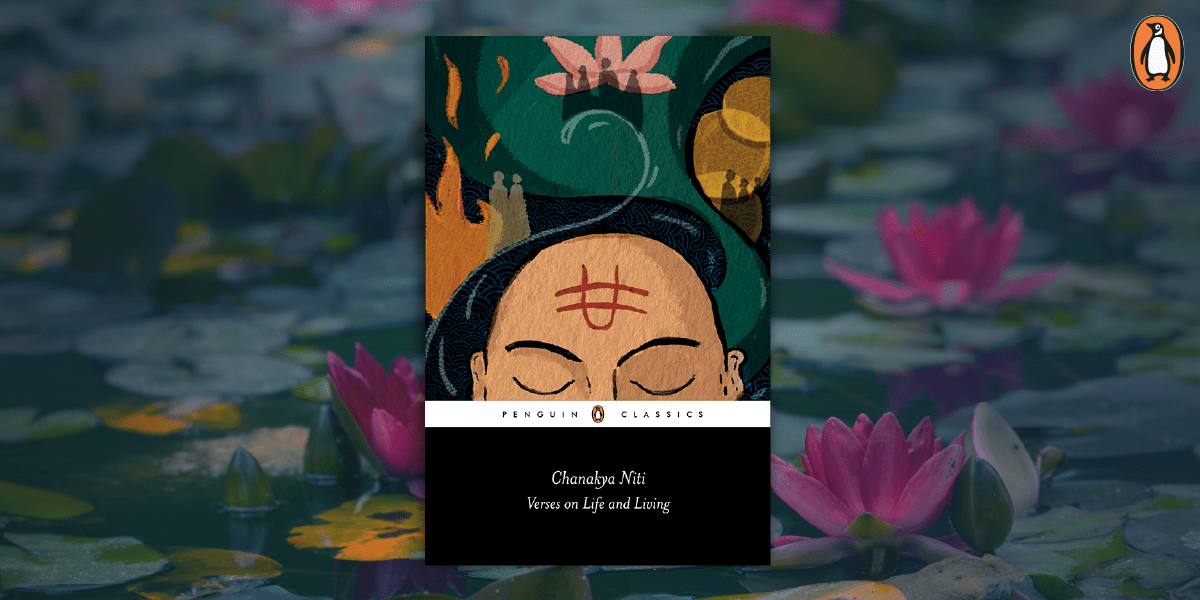
The names Kautilya and Chanakya, representing the same personage, are an integral part of history from the period when Mauryan Emperor Chandragupta reigned over India. Kautilya is well known as the author of the seminal Indian treatise on politics, administration, diplomacy and war called Arthashastra. But it is the vast collection of aphoristic sayings in Sanskrit attributed to Chanakya, and therefore called Chanakya Niti, that have remained relevant and memorable over the centuries.
What is that wisdom which has enabled Chanakya’s verses of observation and advice to keep the place of honour in the oral tradition of India even as these have been lauded across the world in various translations?
Chanakya lures us in with one of his introductory verses:
With perusal of these precepts,
the best of men will understand
the famous teachings on true duty,
on good and bad, on what to do or not.
Read on for 7 nuggets of worldly wisdom from Chanakya Niti–
Chanakya warns against errors of judgement in choosing that which offers immediate succour over learning and values that may carry one through life and beyond.
One who discards the permanent,
and pursues just the transient—
the first values are by him destroyed,
the second perish in any case.
The wise one who rose above his poverty and physical appearance to make himself indispensible to the ruler reminds us to see value in all things.
Nectar seek, even from poison,
gold even from excrement,
knowledge even from one base,
and the girl that is a gem, even from a family low.
Experienced in the ways of the world, Chanakya exhorts man to speak in a measured way and reveal only what is necessary and conceal that which is yet incomplete.
Some work considered in the mind,
when speaking do not public make,
just think about it privately,
till it is indeed accomplished.
Befriending one who has revealed his base nature can lead man down the road of misery. Being a keen observer of virtue, Chanakya reiterates the importance of keeping good company.
Wicked, and badly behaved,
he lives ill, casts evil looks—
one who makes of such a person
a friend will soon get destroyed.
Pouring his enlightened self into a verse that is as simple as it is deep, Chanakya shares a core fact of existence in a way that equalizes all distinction.
Which family is free of faults,
which person has not suffered disease,
who has not faced adversity,
whose happiness is permanent?
Mature and learned as he was, the great teacher Chanakya shares a lesson in moderation.
For beauty great was Sita seized,
Ravana slain for too much pride,
for giving too much was Bali bound—
as such, always, excess avoid.
In an unforgettable verse that showcases him as the shrewd master of politics, Chanakya hints at the perils of walking the straight line in a crooked world.
Too upright, straight, one should not be,
go to the forest and there see:
straight trees cut down repeatedly,
while standing stays the crooked tree.
It is perhaps his ability to dig into the depth of human nature and tease out the knotted truths of human behaviour that has kept Chanakya alive for Modern India to engage with.
Haksar writes, ‘Overall, it is both their meaning and their style that has made the Chanakya verses so memorable for so long.’
Translated from the original Sanskrit by A.N.D. Haksar, read Chanakya Niti for more wisdom!
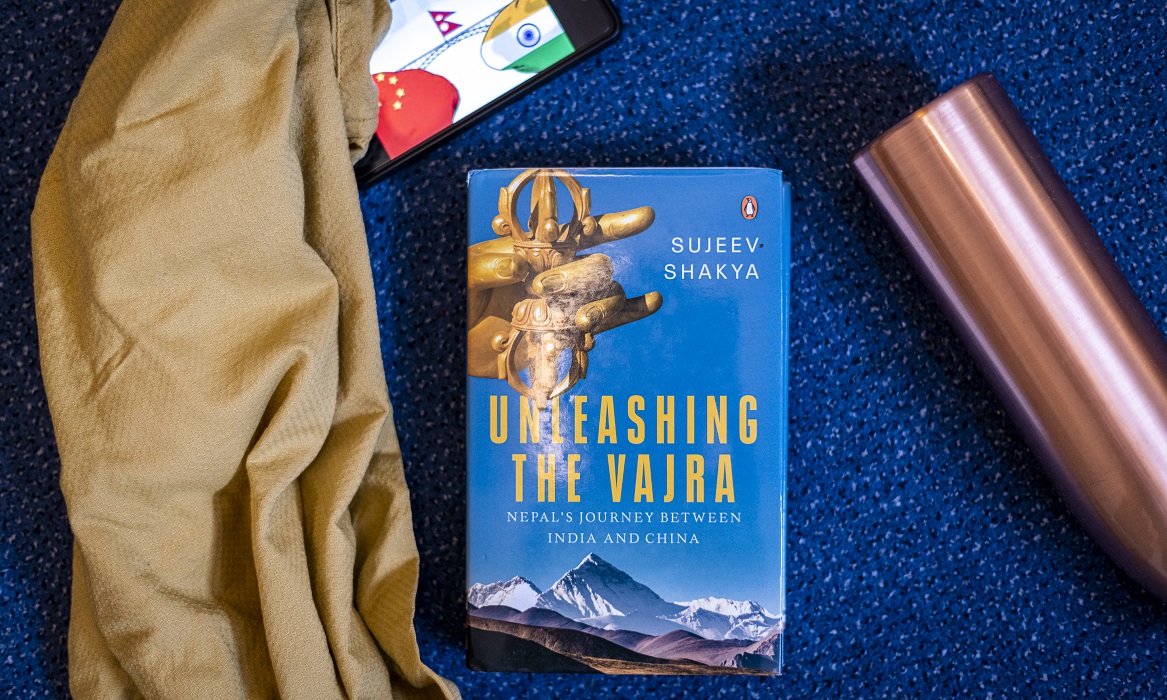
Unleashing the Vajra sets the context to understand the key issues that drive Nepal’s economy. The author examines the other key sectors—the private sector and the development sector—closely to understand the different distortions that exist in the society, from cartel behaviour to rent-seeking. The book also deals with the emergence of the global Nepali, and the dichotomy as Nepal itself continues to be inward-looking.
Below are few facts, which reflect Nepal’s economic situation currently, taking into account its economic history as well:
Influence of the caste system
The Nepali economic system, until the abolition of the caste-system, revolved around the Hindu philosophy and way of life. So in such a society the discourse around development and the role of development partners popularly known as donors becomes very complicated.
Third World Country
After the Second World War, Nepal, along with the least developed of the former colonies—those lacking in industrialization, capitalist institutions and democratic governance—became eligible for foreign aid as members of the ‘Third World’. The first aid package Nepal received was part of the US-led Marshall Plan.
Lack of Foreign Aid Policy
Exhibiting an attitude of dependence, Nepal did not bother to have a comprehensive foreign aid policy until 2002. The lack of a national body directing and coordinating aid was a considerable drawback—not only did it compromise the sovereignty of the nation, it often directly challenged the will and intentions of the government.
Remittances
The interest and accounting of remittances has become even more important as the total remittance crossed the billion-dollar mark in 2005. In 1993, the remittance to GDP was just 1.5 per cent, as recorded in the World Bank report. It swelled to 28.31 per cent in 2018.
The Non Resident Nepali Act
The Non-resident Nepali Act, promulgated in 2009 means that NRNs, who are not citizens of Nepal, could purchase land, acquire assets and invest in Nepal, and also have dual citizenship in the case of certain countries.
Impact on real estate
Houses are often rented from people who are close to the renting agency’s staff, while vehicles are rented from influential individuals at rates higher than the going market rate. These provide nice commissioning counters for development agency staff workers and a secondary source of income for well-placed and high-ranking officials.
Nepal has historically been at its most prosperous when it has leveraged this geographical position. Today, this opportunity emerges again-and in order to take advantage of the growth of India and China, Nepal needs to hitch its wagon to the fast-moving engines to its north and south. For a deep-dive into Nepal’s past, present and future pick your copy of the book today!
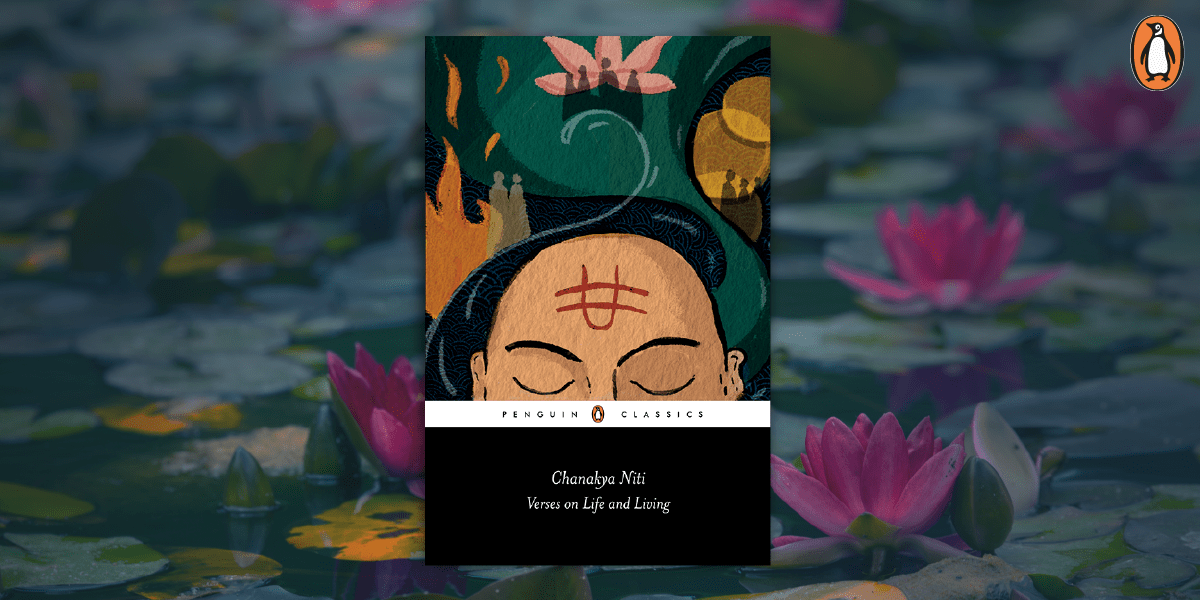
In the rather complex history of our vast nation, the name Chanakya symbolizes the worldly aspects of India’s ancient thought and knowledge while being synonymous with legendary wisdom and political skill. Chanakya’s numerous sayings on life deal with subjects ranging from family and social surroundings, friends and enemies, adequacy or absence of wealth, official and personal encounters to benefits of knowledge and the inevitable end of everything. These sayings have been compiled in collections and anthologies with the entire corpus referred to as Chanakya Niti.
The aphorisms, written in straightforward language devoid of the ‘alamkara’ or embellishments which were used in traditional Sanskrit verse, belie the depth of the content which, in a way, is reflective of Chanakya’s position as despite being an indispensable ally to the ruler Chandragupta Maurya, he led a simple life.
A.N.D. Haksar writes ‘ …Chanakya has been described as a poor but learned person of unattractive appearance, but nonetheless skilled, determined and cunning, with a strong, vengeful personality.’
Read on to know what Chanakya Niti teaches us about friends and foes:
Know him to be your friend who stands next to you when you are beset by danger and difficulty
In times of sickness or bad luck,
in famines and enemy attacks,
at the ruler’s door or in the cemetery,
the friend is one who stands by you.
Be wary of the one whose tongue drips honey while his hand wields a dagger
He speaks before you sweetly,
but spoils the work behind your back:
such a friend should be discarded—
like a poisoned pot with milk on top.
Value all that adds meaning to your life and aids your passage through this world
In foreign lands, one’s friend is learning,
at home it is the wife,
in sickness, the friend is medicine,
in death it is the virtuous life.
Know those to be your enemies who give in to their weakness and stray from their righteous path
The father in debt is one’s enemy,
and the mother who is adulterous,
a beautiful wife is also a foe,
as is a son without education.
Guard your wealth as floundering fortunes cause friends to turn fickle
Friends leave one who has no money,
also servants, kinsfolk, even one’s wife,
but all come back when he has wealth—
that is man’s real friend on this earth.
Sharpen your intellect so it can become your shield against enemies
What can enemies do to one
who very intelligent may be?
They are like raindrops or the heat,
on a chariot with a canopy.
Devise your strategy so you can turn a weakness into strength
A sharp foe may be neutralized
with the help of another enemy:
a thorn that gets stuck in the foot
with another thorn can extracted be.
A.N.D. Haksar, a well-known translator of Sanskrit classics, offers a roadmap into Chanakya’s Niti with selected aphorisms which continue to be recalled and quoted in many parts of India.
To learn how to manoeuvre through life, read Chanakya Niti!
‘Oh, I bless you with a long life, but anyway, you will die one day.’
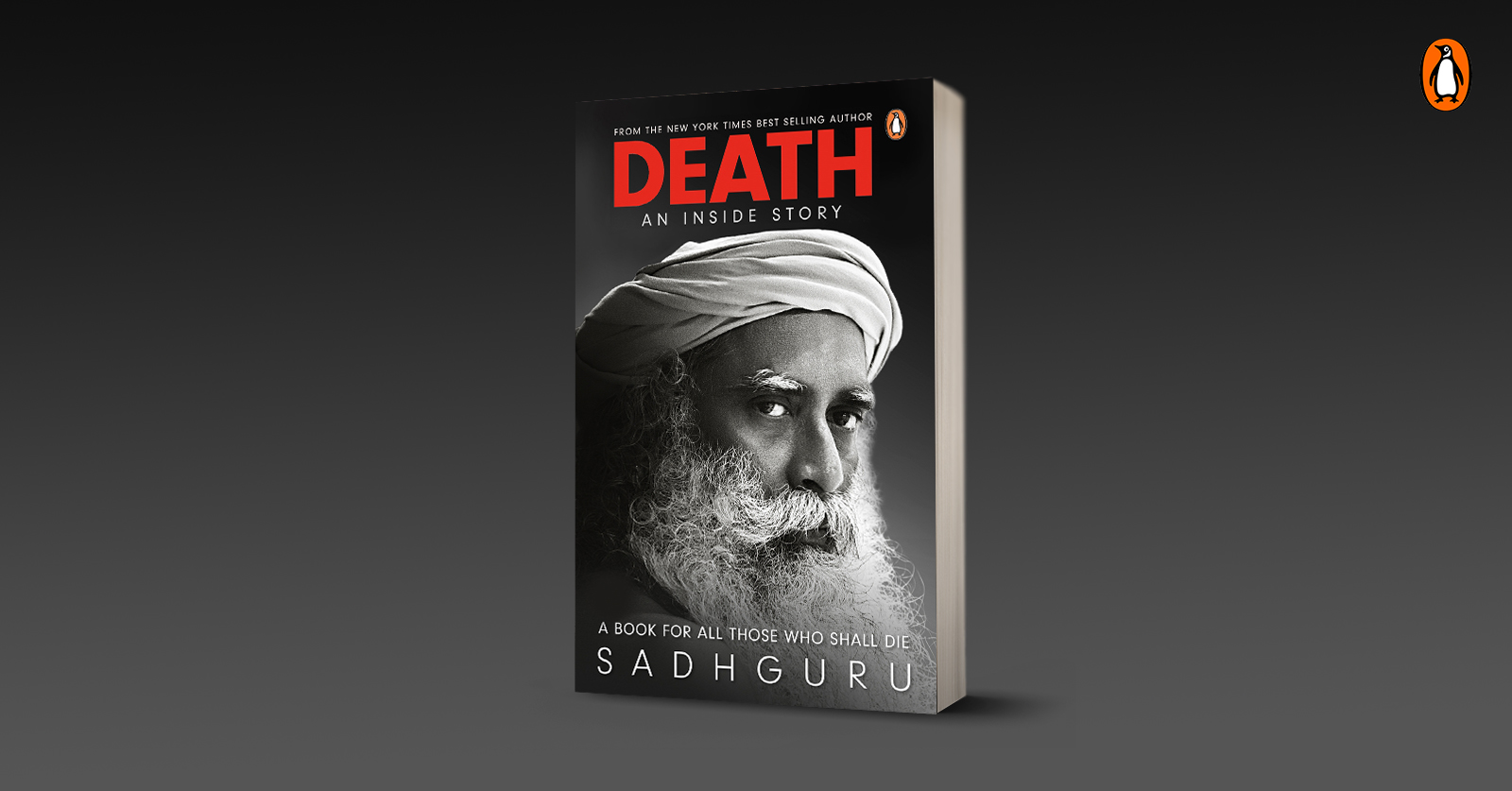
Yogi, mystic, visionary but above all a great spiritual teacher- Sadhguru bestows both life and wisdom in this one brief, all- encompassing blessing which reminds us that death is the world’s greatest equaliser and mortality is a fact of life. The knowledge of impending death can plunge even the hardiest of souls into a dark pool of fear and misery. Contrarily, in Death- An Inside Story, Sadhguru points out-
‘Calamities, especially like death and illness, are a tremendous opportunity to look beyond the limitations of what you normally understand as life.’
What if death was not the catastrophe it is made out to be but an essential aspect of life, rife with spiritual possibilities for transcendence? For the first time, someone is saying just that!
In this unique treatise-like exposition, Sadhguru expounds on the more profound aspects of death that are rarely spoken about. And in doing that he offers an expansive perspective on death which has the power to change how we understand our existence in this universe. He says-
I was born like you, I eat like you,
sleep like you and I will die like you
but the limited has not limited me
Life’s bondages have not bound me
Here are 5 ways Sadhguru can help you change your perspective on death-
‘Moving from the physical to the non-physical is the greatest moment in your life. So is it not very important that you make it happen most gracefully and wonderfully?’
The darkness that clouds our thoughts at the idea of death colours our experience of it. Sadhguru nudges us gently to look away from the repetitive activities of life and approach death as a unique experience. It is that very last moment of life when we transcend the limitations of our physical body. It can be done just once and it is the last thing we will do. And so we can choose to do it with grace.
‘If you want to make use of the opportunity that death presents, you cannot approach it with fear. This is not something that you can handle all of a sudden at that moment. So it is important that on many levels we prepare for death beforehand.’
Even though we all fear death, we must prepare ourselves for a certain day when we would experience it. Shunning the thought of death or cowering behind a wall of terror is not the best way to go. Sadhguru reminds us to learn from nature. When wild animals sense their impending demise, they withdraw from food and find a place where they just sit. This preparation is a way to bring dignity to death. If you bring in death gracefully your disembodied phase will not be hellish.
‘If you develop the necessary capability, whichever way death comes, you can maintain your awareness and die well. If you have not lived a life of awareness, the possibility of you suddenly becoming aware in an extreme situation like death does not arise at all.’
In one of the most enlightening discussions on death, Sadhguru makes a startling revelation. He explains that a man who dies in a violent encounter is in no way in any kind of disadvantage compared to one who is dying of disease or old age. Any man who has lived a life of awareness can die well as there will be that moment between injury and death where that awareness brings acceptance. Some people live well only in good situations but those who live well whichever kind of situation comes to them, die well, no matter what kind of death comes to them.
‘The fear of death has come to us because we have gotten deeply identified with this body. Our identification with this body has become so strong because we have not explored other dimensions.’
Sadhguru explains that death is as natural as life is and therefore, a morbid fear of death is unnatural. It demonstrates how we have lost touch with reality. We believe that we came with this body and that thought begins to define us. The flesh we hold so dear is what we gather in the womb after our conception and it is this flesh we shed when the end comes. To be aware of this reality we must remember to differentiate between ‘This is mine.’ and ‘This is me.’
‘The fear of death is about what you think you will lose by death. The fear of death is essentially the fear of loss.’
The fear of losing all that we know and love limits our experiences. People who have expanded their range of thought in the pursuit of awareness are convinced that they came with nothing and therefore, would lose nothing from death, so they welcome it without fear. Sadhguru encourages us to go beyond the limitations of the body with sadhana and to use our life to know that which is beyond the physical.
At a time when the world is torn asunder with disease, violence and hate, Sadhguru exhorts us to remember the fragility of life. He says, ‘Those who are constantly aware of the mortal and fragile nature of Existence do not want to miss even a single moment; they will naturally be aware. They cannot take anything for granted; they will live very purposefully. Only people who believe they are immortal can fight and fight to death.’