Publish with Us

Follow Penguin

Follow Penguinsters

Follow Penguin Swadesh

A Window To the Calcutta We Love from ‘Sarojini’s Mother’

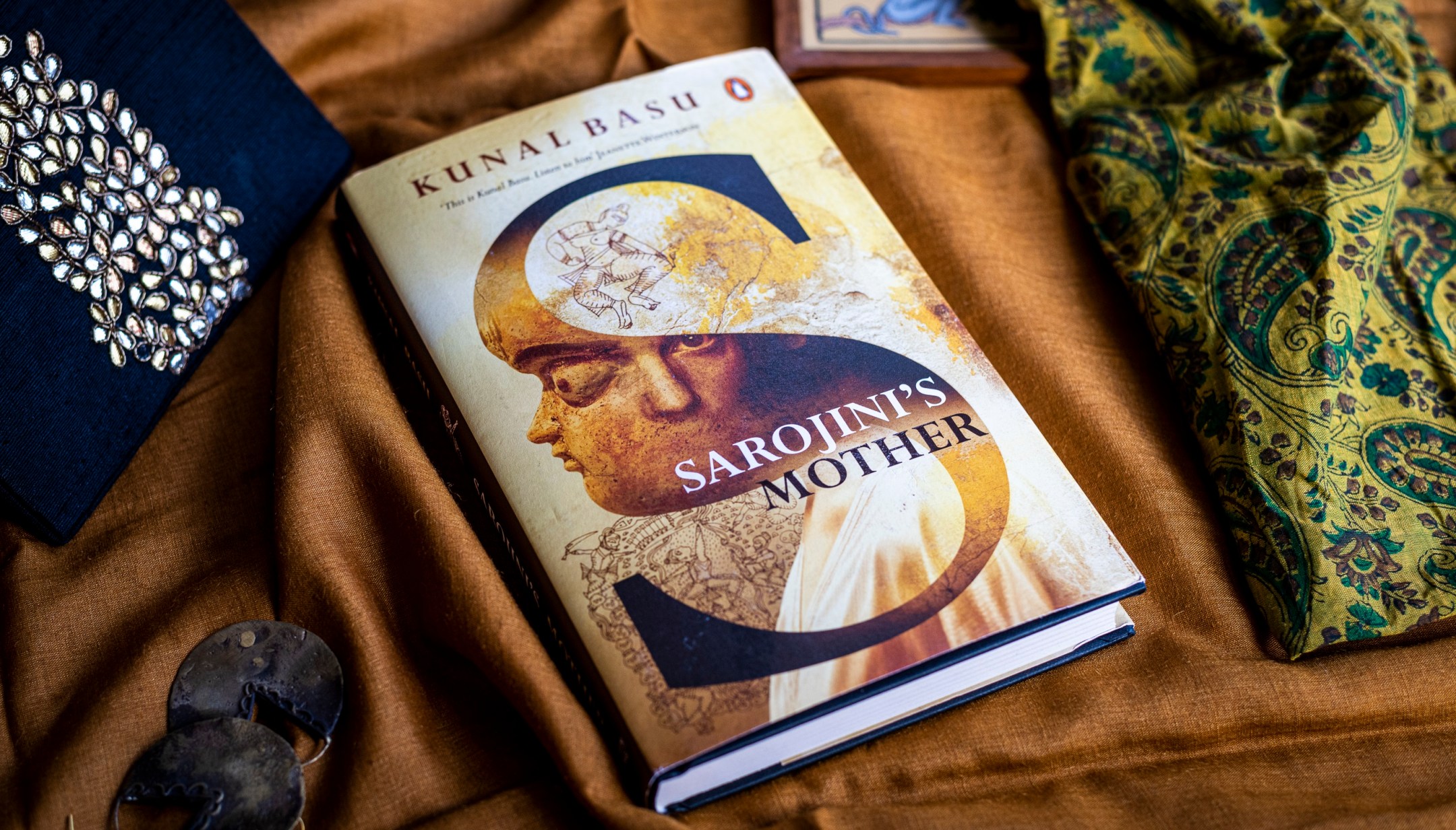
Sarojini-Saz-Campbell comes to India to search for her biological mother. Adopted and taken to England at an early age, she has a degree from Cambridge and a mathematician’s brain adept in solving puzzles. Handicapped by a missing shoebox that held her birth papers and the death of her English mother, she has few leads to carry out her mission and scant knowledge of Calcutta, her birthplace.

In Sarojini’s Mother, Kunal Basu takes us to Calcutta and offers a window into the city we love. Below are some of the highlights of Calcutta from her book.


Rex; the tourist trap

“Like most tourist traps that flaunted names like Copacabana or Casino Royale, its daytime business thrived on fruit juice and Western food easy on the stomach. Like chilli-less omelette and salads washed thoroughly in bottled water. At night on Thursdays, which was a dry day in the city, the owner would slip you a joint or a bottle of rum.”

The Calcutta Tram

“My foreign friends love the tram. It reminds them of the nineteenth century. Astride the rickety chairs smelling of stale urine, they can imagine black-and-white photos of horses chugging along the rolling stock, sahibs in top hats and half-naked natives.The Calcutta trams the oldest in Asia, I tell them, older than Shanghai’s. Like an old man, it totters along, unable to keep up with cyclists and walkers. In return for slowness, it offers a welcome respite from the crowds.”

Afternoons, on the street outside the Rex

“With the morning gone, now afternoon prayers had shops shutting down and the crowd had thinned. Siesta time in force, fewer rickshaws plied the streets and travelling salesmen had set down their wares to take a well-deserved rest. The trees were the ones to rise to the occasion, cooling everyone with fanning boughs that ferried the smell of rice and assorted meals cooked by the eateries to feed the hungry. With the fight over leftovers won, dogs had settled down under shadows, gawked at with envy by a caucus of crows.”

Similar afternoons in the slum

“The slum was quiet in the afternoon, the dwellers dozing after the morning’s hard work. Street dogs, normally defensive of territory, gave us free passage. The sound of radio drama came from the huts, and the occasional whimper of a hungry child.”

A lovers’ haunt; The Planetarium

“‘Why is this place so popular with lovers?’ Saz whispered as we settled down. ‘Because it’s dark here and they can do whatever they like.’ I thought I should tell her the truth. ‘Without a place of their own, it’s hard for couples to be intimate. Here nobody minds them. The guards turn a blind eye to the hanky-panky.’”

The Museum that makes you feel like you are in London

“You feel you are in London, not Calcutta, as soon as you walk into the National Museum. Once called the Imperial Museum, it was the nation’s oldest and largest. Villagers, who thronged there on holidays, called it Jaadughar—the House of Enchantments. I took Saz to the museum to bring up a delicate matter.”

The Special Exhibit of the Egyptian Mummy at the Museum

“‘Why bring a mummy over from Egypt to Calcutta?’ Saz sounded genuinely surprised. The reason wasn’t clear to me, but it could’ve had something to do with the Brith moving their possessions around like a rich man moves a vase from the hallway to the parlour. Because of its eerie reputation, the mummy room was the quietest spot in the museum, perfect to raise the delicate matter with Saz.”

Calcutta Racecourse; Close cousin of England’s Ascot.

“The grandstand, which was the gallery for commoners, was already at bursting point, tea stalls busy and toilets frantic. Dignitaries arrived amidst great commotion at the members’ stand, flaunting vintage cars with shining brass fittings…Our Calcutta racecourse was a close cousin of England’s Ascot, but the super jackpot days were rough, Suleiman had told me. The smell of money attracted quite a lot of riff-raff, and the cash counters needed extra protection.”

A Hotel in a neighbourhood that fits even guidebook’s description

“Squeezed between a barber’s salon and a travel agent, [the Peace Hotel] was easy to miss in a neighbourhood that fitted every guidebook’s description of Calcutta, being the perfect location for noise and dust, impossible crowds and bullish traffic. Set against the imposing backdrop of the National Museum, it flaunted jam-packed alleys dealing in trinkets by day and drugs by night.”

——————————————————————————————————————————

Read Sarojini’s Mother for more of Calcutta and find out if the verdict of science will settle the puzzle of motherhood for Sarojini.

A Story Worth (Re)Telling

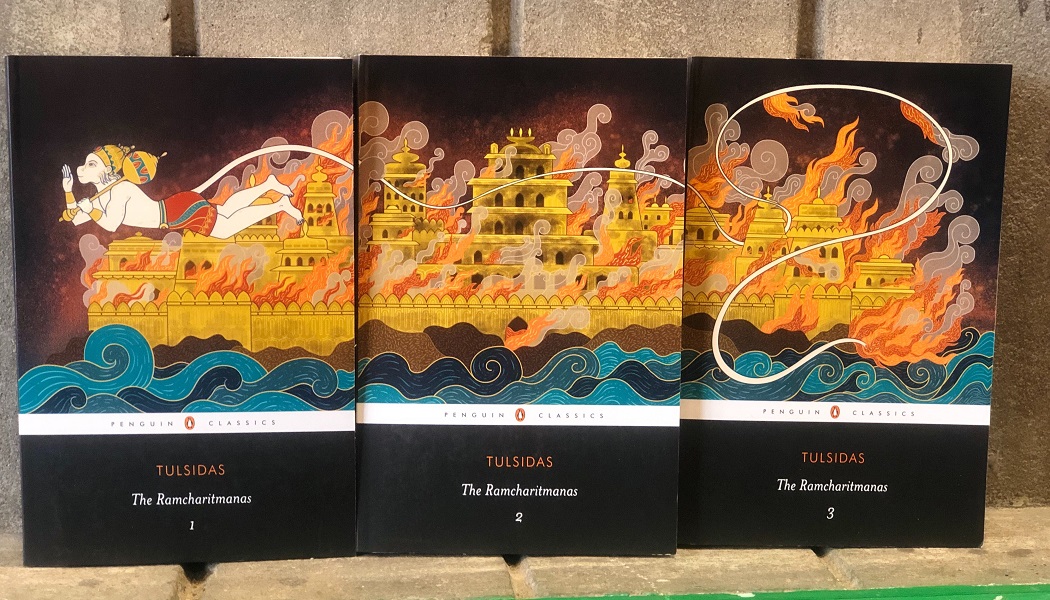
The Ramcharitmanas is one of the most popular and celebrated devotional texts in India. It’s cultural and traditional significance stands even today.

Composed by the poet-saint Tulsidas in the sixteenth-century during a period of religious reforms, this text was instrumental in making the story of Ram, his feats against Ravan, and the values he stood for accessible to the common people as opposed to just the priestly class.

Rohini Chowdhury’s latest translation of the magnum opus makes it even more accessible to a new and wide readership. The story and its teachings are as relevant as ever in the world today.

Read on to find an excerpt from Rohini Chowdhury’s introduction, in which she conveys the enduring significance of this text and why she decided to translate it:


My own engagement with Tulsidas began one crisp autumn night fifty years ago in a small town by the banks of the Ganga, when I saw my first performance of the Ram Lila. The sky was sprinkled with stars but I had eyes only for the drama unfolding upon the crude wooden stage before me, where the story had reached a critical point: Hanuman’s tail was to be set on fire. The sets were crude, the costumes garish, the acting unsophisticated— but the story transcended all such concerns, such was its magic and power. I did not know it then, but that was also my first intimate encounter with the Ramcharitmanas, upon which the Ram Lila is based. Growing up, Tulsi’s poem was always around me—chanted in the homes of friends or neighbours, sung on the radio, or the theme of plays and dance dramas. So when the opportunity came to translate it into English for Penguin India, I accepted it with alacrity—and the last five years that I have spent walking behind Tulsi, one of the greatest literary minds of all time, have been a pleasure and a privilege. My translation does not do justice to Tulsi’s extraordinary poetic genius. His use of wordplay, his rhymes and alliteration, and the sheer musicality of his poem I have found impossible to capture in English. I have therefore contented myself with being as clear and accurate as possible in my translation, and to convey, to the best of my ability, the scale and grandeur of his great poem.

The Ramayana tradition

For at least the last two and a half thousand years, poets, writers, folk performers, and religious and social reformers have drawn upon the story of Ram as a source of inspiration. It has been told again and again in countless forms and dozens of languages, making it one of the most popular and enduring stories in the world. More than any other hero, Ram has been upheld as dharma personified, the epitome of righteousness, and his actions as the guide for right conduct. In recent times, the story has provided inspiration for films, novels, and in the late 1980s, a weekly television series watched by more than eighty million viewers.

The oldest and most influential surviving literary telling of the story of Ram is the Sanskrit epic called the Ramayana. Composed sometime during the first millennium bce, and consisting of some 50,000 lines in verse set in seven kands or books, it is attributed to the poet Valmiki, and is widely  regarded as the ‘original’. The influence of Valmiki’s Ramayana has been so profound that the title of his epic has come to denote the entire tradition, from oral and folk performances to literary texts and translations. Within this rich and varied tradition also lie the Ramayana songs from Telangana, the folk performances of the Ram Lila in northern India, the eleventh-century Tamil Iramavataram (‘The Incarnation of Ram’) by Kamban, and Tulsidas’s Ramcharitmanas.


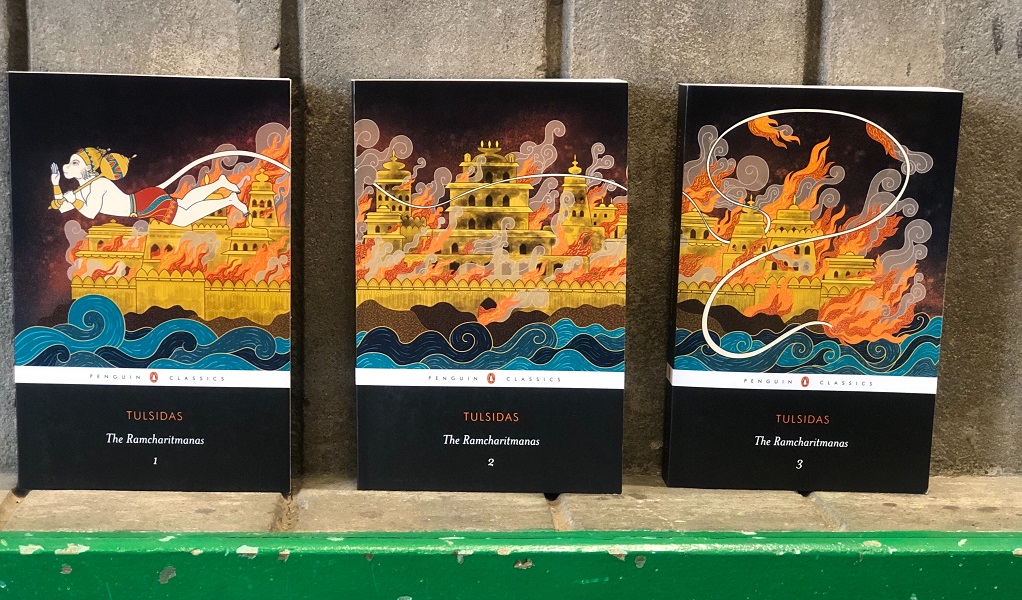
Published across three volumes, this translation brings alive the story of Lord Ram like never before!

A Coherent View of the Macrocosm of Pakistan

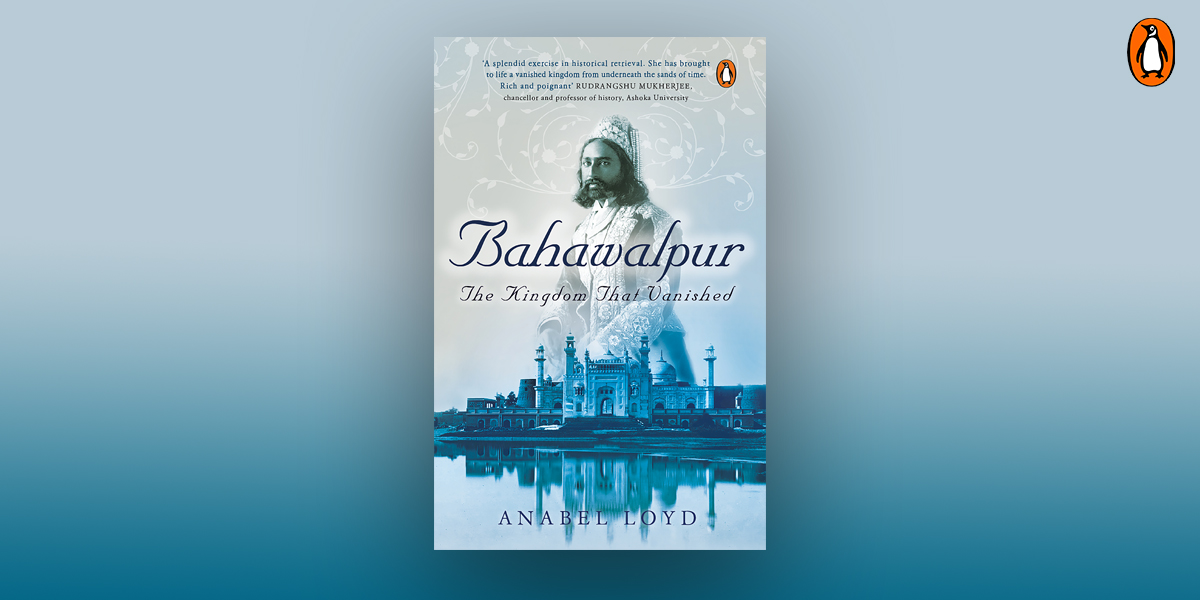
In the seventy or so years since Independence, much less has been written about the Princely States which acceded to Pakistan than those that remained in India. The name of the once great State of Bahawalpur is no longer remembered among its well-mapped peers over the border in Rajasthan.

Bahawalpur is a series of conversations between the author, Anabel Loyd and Salahuddin Abbasi, amir of Bahawalpur and the son of the erstwhile Nawab of Bahawalpur. The latter reminisces about his family and sheds light on Bahawalpur’s princes through old records, letters etc.

The book begins with a quote from Shakespeare’s infamous play, The Tempest, ‘What’s past is prologue’. This means that the past is a preface to the future – we cannot forget the lessons of history. As Salahuddin Abbasi takes you back, you can’t help but draw parallels between the long forgotten princely state of Bahawalpur of the past and the Pakistan of the present.

Jinnah’s aspirations for nationality and not communality- buried 

Jinnah’s vision of a country had been buried, over time- not only under the flow of patronage and corruption but also under the illusion and imperative, the ‘mirage’, of the Islamic state.  

The sheer one-upmanship of the everyday, increasingly archaic, public practice of religion in Pakistan hinders the running of a contemporary progressive state and argues an almost impossible case for reinstatement of Jinnah’s aspirations for nationality rather than communality. 

While the state promises Jannat to the poor, the young do dream of a better existence

Pakistan is more than ever girt with the restraints of caste, creed and class, but young people continue to dream of something better and of levelling the ground. Those living in extreme poverty may be easily seduced or coerced by the promises of extreme Islam: a glorious life to come after death providing some sort of solace or reward for the lack of any uplift through education or public services during the only earthly existence available to them.

The partition may have given us hindsight…

Pakistan looks backwards for religious authenticity, to a dream of national identity and unity never fulfilled after Partition which tore the country from its past.


But Pakistan no longer looks back far enough to its extraordinary history as part of a greater whole. That pas was cast into the deep chasm of Partition.

…But what about foresight?

Nowadays the country often appears neither to look back nor forwards beyond the trappings of new infrastructure in transport systems, shopping malls and increased urbanization. Such changes leave the poor exactly where they have always been, with nothing, and, regardless of the blandishments of government, does little to encourage outsiders to come in.

The wealthy get enmeshed in the threads of corruption and nepotism while trying to rise above it

Education abroad seems to have become a standard for those who have inherited status or have gained vast new wealth. Not all are lured for long by migration for the sake of further fortune. Those who return are entrepreneurial, creative and determined to find ways to circumvent or rise above endemic corruption in order to move forward. However, they may already be enmeshed in the threads of nepotism and corruption by virtue of the endless unbreakable network of familial connections at the top of Pakistani politics and society.


Anyone with a penchant for history and politics would definitely consider Bahawalpur an insightful read. Read it and tell us what you think?

How can Nepal Become an ‘Asian Tiger’?

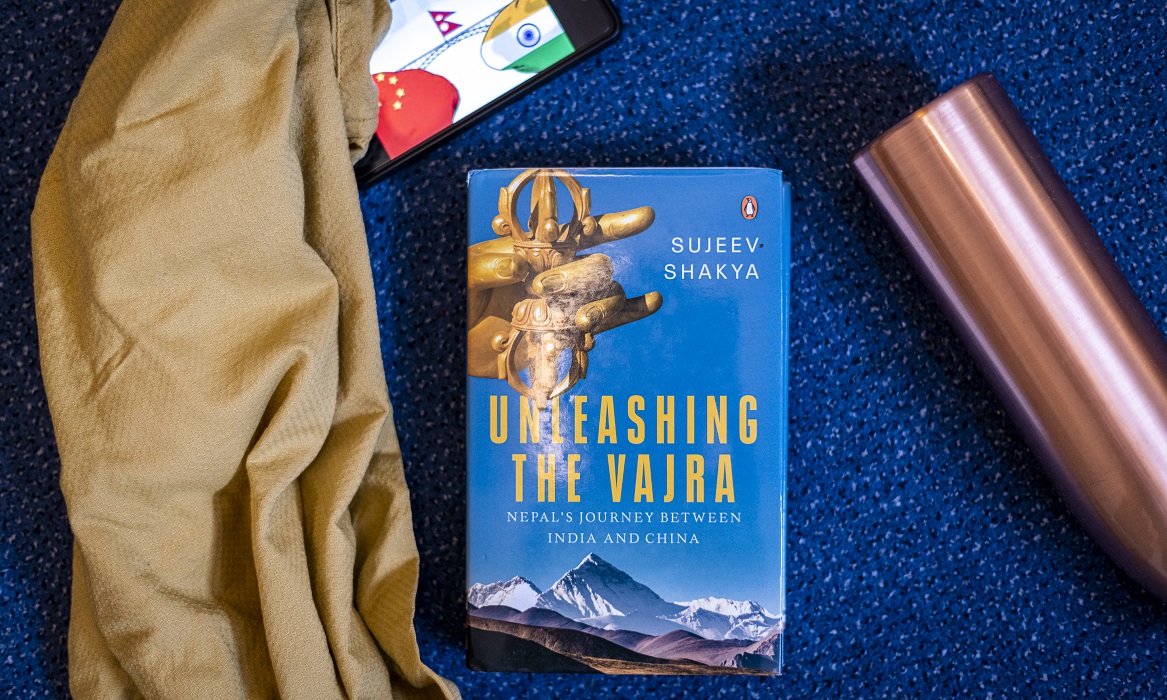
By 2040, it is projected that China will be the largest economy in the world, followed by India. The two put together will have nearly a third of the world’s population and GDP. Now, there exists an opportunity for Nepal to unleash its potential and return to the time when it had the advantage of being in between two prospering neighbours. In ‘Unleashing the Vajra’, author Sujeev Shukya tries to understand the past in order to learn how to get the future right—Nepal now has just two decades to relive its glorious past.

The listicle below brings to the forefront a few quick facts to show that Nepal has the potential to regain its past glory and make a mark.

Strategic Location 

By 2050, it is estimated that, the Shanghai–Mumbai axis will continue to dominate the agenda of future markets, economic development and global economic thought leadership. Nepal falls right in the middle of all this.

Population Boon 

Nepal is geographically small, but Nepalis tend to forget that they are also the forty-eighth most populated country in the world with a population that is nearly one and a half times that of Australia, and only a few millions less than that of Canada.

Tourism

An annual tourist volume of more than 30 million Chinese travelling to the Tibet Autonomous Region every year can also be a potential lucrative market for Nepal.

Vision 

Nepal needs to look at how it will deliver the same vision of prosperity to its people by 2050 with equal emphasis on capital, asset utilization, parameters of human development, and of course, happiness.

Economy and Growth

For Nepal to graduate to a middle-income country by 2030, when the country’s population will be around 36 million, it needs to be a $100 billion economy with a per capita income of $2500. This would require an investment of about $7–8 billion each year.

New Model 

Nepal is the prospective bridge between India and China, two countries that will be controlling 35 percent of global GDP in 2050. This is the time for Nepal to emerge with a new economic growth model rather than being a yam between two boulders.


Sujeev Shakya argues that it is imperative to understand history and learn from it to shape events for a better future. Unleashing the Vajra outlines the factors that will determine Nepal’s destiny in the years to come.

When Destiny Rolls Her Dice and Flips Fortunes

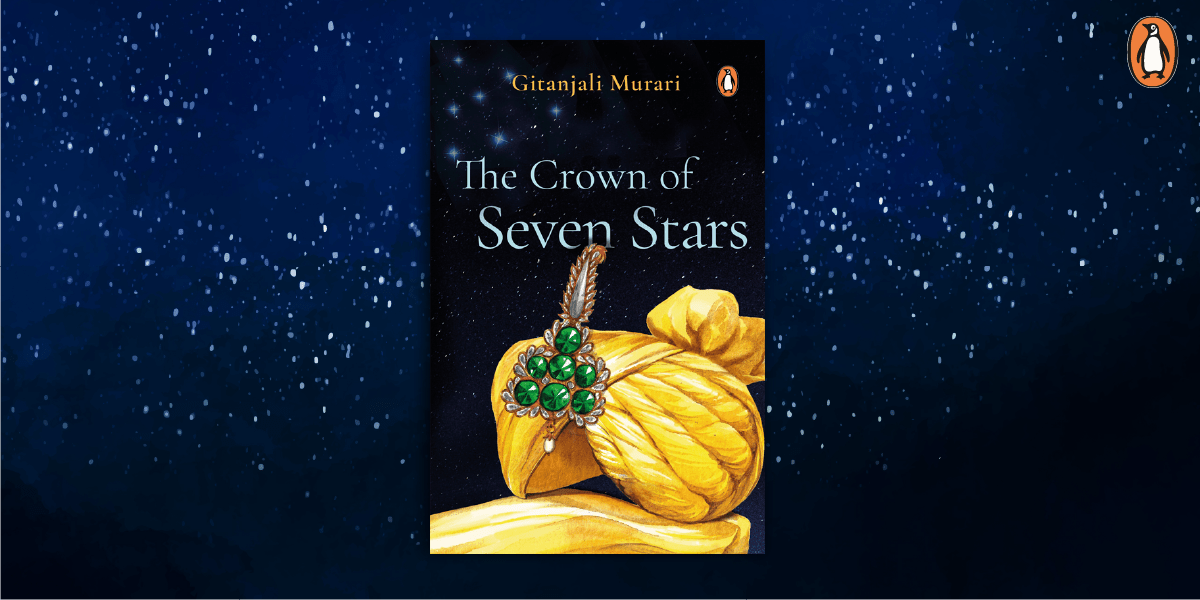
When the Kingdom of Aum falls under the spell of corrupt forces, all its past glory turns to dust and the land, once lush and fertile, becomes a barren wasteland. It falls upon Saahas, the courageous young General and heir to the throne, to fight the darkness that had shrouded his beloved Aum. But victory eludes Saahas as the play of destiny takes him on a journey both arduous and treacherous.  General Saahas becomes a hunted man and Aum plunges into chaos, submitting meekly to the tyranny of the self-appointed Raja Shunen and the wily Queen Manmaani.

What was this web that Saahas had become entangled in?

Submerged under wave upon wave of dilemmas, Saahas is bewildered by the power of the Saade Saati–the dreaded seven and a half years- yet is determined to find his way towards his destiny.

Gitanjali Murari’s The Crown of the Seven Stars begins with a letter from Destiny which hints at a revelation- ‘And I promise you an enthralling story of one man who dared to fight me, catching me quite unawares, so revealing the truth about these accursed seven and a half years.’

Read on to find out what the period of Saade Saati brings –

The fear of failure

Saade Saati, the dreaded seven and a half years that befall each person at least once in their lifetime, brings with it crushing failure-

‘You fear it, for it results in nothing but failure; failure that eats you from the inside, corroding you, until you wish you were dead. And when you emerge on the other side of it, you weep, not with relief, but because you are quite broken.’

*

There is light at the end of the tunnel

Saade Saati may make the sufferer feel helpless and fearful but it is a finite period which does come to an end and the wheels of fortune turn again. The astrologer Arigotra leaves Saahas with hope for the future but also a reminder of the futility of his battle against Saade Saati –

‘Eight months of it have already passed. Less than seven years remain. Go away, my lord, and only return when the time turns auspicious.’ The dying man’s words smote Saahas with the finality of a hammer. They laid bare his helplessness, making him acutely conscious that the hopes he had cherished on his journey back to Aham were laughably puerile.’

*

The right attitude is key to getting past this play of destiny

Acceptance and patience may help sufferers find value even in a bleak situation. The old priest of Yadoba offers some perspective to Saahas who is consumed with the idea that the period of Saade Saati is ‘fruitless’-

‘But if the soldier were to take a deep breath, calm down and contain his vital energy instead of wasting it by running from pillar to post, he will realize that the Saade Saati, far from being a curse, is a boon. It is the gods telling us to stop and reflect, to know ourselves, learn a new trade perhaps, spend time with the family, study the scriptures. Anything—read, play, evolve.’

*

The learning is in the experience, not in despair

Whatever destiny may have in store for you, the period of Saade Saati can be a learning experience. As Destiny reveals the motive behind this game, a ray of sunshine pierces through clouds of bewilderment-

 ‘You see, I had always planned for Saahas to be king. The Saade Saati, the trials, the tribulations, I had gone to so much trouble to create obstacles for him. Just so he would become the king Aum deserved.’


With destiny rolling her dice at every turn, will Saahas emerge wise and fearless from the maze of the Saade Saati? Would the throne find its rightful heir?

Read Gitanjali Murari’s The Crown of the Seven Stars to find out!

When fundamental rights became a roadblock for Nehru’s Congress

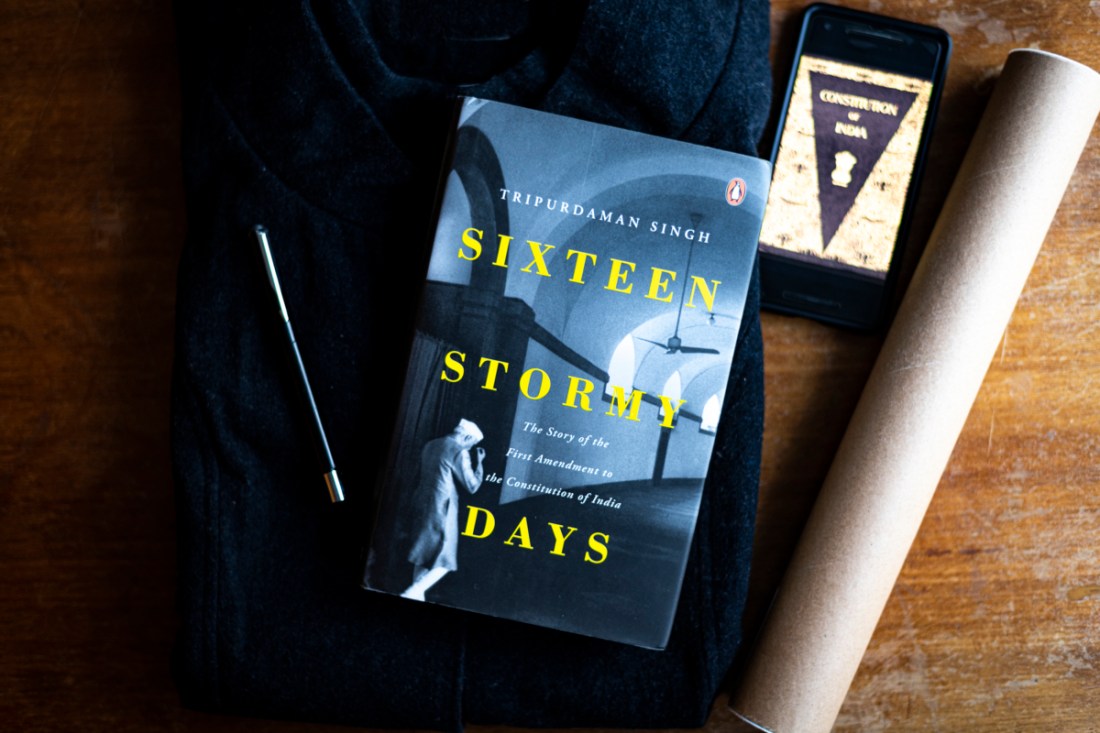
The year was 1950. A feeling of euphoria was palpable as, after three years of deliberation, the Constitution of a newly independent India had come into effect. The Nehru-led Congress was ready to hit the ground running till their grand plans came to a screeching halt in the face of an expansively liberal Constitution that stood in the way of nearly every major socio-economic plan in the Congress party’s manifesto. With a judiciary vigorously upholding civil liberties and a press fiercely resisting his attempt to control public discourse, Prime Minister Jawaharlal Nehru created the constitutional architecture for repression and coercion in the form of the First Amendment to the Constitution.

‘Four months after the Constitution’s inauguration, it was becoming increasingly clear that the champions of personal freedom had feet of clay, that beneath the surface of an ostensibly democratic leadership lurked deeply authoritarian instincts.’  writes Tripurdaman Singh as he revisits the Sixteen Stormy Days in 1951 when fundamental rights—the heart and soul of the Constitution- become lacunae in the same Constitution.

Read on to find out how fundamental rights caused grave difficulties for the government in power-


                             The right to fight indefinite detention

On 6 February 1950, 28 detainees filed a petition before the Bombay High Court challenging the validity of the Bombay Public Safety Measures Act on the basis of the new Constitution which, under Article 22, made indefinite and open-ended preventive detention, without an advisory board to approve detentions beyond a period of three months, unconstitutional. The unprepared government took the first hit.

‘The detainees were no longer subjects seeking the government’s leniency and clemency; they were free, rights-bearing citizens, newly empowered by the Constitution written in their name, with the ability to knock on the doors of the highest court of the land to demand the liberties guaranteed to them.’  

Front cover of Sixteen Stormy Days
Sixteen Stormy Days || Tripurdaman Singh
                               The furore over right to free speech

Barely three days after the twenty-eight communist detainees were freed by Bombay High Court another battle for Constitutional rights erupted in the Madras province when over 200 communist prisoners, demanding the status of political detainees rather than common criminals, went on strike. The violence that followed accelerated the downward spiral of the government and led to more strikes by other prisoners.

‘The enraged policemen retaliated by locking the 200-odd offenders in a hall with no means of escape and opening fire on them, killing twenty-two people in cold blood and injuring 107 others in a gruesome demonstration of the new republic’s lack of respect for the life and liberty of its citizens.’   

                                The blurred promise of land reform

Land reform had been a major part Congress agenda and Zamindari abolition and land redistribution promised to herald a new phase of equality for a new India. However, even before the constitution came into effect a legal battle began to erode the promise made by Congress. Suits filed by pre-eminent zamindars led the courts to examine the constitutional validity of the entire Management of Estates and Tenures Act.

‘Observing that the drastic and far-reaching restrictions placed on the power of the proprietors to deal with their property with no corresponding compensation left them practically without any rights over their own property, the court held the law to be void ab initio—both before and after the creation of the Constitution.

 The decision came as a bombshell, leaving the Bihar government and its Congress leaders shocked and rattled. The judgment reiterated the judiciary’s commitment to fundamental rights…’

                      The first legal challenge to the idea of reservation

Petitions filed against the discriminatory practice of reservation led courts to examine the issue of admissions being strictly regulated according to set communal proportions, instead of merit, which infringed upon fundamental rights. The violation of both Article 15 (1) of the Constitution of India, which protects citizens from discrimination on grounds of religion, race, caste, sex, place of birth and Article 29 (2) formed the basis of the case. Noted lawyer Alladi Krishnaswamy Aiyyar laid bare the glaring issues in the ‘Communal Government Order’ in court-

‘Aiyyar argued that the right granted by Article 29 (2) of the Constitution, which in unequivocal terms prevented any discrimination in the matter of admissions to state or state-aided institutions, was an individual right personally granted to each citizen. It could not be sidestepped by granting restricted community-based opportunities, it was not a right granted to people as members of a particular caste or religion.’

The essential foundations of the Constitution, which Sardar Patel called its ‘idealistic exuberance’, had now become a real, multifold problem for Nehru who, irked by constitutional restraints obstructing his political goals, eventually wrote to his chief ministers-

‘Recent judgments of some High Courts have made us think about our Constitution. Is it adequate in its present form to meet the situation we have to face? We must accept fully the judgments of our superior courts, but if they find that there is a lacuna in the Constitution, then we have to remedy that.’  

Thus began the story of the First Amendment to the Constitution.


Did you know these facts about Guru Nanak?

The continuing reality of the First Sikh hinges on his historical memory, and though memories return to the past, they are vital to the making of the future. The Sikh community continues to be shaped and strengthened by Guru Nanak’s memories.

We are celebrating some of them by revisiting these facts from his life that you may not have known:

His mother, Tripta, was a pious woman, and his father, Kalyan Chand, worked as an accountant for the local Muslim landlord.

~

He was married to Sulakhni, and they had two sons, Sri Chand (b. 1494) and Lakhmi Das (b. 1497).

~

In his own lifetime, he appointed a successor, who was followed by eight more, culminating with the Tenth Guru, Gobind Singh (1666–1708)

~

The First Sikh’s compositions reveal his familiarity with the idioms and practices of Hindus, Muslims, Buddhists, Yogis and Naths; importantly, they also relay his intention to reach out to a wide audience and relate closely with his diverse contemporaries.

~

His parents named him after their older daughter, Nanaki. When he grew up he went to live with his sister, Nanaki, and her husband, Jairam, in Sultanpur Lodi, to work for a Muslim employer.

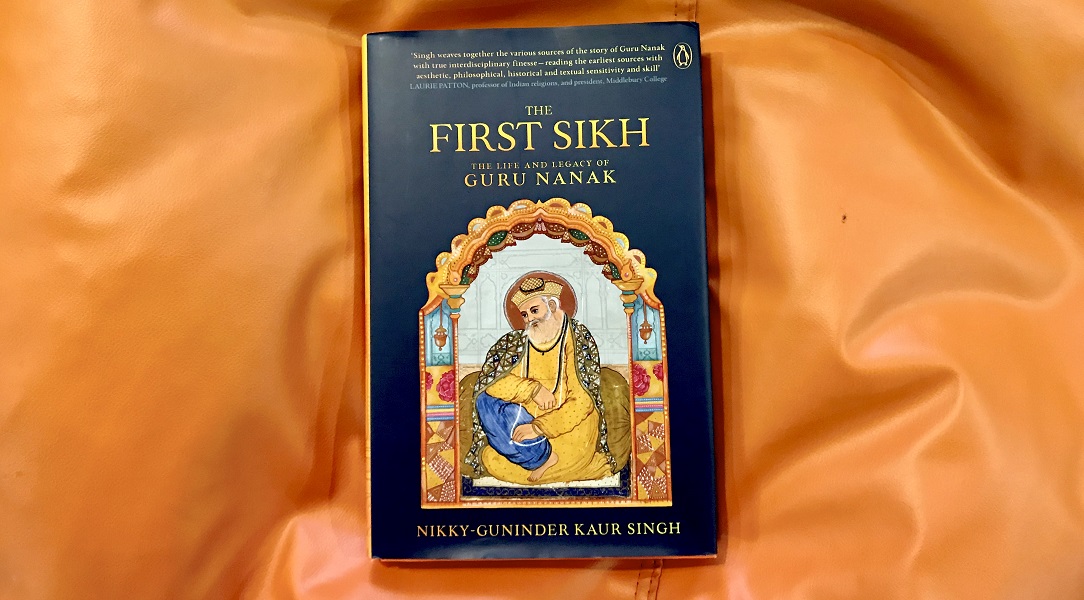
Front Cover of The First Sikh
The First Sikh || Nikky Guninder Kaur Singh

In The First Sikh, Nikky-Guninder Kaur Singh weaves together the various sources of the story of Guru Nanak with true interdisciplinary finesse—reading the earliest sources with aesthetic, philosophical, historical and textual sensitivity and skill. But important as this work is to the history of Indian spiritual traditions, do not mistake The First Sikh for a mere historical reassessment.

Happy Valentines Day from Your First Love, Books!

This Valentine’s Day, love thy neighbour, love thy friend, love this world, because love knows no end.

The day to celebrate love is here, and what better way than to combine your love for books and reading with lines of love from the best writers on the subject?

Here, we bring to you some of the best-loved quotes from some of our best-loved authors. Featuring quotes from new releases – such as The World Between Us by Sara Naveed, Calligraphies of Love by Hassan Massoudy, Dearest George by Alicia Souza, With Love as well as The Little Book of Everything by Ruskin Bond – as well as older books, we’re sure you’ll feel the magic of the day.

The World Between Us by Sara Naveed

‘I was madly, passionately and irrevocably in love with her, and I was ready to do anything to stay close to her.’

Calligraphies of Love by Hassan Massoudy

‘Love gives naught but itself and takes naught but from itself.
Love possesses not nor would
it be possessed;

For love is sufficient unto love.’

Kahlil Gibran (1883–1931) 

Dearest George by Alicia Souza

With Love: A Collection of Letters by Terribly Tiny Tales

‘You sent me a rose for every year we had been together, then asked me to marry you again. It’s annoying how you always one-up me every Valentine’s.’ – To Whoever Reads This by Shruti

The Little Book of Everything by Ruskin Bond

‘No words heal better than the silent company of a friend.’

Love Like That and Other Stories

‘That kiss changed everything for me; it brought about some sort of a chemical, biological change, and I knew I could never be the same person again. The gentle winter breeze changed me, making me forget the girl that I had been, and the kinship that I felt for Rahul, borne out of a constant companionship, had transformed in a matter of mere seconds into love.’ – Thirty Days to Live by Ira Trivedi

Can Love Happen Twice by Ravinder Singh

‘Love, like life, is so insecure. It moves in our lives and occupies its sweet space in our hearts so easily. But it never guarantees that it will stay there forever. Probably that’s why it is so precious.’

I Too Had a Love Story by Ravinder Singh

‘On my computer screen

Gazing at her picture

I found myself falling with the rising heights

Falling in Love with her

Couldn’t resist saying—I love you

The madness added

When the picture said it too’

Love Among the Bookshelves by Ruskin Bond

‘I hereby confess that I am in love with books, and bookshelves are good places to keep them, if not hide them.’

World’s Best Boyfriend by Durjoy Datta

‘That’s the cliché about love. You don’t choose it. It chooses you.’

The Boy Who Loved by Durjoy Datta

‘Unlike then, now we know time’s running out so we don’t hold back on words. We tell each other we love each other more freely, without feeling shy, we hold each other’s hand more tightly, we clutch each other with more authority, exercise more control over each other.’

The Boy with a Broken Heart by Durjoy Datta

‘”You have what no one else did in the family,” I heard Manish Chachu say. “You had the courage to love and be with the person you loved. We are all cowards but not you.”‘

Will You Still Love Me by Ravinder Singh

‘Love will happen again. You have to be open to it. In our times, love followed arranged marriages.’

Love Will Find a Way by Anurag Garg

‘There was confidence in her voice. “I love appreciation. It helps me connect to the source of a person, sometimes even their heart. Like they say, beauty lies in the eyes of the beholder, so I love to connect with the beholder’s eyes, not the beauty—the source rather than the observation.”‘

The Girl Who Knew Too Much by Vikrant Khanna

I always thought love was a game. You got to win it. But love is not a game. Love is sacrifice. Love is letting go. And above all, love is dreaming the impossible, like bringing back a dead man.’

Ninety-Seven Poems

And that’s when I learnt that we have types of love.

There’s an
I love pink, I love dogs, I love fries type of love.

An I love books, I love coffee,
I love smiles type of love.

There’s an ‘I love this song’ type of love.
There’s an ‘I’d really love to kill you’ type of love.

And then . . . there’s the different type of love.’

-a different type of love by Jenai Dalal

Half-torn Hearts by Novoneel Chakraborty

‘Rare men give the rarest kind of pain and the rarest kind of pleasure. When you love a rare man like that you are proud to be a woman in a way that is also rare.’

Wish I Could Tell You by Durjoy Datta

‘Karishma said, “I really loved him at one point. I really, really loved him. Sometimes when I look back and think how devoted I was to him, I feel surprised. We are capable of so much more love when we are younger.“‘

She Friend-Zoned My Love by Sudeep Nagarkar

‘Sometimes we expect a lot from others because we are willing to do that much for them.’

The Secrets We Kept by Sudeep Nagarkar

‘Love can make a person do things he would never have contemplated doing before. A boy who couldn’t write an essay for an English examination was writing an apology letter to woo his beloved.’

Love Knows no LOC by Arpit Vageria

‘You showed me that there’s beauty even in the darkness as long as there’s someone who truly loves me. I’m glad to have you in my life. Mere words cannot express how much I love you.’

Something I Never Told You by Shravya Bhinder

‘All I can say to you is that just because of something which happened in the past, do not stop believing in love, do not stop looking for love, do not stop loving . . .’

House of Stars by Keya Ghosh

‘My father keeps telling me that I am too young to even understand what love is. I keep telling him that Romeo was sixteen and Juliet was fourteen. I think grown- ups forget what they were like at our age. They don’t remember that they knew love.’

In My Heart by Nandana Dev Sen

‘“After I came out of your hearts,
did your hearts become small again?”

“No,” said Papa. “When you come out of someone’s heart, a part of you always stays in it, making it even bigger.”‘

Across the Line by Nayanika Mahtani

‘A dull ache throbbed in her heart. A yearning for something that should have been hers to hold and love but which she now knew was not to be. All she felt was an emptiness. A clawing, hollow emptiness. And then, everything went dark.’


Which one will you be picking up this Valentines Day?

Words Do Matter- A History of the Preamble from Conception to Completion

Universally regarded as the chief architect of the Constitution, Dr B.R. Ambedkar’s specific role as chairman of the Drafting Committee and his undeniable authorship of the Preamble became blurred in the haze of conflicting theories about how the Preamble came into being. Formally adopted on 26 January 1950, the Constitution of India has been a subject of interest to many but in Ambedkar’s Preamble, Aakash Singh Rathore establishes the presence of Dr. Ambedkar’s thoughts and beliefs in the intellectual origins of the Preamble and its most central concepts.

Rathore writes ‘Stated succinctly, the Preamble trumpets our collective aspirations as a republic; indeed, it articulates the principles that precondition the possibility for our unity as a nation.’

Read on for a peek into the history of how the Preamble acquired its meaning –


                   When securing justice implied removal of injustice

Throughout the writings and speeches of Dr. Ambedkar there has been an emphasis on the urgent implementation of policies to instate social justice even more than economic and political justice. When the Preamble was in its nascent stages, many voices raised the need to flesh out the justice clause and debated the inclusion of Nehru’s tripartite formulation of ‘Justice- social, economic and political’, which finally appeared in the Preamble as it was. However, there were no amendments suggested by Dr. Ambedkar to the justice clause even though there was an important underlying difference in his understanding of the concept-


‘In an effort to frame the Objectives Resolution, Dr Ambedkar had put forth his own ‘Proposed Preamble’, which although following Nehru in the tripartite division of social, economic and political, gave substantive meaning to the term ‘justice’ by speaking of the removal of inequalities. That is, where Nehru’s text spoke of securing justice, social, economic and political, Dr Ambedkar’s text interpreted ‘securing justice’ to mean removing social, political and economic inequalities.’


       When political liberties nudged social freedoms out of the Preamble

While debates swirled around the subject of freedom and liberty, there was a battle for terms to occupy place of pride in the Preamble. Positive freedoms such as thought, expression, belief, faith, worship which featured on Nehru’s list were pitched against other terms of value on Dr. Ambedkar’s list such as speech, religion and the freedom from want and fear. The final list that made its way into the Preamble established the distinction between fundamental rights and Directive Principles of State Policy.


The main components of economic justice, and many of social justice, were relegated to the Directive Principles as they were considered too controversial for inclusion into other binding sections of the Constitution. Similarly, the more robust, labour related freedoms were dropped from their privileged place in the Preamble. Thankfully, however, most of the terms found a place within the body of the Constitution itself, with some eventually being included as fundamental rights.’


                          When the inequality clause was flipped over

The rather concise equality clause remains unchanged from the way it was drafted and added to the Preamble. However, the clause ‘EQUALITY of status and of opportunity…’ is the briefer version of what was proposed in Nehru’s Objectives Resolution. Another turn in the history of this clause was that Dr. Ambedkar had, in fact, proposed an ‘inequality’ clause!


‘It may come as some surprise, however, that in Dr Ambedkar’s ‘Proposed Preamble’ from States and Minorities (March 1947), there was not really an ‘equality’ clause at all, at least not a positive one. Instead, there was an ‘inequality’ clause:

(iii) To remove social, political and economic inequality by providing better opportunities to the submerged classes.’


When the term ‘fraternity’ brought Gandhian ideas into the constitutional draft

One of the main pillars on which our Preamble stands upright is the ‘fraternity clause’. However, this clause did not feature in any of the preliminary drafts to the Preamble and Constitution of India. Added by Dr. Ambedkar, this clause went on to become the only universally applauded clause in the Constituent Assembly for its inclusion of an aspect of morality amongst mostly legal and constitutional principles.


‘On 6 February 1948, the clause first read: Fraternity, assuring the dignity of every individual without distinction of caste or creed.

This is purely the Ambedkarian formulation of fraternity, quite in line with the history of Dr Ambedkar’s articulation of the concept in his own writings, dating back to the 1930s… It drew upon fraternity as a resource for upholding individual dignity, which remains perpetually degraded due to the distinctions of caste.’


The terms ‘JUSTICE, LIBERTY, EQUALITY, FRATERNITY, Dignity and Nation’ contain layers of meaning and form the basis of the progressive and liberal values espoused by the Preamble.

‘It is these six words that allow us to hack into the DNA of Dr Ambedkar’s preamble, gaining access to many of its secrets.’  establishes Rathore as he takes us back into the intense debates and discussions within the Constituent Assembly and the Drafting Committee that decided the final inclusions in the Preamble.

To know more about the journey of the soul of India’s Constitution, read Ambedkar’s Preamble!


Writing a Superhero(ine) Novel

By Rajorshi Chakraborti

About two years ago, I found I wanted to write a superhero novel!

I was no doubt influenced by the wave of superhero movies and shows that has been such a dominant trend this past decade. I’m susceptible to influences of that sort: my wife points out that if a character picks up a glass of whisky in a show we’re watching, I often pause it and announce I feel like one too.


But then I encountered resistance, from within! The (mostly) realist writer inside me, who had been looking at the world in certain ways over the past six books, couldn’t so easily make the switch to all-conquering superheroes. So, with some regret, I realised my heroes wouldn’t be all-conquering, that the structures and systems they would battle would be enormously powerful, more entrenched and multifarious than any individual baddie. I also understood, without any regret, that this book – like several others of mine – would take place in locations I knew well rather than anywhere fantastical, beginning with my home city of Calcutta, and in a time period that I genuinely wanted to explore – the present political moment in India.

This is how Shakti was conceived – as a coming together of a part of me that wanted to experience for the first time the boundlessness of unleashing magic and superpowers in a story, and the part held down by gravity, by the boundaries of the plausible and the ‘real’. So, my challenge became – could the book be both? Could Shakti be read and experienced as a gripping ‘supernatural’ mystery thriller, and also work (hopefully) as a complex evocation of what it feels like for a range of different characters to be living in India now – in the India being remade at all levels by the many stunning transformations of the past few years?


Of course, I had models, the most incredible, inspiring models. From the great fables, fairy tales and myths that I most adored, to the Ramayana, the Arabian Nights and the Mahabharata, to modern works such as Midnight’s Children, Kafka’s The Metamorphosis, The Handmaid’s Tale, and One Hundred Years of Solitude, as well as sci-fi, horror, ghost stories and some of the more memorable superhero narratives, magical, non-realist elements have been used throughout literary history to shed new, unique light upon the real. In these unsurpassable works, and this was my hope as well on a far humbler scale, a few fantastic ingredients act as keys that allow the writer, and readers, access to richer, deeper, more breath-taking and soul-stirring apprehensions of the actual. How do certain extraordinary experiences feel to people in their impact and their unreality? How might any of us respond if one or other impossible-seeming thing became true tomorrow? What if you found yourself trapped in a body or a society that rendered you completely powerless (as in The Metamorphosis and The Handmaid’s Tale respectively, or perhaps under the regulations of the NRC)? What if all the forests around your town were burning and the sky was an unremitting red (which is true of several places in Victoria, Australia as I write)? What if you were granted powers that ​promised to​ realise your deepest longings, but they came at a terrible, soul-destroying price (the premise of Shakti)?


At the very start, I knew my principal protagonists would be women. It was an instinctive decision that only felt more right when I reflected upon it. First, I hadn’t written a novel before that was entirely narrated by and centred on women protagonists, which seemed like something imaginatively overdue to attempt. But also, when I thought about the most challenging circumstances into which I could plunge my would-be superheroes – to see what would remain, or emerge, of their humanity and heroism – the journeys of several women characters from different backgrounds in an Indian setting offered an incredible range of possibilities. Speaking as a male writer, I await eagerly reactions from readers to this crucial aspect of the book, to the experiences and histories of Arati, Jaya, Malti and Shivani, my principal characters, and whether they feel true and moving to you.


Before concluding, I’ll confess something I’ve felt ever since I completed Shakti, that – proud as I remain of all my other books and the things each one tries to do – it is this novel I have been building up my entire career to write. The one in which I’ve tried to do the most; the one packed with the ingredients I most love. ​The one whose title I was pleased to an embarrassing extent to notice one day had been hidden in my name all along – RAJORSHI CHAKRABORTI – as if waiting for me to arrive at it. ​


There’s always the temptation when using magic in a narrative to make wishes come true – the writer’s as much as a reader’s – of happy endings and fulfilled dreams. I love many such tales myself​; note my showing off how Shakti is ​’concealed’ in my ​​name! I wish one existed that we could all believe in about our present age. For its protagonists too, Shakti dangles precisely such a vision of the future, before reveal​ing​ itself ​to​ ​be ​the other kind of magic story – that involves wicked masters,​ binding conditions, crimes and servitude, and offers no way back. The kind that throws up moral crises no superhero cannot overcome by their powers alone. Collective crises, in the case of Shakti, which no hero can overcome alone.


Here’s what I hope for my book, beyond the wish that people will really enjoy it. That, in a very small way, it’ll offer ​a recognisable reflection of some of the crises millions of ordinary citizens in India – and in other countries around the world that are experiencing comparable political moments – are currently heroically fighting.


error: Content is protected !!