Publish with Us

Follow Penguin

Follow Penguinsters

Follow Penguin Swadesh

Unique Traditions of Indigenous Tribes in India

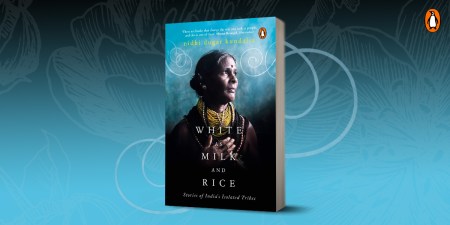
Inhabiting the remote hills and forests of India are isolated communities of people who have survived the ever increasing influence of urbanisation. The Adivasis have their own religious beliefs, traditions and rituals which are far removed from the rest of the country. White As Milk And Rice takes us away from our metropolitan cultural medley and leads us into life stories from six remarkable tribes of India where we see age old traditions manifest in the rapidly changing milieu of their fragile world.

Read on for a glimpse into the traditions of the Adivasis from the stories in White As Milk And Rice

The Halakkis of Karnataka

The Halakkis’s janapada, or folk songs, are passed on from one generation to another as part of their oral history. These folk songs are sung by the Halakki women, unaccompanied by instruments, as they go about their daily chores.  With no formal knowledge of music, the women sing in the same tune ,mostly out of habit, as an expression of joy, sadness, anxiety or contentment.

Why did they all know the chorus to these songs? Sukri wonders. They had inherited these songs orally, rather than in written form. Often, the meaning of the colloquial, ancient words escapes them, but they sing it for the sorority—songs that bind them together through their hardships, but songs Sukri associates only with happiness, with festivals, forests, family, weddings, weeding, working on paddy fields.

The Kanjars of Chambal,Rajasthan

Originally a community of valorous Rajputs, the Bhatus were pushed to the margins of society by multiple invasions in the Indian subcontinent. Of the many Bhati Rajputs that fled into the jungles, some styled themselves as rebels or baghis who operated out of the labyrinthine ravines around Chambal river and came to be known as Kanjars. The Kanjars performed a much revered ritual  before leaving for heists –

The night before, Lala had taken out a silver bowl from one of the bundles in his sikri, brought the empty bowl to his lips and kissed it, closing his eyes, holding his breath as if tasting the tenacity of his ancestors. Later, his wife had poured in kaccha khatiya and some goat blood into the bowl. Sipping on it, Lala had given an oath or a pledge of loyalty to the gang and acceptance of the consequences if a breach of trust was made.

The Kurumbas of the Nilgiris, Tamil Nadu

Descendants of the Pallava dynasty of southern India, the forest-dwelling Kurumbas are regarded as some of the oldest inhabitants of the Indian subcontinent. Scattered in the hills around the Nilgiris, the Kurumbas are believed to possess extraordinary spiritual and supernatural powers. Most Kurumbas survive by selling forest produce and the honey-gathering season is celebrated with ceremony-

Old grandmothers of the hamlet would sing songs in the village square about honey collection; interspersed would be songs on elopement with lovers, extramarital affairs, abnormal sex organs, jackfruits, cucumbers, etc. The men would have played tamabati, or the drum, to which the younger women would dance in circles, clapping their hands together below the waist.

The Marias of Bastar, Chattisgarh

In the Gond society, Ghotul is a tradition that is integral to the Marias socio-religious beliefs. The nightly ritual is announced with the beating of drums and a procession of young boys and girls heads to the ghotul which could be described as a clubhouse. Dressed to please, the young Marias sharpen their seduction skills while enjoying music, dance, games and massages. Most activities are designed to develop intimacy between the sexes.

 ‘In this soft, diffused glow of affection, boys and girls lived together in that dormitory for years; a charming mixture of learning and experimenting with lovemaking, none of it meant to be taken seriously.’

The Khasis of Shillong, Meghalaya

Being a devout Khasi entails a life of discipline and familial duty. In old-fashioned Khasi families the birth of a female child is celebrated with a feast. Learning to keep a home, performing ancestral worship and looking after family members is part of induction to life as a Khasi female.

The Khasis follow the matrilineal principle of descent, residence and inheritance. The youngest daughter inherits, children take their mother’s surname, and once married, the khadduh, or the youngest sister, and her husband live in her mother’s home.

The Konyaks of Nagaland

Straddling the Indo-Myanmar border, the fiercely independent Konyaks are believed to be followers of an indigenous animist religion. Young men in the tribe practise war skills and their training is focused on preparing them for life as  warriors. The tribe’s collection of severed enemy- heads is their pride.

 ‘A “good naomei” protected his comrades and never refused a beautiful woman’s advances. Our village must grow bigger, stronger and for that, enemies’ heads must be secured, brought to the village and fed rice beer. This would bring it prosperity and for the naomei, some virility. The more the heads, the more the reverence.’


Nidhi Dugar Kundalia takes us into the remote regions of India where tribal communities practice and preserve their traditions with reverence even as external forces make inroads into their precariously balanced existence.

To know more about the original inhabitants of India, read White As Milk And Rice!

Tête-à-Tête with Arjun Nath

What was your latest “OK Boomer” moment?

This is a tricky one because I’m nearly old enough to be considered a Boomer myself! I was attending a wedding recently and an older gentleman — within a few minutes of meeting me for the first time ever — asked why I wasn’t married yet. When I asked him why he felt I should be married, he said: Vedon mein likha hai ki yeh tumhara dharma hai. Really? So being happy with your highly personal life choices is a big no-no, but preaching a 3000-year-old sacred text at a complete stranger about the ‘right’ way to live their life is somehow fine? OK Boomer.


Any tips on bridging the generation gap with parents?

It’s a big subject and I’m nowhere near qualified enough to be handing out tips on it. But in my experience, parents are nosy as hell. I mean, aside from being the ones with the money, that’s basically their one defining trait. It comes from fear. They don’t want to control your life, they want to know that you’re safe. So throw them a bone once in a while. Let them know when you’ll be out late, and who your friends are. Share any one meal with them every day. It’s no big deal and it’ll make your life much easier.


Any personal #litAF friendship stories you still cherish?

I made a friend when I was at a drug rehab 10 years ago. For the sake of anonymity, let’s call her by the oddly specific name Kajal Sheth. Because she lives in London and I in Delhi, we’ve met only a handful of times since. And because I dread speaking on the phone (to anyone), we are sometimes not in touch for months at a stretch. This is a frustrating, often hurtful, situation for her. And yet, no matter how many calls I don’t take or texts I don’t respond to, she’s always there for me when I need her to be. Gehna’s baby, in the book, is named Sitara after Kajal’s daughter.


Who do you relate more to: Eram or Gehna?

At a circumstantial level, Eram. He had, like myself, a father with Parkinson’s. He also enjoys games of chance, and strives to be better than he is. Gehna is more of a manic pixie — overly sensitive, bipolar, spontaneous, and self-absorbed, and I am none of those things.


Rom-coms or Thrillers?

Thrillers. Rom-coms are a guilty pleasure, and they have this annoying habit of sneaking up on you and stabbing you right in the heart.


Favourite sports movie?

That’s an impossible question. How to narrow it down to just one? Sports movies, even the badly made ones, always make me cry. Probably something to do with the winning-against-all-odds trope that hits deep. In English, Seabiscuit. Closer to home, Lagaan.


What’s the story behind the title [“Not All Those Who Wander”]?

JRR Tolkien, in the Lord of the Rings trilogy, wrote a poem that starts with the couplet: All that is gold does not glitter / Not all those who wander are lost. I borrowed from it for the title of the book, partly as tribute to the literary master craftsman and partly because feeling LOST is such a common experience for teenagers.

What food are you craving right now?

Sev Puri. I am always craving sev puri — even while eating it! Indian street food is the best street food, Chaat is the best Indian street food, and sev puri is the best Indian chaat street food.


Be honest – how many drafts did it take for Not All Those Who Wander to take shape?

I’ll be honest — one draft. I take no pride in that fact. A famous author, I forget who, was asked a similar question in The Paris Review. She (or possibly he) said that there are two kinds of writers. One: those who just put words on a page willy-nilly until the first draft is done and then work out the kinks in the rewrite. Two: those who are constitutionally incapable of moving onto the next sentence until the preceding one is polished and perfect. I’m the latter sort. It takes me a long time to finish a first draft but when I’m done, it’s done.


Any procrastination tactics you employed while writing the novel?

Yes. Netflix, the Internet, and examining the contents of my belly button. Getting anything done without a deadline, a boss, and irate clients is no easy task. The only thing that works is a driving need to see where the story goes.


What’s your typing speed?

Tap…tap…taptaptaptaptaptaptap…taptap………………………………………………………………………………………………………………………………………………………………………………………………………tap.


What’s the last book you read?

George RR Martin’s A Dance with Dragons. Each year I re-read the entire series in the hope that this, finally, will be the year he finishes Book VI, The Winds of Winter. But he never does. I’ve never been more cross with a person in my whole life. He’s probably watching Netflix. Finish the damn book, GEORGE!


Favourite chat slang?

Not a huge fan of chat slang, tbh. All that “wer R u *smh *idk” business drives me up the wall. But I have of late become a rabid emoji user. My favourite is the rolling-your-eyes yellow face. So useful!


What has been your best 3 AM idea?

To cash-out of a poker game. I know you probably meant to ask what has been my best 3 AM story idea, but I’m re-interpreting the question. Cashing out of a poker game is the best idea at any time, and especially at 3 AM. Go home. Get some sleep. Do NOT try to calculate how many meals you can afford for the rest of the month.


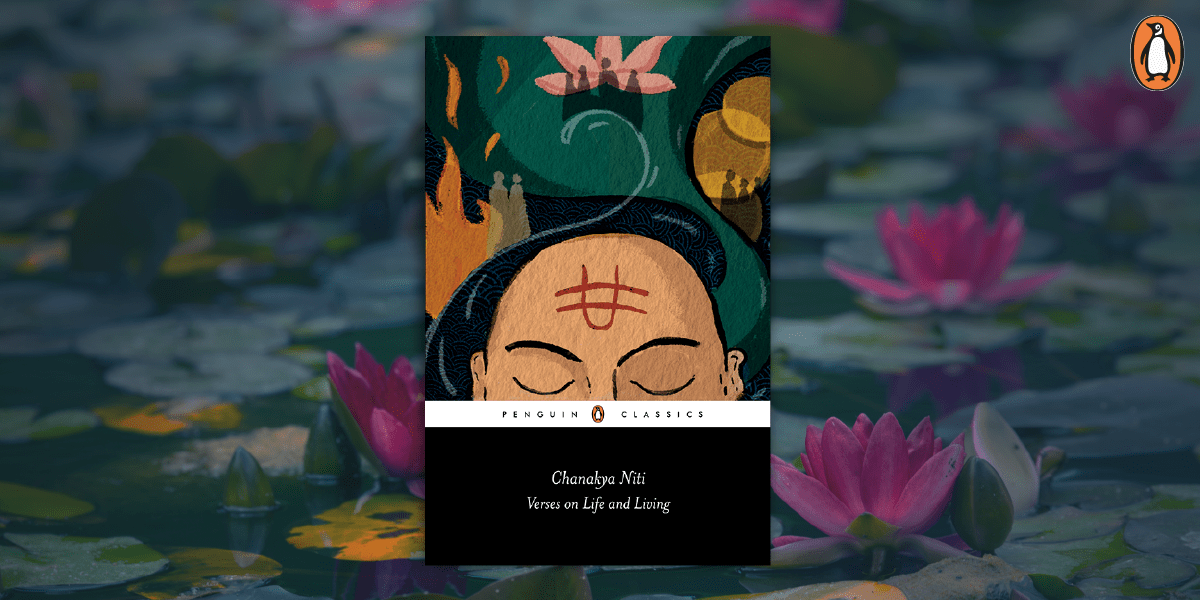
Channel the Worldly Wisdom of Chanakya

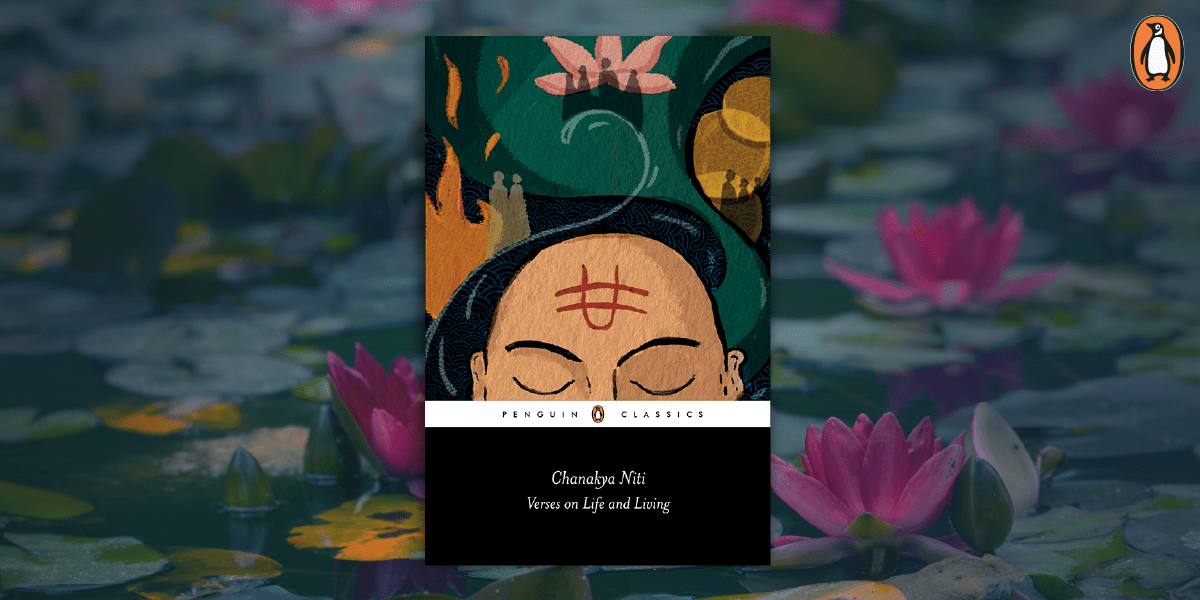
The names Kautilya and Chanakya, representing the same personage, are an integral part of history from the period when Mauryan Emperor Chandragupta reigned over India. Kautilya is well known as the author of the seminal Indian treatise on politics, administration, diplomacy and war called Arthashastra. But it is the vast collection of aphoristic sayings in Sanskrit attributed to Chanakya, and therefore called Chanakya Niti, that have remained relevant and memorable over the centuries.

What is that wisdom which has enabled Chanakya’s verses of observation and advice to keep the place of honour in the oral tradition of India even as these have been lauded across the world in various translations?

Chanakya lures us in with one of his introductory verses:

With perusal of these precepts,

the best of men will understand

the famous teachings on true duty,

 on good and bad, on what to do or not.


Read on for 7 nuggets of worldly wisdom from Chanakya Niti


  1. Chanakya warns against errors of judgement in choosing that which offers immediate succour over learning and values that may carry one through life and beyond.

One who discards the permanent,

and pursues just the transient—

the first values are by him destroyed,

the second perish in any case.

  1. The wise one who rose above his poverty and physical appearance to make himself indispensible to the ruler reminds us to see value in all things.

Nectar seek, even from poison,

gold even from excrement,

knowledge even from one base,

and the girl that is a gem, even from a family low.

  1. Experienced in the ways of the world, Chanakya exhorts man to speak in a measured way and reveal only what is necessary and conceal that which is yet incomplete.

Some work considered in the mind,

when speaking do not public make,

just think about it privately,

till it is indeed accomplished.

  1. Befriending one who has revealed his base nature can lead man down the road of misery. Being a keen observer of virtue, Chanakya reiterates the importance of keeping good company.

Wicked, and badly behaved,

he lives ill, casts evil looks—

one who makes of such a person

a friend will soon get destroyed.

  1. Pouring his enlightened self into a verse that is as simple as it is deep, Chanakya shares a core fact of existence in a way that equalizes all distinction.

Which family is free of faults,

which person has not suffered disease,

who has not faced adversity,

whose happiness is permanent?

  1. Mature and learned as he was, the great teacher Chanakya shares a lesson in moderation.

For beauty great was Sita seized,

Ravana slain for too much pride,

   for giving too much was Bali bound—

 as such, always, excess avoid.

  1. In an unforgettable verse that showcases him as the shrewd master of politics, Chanakya hints at the perils of walking the straight line in a crooked world.

Too upright, straight, one should not be,

go to the forest and there see:

straight trees cut down repeatedly,

while standing stays the crooked tree.


It is perhaps his ability to dig into the depth of human nature and tease out the knotted truths of human behaviour that has kept Chanakya alive for Modern India to engage with.

Haksar writes, ‘Overall, it is both their meaning and their style that has made the Chanakya verses so memorable for so long.’

Translated from the original Sanskrit by A.N.D. Haksar, read Chanakya Niti for more wisdom!

Get Up to Date with Nepal’s Economic Situation

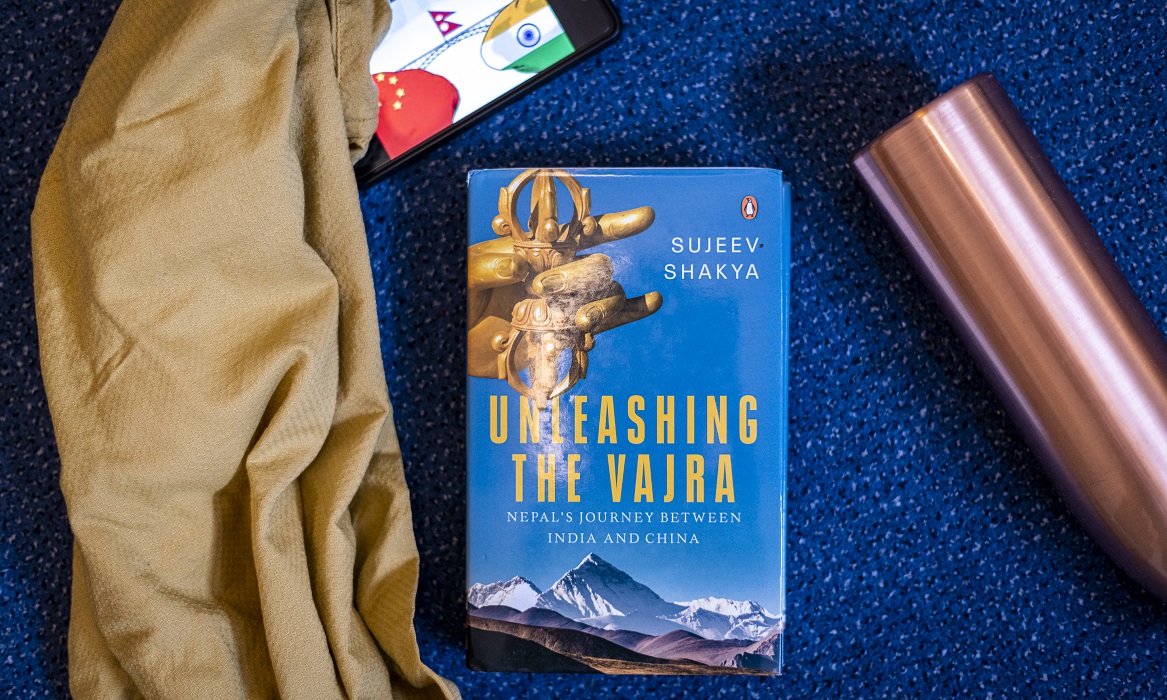
Unleashing the Vajra sets the context to understand the key issues that drive Nepal’s economy. The author examines the other key sectors—the private sector and the development sector—closely to understand the different distortions that exist in the society, from cartel behaviour to rent-seeking. The book also deals with the emergence of the global Nepali, and the dichotomy as Nepal itself continues to be inward-looking.

Below are few facts, which reflect Nepal’s economic situation currently, taking into account its economic history as well:

Influence of the caste system 

The Nepali economic system, until the abolition of the caste-system, revolved around the Hindu philosophy and way of life. So in such a society the discourse around development and the role of development partners popularly known as donors becomes very complicated.

Third World Country 

After the Second World War, Nepal, along with the least developed of the former colonies—those lacking in industrialization, capitalist institutions and democratic governance—became eligible for foreign aid as members of the ‘Third World’. The first aid package Nepal received was part of the US-led Marshall Plan.

Lack of Foreign Aid Policy

Exhibiting an attitude of dependence, Nepal did not bother to have a comprehensive foreign aid policy until 2002. The lack of a national body directing and coordinating aid was a considerable drawback—not only did it compromise the sovereignty of the nation, it often directly challenged the will and intentions of the government.

Remittances

The interest and accounting of remittances has become even more important as the total remittance crossed the billion-dollar mark in 2005. In 1993, the remittance to GDP was just 1.5 per cent, as recorded in the World Bank report. It swelled to 28.31 per cent in 2018.

The Non Resident Nepali Act

The Non-resident Nepali Act, promulgated in 2009 means that NRNs, who are not citizens of Nepal, could purchase land, acquire assets and invest in Nepal, and also have dual citizenship in the case of certain countries.

Impact on real estate

Houses are often rented from people who are close to the renting agency’s staff, while vehicles are rented from influential individuals at rates higher than the going market rate. These provide nice commissioning counters for development agency staff workers and a secondary source of income for well-placed and high-ranking officials.


Nepal has historically been at its most prosperous when it has leveraged this geographical position. Today, this opportunity emerges again-and in order to take advantage of the growth of India and China, Nepal needs to hitch its wagon to the fast-moving engines to its north and south. For a deep-dive into Nepal’s past, present and future pick your copy of the book today!

Steer Clear of Life’s Pitfalls with Master Strategist Chanakya’s Niti

In the rather complex history of our vast nation, the name Chanakya symbolizes the worldly aspects of India’s ancient thought and knowledge while being synonymous with legendary wisdom and political skill. Chanakya’s numerous sayings on life deal with subjects ranging from family and social surroundings, friends and enemies, adequacy or absence of wealth, official and personal encounters to benefits of knowledge and the inevitable end of everything. These sayings have been compiled in collections and anthologies with the entire corpus referred to as Chanakya Niti.

The aphorisms, written in straightforward language devoid of the ‘alamkara’ or embellishments which were used in traditional Sanskrit verse, belie the depth of the content which, in a way, is reflective of Chanakya’s position as despite being an indispensable ally to the ruler Chandragupta Maurya, he led a simple life.

A.N.D. Haksar writes ‘ …Chanakya has been described as a poor but learned person of unattractive appearance, but nonetheless skilled, determined and cunning, with a strong, vengeful personality.’

Read on to know what Chanakya Niti teaches us about friends and foes:

Know him to be your friend who stands next to you when you are beset by danger and difficulty

In times of sickness or bad luck,

in famines and enemy attacks,

at the ruler’s door or in the cemetery,

the friend is one who stands by you.

Be wary of the one whose tongue drips honey while his hand wields a dagger

He speaks before you sweetly,

but spoils the work behind your back:

such a friend should be discarded—

 like a poisoned pot with milk on top.

Value all that adds meaning to your life and aids your passage through this world

In foreign lands, one’s friend is learning,

at home it is the wife,

in sickness, the friend is medicine,

 in death it is the virtuous life.

Know those to be your enemies who give in to their weakness and stray from their righteous path

The father in debt is one’s enemy,

and the mother who is adulterous,

a beautiful wife is also a foe,

as is a son without education.

Guard your wealth as floundering fortunes cause friends to turn fickle

Friends leave one who has no money,

also servants, kinsfolk, even one’s wife,

but all come back when he has wealth—

that is man’s real friend on this earth.

Sharpen your intellect so it can become your shield against enemies

What can enemies do to one

who very intelligent may be?

They are like raindrops or the heat,

  on a chariot with a canopy.

Devise your strategy so you can turn a weakness into strength

A sharp foe may be neutralized

with the help of another enemy:

a thorn that gets stuck in the foot

with another thorn can extracted be.


A.N.D. Haksar, a well-known translator of Sanskrit classics, offers a roadmap into Chanakya’s Niti with selected aphorisms which continue to be recalled and quoted in many parts of India.

To learn how to manoeuvre through life, read Chanakya Niti!

Death is a once-in-a-lifetime opportunity- make it count!

‘Oh, I bless you with a long life, but anyway, you will die one day.’

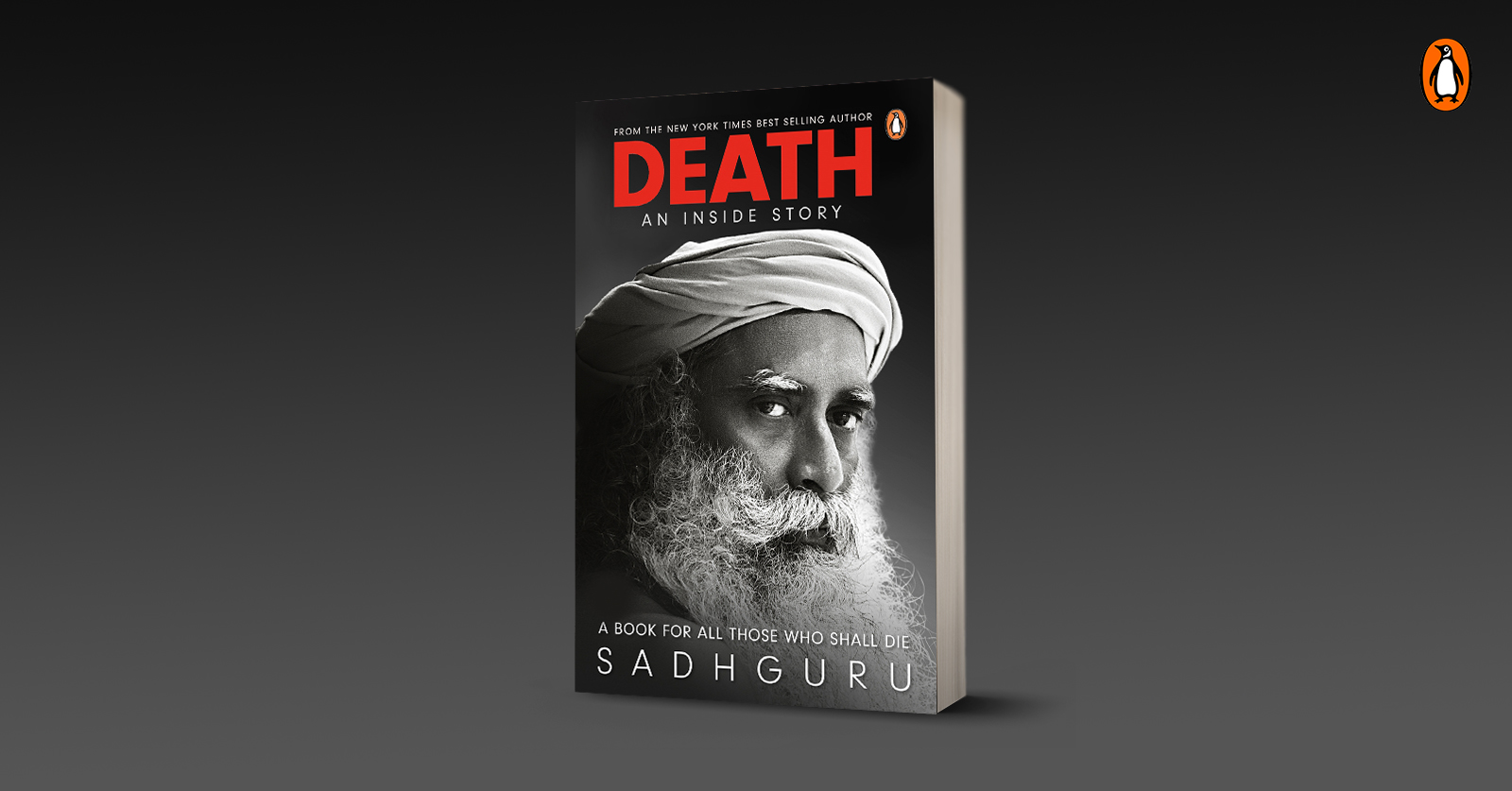
Yogi, mystic, visionary but above all a great spiritual teacher- Sadhguru bestows both life and wisdom in this one brief, all- encompassing blessing which reminds us that death is the world’s greatest equaliser and mortality is a fact of life. The knowledge of impending death can plunge even the hardiest of souls into a dark pool of fear and misery. Contrarily, in Death- An Inside Story, Sadhguru points out-

‘Calamities, especially like death and illness, are a tremendous opportunity to look beyond the limitations of what you normally understand as life.’

What if death was not the catastrophe it is made out to be but an essential aspect of life, rife with spiritual possibilities for transcendence? For the first time, someone is saying just that!

In this unique treatise-like exposition, Sadhguru expounds on the more profound aspects of death that are rarely spoken about. And in doing that he offers an expansive perspective on death which has the power to change how we understand our existence in this universe. He says-


I was born like you, I eat like you,

sleep like you and I will die like you

but the limited has not limited me

Life’s bondages have not bound me


Here are 5 ways Sadhguru can help you change your perspective on death-


  1. ‘Moving from the physical to the non-physical is the greatest moment in your life. So is it not very important that you make it happen most gracefully and wonderfully?

The darkness that clouds our thoughts at the idea of death colours our experience of it. Sadhguru nudges us gently to look away from the repetitive activities of life and approach death as a unique experience. It is that very last moment of life when we transcend the limitations of our physical body. It can be done just once and it is the last thing we will do. And so we can choose to do it with grace.


  1. ‘If you want to make use of the opportunity that death presents, you cannot approach it with fear. This is not something that you can handle all of a sudden at that moment. So it is important that on many levels we prepare for death beforehand.’

Even though we all fear death, we must prepare ourselves for a certain day when we would experience it. Shunning the thought of death or cowering behind a wall of terror is not the best way to go. Sadhguru reminds us to learn from nature. When wild animals sense their impending demise, they withdraw from food and find a place where they just sit. This preparation is a way to bring dignity to death. If you bring in death gracefully your disembodied phase will not be hellish.


  1. ‘If you develop the necessary capability, whichever way death comes, you can maintain your awareness and die well. If you have not lived a life of awareness, the possibility of you suddenly becoming aware in an extreme situation like death does not arise at all.’

In one of the most enlightening discussions on death, Sadhguru makes a startling revelation. He explains that a man who dies in a violent encounter is in no way in any kind of disadvantage compared to one who is dying of disease or old age. Any man who has lived a life of awareness can die well as there will be that moment between injury and death where that awareness brings acceptance. Some people live well only in good situations but those who live well whichever kind of situation comes to them, die well, no matter what kind of death comes to them.


  1. ‘The fear of death has come to us because we have gotten deeply identified with this body. Our identification with this body has become so strong because we have not explored other dimensions.’

Sadhguru explains that death is as natural as life is and therefore, a morbid fear of death is unnatural. It demonstrates how we have lost touch with reality. We believe that we came with this body and that thought begins to define us. The flesh we hold so dear is what we gather in the womb after our conception and it is this flesh we shed when the end comes. To be aware of this reality we must remember to differentiate between ‘This is mine.’ and ‘This is me.’


  1. The fear of death is about what you think you will lose by death. The fear of death is essentially the fear of loss.’

The fear of losing all that we know and love limits our experiences. People who have expanded their range of thought in the pursuit of awareness are convinced that they came with nothing and therefore, would lose nothing from death, so they welcome it without fear. Sadhguru encourages us to go beyond the limitations of the body with sadhana and to use our life to know that which is beyond the physical.


At a time when the world is torn asunder with disease, violence and hate, Sadhguru exhorts us to remember the fragility of life. He says, ‘Those who are constantly aware of the mortal and fragile nature of Existence do not want to miss even a single moment; they will naturally be aware. They cannot take anything for granted; they will live very purposefully. Only people who believe they are immortal can fight and fight to death.’


To confront your fears and rise above them, read Death- An Inside Story!

7 Reasons Why You Should Read ‘Soar’

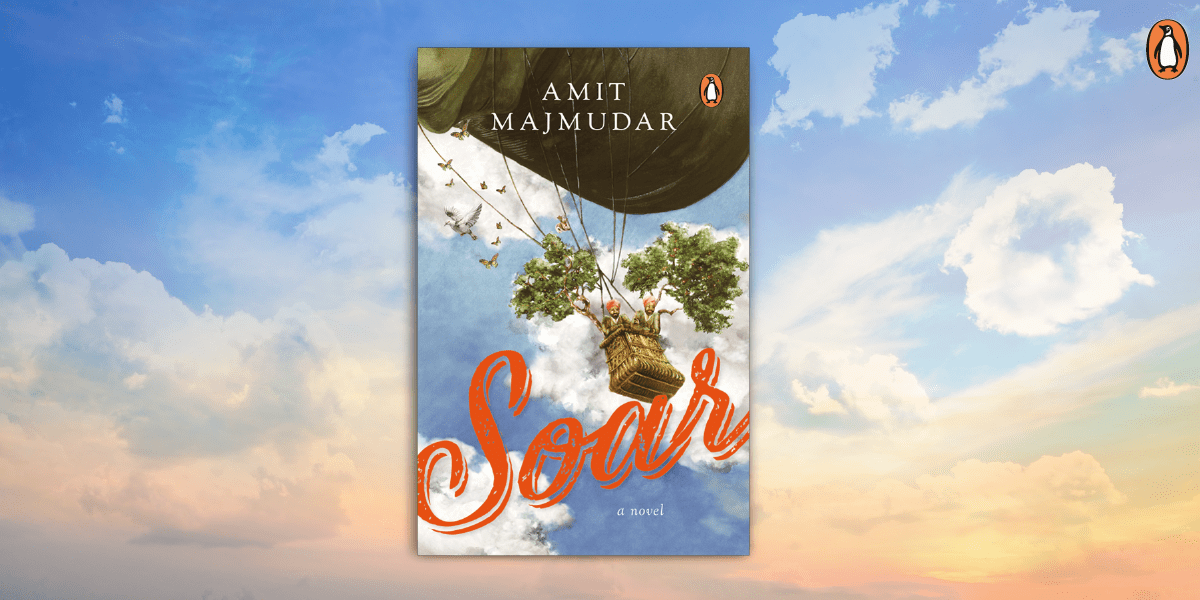
A story of eternal friendship between Bholanath and Khudabaksh, regardless of their respective religions, Amit Majmudar’s Soar is set in World War I and is the need of the hour.

We figured this might not be enough to get you to pick up the book, hence, here are 7 reasons why you should read Soar:

Friends who pray together, stay together


‘When it was time for Khudabaksh, a Mussulman, to do namaz, Bholanath’s was the second hand raised before his closed eyes. And when Bholanath, a Hindu, rattled off his Shiva stotras, Khudabaksh pressed his palm in place so his friend prayed with joined hands
.’

They spoke pigeon but confidently volunteered as translators


‘…an officer from the Royal Messenger Corps came looking for a translator. Since both of them spoke pigeon, or at least the dialect of pigeon spoken in their native Junagadh, Bholanath and Khudabaksh volunteered.’


Their conversations quite evidently provide a sense of comic relief

‘ “I remembered what the Brahmin told me before I left,” he said. “I lost all caste by crossing the sea. So I am all contamination, through and through—how can soil soil me now?” ‘


There’s a non-communal pet squirrel, Kabira, involved who consumed a balanced diet of shlokas and suras

‘Bholanath dropped the pages and grabbed the rope to steady Khudabaksh. Before the pages (drifting lazily, back and forth) could reach the basket floor, the squirrel darted under them at top speed and caught them. They vanished into her mouth like snowflakes caught on her tongue.’

 They prioritized their friendship & breakfast over discussing a potential partition

‘ “What if, some day, Hindus fall on Mussulmans, and Mussulmans fall on Hindus?” …  Once Hindus and Mussulmans are in two separate places, how will we go out on our feast-day binges? “Maybe Mussulmanistan wasn’t a wise idea after all.” “Do you know what is a good idea?” “What?” Khudabaksh smiled broadly. “Breakfast.” ‘

Through their mindless banter, they were wise enough to propage that a war never ends


‘ “A war doesn’t even end then. After the last soldier finishes screaming, the other soldier can still go on groaning. A war ends only when prime ministers write their names on a piece of paper.” “If prime ministers were as wise as children, all wars would be fought with pistols.” “And they’d be over by sunset, too. Or earlier, if someone brought out a kite.” ‘

Over and above everything, the book highlights the helplessness of the poor to the point where they had to join the military to make ends meet

The money is why they had done it, or rather, why the women in their lives had pushed them to do it, Khudabaksh’s wife and Bholanath’s mother. The nawab of Junagadh had promised fifty troops to a proposed 1st Royal Gujarati regiment. As an incentive to his subjects, he announced a bonus of one hundred rupees—more than two good-for-nothings like Bholanath and Khudabaksh would bring home all year.’


Amit Majmudar’s Soar, is a humorous read that has been able to deliver a very important message of friendship soaring above all else through Khudabaksh and Bholanath’s mindless banter. Since it is set in World War I, you will come across scenic depictions and their conversations that are bound to make you realize that war is pointless- no one wins.

Do give it a read and tell us what you think!


6 Reasons to Read Rohini Chowdhury’s Beautiful Translation

The most popular devotional text recounting the adventures of the Hindu god Ram ‘The Ramcharitmanas’, composed by the poet-saint Tulsidas in the sixteenth century during a dynamic period of religious reform, was instrumental in making the story of Ram-and his divine feats against Ravan, the demon king of Lanka-widely accessible to the common people for the first time.

Rohini Chowdhury’s exquisite translation brings Tulsidas’s magnum opus vividly to life, and her detailed introduction sheds crucial light on the poet and his work, placing them both in the wider context of Hindi literature. Here are a few reasons why you should pick a copy of Rohini’s translation of this timeless epic.

It is a clear and accurate translation of Tulsidas’s epic poem, and conveys, in the best way possible, its scale and grandeur.

~

The author has rendered each original doha and sortha into four lines in English translation.

~

Tulsi’s institution of the Ram Lila may be seen as an attempt at a degree of social integration…this inclusivity remains, by and large, a feature of the Ram Lila even today.

~

Tulsi wrote for an audience which was familiar not only with the story of Ram, but also knew the dozens of ‘backstories’ that weave in and out of the main narrative… Rohini’s translation attempts, in footnotes, endnotes and a glossary, to give as much background information as she could.

~

The Hindu gods all have more than one name, and Tulsi refers to them by these different names, Rohini has kept the names as Tulsi has used them; but to make it easier to the modern-day reader she has added the various names with their meanings under the glossary entry for the relevant god or goddess.

~

Rohini’s translation attempts to give the reader some idea, at least visually, of the structure of the poem. Therefore, the dohas/sorthas are indented; chhands, stutis and shlokas are in italics; and the chaupais form the main body of the text.

~

This translation is a tribute to Tulsidas’ epic poem and brings to the reader the richness and depth of storytelling Tulsi das brought into it.

Meet These Chatty Dead Folks!

How would you feel if you woke up waiting in an endless room one day?

Chats with the Dead gets us to meet Malinda Albert Kabalana (or Maali Almeida), who sets out to reach ‘The Light’ – a place where the afterlife comes to an end and the next life on Earth begins. As he glides his way through the afterlife, he meets some dead folks – who are way chattier than one would expect the dead to be. They have some very engaging stories to tell.

We are revisiting some of our favourite afterlife folks below!


Dead Lawyer

The Dead Lawyer is witnessing a protest by 113 victims of the 1987 Pettah Bomb blast demanding justice. She wonders:

‘If suicide bombers knew they end up in the same waiting room with all their victims, […] They may think twice.’

*


Dead Lovers

Adjusting to the mysterious afterlife, Maali notices the Dead Lovers by the elevator at Galle Face Court. The woman wears a chiffon dress and the man is in a banian and Burberry shorts. The couple tells Maali that,

‘We went together in 1948. […] He was Sinhala, I was Muslim. I think you know the rest of the story.’

When Maali inquires why haven’t they gone for The Light, the Dead Lovers respond with:

‘They say The Light is bigger than heaven or hell […] Easy to get lost. If you think you have found a soulmate, go to them and hold tight.’

*

Dead Mother

Maali comes across his Dead Mother who admits,

‘There is so much to see. I listen to music in different homes. I like to play with the children. I like watching married couples fight.’

When Maali asks her about The Light, she replies:

‘I was abused throughout my marriage. I was forced to give up a baby, my firstborn. If I step into The Light, will they reward me for suffering? Or punish me for being a bad mother?’

*

Dead Dog

A few adventures later, Maali ends up in an exhibition titled ‘Law of the Jungle. Photography by MA.’ The gallery is filled with the finest shots taken by Maali. While looking at the photographs, he’s interrupted by his first visitor – the Dead Dog. And the Dead Dog can talk!

‘If I am reborn human, I will commit cot death.’

*

Dead Leopard

Towards the end of his journey to The Light, Maali is visited by the Dead Leopard who is fascinated by human intelligence. The Dead Leopard admits:

‘I tried to survive without killing. Lasted a month. What to do? I am a savage beast. Only humans can practice compassion properly. Only humans can live without being cruel. I want some of that.’

Maali disagrees and tells the Dead Leopard that humans are most savage of all living beings. The Dead Leopard still wishes to be a human in his next life and asks the way to The Light. He says,

‘Leopards can’t invent lightbulbs. I’ll take my chances.’


Shehan Karunatilaka, bestselling author of Chinaman, is back with a darkly comedic tale of voices from beyond!

A Window To the Calcutta We Love from ‘Sarojini’s Mother’

Sarojini-Saz-Campbell comes to India to search for her biological mother. Adopted and taken to England at an early age, she has a degree from Cambridge and a mathematician’s brain adept in solving puzzles. Handicapped by a missing shoebox that held her birth papers and the death of her English mother, she has few leads to carry out her mission and scant knowledge of Calcutta, her birthplace.

In Sarojini’s Mother, Kunal Basu takes us to Calcutta and offers a window into the city we love. Below are some of the highlights of Calcutta from her book.


Rex; the tourist trap

“Like most tourist traps that flaunted names like Copacabana or Casino Royale, its daytime business thrived on fruit juice and Western food easy on the stomach. Like chilli-less omelette and salads washed thoroughly in bottled water. At night on Thursdays, which was a dry day in the city, the owner would slip you a joint or a bottle of rum.”

The Calcutta Tram

“My foreign friends love the tram. It reminds them of the nineteenth century. Astride the rickety chairs smelling of stale urine, they can imagine black-and-white photos of horses chugging along the rolling stock, sahibs in top hats and half-naked natives.The Calcutta trams the oldest in Asia, I tell them, older than Shanghai’s. Like an old man, it totters along, unable to keep up with cyclists and walkers. In return for slowness, it offers a welcome respite from the crowds.”

Afternoons, on the street outside the Rex

“With the morning gone, now afternoon prayers had shops shutting down and the crowd had thinned. Siesta time in force, fewer rickshaws plied the streets and travelling salesmen had set down their wares to take a well-deserved rest. The trees were the ones to rise to the occasion, cooling everyone with fanning boughs that ferried the smell of rice and assorted meals cooked by the eateries to feed the hungry. With the fight over leftovers won, dogs had settled down under shadows, gawked at with envy by a caucus of crows.”

Similar afternoons in the slum

“The slum was quiet in the afternoon, the dwellers dozing after the morning’s hard work. Street dogs, normally defensive of territory, gave us free passage. The sound of radio drama came from the huts, and the occasional whimper of a hungry child.”

A lovers’ haunt; The Planetarium

“‘Why is this place so popular with lovers?’ Saz whispered as we settled down. ‘Because it’s dark here and they can do whatever they like.’ I thought I should tell her the truth. ‘Without a place of their own, it’s hard for couples to be intimate. Here nobody minds them. The guards turn a blind eye to the hanky-panky.’”

The Museum that makes you feel like you are in London

“You feel you are in London, not Calcutta, as soon as you walk into the National Museum. Once called the Imperial Museum, it was the nation’s oldest and largest. Villagers, who thronged there on holidays, called it Jaadughar—the House of Enchantments. I took Saz to the museum to bring up a delicate matter.”

The Special Exhibit of the Egyptian Mummy at the Museum

“‘Why bring a mummy over from Egypt to Calcutta?’ Saz sounded genuinely surprised. The reason wasn’t clear to me, but it could’ve had something to do with the Brith moving their possessions around like a rich man moves a vase from the hallway to the parlour. Because of its eerie reputation, the mummy room was the quietest spot in the museum, perfect to raise the delicate matter with Saz.”

Calcutta Racecourse; Close cousin of England’s Ascot.

“The grandstand, which was the gallery for commoners, was already at bursting point, tea stalls busy and toilets frantic. Dignitaries arrived amidst great commotion at the members’ stand, flaunting vintage cars with shining brass fittings…Our Calcutta racecourse was a close cousin of England’s Ascot, but the super jackpot days were rough, Suleiman had told me. The smell of money attracted quite a lot of riff-raff, and the cash counters needed extra protection.”

A Hotel in a neighbourhood that fits even guidebook’s description

“Squeezed between a barber’s salon and a travel agent, [the Peace Hotel] was easy to miss in a neighbourhood that fitted every guidebook’s description of Calcutta, being the perfect location for noise and dust, impossible crowds and bullish traffic. Set against the imposing backdrop of the National Museum, it flaunted jam-packed alleys dealing in trinkets by day and drugs by night.”

——————————————————————————————————————————

Read Sarojini’s Mother for more of Calcutta and find out if the verdict of science will settle the puzzle of motherhood for Sarojini.

error: Content is protected !!