Publish with Us

Follow Penguin

Follow Penguinsters

Follow Penguin Swadesh

Who are the Janamsakhis?

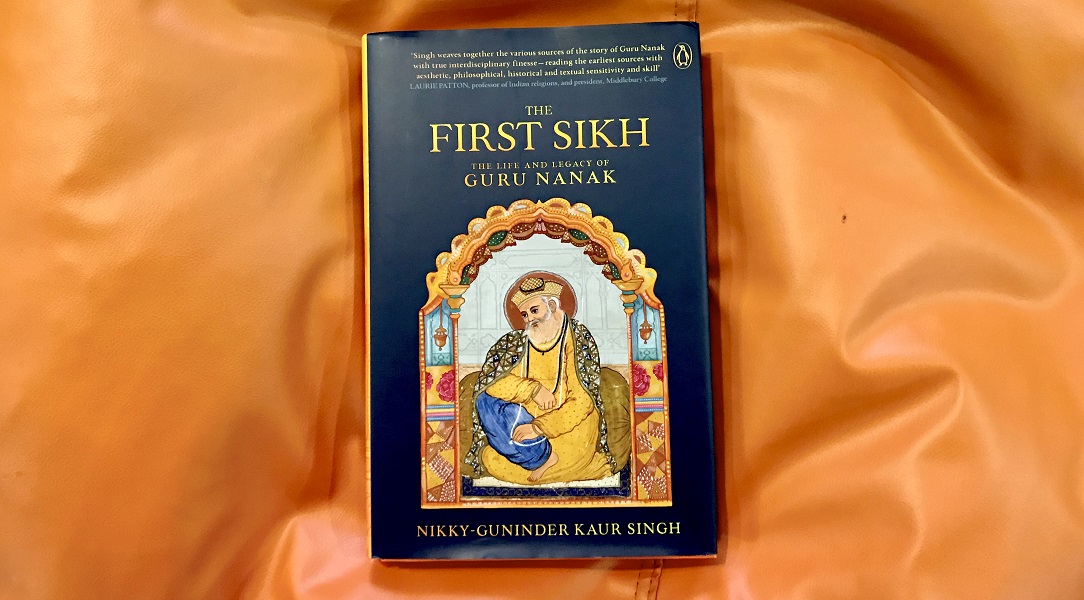
History is telling and re-telling of stories by one generation to the next in the form of illustrations, written texts and verbal narrations. Janamsakhis are the birth (janam) and life stories (sakhis) of First Sikh – Guru Nanak. While the earliest of the existing Janamsakhi – Bala, (dated 1658) is a compilation of 29 illustrations, the B-40 Janamsakhi (dated 1733) is considered to be the most significant for its nuanced and detailed depiction through 56 illustrations.

The narratives in all Janamsakhis are linearly portrayed from birth till death but vary across time, region, and artist. Through detailed study of Janamsakhis, the author of The First Sikh attempts to convey the central meaning of these stories, that is that, “the First Sikh reaching out to people across religions, cultures, professions and societal hegemonies, and embracing them in his profound spirituality”.

Here are the most important lessons that we gain to learn five and a half centuries hence.

*
Greatness lies in our deeds

The portrayal of the First Sikh in the form of an ordinary human being, without a halo, validates his temporal and historical presence in our world. The Janamsakhis present a natural progression of the First Guru as a baby boy to a bearded middle-aged man into a grey bearded old man.

“Rather than any exaggeration of external features and spacing, what spectacularly emerges is the Guru’s inner power and spirituality. In the early illustrations he is not depicted with even a halo. Yet, the First Sikh’s simple pose, whether standing, sitting or lying down, and his gentle gestures addressing people from various strata of society and personal orientation spell out his greatness.”

*
Imbibing a pluralist approach

Various illustrations in Janamsakhis indicate the First Guru’s acceptance of beliefs and practices of different culture, both in his gestures and physical appearance.

“The illustrator of the early B-40 Janamsakhi accomplishes it by utilizing disparate motifs of the tilak and the seli: Guru Nanak almost always has a vertical red tilak mark on his forehead, just as he has a woollen cord, seli, slung across his left shoulder coming down to his right waist.” … “Evidently, the bright red line between the Guru’s dark eyes or the dark semicircle sinuously clinging his yellow robe go beyond art for art’s sake attractiveness: the tilak is saturated with the holiness of the Vaishnava Hindus; the seli with the devotion of the Muslim Sufis.”

“In almost all of his adult images Guru Nanak in the B-40 has in his hand a simple circle of beads on a string, ending in a tassel…” “Thought to have originated in Hindu practice, the ‘rosary’ is a widespread and enduring article used for meditation and prayer by Buddhists, Muslims and Christians alike.”

*
Rejecting divisive cultural and political beliefs

The Janamsakhis elucidate the First Guru’s firm belief in equality and dismantling cultural practices that divide the community on the basis of caste, religion, and profession. A sharp and effective rendition of one those incidents is when young Nanak refuses to “participate in the upanyana ceremony, reserved for upper-caste Brahmin, Kshatriya and Vaishya boys” and questions the priest who proceeds towards him with a sacred thread (janaeu). He retorts,

“‘Such a thread,’ continues Nanak, ‘will neither snap nor soil, neither get burnt nor lost.’ His biography and verse are thus blended together by the Janamsakhi authors to illustrate his rejection of an exclusive rite of passage antithetical to the natural growth of boys from all backgrounds alike. A young Nanak interrupts a smooth ceremony in front of a large gathering in his father’s house so that his contemporaries would envision a different type of ‘thread’, a different ritual, a whole different ideal than the rebirth of upper-caste Hindu boys into the patriarchal world of knowledge. That everyone treat one another equally every day is the subtext.”

*
Living a truthful life

The Janamsakhis vividly and repeatedly portray the quintessential message of taking responsibility of our actions and performing our worldly duties in the society.

“Coming across some Pandits offering waters to the rising sun, the Guru begins to sprinkle palmfuls of water in the westward direction. When asked about his contradictory act, he simply responds that he is watering his fields down the road. This tiny story raises a loaded question: Is taking care of crops and other honest work any less than feeding distant dead ancestors? He draws the attention of his contemporaries to matters of living a collective responsible moral life. Whatever the setting, he conveys the futility of rituals and highlights truthful living midst family and society on a daily basis.”

*
Engaging in community service

After his spiritual transition, when Guru Nanak reappears in river Bein after 3 days of immersion, he travels far and wide with Bhai Bala and Bhai Mardana to disseminate the importance of community service.

“As he reincorporates into society, ‘antistructure’ becomes the mode of existence. The earliest Sikh community that developed with Guru Nanak at Kartarpur fits in with the cultural anthropologist Victor Turner’s description of ‘antistructure’ because the neat horizontal divisions and vertical hierarchies of society were broken down.” … “The three important socio-religious institutions of Sikhism: seva (voluntary service), langar (community meal) and sangat (congregation) evolve in which men and women formerly from different castes, classes and religions take equal part.”

*
Nurturing our body and participating in the natural, social and cosmic process

The Janamsakhis depict the extensive dialogue between Guru Nanak and the various ascetics. It comprehensively displays the conflict between Nanak’s belief in accepting and nurturing our body and the Naths’ ideals of “smearing ash on their bodies as a symbol of their renunciation”. Artist Alam presents an incident in B-40 Janamsakhi where,

“We see Guru Nanak climbing up a mountain where a conclave of Nath yogis is sitting (#20 in the B-40). The artist paints them with their backs against the world. Some have smeared. Their shaved heads, lengthened earlobes and long earrings (kan-phat, ‘ear split’) signal their rigorous hatha yoga practices and ascetic ideals.” … “Guru Nanak’s pictures with the various ascetic groups resonate with scriptural verses: rather than ‘smear the bodies with ashes, renounce clothes and go naked—tani bhasam lagai bastar chodhi tani naganu bhaia’ (GGS: 1127), we must ‘wear the outfit of divine honour and never go naked—painana rakhi pati parmesur phir nage nahi thivana’ (GGS: 1019).”


Pick your copy of The First Sikh to learn how the Janamsakhis gather meaningful incidences that are essential for the unity and continuity of the Sikh community.

Heartbreaking Lines from Layla and Tanya’s Story

A richly atmospheric, deeply claustrophobic story with a stunning denouement, of two women confronting the everyday realities of their city and country, So All is Peace by Vandana Singhal provides an unflinching insight into love, lust, fear, grief, and the decisions we make, through a cast of sharply drawn characters brought together by an unspoken wrong.

Here are some powerful but heartbreaking lines that stayed with us long after we had turned the last page:

‘…it made me have an epiphany that that is how my life was going to be; its beauty forever marred by ache, its moments of ecstasy shadowed by agony. I was wrong of course. My moments of happiness reached a point and snapped off. Just like that. Never presaged and never returned.’

*

‘That’s Tanya. She was always beautiful, always a better person, always by my side to make me stronger… But when I begin speaking again, the words stumble and lose direction and fall out as droplets of water. Ok. Perhaps I am not ready to speak yet. In time, but not quite just yet. Or perhaps never.’

*

‘All I feel is pain. Unmitigated, unending pain. Like a loud horrible keeeeeeeee of a faulty microphone inside my head. And cold. I am always so cold that I seem to be discovering new parts of my body that are developing little icicles inside them.’

*

‘His restlessness despite his otherwise structured life as a successful award-winning journalist probably comes from the complete lack of emotional support that he received from his parents throughout his life and although it feels a little juvenile and unfair as a thirty-seven year old man to still attribute his lack of emotional depth to his parents, what is undeniable is that they could be from another planet for how much he understood them or how much they have ever understood him.’

*

‘It is difficult to feel unique when there is another person who looks exactly like you, mirroring your every expression, replicating your every action, even if the replicator is as good looking as Layla often is.’

*

‘The spaces for women have been systematically, methodically truncated. Not by any dictate. That would be too obvious…No, there no boards saying ‘Women not Allowed’. But open a map of Delhi and there they are. The many, many places where no woman can go and the many, many more places where no woman can go after sundown. A temporal and areal-shrinking of their boundaries.’

Full of memorable characters and poignant scenes So All is Peace is a crucial commentary on the emotional realities and heartbreaks faced by women in today’s cities.

The Evolution of the Hotel Industry in India

India stands unmatched with its rich culture and tradition in hospitality, which millions of international and local travelers have experienced over the years.  Today’s travelers know what they want and are seekers of authentic, immersive experiences. Hotels are at the center of it all.

The Indian hotel industry, however, has shifted enormously over the years. Read on to know more about its tumultuous history and evolution.

Relying on Relatives

During the 1970s and 1980s, the Indian traveler did not have a decent room to stay in. The only hotels were either poky places with poor hygiene or grand five-stars run by the likes of the Taj or the Oberoi, which were unaffordable. So, there was nowhere decent and affordable for the large middle-class of this country. As a result, most travelers opted to stay with families and friends or in state-run tourist homes.

*


What’s a Brand?

Till the early 1990s, the structure of India’s hotel industry was fairly straightforward. There was an owner, there was a manager and the brand. But in the majority of cases, the hotel owner simply ran the hotel without a brand.

*


Post- Liberalisation

The Indian economy opened up in 1991, leading to high economic growth in the country all through the 1990s and the noughties. Breaking out of the shackles of socialism, India introduced policies that were market and services-oriented and this led to a boom of seeing good midmarket hotels that offered some of the frills of the five stars.

*


Retaining the Throne

The badshahs of Indian hospitality, the Taj, the ITC and the Oberoi—often called the Big Three—have dominated the landscape for decades, with the over-100-year-old Taj having a significant market share in the branded-hotel segment. The Taj and Oberoi are iconic global brands, but their names no longer command the premium and undying loyalty they once did. Instead, post-2000, each of these players has had to work hard to stay relevant in a world where the customer has plenty of choice and is fickle.

*


The Global Goliaths

They came, they saw, they failed to conquer—that was in the 1960s, and then again in the 1970s and 1980s. But if anything, international chains have been persistent in their attempts to occupy the Indian market. And eventually, most of them managed to crack the code. The entry of the international chains has been a really important turning point for Indian hospitality because while the complexity of the Indian market may have challenged them initially, once they got their bearings right, they brought in some important ingredients—discipline, efficiency, transparency and strong processes—to the sector.

*


Lease, not Own

Today, there are five-and-a-half hotel models—OLMFD (Owned, Leased, Managed, Franchised or Distributed). Many hotels are actually not owned but leased for ninety-nine years or less. When they enter into these leases, people assume the lease will be extended for eternity but that’s not the case as seen with the Taj Mahal Hotel on Mansingh Road in New Delhi.

*


The New Brigade

Entrepreneurs with no background in hospitality have jumped into the fray as they think there is a gap that the veteran players have not addressed. These include Ritesh Agarwal of OYO, Gaurav Jain of Aamod, Aditi Balbir of V Resorts, and Prashant Aroor of Intellistay. This new breed of hoteliers has the chutzpah and confidence to venture into this turf and the good news is that they have backing from venture capital and private equity players.

*


The Digital Disrupters

Online travel agents such as Make My Trip, Clear Trip, Yatra and Booking.com that blazed into the digital landscape completely disrupted the hotel industry. They changed the way people chose hotels and booked and created a level playing field for unknown hotels that had no distribution muscle. Thanks to them, a small single-hotel company can now get 100 per cent occupancy while hotel chains with deep distribution networks may struggle to fill up rooms.


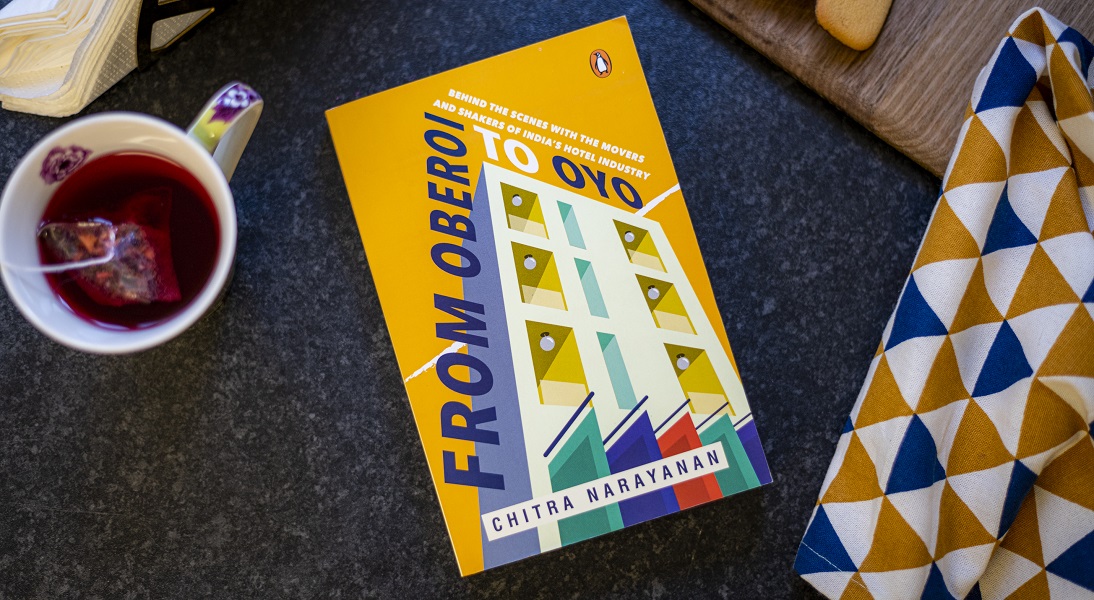
  • In From Oberoi to Oyo, Chitra Narayanan chronicles the origins of India’s hospitality industry and its transformation, and even crystal-gazes into what the future holds. Grab your copy of the book today to know more!

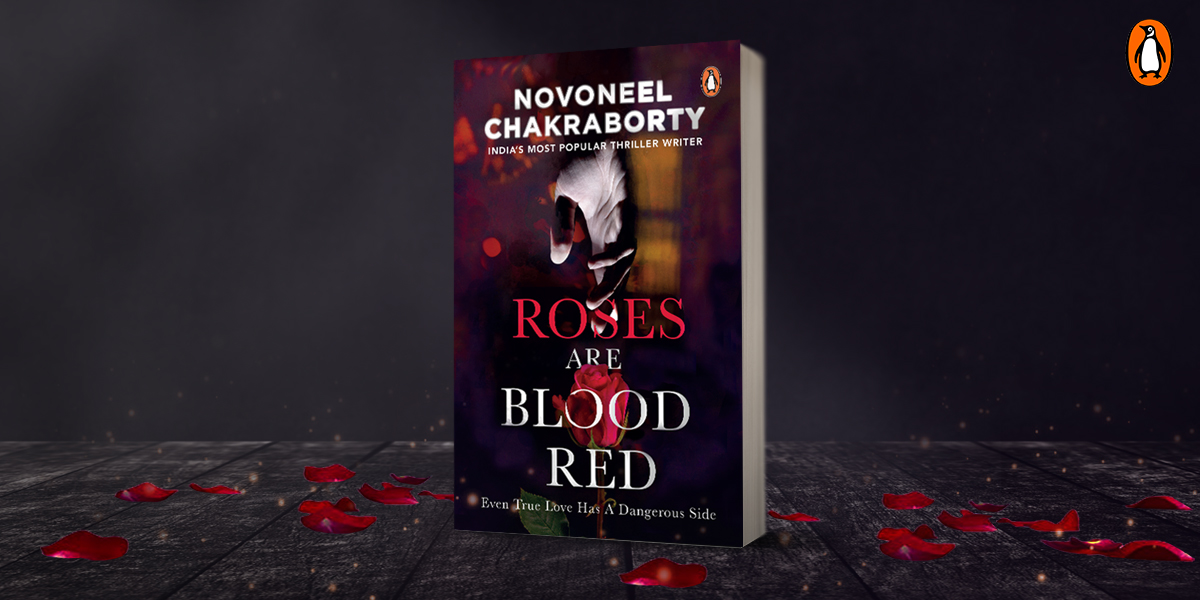
Novoneel Chakraborty on his Inspiration,Characters & More

Novoneel Chakraborty is the bestselling author of fourteen bestselling thriller novels and one short story collection titled Cheaters. Known for his twists, dark plots and strong female protagonists, Novoneel Chakraborty is also called the Sidney Sheldon of India by his readers.

His latest book, Roses Are Blood Red is sure to excite his fans! Here Novoneel answers some of your burning questions:

What inspired you to write Roses Are Blood Red?

The story stemmed out from a very personal experience of mine which pushed me to dissect the concept of ‘love’ in my own manner.

How or Why did you choose these characters?

Unlike my other books, this time I wanted to focus on people from smaller cities and towns. Hence, I chose characters whose overall emotional make-up had the vibe of such a place. I find some earthiness in them and hence are always close to me as a creator.

What could be an alternate title for your book?

I have no idea. I don’t think I ever had an alternate title for this book[Roses Are Blood Red]. Maybe the readers who have read the book may answer this.

What are three reasons to read this book?
  1. It’s a page turner.
  2. It talks about a kind of love you may have not read before.
  3. It has an endearing heart and love story at its centre.
What are you working on next?

It’s too early to talk about it but it’s a one of a kind thriller.

Did the climax of the story change or did it remain the same from the start?

The climax never changed. In fact, this was one of those books whose climax occurred to me before the story. So I chose to stick to it.


Author of the hugely successful Forever series, Novoneel Chakraborty creates a spellbinding story of love, longing and loss in his latest book Roses Are Blood Red.

To find out whether destiny triumphs over a dangerous obsession, read Roses Are Blood Red!

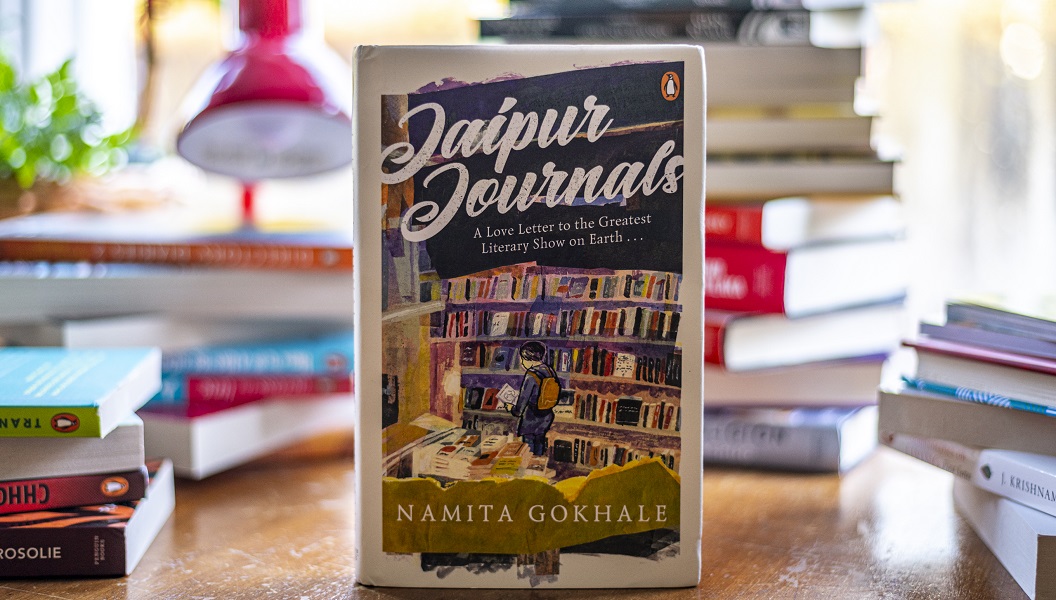
Meet the Characters from ‘Jaipur Journals’

Jaipur Journals is a unique, metafictional novel by Namita Gokhale, one of the founder-directors of Jaipur Literature Festival. Set against the backdrop of the festival itself, the book brings together a rich cast of characters and their even richer stories.

We introduce you to some of the characters whose lives intersect and collide within these pages.


Zoya Mankotia

A writer who identifies herself as pan-sexual and non-binary, Zoya Mankotia is an icon of queer literature and representation. Her most recent novel, The Quilt, created waves, occasioning both outrage and intense appreciation. Her voice holds a mélange of accents.

In the world of Jaipur Journals, we meet her in a panel, where she introduces herself:

‘I am by discipline a novelist […] as passionate about crossover genres as I am about gender fluidity. I am nonbinary and pan-sexual, and I am committed equally to my writing, my raison d’être, and my wife, my monogamous partner. We can be who we are, write as we like. Sexuality, as a narrative, is a freeflowing river.’

Raju Srivastava

Born in Bijnor, Raju Srivastava is a burglar who is passionate about poetry. He is the son of an unsuccessful tailor-master. He arrives in Jaipur to fulfil two purposes: meeting India’s greatest poet, Janab Javed Akhtar, and covering the cost of the trip through some well-executed burglaries.

Raju nurses a deep-seated desire to become a poet, and is an avid reader of poets like Nirala and Dushyant Kumar, Muktibodh and Firaq Gorakhpuri and Faiz Ahmad Faiz. He writes prolifically, and his preferred form of poetry is the ghazal. His hero and idol in the poetry world, however, is Javed Akhtar.

Anura

Anura is short for Anuradha, a twelve-year-old student en route to Jaipur on a school trip. She is a prodigy, having been selected for a Young Adult panel in the Jaipur Literature Festival. She has self-published a dystopian novel.

As is evident from her preference for the shortened form of her name, she is quite taciturn, and likes to save her words for important things.

Anna Wilde

Anna Wilde is a writer from America, who primarily publishes books on meditation and reflection. Anna is quite renowned for her association with the Beat Poets, especially Allen Ginsberg. She is attending the Jaipur Literature Festival to talk about her books The Inner Eye, which was very successful, and The Third Way, which has recently been reissued.

Anna teaches theology at the University of Colorado. She calls herself a Hindu, by ‘dharma and karma’, and has spent many years in India before returning to America.

Rudrani Rana

Rudrani Rana is a woman in her seventies, who sees herself as a ‘failed novelist’. She always carries around a handbag that contains her unpublished magnum opus; which she refers to as UNSUBMITTED.  The novel is actually titled The Face by the Window and is a dedicated to Alice Walker and her book, The Colour Purple.

Rudrani is an alumna of Waverly Girls School in Dehradun. Alongside her unpublished semi-fictional novel, she also writes anonymous letters as a means to express herself.

She is a huge fan of Oprah Winfrey, which is what had drawn her to the Jaipur Literature Festival for the first time, back in 2012. She is often fatigued and lonely, and feels like an outsider within the literature circuit at the festival.

Gayatri Smyth Gandhy

Gayatri Smyth Gandhy is fifty-two, single, divorced and is a self-proclaimed ‘citizen of the world’. She is a  historian and cultural anthropologist with an American green card.  She is also an aspiring novelist.

She is stuck in her novel, struggling to understand herself what it is about. She lived in Jaipur as an adolescent when her father Brig. Gandhy was stationed there. She considers herself a Jaipurite in many respects, and makes annual trips to the city during the festival. She often feels divided between her Indian and Western selves.


Namita Gokhale’s Jaipur Journals  brings together these characters within the setting of the Jaipur Literature Festival, and their stories are as vibrant and diverse as the largest free literary festival in the world!

There’s More to Life than Cricket

Jai is fourteen and dreams of owning a café in Delhi. Inaya is fifteen and dreams of playing cricket for Pakistan.

In 2008, their worlds collide. What unfolds is a story that started way back in 1947 – with the drawing of a line.

Inaya lives with her father in Rawalpindi. Her cricket ambitions don’t always go down well with her family.

Find a glimpse of her story in the excerpt below. 

*

Rawalpindi, Pakistan

A loud crash announced Inaya’s misjudged attempt at hitting a sixer in the tape-ball cricket tournament taking place in the street adjoining Haider Mansion. It startled Mudassar, the Haiders’ elderly help, almost causing him to drop the figurine of the ballerina that he was dusting. A tennis ball covered in insulation tape had shot through the open French windows in the drawing room, bouncing off a painting over the mantelpiece and knocking over a crystal photo frame. The ball deftly made its way through the shards of glass that now covered the floor to finally disappear beneath the large leather sofa. Moments later, a breathless fifteen-year-old burst into the room.

‘Sorry, sorry, Mudassar Chacha,’ Inaya panted, pushing away the mop of unruly curls from her eyes. Impenitently, she crouched down and retrieved the ball. ‘Please blame this on Zain. Please!’

There was the sound of footsteps and Inaya spun around.

‘What are we blaming on Zain, Inaya?’ asked her father, Irfan, as he strode in, followed at a more sedate pace by her grandparents. Inaya gulped and looked at them sheepishly. The trio surveyed the scene in silence. Inaya clutched the ball behind her back, hoping they wouldn’t notice the smashed photo frame.

Inaya’s grandmother straightened the painting that had tilted leftwards with the ball’s impact. ‘If you don’t like your grandfather’s paintings, you should just tell him so, Inaya. As I do,’ said Humaira. ‘Why go to all the trouble of taking potshots at them through windows?’

‘But I do like Daada’s paintings—that was an accident,’ muttered Inaya.

Inaya’s father retrieved the photograph that was on the floor. He carefully removed the fragments of glass and propped the photograph against the ballerina on the mantelpiece.

‘Inaya, look at your great-grandmother—she was . . . the epitome of grace. She would be appalled by all this,’ he said, gesturing at the destruction that lay before him. ‘There’s more to life than cricket, you know.’

­­

In Across the Line, Nayanika Mahtani presents a powerful story of borders and beliefs, shaped by the games people play. Lauded by Vidya Balan as a story that “lingers long after the last page is turned”, Jai and Inaya’s story brings together unlikely worlds across time and borders.

The importance of gratitude in everyday life

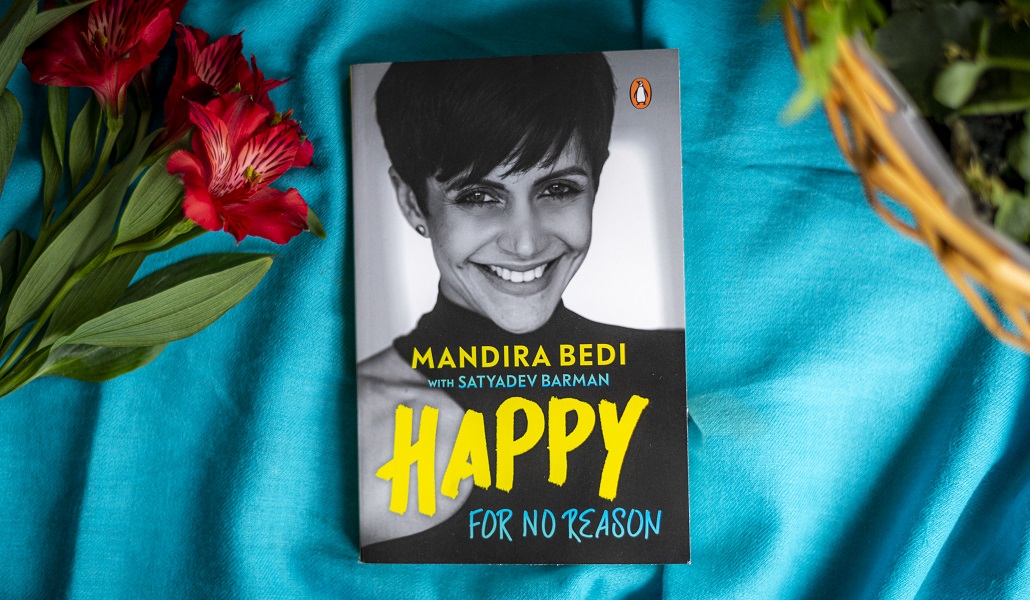
Making a conscious effort to count one’s blessings adds to physical and psychological well-being of a person. Mandira Bedi’s book Happy for No Reason affirms the beneficial effects of expressing appreciation for what one has. She illustrates how gratitude can be achieved by minimizing the possibility of mulling over negative emotions of resentment, envy, and depression.

Why is gratitude an important facet of being happy for no reason? Here’s Mandira Bedi telling you why!


Gratitude is the key

“Wherever there is gratitude, there is no room for unhappiness. The two are mutually exclusive.”

*

Biggest learning: being grateful, not entitled

“When we receive something on a regular basis, we start taking it for granted. Even if it is a gift, eventually we come to expect it. Going by natural human tendency, if we receive a gift long enough, we come to view it almost as entitlement.”

*

The real transformation

“I can see now that it wasn’t really an epiphany, but I know it had everything to do with gratitude, that it came about when I started feeling and experiencing sincere thankfulness at the very core of my being. For all the small things. For my home, my body, my son, my husband, my family, for the love I receive, the car I drive, the muscles that show, the food I eat, the good single malt . . . for every single thing.”

*

The truth of life

“Gratitude is a state of being, literally! When we simply are, with all-encompassing awareness, we are opening up to appreciate the wonderment of life and nature and existence itself.”

*

Gratitude is the state of being

“One can never run out of gratitude. I can look back at every single moment of my life—the good, the bad, the ugly—and give thanks. Because all of that has brought me to this very moment. Right here, right now, writing these words. I feel great right now. And if this moment feels aligned and full and content, everything is perfect.”


If you’ve resonated with any of these, then pick up your copy of Happy for No Reason to walk further into Mandira Bedi’s journey of eternal gratitude (and of course, happiness!).

5 Beautiful Lines from ‘The Yogini’

The Yogini is a thought provoking and sensual novel by acclaimed Bengali writer Sangeeta Bandyopadhyay. It is the story of a modern woman, Homi who encounters a mysterious yogi on the street. The yogi, visible only to her, begins to follow her everywhere. Convinced that the yogi is a manifestation of fate, Homi embarks on a series of increasingly desperate attempts to prove that her life is ruled by her own free will.

Set in Kolkata, this tale is both unique and unsettling, philosophical and beautiful!

Here are some lines that mesmerised us:


‘…niyati also refers to a state in which the individual is under the illusion of being bound to a particular time and space, when in fact they are not. So, in its earthly manifestation for human beings, niyoti/ niyati is a constraining factor for the individual but still not real, only illusory.’

*

‘”fate isn’t just the big things. It isn’t only the sorrows and suffering, the pain and torture, the grief and accidents. Fate is every single footstep. When you wake up and yawn or stretch, that’s fate too. It’s predetermined. If you set off on a journey, and make it safely to the end, then that’s what was predestined.”’

*

‘A game, nothing but a game. Everyone in this immense land of India was engrossed in a game with their gods.‘

*

‘“All our childhoods are actually forms of madness”’ Lalit said. “There’s just one thing you have to remember. We’ve built a relationship, a beautiful relationship, which has an existence in reality, where there is room for reason and evidence. As long as you can hold on to that reality, that reason, everything will be fine, you’ll see.”’

*

‘“Only birth and death are inevitable – everything else is in your hands. Circumstances play a huge role in our lives, but we ourselves can make or break those circumstances. What you’re forgetting is that we’re human beings, we have no choice but to believe in the power of work.”’


Grab your copy of The Yogini to read more such incredible words!

What is the Human Impact of War?

Vanni is a powerfully illustrated story of war, survival and trauma suffered by countless Tamil civilians in Sri Lanka. A story that is crucial to unbury and remember, the graphic novel format makes it accessible to an even wider range of audience.

Here are some heartrending ways in which Vanni makes a statement on the brutal human impact of war and trauma:

Becoming an Orphan

On 22nd January 2009, as Selvi and Prem get caught in a gunfire that sfinds them witnessing the brutal death of a mother with an infant boy. They take the boy with them, who has now lost his mother and become an orphan.

Mass Casualties

Loss of life on a large scale is always a by-product of war. “In August 2006, Sri Lankan Army (SLA) shelling killed 61 children.”

Displacement

War uproots homes. Not only do the people have their security and safety taken away from them, they are also displaced from their own homes. “Entire villages and communities took to the road with all they could carry. On the main arteries between jungle, fields, and lagoons, they came together in vast crowds – a mass of weary, desperate people in search of a safe haven.”

Fear

“With shells flashing across the lagoon and falling like rain behind them, Indran and his family had fled their home in Pooneryn. […] Indran had dug their bunker on the first day. […]When he heard explosions, they would scramble for the bunker. In seconds, they would be under the ground. Sometimes they stayed there for hours, listening for gunfire or shelling.”

Safety

A sentiment that consumes civilians during war is a perpetual desperation for safety.

“On 21st January 2009, a ‘safe zone’ was announced. The government declared that an area of 35 Square kilometres – within territory still nominally held by the Tigers – would not be shelled.

Desperate civilians hurried to follow the government’s instructions.”

Emotional Numbing

Consumed and driven by a basic need for day-to-day survival, war also concurrently breeds an arguable numbness to sights of pain and suffering, since they become so commonplace. “The weeks dragged past. It became unremarkable to see people shuffling past with horrible injuries. Despite their fears, the Ramachandrans were often bored. In the same dense jungle around them, the battle pounded on.”

Forced Labour

Forced recruitment is also commonplace within ranks of the army, since war needs as many people as possible to fight on the battlefields. Civilians fall victim to this in large numbers. “Some Tiger soldiers used coercion, threats (and some were even alleged to have shot at civilians) to prevent [the civilians’ leaving the conflict zone and fleeing to the Army. Civilians were also used for forced labour, building military defences and children were forced into the dwindling LTTE ranks.”

Estrangement

Towards the end of the narrative, we see the main character, Antoni, forced to leave behind his wife Rajini and daughter Theepa in Chennai, India – in an arrangement he hoped was temporary – to go to London with the help of a people-smuggler in an effort to seek permanent asylum for his family. Familial separation is a painful reality in the aftermath of war, driven by a desperation to find a new home and start life afresh. “We [Rajini, Theepa and I] talked, we cried a lot. I didn’t want to leave them ever again but –

What choice did we have?

There was no other way.”


These instances give just a glimpse into the life-long horrors and human impact of war through the ordeal of The Ramachandrans in the 2009 war in Sri Lanka. Join them in an emotionally impactful narrative in Vanni.

What do Dhirubhai Ambani, Steve Jobs, Jeff Bezos, Bill Gates and Sunil Mittal have in common?

What do you think Dhirubhai Ambani, Steve Jobs, Jeff Bezos, Bill Gates and Sunil Mittal have in common? They started out just like you and me—with nothing but empty wallets and strong ambition. It is indeed time for a far more unique, practical and effective approach to success. There has got to be a better way, and there certainly is.

As the first and only opportunity consultant in the world, author Richard M. Rothman presents to us a very simple and accessible answer to this question.

The answer of course is: opportunity. As  How, you ask? We take a look!


Opportunity Is The Universal Starting Point

It’s the essential factor in all business and career success. Opportunities are the seeds from which all wealth grows. Regardless of where you are in life, whether you’re a businessperson, an employee earning wages, an aspiring entrepreneur, a student or a professional, your ability to capture the best opportunities will be the most crucial factor that determines your success.

*
Capture, Build And Take

All five of the aforementioned successful men captured a series of breakthrough opportunities. They built upon opportunities that others had ignored. They took opportunities that even industry insiders ignored. And, they capitalized on them.

*
Hard Work, Diligence And Persistence Are Insufficient

Hard work, diligence, persistence and a positive attitude are all very useful if you want to succeed. They’re essential, and business gurus are right to talk about them and explain how to develop them. But they’re insufficient. None of them will deliver success unless you also harness the power of opportunity.

*
Opportunities Need A Process

To leverage the immense value of opportunities, you can’t wait for opportunities to knock at your door. What if opportunity never knocks? What if you don’t hear it knocking? And what if the opportunity that does turn up isn’t right for you . . . but you take it anyway because you waited so long? Opportunity is far too important to leave to chance. It needs a process.

*
The wisdom of crowds rarely applies to opportunities

The wisdom of crowds rarely applies to opportunities any more than it does to investing. Buying a stock after everyone else has bought it rarely makes you money. The same logic applies to opportunities. You need to find opportunities yourself and turn them into the foundation of your success.


Many times, we overlook an opportunity sitting right before our eyes, whilst we’re on a quest for something bigger- it could be uncertain, but still, bigger! The Power of Opportunity helps you recognize that opportunity sitting right before you which could eventually end up becoming your ladder to success. We hope you like reading the book as much as we did! Don’t forget to tell us what you think.


error: Content is protected !!