Publish with Us

Follow Penguin

Follow Penguinsters

Follow Penguin Swadesh

Meet Ikhlaq from Intizar Husain’s ‘The Chronicle’

The decade spanning 1978 to 1988 saw the terrifying rule of Zia-ul-Haq in Pakistan. In a Lahor under Martial Law, we meet Ikhlaq and his family, who are struggling to build a home in the city.

Set in a troubled time and leadership, The Chronicle by the celebrated Pakistani author Intizar Husain – translated by Matt Reeck – tells the epic story of a family and its illustrious homes. The reader is introduced to a dramatic and darkly comedic chain of events through Ikhlaq’s voice.

We are here to introduce you to our main character! Read on to meet Ikhlaq:

A Storyteller

When he finds the manuscript of the tazkirah, his family chronicle, he decides to continue writing the story as the last chapter has become illegible. Ikhlaq is both a reader and storyteller, and we are introduced to his world entirely through his voice.

‘I thought that, in the end, I was of the same blood as my ancestors, so why wouldn’t I want to continue writing the chronicle? Why hadn’t I seen any such desire in my father? All he had done was to make sure that the chronicle had not been destroyed.’

*

A Family Man

His desire to continue the chronicle in an effort to safeguard and maintain his family’s history also presents Ikhlaq as a family man. His excitement and engagement with the family chronicle also reaffirms this point.

‘…I began to find some pleasure in deciphering [the chronicle]. I began to feel that I should see what the pages contained so as to figure out what it was about my family that in every generation someone took it upon himself to sit down with an inkpot and start writing. With such concentration they had written down the histories of the family—as though they were leaving for their children a valuable piece of property.’

*

Nostalgic for What his City Used to be

With Haq’s rule, Ikhlaq’s life and environment have become very dynamic, and we often find him reminiscing about his home and how much the world around him has changed.

‘I got the feeling that the world had really changed, and the city was something altogether new. I thought about how the city used to be. I remembered a fall afternoon. There was a carpet of yellow leaves on the street […]How many city streets from the Red House to Mall Road did I imagine in this way, each one covered with fall leaves?’

*

Restless for Home

His search for a house, struggles with the rising rent, and eventual attempts to build a house for him and his family tell us of his inherent desire to find a home, stability and peace in his ever-changing life.

‘Maybe I felt restless because I didn’t have a house.

Maybe if I had a place to lay my head and rest my feet, I would find some peace of mind. So building a house, which would soon drive me crazy, became something to think about. I started to share the worries of my co-workers. These men had been going back and forth to their housing development’s offices.’

*

Desire for Freedom

Ikhlaq’s life and feelings act as microcosms for the larger desire of freedom in Haq’s Pakistan. His act of building a new house and neighbourhood give Ikhlaq a powerful insight into both the desire and the fear of freedom.

‘Finally I understood why people were fleeing the alleys for the new neighbourhoods. I had thought they were doing so just to show off their new wealth. But I realized that they were tired of alleys. after hiding from the land and the sky, they grew weary of the tight alleyways and the tall houses. It’s so difficult. The one doesn’t let you breathe, but neither does the other. People are scared of the open land and the endless sky. But they also grow tired of the claustrophobia of alley after alley and house after house. So after having left behind the fear of the open land, we grew of tight quarters.’


Step into the lanes of Lahore and Ikhlaq’s ever-changing life in The Chronicle!

What We Learn About Our Times from ‘Shakti’

Structured as a fantastical, women-driven superhero story, Shakti by Rajorshi Chakraborti also gives us a scathing social commentary on present-day concerns of feminism, sexism, communal violence and mental health.

Through the characters of Jaya, Arati, and Shivani – three women in Calcutta who are gifted with magical powers – Chakraborti takes us on a journey across a nation that is in the throes of profound transformation. In the process, we get to glimpse a hitherto unseen country that is made up of the secrets, longings, wounds and strengths of many human hearts.

What facets of our times do we get to see in Shakti? We list some below.

Deep-rooted Communal Divides

Throughout the story, we see attempts to instigate communal violence and hatred between Hindus and Muslims; something that relates directly to our current socio-political sphere outside of the book.

An instance in the book illustrates the resulting violence due to such manipulation, where the narrator Jaya receives a Times of India link from Shivani:

“It turned out to be just a Times of India story, four paragraphs long. There had been violence in a village in Bardhaman district, about a hundred kilometres from Calcutta, where Hindus and Muslims had clashed because a Hindu boy had been found dead a few days earlier, and the belief grew that he had been punished for his sister’s friendship with a Muslim boy. Three Muslims and another Hindu had since died, including, especially sadly, two brothers of the boy, who was now in hiding. An evening curfew had been imposed on the village, and extra police had been sent from other parts of West Bengal to all likely flashpoints in the district. The final paragraph was a quote from a local opposition leader, alleging another example of a state-wide breakdown of law and order.”

School, Learning and Education

One of the narrative arcs for Jaya – the narrator of the story – also highlights some ingrained attitudes towards the syllabus and the content being taught in schools, which is expected to be restrictive and ‘nationalistic’. Jaya tells us how and why Mrs Dhanuka, the Principal of the school she teaches History in, disapproves of Jaya’s teaching:

“The [only] surprise Dhanuka threw in near the end of her tirade [was the additional charge of being ‘anti-national’! Apparently, she’d been planning to haul me in ‘even before this morning’, because of ‘the number of unhappy parents’ who’d emailed her about some of the content of our class conversations, in which, instead of ‘sticking to the syllabus’, I supposedly spent a great deal of time ‘undermining our present Prime Minister’ and also — again, to use Dhanuka’s words — ‘devaluing the heritage of our Hindu myths and epics by repeatedly insisting they couldn’t be seen as history or science’.”

Class Divides

In a fleeting but poignant incident in the book, the responses of some of Jaya’s colleagues also expose the larger lack of empathy and compassion towards the economically less privileged classes in the urban milieu.

“My shock must have been obvious, because two colleagues sitting across from me at the table asked almost immediately if something had happened. I couldn’t speak at school about how I knew Shivani (only my three closest friends knew about the column, and none of them was in the staff room), so I merely said my domestic help has been going through a wrenching personal tragedy and I can’t do anything useful. And that dissipated my questioners’ compassion even more quickly than I’d anticipated. Oh well, if it’s only something to do with your help . . .”

Struggles of the Youth

Jaya works as a columnist for an agony column to help teenagers and young adults struggling with mental health or familial issues.  The narrator provides glimpses of some of her correspondences which bring to light some deep-rooted struggles that this demographic faces in the real world. Rising mental health concerns amongst the youth in India have become an important topic of discussion in the country today; and Jaya’s columns and her correspondents reflect this.

A crucial incident that speaks to this concern is Shivani’s refusal to share her emotional trauma with her family, which is why she is compelled to turn to Jaya’s column. As a fifteen-year-old, Shivani’s situation, on a microcosmic level, speaks to the pervasiveness of the lack of familial support-system and understanding that teenagers and young people face today.

Shivani writes in one of her responses to Jaya:

‘So all your concern is only from a distance. As long as you can reply by email, you care.

If you knew my parents, if you spent just half an hour in our house, you would take back the suggestion of sharing my secret with them. And without parents behind me, show me the psychiatrist who would take me seriously.’

The Power of Social Media

Social media has become a norm in the society today – especially when it comes to rebellion and mobilization. A particularly memorable incident in the story gives us a glimpse into the power of social media in (re)defining public opinion.

In one instance, Jaya – who had been writing her agony column under a male pseudonym, ‘Chandra Sir’, in an attempt to hide her true identity – is outed by a vengeful mother on Twitter. Jaya appeals to her readers to give her honest feedback about how her column impacted them. The response is overwhelmingly positive, which helps her bring back her column under her real name.

‘‘@ChandraSir is always worth reading. When the advice is good, who cares about the name? #KeepChandraSir

Police Forces

Another fleeting but poignant moment in the story makes the reader reflect on police procedures and processes. Arati – Jaya’s friend and domestic help who is also gifted with powers – attempts to confront her husband Ramesh for selling their nine-month-old daughter sixteen years ago. When he is arrested, the ease with which his bail is arranged and granted shocks Jaya:

‘‘Even greater than my amazement that a man who’d confessed to selling his own nine-month-old child could be eligible for bail was that of learning how quickly the money had been arranged.”


As a feminist superhero(ine) story we all needed, Shaktiis a highly relevant and compelling narrative for our times.

Quotes that make Becky’s Christmas struggles true to life!

Yes – we all know Becky had a nice and warm Christmas party, but the struggle was real.

In many ways Christmas, the New Year, and the post-festive blues teach us a lot about life. Our favourite shopaholic, Rebecca Bloomwood (now Brandon) has always taught us a lot about mundanities of life, about human desires and about relationships. And she is no different in her latest adventure – where she brings her shopaholic-ness to family and festivities!

We are combating our Monday Blues today by recalling some of her characteristically frenzied but oddly wise words!

Shopping is hard work. Period.

~
Regifting is an important skill to learn.

~
Life is not a Christmas movie (sigh). But there is no harm in trying to make it one!

~
If you didn’t shop in last-minute panic, are you even a shopaholic?

~
Families rarely on agree on anything.

~
Rewards are hard to earn.


What lessons have Becky, Luke and the gang taught you?

Front Cover of Christmas Shopaholic
Christmas Shopaholic || Sophie Kinsella

As for us, we are quite glad that we can get to revisit Christmas Shopaholic even if the festive season is over (there, we said it. It’s real now).


Eternal and Exquisite- Ghalib and his Glorious Verse

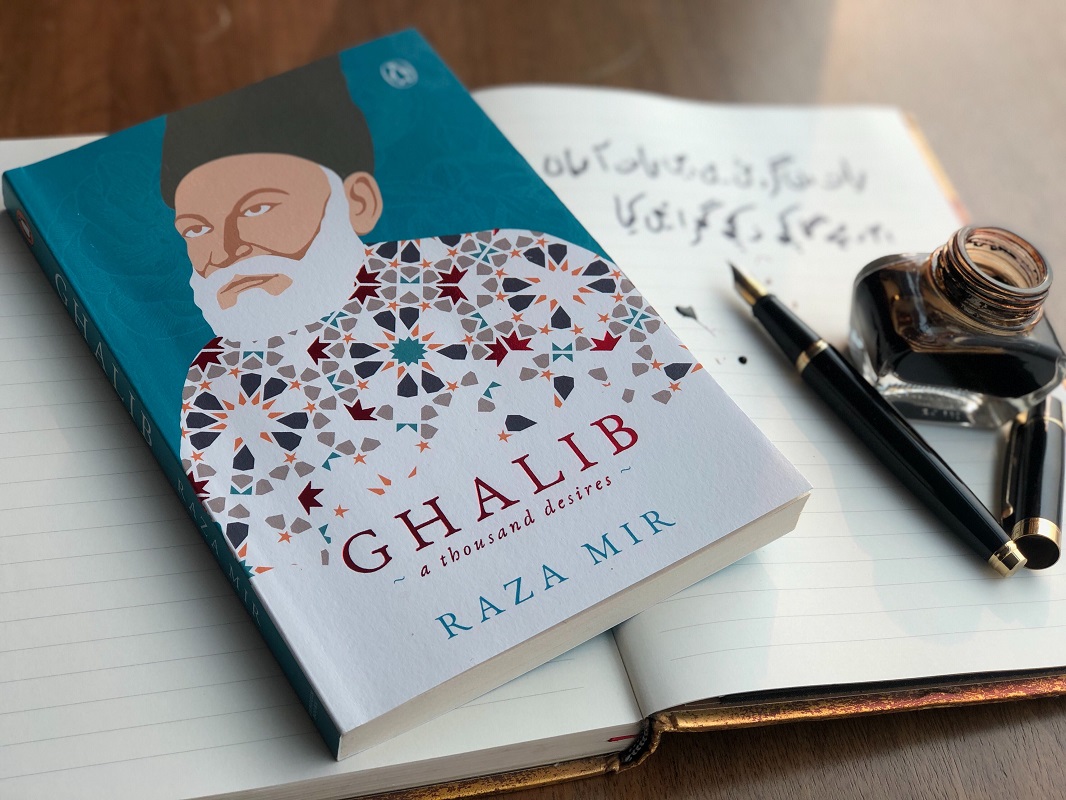
Fluid like the poetry the world loves him for, the inimitable Mirza Ghalib was anchored only in his craft. Reflecting the truth of his time, his words stand testimony to the turbulent world he inhabited. Despite the chaos of his own life, Ghalib’s poetry burnt bright like a flame within him. His verses were rich with philosophical insights and spiritualism even as they were a comment on the politics of the time.

‘Ghalib could write the most playful verses about mangoes and the most opaque poems about the nature of existence. Arguably, the Ghalib era symbolized the peak of Urdu sukhan, its literary expression.’ writes Raza Mir in his perceptive account of Ghalib’s life and work in Ghalib- A Thousand Desires.

Here are 7 verses by Ghalib that have stood the test of time

On Poetry

Revered all over for his exceptional turn of phrase, Mirza Ghalib was seen as the epitome of poetic skill. In a verse that may seem boastful, he takes the adulation rained on him and makes it his own-

HaiN aur bhi duniya meiN sukhanwar bahut achhe

Kahte haiN ke Ghalib ka hai andaaz-e bayaaN aur

There are many others in the world, poets truly great

  Rumour has it though, Ghalib’s turn of phrase stands separate!

On Longing

Shadowed by adversity his whole life, Ghalib struggled to live the way he felt a poet of his stature deserved. In this verse he wonders about desires that remain unfulfilled-

HazaaroN khwaahisheN aisi ke har khwaahish pe dam nikle,

Bahut nikle mere armaan, lekin phir bhi kam nikle

Thousands of desires, and each one worth dying for

Many of my desires were fulfilled, but yet, I feel unrequited

On Love

As was customary at the time, Ghalib wrote on romance and the cruelty of forced separation from a lover-

Ji dhoondta hai phir vahi fursat ke raat din

Baithe raheN tasavvur-e jaanaaN kiye hue

The mind harks back to those days and nights of leisure

That were spent lost in thoughts of my love, with pleasure

On Illusion

Critical of the illusion of afterlife created by ritual-driven religion, Ghalib- a self-proclaimed Sufi- questions the idea of paradise-

Hum ko maaloom hai jannat ki haqeeqat lekin

Dil ke khush rakhne ko Ghalib ye khayaal achchha hai

We know the reality of paradise

Ghalib, let’s admit, these are comforting lies

On God

The tumultuous period of history that Ghalib lived through raised existential questions. Bemoaning the limits of human agency when faced with the unrelenting boundaries of fate, he wrote-

Na tha kuch to khuda tha kuch na hota to khuda hota

Duboya mujh ko hone ne na hota maiN to kya hota

When there was nothing, there was god

Had there been nothing, god would be

The act of being was my undoing

What would have been had there been no me?

On the Beloved

At a grand mushaira in a haveli, among illustrious poets of the time, Ghalib presented a ghazal on the beauty of a beloved’s curl of hair which brought him euphoric praise from the gathering

Aah ko chaahiye ek umr asar hone tak

Kaun jeeta hai teri zulf ke sar hone tak

For a sigh to be heard sometimes takes an age

Who survives while you with your stray curls engage?

On Preachers

Ghalib eagerly embraced the idea of equality and unity that could bring all religions on an equal footing. His disdain for religious orthodoxy is reflected in the scathing sarcasm directed at the clergy-

KahaaN maikhaane ka darwaaza Ghalib aur kahaaN waaiz

Par itna jaante hain, kal vo jaata tha ke hum nikle

Where the tavern door, and where the preacher, Ghalib?

But all I know is this; he was entering as I left


Ghalib’s verses are layered with meaning, each with its own story to tell. Pointing out a common misconception, Raza Mir writes, ‘A ghazal is not a slave to amatory sentiment; it can and often does break free of the shackles.’ Ghalib’s poetry brings together his experiences to make a symphony which enriches the song of this beloved bard.

For more about Ghalib, read Ghalib- A Thousand Desires.


6 Things you Learn about Sikh Hymns from ‘Hymns of the Sikh Gurus’

The vision of Guru Nanak, the fifteenth-century founder of the Sikh faith, celebrated the oneness of the Divine that both dwells within and transcends the endless diversity of life. Guru Nanak’s immaculate vision inspired the rich and inclusive philosophy of Sikhism, which is reflected in this exquisite and highly acclaimed translation of poems,Hymns of the Sikh Gurus, from the religion’s most sacred texts: the Guru Granth Sahib, the principal sacred text of the Sikh religion, which consists of poems and hymns by Guru Nanak, his successors and Hindu and Islamic saints; and the Dasam Granth, a collection of devotional verses composed by the tenth Sikh Guru.

Here are 6 things you learn about Sikh hymns from this book:


JAP, respectfully known as Japji, was composed by Guru Nanak. It is the first prayer in the Guru Granth, and encapsulates the fundamental philosophical and ethical beliefs of the Sikhs.

 *

SHABAD HAZARE, literally ‘Thousand Words’, is recited in the morning, along with the Jap. It is a combination of poetic pieces from different Gurus in different rags or melodic frameworks, which are therefore found in different sections of the Guru Granth.

*

JAAP (with a long a) is a poetic offering to the Ultimate Reality. It is the obeisance to the Transcendent One by the Tenth Sikh Guru, Guru Gobind Singh, and is from the Dasam Granth (Book of the Tenth Guru).

*

SAVAYYE means quatrains. The ten Savayye that have been included in the Sikhs’ morning prayers are from Guru Gobind Singh’s Dasam Granth. They underscore devotion as the essence of religion.

*

RAHIRAS is part of the evening service. It consists of hymns by Guru Nanak (including, with a slight variation, stanza 27, Sodar, from the Jap), Guru Ram Das and Guru Arjan.

*

ARDAS (‘Petition’) is the basic prayer of the Sikhs which evolved as an anonymous composition within the community of the eighteenth century. It is recited while standing up.


Poetry from this highly revered texts is heard daily and at rites of passage and celebration in Sikh homes and gurudwaras, carrying forward the Sikh belief in the oneness and equality of all humanity.Read Hymns of the Sikh Gurus to know more about these.

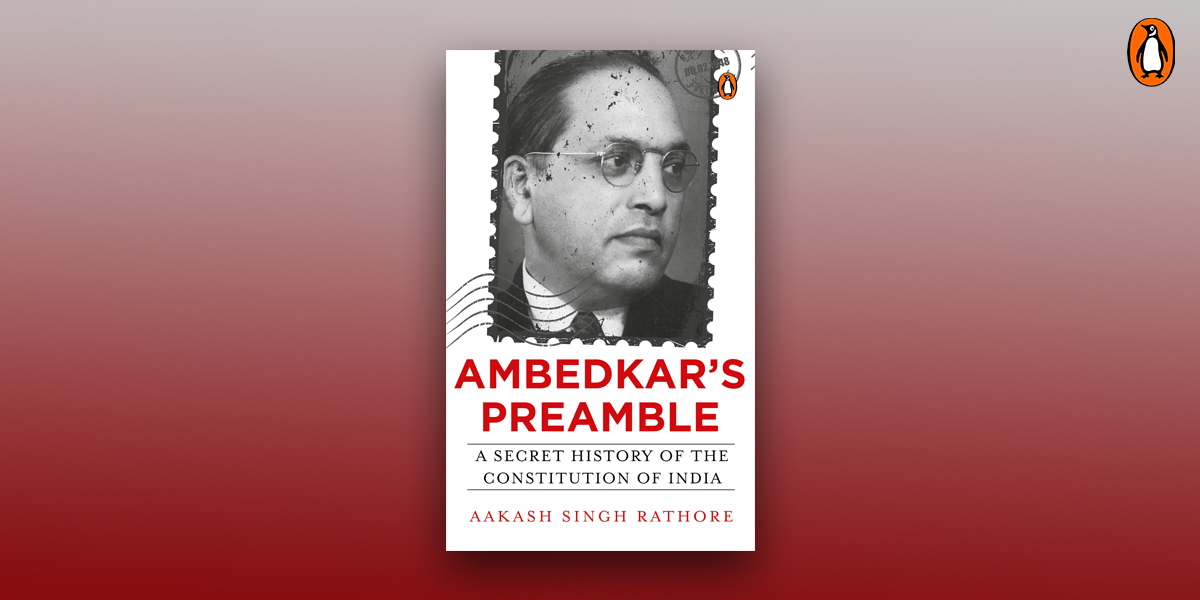
Uncovering the secret history of the Constitution of India

Although Dr Ambedkar is universally regarded as the chief architect of the Constitution, the specifics of his role as chairman of the Drafting Committee are not widely discussed. Totally neglected is his almost single-handed authorship of the Constitution’s Preamble, which is frequently and mistakenly attributed to B.N. Rau rather than to Ambedkar.

With Ambedkar’s Preamble, Aakash Singh Rathore sets out to establish how and why the Preamble to the Constitution of India is essentially an Ambedkarite preamble. It is clear that its central concepts come from Ambedkar’s writings and speeches. In doing so, the book spotlights fundamental facts about modern Indian history – which makes this a highly relevant read today.

The excerpt below gives us a glimpse into Ambedkar’s role within the Drafting Committee:
 

Justice: The Story of B.R. Ambedkar

On 21 February 1948, Dr Ambedkar, in his capacity as chairman of the Drafting Committee, was ready to submit the first draft Constitution that had been prepared over the forty-two sittings. The meetings began on 27 October 1947, the first since the one on 30 August when Dr Ambedkar had been elected chairman. He sent it to the president of the Constituent Assembly, Rajendra Prasad, who had it widely published on 26 February, so that interested members of the public could consider it. The draft was also sent to all members of the Constituent Assembly, asking them to submit their views by 22 March 1948. A number of amendments were suggested, some specific to the Preamble, but not one of them was about the concept of justice.

Front Cover of Ambedkar's Preamble
Ambedkar’s Preamble || Aakash Singh Rathore

The Drafting Committee reconvened on 23, 24 and 27 March 1948 to evaluate the many comments and suggested amendments they had received. Since the committee had introduced both phraseology and substance that seemed to depart from the Constituent Assembly’s earlier decisions, president Prasad decided to assemble a high-powered Special Committee to look carefully into the matters in question—the draft Constitution, the numerous amendments suggested, the Drafting Committee’s opinions on them, and so on. The Special Committee was chaired by Jawaharlal Nehru and consisted of the who’s who of the Constituent Assembly. It included members of the Drafting Committee, of course, but also principal members of the Union Constitution Committee, as well as the Provincial Constitution Committee. Meeting on 10 and 11 April 1948, many of the names who subsequently enlivened the CAD included Bhogaraju Pattabhi Sitaramayya, Khushal Talaksi Shah, Jivatram Bhagwandas Kripalani, Kanaiyalal Maneklal Munshi, Thakur Das Bhargava, and, of course, B.R. Ambedkar, who never missed a Drafting Committee or related meeting. Also present was Naziruddin Ahmad, whose suspicion that the Drafting Committee was prone to taking ‘secret’ and unilateral decisions was now beginning to crystalize.

The minutes of the Special Committee meeting on 10 April 1948 were unusually curious. They began: The committee considered the matters referred to in the letter of the Chairman of the Drafting Committee to the President of the Constituent Assembly of India, dated the 21st February 1948. Preamble: The consideration of the amendments to the Preamble was held over and it was decided that the final settlement of the Preamble should be left to the decision of the Constituent Assembly.

This was unusual because the entire reason behind assembling the Special Committee was to try and scrutinize the changes that the Drafting Committee had introduced to the draft Constitution, one of the most crucial being the unanimously adopted Objectives Resolution. As we shall soon discover, one of the earliest points in Dr Ambedkar’s letter to the president of the Constituent Assembly was to do with the unilateral changes introduced by the Drafting Committee into the Preamble. It appears that Nehru was true to his word and that he ensured—rather to the displeasure of Naziruddin Ahmad—that the Drafting Committee was given the latitude to adapt the Objectives Resolution to the changing times.


A narrative like Ambedkar’s Preamble is crucial for our times today – especially in helping us develop new and important insights into the most important document for our country.  

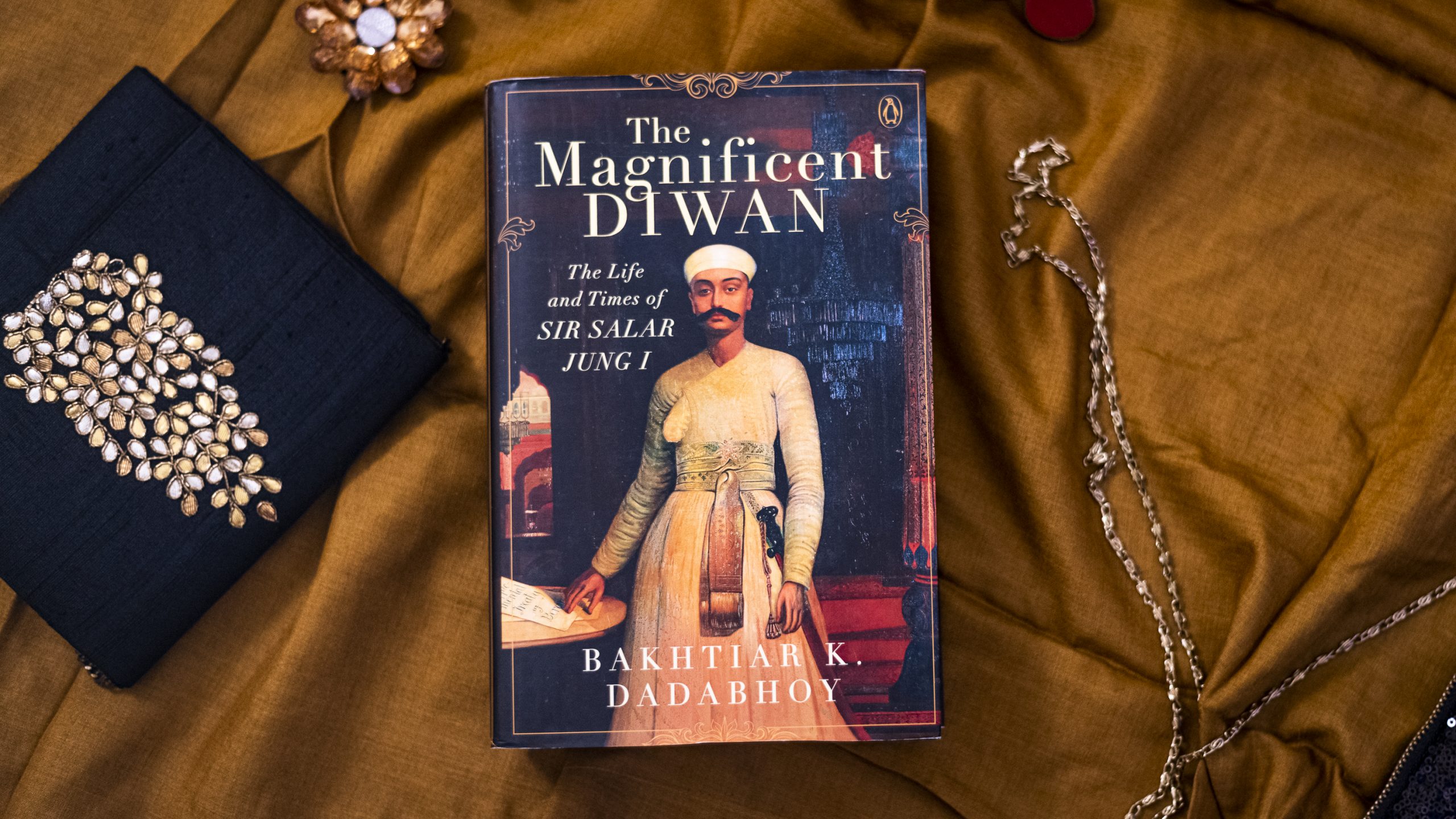
Who is Sir Salar Jung I? Meet ‘The Magnificent Diwan’

The Magnificent Diwan’s author, Bhakhtiar K Dadabhoy’s ode to the spectacular Diwan of Hyderabad, Sir Salar Jung  I. He was eloquent about Salar Jung’s ideals, diplomacy and westernized governance in Hyderabad. He gives the reader a before and after account of the state of affairs in Hyderabad, during his rule.

Get a glimpse into Sir Salar Jung I’s life-

    • Salar Jung I exercised commanding influence over the destiny of Hyderabad, for a generation. A man with a broad and enlightened mind and a strong will, he applied his  energies to the improvement of Hyderabad and the amelioration of the condition of its people.


    • His long and illustrious career was also distinguished by his efforts to promote friendly relations between the nizam and the British government. The unexampled prosperity of Hyderabad since it fell under the administration of Salar Jung was a subject of much comment.


    • He was by far the most distinguished representative of his family. Salar Jung I had an enviable command of English and an intimate acquaintance with English ideas and with Western statesmanship. He did much to bring together the European and the Oriental in friendly social intercourse.


    • Salar devoted his life to making Hyderabad a model state and lived long enough to see it prosper. The idea of an organized system of government in Hyderabad owed its birth to the vision of Salar Jung I. He reduced Hyderabad to order and settled government, restored its prosperity and developed its resources to such an extent that the nizam’s dominions were as orderly as any other part of India.


    • Jung was a vision and an inspiration for native princes. The native princes, inspired by Salar Jung I’s example, showed themselves ready to promote the well-being of their subjects and foster prosperity so as to make their states no different from British-administered province.


  • Salar’s strong individuality, firmness and caution gave him an ascendancy in Hyderabad which no previous diwan had attained. In spite of opposition of a capricious nizam, Afzal-Ud-Daula, Jung never left- a fact which makes his administrative reforms still more remarkable. 

To read more about Jung, his life and how he tremendously transformed the state of Hyderabad, read The Magnificent Diwan as he is reintroduced by Bakhtiar K. Dadabhoy to a new generation.

The Doctor Who Didn’t Give Up- Dr. B.S. Ajaikumar

Do you only dream of achieving success one day or are you working towards achieving it? It is imperative to realize that success, which is in the uncertain future, is but a sum of our efforts in the present. Enthralling personal life experiences shared by ‘Doctorpreneur’ Dr B.S. Ajaikumar, in his book, Excellence Has No Borders make you realize that hard work, tenacity and self-confidence can go a long way in attaining the unimaginable.

Read to know more about this doctorpreneur:

 Ajaikumar faced many challenges in his childhood and his adult life. In hindsight, the former built him up for the latter. Growing up in the shadows of his superachiever elder brother, Ajaikumar, had learnt to work for his parents’ attention and affection.

*

His upbringing being relatively different from his brother’s seems to have given rise to insecurities within him. This feeling drove him to study hard as he was determined to do well and emerge from the shadow of his older brother. His success in doing so gave rise to him becoming accustomed to taking on challenges with gusto: If something wasn’t a challenge, it wasn’t worth the time or the effort.

*

Losing twenty million dollars in the dot-com bust pushed him into misery. It led him to almost end his life. What saved him was a singularly assertive thought that he was a fighter and he loved challenges. He was confident that he would do whatever it takes to build himself up from ground zero after the dot-com bust.

*

Poor condition of the Indian hospitals and Ajaikumar’s determination to achieve what he put his mind to, pushed him to travel across India and study the cancer situation. He considered this trip as a turning point in his life as he decided to give up the American dream that he’d built for himself and return to his motherland.

*

As an established oncologist, he considered it his moral duty to return to serve his people and help them live a healthy life.


To read more about Ajaikumar’s life experiences and his takeaways from them, read, Excellence Has No Borders. Tell us if it inspired you as much as it inspired us!

Naveen Chourey on Poetry, His Engineering Background and His New Book

Bold, sharp and amazingly relevant, Naveen Chourey’s impassioned poetry-on mob lynching, Kashmir and the plight of out soldiers among others-will force you to think afresh on nationalism, patriotism and the state of our country.
Naveen’s youthful idealism, vision for an egalitarian world and progressive thoughts make Kohra Ghana Hai one of the most courageous works of our times.

Read on to know more about Naveen:

1. What drew you towards poetry?

It is hard to pin one event that drew me toward poetry. I moved towards it gradually and did not realize how much hold it had over me, till I was in too deep. But a few poets that played a significant role in pushing me towards it are Jagjeet Singh ji and Nukkad Natak.

2. Has your engineering background helped your artistic craft?

Yes, it’s helped me a lot! For me, engineering helped me find patterns in life. I think I can craft my poems with a fresh perspective due to my engineering background.

3. What does mukammal mean to you?

For me, Mukammal is the concept of an ideal human being. Something that I am walking and moving towards everyday. I wish to be that person before I die.

4. Which poem is the closest to your heart?

There are many. Bachchan Sahab’s ‘Us paar na Jaane kya hoga’, Javed Sahab’s ‘Waqt’ and ‘MahisasurMardini’ by Aadi Shankaracharya are few that come to mind.

From my own compositions, I enjoy performing the poem ‘Aham Brahmosmi’ ‘Pinjara’ and ‘Main, Wo aur Main’.

5. Why ‘Kohra Ghana Hai’?

When there is unrest, everything becomes confusing. Like the dense fog, you can see but can not make anything out of it. I felt this book will help people see through the dense fog of unrest and show people what is happening in our society.


Are you ready to go on this journey with Naveen and see through this fog with Kohra Ghana Hai?

The Four Paws of Spiritual Success

When the Dalai Lama’s inner circle is set the task of providing His Holiness with a book that he can give his visitors, an unexpected volunteer stretches out her paws. The Dalai Lama’s Cat and The Four Paws of Spiritual Success summarises the four key elements of Tibetan Buddhism and, more importantly, communicates how it feels to be in the profoundly reassuring presence of His Holiness. And who better to do this than his much-loved feline?

Read on to know about what these four paws:

First Paw:
Without suffering there was no motivation to seek transcendence.

Our thoughts are like claws. They can be helpful when we turn our mind to things. Develop ideas. Set goals. Express emotions. But if we aren’t careful, these same thoughts can turn on us and become the sources of our greatest pain. They no longer help us take purposeful action, but instead become the cause of self- inflicted misery.

Second Paw:
Compassion has a calming effect on all those that it touched.

‘I am pleased she is offering love and compassion,’ the Dalai Lama continued. ‘Motivated by bodhicitta, this is one of the most important elements of our practice, is it not?’

Third Paw:
Wisdom eliminated the darkness of ignorance.

Wisdom is different. It involves the transmission of insights that have the capacity to change us.Only when we understand an insight deeply enough can it create change.At that point, knowledge becomes wisdom.’

Fourth Paw:
Everyone has the capacity for enlightenment.

 ‘Just to be born human is exceptional.’


If you have ever sought a summary of Tibetan Buddhist wisdom, albeit, from an unusual and whiskery source, The Dalai Lama’s Cat and the Four Paws of Spiritual Success is just the book to get you purring!

error: Content is protected !!