Publish with Us

Follow Penguin

Follow Penguinsters

Follow Penguin Swadesh

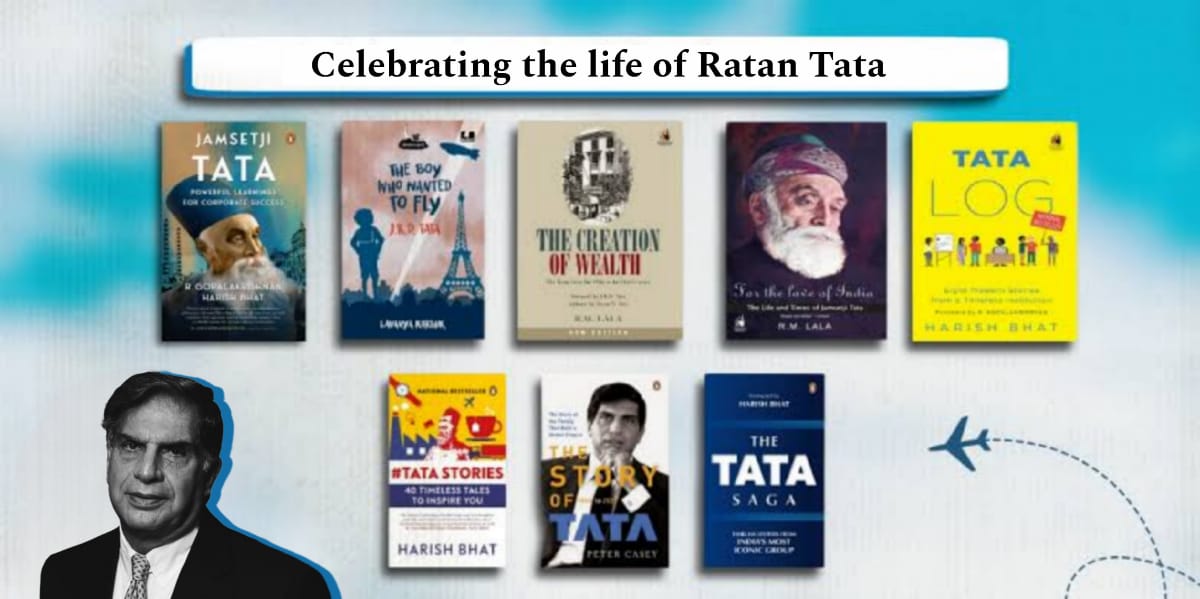
Celebrating the Legacy of Ratan Tata

As we bid farewell to the legendary Ratan Tata, his legacy remains etched in the annals of business and philanthropy. Known for his visionary leadership and unwavering commitment to ethical practices, Tata’s influence extends far beyond the boardroom. In this tribute, we explore some of the most remarkable contributions and moments that defined his extraordinary life and career.

The Story of Tata
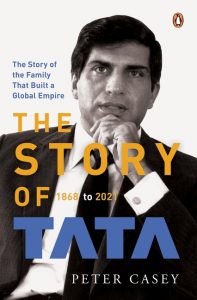
The Story of Tata || Peter Casey

In 1868, Jamsetji Tata, a visionary of his time, lit the flame that went on to become Tata and its group of companies. This business grew into an extraordinary one. One that some may even call ‘the greatest company in the world’. Over the decades, the business expanded and prospered under the leadership of the various keepers of the flame, such as Sir Dorabji Tata, J.R.D. Tata and Ratan Tata, to name a few. But one day, the headlines boldly declared that the chairman of the board of Tata Sons, Cyrus Mistry, had been fired.
What went wrong?

In this exclusive and authorized book, insiders of the Tata businesses open up to Peter Casey for the first time to tell the story. From its humble beginnings as a mercantile company to its growth as a successful yet philanthropic organization to its recent brush with Mistry, this is a book that every business- minded individual must read.

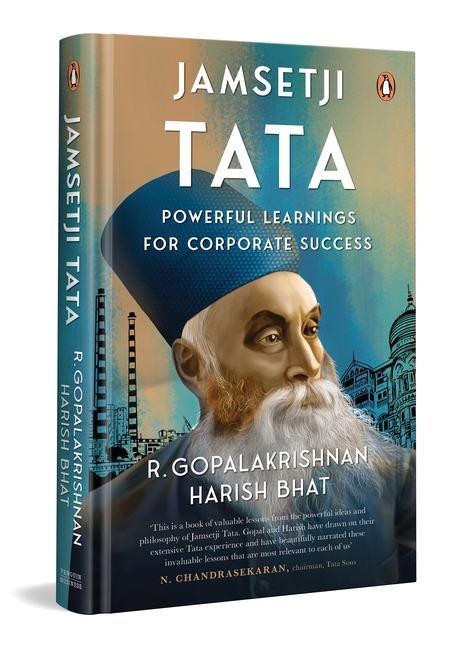
Jamsetji Tata
Jamsetji Tata || Harish Bhat, R Gopalakrishnan

Jamsetji Tata pioneered modern Indian industry. He has been a key catalyst in the economic growth and development of the country.
From Empress Mills to the Iron and Steel Plant, from the establishment of Indian Institue of Science to the building of the Taj Mahal Hotel, Jamsetji’s vision made India stand tall. In this carefully researched account, R Gopalakrishnan and Harish Bhat provide insights into the entrepreneurial principles of Jamsetji that helped create such a successful and enduring enterprise.


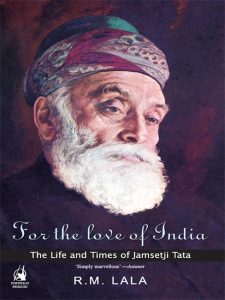
For the love of India
For the love of India: The Life & Times Of Jamsetji Tata||

In For the Love of India, R.M. Lala has drawn upon fresh material from the India Office Library in London and other archives, as also Jamsetji’s letters, to portray the man and his age. It is an absorbing account that makes clear how remarkable Jamsetji’s achievement truly was, and why, even now, one hundred years after his death, he seems like a man well ahead of the times.


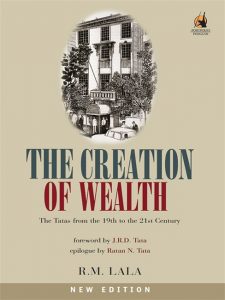
The Creation of Wealth
The Creation of Wealth: The Tatas From The 19th To The 21st Century || R M Lala

The Creation of Wealth is R.M. Lala’s bestselling account of how the Tatas have been at the forefront in the making of the Indian nation-not just by their phenomenal achievements as industrialists and entrepreneurs but also by their significant contributions in areas like factory reforms, labour and social welfare, medical research, higher education, culture and arts, and rural development.


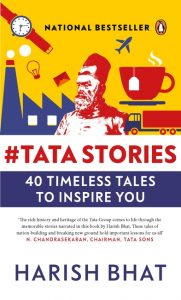
#TataStories
#TataStories: 40 Timeless Tales To Inspire You

A diamond twice as large as the famous Kohinoor pledged to survive a financial crisis; a meeting with a ‘relatively unknown young monk’ who later went on to be known as Swami Vivekananda; the fascinating story of the first-ever Indian team at the Olympics; the making of India’s first commercial airline and first indigenous car; how ‘OK TATA’ made its way to the backs of millions of trucks on Indian highways; a famous race that was both lost and won; and
many more.

#TataStories is a collection of littleknown tales of individuals, events and places from the Tata Group that have shaped the India we live in today.

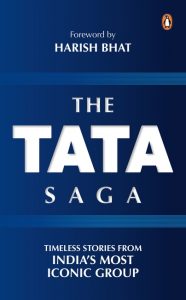
The Tata Saga
The Tata Saga: Timeless Stories From India’s Largest Business Group

The Tata Saga is a collection of handpicked stories published on India’s most iconic business group. The anthology features snippets from the lives of various business leaders of the company: Ratan Tata, J.R.D. Tata, Jamsetji Tata, Xerxes Desai, Sumant Moolgaokar, F.C. Kohli, among others. There are tales of outstanding successes, crushing failures and extraordinary challenges that faced the Tata Group.


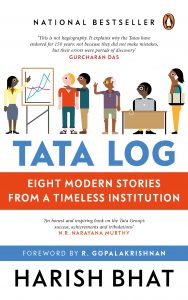
Tata Log
Tata log || Harish Bhat

From steel to beverages and from supercomputers to automobiles, TATA companies have broken new ground and set new standards of excellence over the past two decades. Tatalog presents eight riveting and hitherto untold stories about the strategic and operational challenges that TATA companies have faced, and the forward thinking and determination that have raised the brand to new heights.


Beyond The Last Blue Mountain
Beyond The Last Blue Mountain: A Life of J.R.D Tata || R.M. Lala

An exhaustive and unforgettable portrait of India’s greatest and most respected industrialist. Written with J.R.D. Tata’s co-operation, this superb biography tells the J.R.D. story from his birth to 1993, the year in which he died in Switzerland. The book is divided into four parts: Part I deals with the early years, from J.R.D’s birth in France in 1904 to his accession to the chairmanship of Tatas, India’s largest industrial conglomerate, at the age of thirty-four; Part II looks at his forty-six years in Indian aviation (the lasting passion of J.R.D’s life) which led to the initiation of the Indian aviation industry and its development into one of India’s success stories; Part III illuminates his half-century-long stint as the outstanding personality of Indian industry; and Part IV unearths hitherto unknown details about the private man and the public figure, including glimpses of his long friendships with such people as Jawaharlal Nehru, Mahatma Gandhi, Indira Gandhi and his association with celebrities in India and abroad.


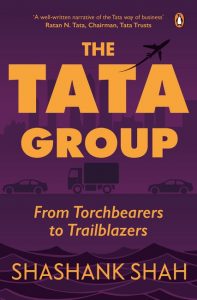
The Tata Group
The Tata Group || Dr. Shashank Shah

A deepdive into the Tata universe, The Tata Group brings forth hitherto lesser-known facts and insights. It also brings you face-to-face with the most intriguing business decisions and their makers. How did Tata Motors turn around Jaguar Land Rover when Ford failed to do so? Why wasn’t TCS listed during the IT boom? Why wasn’t Tata Steel’s Corus acquisition successful?


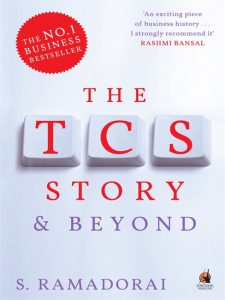
The TCS Story and Beyond
The TCS Story and Beyond || S. Ramadorai

The TCS story is one of modern India’s great success stories. In this fascinating book, S. Ramadorai, one of the country’s most respected business leaders, recounts the steps to that extraordinary success, and outlines a vision for the future where the quality initiatives he undertook can be applied to a larger national framework.


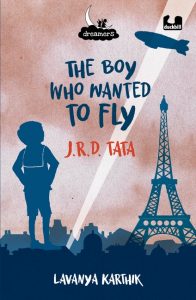
he boy who wanted to fly
he boy who wanted to fly: J.R.D Tata (Dreamer’s Series) || Lavanya Karthik

Before Jeh started India’s first airline and changed the way the nation travelled, he was a boy who dreamt of flying.


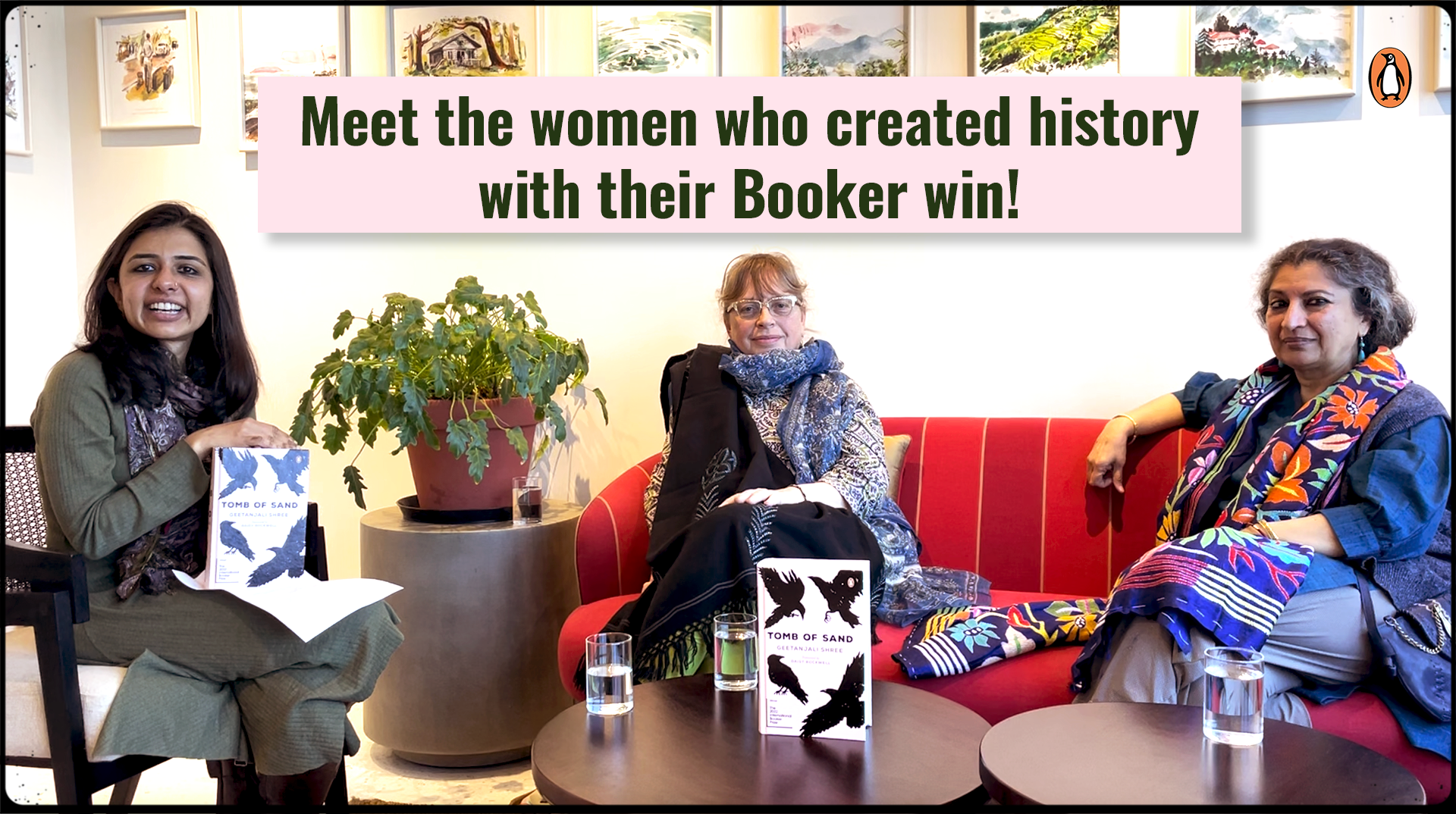
From The Writer’s Desk: Geetanjali Shree and Daisy Rockwell

The day we had all been waiting for finally arrived at our office some time ago. Our office doors swung open and in came the two women who created history by bringing to life, the first Hindi and South Asian language book to win the International Booker.  We look at them like icons, but they walk in like friends, friends who’ve returned home after becoming legends. And so, we sit with them for a quick coffee, some afternoon sun, and the rush outside with all the other employees getting ready to get their books signed.
 

Manasi: How does it feel to have made history? What do you think this kind of international recognition will mean for Hindi literature and translation?
 

Geetanjali: I am not quite able to believe it, but I do know that something amazing has happened. It feels great to be the chosen one. I think this achievement just makes the larger world discover a language called Hindi and the vibrant literature that exists in Hindi and the languages around it. Hence, it is a very important moment;, there are tremendous possibilities for the world which hasn’t seen a lot of this kind of literature.  

Daisy: It’s very exciting. Both of us have been working quietly for so many years, on our own. So, this is unexpected and very thrilling for us. We hope that the rest of the world will find out about all the amazing literature that comes out of South Asia. There has been translation all along, but I believe that Penguin has been bringing out a lot of translated literature since the early 1990s. Yet, it somehow never gets outside of the subcontinent. We hope that Tomb of Sand will help all these other books cross borders.  


Avleen: Speaking of translations, they once said in a movie, ‘Poetry in translation is like taking a bath with a raincoat on’. But then translations also seem to be the only answers to build a world where we share our stories with each other. So, here you are trying to do the impossible. What are your thoughts on translation and what is the process like? Is it all bits daunting that we assume it to be? 

Daisy: Yes, I think that’s a very negative way to look at translation. People keep asking me about the loss in translation, but I am much more interested in what we find! It is daunting but it is a very exciting experience for me! I love challenges and I love things that seem impossible to render in a language. A lot of people are even reading Ret Samadhi after reading Tomb of Sand, so, it’s taking people back to Hindi as well. So, translation for me is always about finding and discovering. 

Avleen: Geetanjali, even you’ve mentioned in other interviews that the translation process often makes you look at your novel with a renewed lens. Was there ever a moment where it led to a change in your perspective or feeling regarding some aspect about the book? 

Geetanjali: I don’t think it changed anything, but there was an enhancement of my perspective. A good translation brings out a lot of latent possibilities lying inside the work and that is an exciting discovery. But if it does something that changes a perspective, then it’s not a good translation. It should help in discovering something that’s there but may not be as visible or audible in the work. 
 

Manasi: So, tell me (Geetanjali), how does writing begin for you? Is it the idea first or do you start writing and then the idea comes?  

Geetanjali: Well, I don’t have a worked-out scheme. I think there’s a different trigger each time. It only happened once, when I knew I wanted to write about communalism. About Hindus and Muslims and how we seem to think that it is happening only among the uneducated in the old cities, when in fact, all of us have strange prejudices inside us no matter how liberal we consider ourselves to be. That’s the only time I had a theme in mind. Otherwise, the trigger can be anything for me! It can be an image or a wisp of a dialogue. It can be something very ordinary in daily life. And what I have discovered is that something that is ordinary is never only ordinary. It always gets linked to some very huge things. Something small sets me off and then keeps getting joined up with other things and the story keeps building, so it’s a very organic process.  


Manasi: And in terms of the collaboration between the two of you, do you talk throughout the process of translation, or do you deliver a full draft to Geetanjali? 

Daisy: I always do a rough and full first draft, trying not to talk to anybody at all. Even if I have a lot of questions and problems, I just write it all by hand and put notes. It’s like when you’re taking an exam, you don’t really know the answer to the first question but when you read the whole exam, you’ll find some of the answers at the end in the way the questions are asked. For example, why she’s using a particular word or why an image was used where? So, I go through the whole thing and after 2-3 drafts, I start asking her questions. LOTS of questions. And by the 5th or 6th draft, I send her the whole thing and she goes through it comprehensively and then there are more discussions. There are layers upon layers upon layers of conversations.  

Geetanjali: And you know Daisy and I had not met during all of this. We just met a couple of days before the booker announcement. So, all of it was on email. 

Daisy: And it’s funny because all of it was during the pandemic and it never even crossed our minds to use Zoom. People thought that we were Zooming but we never had a voice conversation!  

Geetanjali: But the wonderful thing is that when we met, it didn’t feel like we were meeting for the first time. We immediately slipped into a very easy friendship. 

Manasi: Because you must have such a deep level of intellectual trust ion each other for doing something so big!  

Geetanjali: Yes, but we’re also very lucky! Because there was a risk. It could’ve gone any which way. And I always wonder if Daisy was very good at translation but didn’t have a sense of humour, she would’ve destroyed that book!  


Manasi: So, tell me about the title? I know that one of the only things you guys had a disagreement on was the title. So, Ret Samadhi becomes Tomb of Sand. Tell us how you arrived upon it? 

Geetanjali: Daisy was very wickedly supported by the publisher (laughs). I wanted the word samadhi to be in the title. And samadhi was already in the Oxford English Dictionary. And even if it wasn’t, I would’ve argued that words are constantly being taken into other languages, let samadhi go in the title. Let them learn a new word and concept. But I think Daisy and the publisher both felt, perhaps rightly so, that samadhi in the title might mislead people in bookstores to believe it is about spiritualism or yoga. They didn’t want to introduce prejudice. That argument made sense to me, but I was a bit concerned about the word tomb, because it is completely different from samadhi.  

Daisy: But when I chose ‘tomb’, I was thinking about the Gandhi samadhi. Because that’s a tomb that’s not a mausoleum, but a resting place. It’s sort of giving him a Buddha-like feeling, that he’s still there somehow. But a part of the compromise is that I went all out in teaching the word samadhi throughout the book. We have the definition right in the beginning and then I define it subtly within the text, and by the end I’m only using the word samadhi and not any of the translations of it. And I think we’re both very opinionated and confident in our opinions.  

Geetanjali: But I think we also know how to be a little detached. After a point, she is the translator. She knows English, she knows what the book is.  

Daisy: Yeah, I think people are always annoying Geetanjali with the question that why didn’t you write in eEnglish or why didn’t you translate your own book? And she says because Hindi is my mother tongue, why should I defend this? But if she was translating her books, she wouldn’t be writing books. That would cannibalize her work. And she doesn’t want to be a translator. And that’s part of what makes our relationship work. Because she doesn’t want to suddenly jump in and become the translator, she never wanted to be that. Our roles are clearclear, and we have a nice boundary between us. 

Geetanjali: Yes, but it’s a boundary that works as a bridge, it doesn’t divide us. 


As a bonus to our lovely readers, here’s a writing tip that Geetanjali Shree shared specially for you all:  


Geetanjali: If you want to be a writer, you have to write.  

Write, write, write. 

Writing is about looking at the world, dialoguing with it, sharpening your observation, trying to notice things. So, just do that. Hone your sensitivities and look around, look inside you, think about things, be reflective, be quiet, and write, write, write. 


Penguin At JLF 2023 ?

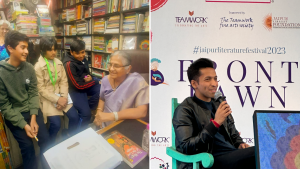
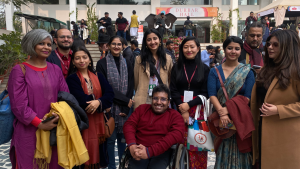
The Jaipur Literature Festival, also called the ‘greatest literary show on Earth’, is the Multiverse of Madness for every littérateur! Over one lakh people attended the 16th edition of the Jaipur Literature Festival last week, which featured sessions by over 500 speakers and artists from around the globe. Here’s a recap of Penguin at JLF 2023!

Pic 1: Visitors pay homage to the festival with heartfelt messages Pic 2: #SPOTTED Namita Gokhale’s The Blind Matriarch finds it’s way to the streets of the Pink City


In the words of Festival Director, Namita Gokhale, “The Jaipur Literature Festival 2023 had an emphasis on translations and shared human narratives. Writers and translators broke beyond the boundaries of language and reached out across cultures and continents.

2023 was truly a vintage year with a stellar range of writers from India and across the world. The audiences were as ever deeply engaged and responsive. Five days of lucid dreaming with intellect and creative imagination at play.”


Pic 1: Children line up to have their copies signed by the iconic Sudha Murty. Pic 2: Bestselling author Durjoy Datta draws massive crowds during his opening session at JLF Day 1.


This year, Penguin presented India’s budding writers with an exciting, once-in-a-lifetime lifetime! The Perfect Pitch is a contest where writers get a chance to pitch their book to a jury of eminent people from the world of publishing.

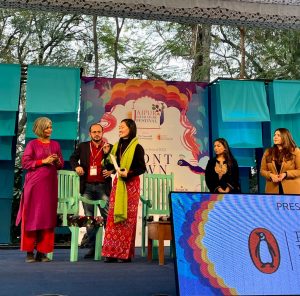
Five shortlisted authors got to pitch their book to a distinguished panel at JLF with the winner being offered exclusive one-on-one mentorship, for a chance for them to hone their talent and polish their book. The mentors and jury included two editors from Penguin – Elizabeth Kuruvilla and Gurveen Chadha – author of Manjhi’s Mayhem, Tanuj Solanki, and Shreya Punj, also known as The Editor Recommends.

Our winner for the first edition of The Perfect Pitch was Subi Taba.

Pic 3: Meet the Perfect Pitch jury and finalists!


Subi Taba
Subi Taba, the winner of The Perfect Pitch
Subi Taba
Subi Taba being announced the winner of The Perfect Pitch 2023

The icing on the cake for us was to see so many of our debut authors at the festival this year, and the cherry on top? Six of our books made it to the top fifteen bestsellers! 


Penguin authors among the Top 15 Bestsellers at JLF 2023 ?

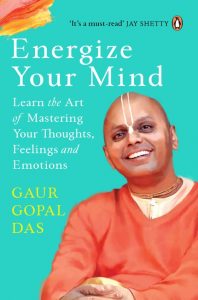
Energize Your Mind by Gaur Gopal Das

Energize Your Mind
Energize Your Mind || Gaur Gopal Das

Gaur Gopal Das, renowned author and life coach, decodes the mind in this book. He uses anecdotes and analytical studies to educate us how to discipline our minds for higher well-being. He gives engaging activities, meditation techniques, and worksheets throughout the book to help us take control of our minds. 


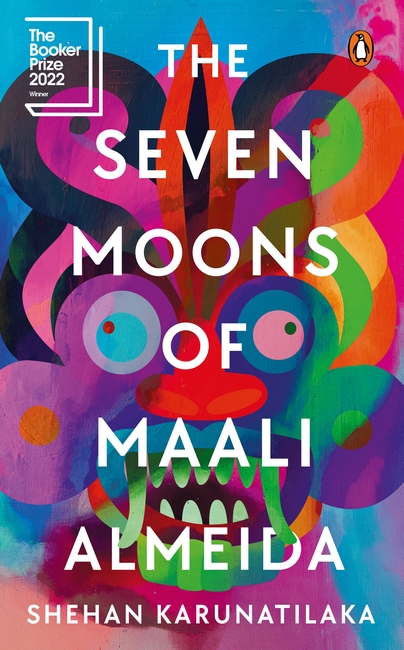
The Seven Moons of Maali Almeida by Shehan Karunatilaka

The Seven Moons of Maali Almeida
The Seven Moons of Maali Almeida || Shehan Karunatilaka

Set in Colombo, 1990, Maali Almeida, a war photographer, gambler, and closet gay, has died in what appears to be a celestial visa office. His dismembered body is sinking in Beira Lake, and he has no idea who killed him. At a time when scores are settled by death squads, suicide bombers, and hired thugs, the list of suspects is depressingly long, as the ghouls and ghosts who gather around him can attest. Even in the afterlife, Maali’s time is running short. He has seven moons to contact the man and woman he loves the most and lead them to a hidden stockpile of images that will rock Sri Lanka.


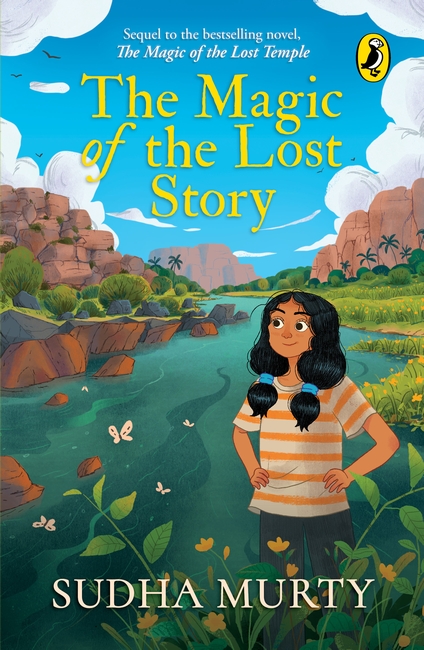
The Magic of the Lost Story by Sudha Murty

The Magic of the Lost Story
The Magic of the Lost Story || Sudha Murty

The Magic of the Lost Story, written in India’s favourite storyteller, Sudha Murty’s, distinctive style, captures the value of asking questions and keeping the answers alive. This story takes you on an unforgettable adventure as it follows the gorgeous Tungabhadra River, which is filled with delightful artworks and wondrous terrains.


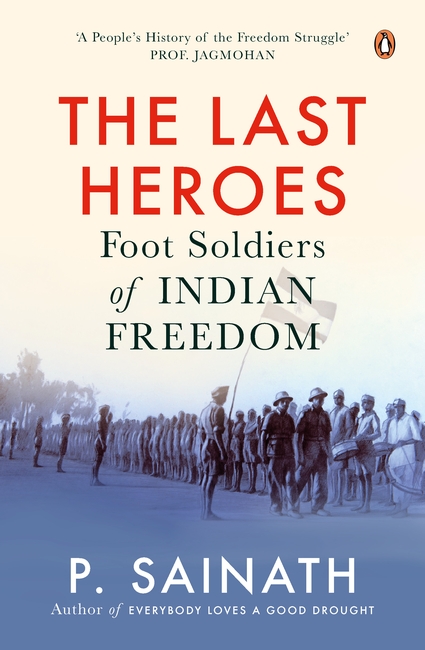
The Last Heroes by P Sainath

The Last Heroes
The Last Heroes || P. Sainath

The Last Heroes tells the stories of the footsoldiers who fought for Indian independence. The men, women, and children in this book include Adivasis, Dalits, OBCs, Brahmins, Muslims, Sikhs, and Hindus. They are from all across the country, speak a variety of languages, and include atheists and believers, Leftists, Gandhians, and Ambedkarites.


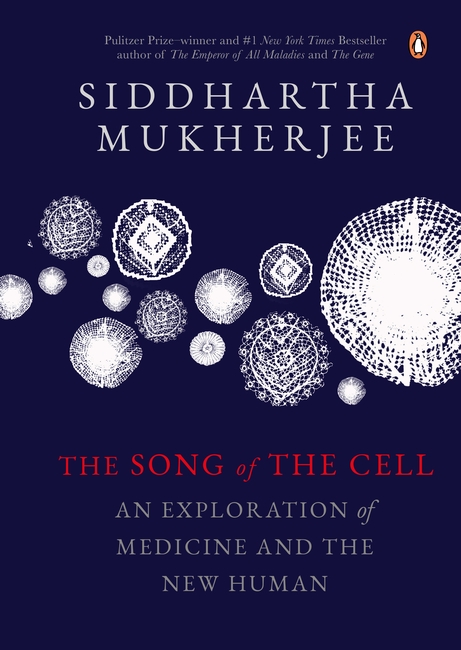
The Song of the Cell by Siddhartha Mukherjee

The Song of the Cell
The Song of the Cell || Siddhartha Mukherjee

In The Song of the Cell, Siddhartha Mukherjee narrates the tale of how scientists discovered cells, began to comprehend them, and are now using that knowledge to create new humans. He entices readers with writing that is vibrant, lucid, and intriguing, making complex science exciting. The Song of the Cell is a masterwork, told in six sections and filled with Mukherjee’s personal experience as a researcher, clinician, and voracious reader.


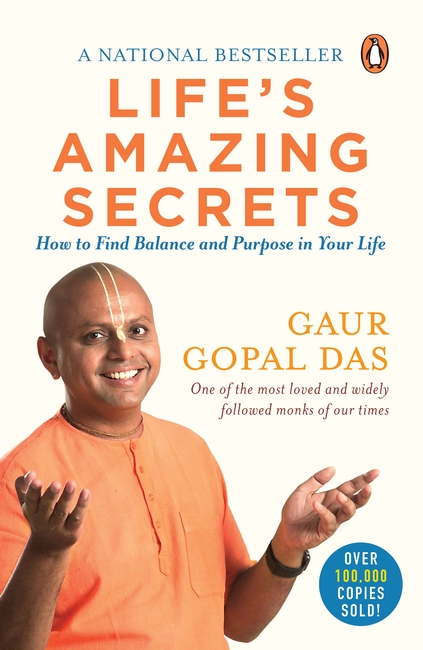
Life’s Amazing Secrets by Gaur Gopal Das

Life’s Amazing Secrets
Life’s Amazing Secrets || Gaur Gopal Das

Gaur Gopal Das is one of the world’s most well-known and sought-after monks and life coaches, having taught millions of people. Life’s Amazing Secrets, his debut book, distils his life experiences and lessons into a light-hearted, thought-provoking book that will help you match yourself with the life you want to live.


Check out our must-read debut authors! ?

Hacking Health by Mukesh Bansal

Hacking Health
Hacking Health || Mukesh Bansal

Mukesh Bansal tackles the monumental challenge of deciphering science, summarizing research, and charting the journey of our relationship with our bodies in Hacking Health. This book draws from ancient wisdom while also debunking unscientific myths to help you make informed choices in pursuit of good health, using a blend of firsthand opinion and cutting-edge science. This book looks into the breadth and depth of holistic health and helps you traverse the lines between science and pseudoscience, from nutrition and exercise to relaxation and immunity, proper nutrition and mental health to ageing and lifespan.


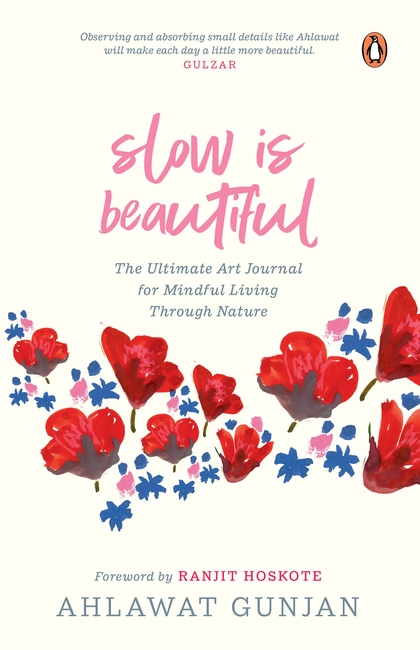
Slow is Beautiful by Gunjan Ahlawat

Slow is Beautiful
Slow is Beautiful || Ahlawat Gunjan

Slow is Beautiful is the opportunity to go on an adventure filled with awareness and contemplation in the form of an exhilarating book. Through the eyes of the author, Ahlawat Gunjan, we get to  perceive, evaluate, contemplate, and apply using artistic abilities developed through years of study to re-ignite a lost inclination. The book urges you to embrace a new aesthetic viewpoint by introducing you to form, colour, and composition. Every one of the sixty simple prompts in this book is an important step that is illustrated by vivid ink and watercolour drawings drawn from nature and created and carefully crafted by the artist himself to inspire readers to draw, erase, paint, experiment, create, and, most importantly, accept their mistakes.


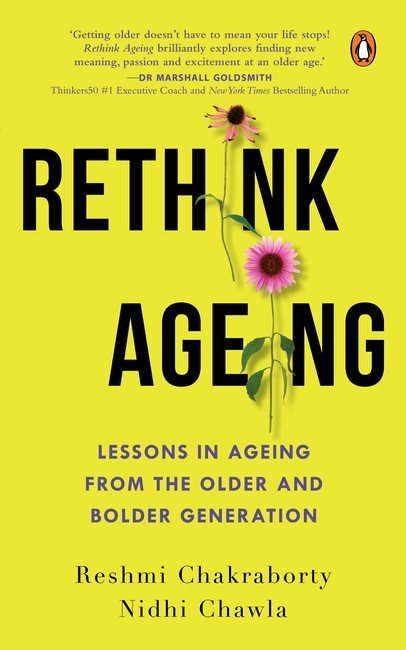
Rethink Ageing by Nidhi Chawla & Reshmi Chakrobarty

Rethink Ageing
Rethink Ageing || Nidhi Chawla & Reshmi Chakrobarty

Rethink Ageing is a montage of significant stories that demonstrate how the narrative of ageing in India is changing. They fight ageism, which is deeply ingrained in Indian culture, with rigid ideals of ‘acceptable’ behaviour. Why should our age prohibit us from pursuing the lives we desire? We live in an ageing community that is adjusting to nuclear families, distant children, and ambiguous social support. To adopt active ageing, the best form of preventative healthcare, urban Indians are negotiating health difficulties, loneliness, and changing social benchmarks. This book offers a comprehensive insight into comprehending ageing, its influence on society, and how to conquer certain ‘obstacles’. We are no longer defined and restricted to our biological age.


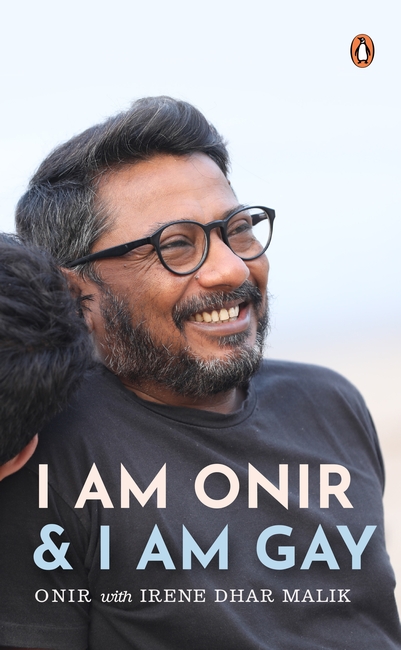
I Am Onir and I am Gay by Onir

I Am Onir and I Am Gay
I Am Onir and I Am Gay || Onir

I Am Onir and I Am Gay is a powerful autobiography on addressing and conquering obstacles. This visceral and brutally honest personal story of faith, love, and the pursuit of dreams, co-written with his sister Irene Dhar Malik, is a game changer.


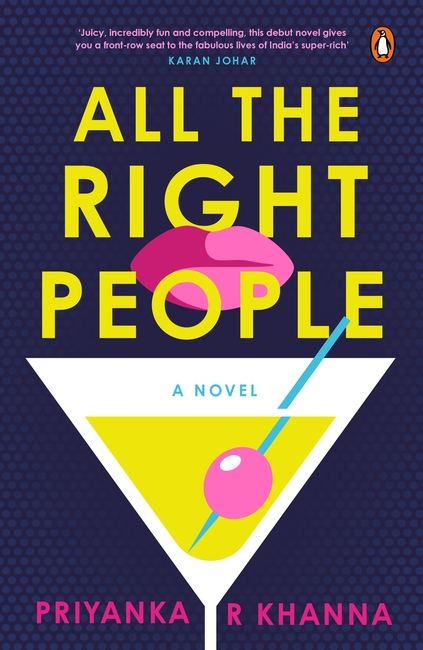
All the Right People by Priyanka Khanna

All the Right People
All the Right People || Priyanka Khanna

Shaan Singh, a Delhi party girl by night and a senior politician’s obedient daughter by day, understands whatever role to play to get her way. She is feisty and highly brilliant, and she has her own political ambitions. How far would she go to keep her freedom if her parents drive her into marriage for strategic reasons? Or will she succumb?

All The Right People is a glittering, whip-smart, and extremely amusing book that takes you into the secret, privileged world of the most wealthy and powerful families in Bombay, Delhi, and London while telling a universal story. Of love, loss, family, friendship, and difficult decisions a nd of women reclaiming control of their lives.


Half Empress by Tripti Pandey

The Half Empress
The Half Empress || Tripti Pandey

Tripti Pandey’s historical novel The Half Empress takes the reader to the regal hallways of nineteenth-century Jaipur and recounts the tale of a magnificent woman who has been deliberately erased from history. Raskapoor, the daughter of a Muslim mother and a Brahmin father, is best remembered today by the guides who often cite her as a celebrity prisoner at the famous Nahargarh Fort, upon whom the Maharaja violated all standards to give the title of ‘Half Empress’.


Explore #PenguinAtJLF on Social Media ?

JLF Recap:

  1. https://www.instagram.com/p/CnoTPcDqA-7/
  2. https://www.instagram.com/p/Cnq4OV3Kv4C/

Get Ready With Me:

  1. https://www.instagram.com/p/CnpYFjoKnGt/
  2. https://www.instagram.com/p/CnrZDojqSyK/

In the Spotlight:

  1. https://www.instagram.com/p/CnwiFuUK1kX/
  2. https://www.instagram.com/p/Cnre6QAKnMN/

Top Tweets:

  1. https://twitter.com/PenguinIndia/status/1616316176099049473?s=20&t=5K3VLovMVJAr8q-P4mFL3g
  2. https://twitter.com/PenguinIndia/status/1616665082125225987?s=20&t=5K3VLovMVJAr8q-P4mFL3g

 From the Writer’s Desk ft. Rahul Pandita

by Avleen Kaur


To write books that have political blood and bones, in a country like ours, is a brave job that requires hard work. And here’s someone who’s trying to do it right by talking about important issues through deep rooted investigative journalism. We sat down with the incredible Rahul Pandita and discussed both his books, Our Moon Has Blood Clots and Hello, Bastar; the different processes that went behind writing a memoir and an investigative book, and what inspires him to write. 


What prompted you to write Hello, Bastar and what are you trying to say through it?


Hello, Bastar is a labour of many, many years of travel through central and eastern India, in what are widely known as left-wing, extremist-affected districts of India. Most of these travels happened at a time when the editors and intellectuals in Delhi and other bigger cities had very little idea about the movement and how large its future could be. Nobody anticipated how it would consume us in many ways in the following years until our former Prime Minister, Mr. Manmohan Singh called it the country’s biggest internal security threat.  

This book is basically about how a handful of young men and women believed in a certain idea of revolution and how they created the modern Naxal movement from the jungles of Bastar in the 1980s. Hello, Bastar is mostly meant for a non-academic reader, for someone who is a student of India and really wants to know what is happening in this part of the country.  


While your previous book, Our Moon Has Blood Clots was a memoir that rose out of personal and community experience, Hello, Bastar is more investigative in nature, made out of reportage and interviews. How different were both the processes? And was the latter more comfortable considering your journalistic background? 


I think Hello, Bastar was a relatively easier book to write because it was largely a part of what I do as a journalist. So, writing this did not feel as hard as the previous book which is part memoir-part reportage of the exodus and torture that happened to a minority community in the Kashmir Valley. That book was more difficult to write because of the personal history involved. And as my editor, Meru might recall that there were times when I had to wait through patches of darkness because of which the book became extremely difficult to write. But during those patches, Meru did handhold me quite a few times during the writing process for which I remain grateful to her.  


Both the books talk about conflicts. Is that something that particularly intrigues you?  


Well, I am a conflict writer. Early on in my career, when I came to Delhi, I made a pact with myself. I vowed that I will not report on things based out of New Delhi because most times when you care about an incident or event, you have a preconceived notion about it. And most times when you actually investigate on the ground level, you are surprised to realize that your preconceived notions about most things were absolutely false. So, the reportage part of Our Moon Has Blood Clots or the entirety of Hello, Bastar has been built out of investigative journeys made through the length and breadth of the country.  


Talking about preconceived notions, there must be a lot of things you would’ve learnt during Hello, Bastar. Was there one thing that particularly shocked you or was a wild revelation? 


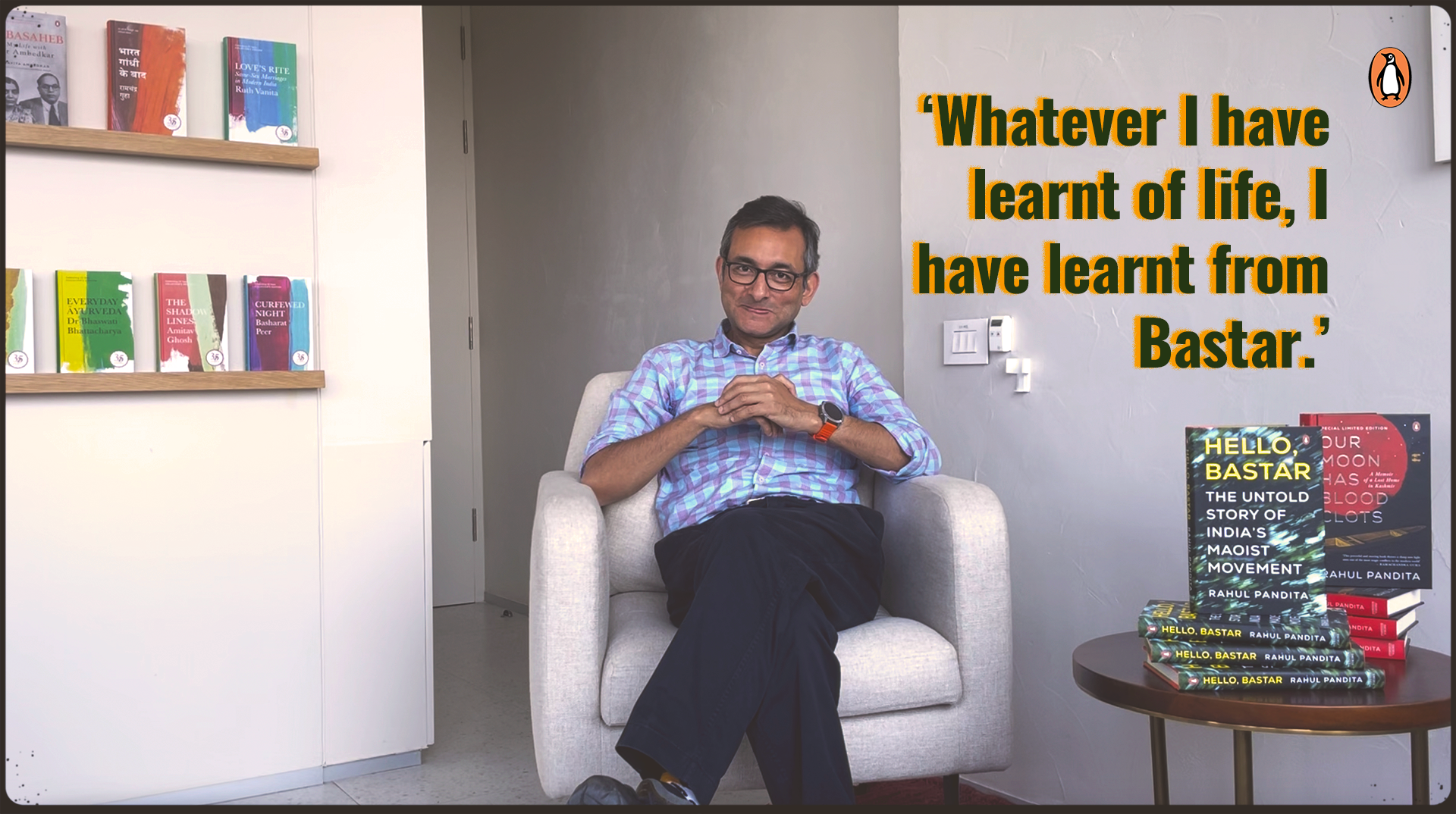
Whenever I get a chance to interact with young people, I tell them, ‘I’ve learnt nothing in school or college. Whatever I have learnt of life, I have learnt from Bastar, really.’ I spent weeks and weeks embedded with the Maoist guerillas and Adivasis in the back of beyond and learnt years in days. So, every journey, every day has been replete with some learning. And many of those learnings have left me shocked, surprised and sometimes also thankful that I could travel to these parts and learn so much not only about these people but about life in general. 


And was it difficult reaching out to a community you don’t belong to? Were you apprehensive? Were they apprehensive in sharing their life and story with you?  


So again, I think this is a part of a larger problem which Indian journalism suffers from. Where journalists are just paradropped at some place because of a particular incident and they spend a couple of days there, piggybacking on the previous work of stringers or local resource persons and later on claim to understand everything about that area. In the past, I have typically called it ‘clean-bedsheet journalism’ where you leave for a small town in the morning and make sure that you come back to the small hotel by the evening. But that’s not how things work, at least in Bastar.  

You have to spend a lot of time in Bastar to understand its reality. When you’re travelling in the village during the day, you might come across an ordinary Adivasi at the roadside tea shop. Later, you find out that he is a Naxal Guerilla. But that is not something you will know if you just have tea there and proceed back to your station. Conflict zones are like snake pits, you don’t know who is who until you familiarize yourself to the place. 

Also, it takes a lot of time for people to open up about their story. There were times when we were embedded with Maoist groups of men and women, where young women especially would really shy away and not talk at all. But after spending some days with them and talking to them, telling them you mean well, that you’re there to know their story and make them comfortable – they open up. And that again, is unfortunately not possible when you’re there for a day or two.  

Once an author wrote that he spent a lot of time in Bastar but didn’t meet a single Naxal there. I remember joking about it and commenting that Naxals are not like Coca-Cola or Haldiram Bhujia. If you go inside villages, the penetration of Haldiram Bhujia is immense. But that’s not how Naxals are to be found. You have to spend a lot of time there before they let you in. 


Does the fear of backlash or controversy of writing about sensitive subjects govern your writing in some way? 


I think both my books with Penguin India prove the fact that I really don’t care about labels. In the past, I have been called a specialist of this and that and I refute those claims completely. I am just a student of India. Even my twitter bio says that. I came to journalism because I had jigyaasa, the intellectual curiosity about the things I saw around me and I wanted to explore their reality. So, my modus operandi is simple. If I’m intrigued about something and want to seek answers, I seek them for myself first before seeking them on behalf of anyone else. And that has pretty much guided my reporting from anywhere in India. So, I’m not really into what is fashionable to say and what isn’t. I say what I see and I try to write passionately about it.  


Do you have a particular target audience in mind when you write a book? Do you think Our Moon Has Blood Clots reached the right audience, considering the current political climate of the country? 


I think I am glad that Our Moon Has Blood Clots came out when our country’s politics was slightly simpler than this. My understanding of writing is very simple. I am a firm believer of the fact that your writing should be accessible to the last man down. So, there are many people who write to me saying that we have very scant understanding of English but they were able to read my book and I consider that my strength. I also think Indian journalists often miss out on the element of storytelling. So, when I write my books, I consider them an extension of my journalism. What I really want to do is to give the feel, colour and sound of the place and people I am talking about and that comes only when you have a basic understanding of storytelling. So I think these two parameters are personally very important to me.  


Politics shape every individual, especially a writer. And you, quite directly, write about overtly political issues. Considering that pen is mightier than the sword and books have the power to shape individuals, do you feel a heavy responsibility while writing?  


Yes, there’s a responsibility about what you’re writing.  

But again, like I said, you should not worry about labels. What you see, you see to the best of your ability. We’ve just come to this terrible and ugly situation where everything is reduced to the binary of left and right. Everyone has this pressing need to put everyone in a basket. I would not like to be in any basket. I hate this basket system. Personally, I give a lot of leeway to people. Most things around our universe are not black and white. They are shades of grey. There is a subtle nuance about everything. Who are we at the end of the day? We are the sum total of our experiences. Our politics is also shaped by what we have gone through as individuals. So, you should always keep that in mind before you accuse someone of being an urban Naxal or a closet Sanghi or any other such labels.  
 

Lastly, do you think there is a possibility of an endeavor where Kashmiri Pandits and Kashmiri Muslims could come together to share their respective points of view regarding the 1990s in the shape of a book or an art piece together?  


That’s an ideal situation. But for that to happen, the Kashmiri society from both sides has to meet somewhere. Unfortunately, we are not there right now. To begin with, the idea of reconciliation has to come from the majority in many ways. There has to be an acknowledgement about what happened in the 1990s. To the best of my knowledge, there is very little collective acknowledgement. In a private space, what a Kashmiri Pandit says to a Kashmiri Muslim doesn’t matter in the larger scheme of things. What you say collectively as a debate matters, which will then find expression in writing, art and theatre. I think some work here and there gets done. My friend, M.K. Raina is an eminent theatre personality and he tries to perform initiatives like these. There are plays in which both Kashmiri Pandits and Muslims have participated. And you will find a microcosm of this in things such as weddings sometimes. There’ll be a Kashmiri Pandit wedding and a Kashmiri Muslim singer will be performing there and everyone will be nostalgic about olden times. But these events are far and few and come from a personal space. But in terms of society at a larger level, these efforts are largely missing.  


If you’re intrigued to read Rahul Pandita’s works, you can get your copy of Our Moon Has Blood Clots and Hello, Bastar at your nearest bookstore or through Amazon.  


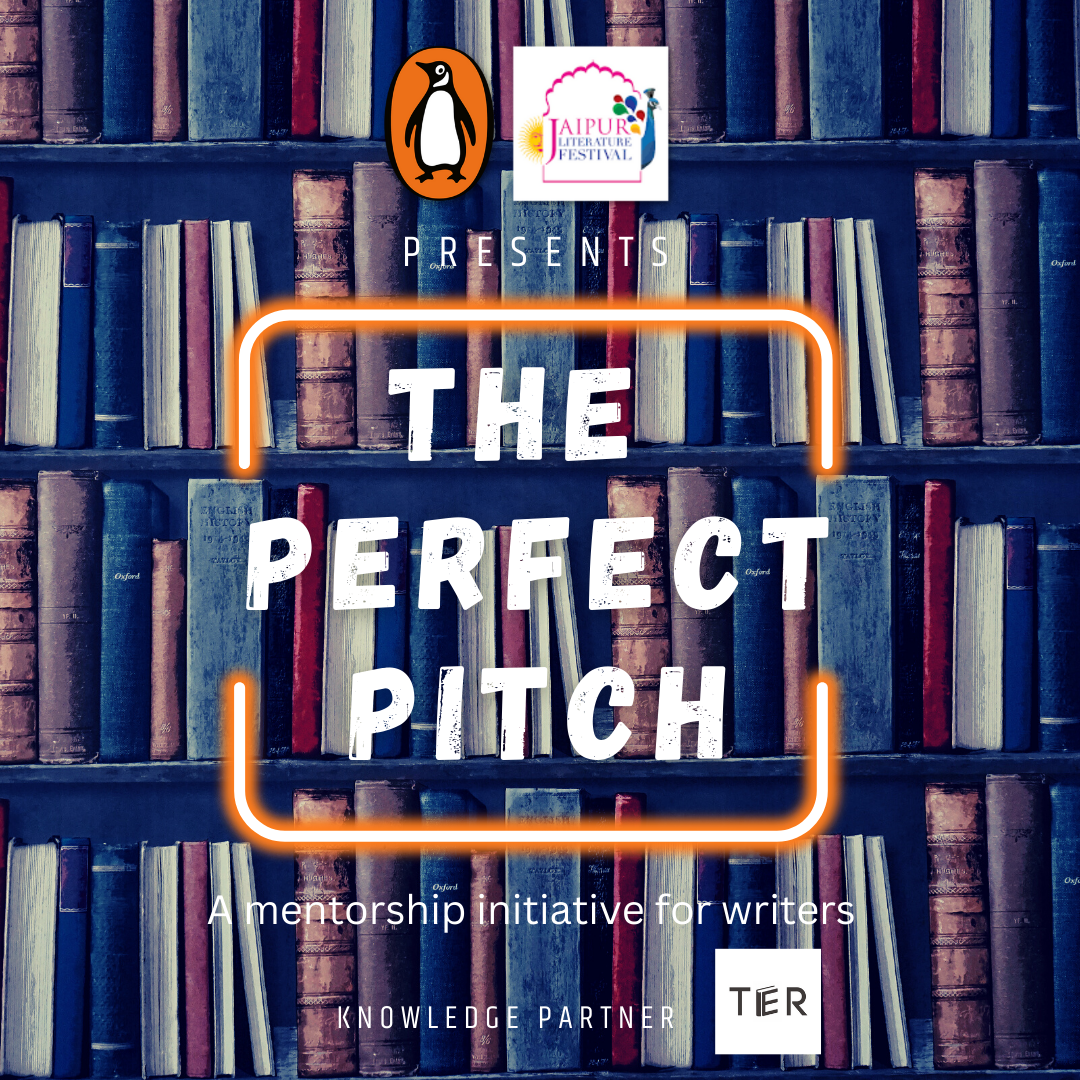
PENGUIN AND JAIPUR LITERATURE FESTIVAL ANNOUNCE A MENTORSHIP PROGRAMME FOR UNPUBLISHED WRITERS

THE PERFECT PITCH AIMS TO DISCOVER AND SUPPORT EMERGING WRITERS

New Delhi, 8 December 2022: The leading publishing house in India, Penguin Random House India, marks its 35th year in India with the launch of a one-of-a-kind platform to discover and mentor emerging writers from the country, in association with the world’s largest literary festival, the Jaipur Literature Festival. Titled The Perfect Pitch, it is a mentorship initiative to scout for the best pitch for unpublished, submission-ready work by aspiring writers and storytellers, where the candidates can win an opportunity to be guided by experts in publishing and the literary world and polish their pitch. The Editor Recommends, a fast-growing, popular literary social media influencer, comes on board as a knowledge partner for this programme.

Aspiring writers from all over the country are invited to present the pitch of their finished manuscripts to a jury panel made up of editors, literary experts, and notable authors. Call for entries opens today, 7 December, and closes on 25 December. Criteria and guidelines are listed in the annexure. The finalists will be invited to Jaipur Literature Festival 2023 to present their pitches to the esteemed jury and in front of an audience in an exclusive session. Jaipur Literature Festival is scheduled from 19 January to 23 January.

The writer with the best pitch will be awarded an opportunity to be mentored in one-on-one sessions with experienced editors from Penguin who have commissioned best-selling and award-winning works, an acclaimed author who has published with Penguin and Shreya Punj, also known as The Editor Recommends. The winner’s work will also be considered for a book deal with Penguin, should it meet the publishing house’s requirements.

Speaking about this partnership, Natasha Kapur, Senior Vice-President, Marketing, Penguin Random House India says, “Penguin and Jaipur Literature Festival have a longstanding association with common aspirations to make reading, books and authors accessible. On the occasion of Penguin’s 35th anniversary in India, we join hands with Jaipur Literature Festival to present a once-in-a-lifetime opportunity to India’s budding writers with a chance to pitch their book to an eminent jury of editors and authors in front of an audience of potential readers. As a publisher, we aim to discover and promote the best of Indian writing and with Jaipur Literature Festival we get the chance to bring together all elements of the literary community under one


roof- the writers, the readers, and the editors, and celebrate India’s vibrant and burgeoning literary culture.”

Sanjoy K. Roy, Managing Director of Teamwork Arts, producer of the Jaipur Literature Festival, said, It’s a delight for the Jaipur Literature Festival to partner with Penguin in creating a space for writers, thinkers, speakers and humanitarians. Through this initiative, we aim to bridge the gap between the unpublished authors and renowned figures in the field of publishing.”


The Perfect Pitch: A mentorship initiative by Penguin and Jaipur Literature Festival

To discover and support new literary talent, The Perfect Pitch is an opportunity of a lifetime for India’s budding authors. It is a programme where writers get a chance to pitch their book to a jury of eminent people from the world of publishing.

Criteria: Who can apply

  • The competition is open to entrants over 18 years of age residing in India.
  • The contenders should have an unpublished, complete manuscript.

Guidelines: How to apply

  • Please register-
  • There is a registration fee is Rs 500 per entry. Please make payment here-https://rzp.io/l/theperfectpitch
  • You can only submit one pitch per registration and only one book idea per document.
  • The deadline to complete your entry is 11:59 PM IST, 25 December. Entries will not be accepted after this

Key Dates:

7 December 2022Open for entries
25 December 2022Closed for entries
13 January 2023Announcing the finalists
23 January 2023The Perfect Pitch session at Jaipur Literature Festival


Prize:

  • Winner will get 5 one on one sessions, one each with the two editors of Penguin, two sessions with Shreya Punj, also known as The Editor Recommends, and one with the author from the jury.
  • A chance to win a book deal with Penguin, should the written work fulfil Penguin’s publishing requirements and criteria.


Terms & Conditions

“Perfect Pitch Contest”

These terms, conditions and guidelines (‘Terms’) are applicable to and govern the “Perfect Pitch Contest” (“Contest”) organized and conducted by Penguin Random House India Private Limited (‘PRHI’/We) along with its knowledge partner, The Editor Recommends (“TER”), as part of the events connected with the Jaipur Literature Festival, 2023 to be held in Jaipur, India in January 2023 (“JLF”).

By participating in the Contest you agree to have read, understood and accepted the following terms:

  1. PRHI reserves the right to modify these Terms without any prior notification. You are advised to regularly review these Terms. If you do not agree with any of the Terms and any amendments thereto, you must not participate in this Contest. Participation is voluntary and optional.
  1. This is a call for entries, asking individuals to submit their pitch for a book idea by registering on RazorPay at https://rzp.io/l/theperfectpitch. The registration fee is Rs 500. Once registered, the individual will be redirected to a Google Form. The individual will need to fill out the form and add a link to the reel posted on Instagram as indicated on the Google Form.
  1. Five (5) Shortlisted entries will be selected from all the valid entries received during the Contest Period and the corresponding shortlisted participants (“Shortlisted Writers”) will be eligible to pitch their book to a distinguished jury (“Jury”) at JLF. The Shortlisted Writers will also get a chance to attend JLF and their travel and stay for the concerned dates of the pitch will be paid for.  The Jury will choose a winning participant (“Winner”) from amongst Shortlisted Writers. The Winner will get the opportunity to receive one-on-one mentorship sessions with The Editor Recommends, a senior editor from PRHI and an author published by PRHI (“Prize”).
  2. You are invited to submit your entry between 7 December 2022 and 25 December 2022 (both days inclusive) (“Contest Period”). Shortlisted Writers will receive an email with further instructions. PRHI will announce the Shortlisted Writers on 13 January 2023 via email and their social media handles.
  3. Please note multiple submissions are not allowed. Further, you are permitted only one pitch per registration and one book idea per pitch. Entries once submitted cannot be withdrawn.
  4. The Contest is open only to Indian Citizens residing in India, who are at least 18 years of age or older on the date of participating in the contest. If the entry is received from a person below 18 years of age, the same will be disqualified.


  1. Before being announced and eligible to pitch their book idea before the Jury at JLF, each of the Shortlisted Writers must further submit full details of their name, permanent address, copy of Aadhar Card phone number, age, photo, video and any other details, documents/ materials as may be prescribed by PRHI. It is to be understood that Shortlists Writers will be eligible to pitch their book idea before the Jury at JLF only upon the furnishing of the prescribed details and documents/ materials. Any information found to be incomplete, false or misleading shall result in automatic disqualification of the participant. The personal information provided by the participant/s will be saved/ stored with PRHI for the purpose of completion of the Contest.
  2. You hereby expressly consent to share personal data including your name, age, email address, postal address, Aadhar details, photograph, and video with PRHI and TER for the purposes of this Contest. Further, you consent to PRHI storing and using details regarding your name, age, and email address for purposes other than the Contest, such as for marketing and promotional purposes. You understand and agree that personal data shared with PRHI and TER may be required to be processed on computer systems hosted outside the territorial jurisdiction of India and that the same is necessary as per PRHI’s and TER’s respective protocols required for maintaining transparency and security and are further necessary for PRHI and TER to fulfill its obligations under this Contest. “Processing of personal data”, means an operation or set of operations performed on personal data, and may include operations such as collection, recording, organisation, structuring, storage, adaptation, alteration, retrieval, use, alignment or combination, indexing, disclosure by transmission, dissemination or otherwise making available, restriction, erasure or destruction.
  3. By participating in this Contest, you grant PRHI permission to use your name, photographs, videos and likeness for advertising and promotional purposes in connection with the Contest, without additional compensations across all means, media and technology known now or invented hereinafter. The Winner agrees that the footage of any nature with regard to the Winner(s) shall vest with PRHI including but not limited to all intellectual property rights and any other rights worldwide and in perpetuity.
  4. We take no responsibility for entries that are lost, delayed, misdirected or incomplete or cannot be delivered or entered for any technical or other reason. Sending an email/ direct message on a social media handle is not proof that we have received your entry. Also, entries sent in any mode except for the modes specifically provided for shall be deemed to be invalid/ not received.
  5. Any dispute that may be existing/ arise in respect of an entry (selected or not selected) or invoice relating to pre-order of the book shall be the responsibility of the participant. PRHI shall in no manner be responsible for any legal/other disputes that may existing/may exist in future in respect of the entries, events at JLF or mentoring sessions.


  1. Employees, directors, and/or officers (including immediate family members or members of the household) of PRHI, its subsidiaries, film partners, affiliated companies, distributors, advertising, fulfilment and promotion agencies and all other companies or entities associated with the Contest are not eligible to participate in the same.
  2. Shortlisted Writers and Winner and Jury are to be selected by a procedure set up by PRHI at its sole discretion. All the entries will be stored in a backend system operated by PRHI and/or any person/agency appointed by PRHI.
  3. The decision on the selection and eligibility of the Shortlisted Writers and Winner of the Contest shall be final and binding on all the participants. PRHI shall not entertain any questions, or enquiries on the manner of conduct of the Contest, the selection and declaration of Shortlisted Writers and Winner, the mentorship sessions and on any aspect of the Contest from any party whatsoever.
  4. The entries, the opportunity to pitch a book idea before the Jury and the Prize are non-transferable, non-assignable, non-changeable, non-extendable and shall be provided strictly as set out in these Terms.
  5. The Shortlisted Writers and Winner(s) of the Contest agree(s) that he/she shall hold harmless and indemnify PRHI, its directors, employees, officers or representatives in connection with the Invitation won or any loss, claim, demands, costs, damages, judgments, expenses or liability (including reasonable legal costs) by him/her in the Contest and shall also not file in person/through any family member and/or any third party any applications, criminal and/or civil proceedings in any courts or forum to claim any damages or reliefs.
  6. All participation is at the risk of the participants and PRHI shall not be responsible for any loss of life, health, injury or damage to any person or participant on account of participation in the Contest.
  7. PRHI reserves the right to alter/change/modify the dates, venues, procedure and schedules of the Contest without prior notice and PRHI shall not be liable or responsible in any manner for any inconvenience/loss/hardship suffered by any participant/ Winner(s) as a result of such change/alteration/modification.
  8. In the event, any participant is found to be violating the said Terms as set out herein, then PRHI reserves the right to disqualify the participant from further participation and /or take appropriate legal action against the participant including but not limited claims for compensation / damages for loss of reputation and/or breach of contract.


  1. Decision of PRHI with respect to this Contest and the Terms thereto shall be final, binding and non-contestable and no communication shall be entertained in this regard.
  2. PRHI assumes no responsibility for any error, omission, interruption, defect, delay in operation or transmission, communications line failure, theft or destruction or unauthorized access to, or alteration of, entries. PRHI also does not accept the responsibility for any delayed email or message or any entry that cannot be delivered or received due to connection issues (failed or partial transmission), malfunctions inaccessibility, unavailability, out of coverage area, traffic congestion, acts PRHI shall not be responsible for any problems or technical malfunction of any telephone network or lines, computer on-line systems, servers, or providers, computer equipment, software, failure of any e-mail or entry to be received by PRHI on account of technical problems or traffic congestion on the Internet or at any web site, or any combination of the above (as applicable), including any injury or damage to any participant’s or any other person’s computer related to or resulting from participation or downloading any materials in or in connection with this or failure of any entry to be received by PRHI. CAUTION: any attempt to deliberately damage any website or the information on a website, or to otherwise undermine the legitimate operation of this may be a violation of criminal and civil laws and should such an attempt be made, whether successful or not, PRHI reserves the right to seek damages to the fullest extent permitted by law.
  3. All disputes shall be subject to the laws of India and the Courts in Delhi shall have exclusive jurisdiction with respect to any dispute relating to the Contest.


The Muslim Vanishes: Penguin India’s first-ever audio play

Lights! Camera! Action! … And back to Ghalib’s era!

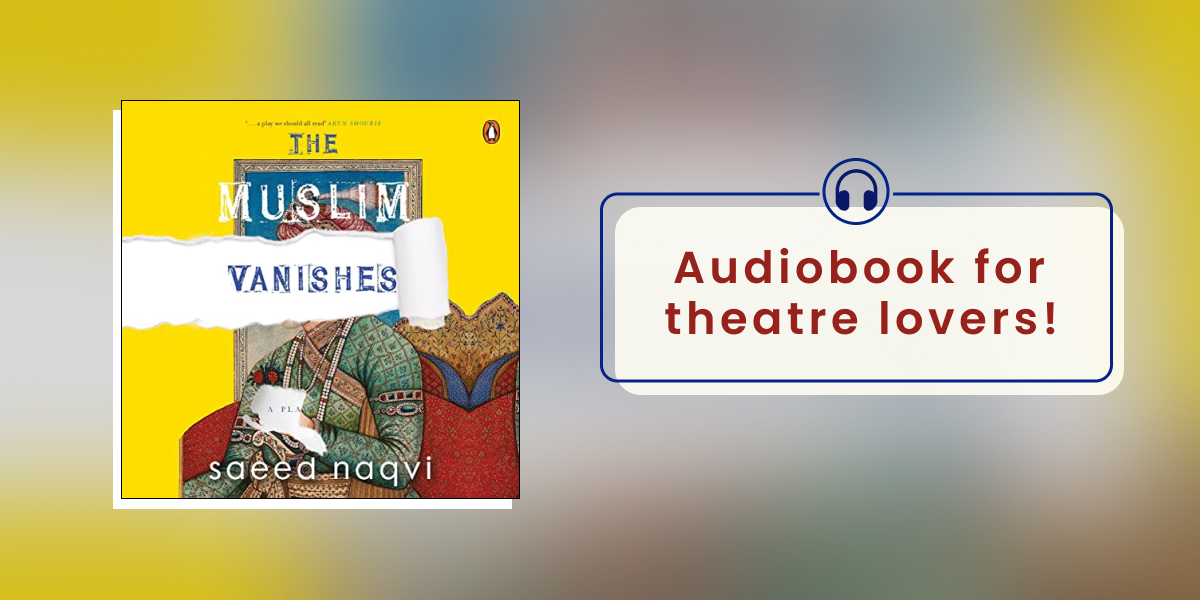
We know the shayar in you would love a theatrical reading of this amazing book sliding seamlessly into different worlds—history, fantasy, and poetry. So, plug in your earphones and tune into Penguin India’s first-ever audio play ‘The Muslim Vanishes’ and unwind.


Audio play: The Muslim Vanishes
The Muslim Vanishes || Saeed Naqvi

The great poet Ghalib, part of a long tradition of eclectic liberalism, found Benaras so compelling that he wrote his longest poem on the holy city. If we take Ghalib and his myriads of followers out of the equation, will Hindustan be left with a gaping hole or become something quite new? The Muslim Vanishes, a play by Saeed Naqvi, attempts to answer that question.

A Muslim-free India, as a character speculates naively in the play, would be good for socialism, since what the 200 million Muslims leave behind would be equitably shared by the general population. Meanwhile, another character, a political leader, is traumatized by the sudden disappearance of the Muslim voter base and the prospect of a direct electoral confrontation with the numerically stronger Dalits and other backward classes. Caste, the Hindu-Muslim divide, Pakistan and Kashmir—the decibel levels on these subjects are too high for a conversation to take place, with each side fiercely defending their own narrative. What is the way out of this trap?

How to douse the social and political flames? In this razor-sharp, gentle and funny play, Saeed Naqvi draws on a mix of influences—from grandma’s bedtime stories to Aesop’s fables and Mullah Nasruddin’s satirical tales—to spring an inspired surprise on us, taking us on a journey into the realms of both history and fantasy.


You can listen to this audio play on Audible and Google Play.

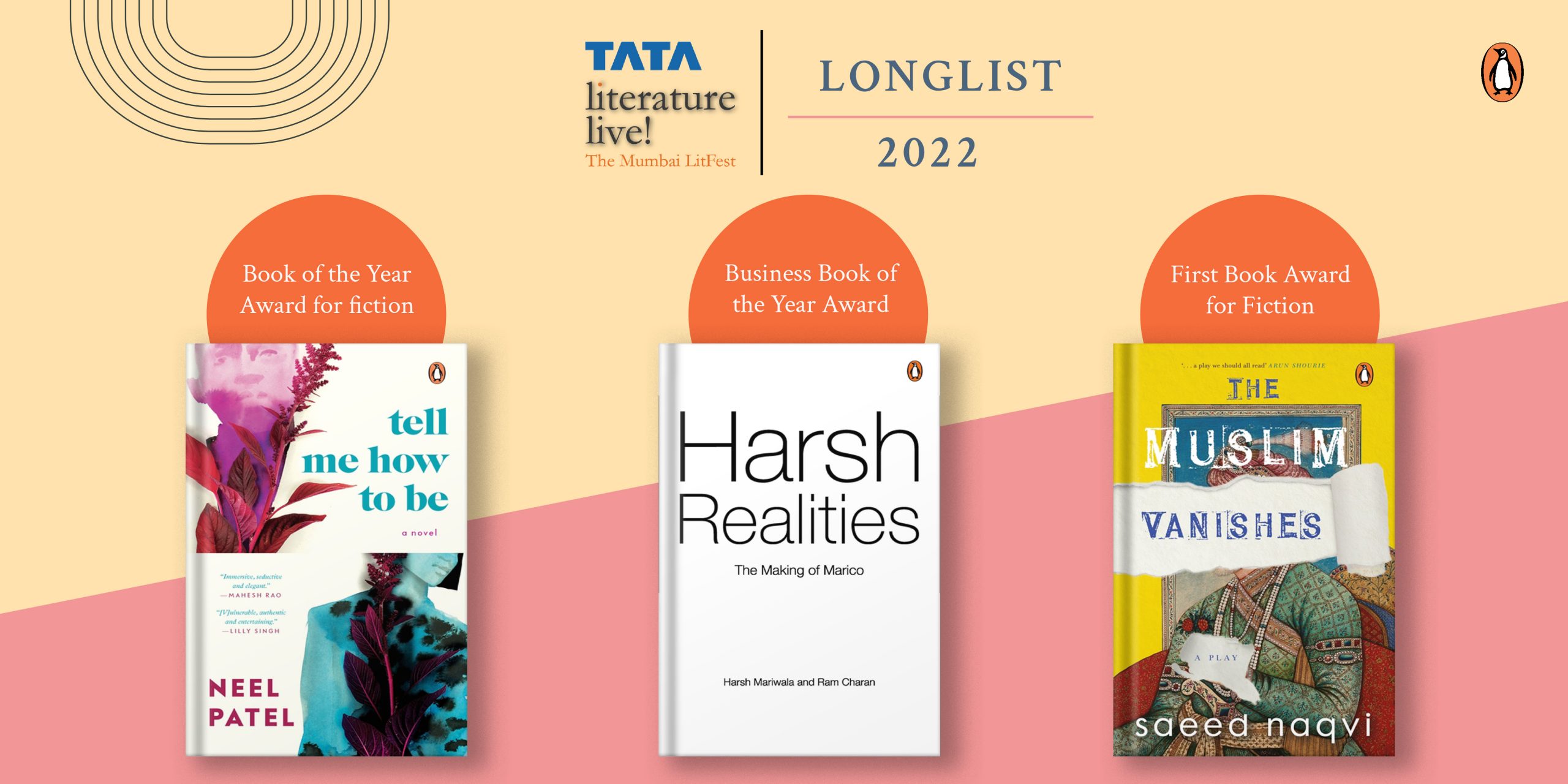
Books longlisted for Tata Literature Live! 2022

We take sheer pride every time our books get recognition for their brilliance. The following books made it to the longlist of Mumbai’s largest international literary festival, Tata Literature Live!, and we couldn’t be happier to share them with you.

Wondering what’s special about them?

Find out for yourself!

Tata Literature Live! 2022

Book of the Year Award for Fiction

recognising noteworthy work in the Indian literary space in the fiction genre
Tell Me How to Be
Tell Me How to Be || Neel Patel


Renu Amin always seemed perfect: doting husband, beautiful house, healthy sons. But as the one-year anniversary of her husband’s death approaches, Renu is binge-watching soap operas and simmering with old resentments. She can’t stop wondering if, thirty-five years ago, she chose the wrong life. In Los Angeles, her son, Akash, has everything he ever wanted, but as he tries to kickstart his songwriting career and commit to his boyfriend, he is haunted by the painful memories he fled a decade ago. When his mother tells him she is selling the family home, Akash returns to Illinois, hoping to finally say goodbye and move on.

Together, Renu and Akash pack up the house, retreating further into the secrets that stand between them. Renu sends an innocent Facebook message to the man she almost married, sparking an emotional affair that calls into question everything she thought she knew about herself. Akash slips back into bad habits as he confronts his darkest secrets-including what really happened between him and the first boy who broke his heart.


Business Book of the Year Award

recognising the best business writing in the Indian literary space
Harsh Realities
Harsh Realities || Harsh Mariwala, Ram Charan


Breaking away from the shackles of family-run Bombay Oils Industries Ltd, Harsh Mariwala founded Marico in 1987. Today, the homegrown Marico is a leading international FMCG giant which recorded an annual turnover of over Rs 8000 crore last year. Their products, like Parachute, Nihar Naturals, Saffola, Set Wet, Livon and Mediker, are market leaders in their categories.

This is the story of grit, gumption and growth, and of the core values of trust, transparency and innovation which have brought the company to its current stature. Co-authored by leading management thinker and guru Ram Charan, Harsh Realities is a much-awaited business book by an innovative and clear-headed leader who built a highly professional, competitive business from the ground up.


First Book Award for Fiction

recognising new talent in the Indian literary space in the fiction genre
The Muslim Vanishes
The Muslim Vanishes || Saeed Naqvi

The great poet Ghalib, part of a long tradition of eclectic liberalism, found Benaras so compelling that he wrote his longest poem on the holy city. If we take Ghalib and his myriads of followers out of the equation, will Hindustan be left with a gaping hole or become something quite new? The Muslim Vanishes, a play by Saeed Naqvi, attempts to answer that question.

A Muslim-free India, as a character speculates naively in the play, would be good for socialism, since what the 200 million Muslims leave behind would be equitably shared by the general population. Meanwhile, another character, a political leader, is traumatized by the sudden disappearance of the Muslim voter base and the prospect of a direct electoral confrontation with the numerically stronger Dalits and other backward classes.

In this razor-sharp, gentle and funny play, Saeed Naqvi draws on a mix of influences-from grandma’s bedtime stories to Aesop’s fables and Mullah Nasruddin’s satirical tales-to spring an inspired surprise on us, taking us on a journey into the realms of both history and fantasy.


The winners of the Tata Literature Live! 2022 Awards will be announced at the festival. Stay tuned!

The Booker Prize 2022 Winner The Seven Moons of Maali Almeida

The book was first published in India in 2020 as Chats With The Dead

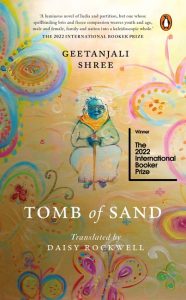
Penguin Random House India is proud to announce that critically acclaimed Sri Lankan writer Shehan Karunatilaka’s The Seven Moons of Maali Almeida, which was first published by Penguin India as Chats With The Dead, has won this year’s Booker Prize for Fiction. This is the first Booker Prize for Shehan. This was also the first time that books originating from an Indian publisher had been nominated for the Booker Prize two years in a row. In 2021, Anuk Arudpragasam’s A Passage North was in the running for the Booker Prize. Tomb of Sand, written by Geetanjali Shree, translated by Daisy Rockwell, and published by Penguin in India, was also the winner of the International Booker Prize 2022.

A classic whodunit with a brilliant twist, The Seven Moons of Maali Almeida searingly exposes the plight of a country caught in the aftermath of civil war. Embroiled in red tape, memories of war, and ethical dilemmas, this unforgettable story captures readers right from the very first page up to its startling denouement, constantly upending its premise with its staggering humanity.

Manasi Subramaniam, Associate Publisher and Head of Rights at Penguin Random House India and the editor of the book, said, ‘The Seven Moons of Maali Almedia by Shehan Karunatilaka is a masterful work of modern philosophy that insists on being uproariously funny through all its deft acrobatics through the living and the dead. I am delighted that this brilliant book has won the Booker Prize 2022.’

Meru Gokhale, Publisher, Penguin Press, Penguin Random House India, says, I am absolutely delighted at the honour and recognition being given to Shehan Karunatilaka’s work. It’s wonderful to see writers from South Asia receive long-overdue international recognition in this extraordinary year for Penguin Press, through both the Booker International Prize for Tomb of Sand and the Booker Prize for The Seven Moons of Maali Almeida.

The Booker Prize 2022’s jury is chaired by Neil MacGregor, cultural historian, writer and broadcaster along with a five-person panel- Critics Shahidha Bari and M. John Harrison, historian Helen Castor and novelist and poet Alain Mabanckou.

About the author:

Shehan Karunatilaka is a Sri Lankan writer whose first book Chinaman won the Commonwealth Book Prize, the DSC Prize for South Asian Literature, and the Gratiaen Prize, and was shortlisted for the Shakti Bhatt First Book Prize.

Penguin@35 – A Note from Our CEO

Penguin turns 35 years in India! Over the years, Penguin Random House has fortified the future of books and reading in India and continues to strive on our mission to publish diverse voices. And today on our milestone anniversary, we celebrate our authors, readers and customers who have helped us establish our publishing legacy.


It is particularly gratifying to be celebrating this milestone when so many of our books are being recognised on a national and international scale. Tomb of Sand, written by Geetanjali Shree, translated by Daisy Rockwell, and first published in India by Penguin, won the International Booker Prize this year, making it the first Indian language translation to receive this honour since its launch 17 years ago. The Booker Prize for Fiction 2022 shortlisted Shehan Karunatilaka’s The Seven Moons of Maali Almeida, which was published originally in India by Penguin as Chats With The Dead in 2020. In 2021, Anuk Arudpragasam’s A Passage North was in the running to win the Booker Prize. This is the first time that books originating from an Indian publisher have been nominated for the Booker Prize twice in a row.


As the region’s most successful publisher, it is our mission to bring quality and affordable books to readers across India and South Asia and take local voices to global markets. We keep strong on this commitment by discovering and publishing authors from the region. We ensure our readers have access to our global catalogue of over 50,000 titles. And we make sure that our readers can choose to read some of the finest writings from the world in print books, e-books or audiobooks, any format convenient for them to integrate reading into their lives seamlessly.


Creativity, entrepreneurship, and innovation have been the pillars through which we navigate the unpredictability of our publishing business. We believe in investing in our authors and fortifying our infrastructure to keep up with the growing demand for books. We have also been innovative with data to transform our sales and marketing efforts and gain distinctive competitive advantages. In these dynamic times, we have strengthened our printing and distribution capabilities too. Our growth in publishing has allowed us to give back to the community and help build a generation of readers from all strata of society. We sponsor and support reading fluency programmes that help disadvantaged young readers adopt reading into their lives. We donate books to community libraries and government schools and form partnerships in the process to further spread the message of reading books.


Looking back on our long and illustrious publishing history in India, I would like to thank all our authors for choosing to publish with us and for allowing us to present their brilliant works to the world. I acknowledge the trust our readers extend to us each time they choose a Penguin book to fire up their imaginations and to stay informed and entertained. We are fortunate to have customers and partners who work tirelessly to ensure the availability and access of our titles. And finally, I express my gratitude to my brilliant teams without which none of the above would be possible. Our biggest strength lies with the talented, dedicated, and passionate people in our company.


As we enter a new phase when the world is looking a little bit different, we know that books are going to continue to be an important part of our country’s cultural fabric and our lives. Setting our sights on the future, we are looking forward to bringing more iconic books by gifted writers to our beloved readers with the support of our talented team.
 

– Gaurav Shrinagesh

CEO of Penguin Random House India and South East Asia

Gaurav Shrinagesh


#BookedByPenguin

5 out of 6 books from Penguin are in the run for The Booker Prize 2022!

We have just been updated that we have 5 out of 6 books from Penguin have been shortlisted for The Booker Prize 2022! The winner will be announced at the Roundhouse in London on October 17, 2022. Stay tuned! 
The Seven Moons of Maali Almeida by Shehan Karunatilaka

Booker Prize 2022!
Buy Now!


Booker Prize 2022 shortlist

Colombo, 1990. Maali Almeida, war photographer, gambler and closet gay, has woken up dead in what seems like a celestial visa office. His dismembered body is sinking in the Beira Lake and he has no idea who killed him. At a time when scores are settled by death squads, suicide bombers and hired goons, the list of suspects is depressingly long, as the ghouls and ghosts who cluster around him can attest. But even in the afterlife, time is running out for Maali. He has seven moons to try and contact the man and woman he loves most and lead them to a hidden cache of photos that will rock Sri Lanka. Ten years after his prizewinning novel Chinaman established him as one of Sri Lanka’s foremost authors, Karunatilaka is back with a rip-roaring epic, full of mordant wit and disturbing truths.


Small Things Like These by Claire Keegan

Booker Prize 2022 shortlist
Buy Now!

Booker Prize 2022 shortlist

It is 1985, in an Irish town. During the weeks leading up to Christmas, Bill Furlong, a coal and timber merchant, faces into his busiest season. As he does the rounds, he feels the past rising up to meet him – and encounters the complicit silences of a people controlled by the Church.

The long-awaited new work from the author of FosterSmall Things Like These is an unforgettable story of hope, quiet heroism and tenderness.


Glory by NoViolet Bulawayo

Booker Prize 2022 shortlist
Buy Now!

Booker Prize 2022 shortlist

Glory is an energy burst, an exhilarating joyride. It is the story of an uprising, told by a bold, vivid chorus of animal voices that helps us see our human world more clearly. It tells the story of a country seemingly trapped in a cycle as old as time. And yet, as it unveils the myriad tricks required to uphold the illusion of absolute power, it reminds us that the glory of tyranny only lasts as long as its victims are willing to let it. History can be stopped in a moment. With the return of a long-lost daughter, a #freefairncredibleelection, a turning tide — even a single bullet.


Oh William! by Elizabeth Strout

Booker Prize 2022 shortlist
Buy Now!

Booker Prize 2022 shortlist

Oh William! captures the joy and sorrow of watching children grow up and start families of their own; of discovering family secrets, late in life, that alter everything we think we know about those closest to us; and the way people live and love, against all odds. At the heart of this story is the unforgettable, indomitable voice of Lucy Barton, who once again offers a profound, lasting reflection on the mystery of existence. ‘This is the way of life,’ Lucy says. ‘The many things we do not know until it is too late.’


The Trees by Percival Everett 

Booker Prize 2022 shortlist
Buy Now!

Booker Prize 2022 shortlist

An uncanny literary thriller addressing the painful legacy of lynching in the US, by the author of TelephonePercival Everett’s The Trees is a page-turner that opens with a series of brutal murders in the rural town of Money, Mississippi. The murders present a puzzle, for at each crime scene there is a second dead body: that of a man who resembles Emmett Till. As the bodies pile up, the MBI detectives seek answers from a local root doctor who has been documenting every lynching in the country for years, uncovering a history that refuses to be buried. In this bold, provocative book, Everett takes direct aim at racism and police violence, and does so in a fast-paced style that ensures the reader can’t look away. The Trees is an enormously powerful novel of lasting importance from an author with his finger on America’s pulse.

error: Content is protected !!