Publish with Us

Follow Penguin

Follow Penguinsters

Follow Penguin Swadesh

For the Love of Coffee: Excerpt from ‘Extreme Love of Coffee’

In a lush green plantation in Coorg lurks a friendly ghost with a pocket watch, a mop of grey hair and a large, white mug of steaming hot black coffee. The apparition breathes in the deliciously deep aromas of medium roasted robusta coffee wafting from his mug as he waits, in anticipation, for a conversation with one who loves coffee as much as he did.

Read on for a whiff of the magic that transports Rahul and Neha to a world of dark brews and darker grudges!

The coffee was softly sweet and refreshing. And then, slowly, they sensed the nutty aroma—of walnuts, mild but deliciously bitter. Rahul knew from his readings about coffee that such a delicate sweetness could only come from a fully ripened coffee berry that had been carefully picked and pulped on the ground under bright, clean summer sunshine. Because then the richness of the raw soil would mingle with the golden heat of the sand and soak in the sun to create this rare, luxurious and nutty taste.

The myriad tastes of coffee continued to amaze him, each one so different from the previous and each teasing the senses so delicately. He decided to use this opportunity to educate Neha, who sat nice and close by his side.

‘How do you like the old lady’s coffee, Neha? Isn’t it so beautiful? Can you taste the walnuts?’

There was no response. So, he asked her again. He turned to find Neha sprawled across the cane sofa in deep slumber. She was awake a few minutes ago. When had she fallen asleep, that too so deeply? He shook her, but she was like a log, muscles locked and eyes shut.

Then, without any warning, he felt sleep overcome him too. From far away, it penetrated his body through his eyes, swimming in like a gentle cloud. It narrowed his eyes when it came in and brought a general sense of growing calm that wasn’t there seconds ago. There was a tender but overpowering silence that it cast on him, which was impossible to counter with words, hands or legs, because they were going dead too. In this twilight zone before deep sleep, the mind has no thoughts because it goes pleasantly numb in anticipation of the rest ahead. We love sleep, don’t we?

Rahul could feel himself levitating. He saw the coffee cup on the cane table going farther and farther away, initially a sharp image, but hazy after a few seconds. It then looked like the cup was being taken away by Pooviah or by someone else with a red and white turban; it did not really matter because within a few seconds he too was deep in sleep.

He woke up almost immediately, not in Cottabetta Bungalow or his familiar room in Mumbai, but in some place that looked like a very small café. There were people around him who looked like they were Japanese, seated on low wooden tables, speaking in Japanese and drinking coffee. The entire place smelt of coffee. Neha was there too, sitting by his side, her left hand resting softly on his lap. On the wall was a beautiful painting of a monkey on a horse, with Mount Fuji in the background. A lady in a red and golden kimono came around with white coffee mugs on a lovely looking oval wooden tray.

As the bright red of her dress approached them, she spoke in highly accented English. ‘Welcome back, Rahul-san and Neha-san. Will you have your usual coffee today?’ She then bowed before them. Are we in Japan? Rahul thought.


‘This story has its roots in my long-time love for coffee and a somewhat recent fascination for storytelling and magic realism.’ writes Harish Bhat, author of the bestselling book Tatalog and chairman of Tata Coffee Ltd.

Will Rahul and Neha’s intense love for the aromatic brew help them find their way on their bewildering quest? Read An Extreme Love of Coffee to find out!

Important Facts about the Pakistan-Afghanistan Relationship We Can Learn from ‘The Battle for Pakistan’

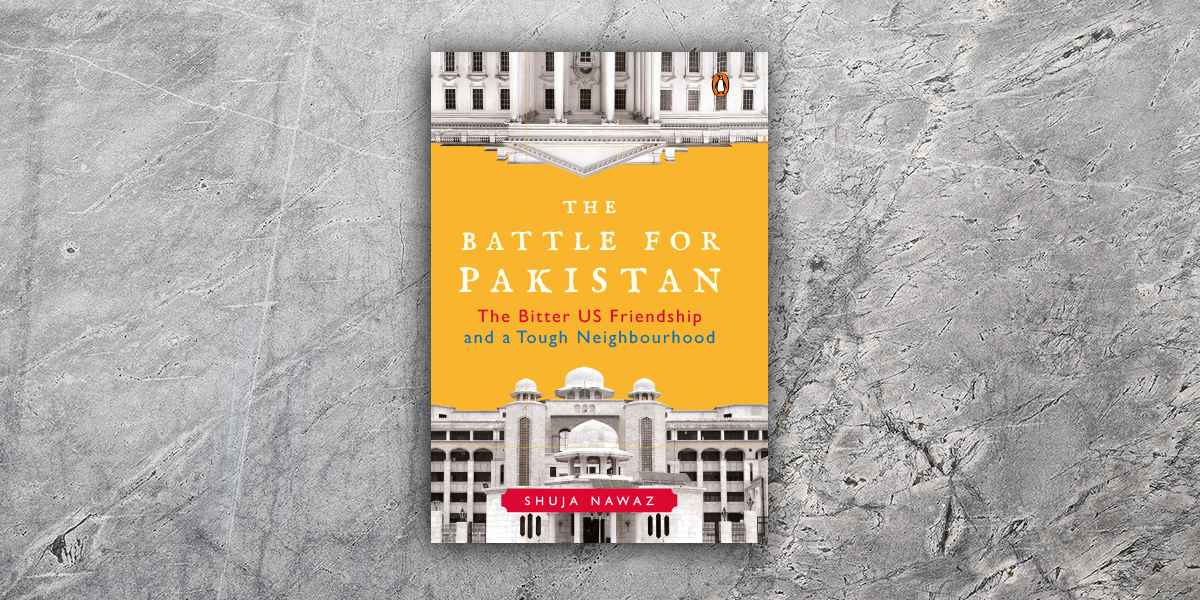
Located at a strategically important point on the map, Pakistan abuts Afghanistan, Central Asia, Russia, China, Iran, India and the Arabian Peninsula. But what sort of relationship does Pakistan share with its neighbors and the US?

The Battle for Pakistan by Shuja Nawaz sheds light on the same. Based on the author’s deep and first-hand knowledge of the regions and his numerous interactions with leading civil and military actors, coupled with his access to key documentation, this book helps understand the complex relationship Pakistan has shared with the USA and its neighbors, Afghanistan and India.

Read on to discover interesting facts about Pakistan’s relationship with Afghanistan.


Little trust between the countries.

There was also little communication or trust between Afghanistan and Pakistan.

As evident by the following event:

On 23 October 2017, President Ashraf Ghani of Afghanistan stated that the Afghanistan–Pakistan Transit Trade Agreement of 2010 is to end since Pakistan did not allow Afghan trucks to go into Pakistan, while Pakistani trucks could enter Afghanistan fully loaded. (milestones chapter)

~

Aid from the US.

(In fact these) two countries had never seen eye-to-eye since the birth of Pakistan in 1947, yet they pretended to go along in order to benefit from the massive US economic and military assistance that was expected to head their way….even as the unlikely alliance crumbled over time.

Pakistan ranked fourth in terms of overall foreign assistance from the US, at 3.4 per cent of total US aid, well behind Afghanistan, which received 26.1 per cent of aid. It was ranked fifth in economic assistance with 3.2 per cent of such aid, again well behind Afghanistan which accounted for 8.4 per cent of economic aid. It also ranked fifth behind Afghanistan in military aid at 3.8 per cent, with Afghanistan leading the pack at 57.5 percent.

This was ironic, since in the eyes of the vice-president of the United States, Joseph Biden, Pakistan ranked much higher on the value chain for the US.

 `

Pakistan’s cooperation with the US for the war in Afghanistan.

Afghanistan, a landlocked country, presented an obvious challenge to the amphibious assault forces, but Mattis brokered a secret agreement with the government (sic) of Pakistan to provide landing beaches and access to an airstrip. Task Force 58 was airlifted into Afghanistan in late November 2001 and was instrumental in the capture of Kandahār, a city regarded as the spiritual home of the Taliban.

 ~

Afghanistan’s relationship with India.

Kayani saw a direct linkage between the stability and future of Afghanistan and Pakistan. ‘It cannot, therefore, wish for Afghanistan anything other than what it wishes for itself.’ He stated firmly: ‘Pakistan has no right or desire to dictate Afghanistan’s relations with other countries. This includes relations with India.’ This must have been music to the Americans’ ears, but the reality on the ground was at a tangent from this statement of Pakistani policy; Pakistan wanted Afghanistan, at every step, to expunge India’s presence and influence.

~

Looking at the future.

Meanwhile, in Pakistan’s western border region, the potential for economic interaction with Afghanistan still remains more a hope than a reality. Decades of distrust and the underlying Indo-Pakistani rivalry inside Afghanistan will stand in the way of better integration, despite the aspirations of the new Afghan leadership to make Afghanistan a regional trade hub and a revived terminus of the Grand Trunk Road that links Kabul to Dhaka.

 ~

The book claims: The future of Afghanistan is inextricably linked to the future of its neighbor Pakistan. To discover more interesting facts about Pakistan’s relationship with Afghanistan and the US, grab your copy today!

The most fascinating aspects of meditation, explained

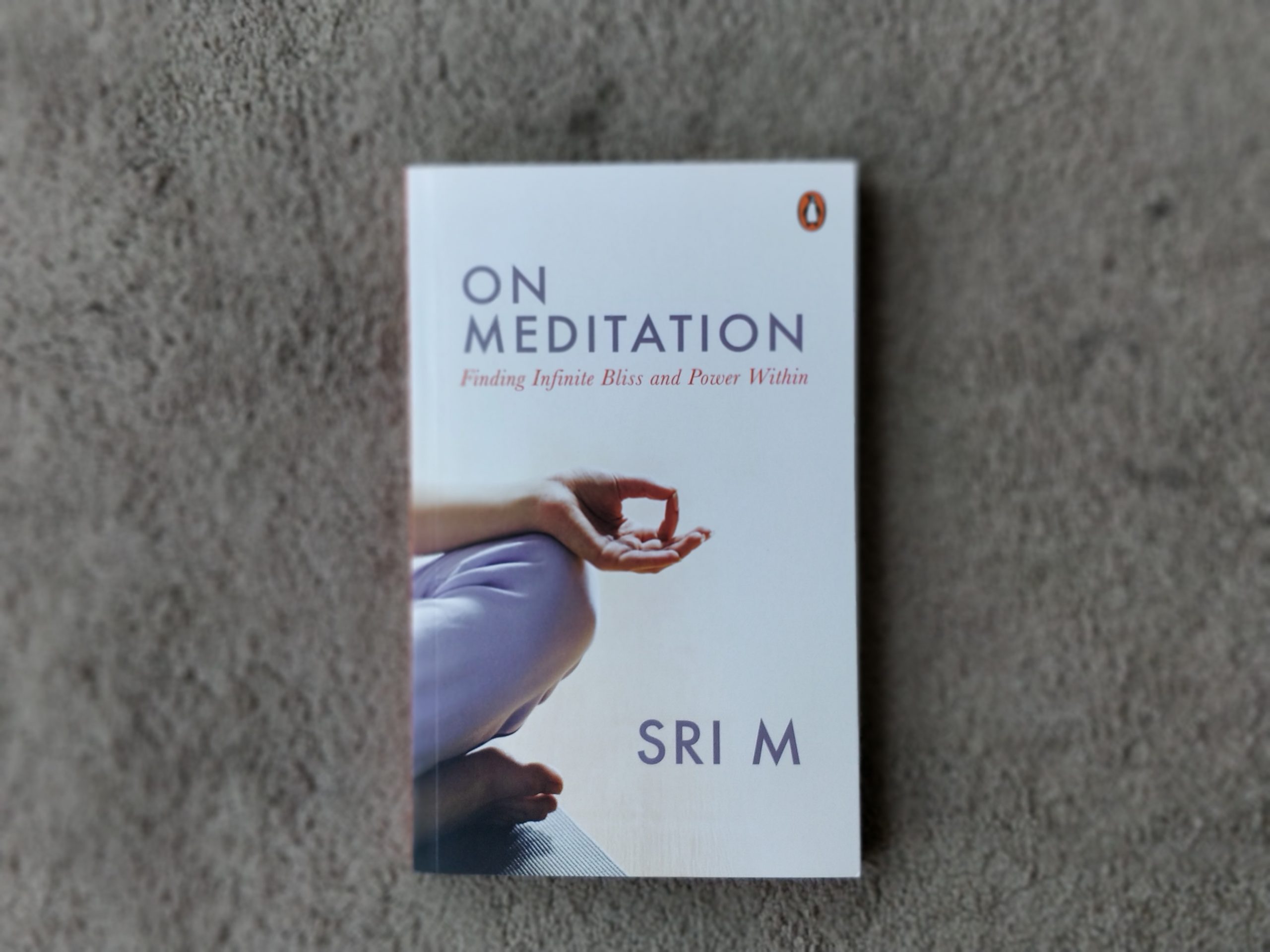
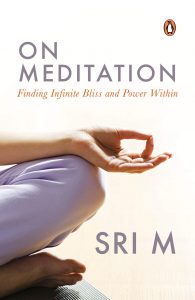
In today’s challenging and busy world, don’t you wish you knew how to quieten your mind and focus on yourself? In On Meditation, renowned spiritual leader, Sri M, answers all your questions on the practice and benefits of meditation, presenting it as a simple and easy method that we can all practice in our daily lives.

In his quintessentially soothing, ‘meditative’ prose, Sri M takes concepts that most of us would find intimidatingly esoteric and explains them in detail, from definition to technique, while bringing to light some of the most fascinating aspects of meditation-from spiritual bliss or swabhava to the inner music of being-anahatshabd.


The path to reach the goal of meditation is in three parts and detailed in Patanjali’s Yoga Sutra.

‘Dharana means the capability or the capacity or the practice by which one can put one’s mind exclusively in one stream of thought. When that matures and becomes a continuous process, then that dharana becomes dhyana. When that dhyana can be sustained for a continuous period, then one can experience and understand what samadhi is. When we can do this for a length of time with absolutely no distractions, then we enter into a state where we forget that we are even meditating. There is only that state. That is called meditation.’


Meditation allows one to tap into the limbic system which provides the adrenaline rush to react in emergencies, but in a systematic manner, with the possibility of utilizing infinite modes of energy

‘If thoughts such as ‘I am this body’, ‘I am a man’, ‘I’m a woman’, ‘I’m a child’, or ‘I am an old person’, can be un-conditioned, or at least set to rest for a while, then it’s possible to access that source of all energy that is within us. Fortunately, this happens to be a blissful energy and not a painful energy.’


Enlightenment is one of those mysterious terms that one rarely understands completely. Sri M explains it as the ultimate use of meditation.

‘Enlightenment is enlightenment only when it’s there, even in the midst of getting into a bus. It is always there. Therefore, since you have found peace and satisfaction, you really don’t want anything more. But it’s not as if you have become stagnant. In every minute of every second, it’s renewed. That probably should be the ultimate use of meditation.’

On Meditation || Sri M


Sri M explains the technique of yogic breath and distinguishes it from ‘surface breathing’.

‘The yogic breath is not surface breathing where you screw up your nose. No. The yogic breath is deeper. In yogic terminology, this breathing technique is called ujjayi, where you’re not breathing as much through your nose, but breathing through your throat. How? I open my mouth and breathe; however, instead of inhaling with my mouth open, I do the same process with my throat, but where my mouth is closed. The air is flowing through the nostrils, but it’s going in in a much deeper manner, touching the throat centre.’


 The ‘third eye’ has many spiritual and mythical connotations for us, but was it and why is it emphasized n the practice of meditation?

‘When we say ‘third eye’, we’re not referring to a physical fact, we are referencing an inner opening, an activation in a certain area of the brain, which is physically connected to the ajna chakra, also known as bhrumadhya—between the brows. From my understanding, meditating on the third eye can never be a distraction because it can always lead you deeper and deeper and deeper if you do it properly.’


As one goes deeper and deeper in one’s awareness of the breath, it slows to almost the point of cessation, at which point one begins to hear the inner movement of the prana, the anahatshabd.

‘It doesn’t cease completely, because the body has to be maintained, but it becomes very slow, and then you begin to hear sounds which in yogic terminology are called anahatshabd. This means ‘sound which comes without striking two things together’. ‘Ana-hat’ means ‘without hitting’ or ‘without striking’. One way we can conceive of clapping with one hand is to imagine the inner sound which comes, not from two physical objects hitting each other, but from the inner movement of molecules, the inner movement of prana.’


When one finally ‘sits down’ to meditation, there are certain positions that are best suited to the practice.

‘When I say comfortable position it means that different positions are comfortable for different people. I prefer sitting cross-legged, sukhhasana. There are many other postures in the yogic system as well. You can sit in siddhasana. If you change it a bit it becomes svastikasana. There is vajrasana, which involves putting your legs back. Another meditative posture is veerasana. There is gorakshasan. Then there is the classical ‘Buddha pose’ known as padmasana, or lotus posture.’


Sri M expounds the ideal of spiritual bliss, the most natural state of being.

‘Stillness itself is bliss. We don’t become anything. This means, it is not subtracted by any activity nor can any activity add to it. It is in its natural state. It’s swabhava and this is the original swabhava— true identity.’


In On Meditation, renowned spiritual leader, Sri M, answers all your questions on the practice and benefits of meditation. The book is available now!

How Social Media Manipulates You

A Human’s Guide to Machine Intelligence by Kartik Hosanagar, is a relevant read in today’s world. Surrounded by technology in various devices, the book informs about how the algorithms and the artificial intelligence underlying such technologies robs us of our power to make decisions. From what we see in the form of news, to the products we purchase and where and what we eat, our daily life decisions and routines are now greatly influenced by the huge developments made in the technology sector. Thus, the author talks about many more potentially dangerous biases which could emerge and how we can keep it in check and control it.

Here are a few instances of how social media is slowly coming to dominate our real lives:

As various social media feeds and its layout are programmed on the basis of an algorithm, it is widely known to be a catalyst for encouraging fake news. This fake news then helps in propagating misinformation amongst people, making them move further away from real issues.

Social media has become such an intrinsic part of our lives that it has now evolved to control and hinder our daily routines. App notifications and the phenomenon of gamification, takes advantage of the human need for immediate gratification and be socially accepted, hampering certain habits such as, sleeping early, impairing one’s judgment to use their time in a better way, etc.

The algorithms operating in various social media also influence our choices. While purchasing an item, the recommendations provided are known to gently push a buyer into buying certain things.

Many social media platforms have their algorithms programmed so that the content one sees on it is personalized and filtered. Studying the pattern of the content which a user generally prefers, the algorithm makes decisions on what is to be shown to the user and what is to be left out.

Social media is also known to affect people’s moods and emotions. In a research conducted by Facebook in 2012, it was found that people posted more positive posts when they saw posts that had positive content on their feed, selected by their news-feed algorithm. The opposite is also true.

Many dating and socializing applications control the way one networks with people, as their algorithms look for people with similar interests or simply recommend a person to another solely based on the mutual friends they might have in common. This does away with the scope of connecting two people with differing interests, who might get along quite well too.

The capability of such media platforms to filter our preferences to such an extent of specification creates a “filter bubble” which leads to a high degree of polarization regarding aspects such as music or even political ideologies.

A Human’s Guide to Machine Intelligence is an entertaining and provocative look at one of the most important developments of our time

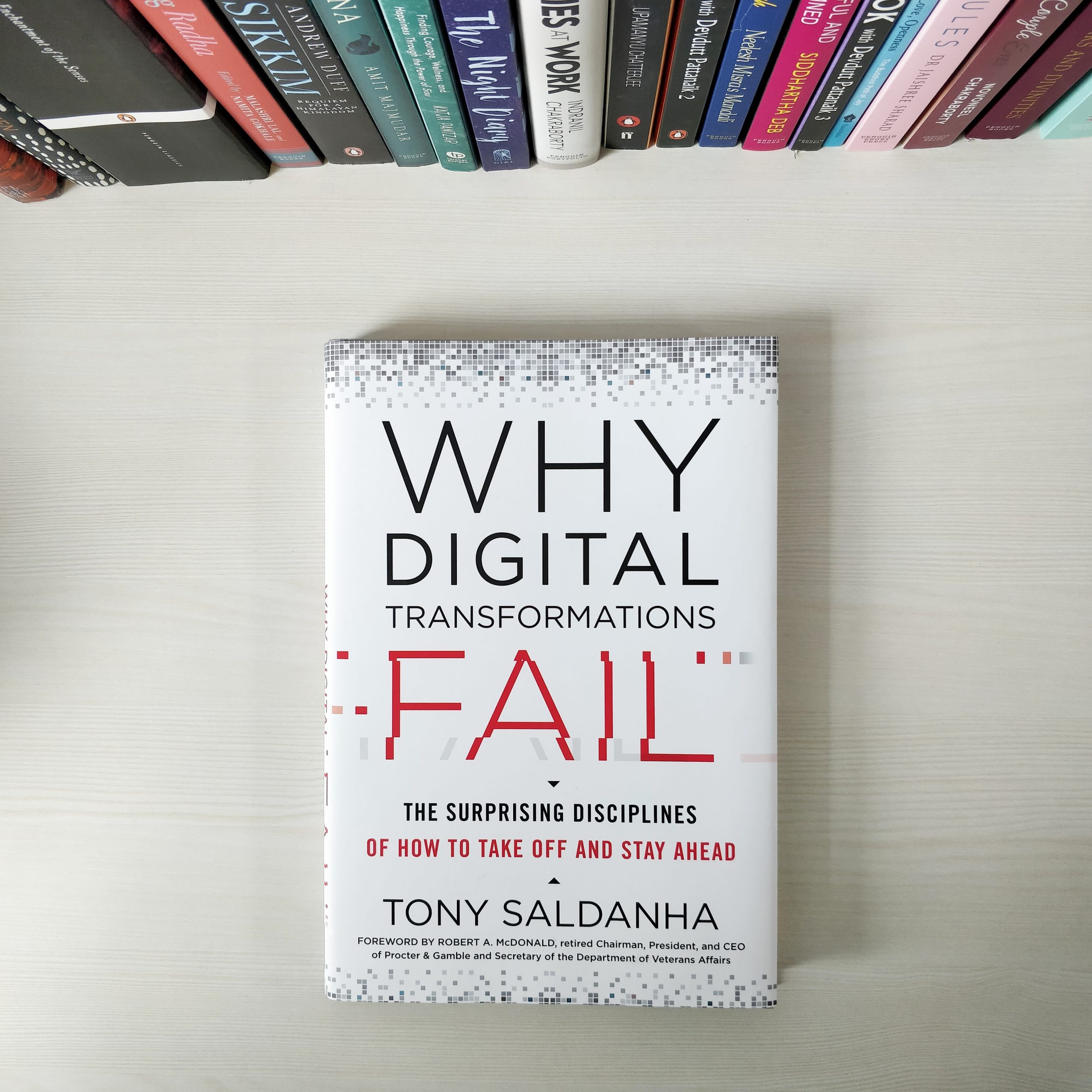
6 Reasons Why Digital Transformations Fail

Digital technology frees workers from tedious tasks, allowing them the opportunity to migrate to higher value-added responsibilities. As with any new powerful technology, there is indeed the potential for destructive applications. As with the prior three industrial revolutions, individuals and societies will be affected significantly, and companies will either transform or die.

Here’s a list of reasons why digital transformations fail:

  1. “Part of the issue is terminology. Most people don’t realize that digital disruption is the Fourth Industrial Revolution. The term “digital” is very broad.”

  2. “Transformation during industrial revolutions demands a different game plan than innovation within the current business model.”

  3. “True transformation must include building capabilities to stay ahead of your competition long term.”

  4. “For an industrial revolution – driven transformation to take off, you need a different, disciplined, new business model game plan.”

  5. “The transformation is incomplete if the new business model cannot be built with an eye toward perpetual evolution.”

  6. “The underlying cause of why 70 percent of digital transformations fail is a lack of sufficient discipline. There’s insufficient rigor in both digital transformation takeoff as well as in staying ahead.”


Using dozens of case studies and his own considerable experience, Tony Saldanha in his book, Why Digital Transformations Fail ,  shows how digital transformation can be made routinely successful, and instead of representing an existential threat, it will become the opportunity of a lifetime.

7 Things to Add in Your Beauty Regime to Stay in Your A-Game

Roots to Radiance by Nikita Upadhyay is an anthology of wholesome beauty solutions for everyone. It is a self-care Bible to good skin, hair, teeth, nails and most importantly good health. With numerous hacks to enhance one’s system inside and out, the book talks about a mix of traditional Indian recipes and home remedies. These tips and hacks will leave you with a radiant skin and a healthier lifestyle.

Here we give you a few tricks to keep up your A-game:

Mix the coffee grounds with coconut oil and gently massage your body to exfoliate dead skin and get smoother body texture. The coarseness of coffee grounds helps exfoliate and polish your body.

Sapodilla, also known as chikoo, is such a humble fruit! It tastes yummy, but your face will love it too. Peel the chikoo and take the seeds out, crush the fruit and apply to your face to scrub and mask at the same time. This is quite a multitasker.

If your face gets dehydrated quickly after you leave your house, pour some distilled water in a spray bottle and add rose petals (desi gulab) to it and carry it in your bag. Spray on your face every once in a while to hydrate your skin on the fly and on the go instantly.

Apply kiwi peel to your face to cleanse and keep acne at bay. Kiwi is rich in Vitamin C and is great for rejuvenating the skin and keeping excess oil out of the picture.

Just apply mashed avocado on your face and hydrate, reduce pigmentation, reduce puffiness around eyes and get even skin tone by doing this twice or thrice a week.

Add cucumber slices, lemon juice and mint leaves to water and drink it every morning to detox and get clearer skin.

Mix water and apple cider vinegar in a 1:1 ratio to come up with the easiest solution that’ll tone your skin in no time. Using this in the morning and at night before sleeping will energize your skin.

Discover more such secrets in Nikita Upadhyay’s Roots to Radiance

Chilling Lines from your New Favourite Thriller ‘The Whisper Man’

Still devastated after the loss of his wife, Tom Kennedy and his young son Jake move to the sleepy village of Featherbank, looking for a fresh start. But Featherbank has a dark past. Fifteen years ago a twisted serial killer abducted and murdered five boys. Until he was finally caught, the killer was known as ‘The Whisper Man’.

Here are a few quotes from The Whisper Man that will make your hair stand on end:


“The man’s heart, beating more quickly now, ached at the thought of that. He stepped silently out from the bushes behind the boy, and then whispered his name.”

~

“He couldn’t know for sure – not through reason. But his instinct was telling him that Neil Spencer wasn’t going to be found here. That maybe he wasn’t going to be found at all.”

~

“There was nobody there, of course, but he seemed so intent on the empty space that it was easy to imagine a presence in the air.”

~

“There was also a more general sensation – a tickling at the back of the skull. At first glance, the house had unnerved me.”

~

“The name alone conjured up such horror for him that it always felt like it should never be spoken out loud – as though it was some kind of curse that would summon a monster behind you.”

~

“A noise from above me, the sound of a single footstep. I looked up. It was Jake’s room directly overhead, but I’d left him in the front room playing…”

~

“And beside him, he’d drawn another person in his bedroom. A little girl, her black hair splayed almost angrily out to one side. Her dress was coloured in with patches of blue, leaving the rest white. Little scrapes of red on one of her knees. A corkscrew smile on her face.”


The chilling must-read thriller of summer 2019, Whisper Man is now available!

Know All about AI in ‘A Human’s Guide to Machine Intelligence’

Kartik Hosanagar’s  A Human’s Guide to Machine Intelligence is a phenomenal book that notes how algorithms and artificial intelligence are shaping our lives, and what can one do to stay in control. As they are embedded in every popular tech platform and every web enabled device, these algorithms and artificial intelligence carry out a plethora of functions for us, from choosing what products we buy to how we find a job.

Kartik Hosanangar through his book tries to explain how and why we need to arm ourselves with a better, deeper and a more nuanced understanding of the phenomenon of algorithmic thinking. He examines various episodes of such algorithms going rogue and why one needs to be more cautious while using such technology.


Here are some facts about AI from the book!

Match.com, one of the most popular dating website in the United States was launched in 1995 and aimed at finding the perfect partner for people. However, in 2011, a Financial Times reporter exposed that although the company’s algorithm asked people to list the characteristics they would want in an ideal partner, these lists were ignored. Rather, the people that the website urged the users to reach out to, was based on the profiles the users had visited previously.

“The conventional narrative is that algorithms will make faster and better decisions for all of us, leaving us with more time for family and leisure. But the reality isn’t so simple.”


The feature of autocomplete on Google, which was first introduced by Kevin Gibbs, is something that we now take for granted. There have been many instances where this feature has proved to reiterate the prejudices that are assumed regarding certain subjects.

“But it’s far more disturbing to ask if Google might have unintentionally led impressionable people who did not initially seek this information to webpages filled with biased and prejudiced commentaries, effectively delivering new audiences directly to hate-mongering sites.”


The algorithms used by Netflix, Amazon, and other online firms through collaborative filtering produce a biased range of shows or products that are popular, rather than promoting obscure and niche items. This is primarily because the algorithms of these online firms tend to recommend things based on what others are consuming.

“We developed simulations of several commonly used recommendation algorithms to test the theory, and they indeed demonstrated that these algorithms can create a rich-get-richer effect for popular items.”


Following the introduction of Google’s famously talked about ranking algorithm, which was made public in the year 1999, it resulted in various website owners creating “shadow” websites which would link back the users to their primary domain. Similarly, in the present age, Instagram and Twitter are working hard to minimise the presence of bot and spam accounts that are made to like and repost other accounts, thereby boosting the spammers’ rank on the platforms’ ranking algorithm.

 ∼

“And manipulability will only become an increasing concern as algorithms come to be used in other domains with more serious consequences. Suppose a fraudster knew exactly what rules credit card companies used to flag suspicious activity, or a terrorist knew exactly what TSA screening systems were looking for in their image-processing algorithms. With that knowledge, it would become easy to avoid detection.


Various social media websites such as Facebook, Twitter and also search engines such as Google have become a great source of information and news for people over a period of time. However, concerns over the use of personalization algorithms have come to grab the attention of many, as the algorithms of such tech companies access information about our preferences over time, creating a “filter bubble” which only shows things that relate to our preferences. This results in the barring of alternate perspectives.

“As we engineer our algorithmic systems, the algorithms themselves certainly deserve a high degree of scrutiny.”


A Human’s Guide to Machine Intelligence is an entertaining and provocative look at one of the most important developments of our time and is a practical user’s guide to this first wave of practical artificial intelligence.


Meet Zoya and Kabeer, the Starry Couple from ‘Love Knows No LoC’!

In Arpit Vageria’s debut book, Love Knows No LOC, passion, stardom and international borders are about to collide in a spectacular fashion!

Zoya, a twenty-five-year-old Pakistani pop star, meets emerging Indian cricketer Kabeer while he is on tour in the country to play a match to promote Indo-Pak friendship. One thing leads to another and soon Kabeer and Zoya are inseparable. As their love for each other grows stronger, Zoya leaves Pakistan to be with Kabeer, only to return a few months later following a misunderstanding. In Pakistan, Zoya is gloomy and sulking, rethinking her connection with Kabeer. In India, a confused Kabeer is still hopeful of meeting Zoya.

As their relationship is put to the test in the wake of mounting tensions between the two countries, they both stumble across a long-buried truth that will forever change the course of their lives.

Here are the characters from the book!

Kabeer

‘Considering his loathing for the country, its principles and politics, it was ironic that Kabeer’s international debut was in Pakistan’. However when this debut brings the Indian team’s newest young all-rounder face-to-face with the stunning Zoya Malik, he there ensues a love story that seems to have been written in the stars, but jeopardises their careers, their families and everything they hold dear, including their notions of what constitutes national pride. Can Kabeer overcome his temper, his explosive reactions to being needled about his love and his ideas about the divisions between nations, to come to love the best and accept the worst of his relationship?


“The news of his scuffle with the reporter spread like wildfire and Kabeer was suddenly daubed with the dubious distinction of being the prime target of the Indian media. A public outcry was raised against his treachery for dating a Pakistani. Some senior cricket experts even took to a newsroom debate, advising him to stay grounded and not let fame and success go to his head. Despite the prevailing chaos around him, Kabeer felt calm and at peace.”

Zoya Malik

On the face of it Zoya Malik has everything going for her-she’s a golden-voiced beauty with an impressive musical pedigree, as the granddaughter of the maestro Amaan Ali Malik, and daughter of a powerful politician. However behind the façade of her perfect life, she must deal with the weight of the past and a controlling father who abused her mother, conniving uncle and the loss of the people she holds dear amidst the furore that erupts when her desire to see harmony between the neighbouring nations and her relationship with an Indian cricketers seems to brings out the worst in the media and the people around her.


Zoya paused for a bit, ‘It’s about amicable relations between the two nations.’ The interviewer didn’t bother to disguise his scepticism, but Zoya rallied and continued, ‘I feel that performing in India could go some way to bridge the ever-widening gulf between Pakistan and India. Music is an art that unites people, regardless of nationality, and I would like my art to be an ambassador for peaceful co-existence.’

 ∼

Arko

Kabeer’s teammate from Team India A, he plays for Mumbai Riders in the T20 tournaments. His straightforward intelligence and unforced humour is the base of a friendship between him and Kabeer and his quiet support and relaxed advice helps Kabeer through difficult times.


“Arko was an opener from Bengal, famous for his summary responses to fast bowlers. He revered Sourav Ganguly like a God, and one of his most well-talked-about eccentricities was his never-ending recitation of the ‘Ganguly Chalisa’. Although he had met him only once, he informed every person whom he met about it and every time with a new twist—like a director taking shots from every possible angle to get the best result.”

Ghulam

A young shop assistant in Lahore, he is one of the first people that Kabeer feels a connection with, in Pakistan, and makes Kabeer feel at home in what he considers an alien land.


“Ghulam picked up a couple of T-shirts, one of Tendulkar and another of Afridi.  ‘Take these as a small gift from a Pakistani,’ he said. He wrapped them up and put them into a paper bag. ‘We’ll come to watch the match tomorrow and for the first time in my life, I’ll cheer for an Indian in Pakistan.”

Amaan Ali Malik/Naanu

Amaan Ali Malik, the maestro loved India unconditionally even after the Partition. He is also Zoya’s beloved grandfather who brought her up after rescuing her mother from her abusive husband.


“Just close your eyes, Naanu, and imagine walking with me on the beach where you taught me how to take my first steps. It was such a beautiful day when you held me in your arms. But do you know what moved me the most? It was your belief in me whenever I fell and failed in certain portions of this chapter called ‘life’. You were brave and courageous.”

Yashwant

Kabeer’s grandfather, his feelings towards the country of his birth, Pakistan are rather complicated after the difficult wrench of Partition.

 “Then why doesn’t he listen to me! It’s a dangerous state and the people there are even more treacherous.’  ‘You too were born in Pakistan, Papa.’ ‘It was India back then. Pakistan is this new and strange country that sponsors terrorism, hate and deaths.”

Vishal Sharma

A particularly vicious reporter who seems out to present both Kabeer and Zoya in the worst possible light.


“Vishal Sharma was the journalist standing in front of the crowd, waving a placard with a #shameonkabeer poster. He rapidly spoke into the camera, pillorying Kabeer and inciting the crowd. Kabeer thought he looked familiar and then he remembered. This was the same reporter who had questioned Zoya’s priorities and suggested that her avarice trumped her affection for her grandfather.”

Danish

Zoya’s father, he is a prominent Pakistani politician. Having abused her mother through their unhappy marriage, his attitude towards Zoya is somewhat inscrutable.


“Danish sighed and raised his hands in a gesture that said, God, give me strength. ‘You know, for more than a decade now I’ve wondered what would happen if I admitted to you that I was wrong to treat your mother the way I did. But I was always there, supporting you from behind the scenes—when your visa needed to get cleared, when your Mamu jaan tried taking advantage of your situation, and whenever you needed any kind of help.”


Read Love Knows No LoC for a cross-border romance like no other!


Master these Five Rules of Risk and Transform your Life!

Allison Schrager is an economist and award-winning journalist who has spent her career examining how people manage risk in their lives and careers. Stepping away from the stock market and other financial institutions, Schrager shares the real life (an often unusual) places she learned about risk;

Whether we realize it or not, we all take risks large and small every day. What most of us don’t know is how to measure those risks and maximize the chances of getting what we want out of life.

In An Economist Walks into a Brothel, Schrager equips readers with five principles for dealing with risk, principles used by some of the world’s most interesting risk takers.

Here are five essential rules from the book, to follow when undertaking any sort of major risk!


Rule 1- No Risk No Reward


‘Risking loss is the price we pay for the chances of getting more. But there are ways to maximize your chance of success. The biggest mistake people make when they take a risk is not having a well-defined goal. It may seem counterintuitive but the best way to define a risky reward is to start by defining the opposite of risk, whatever is risk free.’


Incredible Risk Taker

Kat Cole, COO of Focus Brands who own Cinnabon and Auntie Anne’s made a name for herself by popularising the Minibon and driving up sales exponentially. As sales of the full-sized cinnamon roll dropped owing to increasingly health-conscious consumers, the executive team became too focused on launching an-artificially sweetened option that just wasn’t yummy enough! Kat succeeded as she identified the goal clearly— ‘increase sales in a changing market’ rather than fixate on a low-calorie option and hit upon the lowest-risk option by expanding the small-size roll in all franchises!

Rule 2- I am irrational and I know it


‘We want to think we are rational beings. And for the most part we are. But perhaps the most obvious place to witness our irrationality at work is when we make a risky decision. Our feelings about loss vs, gains can lead us to make decisions economists think are irrational. By knowing yourself, how to gauge risk, and your natural response to potentially losing , you can make better risky decisions.’

Incredible Risk Taker

Professional poker champion, Phil Hellmuth has ADHD and is highly emotional, generally not helpful qualities for a poker player. However he is considered one of the world’s best players, has won a record number of World Series of Poker gold bracelets and is worth $20 million. Hellmuth realized early on he had to overcome his own behavioural quirks, ‘I guess what it all meant was that I needed to have the discipline of a monk if I was to succeed in poker. I need to exercise patience relentlessly and to allow no negative emotions to affect my mood.’

Rule 3-Get the biggest bang for your risk buck


‘Risk is the price we pay to get more, and just like anything else in life, there is no need to pay more for something than you have to. Financial economists consider unnecessary risk inefficient. They argue you can achieve more efficiency through diversification. The result is the same, or greater, reward for less risk—a bargain indeed in risk terms.’

Incredible Risk Taker

Harry Markowitz, an economics doctoral student set off a revolution in financial thinking, shifting the focus from return to risk in the financial market. He discovered that people often end up taking unnecessary risk when we try to pick only winners.. Markowitz argued that diversification—owning lots of stocks of different risk characteristics that offset each other was how investors could create efficient portfolios.

Rule 4-Be the master of your domain


‘Risk management is how we can stack the odds in our favour. We can do this in two different ways-hedging and insurance. When we hedge we give up some of our potential gains in exchange for reducing the chance of loss; in statistical terms it cuts off the upper and lower tails of risk. With insurance, we pay someone else a fixed amount to take on our downside and we still keep the upside.’

Incredible Risk Taker

David Bowie is both a brilliant musician and a risk tactician.  In his 50s, advised by David Pullman he made a deal with EMI to re-release his catalog, between 1969 and 1990 valued at $100 million, and was guaranteed more than 24 per cent of the royalties on wholesale sales in the US.

They then securitized these royalties through the Bowie Bond! Prudential paid $55 million for 7.9 per cent payment on their principal for fifteen years. These interest payments were financed from the income generated by Bowie’s pre-1990 albums. This was a hedge because Bowie took $55 million to forgo his payments for fifteen years, but successfully managed his risk in a changing music industry.

Rule 5-Uncertainty Happens


‘We might make calculated choices based on data based probability measures, it’s the best we can do 90 percent of the time. But how do we deal with the other 10 other cent or the Knightian uncertainty, which is the risk we can’t predict. But it is possible to plan for the unplannable. It often comes down to managing the risk you can imagine and retaining just the right amount of flexibility for the unexpected.’

Incredible Risk Taker

Captain H.R. Mc Master, who led the Eagle Troop in the decisive battle of 73 Easting in the 1991 Gulf War says that centralizing command shows an overconfidence in certainty. Preparing for uncertainty needs extensive training and practice so that soldiers have the confidence to make decisions on the fly and think creatively in stressful situations.  This kind of flexibility may come at a cost but is the most effective way of dealing with uncertainty.


Read An Economist Walks Into a Brothel to understand the principle of risk-taking in everyday life!

error: Content is protected !!